Crinear Protocol Max
Small body, big engine — and PEQ done right
The Crinear Protocol Max is a tiny USB DAC/amp that punches way above its weight. It’s built around two Cirrus Logic CS43198 DAC chips and dual SG Micro SGM8262‑2 op‑amps in the amplifier stage, with proper low output impedance and thoughtful usability. It supports high‑resolution audio up to PCM 32‑bit/768 kHz and DSD256, and in Boost mode can deliver up to 600 mW into 16 Ω from the balanced output. It’s also one of the few portable dongles that leans into Parametric EQ in a practical way.
I’m particularly partial to the Protocol Max because Crinacle used my devicePEQ tooling as one of the main ways to push and pull PEQ filters from his website. You can also use the browser‑based Hangout.Audio Graph Tool to create and apply PEQ — it’s fast and works across platforms — and if you want a fuller on‑device control suite, the Walkplay App adds a traditional settings panel. For day‑to‑day filter management across squig.link and hangout.audio, devicePEQ remains my go‑to.
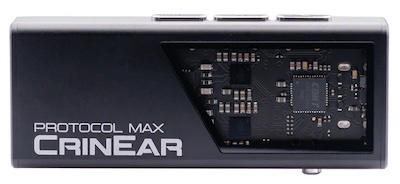
I would like to thank Crinear for providing the Protocol Max for the purposes of this review.
If you are interested in finding more information about this product, you can find it at the official product page, and on Amazon.
At the typical street price of $89.99, this is an easy recommendation for anyone who wants clean power for both IEMs and portable headphones, with the flexibility of PEQ baked into their daily listening.
Unboxing and Build Quality
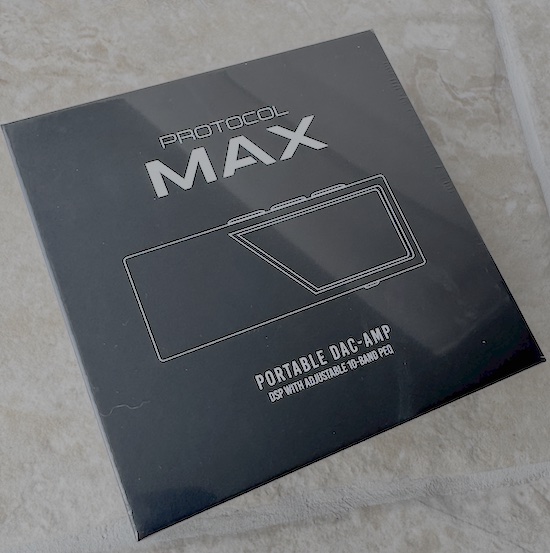
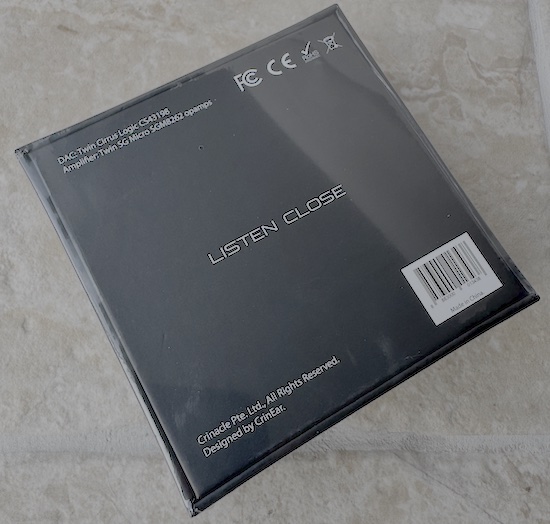
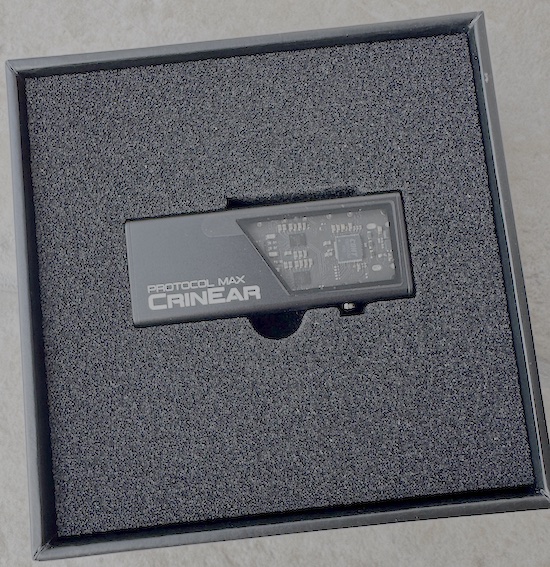
The Protocol Max arrives in compact, no‑nonsense packaging with everything you need to get started.
 |
 |
 |
 |
 |
 |
Included in the box:
- Protocol Max DAC/amp
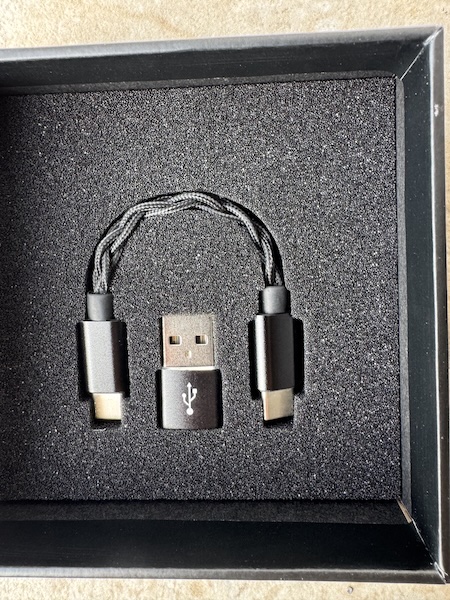
- USB‑C cable and USB‑A adapter
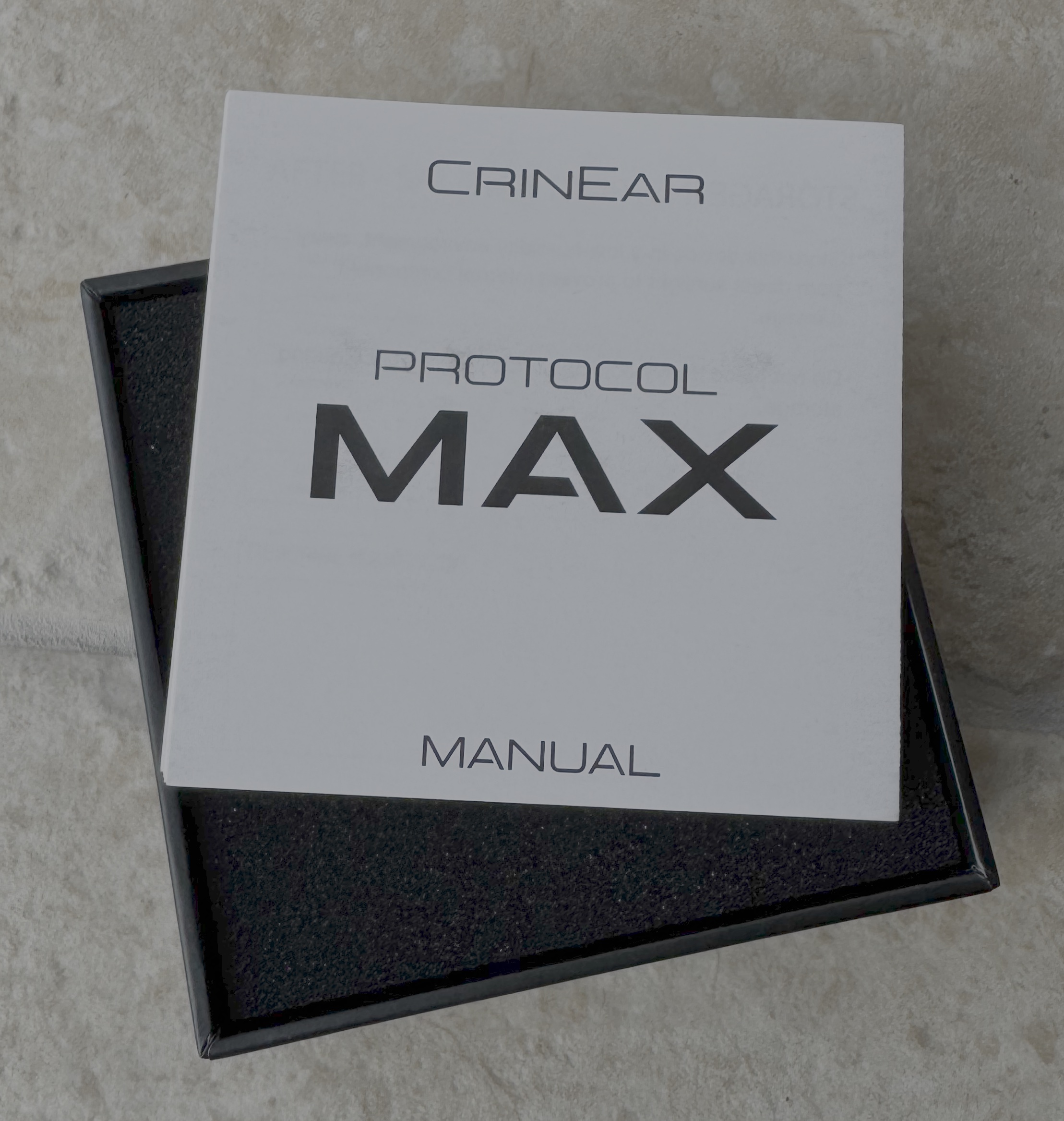
- Quick start manual
Build overview
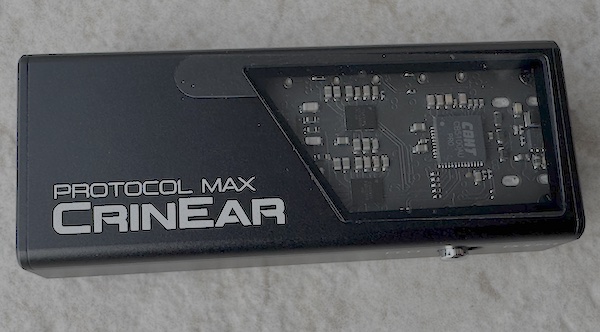
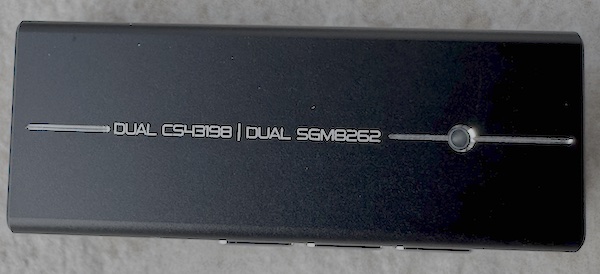
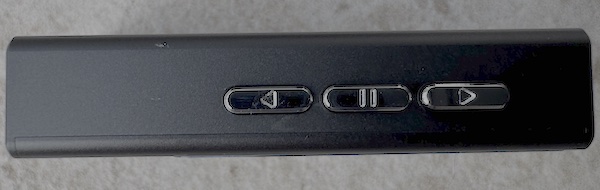
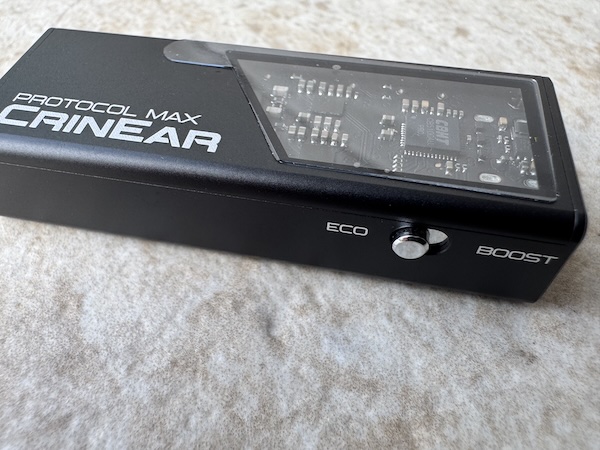
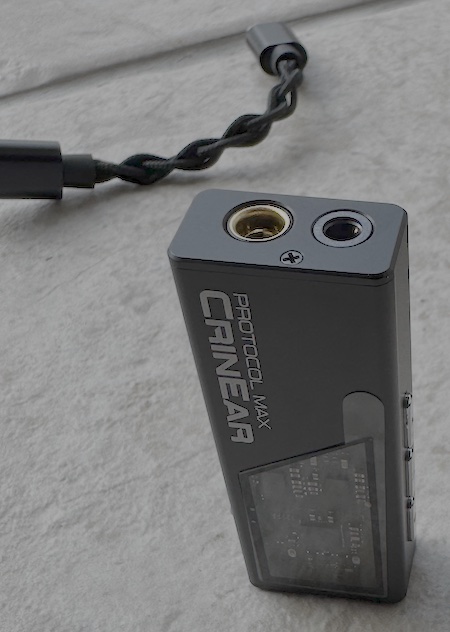
A compact aluminum chassis with tidy tolerances and a clean, minimal aesthetic. The face panel uses tempered glass for a sleek look and durable surface. Physical volume keys have a positive click, and there’s a discreet status LED.
 |
 |
 |
 |
Features and Performance
CrinEar Protocol Max: Powerful headphone amplifier DAC
Equipped with two CS43198 DACs and two SGM8262‑2 op‑amps, the Protocol Max offers crystal‑clear resolution, extended dynamic range, and low‑distortion amplification. It supports sampling rates up to PCM 32‑bit/768 kHz and DSD256, and has the output power to drive IEMs and headphones from 16 to 300 Ω.
Connectivity
- Input: USB‑C
- Outputs: 3.5 mm single‑ended and 4.4 mm balanced
- Output impedance: < 0.3 Ω (3.5 mm), < 0.6 Ω (4.4 mm)
Indicator lights
- On initial connection, the indicator may briefly flash red then turn off. This is normal — the Protocol Max enters standby if no audio is playing.
- If you connect and the light starts blinking red followed by no light and no audio, your host may be incompatible. See the UAC mode switch below for a quick remedy.
- To turn the indicator light off, press and hold both volume up and volume down for roughly one second. Repeat the same combo to turn it back on.
UAC Mode Switch
Some hosts (notably Nintendo Switch and PlayStation 5) require UAC 1.0.
- To switch to UAC 1.0: hold the volume up button while plugging in. The indicator will blink red rapidly; you can then release the button.
- While operating in UAC 1.0, the indicator slowly blinks red (instead of the usual white). This is expected.
Power and noise floor
Protocol Max is exceptionally powerful for its size and maintains a very low output impedance (<0.6Ω BAL, <0.3Ω SE), which keeps IEM tonality stable. With the 4.4 mm BAL out, it has more than enough current for low-impedance planars and headroom for dynamic headphones on the go. Noise is well-controlled — sensitive IEMs remain quiet in my testing.
PEQ and app support
- Hangout.Audio Graph Tool (browser‑based): Create and audition filters in your browser, then push them to Protocol Max. It’s a great cross‑platform way to manage PEQ without installing anything.
- devicePEQ: My extension integrates with measurement databases to push/pull filters quickly, perfect for day‑to‑day listening without logins or extra friction (works hand‑in‑hand with hangout.audio and squig.link).
- Walkplay App: Offers a broader settings panel (10-band PEQ, DAC filter modes, gain and mode controls) if you like to tinker beyond EQ.
CRINEAR Protocol Max operating modes
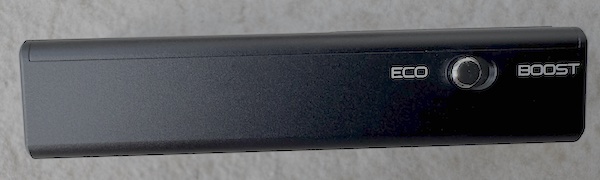
The Protocol Max provides two operating modes to balance power and efficiency:
- Eco mode: Reduced energy consumption and lower noise floor — ideal for sensitive IEMs and casual listening.
- Boost mode: Maximum output power for demanding headphones or noisy environments.
Switch based on your needs — Eco on the go, Boost at a desk when you want the most headroom.
Sound Impressions
Tonally, Protocol Max presents clean, neutral output with a hint of smoothness up top — similar to what I appreciated in my EPZ TP35 PRO review — avoiding both glare and syrup. It’s transparent enough to get out of the way, yet never harsh.
- Bass: Tight and controlled; impact scales with the headphone. No bloat, no roll-off with low-impedance loads.
- Midrange: Natural vocal weight with accurate timbre. Good microdetail retrieval without sounding clinical.
- Treble: Extended and tidy; modestly smoothed edge that tames aggressive recordings without dulling cymbal sheen.
- Stage & Imaging: Solid center focus with clean separation; width depends on the headphone, but layering is helped by the black background and good channel matching.
Pairings I liked: neutral-bright single-DD IEMs (EQ’d via devicePEQ), planar portables via 4.4 mm for extra grip, and high-efficiency headphones that benefit from the quiet floor.
Comparisons
- EPZ TP35 PRO: Both use dual CS43198 and measure well. Protocol Max feels a touch more muscular on BAL output and its integration with widely used PEQ workflows (Crinacle filters via devicePEQ) gives it everyday convenience. TP35 PRO’s finish and windowed aesthetic are flashier; Protocol Max is more understated tool than showpiece.
Specifications
| SPEC | DETAILS |
|---|---|
| DAC Chip | Dual Cirrus Logic CS43198 |
| Amplifier Chip | Dual SG Micro SGM8262-2 |
| Supported Sample Rate | PCM up to 32‑bit/768 kHz; DSD up to DSD256 |
| Input | 1× USB‑C |
| Outputs | 1× 3.5 mm single‑ended; 1× 4.4 mm balanced |
| Maximum Power Output (4.4mm BAL) | @ 8Ω: 31.3 mW (Eco), 442 mW (Boost); @ 16Ω: 62.5 mW (Eco), 600 mW (Boost); @ 32Ω: 31.3 mW (Eco), 500 mW (Boost); @ 300Ω: 3.5 mW (Eco), 54 mW (Boost) |
| Maximum Power Output (3.5mm SE) | @ 8Ω: 31.3 mW (Eco), 500 mW (Boost); @ 16Ω: 15.63 mW (Eco), 250 mW (Boost); @ 32Ω: 7.8 mW (Eco), 125 mW (Boost); @ 300Ω: 0.8 mW (Eco), 13.5 mW (Boost) |
| SNR @1kHz 0dBFS | 4.4mm: 132 dB; 3.5mm: 127 dB |
| THD+N @1kHz 0dBFS | 4.4mm: -118 dB; 3.5mm: -116 dB |
| Crosstalk @1kHz -6dBFS | 4.4mm: -116 dB; 3.5mm: -68 dB |
| Output Impedance | 4.4mm: < 0.6Ω; 3.5mm: < 0.3Ω |
| Price | $89.99 (typical) |
| Product Page | https://crinear.com/protocol-max |
| Amazon | https://www.amazon.com/dp/B0FSRT288B |
Power output by mode (Eco vs Boost)
Below is a clearer breakdown of maximum power by output, load, and gain mode.
4.4 mm Balanced output
| Impedance | Eco (mW) | Boost (mW) |
|---|---|---|
| 8 Ω | 31.3 | 442 |
| 16 Ω | 62.5 | 600 |
| 32 Ω | 31.3 | 500 |
| 300 Ω | 3.5 | 54 |
3.5 mm Single-ended output
| Impedance | Eco (mW) | Boost (mW) |
|---|---|---|
| 8 Ω | 31.3 | 500 |
| 16 Ω | 15.63 | 250 |
| 32 Ω | 7.8 | 125 |
| 300 Ω | 0.8 | 13.5 |
Note: Values are manufacturer-provided maximums. Eco mode is generally ideal for sensitive IEMs; Boost mode provides significantly higher headroom for demanding headphones. Adjust gain to taste while monitoring for safe listening levels.
Measurements
I’ll be adding AP-based measurements in the coming days. Expect frequency response, noise floor, and power sweep plots, with notes on filter behavior and any load interactions. I’ll also include EQ references aligned with common targets.
Note on devicePEQ and graph.hangout.audio:
- I’ll add a short walkthrough showing how to load Crinacle’s filters to Protocol Max using devicePEQ directly from graph.hangout.audio, including exporting, pushing to the dongle, and quick rollback. This section will be updated soon.
Rating Rationale
- Strengths: Excellent power for size, low output impedance, quiet floor for IEMs, robust PEQ workflow support, great price.
- Trade-offs: Plain aesthetic; indicator LED behavior can confuse first-time users (mitigated by the button shortcut).
Who is it for?
- Listeners who want a neutral, transparent dongle with real power on tap
- IEM users who care about tonality stability and PEQ convenience
- Gamers or commuters who need silence between notes and reliable switching across devices
Conclusion
Protocol Max nails the fundamentals: clean output, real power, and a user experience that respects how people actually listen today. Add in practical PEQ support and broad device compatibility (with an easy UAC switch), and it’s one of the most compelling sub-$100 dongles I’ve used this year. If you want a tiny DAC/amp that just works — and works well — this should be near the top of your list.