Yamaha YH-L500A
Possible your New Favourite Couch Companion
This is the first of three Yamaha headphone reviews I’ll be publishing in the next few weeks, and while all three headphones are very different, I do spot a common philosophy: Yamaha designs headphones that are hyper-focused on specific use-cases rather than attempting to provide a general-purpose headphone for every scenario.
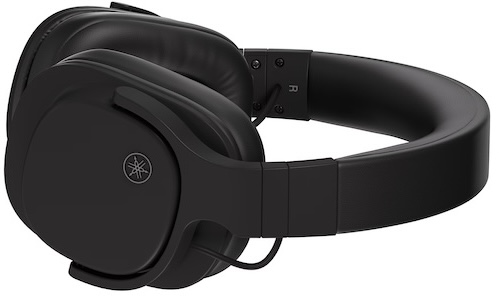
The YH-L500A exemplifies this approach by prioritising comfort and wireless home listening enjoyment above all else. Rather than chasing every Bluetooth ANC feature or targeting the travel market, Yamaha has built something specifically for relaxing on the couch listening to music or watching TV. There’s no ANC to fight airplane cabin noise, no transparency mode for navigating busy streets, no wear sensors, and not even a folding hinge or travel case. This is a headphone that lives on your coffee table, ready for whenever you want to settle into the sofa with music or a film.
I would like to thank Yamaha for providing the YH-L500A for the purposes of this review.
If you are interested in finding more information about this product, you can find it at product page link
It typically retails for around $229.
After several weeks of daily use, the YH-L500A has become one of my favourite headphones for casual evening listening. The combination of exceptionally light weight, generous earcup dimensions, no clamp force, and featherweight build creates one of the most comfortable closed-back listening experiences. You genuinely forget you’re wearing them, which is exactly what you want when settling in for a long evening with music or catching up on television maybe while your partner is reading a book nearby.
But I do have some quibbles about many aspects of this headphone which I will get to within the review, but first lets have a look at the unboxing experience.
Unboxing and Build Quality
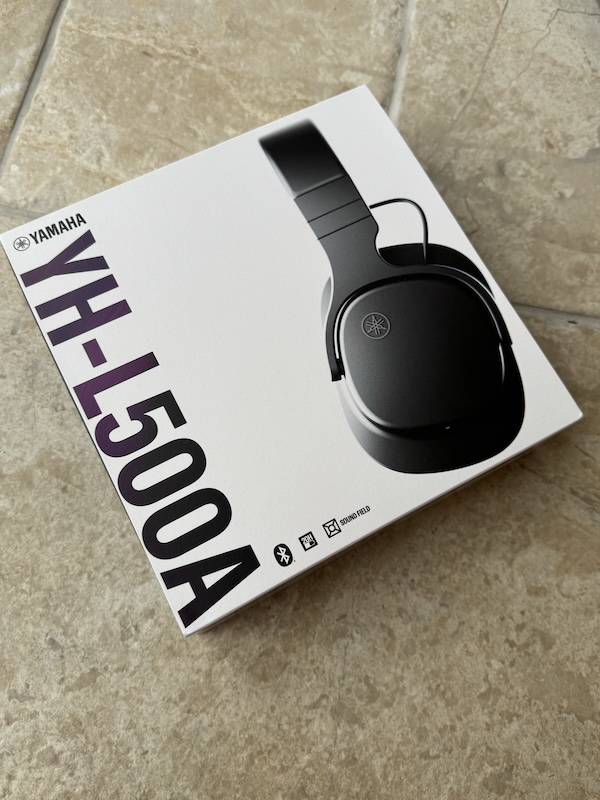
The unboxing experience of the YH-L500A is simple and functional:
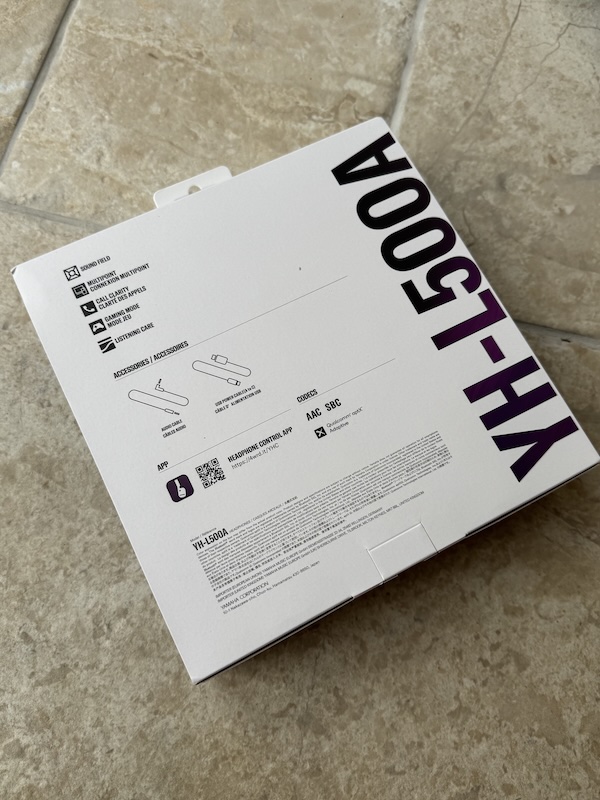
And the back of the box has the specification:
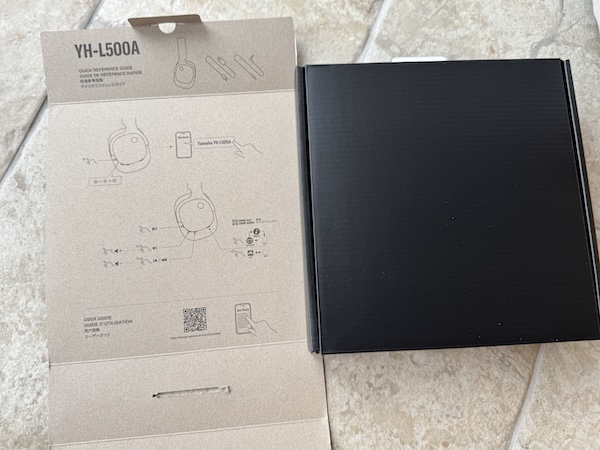
Removing the external sleeve, you see the quick start guide on the inside which I thought was a
nice tough:
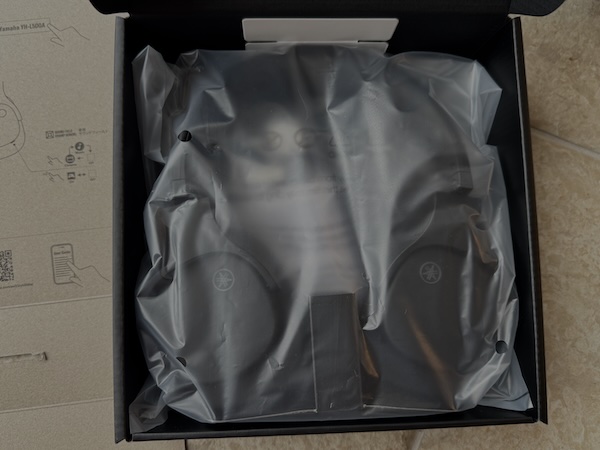
Opening the box reveals the headphones in some plastic:
And underneath the headphones, you find some minimal accessories with a USB-A to USB-C charging cable, some documentation, and a long 3.5 mm analog audio cable:
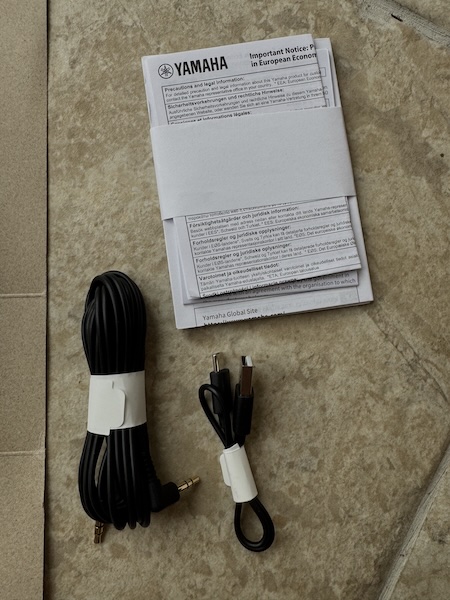
Quibble 1: There is no travel pouch or case, which feels like a missed opportunity for a $229 product even for one that is designed to be used at home, I might have brought this on a recent work trip if only to listen in the hotel room, had there been a case.
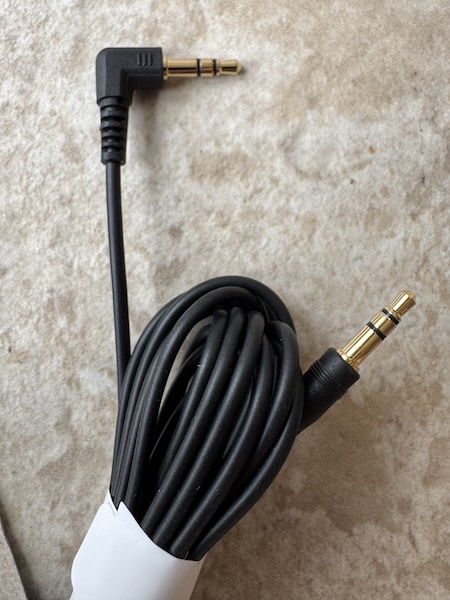
The audio cable is a decent length, but I imagine most people will still use this as a bluetooth headphone:
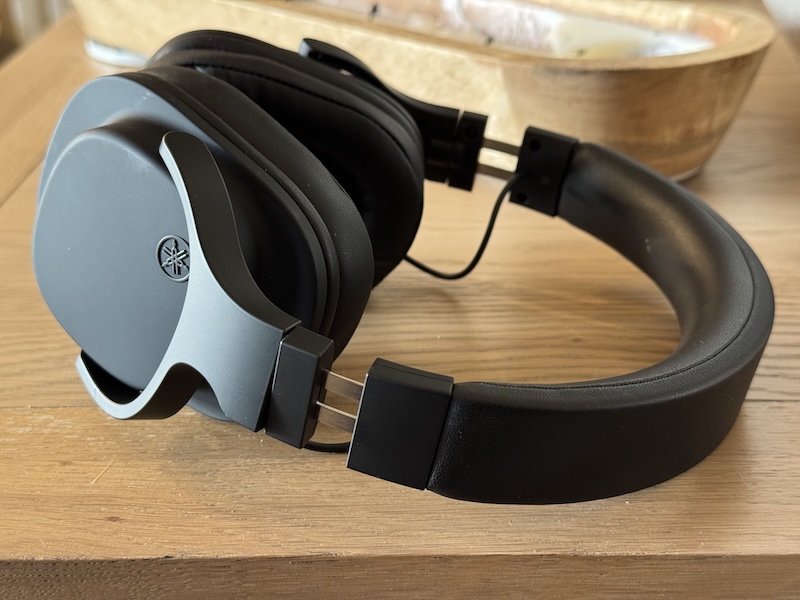
Overall, the accessory set is basic, but adequate for a headphone clearly intended for home use and while not as good-looking on my coffee table as some of my more expensive wooden closed backs like the ZMF Bokeh Closed, it still looks well:
The Headphones Themselves
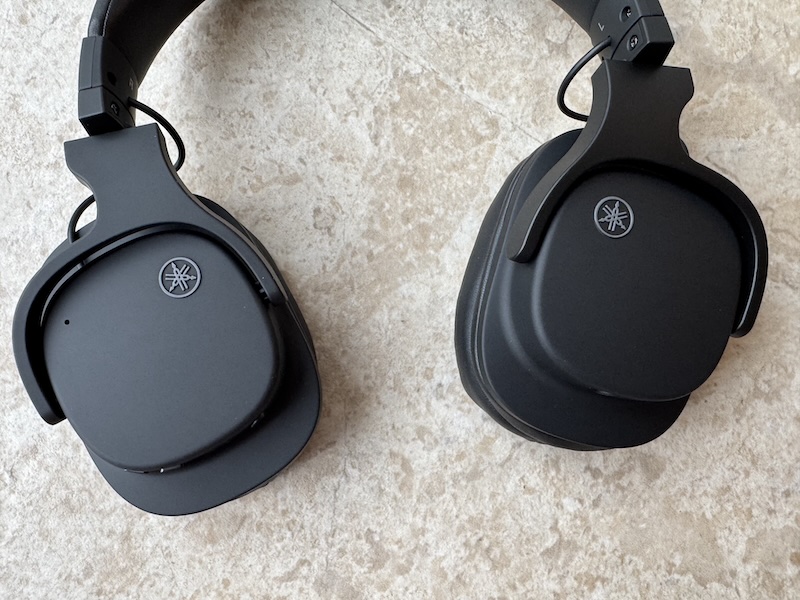
The YH-L500A presents a matte-black utilitarian aesthetic reminiscent of studio monitors, with large, square-ish earcups,
visible yokes, and soft-touch plastic.
The Controls
The controls, while intuitive, have a slightly loose feel when tapped, and lack the satisfying firmness found on more
robust headphones.
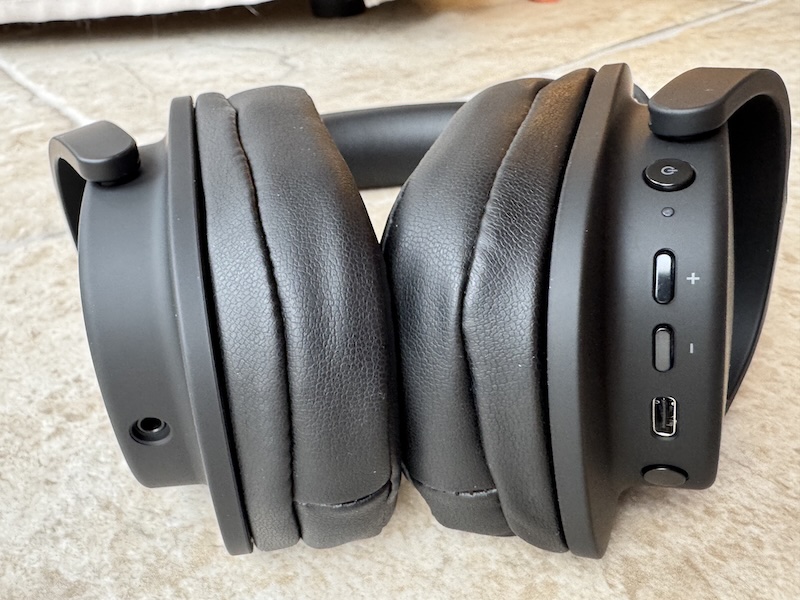
Quibble 2: The buttons are an area where the otherwise solid build feels less premium than its price point,
though I am much happier with buttons rather than ’touch controls’ we are starting to see on other bluetooth headphones:
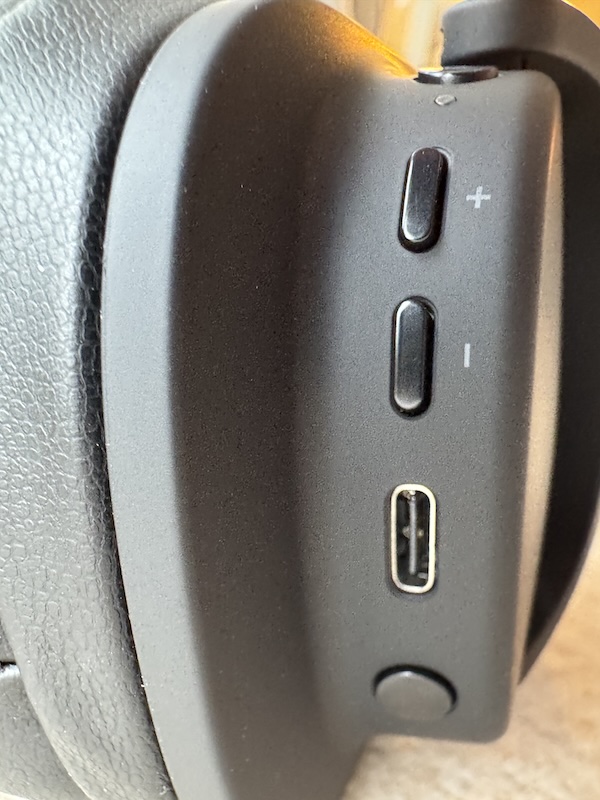
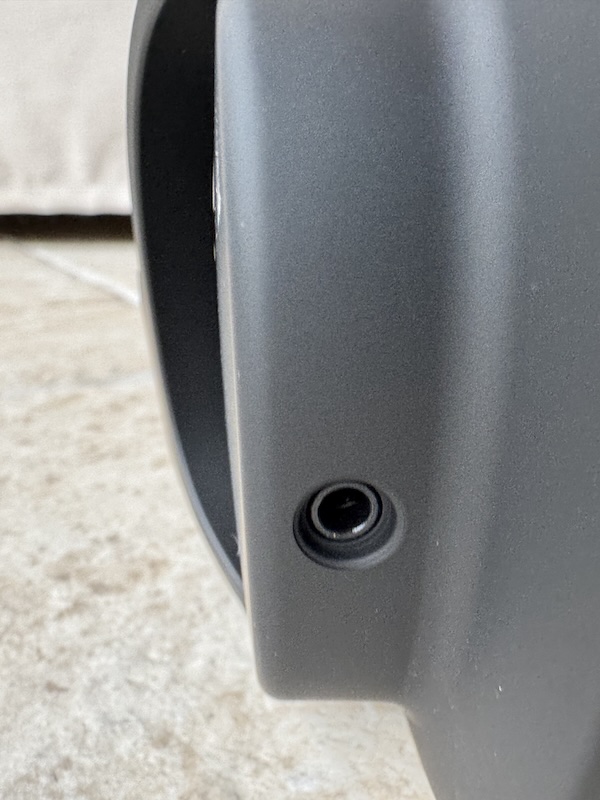
But I really like the Music, Movie DSP switching button next to the usb-c connection that you can see in the photo above. This was incredibly helpful and interesting to quickly toggle these modes while listening to music and watching movies, but more on the sound differences later.
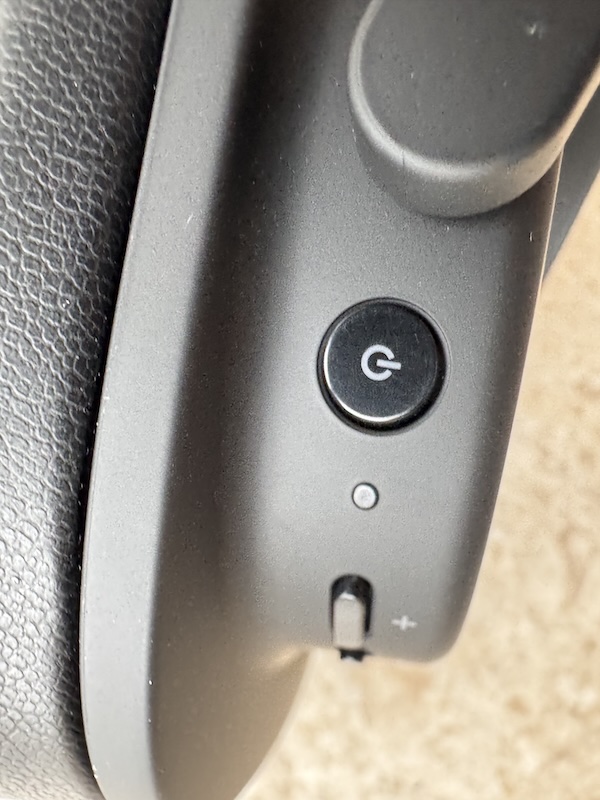
| Power and Pairing button | Analog connection: |
|---|---|
 |
 |
The Earcups
The large pads are plush and distribute pressure evenly.
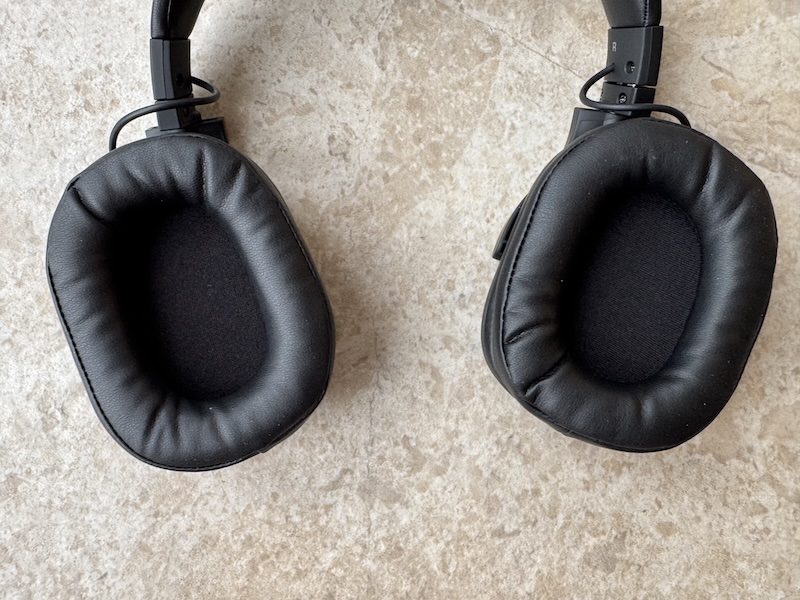
Their depth and diameter are notably larger than typical Bluetooth headphones, providing some excellent long-term comfort:
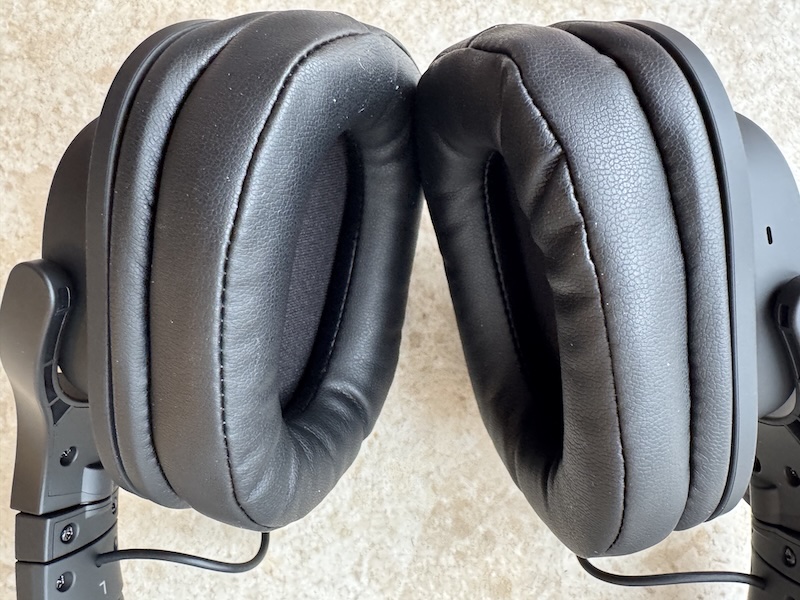
Clamp force is minimal, with excellent stability when reclining or shifting around during longer listening sessions.
The breathable pad material resists heat buildup remarkably well. Even during multi-hour listening sessions, I never experienced the sweaty discomfort that plagues many closed-back designs. For home listening where you’re not battling external noise and can simply enjoy the music, this level of comfort is one of this headphone’s defining characteristics.
Headband
The headband has a very decent headband extension mechanism:
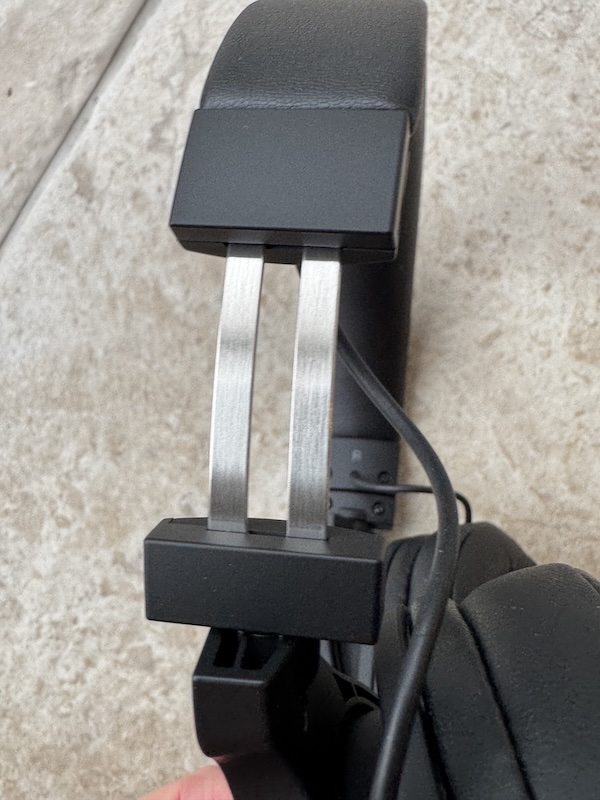
Though at this price point I would have hoped to see something a little more premium like you find on a typical, Meze headphhone, but for a bluetooth headphone I feel it’s fine.
The cushioning is a bit thin on top, but it didn’t bother me much even with longer sessions, but I would have preferred a little air gap at the top of the headband to relieve the pressure on my head:
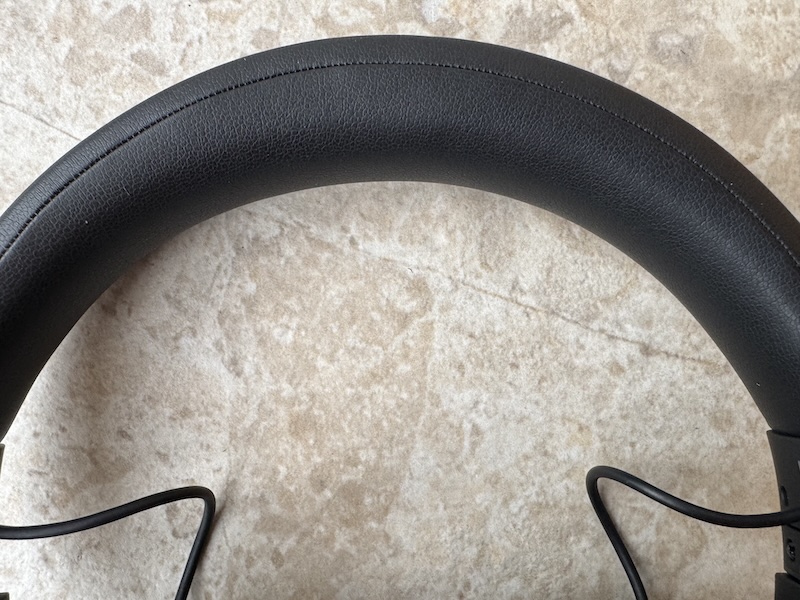 |
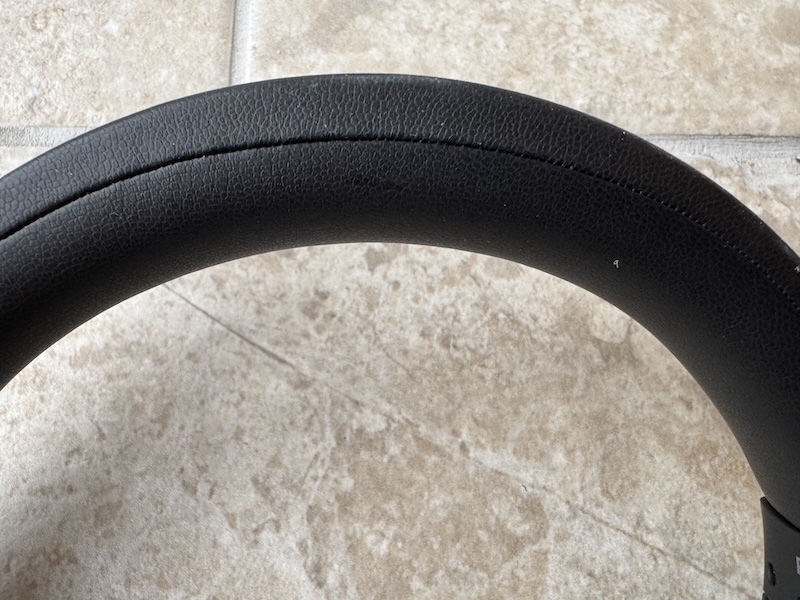 |
Overall Comfort
The comfort story continues with its weight. At just 265 grams, the YH-L500A is remarkably light for a closed-back wireless headphone. While some wired studio monitors area technically lighter, like the Sony MDR-MV1 at 233 grams, that does not include the cable weight, so overall I feel the YH-L500A feels much lighter.
Overall, it is very close to the comfort of dedicated studio headphones like the Sony MDR-MV1 or Sennheiser HD 490 Pro. And I feel they are more comfortable than any ANC-focused travel headphones I’ve used and a pleasure to wear of an evening.
Features and Performance
As I mentioned in the intro, Yamaha has focused on making a simple bluetooth headphone, but with that said they still have many features that make it a great choice for home listening:
Bluetooth
So only Bluetooth 5.4 (rather than 6.0 as we have started to see) and a slightly limited set of codecs with SBC, AAC, and aptX Adaptive. So you will get the best on both iOS (with AAC) and Android with aptX Adaptive.
Quibble 3: I would have preferred to see more codecs, specifically LDAC.
Multipoint pairing supported
Very handy for switch between listening to music via your phone and switching to a set-top box for movie watching.
Yamaha Sound Field DSP modes: Music and Cinema
I will get into the sound differences later, but this is a very nice feature to have especially as it has easy access via the dedicated button.
Wired passive playback
Always nice to have the option, but I didn’t really use it as I have other wired closed back headphones, so I felt this headphone strength is its wireless connectivity.
Battery life
Battery life is quoted around 20 hours with Sound Field enabled, with a full charge taking roughly two hours.
I did find myself charging it up every few days which compared to most other ANC headphones (some of which can get to over 60+ hours now), but those other bluetooth headphones are heavier, so I would guess Yamaha were focused on keeping the weight down rather than having the largest battery.
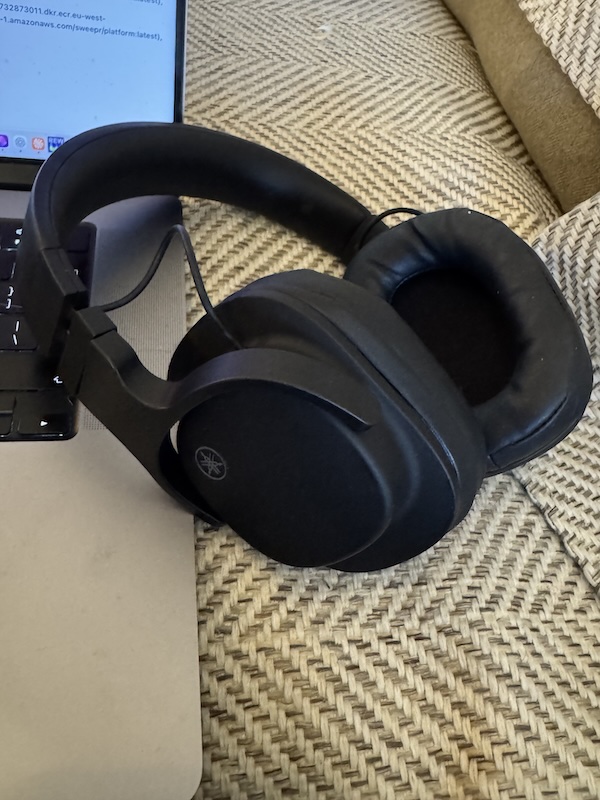
Quibble 4: Another thing to point out is you cannot use the headphone while it is charging it up. Given it has comparatively small battery life, I feel this is a bad limitation.
So even using it with my Macbook Pro, I had to do a quick charge and then disconnect to continue listening:
Companion Mobile App
Keeping to the overall theme, Yamaha’s Headphone Control app provides the controls you need without overwhelming
you with options.
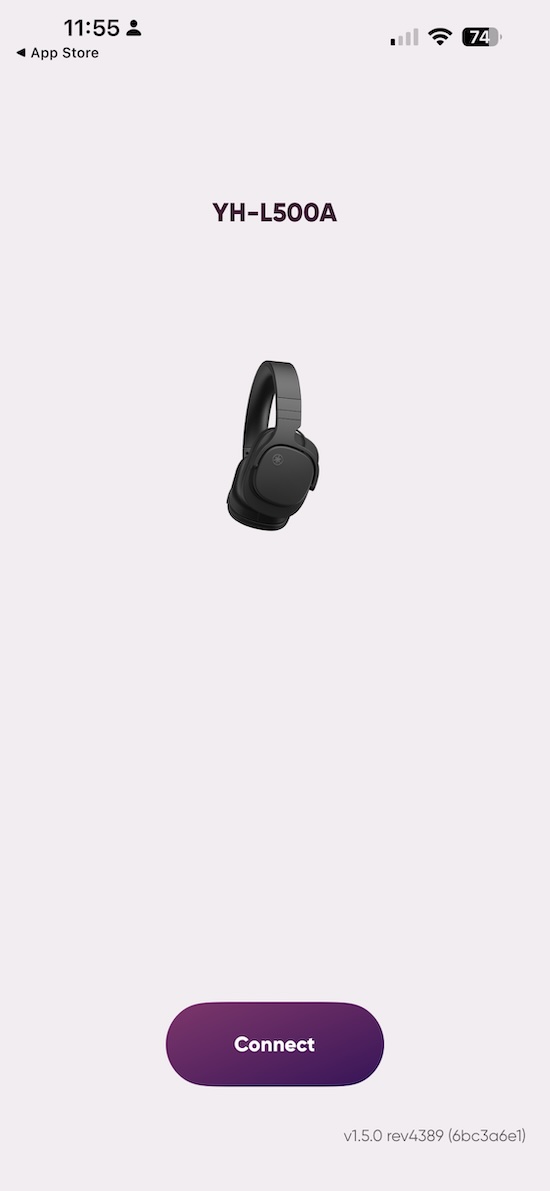
The home screen gives you immediate access to battery status, connection information, equalization and the key
soundfield features:
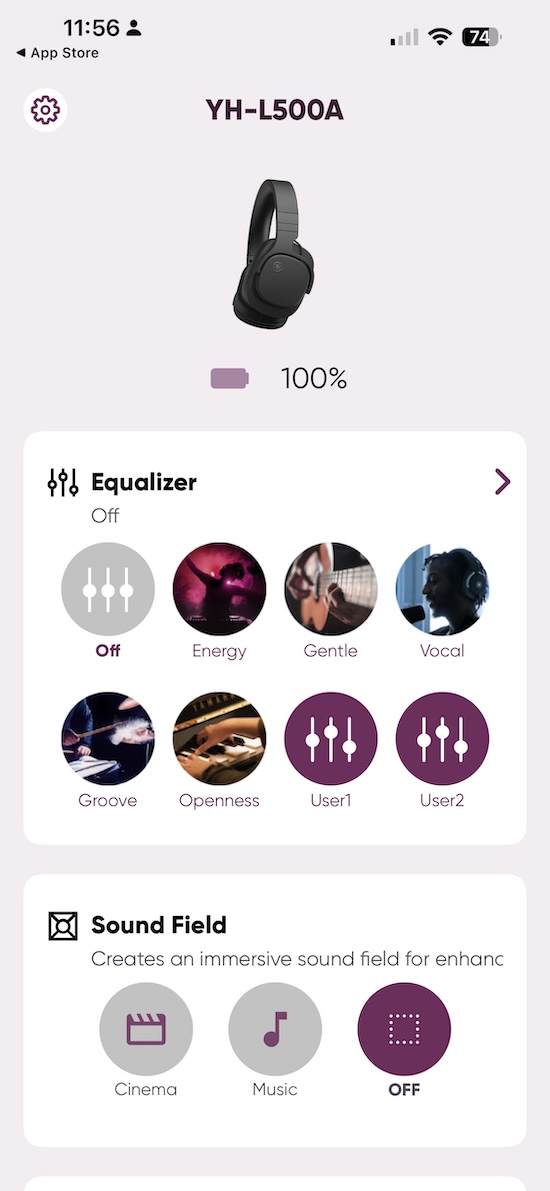
The Sound Field modes (Music and Cinema) add spatial processing that genuinely enhances certain content. I found the Music DSP particularly effective with older recordings featuring hard-panned stereo, where the crossfeed effect brought welcome centre fill and reduced the sometimes-jarring left-right separation. The Cinema mode adds width for film content, though the effect is more subtle. Both modes disable EQ when active, forcing you to choose between tonal shaping and spatial processing—a limitation, but understandable given the processing involved.
There are also some advanced options where you can check for firmware updates and get some documentation:
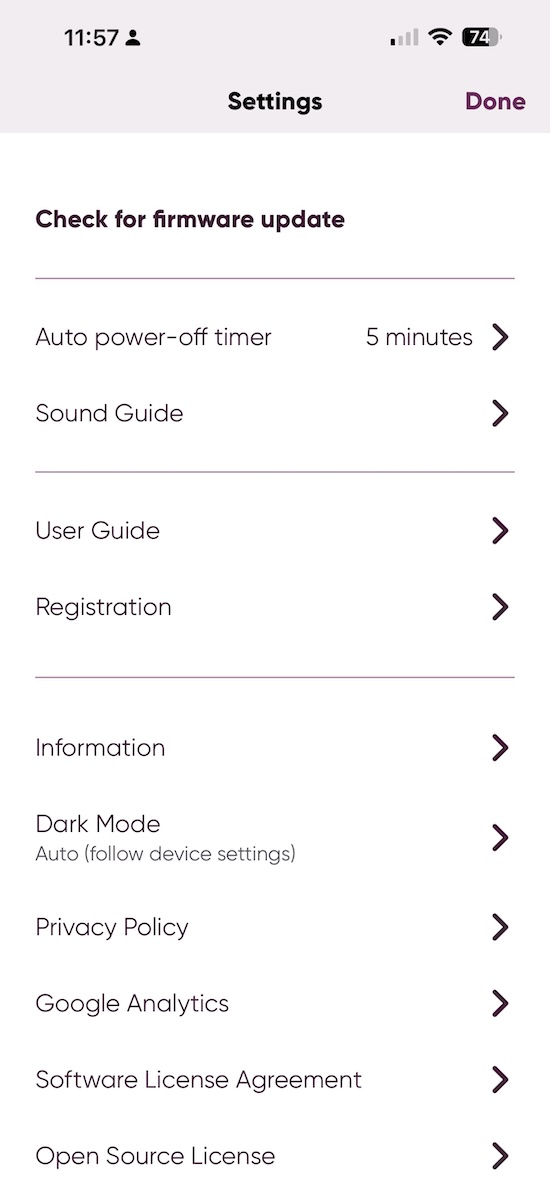
You can also toggle the “Listening Care” feature, and there is an
option to toggle lower latency mode, especially useful if you are a gamer, but will use the battery up a little quicker:
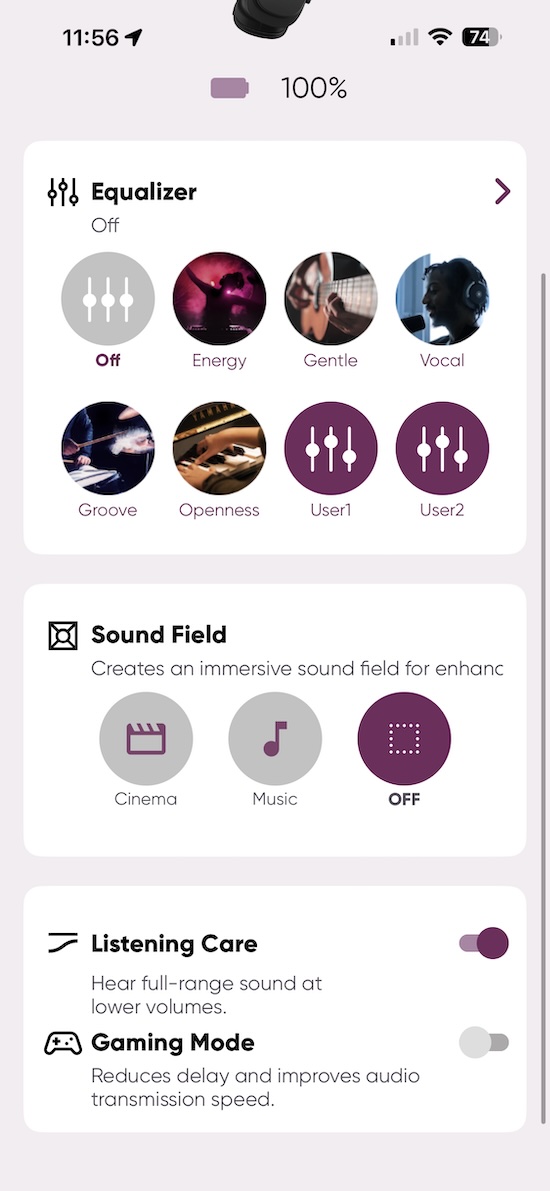
Listening Care provides loudness compensation following Fletcher-Munson principles, maintaining tonal balance at lower volumes by gently boosting bass and treble. For late-night listening when you need to keep levels down, this feature works beautifully, but depending on your preference for bass and treble you might want to adjust with EQ.
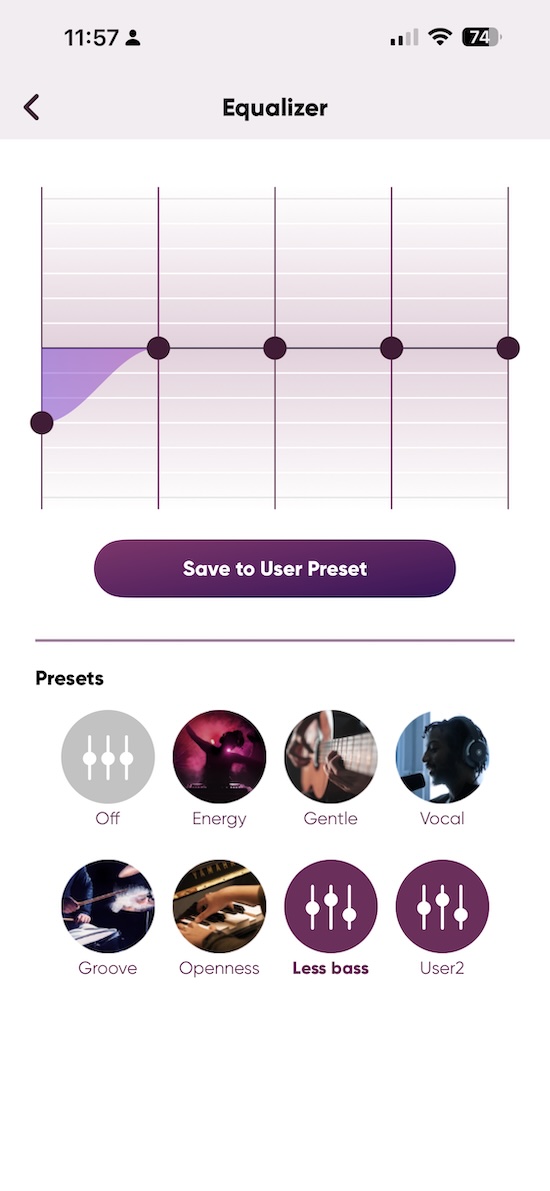
5-band Equaliser
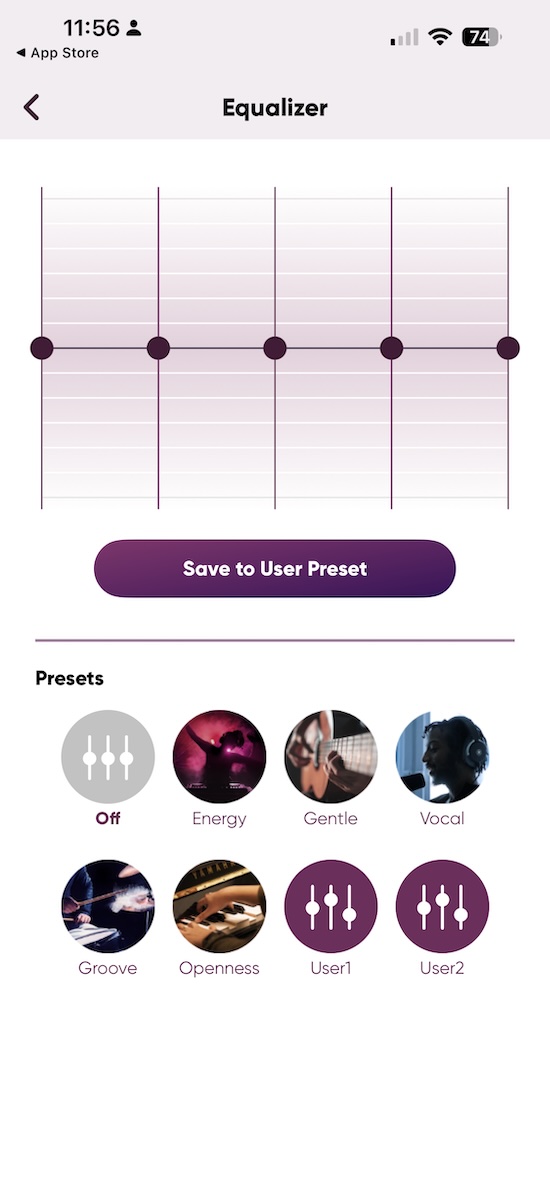
But the most interesting feature of the App is the equaliser:
 |
 |
With the listening care enabled and when listening at lower levels, I found I had to adjust the bass and treble down
which worked well for me:
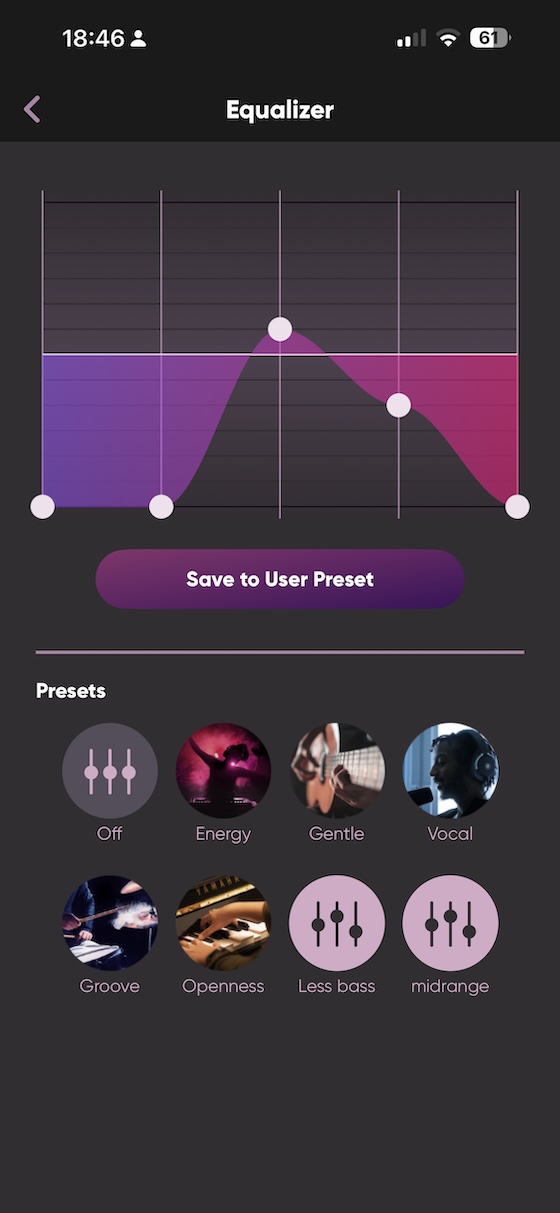
You can save your custom 5-band EQ into just two custom preset slots, which is sufficient for my needs but I feel it is a pity there are more options available.
Quibble 5: I would have preferred to see more bands of EQ or ideally PEQ and then more presets for those more flexible EQ.
Sound Impressions
Out of the box, without EQ, DSP modes or the “Listener Care” options, the YH-L500A delivers by default a fun slightly V-shaped and spacious sound rather than analytical precision. But like many recent advanced headphones, talking about the default sound signature in isolation can be a bit misleading.
Specifically, the “Listening Care” dynamically compensates for loudness so depending on the volume level you listen at you will get either more V-shaped or more balanced sound. E.g. if you listen at louder levels, the bass and treble will be less pronounced and technically a more balanced sound, alternatively at lower levels you will get more V-shaped sound (but it will sound more ’natural’) and this is why I did that Equaliser tweak earlier for lower listening levels.
Also, I found the Music DSP while also more spacious by adding a nice amount of ‘crossfeed’ into the listening experience, it also adds more bass to the overall sound and cannot be changed with EQ.
Quibble 6: Allow some EQ control even with the Music DSP mode enabled.
For my listening impressions, I spent time with a deliberately varied selection of material: Patricia Barber’s intimate jazz recordings, electronic textures from Trentemøller, classic rock from Bruce Springsteen and Fleetwood Mac, and orchestral pieces from John Williams. I also spent considerable time with older 1970s recordings where stereo mixing conventions were quite different from today’s practices, and I felt the Music DSP mode was particularly effective and enhancing those recordings.
Bass: Present and Well-Controlled
The bass presentation strikes a sensible middle ground. There’s proper weight and extension to support the music without the excessive boom that plagues many consumer wireless headphones. Sub-bass has a satisfying presence on electronic music, though it doesn’t deliver the visceral rumble of bass-emphasised designs.
On Fleetwood Mac’s “The Chain” from Rumours, John McVie’s iconic bass line maintains excellent definition and drive without overwhelming the mix. The bass has proper texture and articulation, letting you follow the melodic line rather than just feeling low-frequency thump. Similarly, the deep electronic bass in Trentemøller’s “Take Me Into Your Skin” remains controlled and precise, with good decay characteristics that prevent blooming into the midrange.
While I initially wished for slightly less bass presence, I found that applying a modest low-frequency change via the EQ provided exactly what I wanted for certain genres. The driver responds well to EQ adjustment, though the 5-band limitations mean you cannot make all the adjustments you might want.
Midrange: Clear and Natural
The midrange is where the YH-L500A establishes its character. Vocals and acoustic instruments are rendered with beautiful clarity and natural timbre, presented in a way that feels neither recessed nor overly forward. There’s an ease to the midrange presentation that makes long listening sessions genuinely fatigue-free.
Patricia Barber’s voice on “Company” demonstrates the headphone’s ability to convey vocal subtlety and expression. Her distinctive timbre comes through intact, with excellent breath detail and micro-dynamics that bring intimacy to the performance. The accompanying piano and bass maintain proper tonal balance, occupying their respective places in the soundstage without competing for attention.
Male vocals have proper weight and body. Don Henley’s voice on Eagles’ “Hotel California” sits naturally in the mix with realistic chest resonance, while the dual acoustic guitar introduction maintains beautiful textural detail and separation.
Treble: Detailed Without Harshness
The treble region extends well with good air and sparkle, though there’s a modest elevation in the upper frequencies that some listeners may find slightly bright with certain recordings. This isn’t harsh or sibilant rather, it adds a sense of clarity and openness that works well for many genres while occasionally drawing attention to some ‘hot masters’.
Cymbals and hi-hats have natural shimmer and realistic decay. On Bruce Springsteen’s “Western Stars”, the cymbal work maintains proper metallic texture without becoming splashy or fatiguing. String instruments benefit from the extended treble, with violin sections on orchestral pieces displaying beautiful harmonic overtones and air.
I experimented with some treble reduction via the EQ on brighter recordings and found it effective. Overall, depending on how loudly you listen (and whether you enable the Loudness compensation feature) you might want to adjust that treble down a little.
Soundstage & Imaging: Surprisingly Open for Closed-Back
Perhaps the most striking characteristic of the YH-L500A is the spaciousness of the presentation. Even before engaging the DSP modes, these headphones deliver one of the most open, expansive soundstages I’ve experienced from a closed-back design. The soundstage isn’t artificially wide or diffuse—rather, it presents a realistic sense of space with excellent depth and surprisingly good lateral extension.
On Pink Floyd’s “Time” from The Dark Side of the Moon, the layered intro elements occupy distinct positions in space with excellent separation. The clocks, bells, and ambient sounds create a genuine sense of immersion before the music proper begins. When the drums kick in, they arrive with satisfying impact while maintaining their position in the stereo field.
The DSP Sound Field modes take this spaciousness even further. The Music DSP became my favourite feature for older recordings from the 1970s where hard-panning was common. On Led Zeppelin’s “Whole Lotta Love” from Led Zeppelin II, the sometimes-jarring hard-left/hard-right panning becomes much more cohesive with the Music DSP engaged. The crossfeed effect brings welcome centre fill while maintaining separation, transforming what can be a fatiguing stereo presentation into something far more natural and enjoyable.
Similarly, on The Beatles’ “Come Together” from Abbey Road, (the original stereo recording) where different elements are often firmly panned to extremes, the Music DSP creates a more integrated presentation without losing the character of the original mix. Having this processing available via a simple button press rather than requiring app interaction makes it genuinely practical to toggle on and off depending on the recording.
While I didn’t use the Cinema DSP mode as much as the music DSP, when I did, I felt it added width for dramatic film music — for example, with the recent Dune movies, the extra bass provide by this profile really helps create a more immersive experience. Also the Movie DSP worked well for enhancing dialogue clarity and creating a sense of space around sound effects.
A Musical Character for Relaxed Listening
For critical listening or studio monitoring, these aren’t the right tool but that’s not their purpose. For the specific use case of comfortable home listening, whether you’re deep into an album, catching up on a film, or simply having music on while reading, the YH-L500A excels.
In summary, you can expect a Musical, Spacious, and Engaging sound both with the DSP modes disabled and depending on how the music was recorded even more so with the ‘Music’ DSP mode enabled.
Alternative home “audiophile” options
For some context, here are alternative evening listening options:
- ANC over-ears like Sonos Ace or Apple AirPods Max: very capable and feature-rich, but heavier with stronger clamp for passive isolation. Many of those travel-focused features (deep ANC, spatial modes, beamforming mics) aren’t needed on the sofa, and long-session comfort can suffer.
- HIFIMAN Deva Pro with the R2R dongle: open-back planar with a more traditionally “audiophile” tonality. It’s also heavier and completely open — there’s no isolation and plenty of leakage, so your partner can hear your music and room noise leaks in.
- A mobile DAP plus wired closed back like the FiiO FT1 headphones: sonically excellent, but not very practical for casual home listening; more wires and devices to juggle than most want.
By contrast, the Yamaha YH-L500A is laser-focused on a simple, comfortable home experience: light on your head, easy to use, no unnecessary features, and a clean, balanced tuning with the fun and optional Music Sound Field DSP. If your goal is relaxed nightly listening without the baggage of travel-oriented features, this approach is refreshingly pragmatic.
Specifications and Measurements
| Specification | Details |
|---|---|
| Headphone Type | Over-Ear (Closed-Back) |
| Driver | 40 mm Dynamic |
| Frequency Response | 20 Hz – 20 kHz |
| Weight | 265 g |
| Bluetooth Version | 5.4 |
| Codecs | SBC, AAC, aptX Adaptive |
| Profiles | A2DP, AVRCP, HFP |
| Multipoint | Yes |
| Sound Field Modes | Music, Cinema |
| Battery Life | ~20 hours (Sound Field ON) |
| Charging Time | ~2 hours |
| App Support | Yamaha Headphone Control |
| Wired Input | 3.5 mm |
| Accessories | USB-A to USB-C Cable (50 cm), 3 m Audio Cable |
Measurements
All measurements were taken using the KB501X soft pinna with a 711-clone coupler and are available in my measurement database at pragmaticaudio.com/headphones.
Note: Given the YH-L500A is a closed back headphone, the bass measurements are typically exaggreated due to the inaccuracy of the KB501X pinna compared to the more accurate BK-5128, so you can expect slightly less bass than shown in these measurements.
Frequency Response
So I measurement the various profiles in REW shows:
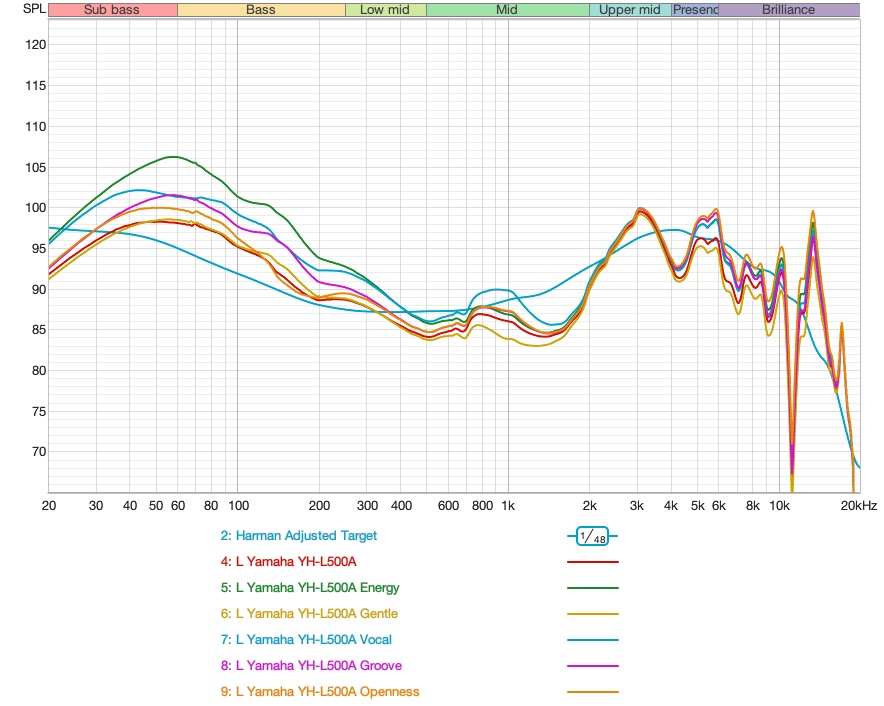
You can see the default and, for example, the “gentle” profile is the most neutral while the “energetic” profile has way too much bass and treble.
A good way to judge the sound is comparing it to the FiiO FT1 closed back:
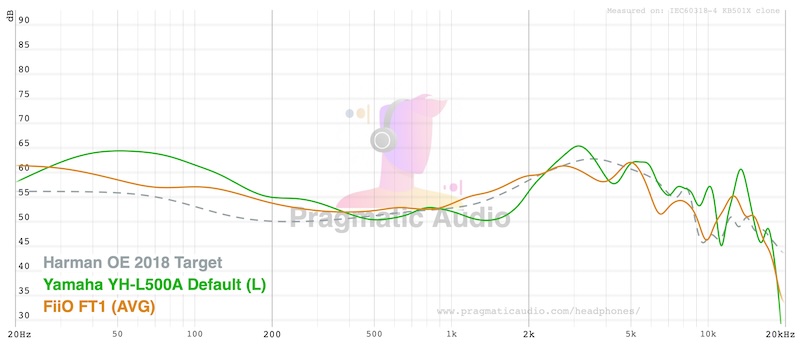
And in the measurments above you can see that the YH-L500A delivers a more V-Shaped frequency response than the FT1, with more bass and treble. This is where my earlier equalizer recommendation helped, but you should also realise that the “listener care” / loudness compensation feature will also lower the bass and treble levels depending on the volume you listen at.
In this measurement, with “Listener Care switched off”, I have included some annonations:
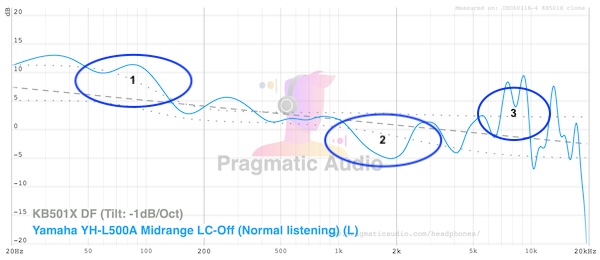
- Mid-Bass is a little too pronounced
- The “Soundstage dip” between 1Khz - 2Khz - very typical of headphones looking for widening the soundstage
- The treble is a little too high for my liking, but this is often to balanced with that extra bass and also with that soundstage tweak in many headphones, so it makes sense for this headphone.
EQ Preset Comparisons
Yamaha provides several built-in presets that offer different tonal balances. Here’s a comparison of some of the key presets:
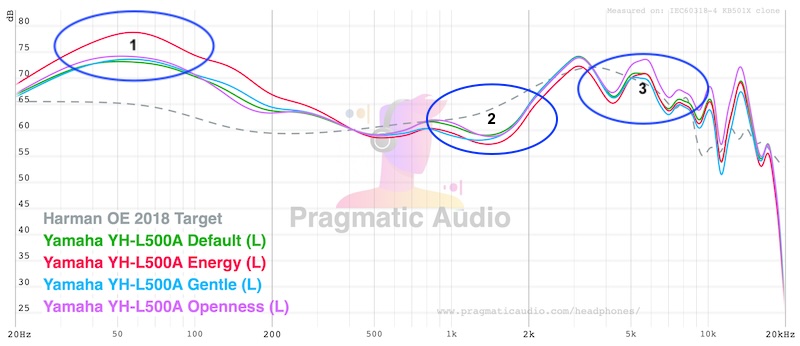 Each of these presets varies those 3 regions I highlighed above.
And a second comparison shows additional preset variations:
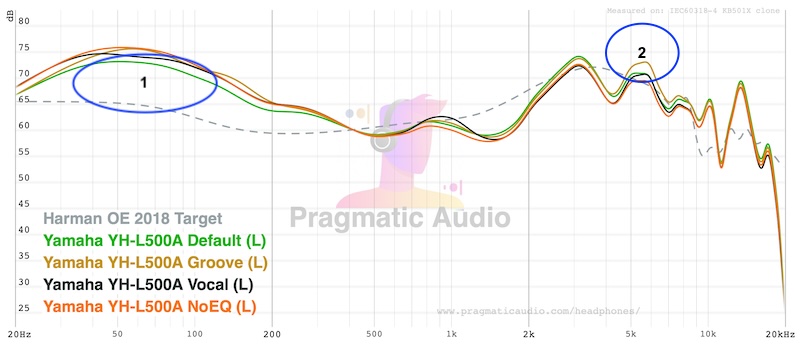
Bass and Treble Range Adjustability
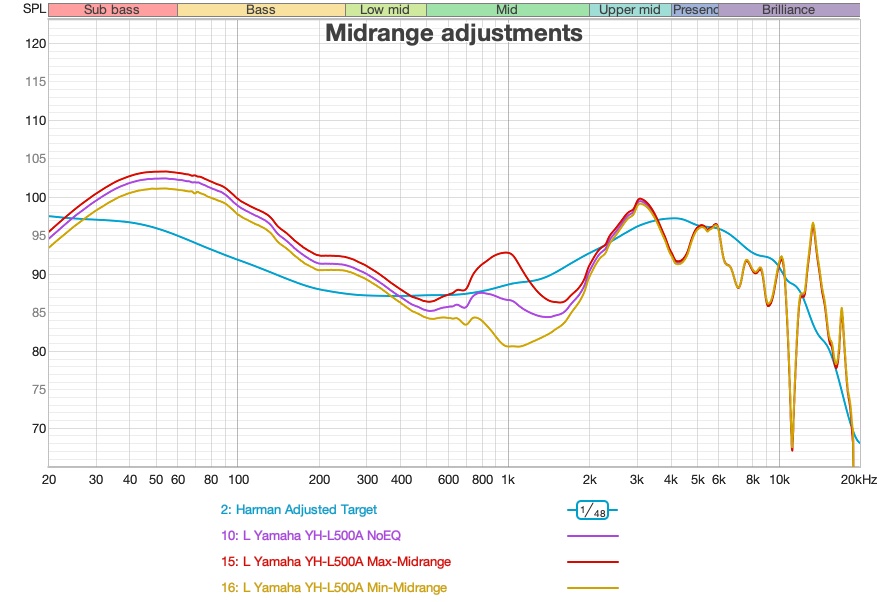
These are raw measurements of the delta changes to the FR with the high and lows of each of the 5 equaliser bands.
Here’s the range between minimum and maximum sub-bass settings:
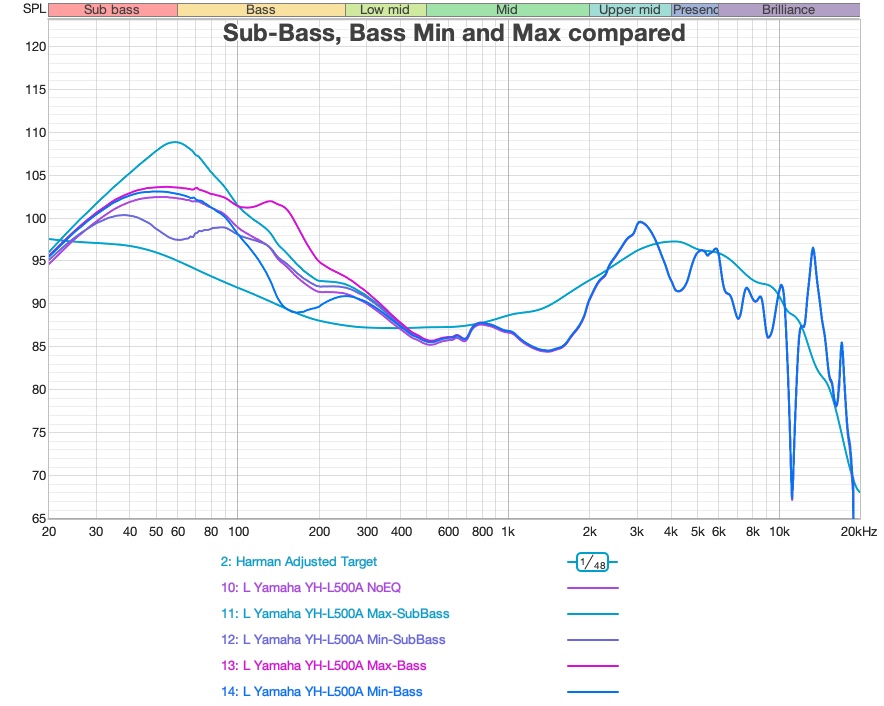
Similarly, the midrange can be shaped within a useful range:
The upper treble also offers adjustment flexibility for those who find the stock tuning too bright:
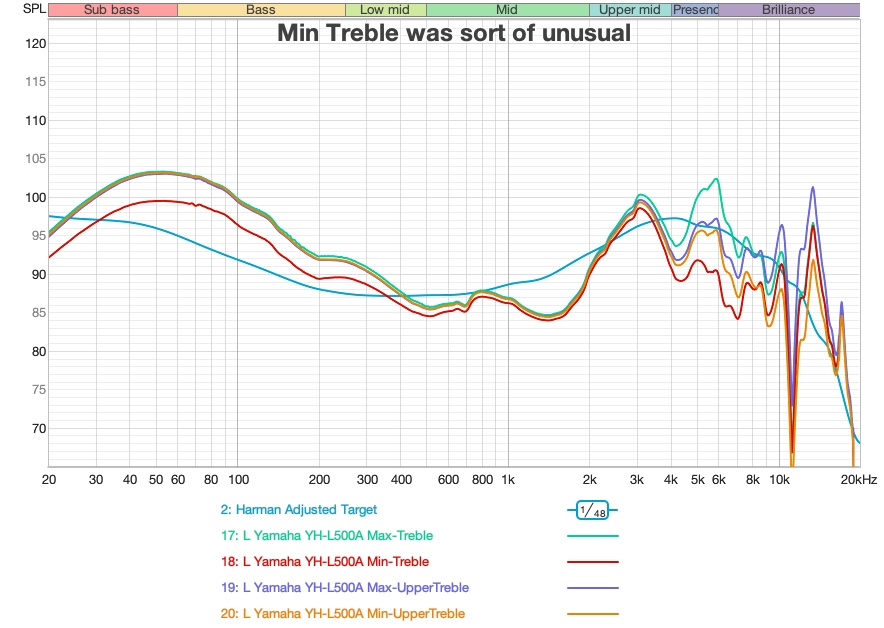
Note: The Mid-treble seemed to apply a much wider EQ lower the frequency right down to the bass region, so if you like a darker sounding headphone, just lower the Mid-treble might be a simple option.
DSP Sound Field Effects
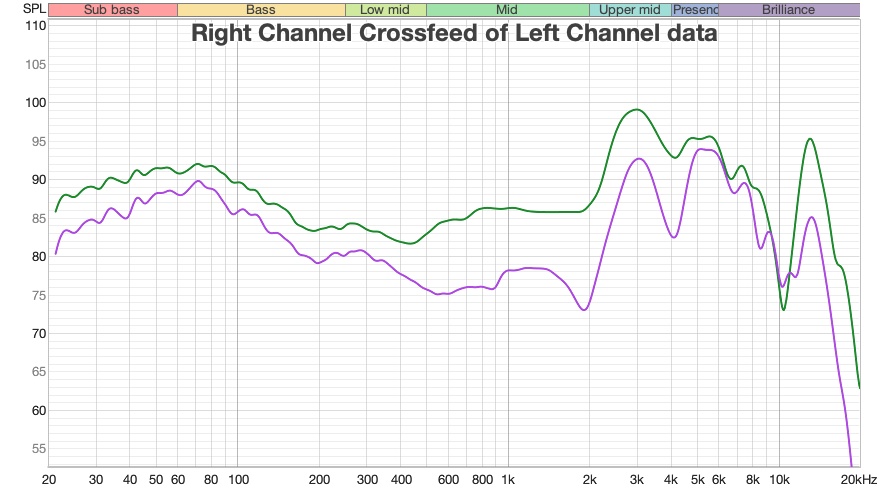
The Music DSP mode applies “crossfeed processing” that brings substantial sonic changes. I find these very interesting, so this measurement is just listening to the test tone coming only from the right channel, yet with the crossfeed the left channel gets some of the test tones applied:
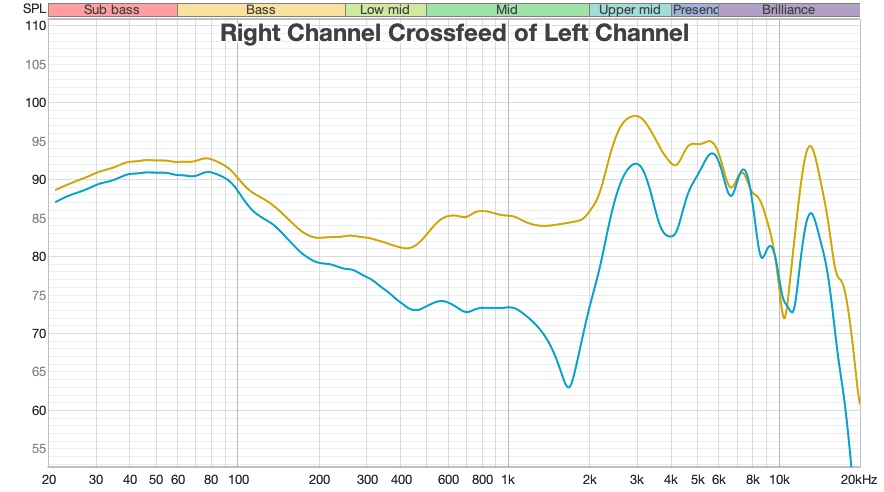
The Cinema DSP mode offers a different spatial processing approach, with the vocal area is enhanced for better dialog and both sides getting a large bass boost:
Listening Care (Loudness Compensation)
As I mentioned earlier, the “Listening Care” feature applies Fletcher-Munson loudness compensation to maintain tonal balance at lower volumes:
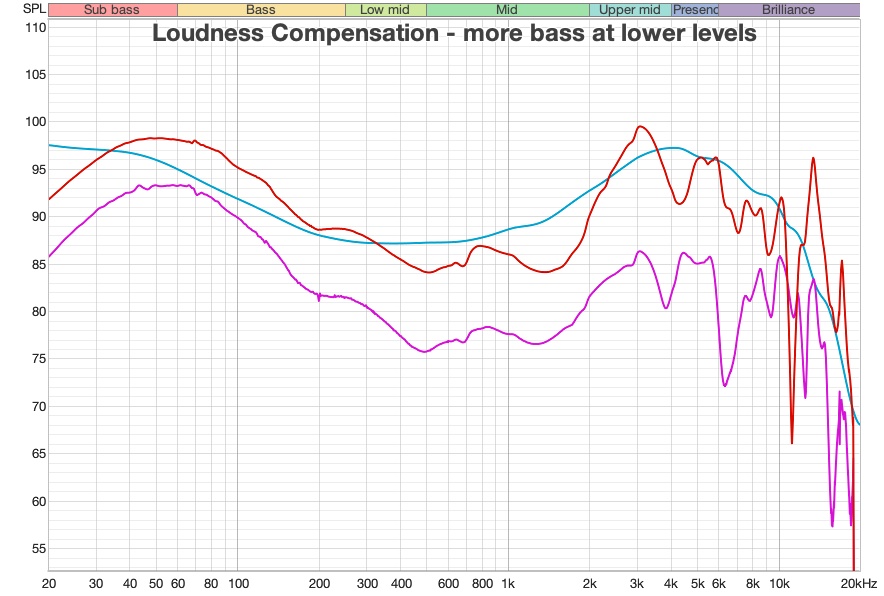
This subtle boost to bass and treble at reduced listening levels helps preserve the perceived tonal balance when you need to keep volume down for late-night listening.
Distortion Measurements
Distortion performance is ok, for a wireless closed-back headphone, but I believe still below the audible limits:
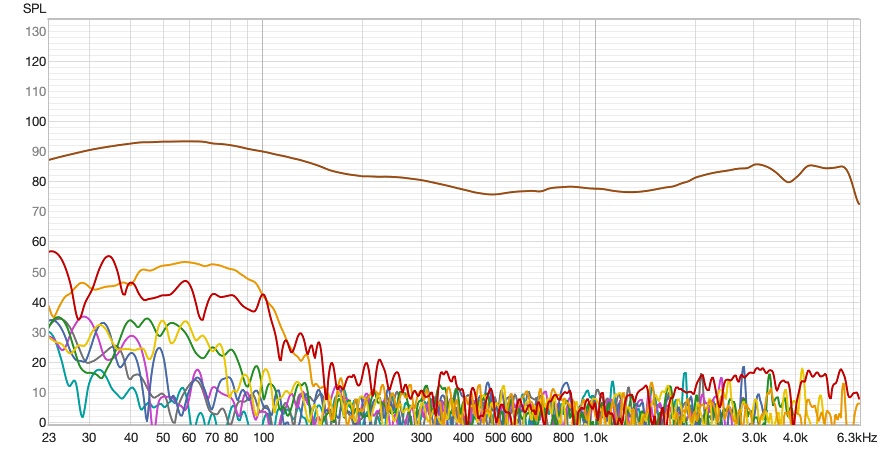
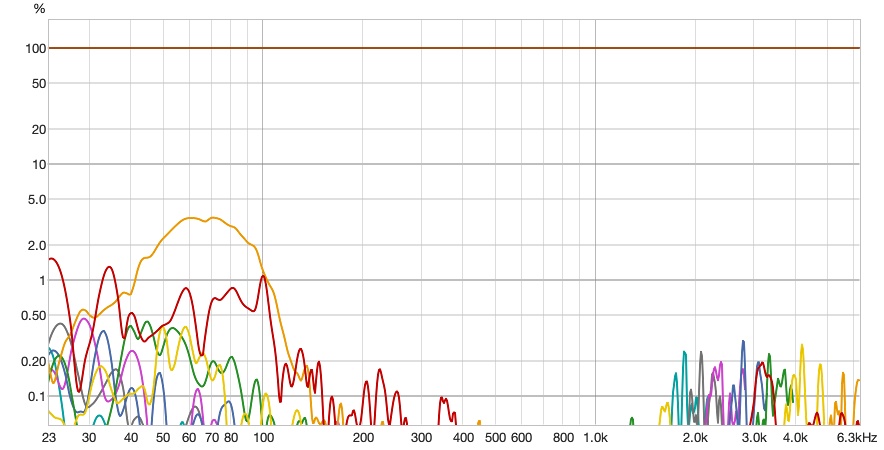
Viewing distortion as a percentage shows that mid-bass area does get a little more distortion ( though still less than 5%):
Rating
The YH-L500A earns a solid 4-star pragmatic rating as an exceptionally comfortable, musically engaging headphone purpose-built for home listening. This isn’t a jack-of-all-trades attempting to serve every possible use case. It was specially designed for its intended purpose.
The strengths are considerable and directly aligned with the home listening experience. The featherlight 265-gram weight combined with spacious earcups creates comfort that genuinely allows you to forget you’re wearing headphones during multi-hour sessions.
The V-Shaped tonal balance with excellent midrange clarity ensures a mostly fatigue-free listening across all genres, while the surprisingly spacious soundstage and excellent imaging make this one of the best sounding closed-backs for a relaxed evening listening experience. The Music DSP mode particularly shines with older recordings featuring hard-panned stereo, transforming potentially fatiguing mixes into cohesive, enjoyable presentations with a simple button press.
I highlight a few quibbles during the review, and I hope the limitations are equally clear and directly related to the focused design brief. The modest 20-hour battery life means you’ll charge more frequently than with some competitors, though this trade-off keeps weight down and comfort up.
The lack of ANC, transparency mode, strong clamping force, and even a folding mechanism makes these impractical for travel, commuting, or use in noisy environments. The 5-band EQ, while functional, can’t match the precision of parametric EQ when you want to target specific frequency peaks. And while I’ve grown fond of the utilitarian aesthetic, these won’t turn heads the way wooden closed-backs like the ZMF Bokeh or FiiO FT13 do on your coffee table.
But for relaxed home listening where comfort and musical enjoyment take priority, they deliver exactly what’s needed and nothing you don’t want.
Ideal for:
- Anyone seeking a supremely comfortable closed-back for long evening listening sessions
- Home listeners who value natural, musical sound over analytical precision
- Users who appreciate thoughtful DSP features like the Music mode’s crossfeed for older recordings
- Those who want isolation for household use without the weight and complexity of travel-focused ANC headphones
- Listeners who work from home and want a comfortable, good-sounding option that won’t disturb others
Not ideal for:
- Travel and commuting where ANC and portability matter
- Critical listening and studio monitoring requiring analytical precision
- Users who need maximum battery life between charges
- Those seeking striking visual aesthetics to display on the coffee table
Conclusion
The Yamaha YH-L500A has earned a place on my coffee table. While they may not possess the visual drama of artisan wooden headphones or the feature density of flagship ANC models, they’ve are practical go-to headphones for arelaxed home listening precisely because they excel at the fundamentals: long-term comfort, fun musically engaging sound, and thoughtful features that enhance rather than complicate the listening experience.
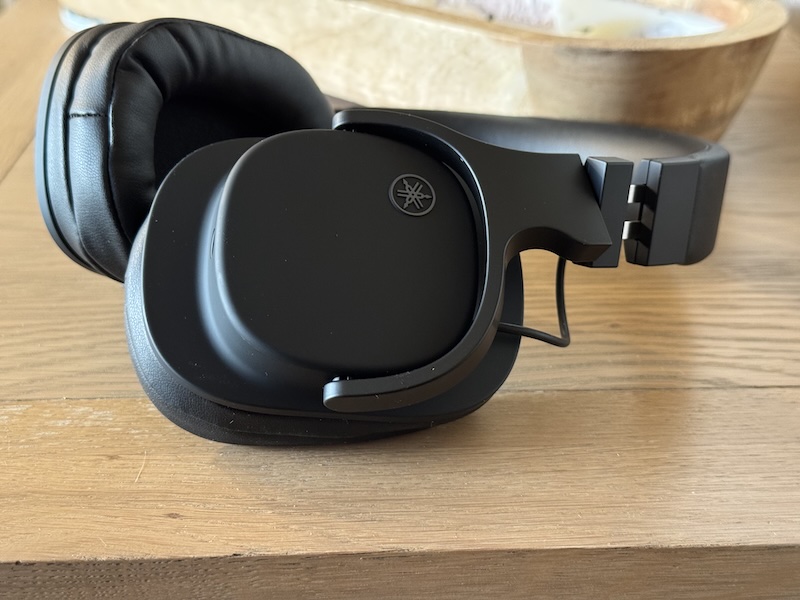
For the specific use case of comfortable home listening where you want proper isolation without disturbing others—whether that’s music while your partner reads, television in the evening, or simply something decent playing while working around the house—the YH-L500A is an excellent choice that does exactly what it sets out to do, and nothing it doesn’t need to.