EarFun Air Pro 4 Plus
A incremental but nice upgrade of just about everything in the Air Pro 4
EarFun’s Air Pro 4 Plus continues the brand’s policy of pragmatic, high‑value true wireless. While it doesn’t reinvent the Air Pro 4, it refines nearly everything from the sound signature, to the specs and the build quality, in my opinion, it probably should have been called the Air Pro 5.
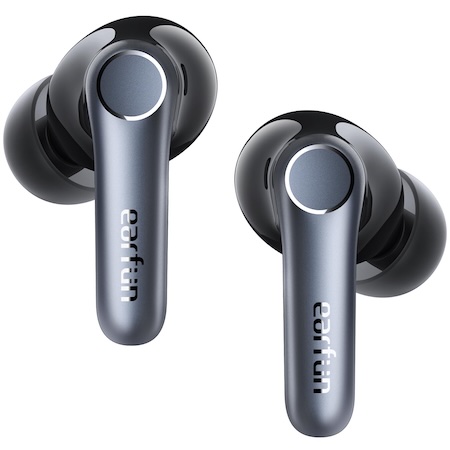
I would like to thank EarFun for providing the Air Pro 4 Plus for the purposes of this review.
If you are interested in finding more information about this product, you can find it at the official product page.
The current retail price is $99, but I have seen various discounts of up to 25%.
In summary, for those not wanting to read the rest of the review, if you’re a happy owner of last years’ Air Pro 4, you probably won’t need to upgrade. However, if you’re shopping anew, and you want a better TWS in almost every way, this could be the perfect new TWS for you. This is not only better than the Pro 4 is it the best sub $100 TWS you can buy, especially if audio quality is your main concern.
So, before I get into the details, let’s look at the unboxing and build quality.
Unboxing and Build Quality
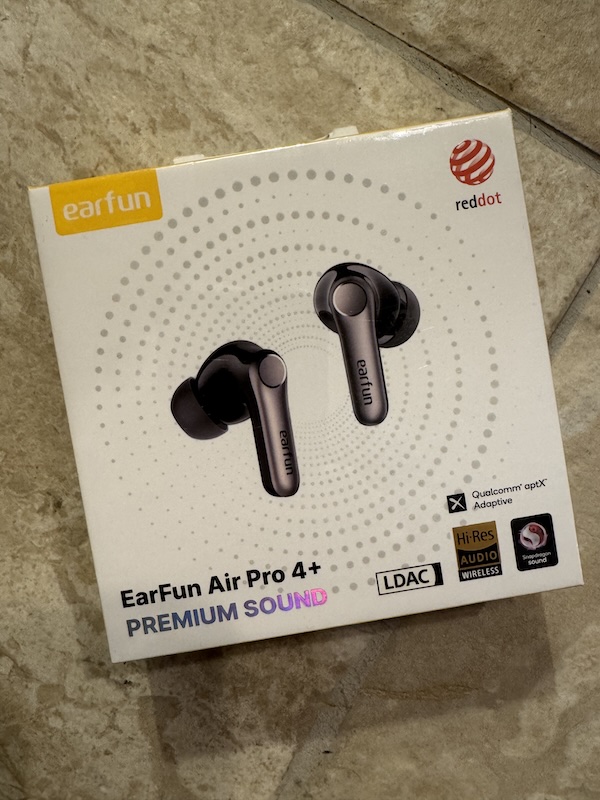
EarFun’s box remains very professional:
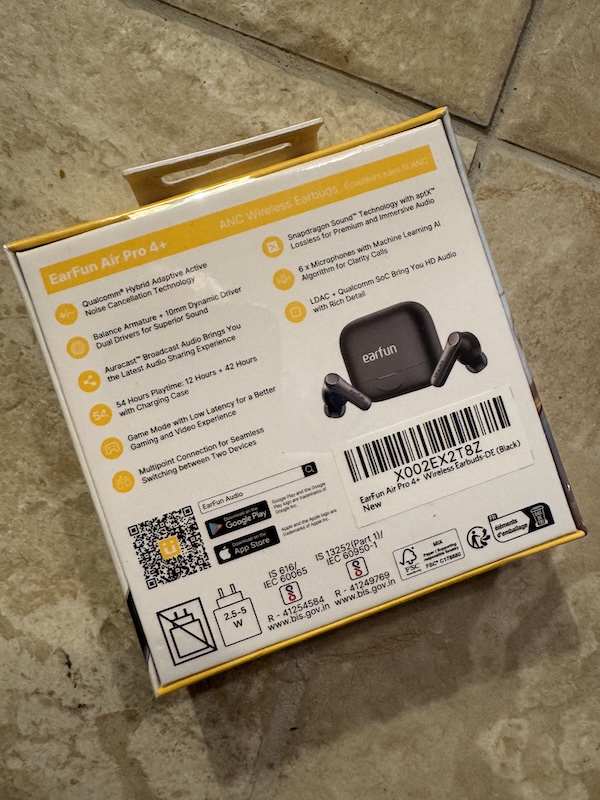
And the back of the box has the key features and specifications:
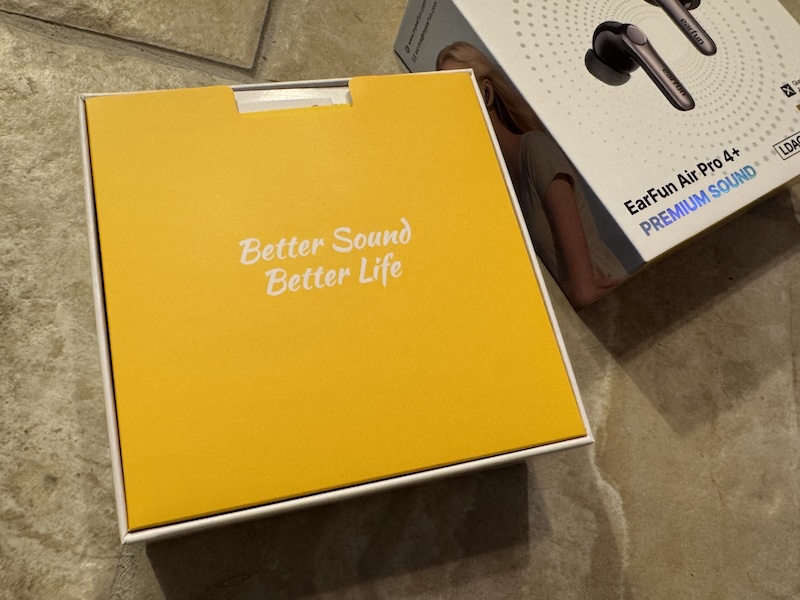
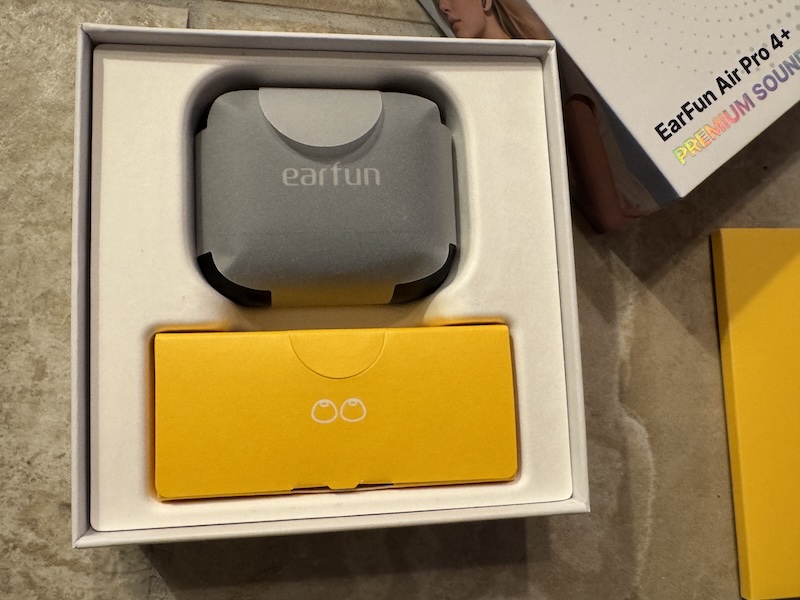
Opening the box you’ll find the case underneath the manual:
 |
 |
Accessories
You get a basic set of accessories:
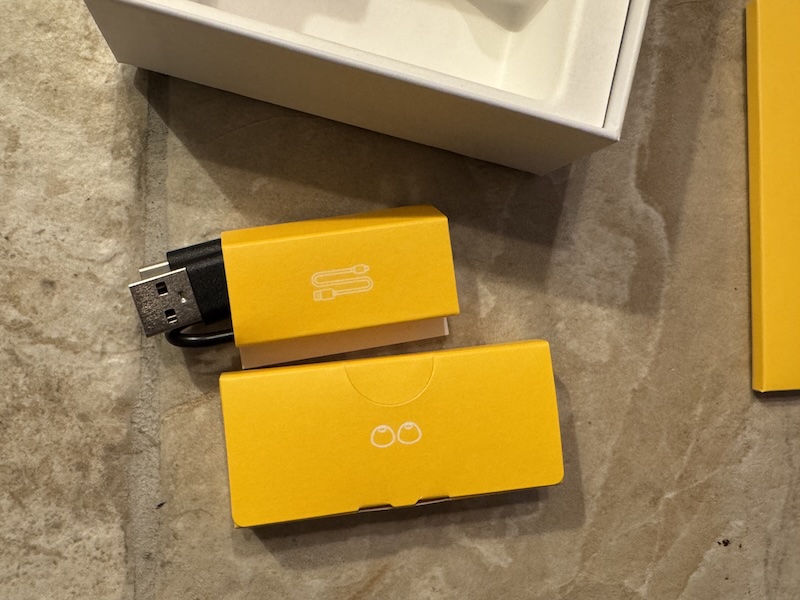
With a simple USB‑C cable but with a decent range of eartips sizes:
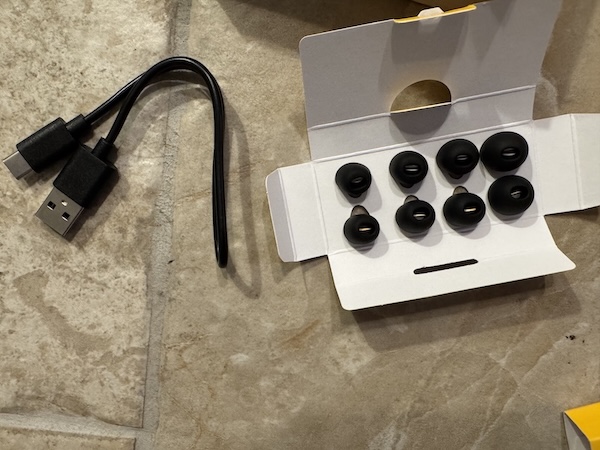
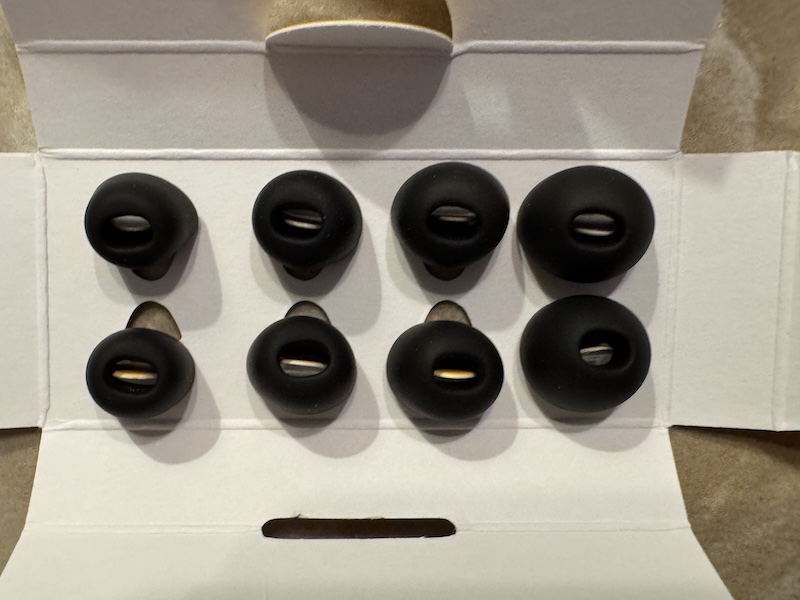
Note: The Eartips are now “oval” to match the updated nozzle profile. Since the earbuds already have a eartip attached.
 |
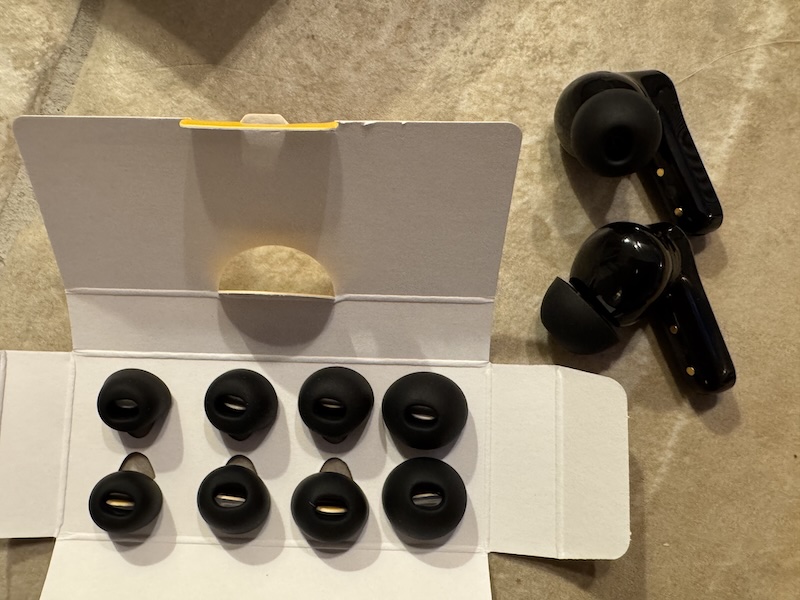 |
I would have preferred a rounded nozzle, so stock third party eartips can be used, but the range of sizes
provided by Earfun is good enough for most people, and there are good technical reasons that an oval shape is better:

Case
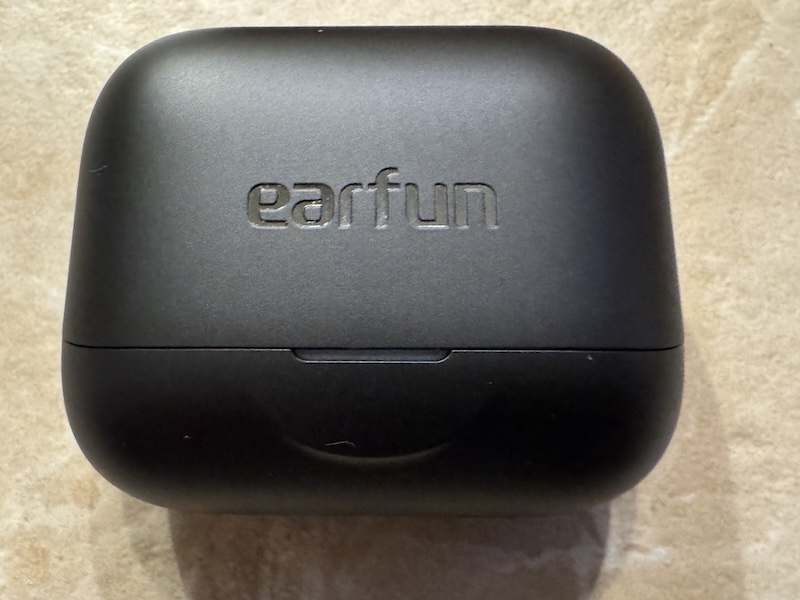
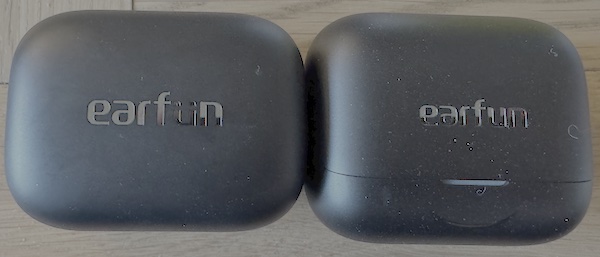
The case has been redesigned and is a little nicer this time around:
| New case style: | Compared to Air Pro 4: |
|---|---|
 |
 |
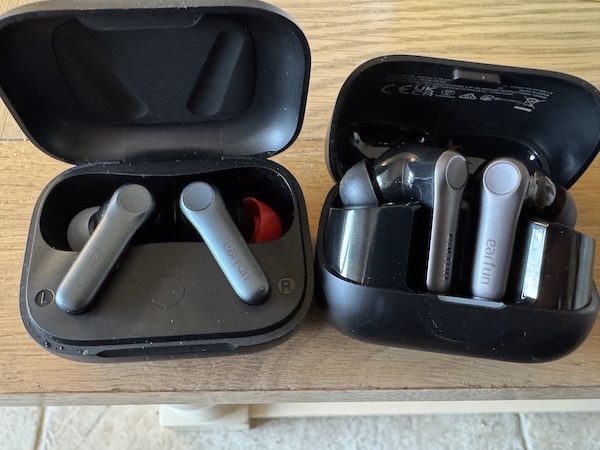
This redesigned case means the Air Pro 4 Plus is front and center when you open the case:
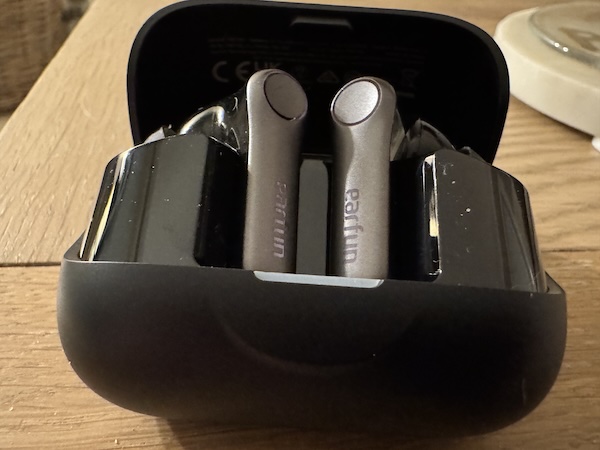
This is a different approach than with the Air Pro 4 and did mean I could not fit the same third party eartips I used with the Air Pro 4:
Fit and Comfort
The ergonomic shell remains familiar and very comfortable for my ears.

It has a very nice shape that should fit comfortably in most ears:

Note: the oval nozzle has a slightly different angle versus the Air Pro 4 and I believe the oval shape is better at getting a seal for most ears so I guess it makes sense as getting good seal is crucial for ANC as well as bass quality:
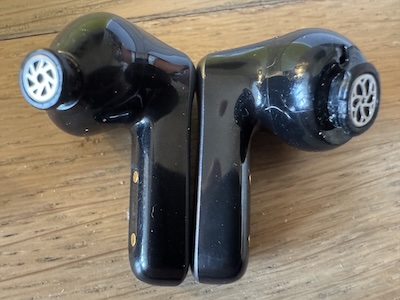
But overall the difference is very slight:
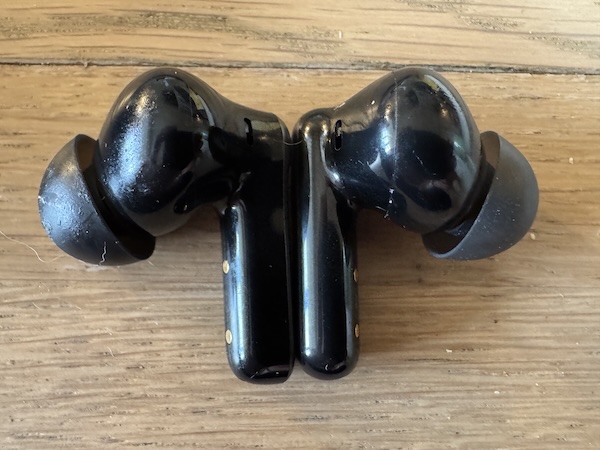
Overall, this slight change to the shape and nozzle profile will probably suit more people, but as always when companies do these fine-tuning of the shape and ergonmoics, it might also be less secure for some other people.
Features and Performance
While the feature set is similar to the Air Pro 4, almost every feature has an refined or upgraded slightly.
Companion App
There is a familiar home screen:
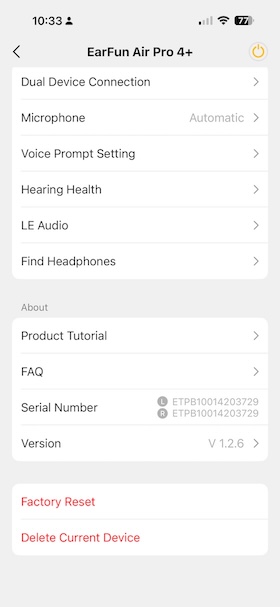
And the majority of the Application works the same as before:
 |
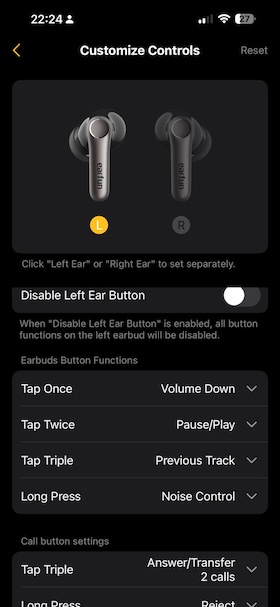 |
But there are some many new features, for example, there are now “AI” powered ANC features, and there are more Ambient modes:
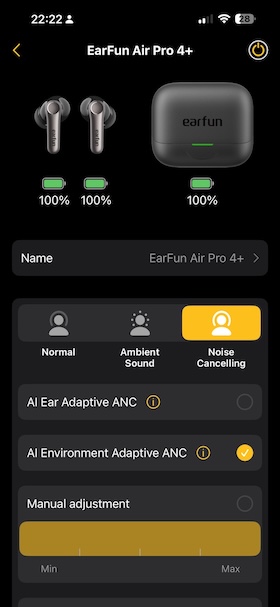 |
 |
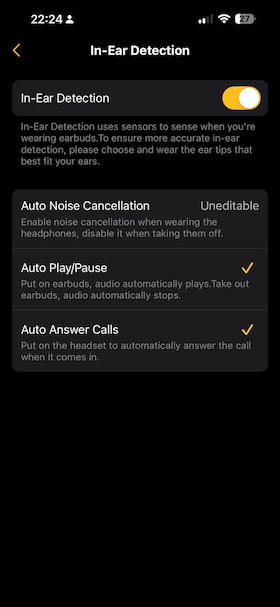
The in-ear detection I believe is also new and works well, in fact, too well for my measurement rig as I had to disable
for the measurements as it does a great job of detecting a ‘real’ human ear and a ‘fake one’:
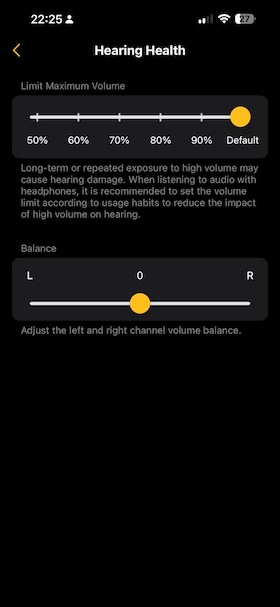
There is a hearing health screen now as well to limit the max volume and also do subtle balance adjustments should
one of your ears need a little more boost compared to the other:
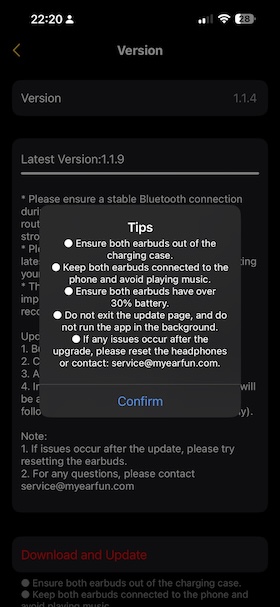
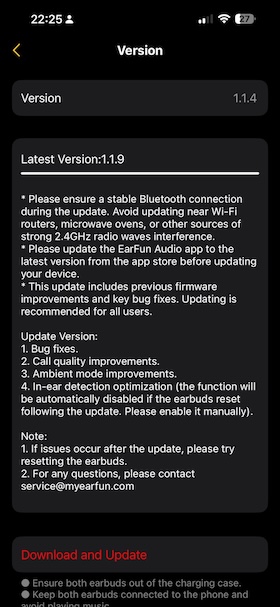
The firmware update process is relatively smooth:
 |
 |
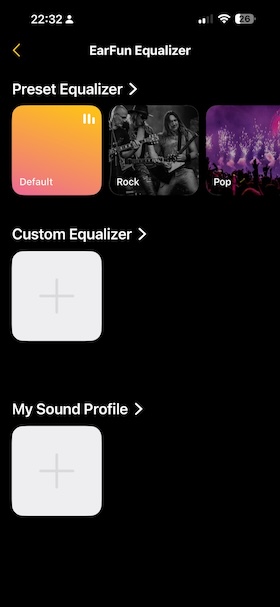
As usual with EarFun products you get some great EQ presets, the ability to create a personalised profile (using a listening test) and a 10-band EQ:
Note: I have the usual measurements of the different profiles later in the review.
It’s been rumoured that a full parametric equalizer will be integrated into the app quite soon, which for someone who loves PEQ, it would be an amazing development and one I hope will work with other Earfun products.
AI Translation
Another new feature with the Air Pro 4 Plus, which premiers at CES in January 2026, is the AI Translation capability. It appears on the home screen (in the latest firmware):
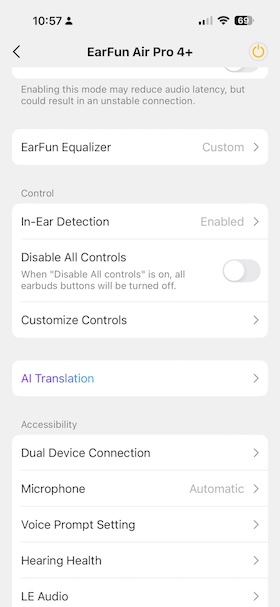
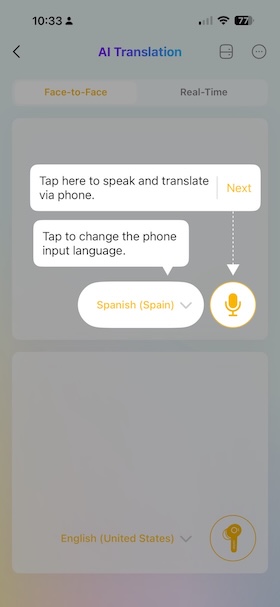
This feature has two modes that genuinely add practical value, here is the initial to give you an idea for how it works:
 |
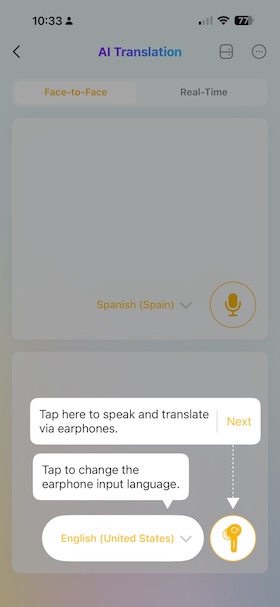 |
Face‑to‑Face Translation would be perfect for those holiday moments—imagine sitting in a restaurant abroad and having a proper conversation with someone who doesn’t speak your language. The Air Pro 4 Plus becomes that perfect translation tool, making real conversation possible without awkwardly passing phones back and forth.

Real‑Time Translation is the second mode, and I found it worked well even doing a live translation of a video in Spanish to English. You get the translation a few seconds after you hear the words in the video:

Bluetooth 6 and modern codecs
This is one of the bigger upgrades is with the bluetooth audio stack, and support for Bluetooth 6.0 is a big plus.
Bluetooth 6 should be a more stable connection, handovers should be quicker, and latency in Low‑Latency mode is very respectable for casual gaming and video sync.
And you now also get an excellent list of bluetooth codecs:
- aptX Lossless: bit‑exact at CD quality where supported (phone + SoC + earbuds). In practice you’ll still benefit from the robust RF design even when it falls back.
- aptX Adaptive: variable bitrate to balance quality and stability.
- LDAC: up to 990 kbps, excellent for supported Android devices.
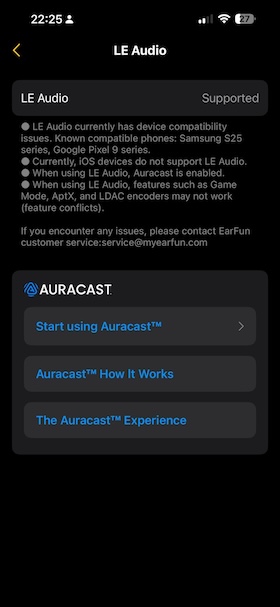
- Auracast: broadcast audio for public and private sharing — think gyms, airports, museums, or a TV sending audio to multiple listeners without pairing.
- LC3 (LE Audio): lower power, lower latency, and gracefully degrading quality at low bitrates; great for battery life and connection stability.
LE Audio and Aurcast especially are interesting codecs (which I honestly haven’t had to use yet), but I imagine they
will be everywhere soon:
Battery life
I mainly used ANC on continuously, and it roughly matched the quoted 8 hours per charge at 50% volume.
Here are the battery specifications:
- Battery capacity: 60 mAh × 2 (earbuds); 600 mAh (case)
- Charging time: 1 h (earbuds); 2 h (case via USB‑C); ~3.5 h (case wireless)
- Claimed playtime: ANC off up to 12 h (54 h total); ANC on up to 8 h (36 h total)
Calls and ANC
I feel the microphones are slightly better in the Plus, possibly because of the “AI‑Powered Clear Calls” with a custom 6‑mic system. Wind rejection and background suppression are definitely clearly better than Air Pro 4. When on some conference calls over the past few weeks (and it is windy in Decemeber in Ireland), I was told I was clear and people did not notice I was outside.
ANC is also a touch stronger and more stable I think the change in the nozzle shape helps. That said, my AirPods still edge it in raw ANC depth and mic consistency, but the gap narrows every year; for under $100, this is class‑leading.
Sound Impressions
Out of the box, the tuning is exceptionally well‑balanced and closer to a neutral target than most TWS. Bass isn’t exaggerated, mids are clean, and treble is crisp without harshness. If you prefer more bass, the presets and 10‑band EQ make it easy to add tasteful low‑end.
Bass
Sub‑bass reaches deep with good texture; mid‑bass is restrained, keeping the presentation tight. Kick drums have punch without bloom, and bass guitars stay articulate.
Midrange
Vocals sit naturally with convincing timbre. There’s no lower‑mid murk, and upper mids bring clarity without shout. Acoustic instruments and brass sound lifelike.
Treble
Air and sparkle are present without sizzle. Cymbal decay feels clean, and I didn’t experience fatigue over long sessions.
Soundstage & Imaging
For a TWS, staging is spacious with accurate center image and stable lateral placement. Separation in busy mixes is notably better than typical budget TWS.
Specifications and Measurements
| Specification | Value |
|---|---|
| Drivers | Dual‑driver hybrid (10 mm dynamic + FeatherBA armature) |
| Architecture | Nano Side‑Fitted Acoustic Architecture (NSAA) |
| SoC | Qualcomm QCC3091 with Snapdragon Sound |
| Wireless | Bluetooth 6.0 |
| Codecs | aptX Lossless, aptX Adaptive, LDAC, Auracast, LC3 |
| ANC | QuietSmart 3.0 Adaptive Hybrid ANC (up to 50 dB) |
| Microphones | 6‑mic array with AI algorithm + cVc 8.0 |
| Water resistance | IP55 |
| Battery | 60 mAh × 2 (buds), 600 mAh (case) |
| Charging | USB‑C fast charge; wireless charging |
| Playtime | Up to 12 h (ANC off), up to 8 h (ANC on); 54 h/36 h with case |
| Additional features | Google Fast Pair, in‑ear detection, multipoint, low‑latency mode |
Frequency response and presets
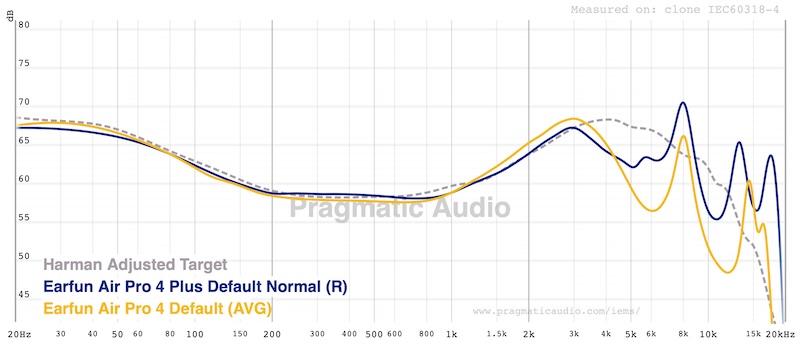
The default frequency response shows excellent tuning with good channel balance:

The default profile is the same as having no EQ applied:
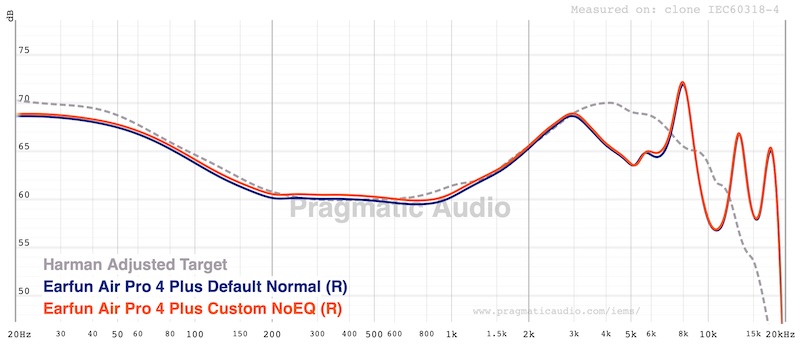
Compared to the AirPro 4 - I think there is slightly better midrange and treble though treble might be a bit forward for some people:
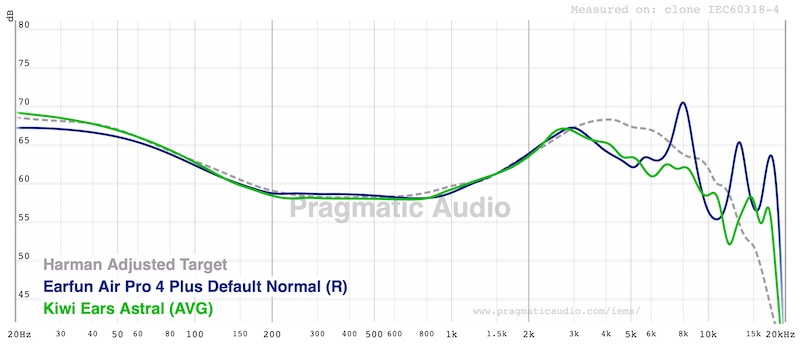
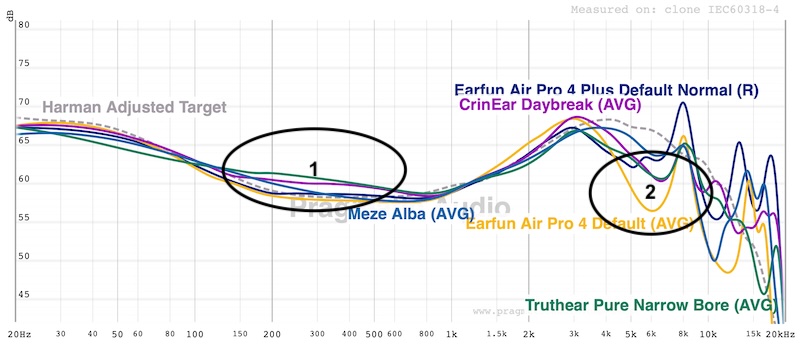
The tuning is similar to some of my favourite recent IEMs including the KiwiEars Astral (which costs 3 times the price of the Air Pro 4 Plus):
 |
 |
Presets
The app includes main different EQ presets that offer meaningful tonal variations, here are a selection:
 |
 |
 |
 |
EQ Recommendations
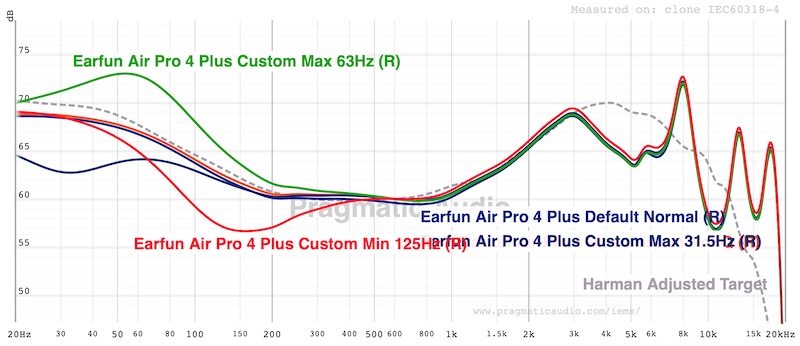
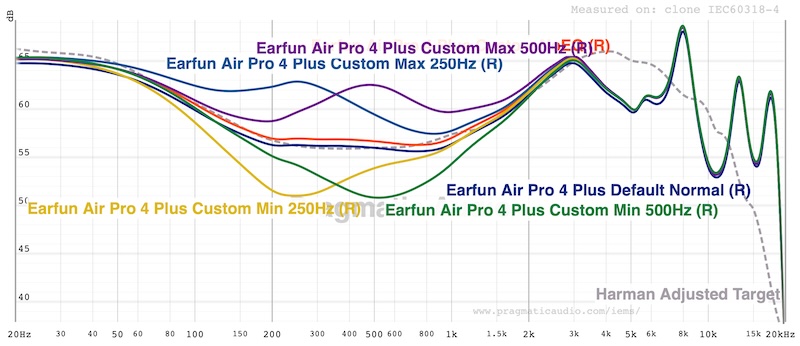
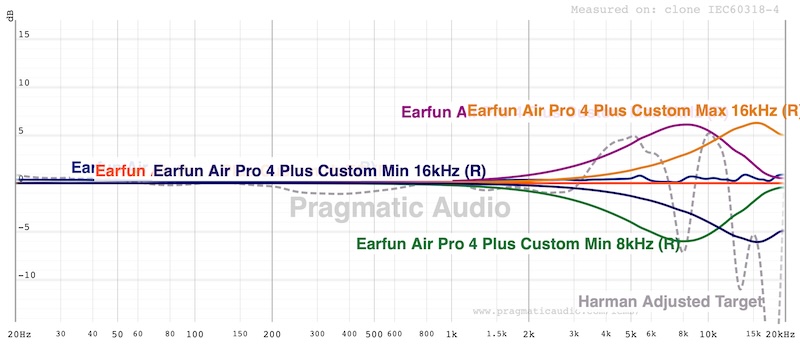
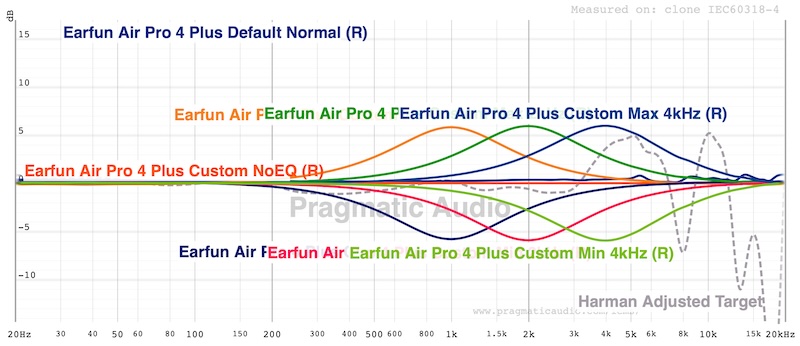
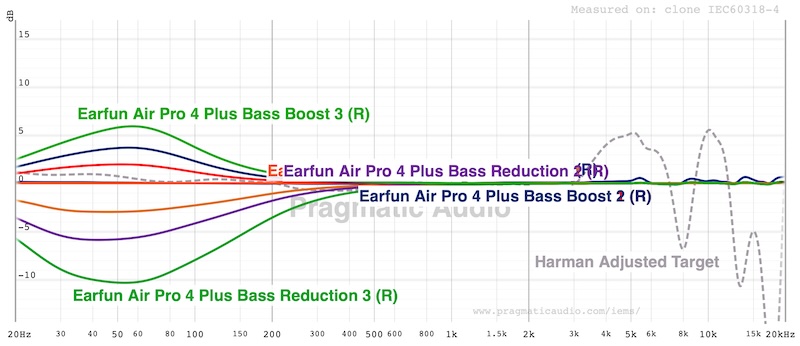
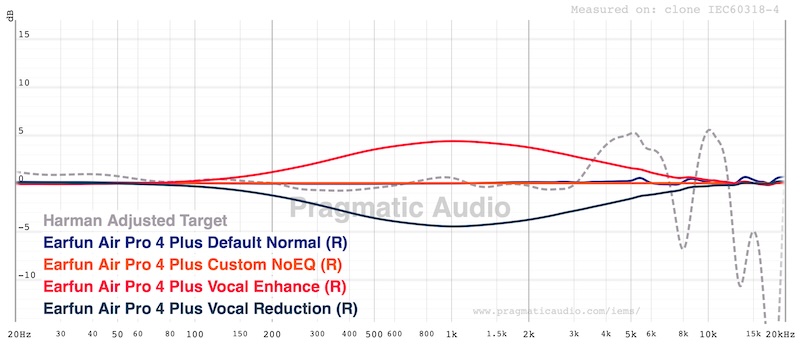
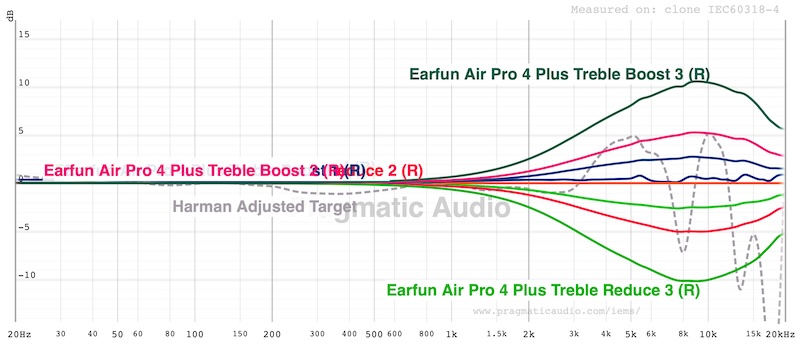
The 10-band EQ provides a good range of min and max adjustment across the frequency spectrum:
 |
 |
 |
 |
Bass Reduction and Boost Presets:
Midrange Presets:
Treble Boost presets:
Comparisons with other TWS
Compared to the Air Pro 4, the Plus shows a slightly improved frequency response:
ANC and Ambient Mode Measurements
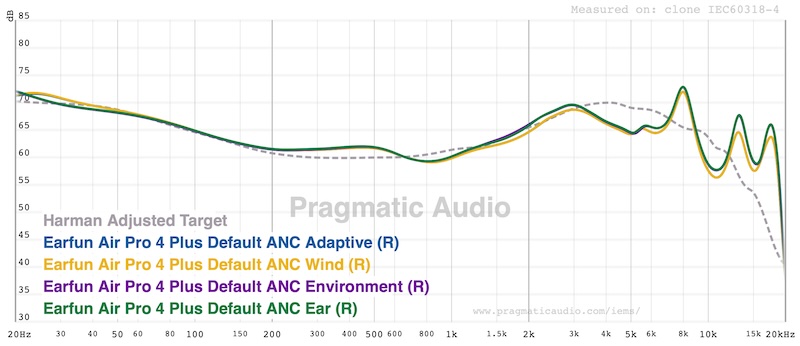
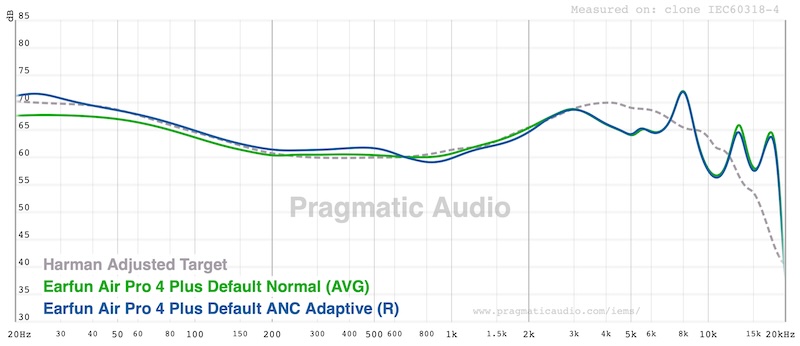
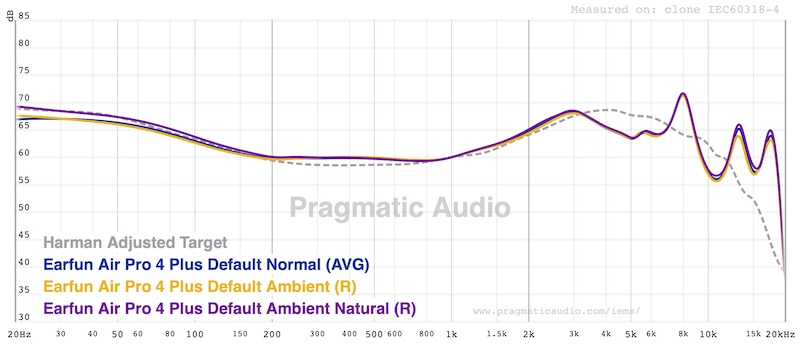
The ANC modes show minimal differences in frequency response, which is ideal:
| Compared to the non ANC | And with different ANC modes: |
|---|---|
 |
 |
The ambient modes provide different levels of transparency:
Distortion
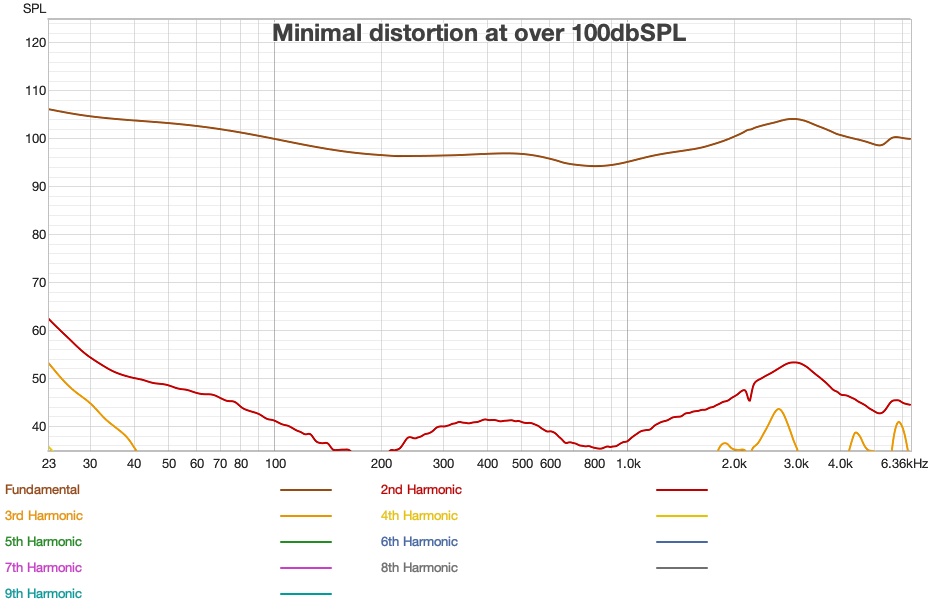
Distortion measurements show exceptionally good performance even when playing over 100 dbSPL:
And as a percentage:
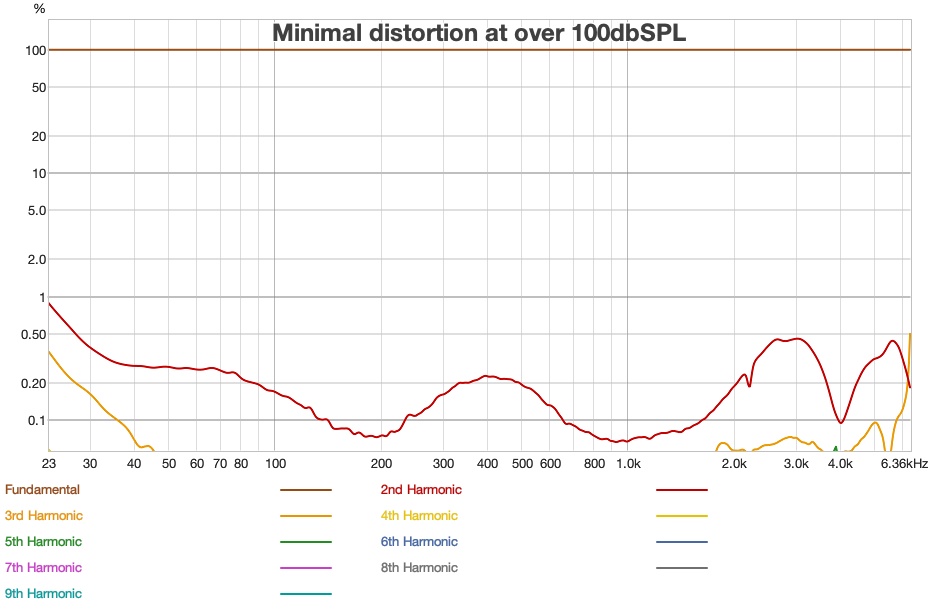
Basically, nothing to worry about here and you can happily EQ without hearing any distortion.
Rating
I have given the AirPro4 + another pragmatic rating of 5 like its predecessor. I feel even though the competition get stronger each year the extra features and slightly better comfort and sound quality make it an easy 5-star TWS.
Like its predecessor, its neutral‑leaning default tuning is fantastic compared to the usual bass boosted sound signatures most ‘consumer’ friendly TWS use. This time we also get a genuinely forward‑looking feature set (Bluetooth 6, Auracast, LC3, aptX Lossless, and LDAC), material improvements over the Air Pro 4 in ANC stability, microphone clarity, and extra app features like the AI translation.
Who is it for:
- Listeners who prefer an accurate, balanced sound but want the option to boost bass via presets/EQ.
- Commuters and office users who need decent ANC/transparency and reliable multipoint connections.
- Anyone wanting a sub‑$100 TWS that doesn’t feel compromised.
- Travelers who value the AI translation features for real-world communication and content consumption.
Minor niggles:
- Oval nozzle limits third‑party tip choice, especially foam.
- Still below flagship models like AirPods Pro 3 in absolute ANC and microphone clarity
Conclusion
The EarFun Air Pro 4 Plus represents what modern TWS should be: excellent tuning, forward-looking features, and genuine practical innovations like AI translation that add real value rather than marketing fluff. It’s a steady evolution over the already‑great Air Pro 4 rather than a revolution, but that’s exactly what many of us want — refinement without regression.
The AI translation features alone make this a compelling travel companion, while the neutral tuning, comprehensive codec support, and solid ANC performance make it an excellent daily driver.
At under $100, EarFun continues to push the value envelope in ways that make much more expensive options look questionable. It is genuinely hard to fault at this price point.