Ecoute TH1: An Audiophile-First Wireless Headphone
A Wireless Headphone that focuses on providing a full Audiophile-tuned experience
I first came across the TH1 at CanJam London last year and spent a good while chatting with the very knowledgeable owner of the company, Kendal Liddle. And what attracted me to the headphone during that initial experience has now been amplified by my experience over the past few weeks. This is a wireless headphone designed by passionate audiophiles for passionate audiophiles. The TH1 at the CanJam:
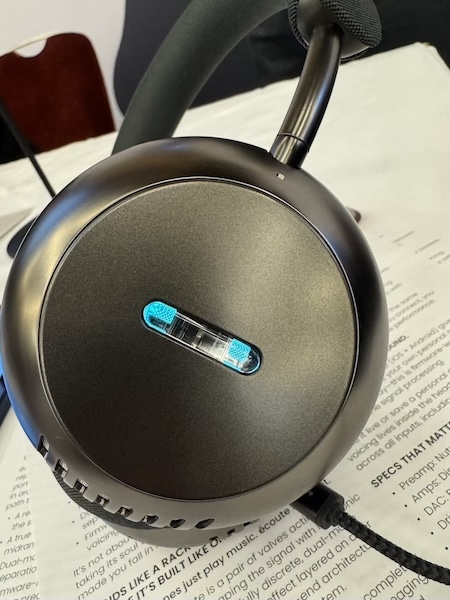
So, this is a unique headphone focused on what is important for most audiophiles, with both the internal technology choices, external design choices and ultimately the tuning choices and options of the TH1. I might even say the TH1 was designed with lots of audiophile cat-nip (but I mean that as a compliment) because as you will see in the review, this is a unique wireless headphone.
With that said, I also feel that there are a few places which I feel could have been better which I will highlight during the review. For example, the fact that the TH1 has ANC is more a bonus, and while it works well enough for most use cases, it was not the focus of the TH1 experience. On the other hand, if you are looking for something that sounds unique, looks unique, and has unique audiophile technologies, this could be the wireless (and wired) headphone for you.
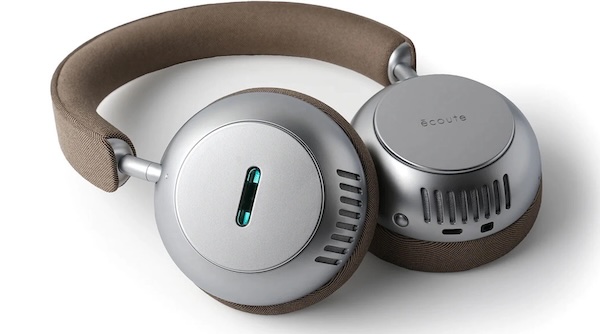
I would like to thank Ecoute for providing the TH1 for this review.
The price is $899 and you can find the product page here
I have been listening and really enjoying the Ecoute in many environments since before Christmas: on my commute, on some airplane trips, out on walks, but mainly around my house.
But before I get into how it sounds and these quibbles, let’s look at the unboxing experience.
Unboxing and Build Quality
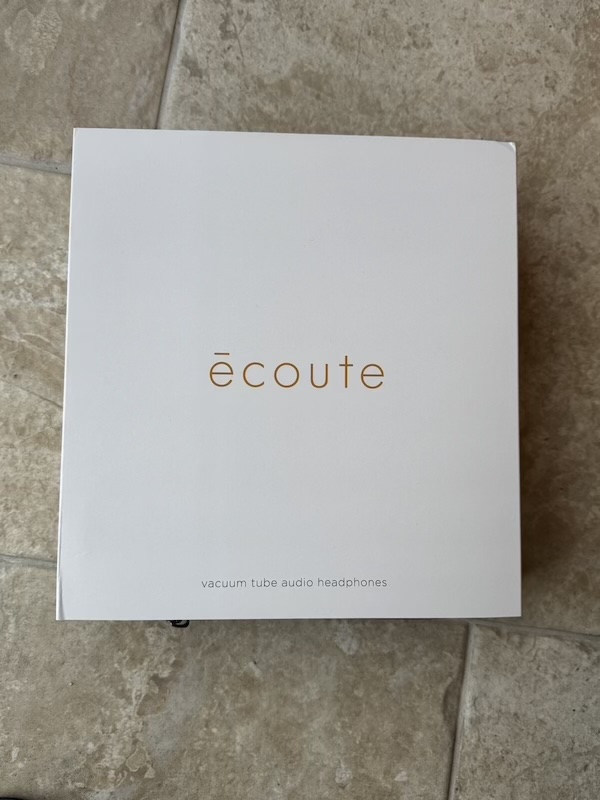
The TH1 arrives in a nice box:
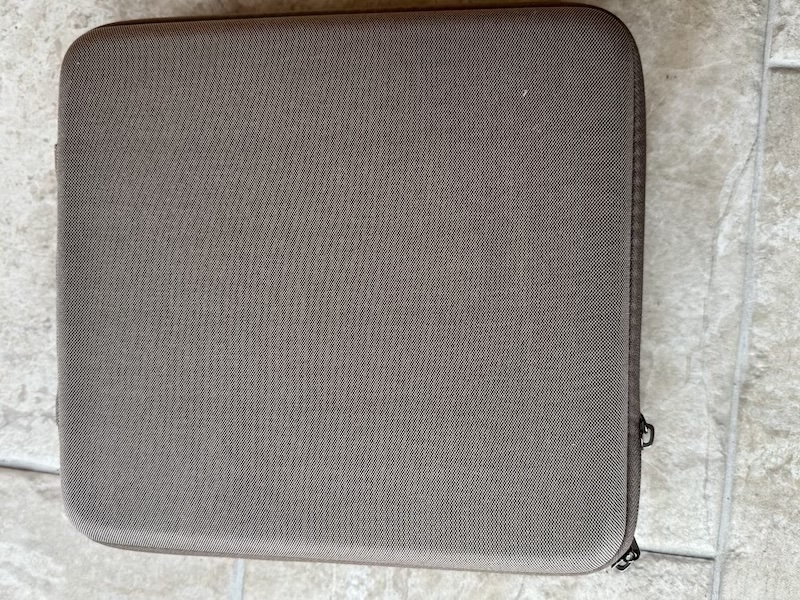
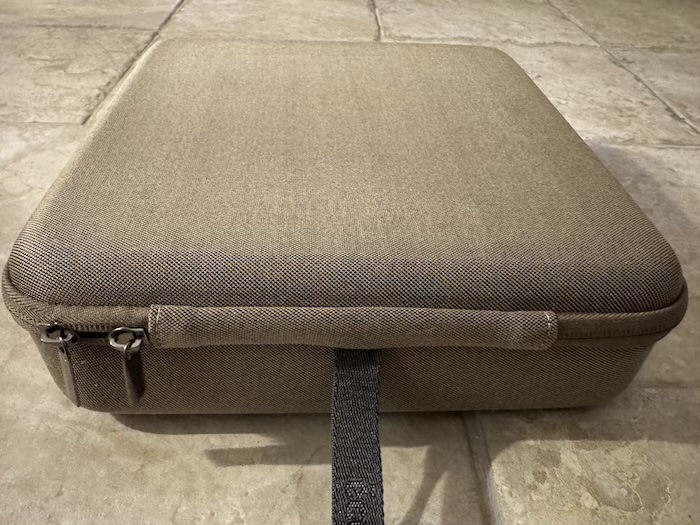
The included carry case is a nice touch and feels well made, providing adequate protection for travel:
 |
 |
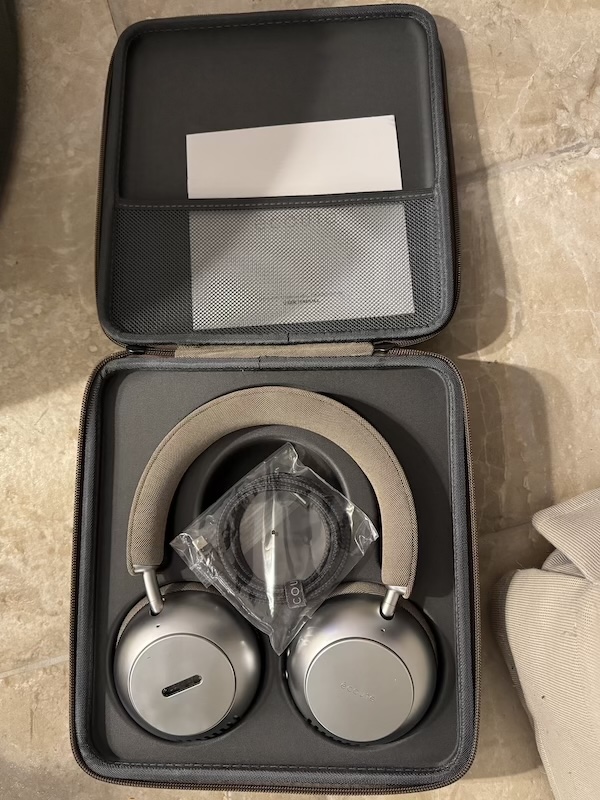
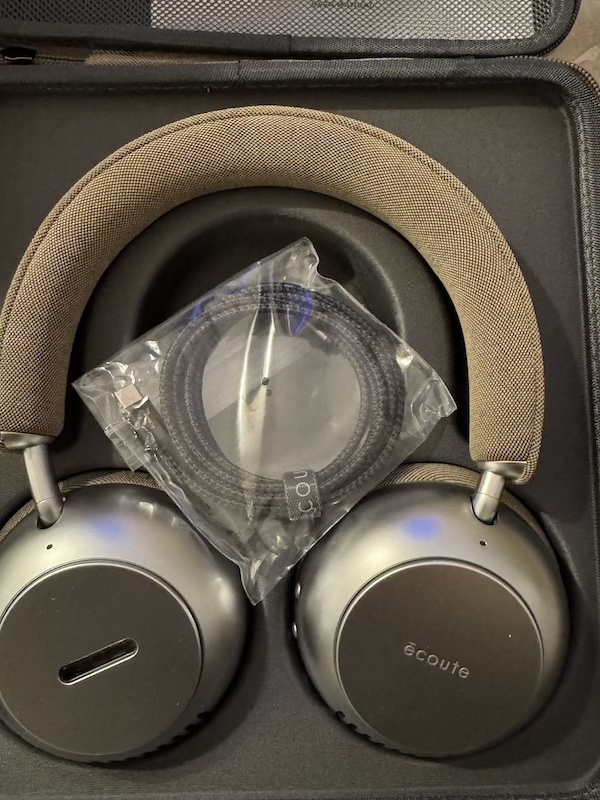
Opening the case up, the headphones and accessories are neatly presented:
 |
 |
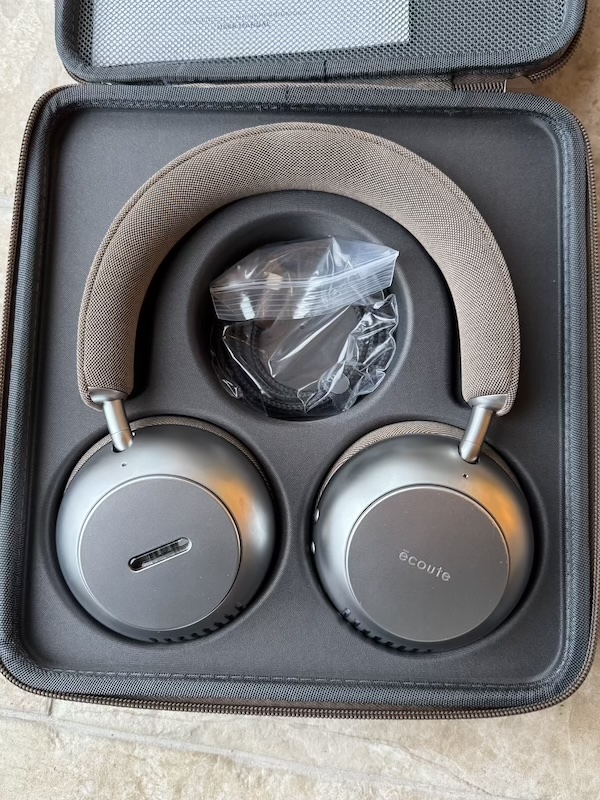
Everything stores securely inside the case:
Ecoute included a manual for those who want the full technical details:
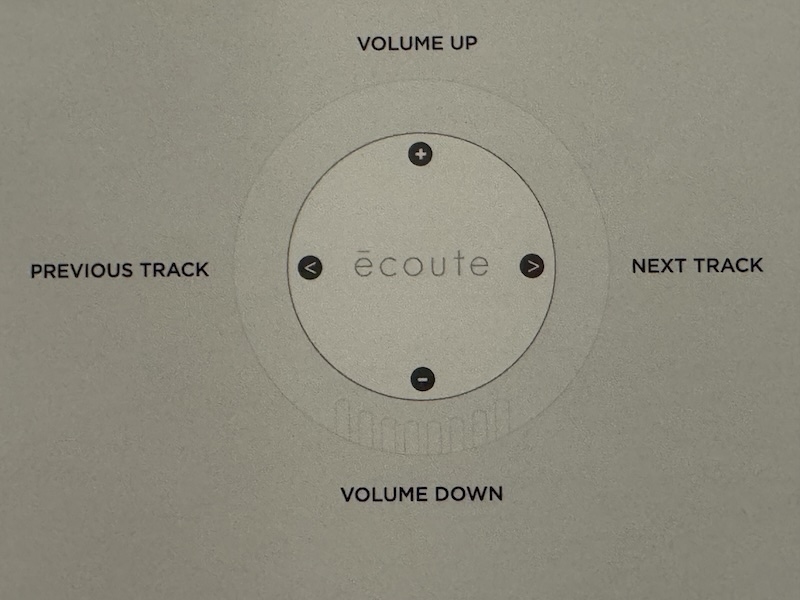
Which nicely explains the button controls on the earcups, so I won’t have to later:
 |
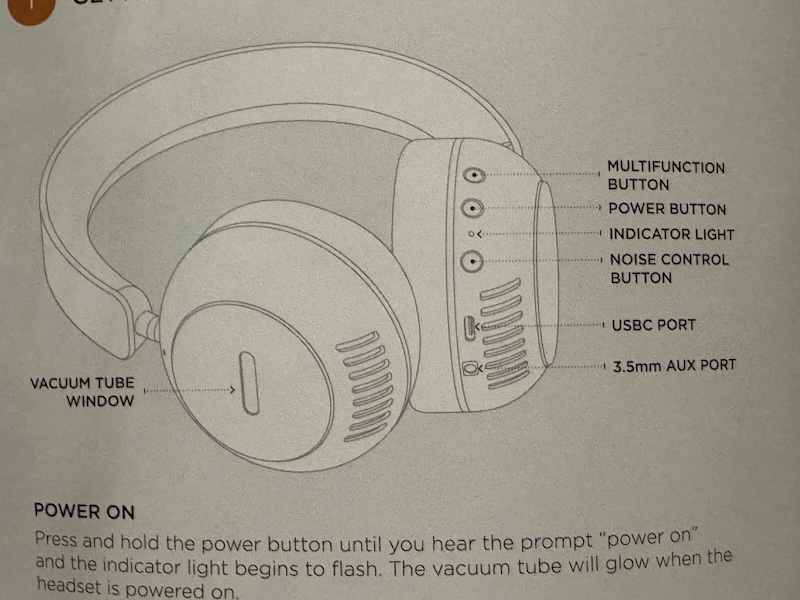 |
I actually love the use of buttons on the TH1 and the volume control and next / prev track controls on the earcups work much better that the now typical ’touch’ controls found on many wireless headphones. You have way less chance of accidentally skipping tracks, and the buttons are easy to press and feel solid.
Build quality
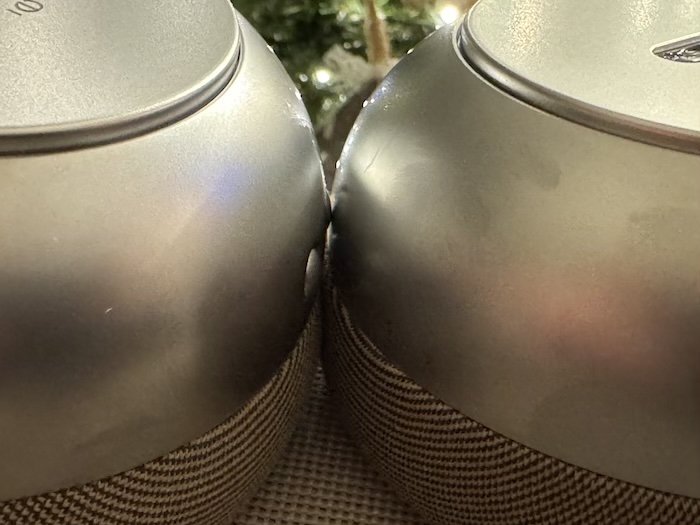
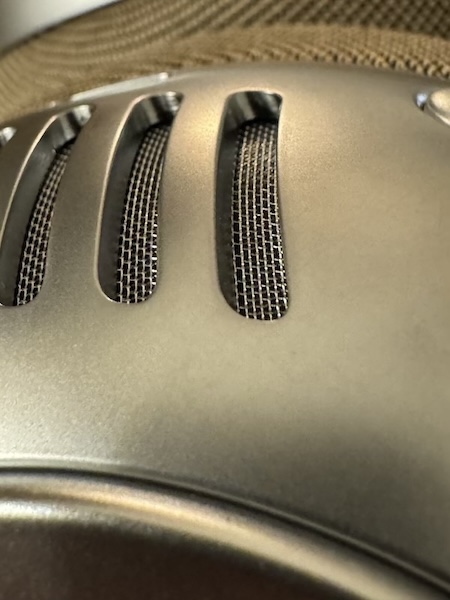
The build quality is excellent and immediately feels premium. The metal earcups look and feel substantial, with lovely machining and the premium finish:
 |
 |
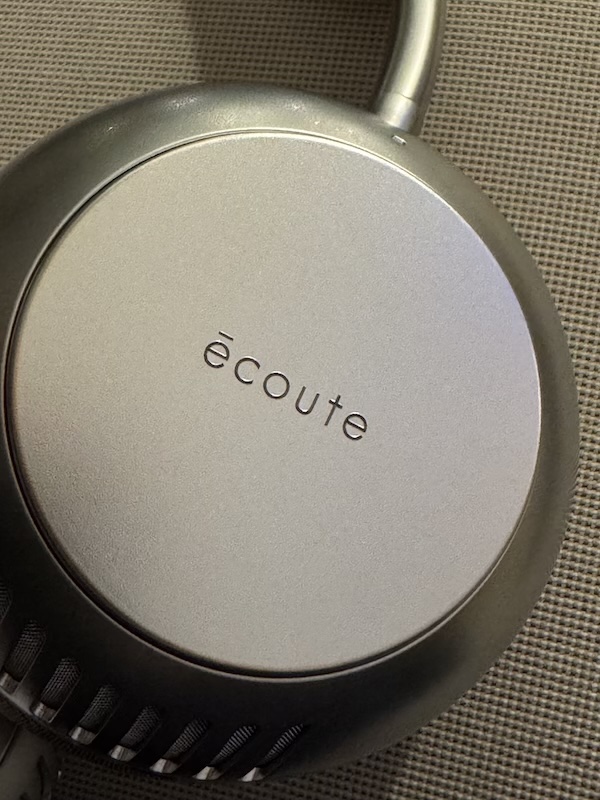
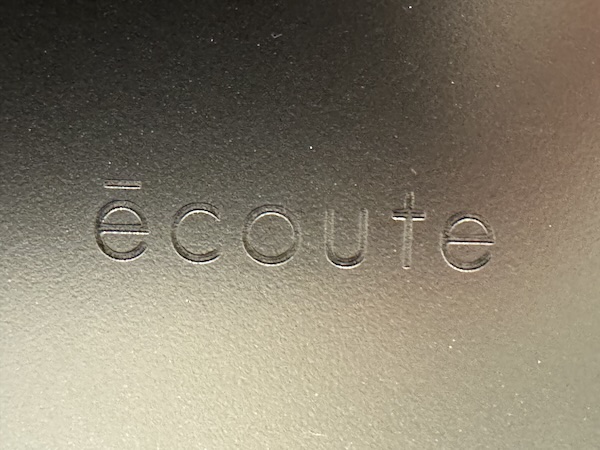
The branding is subtle and tasteful, avoiding the garish logos found on many consumer wireless headphones:
 |
 |
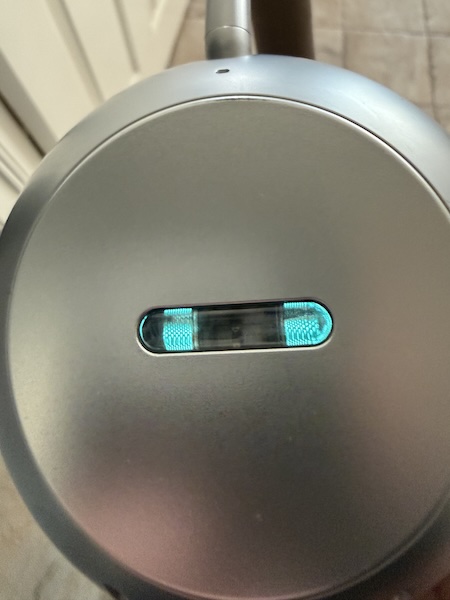
One of the most distinctive and visually striking features of the TH1 is the Nutube implementation visible in the left earcup. The tube lighting looks cool in person and serves as both a functional component and a design statement:
 |
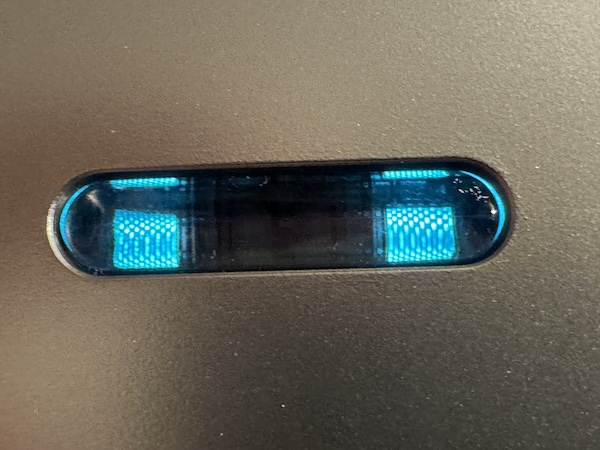 |
Though one quibble I have is just touching the left earcup can cause a slight ringing related to the Nutube, so even when you put them on you will hear this ringing for a few seconds.
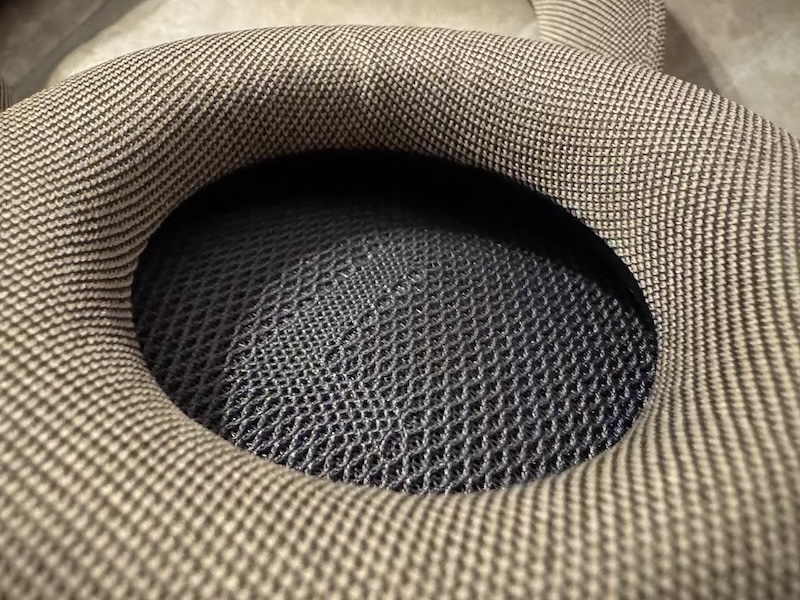
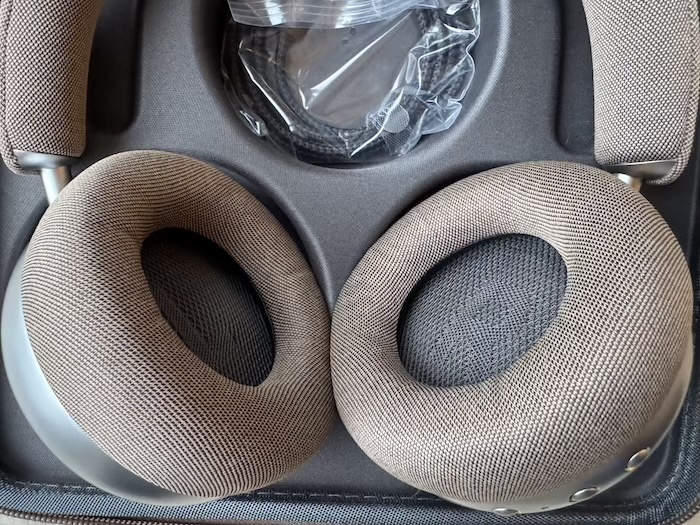
But the materials continue this premium theme, I do find the earcups very comfortable, but I do wonder after 6 months or a year will this material get worn too easily:
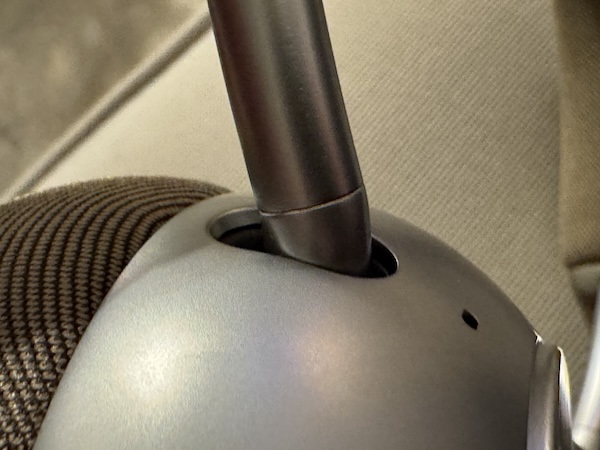
There is a solid swivel mechanism for fit adjustment that feels robust and well-engineered:
 |
 |
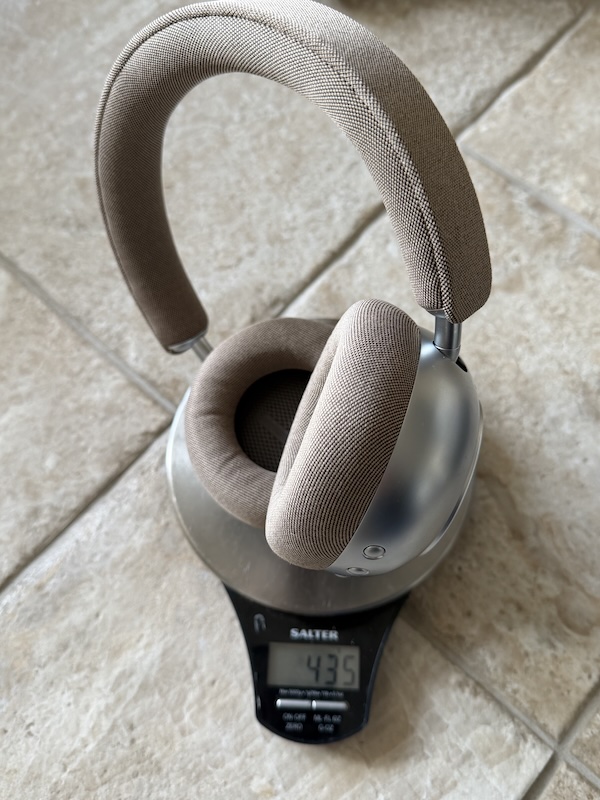
The downside of all this metal construction and internal technology is weight. At 424 grams, the TH1 is heavier than many wireless headphones, though the weight distribution feels well-balanced in practice and the premium materials justify the heft.
Comfort
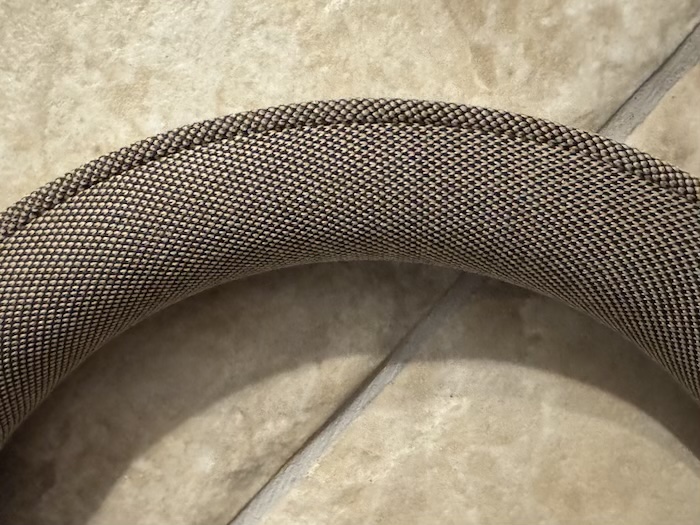
The headband padding is comfortable and well-finished, providing adequate cushioning without becoming too warm during extended listening sessions:
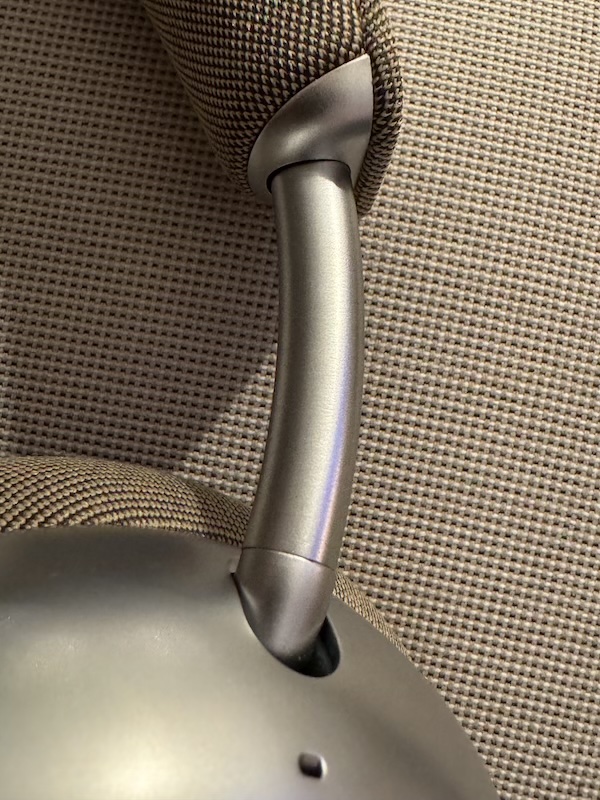
The extension range is generous, accommodating a wide variety of head sizes:
The earpads are one of the standout comfort elements.
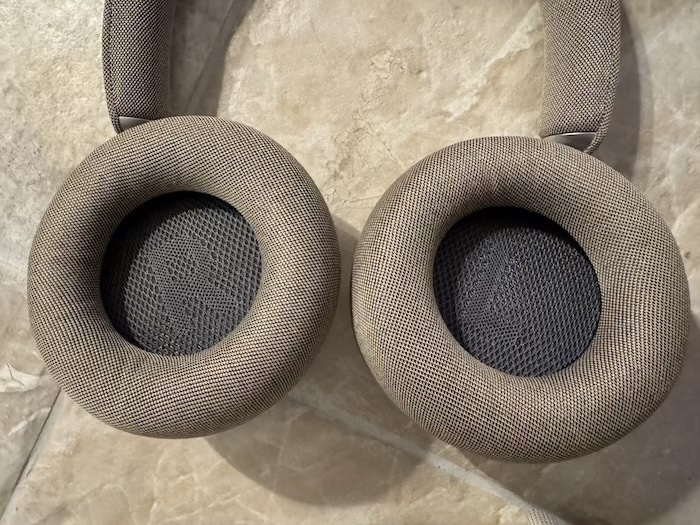
The material is plush and premium, I thought they felt similar to the excellent material pads on the Sennheiser HD490 Pro:
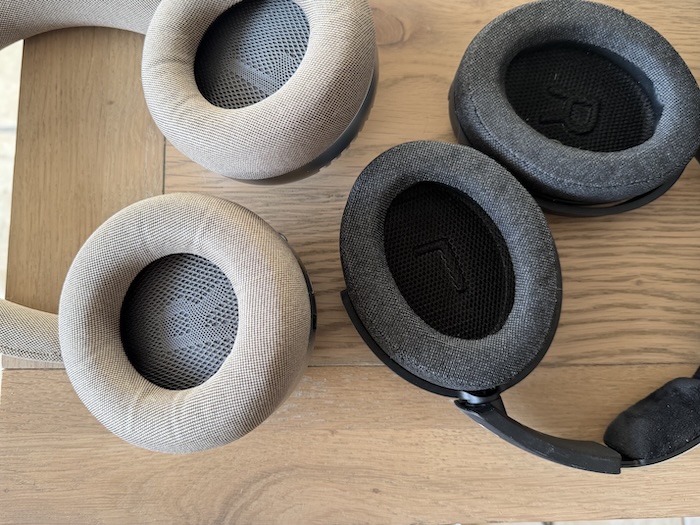
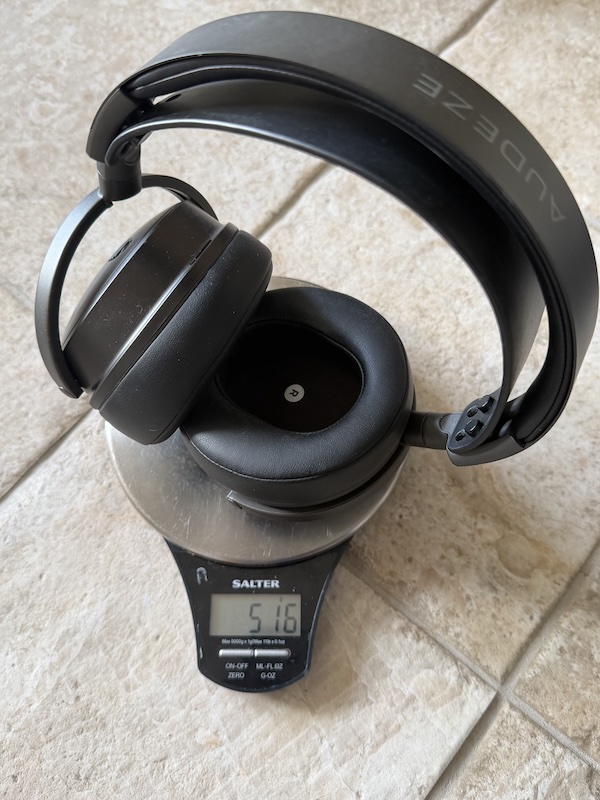
Despite the 424-gram weight, the weight distribution feels reasonable given the substantial technology packed inside. Compared to other feature-rich wireless headphones like the Audeze Maxwell, the TH1’s weight is not unreasonable:
 |
 |
Features and Internal Technology
As I mentioned in the intro, the Ecoute TH1 is an audiophile-first headphone, designed by audiophiles for audiophiles. It contains some excellent technology like the Nutube tube buffer (adding nice harmonics to the sound as you will see in the measurements later) and the dual-mono “mono block” amplifier, which help justify the price. You can almost think of this as an ‘audio stack’ packed into a headphone. Does it sound better than a normal wireless Bluetooth headphone? I would say yes, though I personally think this is because it is well tuned by default, but I must say I do like headphones that try something different (especially when they have the flexibility later to customize the sound with EQ).
With Bluetooth 5.3 (LDAC/AAC) for high-resolution wireless listening, USB-C digital for lossless playback, 3.5mm analog input, active noise cancellation (ANC), and app-based tuning, the TH1 combines the performance of high-end wireless audiophile headphones, a headphone DAC, and a portable vacuum tube headphone amplifier in one design. These closed-back audiophile wireless headphones deliver the experience of a reference-grade hi-fi system with the convenience, features, and portability of modern LDAC Bluetooth headphones.
ANC and Transparency
I fully recognize that it would not be realistic to expect parity with companies like Bose or Sony in terms of sheer noise attenuation, given their scale and decades of investment in ANC-specific R&D. The TH1’s ANC is best used primarily in very loud environments such as aircraft cabins or noisy commutes, while relying on passive isolation in quieter settings to focus on audio quality. This is more because it seems to be aggressively apply the ANC ‘algorithm’ which causes more ’noise’ in quieter environments than I would like.
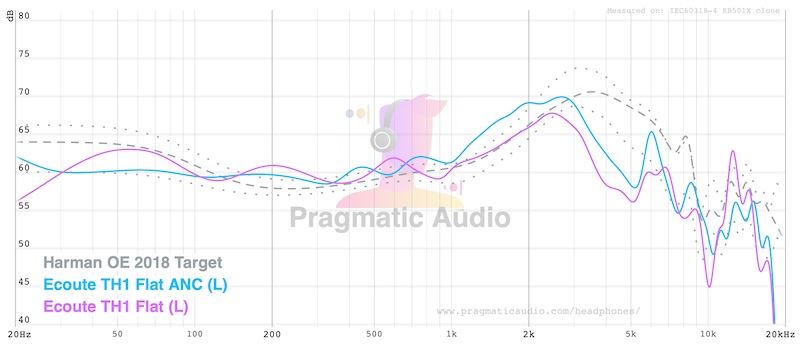
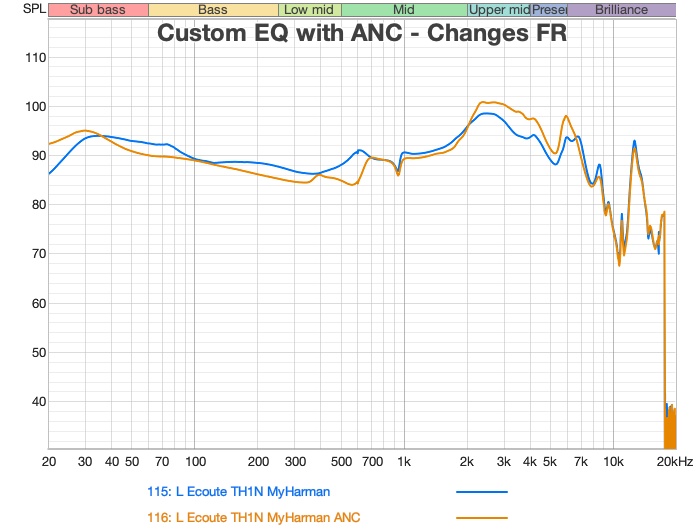
Another ANC feature that the I feel is missing is wind noise detection. On windy days, I had to disable ANC entirely because it was amplifying wind noise rather than canceling it a common problem with headphones lacking dedicated wind detection algorithms. One last niggle I have and the measurements section demonstrates later, ANC also significantly alters the frequency response, so you if you want to tweak the sound with EQ maybe have 2 separate EQ profiles.
With all that said, the ANC is perfectly serviceable for situations where you genuinely need it and it worked very well on a recent flight, but I would recommend disabling it for critical listening.
Wired and Bluetooth Playback
Wired USB-C playback works well, but it tops out at CD quality rather than hi-res:
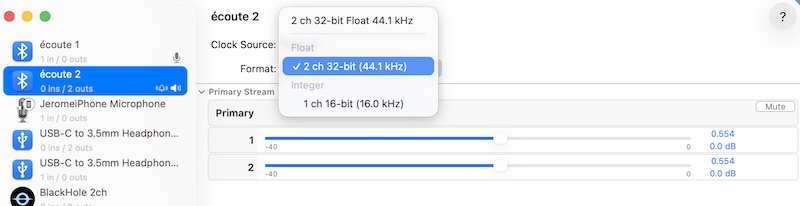
That is perfectly fine in practice, but it is worth mentioning given the premium positioning.
Companion App and EQ
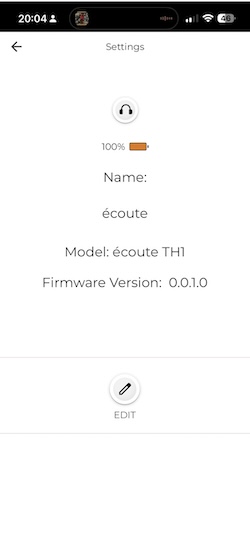
The companion app is minimal compared to commercial ANC headphones from Bose or Sony, but I feel this might be a good thing as it deliberately focuses on the features that should matter more to audiophiles: EQ control and well-tuned presets rather than gimmicky sound effects:
| Home screen | Some information |
|---|---|
 |
 |
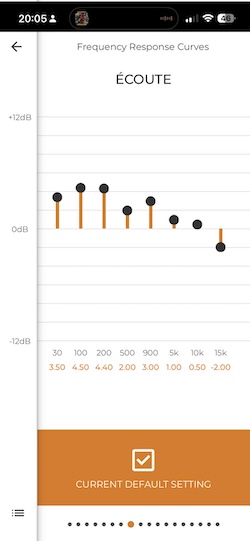
The preset list is deliberately audiophile-focused, offering sensible tuning curves based on established targets rather than marketing-driven bass boost options:
 |
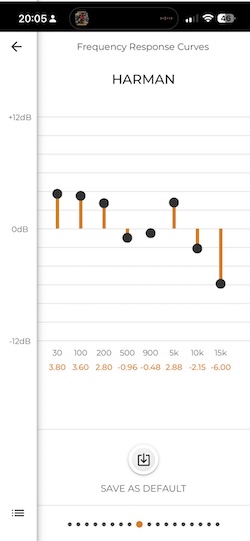 |
I like that Ecoute have shown how their preset profiles have turned the sound, this is very useful when you are building your own personalised EQ profiles:
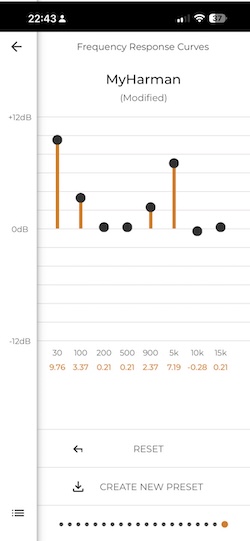
I also want to call out that there were some significant updates during my review period that actively improved the sound and app functionality. This is a company that cares about its customers, and with the addition of industry legend Andy Regan (who worked with Dan Clark on DCA headphones), I feel they will keep moving forward.

Web based EQ alternative
Since my day job is a software engineer, and I love making EQ more accessible for people, I also decided to dig into how the EQ works and create a simple webpage alternative for those wanting to change the EQ with a simple webpage (Chrome only) on Pragmatic Audio: https://www.pragmaticaudio.com/bluetooth/ecoute.html
Note: The Ecoute App will restore the EQ to what it had stored previously if you open the Ecoute app.
Subjective Listening Impressions
The overall impressions here were taken with ANC off using both the Ecoute and Harman presets. In general, the TH1 sounds excellent with a well-balanced, slightly warm presentation. While it cannot match a classic wired open-back headphone, it puts many more expensive closed-back headphones to shame.
I believe 2026 is the year when we see DSP-enabled Bluetooth audiophile headphones becoming truly respectable, and Ecoute are at the forefront of this trend.
Bass
The bass is tight, controlled, and extends deeper than I expected for a closed-back wireless design. On tracks like Massive Attack’s “Angel,” the sub-bass digs deep without smearing the midrange. The bass on Daft Punk’s “Giorgio by Moroder” has proper weight and texture but does not overwhelm the mix. There is excellent control throughout the bass region, with individual bass notes remaining distinct even during complex passages.
Midrange
The midrange is clear and natural, with vocals sounding lifelike and unforced. Norah Jones’ “Don’t Know Why” sits comfortably front and center, with her voice rendered with appropriate warmth and body. Acoustic guitar textures in Nick Drake’s “Pink Moon” have a convincing sense of body and woodiness that belies the wireless connection.
Male vocals on Leonard Cohen’s “You Want It Darker” have proper weight and chest resonance, while female vocals maintain clarity without ever becoming harsh or sibilant.
Treble
The treble is detailed but not overly sharp, and the Nutube harmonics add a gentle sweetness that makes cymbals feel more natural and less “digital” than typical Bluetooth headphones. On Patricia Barber’s “Company,” the upper registers have air and sparkle without becoming brittle. The presentation is smooth enough for long listening sessions, with just enough bite to keep things engaging.
Cymbal crashes have good decay and shimmer, and hi-hats retain their texture and definition. The tube buffer stage contributes to a more analog-like treble presentation that is forgiving of compressed or harsh source material without sacrificing detail.
Soundstage and Imaging
Imaging is great for a closed-back wireless headphone. Instruments are placed accurately with a convincing sense of depth and width, and the Nutube contributes to a slightly more holographic feel than typical Bluetooth headphones. On classical recordings like “Also sprach Zarathustra” (Reiner/CSO), the stage spreads wide with clear separation between orchestral sections.
On “Hotel California (Hell Freezes Over),” the live recording has good dimensionality with the crowd ambience extending beyond the immediate headstage. Individual instruments occupy distinct positions in space, and there is decent layering from front to back.
Specifications and Measurements
| Specification | Value |
|---|---|
| Form Factor | Over-Ear |
| Weight | 424 Grams |
| Dimensions | 210 x 168 x 92mm |
| Pre-amp | Nutube 6P1 Dual-Triode Vacuum Tube |
| Amplifier | High-bias Class A/B dual-mono amplification |
| DAC | Built-In |
| Transducer | 40mm Titanium-Coated Mylar |
| Frequency Response | 20 Hz – 20 kHz |
| Analog | 3.5mm Audio Jack |
| Digital | High-Resolution 32bit/384kHz USB-Audio Input via Type-C Cable |
| Wireless | Bluetooth Version 5.3 |
| Supported Profiles | A2DP, AVRCP, HSP, HFP |
| Codecs Supported | SBC, AAC, LDAC |
| Range | Up to 10 meters (33 feet) |
The dual mono and the Nutube Vacuum Tube are probably the highlights, but you do get a high-quality bluetooth codec with LDAC and having AAC for iPhone users also gives them the best possible quality audio experience.
Battery
| Specification | Value |
|---|---|
| Playtime | 20 hours at maximum volume |
| Charging Time | 3.5 hours |
| Standby Time | 30 hours |
| Charging Port | USB-C |
Considering the technology inside, the battery life is pretty respectable, but many ANC headphones now have 50+ hours battery life.
Measurements
All measurements were taken using my KB501X Soft ear pinna and are available on Pragmatic Audio here.
Frequency Response
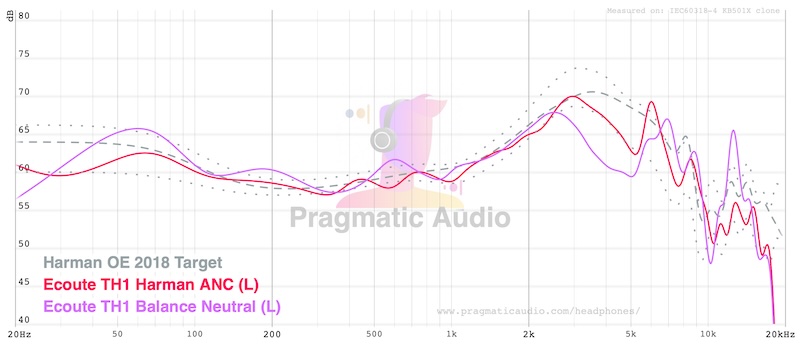
The Harman and Ecoute presets are the best starting points and show a balanced, well-judged profile:
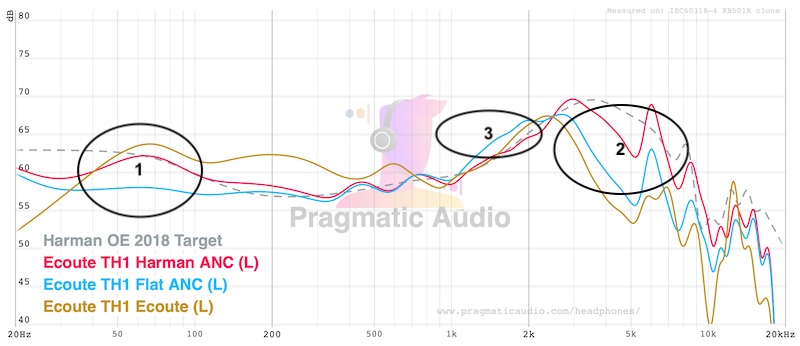
Here is how the Ecoute, Harman, and Flat options compare against each other and the Diffuse Field target:
 |
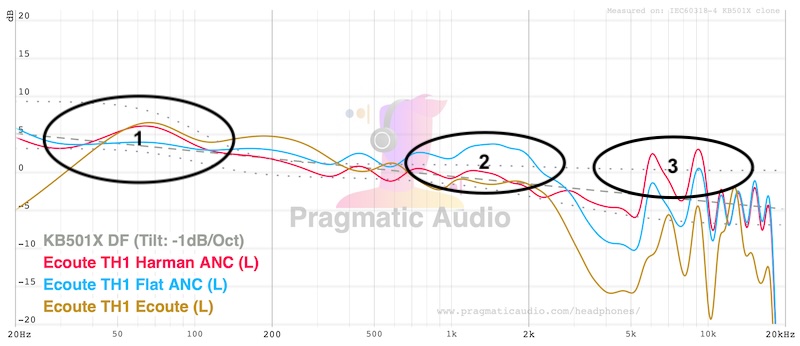 |
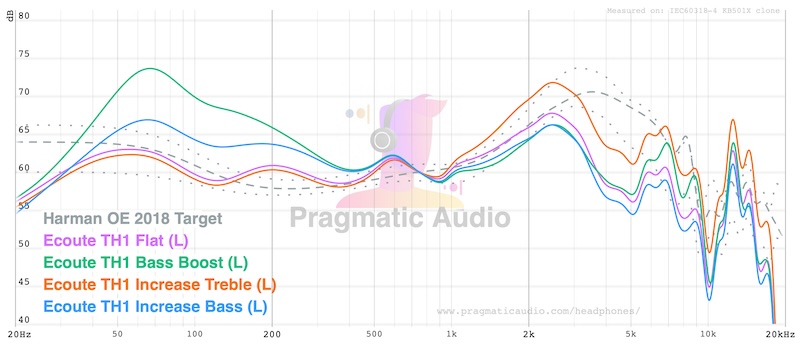
I highlighted a few areas mostly to show you can switch to a flat bass (1) or have something more like a harman boost bass. The flat profile is slightly mid-forward (2), and the Harman does boost that treble which will either be nicey detailed but might be too much for some people.
Overall, these tuning’s are why I feel this is a well-tuned wireless headphone as it is not just one tuning, you have that flexibilty to quickly switch.
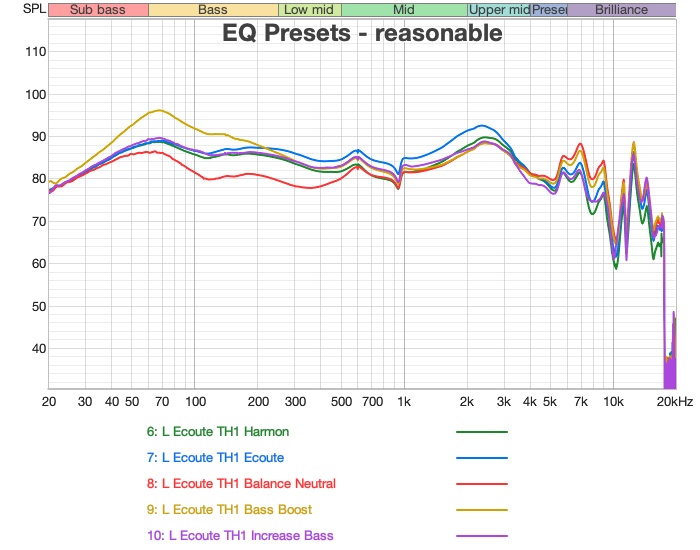
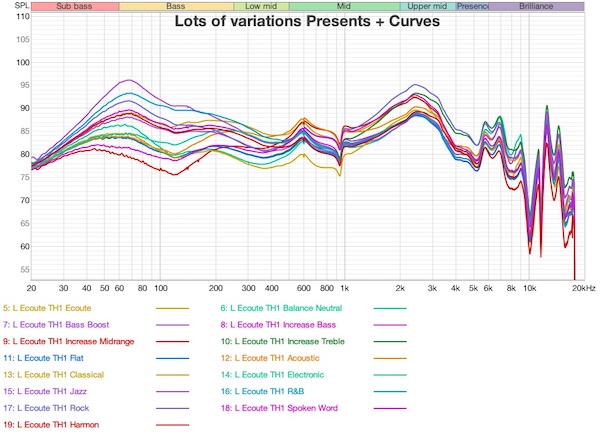
But if you want something ‘crazy’ the bass and treble presets can quickly change the
tuning, and if you want really boost the bass with the “Increase Bass” profile:
 |
 |
But as I mentioned earlier, the ANC has a very noticeable impact on the frequency response, shifting the tonal balance significantly both with the stock profiles and even with the custom EQ profiles:
 |
 |
Because of this and my general experience with ANC, I tuned the TH1 to my preference with EQ off and enjoyed the headphone both wired and wireless with that EQ.
As I mentioned earlier, I appreciated that firmware updates during my review period corrected EQ frequency assignments, demonstrating Ecoute’s commitment to improving the product post-launch:
Pre-firmware update the Custom EQ peaks are in the wrong place, e.g. 30 Hz EQ was nearer 60 Hz:
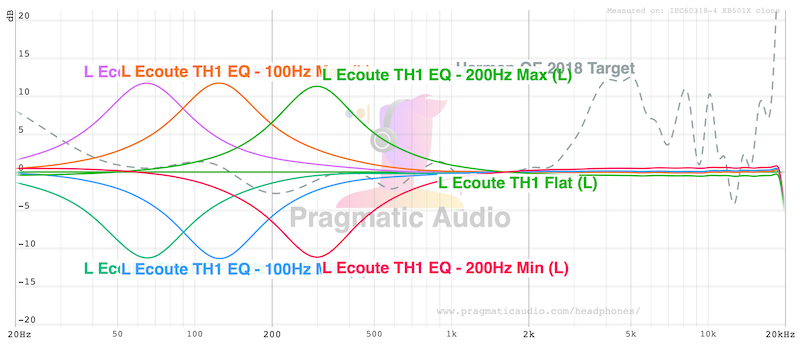
But the Firmware update fixed all these issues, and the Frequencies referene in the App EQ are the ones you will get
when applied:
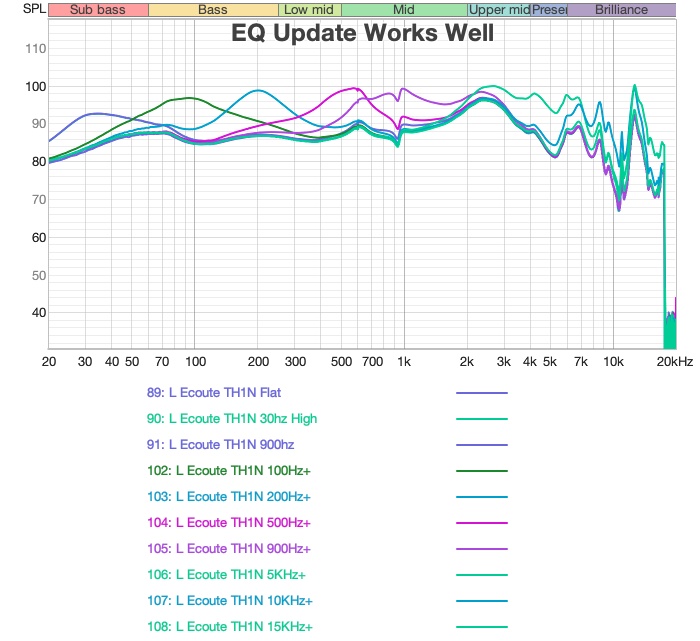
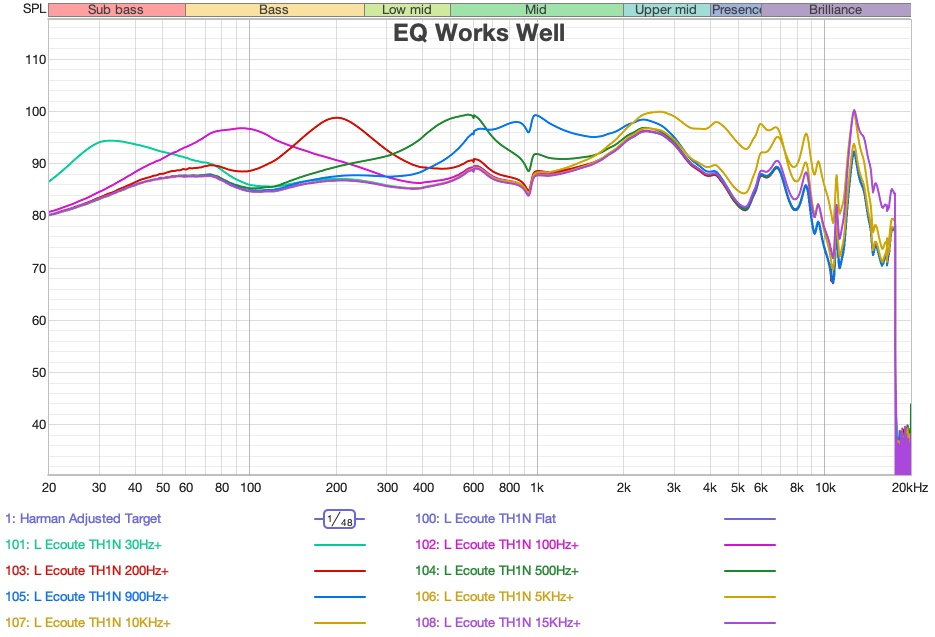
As you can hopefully see, even though we only have 8 band EQ you still get a nice amount of flexibility with the custom EQ ranges.
Here is a consolidated view of the EQ measurements:
And just to show the range of adjustments possible:
Distortion and Harmonics
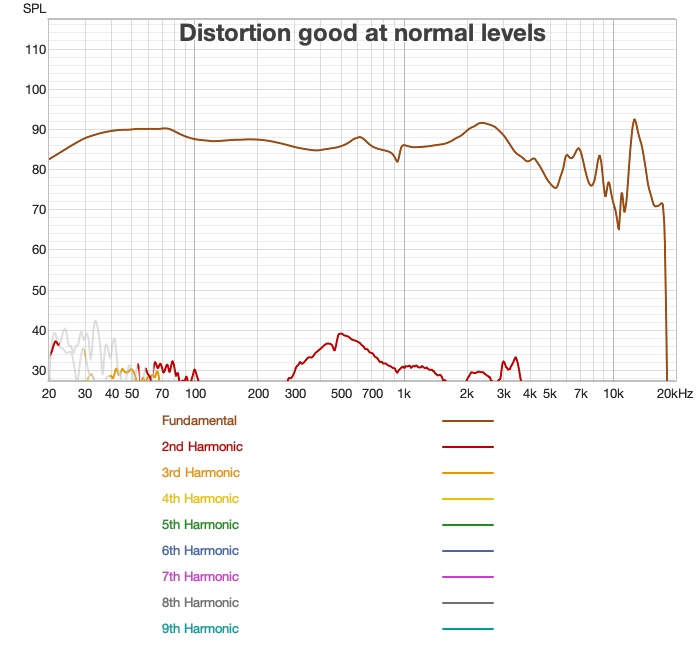
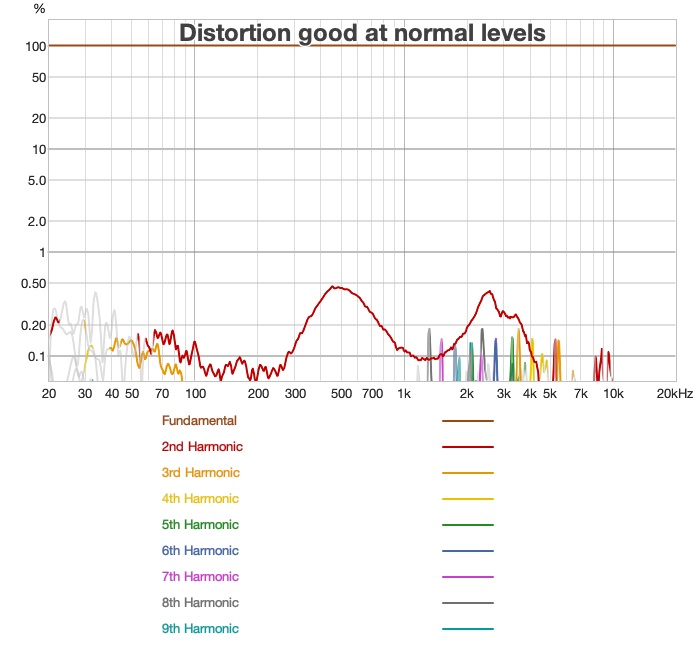
At loud listening levels, distortion can become more noticeable than I would ideally prefer, but at normal listening volumes this distortion remains inaudible:
 |
 |
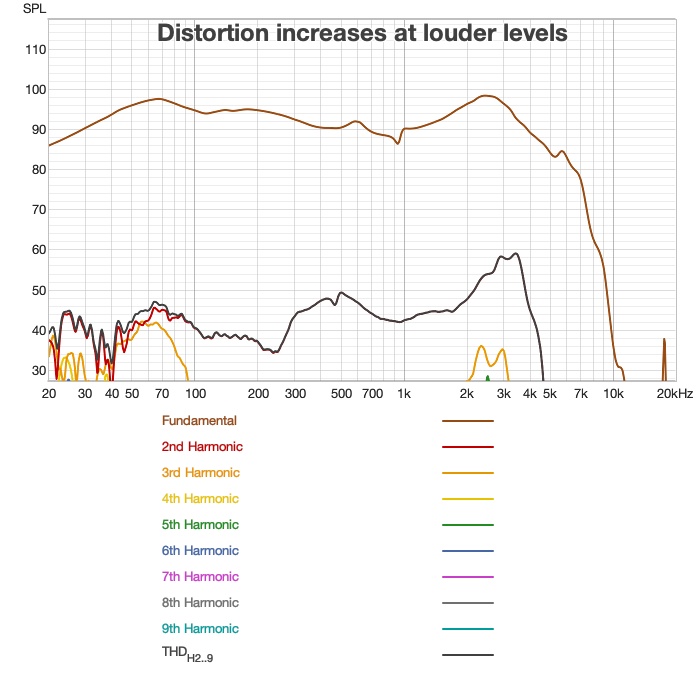
At elevated volume levels, there is increased treble distortion, though this is well above typical listening levels:
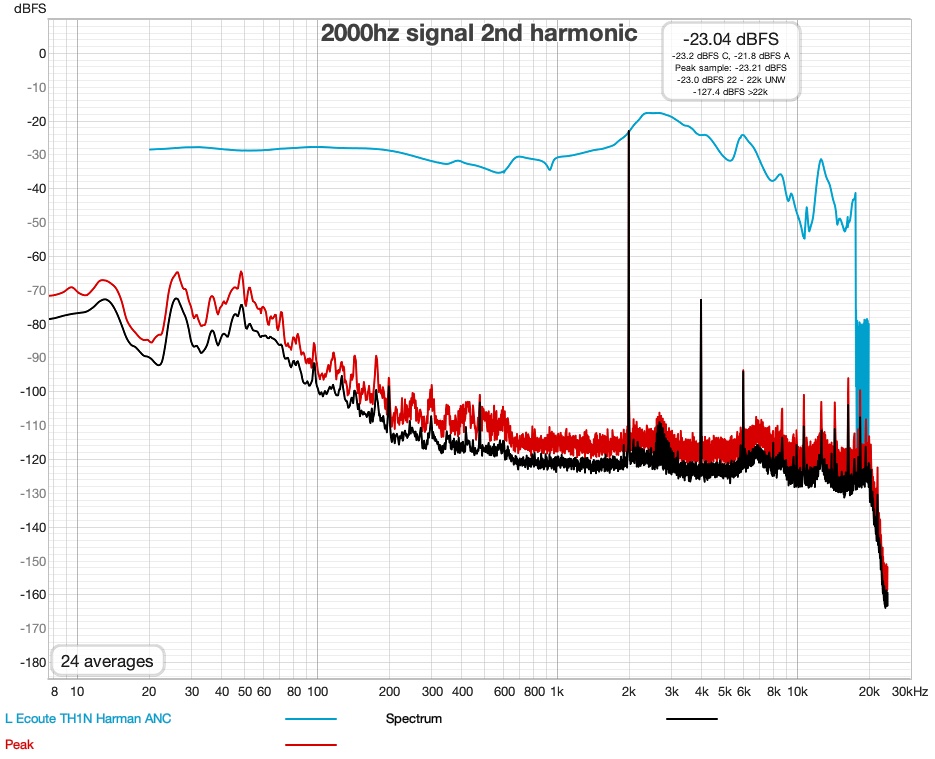
But there is a clear ‘second harmonic’ component visible in the measurements, which is characteristic of the Nutube stage and contributes to the pleasant “tube” sound signature with certain instruments on certain songs:
 |
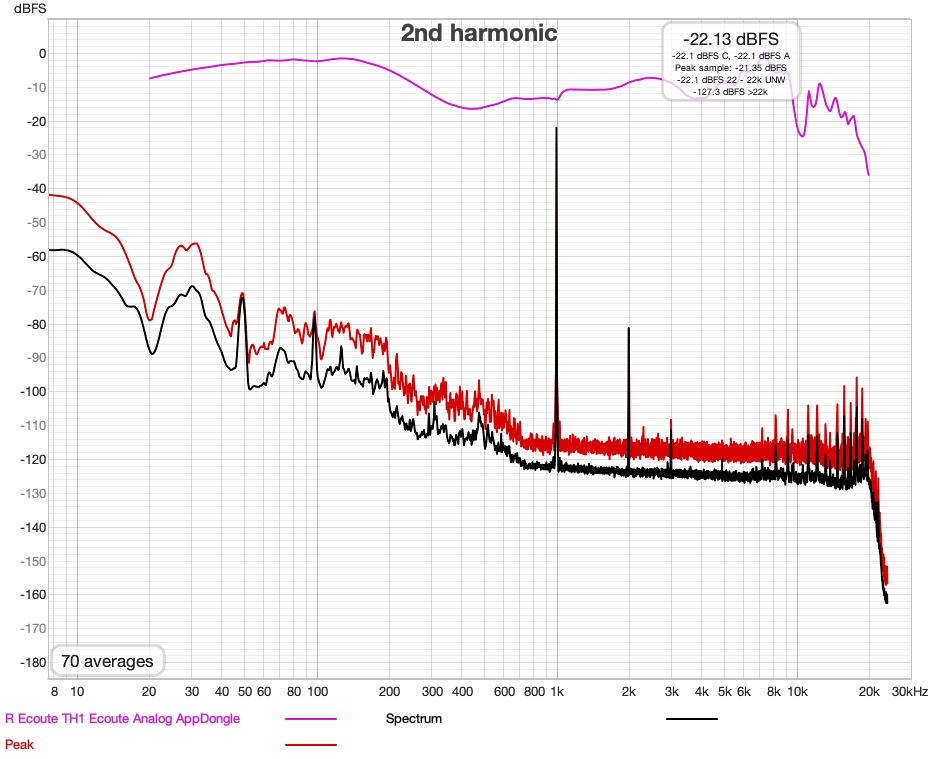 |
My objective measurement-focused brain says this is not great, but my subjective brain says “shut up” and enjoy the music.
Comparisons
I have allot of ANC headphones but the majority of these are what might be called ‘consumer’ focused headphones:
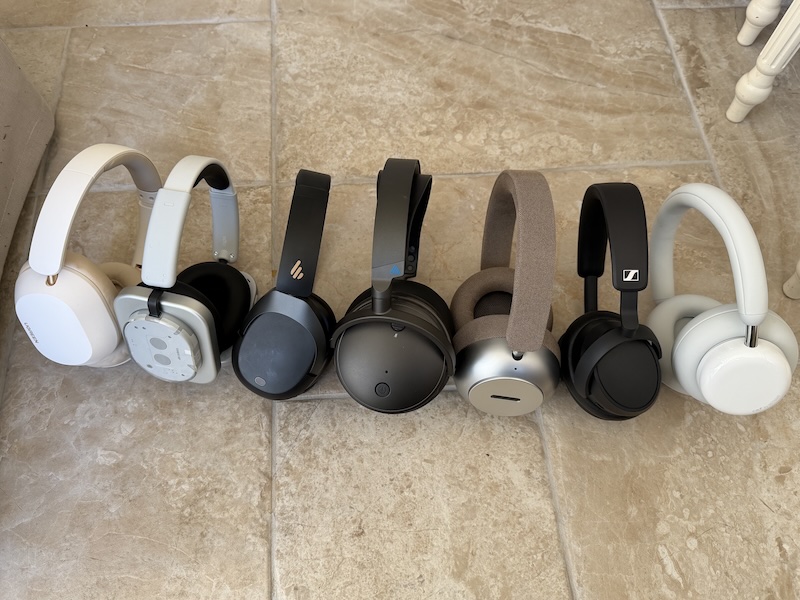
But I feel these 4 are at least targeting audiophiles:
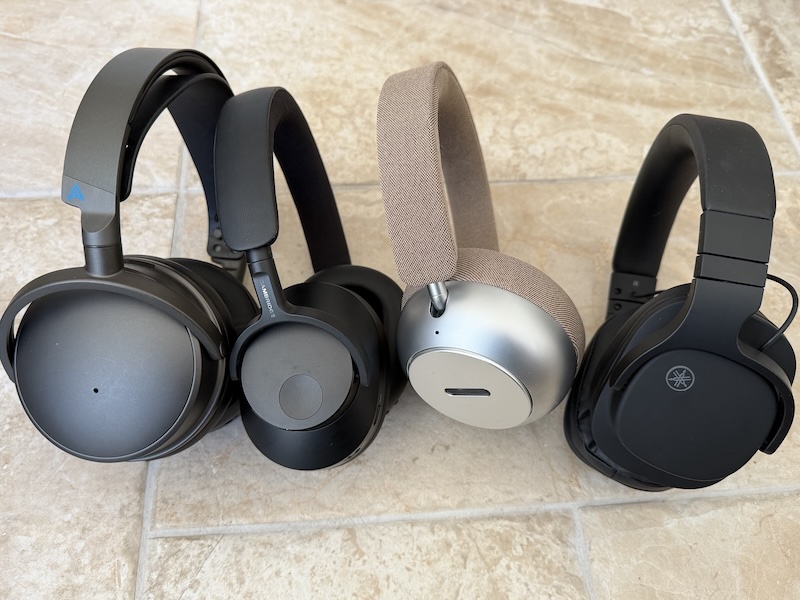
That is the Audeze Maxwell, the Cambridge Audio Melomania P100 SE, the TH1 of course, and on the right the Yamaha L500A.
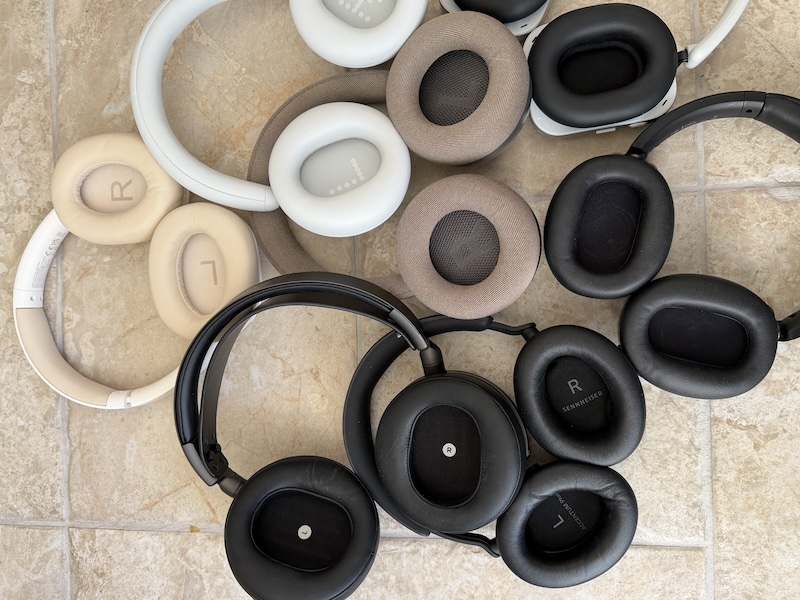
Let’s start with a comparison of the earcup size and shapes:
Earcup Comparisons
The earcup size of the TH1 is generous enough for larger ears and the only one with a round earcup shape and compares favorably to other premium wireless headphones, though the Audeze Maxwell has the largest earcup size:
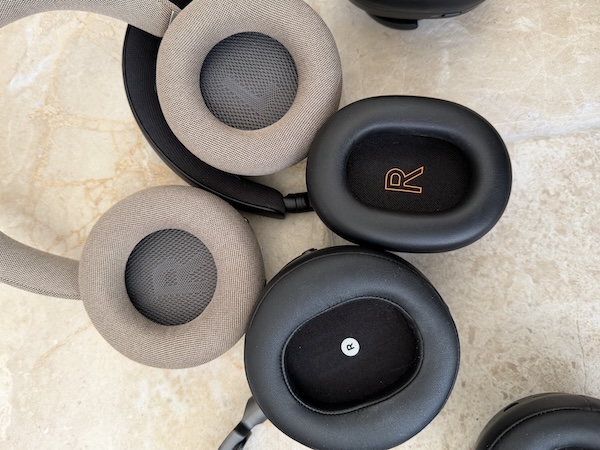
Here is a closer comparison with the Cambridge Audio Melomania P100 SE and Audeze Maxwell, showing the TH1’s substantial earcup dimensions:
But as I mentioned earlier, I do like the material choices and general comfort of the TH1, but I always suggest someone try headphones before they buy them as comfort can be very subjective as our ears are all very different shapes.
Versus Audeze Maxwell
The Audeze Maxwell is perhaps the most direct competitor to the TH1 in the audiophile wireless space, though it is more gaming-focused in its feature set and marketing.
- Price: The Maxwell typically retails around $329-399 depending on the model (Xbox vs PlayStation), making it significantly less expensive than the TH1 at $ 899.
- Build and Design: The Maxwell uses a plastic construction that is functional but does not have the premium feel or aesthetic appeal of the TH1’s metal earcups and Nutube implementation. The TH1 feels and looks more premium in every respect.
- Weight: The Maxwell is heavier at 490 grams compared to the TH1’s 424 grams. Despite the TH1’s metal construction, it is actually lighter and feels better balanced.
- Driver Technology: The Maxwell uses planar magnetic drivers, which provide excellent detail and speed. The TH1 uses a 40mm dynamic titanium driver with a vacuum tube buffer and dual-mono Class A/B amplification. Both approaches have merit—the Maxwell offers planar speed and detail, while the TH1 offers the pleasant harmonics and warmth of tube amplification.
- Tuning: The Maxwell has a well-regarded tuning that leans slightly toward Harman with good bass extension and detail. The TH1’s Ecoute and Harman presets are similarly well-tuned, with the added flexibility of the tube stage harmonics contributing to a more analog presentation.
- Features: The Maxwell includes a broadcast-quality boom mic, making it excellent for gaming and calls. The TH1 focuses purely on music listening and does not include a microphone beyond basic call functionality. The Maxwell also has lower latency for gaming.
- ANC: The Maxwell does have ANC so that is an easy win for the TH1.
- Codec Support: Both support LDAC for high-resolution wireless. The TH1 also includes USB-C digital and 3.5mm analog input.
- Battery Life: The Maxwell offers approximately 80 hours of battery life, which is exceptional. The TH1 offers 20 hours at maximum volume, which is adequate but not ideal.
Takeaway: The Maxwell is an excellent value and the better choice if you need gaming features, a microphone, or extreme battery life. The TH1 is the choice if you prioritize premium build quality, unique tube technology, and a more audiophile-focused experience. The TH1 feels more like a luxury item in the hand; the Maxwell feels like a practical tool. Both are excellent, but they serve slightly different audiences.
Versus Cambridge Audio Melomania P100 SE
The Cambridge Audio Melomania P100 SE is another strong contender in the audiophile-focused wireless space, bringing British audio heritage to a more accessible price point.
- Price: The Melomania P100 SE retails for around $299, making it a much more budget-friendly entry into high-quality wireless audio compared to the $899 TH1.
- Build and Design: While the P100 SE is well-constructed with a thoughtful design and physical buttons, it primarily uses high-quality plastics and some metal accents. It doesn’t match the industrial, “built like a tank” all-metal feel of the TH1.
- ANC Performance: The P100 SE offers superior ANC performance, particularly in very noisy environments like airplanes. However, like the TH1, it can exhibit some background hiss in very quiet rooms. The TH1’s ANC is effective but feels a bit more “bolted on” compared to the more integrated feel of the Melomania.
- Sound Profile: Both headphones aim for a musical presentation. The P100 SE features a “Blues” profile that is exceptionally neutral and enjoyable. The TH1 offers the unique Nutube buffer which adds a layer of harmonic richness and “analog” warmth that the P100 SE’s traditional Class A/B amplification (while excellent) doesn’t quite replicate.
- Battery Life: This is a major differentiator. The P100 SE offers a staggering 60-100 hours of battery life, dwarfing the TH1’s 20 hours.
- Portability: The P100 SE comes with a high-quality hard case and is more traditionally portable. The TH1 is larger and more of a statement piece.
Takeaway: The Cambridge Audio Melomania P100 SE is the pragmatic choice for the frequent traveler who wants great sound, industry-leading battery life, and excellent ANC without breaking the bank. The Ecoute TH1 remains the choice for the enthusiast who wants a unique piece of audio engineering, premium materials, and that specific “tube sound” in a wireless format.
Versus Yamaha YH-L500A
The Yamaha YH-L500A takes a very different approach, focusing almost entirely on the home listening experience rather than the “do-everything” travel focus of many wireless headphones.
- Price: At approximately $229, the Yamaha is the most affordable of this group.
- Build and Weight: The Yamaha is exceptionally light at 265g, compared to the TH1’s 424g. While the TH1 feels more luxurious, the Yamaha is arguably more comfortable for multi-hour sessions on the couch because of its “disappearing” weight.
- Focus and Features: The Yamaha lacks ANC entirely, positioning it as a “couch companion.” It features unique Sound Field DSP modes (Music and Cinema) that provide crossfeed and spatial enhancement. This is a different kind of " audiophile" feature compared to the TH1’s Nutube buffer.
- Sound Quality: The Yamaha has a fun, slightly V-shaped signature by default but offers great clarity. The TH1 provides a more sophisticated, “expensive” sound with better texture and that signature tube sweetness.
- Usage Scenario: The TH1 is designed to be a premium travel and home headphone. The Yamaha is strictly for home use where you don’t need to block out external noise but want wireless convenience.
Takeaway: If you primarily listen at home and prioritize comfort and spatial processing for music and movies, the Yamaha YH-L500A is a fantastic, lightweight alternative. However, if you need a headphone that can travel, block out the world, and provide a truly premium tactile and sonic experience, the Ecoute TH1 is in a different league.
Rating
The Ecoute TH1 earns a 4-star pragmatic rating because it delivers an exceptional audiophile experience in a wireless format, though it isn’t without its minor rough edges. The standout features are undoubtedly the sound and build quality; the tuning is expertly handled, particularly when using the Ecoute or Harman presets, and the inclusion of Nutube technology adds a pleasant layer of harmonic richness that is rare in this category. This is complemented by a premium industrial design and all-metal construction that feels substantial and built to last, justified further by the plush pads and generous headband extension that maintain comfort despite the 424-gram weight.
However, there are a few areas where the TH1 shows room for improvement. While the internal technology is unique, the ANC performance doesn’t quite reach the top-tier standards of Bose or Sony, occasionally sounding a bit aggressive or introducing a background noise floor in very quiet environments. There are also small usability quibbles, such as the initial tube ‘ringing’ that lasts for a few seconds upon startup and the lack of dedicated wind noise detection, which can be distracting during outdoor use.
Ultimately, the TH1 remains an impressive offering for listeners who prioritize audio quality and tactile luxury over pure noise cancellation. While the recently announced TH2 appears to address most of my small issues, it does come at a higher price point, so the TH1 still stands as a compelling, high-end choice for the serious audio enthusiast.
Conclusion
The Ecoute TH1 is a refreshing departure from the mainstream wireless headphone market, clearly designed by people who value sound quality and craftsmanship above all else. By successfully integrating vacuum tube technology and high-bias amplification into a portable design, Ecoute has created a product that offers a distinct “analog” soul in an increasingly digital world. It feels less like a consumer gadget and more like a piece of high-end hifi equipment that happens to be wireless.
While it may not be the perfect choice for the frequent flyer who needs the world’s best noise cancellation, it is an ideal companion for the listener who wants a premium, versatile well tuned headphone for use at home and on the move. The combination of its unique sonic character, robust industrial design makes it an interesting headphone in the sub $1000 headphone market.
In summary, the TH1 is a bold and successful statement piece that should be experienced by anyone looking for a more sophisticated wireless listening experience. If you appreciate a company that focuses on an audiophile-first philosophy, the Ecoute TH1 comes highly recommended.