Moondrop Marigold
Great sounding USB‑C IEM, but with one ergonomic misstep
As an Irish person, the name caught my eye straight away. Marigolds are one of those cheerful, reliable flowers you see brightening up garden borders and windowsills all across Ireland in the spring — and there’s something fitting about a Moondrop product sharing that name: unpretentious, good-natured, and quietly dependable.
Moondrop’s Marigold is a bullet‑style in‑ear that plugs straight into your phone or laptop via USB‑C, with a built‑in DAC and second‑generation DSP that you can tune in the Moondrop Link app (Android + web). Out of the box it follows Moondrop’s VDSF target and sounds clean, balanced, and surprisingly good for $39.99. The only real blemish is the unconventional asymmetric “neckband‑style” cable — one side is significantly longer than the other and must be routed behind your head — which adds an ergonomic wrinkle to an otherwise easy recommendation.
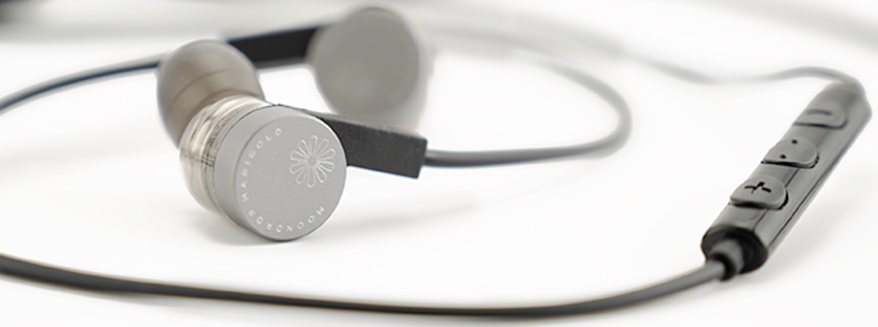
I would like to thank Shenzhenaudio for providing the Moondrop Marigold for the purposes of this review and for assisting me in adding support within my devicePEQ tool — which you can use as an alternative to the Moondrop app to access and edit the on‑device PEQ filters.
If you are interested in finding more information about this product, you can find it at the official Shenzhenaudio listing.
The Marigold retails for $39.99.
Having lived with the Marigold for several weeks, I keep reaching for it as a quick-grab option for calls and commutes. The sound is genuinely impressive for the price, and the on-device DSP adds flexibility that most $40 IEMs simply don’t offer. The cable routing becomes habit quickly — but it’s worth knowing about up front.
Unboxing and Build Quality
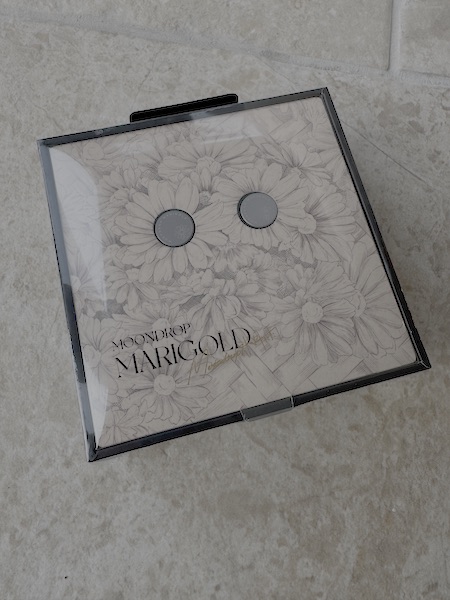
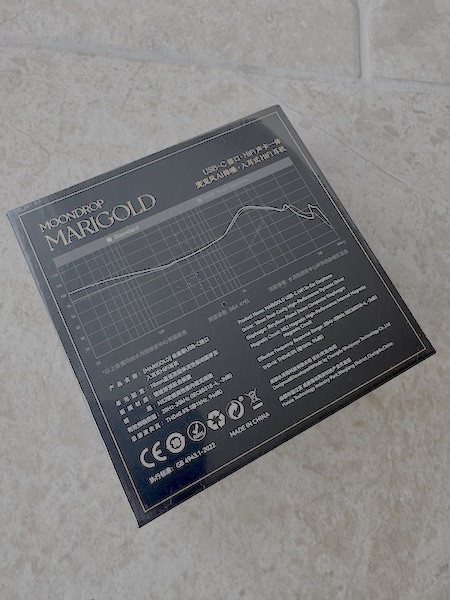
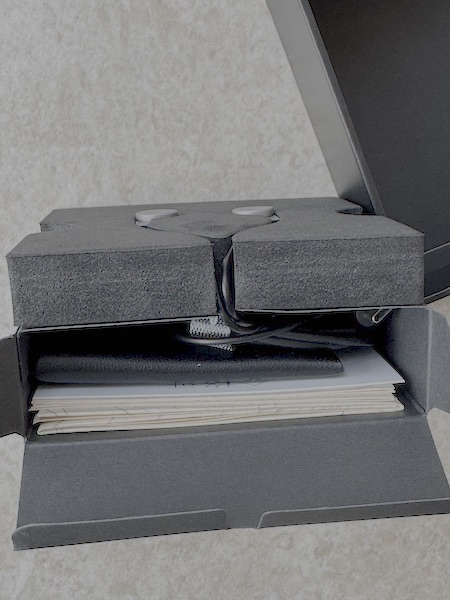
The Marigold arrives in compact retail packaging that’s appropriately no-frills for its price point — everything is well protected and clearly presented without any excess.
 |
 |
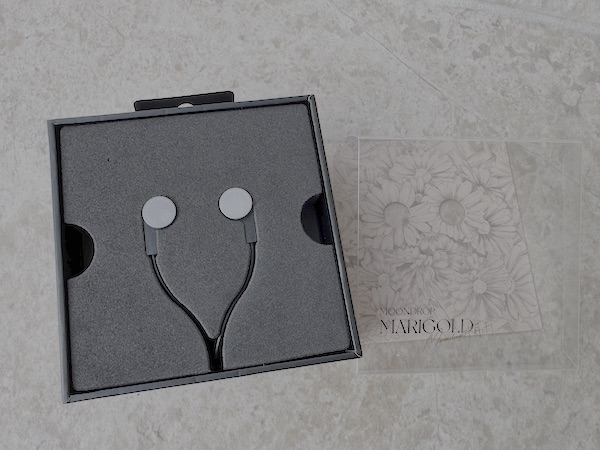
Opening the box reveals the IEMs and their integrated USB‑C cable sitting in the top tray, with the carry case, ear tips, and documentation tucked underneath.
 |
 |
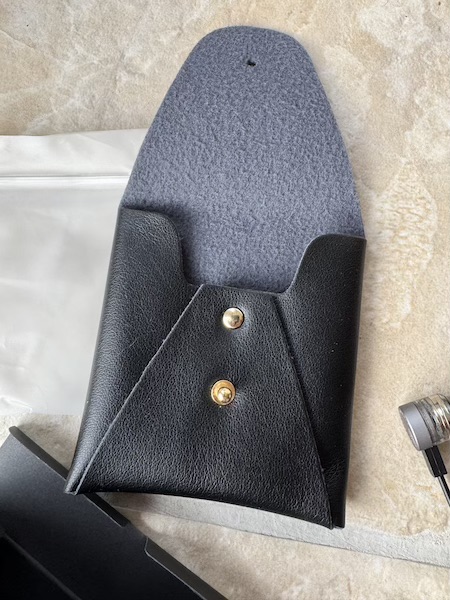
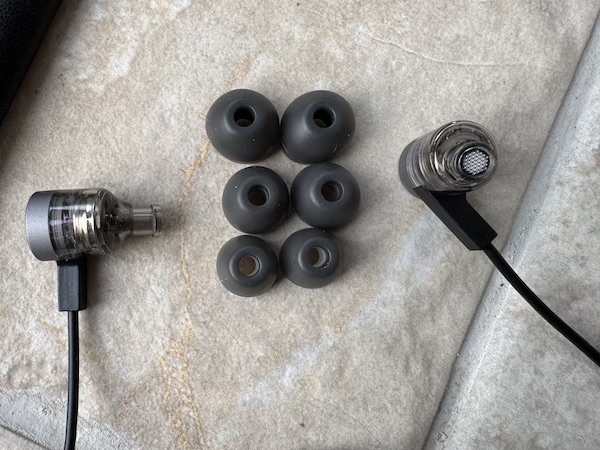
The carry case is a simple zippered pouch — functional and adequate for protecting the IEMs in a bag, and consistent with what you’d expect at this price. The eartip selection covers the essential sizes in standard silicone; nothing exceptional, but enough to find a workable seal for most ears.
 |
 |
Shell and build
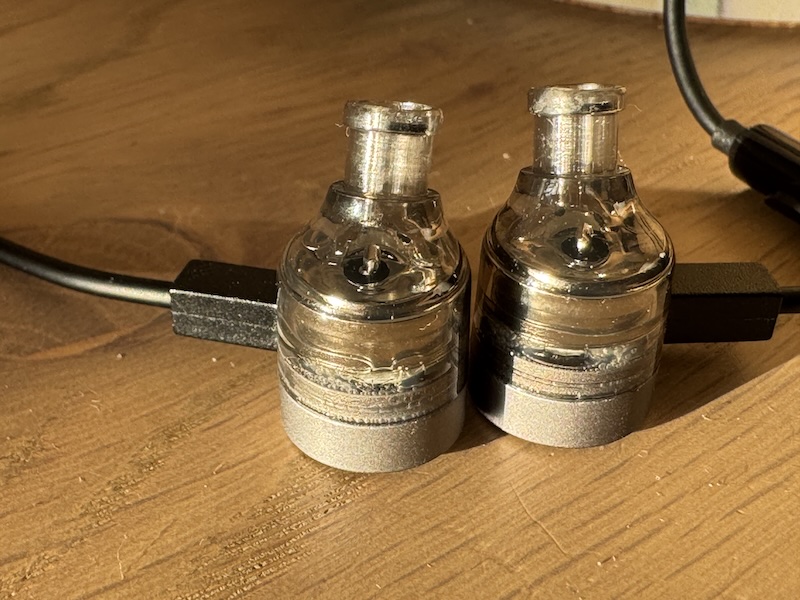
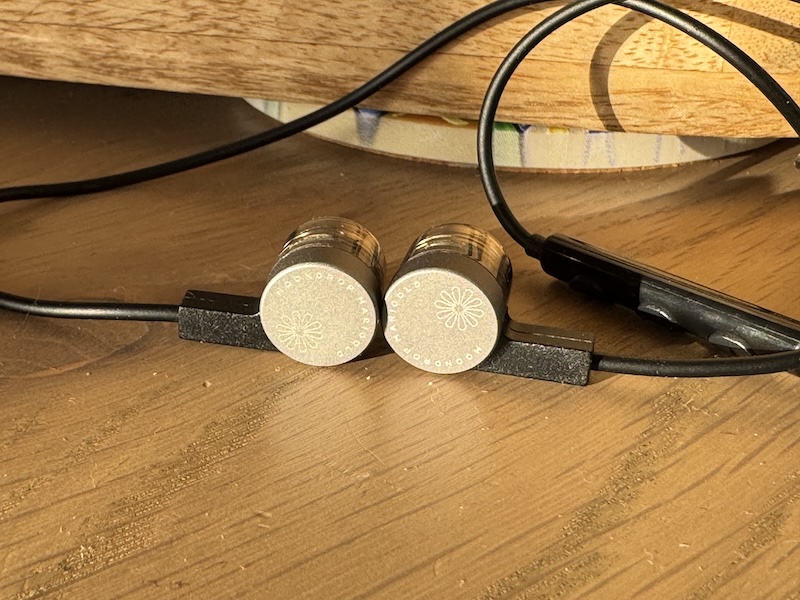
The Marigold uses the classic straight-barrel bullet form factor with clear shells that put the internals on full display — the driver housing and internal architecture are visible without squinting. The shells are lightweight and feel solid for the price, with smooth seams and no flex in the body.
 |
 |
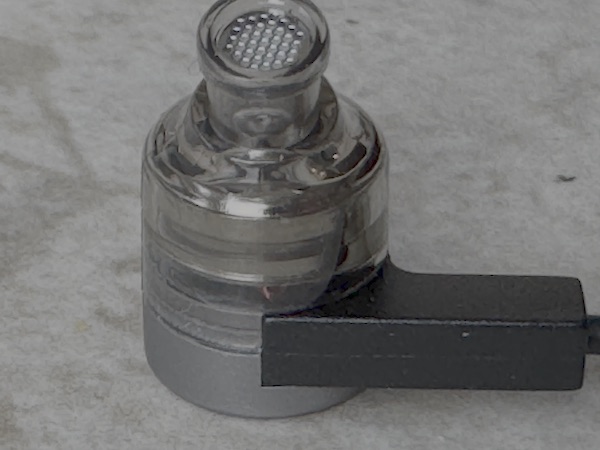
The nozzle has a well-defined lip that holds tips securely, and the angle sits well for the bullet form factor — getting a good seal is easy without any awkward fiddling.
 |
 |
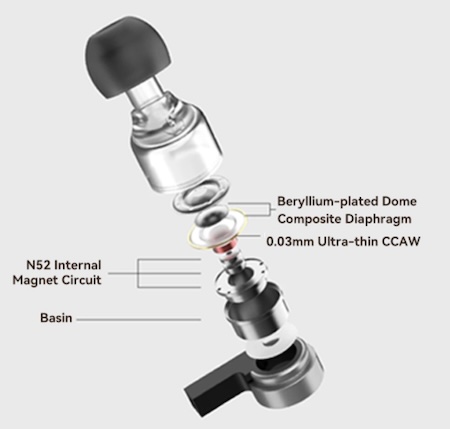
The beryllium-plated dome driver sits in a dual-cavity brass housing designed to control resonance and extend the bass cleanly. The driver construction is clearly a step above what you’d normally find at this price.
Cable and inline module
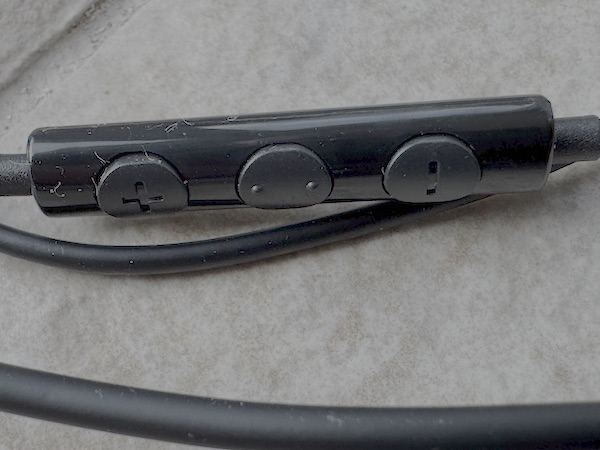
The inline module is one of the better-built ones I’ve seen at this price — the housing feels solid, the volume buttons have a satisfying click, and the microphone port is neatly integrated without looking like an afterthought.
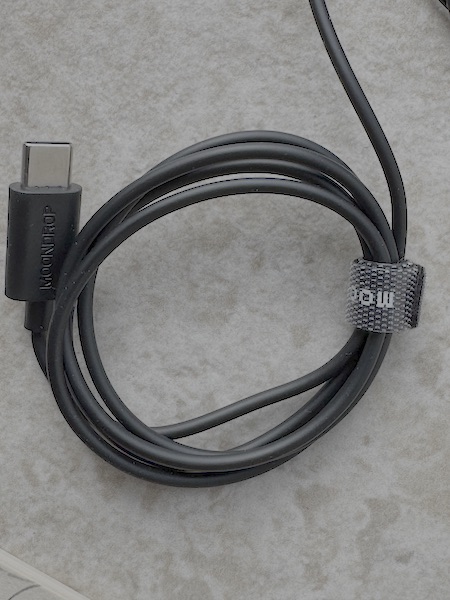
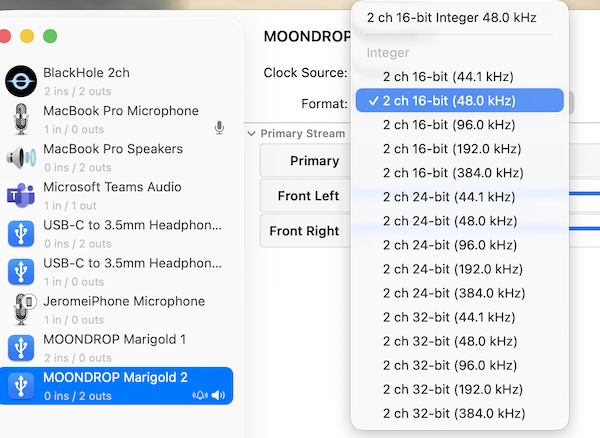
The USB‑C connector seats firmly in ports with no wobble. On macOS it registers instantly as an audio device with no drivers needed — the same plug-and-play experience carries across Android and Windows.
 |
 |
The one genuine ergonomic oddity is the asymmetric cable layout — one side of the Y‑split is substantially longer, designed to run behind your neck rather than straight down your chest.
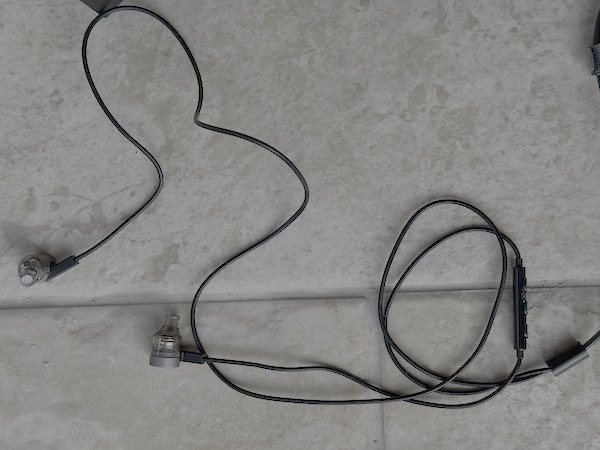
This works, and once you’ve routed it a few times it becomes second nature. But it’s an added step that a conventional cable doesn’t require, and for anyone who regularly removes their IEMs mid-session, the behind-the-neck setup is less effortless than a straight-down cable.
Fit and Comfort
The bullet form factor fits the way bullet IEMs typically do — getting a good seal with the included silicone tips is straightforward, and the lightweight shells don’t put any meaningful weight on your ears. The nozzle size is comfortable for extended listening and sits naturally in most ears.
The comfort conversation is almost entirely about the cable. Once routed behind the neck the Marigold stays put reliably and produces very little microphonic noise, which is a genuine plus — but getting it set up on the fly is more fiddly than a straight-down cable. For desk work or long commutes where you leave the IEMs in for stretches this is a non-issue. For frequent in-and-out use it adds friction that a conventional cable simply doesn’t have.
Features and Performance
Built-in DAC and Hi-Res audio support
The Marigold’s USB sound card supports hardware decoding up to 32-bit/384kHz PCM via the standard UAC protocol, making it fully plug-and-play on any USB‑C device — phone, tablet, laptop, or desktop — with no drivers and an instant handshake. At $40, the fact that it handles lossless streaming sources at their native resolution without any software intermediary is meaningfully useful for TIDAL, Qobuz, or Apple Music lossless listeners.
DSP and the Moondrop Link app
The second-generation DSP stores a five-band parametric EQ directly on the chip, so your settings travel with the IEM regardless of source or player app. The Moondrop Link app (Android and web) provides a detailed tuning interface — you can set the filter type, frequency, gain, and Q value per band — with a live frequency response curve updating as you adjust. It’s a level of control you’d normally only find in dedicated audio software, not consumer mobile apps at this price.
If you prefer a browser-based workflow, the Marigold’s on-device PEQ is also accessible via my devicePEQ tool at pragmaticaudio.com/iems, which integrates directly with squig.link and hangout.audio measurement databases. It’s a practical alternative that doesn’t require the Moondrop app for day-to-day filter management.
Inline microphone
The MEMS microphone sits in the inline module with hardware-level NPU noise reduction for calls. In practice, call quality is noticeably cleaner than typical budget inline mics — voice pickup is focused and background noise is reasonably attenuated. For daily video calls and commute audio it holds up genuinely well.
Sound Impressions
All impressions are from stock VDSF tuning via USB‑C on Android and MacBook, with no EQ applied unless noted. The Marigold is easy to drive from any USB‑C source and showed no meaningful variation between devices.
Bass
The Marigold’s low end is one of its quiet strengths. The bass reaches genuinely deep — there’s real weight and authority to bass lines rather than the thin, vague rumble you sometimes get from compact bullet IEMs — and bass notes don’t linger or muddy the mids. Kick drums hit with natural punch and the mid-bass stays tight, keeping things clear even in busy arrangements. Jennifer Warnes’ “Way Down Deep” is the classic test: the Marigold handles the deep bass swell with controlled weight rather than a wobbly thump, and the texture of the bass strings comes through clearly.
Midrange
This is where the VDSF tuning reveals its character most clearly. The tuning brings vocals slightly forward in the mix — female voices in particular gain intimacy and definition without becoming tiring over time. Piano has convincing body and weight, and acoustic guitar carries both the pluck of the pick and the woody body of the instrument behind it. Instrument separation is noticeably better than the price would suggest, and closely layered arrangements stay clear. Joni Mitchell’s “A Case of You” serves this section well: the guitar sits naturally alongside the vocal without blurring into it, and Mitchell’s voice sounds natural and present without being artificially sharpened.
Treble
The Marigold’s treble is measured and controlled — there’s enough brightness to avoid sounding muffled, but the tuning sits on the relaxed side and avoids any harshness or hard edge. Cymbals have a natural sheen without sounding splashy, and hi-hats hit crisply without any sharpness on “s” sounds. Recordings from the 1980s that can sound harsh on more aggressive tunings — compressed mixes with prominent “s” sounds — stay well in check here, which is a real practical advantage for everyday listening. Nils Lofgren’s “Keith Don’t Go” is a useful reference: the high-frequency shimmer on the guitar strings comes through clearly, without the added edge that brighter IEMs can introduce.
Sense of Space and Instrument Placement
The sense of space is fairly compact, as you’d expect from a sealed bullet-style IEM — this isn’t one that creates a wide, expansive feel around your head. Where the Marigold does well within that compact presentation is instrument placement: each instrument has a distinct, stable position in the mix and the center stays solid. On Miles Davis’ “Kind of Blue” the separation between trumpet, piano, and upright bass is clear despite the narrow spread, and reverb fades naturally without smearing. For a $40 USB-C IEM, this level of placement accuracy is genuinely impressive.
Comparisons
Versus Tanchjim One DSP
The Tanchjim One DSP is the most natural comparison — it’s the same concept executed at a slightly lower price (around $30), pairing a bullet-style dynamic driver IEM with a USB-C DSP cable that stores EQ settings on-chip. Both do the core job well, and both sound good out of the box. The key differences come down to tuning philosophy, app ecosystem, and build execution. The One DSP follows a Harman-style tuning with a warmer, slightly more mid-bass-heavy character, while the Marigold’s VDSF tuning is leaner and more neutral with a more focused vocal push — which one you prefer will depend on your taste. The Marigold’s inline module is noticeably better built, and crucially the Moondrop Link app works on both Android and web, whereas the Tanchjim app is Android-only, which matters if you’re on iOS or desktop. The One DSP does have one trick the Marigold doesn’t: its DSP cable can be detached and used with other IEMs to apply EQ to whatever you plug in, which is a clever bit of flexibility. For the $10 difference the Marigold is the more polished all-round package, but the One DSP remains a remarkable value and worth considering if you’re on a tighter budget or want that detachable cable trick.
Specifications and Measurements
Specifications
| Specification | Value |
|---|---|
| Driver | 10mm beryllium-plated dome composite, dual-cavity brass housing |
| Magnetic circuit | High-efficiency internal circuit, N52 neodymium |
| Impedance | 32 Ω ± 15% @ 1 kHz |
| Frequency response | 20 Hz – 20 kHz (IEC 60318-4, ±3 dB) |
| THD | ≤ 0.05% typical; ≤ 0.5% @ 1 kHz, 94 dB |
| Plug | USB‑C (non-detachable) |
| DAC | Up to 32-bit / 384 kHz PCM |
| USB protocol | UAC (plug-and-play, no drivers required) |
| DSP | 5-band on-device parametric EQ |
| App support | Moondrop Link (Android + web); devicePEQ compatible |
| Microphone | MEMS with hardware-level NPU AI noise reduction |
| Cable | Non-detachable asymmetric neckband-style |
| Price | $39.99 |
Measurements
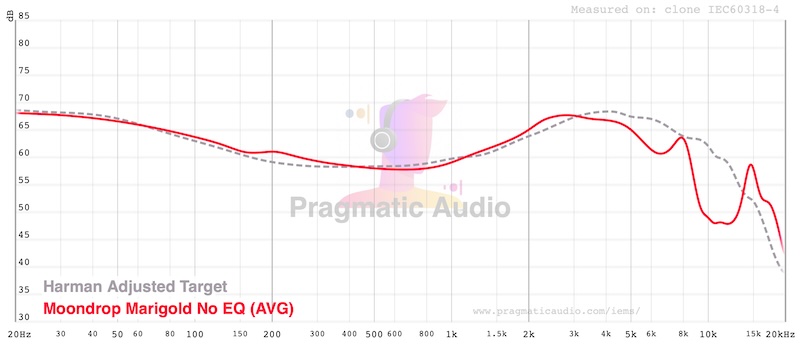
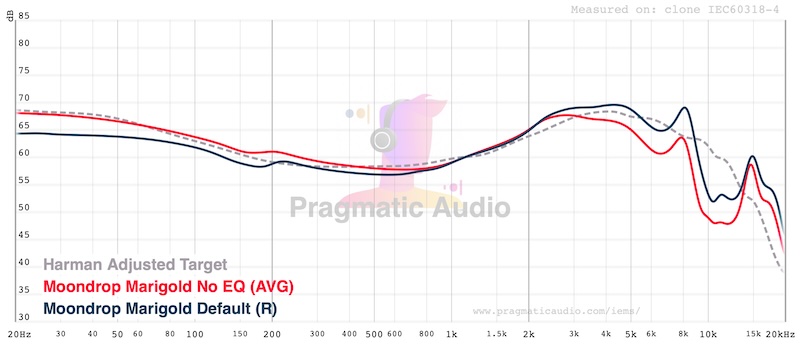
The frequency response graph below shows the Marigold’s stock VDSF tuning. The bass builds cleanly with genuine depth, the vocal boost around 2–3 kHz is well-judged rather than aggressive, and the treble relaxes above around 8 kHz without any harsh peaks. The measured response maps directly to what you hear in practice.
The comparison below plots the default Moondrop app tuning preset against the flat no-EQ baseline. This is a useful reference when building custom filters: you can see exactly what the stock DSP preset is doing relative to the unmodified signal, which makes it straightforward to decide whether to layer adjustments on top of the default or start from flat.
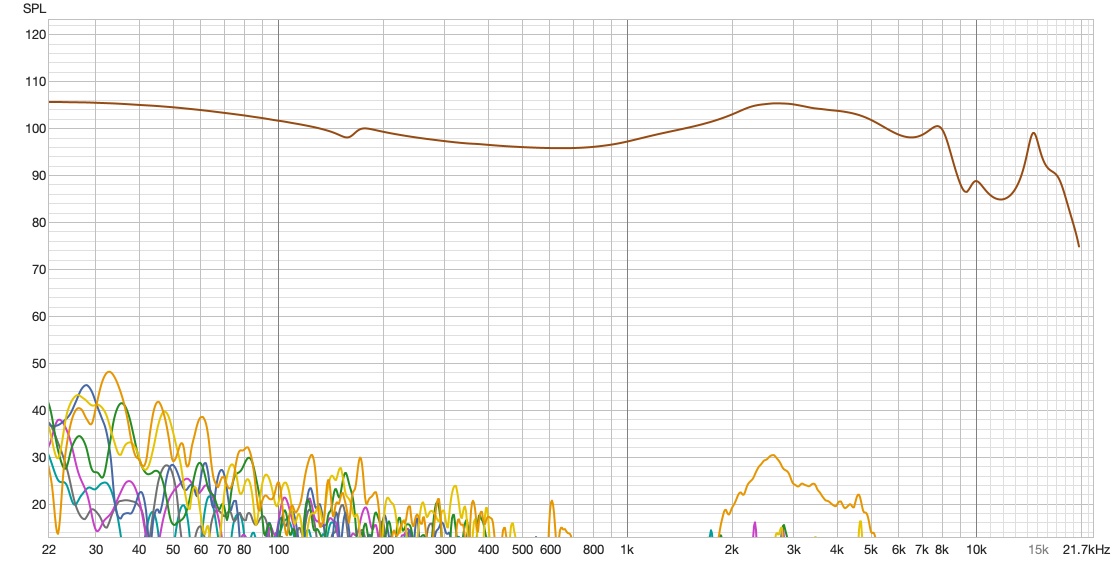
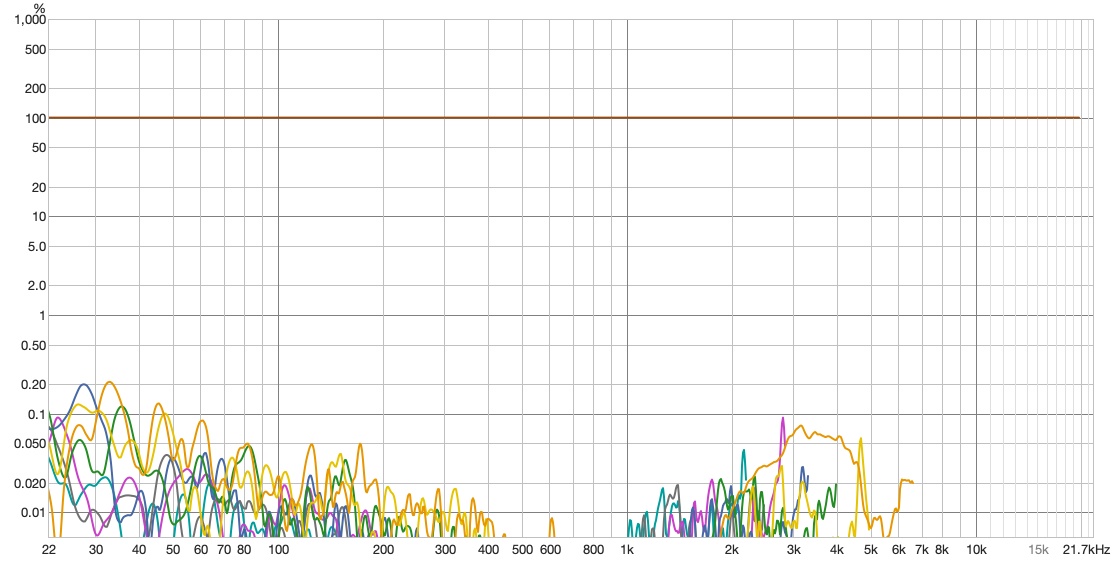
Distortion measured at 94 dB is very low throughout the audible range, with a slight rise at the very lowest frequencies that is completely normal for dynamic drivers — and it stays well controlled here. The percentage measurement confirms how clean the Marigold is across the board — strong performance for a $40 IEM.
 |
 |
Rating Explanation
The Marigold earns a 4/5 pragmatic rating because nearly everything it does, it does well above its price class. The VDSF tuning is well-considered and accurate, the beryllium-plated driver reveals detail that most $40 IEMs can’t match, the plug-and-play USB‑C integration is seamless, and the on-device parametric EQ is a genuinely useful feature that puts the Marigold in a different category from budget competition that offers no such flexibility. At $39.99 the price rating is a clear 5.
The asymmetric cable is the honest reason it doesn’t score higher overall. It’s not a dealbreaker in isolation — the function is fine and the behind-the-neck routing becomes habit quickly — but it’s an unnecessary ergonomic compromise on an otherwise straightforward product, and it surfaces every time you put the IEMs in or take them out.
The Marigold is the right choice for commuters, desk workers, and budget-minded listeners who want a neutral, polished tuning with DSP flexibility and a genuinely capable inline mic. If detachable cables or conventional straight-down routing are non-negotiable, you’ll need to look elsewhere — but you’ll likely be spending more to match the Marigold’s tuning quality and feature set.
Conclusion
Moondrop’s Marigold makes a strong case that you don’t need to spend much to get a properly tuned, feature-complete IEM. The VDSF tuning is well-considered and accurate, the bass is genuinely deep, vocals are clear and engaging without becoming tiring, and the treble stays smooth even on recordings that trip up less carefully tuned IEMs. Add seamless USB‑C DAC integration, on-device parametric EQ, and an above-average inline microphone, and there’s a remarkable amount going on for $40.
The asymmetric cable is genuinely the only thing keeping the Marigold from a higher rating, and whether it bothers you will come down entirely to your daily habits. If you can live with — or actively prefer — the behind-the-neck routing, this is an easy recommendation and one of the best-value IEMs in the budget bracket right now.