Cozoy D1
Cozoy D1: A Balanced Approach to Budget Audio
The Cozoy D1 appears to be the debut IEM from Cozoy, and it’s a strong first entry into the ultra-competitive budget IEM market. At approximately $30 (per the product listing), the D1 delivers a balanced and slightly mid-forward tuning that stands out from the typical V-shaped or heavily colored signatures dominating this price segment.
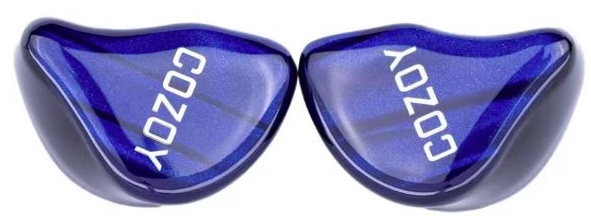
What makes the D1 particularly noteworthy is its deliberate restraint. In a market where many budget IEMs chase attention through exaggerated bass or piercing treble, the D1 takes a more mature approach with its 10mm dual-magnet, dual-cavity dynamic driver featuring a graphene diaphragm (as listed by Cozoy). This results in a relaxed, easy-to-listen-to presentation that prioritizes long-term comfort over short-term wow factor.
I would like to thank Cozoy for providing the D1 for the purposes of this review.
If you are interested in finding more information about this product, you can find it at Cozoy D1 AliExpress Page
The Cozoy D1 is priced at approximately $30 with an option for a Microphone (per the listing).
After spending the past month with the D1, I’ve come to appreciate its positioning given its very low price. I feel it makes an ideal second or third IEM for a collection. Pair it with a JM-1-tuned IEM and a Harman V-shaped IEM, and the D1 provides a welcome contrast with its balanced, fatigue-free signature.
But before diving into the sound impressions, let’s explore what you get in the package:
Unboxing Experience
The Cozoy D1 arrives in elegantly understated packaging that focuses on substance over flash:
The box design is clean and professional, setting appropriate expectations for what’s inside. Turning to the back, you’ll find one of my favorite touches—Cozoy proudly displays the frequency response graph alongside detailed specifications:
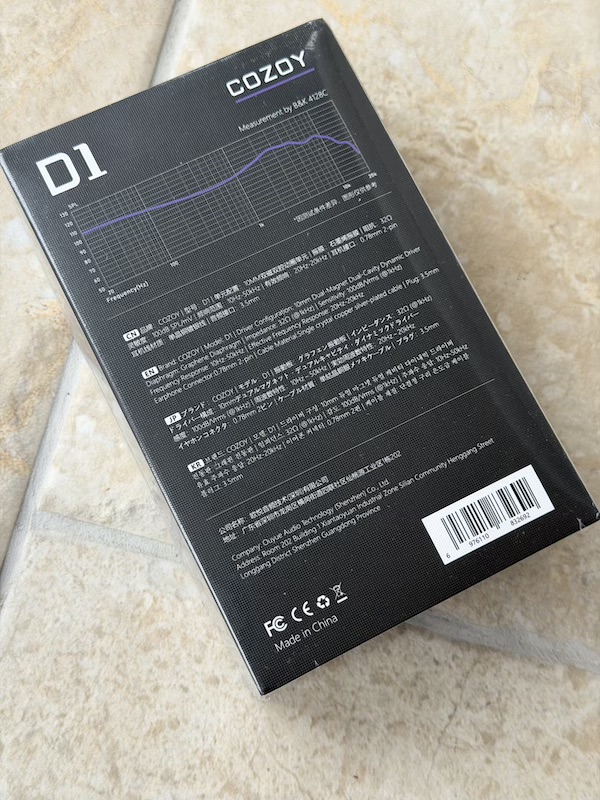
I always appreciate when companies confidently show their measurements on the packaging. It demonstrates both transparency and pride in their tuning work.
Opening the box reveals the D1 IEMs prominently displayed:
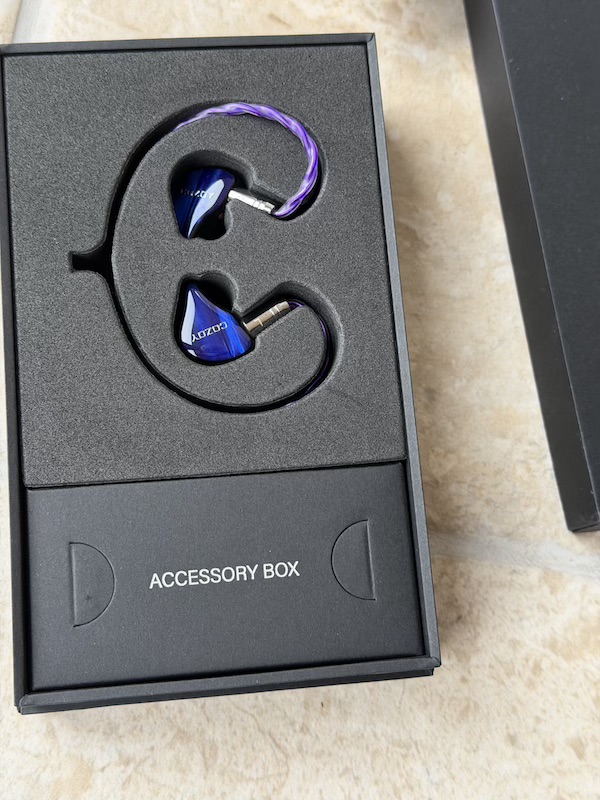
Underneath the IEMs, you’ll find the cable and user manual:
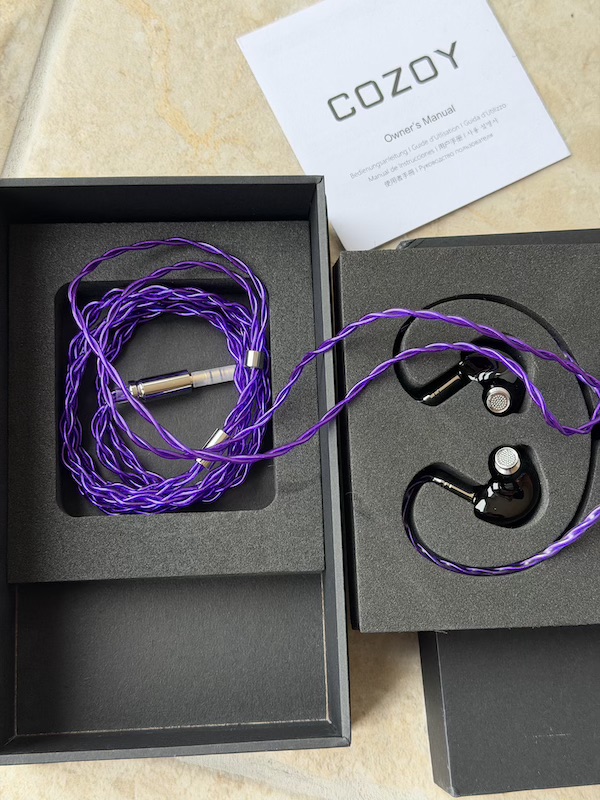
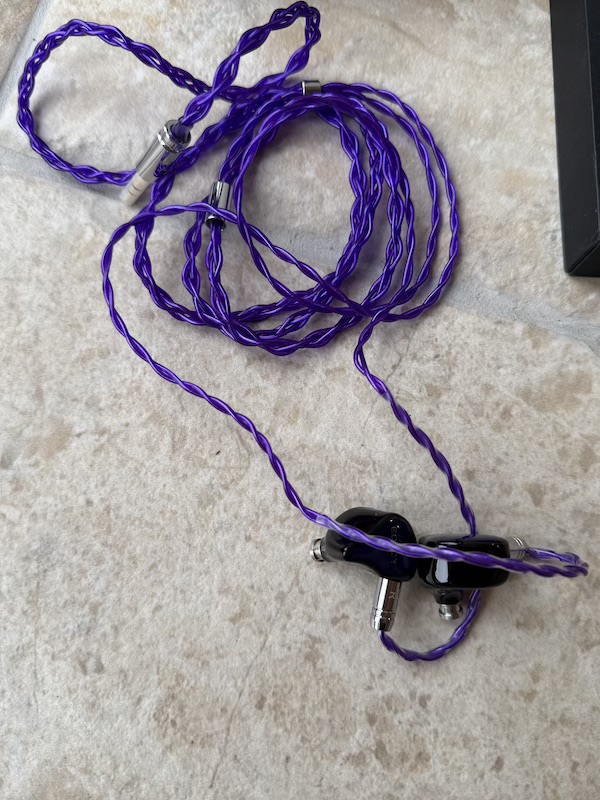
The included cable deserves special mention—it’s very good quality for the price point. The 4-braid silver-plated single-crystal copper cable (as listed) is lightweight, flexible, and resistant to tangling:
The accessory package includes a generous selection of ear tips that covers most preferences:
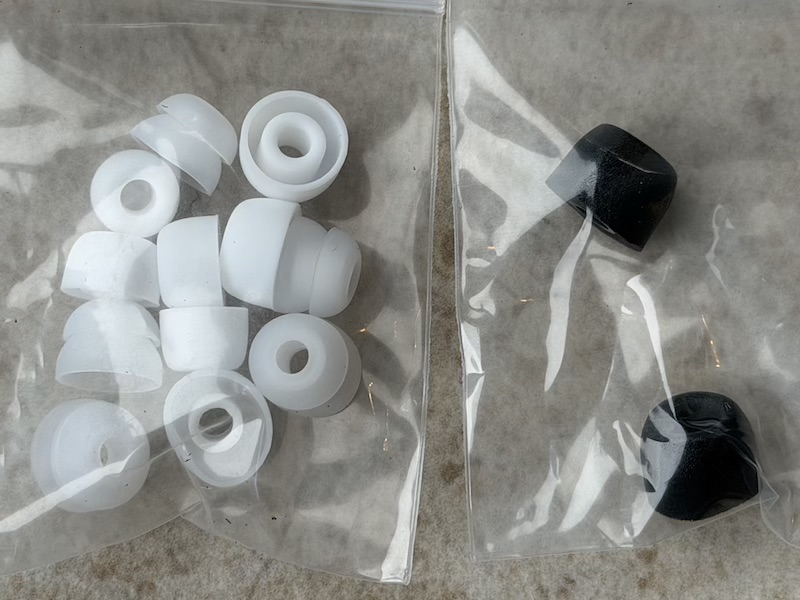
The ear tip selection is particularly impressive, offering both foam options and a nice variety of silicone tips in different sizes and styles. This variety ensures that most users will find a combination that provides an optimal seal and comfort.
Design, Build Quality, and Comfort
The Cozoy D1 uses a lightweight resin shell (listed as medical-grade) with a compact, ergonomic shape that prioritizes comfort:
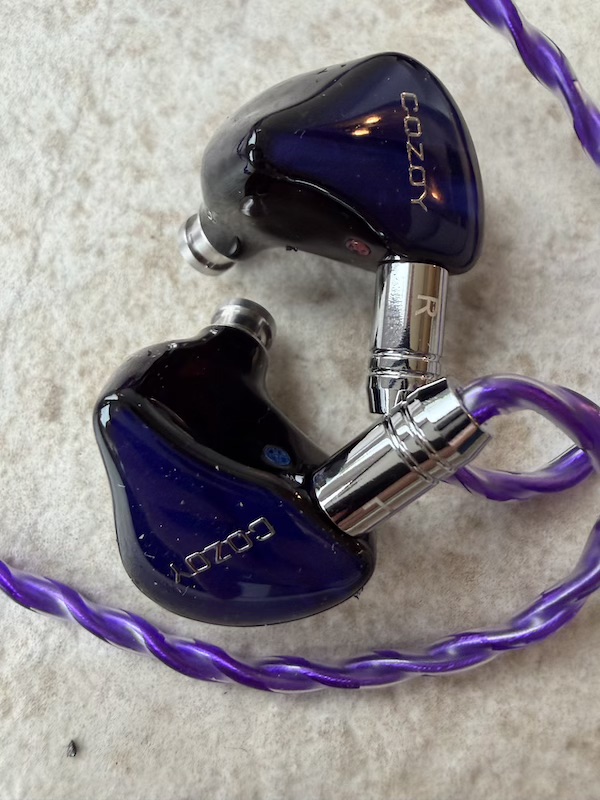
The shell quality is excellent for the price, with very decent 0.78mm 2-pin connectors visible in the photo above. The faceplate design features a blue finish with subtle aesthetic touches that look more premium than expected in this segment.
The nozzle design is particularly thoughtful:
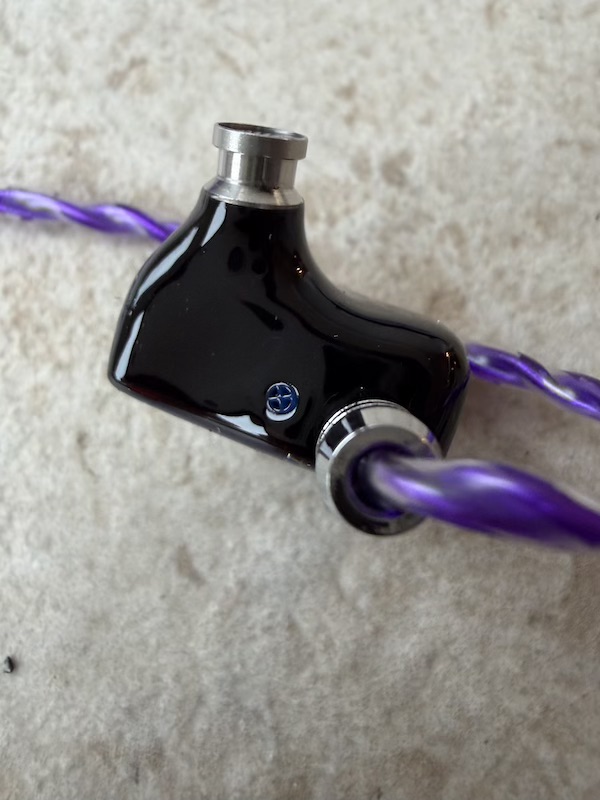
The compact shell size proved extremely comfortable during my testing, though I imagine some users with larger ears might find it slightly small. Zooming in on the nozzle reveals its nicely short length:

The short nozzle will suit many listeners perfectly, though those who prefer a deeper fit might need to experiment with longer ear tips. You can also see the vent positioning in this photo, which contributes to the D1’s controlled bass response.
Comfort and Fit
This is where the D1 does very well. The small, lightweight shell virtually disappears during extended listening sessions. Fit is consistently secure and comfortable, with the well-sized metal nozzle working well even for narrower ear canals. My wife, who typically avoids larger IEM shells, found the D1 to be among the most comfortable IEMs she’s tried—high praise considering her usual preference for lightweight earbuds.

As you can see in the marketing photo above, its size is especially good for those with smaller ears.
My wife particularly appreciated the D1’s comfort as she avoids heavier “flagship” IEM shells, and found the D1’s compact design well-suited for her smaller ears during extended listening.
The included ear tips provide good options for achieving an optimal seal, though as always, seal quality significantly affects bass response and staging performance. I found the stock tips worked well, though some listeners might benefit from tip rolling to fine-tune the sound to their preferences.
Technical Overview
The D1 employs thoughtful engineering to maximize performance at its price point:
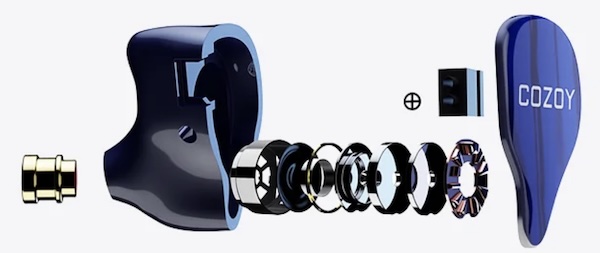
The 10mm dual-magnetic circuit, dual-cavity dynamic driver features a graphene diaphragm (per Cozoy). This allows for fast transient response while maintaining good extension at both frequency extremes.
The dual-cavity design helps control resonances and provides a more linear frequency response than typical single-cavity implementations. The dual-magnetic circuit increases motor force, improving control and reducing distortion, particularly in the bass region.
The shell’s clear structural positioning, achieved through 3D-printed cavity construction (as listed), ensures precise driver placement for optimal acoustic performance. The medical-grade resin (as listed) provides durability while keeping weight to a minimum—a key factor in the D1’s comfort.
Sound Impressions
The overall tuning can be described as balanced-neutral with mild warmth in the bass and energetic but controlled treble. It avoids extremes and aims for broad appeal—a refreshing approach in the budget segment where many IEMs opt for more polarizing tunings.
Bass
Sub-bass extension is one of the D1’s highlights. It reaches low with satisfying rumble while maintaining excellent control throughout the bass region. The extension provides proper foundation for hip-hop, EDM, and modern pop without excessive bloom or overhang.
Mid-bass is tight and relatively fast, prioritizing clarity over thickness. Importantly, it doesn’t bleed into the midrange—a common issue in budget IEMs that can muddy vocal clarity. Some listeners might wish for slightly more mid-bass body, but this trade-off results in a cleaner, more articulate presentation overall.
Test Tracks:
- “Massive Attack - Angel”: The sub-bass rumble demonstrates the D1’s impressive low-end extension, delivering satisfying depth while maintaining control. The bass line remains distinct and textured rather than becoming a muddy wash.
- “Billie Eilish - Bad Guy”: The bass line is rendered with proper weight and excellent articulation, showcasing the D1’s ability to deliver impact without bloat. The tight mid-bass keeps the presentation clean and engaging.
- “Daft Punk - Get Lucky”: The rhythmic bass pattern is precise and punchy, demonstrating how the controlled bass allows the entire mix to breathe while still providing satisfying low-end presence.
Midrange
Lower mids are generally clean and avoid congestion, though they lean slightly thin compared to warmer tunings. Male vocals can sound marginally less full-bodied than some might prefer, but this contributes to the overall clarity of the presentation.
Upper mids represent a strong point in the D1’s tuning. Female vocals are well-placed, clear, and forward without becoming shouty or fatiguing. There’s excellent openness and separation, contributing to an articulate and intelligible vocal presentation that works beautifully across genres.
Timbre is regarded as natural for the price bracket, though it doesn’t quite reach the realism of higher-tier models. Still, instruments and voices sound convincing and musically engaging.
Test Tracks:
- “Norah Jones - Don’t Know Why”: Norah’s vocals are rendered with lovely clarity and proper weight, sitting nicely forward in the mix without dominating. The piano accompaniment has good texture and natural timbre.
- “Ed Sheeran - Thinking Out Loud”: Male vocals demonstrate the slightly lean but clear presentation of the lower mids, while the guitar work shows good detail retrieval and natural tonality.
- “Joni Mitchell - A Case of You”: The D1’s upper midrange shines here, presenting Joni’s distinctive voice with excellent clarity and emotional presence. The dulcimer and guitar have realistic timbre that enhances the intimate recording.
Treble
Treble extension is good, with noticeable air and sparkle that adds clarity and perceived detail. The tuning is lively yet largely fatigue-free, with sibilance well-controlled across various recordings. This “safe” treble approach means the D1 can be enjoyed for hours without listening fatigue—a crucial consideration often overlooked in budget IEMs chasing immediate impact.
The treble adds the necessary clarity and perceived detail without harshness, though some listeners might note it can feel slightly prominent with metal-heavy effects or particularly bright recordings. However, this is more a matter of recording quality than a fundamental flaw in the tuning.
Test Tracks:
- “Diana Krall - The Look of Love”: The brushed cymbals and hi-hat work demonstrate the D1’s excellent treble extension and control. Details are clearly rendered with natural decay and appropriate presence.
- “Steely Dan - Aja”: The complex cymbal work and percussion showcase the D1’s ability to maintain treble clarity in dense mixes without becoming harsh or fatiguing.
- “Eagles - Hotel California (Live)”: The acoustic guitar intro has excellent sparkle and air, with sufficient treble extension to capture the ambience of the live recording without any harshness.
Soundstage and Imaging
The D1 presents a reasonably wide soundstage for an IEM at this price, with good depth that creates an engaging listening experience. Instrument placement is clear and stable, with decent separation that allows individual elements in the mix to be easily distinguished.
The balanced tuning contributes to the solid imaging capabilities, as no frequency range dominates or skews the presentation. While the soundstage doesn’t match higher-end IEMs or open headphones, it provides a satisfying sense of space that enhances both music enjoyment and gaming performance.
Specifications and Measurements
Specifications below are based on the product listing and packaging.
| Specification | Details |
|---|---|
| Driver | 10mm Dual-Magnetic Circuit Dual-Cavity Dynamic |
| Diaphragm | Graphene |
| Shell Material | Medical-Grade Resin (3D Printed Cavity) |
| Cable Type | Detachable 0.78mm 2-pin |
| Cable Material | Single-Crystal Copper Silver-Plated (4-braid) |
| Connector | 3.5mm |
Measurements
Note: The following measurements were taken with my measurement rig and are available on my measurement database. All measurements use the IEC60318-4 standard (711 coupler).
Frequency Response
The D1 demonstrates excellent channel matching and a well-balanced frequency response:
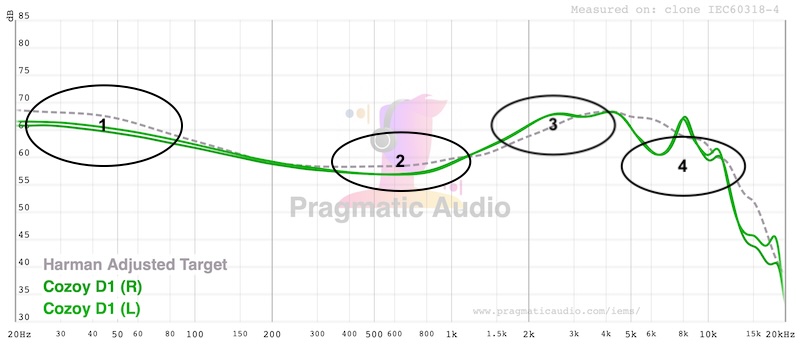
I’ve highlighted four key aspects of the tuning:
-
Bass Extension: The D1 shows decent bass extension with a fairly relaxed bass presentation—definitely not for bassheads, but provides satisfying low-end presence for balanced listening.
-
Slightly Lean Midrange: The lower midrange is clean but slightly lean, contributing to the overall clarity but potentially lacking some body for those who prefer warmer signatures.
-
Vocal Forward Upper Midrange: The upper midrange is nicely elevated, bringing vocals, piano, and guitars slightly forward in the mix. This works beautifully for most genres, adding engagement and clarity to the presentation.
-
Safe Treble: Decent treble extension provides air and detail, but the tuning remains conservative to avoid sibilance—a smart choice for long-term listening comfort.
Comparisons
I thought it might be interesting to compare with the CrinEar Daybreak (one of my favorite IEMs from last year). The D1 shows some similarity in overall balance, though the Daybreak earns its 5x price tag with subtle refinement in certain frequencies and superior technical performance:
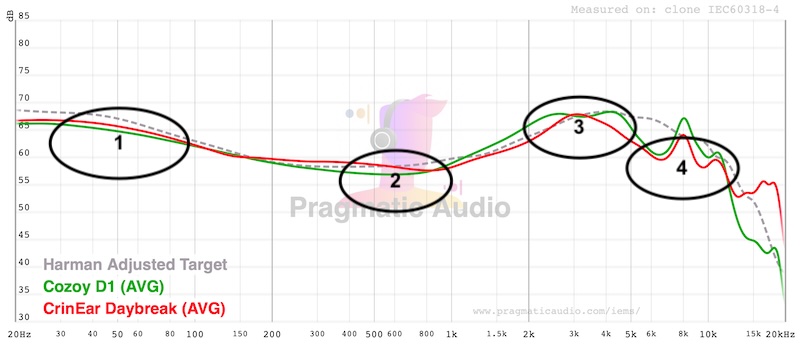
The bass is broadly similar (1). The D1 has slightly more recessed midrange (2), while the Daybreak goes for an even more neutral midrange (3) and a slightly more “technical” treble (4).
But, given its price, the D1’s tuning philosophy makes it a nice complementary IEM, demonstrating that Cozoy has targeted a mature, audiophile-friendly sound signature rather than chasing trends.
Of all the IEMs in my collection, I found the closest match to the D1 was the EPZ G20, which is a well-tuned gaming-focused IEM that I reviewed last year:
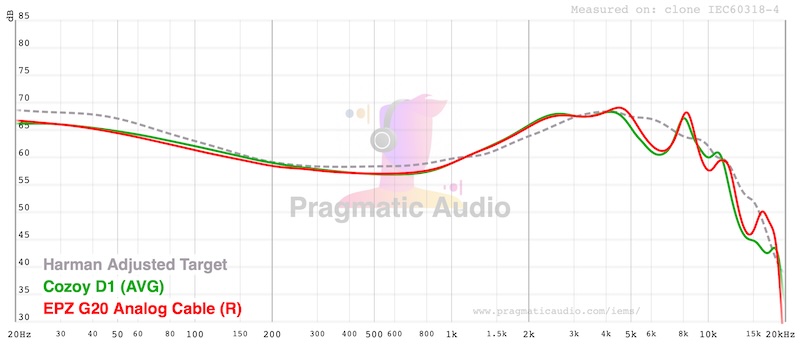
The D1 is a more audiophile-focused offering that is more comfortable and, in my case, with a better seal, sounded better overall.
Distortion
Distortion performance is very good for the price, remaining low across the frequency spectrum:
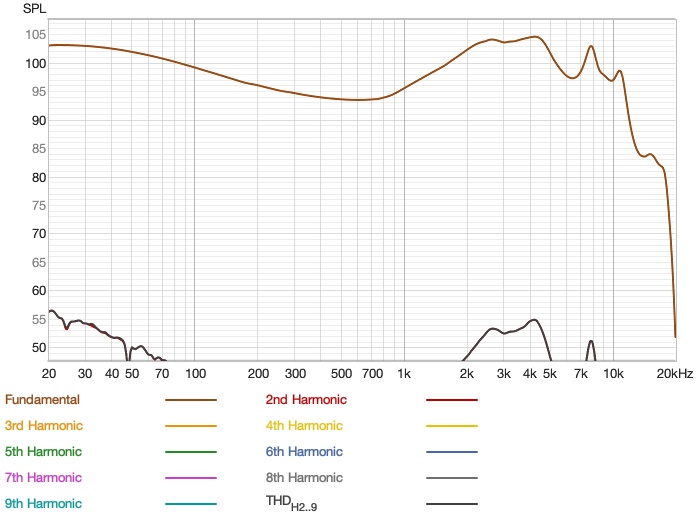
Even at elevated listening levels exceeding 100dB SPL, the D1 maintains strong distortion control:
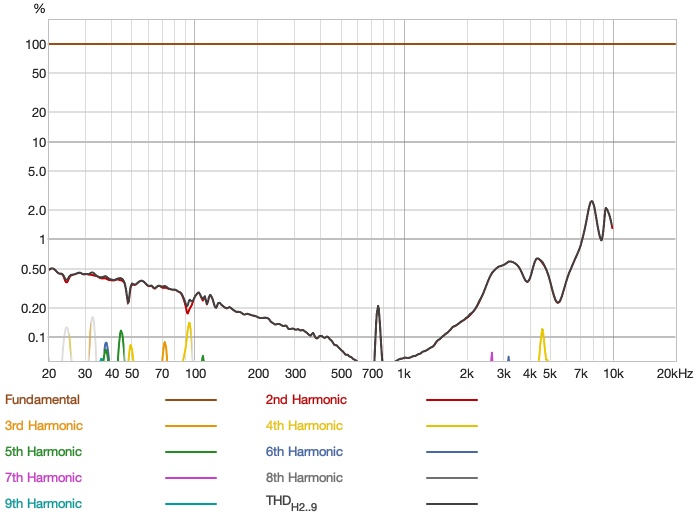
These measurements confirm the clean, articulate sound experienced during subjective listening and demonstrate the quality of the dual-magnetic circuit driver implementation.
Rating Explanation
The Cozoy D1 earns a 4-star Pragmatic Rating, reflecting its position as a strong performer in an extremely competitive market segment. While it deliberately doesn’t try to stand out through exaggerated coloration, its easy-to-listen-to tuning combined with very good comfort and solid build quality make it one of my favorite ultra-budget IEMs so far this year.
Here’s the breakdown:
- Build Quality: ⭐⭐⭐⭐⭐ (Exceptional quality for the price, with premium cable and solid construction)
- Comfort: ⭐⭐⭐⭐⭐ (Outstanding comfort with lightweight, compact shell design)
- Sound: ⭐⭐⭐⭐ (Balanced, mature tuning with solid technical performance)
- Features: ⭐⭐⭐⭐ (Excellent cable, generous accessories, well-thought-out design)
- Value: ⭐⭐⭐⭐⭐ (Outstanding value at $30, competing with IEMs costing significantly more)
The D1 is ideal for:
- Listeners seeking balanced tuning and vocal clarity at a budget price
- Those who prioritize comfort for extended listening sessions
- Anyone building a diverse IEM collection who wants a relaxed, fatigue-free option
Conclusion
The Cozoy D1 stands out as one of the stronger performers in the $30 segment, combining controlled bass, articulate mids, and well-managed treble with respectable technical performance and strong gaming capability. Build quality and cable execution exceed expectations for the price, while the exceptional comfort makes it suitable for marathon listening sessions.
The D1 doesn’t aim for extreme coloration or exaggerated excitement. Instead, it delivers a balanced and competent tuning that works well for daily listening, casual audiophile use, and gaming. This mature approach—prioritizing long-term listenability over short-term wow factor—is a big part of what makes it a valuable addition to an IEM collection.
At approximately $30, the D1 targets listeners who want balanced tuning, solid technical ability, and gaming competence without sacrificing build quality or comfort. It makes an excellent second or third IEM in a collection: get a JM-1-tuned IEM and perhaps a Harman V-shaped option, then add the D1 for a refreshingly different perspective that you can enjoy for hours without fatigue.
For those new to the hobby or looking for an ultra-budget IEM that doesn’t compromise on the fundamentals, the Cozoy D1 represents a highly competitive and rational purchase choice. It’s a promising debut from Cozoy.