Hedd Audio HEDDphone D1
Midrange Precision Defined
HEDD Audio has long been respected in the professional studio world for its AMT-tweeter loudspeakers and the original HEDDphone, a planar magnetic headphone with full-range air-motion transformers. The D1 marks a bold pivot: a dynamic driver headphone — but not just any dynamic driver. At its core lies a Thin-Ply Carbon Diaphragm, it quietly resets expectations for what a dynamic driver can do in terms of midrange transparency and tonal accuracy.
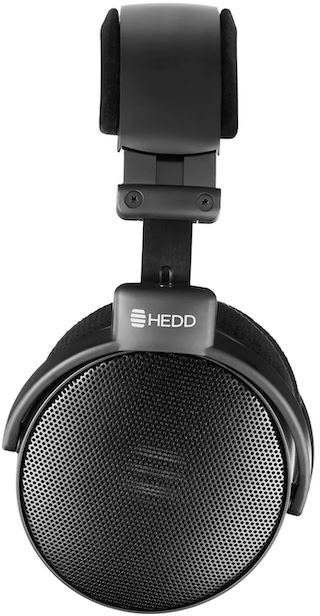
I would like to thank HEDD Audio for providing the HEDDphone D1 on loan for the purposes of this review. But this is one that I intend to purchase — all impressions and measurements are formed independently.
For more information, the HEDDphone D1 can be found on the official HEDD Audio product page.
It retails for approximately $800 or €699.
I have now spent two months with the D1 as my daily driver — longer than I give almost any review unit — swapping regularly with the HD600, the new HiFiMAN’s Edition XV and HE600, and a few studio references like Ollo Audio X1 and the MDR-MV1. I wanted enough time to be certain the hype was warranted rather than the product of novelty. Having now lived with it that long, I am confident it is one of the most compelling headphone releases at this price point in years.
But I will also flag later in the review a few things that I believe did not receive enough attention in other reviews and should be of note if you are in the market for a new reference level headphone this year. But before I get into those details, let’s look at the unboxing experience.
Unboxing & Packaging
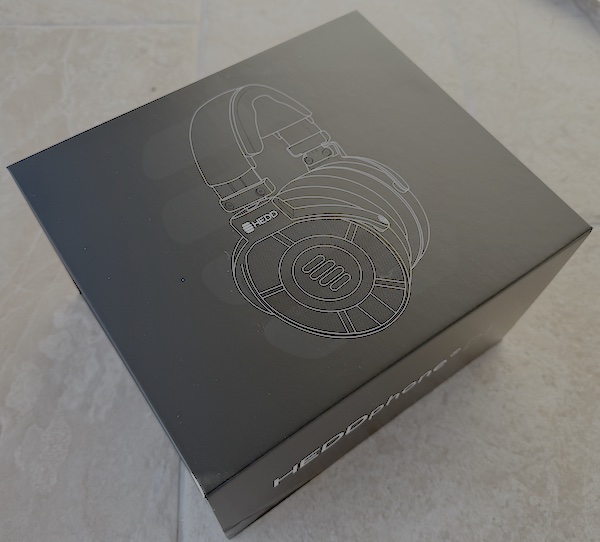
HEDD Audio has put genuine thought into the D1’s presentation. The outer box is clean and sturdy — premium without being wasteful.
 |
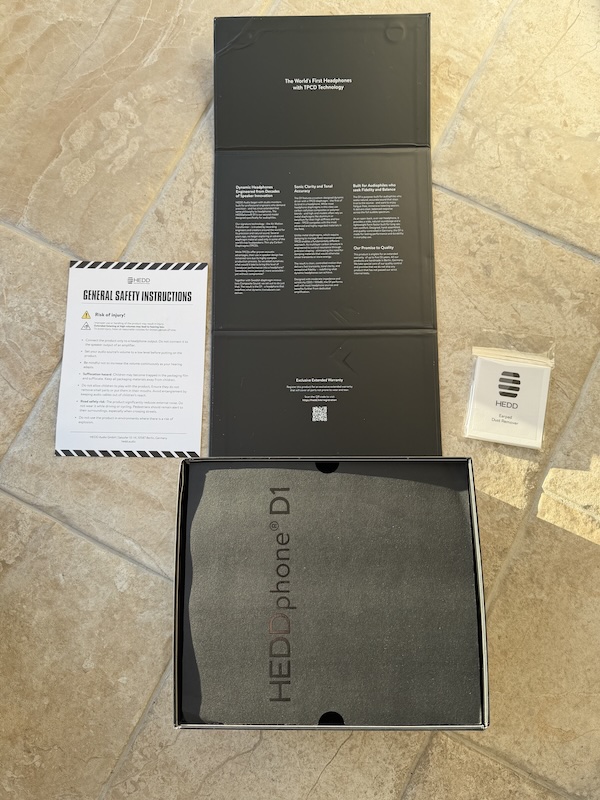 |
But what immediately sets the unboxing experience apart is that the box unfolds like a book, revealing a panel of technical information about the headphone printed inside the lid.
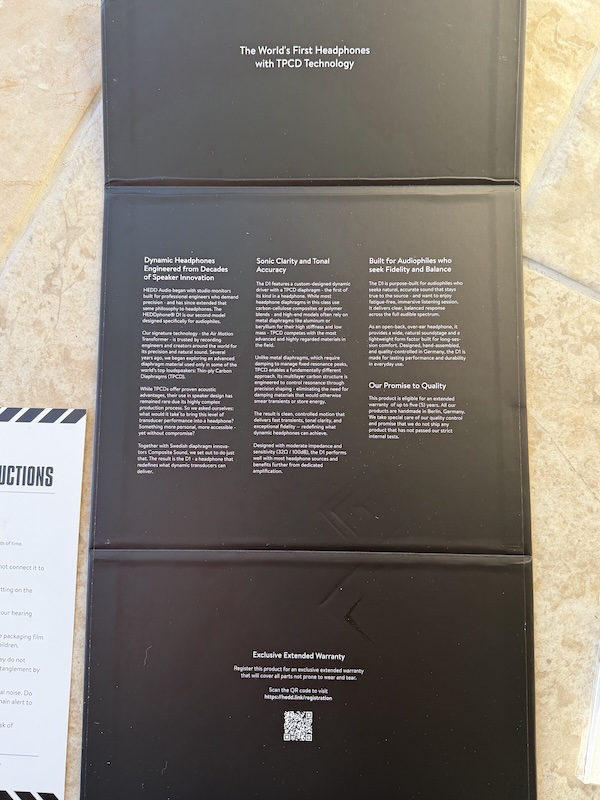
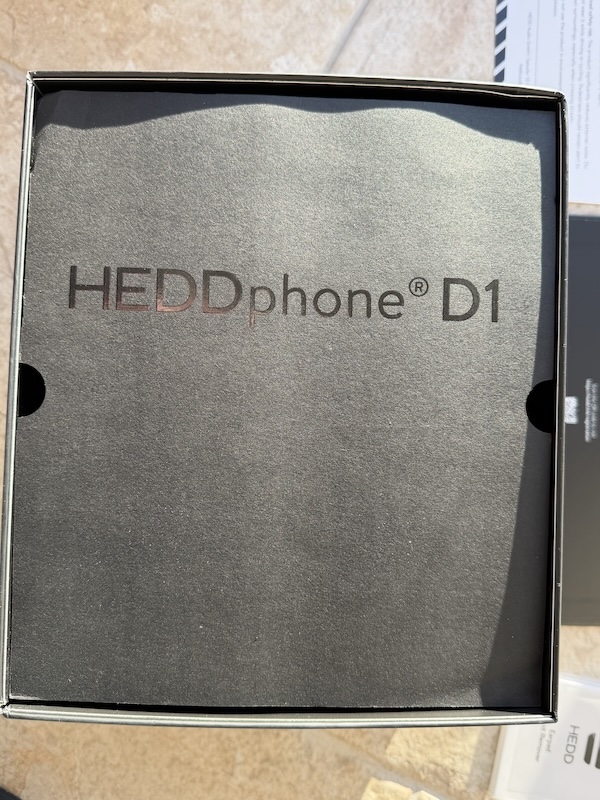
Lifting that first panel reveals simple, confident branding before the main event comes into view: a custom carry case seated inside the box.
 |
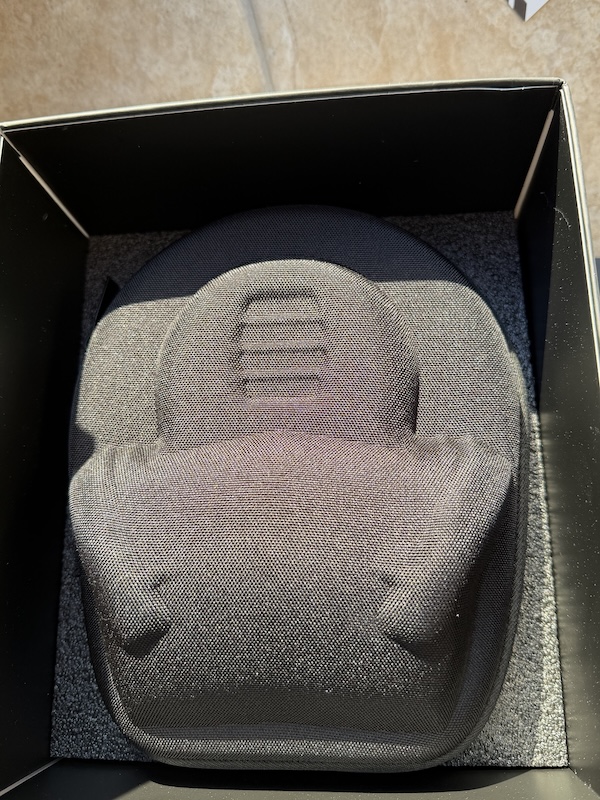 |
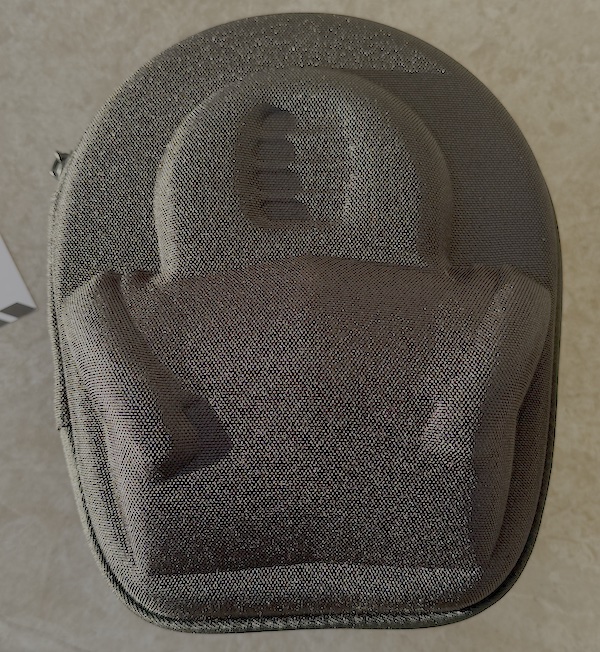
The carry case is one of the more unusual I have encountered in the headphone world. Its sculpted form — with a front “grill” that is more than a little reminiscent of HEDD’s other headphone, the TWO GT — gives it a distinctly industrial character. It is clearly purpose-built to look unique rather than a generic pouch solution.
Opening the case reveals the D1 nestled securely inside:
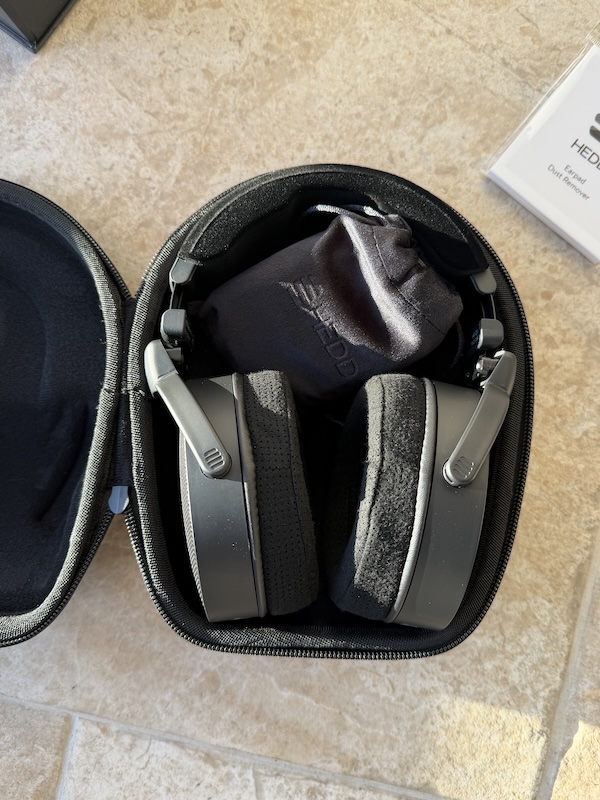
The package includes the headphone itself, a 2m textile-covered premium cable terminating in dual 3.5mm mono connectors, and a 6.35mm adapter.
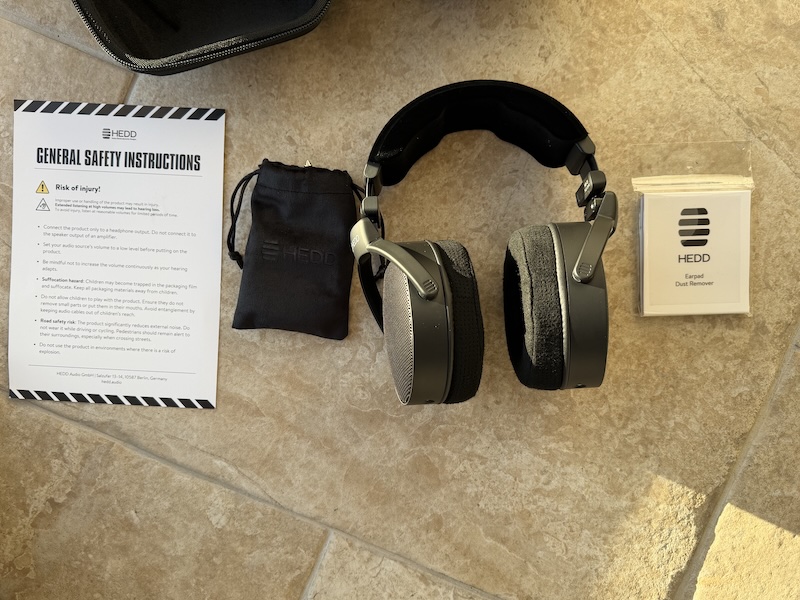
Taking the D1 out of the case for the first time, the combination of materials and finish gives an immediate impression of a tool built to work rather than merely to impress on a shelf — which, given HEDD Audio’s professional heritage, feels exactly right.
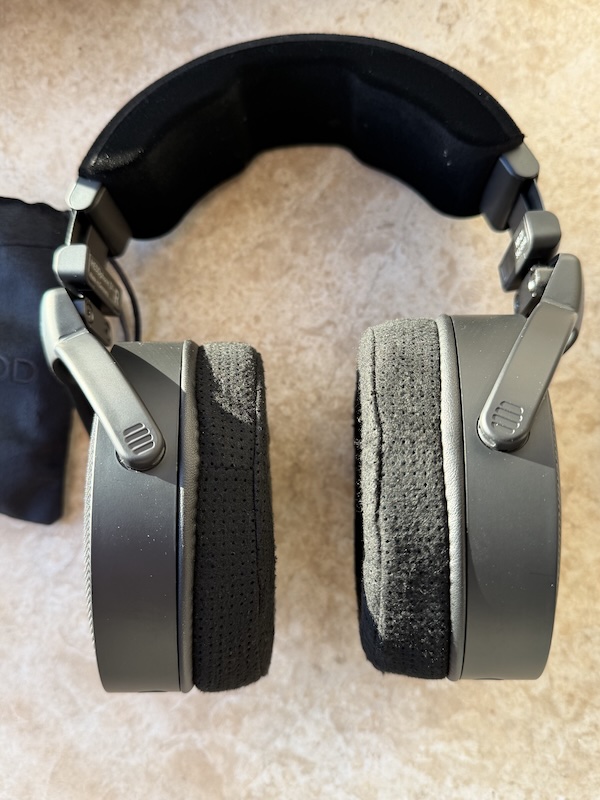
Build Quality & Design
HEDD Audio has made intelligent material choices that prioritise longevity and weight management over surface-level luxury. Where a headphone like the Meze 109 Pro leans into rich rosewood and brushed aluminium as a deliberate statement of premium taste, the D1 focuses on durability and function. Plastics are used where they save weight without sacrificing structural integrity, and the result is a headphone that feels like it could handle daily studio use indefinitely.
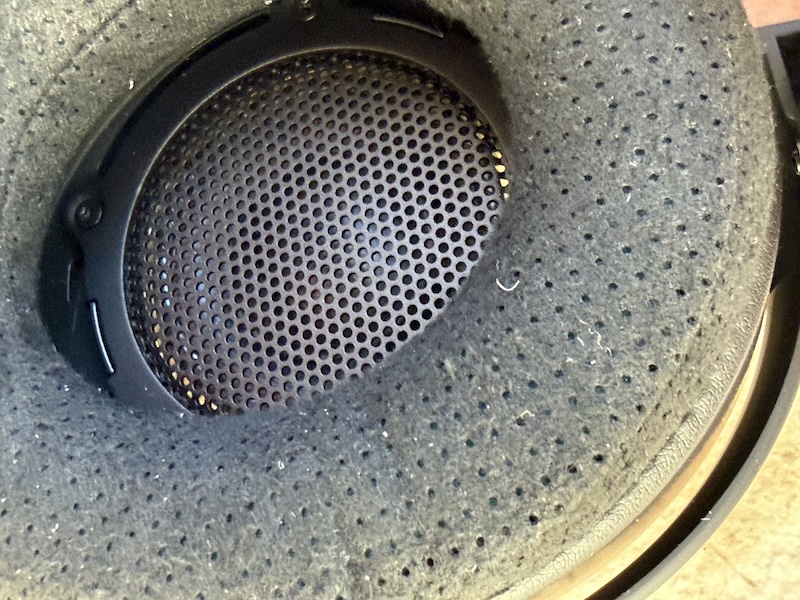
The open-back earcup grill is a generous, lightly textured design:
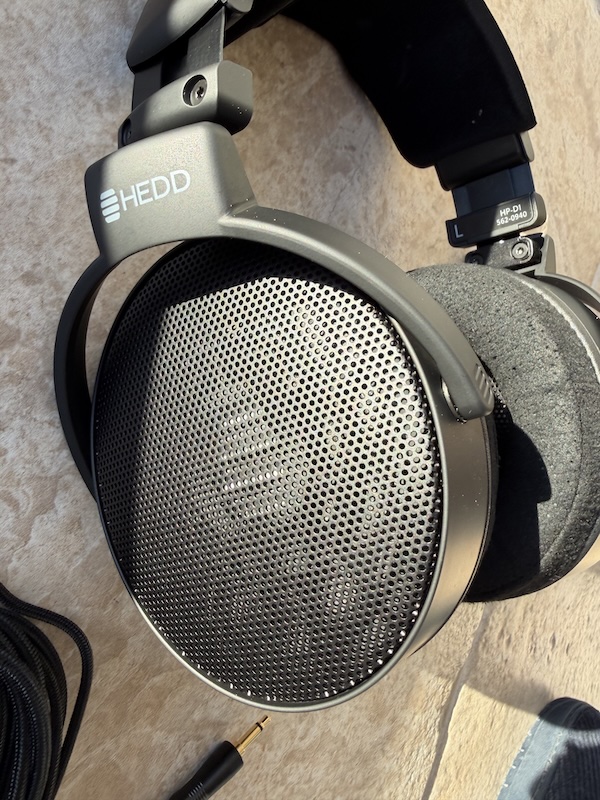 |
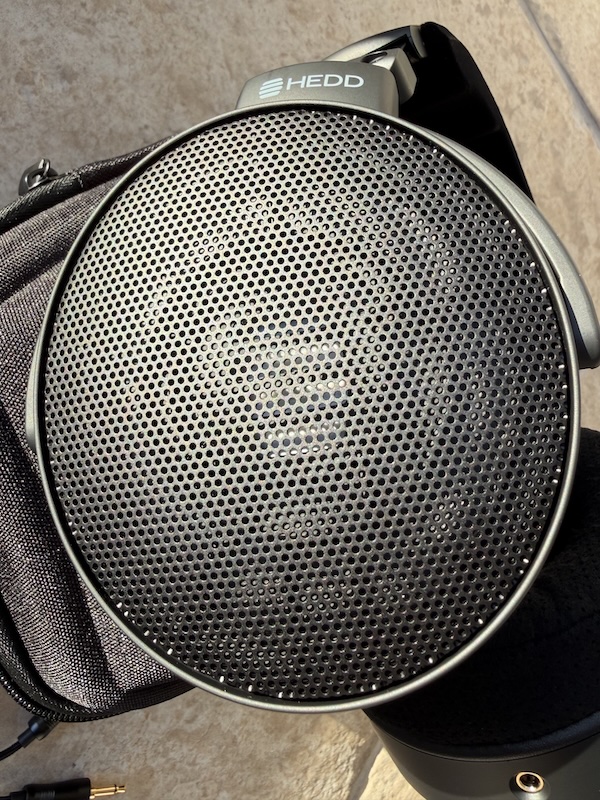 |
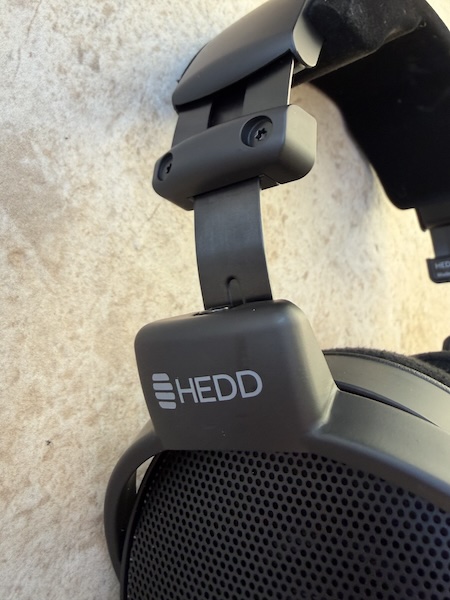
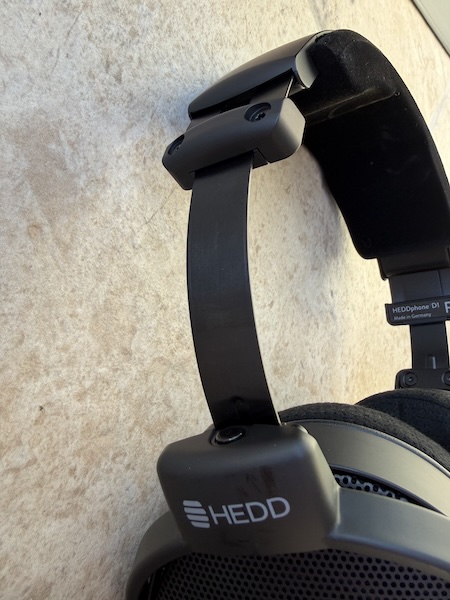
The headband extension uses clearly marked incremental steps and feels solid and repeatable — something that matters more than it might appear, because as I will explain in the next section, the ability to subtly dial in headband extension has a real effect on the sound.
 |
 |
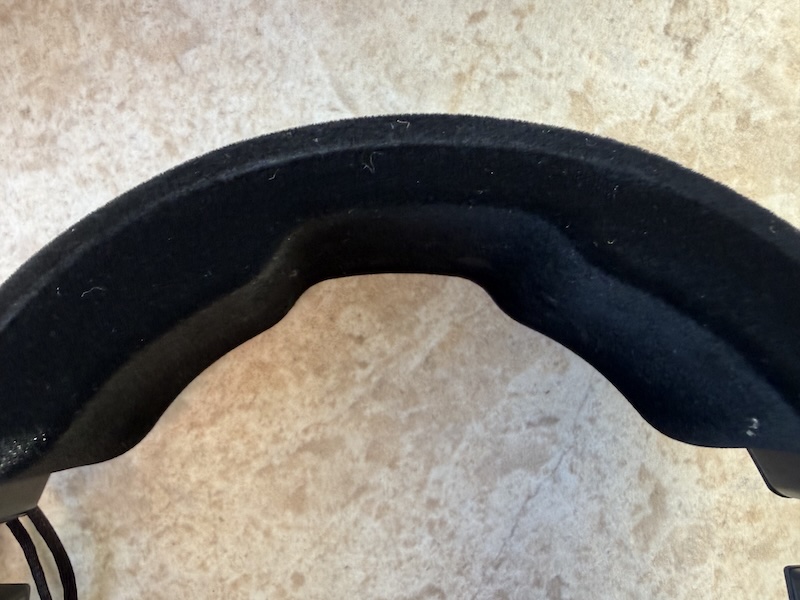
The headband underside is well padded, and I do like how the center is recessed make the top of your head stay cool during long listening sessions:
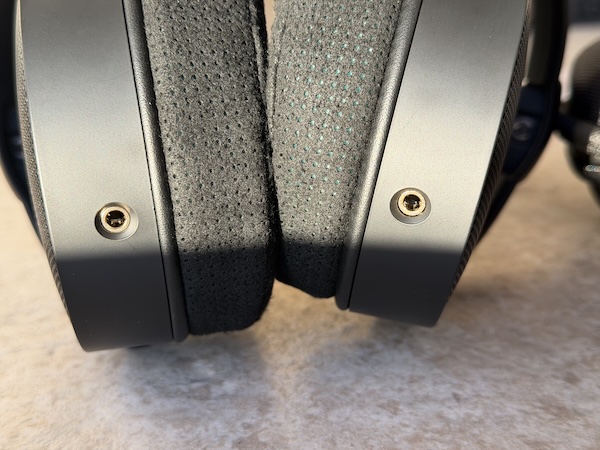
Connectivity is via dual 3.5mm mono jacks — one per earcup — which is a common studio-oriented solution that eliminates left-right confusion and accommodates aftermarket cables.
The included textile-covered cable is good but I would have hoped for a second balaned cable with a headphone in this price range:
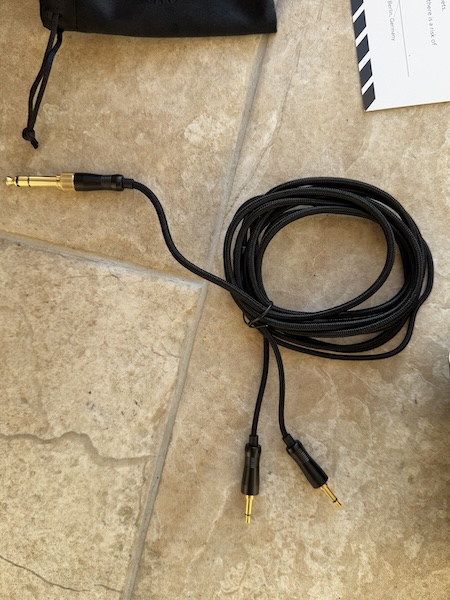
There is a 6.35mm adapter included for use with standard desktop amplifiers.
The Thin-Ply Carbon Diaphragm
The headline driver technology in the D1 is the Thin-Ply Carbon Diaphragm, developed in partnership with Composite Sound, a Swedish specialist in advanced audio diaphragms.
 |
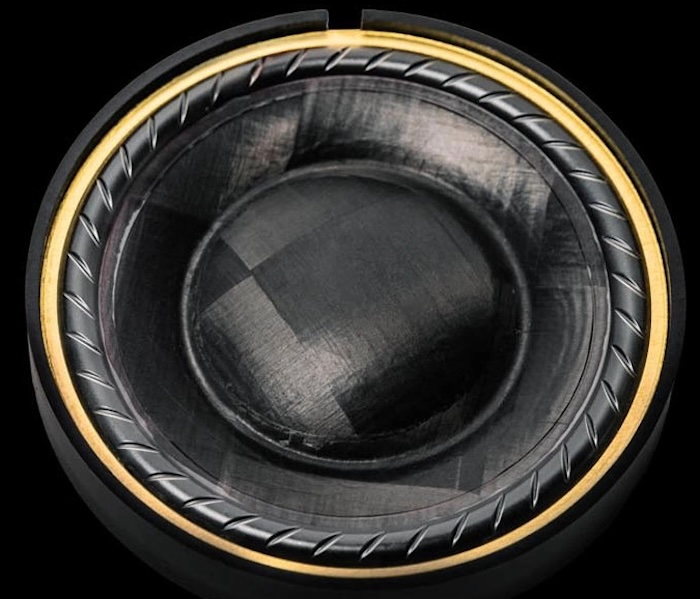 |
Thin-Ply Carbon as a material is not new to engineering, it is used in Formula 1 chassis components and, famously, the rotor blades of NASA’s Ingenuity Mars helicopter.
In a headphone diaphragm, TPCD offers an exceptional stiffness-to-mass ratio: the diaphragm can be made lighter without becoming prone to resonance or flex under acoustic pressure. The practical benefit is that HEDD can dispense with much of the traditional damping applied at the diaphragm level in conventional dynamic drivers, allowing the driver to move faster and more accurately across the full frequency range. The result is sound that is detailed, balanced, and — crucially for long sessions — fatigue-free. That is not marketing copy. Having lived with the D1 for a month, I would argue it is an accurate description.
With 32 Ω impedance and 100 dB sensitivity at 1 mW, the D1 is also straightforward to drive. It performs consistently from portable sources but scales gracefully with quality desktop amplifiers, maintaining authority and control as the chain improves. The headphone is designed and assembled in Berlin by HEDD’s team of engineers and craftspeople — a lineage of acoustic expertise that is audible in the result.
Fit, Comfort & the Clamp Question
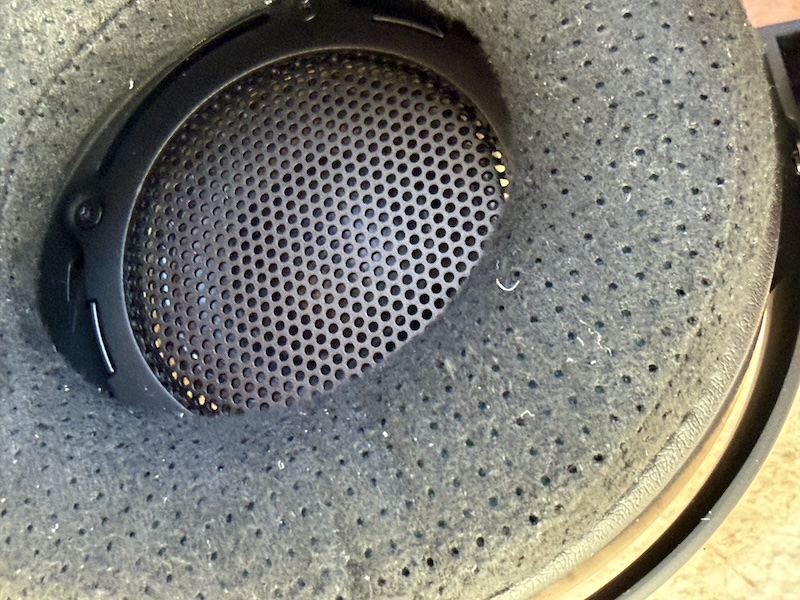
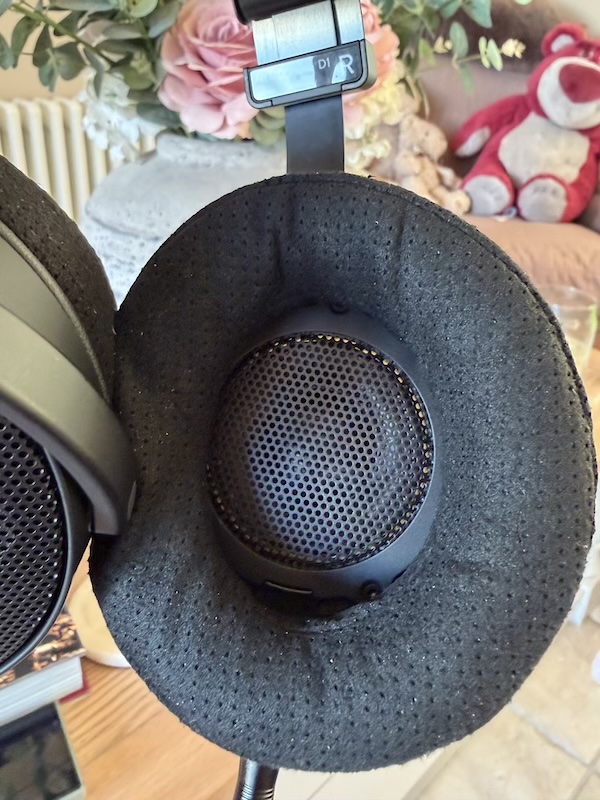
The D1 is a very comfortable headphone for extended listening. The perforated velour earpads are soft, breathable, and deep enough that the driver sits well clear of the ear — a real advantage for long sessions as is the headband mechanism as I mentioned above.
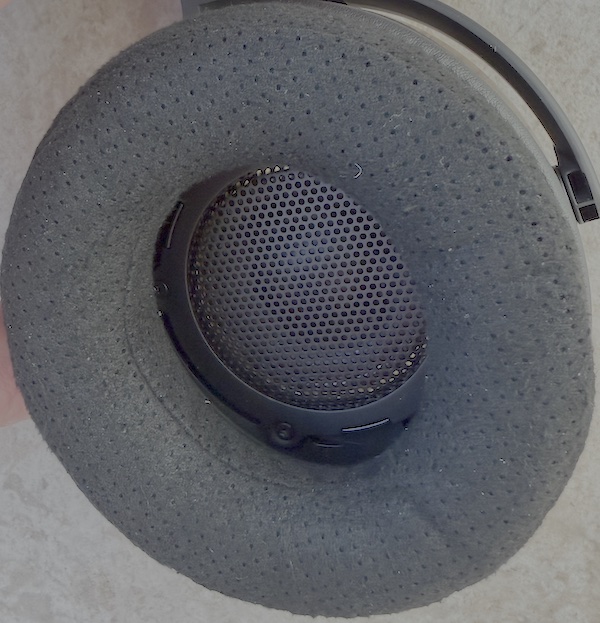
Compared with the HD600, at least for me, the D1 was meaningfully more comfortable over extended periods.
 |
 |
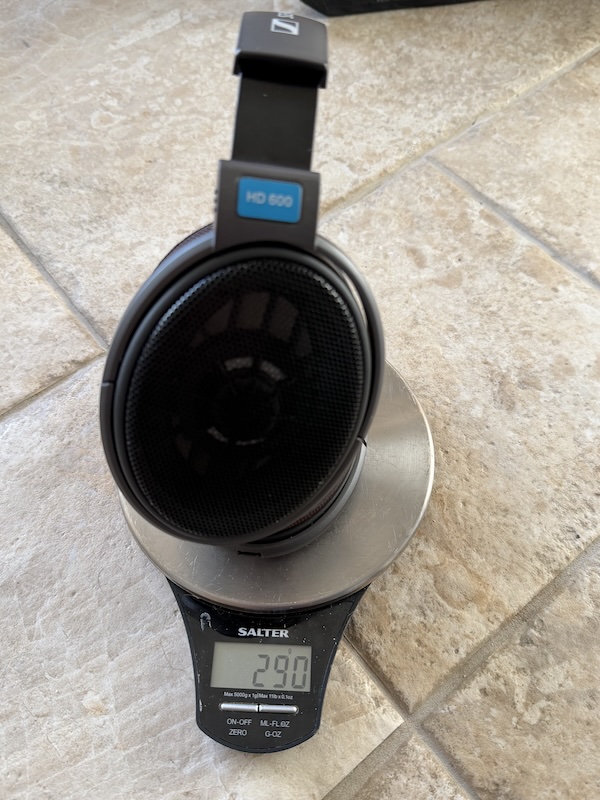
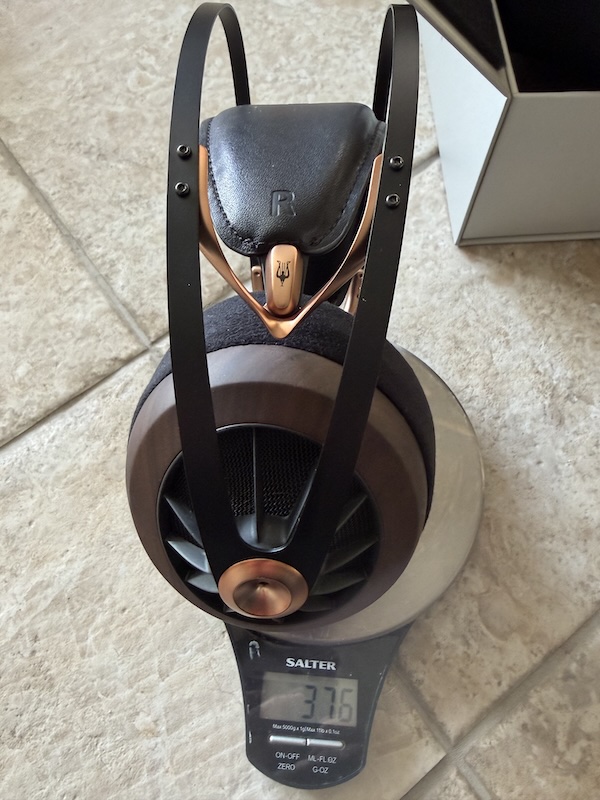
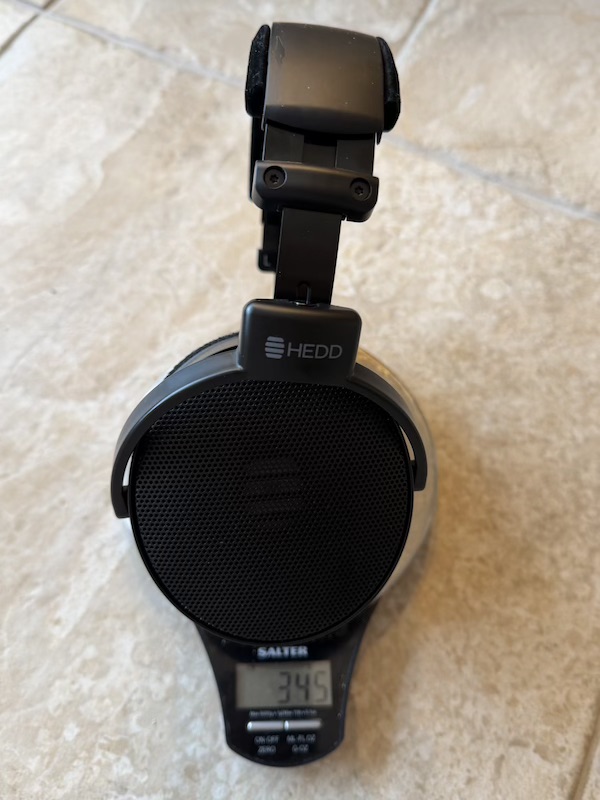
For context, the weight below show the D1 alongside the HD600 and the Meze 109 Pro — the D1 is lighter than the 109 Pro at 345g while still slightly heavier than the HD600, a sensible middle ground for a headphone targeting both studio and extended home listening use:
 |
 |
Note: Clamp pressure and compressed ear pads
One characteristic of the D1 that I think deserves some attention is that the perforated velour pads, while excellent
from a comfort standpoint, compress under clamp pressure, so with my larger head, I felt the earpads were
compressed allot and this seemed to change the sound, so I measured it:
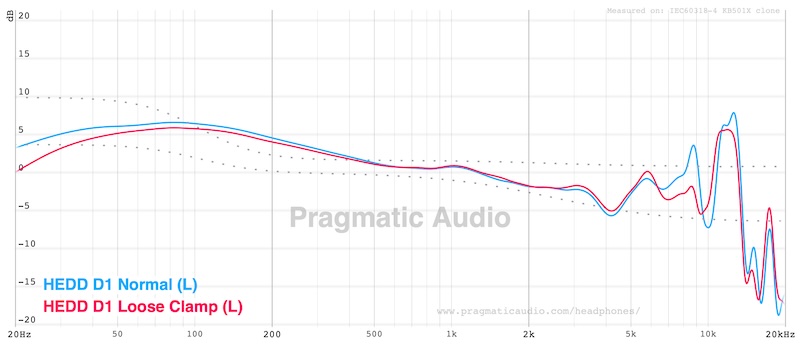
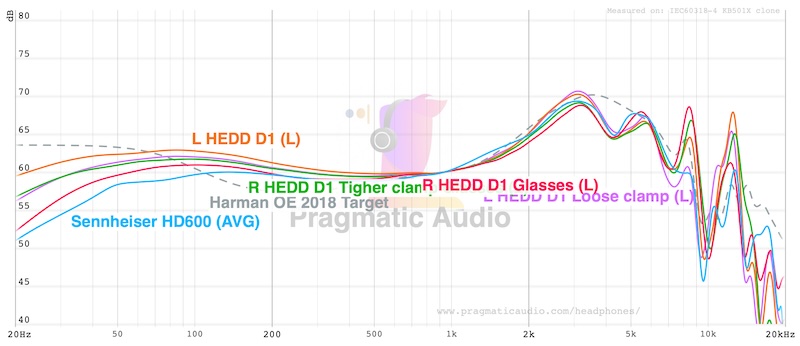
So by stretching the headband I got a loosely clamp which for me helped lower the treble and lower the midbass, though at the cost of some sub-bass as you can see in the measurements above.
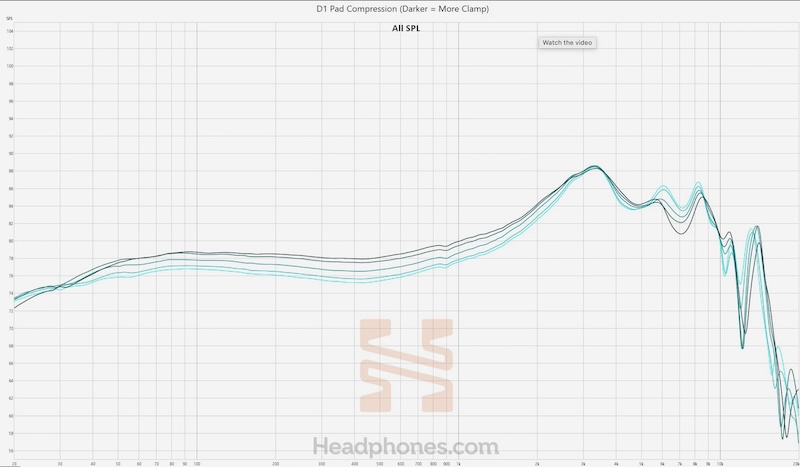
The Headphones.com review also captured this pad compression behaviour with their own measurements, which I have included here for reference alongside my own.
Sound Impressions
All listening was conducted from my FiiO K17, Luxsin X9 and my Macbook Pro. The D1 was run without EQ for approximately the first week, then for fun I added a little subbass shelf. Clamp was set to a relaxed for the majority of listening.
Bass
The bass on the D1 is tight, controlled, and honest. Sub-bass extension is solid — not the deepest available at this price, but fully present and well-defined, with a cleanliness that reflects the TPCD’s advantage in transient speed. Mid-bass sits slightly warm at tight clamp initially but after some adjustment it was nicely balanced, giving kick drums and bass guitar a pleasing body without crossing into bloom territory.
What the D1 does particularly well in the low end is articulation: individual bass lines remain distinct, decay feels natural, and the driver never sounds sluggish or one-note. “Aja” by Steely Dan is a useful reference here — the tight interplay between bass guitar and kick drum on that recording comes through with a level of textural clarity that many headphones at this price simply obscure.
Midrange
The midrange is where the D1 earns its reputation, and it is not an exaggeration to say this is among the best I have heard at any price, though this is also were the comparisons with the HD600 come into play. Tonal density is exceptional: instruments have correct weight and body, and the accuracy of timbre — the sense that a piano sounds like a piano and a guitar sounds like a guitar — is the kind of quality that reveals itself slowly across extended listening and becomes harder and harder to give up. Vocal presence is natural and immediate without harshness in the upper midrange; there is no etch or grain drawing attention to itself.
The TPCD’s contribution is most apparent in the reproduction of fine harmonic texture — plucked acoustic guitar strings, for instance, have a resolution that feels genuinely revealing. “Brothers in Arms” by Dire Straits is a strong reference: the space between Knopfler’s guitar and the vocal line is rendered with a precision and layering that makes the recording feel freshly mastered.
Treble
Treble on the D1 is detailed and extended without becoming fatiguing. There are minor peaks visible in the measurements, but subjectively — including across a tone sweep — these do not manifest on my head. The overall character is one of confident refinement: cymbal shimmer has good air and natural decay, transient edges are fast and clean, and the upper harmonics of strings and brass come through without the glassiness that afflicts some headphones in this range. “Keith Don’t Go” by Nils Lofgren is revealing here — the acoustic guitar harmonics carry genuine shimmer and air without tipping into shrillness, and the recording’s spatial cues are rendered with excellent precision.
Soundstage & Imaging
The D1’s soundstage is wider and more three-dimensional than the HD600, which by comparison can feel like a three-blob presentation. The D1 expands this substantially, with good front-to-back layering and a convincing sense of acoustic space. Imaging is precise; instruments are placed confidently within the stage and do not wander. Perhaps most impressively, the driver teases out low-level detail — room acoustics, ambience, the subtle decay of notes in reverberant spaces — with a naturalness that adds to the sense of being inside a recording rather than listening to a reproduction of it. “Crime of the Century” by Supertramp rewards careful listening in this regard, with the width and reverb staging of that recording conveyed in a way that feels genuinely holographic.
Specifications and Measurements
| Specification | Detail |
|---|---|
| Design | Open-back over-ear |
| Driver | Dynamic, Thin-Ply Carbon Diaphragm (TPCD) |
| Frequency Range | 5 Hz – 40 kHz |
| Maximum SPL | 100 dB at 1 mW |
| Impedance | 32 Ω |
| Earpads | Perforated velour |
| Cable | TRS 3.5 mm textile-covered; 2 m; 6.35 mm adapter |
| Connections | 2 × 3.5 mm mono (one per earcup) |
| Weight | 350 g (net) |
| Made in | Berlin, Germany |
Measurements
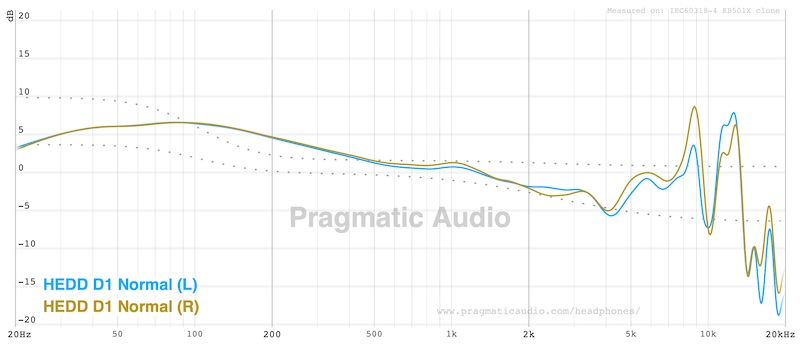
These measurements were on my KB501X soft ears pinna and show an excellent midrange, but a little midbass and some extra treble energy:
But I mentioned in the section earlier, I reduced this comression on the earpads (stretched the headband a little) and this lowered the mid-bass and reduced the treble very nicely:
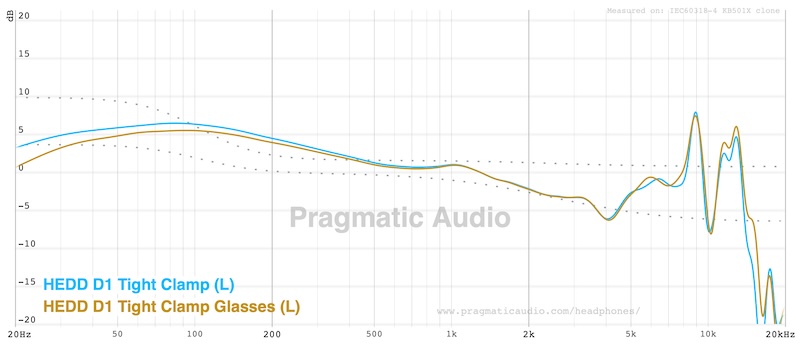
With glasses breaking the seal with a tight clamp you only loose a little sub-bass:
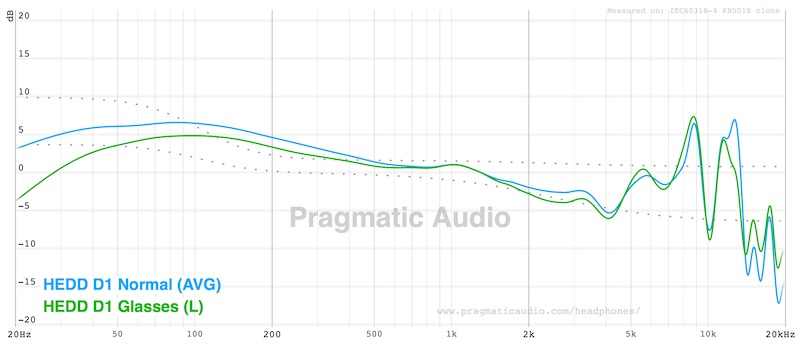
With a normal / looser clamp you loose more sub-bass with glasses:
 |
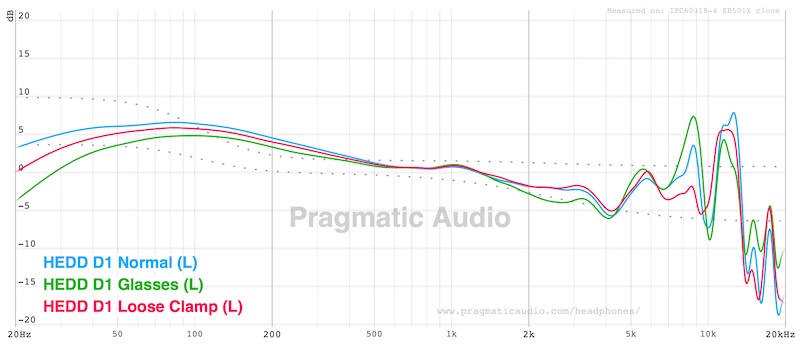 |
Note: This is not unusual behaviour with soft velour pads, but I thought I would mention it as it wasn’t mentioned in many reviews.
The practical takeaway is straightforward. If the D1 runs a little warm in the low end — as it did for me initially, given my slightly larger head and the resulting tighter default clamp — the solution is simply to expand the headband slightly.
Comparisons
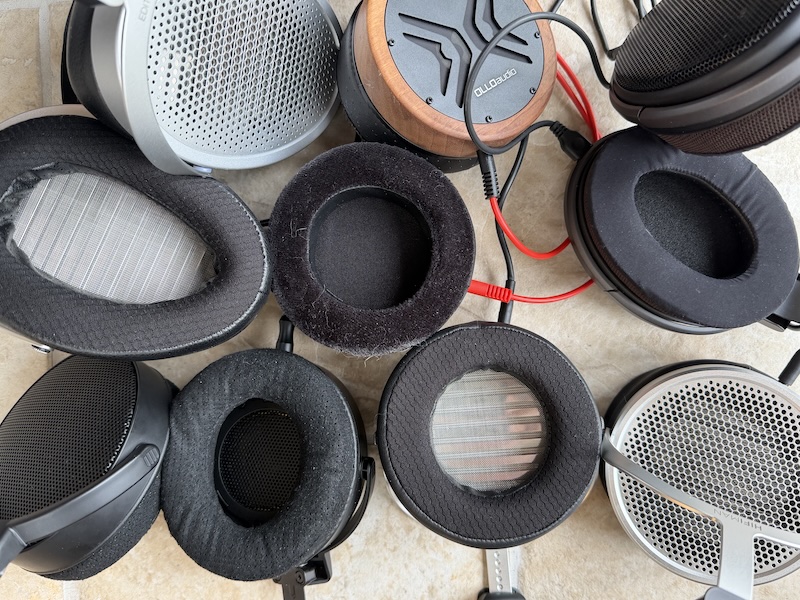
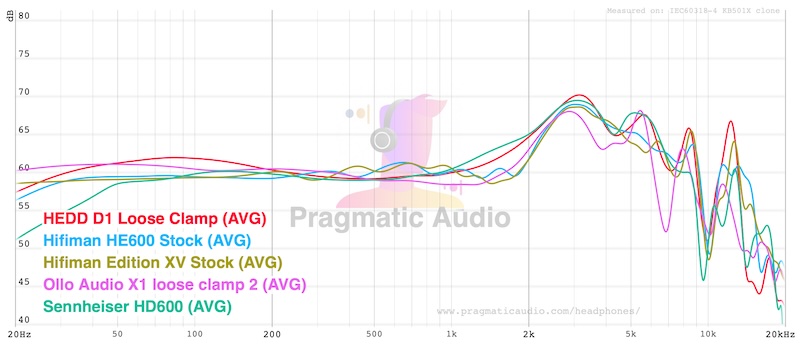
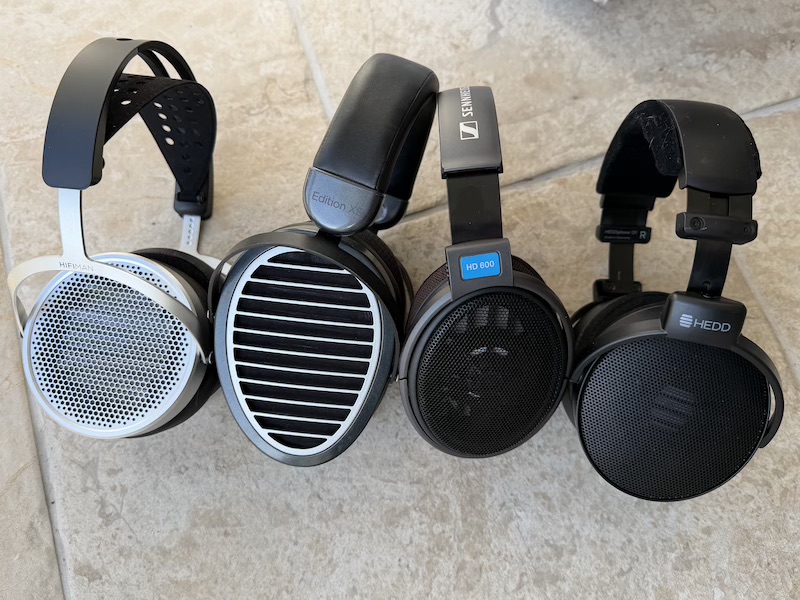
During my time with the D1 I compared it directly against a number of headphones at similar and adjacent price points. The gallery below shows the D1 alongside several of those competitors, which include the HiFiMAN HE600, HiFiMAN Edition XV, Ollo Audio X1, and the Sennheiser HD600.
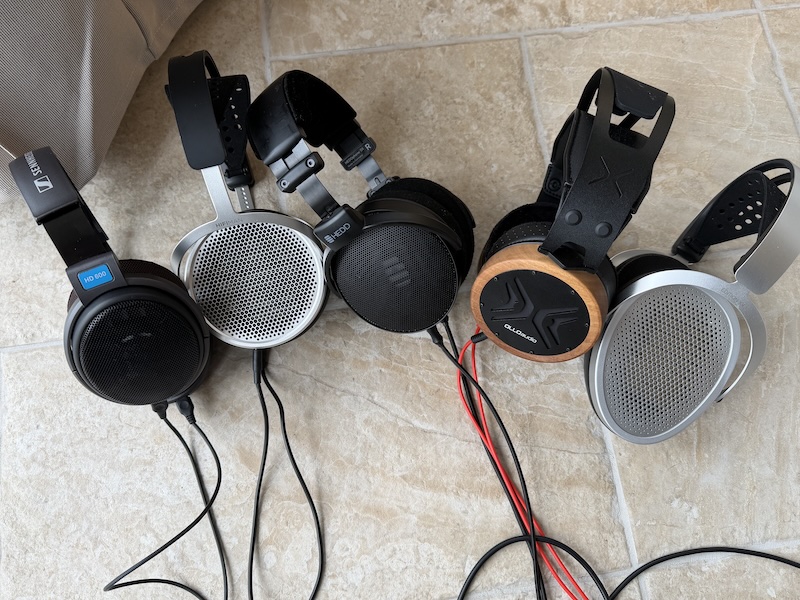
The variation in earcup size and shape across the group is immediately clear with the D1, in the bottom left of this image:
Here is an overall comparison of the measurements of these headphones, but I will get into much more detail below:
Sennheiser HD600
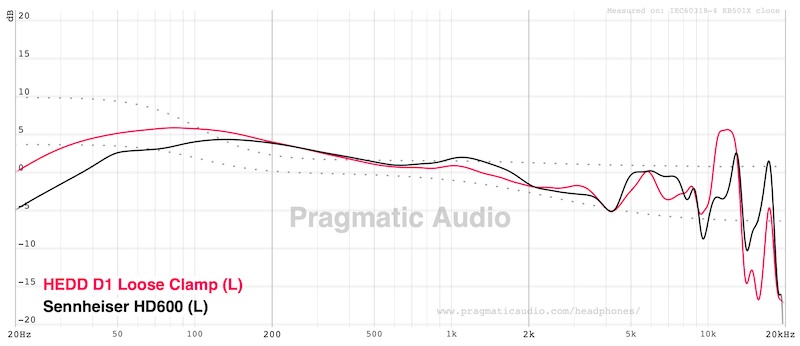
The HD600 remains a genuine benchmark for midrange quality at its price. Against the D1, the HD600’s bass rolls off more significantly — the D1 extends lower with more authority and texture. In the midrange the two are closely matched in overall quality, but the D1 edges ahead in tonal density and harmonic resolution, particularly in the upper mids where the HD600 can occasionally sound marginally leaner.
For comparison with the HD600, even the loosed clamp (less bass) still had considerable more bass than the HD600:
For long listening sessions, the D1 is noticeably more comfortable, and this is mainly because those earpads compress nicely and even with a very loose clamp and glasses you still get a better bass than the HD600:
The Upgrade Path: D1 & HE600 vs HD600 & Edition XS
So, the HD600 and Edition XS have been the de facto starter recommendation in serious open-back listening for years, one for tonality, one for soundstage and at their respective price points that recommendation remains entirely valid.
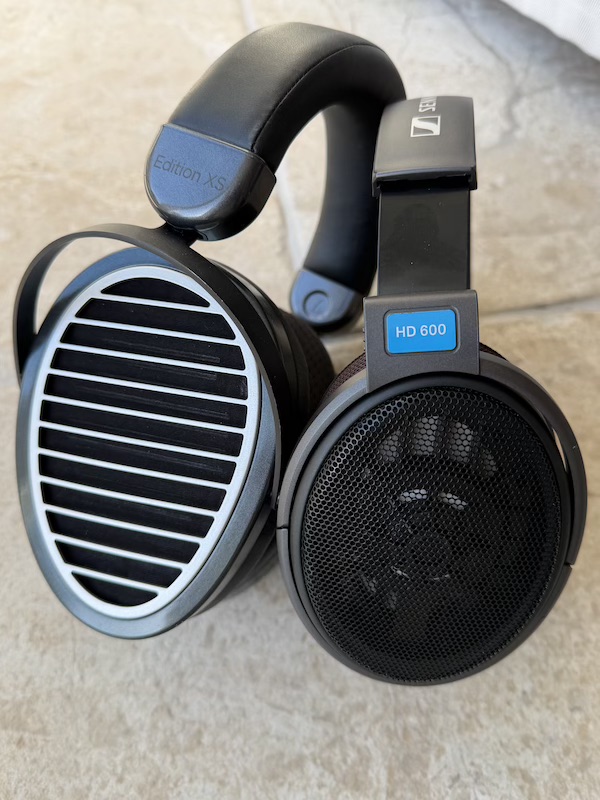
But what was previously missing was a credible premium version of a similar pairing, two headphones that are clear upgrades over these 2 ‘classics’ that deliver the better tonal-accuracy and soundstage, but at a level of resolution, refinement, and bass control that represents a clear and meaningful step up.
Having spent extended time with all four simultaneously (and a large reason for the delay in this review), I am now confident that more premium pairing exists. The D1 takes the tonal-accuracy seat, and the new HiFiMAN HE600 takes the soundstage seat ( A detailed review of the HE600 is upcoming - but a sneak-peak would say it improves the overall tonality over the Edition XS while still having that Hifiman planar sound profile) that I feel perfectly compliments a tonal accurate direct driver headphone like the D1, when considering a headphone collection.
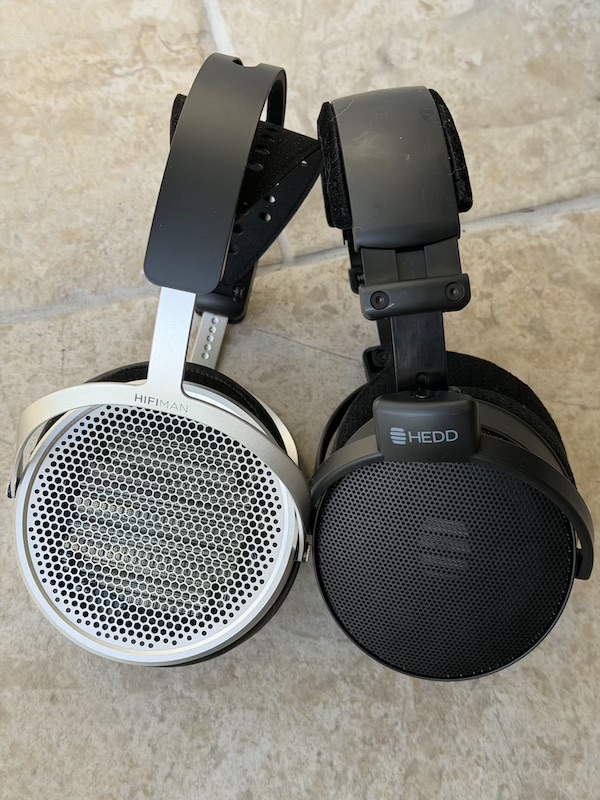
The D1 improves on the HD600 in every dimension that matters for long-term listening: smoother and more extended bass, a midrange that is at least as tonally honest with greater harmonic density, and a treble that adds genuine air without the mild dryness the HD600 can exhibit in the upper octaves. The Edition XS was always a coloured headphone — its warmth and diffuse presentation were part of its appeal — but the HE600 delivers a genuinely expansive, precise soundstage without the Edition XS’s softness in the upper midrange, and its overall coherence is substantially higher. What emerges from this direct comparison is that the D1 and HE600 together give a collector something the older pairing never quite managed: excellent tonality, smooth and authoritative bass, a wide and holographic soundstage, and precise imaging — all without meaningful compromise in either role. The step up in price is real, but so is the step up in performance.
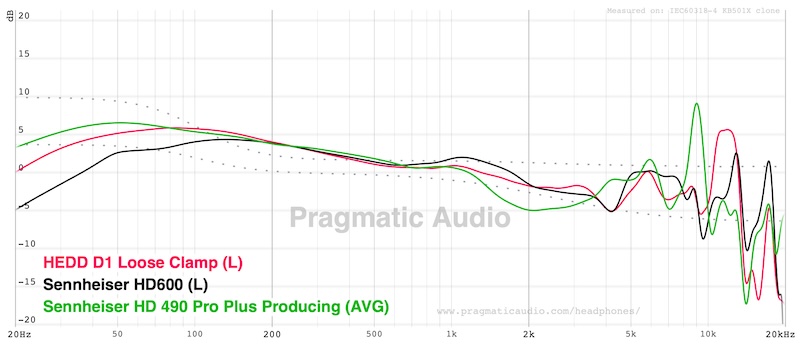
Sennheiser HD490 Pro
The HD490 Pro is one of the D1’s most direct professional rivals. The D1 is tonally more accurate overall and feels better built for long-term use. The HD490 Pro does offer something genuinely interesting in its dual-earpad system, giving users two meaningfully different sound signatures from a single headphone — a practical advantage in a studio context where versatility matters. But in terms of pure sonic refinement and tonal integrity, the D1 wins convincingly.
Sony MDR-MV1
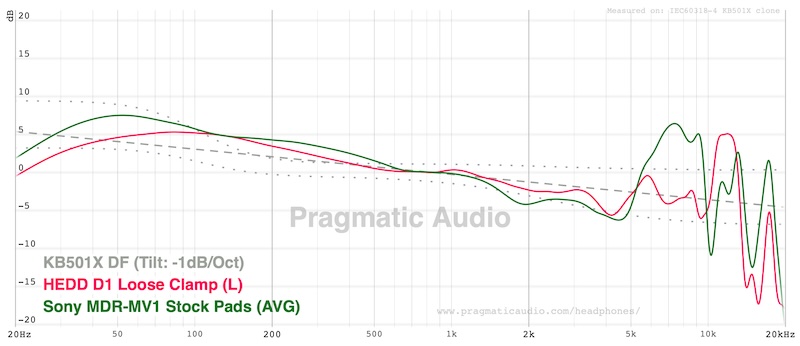
The MDR-MV1 is another studio-monitor-oriented open-back and a fair comparison point. Against the D1, it offers notably stronger sub-bass extension — an advantage for bass-heavy material. However, the D1 pulls ahead in mid-bass definition and, most critically, in midrange quality. The MV1’s upper midrange has more presence that can become wearing over extended sessions, where the D1 maintains a more neutral and accurate presentation throughout.
Meze 109 Pro & Aune AR5000
This annotated comparison illustrates several of the D1’s defining characteristics against two well-regarded open-back dynamics.
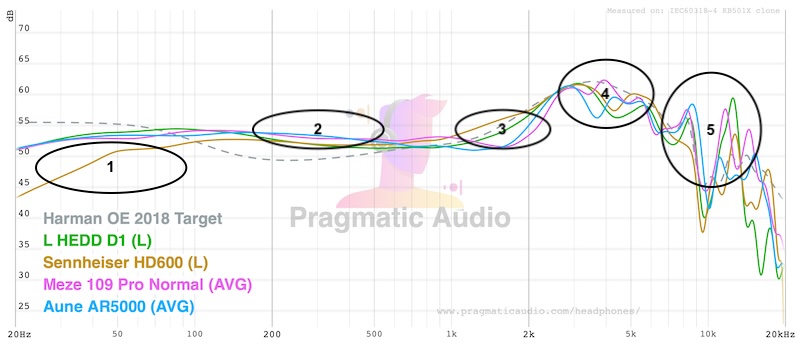
(1) The HD600 shows the most pronounced bass roll-off of the group — a well-established characteristic. (2) Both the Aune AR5000 and the Meze 109 Pro sit slightly warmer in the mid-bass than the D1, which presents a cleaner, more neutral low-end profile; the D1’s midrange accuracy is equally evident as the most neutrally positioned in this region. (3) The Meze 109 Pro and the Aune AR5000 both feature a deliberately relaxed 1–2 kHz region to support a wider, more diffuse soundstage presentation; the HD600 is marginally more forward here; the D1 tracks closest to what a neutral reference response should look like. (4) In the treble, the D1 is notably more relaxed than the 109 Pro in particular, contributing to its fatigue-free character over long sessions. (5) Upper treble extension across all four headphones is broadly similar, though the D1’s TPCD-driven transient control means detail in this region feels more organised and precisely rendered in listening.
FiiO FT1 Pro, FT7 & Aune AR3000
A second annotated comparison covers the D1 against FiiO’s open-back range and the Aune AR3000, applying the same five-region analysis.
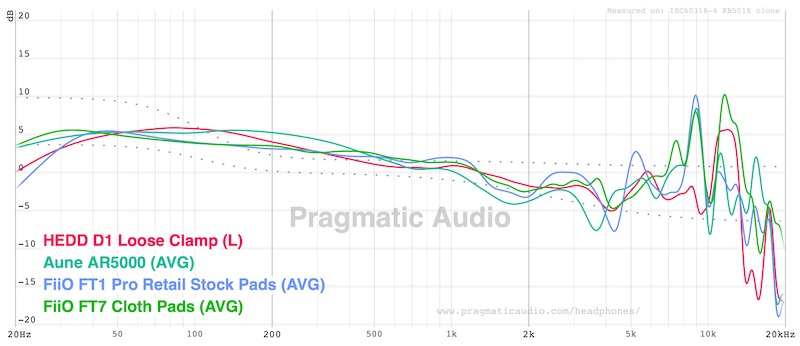
The D1’s bass neutrality, midrange precision, and controlled treble character set it apart from a field that, while individually impressive, tends to make more deliberate frequency response compromises — in the direction of warmth, a V-shape, or deliberate treble emphasis. The D1 is the most tonally honest of the group, which is exactly what its reference-monitor positioning promises.
HiFiMAN Ananda & Meze 105 AER
Against two well-regarded planar magnetic headphones, the D1’s strengths come through clearly in the midrange and treble.
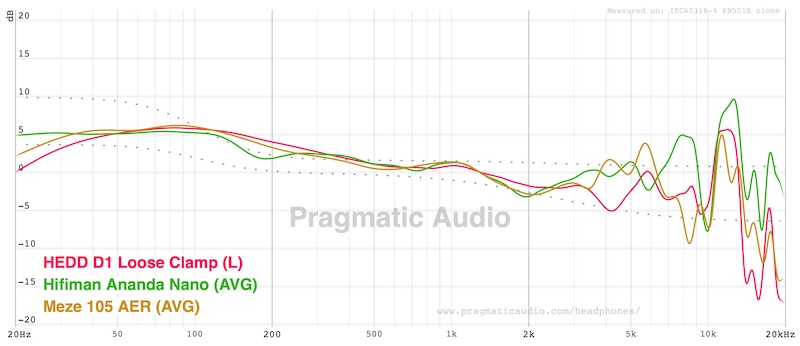
Both the Ananda and the Meze 105 AER exhibit an elevated presence region around 2 kHz that the D1 simply does not share. The D1 tracks more smoothly through this critical midrange zone, which in listening translates to instruments and vocals sounding more naturally weighted and less artificially emphasised. The D1’s treble is also more controlled, with fewer sharp peaks in the upper octaves than either planar in this comparison.
HiFiMAN Edition XV
The comparison below comes from Headphones.com (measurement credit: Headphones.com), taken on a BK-5128 rig, showing the D1 alongside the Edition XV.
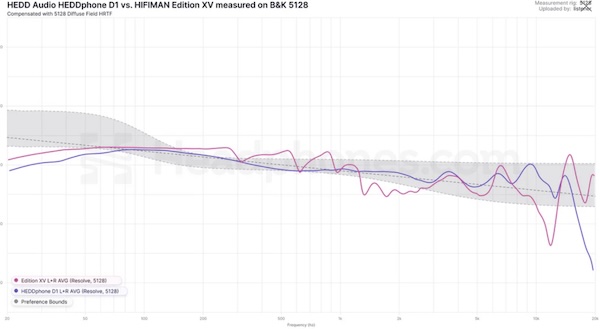
The smoothness advantage of the D1 is striking. The Edition XV offers slightly deeper sub-bass extension and a marginally more relaxed treble ceiling, but its midrange response is notably uneven — a characteristic I confirmed independently in my own measurements of the XV. The D1’s midrange traces a far more coherent path through the 1–5 kHz region, which is the heart of the audible band and the key to long-term listening satisfaction.
Rating Explanation
The HEDDphone D1 earns a 5 star pragmatic score because it delivers on its core promise. The Thin-Ply Carbon Diaphragm produces a midrange that is genuinely class-leading at this price, and the overall frequency response is tuned with a precision and restraint that reflects four decades of professional loudspeaker engineering.
The build quality, while not ostentatious, is honest and durable, and the comfort over extended sessions is a real advantage over several of its closest rivals. On the question of whether the D1 is the new reference for midrange clarity in this price tier, the answer — after two months of daily listening and direct comparisons — is an unqualified yes.
The price rating of four reflects the reality that €699 / $800 is a significant sum. The D1 justifies it — but a one-point deduction acknowledges that the HD600 remains an excellent midrange headphone at considerably less, and that the D1 is not a decision to make lightly. The features rating of four similarly reflects a product that does exactly what it needs to without extras: there is no wireless functionality, no active noise cancellation, no modular system beyond the detachable cable. The carry case is a genuine inclusion, but the accessory set is lean. For a reference headphone aimed at professional and dedicated home listening contexts these are entirely the right trade-offs, but they are trade-offs nonetheless. The measurements score of five reflects both the D1’s inherent accuracy and the transparency with which HEDD Audio has engineered the driver. The caveats around pad compression are real, but they are predictable, measurable, and manageable — not hidden flaws.
Conclusion
HEDD Audio arrived at the consumer headphone market with a bold claim: a dynamic driver headphone with aerospace-grade diaphragm material that delivers reference-grade accuracy without fatigue.
My previous easy recommendation for open-back midrange transparency was the HD600, and at its lower price it remains a fine choice. But the D1 is a more comfortable headphone, a more tonally complete headphone, and one I find myself reaching for during long working sessions without a second thought. It has earned a permanent place in my collection and one I hope to purchase soon. Believe the hype.