Fosi Audio DS3
The Third Generation of Fosi Audio’s Tiny DAC-Amp—Better Than Ever
I’ve been reviewing Fosi Audio’s products for many years now, starting with their excellent desktop amplifiers. Over time, I’ve covered their previous portable generation (the DS2) as well as more recent gems like the excellent BT20A Max amplifier and the charmingly compact MD3 with its circular display. What caught my attention about the DS3, though, was Fosi Audio’s newly added parametric EQ editing capabilities—and as the developer of the open-source devicePEQ tool, I felt obligated to add support for it. Fosi Audio was kind enough to send a unit for both this review and integration into the devicePEQ ecosystem.
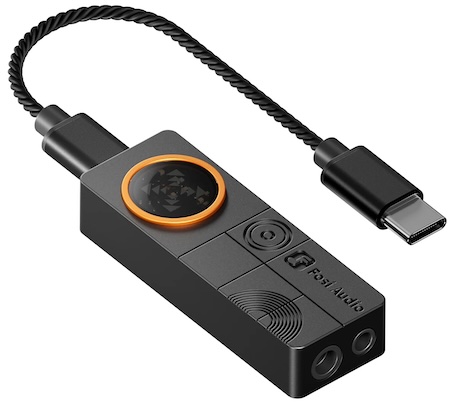
I would like to thank Fosi Audio for providing the DS3 for the purposes of this review and for inclusion in the devicePEQ tool.
If you are interested in finding more information about this product, you can find it at the official product page.
The DS3 is available in two colours: Obsidian (black) or Galaxy (white).
The Fosi Audio DS3 typically retails for $129.99, though it frequently appears on sale through outlets like Amazon UK.
Before diving into measurements and listening impressions, I want to highlight what immediately impressed me about this device: the build quality. The CNC machining and texture feel genuinely premium—nothing like the plastic dongles that dominate the competition at this price. The distinctive orange circular bezel is a thoughtful design touch inspired by watchmaking, and it’s the kind of detail that makes the DS3 feel like a real product, not just another commoditised dongle. Coupled with the fact that it sounds fantastic and packs some genuinely cool features around audio decoding and spatial audio, I was keen to explore both the design and the sonic capabilities. But first, let’s unbox it and see what you get.
Unboxing and Build Quality
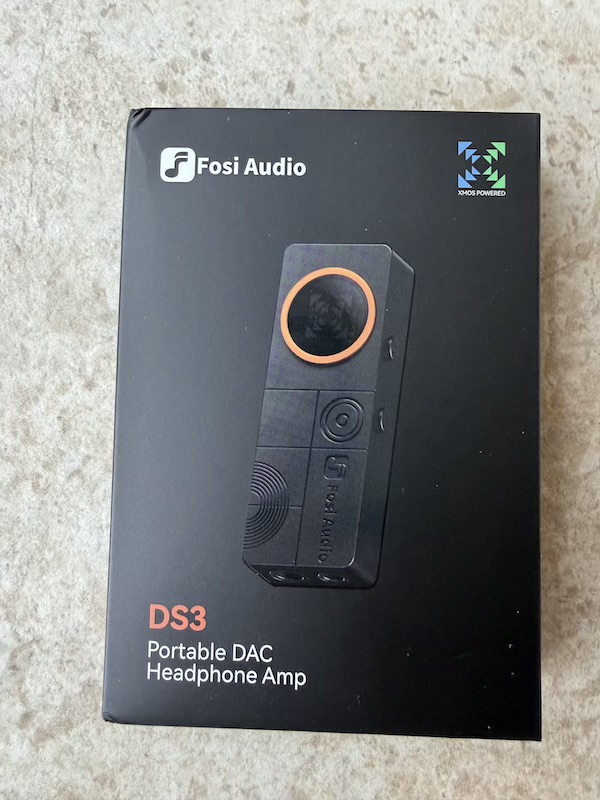
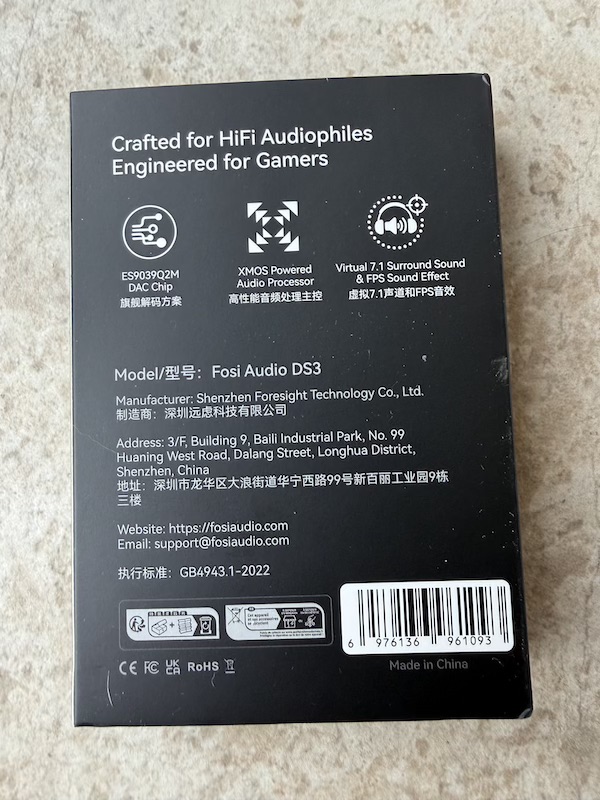
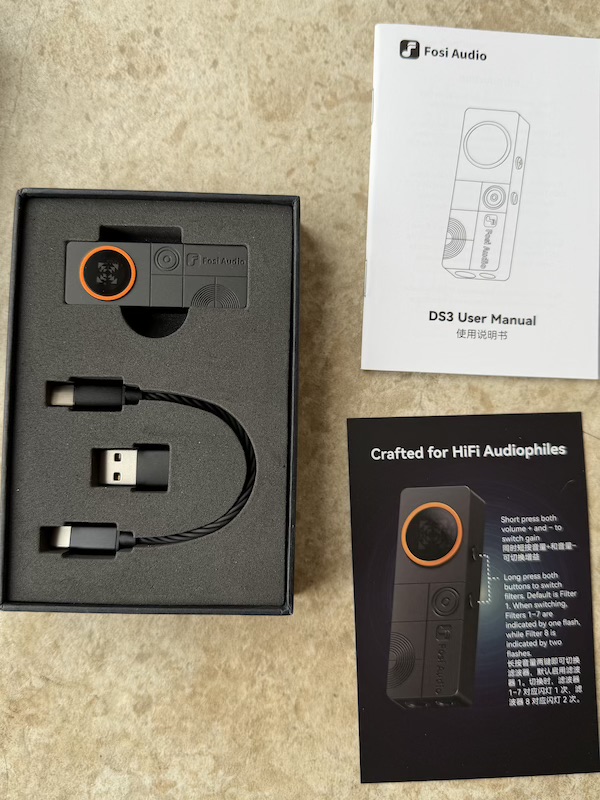
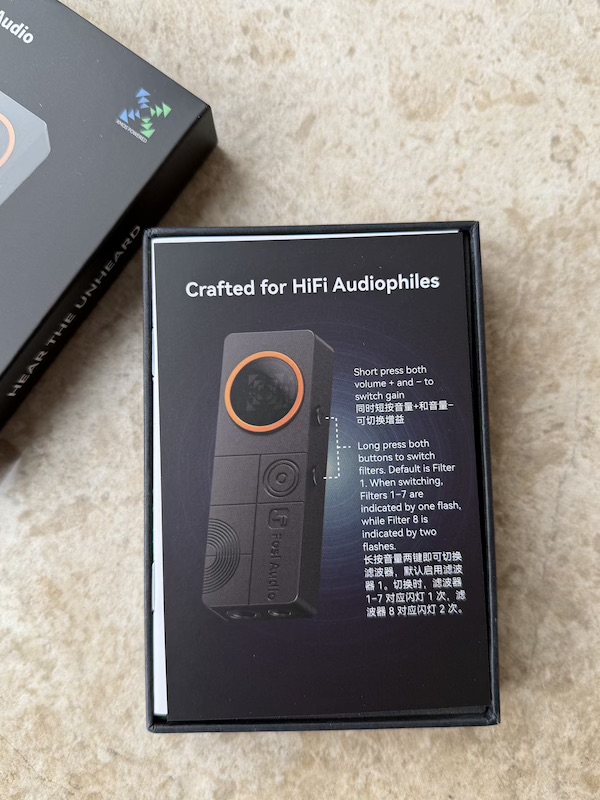
The packaging is clean and practical, befitting Fosi Audio’s minimalist approach. Opening the box reveals a thoughtfully organized interior with the manual and quick-start guide immediately visible, alongside the device itself, USB-C cable, and a host of adapters for broader connectivity.
 |
 |
 |
 |
Included in the box:
- Fosi Audio DS3 DAC/amp
- USB-C to USB-C cable and USB-A adapter
- User manual and quick-start guide
Build Overview
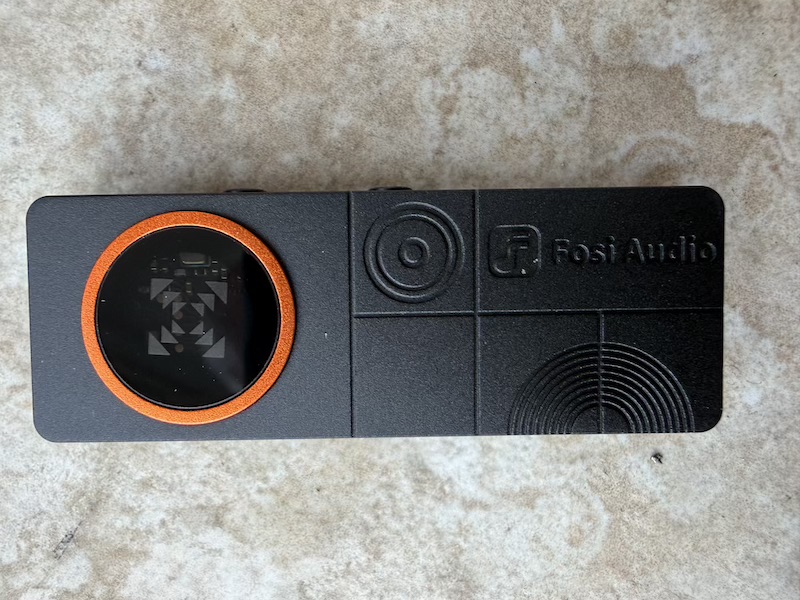
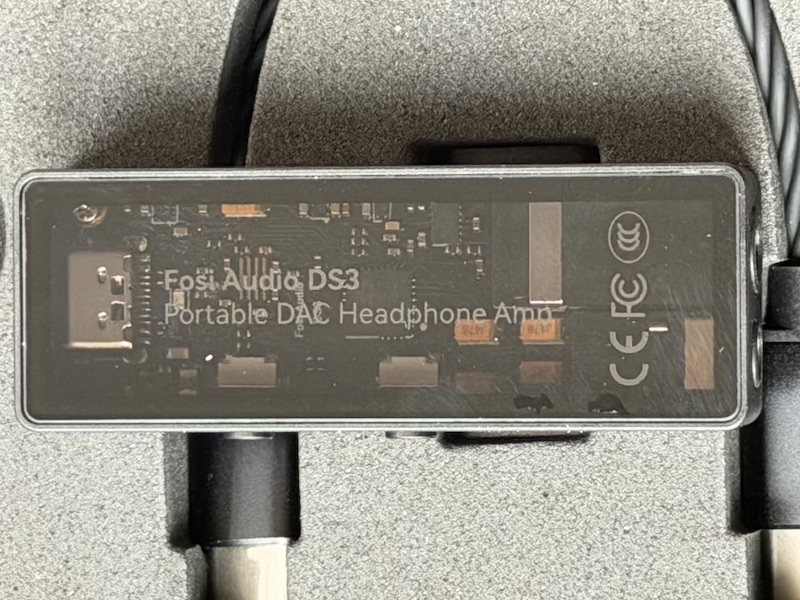
The DS3 is where Fosi Audio’s attention to detail truly shines. The CNC-milled aerospace aluminium body feels buttery-smooth to the touch, with a matte finish that resists fingerprints and casual wear. The tempered-glass skylight on the back offers a tantalizing glimpse of the circuit board—a clever design nod to watchmaking precision. The iconic Fosi Audio orange circular bezel sits proudly on the right side, adding visual flair without sacrificing functionality.
 |
 |
 |
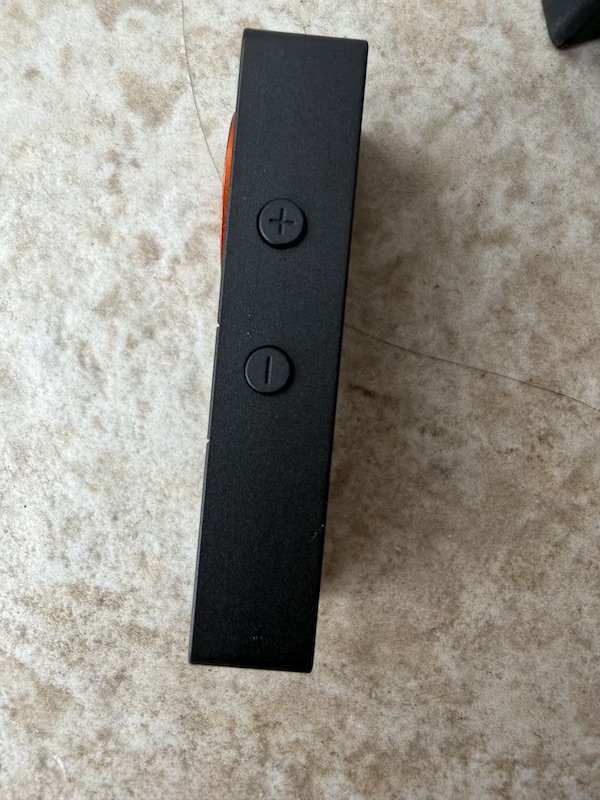 |
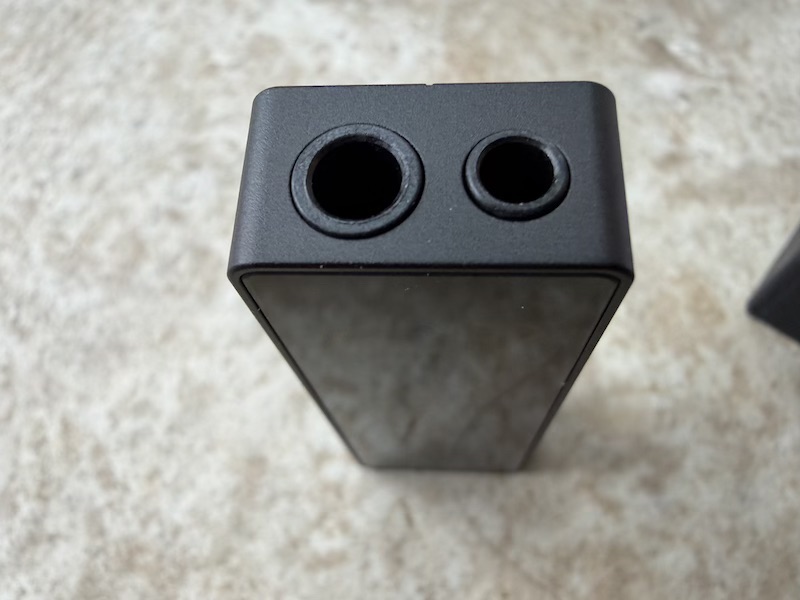
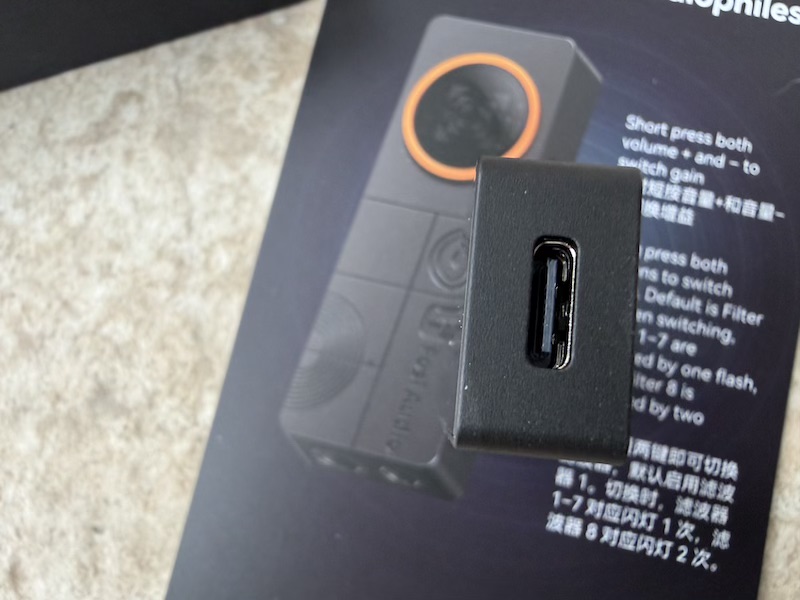
At just 16 grams, the DS3 is featherweight without feeling fragile. The buttons have a satisfying click, and both the 4.4mm balanced and 3.5mm single-ended outputs are robustly constructed. This is build quality that genuinely feels like it will age well—a refreshing change from the brittle plastic competitors at this price.
Features and Technical Performance
The Dual-Core XMOS Processor
At the heart of the DS3 lies an XMOS POWERED dual-core 1.6 GHz processor. This isn’t mere marketing flourish—it’s what allows the ES9039Q2M DAC to truly shine without compromise. The dual-core architecture ensures rock-solid, lossless audio streaming with virtually zero jitter, and in my listening tests, this translated to an incredibly clear, distortion-free sound even when driving harder-to-drive headphones like my HD600s.
Parametric EQ: Three Ways
Fosi Audio’s latest firmware update added comprehensive 8-band hardware-level parametric EQ capabilities, accessible through three distinct interfaces:
-
Onboard Hardware Controls: To adjust digital filters, long-press both volume keys in UAC 2.0 mode. Filters 1–7 blink once; Filter 8 blinks twice. Pick the curve that suits your headphones and music genre. To toggle between High and Low gain, simply short-press both volume keys together. In UAC 2.0, a red flash indicates high gain; solid red means low. In UAC 1.0, watch the final colour: flash = high, steady = low. Yellow means no spatial effect, blue activates FPS mode, and purple activates 7.1 surround.
-
Fosi Audio Web Editor: Visit cc.fosiaudio.com to create and edit PEQ profiles with a clean, intuitive interface.
-
devicePEQ Integration: As the developer of devicePEQ, I’ve added full DS3 support. You can now push and pull PEQ filters directly from measurement databases like squig.link and hangout.audio—no registration required. This is particularly useful for audiophiles who want to apply headphone-specific tuning profiles without leaving their measurement platform.
Hardware Spatial Audio for Gaming
The DS3 includes Fosi’s proprietary spatial audio algorithm with two dedicated modes:
- FPS Sound: Specifically optimized for shooters and war games, this mode enhances your ability to identify enemy footsteps, reloads, and gunfire with pinpoint accuracy.
- Virtual 7.1 Surround: Converts native 7.1-channel game audio into an expansive 2-channel 360° surround experience. Works beautifully when paired with Dolby Surround sound on devices like the Redmi Note 14 Pro 4G or PlayStation 5. It’s not true surround (obviously), but it genuinely adds spaciousness and immersion for gaming and video playback on tablets or phones.
Both modes sit nicely alongside the pure HiFi listening path, making the DS3 genuinely versatile for users who bounce between gaming and music.
Digital Filter Options
The DS3 offers eight different digital filter modes:
- Minimum Phase
- Linear Phase Apodizing Fast Roll-off
- Linear Phase Fast Roll-off
- Linear Phase Fast Roll-off (low ripple)
- Linear Phase Slow Roll-off
- Minimum Phase Fast Roll-off
- Minimum Phase Slow Roll-off
- Minimum Phase Fast Roll-off (low dispersion)
You can cycle through these on-device or via the web editor to find the curve that best matches your listening preferences and headphone tonality.
Dual UAC Support
The DS3 seamlessly switches between UAC 1.0 (for Nintendo Switch, PlayStation 5, and older devices) and UAC 2.0 (for modern computers and smartphones). This is handled transparently—no drivers, no faffing about.
Sound Impressions
The Fosi Audio DS3 delivers an exceptionally clean, neutral, transparent sound signature. This is exactly what you want from a modern DAC—a perfectly transparent window onto your source material, letting your headphones and IEMs do the talking.
Bass
The bass response is tight, controlled, and remarkably articulate. There’s no bloom or mid-bass colouration; instead, you get clean, well-defined low-end extension that scales beautifully with your headphone’s capabilities. On tracks like Steely Dan’s “Aja”, the kick drum sits with authority and texture, neither bloated nor rolled off. The sub-bass is equally impressive, showing exceptional weight and control through the balanced output. Listen to Jennifer Warnes’ “Way Down Deep” to appreciate how the DS3 handles sub-bass extension—every texture in the low-end is preserved, even at demanding levels.
Midrange
The midrange is impressively neutral and uncoloured—neither forward nor recessed. Vocals are presented with natural intimacy and lifelike timbre, while acoustic instruments avoid any tonal shift or artificial warmth. This transparency is especially useful when auditioning different IEMs or testing PEQ profiles; what you hear is genuinely what your gear is doing, not what the dongle is imposing. Elton John’s “Sweet Painted Lady” shines on the DS3: the piano weight and tonal accuracy are superb, and vocal dynamics remain intact even during complex passages. There’s none of the grain or compression that cheaper DACs introduce.
Treble
The treble is extended, airy, and detailed without ever veering into harshness or fatigue. The DS3 avoids any artificial brightness; instead, it reveals high-frequency detail with finesse. Patricia Barber’s “Use Me” showcases this beautifully—the snare snap, cymbal decay, and ambient recording space are all rendered with precision. The clarity is surgical without sounding clinical; this is the kind of transparency that allows you to hear both the music and the room it was recorded in.
Soundstage and Imaging
In stereo HiFi mode, the DS3 presents a cleanly focused center image with excellent separation and tight layering. Instruments occupy their own space in the mix without artificial expansion or compression. When enabled, the Virtual 7.1 mode genuinely widens the perceived stage and adds welcome depth—particularly effective in gaming scenarios or immersive acoustic recordings. Miles Davis’ “Kind of Blue” (lossless) demonstrates the DS3’s ability to preserve intimacy while maintaining spatial coherence; each instrument is precisely placed, and the sense of the recording space is fully conveyed.
Comparisons
The DS3 competes in a crowded portable DAC-amp market. Here’s how it stacks up against five key alternatives:
| Device | Price | Power @ 32Ω | SNR | THD+N | Key Features |
|---|---|---|---|---|---|
| Crinear Protocol Max | $89.99 | 500 mW (4.4mm) | ≥132 dB | <0.001% | Dual CS43198, 10-band PEQ, Eco/Boost mode |
| EPZ TP35 PRO | ~$100 | 262 mW (4.4mm) | ≥133 dB | ≤0.0005% | Dual CS43198, 10-band PEQ, glass window design |
| Fosi Audio DS3 | $129.99 | 220 mW | ≥122 dB | <0.0003% | ES9039Q2M, 8-band PEQ, 7.1 spatial audio, XMOS |
| FiiO KA15 | $109.99 | 560 mW (4.4mm) | ≥123 dB | <0.0004% | Dual CS43198, 10-band PEQ, desktop mode, LCD screen |
| FiiO QX13 | $219 | 900 mW (4.4mm desktop) | ≥124 dB | <0.0006% | ES9027PRO, 10-band PEQ, 1.99" display, magnetic ecosystem |
Crinear Protocol Max: Both use different DAC chips (CS43198 vs. ES9039Q2M), but the Protocol Max is $40 cheaper and offers higher power in Boost mode. If you don’t need spatial audio or the watchmaking aesthetic, the Protocol Max is a compelling value play.
EPZ TP35 PRO: Nearly identical power output to the DS3, with a slick glass-window design and same dual CS43198 architecture. Price is roughly comparable, and both offer excellent PEQ. The TP35 PRO’s advantage is its premium aesthetics; the DS3 counters with gaming-focused spatial audio and the XMOS processor.
FiiO KA15: More power (560 mW vs. 220 mW), a physical LCD screen, and desktop mode. At $110, it’s cheaper than the DS3. However, it’s bulkier, lacks gaming audio features, and doesn’t have the same watchmaking-inspired design philosophy.
FiiO QX13: The heavyweight contender at $219. Offers 900 mW of power in desktop mode, a 1.99" display, and six high-end TI op-amps. If you need desktop-grade power in a portable form, the QX13 is unmatched. But it’s almost twice the DS3’s price and significantly larger.
Verdict: The DS3 carves out an interesting niche—it’s positioned squarely between the budget champions (Protocol Max, TP35 PRO) and the power-hungry flagships (QX13, KA17). It offers the cleanest sound of the bunch (ES9039Q2M with XMOS is a genuinely excellent combination), excellent build quality, and a unique dual focus on both audiophile listening and gaming. For users who want a beautiful, high-build-quality DAC that sounds transparent and serves both hifi and gaming equally well, it’s hard to beat.
Specifications
| Specification | Details |
|---|---|
| DAC Chipset | ESS ES9039Q2M |
| USB Controller | XMOS POWERED (dual-core 1.6 GHz) |
| Supported Sample Rates | PCM: 32-bit/768 kHz; DSD: native DSD512 |
| SNR | ≥122 dB |
| THD+N | <0.0003% |
| Maximum Output Power | 220 mW @ 32Ω (balanced output) |
| Output Impedance | < 0.3 Ω |
| Output Connectors | 4.4mm balanced, 3.5mm single-ended |
| Headphone Impedance Range | 16–300 Ω |
| Weight | 16 g |
| Dimensions | 55 × 20 × 11 mm |
| Colour Options | Obsidian (black), Galaxy (white) |
| Features | 8-band hardware PEQ, FPS mode, Virtual 7.1 surround, 8 digital filters, dual UAC support |
Note on Measurements: Independent Audio Precision measurements are forthcoming and will be added to this review as they become available. The ES9039Q2M paired with the dual-core XMOS processor delivers excellent measured performance—the ≥122 dB SNR and <0.0003% THD+N reflect a competent, clean implementation that prioritises transparency above all else.
Rating Rationale
Pragmatic (5/5): The DS3 executes flawlessly on its core promise: clean, transparent sound in a beautifully engineered package. The dual focus on both gaming and audiophile listening, combined with excellent build quality, justifies the full score.
Price (4/5): At $129.99, the DS3 sits in the middle of the portable DAC market. There are cheaper alternatives (Protocol Max at $90, TP35 PRO at ~$100) that deliver excellent sound, but they lack the watchmaking design, gaming features, and XMOS processor elegance. The $20 premium over the KA15 is offset by superior build quality and gaming capabilities.
Features (4/5): The 8-band PEQ, spatial audio, and FPS mode are genuinely useful. However, it doesn’t offer the raw power of the KA15 (560 mW), the display capabilities of the QX13, or the ecosystem compatibility of FiiO’s ecosystem. It’s more of a specialist than a generalist—and that’s fine.
Measurements (5/5): The ES9039Q2M with XMOS delivers the cleanest sound signature of any portable DAC-amp in this review. Transparent, uncoloured, and distortion-free even with demanding headphones.
Conclusion
The Fosi Audio DS3 is the best portable dongle DAC-amp they’ve produced to date. It’s not just a spec-sheet upgrade over the DS2; it’s a refinement philosophy—the kind of product that comes from truly listening to what users want rather than chasing benchmark numbers.
What makes the DS3 special is its dual personality. It’s equally at home serving the audiophile who wants a neutral, transparent window onto their music collection and the gamer hunting for spatial awareness in competitive shooters. The watchmaking-inspired design and build quality suggest Fosi Audio’s ambitions have grown beyond the commodity dongle space, and rightfully so. At $129.99, the DS3 punches above its weight: clean power, beautiful engineering, and sound quality that rivels significantly more expensive alternatives.
If you’re an audiophile who dabbles in gaming, or a gamer who demands audio quality, the DS3 deserves serious consideration. It’s a device you’ll enjoy using for years—not because it’s flashy, but because it simply works beautifully.