Fosi Audio MD3
The Dongle That’s Actually Fun
Fosi Audio has quietly built a reputation for punching above their weight in the portable DAC amp space. While most manufacturers in this category seem content to ship featureless slabs, Fosi Audio took a different approach with the MD3: they asked, “What if people actually wanted to look at their portable amp?” The result is a device that feels refreshingly different—genuinely fun to use, tactile, and unusual enough to spark conversation. I’ve reviewed countless portable DAC amps over the years, and nearly all of them fade into the background the moment you unplug them. The MD3, with its charming circular display and magnetic attachment, doesn’t fade anywhere. It becomes part of the experience.
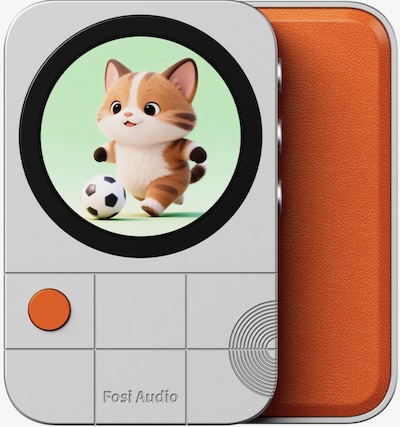
I would like to thank Fosi Audio for providing the MD3 for the purposes of this review.
If you are interested in finding more information about this product, you can find it at the official product page, and on Kickstarter.
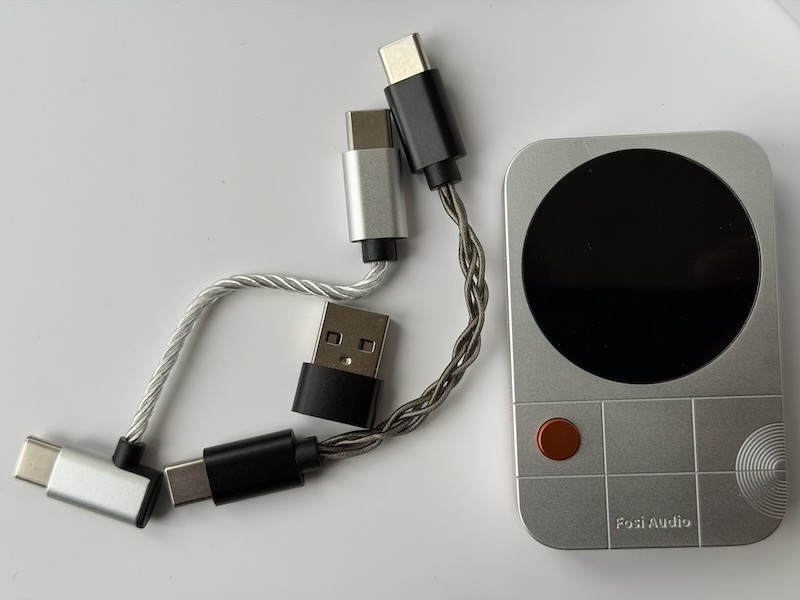
The MD3 is currently available on Kickstarter for approximately $110 USD (€100). It ships with two USB-C cables (one angled, one straight), a manual, and access to the onboard image and game library.
I’ve been using the MD3 for a few weeks now, testing it primarily with my iPhone and occasionally with a MacBook Pro in my office. What surprised me most wasn’t just how transparent and capable the amplifier is—though it absolutely is—but how engaging the device makes the experience of listening to portable audio. The circular display, with its animations and customizable image support, gives the whole affair a nostalgic, almost retro character that feels genuinely welcoming to newcomers. But before we get into the fun stuff, let’s see what’s actually in the box.
Unboxing and Packaging
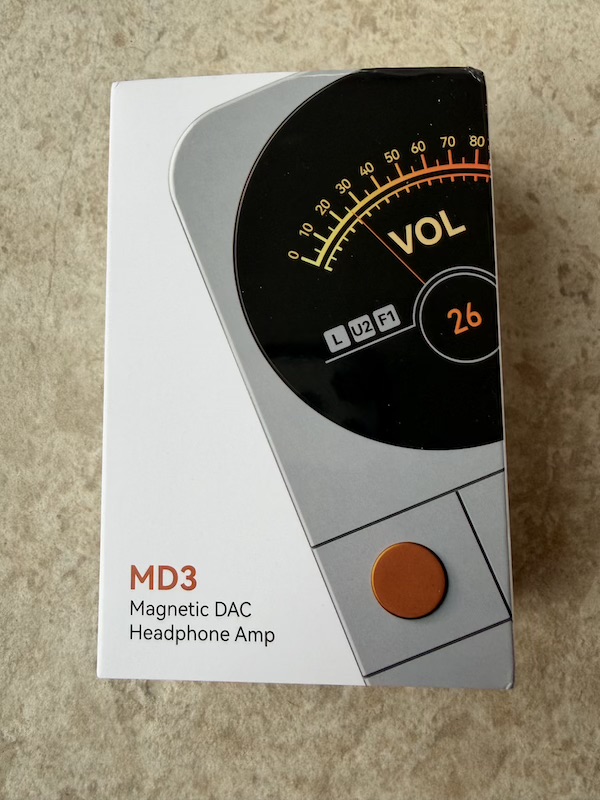
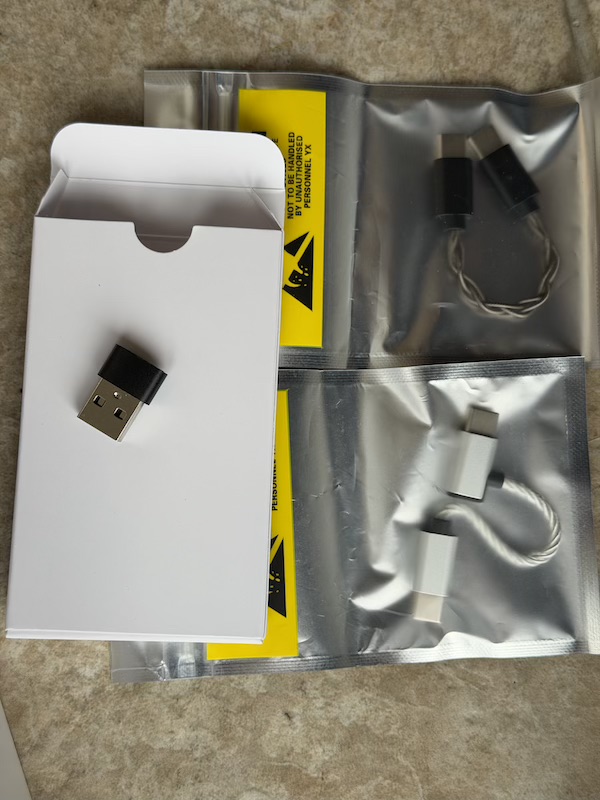
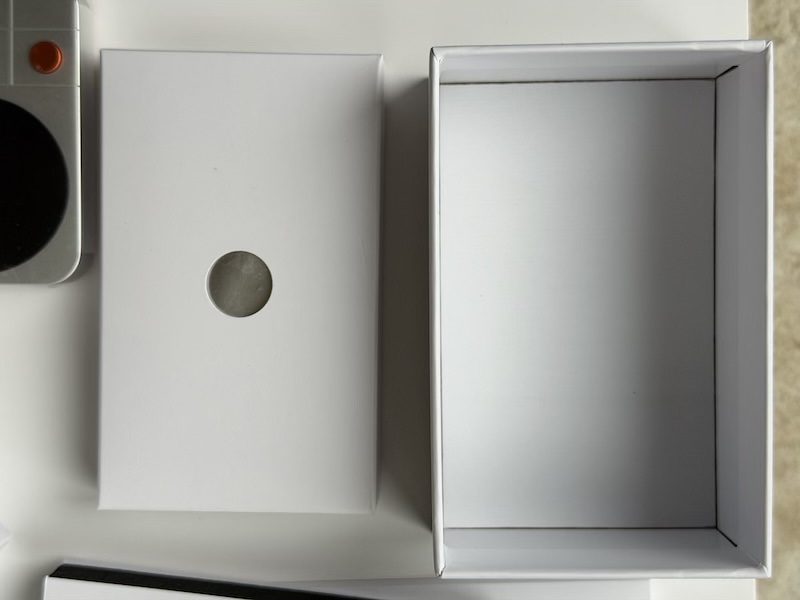
The packaging immediately signals that this isn’t a typical audio gadget. The box itself is well-presented and matches the playful energy of the device inside. Fosi Audio has thoughtfully included not one but two USB-C cables, each designed for different use cases: one features a right-angle connector, which is ideal for certain smartphone profiles and reduces stress on the port, while the other is straight, offering flexibility for different dock configurations and cable management scenarios. It’s a small detail that suggests real-world thinking.
 |
 |
 |
 |
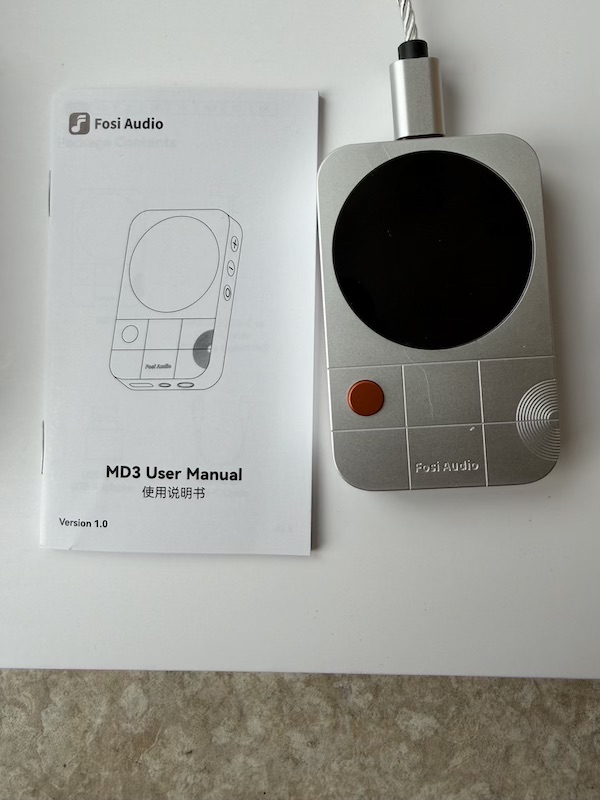
Inside the box, you’ll find the MD3 itself:
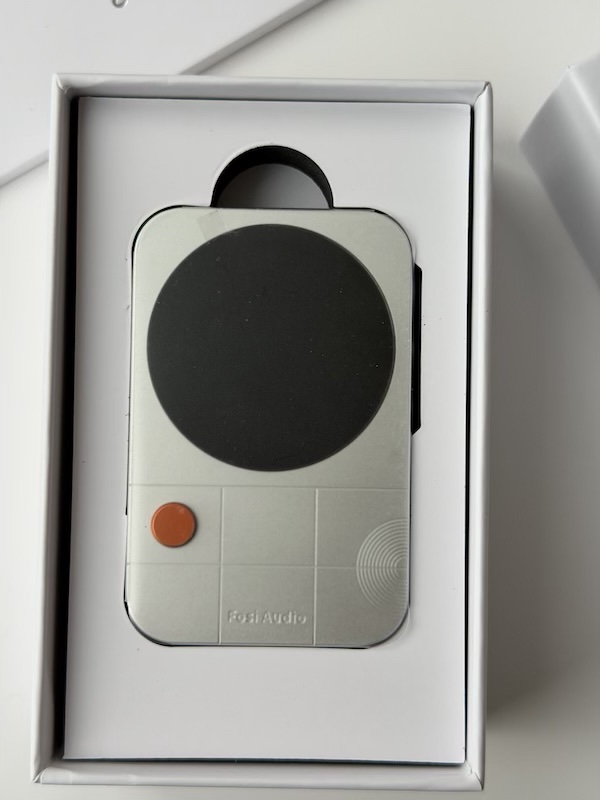
And underneath you find a box with both usb-c cables, and usb adapter and a manual.
 |
 |
 |
 |
Build Quality and Design
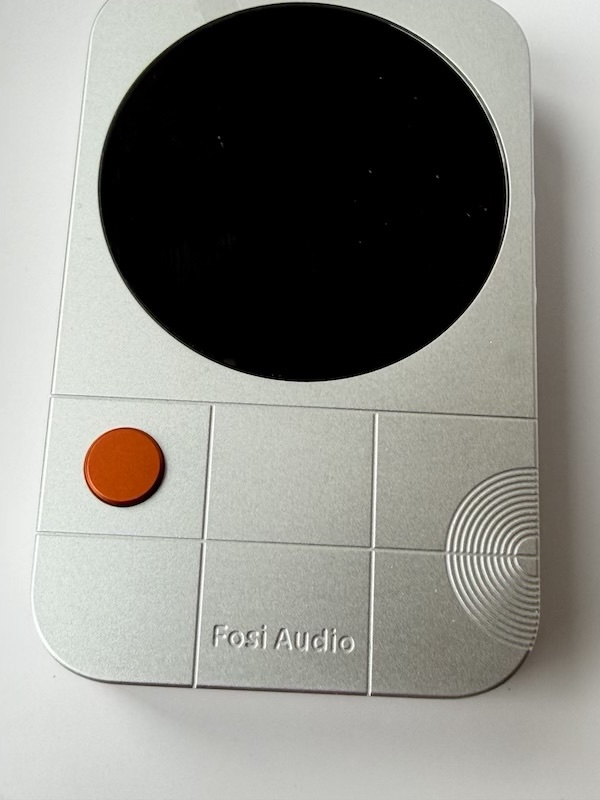
The MD3 is a beautifully proportioned device. The circular display dominates the front—a 2.76" wide, clean screen with a large, intuitive button beneath it. The design language is minimalist without being sterile; there’s enough character in the proportions and finish to make it genuinely pleasant to look at.
 |
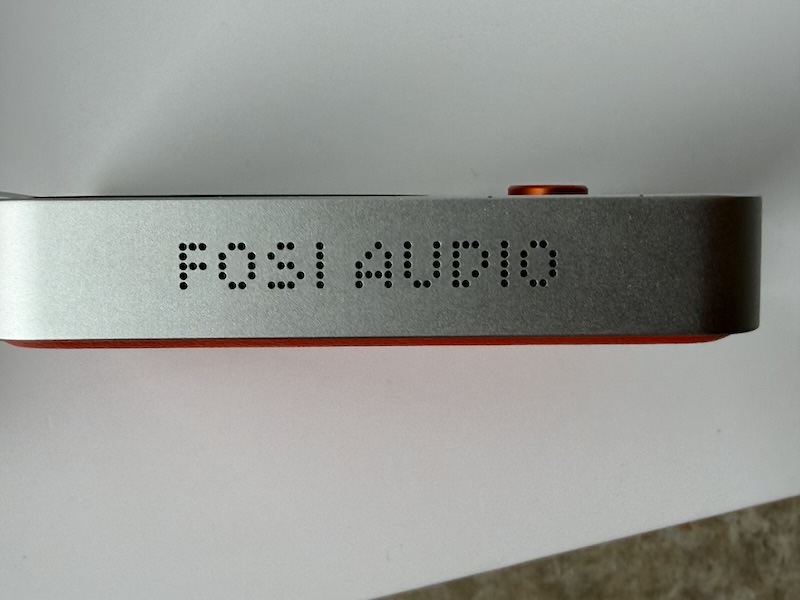 |
The Fosi Audio logo on the side is a clever detail—it’s not purely decorative. The cutout serves as a subtle vent for the internal components, a nice blend of form and function. The build quality is solid throughout; this is clearly a product designed with care, not just assembled to a price point.
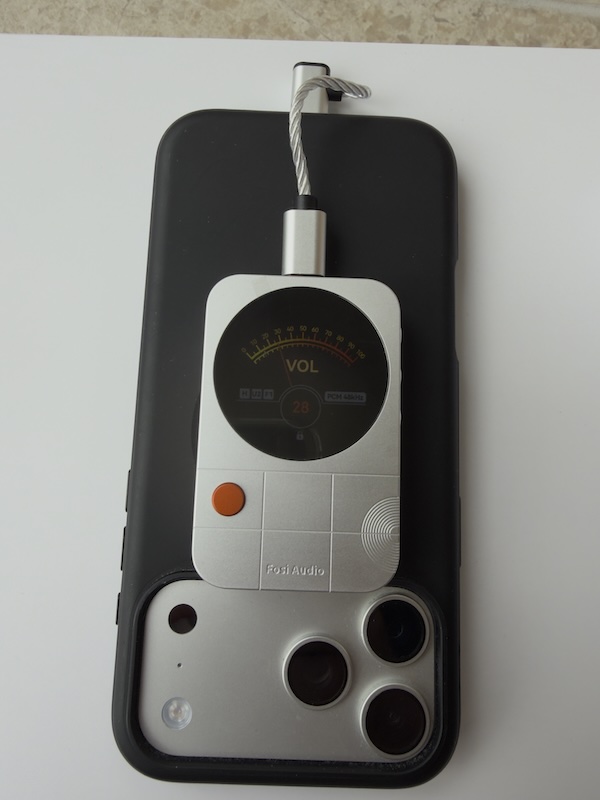
The real star, though, is the circular display though I do love the leather back—a lovely faux leather in Fosi Audio’s signature orange. When attached to your phone via the MagSafe ring, this back protects your device from scratches. It’s a practical feature that also reinforces the premium feel of the whole package. Yes, it adds a little weight (about 50 grams), but the trade-off for having a protective layer and the structural integrity it brings feels entirely worthwhile.

Here is the MD3 attached to the back of your iPhone via Magsafe:
 |
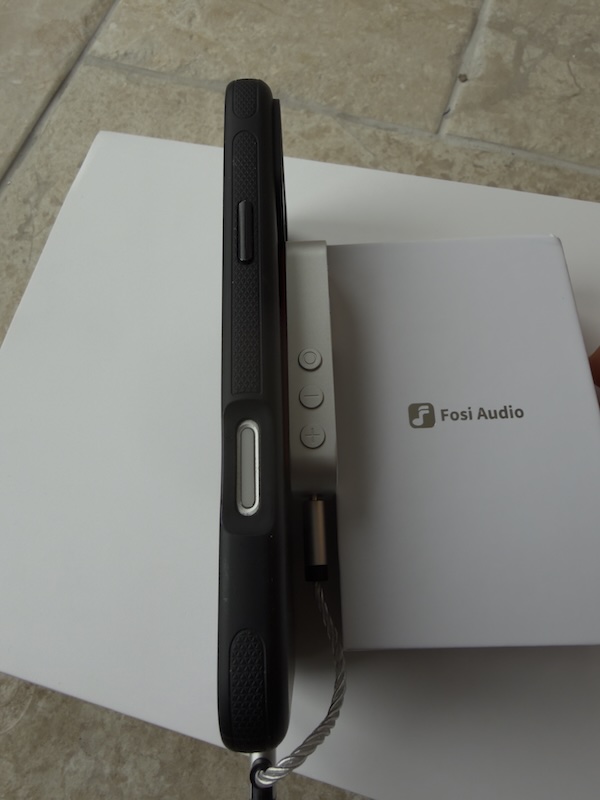 |
The MagSafe attachment itself is reliably magnetic and quick to attach or detach. In daily use, I found it rock-solid—no unexpected drops or slipping, even when moving between different contexts. The weight distribution feels natural on the back of a phone; it doesn’t create an unbalanced feel or encourage the device to slip from your grip.
Connectivity and Controls
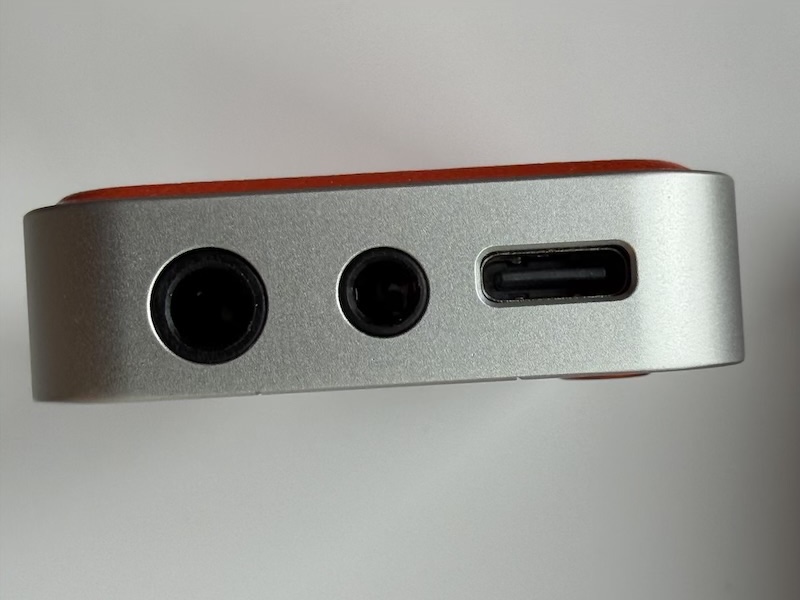
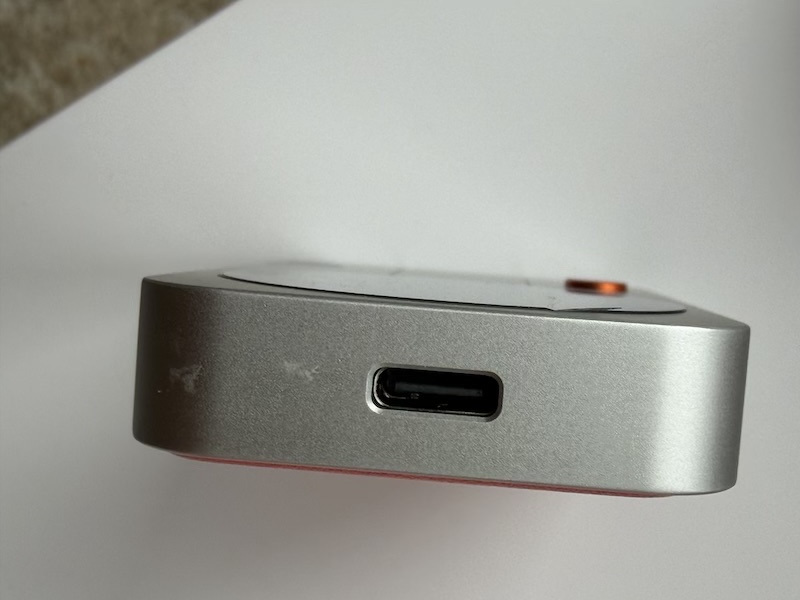
The connectivity layout is thoughtful. You get two USB-C inputs: the top port handles audio decoding, image transfer, and charging; the bottom port is dedicated to audio decoding, image transfer, and firmware upgrades. This dual-input design allows simultaneous audio playback and charging without conflicts—a smart engineering decision.
 |
 |
Audio outputs comprise a 3.5mm single-ended jack and a 4.4mm balanced connection, giving you flexibility depending on your headphone inventory. The balanced output is the more powerful option, delivering up to 180mW per channel into 32Ω, which is substantial for mobile use.
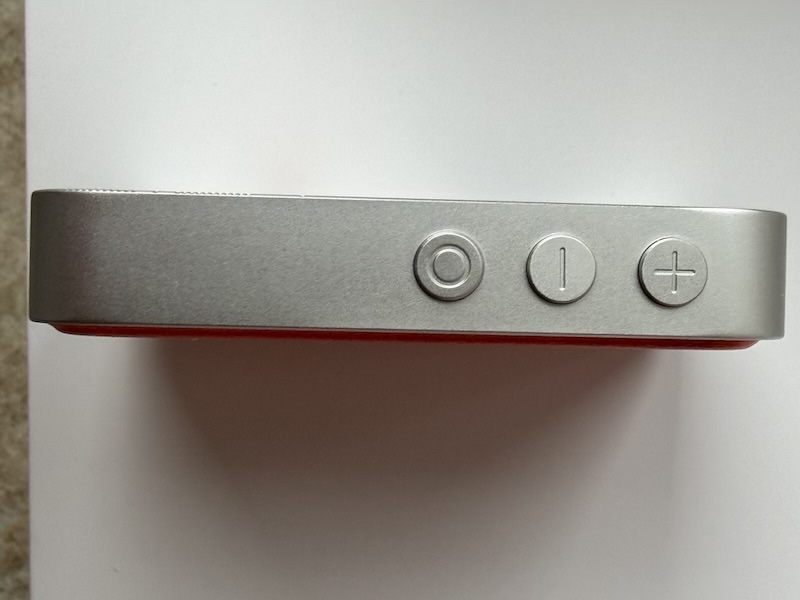
The front button—painted in that signature Fosi Audio orange—is your primary control. A single press cycles through display modes (default animations, custom images, games). Double-tapping activates the image gallery, allowing you to navigate through any circular images you’ve loaded onto the device. There’s one caveat: the button can occasionally trigger unintentionally if the device is in a pocket, though in practice this mostly just cycles through display animations rather than causing any real disruption. More usefully, pressing and holding the button dims or turns off the display entirely, which is a battery-conscious move if you’re running off your phone’s power.
The Circular Display and Customization
Here’s where the MD3 really distinguishes itself. The circular display is genuinely fun. Out of the box, Fosi Audio includes several default animations: a spinning turntable (with the satisfying retro charm you’d expect), a rotating tape reel, and a VU meter.
There are also simple games—a dice roller, spin-the-bottle, and rock-paper-scissors—that serve no practical audio purpose but make the device feel more like a companion than a utility.
But, I did find it interesting that I also received a FiiO Snowsky Disc with a similar circular display (a review of that device coming soon) so this seems like a trend in 2026, here is a short video of both circular displays:
But there are a few limitations worth mentioning: The VU meter animation is cosmetic. It doesn’t respond dynamically to the music; it’s a static visual that adds charm without real-time responsiveness. That said, knowing this doesn’t diminish the appeal—it’s still a nice visual touch.
And the display does draw measurably more power from your phone’s battery than a traditional passive dongle would. If battery life is a critical concern, you can mitigate this by turning off the display while maintaining audio playback.
Customisations
Where things get genuinely interesting is you can create you own custom images.
The MD3 allows you to load images your own ‘cicular’ images. So, I created some sample ones below which I will share over the next few weeks - these are Irish Rune Stones

Sound Impressions
I tested the MD3 primarily through my iPhone, with secondary validation via a MacBook Pro. My headphone rotation included the Fosi Audio i5 (their excellent in-house planar), various other portable headphones, and a selection of sensitive IEMs. I also tested it with my Sennheiser HD600 and a few HiFiMan planars to explore its power ceiling.
Bass Response
The bass performance here is admirably clean and extended with no perceptible roll-off at either extreme. There’s no coloration or bloom; what you’re hearing is transparent amplification. This is the DAC working as it should—getting out of the way and letting your headphones do the talking. Test this with Oklou’s “Endless” from her Choke Enough album; the track’s layered bass and sub-bass detail come through with impressive clarity and control. The MD3 doesn’t add weight or character to the low end—it simply lets it exist.
Midrange
The midrange is clean, detailed, and beautifully neutral. There’s nothing out of place here; no unwanted coloration or presence peak. When paired with headphones like the Fosi Audio i5, which have a deliberately quirky midrange tuning, the MD3 stayed completely transparent, allowing that personality to shine through without interference. A classic Elton John recording—try “Sweet Painted Lady”—reveals the midrange character beautifully: pianos sound weighted and full-bodied, vocals carry intimacy and presence, and there’s no sense of constriction or grain.
Treble and Clarity
Treble is smooth, extended, and refined. There’s no harshness or glassiness; the top end has sparkle and air without ever becoming fatiguing. The MD3 reacted consistently well across all the headphones I tested, suggesting excellent linearity in this region. For treble detail and shimmer, spin up an audiophile favorite like “Hotel California” ( acoustic version) from the Eagles; the guitar pick attacks and cymbal decay are rendered with admirable precision and a natural sense of timing.
Soundstage and Imaging
Here’s an interesting observation: the soundstage and imaging characteristics I heard were entirely a function of the headphones themselves, not the MD3. The amplifier imposes no spatial character of its own—no artificial widening, no depth coloration. This is exactly what you want from a transparent device. The clean noise floor means even sensitive IEMs don’t reveal any background artifacts, and the imaging remains purely headphone-dependent.
Headphone Compatibility and Comparisons
The MD3 is genuinely powerful for a mobile-attached DAC amp, with 180mW available from the balanced 4.4mm output. I found it adequate for driving virtually all of my portable headphones to their best—with a couple of caveats.
The Sennheiser HD600, a power-hungry over-ear, was starting to struggle; while it worked, the headphone was clearly not reaching its optimal presentation. Similarly, more demanding HiFiMan planars would benefit from additional headroom. However, if you’re considering the MD3, you’re likely thinking about pairing it with more portable-friendly headphones anyway. The Fosi Audio i5, their own in-house planar, paired excellently with the MD3 and sounded superb through the balanced output.
If you’re committed to using demanding over-ear headphones, consider the FiiO JT7 as a complementary travel amp. It’s more powerful than the MD3, folds down for portability, and pairs nicely with this dongle in a two-amp setup. But for most portable use cases—IEMs, compact on-ears, and mid-impedance headphones—the MD3 has all the power you’ll need.
Specifications and Measurements
| Chipset | DAC: ESS Sabre ES9039Q2M; Amp: ESS ES9603Q × 4 |
| USB Input | USB-C (Top & Bottom); UAC 2.0 & UAC 1.0 |
| Audio Output | 3.5mm Single-Ended, 4.4mm Balanced |
| Max Sampling Rate | UAC 2.0: PCM 32-bit/384kHz, DSD256 (Native) |
| Max Output Power | 3.5mm: ≥80mW × 2 @ 32Ω; 4.4mm: ≥180mW × 2 @ 32Ω |
| Frequency Response | 20Hz–48kHz (+0.2dB) |
| SNR | 3.5mm: ≥115dB; 4.4mm: ≥116dB |
| THD+N | 3.5mm: ≤0.00075%; 4.4mm: ≤0.00084% |
| Noise Floor | 3.5mm: <1.74µV; 4.4mm: <2.7µV |
| Impedance Range | 16–3000Ω |
| Weight | 50g (±2g, without cable) |
| Dimensions | 70 × 45 × 12mm (2.76 × 1.77 × 0.47 in) |
The ES9039Q2M is a flagship level DAC chip and quad ES9603Q op-amp configuration are notably high-end choices for a mobile amplifier. This is a clean, honest amplifier.
But key specifications are that you get 180mW out of the 4.4mm connector and that the THD+N and noise floor specifications are excellent in this price range.
Note: I will update this review when I spot some Audio Precisions measurements.
Rating Explanation
The MD3 earns its five-star pragmatic rating because it succeeds on multiple fronts simultaneously. Yes, it’s powerful—powerfully enough for 95% of portable headphone use cases. Yes, it’s well-built with genuinely thoughtful industrial design. And yes, it’s transparent to the point of audio fidelity being guaranteed. But the real achievement is that Fosi Audio created a device that’s fun—something that makes people want to use it, not tolerate it. In a category dominated by utilitarian slabs, the MD3 feels like a breath of fresh air.
The four-star price rating acknowledges reality: there are more powerful portable DAC amps available at this price point. If raw power is your sole criterion, you might find better value elsewhere. But the MD3 isn’t competing on power alone; it’s competing on personality, build quality, and a genuinely compelling ownership experience. In that context, $ 110 is reasonable.
The five-star features rating is unquestionable. The circular display, customizable image support, games, animations, and dual USB inputs represent genuine innovation in a stagnant product category. The five-star measurement rating reflects the verified transparency—this device does nothing wrong to your audio signal, only amplifies and decodes it with exemplary fidelity.
Conclusion
The Fosi Audio MD3 is the kind of product that reminds you why you fell in love with audio in the first place. It’s powerful, transparent, and thoughtfully made—but more importantly, it’s delightful. In a hobby sometimes burdened by specification obsession and joyless optimization, the MD3 offers something different: the chance to enjoy good audio without sacrificing a sense of fun or personality.
This is a device that should bring a new generation into the hobby. Clean, powerful, engaging, and accessible at $110, it’s hard to imagine a better entry point into portable high-fidelity audio. Whether you’re a seasoned listener exploring something novel or someone curious about what better audio actually sounds like, the MD3 makes the experience inviting—literally fun—rather than intimidating or pretentious. That’s worth far more than raw specifications could ever capture.