Fosi Audio S3
Fosi Audio Enters the Streaming Market — With Balanced Outputs
After the Luna 3 turntable and a string of headphone amplifier releases, a network streamer was not the product I expected from Fosi Audio next. The S3 is their first attempt at the category — and it arrives with a hardware differentiator that makes it immediately interesting: balanced XLR outputs at a price point where even parts of the WiiM lineup cannot match that capability.
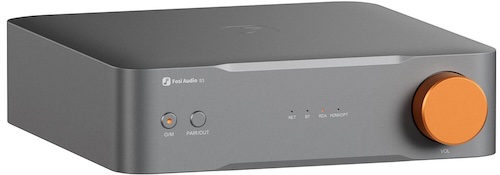
I would like to thank Fosi Audio for providing the S3 for the purposes of this review. The S3 was a pre-release sample that has been updated through multiple firmware releases to the current production version over the course of the review period.
If you are interested in finding more information about the S3, you can find it at the official product page.
The Fosi Audio S3 typically retails for $319.99, with promotional pricing frequently available through Amazon.
I have been living with the S3 for approximately two months, cycling it between a desktop setup and a living room two-channel system fed via balanced XLR and RCA, and swapping it regularly against the WiiM Ultra to understand where it competes and where it concedes. There are a couple of trade-offs worth naming alongside the hardware strengths, but before getting to those, let’s look at what’s in the box.
Unboxing and Build Quality
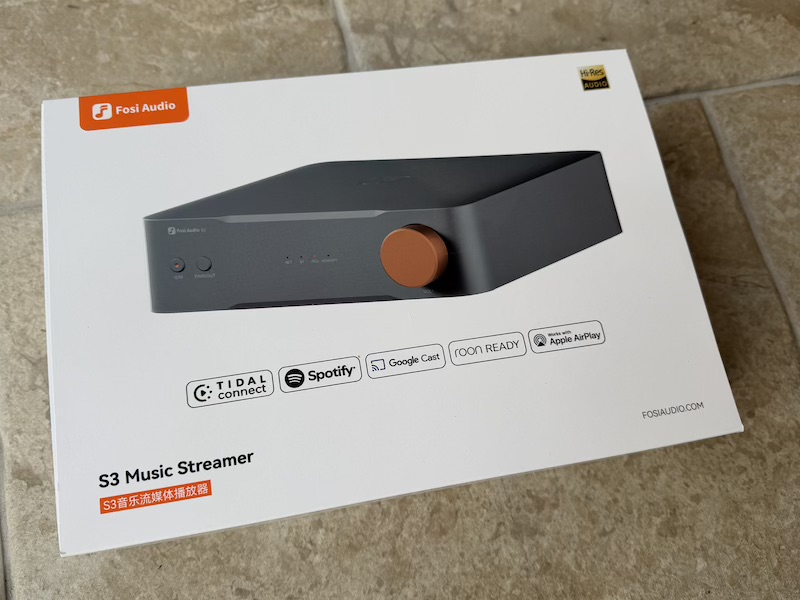
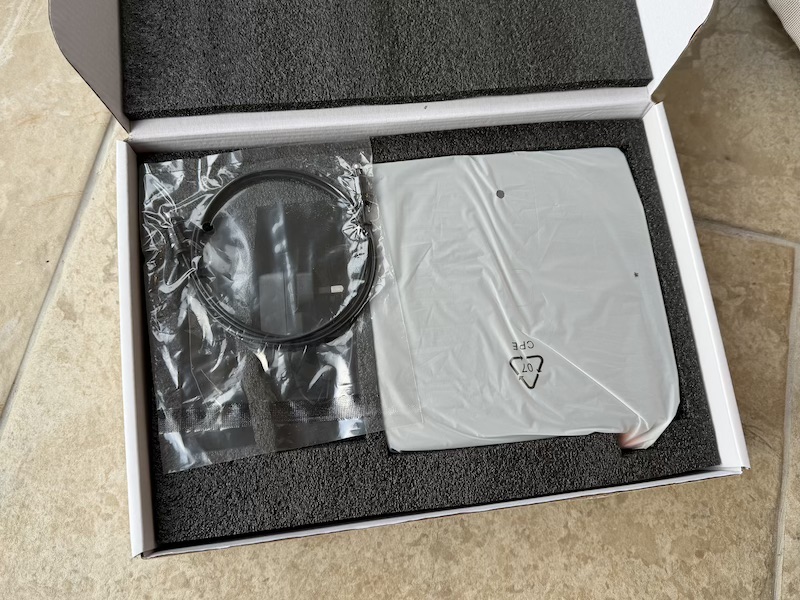
Fosi Audio have clearly invested more thought into the unboxing experience with the S3 than some of their earlier product generations, and it shows.
 |
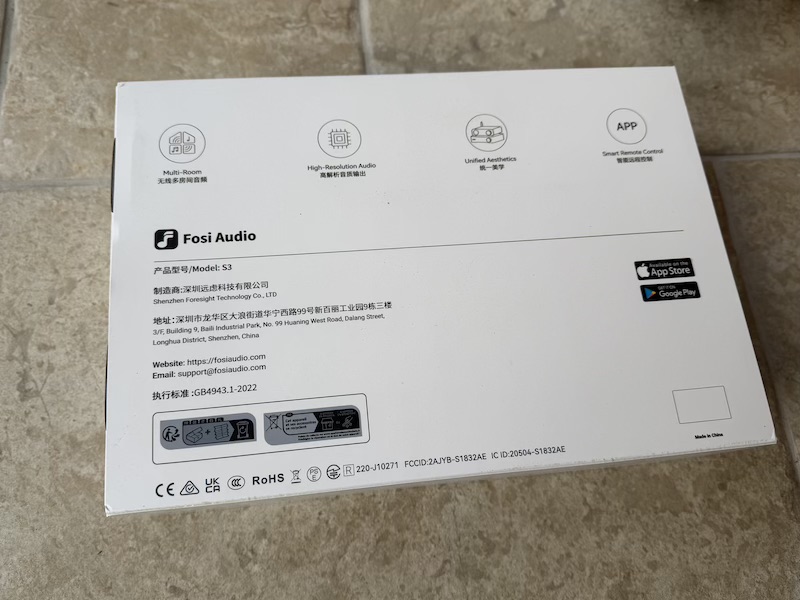 |
The outer box presents a clean, confident consumer-market aesthetic — nothing that reads as budget — and the presentation inside reinforces the impression that this is a product the company is genuinely proud of.
 |
 |
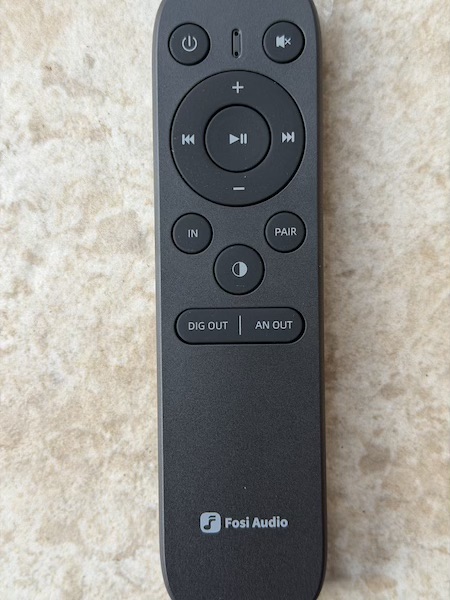
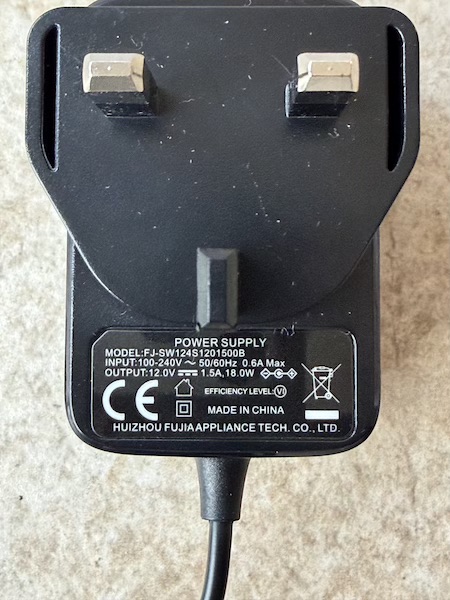
In the box you will find the S3 unit, a 12V DC power supply, a Bluetooth remote control, and the usual documentation.
Build quality on the S3 itself is excellent.
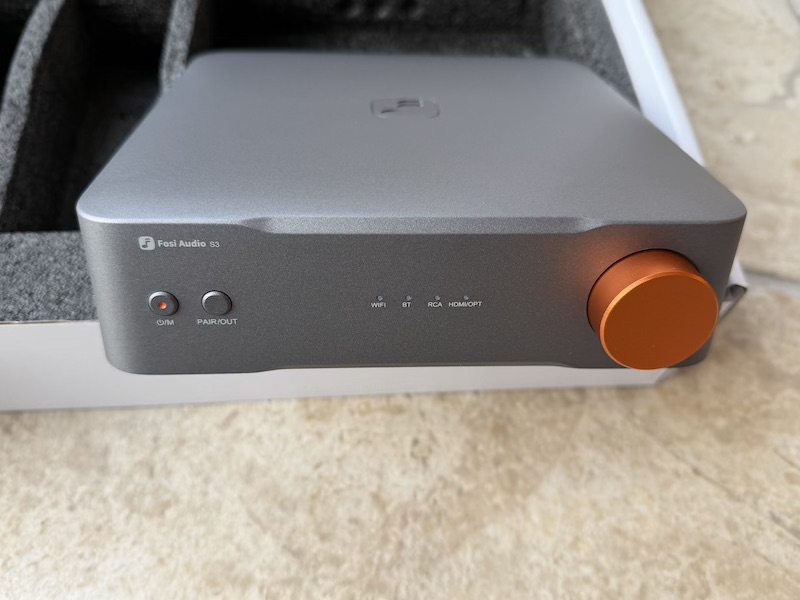
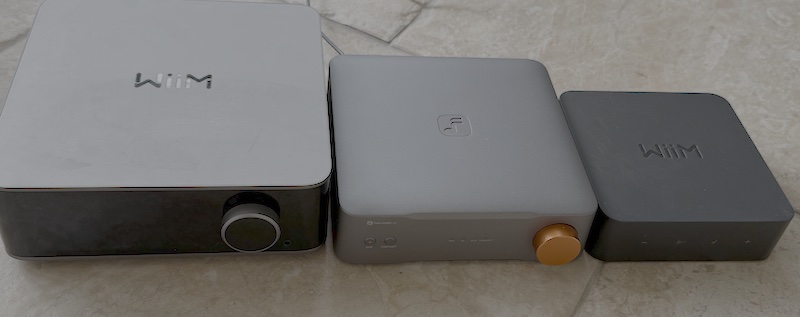
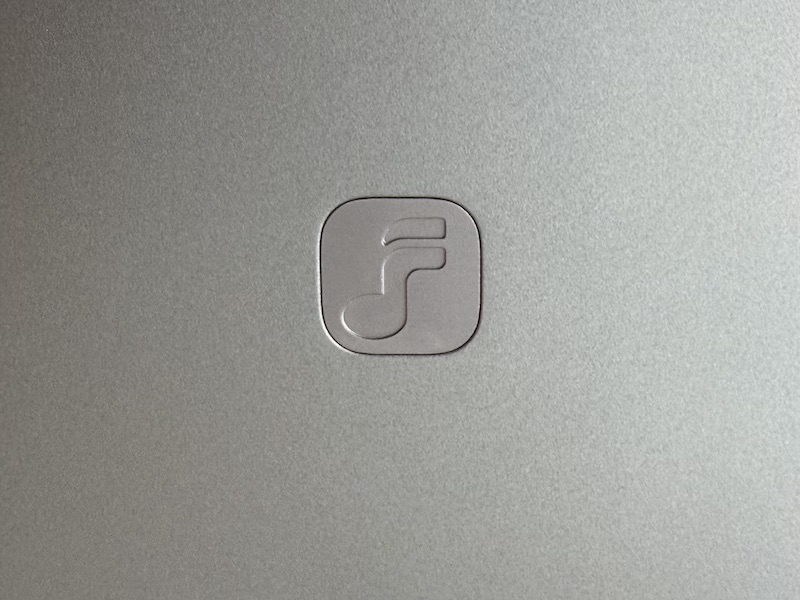
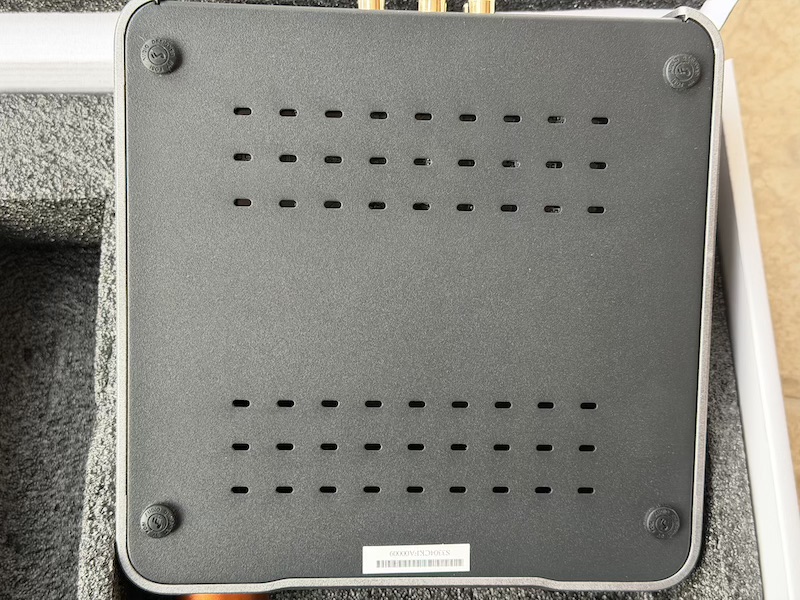
The chassis shares some design DNA with other recent Fosi Audio releases — familiar touches from the ZD3 and the XA3 show up in the lines and proportions — but the S3 has its own identity, particularly in the engraved logo on the top plate, which gives it a premium look that belies the price. The unit is compact at 17.3 × 17.3 × 4.7 cm, making it easy to integrate into existing equipment stacks or place on a shelf without dominating the space. The underside features decent rubber feet for vibration isolation and a clean finish.
 |
 |
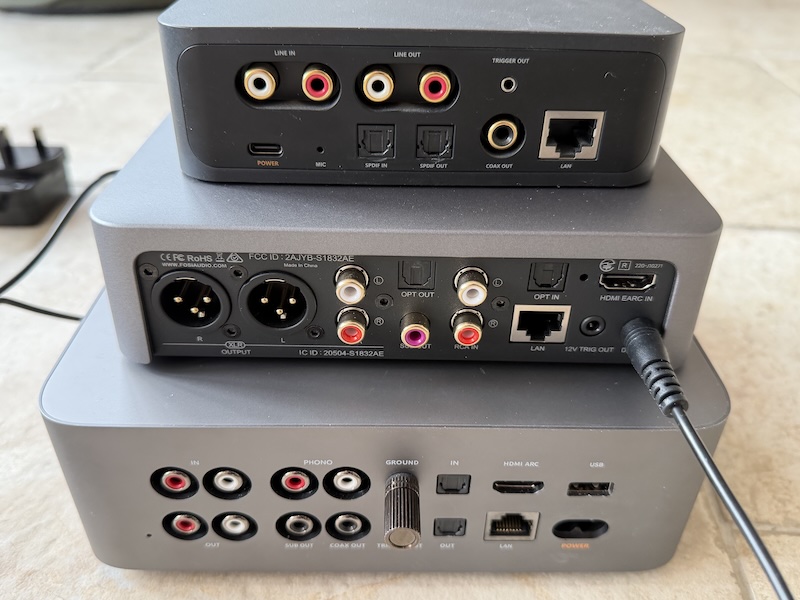
The rear panel is impressively equipped.
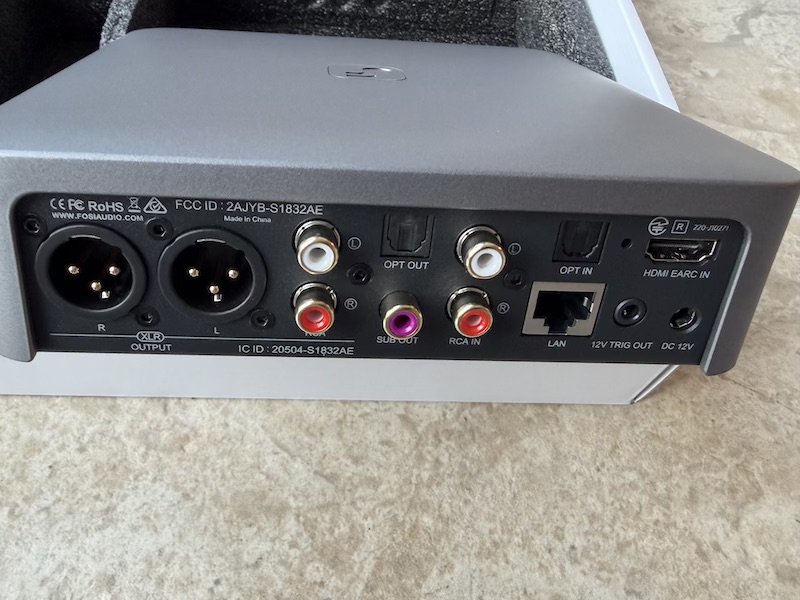
The left section hosts the LAN RJ45 port, HDMI eARC input, optical input and
output, a dedicated subwoofer RCA output, a 12V trigger output for controlling downstream components, and an RCA
analogue input.
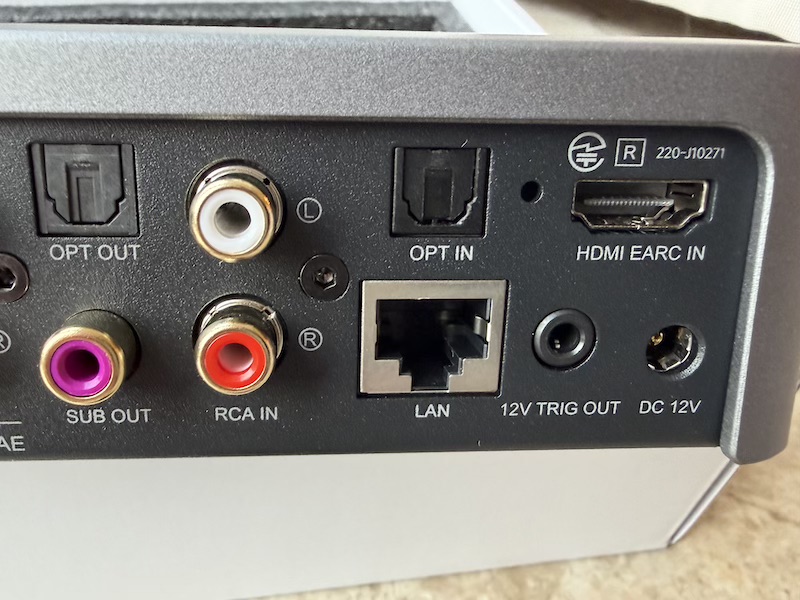
The right section carries the RCA analogue outputs and the balanced XLR outputs — both available
simultaneously.
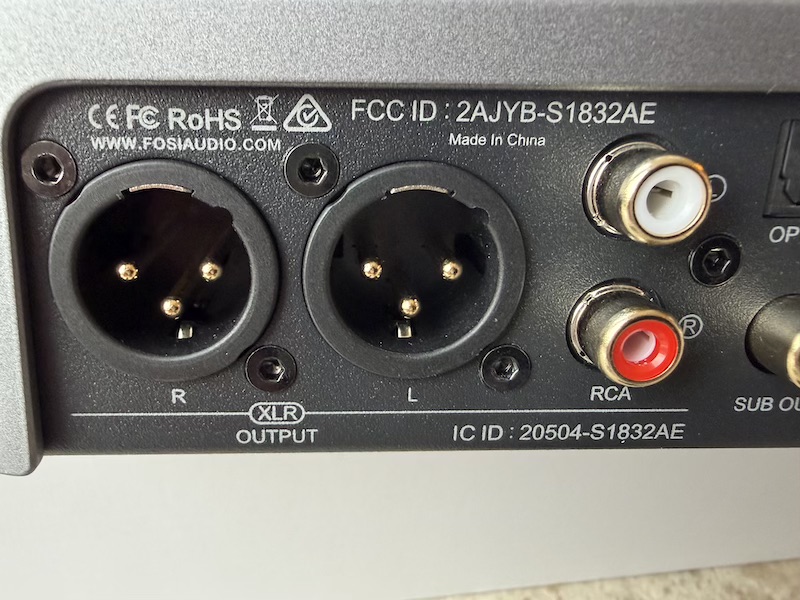
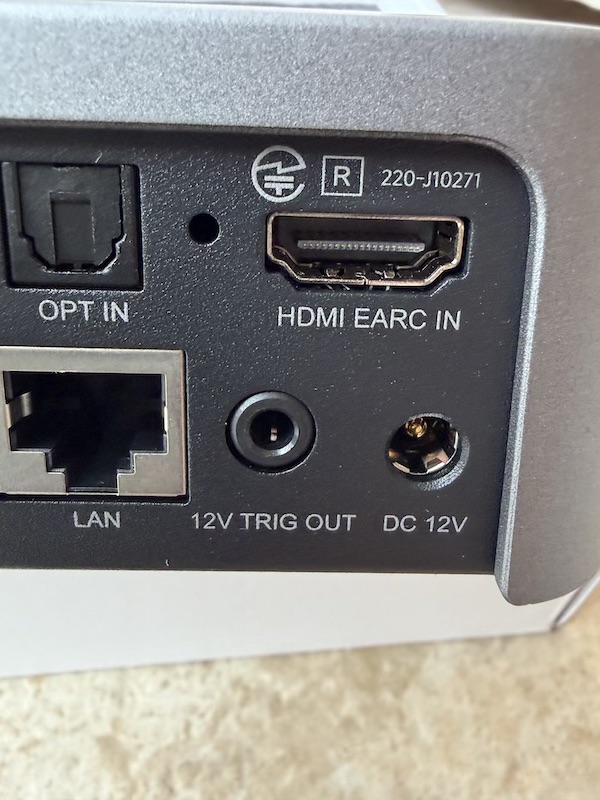
The DC power connection and a close-up of the HDMI eARC port are worth examining: the build quality at
the connector level feels solid and appropriate for the price.
The remote deserves specific mention: it is genuinely well-made for a bundled accessory, with a solid feel and a claimed Bluetooth range of over 15 metres — a practical consideration for anyone placing the S3 in a media cabinet or across a room from the listening position.
 |
 |
Features and Connectivity
Streaming Protocols and Sources
The S3 supports a comprehensive list of streaming protocols: Google Cast, AirPlay 2, DLNA/UPnP, Spotify Connect, Tidal Connect, and Roon Ready (certification pending). This breadth of input options is genuinely impressive for the price. AirPlay 2 in particular stands out as a meaningful differentiator — WiiM have quietly de-prioritised AirPlay support on parts of their lineup, which makes the S3’s continued inclusion of it a concrete advantage for anyone with Apple devices or services in their ecosystem. Google Cast covers Android and Chromecast-enabled services efficiently. Tidal Connect delivers lossless audio directly from the Tidal app with no quality compromise, and Spotify Connect handles the majority of casual listening without friction.
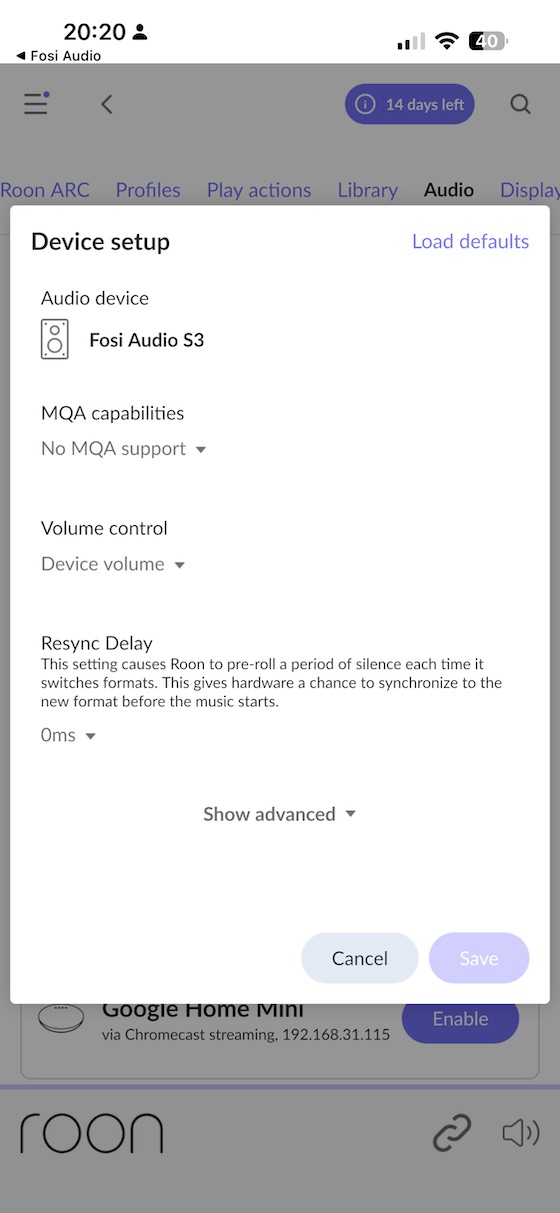
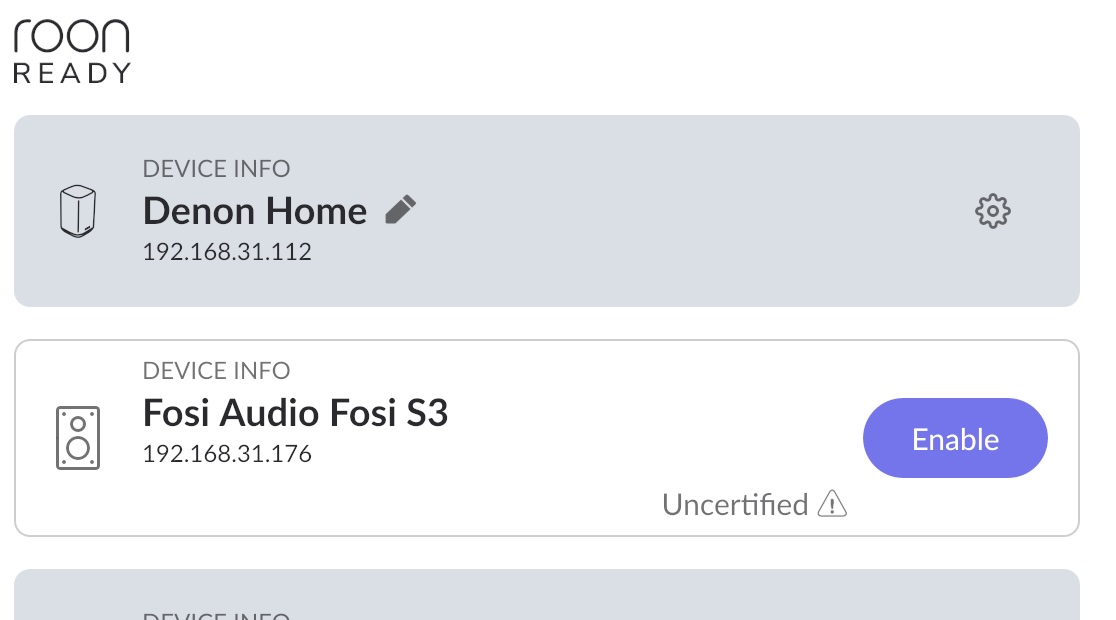
The Roon situation deserves careful reading. At the time of writing, Roon Ready certification is still in progress. You can, however, use Roon via AirPlay 2 or Google Cast right now, which gets the job done — but it is not the same as native Roon Ready integration, and committed Roon users should factor that into their decision. The images below show the S3 appearing within the Roon app, with the “not yet certified” status clearly visible.
 |
 |
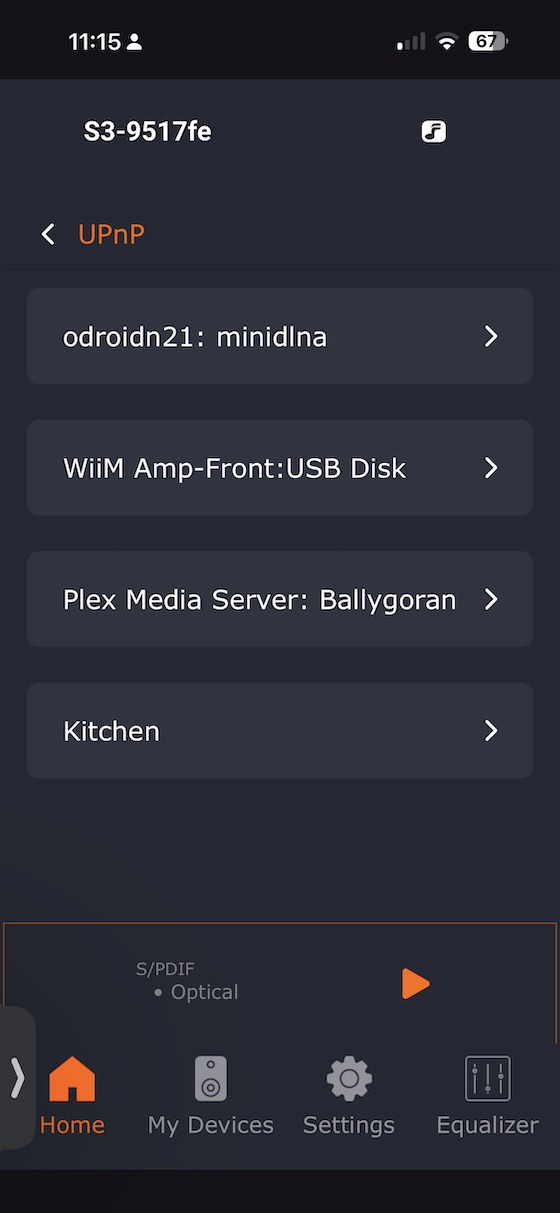
DLNA/UPnP browsing works, and I was able to navigate my local library without significant issues. That said, the browsing experience within the Fosi Audio app does not feel as fluid as the equivalent experience in the WiiM app, which appears to benefit from more aggressive content caching. With a large library, the difference in responsiveness is noticeable. It is functional rather than polished, and that distinction matters for daily use.
The App Experience
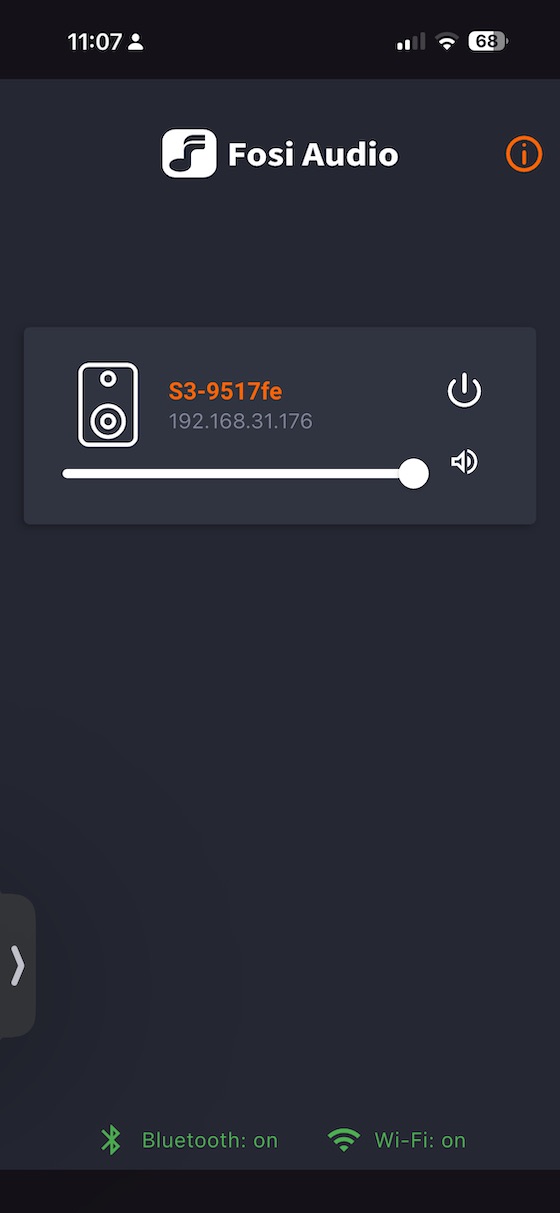
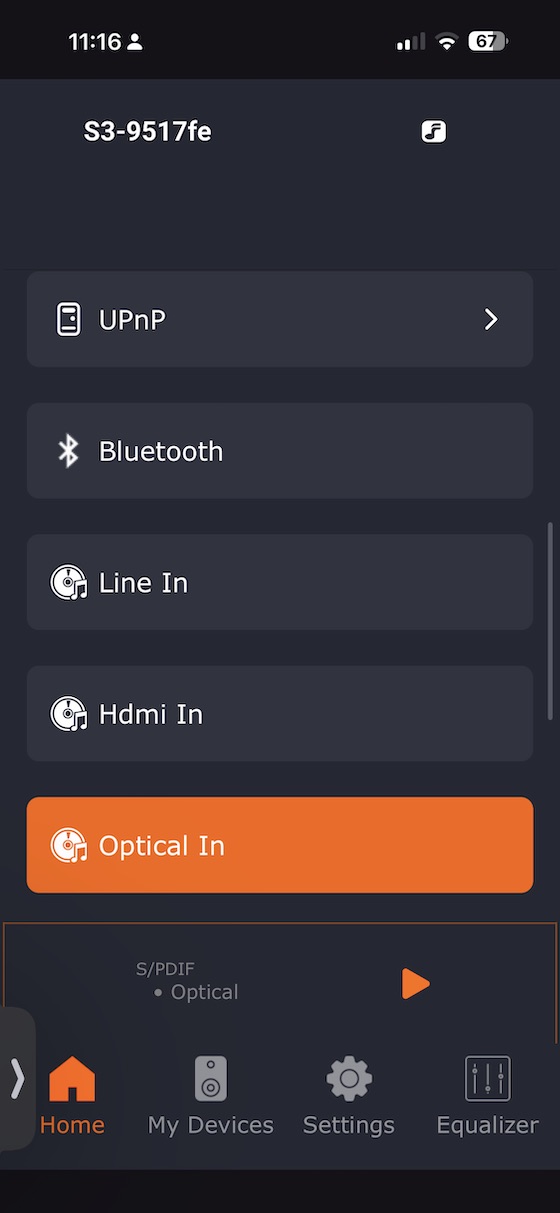
The Fosi Audio companion app is simultaneously one of the most technically interesting and most frustrating parts of the S3 experience. On the positive side, it surfaces a level of technical detail that most streamer apps would never bother to expose — a sign that the development team genuinely cares about the enthusiast audience. The home screen is clean, and the input selection interface covers Line, HDMI eARC, UPnP, and Optical inputs in a logical layout.
 |
 |
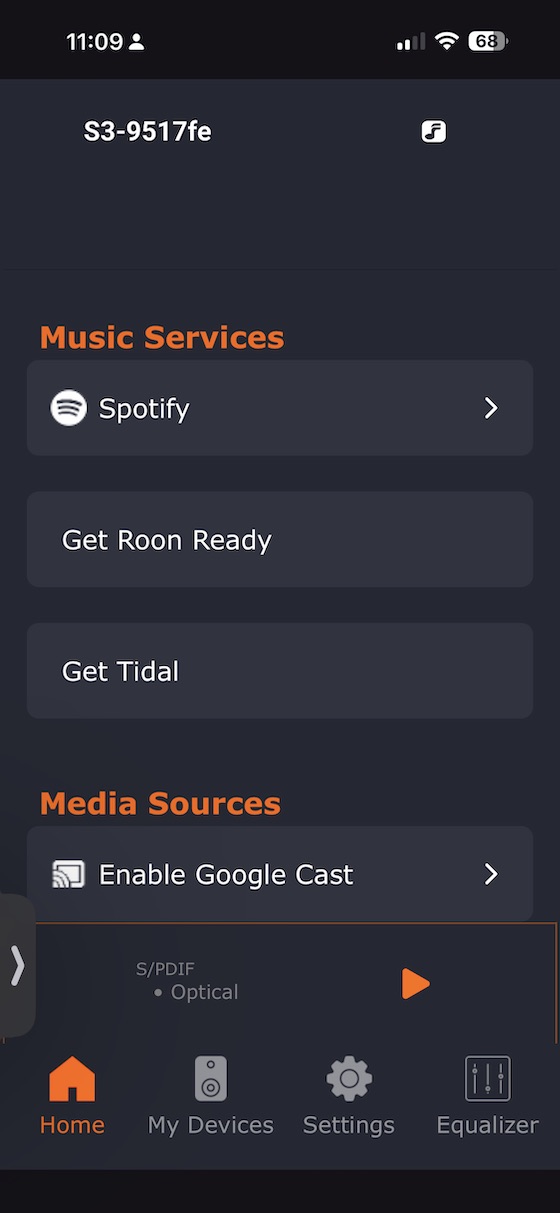
The music services and media sources section, however, is where things feel distinctly early-stage. The content organisation has the look of a product that knows where it wants to go but has not yet arrived — bare in places, occasionally counterintuitive, and missing integrations that WiiM users have come to regard as standard, including Room Correction, Plex support, and a properly implemented parametric EQ. The S3’s current EQ offering is a five-band graphic equaliser, which is serviceable for minor tonal adjustments but falls well short of the room-correction-capable PEQ that a streamer positioned in this price range should aspire to provide.
Fosi Audio have confirmed a development roadmap that includes enhanced EQ functionality moving toward full parametric and eventually room-correction capability. In the two months I spent with the S3, firmware updates arrived steadily and each brought noticeable improvements to stability and feature breadth. That trajectory is encouraging — it reflects a team actively working to close the gap. But prospective buyers are purchasing partly on the promise of future updates rather than current capability, and that is a trade-off worth naming honestly.
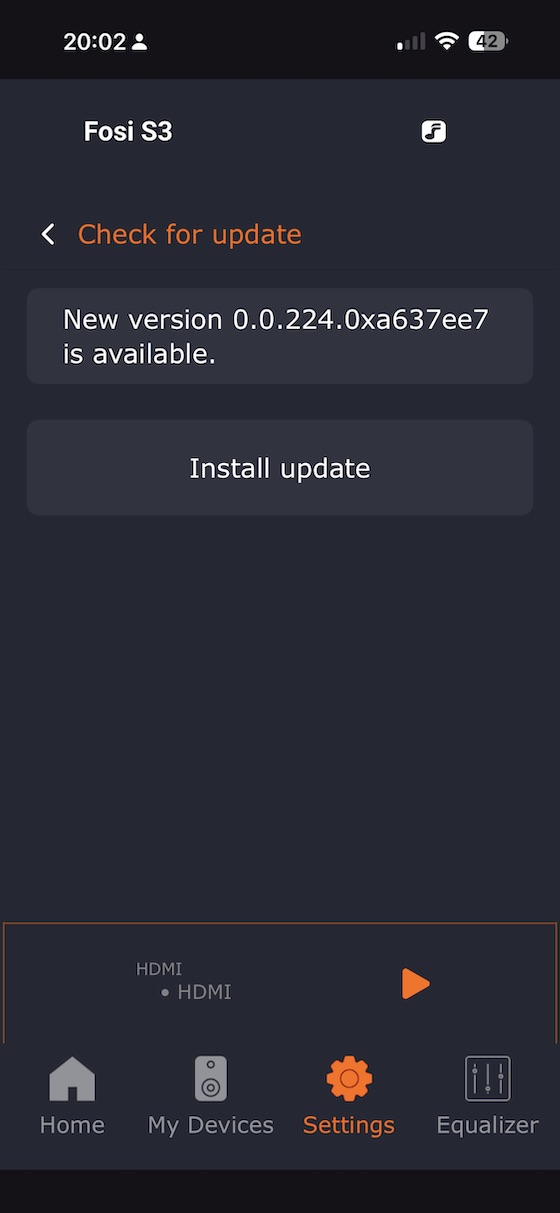
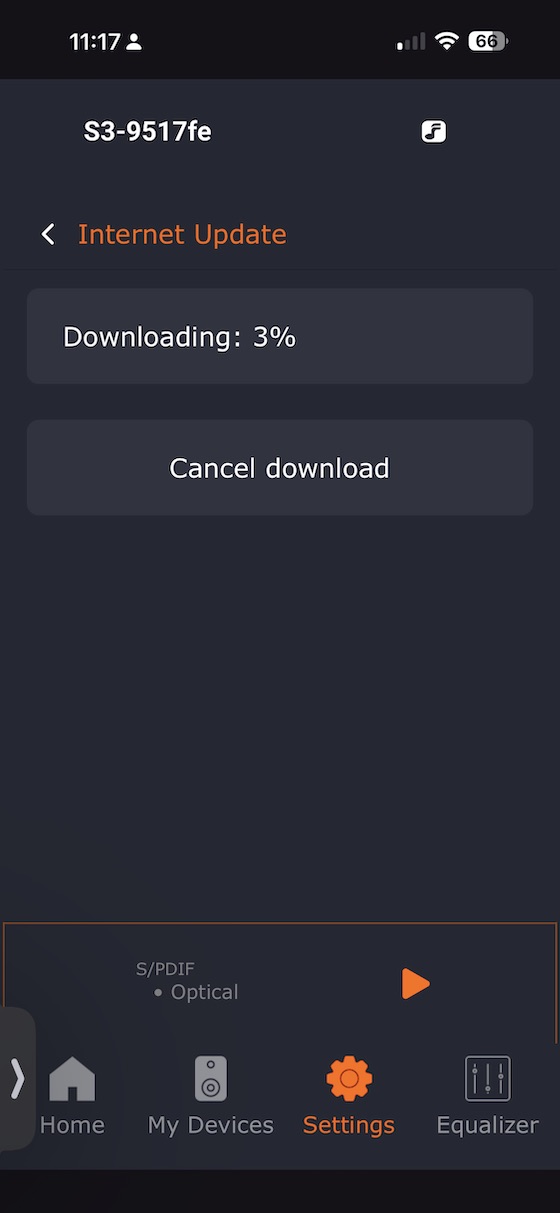
The App progress dialog:
Hardware Outputs and Signal Path
Where the S3 genuinely excels is in its hardware output quality. The internal signal chain is built around an Amlogic A113X processor, an AKM AK4493SEQ DAC chip, dual OPA1612 operational amplifiers for signal preamplification, and a Burr-Brown PCM1894 ADC for analogue input conversion. This is not budget-corner-cutting chipset selection — the AK4493SEQ is a well-regarded converter in the mid-to-high-end DAC space, and the OPA1612 is a precision op-amp with a strong reputation in high-fidelity preamplifier applications. Fosi Audio back up the chipset with a genuinely considered component selection: Japan ELNA capacitors in the analogue signal path, an ultra-low-noise LDO power supply, and a fully isolated analog/digital architecture that keeps digital noise out of the output stage. The measured results bear that out — THD+N of ≤0.00018% and SNR of ≥120dB are reference-grade figures that would be notable in a dedicated DAC at twice the price, let alone a streaming device. The result is balanced XLR and RCA outputs that, in direct comparison with the WiiM Pro Plus and even the WiiM Ultra, deliver noticeably more weight, resolution, and low-noise performance — particularly through the XLR path, which is where the S3’s differential amplification circuit has room to breathe.
The 12V trigger output is a thoughtful addition for system integration, allowing downstream power amplifiers to power on and off automatically with the S3. The dedicated subwoofer output similarly broadens the S3’s integration possibilities beyond what most competing streamers at this price will offer. Fosi Audio specifically recommend pairing the S3 with their ZD3 or ZA3 power amplifier for a fully balanced system, and that path has obvious appeal for owners already invested in the Fosi Audio ecosystem. On the reliability side, the S3 includes overcurrent and overvoltage protection circuitry, and the chassis routes heat dissipation through the bottom panel — a sensible thermal design choice for a unit intended to sit inside an equipment rack or cabinet.
Sound Impressions
All listening was conducted with the S3 feeding a pair of active studio monitors via the balanced XLR outputs, supplemented by sessions through the RCA outputs into a separate integrated amplifier and passive bookshelf speakers. Volume control was maintained at 100% on the S3 for critical listening with volume management handled downstream, to keep the digital attenuation out of the signal path.
The overall character of the S3 is a neutral, transparent presentation — a sound signature that steps aside to let the recording speak rather than imposing a house character. This is precisely what you want from a streamer and DAC at this level.
Bass
The low end through the S3 is tight, well-controlled, and articulate. Sub-bass extension is solid — there is genuine weight and rumble present without the mid-bass bloom that can make cheaper DAC stages sound loose or unfocused. Kick drum textures are rendered with good definition, and the decay of bass notes feels natural rather than artificially curtailed or exaggerated. Donald Fagen’s “The Nightfly” is an excellent reference here: the album’s famously pristine low-end recording quickly reveals whether a DAC has genuine extension and textural resolution, and through the S3 the bass guitar lines track cleanly and with satisfying authority. Steely Dan’s “Aja” similarly rewards careful listening, with the S3 resolving the layered percussion and bass interplay with composure rather than compression.
Midrange
The midrange is the S3’s strongest suit. Tonal density is excellent — voices and instruments carry genuine body without sounding warm or romantically coloured, sitting instead on a clean, transparent foundation. Guitar timbre feels natural, piano has appropriate weight, and the upper midrange avoids the kind of aggressive presence emphasis that makes lesser DAC stages fatiguing over extended sessions. The harmonic richness of acoustic instruments comes through convincingly. Dire Straits’ “Brothers in Arms” rewards the S3’s midrange transparency particularly well: Mark Knopfler’s guitar work and the vocal intimacy of the recording are presented with the kind of instrumental separation and note weight that draws you into the music. Joni Mitchell’s “A Case of You” is equally telling — the S3 preserves the subtle micro-detail in Mitchell’s vocal delivery without adding grain or upper-mid harshness.
Treble
Treble extension is confident and well-behaved. There is genuine air and shimmer at the top end without any tendency toward sibilance or glassiness — a sign of a well-implemented output stage operating within its design parameters. Cymbal shimmer and hi-hat transients are rendered cleanly, with a natural leading edge that avoids the brittle etch of cheaper DAC implementations. Patricia Barber’s “Use Me” is a reliable test for snare snap and cymbal decay, and the S3 handles both with composure and without exaggeration. Nils Lofgren’s “Keith Don’t Go” — a live recording with exceptional acoustic presence — showcases the upper-harmonic guitar shimmer that a genuinely resolving treble region renders beautifully, and the S3 does not disappoint.
Soundstage and Imaging
Soundstage through the balanced outputs is genuinely impressive for a device in this category. The presentation is wide without feeling artificially spread, with a precise centre focus and convincing depth layering. Instrument placement is stable and spatially coherent, with channel matching tight enough to create a genuine sense of three-dimensionality on well-recorded material. Miles Davis’ “Kind of Blue” — a recording where intimate studio space and precise microphone placement reward a DAC’s ability to resolve micro-separation and ambient detail — sounds involving and composed through the S3, with good background blackness between instruments. Supertramp’s “Crime of the Century” makes excellent use of the S3’s width and reverb-tail resolution, placing instruments convincingly across the stereo field in a way that confirms the balanced output stage is doing its job.
Comparisons with WiiM Streamers
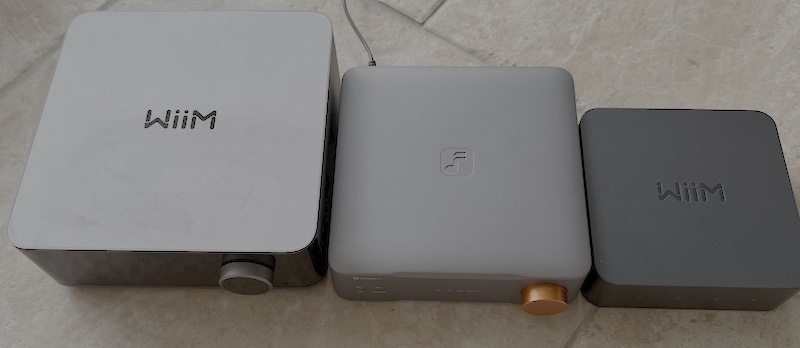
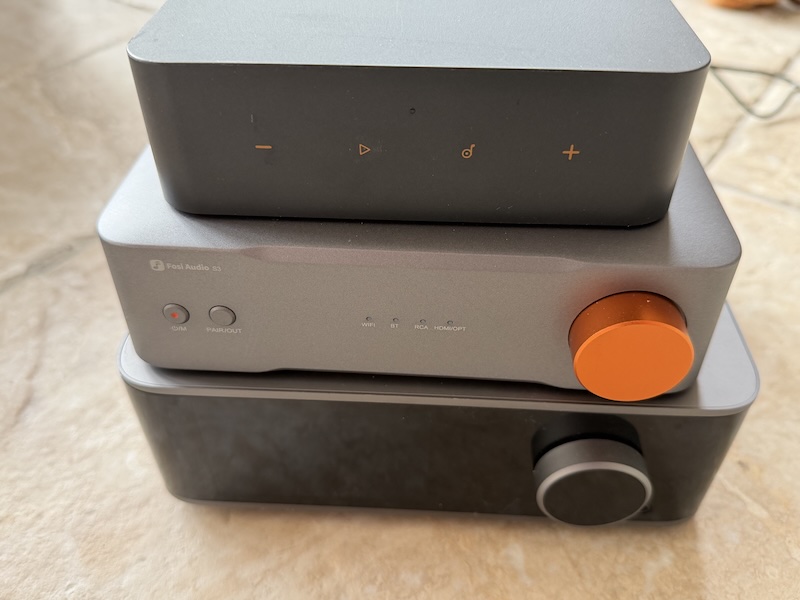
The natural reference points for the S3 are the WiiM Pro (approximately $150) and the WiiM Ultra (approximately $329), with the S3 positioned squarely between them in price and aimed at the same core audience.
 |
 |
Fosi Audio S3 vs WiiM Pro
The WiiM Pro remains an exceptional value proposition at its price, and its app and room correction ecosystem are considerably more mature than anything the S3 currently offers. However, the S3 simply outclasses the WiiM Pro in hardware output quality — the balanced XLR outputs alone represent a significant functional upgrade, and the AK4493SEQ DAC implementation is audibly more resolving in direct A/B comparison. AirPlay 2 support is another concrete advantage, as WiiM have de-prioritised AirPlay at the Pro tier. For users who need the best possible hardware outputs and can tolerate a less polished app experience today, the S3 is a stronger long-term platform. For users who want the most seamless room-correction-enabled experience available right now, the WiiM Pro’s ecosystem matures faster.
Fosi Audio S3 vs WiiM Ultra
This is the more interesting comparison because both products occupy essentially the same price bracket. The WiiM Ultra brings WiiM’s most mature app experience to bear — parametric EQ, room correction, and a bi-weekly firmware update cadence that delivers meaningful features consistently — and it supports a broader list of streaming integrations and third-party service connections. In terms of raw hardware output quality, however, the S3 holds its own, and the balanced XLR implementation is competitive with the WiiM Ultra’s output stage in outright resolution. The deciding factor for most buyers will be the app: if room correction and PEQ are non-negotiable today, the WiiM Ultra wins. If you are willing to back Fosi Audio’s development roadmap — and their hardware track record makes that a credible bet — the S3 offers genuinely competitive hardware with meaningful room to grow.
Specifications
| Specification | Detail |
|---|---|
| Chipset | Amlogic A113X + AKM AK4493SEQ + OPA1612 × 2 |
| ADC | Burr-Brown PCM1894 |
| THD+N | ≤0.00018% |
| SNR | ≥120dB |
| Network | 802.11 a/b/g/n/ac/ax dual-band Wi-Fi 6 (2.4 GHz & 5 GHz), 10/100M Ethernet |
| Bluetooth | 5.3, A2DP, AVRCP, BTLE; SBC and AAC codecs |
| Remote Control | Bluetooth, 15 m+ range |
| Power | DC 12V 1.5A |
| OPT Input | PCM 24bit / 192kHz |
| BT Input | PCM 24bit / 48kHz |
| Google Cast | PCM 24bit / 96kHz |
| AirPlay 2 | PCM 16bit / 48kHz |
| HDMI eARC | PCM 24bit / 192kHz |
| Roon Ready | PCM 32bit / 384kHz |
| Wi-Fi | PCM 24bit / 192kHz |
| Streaming Protocols | Google Cast, AirPlay 2, DLNA/UPnP, Roon Ready*, Spotify Connect, Tidal Connect |
| Outputs | Balanced XLR, RCA, Optical (TosLink), Sub RCA, 12V Trigger |
| Inputs | Line (RCA), HDMI eARC, Optical (TosLink), Bluetooth, Wi-Fi |
| EQ | 5-band (PEQ and room correction on roadmap) |
| App | Fosi Audio App (iOS & Android) |
| Dimensions | 17.3 × 17.3 × 4.7 cm (6.81 × 6.81 × 1.85 in) |
*Roon Ready certification in progress; currently usable via AirPlay 2 or Google Cast.
Rating Explanation
The Fosi Audio S3 earns its four-star pragmatic rating by delivering hardware that genuinely over-performs at its price point. The balanced XLR outputs are not a checkbox feature — they are implemented thoughtfully with a chipset combination (AK4493SEQ, dual OPA1612) that produces outputs audibly superior to most competitors in this price range. The breadth of streaming protocol support, including AirPlay 2 in a market where that feature is quietly disappearing, is a meaningful differentiator. The build quality, connectivity options, dedicated subwoofer output, 12V trigger, and HDMI eARC input together paint the picture of a product designed by people who have thought seriously about real-world system integration rather than just feature-list marketing.
Where the S3 falls short of five stars is squarely in the mobile application. Both the iOS and Android apps currently lack the room correction capability, parametric EQ, and streaming service breadth that WiiM users regard as baseline expectations at this price level. A streamer’s app is not a secondary concern — it is the primary interface through which users interact with the device every single day, and in that dimension the S3 currently trails the competition. Fosi Audio’s confirmed roadmap for PEQ and room correction is credible given their firmware track record on other products, but a roadmap is not delivered capability, and buyers should weigh that distinction honestly.
For the right buyer — someone building a balanced system on a budget, primarily streaming via Tidal Connect or Google Cast, or planning to use the S3 as a Roon endpoint once certification arrives — this is a remarkable value. For anyone who depends on room correction or advanced EQ as part of their daily listening setup, patience is the right strategy: wait for the roadmap to deliver, then revisit.
Conclusion
The Fosi Audio S3 is exactly the kind of product this brand does so well — a first attempt at something genuinely new that is impressive in its ambition and honest in where it still has work to do. No other streamer at $319 gives you balanced XLR outputs, a quality AKM DAC implementation, Wi-Fi 6, AirPlay 2, Tidal Connect, a subwoofer output, a 12V trigger, and HDMI eARC in a compact, well-built chassis. That combination is hard to argue with, and the sound quality through the XLR outputs is competitive with products at significantly higher price points.
The app will improve — Fosi Audio’s firmware history on their amplifier and DAC products makes that a reasonable expectation — and when room correction and proper PEQ arrive, the S3’s value proposition will be even harder to ignore. For now, it sits at a fascinating inflection point: better hardware than almost anything at its price, software that is catching up with visible momentum, and a trajectory that makes it very much worth watching. If you need the best streamer app experience available today, WiiM’s Ultra remains the benchmark. But if you are building a balanced system on a budget and want hardware that will not be the limiting factor for years to come, the Fosi Audio S3 is a remarkably compelling place to start.