Tanchjim Rita
Lovely Rita, Perfect Personalisation
Tanchjim has long been one of my favourite brands in the budget-to-mid-fi space, and regular readers of this site will know exactly why. The Shenzhen-based company has built a consistent reputation for neutral-leaning tuning, build quality that always punches convincingly above its price point, and — most important to me — a genuine commitment to parametric EQ within their companion app.
I reviewed the One DSP and the Fission here on Pragmatic Audio, and both impressed me precisely because Tanchjim understood that giving enthusiasts meaningful control over the tuning is as important as the tuning itself. When the Rita appeared on my radar — Tanchjim’s first foray into ANC wireless over-ear headphones — the very first thing I checked was whether it would carry their PEQ tradition into the Bluetooth space.
Is it any good? Well-read on to find out.

I would like to thank Tanchjim for providing the Rita for the purposes of this review.
If you are interested in finding more information about this product, you can find it at the official product page.
The Tanchjim Rita typically retails for $89.99 but can often be found with a discount.
I have been listening to the Rita for about a month — across commutes, work-from-home sessions, and extended evening listening — as well as spending significant time investigating how the Rita communicates over Bluetooth, with the goal of integrating it into my DevicePEQ ecosystem.
As a spoiler, this is a well-tuned ANC headphone at $89.99 with a 12-band parametric EQ that can take it from very good to excellent. Though, one thing is worth flagging early: the earcup dimensions sit on the compact side, and whether that suits your ears is worth investigating before purchase.
But first, let’s take a look at what’s in the box.
Unboxing
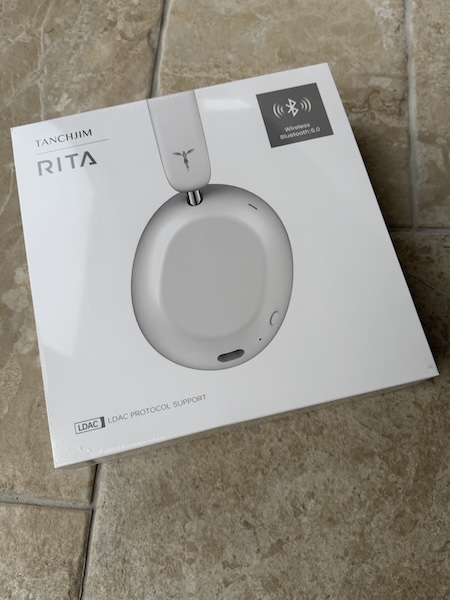
The Rita arrives in a tidy, compact box that feels genuinely premium for the price:
 |
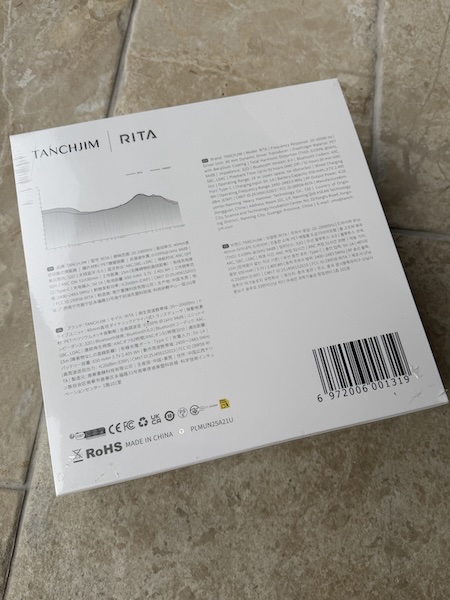 |
The back of the box lays out the key specifications at a glance, which is a practical touch.
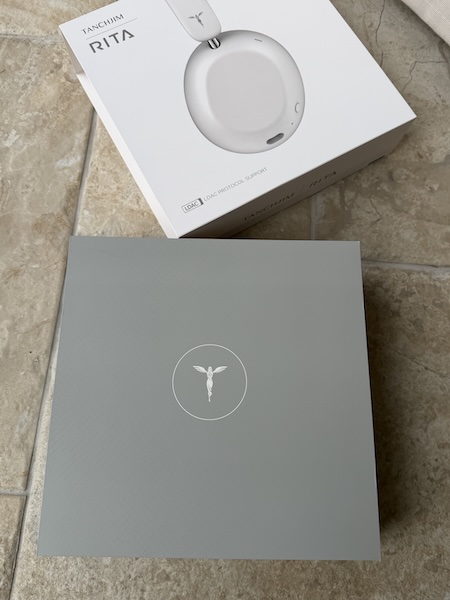
Removing the sleeve reveals a well-constructed inner package.
 |
 |
 |
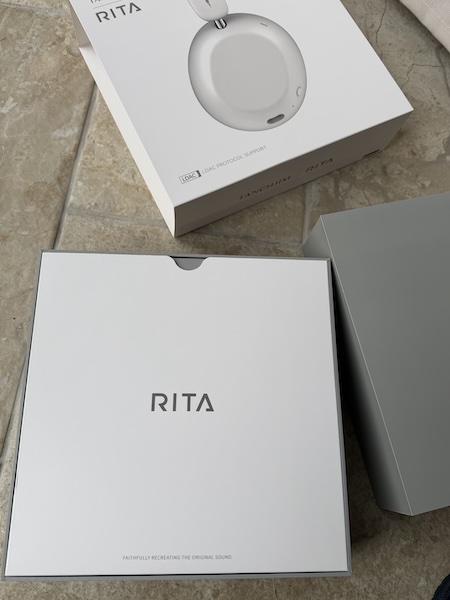 |
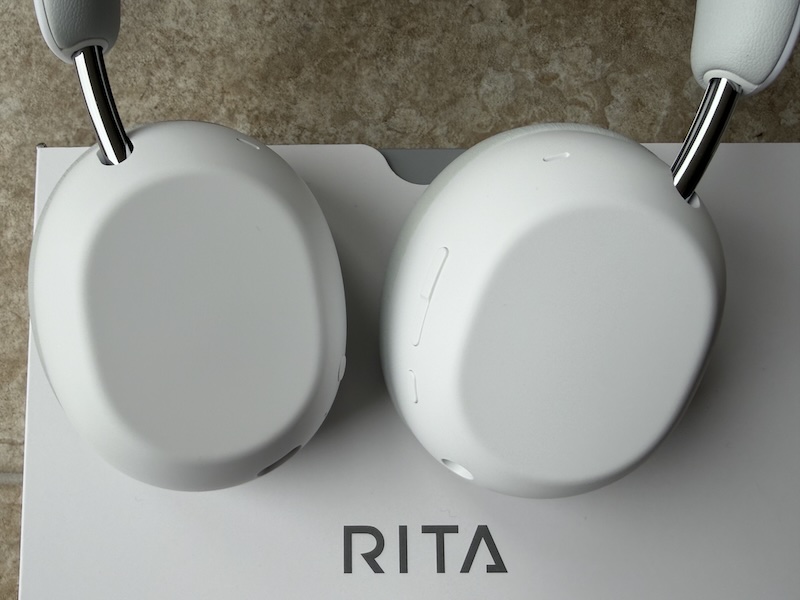
The headphone is presented in a protective tray, and lifting it out for the first time leaves a solid first impression:

It feels well-assembled and more substantial than the predominantly plastic construction might suggest, the metal extension especially gives the appearance of solid construction and a premium look.
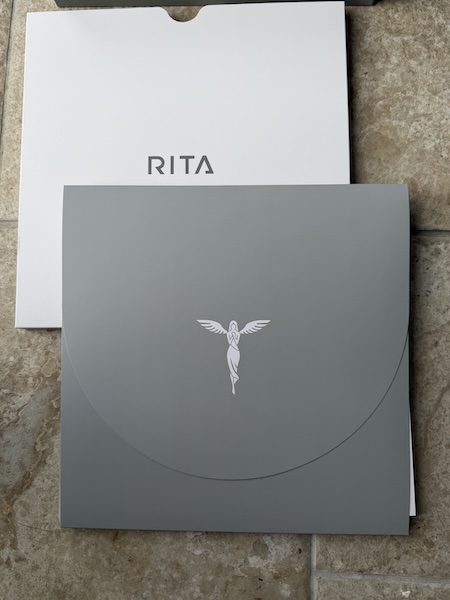
A sleeve with the manual is underneath:
 |
 |
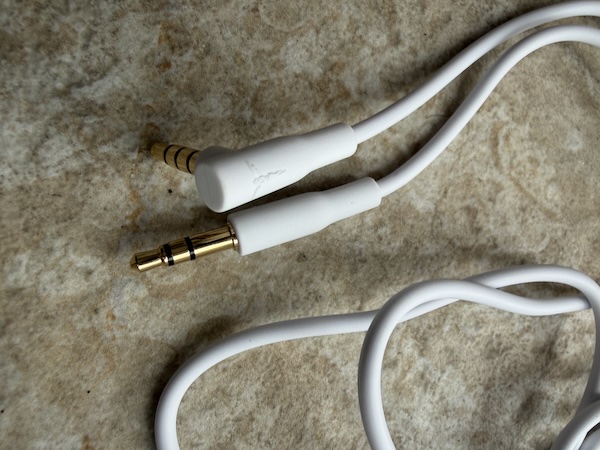
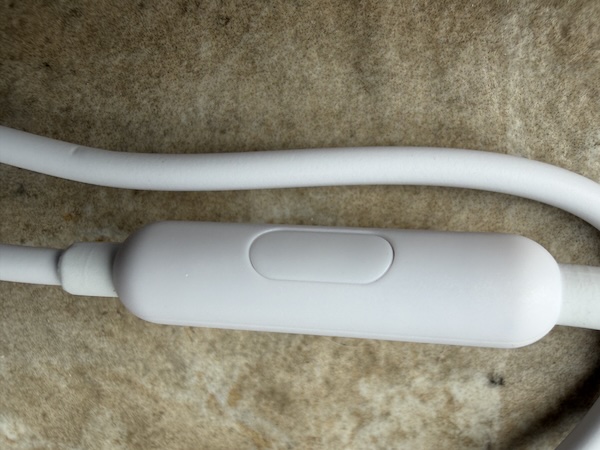
In the box: an angled 3.5mm cable with inline microphone and volume control, a USB-C charging cable, a soft carry pouch, and a quick-start guide.
 |
 |
 |
The overall unboxing experience is nicely premium for the price, and the layered presentation adds a sense of occasion that budget headphones rarely bother with.
Build Quality and Comfort
The Rita’s construction is predominantly plastic with some metal, which is the correct call for a wireless headphone where weight matters — and Tanchjim have executed it well.
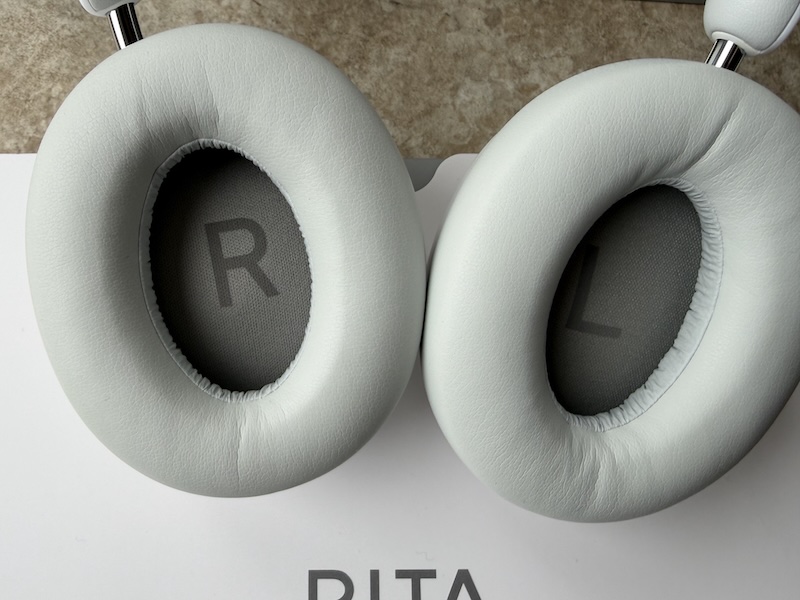
The earcups feel solid without being heavy, the headband padding is comfortable from the first wear, and the overall aesthetic is minimalist without being spartan.
One design detail I found particularly thoughtful is a subtle inward angle built into the driver positioning within each earcup, which gives more space between the back of your ear and the driver than a flat driver design:

The earcup cushioning is also worth calling out separately: the protein leather pads have enough depth that the ear sits comfortably within the cup rather than pressing against the driver.
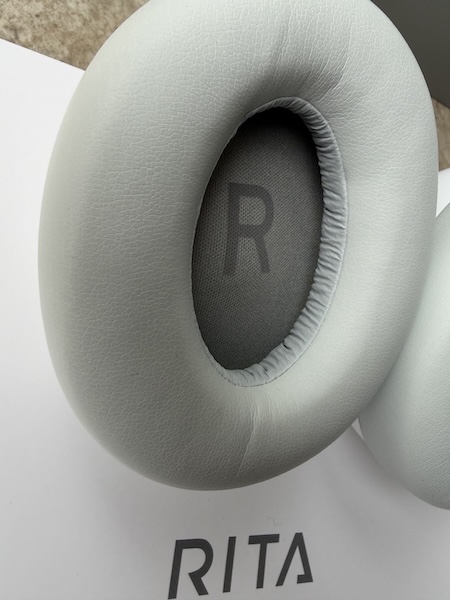
Earcup size comparisons
But the one consideration on fit is the earcup size. The Rita’s cups run on the compact side — meaningfully smaller than most of the competition in this price range.
My wife and daughter, who both tried the Rita alongside both the Moondrop Edge and FiiO EH13, preferred the Rita’s lighter, more compact fit and felt the seal was comfortable. For my own ears, which are on the larger end of the spectrum, I noticed some pressure after extended sessions but mostly they were comfortable.
I feel it is worth a physical fit check before committing if you have larger ears. The images below give a sense of scale across the competition:
Versus uGreen Max5c:
 |
 |
 |
Versus Edifier W830NB:
 |
 |
Versus Sony XM5 and the Moondrop Edge:
 |
 |
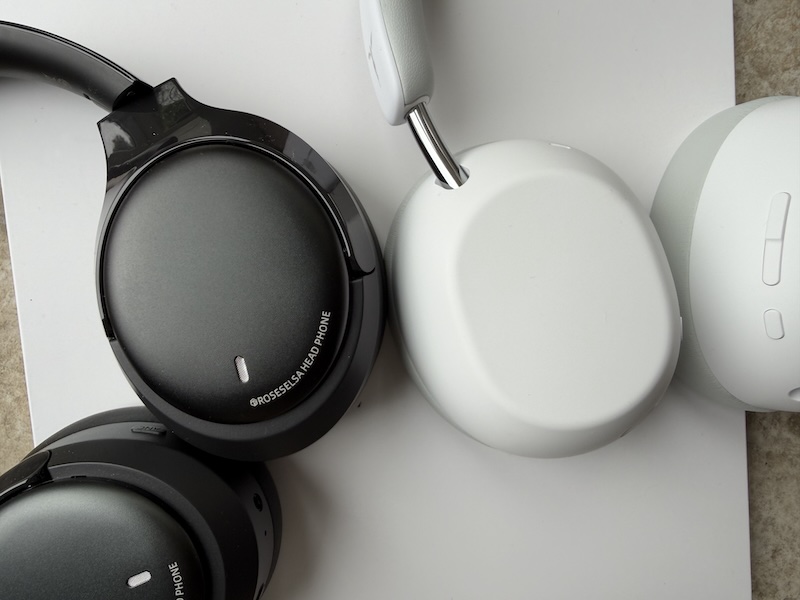
and finally with the Roseselsa Cambrian:
 |
 |
The Rita is clearly the most compact of the group — the Cambrian, Edge, EH13, Edifier W830NB, and Sony XM5 all offer larger ear openings. For listeners with smaller or average-sized ears this is not a concern; for those with larger ears it is worth noting before purchase.
Button Layout
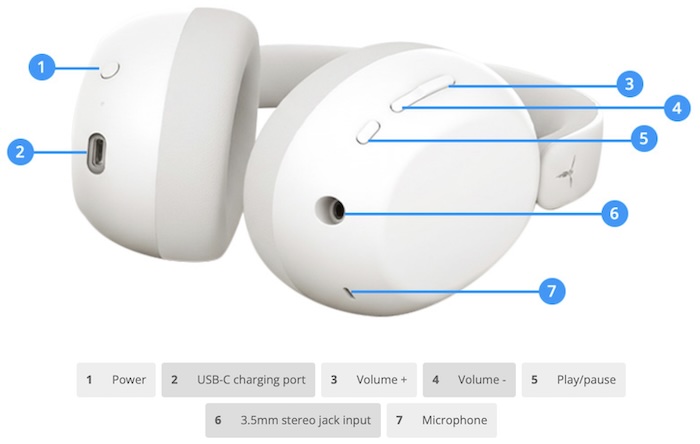
The button layout is one of the Rita’s more underappreciated strengths. I have a strong aversion to touch-sensitive earcup controls — the combination of accidental triggers and lack of tactile feedback makes them genuinely frustrating in daily use.

The Rita opts for physical buttons distributed across both earcups, and this split has a practical benefit beyond my preference: separating the controls left and right makes it intuitive by feel alone to know which button does what without looking.
The included 3.5mm cable is a thoughtful inclusion — the connectors feel robust and well-terminated, and the inline mic and volume control are sensibly positioned on the cable.

The USB-C charging cable is standard and charges the Rita quickly. Having the wired option means the Rita can still function as a passive headphone when the battery runs out, which is a useful fallback.
Features and Performance
The Tanchjim App and 12-Band PEQ
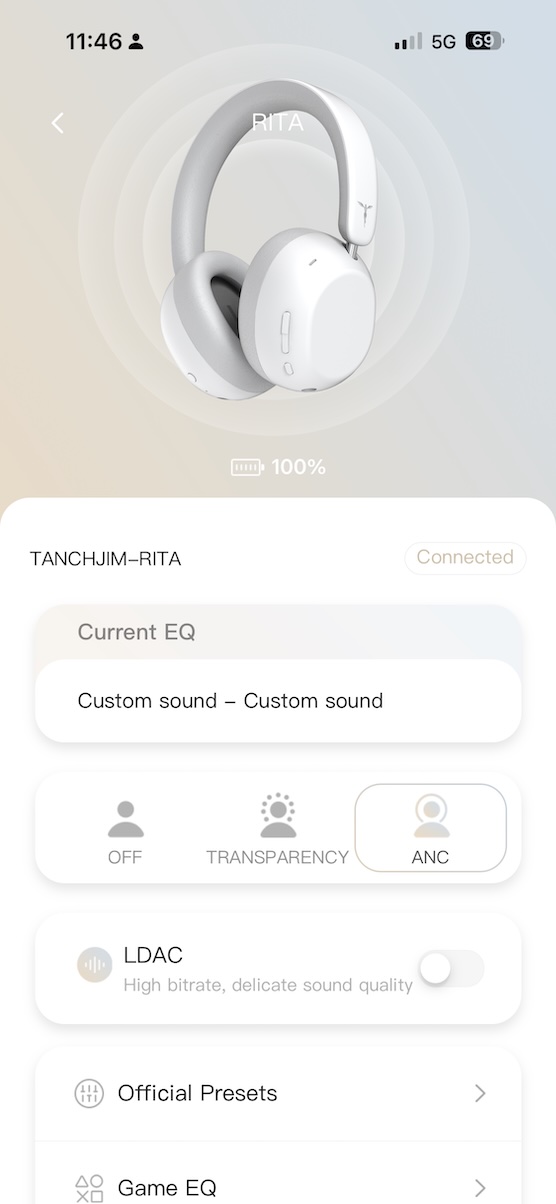
The companion Tanchjim app is the Rita’s most important feature after the headphone itself. While it is not as visually polished as Sony’s Sound Connect or as feature-rich as some flagship companion apps, it covers everything an enthusiast needs: ANC mode switching, button control remapping, second device pairing, LDAC enablement, and firmware updates. Its best feature by some distance is the 12-band parametric EQ editor.
 |
 |
 |
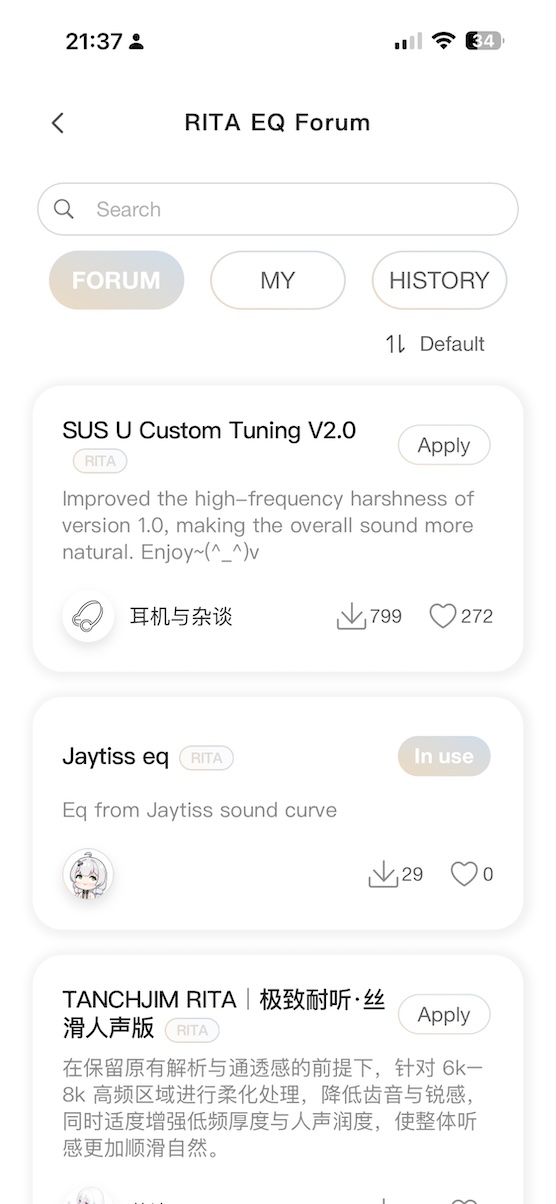
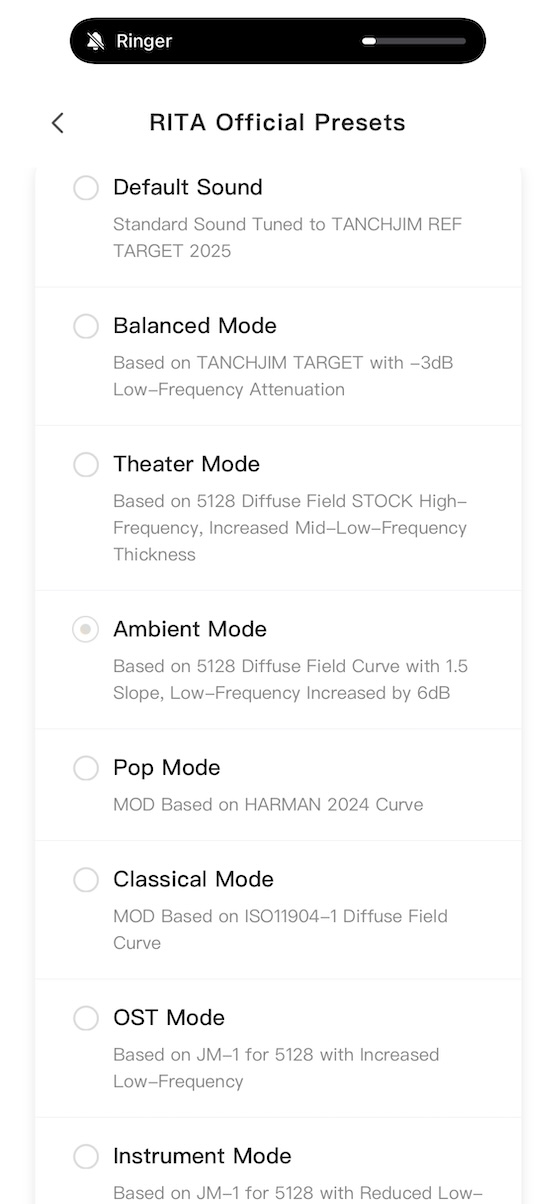
The app offers official Tanchjim presets, community-shared presets, and gaming preset sections — a structure familiar to anyone who has used the Tanchjim app with their IEM line.
 |
 |
 |
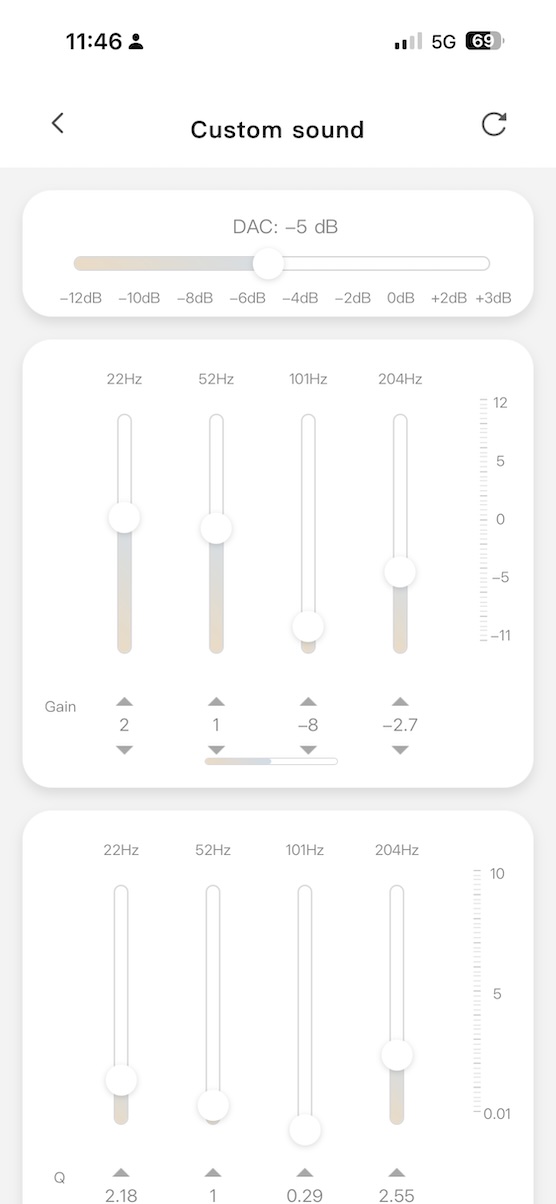 |
The PEQ editing interface is functional rather than flashy: you adjust filter-by-filter with numeric input rather than the drag-and-drop visual editors that can be difficult to hit exact values with. The Moondrop app offers a more visual editing experience, but I found the Tanchjim implementation very polished and reliable overall.
Bluetooth, ANC, and Transparency
The Rita supports SBC, AAC, and LDAC — covering the main use cases well, though there is no aptX. For Apple device users this is a non-issue: Apple’s AAC implementation is excellent and the Rita sounds genuinely good from an iPhone or MacBook Pro via AAC. LDAC via an Android device or a capable DAP (I also used a FiiO M33 R2R during this review) offers a marginal but perceptible improvement in resolution — though the AAC performance here is good enough that the gap is smaller than on some other headphones.
ANC performance is one of the Rita’s highlights. The sub-bass and bass-frequency attenuation is excellent — office HVAC hum, travel drone, and road noise are handled convincingly — and among sub-$100 ANC headphones I have tested, the Rita sits at or near the top of the class for low-frequency isolation.
The Environmental Noise Cancellation on the call microphone side performs adequately in moderate noise conditions, keeping background bleed manageable. Microphone quality for calls is the Rita’s weakest point overall — call recipients reported my voice sounding quiet with some background noise present, though they were comparing against a Sony WH-1000XM5, which is a very high bar. For everyday voice calls the Rita is usable; just don’t expect flagship call clarity.
Battery life is rated at 51 hours with ANC on and 90 hours with ANC off, and those figures align well with my real-world experience. Impressive at this price, though the industry is beginning to push toward 100+ hours with ANC enabled in some competing models.
DevicePEQ Integration
Beyond the listening review, I spent significant time investigating the Rita’s Bluetooth protocol — specifically, how to read and write PEQ filter state programmatically via Web Bluetooth from a browser. The result of that work is a test page demonstrating the capability in action, and a subsequent integration into the DevicePEQ tool used on major online measurement databases.
The above demonstrates the Bluetooth test tool connecting to the Rita and reading and writing its PEQ state via a Chrome browser page. If you are a developer or simply curious about the protocol, the test page is available at pragmaticaudio.com/bluetooth/devicePEQTest.html. The Rita is one of the most accessible sub-$100 ANC headphones I have encountered for this kind of integration.
This second video shows the DevicePEQ integration in action — connecting to the Rita and pushing parametric EQ filters directly from the DevicePEQ interface, as deployed on measurement databases that support the plugin. For the measurement-aware listener, this opens up a simple way from target-derived EQ curves to the headphone itself, bypassing the manual filter re-entry that the app alone would otherwise require.
Note: Since the Rita ‘default’ tuning already has PEQ applied you should pick the “Neutral measurement” to then apply your own PEQ customisations.
Sound Impressions
My primary listening sources were an iPhone 15 Pro and a MacBook Pro via AAC, and a FiiO M33 R2R DAP via LDAC. Roughly half my listening used the default tuning; the remainder used custom PEQ profiles I dialled in during the second week. All impressions below refer to the default tuning unless otherwise noted.
Bass
The low end of the Rita is one of its genuine strengths, and for a sub-$100 ANC closed-back headphone it is remarkably well-behaved. Sub-bass extension is very solid and physical without becoming diffuse or bleeding into the lower midrange — which is a common failure mode for consumer wireless headphones that prioritise bass quantity over control.
Mid-bass punch is present and authoritative, with enough texture and articulation to make kick drums feel convincing rather than one-dimensional. Decay is tight for the price, and the tuning avoids the thick, pillowy bloom that makes some ANC headphones sound congested on busy low-end passages.
Jennifer Warnes’ “Way Down Deep” is a good test for sub-bass extension and low-end texture; Steely Dan’s “Aja” reveals how well the Rita handles the interplay between kick and bass guitar. PEQ can tighten the sub-bass further if you find the stock presentation a touch warm — my recommended profile pulls around 7dB from the lowest octave to better match a diffuse-field target, and the improvement is meaningful.
Midrange
The midrange is smooth and largely honest, with good tonal density across vocals and acoustic instruments. Male vocals carry pleasant body, and female voices sit in a natural position relative to the mix — neither artificially forward nor recessed behind the low end. Harmonic richness is decent for the price, and instrumental separation in moderately complex arrangements is competent. The upper midrange has a slight presence softening around 2–4kHz that can reduce the perceived clarity of some vocals and lead instruments in denser material, though a single positive peak filter at 3.7kHz — as in the recommended PEQ — addresses this cleanly without sounding corrective. Joni Mitchell’s “A Case of You” is a useful test for vocal body and micro-detail retrieval; the Rita presents it with warmth and natural intimacy.
Treble
The treble is detailed for the price and plays things safe — which is simultaneously its virtue and its mild limitation. There is no sibilance, no fatiguing upper-mid edge, and no glassy peaks: the Rita is a genuinely comfortable long-session listen. Extension into the upper harmonics is reasonable, providing adequate air and shimmer on acoustic guitar and hi-hat without feeling compressed or closed-in. Where it falls marginally short of pricier competition is in transient speed and cymbal leading-edge definition — decay can sound very slightly rounded rather than crisp. Patricia Barber’s “Use Me” illustrates this neatly: the snare snap and cymbal sustain come through clearly, but without the last degree of bite you hear from a flagship. For most listeners and most music this is not a concern; it simply means the Rita leans toward the smooth, warmer end of the treble spectrum rather than the airy, extended end. The upper treble is intentionally left untouched by my recommended PEQ so you can tailor it to your own HRTF.
Soundstage and Imaging
Soundstage on a closed-back ANC headphone is constrained by physics, and the Rita is no exception — the presentation is intimate rather than expansive. Imaging is reasonably precise, with stable channel separation and a coherent centre image, though you should not expect the holographic layering of an open-back or a deeply seating IEM. That said, PEQ can shift the perceived space more than you might expect — pulling a few dB from the sub-bass and adding presence at 3.7kHz opens up the perceived depth and air noticeably compared to the stock tuning. Supertramp’s “Crime of the Century” is a useful reference for spatial performance: the Rita handles the layered reverb tails and instrument placement with competence, and with PEQ applied the depth dimension improves meaningfully.
Comparisons
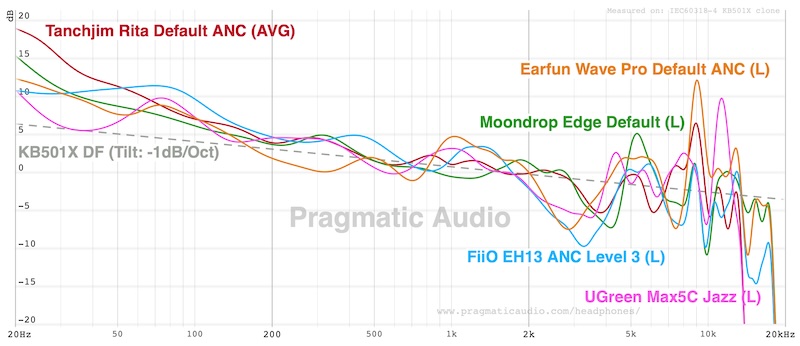
vs UGreen Max5C
The UGreen Max5C was, until recently, arguably the default recommendation for a well-tuned sub-$100 ANC headphone — its Jazz preset offering a sensible frequency response and a pleasant out-of-box sound that required no further adjustment. The Rita changes that equation decisively. With 12-band PEQ available, the Rita can match or exceed the UGreen’s Jazz preset from a tuning perspective and then continue beyond it, targeting a DF reference or any personal target you choose. The UGreen has no PEQ capability at all. On raw ANC performance and comfort the two are reasonably matched, though the Rita’s smaller earcup dimensions are a factor for larger-eared listeners. If the fit works for you, the Rita is now the more capable choice in this price bracket.
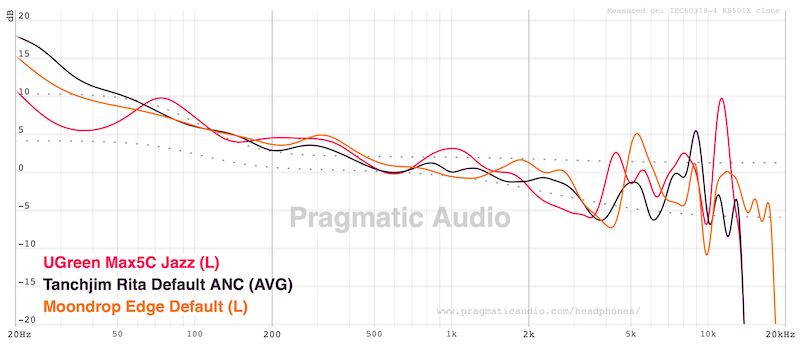
vs Moondrop Edge
The Moondrop Edge is the Rita’s most direct competitor, and the competition is genuinely close. The Edge now includes PEQ support via the Moondrop app, which levels the technical playing field significantly. The Edge’s app offers a more visually polished PEQ editing interface and the earcup dimensions are slightly more generous. However, the Edge’s touch-sensitive earcup controls are a real-world frustration — accidental triggers during commutes and at the desk made daily use more annoying than it needed to be. The Rita’s physical buttons, split between both earcups for easy tactile identification, handle daily interaction far more reliably. Sound quality between the two is close enough that personal preference and fit will drive the decision, but the Rita’s control system and ANC performance give it a practical edge for most use cases.
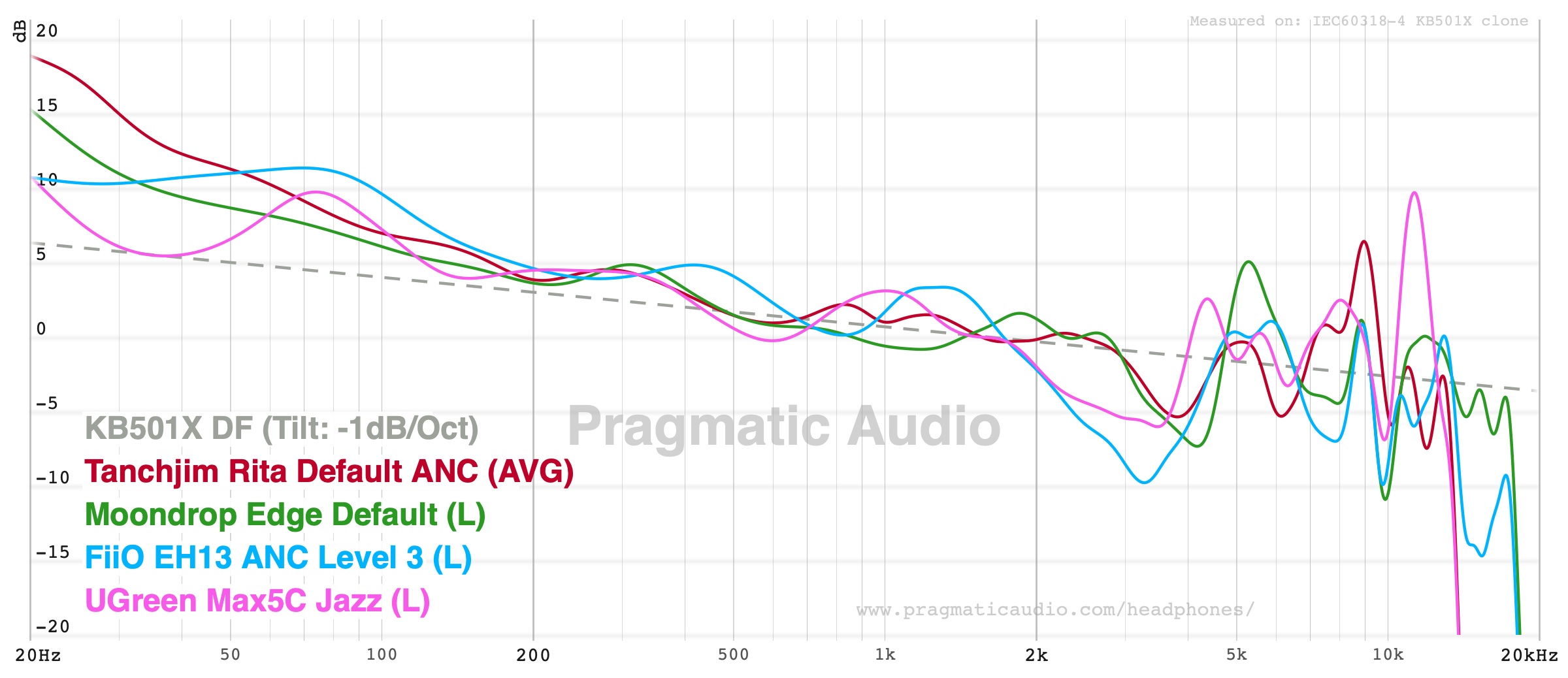
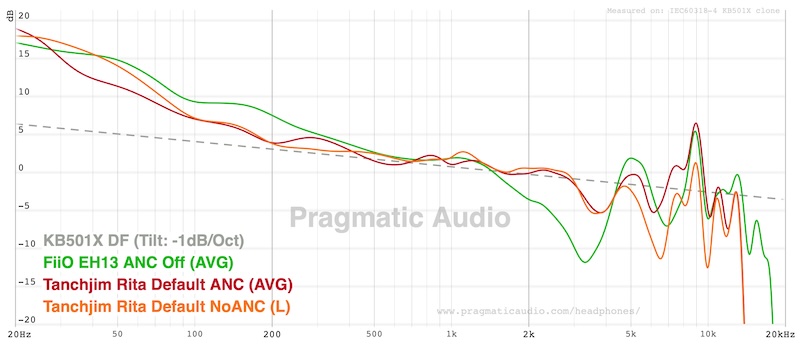
vs FiiO EH13
At $50, the FiiO EH13 is an extraordinary value proposition that genuinely complicates the Rita’s pricing case. It is also my personal comfort winner across this group — the EH13’s larger earcups suit my ears better and the clamping force is well-judged. FiiO’s companion app is functional but feels less refined than the Tanchjim experience, and ANC performance on the EH13 lags behind the Rita, particularly in the sub-bass region where the Rita’s isolation is meaningfully superior. The Rita’s more polished overall package — better ANC, better app, and arguably better out-of-box tuning — justifies the additional cost for most buyers, though the EH13 remains an exceptional headphone for $ 50 that would be my recommendation if budget is the primary constraint.
 |
 |
vs Edifier W830NB
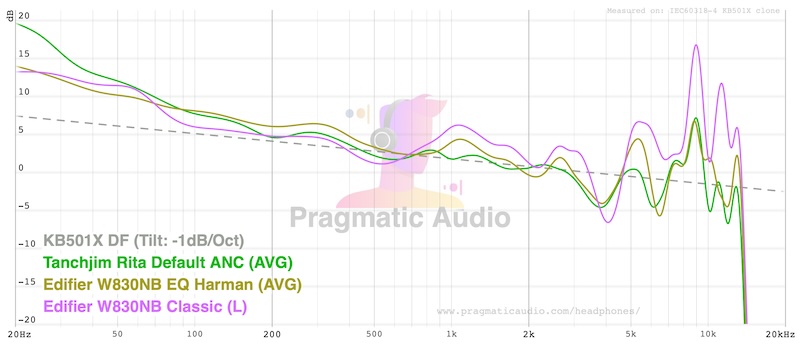
The Edifier W830NB is a solid ANC headphone with good build quality and decent default tuning. Its EQ implementation, however, is very limited — a handful of fixed presets and basic slider adjustments rather than a true parametric EQ. This means that while it can sound pleasant in its comfort zone, you cannot make the precise, transparent surgical corrections that 12 bands of PEQ enable. For the measurement-aware listener who wants meaningful control, the Rita is simply in a different category.
vs RoseSelsa Cambrian
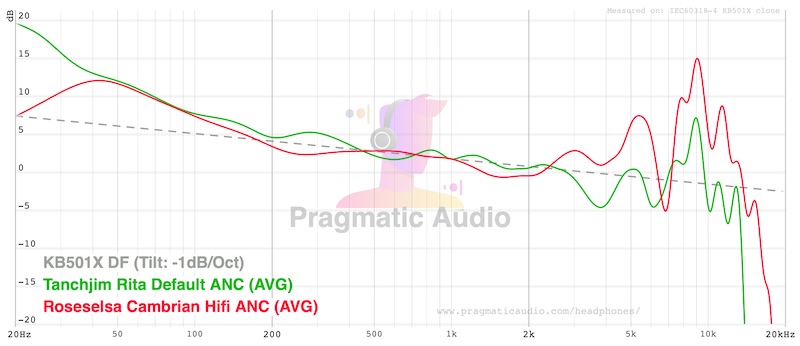
The RoseSelsa Cambrian offers a noticeably larger earcup — one of the most spacious of the group — and a premium-feeling build. The Cambrian has its own tuning strengths, but lacks the comprehensive PEQ tools that define the Rita, Edge, and EH13 as a new class of enthusiast ANC headphone. The FR comparison illustrates how different the two headphones’ tuning philosophies are out of the box, and why PEQ matters: with 12 bands of correction, the Rita can be moved toward almost any reasonable target; without it, you are committed to what the manufacturer chose.
vs Sony WH-1000XM5
The Sony WH-1000XM5 is an unfair comparison by price — Sony’s flagship costs four to five times the Rita — but it is the benchmark most listeners have in mind when evaluating ANC headphones. The one area where the XM5 unambiguously justifies its premium in today’s market is ANC performance, particularly on higher-frequency ambient sounds like voices and ventilation noise where the Rita (and all its sub-$100 peers) trail noticeably. On sound quality, however, the gap has closed dramatically: with PEQ applied, the Rita can be tuned to compete credibly with the XM5 in ways that would have seemed implausible two years ago. The fact that a $ 90 headphone with onboard PEQ can credibly challenge a $400 flagship on pure tuning quality — with ANC as the primary remaining differentiator — says everything you need to know about where this market has arrived.
Specifications and Measurements
| Specification | Detail |
|---|---|
| Driver | 40mm dynamic driver |
| Diaphragm Material | PET with beryllium coating |
| Frequency Response | 20Hz – 20,000Hz |
| Impedance | 32Ω |
| THD | 0.039% @ 1kHz, 94dB |
| Bluetooth Version | 6.0 |
| Supported Codecs | SBC, AAC, LDAC (no aptX) |
| Operating Range | 15m (open space) |
| ANC | Hybrid Active Noise Cancellation |
| Transparency Mode | Yes |
| ENC | Yes (Environmental Noise Cancellation for calls) |
| Battery Capacity | 650mAh, 3.7V |
| Battery Life (ANC on) | 51 hours 30 minutes |
| Battery Life (ANC off) | 92 hours |
| Charging | USB-C (5V – 1A) |
| PEQ | 12-band parametric EQ (via Tanchjim app) |
| Microphone | Built-in with ENC |
ANC Performance
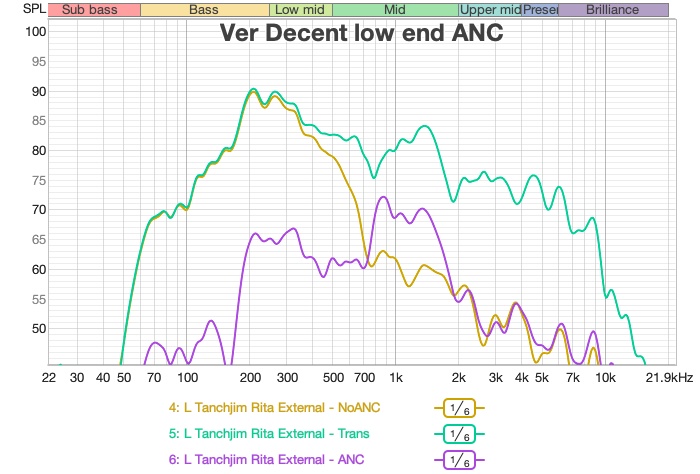
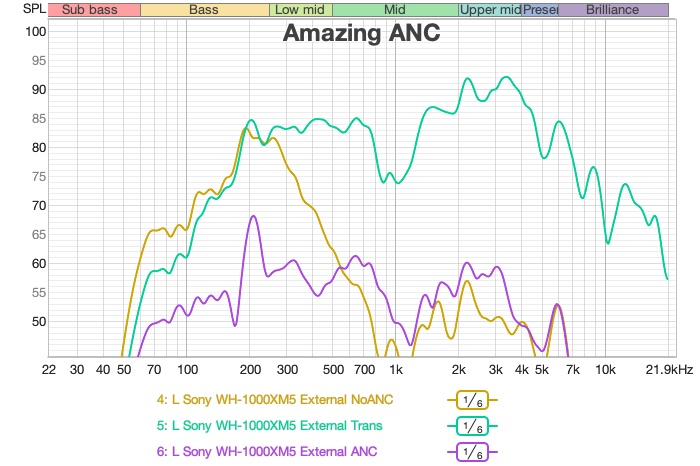
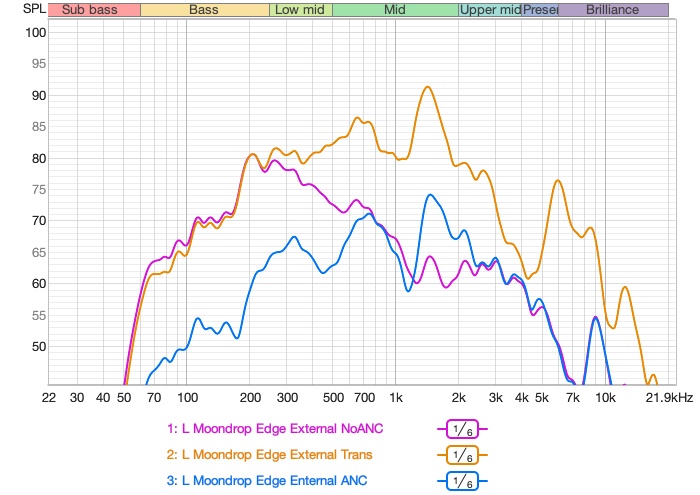
The ANC graphs below place the Rita’s noise cancellation in context against the key competition. The Rita’s advantage in the sub-bass and bass region is clearly visible — it outperforms all other sub-$100 headphones in the comparison on low-frequency attenuation, which is where ANC matters most for commuting and open-plan office use.
 |
 |
 |
 |
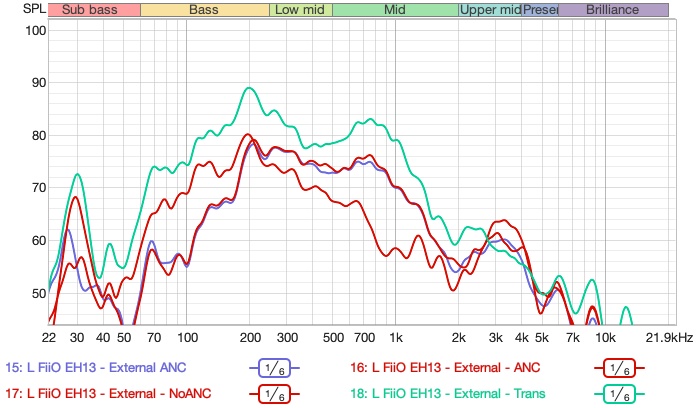 |
The way to read these comparisons is too compare how the ANC, No-ANC and transparency shows the level of external ’noise’ to understand how well each headphone ANC works.
The Sony XM5 maintains an advantage across the full frequency range, and that gap — particularly at higher frequencies — remains the primary technical justification for flagship ANC pricing in an era where budget competitors have closed the gap on sound quality.
Frequency Response — Default Tuning and Presets
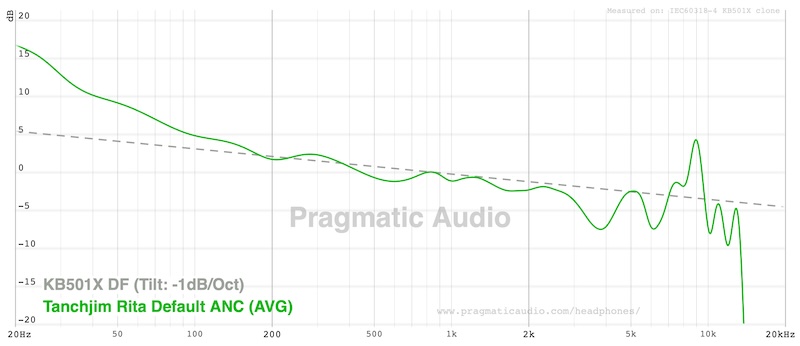
The default tuning is pretty good with a decent sub-bass extension I feel works well for ‘closed back’ headphones and most neutral though with a possible treble peak around 9 Khz ( at least on my measurement rig ), though I did not hear a peak in this area:
 |
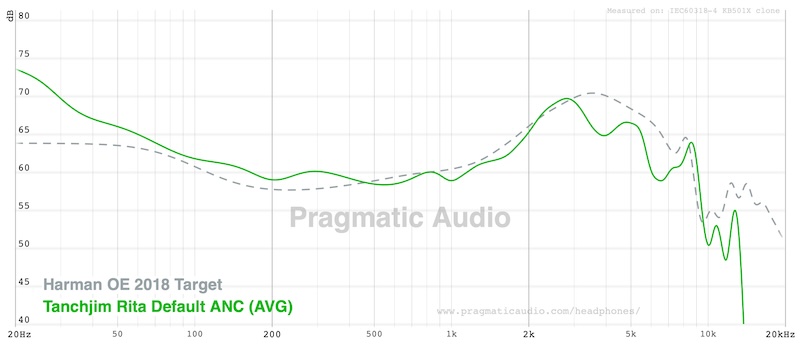 |
The Rita’s default tuning might be described as balanced but with a decent sub-bass boost that avoids the V-shaped excesses common in consumer wireless headphones. It sits comfortably within a reasonable range of diffuse-field targets, with a well-judged bass and a smooth midrange that avoids the 3–5kHz over-emphasis that causes fatigue on some competing products.
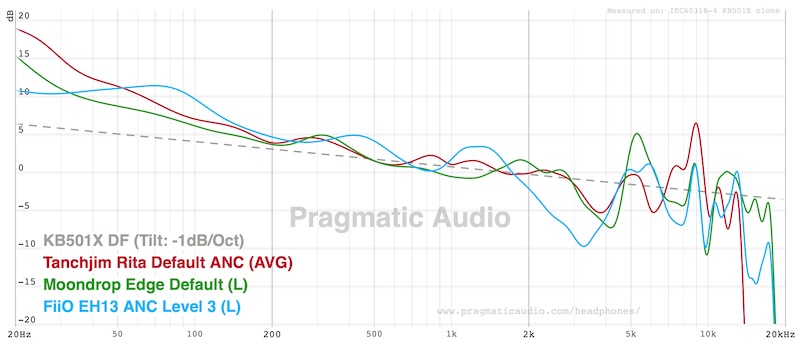
Comparing the default tuning with the 2 other similar price ANC headphones, the FiiO EH13 and the Moondrop Edge:
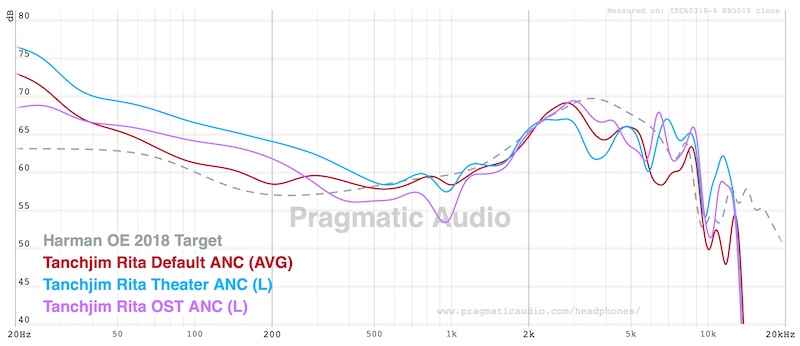
Next lets look at the various presets:
 |
 |
|  |
|  | |
| |
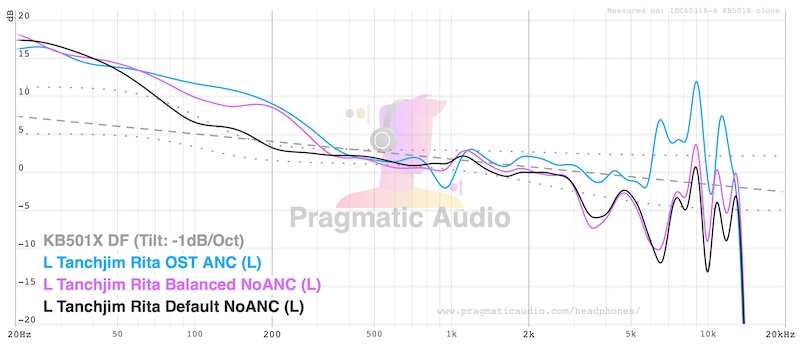
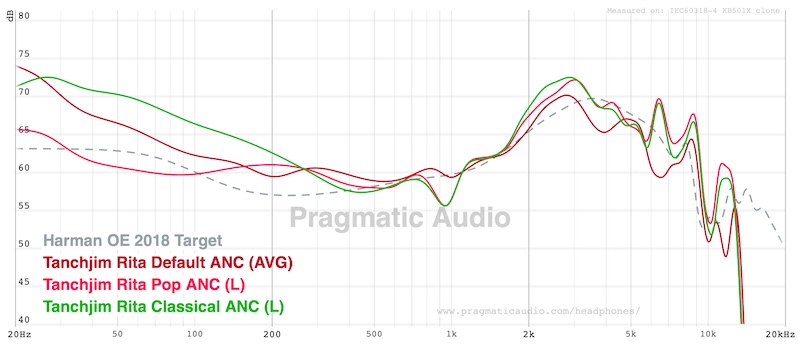
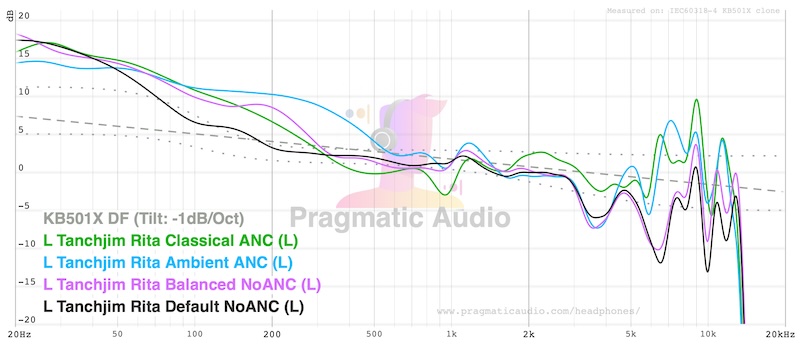
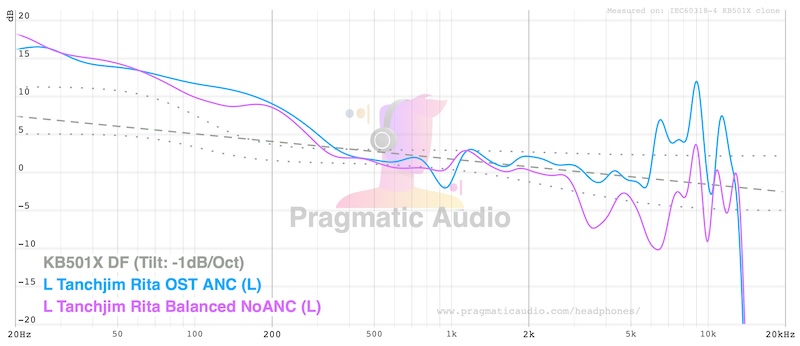
The built-in preset range covers distinct tuning philosophies. Theatre adds significant bass weight — a deliberate cinematic push that simulates the physical impact of a live venue. OST takes a more V-shaped approach, adding both treble energy and bass. Pop curiously reduces bass while lifting the upper midrange for a more detail-forward character. Classical sits between the Theatre and OST approaches — a different flavour of V-shape with more bass and a treble accent. Balanced nudges the response toward a Harman-adjacent target. Of all the presets, the default remains the most balanced and most musically coherent in my listening.
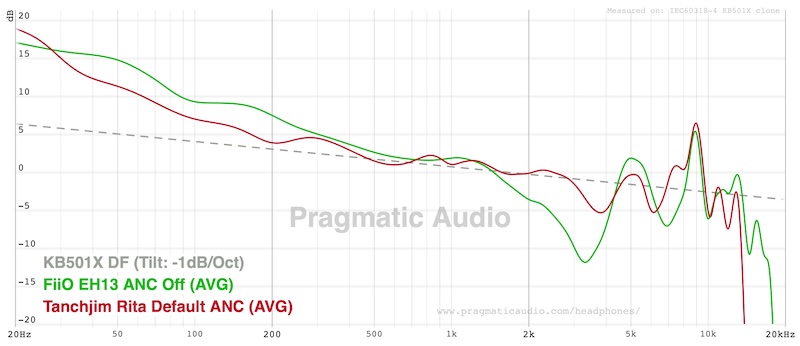
Neutral NO PEQ
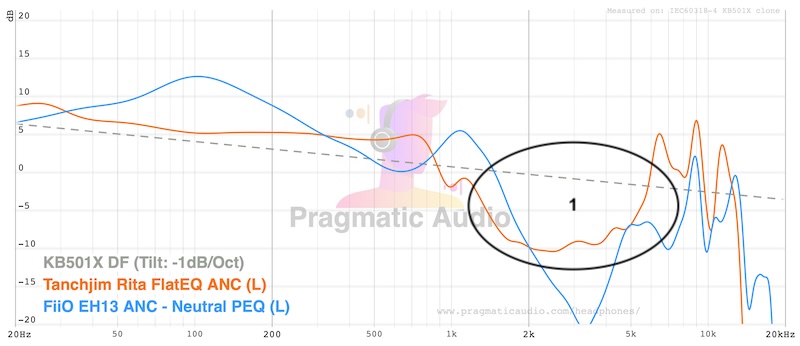
The graph below compares the Rita with neutral EQ applied compared to a similar situation with the FiiO EH13.
So, every filter set to 0 dB, isolating the underlying driver response — against a reference target.
This is not the same as the default tuning, which includes intentional Tanchjim EQ. The annotation highlights that the underlying driver response is actually quite close to a well-designed target baseline, which makes the Rita straightforward to tune with just a few filters.
Different seating:
The seating sensitivity graph is worth a brief mention for anyone whose Rita sounds slightly veiled or lacking air in the treble.
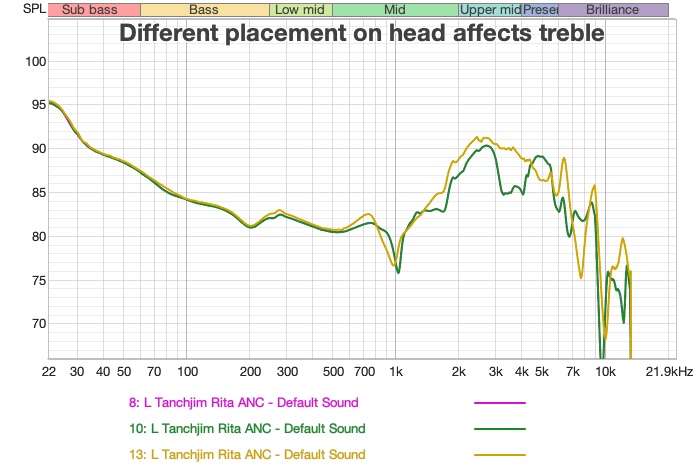
Closed-back headphones are inherently sensitive to seal and positioning, and the Rita shows some treble variation with different seating angles on the measurement rig — which is typical for this class. If you find the treble sounds softer than expected, experiment with the position of the headphone on your head; a few millimetres of adjustment can recover the treble detail that a sub-optimal seal suppresses.
Distortion
 |
 |
Distortion is well-controlled for the price. The absolute levels are modest across most of the frequency range, and the percentage graph confirms there are no significant harmonic distortion peaks that would compromise listening quality in normal use.
Recommended EQ
Note: One important note before applying this EQ: it is designed to be applied on top of the Rita’s neutral PEQ state — that is, with all 12 bands set to 0dB in the Tanchjim app, not on top of the default tuning.
Starting from a flat PEQ baseline gives you a clean, predictable starting point, and the filters below then shape the response toward a diffuse-field target. The upper treble is mostly left untouched — a high-shelf filter is included to make it easy to adjust to your own preference or HRTF.
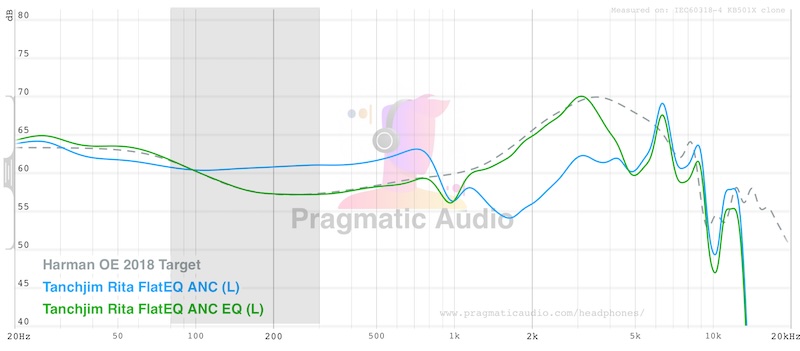
You can load these filters directly into the Pragmatic Audio headphone measurement tool to visualise the correction and, with the Rita connected via Chrome, push the filters directly to the headphone using DevicePEQ.
Rating Explanation
The Rita earns a five-star pragmatic rating on the strength of what it delivers at $89.99. A sub-$100 ANC wireless headphone with a 12-band parametric EQ, solid build quality, reliable physical controls, decent (for its price) ANC performance, and a well-judged default tuning is an outstanding value proposition by any reasonable standard.
Until very recently, onboard PEQ on an ANC Bluetooth headphone existed only at the $500 level; having it at $90 in a well-executed package is genuinely remarkable.
The four-star price rating reflects competitive reality rather than any failing of the Rita itself: the FiiO EH13 undercuts it significantly at $50 and offers its own PEQ implementation. My view is that it is, the Rita’s offers superior ANC performance but for me the earcup size might make it a genuine fit-or-miss concern for larger ears, microphone performance is usable but unimpressive by flagship standards, and the treble’s safe presentation leaves a small amount of resolution and air on the table. None of these are dealbreakers; all of them are worth knowing about.
This is the headphone for the listener who values real control over their sound signature, wants serious ANC performance for commuting or WFH use, and is willing to spend fifteen minutes dialling in a PEQ profile to unlock the headphone’s full potential. If that describes you, the Rita is one of the most compelling purchases in its price bracket right now.
Conclusion
The Tanchjim Rita arrives at exactly the right moment. We are in the middle of a remarkable period in the budget wireless ANC headphone market — one where sub-$100 headphones are acquiring the parametric EQ tools that, until very recently didn’t exist. Tanchjim, Moondrop, and FiiO are all competing in this space simultaneously, and the result for listeners is extraordinary value. The Rita holds its own in this competitive field, and in several respects leads it: the best sub-bass ANC of the sub-$100 PEQ group, a reliable and polished app experience, well-judged default tuning, and physical controls that do not drive you to distraction in daily use.
The earcup fit for me is the one genuine variable — verify it in person if you can, or use the comparison images in this review to gauge how it sits against headphones you have already tried. For listeners who find the fit comfortable, the Tanchjim Rita is as close to an unqualified recommendation as this category currently offers — and once you have dialled in a PEQ profile and the music starts, you may find yourself echoing Lennon and McCartney’s sentiment exactly: Lovely Rita where would I be without you?