FiiO Darkside Pro
A Linear Power Supply for the FiiO Desktop Ecosystem: What It Does and What It Doesn’t
The Darkside Pro (also known as the PL80) is FiiO’s dedicated linear power supply for their desktop stack — a 75W toroidal transformer with a fully discrete regulation circuit, designed to replace the switching wall adapters that ship with otherwise well-engineered FiiO gear. I have been running both the K15 and K13 R2R in my rack for an extended period, and the Darkside Pro arrived at an opportune moment to test exactly what cleaner DC power actually contributes, and, equally importantly, what it does not.
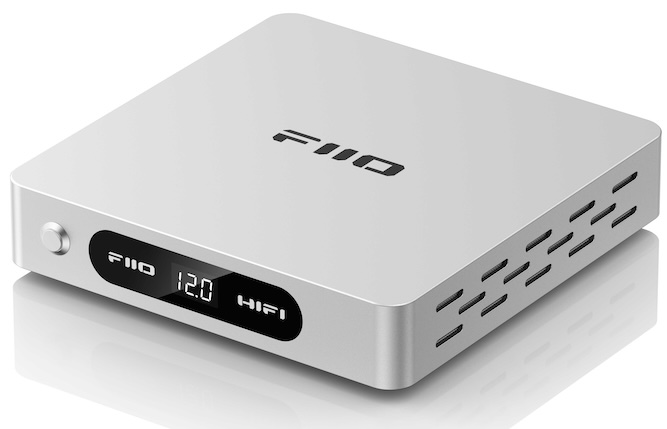
I would like to thank FiiO for providing the Darkside Pro for the purposes of this review.
If you are interested in finding more information about this product, you can find it at the official FiiO product page, and on AliExpress.
The FiiO Darkside Pro typically retails for approximately $245, though pricing may vary depending on regional tariffs and shipping costs. Available in Black/Silver.
I have been using the Darkside Pro in my FiiO rack for the past few weeks, swapping between both the K15 and K13 R2R (as these are the 2 other FiiO components I have that have the appropraite power switching options). What I found is perhaps the most honest observation I can make about any power supply upgrade: the benefit can be real, but it is not universal, and understanding where it matters, is the most valuable thing I can hopefully describe in this review.
But before I get intot the details, lets look at the unboxing experience:
Unboxing and Packaging
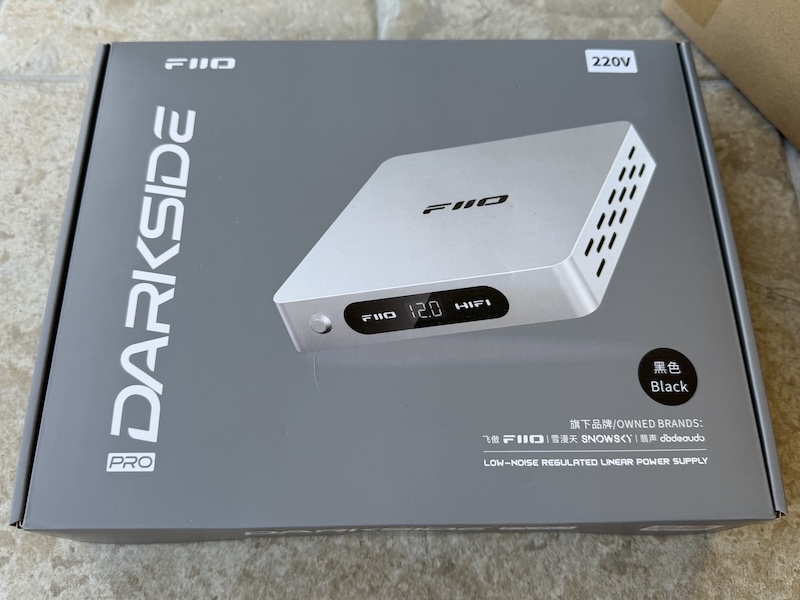
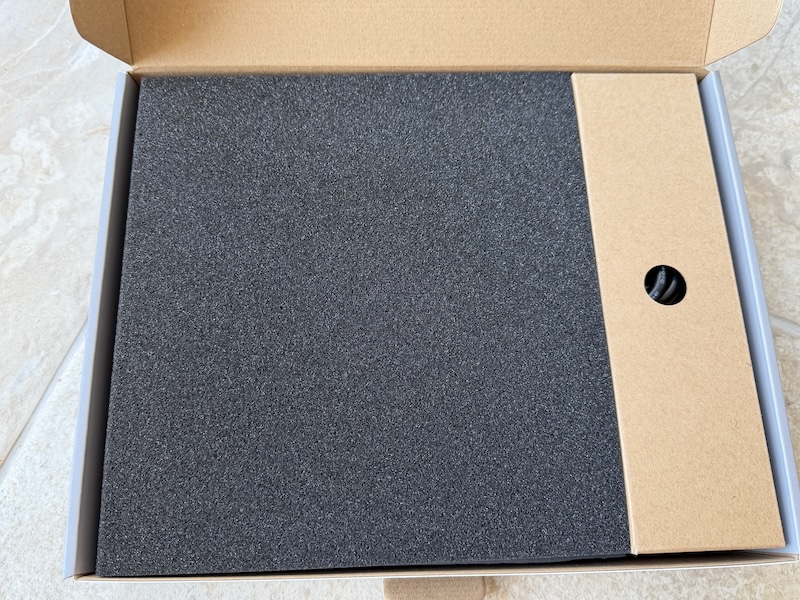
The Darkside Pro arrives in packaging consistent with FiiO’s current desktop product family — clean, confident, and well-structured:
 |
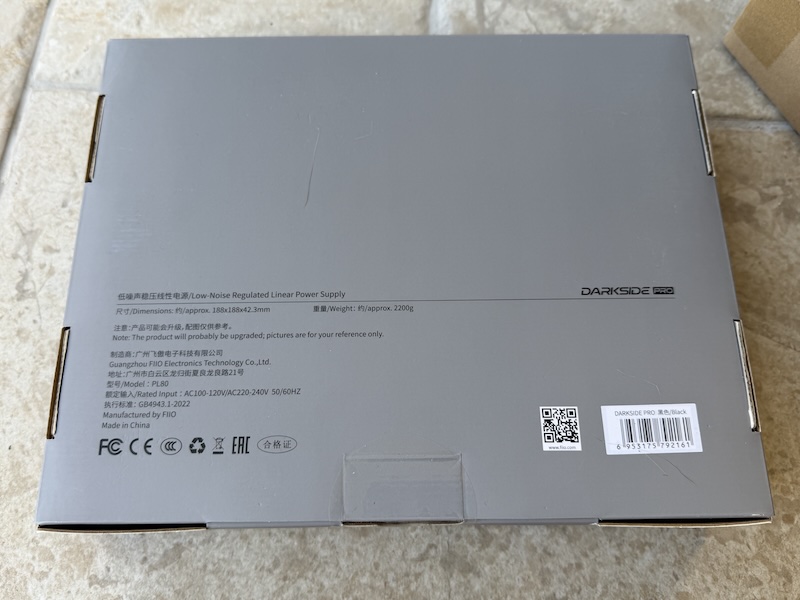 |
The box has some of the basic specifications without overselling what is, at heart, a piece of supporting infrastructure.
The insert visible in the open box is worth noting: FiiO explicitly warns that the Darkside Pro generates heat
during operation, which is expected and inherent to linear power supply design:
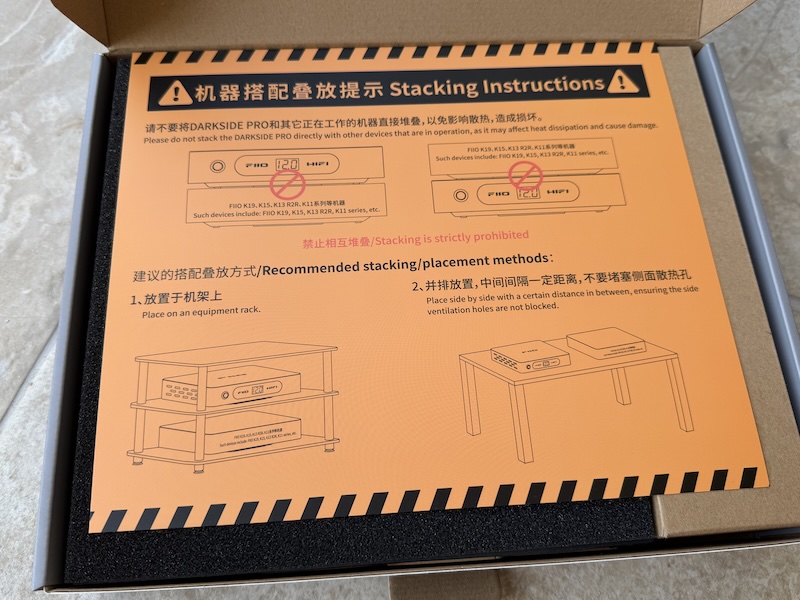
A linear regulated supply dissipates the voltage difference as heat across its regulation components.
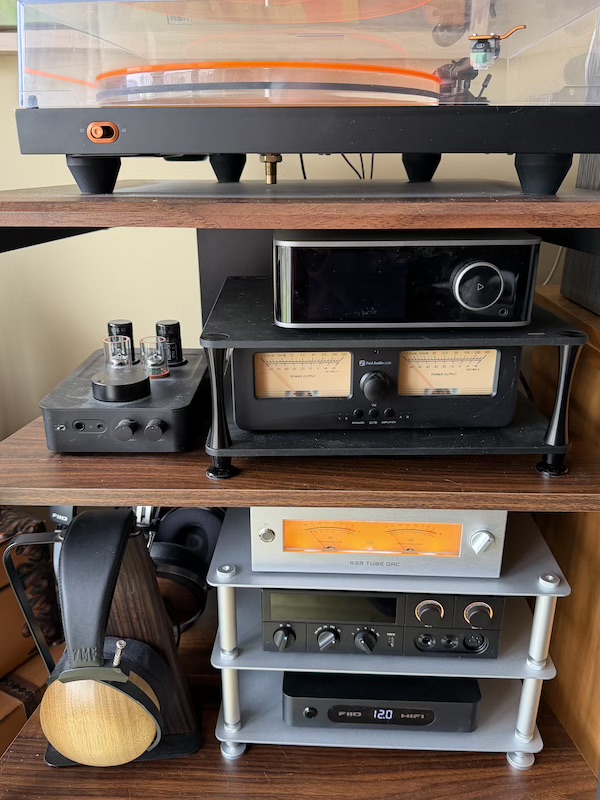
The recommendation to allow adequate ventilation is genuinely important, particularly if you are mounting the Darkside Pro, I used the Darkside as an opportunity to test the FiiO Rack to nicely separate out the components within my setup.
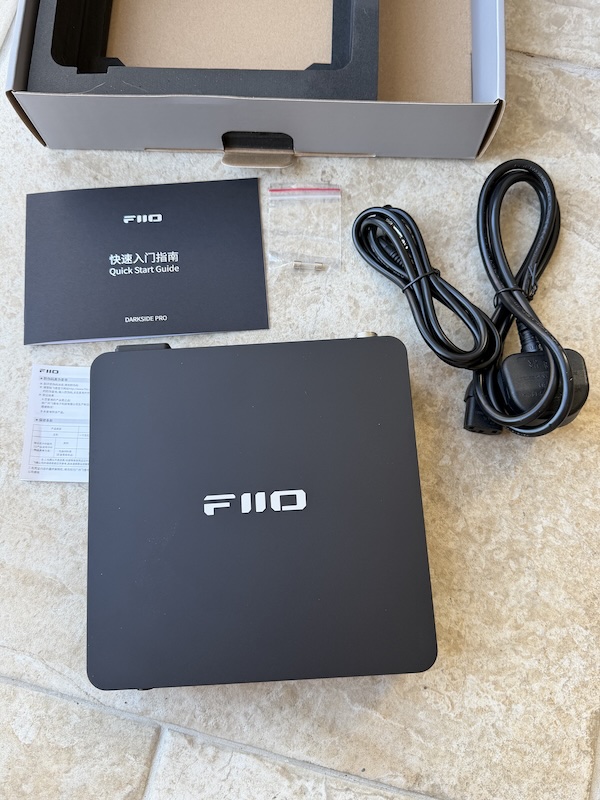
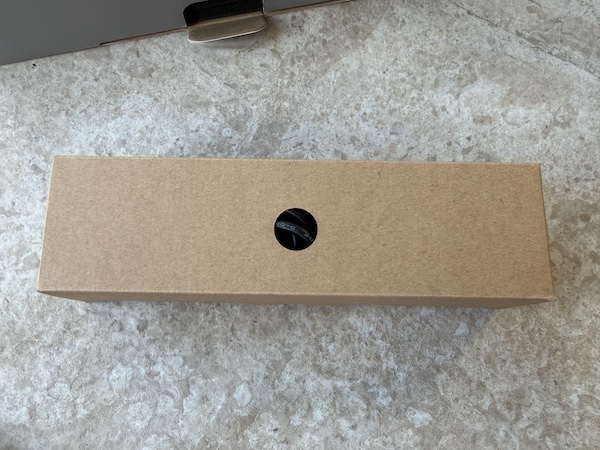
In the box you get: the Darkside Pro unit, a mains power cable, a spare fuse, and documentation:
 |
 |
No DC output cable is included as standard — the Darkside Pro outputs via a GX16-2 aviation socket, and the appropriate cable for your specific FiiO device is either already in your possession or needs to be sourced separately.
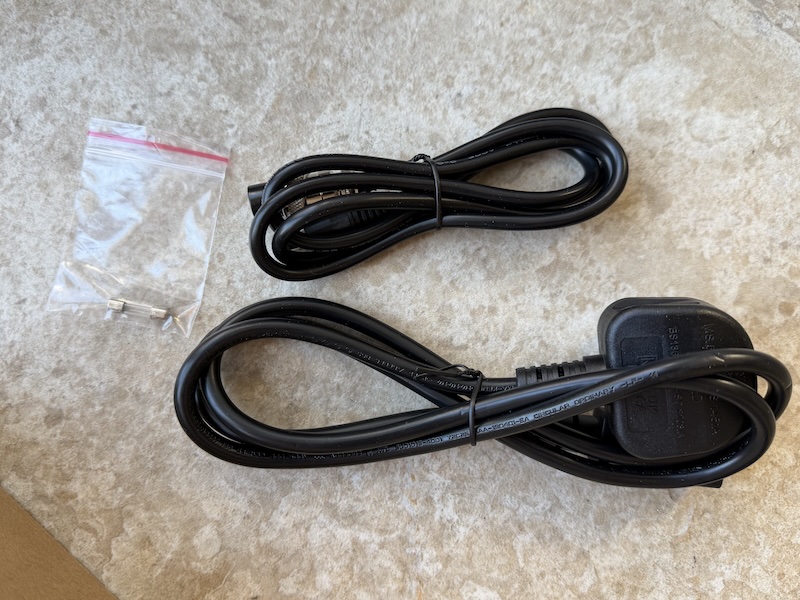
The inclusion of a spare fuse is a nice touch — I believe the Darkside Pro uses a self-resetting overcurrent protection system, but having the spare on hand is reassuring for a device running continuous high-current output.
Build Quality and Design
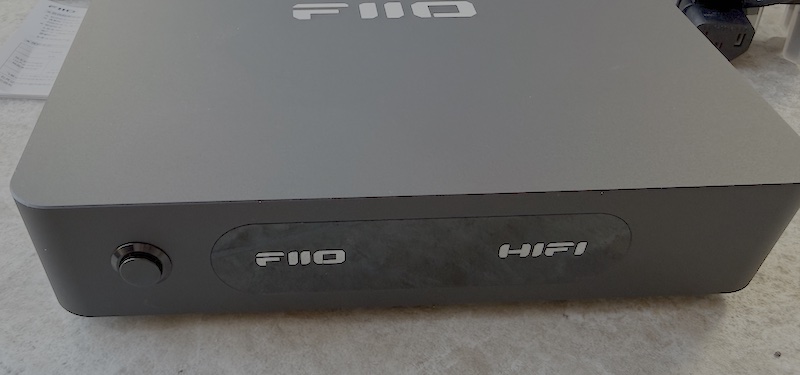
The Darkside Pro’s industrial design follows FiiO’s “Tech Family” aesthetic. The front panel is deliberately minimal — in keeping with FiiO’s design language for supporting components — with no display or controls beyond what the unit requires to function:
 |
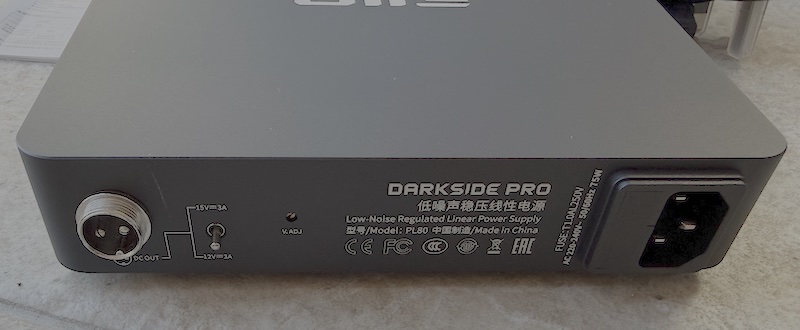 |
It has a premium unibody aluminium enclosure with a minimalist, rack-appropriate appearance that sits cohesively alongside the K15, K17, and K13 R2R in a FiiO stack.
The finish is consistent and well-executed, with none of the rough edges or uneven seams that sometimes appear at this price point in desktop audio accessories.
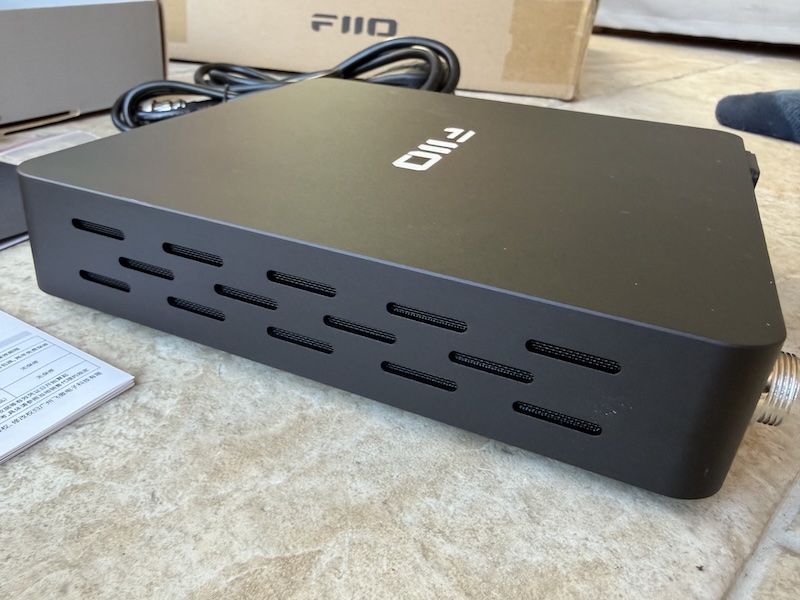 At approximately 2200g, it has the substantial weight that comes with a genuine toroidal transformer inside — this is
not a hollowed-out enclosure hiding a lightweight SMPS.
At approximately 2200g, it has the substantial weight that comes with a genuine toroidal transformer inside — this is
not a hollowed-out enclosure hiding a lightweight SMPS.
The GX16-2 socket used for the DC output deserves a specific mention:
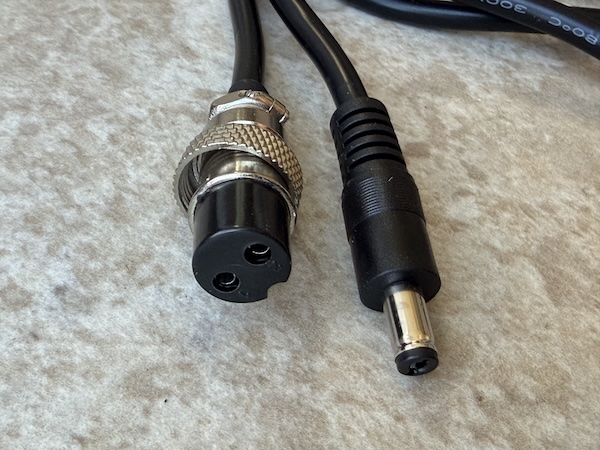
Aviation-grade connectors at this price point are a genuine quality signal — they are mechanically robust, provide secure positive engagement, and handle the continuous 3A current rating without the thermal stress concerns associated with lighter connectors.
It is a sensible choice for a device that will be powered on continuously in a permanent desk or rack installation.
The Technology Inside
To understand what the Darkside Pro actually does — and, critically, what it does not — it helps to understand the engineering inside it and the problem it is designed to solve.
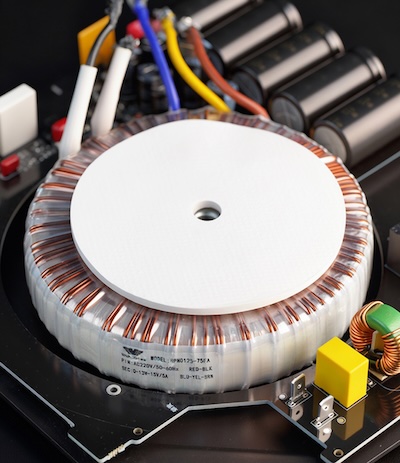
A conventional switching power supply (the type of wall adapter that ships with most FiiO gear) operates by rapidly switching voltage at high frequency to achieve efficient voltage conversion. This efficiency comes at a cost: the switching process generates high-frequency noise that appears on the DC output rail, ranging from tens of kilohertz into the megahertz range. While most well-engineered audio devices include internal filtering to reject this noise, the filtering is never perfect — particularly in sensitive analogue stages or R2R DAC circuits that have limited power supply rejection ratios (PSRR).
The Darkside Pro replaces this on select FiiO Devices with a fundamentally different approach. The toroidal transformer converts mains AC to a lower AC voltage using traditional electromagnetic induction — no switching, no high-frequency noise.
The subsequent rectification, filtering, and discrete MOSFET regulation stages then convert this to a stable DC output with a specified ripple of ≤30µVrms. The ELNA and Rubycon capacitors in the filter stages and WIMA film capacitors in the signal path represent genuine audiophile-grade component selection, not cost-optimised commodity parts. The result is a DC output that should be measurably cleaner than a typical switching adapter but whether you hear these differences is one of those typical Audiophile discussions that keeps happening.
However, there are important limits to what this architecture achieves. The Darkside Pro is a local DC improvement tool. It directly addresses only conducted noise on the DC rail entering a specific device. It does not regenerate your AC mains, does not fix voltage fluctuations or DC offset upstream, and does not address ground loops between devices — those manifest as low-frequency hum in some devices and require an isolation or grounding strategy to resolve, not a better power supply.
It also does not suppress radiated electromagnetic interference from other devices in a busy rack, which is often the dominant noise mechanism in a densely populated desktop setup. Being clear about these boundaries is important because some of the benefits attributed to linear power supplies in listening reports are actually the result of addressing a different problem by other means.
In Your Rack
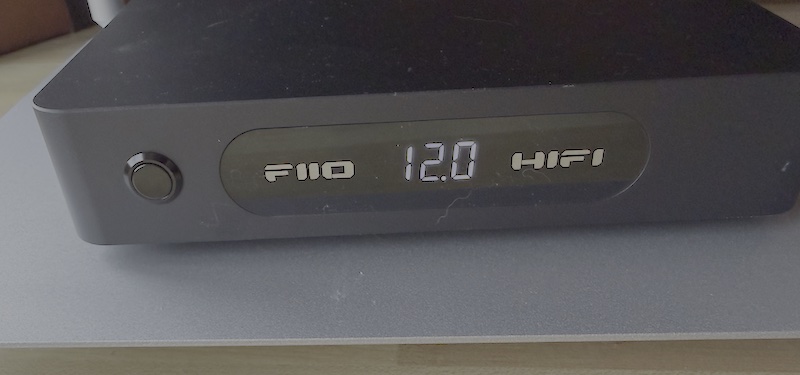
In a FiiO rack setup, the Darkside Pro integrates cleanly and sits with evident purpose. The image above shows the downstream device’s display reporting current power consumption. During my review period, the unit maintained stable output across extended listening sessions without any thermal or stability concerns, though it does run warm by design — warm enough to be noticeable to the touch, not warm enough to cause concern and the rack helped dissipate the heat nicely.
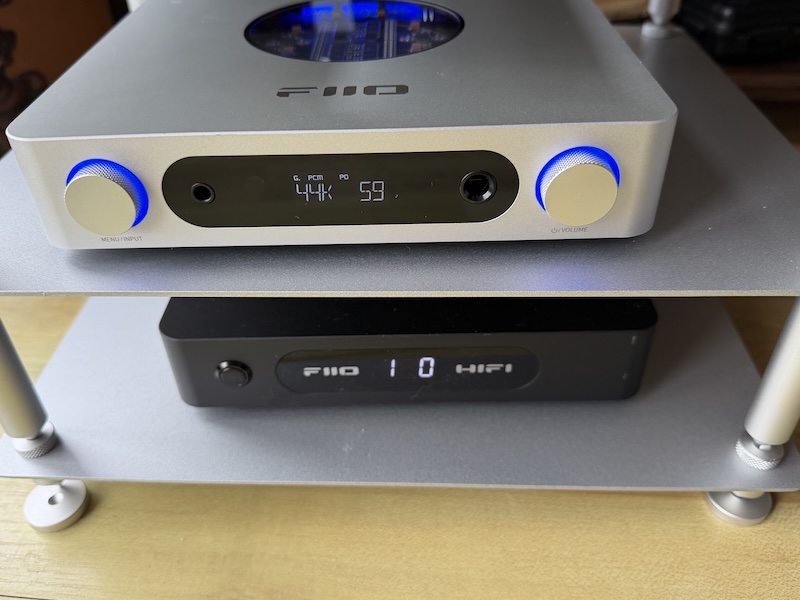
The K13 R2R pairing is the most interesting in this context because R2R DAC circuits are among the analogue stages most likely to benefit from cleaner power. R2R decoding relies on precision resistor ladders where even small variations in supply voltage can affect the weighted current contribution of each bit, and the NOS (non-oversampling) mode of the K13 R2R — with its characteristic organic, analogue-like presentation — operates with somewhat less filtering on the digital side, which can make the analogue supply chain more audible. Whether the Darkside Pro is meaningfully audible in this pairing depends on the quality of the K13 R2R’s internal regulation — FiiO’s desktop devices are generally well-engineered — but the conditions for a perceivable benefit are at least present in a way they may not be with a device that has very high PSRR.
Would I be able to hear a difference in a blind AB test between 2 K13R2R, one setup with the Darkside Pro? I don’t think so as any difference would be incredibly marginable and probably in the treble region where the NOS mode will introduce those R2R ‘artifacts’ that are pleasant to many listener into the frequency response.
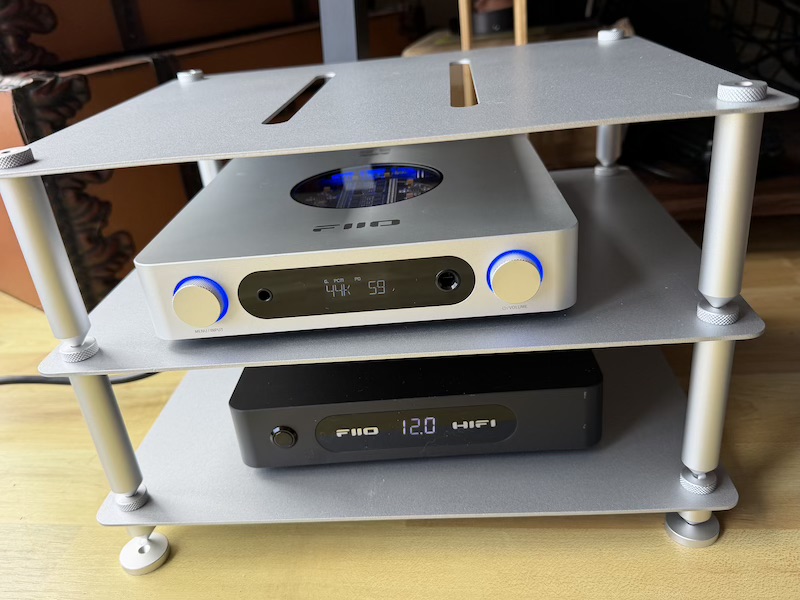
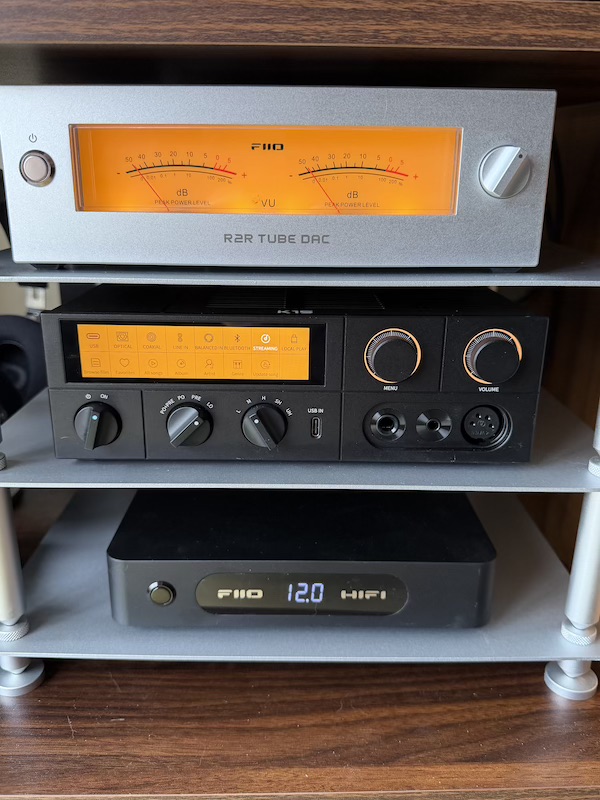
The K15 pairing shown above illustrates the Darkside Pro’s natural home: a settled, permanent desktop stack where the
power supply becomes part of the system’s infrastructure rather than a removable accessory:
At this level of the FiiO desktop ecosystem, the marginal gain from the Darkside Pro will likely be even more subtle — the K15 is an extensively well engineered device with its own high-quality internal power management.
Performance and Sonic Impact
Honest assessment of a power supply’s sonic contribution requires acknowledging something uncomfortable: if you cannot hear a difference, that does not mean the product has failed. It means either that your existing power supply was already adequate for your system’s sensitivity, or that your system’s internal regulation has sufficient PSRR to reject the noise your original supply was producing.
With the K13 R2R in NOS mode, the Darkside Pro produced the most audible result of my testing period — with possible a marginally more composed presentation of low-level detail, particularly in quiet passages between notes, but as I mentioned earlier I don’t think I could reliable find these differences in a blind test, though I have no doubt some reviewers will talk about ’night and day’ differences.
The R2R architecture’s characteristic organic warmth was unchanged, as you would expect — a power supply upgrade should remove constraints rather than adding character — but the background blackness that frames the K13 R2R’s staging felt marginally more consistent over extended sessions. Whether this is the Darkside Pro’s DC quality, the physical separation of the transformer from the chassis (reducing magnetic coupling in a dense rack), or simply the placebo effect of having spent money on infrastructure is genuinely difficult to isolate.
With the K15, the difference was even more subtle — closer to the threshold of audibility — which is consistent with the K15’s generally well-implemented internal power management. The low-end felt marginally more controlled, and the already-excellent noise floor of the K15 appeared if anything slightly lower through sensitive IEMs. But I feel most listeners will not notice a change.
The practical benefit most likely to generalise across setups is one that measurements cannot easily capture: running a warm, continuously-on toroidal supply in a rack rather than a switching adapter that cycles and potentially introduces HF noise into shared power rails. In an environment where multiple devices share a power strip — computers, monitors, hard drives, and audio gear in close proximity — the Darkside Pro’s physical isolation of switching noise from the DC rail of your audio equipment might be a meaningful contribution regardless of whether the gain is strictly audible.
Specifications
| Specification | Detail |
|---|---|
| Internal designation | PL80 (successor to PL50) |
| Transformer | Audiophile-grade 75W toroidal |
| AC input voltage | 100–120V / 220–240V (switchable) |
| DC output voltage | 12V / 15V (relay-controlled switching) |
| DC output current | 0–3A |
| DC output ripple | ≤17µVrms A-weighted (12V) / ≤30µVrms A-weighted (15V) |
| DC output interface | GX16-2 Aviation Socket |
| Regulation circuit | Fully discrete + dual-MOSFET parallel current amplification |
| Capacitors | ELNA / Rubycon / WIMA |
| Overcurrent protection | Self-resetting fuse |
| Voltage fine-tuning | Precision potentiometer |
| Dimensions | 188 × 188 × 42.3mm |
| Weight | ~2200g |
| Colour | Black / Silver |
| Compatible FiiO devices | K11, K11 R2R, K13 R2R, K15, K19, R9, R7, TT13, K5 Pro series, K7 series, Q7, and FiiO portable players via Type-C adapter (sold separately) |
The specifications stand on their own merits. A ≤30µVrms ripple figure, discrete MOSFET output stage, and component selection from ELNA, Rubycon, and WIMA collectively represent a level of engineering that overdelivers for the price category. These specification translates to more composed DC delivery when the load on the downstream device spikes briefly. This is the measurement rating’s justification: the numbers are genuinely good for the money.
Rating Explanation
The Darkside Pro earns a pragmatic rating of four rather than five because its real-world benefit is unambiguously system-dependent. The internal engineering is great at the price — the toroidal transformer, the MOSFET regulation circuit, the component selection, and the output specifications all represent genuine value — and for users upgrading from a cheap stock switching adapter in an electrically noisy environment, the Darkside Pro might well deliver repeatable audible benefits but in my setup with already very decent equipment the benefits were marginable. But as FiiO introduce more high-end products I feel at $245, the internals and compatibility range are difficult to fault as this is a product that is useful to have for the future as well as for the present.
If the device you are powering already has high PSRR internal regulation — as most well-engineered FiiO desktop products do — the audible contribution of the Darkside Pro will be modest at best. If your system noise issues stem from ground loops, radiated interference from nearby electronics, or upstream mains problems, the Darkside Pro will not resolve them. But the Darkside Pro does exactly what a well-designed linear PSU should do; whether that specific thing is the weak link in your system is for you to assess honestly before purchasing.
Conclusion
The FiiO Darkside Pro is the right product for a specific set of circumstances, and it is the wrong product if you are hoping it will redefine how your system sounds. What it does — replacing a cheap switching adapter with a low-noise, high-headroom linear supply whose components would not be out of place in a far more expensive piece of audio equipment. The specifications with a 75W toroidal transformer, MOSFET regulation, and ELNA/Rubycon/WIMA component selection make this an audiophile-grade power supply at a price that makes the argument worth having.
At $245, the Darkside Pro asks you to make a considered decision about what your system’s actual weak link is. If you feel it is the DC supply to a sensitive analogue circuit, this may well be money well spent and the improvement should be real. If your bottleneck is somewhere else — your headphones, your DAC, or your room — the same $245 is better directed toward that area.