Topping E50 II
The Topping E50 II: AK4497S, 10-Band PEQ, LDAC Bluetooth, and ADAT — Under $200
After the DX5 II — a $299 DAC and headphone amp combo that left me genuinely impressed by the value — the E50 II arrives as the standalone DAC sibling at $199, aimed at listeners who already own an amplifier they love. The proposition is quietly ambitious: AKM’s AK4497S VELVET SOUND chip, XMOS XU316 USB with native DSD512, LDAC Bluetooth, a full ten-band parametric EQ via app, and an ADAT-capable optical input, all under two hundred dollars.
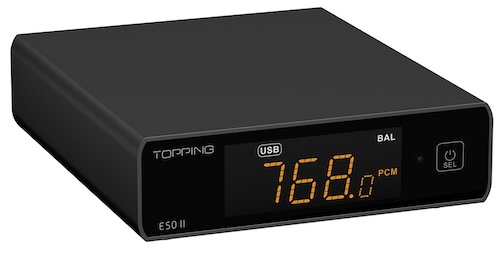
I would like to thank Topping for providing the E50 II for the purposes of this review.
If you are interested in finding more information about this product, you can find it at the Topping E50 II product page.
The E50 II typically retails for $199.
I have been running the E50 II for two months now, feeding everything from powered studio monitors to external headphone amplifiers, and benchmarking it against several other DACs that have passed through my desk during that period. The Topping Tune mobile app integration is arguably the headline feature — it puts granular control over inputs, outputs, EQ, and volume in your hand without ever touching the unit — but what has stayed with me most is how the E50 II sits at the absolute opposite end of the sonic character spectrum from some of the more distinctive DACs I have reviewed recently, and why that turns out to be exactly the right quality to celebrate. More on that in the sound impressions. But first, let us see what is in the box.
Unboxing and Packaging
 |
 |
The E50 II arrives in a compact, clean box that reflects Topping’s increasingly confident product presentation — understated white packaging with key specs printed clearly on the rear. Opening the lid reveals the unit nestled securely in shaped foam, with accessories tucked neatly beneath in a way that feels considered rather than thrown together.
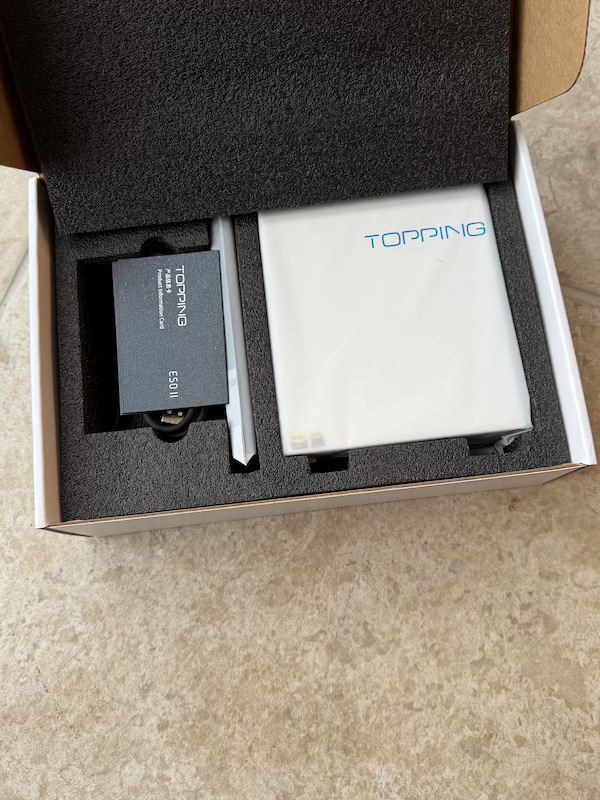
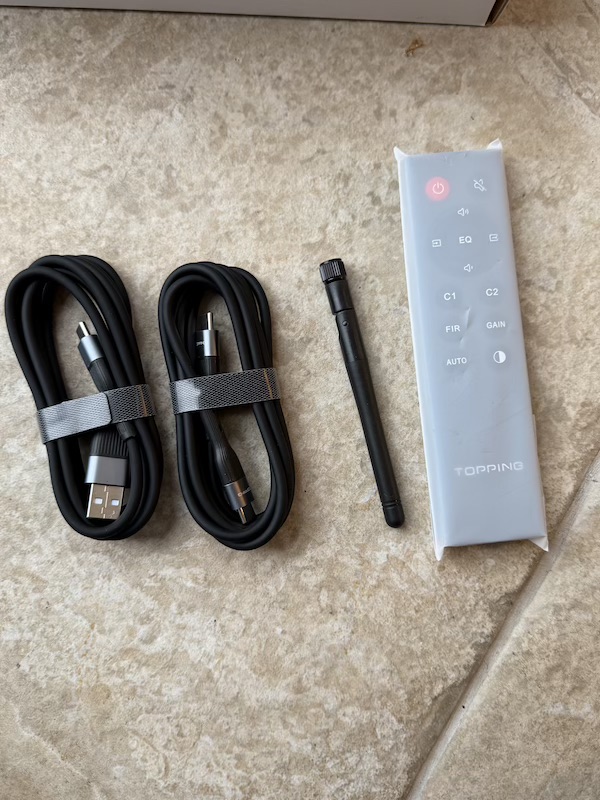
Inside you will find the E50 II desktop DAC, an infrared remote control, a USB A-to-C cable, a USB C-to-C cable, a Bluetooth antenna, a product information card, and an app information card with QR codes for the Topping Tune app and the online manual.
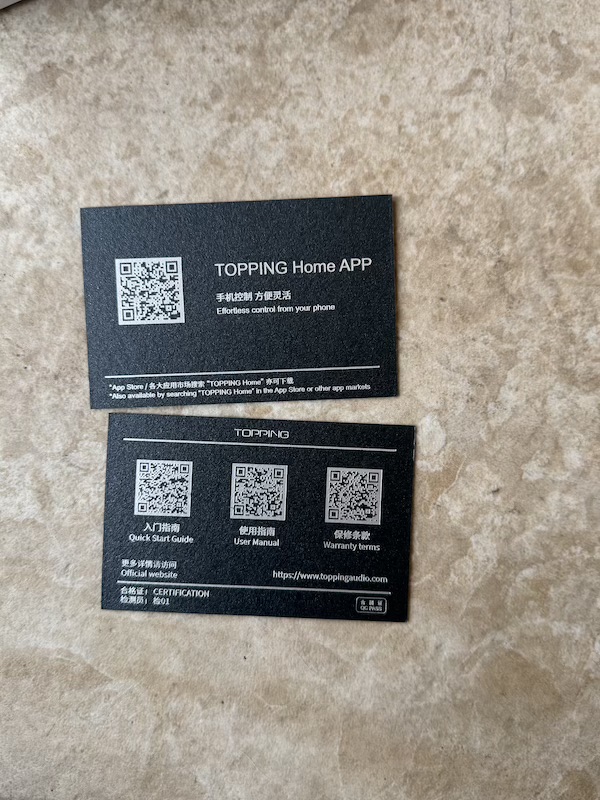
The accessories package is genuinely generous for the price. Both USB cable types are covered so you can connect to virtually any modern source without a trip to a cable drawer, and the Bluetooth antenna — which many competitors skip — is included and straightforward to attach.
Build Quality
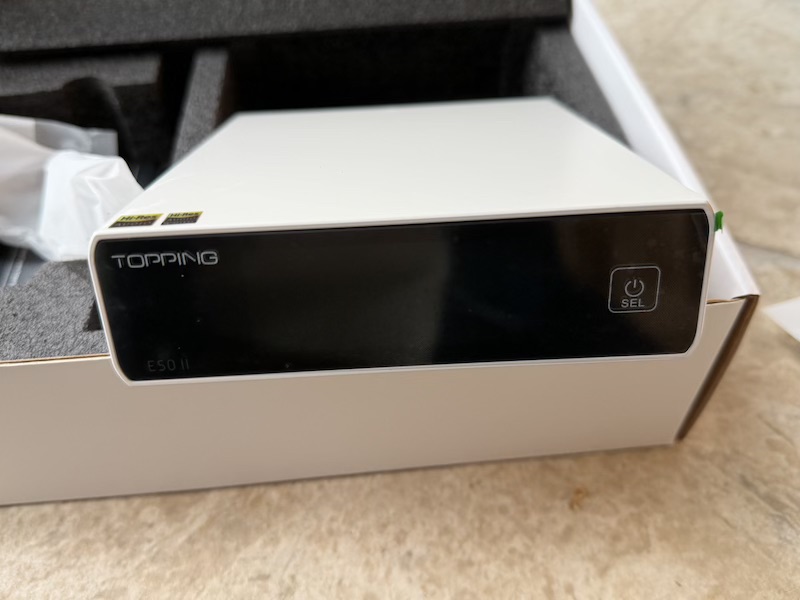
The E50 II carries the clean, purposeful aesthetic Topping has been refining across their recent lineup. The front panel is minimalist to a fault — a clear OLED display flanked by touch-sensitive controls for volume, input, and mute — and the overall impression is of a product that has decided it has nothing to prove through visual flourish.
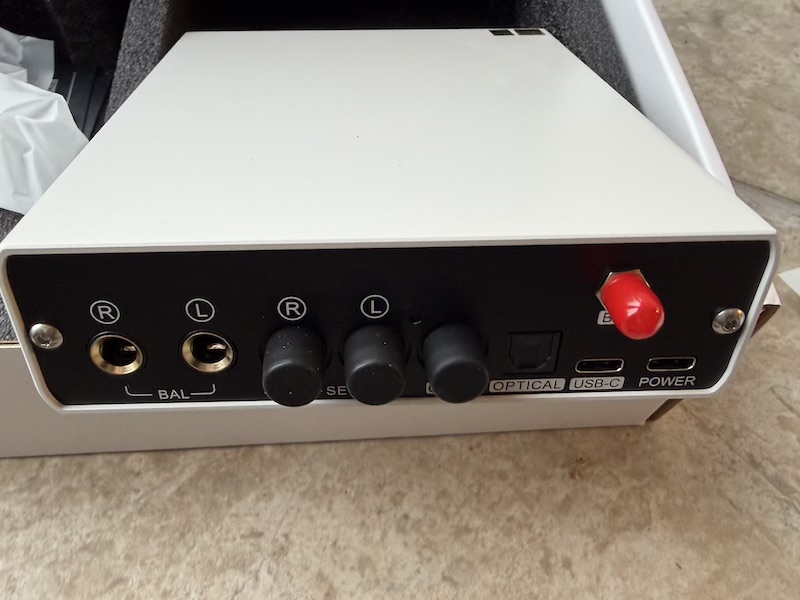
Turn it around and the rear panel tells a different story. Balanced TRS outputs, single-ended RCA outputs, coaxial input, optical input (which doubles as an ADAT port), USB-C, the Bluetooth antenna connector, and the DC power socket are all neatly arranged and clearly labelled. The density of connectivity on that back panel is remarkable for the footprint.
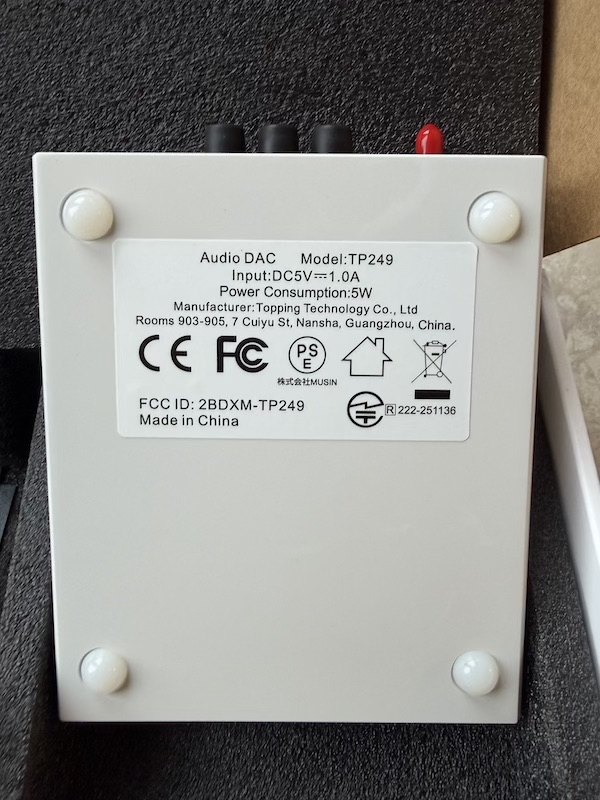
The underside of the unit is cleanly finished, with rubber feet providing solid grip on a desk surface and enough clearance for ventilation beneath the chassis.
Features and Performance
The Topping Tune App
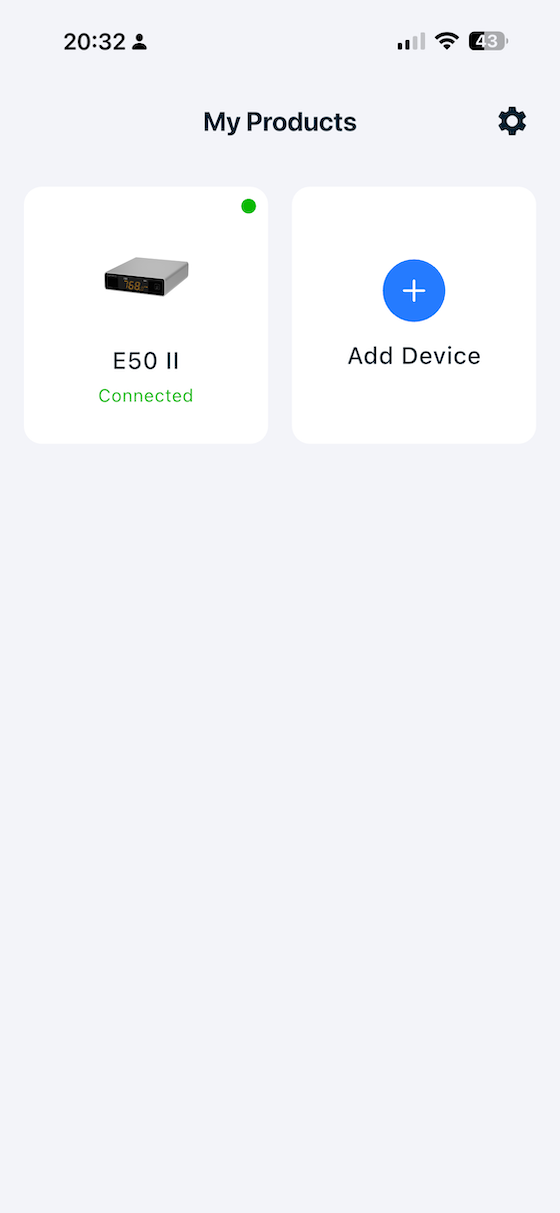
The Topping Tune mobile app is central to what makes the E50 II stand apart in its category, and the breadth of control it offers is genuinely impressive. From the home screen you can select and manage connected devices, monitor the active input, and adjust volume directly from your phone in real time.
 |
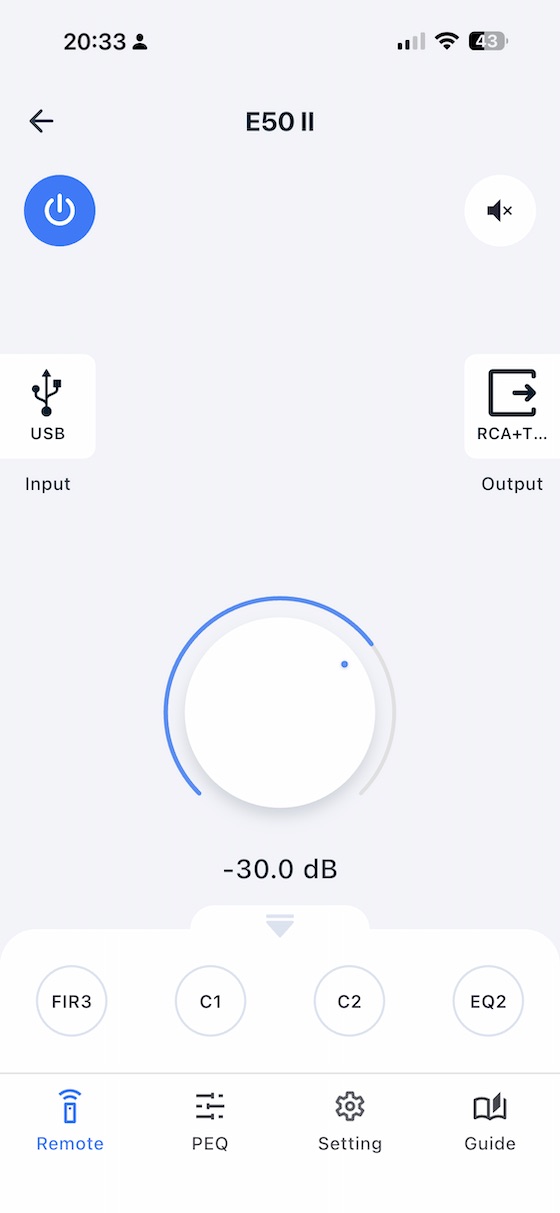 |
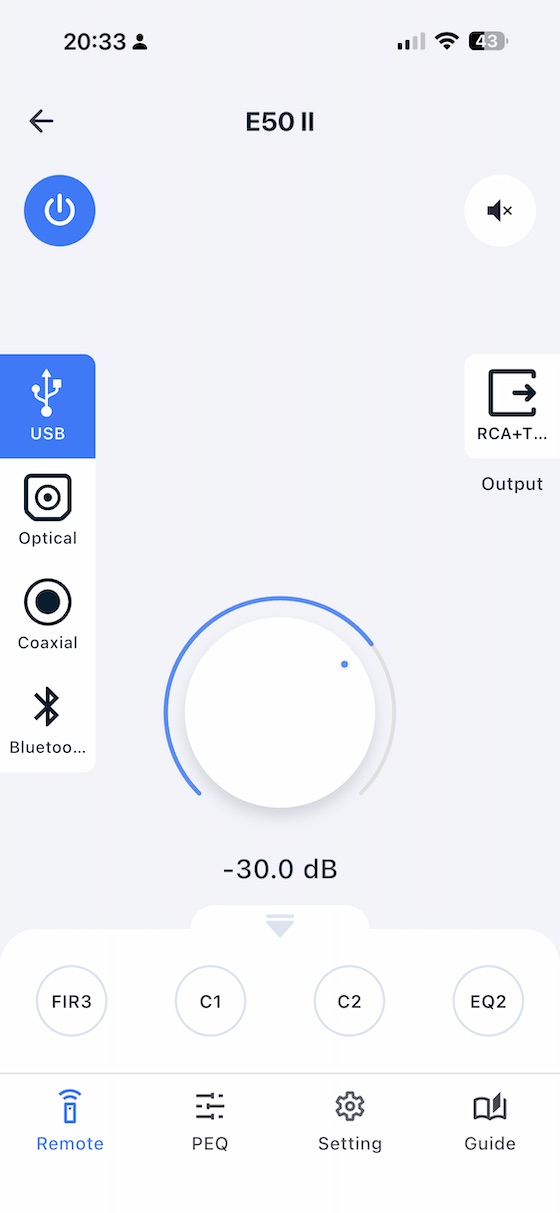
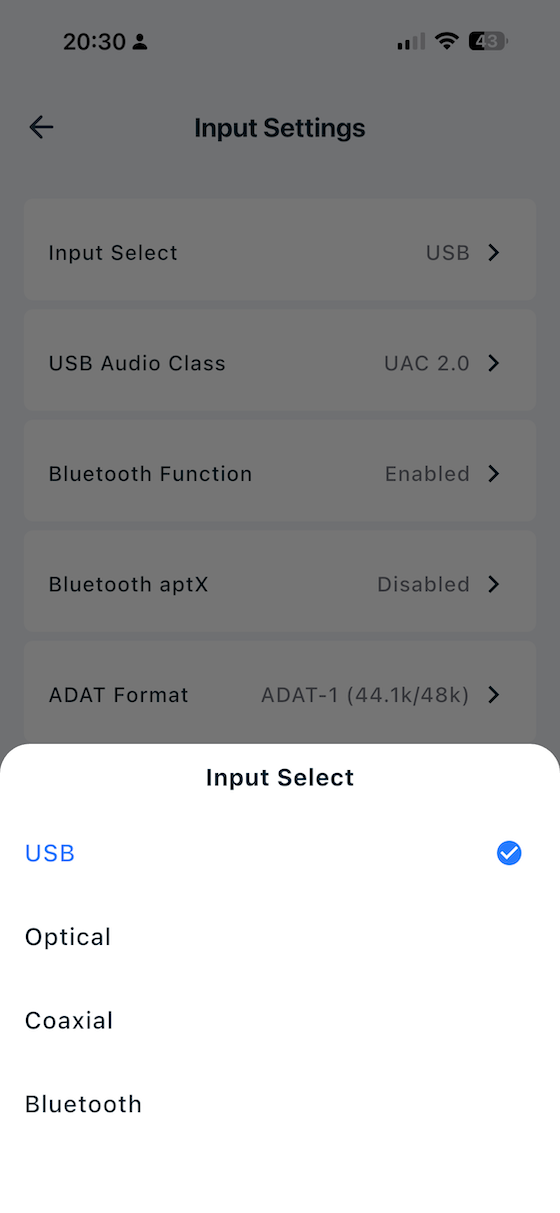
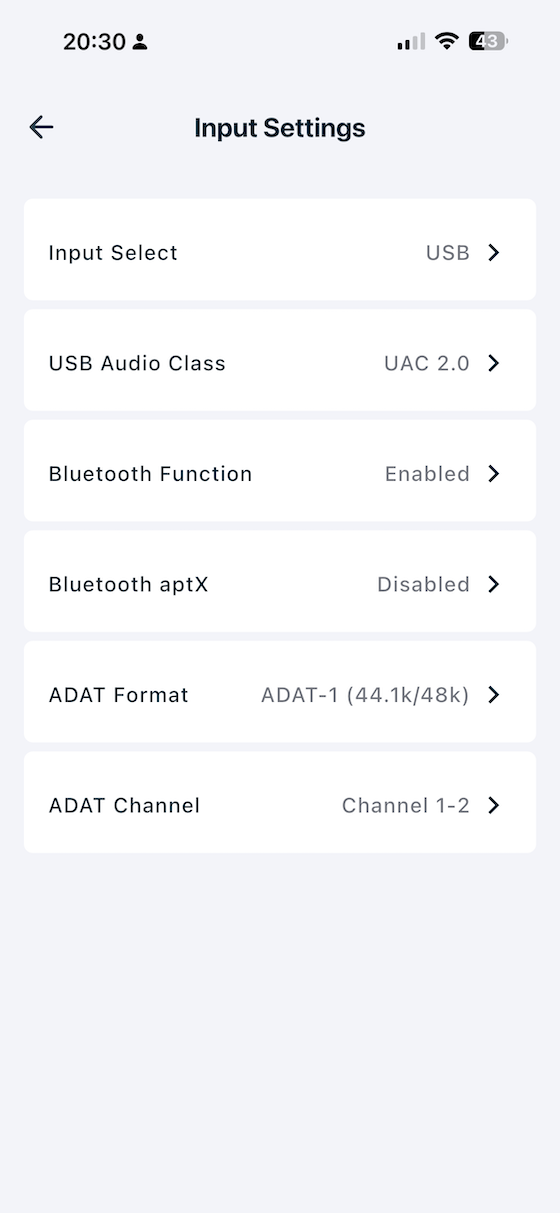
Input selection is clean and direct, with each input carrying its own configuration screen for independent level and behaviour settings.
 |
 |
 |
 |
Decoding, Filters, and Format Support
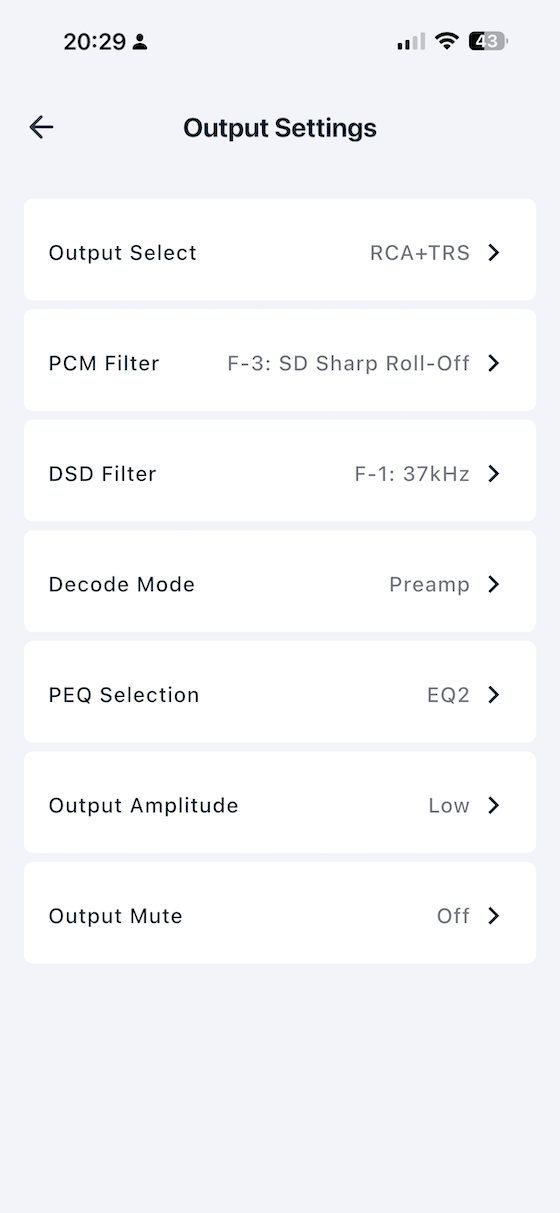
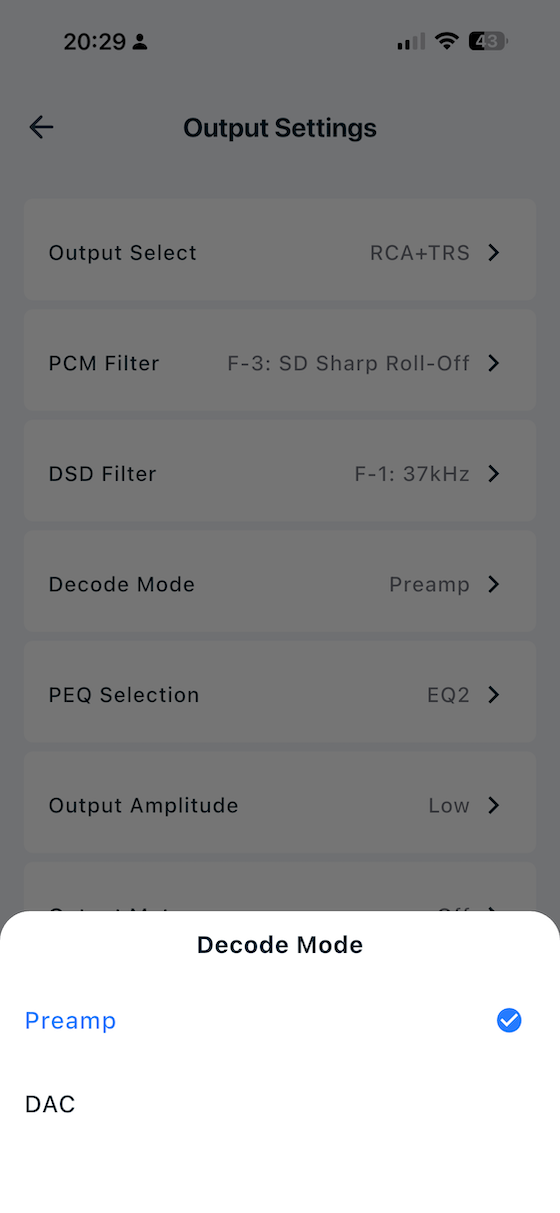
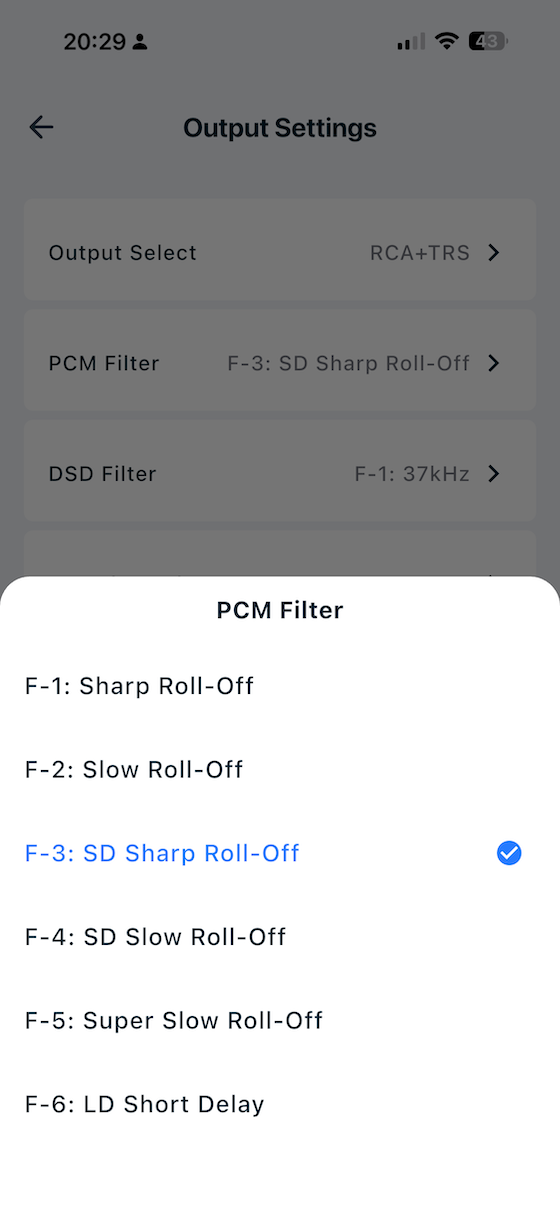
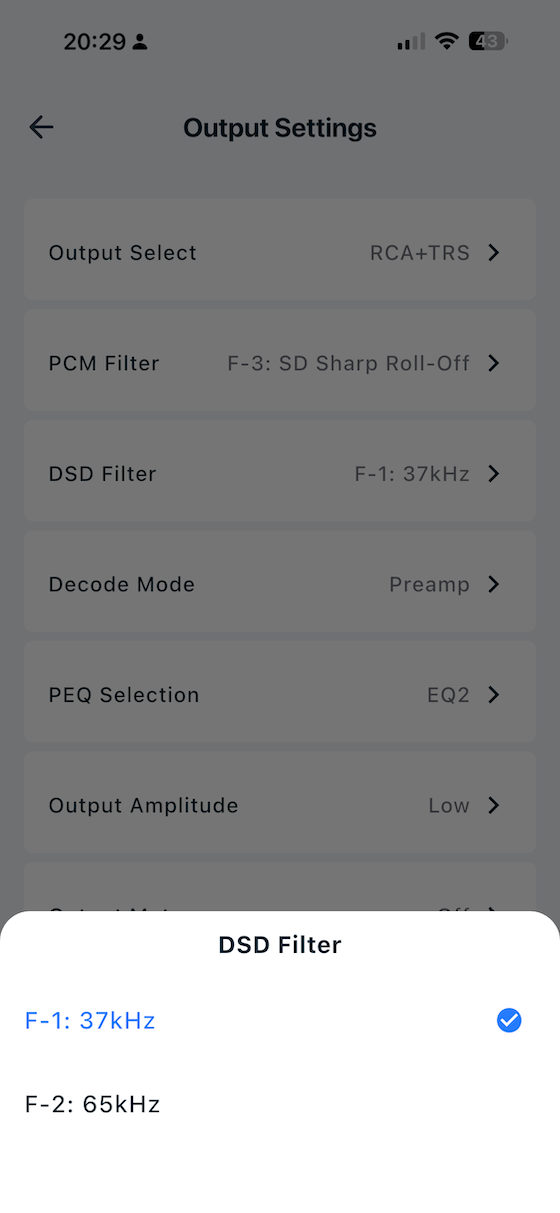
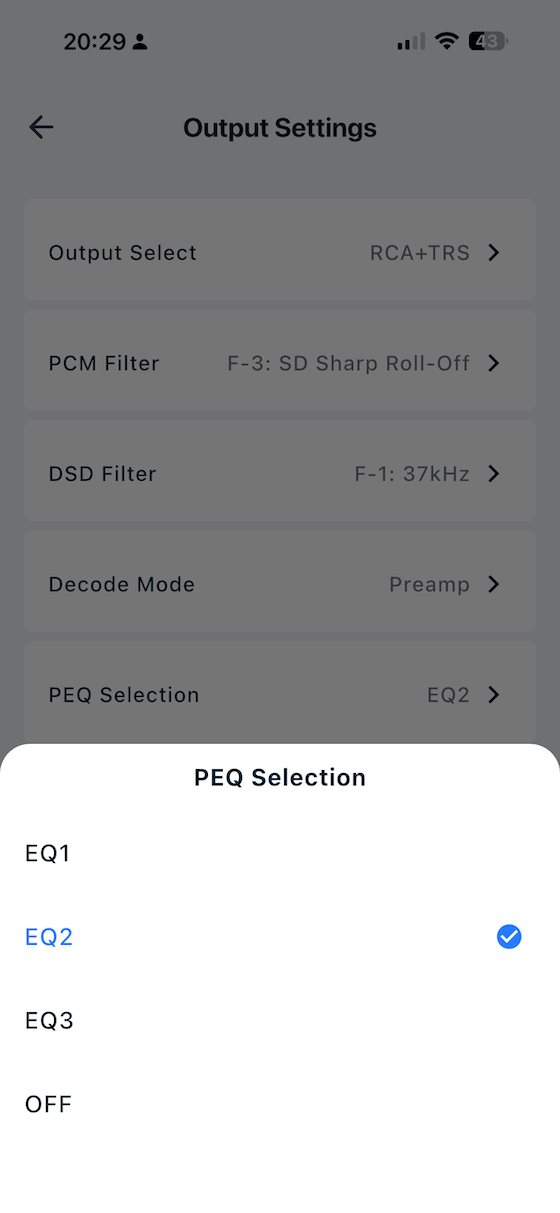
The decode mode screen gives you direct control over how the E50 II handles incoming signals, and the separate PCM and DSD filter pages put a level of fine-tuning in your hands that very few products at this price offer. Being able to select different reconstruction filter shapes — from minimum phase to linear phase options with varying roll-off and pre-ringing characteristics — and hear the differences directly through your own system is the kind of capability that used to require significantly more expensive hardware.
 |
 |
ADAT Support
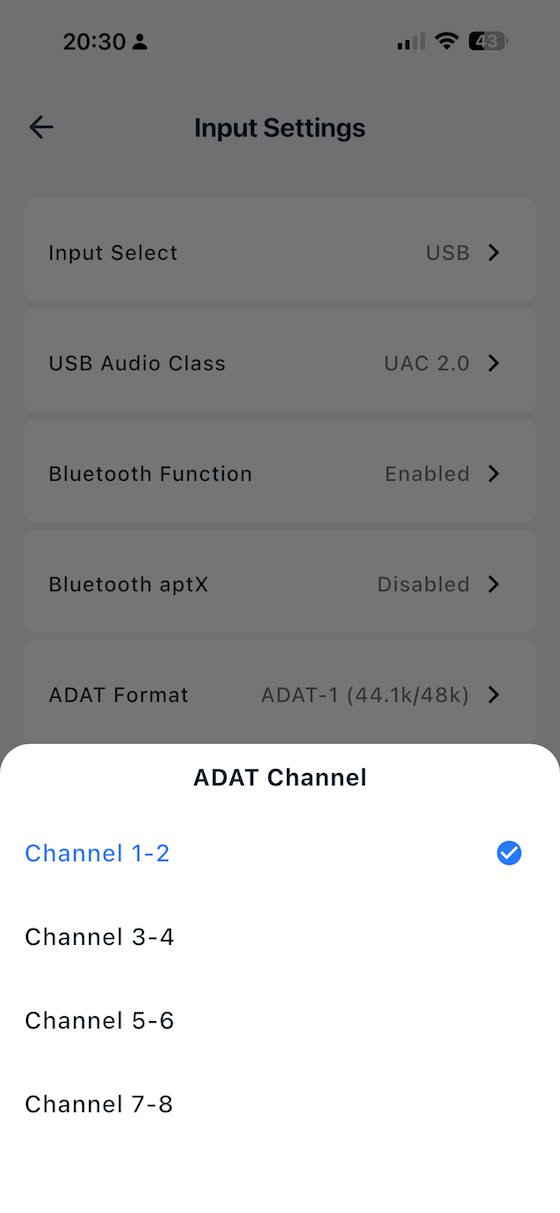
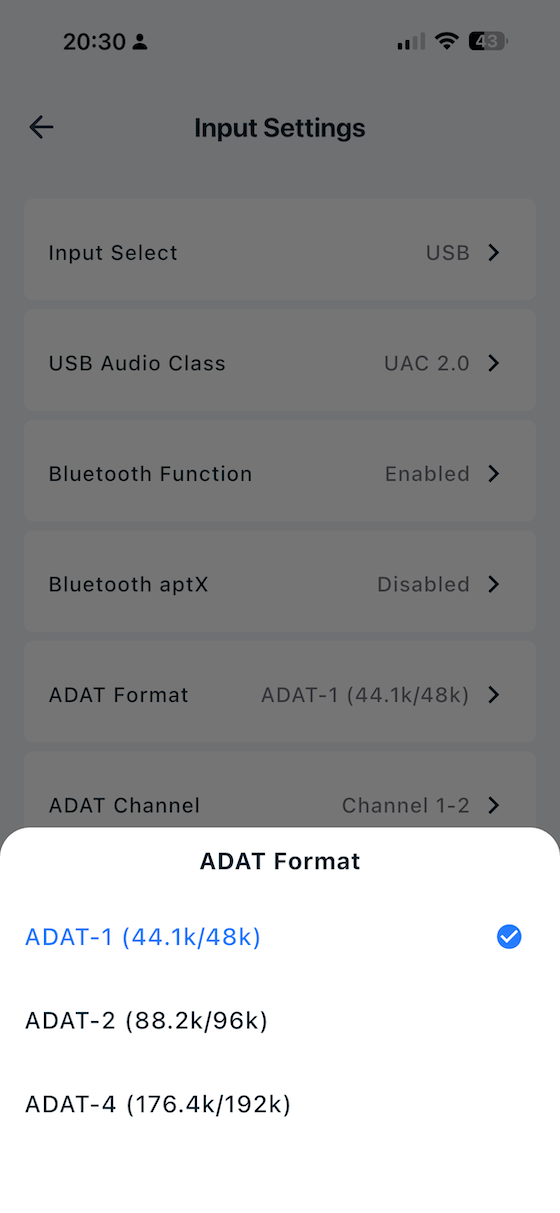
The ADAT capability on the optical input is a genuine differentiator that sets the E50 II apart from most desktop DACs in this bracket. The app gives you full control over ADAT channel selection and format, which means the E50 II can slot into more complex studio-style setups where multi-channel digital routing is part of the workflow — not a common consideration at $199.
 |
 |
Parametric EQ
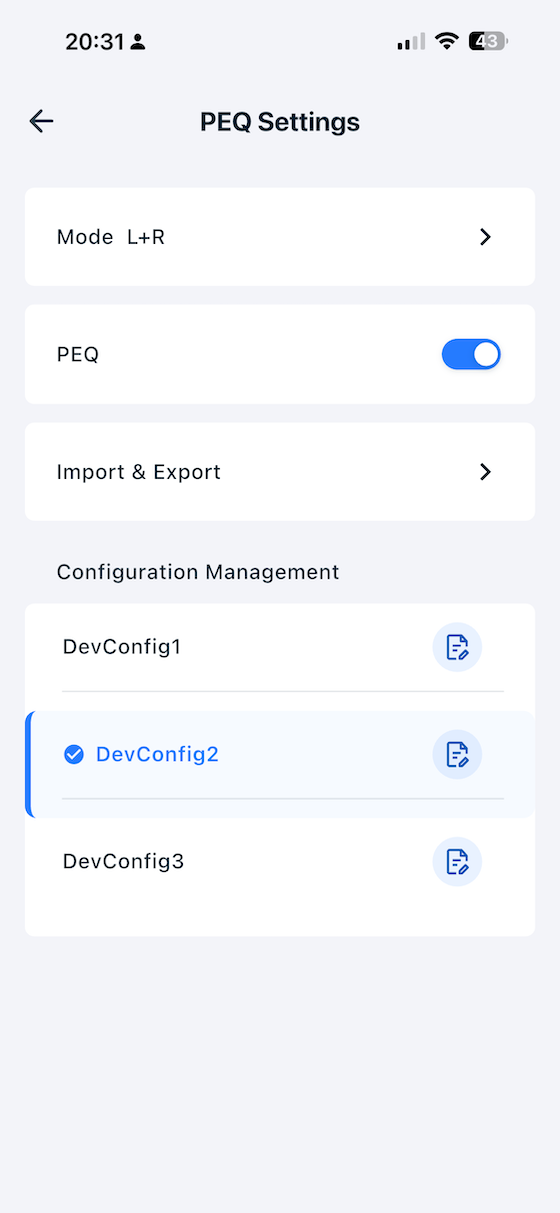
The ten-band parametric EQ is one of the E50 II’s most compelling capabilities, and the app implementation is excellent. Each band gives you full control over frequency, gain, and Q factor, with independent adjustment for left and right channels — meaning you can correct channel imbalances alongside tonal response. The EQ works at the DAC level rather than inside a playback application, so it applies universally regardless of source: Spotify, Tidal, a media server, or a Bluetooth stream all pass through the same filter chain.
 |
 |
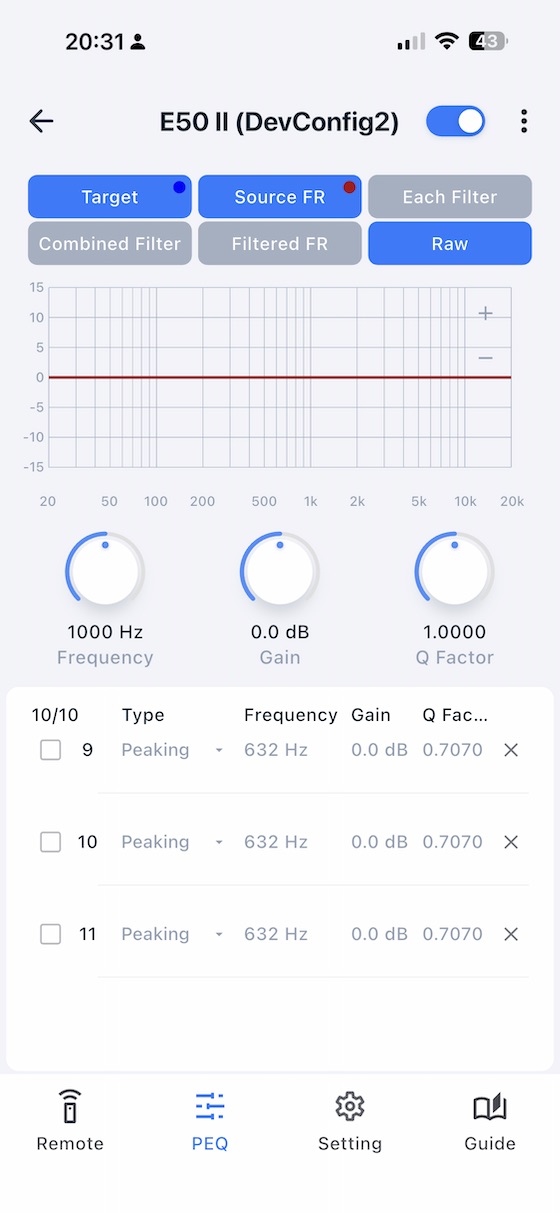
For speaker correction, headphone tuning, or compensating for room acoustics, this is a genuinely powerful tool — and having it at the DAC level rather than locked inside a single app makes it practical in a way that software EQ often is not.
Settings and Advanced Controls
 |
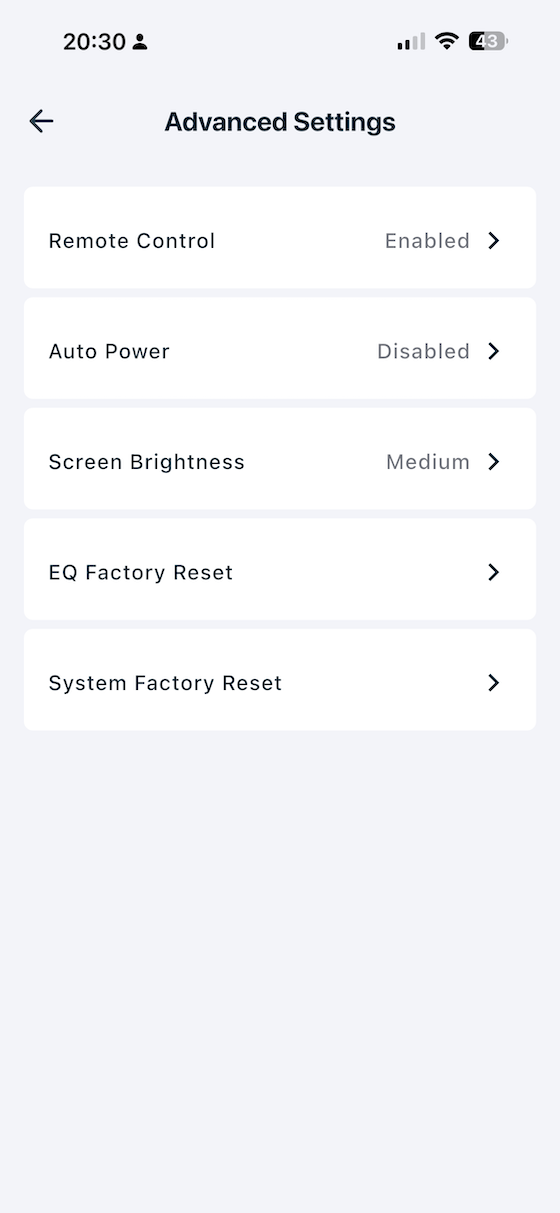 |
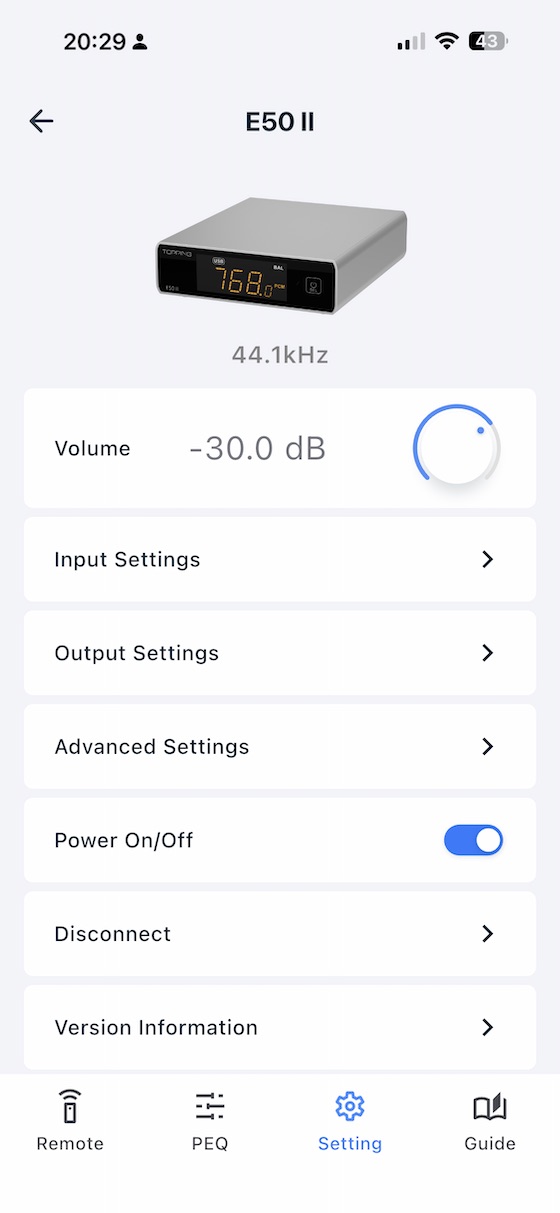
The settings and advanced screens complete a remarkably thorough app experience. Display brightness, output coupling mode, preamp versus fixed line-out switching, and gain configuration are all accessible without navigating cryptic front-panel menus. Topping have clearly given thought to the full range of use cases this unit is likely to encounter on a real desk.
Sound Impressions
All listening was done with the E50 II in fixed line-out mode, feeding powered monitors and an external headphone amplifier over balanced TRS connections. Source material ranged from 16-bit/44.1kHz FLAC through to DSD128 files and high-resolution PCM streams via USB, with Bluetooth LDAC used for wireless listening comparisons.
Bass
The E50 II presents bass with the kind of precision that reveals exactly what is in the recording and nothing else. There is no added warmth, no mid-bass bloom, no attempt to flatter content that was not engineered to sound a particular way — the authority is all there, but decay is natural and tightly controlled, leaving individual notes distinct rather than blended into a wall of low-frequency energy. Donald Fagen’s The Nightfly is a superb test here: the kick drum and bass guitar lock into precise rhythmic relation, each with clean leading edges and articulate texture, and the E50 II renders that relationship with a definition that a DAC with any tendency toward bloom will simply smear away.
Midrange
Midrange transparency is where the E50 II makes its most convincing argument. Vocals are presented with accurate body and tonal density — neither softened nor etched — and instrumental separation in complex arrangements is handled with confidence. The AK4497S’s harmonic resolution keeps acoustic guitar strings and piano voicings faithful to the source rather than colouring them with a tonal character of the DAC’s own. Dire Straits’ Brothers in Arms rewards close attention here: Mark Knopfler’s guitar and voice occupy their own distinct space in the mix, and the E50 II renders the subtle interplay between them with a precision that highlights just how much musical information a clean DAC stage is capable of preserving.
Treble
Treble extension is excellent and entirely free of grain or glassiness. Cymbal shimmer and upper-harmonic guitar detail are reproduced with accuracy and natural decay, and there is none of the artificial brightness that cheaper implementations sometimes introduce in the upper registers to create a false impression of resolution. Nils Lofgren’s live Keith Don’t Go puts this in sharp relief — the acoustic guitar pick attack and string harmonics are vivid and present without ever crossing into edginess, and the ambient air of that recording arrives intact rather than smeared into a homogeneous upper-frequency haze.
Soundstage and Imaging
The E50 II’s neutral character pays direct dividends in the soundstage: because it adds nothing and removes nothing, spatial information in the recording arrives exactly as it was mixed. Instrument placement is precise, channel separation is excellent, and depth cues are handled with natural proportionality rather than any artificial widening. Miles Davis’ Kind of Blue in high-resolution FLAC is the test I keep returning to — the intimate acoustic of the original session is preserved with its layering and micro-separation fully intact, and the recording’s distinctive sense of musicians sharing a close but unhurried space comes through with a clarity that less transparent DACs consistently obscure.
Comparisons
FiiO Warmer R2R
The FiiO Warmer R2R is the philosophical opposite of the E50 II in almost every respect. Where the Topping is compact, minimalist, and relentlessly neutral, the Warmer is a statement piece — retro aesthetics, VU meters, tube-inflected tonality, and an NOS mode that introduces the harmonic colouration many R2R enthusiasts specifically seek. Placed side by side, the design contrast alone tells you everything about who each product is made for.
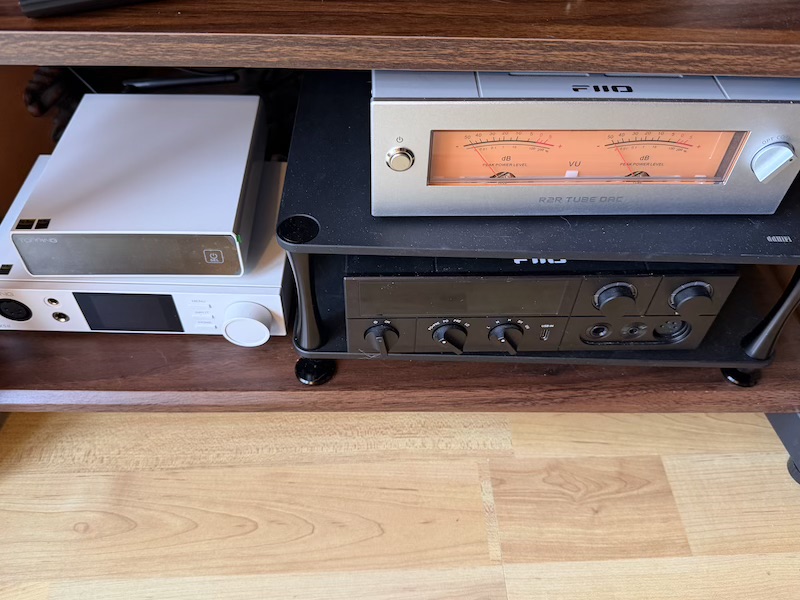
That said, the Warmer in OS mode narrows the sonic gap considerably — it can approach genuine neutrality — and the comparison is ultimately less about sonic superiority than about what you actually want a DAC to do in your system. If you want your DAC to be invisible and let the recording speak for itself, the E50 II is the correct choice. If you want a DAC that contributes a specific character to every record you play, the Warmer is built with you in mind. Both are excellent products; they simply serve fundamentally different philosophies.
Topping DX5 II
The Topping DX5 II is the E50 II’s bigger sibling — a $299 DAC and headphone amplifier combo that shares the same Topping design language and the same commitment to measurement excellence, but adds a fully balanced headphone output stage, crossfeed capability, and all the additional complexity that comes with driving headphones directly.
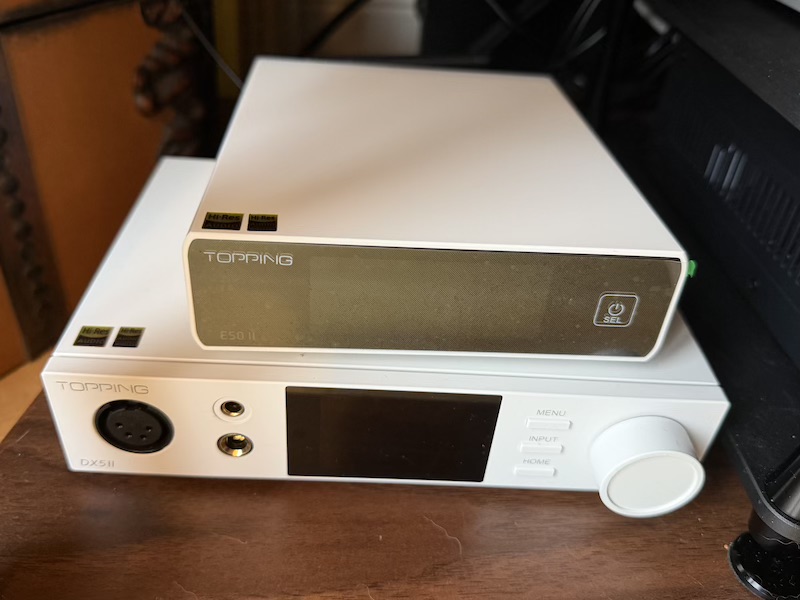
If you already own a headphone amplifier you are satisfied with and need a top-performing DAC to feed it, the E50 II is the sharper choice — it costs $100 less and delivers DAC performance that is functionally equivalent in every area that matters. The DX5 II makes sense if you want the full integrated stack in one box or need headphone outputs directly. For a speaker or powered-monitor setup where the amplifier question is already answered, the E50 II is the more logical buy.
Specifications and Measurements
| Specification | Value |
|---|---|
| DAC chip | AKM AK4497S |
| USB interface | XMOS XU316 |
| USB sample rates | PCM 44.1kHz–768kHz / 16–32 bit |
| USB DSD (Native) | DSD64–DSD512 |
| USB DSD (DoP) | DSD64–DSD256 |
| Digital inputs | USB-C, coaxial, optical (S/PDIF & ADAT) |
| Wireless | Bluetooth — LDAC, aptX Adaptive, aptX HD, aptX, AAC, SBC |
| Line outputs | Balanced TRS, single-ended RCA |
| SE output levels | 2.6Vrms / 5.6Vrms (selectable) |
| BAL output levels | 5.3Vrms / 11.3Vrms (selectable, up to 23.2dBu) |
| THD+N @1kHz | 0.0001% |
| Dynamic range | up to 131dB (BAL) / 130dB (SE) |
| SNR @A-wt | up to 131dB (BAL) / 130dB (SE) |
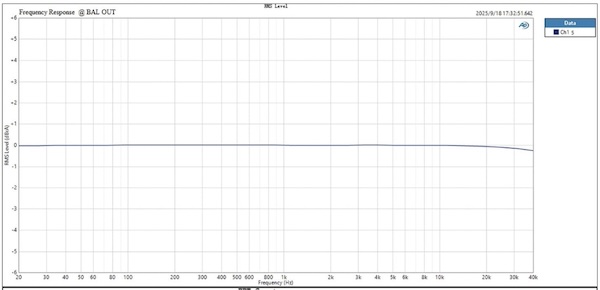
| Frequency response (BAL) | 20Hz–40kHz (±0.3dB) |
| Noise @A-wt | 1.7µVrms (SE) / 3.0µVrms (BAL) |
| Channel crosstalk | −130dB @1kHz |
| Output impedance | 50Ω (SE) / 100Ω (BAL) |
| Jitter performance | as low as −160dB (optical/coax) |
| PEQ | 10-band parametric, independent L/R, PCM up to 192kHz/32-bit |
| Dimensions (W × D × H) | 6.3in × 7.9in × 1.6in (16cm × 20cm × 4cm) |
The E50 II’s measurement performance is genuinely astonishing at this price. The frequency response is as flat as a DAC’s ought to be — leaving no audible signature of its own across the entire audible band.
The SINAD figure is extraordinary for a sub-$200 DAC, confirming that distortion and noise are so far below the level of the music that they are effectively inaudible under any realistic listening condition.
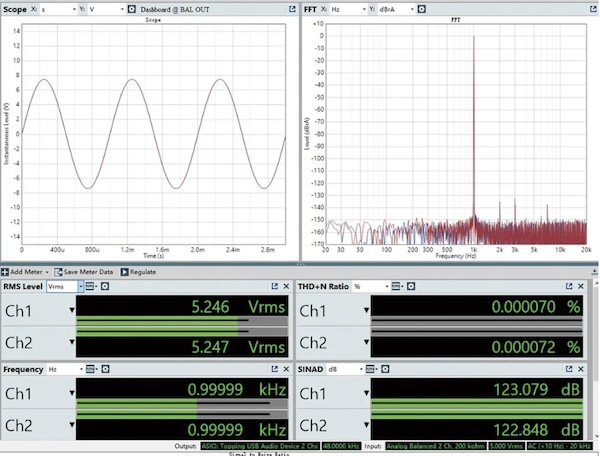
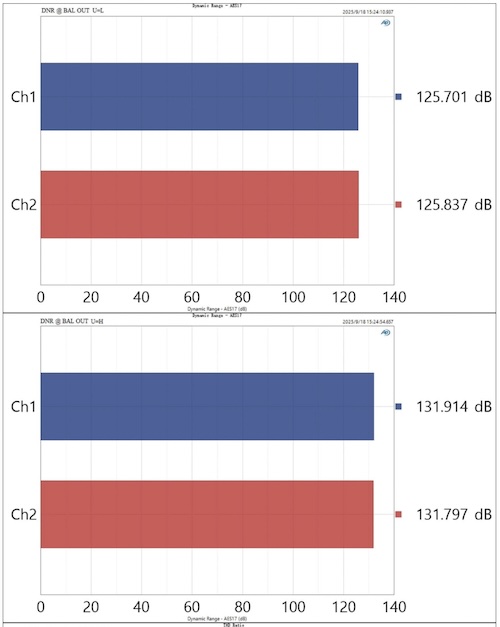
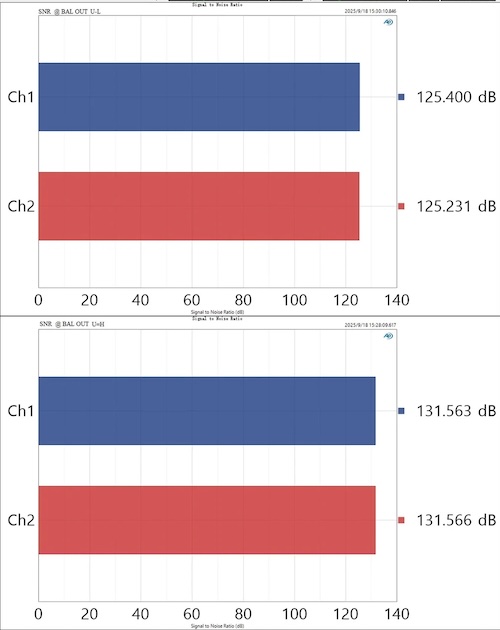
Dynamic range and signal-to-noise figures — up to 131dB — are benchmarks that were associated with considerably more expensive equipment just a few years ago.
 |
 |
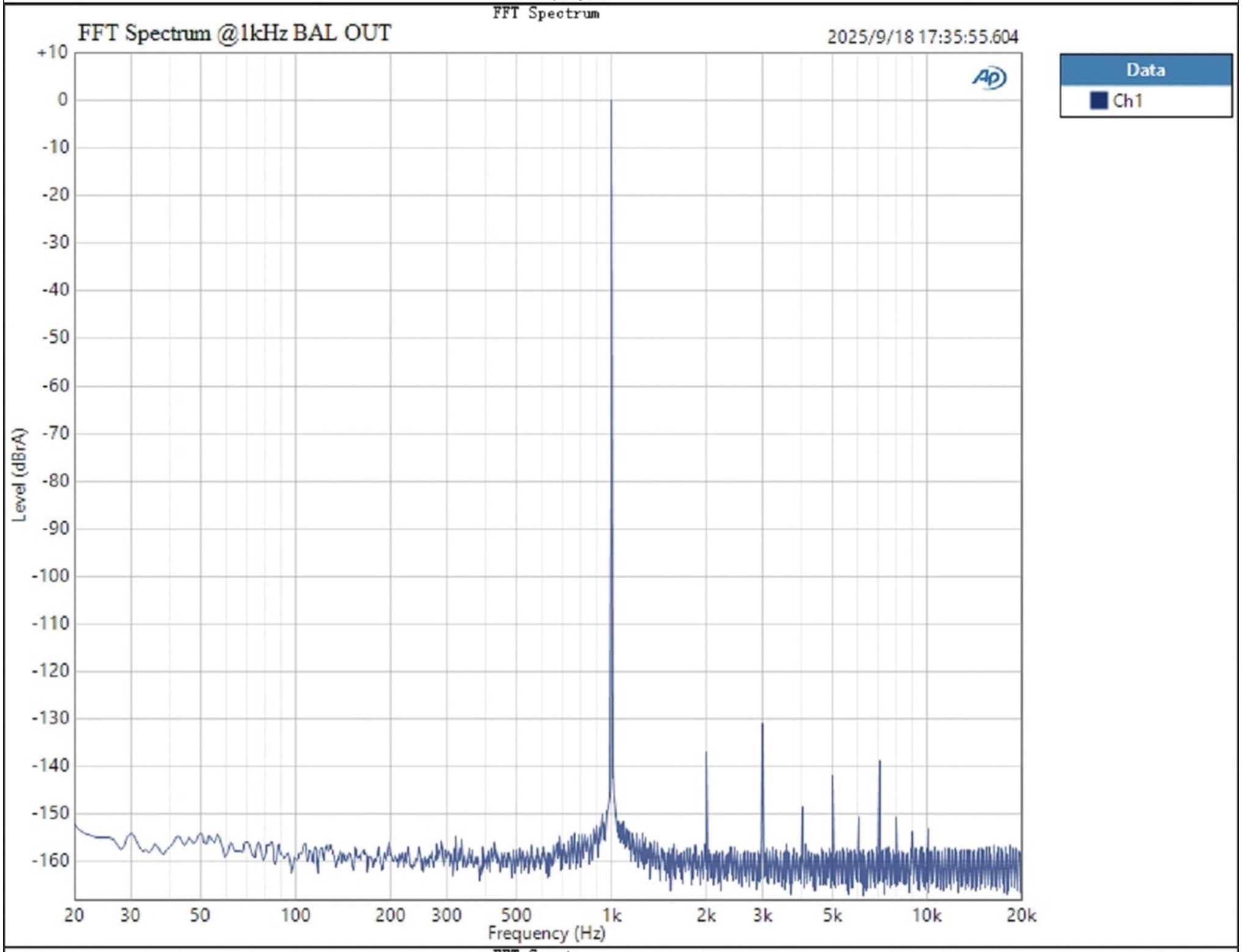
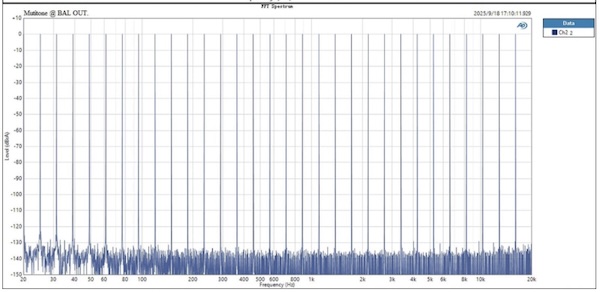
The FFT confirms a clean noise floor with no significant spurious tones or harmonic artefacts of concern, and the multi-tone test shows equally clean intermodulation performance across the spectrum.
 |
 |
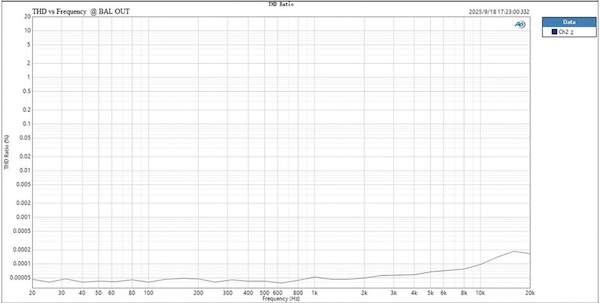
THD across the frequency range is impressively even, with no significant elevation in the bass or upper registers that might indicate a less controlled implementation.
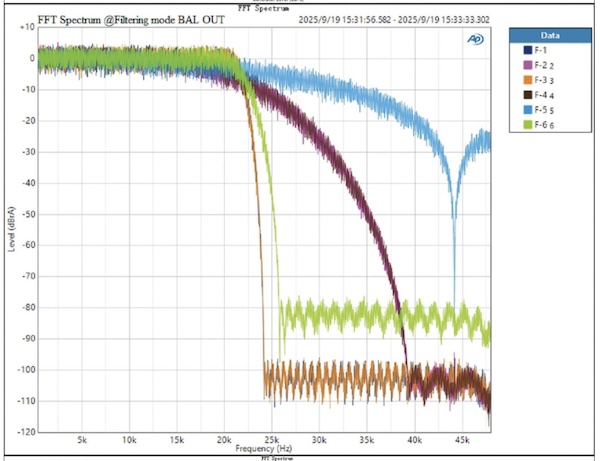
The DAC filter roll-off graph shows the different reconstruction filter options available through the app — each with a distinct profile in the ultrasonic region, allowing you to choose between filter presentations based on your preference for bandwidth, pre-ringing, and post-ringing behaviour.
I will update this section once independent third-party AP measurements of the E50 II are more widely available, but the results I have here are already among the most impressive I have encountered from a DAC at this price point.
Rating Explanation
At $199, the Topping E50 II earns a five out of five pragmatic rating by delivering a genuinely complete package: world-class DAC measurements, a ten-band parametric EQ accessible via a polished mobile app, LDAC Bluetooth, ADAT-capable optical input, balanced and single-ended line outputs with selectable output levels, and preamp mode with remote control. There is nothing else at this price that offers this breadth of thoughtfully implemented features alongside verified measurement performance at this level. Topping have taken everything they refined in the DX5 II and distilled it into a focused standalone DAC that is very hard to fault on its own terms.
The price rating sits at four rather than five because the DAC market in 2025 is genuinely competitive. Transparent-sounding DACs are available at lower price points — including some using the same AK4497S chip — that will get you most of the way there on pure sonic performance alone. The E50 II’s premium over those options is earned by the app integration, the PEQ, the LDAC implementation, the ADAT support, and the balanced output stage, but if your needs are simpler and those features do not figure into your workflow, the cost-per-sonic-performance ratio is not as dominant as it would be in a less crowded market.
Features and measurements both score five, without reservation. No DAC at $199 gives you more control over your signal chain, and very few give you cleaner numbers.
Conclusion
The Topping E50 II is the logical endpoint of what a measurement-first standalone DAC can be at this price in 2026 — not because it lacks competition, but because it answers the one quiet criticism that has historically followed ultra-clean DACs: that a product with nothing but transparency going for it is difficult to get genuinely excited about. The E50 II has plenty going for it beyond transparency. The app gives you real, practical control over your system. The ten-band PEQ makes it a tuning tool, not just a signal converter. The LDAC Bluetooth and ADAT optical input extend its reach far beyond the standard desktop DAC use case.
If you want a DAC that tells you exactly what is in the recording — no colouration, no flattery, no character imposed from the outside — and you want the tools to shape that signal precisely to your system and your listening preferences, the Topping E50 II is the one to buy.