Truthear KeyX
The keychain DAC that replaced my Apple dongle
Truthear built their reputation on value IEMs — the Zero series, the Hexa, Hype 4 — products with price perfect implementations at honest prices. The KeyX applies that same logic to source gear: a Cirrus Logic CS43131, a chip that typically anchors products in the $50–100 range, housed in a $30 keychain dongle that puts the usual “Apple dongle or bust” argument to rest.
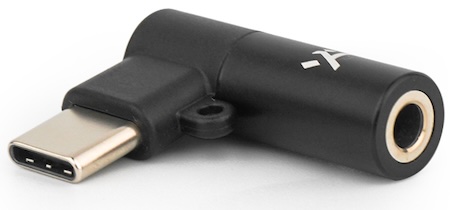
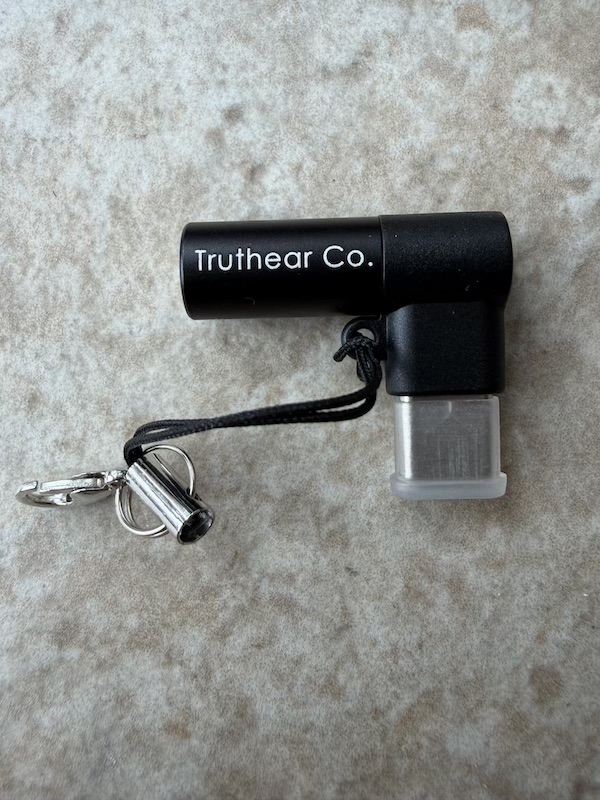
What makes the KeyX stand out visually is its size in a L-shaped form factor. It integrates the 3.5mm output jack directly into the chassis rather than relying on a short dangling cable, giving the device a cleaner profile and super easy to carry with you (ideally on your keyring).
I would like to thank Shenzhenaudio for providing the Truthear KeyX for the purposes of this review.
If you are interested in finding more information about this product, you can find it at the Shenzhenaudio product page.
The Truthear KeyX typically retails for around $30.
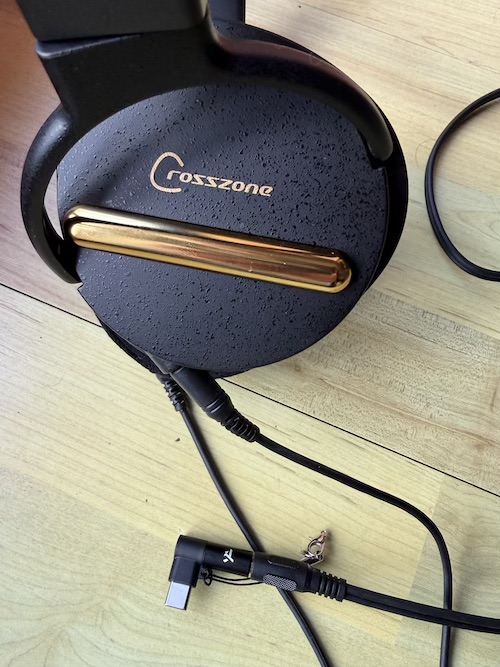
I’ve been running the KeyX for a few weeks across a range of everyday listening, most notably on a recent holiday where it served as my primary mobile source paired to an iPhone — and then back at the desk driving a selection of IEMs and even a pair of full-size headphones. This is an extremely clean sounding dongle, something I didn’t expect for it size and price.
But first, let’s take a look at what’s in the box.
Unboxing and Build Quality
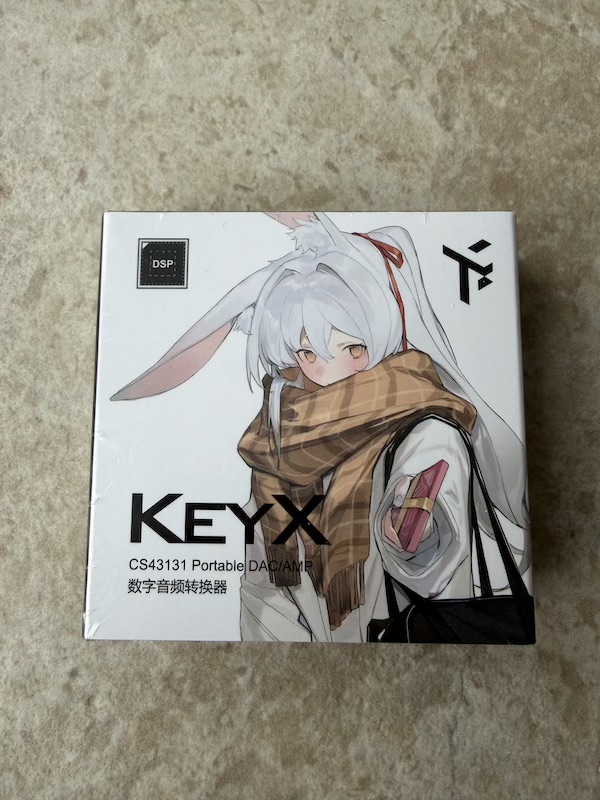
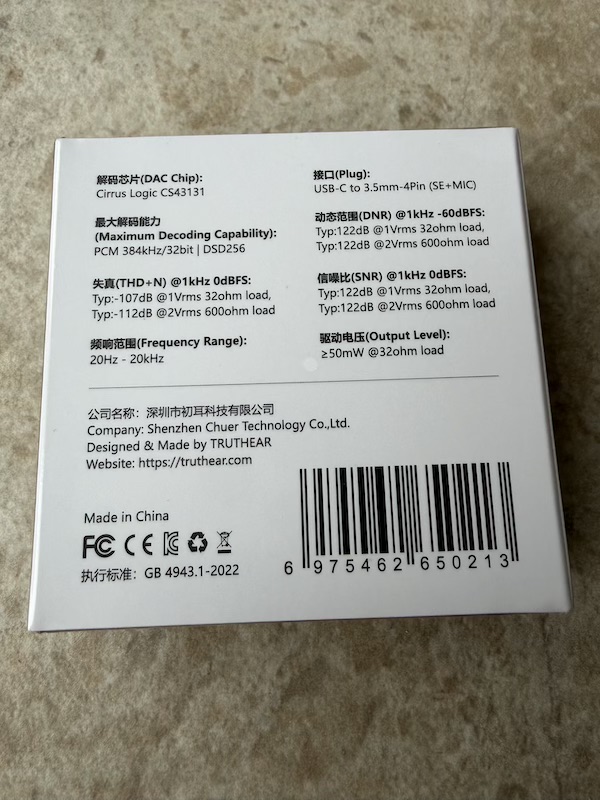
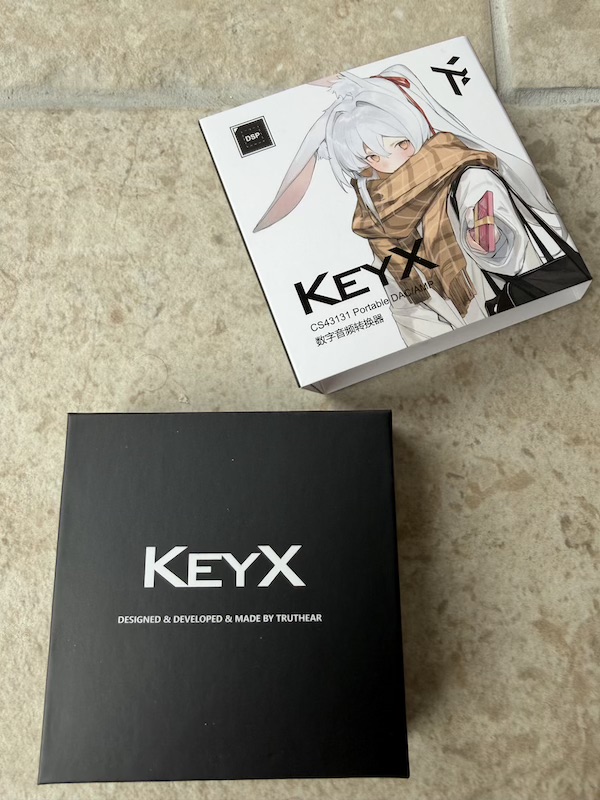
The packaging is clean and minimal — appropriate for the price, with nothing wasted. The box opens to reveal the KeyX nestled in a foam insert, with a short USB-C to USB-A adapter and the standard paperwork alongside it.
 |
 |
 |
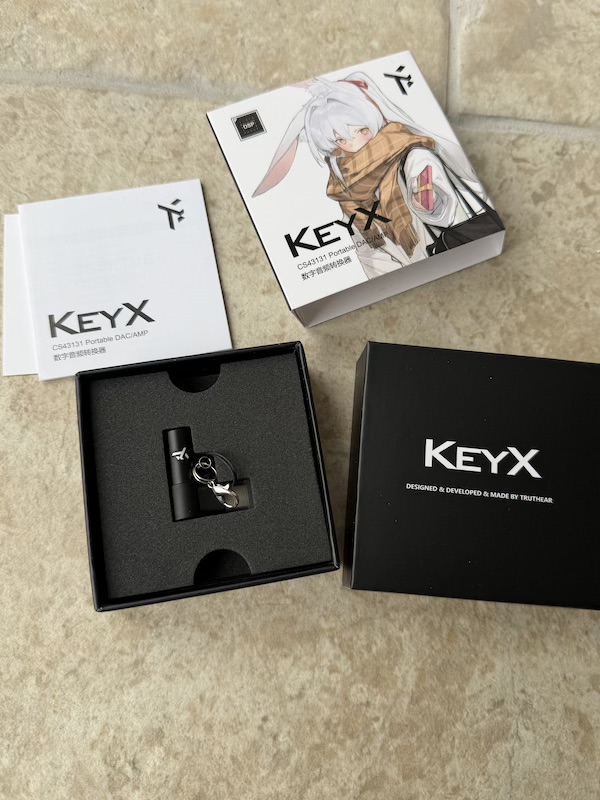 |
In the box: Truthear KeyX, USB-C to USB-A adapter, documentation.
The KeyX is constructed using a multi-injection moulded body combined with a CNC-anodized metal shell — a material combination that feels very solid, I feel this will easily out last an apple dongle. There is no flex, no creaking seam, no sense that this device will degrade with daily pocket use.
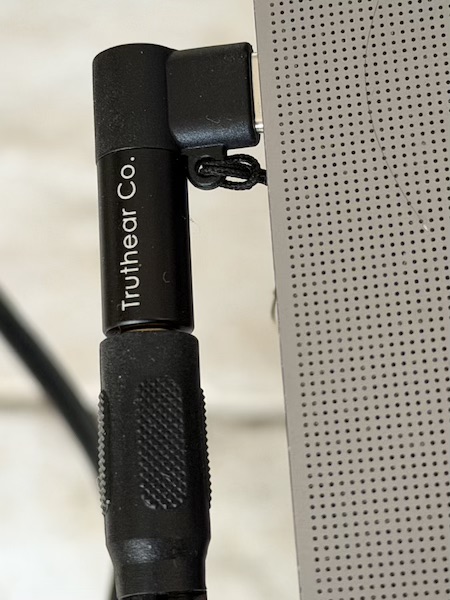
The L-shape is the defining characteristic, my only worry is that I will misplace it as it is so small. Because there is no cable I am not worrying about stretch or bending this dongle. Truthear has engineered that weak link out of existence by routing the analog stage directly into the chassis and terminating it in a right-angle female 3.5mm port. The result is a device that sits almost invisible along the edge of a smartphone, occupying no more space than a standard cable plug.
The signature feature is the small keyring loop built into the housing, which allows the KeyX to live on a set of keys or a lanyard — a genuinely smart idea for a source you want permanently at hand without having to remember to pack it.
 |
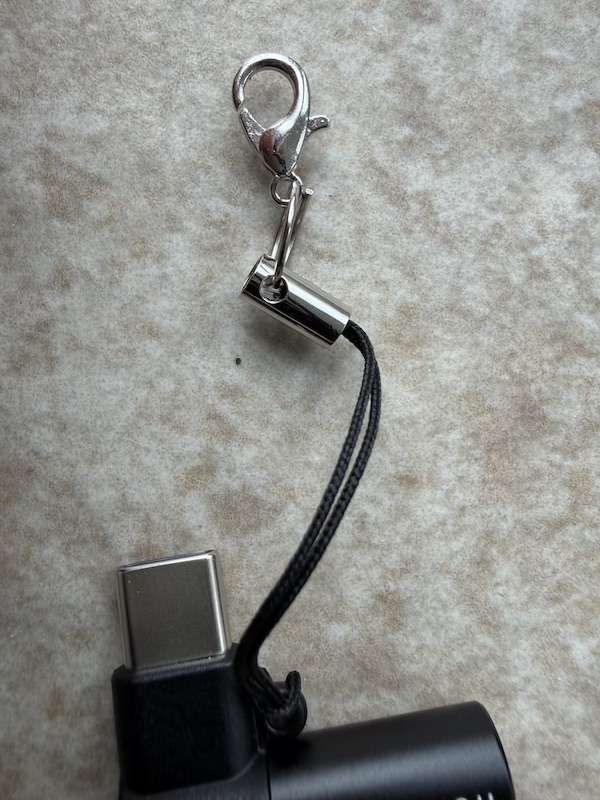 |
My only build quality concern is the connector point at the keyring loop itself, which feels like it could be a fatigue point under the daily stress of a key ring.
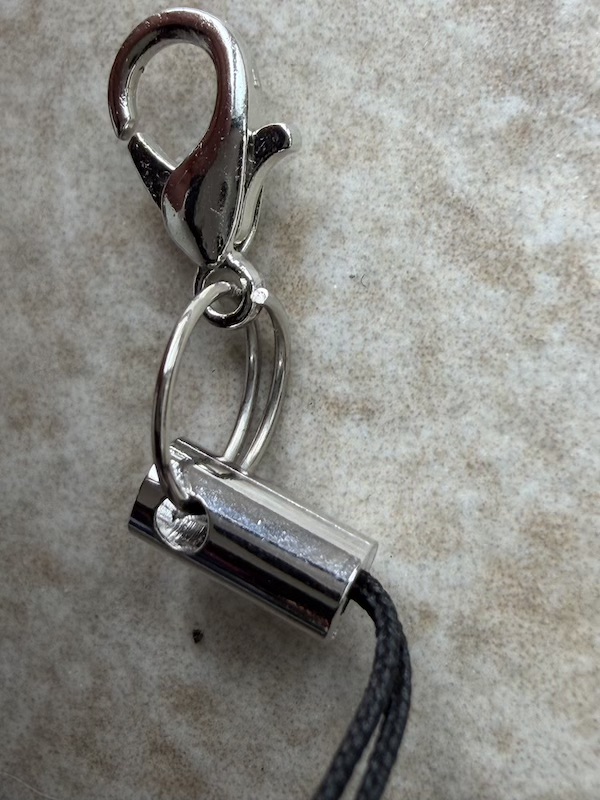
It is a minor concern and one that is easy to mitigate — the loop is a standard ring that could be swapped without difficulty if it ever showed wear — but worth knowing if you plan to rely heavily on the keychain functionality day to day.
The USB-C plug is robust and seats firmly. The 3.5mm female port features a clean lip with no wobble. There are no hardware volume buttons — a deliberate trade-off for simplicity, and one that is entirely reasonable given that both Android and iOS handle software volume control with sufficient granularity. The absence of an LED indicator is similarly intentional; this is a device designed to disappear.
Features and PEQ Support
The KeyX supports parametric EQ through an online DSP interface. Truthear’s recommended tool is their new EQTOOL.COM platform, which surfaces a full parametric equaliser with preset management and even a dedicated Truthear headphone preset library — genuinely useful for getting a compensated target on any compatible device in a few taps.
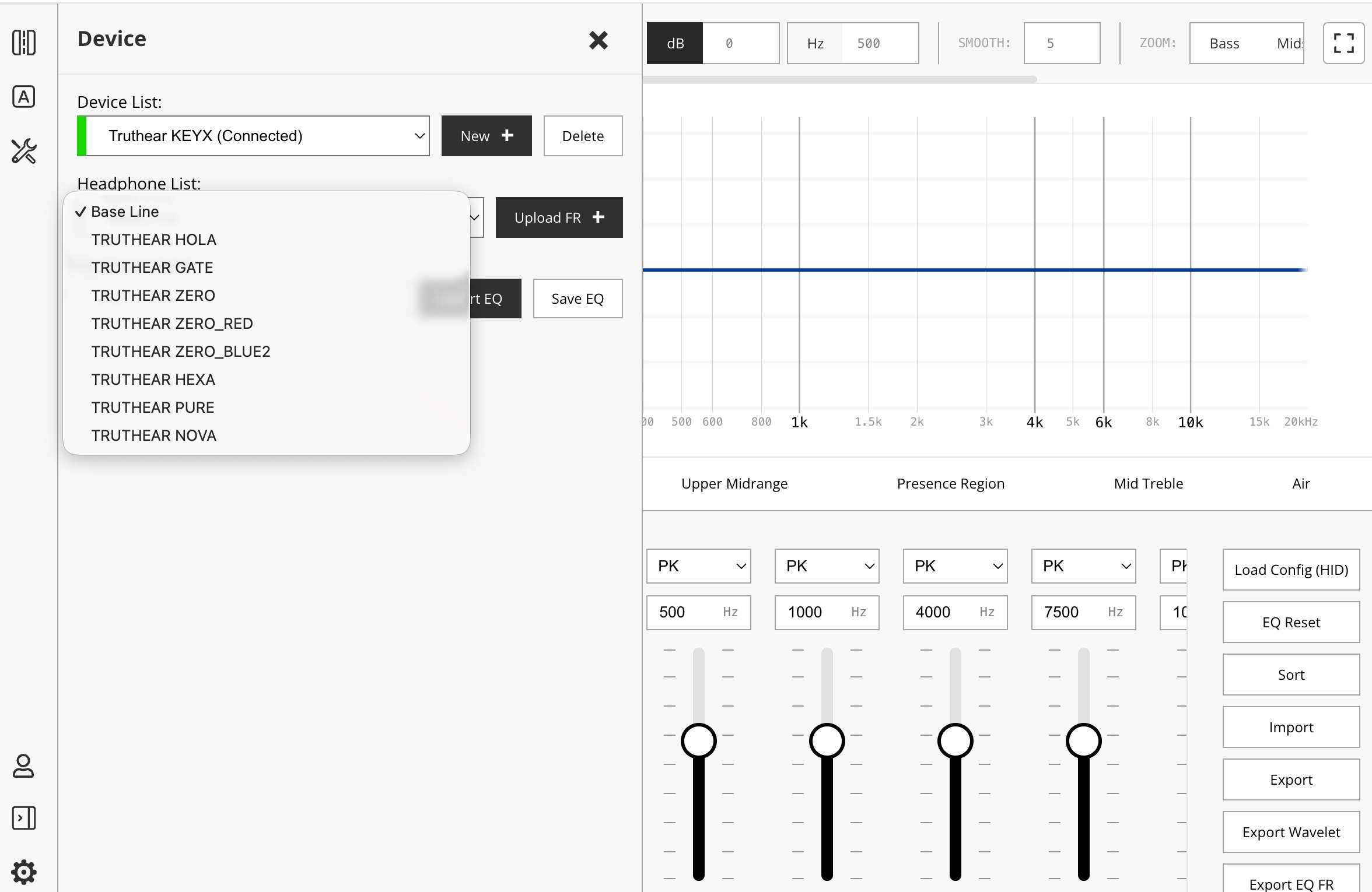
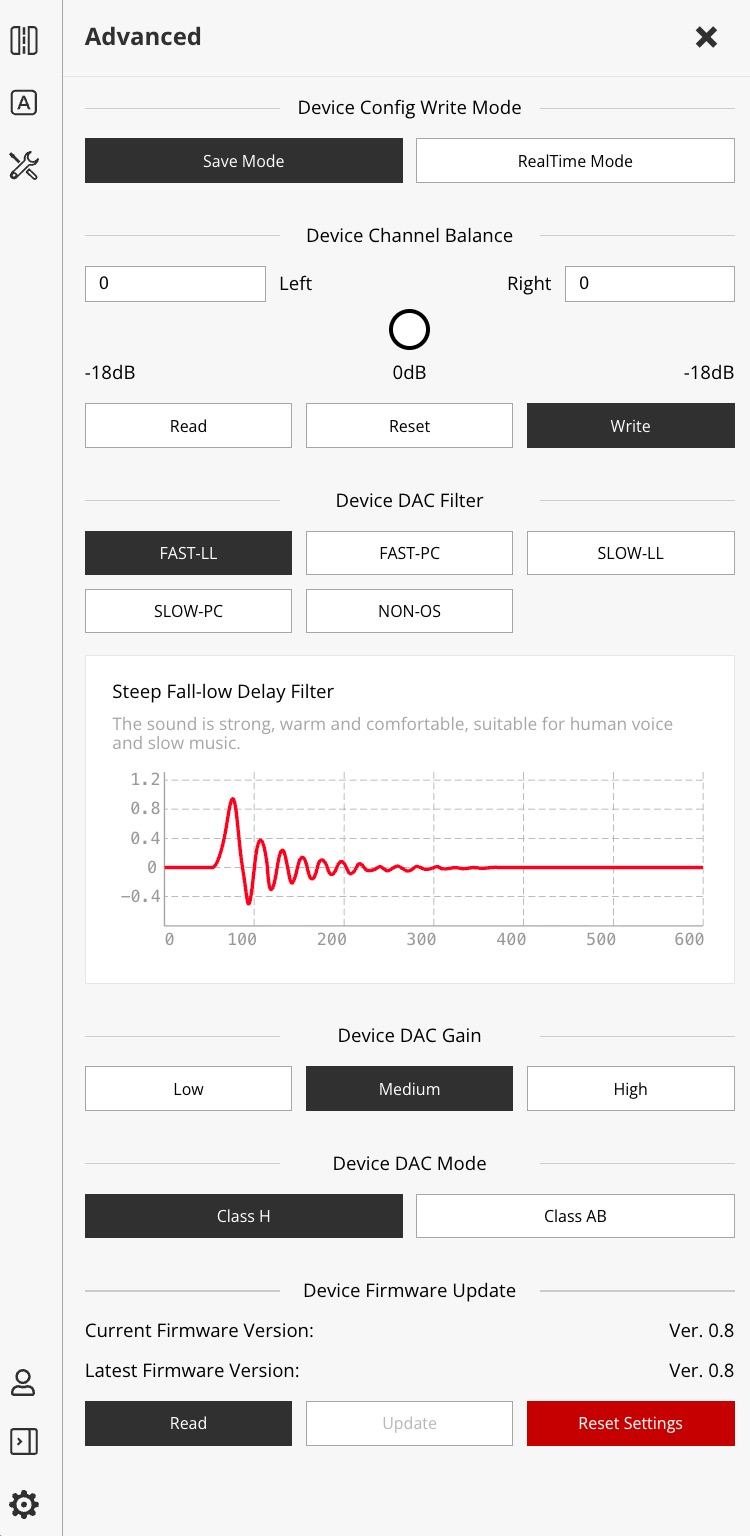
The EQ tool offers some extra configuration options for the KeyX also:
The device also works with Crinacles https://graph.hangout.audio and fully supports my own DevicePEQ tool, which allows PEQ filter sets to be pushed directly to compatible devices from web pages with no desktop software required.
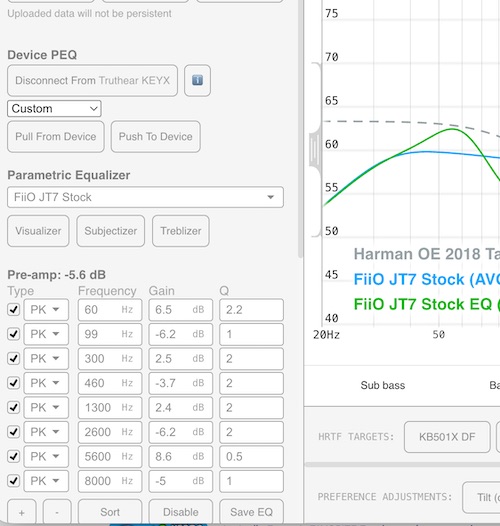
Being able to apply an EQ preset from a review page or measurement database in a single click is genuinely useful, and the KeyX handles it cleanly.
Microphone input is supported via the TRRS jack, keeping the KeyX viable for voice calls and remote work without needing a separate adapter — something that distinguishes it from many audiophile-focused dongles that sacrifice mic functionality for perceived signal purity. Decoding capability runs to PCM 384kHz/32-bit and DSD256, comfortably beyond anything most streaming services require. Lossless Spotify, Apple Lossless, TIDAL HiFi, FLAC files — all decoded natively.
What is absent from the feature set are no hardware volume control, no gain toggle, no LED status indicator, and no balanced output. But given the KeyX size and target audience is a device designed for the IEM user these limitations are completely understandable.
Sound Impressions
The CS43131 is a well-characterised chip: neutral, transparent, and composed. The KeyX is a faithful implementation of it. I ran the KeyX from an iPhone and from a laptop, primarily with the FiiO JT7 Planar and a range of IEMs, and the consistent impression was one of effortless cleanliness — no grain, no obvious coloration, just the recording presented accurately. Source chain for these impressions was iPhone → KeyX → FiiO JT7 Planar and a selection of single-dynamic IEMs.
Bass
Sub-bass extension is accurate and neutral, with no added weight or bloom. The KeyX does not editorialize low frequencies — what the recording contains is what arrives. Kick drum texture on Steely Dan’s “Aja” comes through with genuine articulation: tight, defined, and uncolored. If your headphone has a tuned bass shelf, the KeyX will faithfully reproduce it; if it doesn’t, the KeyX won’t add one.
Midrange
The midrange is clean and transparent, with good note weight and no upper-mid hardness. Vocal presence on Dire Straits’ “Brothers in Arms” sits naturally — intimate without being forward, with clear instrumental separation behind the main melody. The CS43131’s neutrality means your transducer’s character comes through without interference, which is exactly what you want from a reference-grade source.
Treble
Treble extension is confident and free from glassiness. Hi-hat sheen on Michael Jackson’s “Billie Jean” has proper shimmer without etch or sibilance, and upper-harmonic resolution is genuinely present rather than merely implied. Whether your headphone takes advantage of it is its own business, but the KeyX is not the limiting factor.
Soundstage and Imaging
Staging characteristics reflect the headphone rather than the source, which is precisely the right behaviour from a neutral DAC. Channel matching is precise, background blackness is strong, and imaging holds its position cleanly within whatever space the recording presents. On Radiohead’s “How to Disappear Completely,” ambient tails float in their own layer rather than collapsing into the mix — a good indicator of a clean noise floor. Even driven into full-size over-ear headphones, the KeyX maintains that composure, though the 50mW output does approach its limits on power-hungry planar designs.
Comparisons
The sub-$50 dongle segment is crowded with worthy competitors. The KeyX does not dominate every category, but its combination of factors — the small L-shape, microphone support, CS43131 implementation, and eqtool/DevicePEQ compatibility — carves out a distinct identity.
| Model | Price | DAC Chip | Output Power | Mic Support | Form Factor |
|---|---|---|---|---|---|
| Truthear KeyX | $30 | CS43131 | 50mW @ 32Ω | Yes | Tiny L-shape |
| FiiO KA11 | $30 | CS43131 | 245mW @ 16Ω | No | Cable + body |
| JCally JM20Pro | ~$20 | CS43131 | 70mW @ 32Ω | No | Cable + body |
| JadeAudio JA11 | ~$15 | Proprietary | 30mW @ 32Ω | Yes | Cable + body |
The most obvious baseline is the Apple USB-C dongle — the default mobile source for most iPhone users. The KeyX outputs 50mW into 32Ω against the Apple dongle’s roughly 30mW, and the measured noise floor and dynamic range are in an entirely different class. On the recent holiday trip, it replaced the Apple dongle entirely without a second thought.
Against the FiiO KA11, the most interesting comparison given they share the same CS43131 chip and retail at the same $30 price: the KA11 wins decisively on raw output power, delivering 245mW into 16Ω versus the KeyX’s 50mW into 32Ω — a meaningful advantage for driving full-size headphones or demanding planars. What the KA11 gives up is microphone support (it has no ADC), the integrated chassis ergonomics of the tiny L-shape. For IEM listeners who also want mic support and on-device EQ, the KeyX is the more complete daily companion; for anyone who needs real headphone-driving grunt, the KA11 is the better device ( though lacking in PEQ).
The JCally JM20Pro is a close stablemate at around $20: another CS43131, ~70mW of output, and — critically — parametric EQ support via the Walkplay application, which provides a legitimate alternative to eqtool.com for users who prefer an Android-centric EQ workflow. The JM20Pro concedes on ergonomics (traditional cable + body form), lacks mic support, and sits in a slightly murkier position in the wider ecosystem since Walkplay is less broadly integrated than eqtool or DevicePEQ. At $10 less than the KeyX it is a strong value proposition, but the KeyX’s L-shape and mic capability make it the more useful daily device for most people.
The JadeAudio JA11 undercuts everything here at around $15 and uses FiiO/JadeAudio’s proprietary DAC chip rather than a third-party Cirrus Logic solution. Output power is limited to 30mW at 32Ω — adequate for efficient IEMs but no more — and measured performance, while respectable, doesn’t match the CS43131’s benchmark numbers. It does offer mic support and five-band parametric EQ via the FiiO Control app, which keeps it relevant as an absolute budget entry point. The KeyX offers a noticeably more resolved, better-measured experience for the additional fifteen dollars, and the L-shape erases the JA11’s one remaining ergonomic advantage entirely.
Specifications and Measurements
| Specification | Value |
|---|---|
| DAC Chip | Cirrus Logic CS43131 |
| Max Decoding | PCM 384kHz/32-bit, DSD256 |
| Output Power | ≥50mW @ 32Ω |
| THD+N @ 1kHz 0dBFS | –107dB @ 1Vrms / 32Ω; –112dB @ 2Vrms / 600Ω |
| DNR @ 1kHz –60dBFS | 122dB @ 1Vrms / 32Ω; 122dB @ 2Vrms / 600Ω |
| SNR @ 1kHz 0dBFS | 122dB @ 1Vrms / 32Ω; 122dB @ 2Vrms / 600Ω |
| Dynamic Range | 122dB |
| Frequency Range | 20Hz–20kHz |
| Plug | USB-C to 3.5mm TRRS (SE + MIC) |
| MQA Support | No |
The measurement results are the headline here. Tested on an Audio Precision APX555 — the reference bench for professional audio measurement — the KeyX achieves a SINAD of 112dB.
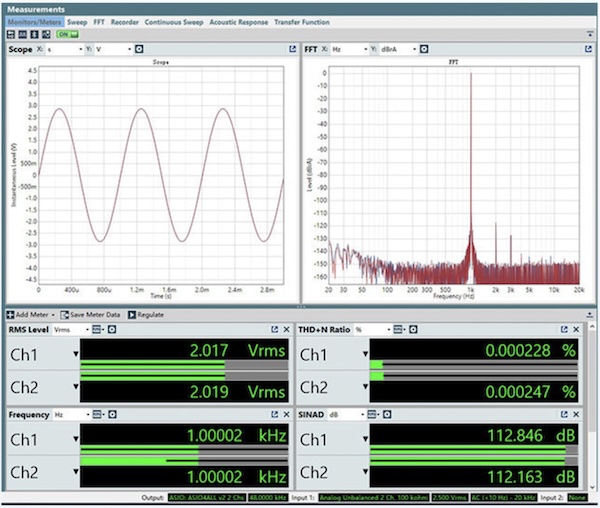
That result puts the KeyX well above the audibility threshold for distortion artifacts and ahead of many products at two to three times the price. A dynamic range and SNR of 122dB at the 32Ω load that most IEMs operate at represents benchmark-grade performance for the sub-$30 tier. The THD+N figure of –107dB at a 1V RMS load means harmonic distortion is effectively inaudible in any real-world listening scenario. Dynamic range of 122dB means the noise floor is effectively inaudible on sensitive IEMs — background silence is genuinely black, not merely quiet. The 50mW output into 32Ω provides real driving headroom, enough to handle a planar headphone from a phone without running into the top of the volume range.
Rating Explanation
A 5 star rating across the pragmatic, features, and measurements ratings reflects what the KeyX actually is: an excellent implementation of a chip that usually costs far more, in a form factor that makes practical sense, with measurement results that hold their own against gear at multiples of the price. The built-in PEQ support — working across multiple platforms including eqtool.com and DevicePEQ; it is genuinely usable and adds real flexibility for those who want to personalise their sound or apply a device-specific compensation profile.
The price rating sits at four rather than five not because if it is the replacement for the apple dongle it does have a little price bump over the usual $10 for the apple dongle, but given the features of the KeyX I do think its worth it especially if you want more power and EQ. The absence of hardware volume control and balanced output ( which practicall can only be delivered in a much larger device) will matter to a subset of users who need to drive demanding headphones or who value precise hardware-level gain control. These are small points against a product that earns its scores decisively.
The KeyX is aimed squarely at mobile listeners who want a proper source rather than an afterthought, and at anyone who has been reaching for the Apple dongle out of habit rather than preference. If you fall into either camp, the upgrade case here is unusually easy to make.
Conclusion
The Truthear KeyX does what it promises with very little drama: a Cirrus Logic CS43131, honest measurements, built-in parametric EQ supported across eqtool.com, hangout.audio, and DevicePEQ, and a clever keychain form factor for thirty dollars.
It replaced the Apple dongle in my travel kit without ceremony, drove a relatively hard to drive planar headphone on a holiday without breaking a sweat, and delivered measurement results that most desktop DACs at this price cannot approach. Small, neutral, light, and now permanently on my keys — the KeyX is the upgrade that makes you wonder why nobody else thought of a keychain dongle DAC before.