Argon Audio Fenris A55
An active floorstander with twin 5″ woofers, HDMI ARC and a phono input
The Fenris A55 is the top of Argon Audio’s Fenris active speaker range — a pair of powered towers where the left speaker holds the amplifier and all the inputs, and the right is a passive cabinet driven over a single speaker cable. Each side runs two 5.25″ paper-cone woofers and a 0.75″ soft-dome tweeter from a Class D amplifier, in a tall MDF enclosure that is clearly built to move air.
What makes the A55 interesting is how much it folds into one box. It takes HDMI ARC for your TV, optical and analogue RCA for a source, a moving-magnet phono input for a turntable, and Bluetooth — so it can be a TV system, a desktop system or a turntable system without a separate amplifier or receiver in the chain. Argon are HiFi Klubben’s own brand, and the Fenris series is pitched squarely at people who want real floorstanding sound without building a rack of separates.
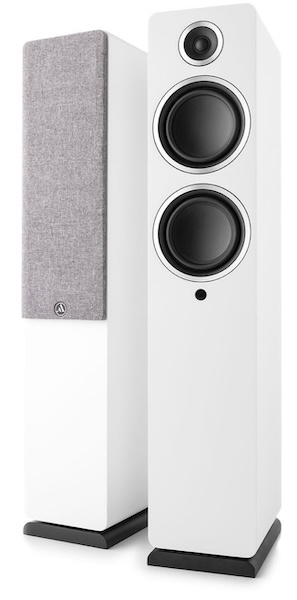
I would like to thank Argon Audio for providing the Fenris A55 for the purposes of this review.
If you are interested in finding more information about this product, you can find it at the official Argon Audio product page.
The Fenris A55 is the flagship of Argon’s Fenris active speaker series and is available in White, Ash, Black and Walnut PVC finishes. The unit reviewed here is the Walnut finish.
I have lived with the A55 in two very different setups: as a TV system over HDMI ARC in the main living room, and in the kids’ room running from analogue RCA and optical fed by a tiny WiiM Mini. The headline is that this is a genuinely convenient pair of speakers with bass that fills a room — arguably a little too generously — and that a small amount of room correction transformed it from a great TV speaker into something I was happy to sit down and listen to seriously. But first, let’s take a look at what’s in the box.
Unboxing and Packaging
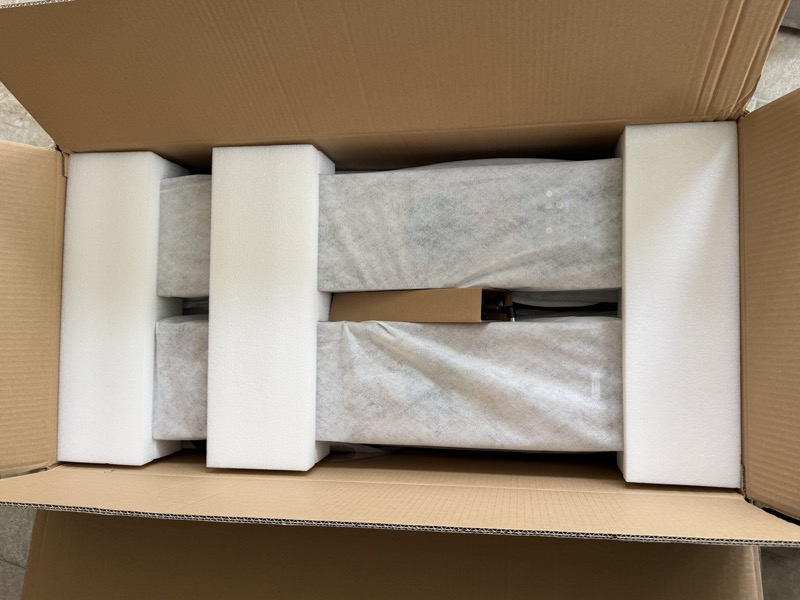
The A55 arrives in a single large carton, and as you open it both speakers are right there, carefully secured in place and cradled top and bottom in foam:
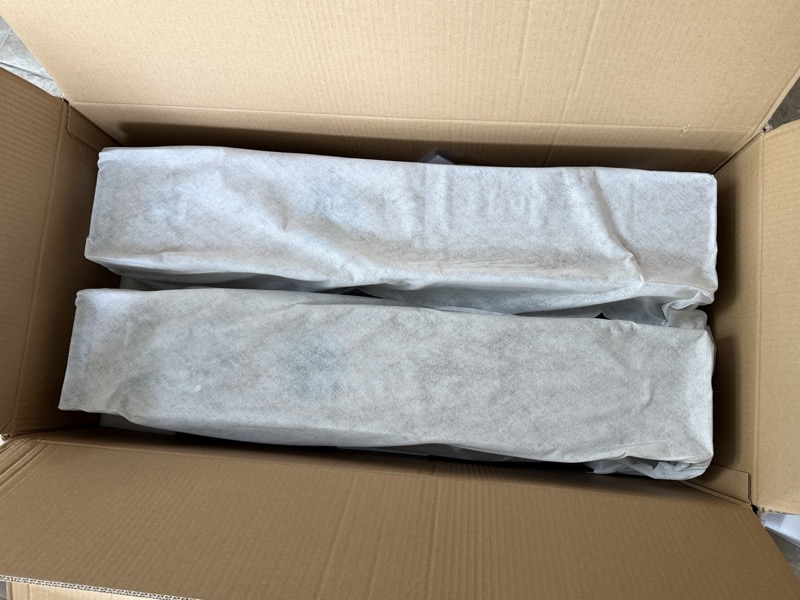
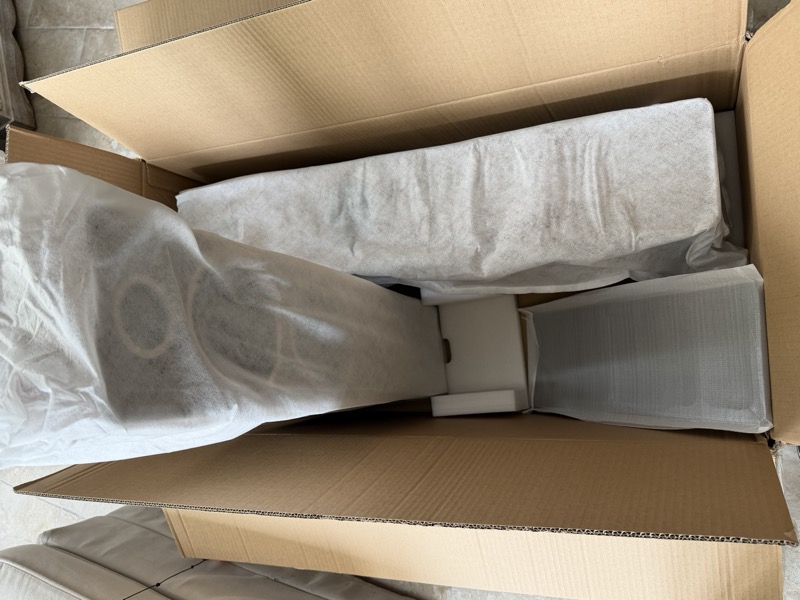
Underneath that, each speaker is still in its protective wrapping. Lifting one out, the speaker stays bagged with the driver outline pressing through the wrap:
 |
 |
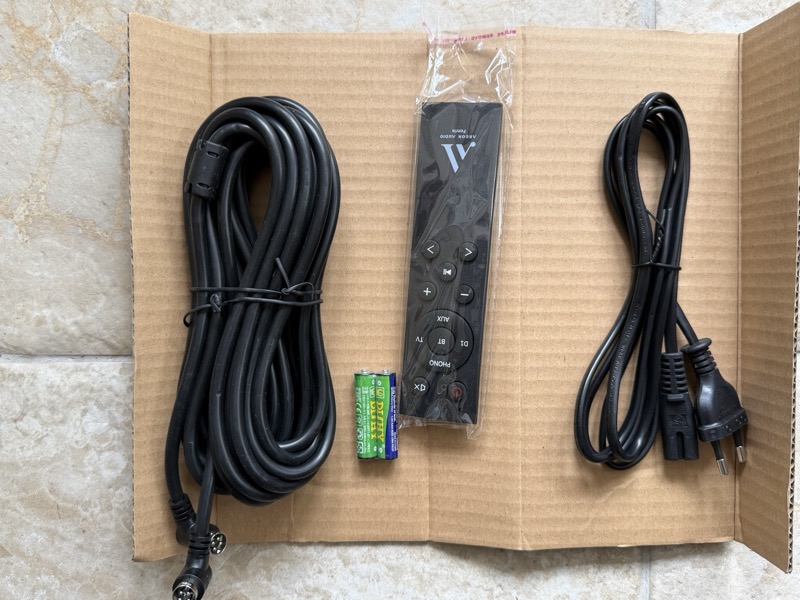
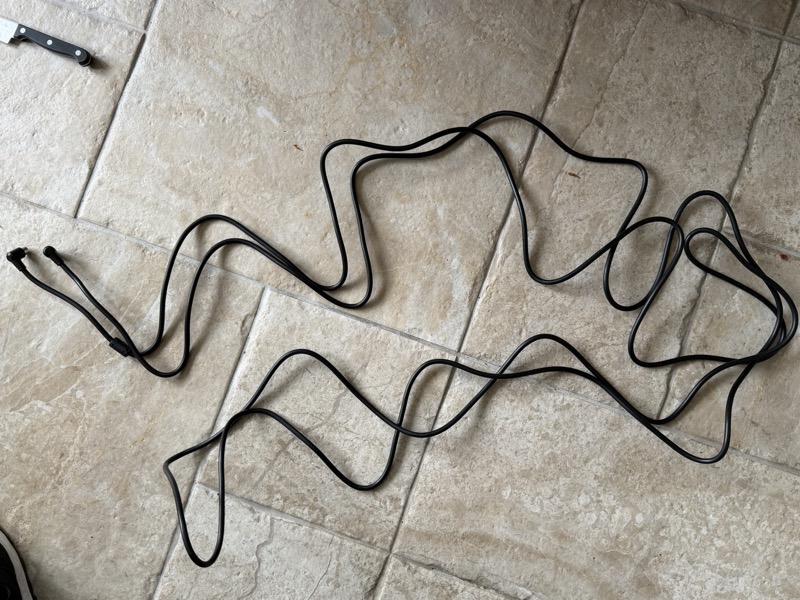
The accessories are straightforward and complete for a plug-and-play system: the 6 m speaker cable that links the two cabinets, the remote with its battery, and the power cable. That 6 m run is generous and, thankfully, long — I wanted to route the cable discreetly around the room so it wasn’t on show (keeping it out of my wife’s eyeline), and the extra length made that easy. With a cable like this, the longer the better:
 |
 |
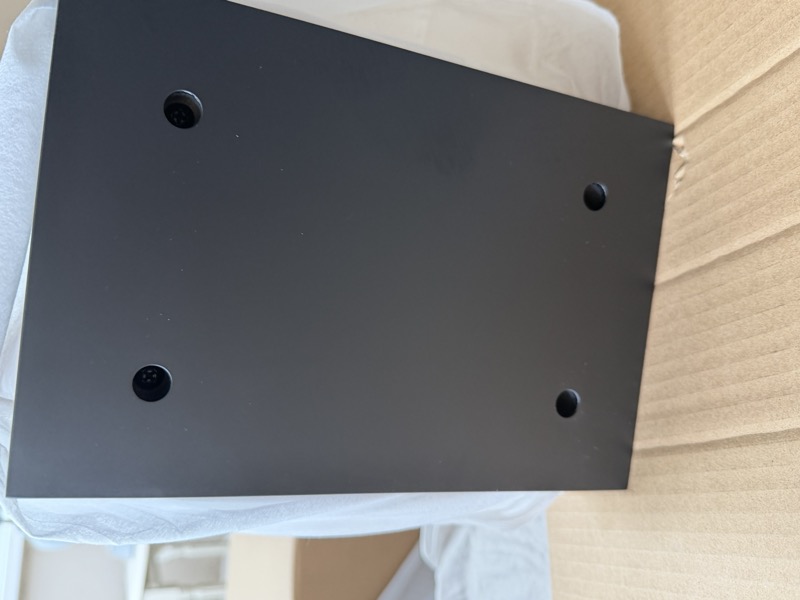
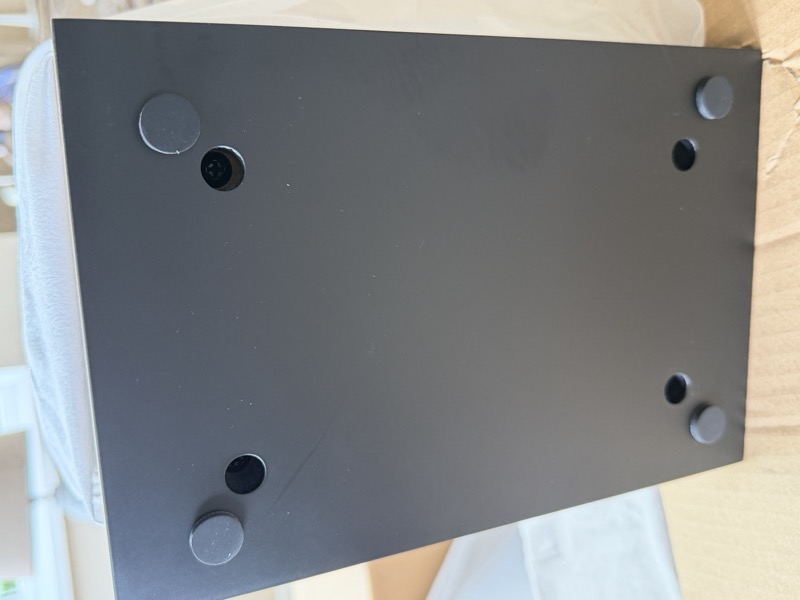
The base of each cabinet ships bare, with mounting points for the supplied adhesive felt protector pads — I applied the feet to each speaker before standing them up:
 |
 |
Design and Build Quality
These are proper floorstanders rather than desktop boxes — tall MDF cabinets in a walnut PVC wrap, with two 5.25″ woofers stacked below a small soft-dome tweeter and a front bass port. They look at home standing on the floor in a room rather than perched on a desk:
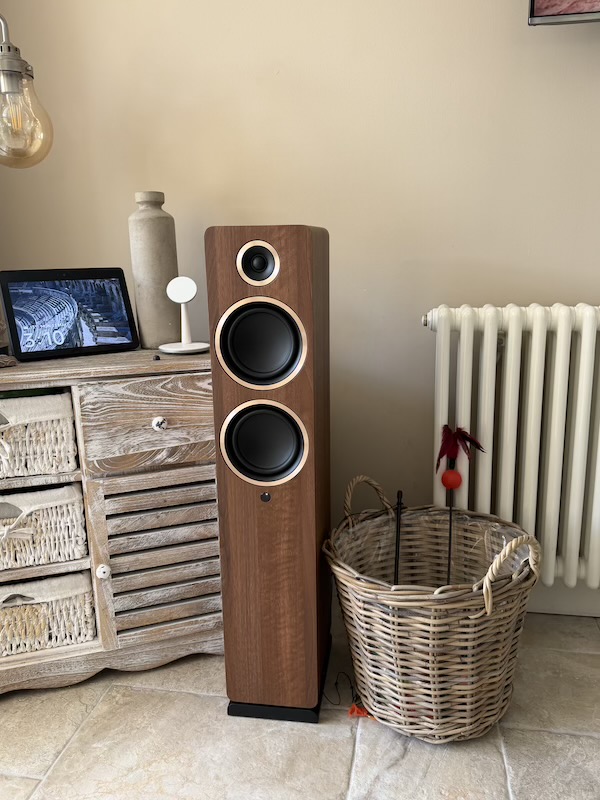
The supplied magnet-mount fabric grilles clip on cleanly if you prefer to hide the drivers — the product shot at the top shows one speaker covered and one bare. Uncovered, the drivers have a neat ringed surround that gives them a bit of visual character next to a turntable rack:
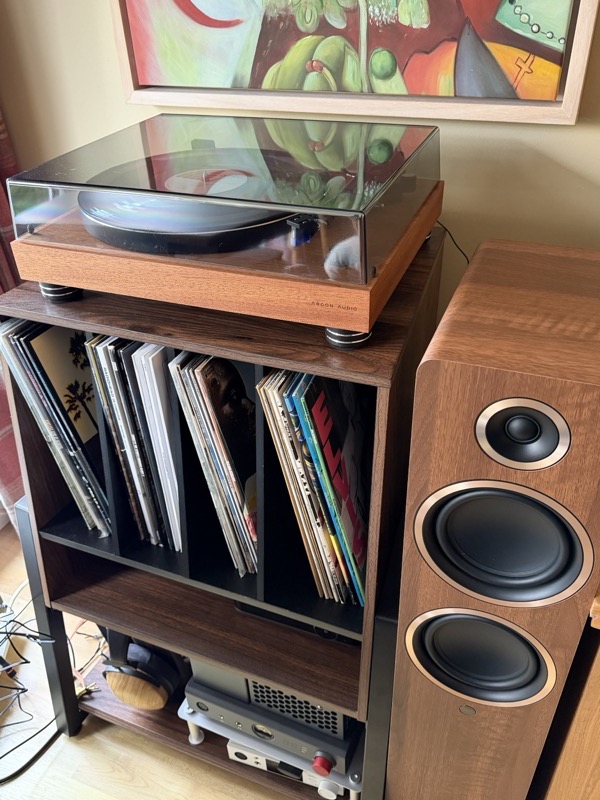
At 25 kg for the pair these are substantial, and the felt pads are the only floor protection, so plan placement before you set them down.
Features and Connectivity
This is where the A55 earns its keep, it was amazingly simple, especially with the HDMI Arc setup.
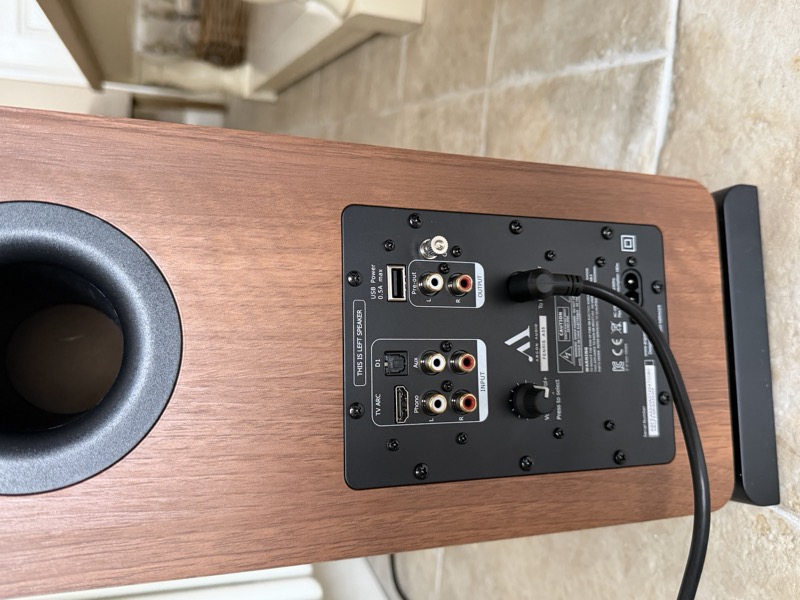
The left speaker is the active one and carries the amplifier and all the connections; the right is passive and is fed from the active side.
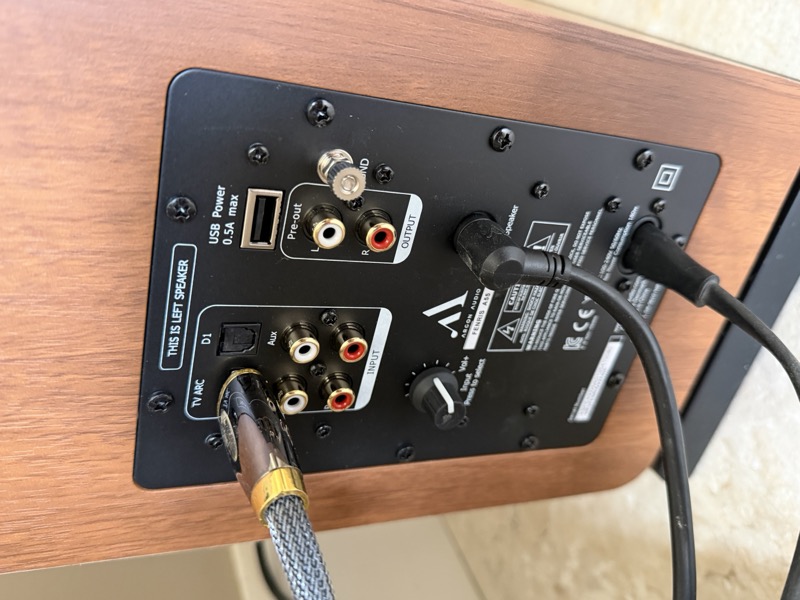
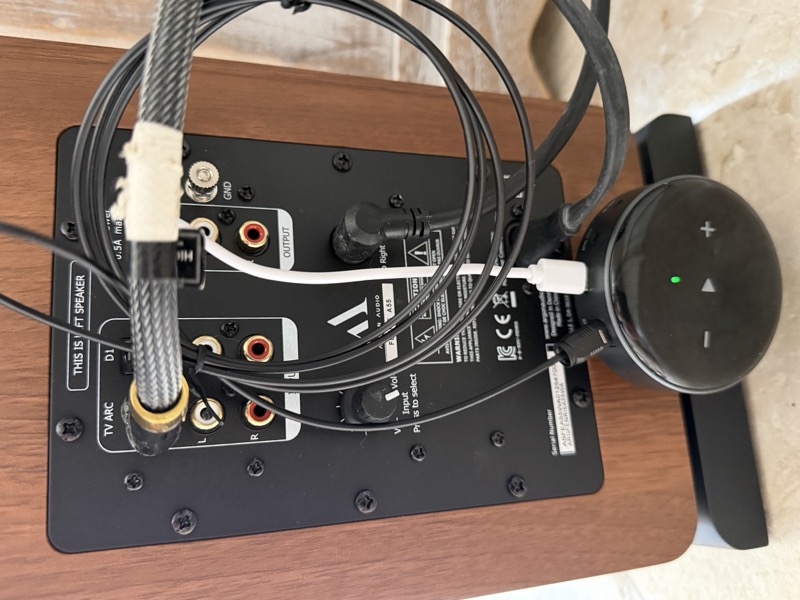
The rear of the active (left) speaker is a full input panel: HDMI TV ARC, optical (labelled D1), an analogue Aux RCA pair, a moving-magnet Phono input, a USB power output for accessories, and a Pre-out for adding a subwoofer or feeding another zone. A single rotary control selects the input and sets volume. In use the panel is easy to live with — the speaker auto-powers on the active input and auto-switches between sources, so in the living room the HDMI ARC connection simply wakes with the TV:
 |
 |
The connectivity also makes it a natural partner for a streamer.
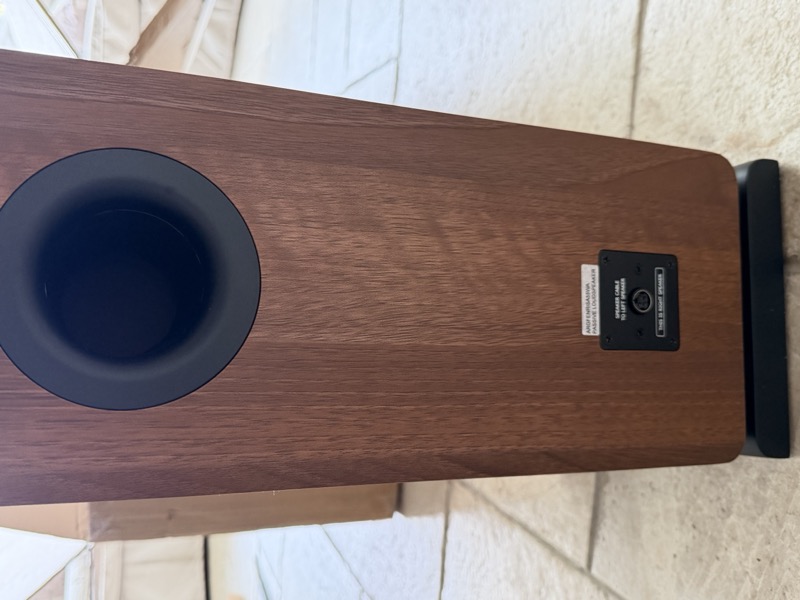
The passive cabinet has its rear bass port and a simple binding-post panel clearly labelled as the right speaker, taking the speaker cable from the left:
As I mentioned earlier I also used a WiiM Mini into the optical and analogue inputs, with the speaker’s USB power output running the WiiM itself — a tidy, single-source setup that mostly keeps cabling to a minimum (I should have bought a much shorter usb-c and optical cable) and I hope you can see how simple it is to hide the WiiM Mini behind the speaker:
Room correction with the WiiM
The most useful pairing was with the WiiM’s RoomFit room-correction. A powerful pair of ported floorstanders in a small room will always interact with the space, and an in-room sweep showed exactly the kind of bass peaks and dips you would expect.
RoomFit measures both channels and generates a correction profile you can save and apply:
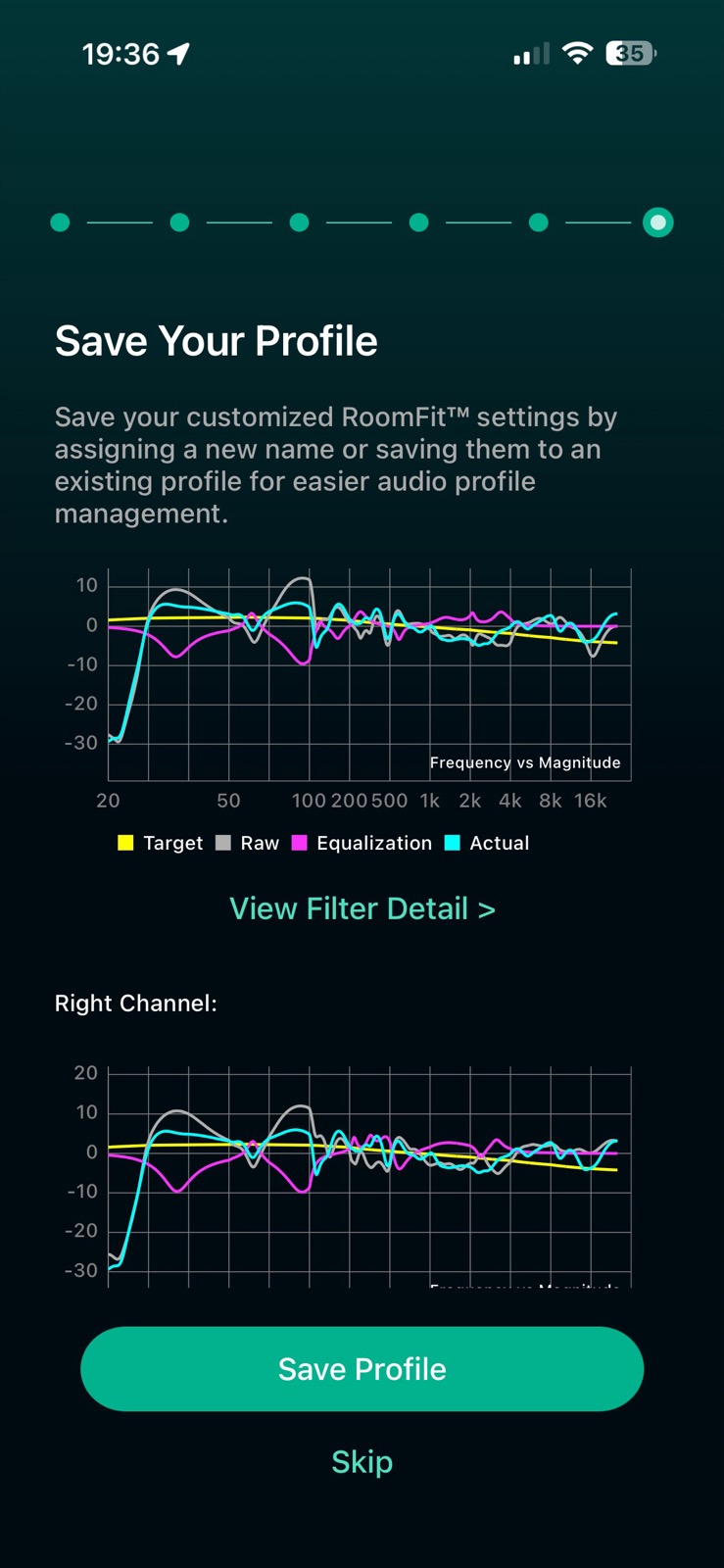
With the correction applied the stereo image tightened up noticeably and the bass stopped overwhelming the room, which is what made the A55 work for serious seated listening rather than just casual TV use.
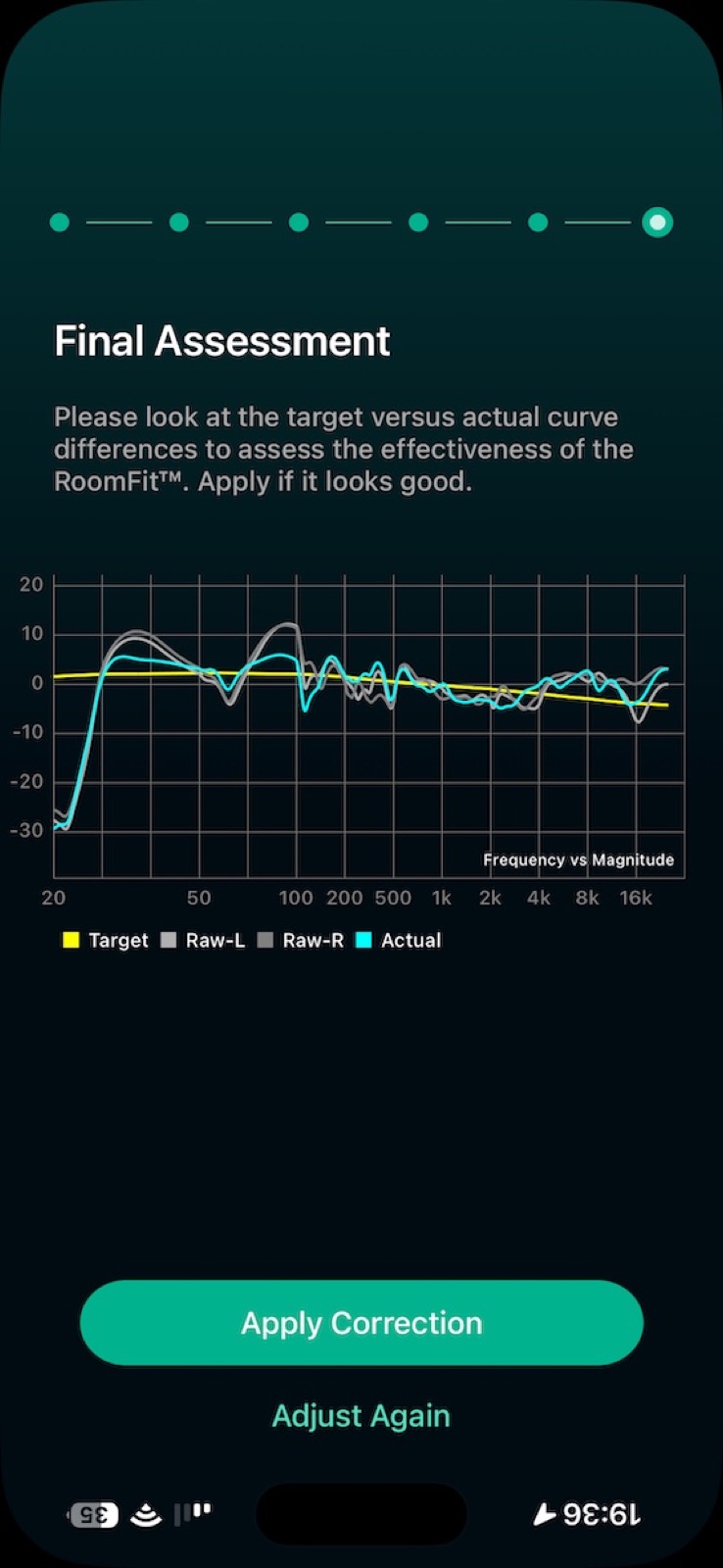
The app’s final assessment shows the corrected response against its target, and the result is genuinely good. The corrected curve (in cyan) tracks the target closely, and crucially the bass extends cleanly down to around 30Hz — excellent for a pair of speakers with no subwoofer. The only minor deviations left are a slightly lower midrange and a slightly emphasised treble, neither of which is an issue in practice:
For the price, and given how simple the whole setup is, that is an easy result to recommend.
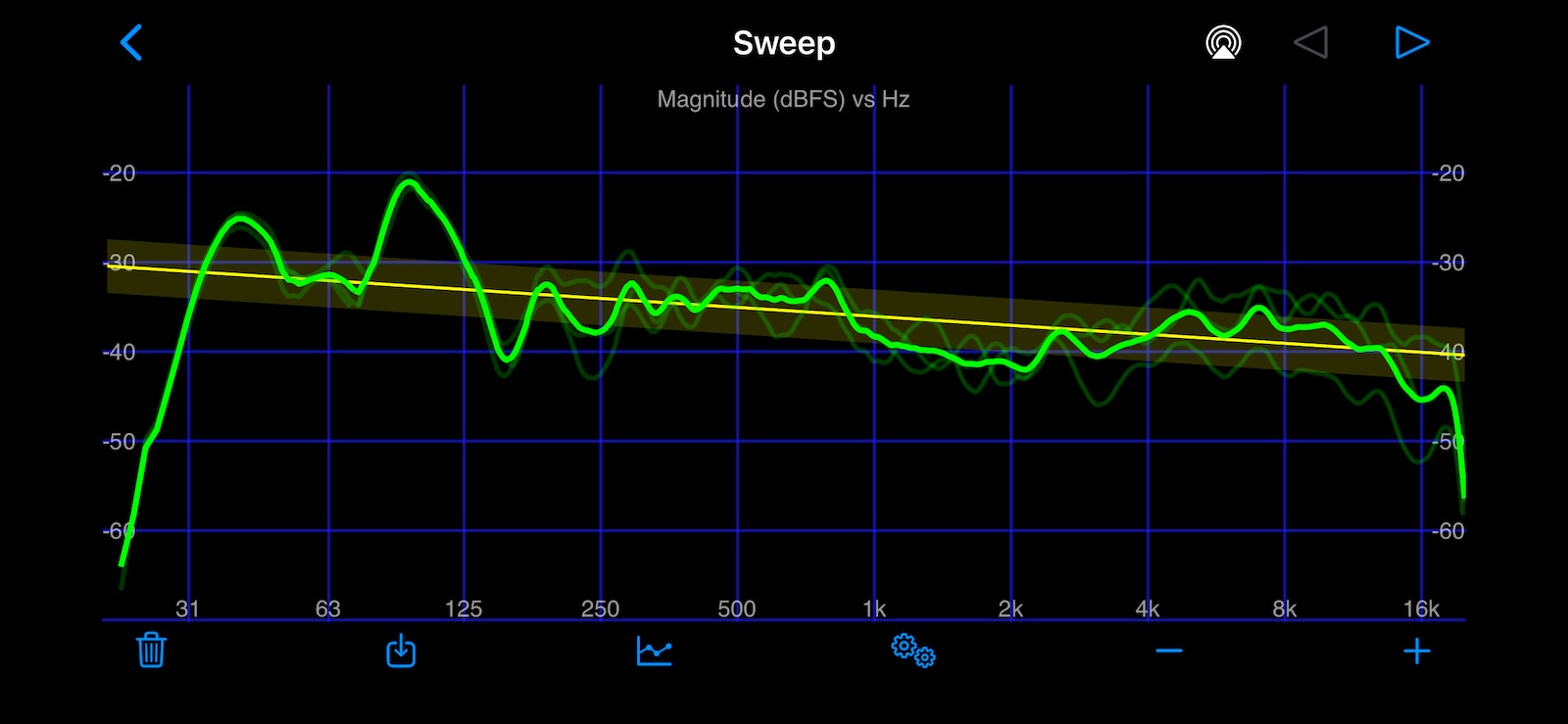
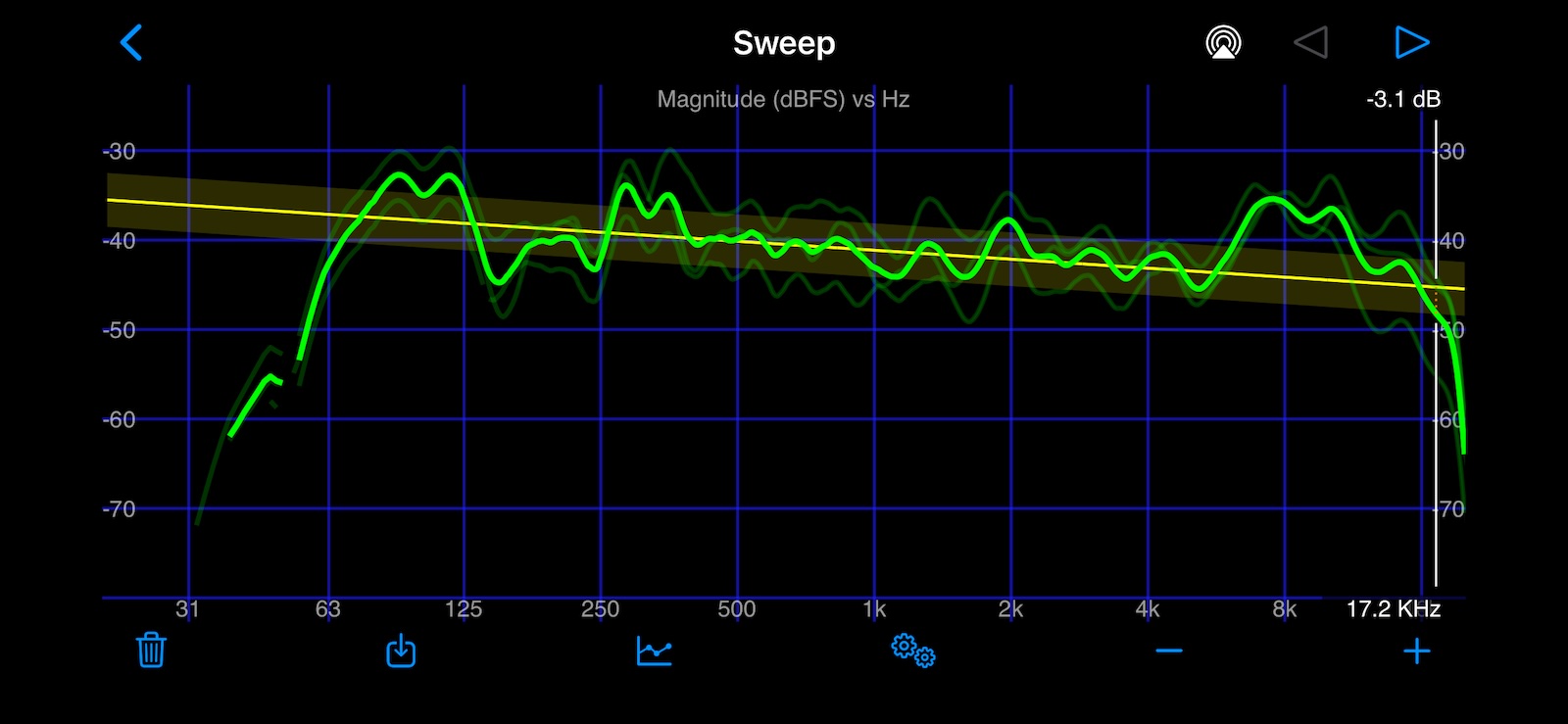
I also experimented with HouseCurve (a neat little IOS App that can measure the response in room very quickly):
Then with a little EQ applied - this was the in-room result:
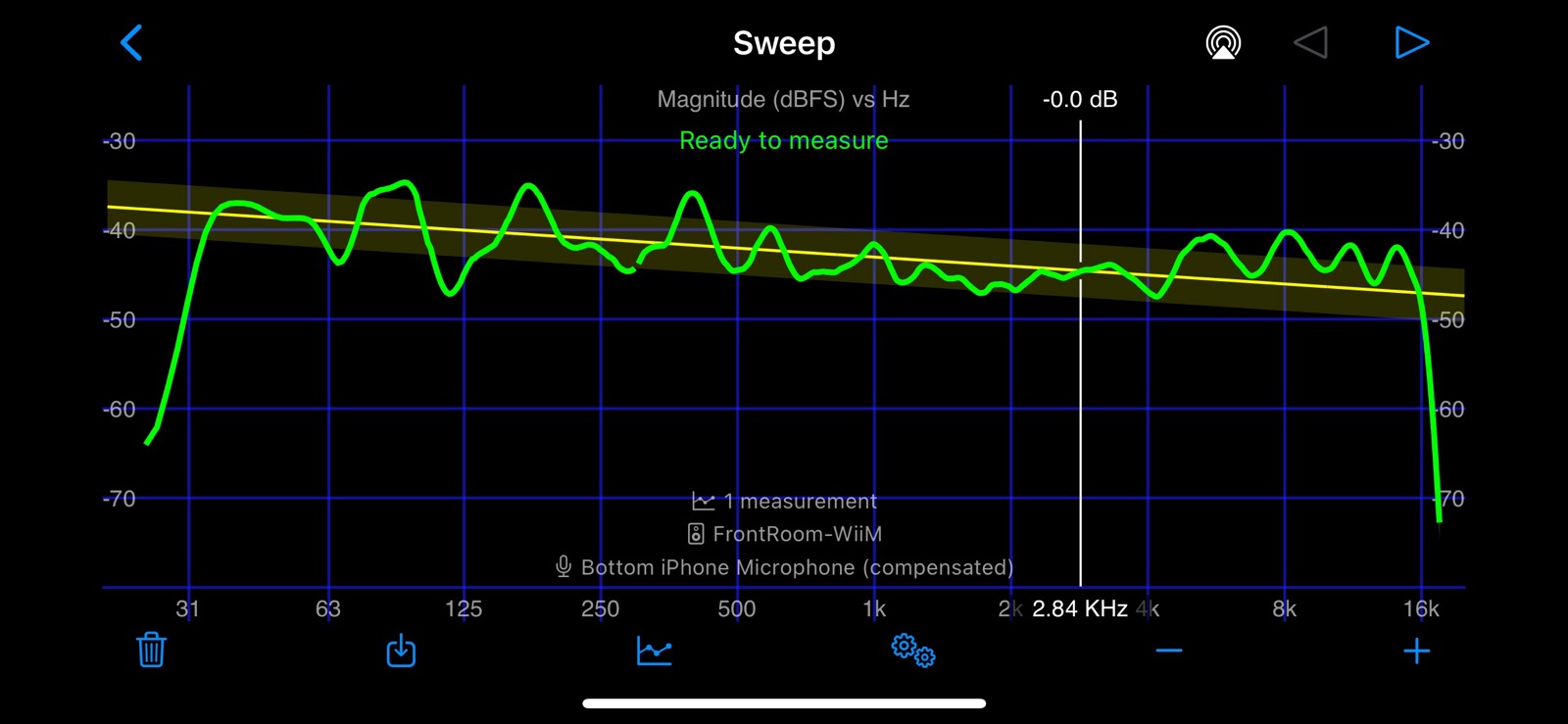
I was particularly impressed that I got down near 30hz with this setup.
Sound Impressions
The following impressions are focused on music enjoyment rather than TV or film sound. As a soundbar and subwoofer replacement the Fenris performed well, though my wife did note for the first few minutes that voices were not as clear as our normal TV setup — a dedicated “clear voice” mode would likely make a difference for that use case. For music, however, read on.
I listened across 3 different room setups and mainly either from from HDMI ARC from a TV, and optical input from the WiiM Mini switched between the speaker’s stock response and the WiiM’s room-corrected profile.
Bass
Bass is the A55’s signature, and there is a lot of it. The twin 5.25″ woofers and large ported cabinet deliver deep extension and real low-end weight — this is a pair of speakers that can shake a room. If anything there is too much of it in a small or untreated space, where the mid-bass can dominate before correction. On “Angel” by Massive Attack the low synth line lands with genuine physical weight and fills the room easily, though in the kids’ room it needed the WiiM’s correction to stop the bass from running away with the balance. For watching TV and films the abundance is welcome; for music it benefits from being reined in.
Midrange
The midrange is the one area I would call slightly recessed. Coming from a vocal-forward setup — my wife’s Samsung TV tuned to push voices forward — switching to the A55 made vocals seem a little more distant at first, sitting back behind the bass and treble rather than front and centre. It is worth being honest that this was noticeable on the switch. It is also worth being equally honest that after a couple of hours we stopped noticing it entirely and were simply happy with the sound. On “Fast Car” by Tracy Chapman the vocal is clear and natural, just placed a touch further back than a deliberately vocal-forward speaker would put it.
Treble
The soft-dome tweeter is smooth and unfatiguing rather than sharp or sparkly, which suits long TV sessions and keeps bright recordings comfortable. On “Billie Jean” by Michael Jackson the hi-hats have enough energy and crispness to drive the track without ever turning hard or sibilant. It is a sensible, easy-going top end that pairs well with the generous bass.
Soundstage and Imaging
Out of the box the imaging is good enough for TV and casual listening, where you are not fussy about pinpoint placement. For serious listening the WiiM’s room correction made the bigger difference — it cleared up the stereo image considerably, pulling the centre into focus and letting instruments sit in defined places rather than being smeared by room modes. On “Hotel California” by the Eagles the corrected setup placed the intro guitars and percussion clearly across the front, where the uncorrected response sounded broader but less precise. The takeaway is simple: the default response works well for watching TV, and a quick room correction unlocks the rest for music.
In the Living Room and the Kids’ Room
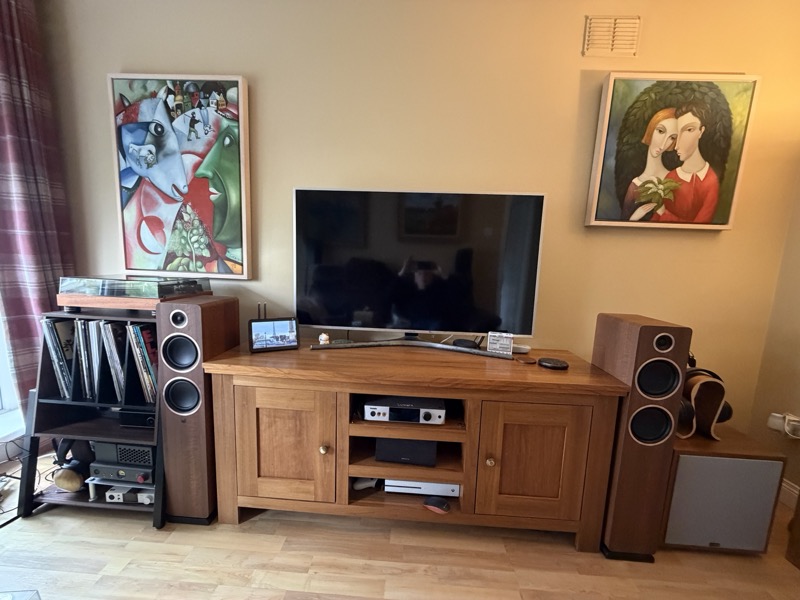
A large part of the A55’s appeal is how easily it dropped into two completely different roles. In the main living room it ran as a TV system over HDMI ARC, flanking the screen on a cabinet:
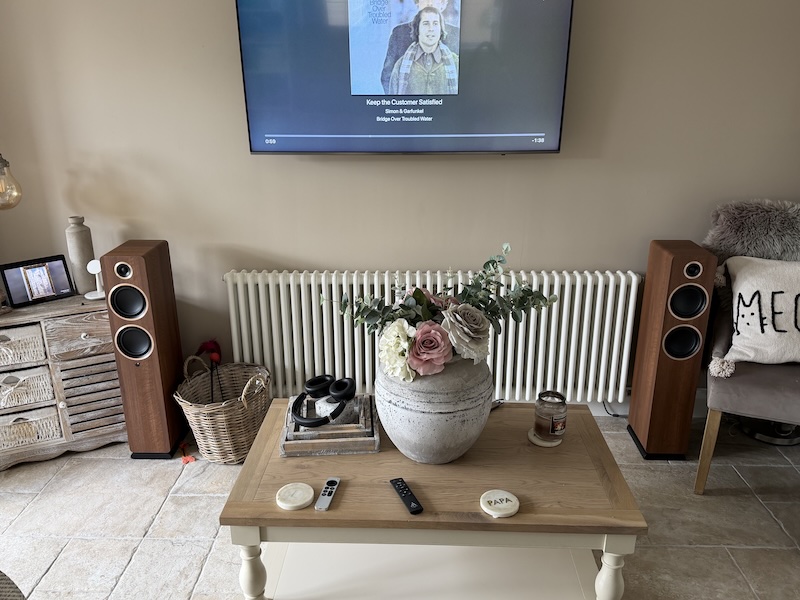
In a second living space they worked just as well flanking a wall-mounted TV, where the deep bass really filled the room:
In the kids’ room the A55 ran from the WiiM Mini over optical and RCA, and it is interesting to compare against a TV’s built-in speakers — the difference in scale and bass is not subtle:
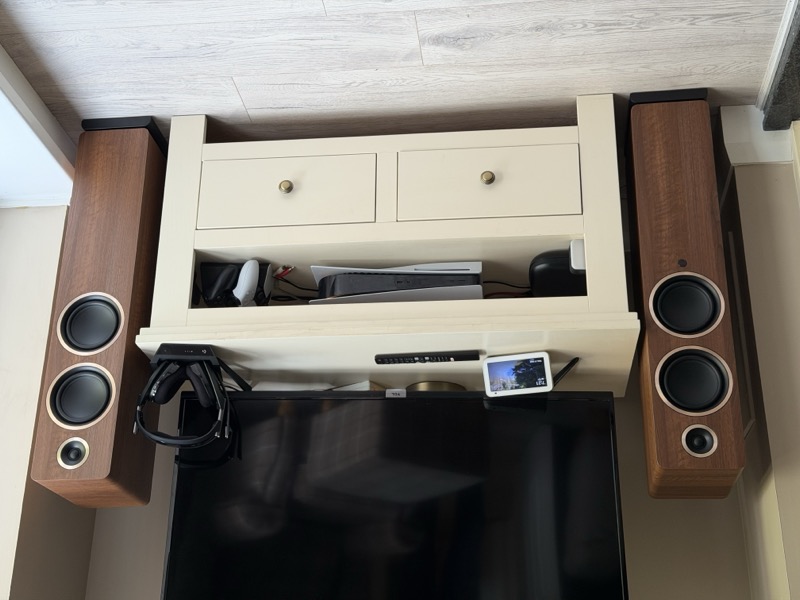 |
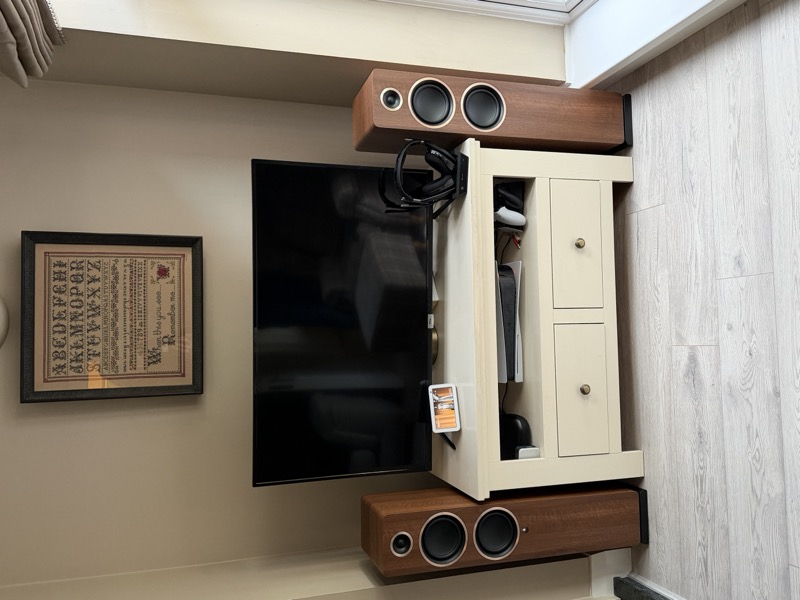 |
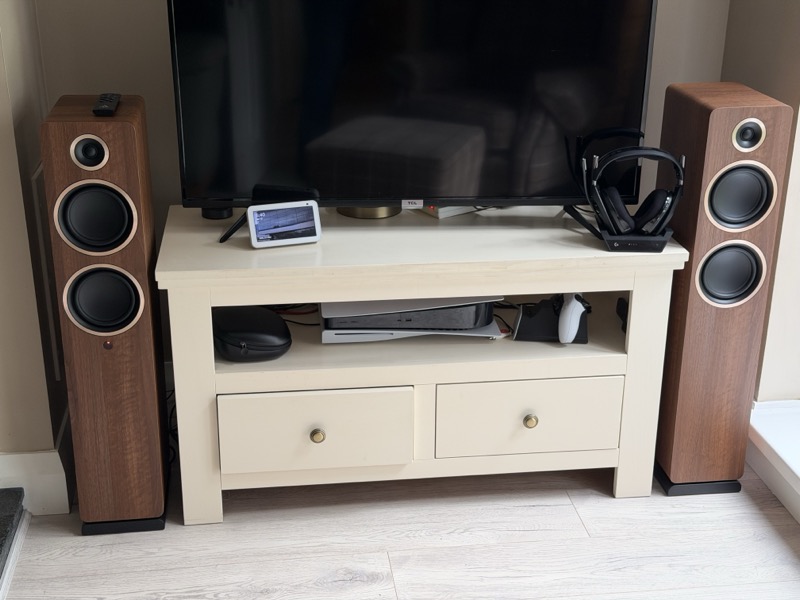 |
 |
The moving-magnet phono input also makes it a one-box turntable system. I ran an Argon Audio turntable straight into the phono input — no separate phono stage needed.
Specifications
| Specification | Value |
|---|---|
| Type | Active floorstanding speakers (left active, right passive) |
| Power | 2 × 50 W (woofers), 2 × 25 W (tweeters) |
| Amplifier technology | Class D |
| Tweeter | 0.75″ soft dome (neodymium magnet) |
| Woofer | 2 × 5.25″ paper cone |
| Frequency range | 38 – 22,000 Hz (± 6 dB) |
| Bluetooth | Bluetooth 5.0 (SBC) |
| Max. resolution | 24-bit / 48 kHz |
| Audio inputs | HDMI ARC, Optical, Analogue RCA, Phono (MM) |
| Other inputs | USB (firmware) |
| Outputs | Pre-out (RCA) |
| Terminals | Gold-plated |
| Remote control | Yes |
| Auto features | Auto on/standby, auto power-up on all inputs, auto input switching, dimmable LED |
| Cabinet | MDF |
| In the box | Speaker cable (6 m), remote, power cable, felt pads, magnet-mount front covers |
| Finishes | White, Ash, Black, Walnut (PVC) |
| Dimensions (H × W × D) | 88 × 17 × 27 cm |
| Net weight | 25.2 kg (pair) |
| Standby power | < 0.5 W |
The frequency-response figures above are Argon’s published specification. The in-room sweeps shown earlier are room measurements taken with the WiiM rather than an anechoic measurement of the speaker, so they describe the speaker-in-room behaviour and the correction applied, not the raw driver response.
Rating Explanation
The Pragmatic Rating of 4 reflects a pair of active speakers that get the important things right: big, room-filling sound and genuinely useful connectivity in a single, simple package. The twin-woofer cabinets deliver deep, confident bass, the soft-dome tweeter keeps the top end smooth, and the HDMI ARC, optical, RCA and phono inputs mean the A55 can be a TV system, a streaming system and a turntable system without any extra boxes. The auto-on and auto-input-switching behaviour make daily use effortless.
There are two honest caveats. The bass is abundant to the point of being too much in a small or untreated room, and the midrange sits slightly recessed, so vocals can seem a little distant when you switch from a vocal-forward source — though in practice we acclimatised to that within a couple of hours and stopped noticing. Both points are largely addressed by room correction: pairing the A55 with a streamer that offers it, like the WiiM Mini, tightened the imaging and tamed the low-end enough to turn a great TV speaker into a satisfying music system. I would have loved if the internal DSP within the speaker was tunable but utilising the WiiM Mini did a nice job of smoothing out any room modes.
This one is for the listener who wants real floorstanding scale and proper TV and turntable connectivity without assembling a separates system, and who either has a larger room that can absorb the bass or is willing to apply a little room correction to get the best from it.
Conclusion
The Fenris A55 is a lot of speaker for the money and a genuinely convenient one. It will shake a room with deep bass, it takes almost any source you can think of including a turntable, and it slots into a living room or a kids’ room with equal ease — powering a WiiM Mini off its own USB output in the process.
It is not perfectly neutral out of the box — there is more bass than a small room wants, and the midrange plays it slightly modest — but a few minutes of room correction and a short period of getting used to the balance turned it into a system the whole house was happy with. As a do-everything active floorstander, the A55 makes a strong case as the pick of Argon’s Fenris range.