Fosi Audio S3
Fosi Audio Enters the Streaming Market — With Balanced Outputs
After the Luna 3 turntable and a string of headphone amplifier releases, a network streamer was not the product I expected from Fosi Audio next. The S3 is their first attempt at the category, and it arrives with one obvious hardware hook: balanced XLR outputs at a price where much of the WiiM lineup does not offer them.
I would like to thank Fosi Audio for providing the S3 for the purposes of this review. The S3 was a pre-release sample that has been updated through multiple firmware releases to the current production version over the course of the review period.
If you are interested in finding more information about the S3, you can find it at the official product page.
The Fosi Audio S3 typically retails for $259.99, with bundle and promotional pricing frequently available.
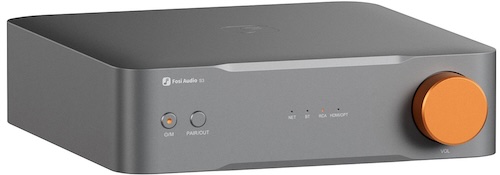
I have been living with the S3 for approximately two months, cycling it between a desktop setup and a living room two-channel system fed via balanced XLR and RCA, and swapping it regularly against the WiiM Ultra to understand where it competes and where it concedes. There are a couple of trade-offs worth naming alongside the hardware strengths, but before getting to those, let’s look at what’s in the box.
Unboxing and Build Quality
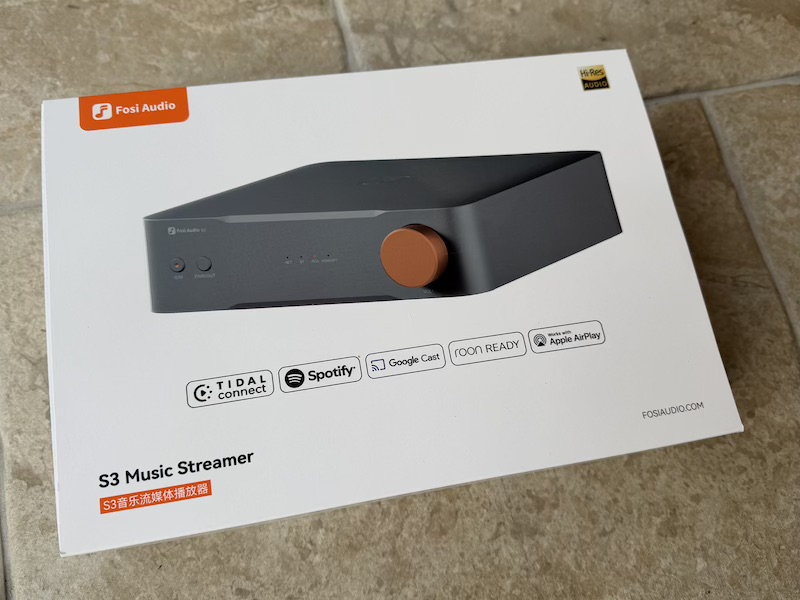
Fosi Audio have put more thought into the S3 packaging than some of their earlier products, and it shows.
 |
 |
The outer box has a clean consumer-market look rather than the more basic packaging Fosi used on some older products, and the presentation inside feels tidy and deliberate.
 |
 |
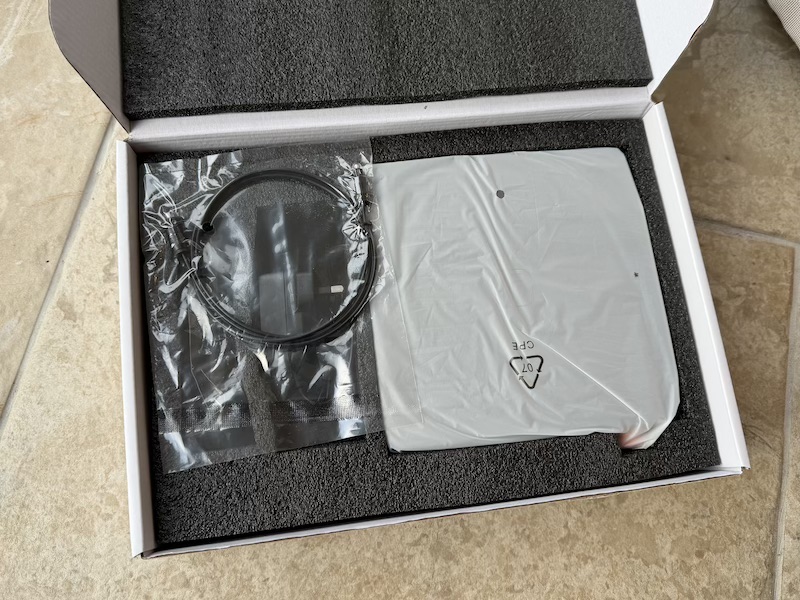
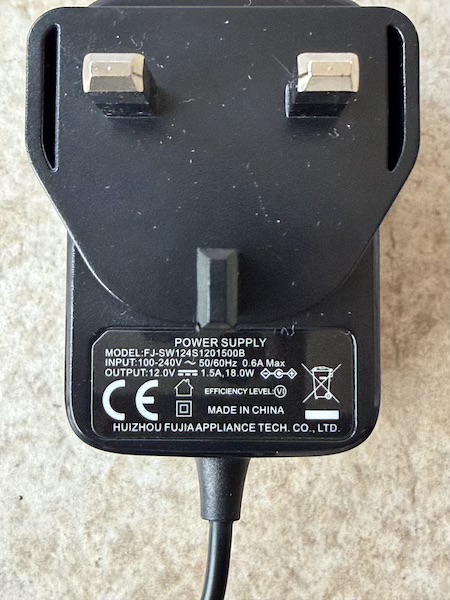
In the box you will find the S3 unit, a 12V DC power supply, an optical cable, a Bluetooth remote control, and the usual documentation.
Build quality on the S3 itself is strong.
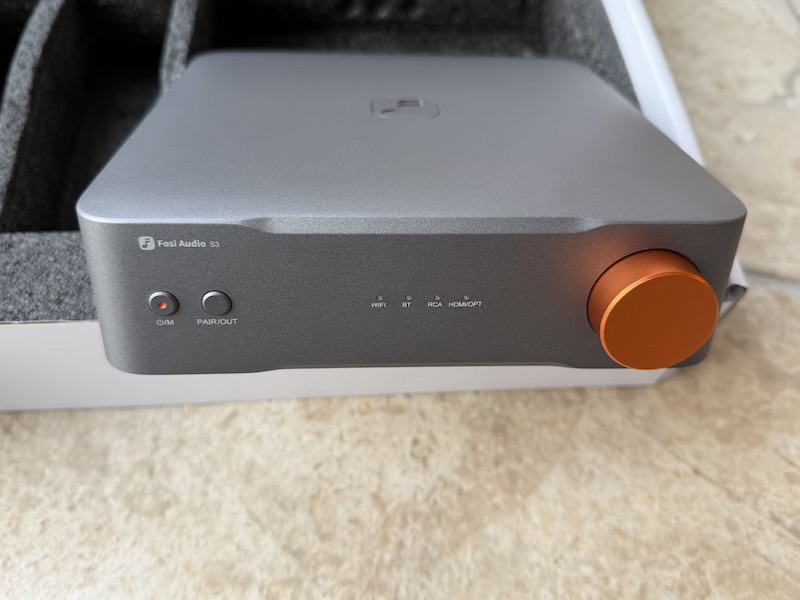
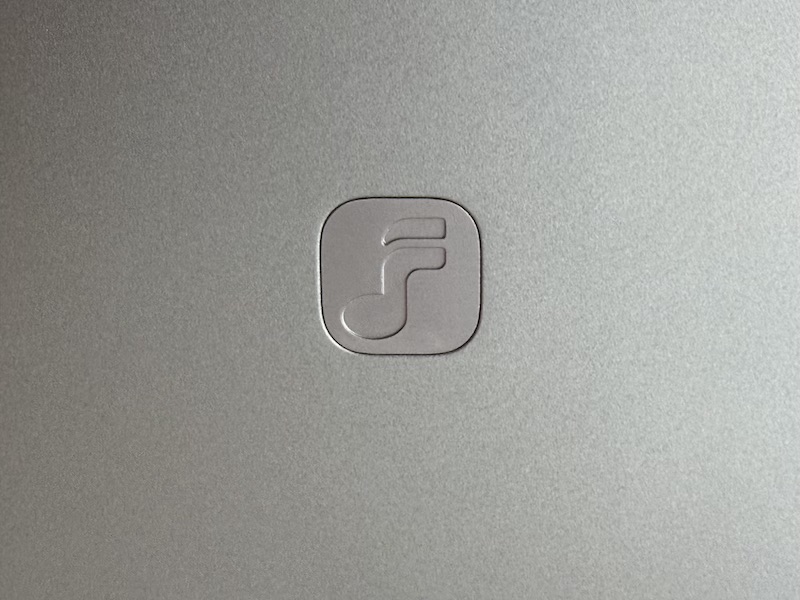
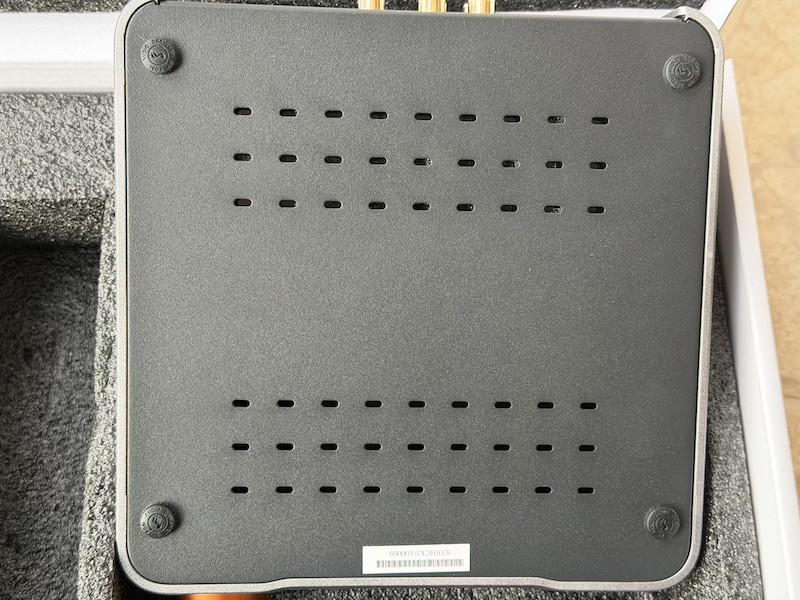
The chassis shares some design DNA with other recent Fosi Audio releases — familiar touches from the ZD3 and the XA3 show up in the lines and proportions — but the S3 has its own identity, particularly in the engraved logo on the top plate, which gives it a premium look that belies the price. The unit is compact at 17.3 × 17.3 × 4.7 cm, making it easy to integrate into existing equipment stacks or place on a shelf without dominating the space. The underside features decent rubber feet for vibration isolation and a clean finish.
 |
 |
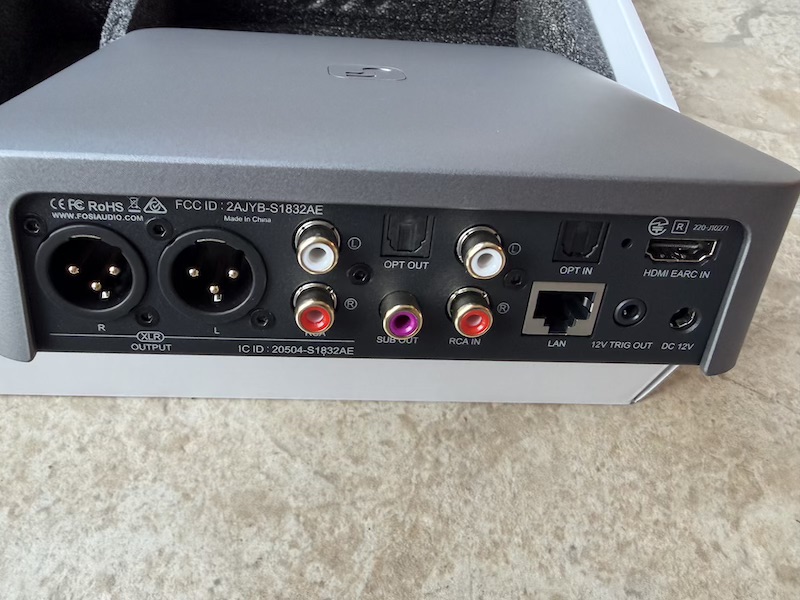
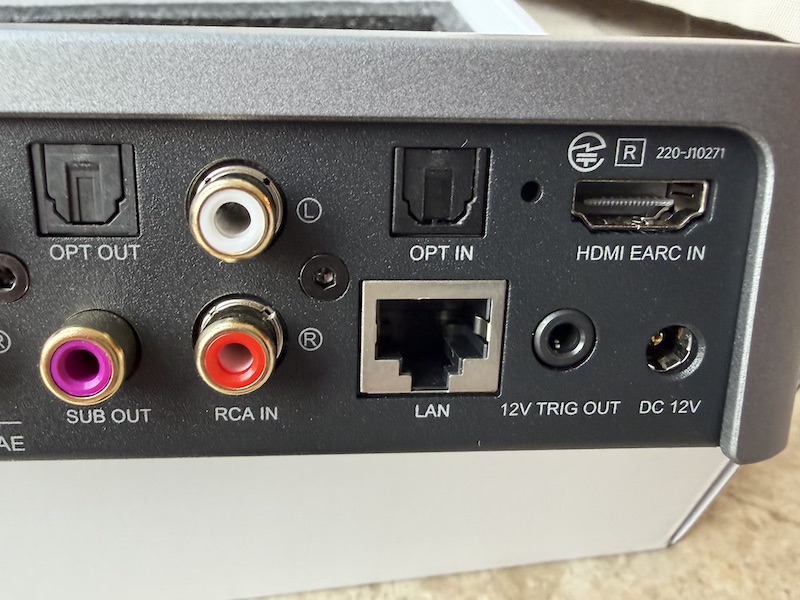
The rear panel is well equipped, with connections split into two functional groups. The left section hosts the LAN RJ45 port, HDMI eARC input, optical input and output, a dedicated subwoofer RCA output, a 12V trigger output for controlling downstream components, and an RCA analogue input — a depth of connectivity that is unusual at this price.
 |
 |
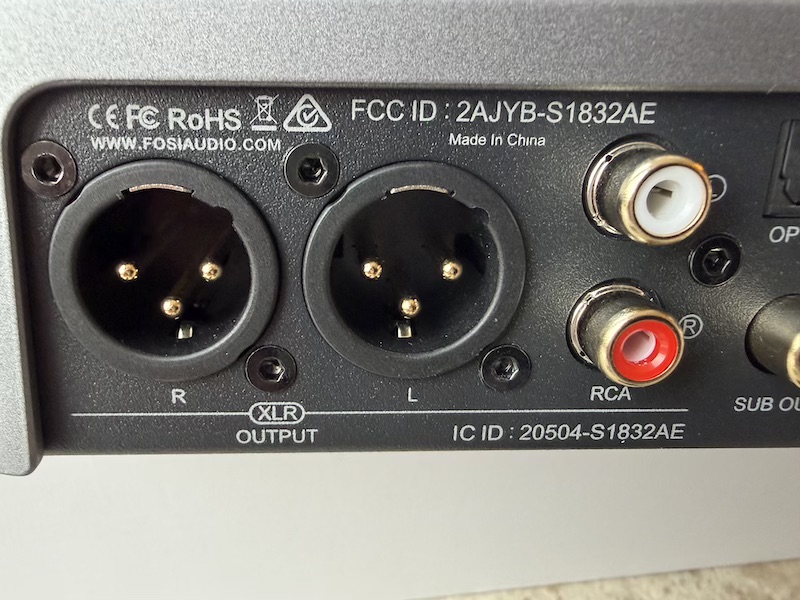
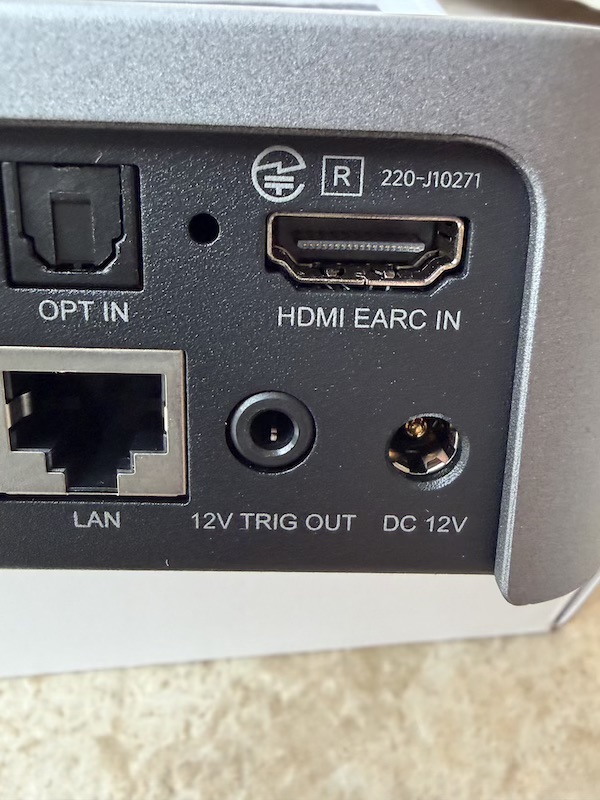
The right section carries the RCA analogue outputs and the balanced XLR outputs — both available simultaneously, so there is no switching required between single-ended and balanced destinations. The DC power connector and HDMI eARC port sit at the far right and the connector quality throughout feels solid and appropriate for the price.
 |
 |
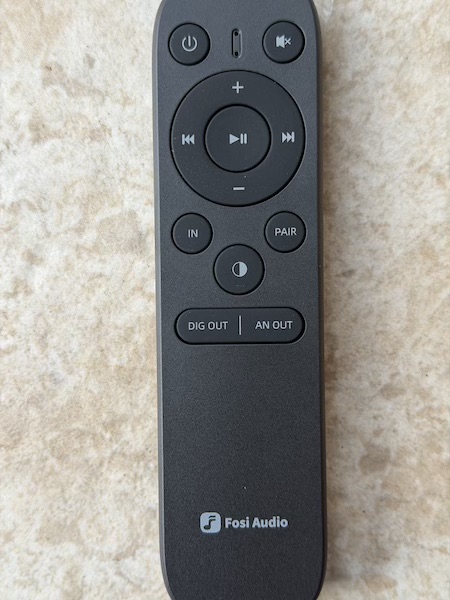
The remote deserves specific mention: it feels solid for a bundled accessory, and the claimed Bluetooth range of over 15 metres is useful if the S3 is sitting in a media cabinet or across the room.
 |
 |
Features and Connectivity
Streaming Protocols and Sources
The S3 supports a broad list of streaming protocols: Google Cast, AirPlay 2, DLNA/UPnP, Spotify Connect, Tidal Connect, and Roon Ready, with certification still pending during my review. AirPlay 2 is the standout here, because WiiM have quietly de-prioritised AirPlay support on parts of their lineup. For anyone using Apple devices, that gives the S3 a practical advantage. Google Cast covers Android and Chromecast-enabled services, Tidal Connect works directly from the Tidal app, and Spotify Connect handles casual listening without friction.
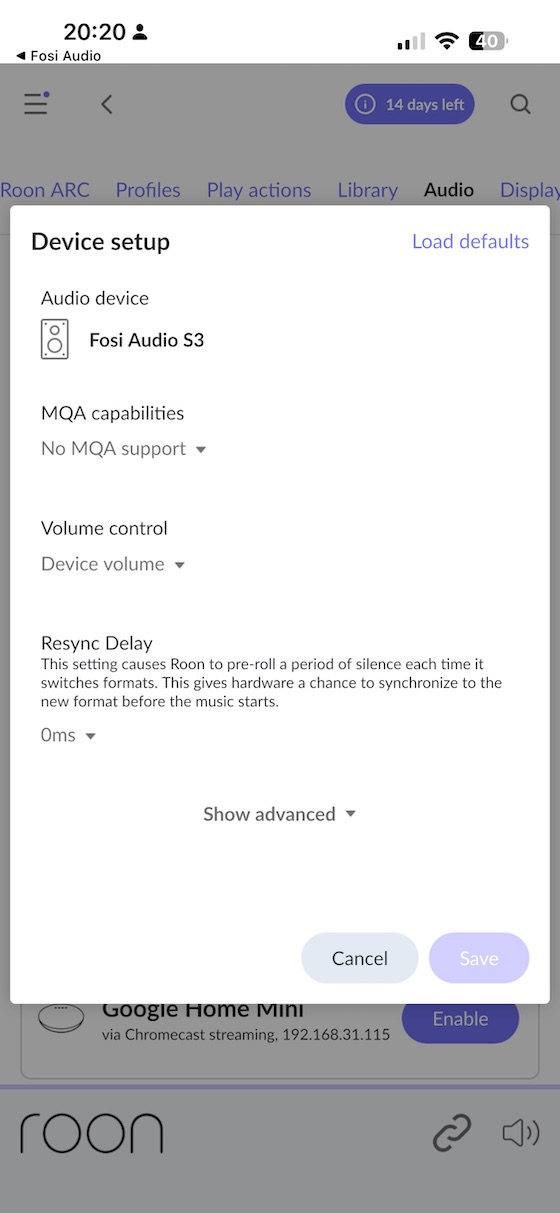
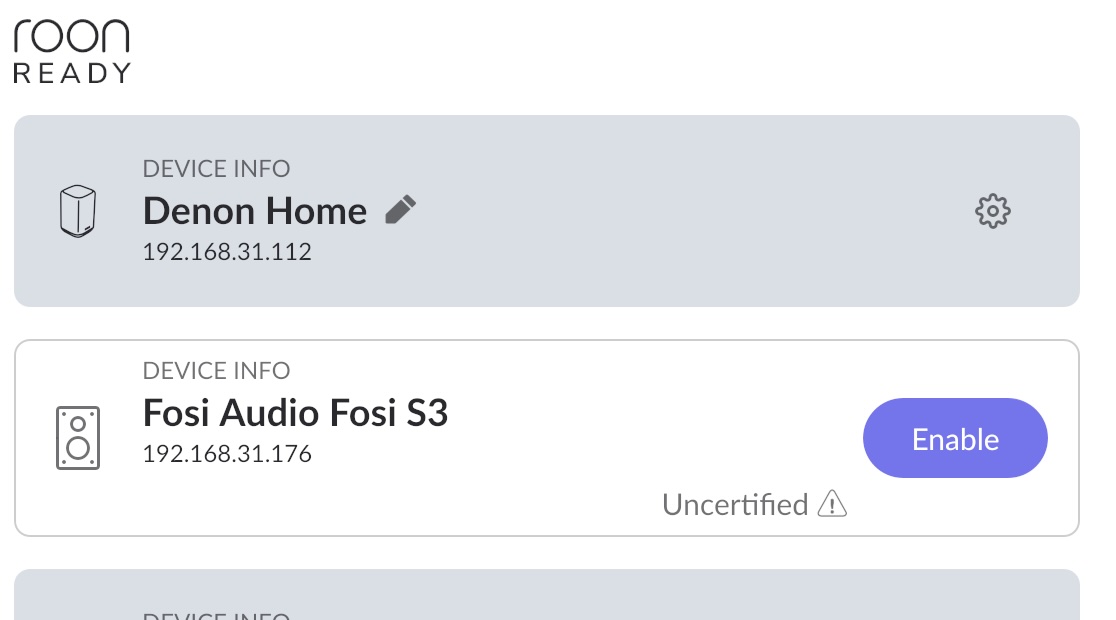
The Roon situation deserves careful reading. At the time of writing, Roon Ready certification is still in progress. You can, however, use Roon via AirPlay 2 or Google Cast right now, which gets the job done — but it is not the same as native Roon Ready integration, and committed Roon users should factor that into their decision. The images below show the S3 appearing within the Roon app, with the “not yet certified” status clearly visible.
 |
 |
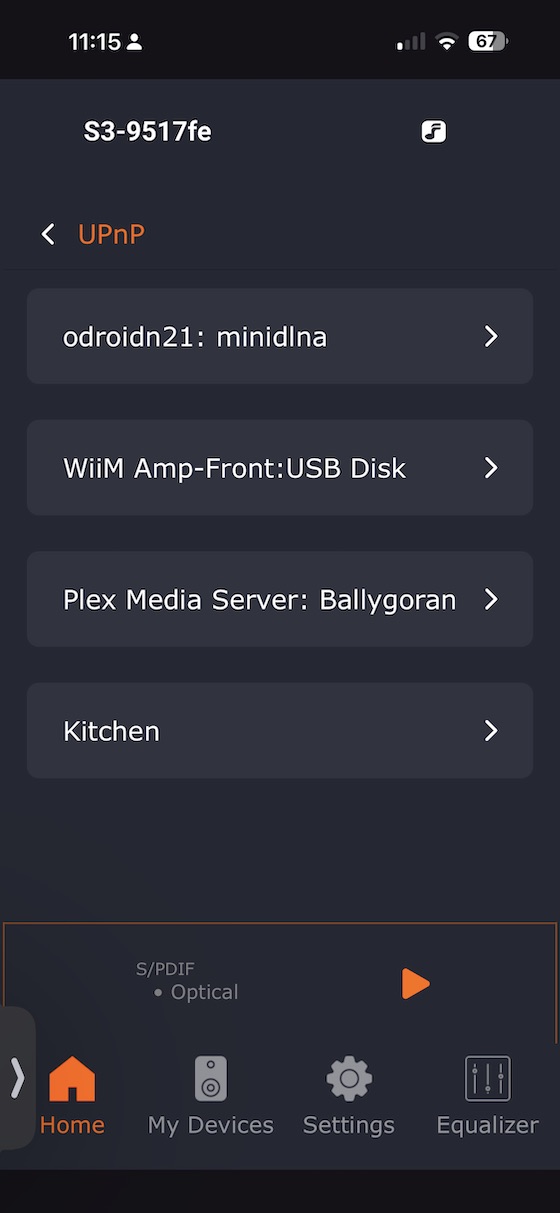
DLNA/UPnP browsing works, and I was able to navigate my local library without significant issues. That said, the browsing experience within the Fosi Audio app does not feel as fluid as the equivalent experience in the WiiM app, which appears to benefit from more aggressive content caching. With a large library, the difference in responsiveness is noticeable. It is functional rather than polished, and that distinction matters for daily use.
The App Experience
The Fosi Audio companion app is both promising and frustrating. On the positive side, it exposes more technical detail than most streamer apps, and the home screen is clean. The input selection interface covers Line, HDMI eARC, UPnP, and Optical inputs in a logical layout.
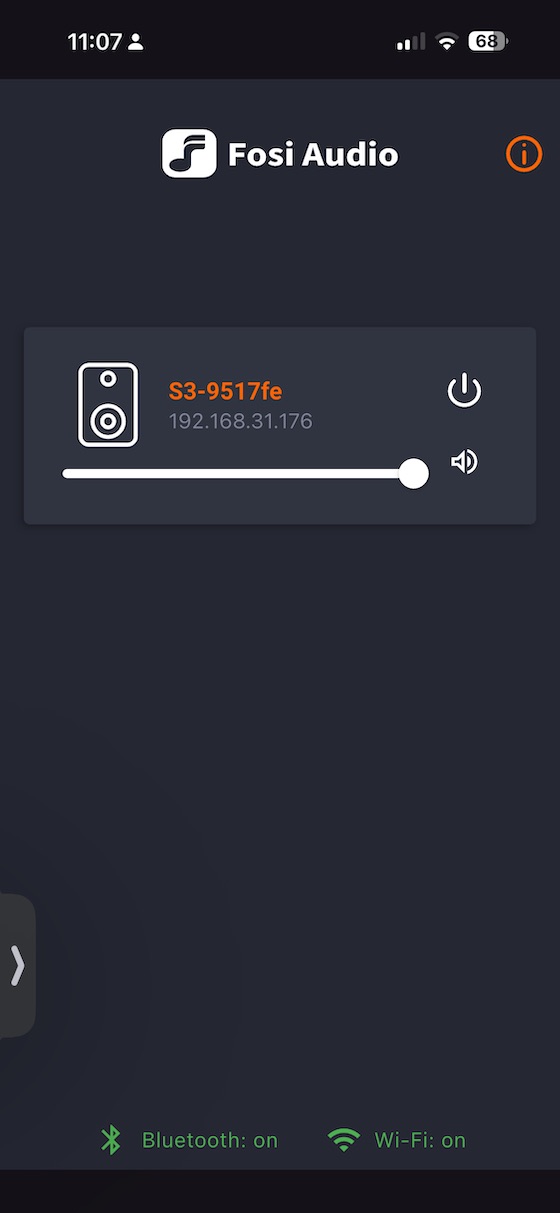 |
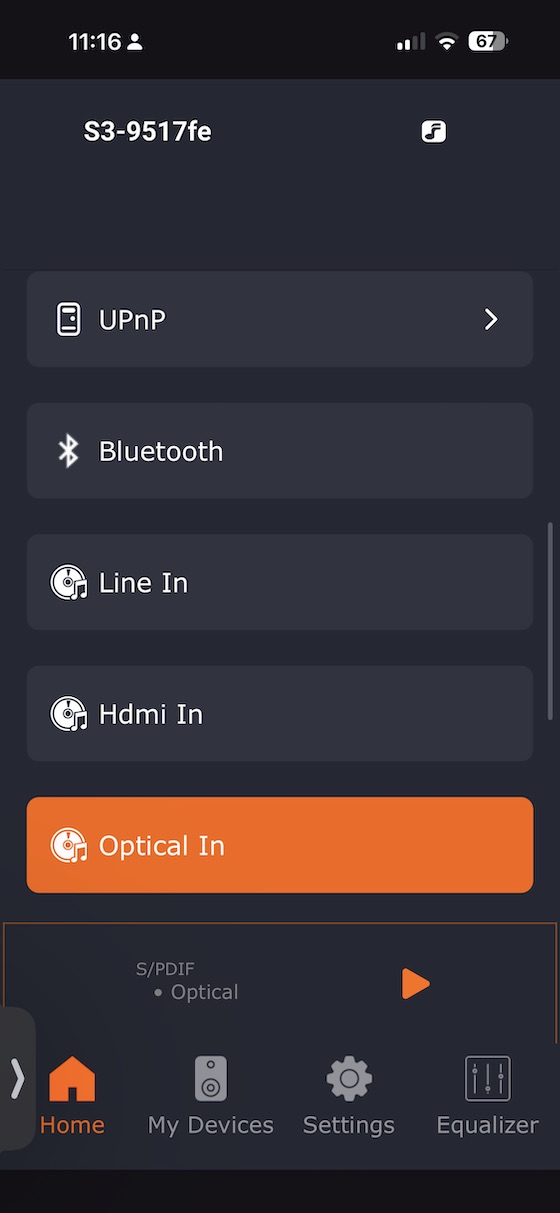 |
The music services and media sources section, however, is where things feel distinctly early-stage. The content organisation has the look of a product that knows where it wants to go but has not yet arrived — bare in places, occasionally counterintuitive, and missing integrations that WiiM users have come to regard as standard, including Plex support and more mature EQ and room-management tools. The S3’s EQ offering during most of my review period was a five-band graphic equaliser, which is serviceable for minor tonal adjustments but falls well short of the parametric EQ and room correction workflow that makes the WiiM ecosystem so useful in difficult rooms.
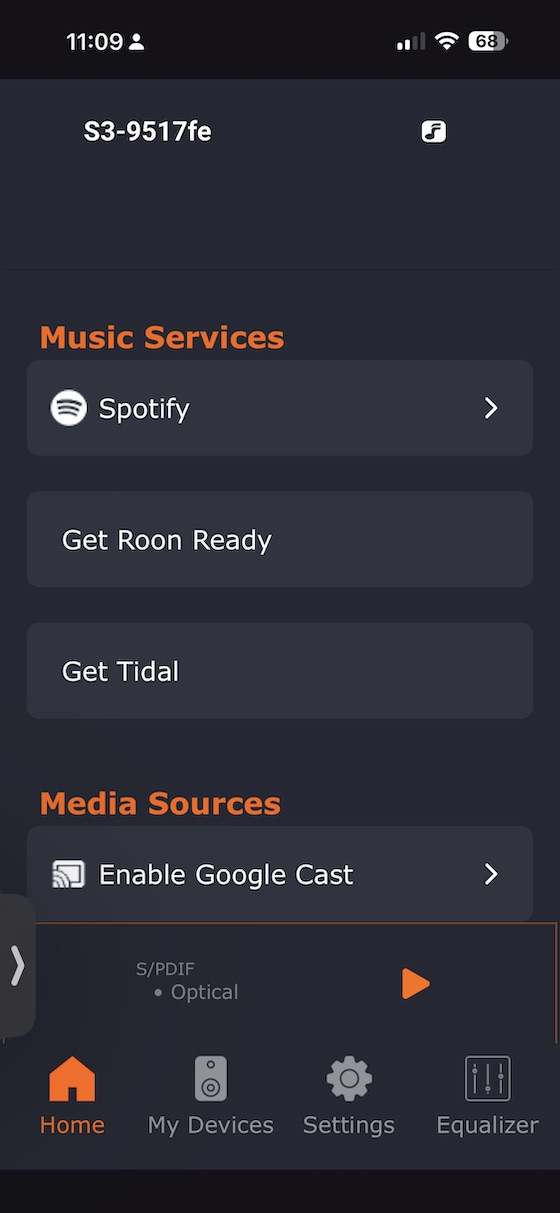
Fosi Audio’s official app upgrade plan lists Qobuz Connect and 10-band EQ as near-term additions, followed by a broader interaction and navigation redesign. In the two months I spent with the S3, firmware updates arrived steadily and each brought noticeable improvements to stability and feature breadth. That trajectory is encouraging; it reflects a team actively working to close the gap. But prospective buyers are still purchasing partly on the promise of future updates rather than current capability, and that is a trade-off worth naming honestly.
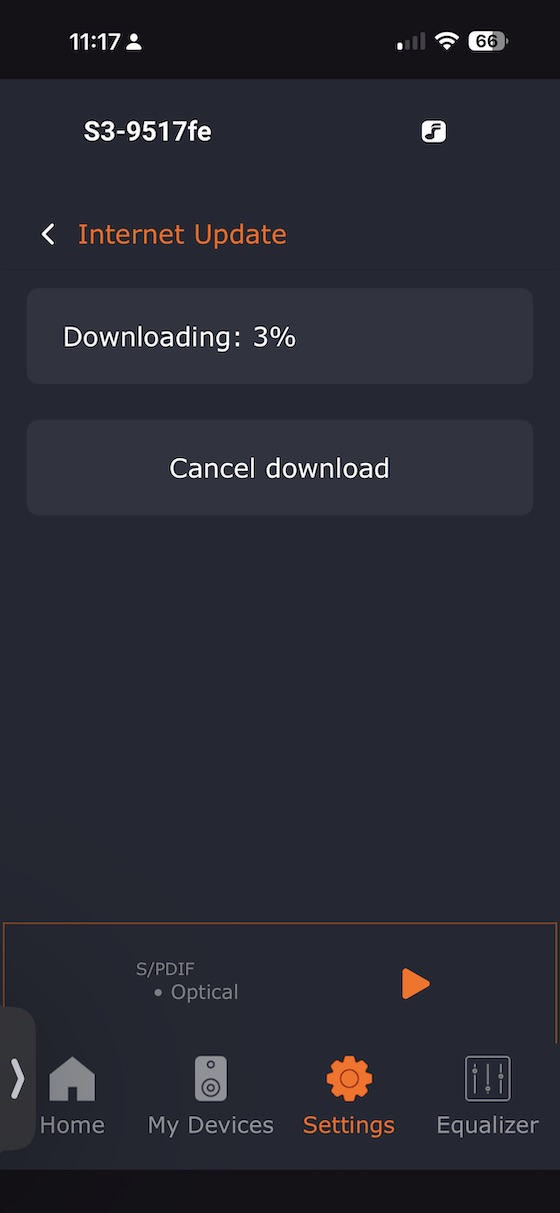
The firmware update flow is straightforward: a notification appears in the app when a new version is available, and the update applies in under two minutes with the unit remaining operational throughout.
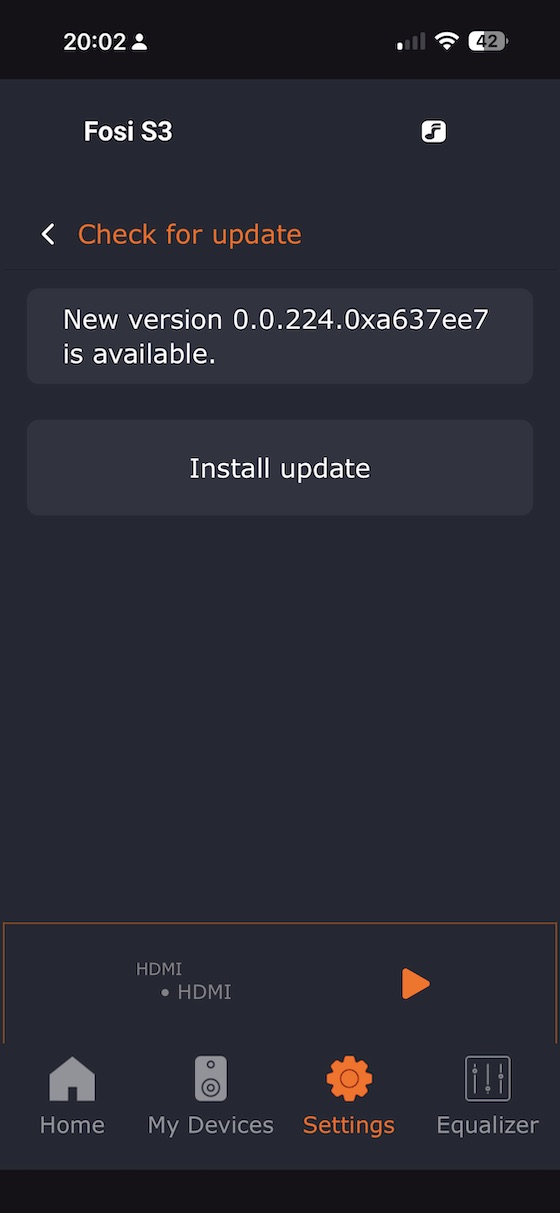 |
 |
Hardware Outputs and Signal Path
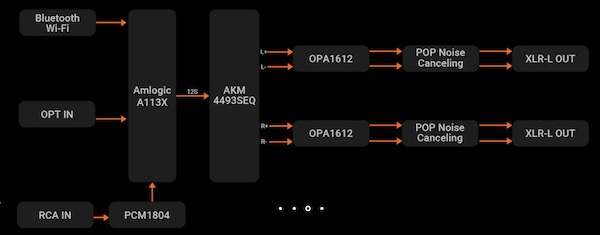
Where the S3 does its best work is in the hardware. The internal signal chain is built around an Amlogic A113X processor, an AKM AK4493SEQ DAC chip, dual OPA1612 operational amplifiers for signal preamplification, and a Burr-Brown PCM1894 ADC for analogue input conversion. This is not budget-corner-cutting chipset selection — the AK4493SEQ is a well-regarded converter in the mid-to-high-end DAC space, and the OPA1612 is a precision op-amp with a strong reputation in high-fidelity preamplifier applications. Fosi Audio back up the chipset with a considered component selection: Japan ELNA capacitors in the analogue signal path, an ultra-low-noise LDO power supply, and a fully isolated analog/digital architecture that keeps digital noise out of the output stage. The measured results bear that out — THD+N of ≤0.00018% and SNR of ≥120dB are excellent figures for a streamer at this price. In my system, the balanced XLR output sounded a little fuller and more composed than the WiiM Pro Plus, and close enough to the WiiM Ultra that the software experience became the bigger differentiator.
The 12V trigger output is a thoughtful addition for system integration, allowing downstream power amplifiers to power on and off automatically with the S3. The dedicated subwoofer output similarly broadens the S3’s integration possibilities beyond what most competing streamers at this price will offer. Fosi Audio specifically recommend pairing the S3 with their ZD3 or ZA3 power amplifier for a fully balanced system, and that path has obvious appeal for owners already invested in the Fosi Audio ecosystem. On the reliability side, the S3 includes overcurrent and overvoltage protection circuitry, and the chassis routes heat dissipation through the bottom panel — a sensible thermal design choice for a unit intended to sit inside an equipment rack or cabinet.
Measurements
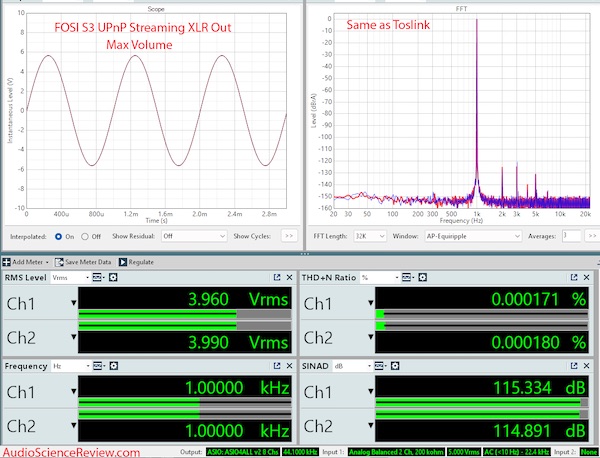
I would like to thank AudioScienceReview (ASR) and Amir in particular for the excellent work measuring the technical performance of the S3. ASR’s bench testing does the kind of rigorous, instrument-based verification that complements listening impressions with hard data, and the results here are unambiguous: the hardware inside the S3 is excellent.
 |
 |
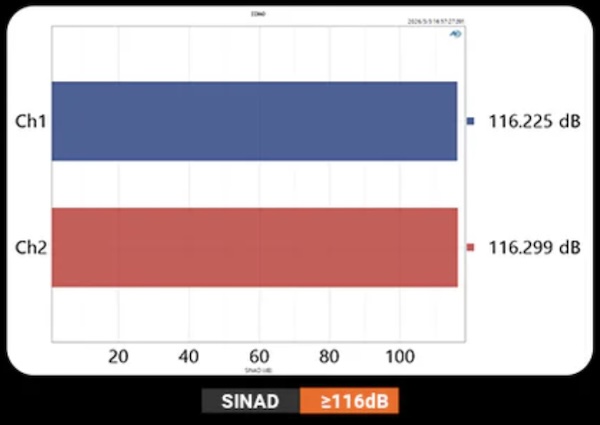
The SINAD score measured via the Optical input came in at 115, slightly higher than both the Bluesound Node and the WiiM Pro Plus, which are useful reference points in this category.
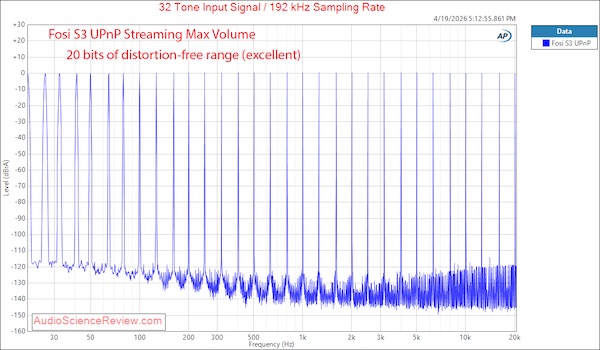
The multitone distortion plot reinforces the same story: the noise floor is low, there is roughly 20 bits of distortion-free range, and the output stage is behaving cleanly.
For a streamer at this price, those are strong results.
Fosi Audio’s own SINAD measurements are similar, though independent confirmation is always useful:
Sound Impressions
All listening was conducted with the S3 feeding a pair of active studio monitors via the balanced XLR outputs, supplemented by sessions through the RCA outputs into a separate integrated amplifier and passive bookshelf speakers. Volume control was maintained at 100% on the S3 for critical listening with volume management handled downstream, to keep the digital attenuation out of the signal path.
The S3 sounds like a clean modern DAC should: neutral, quiet, and mostly out of the way. I spent most of the review using the balanced XLR outputs into active monitors, with shorter sessions through RCA into an integrated amplifier. In both setups the S3 avoided the thinness I sometimes hear from cheaper streamer output stages, and the XLR path in particular had a little more weight and control than I expected at this price.
The low end is tight rather than warm, vocals sit naturally in the mix, and the treble does not add obvious glare. I would not describe the S3 as having a strong sonic personality, which is a compliment in this context. Its job is to deliver the stream cleanly and let the amplifier and speakers define the system character.
The bigger audible difference between the S3 and cheaper streamers was not a dramatic tonal shift, but a sense of composure: cleaner bass edges, stable centre imaging, and less grain through the upper midrange when listening at normal living-room levels. The WiiM Ultra remains extremely competitive, but the S3 never sounded like the weaker hardware device in direct comparison.
Comparisons with WiiM Streamers
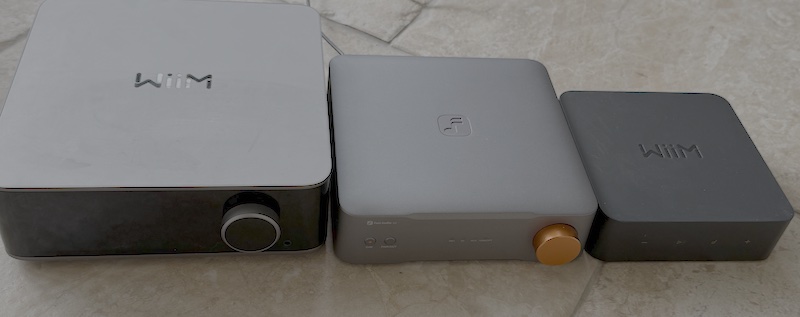
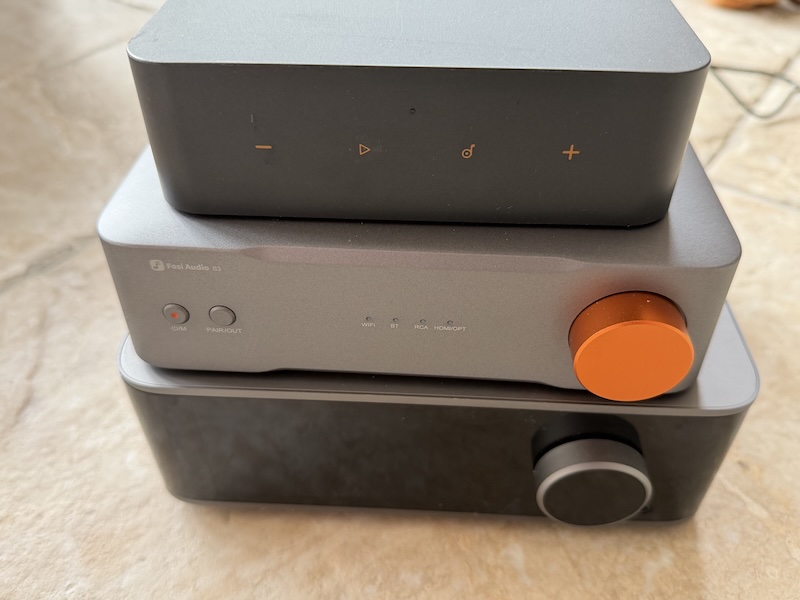
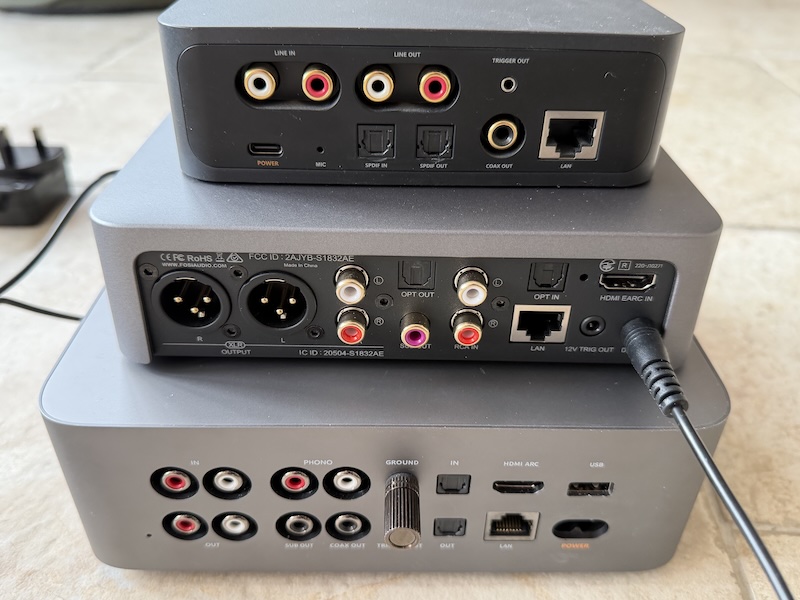
The natural reference points for the S3 are the WiiM Pro (approximately $150) and the WiiM Ultra (approximately $329), with the S3 positioned squarely between them in price and aimed at the same core audience. In terms of physical footprint and desk presence the three devices are broadly comparable, the S3’s square form factor making it the most visually distinct of the group.
 |
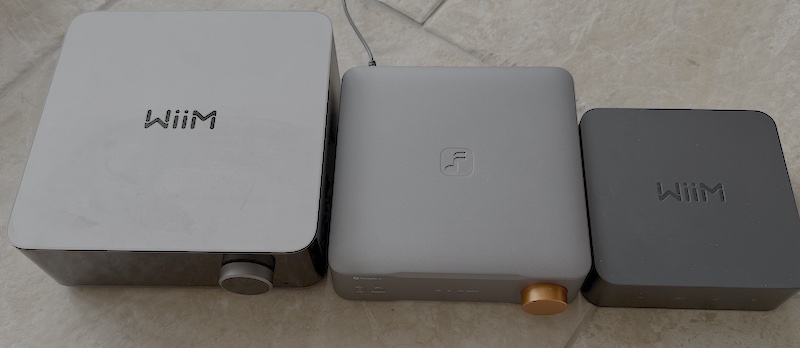 |
Front and rear panel comparisons reveal the key hardware differences at a glance — the S3’s balanced XLR outputs and broader rear connectivity are immediately visible alongside the WiiM’s more conventional layout.
 |
 |
Fosi Audio S3 vs WiiM Pro
The WiiM Pro remains excellent value at its price, and its app and room correction ecosystem are considerably more mature than anything the S3 currently offers. However, the S3 has the stronger output hardware: balanced XLR is a significant functional upgrade, and the AK4493SEQ DAC implementation sounded cleaner and more substantial in my direct A/B comparisons. AirPlay 2 support also matters, as WiiM have de-prioritised AirPlay at the Pro tier. If hardware outputs matter most, the S3 is the stronger platform. If room correction and app polish matter most, the WiiM Pro is still easier to recommend.
Fosi Audio S3 vs WiiM Ultra
This is the more interesting comparison because both products occupy essentially the same price bracket. The WiiM Ultra brings WiiM’s most mature app experience: parametric EQ, room correction, frequent firmware updates, and broader service integration. In raw hardware output quality, however, the S3 holds its own, and the balanced XLR implementation is competitive with the WiiM Ultra’s output stage. The deciding factor for most buyers will be the app. If room correction and PEQ are non-negotiable today, the WiiM Ultra wins. If you mainly need a clean balanced streamer and can wait for Fosi’s software to mature, the S3 makes sense.
Specifications
| Specification | Detail |
|---|---|
| Chipset | Amlogic A113X + AKM AK4493SEQ + OPA1612 × 2 |
| ADC | Burr-Brown PCM1894 |
| THD+N | ≤0.00018% |
| SNR | ≥120dB |
| Network | 802.11 a/b/g/n/ac/ax dual-band Wi-Fi 6 (2.4 GHz & 5 GHz), 10/100M Ethernet |
| Bluetooth | 5.3, A2DP, AVRCP, BTLE; SBC and AAC codecs |
| Remote Control | Bluetooth, 15 m+ range |
| Power | DC 12V 1.5A |
| OPT Input | PCM 24bit / 192kHz |
| BT Input | PCM 24bit / 48kHz |
| Google Cast | PCM 24bit / 96kHz |
| AirPlay 2 | PCM 16bit / 48kHz |
| HDMI eARC | PCM 24bit / 192kHz |
| Roon Ready | PCM 32bit / 384kHz |
| Wi-Fi | PCM 24bit / 192kHz |
| Streaming Protocols | Google Cast, AirPlay 2, DLNA/UPnP, Roon Ready*, Spotify Connect, Tidal Connect |
| Outputs | Balanced XLR, RCA, Optical (TosLink), Sub RCA, 12V Trigger |
| Inputs | Line (RCA), HDMI eARC, Optical (TosLink), Bluetooth, Wi-Fi |
| EQ | 5-band during review period; 10-band EQ listed on Fosi’s app upgrade plan |
| App | Fosi Audio App (iOS & Android) |
| Dimensions | 17.3 × 17.3 × 4.7 cm (6.81 × 6.81 × 1.85 in) |
*Roon Ready certification in progress; currently usable via AirPlay 2 or Google Cast.
Rating Explanation
The Fosi Audio S3 earns its four-star pragmatic rating by delivering unusually strong hardware for its price. The balanced XLR outputs are not a checkbox feature — they are implemented thoughtfully with a chipset combination (AK4493SEQ, dual OPA1612) that gives the S3 a real advantage over most streamers in this price range. The breadth of streaming protocol support, including AirPlay 2 in a market where that feature is quietly disappearing, is a meaningful differentiator. The build quality, connectivity options, dedicated subwoofer output, 12V trigger, and HDMI eARC input together paint the picture of a product designed by people who have thought seriously about real-world system integration rather than just feature-list marketing.
Where the S3 falls short of five stars is squarely in the mobile application. Both the iOS and Android apps currently lack the room correction capability, parametric EQ, and streaming service breadth that WiiM users regard as baseline expectations at this price level. A streamer’s app is not a secondary concern; it is the primary interface through which users interact with the device every single day, and in that dimension the S3 currently trails the competition. Fosi Audio’s published roadmap is credible given their firmware track record on other products, but a roadmap is not delivered capability, and buyers should weigh that distinction honestly.
For the right buyer — someone building a balanced system on a budget, primarily streaming via Tidal Connect or Google Cast, or planning to use the S3 as a Roon endpoint once certification arrives — this is strong value. For anyone who depends on room correction or advanced EQ as part of their daily listening setup, patience is the right strategy: wait for the roadmap to deliver, then revisit.
Conclusion
The Fosi Audio S3 feels like a first-generation product in the best and worst senses. The hardware is already there: balanced XLR outputs, a good AKM DAC implementation, Wi-Fi 6, AirPlay 2, Tidal Connect, a subwoofer output, a 12V trigger, and HDMI eARC in a compact chassis. The app is the part still catching up.
That makes the recommendation fairly specific. If you want the most polished streamer app today, the WiiM Ultra remains the safer choice. If you are building a balanced system on a budget and mainly use Tidal Connect, Google Cast, AirPlay 2, or eventually Roon, the S3 gives you better hardware than I expected from Fosi’s first streamer. I would buy it for the outputs and measurements, not for the app — at least not yet.