Tanchjim Space Pro
Nice Power, Nice Build — a High Quality Portable DAC-Amp from Tanchjim
I have reviewed a lot of Tanchjim products over the years, and several of them sit among my favourites — the One DSP, the Fission, the excellent Stargate II, and even their recent Rita ANC headphone. What ties all of those together is that Tanchjim consistently take great care to deliver a quality experience: thoughtful features, genuinely good sound, and all of it at a price that feels fair. That track record is exactly why the Space Pro caught my eye.
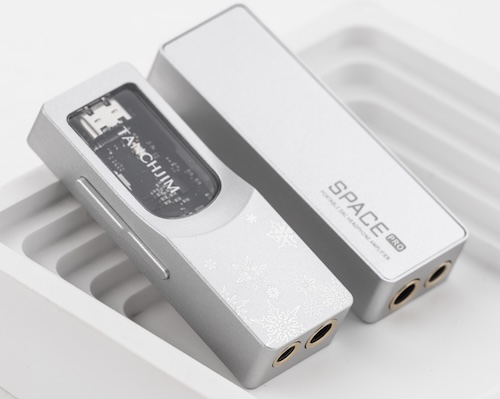
The Space Pro is a compact portable DAC-amp built around dual Cirrus Logic CS43198 DAC chips, housed in a CNC-machined aluminium chassis with a transparent window over the PCB and connected via a detachable silver-plated single-crystal copper cable. At $119.99 it lands in an interesting spot — more expensive than the CrinEar Protocol Max, yet noticeably cheaper than the FiiO QX13 — so I was genuinely curious to find out what it offers for the price. So let’s find out.
I would like to thank Tanchjim for providing the Space Pro for the purposes of this review.
If you are interested in finding more information about this product, you can find it at the official Tanchjim product page.
The Tanchjim Space Pro typically retails for $119.99. It is available in two variants: the standard model reviewed here, and the Asano Tanch Snowfall Edition which features high-precision laser engravings on the front and back surfaces.
I have been using the Space Pro for about two weeks, working through it with IEMs and over-ear headphones alike. The honest verdict is that it is the best all-round portable DAC-amp I have tested at this price — and at the time of writing, possibly at any price in the portable dongle category. But first, let’s take a look at what’s in the box.
Unboxing and Packaging
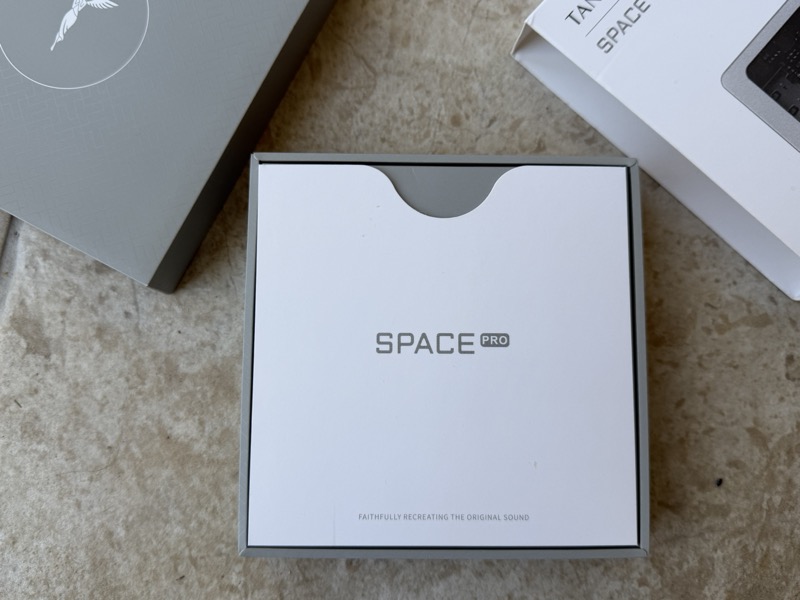
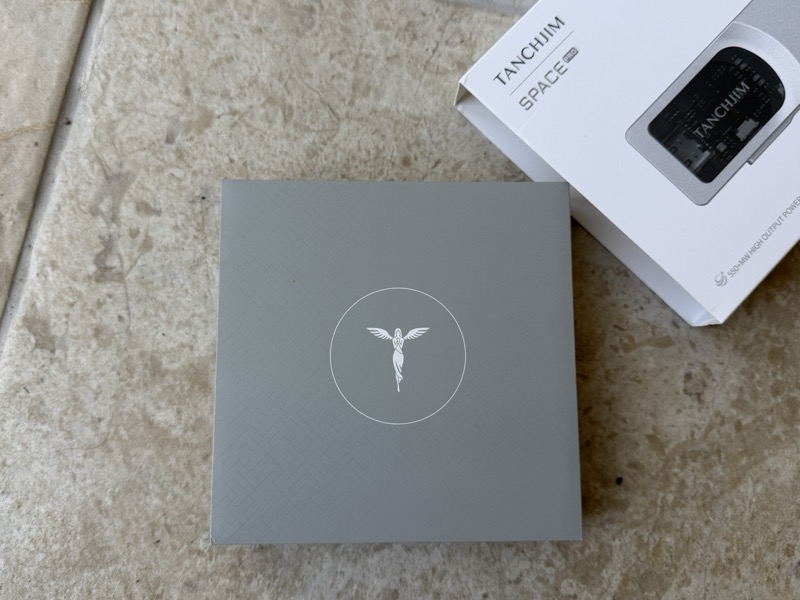
Unboxing a Tanchjim product is, by now, a familiar pleasure — their packaging has always been a cut above what the price point might suggest, and the Space Pro is no exception. The outer sleeve is clean and minimal, the inner tray is precisely fitted, and the whole presentation communicates that some care went into the details long before the box was ever opened:
 |
 |
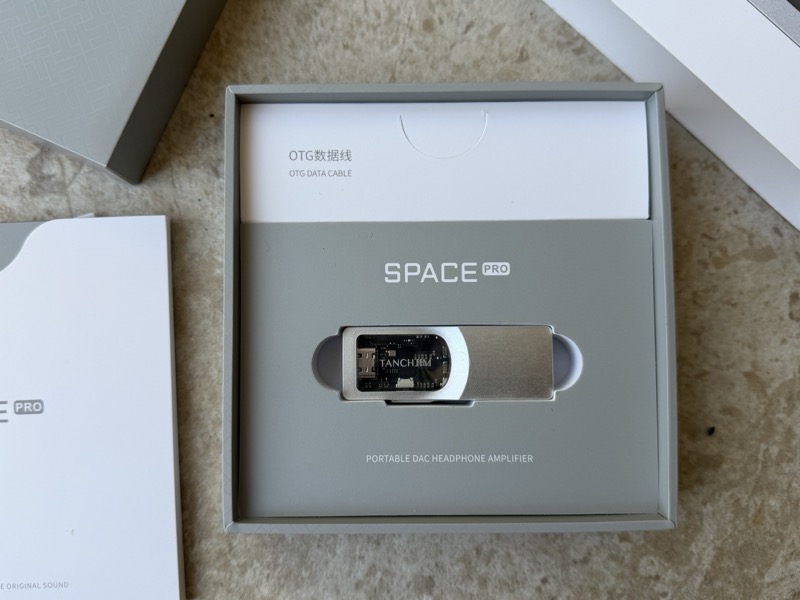
Opening reveals the Space Pro seated in a shaped insert, with the OTG cable compartment tucked neatly below:
 |
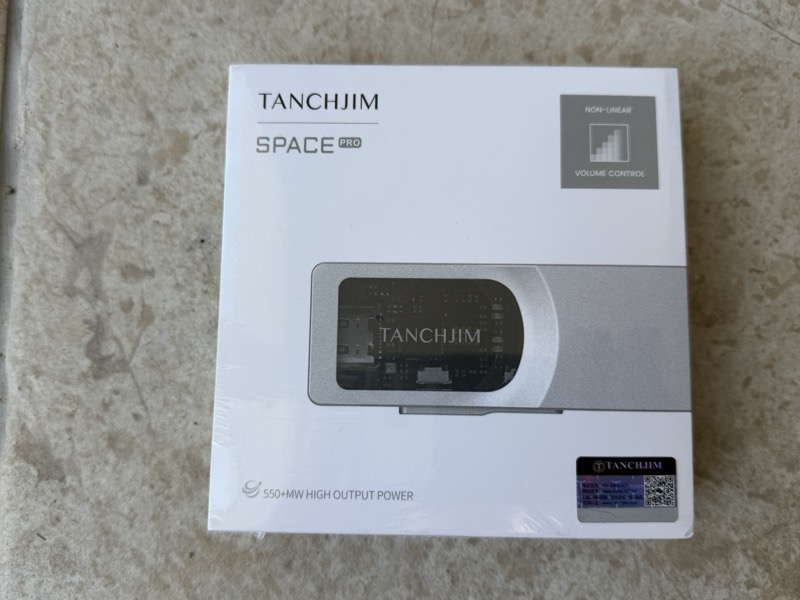 |
It is worth pausing on the first proper look you get of the unit nestled in the tray — the transparent window with the TANCHJIM-branded PCB glinting beneath the “SPACE PRO” lettering on the box makes for a genuinely premium first impression before you have even picked it up:
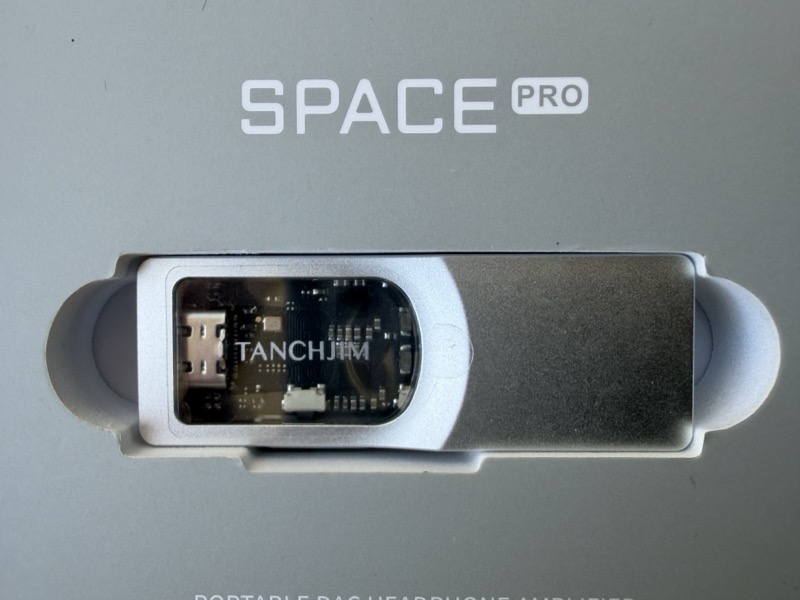
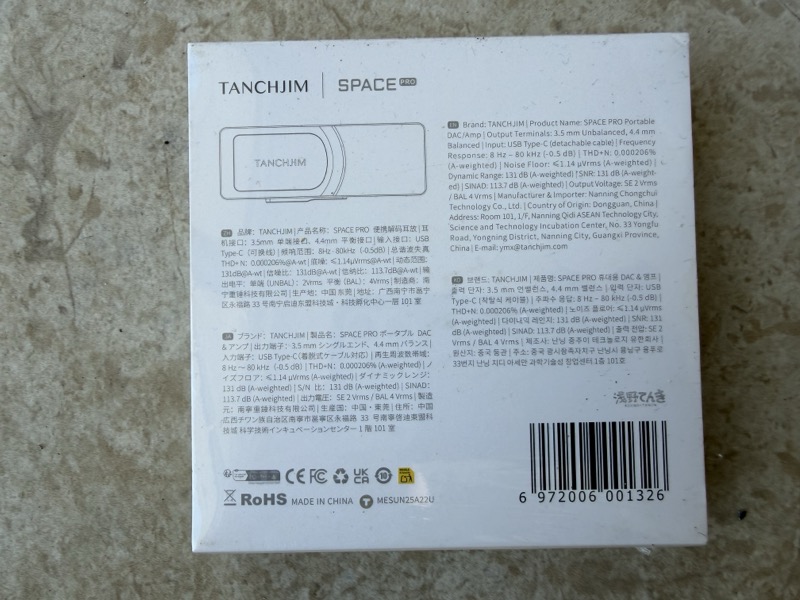
The back of the box carries the full specification sheet — useful if you want to confirm technical details at a glance:
All accessories laid out: the Space Pro unit, a silver-plated single-crystal copper USB-C to USB-C cable, a USB-A to USB-C adapter, a quick guide, and a Tanchjim app card with QR codes for iOS and Android:
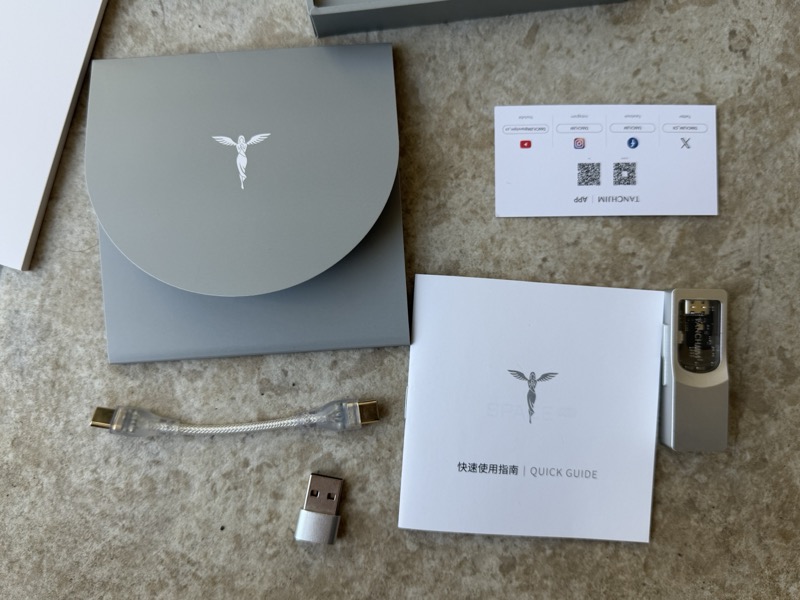
The included cable is notably premium for an accessory — the silver-plated single-crystal copper conductors with dedicated shielding are a genuine quality step above the braided cables that typically come in the box at this price tier.
Build Quality and Design
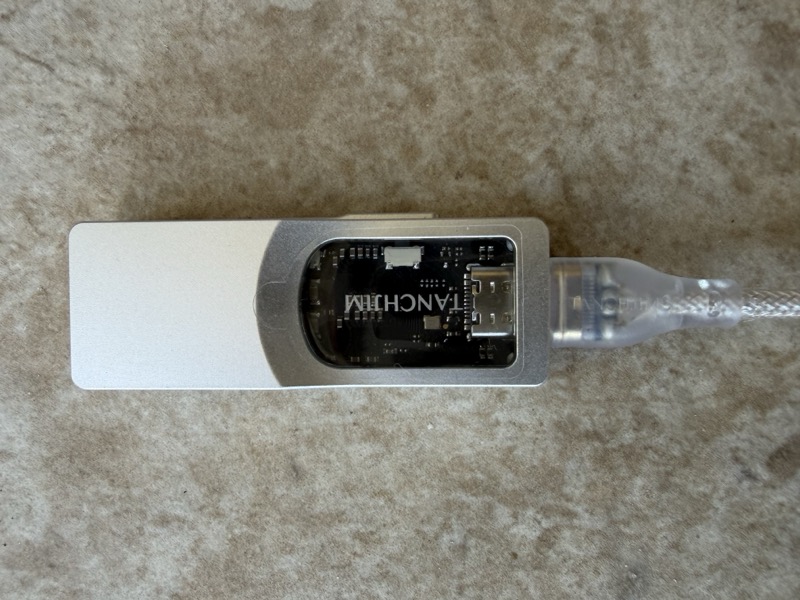
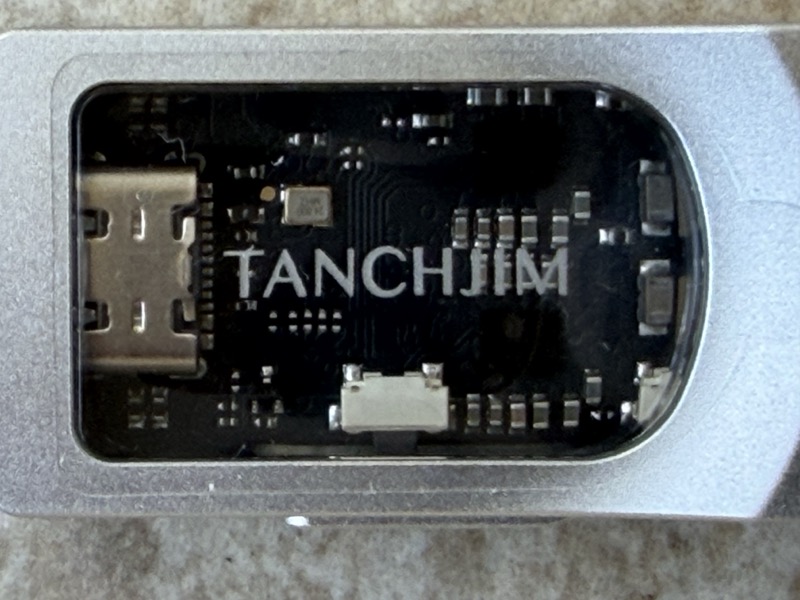
The Space Pro is built from CNC-machined aerospace-grade aluminium alloy with a seamlessly integrated profile. The standout design feature is the transparent window on the front face, which reveals the PCB and the TANCHJIM-branded chip layout beneath — a functional aesthetic choice that makes the internal architecture part of the product’s visual identity:
 |
 |
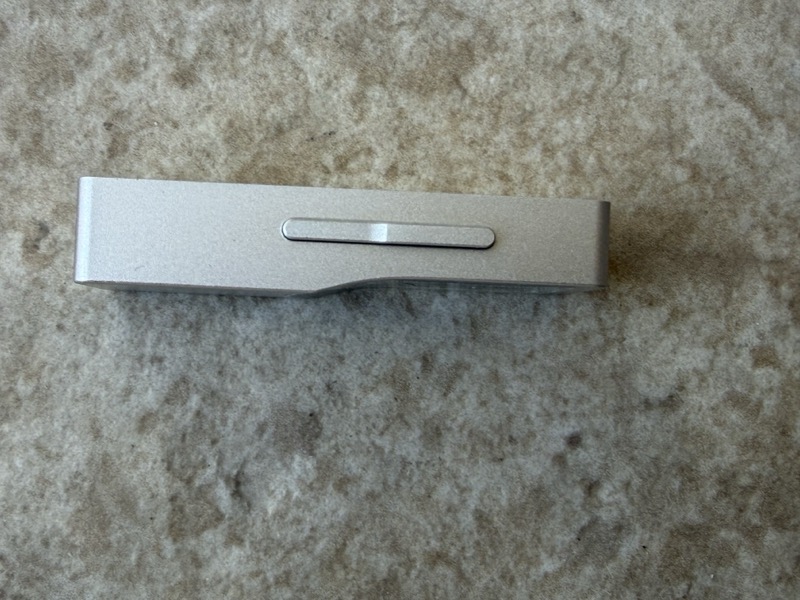
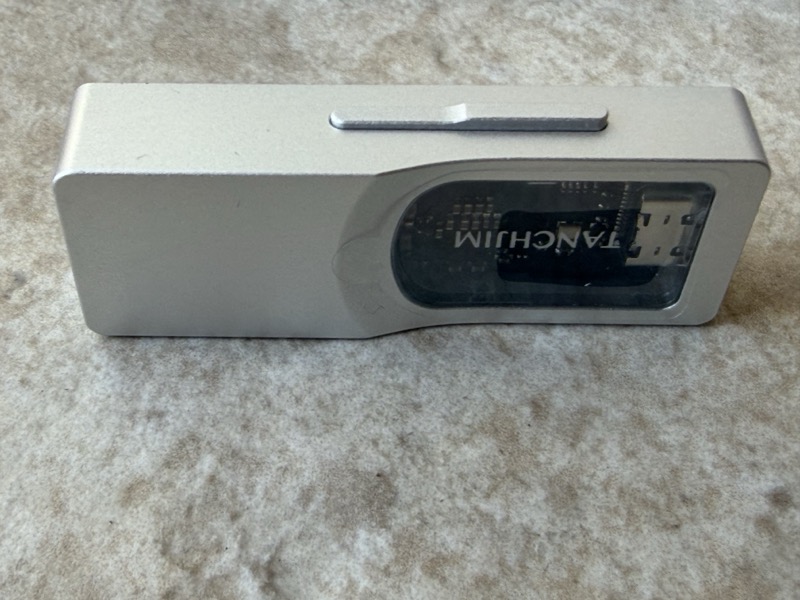
Volume is controlled by a physical slider running along the top edge — a precise, tactile mechanism that gives fine control without the mental overhead of a rotating knob in a pocket:
 |
 |
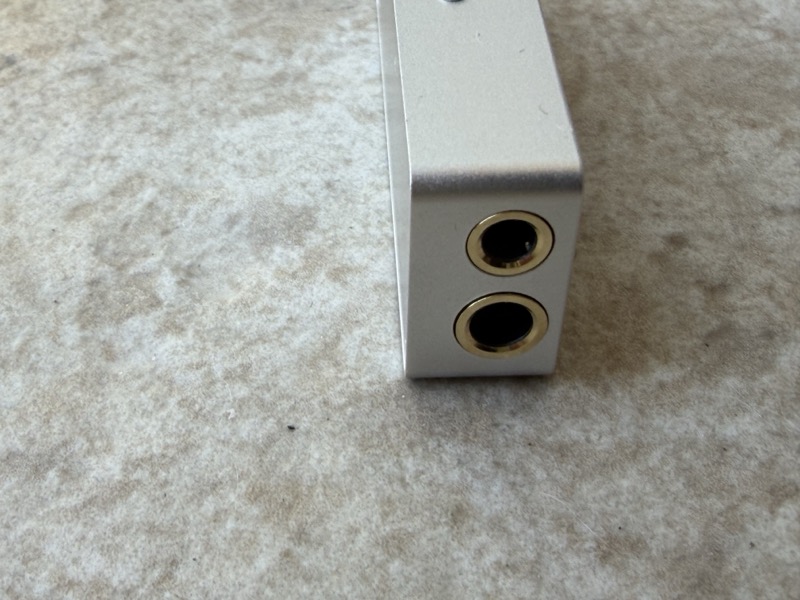
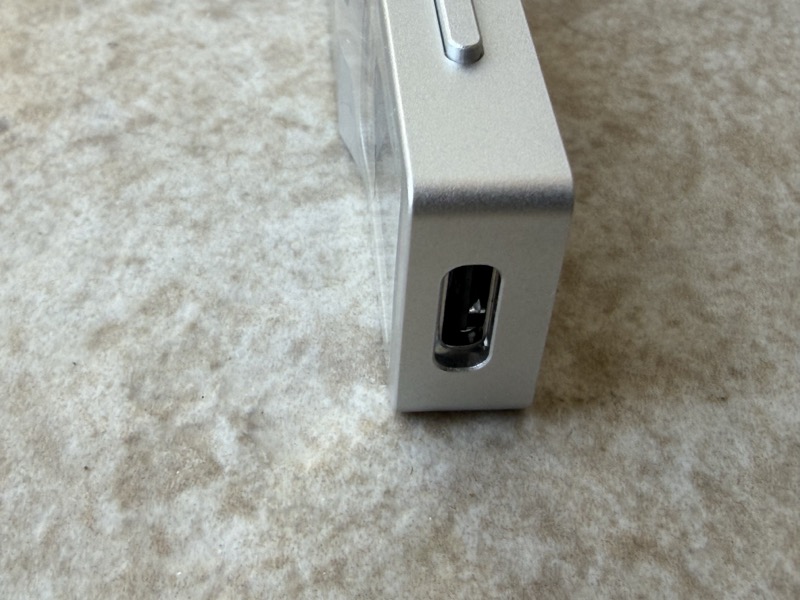
The connections sit on the two ends of the unit. The output end stacks both headphone jacks — 3.5mm single-ended and 4.4mm balanced — on the same face, with gold-plated connectors on both, while the opposite end carries the USB-C connector for data and power, alongside support for an in-line microphone over the 3.5mm port when headphones are connected via the 4.4mm output:
 |
 |
Features
Dual DAC and Dual Amplifier Architecture
The Space Pro’s core is a fully balanced four-channel architecture pairing two CS43198 DAC chips with two SGM8262 amplifier op-amps — one pair per channel. This isn’t a dual-DAC-sharing-a-single-amp arrangement; left and right channels are independently decoded and independently amplified throughout the signal chain, which is what the 618mW balanced output figure (into 26Ω) reflects. The maximum output of 4Vrms from the balanced output and 2Vrms from single-ended, combined with dual gain modes (high and low), makes it practical with everything from sensitive IEMs to power-hungry planars. Supported formats reach PCM 768kHz and native DSD256.
Class AB and Class H Amplification Modes
The Space Pro offers a switchable output stage between Class AB and Class H modes. Class AB is the standard high-fidelity operating mode — stable, linear, and well-suited to critical listening. Class H is an efficiency-optimised mode that reduces power draw from the source device, which is a useful battery consideration when using the Space Pro with a phone. Most listening sessions I ran in Class AB mode; Class H is a sensible default for daily commuting use where battery drain matters.
10-Band PEQ and DevicePEQ Integration
The ten-band parametric EQ implemented in the Tanchjim app was the primary focus of my initial testing period. Each band is configurable with full frequency, gain, and Q control, and the implementation behaves with the linearity you would expect from a device with this level of measured performance. The community sharing feature — allowing users to share and load EQ profiles directly within the app — is a practical addition that lowers the barrier to entry for listeners who want a well-tuned starting point without building a curve from scratch.
For DevicePEQ integration specifically: the Space Pro’s filter behaviour is consistent and predictable across the full EQ range, which is exactly what you need when calibrating against measured headphone or IEM response data. Of the portable DAC-amps I have tested with the plugin, the Space Pro sits at the top for EQ accuracy.
Game Audio Optimization and Virtual Surround
Tanchjim’s dedicated “Tactical Perception” gaming mode allows adjustment of specific sound element categories — gunshots, footsteps, impact sounds — with independent parameter control per category. Multiple built-in presets target specific game titles. Virtual 5.1 and 7.1 channel surround processing is also available, enhancing spatial detail for multi-channel content. These features are genuinely well-implemented — the Fosi Audio DS3 has comparable virtual surround, but the Tactical Perception system’s per-element parameter control is more granular than anything I have seen at this price.
Microphone Support
The 3.5mm port supports CTIA-standard in-line microphones, allowing simultaneous use of the 4.4mm output for headphones and the 3.5mm input for a microphone. This is a useful setup for gaming or calls where you want the audio quality of the balanced output without sacrificing a microphone connection. None of the direct competitors I tested offer this.
Sound Impressions
All listening was conducted with the Space Pro connected to an iPhone and Android phone via USB-C, in Class AB mode, high gain, with PEQ set to flat unless otherwise noted. IEMs used included Tanchjim Nora and Stargate II; over-ear headphones included the Hifiman Edition XV and Sennheiser HD600.
Bass
The Space Pro is completely neutral in the bass — no added warmth, no elevated sub-bass, no attempt to flatter the low end. The 618mW output into 26Ω translates to genuine headroom with planars: on “Angel” by Massive Attack the sub-bass weight and decay are handled without any sense of compression or strain, and the Edition XV’s low end is well-controlled throughout. The transparency means the quality you hear is entirely your headphone’s own — which is precisely the right behaviour for a source device.
Midrange
The midrange is accurate and uncoloured. Vocal body and instrumental timbre are passed through exactly as recorded, with no euphonic colouring from the amp stage and no midrange dip that might push voices backward. On “Fast Car” by Tracy Chapman the guitar texture and vocal placement are natural and immediate, and the Space Pro offers nothing to draw attention away from the recording itself. With the Sennheiser HD600, which is an accurate and slightly warm headphone, the transparency of the source chain means you hear the HD600 — not the DAC.
Treble
Treble is clean, extended, and grain-free. There is no added brightness or artificial shimmer, and the noise floor is silent even with sensitive IEMs — the ≤1.14µVrms noise specification is not just a number. On “Tamacun” by Rodrigo y Gabriela the upper-frequency guitar attack is resolved cleanly without edginess, and the ambient decay in the recording arrives intact.
Soundstage
Spatial presentation is accurate and unexaggerated — nothing is artificially widened or compressed, image focus is precise, and channel separation is excellent at −116dB crosstalk from the balanced output. With surround processing off, the Space Pro presents exactly the stereo field in the recording. With virtual 5.1/7.1 enabled, the spatial expansion is noticeable and well-controlled rather than smeared — a better result than many implementations I have heard.
Comparisons
The Space Pro sits in a well-populated bracket. Here is how it compares to the three closest alternatives I have reviewed:
| Space Pro | Protocol Max | FiiO QX13 | Fosi DS3 | |
|---|---|---|---|---|
| Price | $119.99 | $89.99 | $219 | $129.99 |
| DAC chips | Dual CS43198 | Dual CS43198 | ES9027SPRO | ES9039Q2M |
| Amp chips | Dual SGM8262 | Dual SGM8262-2 | INA1620 ×4 | XMOS-based |
| Output (balanced) | 505mW @ 32Ω (618mW @ 26Ω) | 500mW @ 32Ω (600mW @ 16Ω) | 900mW (desktop) | 220mW |
| SINAD | 114dB | ~118dB (est.) | ≥124dB SNR | ≥122dB SNR |
| SNR | 131dB | 132dB | ≥124dB | ≥122dB |
| PEQ | 10-band | 10-band | 10-band | 8-band |
| Gaming / surround | 5.1/7.1 + Tactical | — | — | Virtual 7.1 |
| Microphone | Yes (3.5mm) | — | — | — |
| Screen | — | — | 1.99" | — |
| Amp modes | Class AB / H | — | — | — |
The Protocol Max is the most revealing comparison, because the two devices share essentially the same hardware — the same dual CS43198 DACs and the same SG Micro SGM8262 op-amp family. Given that, it is no surprise that they deliver very similar output power (around 500mW balanced into 32Ω apiece), and that is a very good thing: it means you are getting the same fundamentally excellent, well-powered CS43198 sound whichever one you choose.
What you pay more for with the Space Pro, then, is everything around that shared core — the build quality, the looks, the more pocketable size, and some extra features the Protocol Max does without, most notably the Tactical Perception gaming mode and virtual 5.1/7.1 surround, microphone support over the 3.5mm port, and the switchable Class AB / Class H output stage. If you simply want transparent, powerful CS43198 sound with 10-band PEQ at the lowest price, the Protocol Max remains the value benchmark. If the build, the form factor, and those extra features matter to how you actually use a dongle, the Space Pro is the more complete package — and worth the difference.
The FiiO QX13 at $219 is the only rival with a physical display — its 1.99" screen is genuinely useful — and it offers higher output in desktop mode. But at nearly twice the Space Pro’s price, and with a larger physical footprint, it is a different class of device. I find myself reaching for the Space Pro more often precisely because of its compact form factor and the fact that it feels complete without the screen.
The Fosi DS3 at $129.99 is the closest price match, but its 220mW output is significantly lower than the Space Pro’s 618mW, and its 8-band PEQ is less flexible. The DS3’s watchmaking-inspired design is distinctive, but in raw performance the Space Pro is the stronger device at a similar price.
Specifications and Measurements
| Specification | Value |
|---|---|
| DAC chips | Dual Cirrus Logic CS43198 |
| Amplifier chips | Dual SG Micro SGM8262 |
| USB input | USB-C (detachable cable) |
| PCM support | Up to 32-bit/768kHz |
| DSD support | Native DSD256 |
| Outputs | 3.5mm single-ended + 4.4mm balanced |
| Output power | Up to 618mW (balanced) |
| Output level | 4Vrms (balanced), 2Vrms (single-ended) |
| Frequency response | 8Hz–80kHz |
| THD+N | 0.000206% |
| SINAD | 113.7dB |
| SNR | 131dB |
| Dynamic range | 131dB |
| Noise floor | ≤1.14µVrms |
| Gain modes | High / Low |
| Amp modes | Class AB / Class H |
| PEQ | 10-band parametric |
| Surround | Virtual 5.1 / 7.1 |
| Microphone | 3.5mm CTIA standard |
| Variants | Standard / Asano Tanch Snowfall Edition |
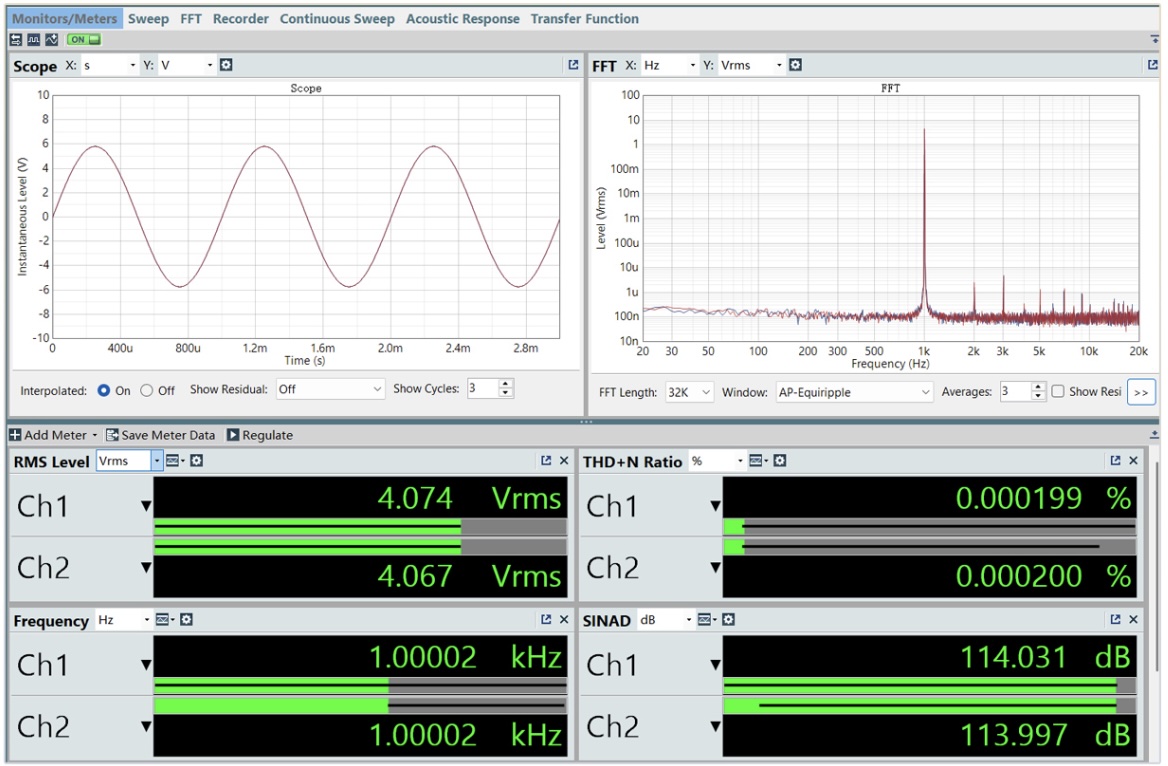
The measurement dashboard confirms the specification claims in full. SINAD measures at 114.031dB on Channel 1 and 113.997dB on Channel 2 — exceptional figures for a device of this size and price. THD+N at 0.000199% and 0.000200% per channel is a near-perfect channel match:
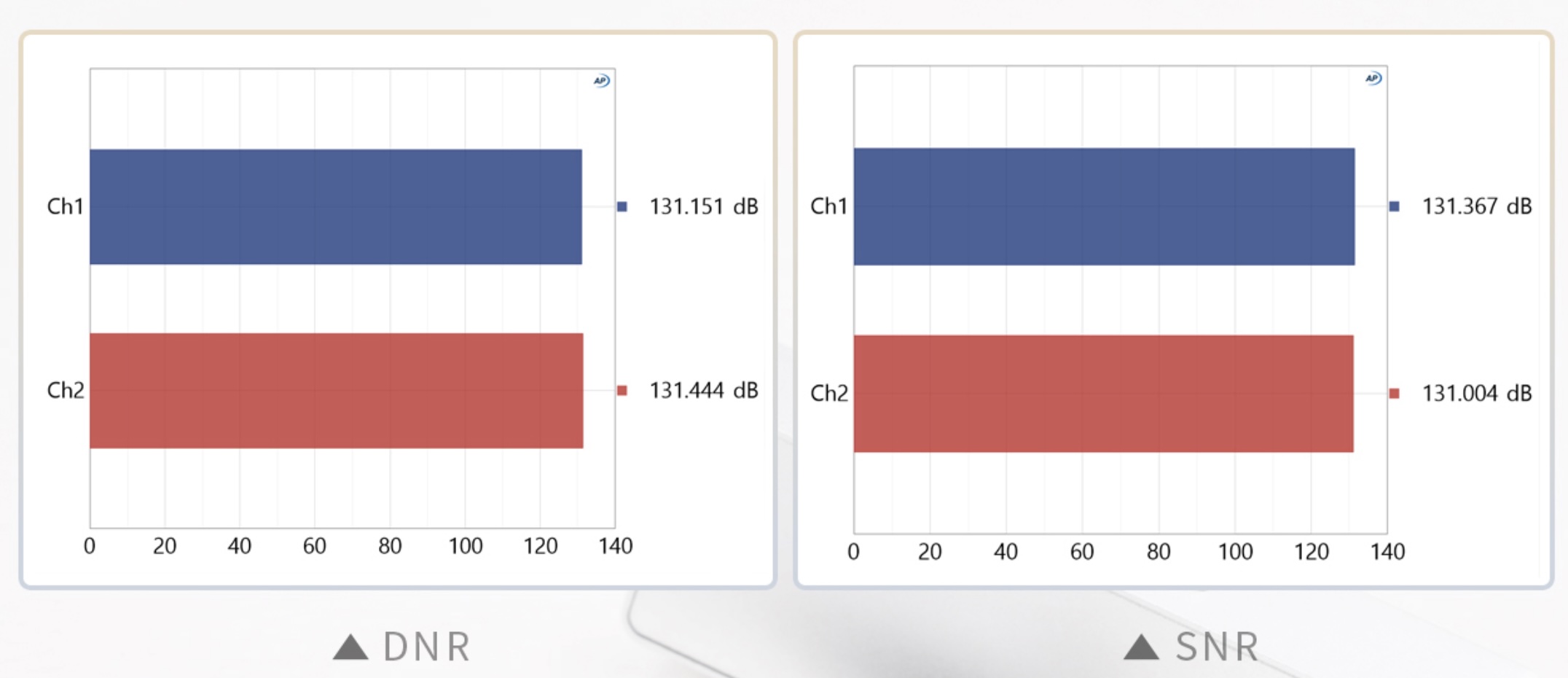
Dynamic range and signal-to-noise ratio both measure at 131dB, with near-perfect channel matching across both metrics:
Rating Explanation
The Space Pro earns a five out of five pragmatic rating because it genuinely delivers on every dimension that matters for a portable DAC-amp — transparency, power, build quality, features, and measurement performance — without asking you to make a meaningful compromise anywhere. The 10-band PEQ with community sharing makes it a serious tool for headphone enthusiasts who want to EQ their IEMs or headphones from a single portable device. The Tactical Perception gaming mode and virtual surround add real value for listeners who use the same device for both music and gaming. The microphone support is a unique feature at this price. And the build quality — CNC aluminium, premium cable, transparent PCB window — feels like a product that cost more.
The price rating of four reflects that $119.99 is not cheap for a portable dongle, and the Protocol Max demonstrates that excellent dual CS43198 performance with 10-band PEQ is available for $30 less. The Space Pro earns its premium over the Protocol Max, but the premium is real and worth acknowledging.
Features and measurements both score five without reservation. 114dB SINAD, 131dB SNR and DNR, 618mW output, 10-band PEQ, gaming features, microphone support, and Class AB/H switching — at $120 this is an extraordinary package.
Conclusion
The Tanchjim Space Pro is the portable DAC-amp that, after two weeks of use and thorough testing for DevicePEQ integration, sits at the top of my recommendations in its category. It has displaced the FiiO QX13 as my first portable DAC-amp suggestion despite costing half the price, because for the vast majority of use cases — IEMs, planars, PEQ, gaming, calls — it does everything the QX13 does in a smaller, lighter, cheaper package. The one thing it concedes is the QX13’s screen, and I have found myself not missing it.
If you are looking for the most complete portable DAC-amp available under $150, the Space Pro is it. And if you are already invested in a headphone or IEM and want to extract everything it is capable of through careful EQ — the Space Pro’s PEQ implementation will let you do exactly that.