Lily Audio Genesis One
A US-made open-back built around a novel piezoelectric transducer
The Genesis One is a boutique open-back headphone, made in the USA by Lily Audio, built around their own CrystalCore transducer. What is special about the Genesis One, and — unlike a lot of “unique driver” marketing in this hobby — it really is unique technology: rather than a planar, electrostatic or conventional dynamic driver, the CrystalCore is a piezoelectric transducer.
A crystal element physically flexes when a voltage is applied across it, and that bending motion drives a separate, stiff diaphragm rather than moving air directly — which lets Lily Audio optimise the actuator and the diaphragm independently. Here is an image of the internals from Lily Audio’s website:
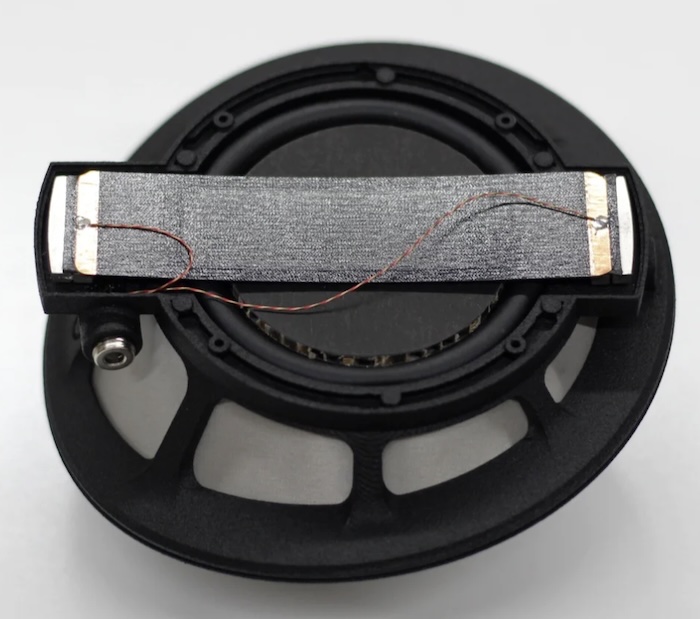
It is the same basic principle used in some micro-speakers, scaled up and refined for headphone use, and it is intended, according to Lily Audio, to surpass electrostatic designs in “transient speed” while making the headphone “disappear” so music arrives with the scale and openness of a loudspeaker system. So Let’s see.
I would like to thank Lily Audio for lending me the Genesis One for this review, its been one of the most interesting products I have reviewed in the past year.
If you are interested in finding more information about this product, you can find it at the official Lily Audio product page.
The Lily Audio Genesis One retails for $1,200.
So, at $1,200 it is a serious, proposition — an ambitious, technically-minded design aimed squarely at listeners chasing something unique. As you might expect from unique headphone, it is also a demanding headphone, though like any technology it is rapidly evolving as Lily Audio refine their technology so it already getting much easier to drive, but already the production batch is 35% easier to drive that the earlier pre-production review units so while still a hard to drive headphone it is a little easier than it was. But, I added a little-dedicated gear-matching section later on to cover many of the amplifiers I have been using with the Genesis One.
But first, let’s take a look at what’s in the box.
Unboxing and Packaging
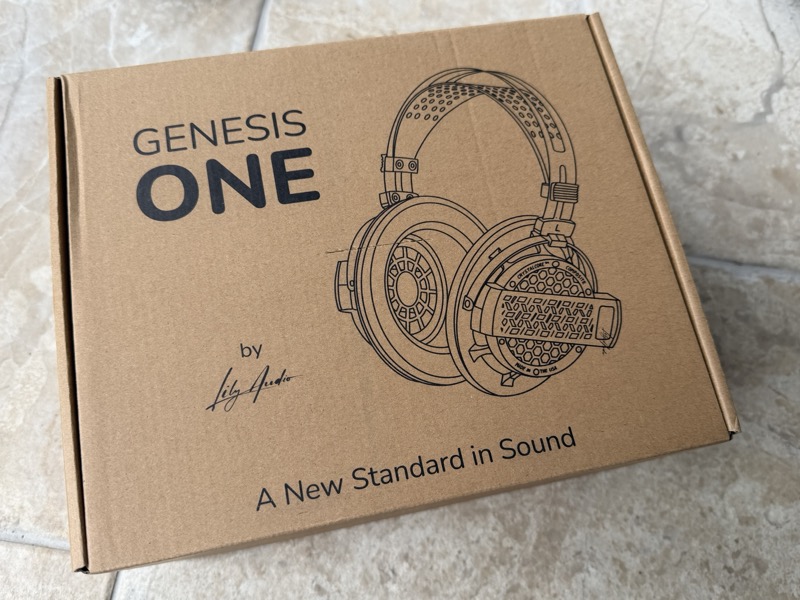
The Genesis One arrives in an understated kraft box with a line drawing of the headphone and the tagline “A New Standard in Sound”:
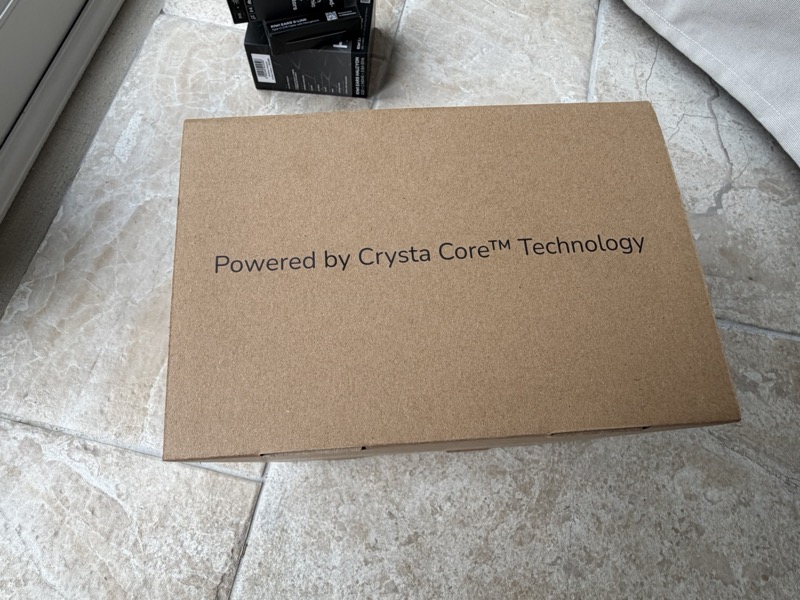
The lid rightly leans in on the marketing of the unique driver:
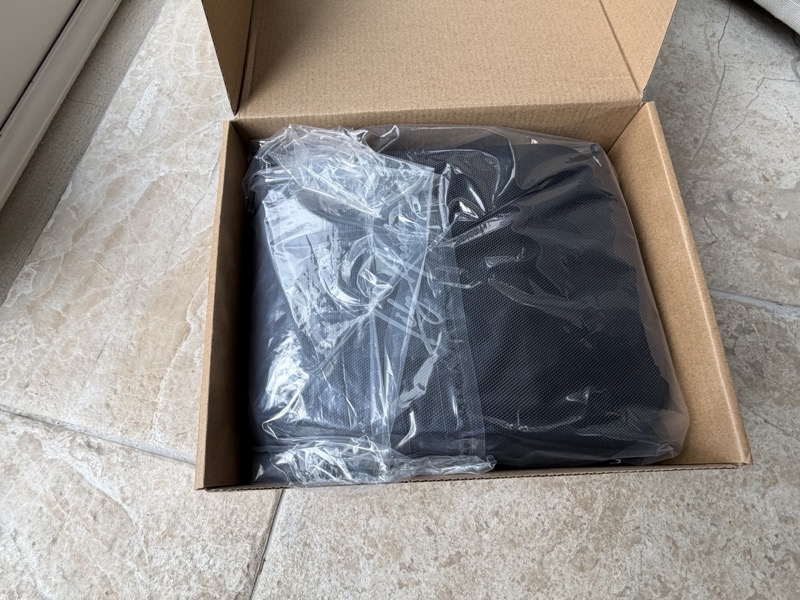
Inside the shipping carton the hard case is bagged and protected:
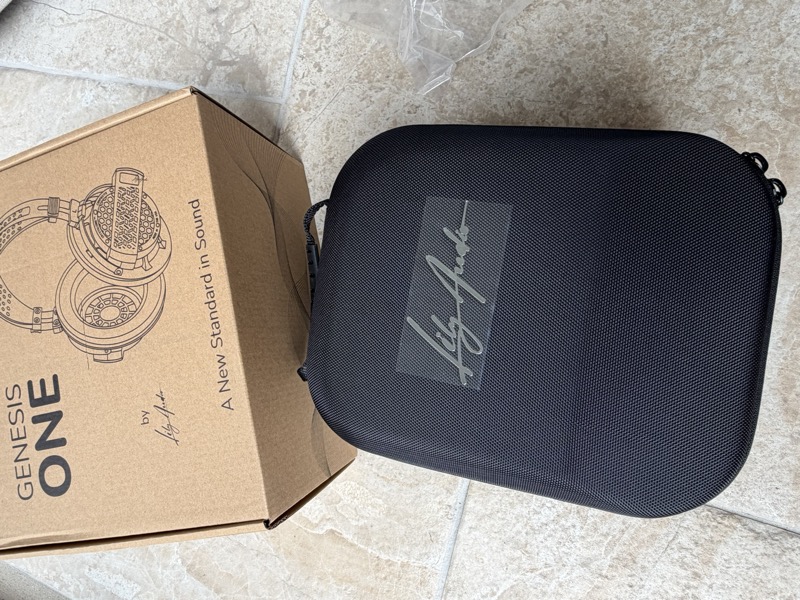
The case itself is a proper zip-up clamshell with the Lily Audio signature on the lid, sitting alongside the product box:
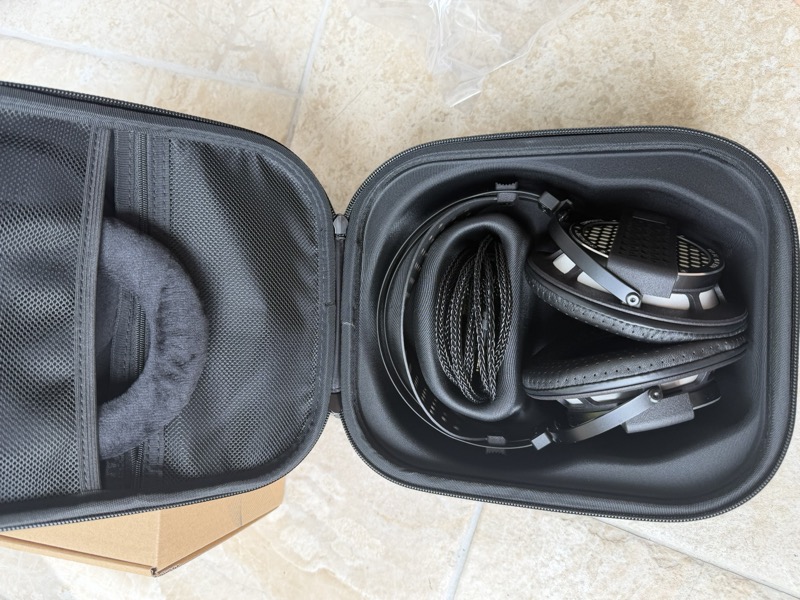
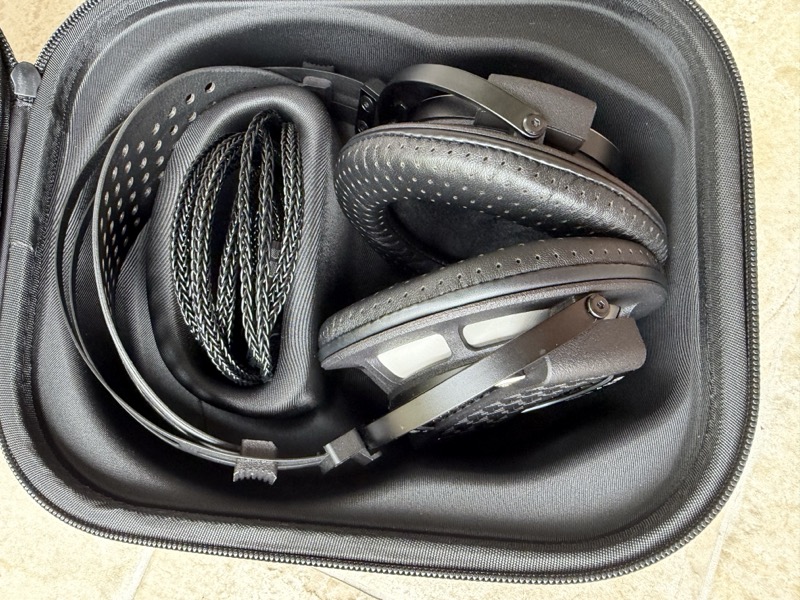
Opening it up, the headphone and braided cable are coiled into the moulded base, with a spare pad held in the mesh lid pocket:
 |
 |
The empty case shows the headphone-shaped moulding that keeps everything in place in transit:
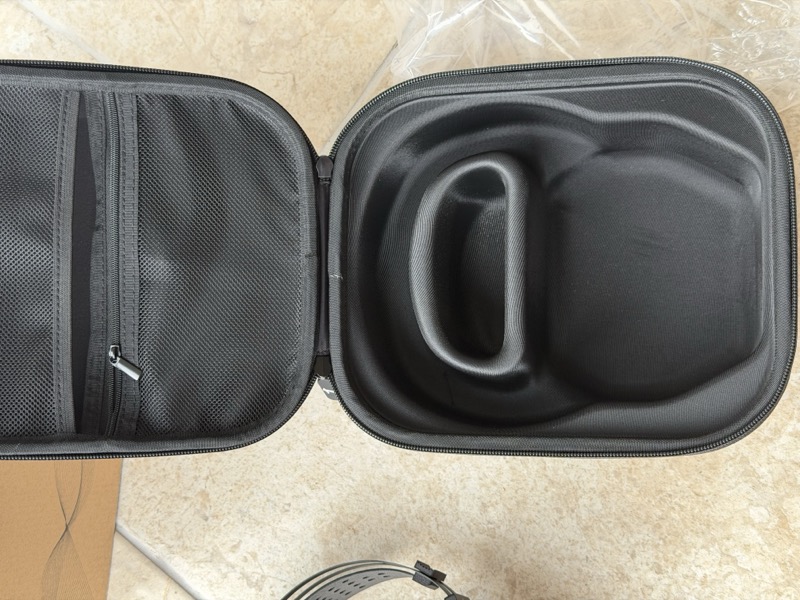
Overall this is a very nice case as you should expect from a $1300 headphone.
Design and Build Quality
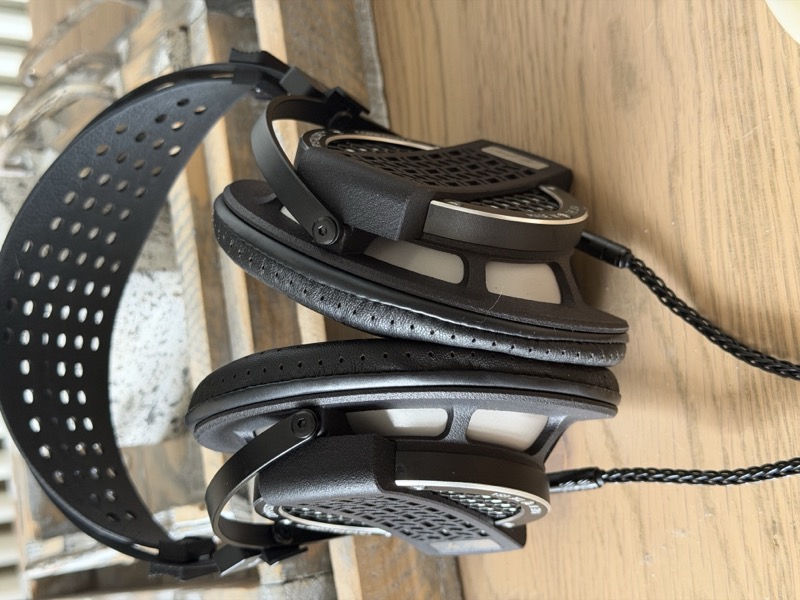
The Genesis One is a serious-looking open-back.
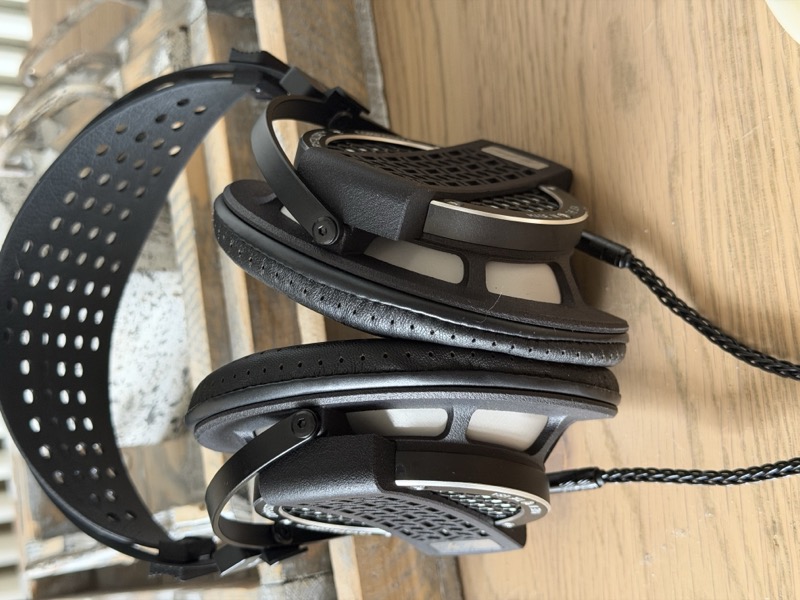
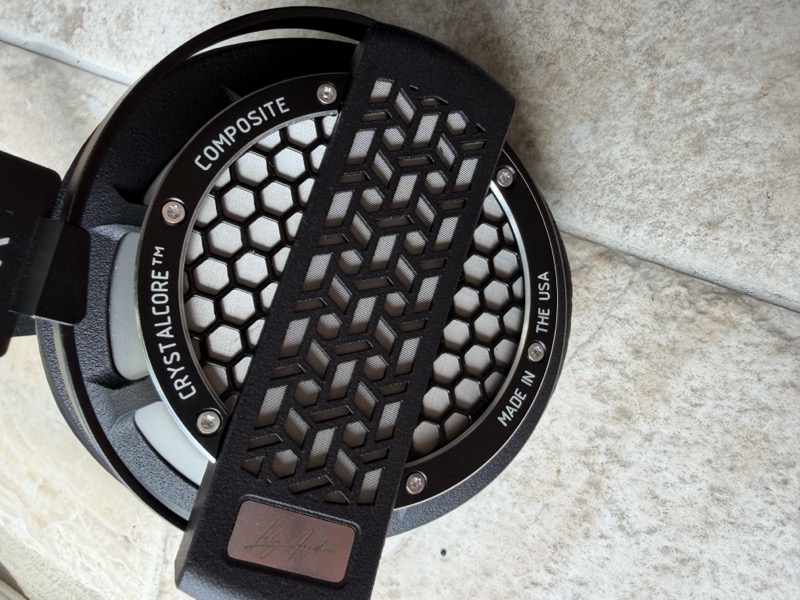
The earcups carry a circular grille ringed with “CRYSTALCORE™ COMPOSITE” and “MADE IN THE USA”, with a textured chevron bar across the centre and a small Lily Audio badge, and they look classy IMO:
 |
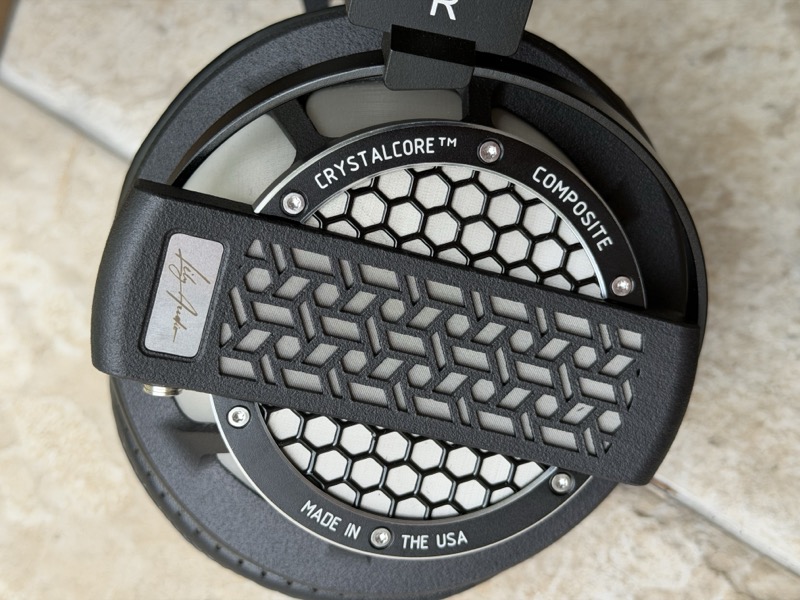 |
The grille:
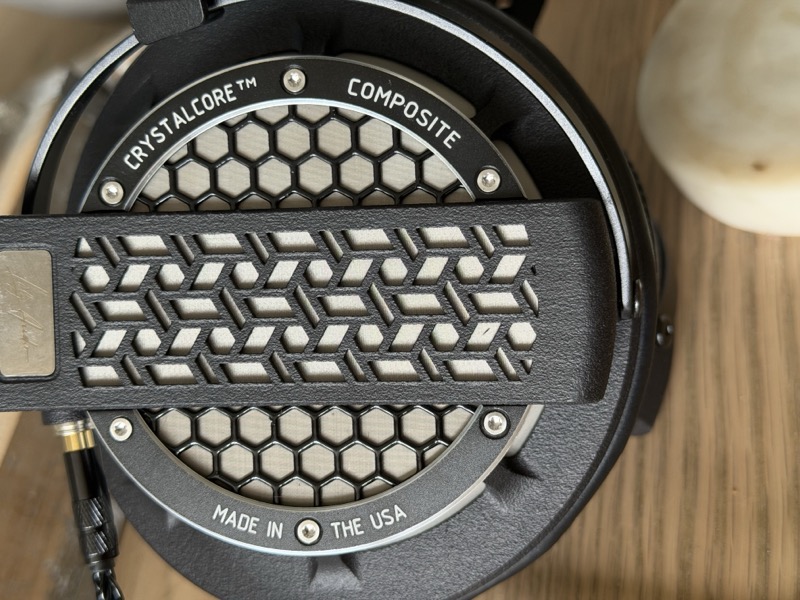
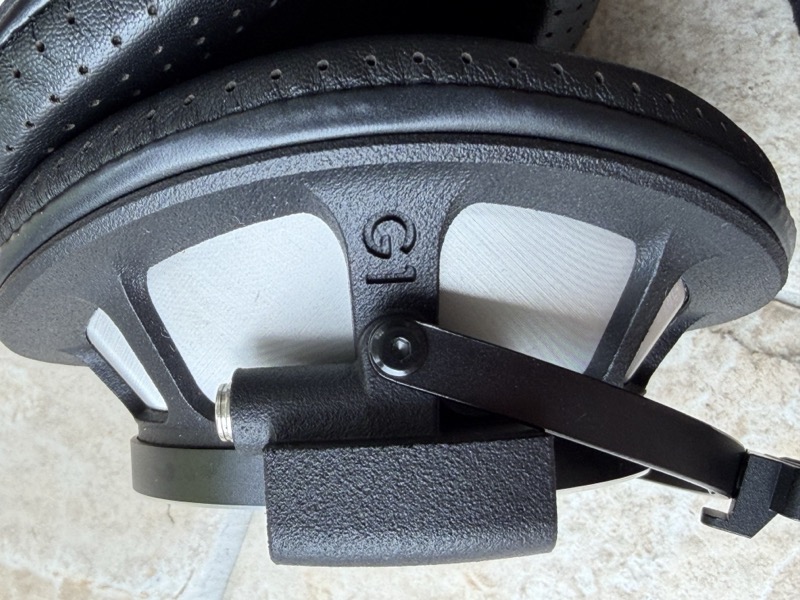
The earcups are clearly labelled, with a “G1” marking on the yoke and a 3.5mm socket for the detachable cable on each side, but in my opinion, are very reminiscent of the HD800 design:
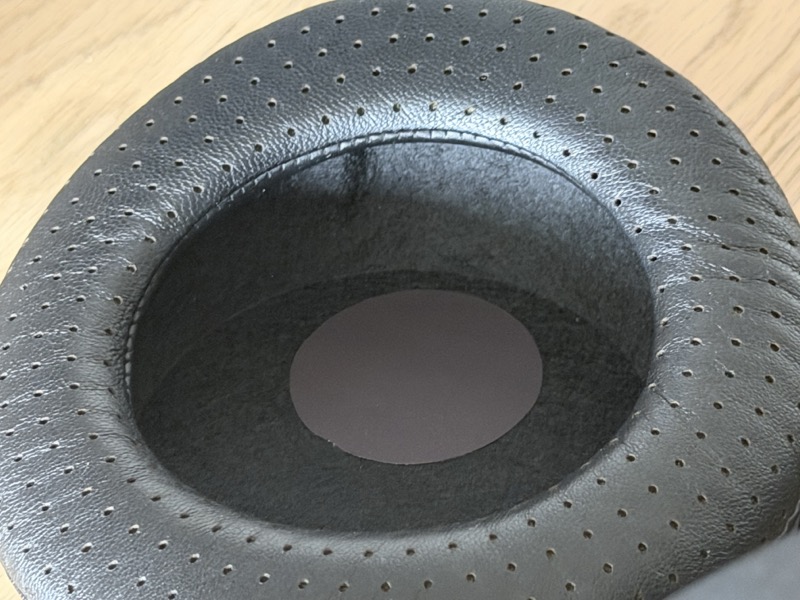
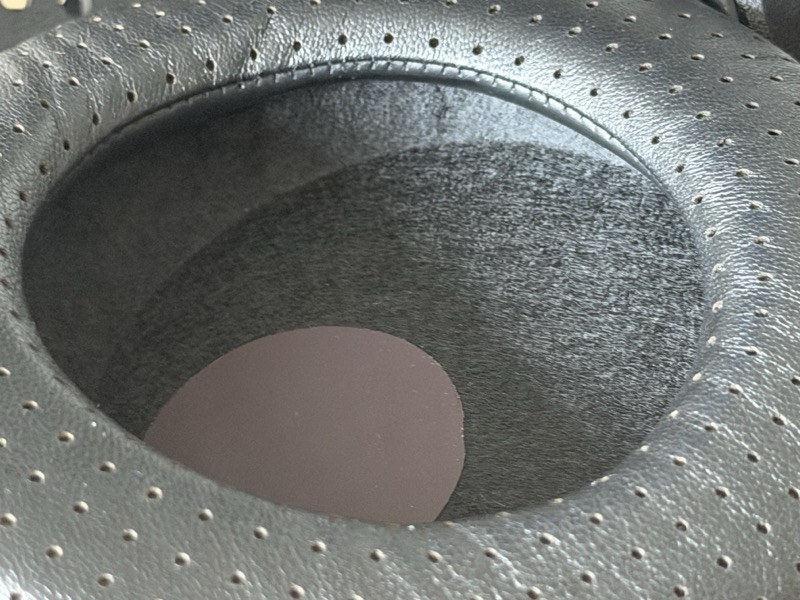
Looking into the pad opening you can see the angled transducer itself behind the new dampening padding material:
 |
 |
Fit and Comfort
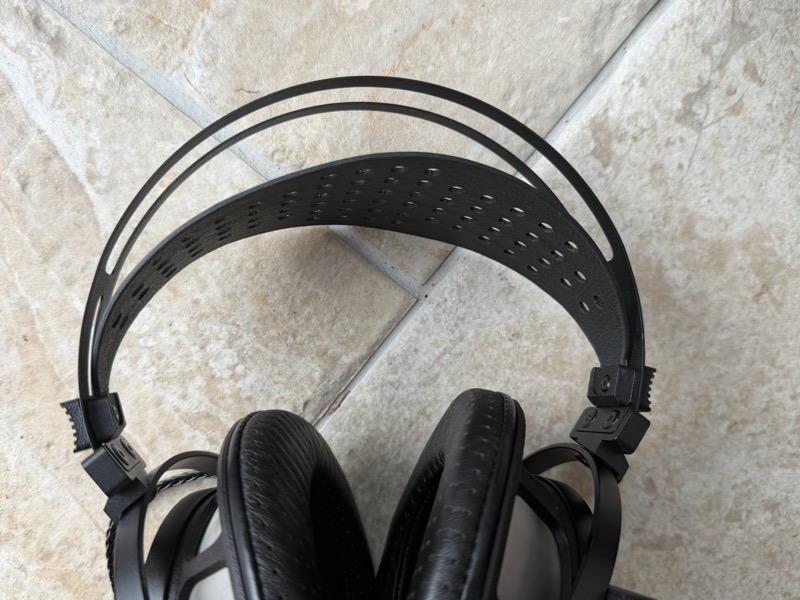
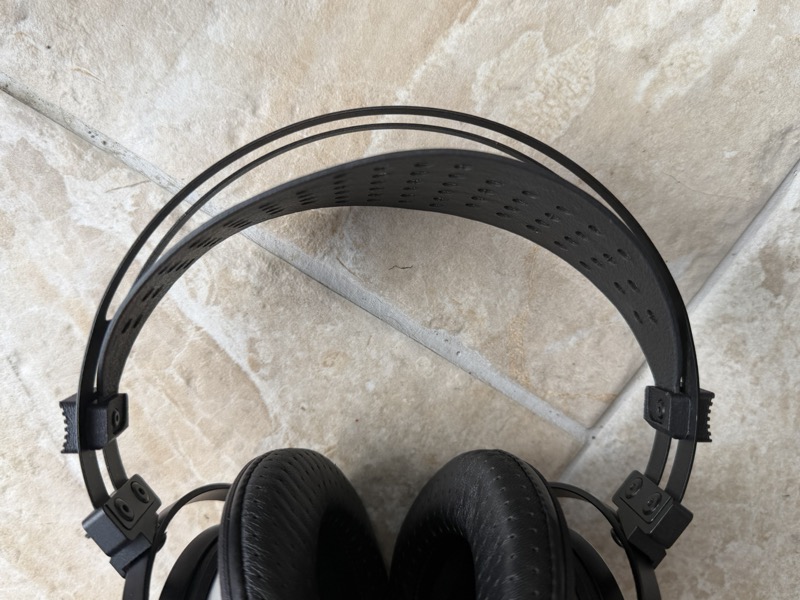
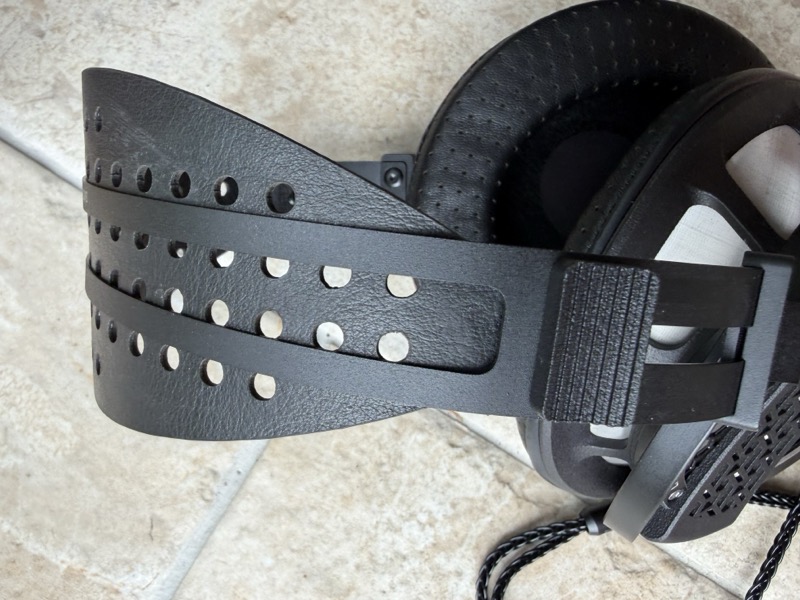
Lily Audio designed the Genesis One for low clamping force and even pressure distribution, and in use that holds up — it is a comfortable headphone for long sessions. A big part of that is the suspension system: a wide, perforated leather strap carried on twin composite headband rails that spreads the weight gently across the head.
The extension mechanism works well and allows for much larger heads, though my wife did say on her smaller head it felt too large even with the smallest setting:
 |
 |
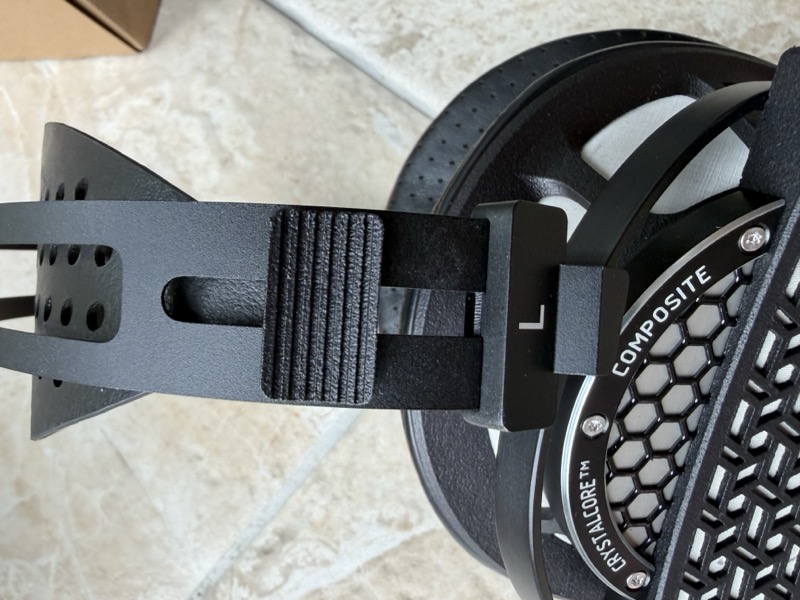
The yoke blocks are clearly channel-marked and the textured composite finish runs throughout:
 |
 |
Comparisons
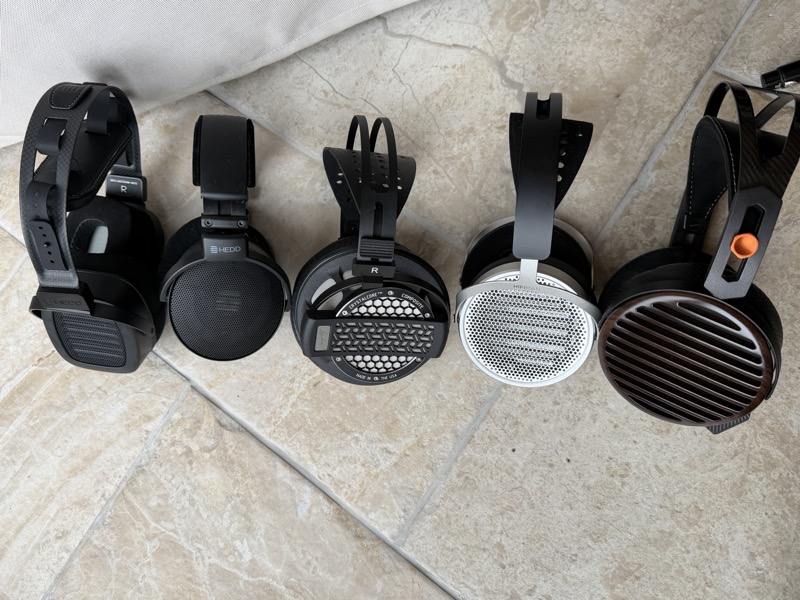
I thought it might be interesting to see how it physically sits alongside the some of the typical headphones in my collection (unfortunately, my HD800s are on long-term loan, so I guess check out other reviews for photo comparisons with that specific headphone). But, lined up against a run of open-back planars and dynamic driver headphones, the Genesis One’s hex-grille CrystalCore composite earcup is immediately the stands out ‘from the crowd’:
 |
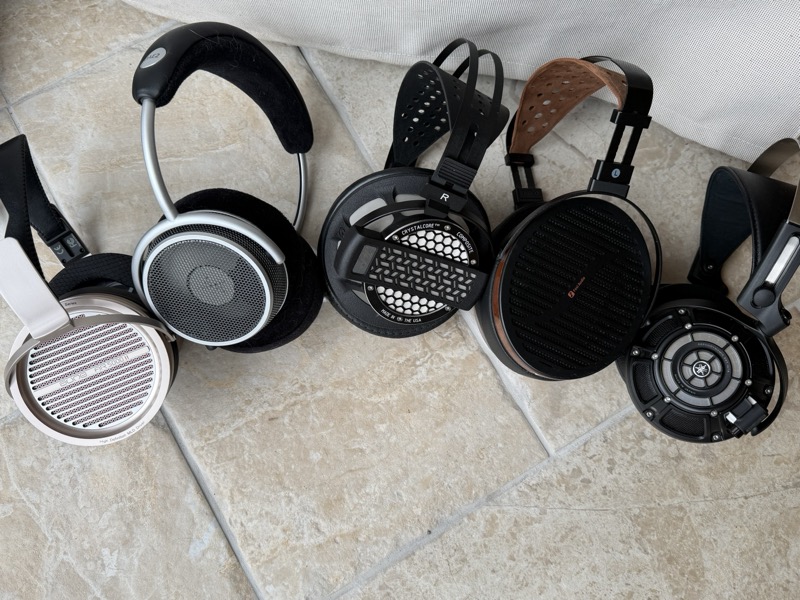 |
Some of these headphones are larger (like the Fosi Audio i5) but none have that size to weight ratio that the Genesis One has.
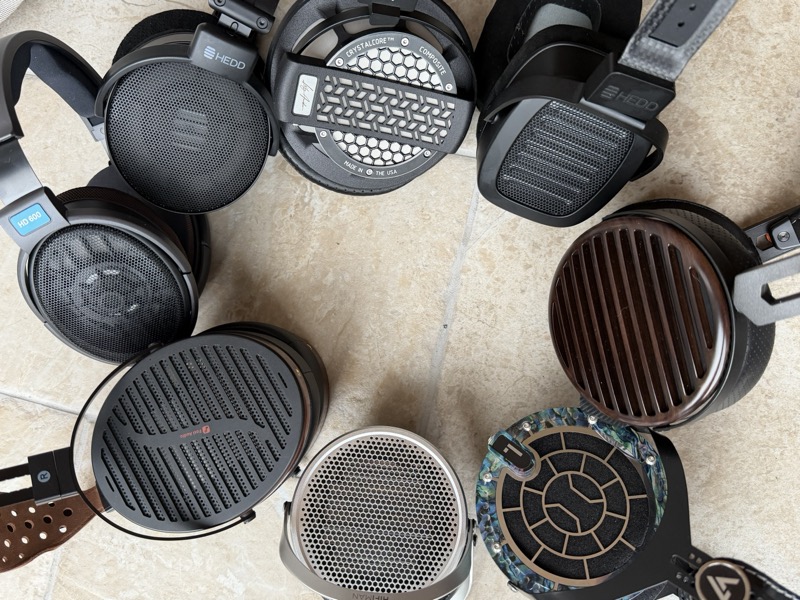
Arranged in a circle with some of the others in my open-back collection, it holds its own on size alone — the composite earcup and exposed structural vanes give it a more industrial, engineered look than most of the planars and dynamics around it:
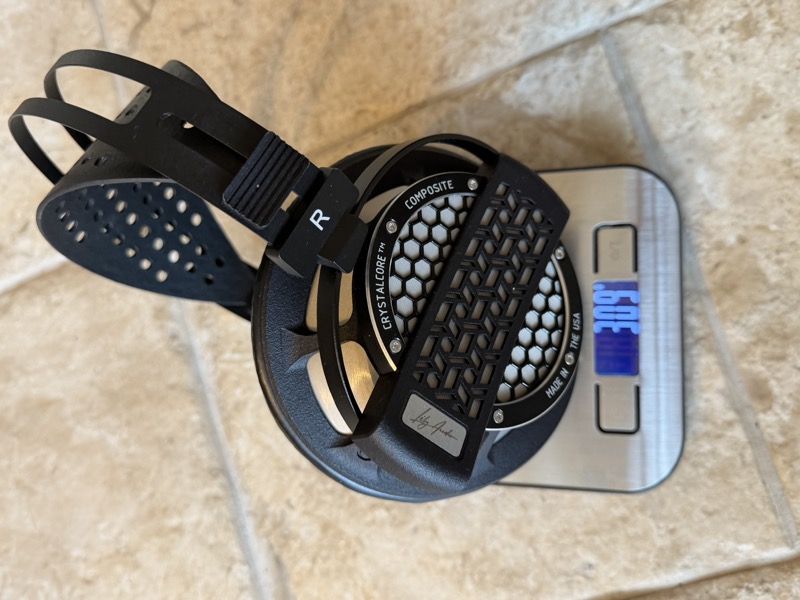
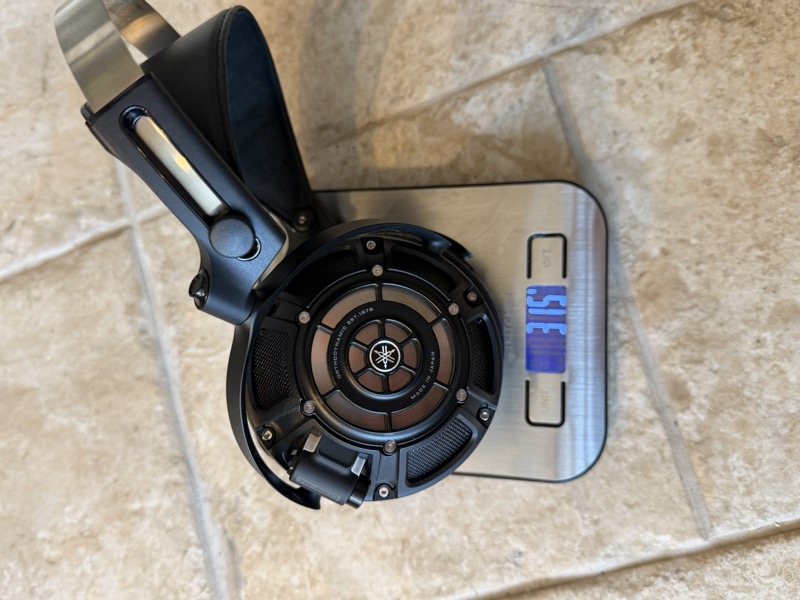
On the scale, the weight is lower than the substantial-looking composite earcups suggest — this is a comfortable headphone precisely because Lily Audio kept the mass down despite the large pad openings and structural bulk.
For comparison, the Yamaha YH-4000, comes in with a similar weight yet the YH-4000 but it is a considerably more expensive flagship and its weight and design is one of its key features, so I feel what the Lily Audio have done a great job to keep the weight down with the Genesis One yet have an impressively large design with the Genesis One:
 |
 |
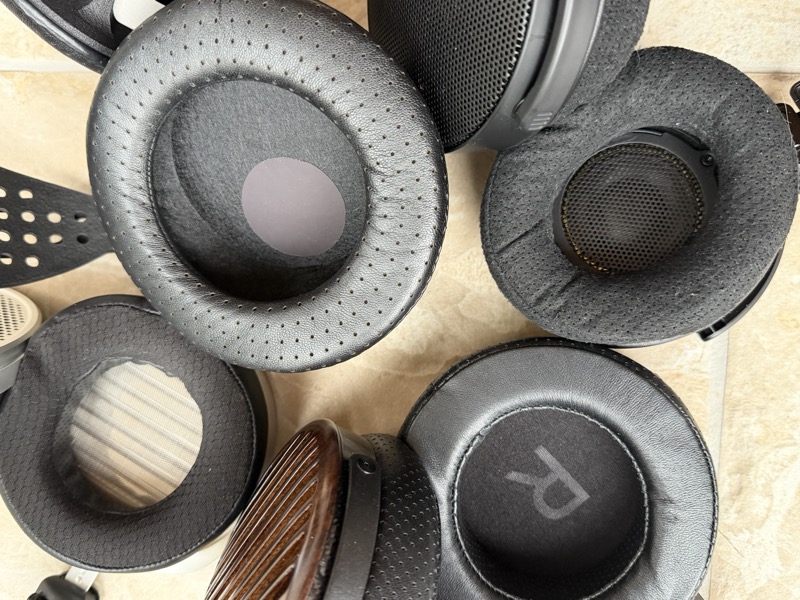
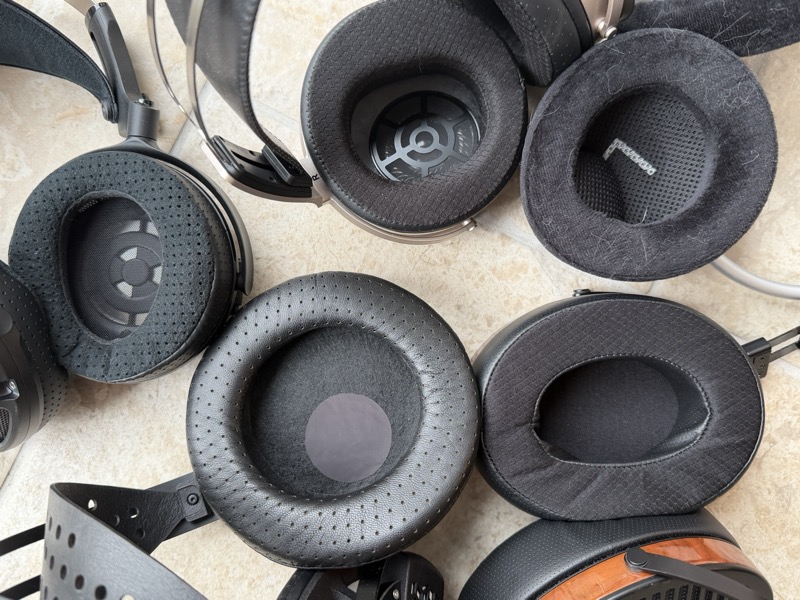
This is especially true, when you look at the various earpads size also shows how comfortable that very open Genesis One design is:
 |
 |
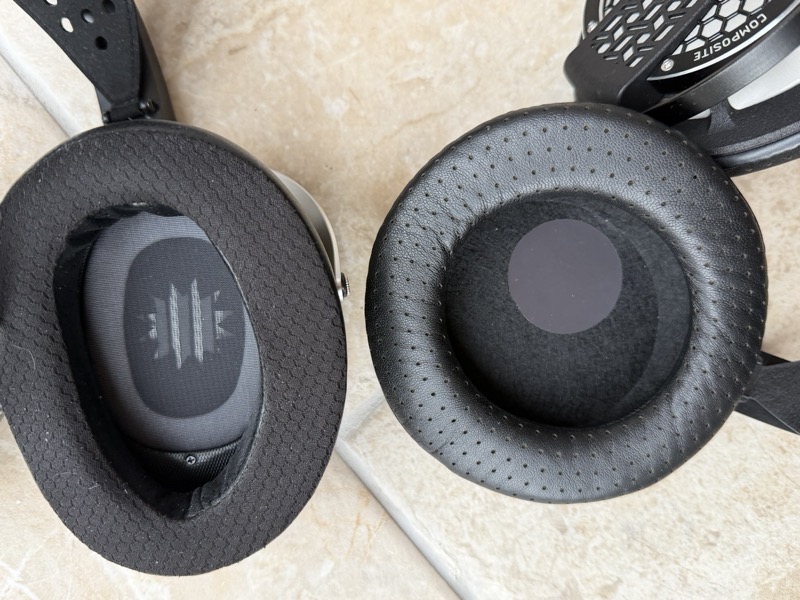
And even compared with a large Hifiman ’egg man’ (like the Edition XV below) the Genesis One’s earpads
are surprisingly large and very ‘open’ sounding:
Earpads and Tuning Accessories
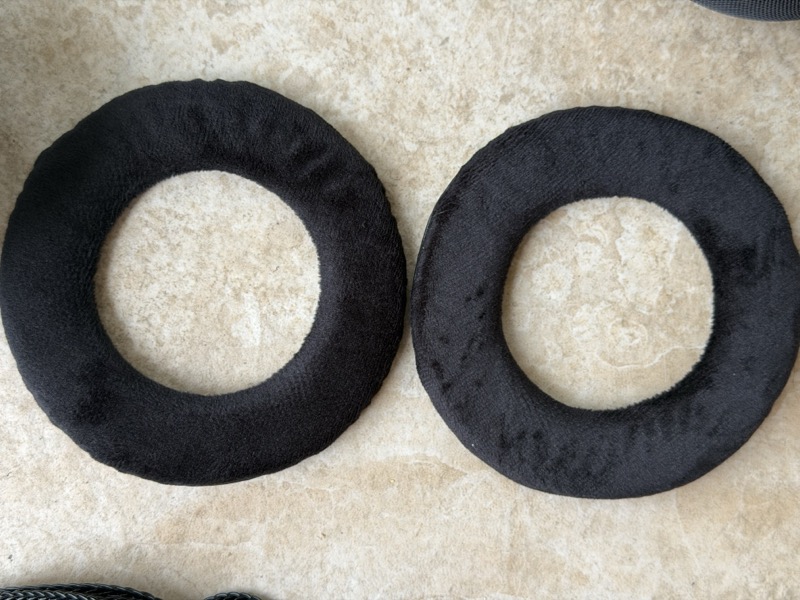
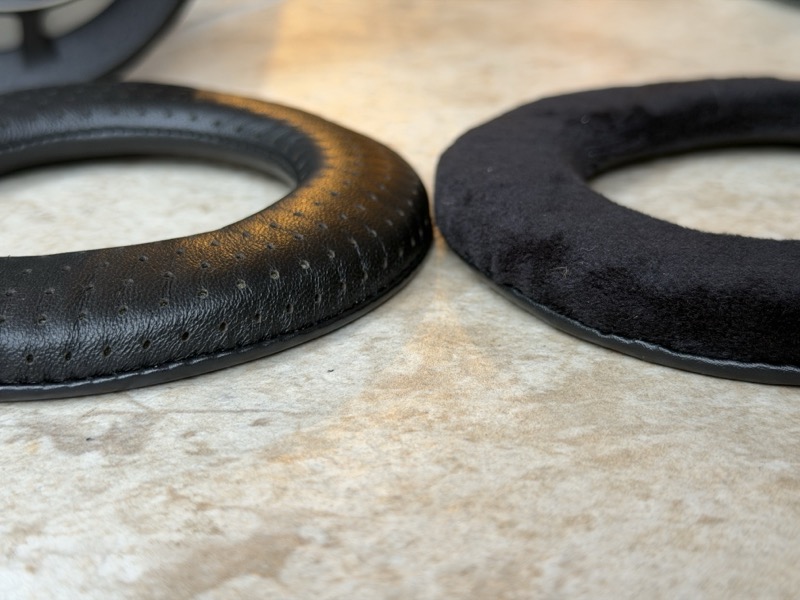
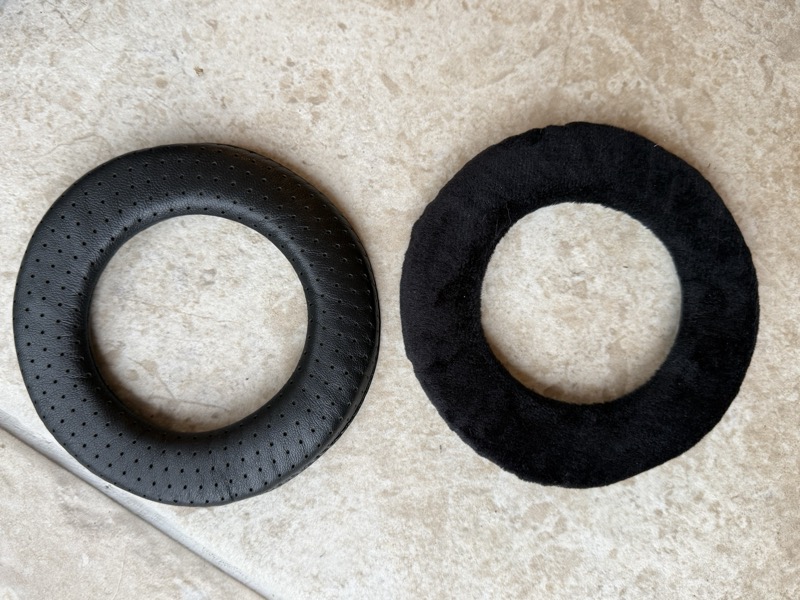
This is one of the Genesis One’s more interesting changes. Earlier pre-production units shipped with four earpad options, but the final, kickstarter-fulfilment production version — the one reviewed here — settles on two: a perforated leather pair and a velour pair, each with a different acoustic character so that you can subtly shape the response to taste. The pads are part of the tuning system rather than just comfort spares:
 |
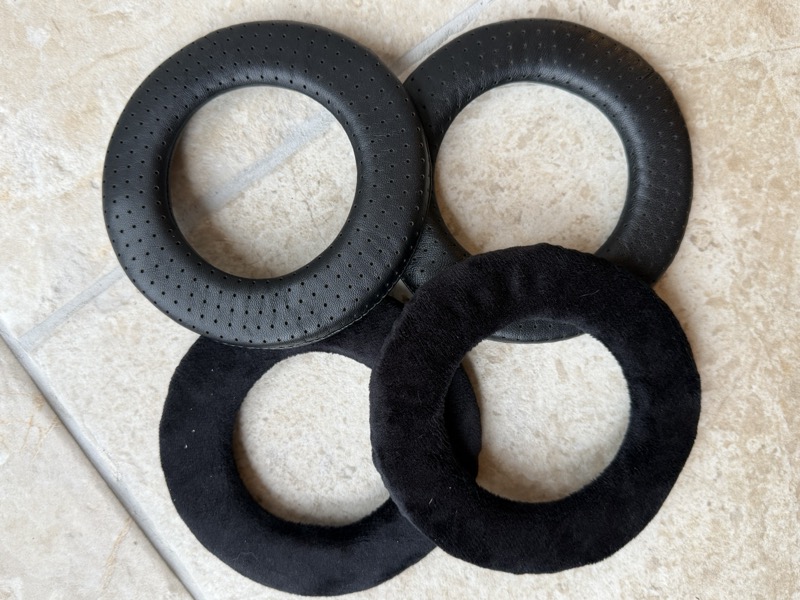 |
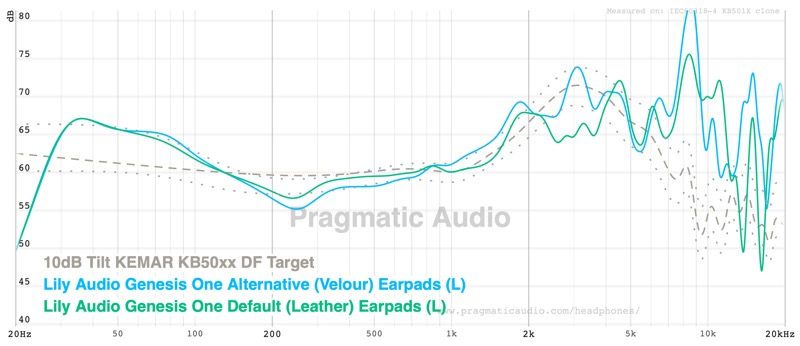
The measurements provided by oratory1990 describe the velour pads as carrying more bass and slightly less midrange than the leather pads, with no meaningful difference at the very top end.
My own measurements show that midrange change with Suede/Velour earpads becoming more v-shaped and less neutral:
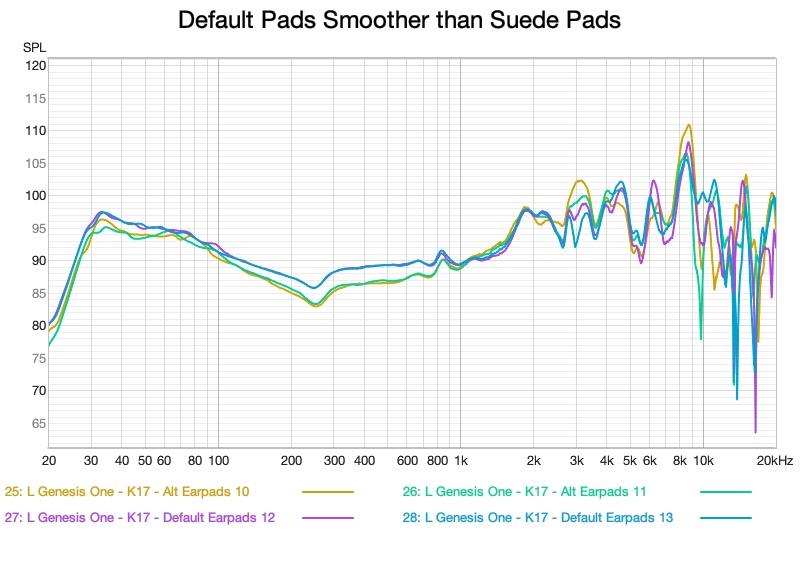
So even though there is ‘very little’ to these earpads (compared to many deep earpads on other headphones used for tuning) the fact that they do nicely change the sound signature is I think very interesting.
 |
 |
Again, Oratory1990’s interesting review showed that this dampening screen has a significant impact on the treble compared to the original pre-production model. So, removing it raises it above 5kHz.:
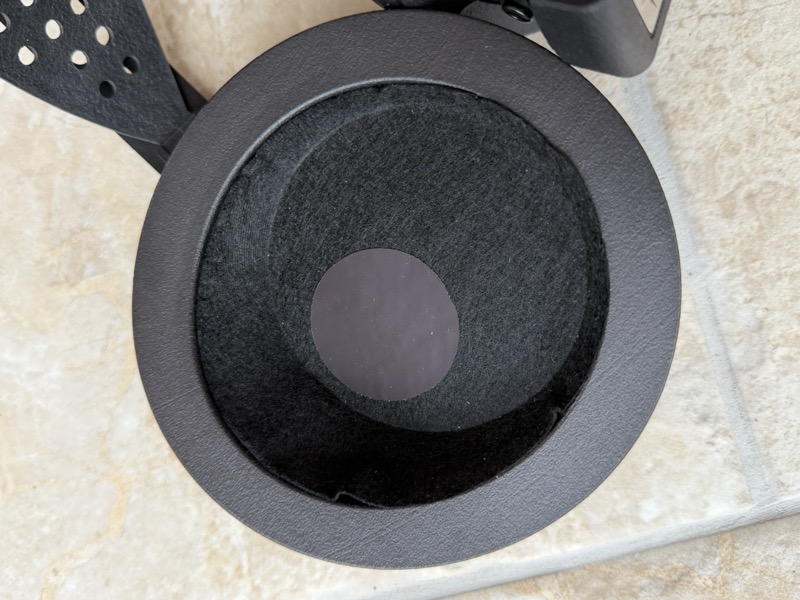
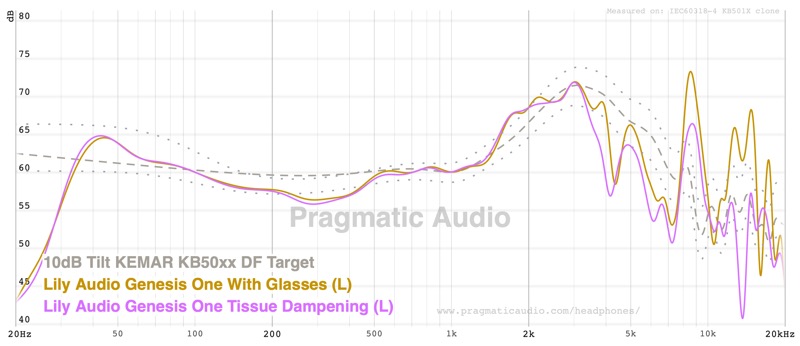
I found that stacking another layer pushes the treble down further still (which I will show later in the measurements section) as an alternative to EQ ( should you want less treble).
Cable
The supplied cable is nice, a thick, black braided lead with a dual-entry design — separate connectors for the left and right earcups:
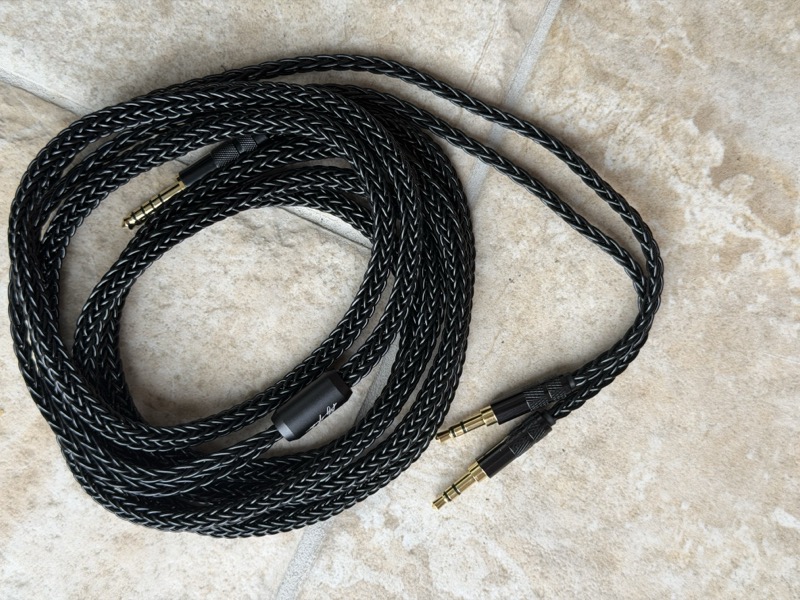
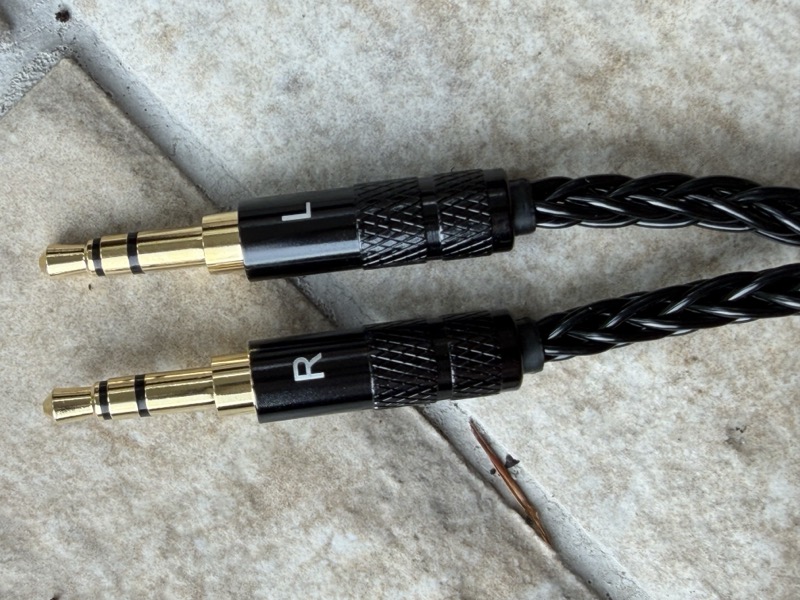
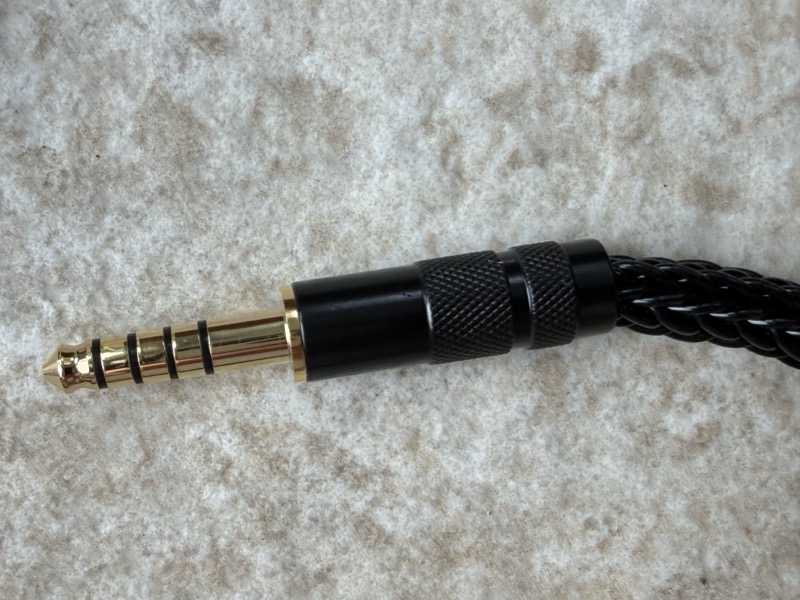
The headphone-end connectors are gold-plated 3.5mm plugs, clearly marked L and R, and the source end on this unit is a 4.4mm balanced plug:
 |
 |
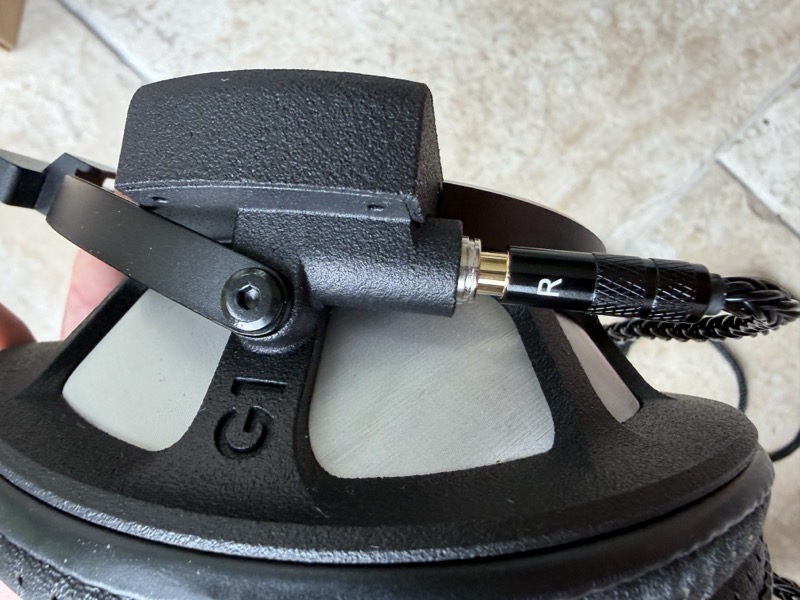
The connectors seat positively into the earcup sockets:
Sound Impressions
These impressions come from my 2 weeks with the Genesis One, listening to it exactly as it arrived — before I’d applied any of the extra damping, PEQ, or amplifier matching described later in this review. I think it’s worth reporting the sound this way, because it’s how most owners will hear it out of the box, and it is a considerably more pleasant tuning than many reviews will have you believe.
Bass
Straight out of the box, the bass is deep and pumpy rather than restrained — there’s real physical presence to it, and it drives a track along rather than sitting politely underneath it. In fact, the large open earcups combined with this nice bass was probably my favourite aspect of the stock tuning. It has that bass impact you should expect but because the headphone is so light you ‘forgot’ you are wearing it which is a lovely experience with bass heavy tracks.
On “bad guy” by Billie Eilish the sub-bass hits with real weight and momentum, and the driver never sounds like it’s straining to produce it, despite how unconventional the CrystalCore transducer is. While this is very much V-shaped bass — elevated rather than neutral — but it’s controlled rather than sloppy, and it’s a genuine strength of the stock tuning rather than something that needs fixing. In short I love the bass on the Genesis one.
Midrange
The midrange sits a clear step back from the bass and treble in a V-shaped tuning like this, but it’s a decent, honest midrange rather than a hollowed-out one — vocals and instruments stay clear and intelligible even with the more elevated bass and treble either side of them. The two different earpads are what make them different in the midrange. My reference was the stock pads which provided a more neutral midrange, but if you want more V-shaped excitement the velour pads will pull the midrange down given a more dynamic sound signature.
With the default earpads, On “Fast Car” by Tracy Chapman the vocal stays present and easy to follow, without getting crowded out by the low end.
Treble
This is the part of the sound that needs the most caveat, because out of the box, before any extra damping or EQ, the Genesis One is still treble-forward at least on my head (though not nearly as treble forward as it was in the pre-release version).
On “Billie Jean” by Michael Jackson the hi-hats and cymbal work have real sparkle and energy — exciting rather than laid-back — but that same energy is exactly what later prompted me to reach to add slightly more dampening or recommend a simple PEQ described further down.
Taken purely as a first impression, though, it reads as an exciting, detail-forward top
end rather than something harsh or unlistenable. I can completely understand Lily Audio doing this as you want to hear the driver,
and some extra treble excitement can bring that excitement to you expect on first listen to a unique headphone.
Soundstage and Imaging
This is where the Genesis One’s open-back design and unusually large earcups really pay off. The staging is wide and open in a way that reminds me of Sennheiser’s HD800 — sound extends well beyond the earcups rather than staying anchored close to the head, and the sense of space is one of the most immediately impressive things about the headphone. On “Private Investigations” by Dire Straits the wide-open spaces between instruments come through clearly, though you do need lots of power with this track to get that room soundstage feel. Once you give it the power, it needs a track like this has plenty of room around each element rather than everything crowding toward the centre.
Taken together, even before any of the tuning, damping or amplifier pairing described later in this review, the Genesis One is a pleasant, exciting-sounding headphone out of the box for most people — the V-shape is enjoyable rather than a flaw to be immediately corrected, and the changes I made later were about refining an already likeable sound and make it a longer term favourite.
Technical Description
Because the CrystalCore transducer is piezoelectric rather than a moving-coil design, it behaves electrically like a capacitor rather than a resistor — oratory1990 measured it at roughly 160nF, which puts its impedance at around 100 kΩ at 20Hz, dropping to still over 100Ω by 10kHz. A load like that draws almost no current — even 10Vrms only pulls about 17mA — but it needs real voltage to reach a normal listening level, because the piezoelectric effect itself is roughly an order of magnitude weaker than the electromagnetic push-pull force that moves the diaphragm in a conventional dynamic driver. That dramatic change in impedance is why an OTL tube amp will change the treble and possibly one reason the initial batch from Lily Audio did not have dampening.
Measured sensitivity sits in the 74–76 dB/V range across, which is very low, and Lily Audio’s own recommendation of an amplifier capable of more than 10V output is really a minimum rather than a target — Solderdude’s Review at diyaudioheaven puts the practically-useful minimum closer to 17V, and specifically warns against Class D amplifiers, since a capacitive load like this can push a Class D output stage into instability or overcurrent.
The production sample measures roughly 35% more sensitive (needing that much less voltage for the same output) than the earlier pre-production figures suggested, which is why a full ~20V of amplifier headroom isn’t something every track demands — it matters for material with a wide dynamic range (a ‘crest factor’ of around 12dB or more as Oratory mentions in his review), so a track like “Private Investigations” by Dire Straits will require some power, while most everyday material will play at a satisfying level on considerably less power.
Oratory1990 also measured the effect of a high-output-impedance source, such as an OTL tube amplifier, measurably rolls off the treble, exactly as the capacitive-load behaviour described above predicts:
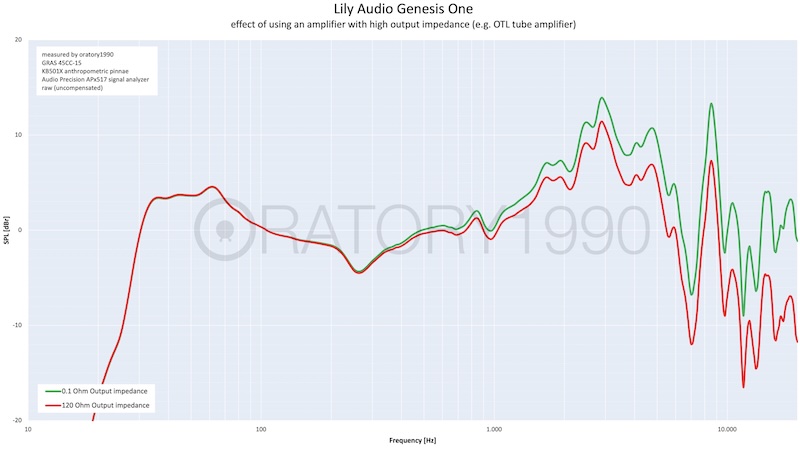
While, I saw the same effect first-hand with the Fosi Audio GR70 — treble tamed by the amplifier’s output impedance rather than by pads, damping or EQ — though, as the Gear Matching section below covers, without enough voltage headroom left over to fully enjoy it. But that Amplifier doesn’t have enough voltage and overall it sounded poor with the Genesis One.
The mechanism is a fabric damping screen sitting directly in front of the driver, similar in concept to the screen in a Sennheiser HD800; oratory1990’s testing of it found that removing the screen entirely raises output above 5kHz substantially, and that adding a second screen on top lowers it further still, so I would guess those early review units of the Genesis One lacked this dampening.
But even with the production damping in place, my own preference is to take the treble down a further notch beyond what ships as standard, though given the nicely elevated bass, some people will definitely prefer that V-shaped sound that this headphone now provides.
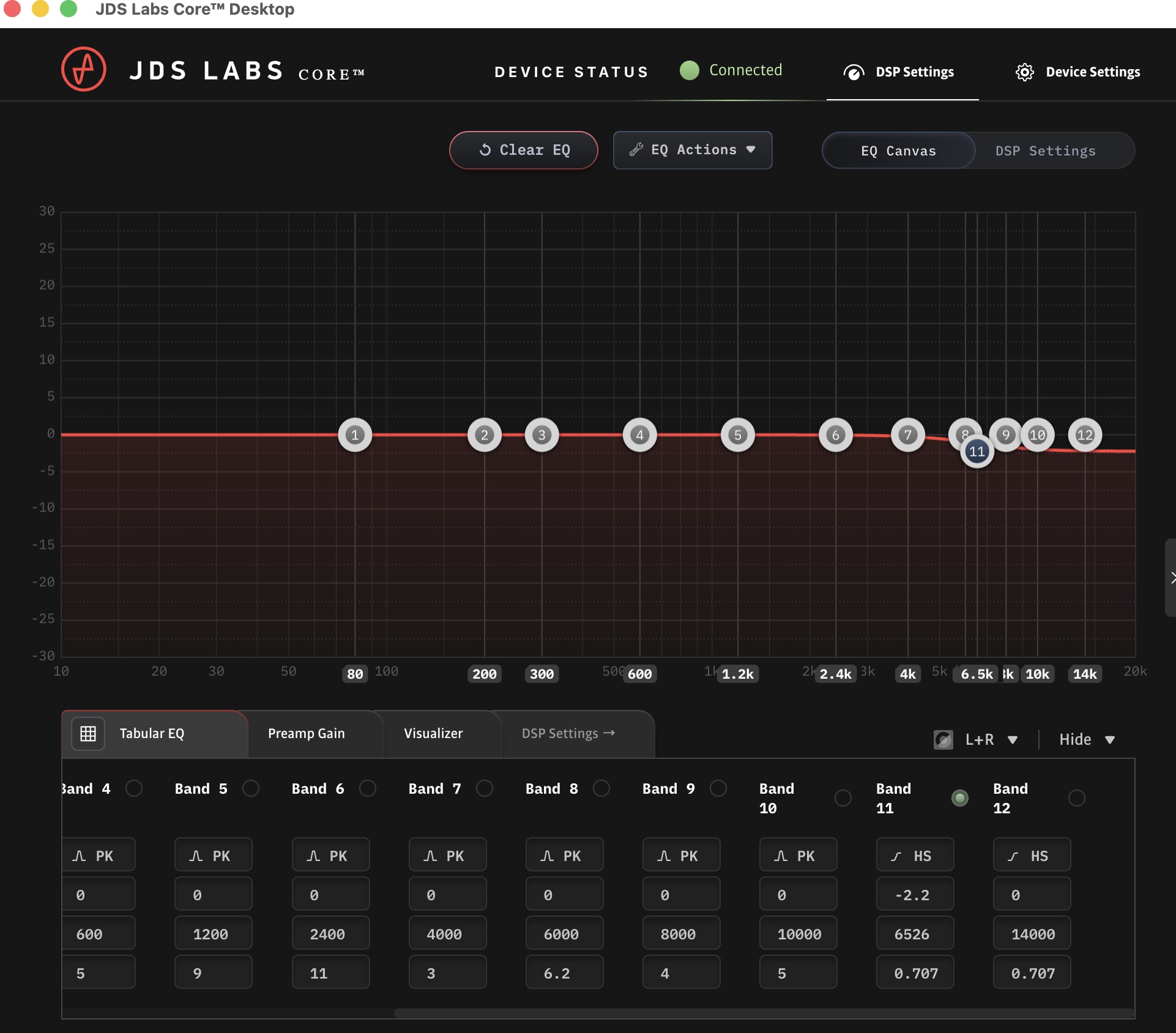
But for those who want less treble, PEQ is the obvious tool for that — I used a JDS Labs Core desktop amp/DAC’s onboard parametric EQ to apply a gentle high-shelf cut of around -2dB from 6.5kHz up, and separately tried the same idea as a high-shelf on a Topping DX5 II — and either approach brings the response into an excellent place:
And there is a old lower-tech fix that works if you don’t want to touch EQ at all: the classic trick of one or two plaid of tissue over the driver noticeably reduces the treble a little further and, in my experience, gets you most of the way to the same result. The supplied dampening in the production unit shows that Lily Audio’s own, more polished version of that same idea.
The overall shape, once the treble is brought under control, is a nicely engaging V-shape rather than anything neutral, more in line with a Harman tuning, detail-forward and exciting rather than polite.
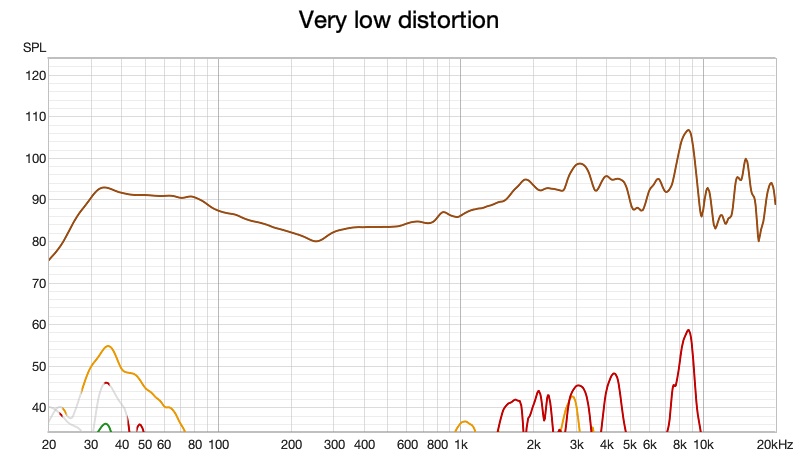
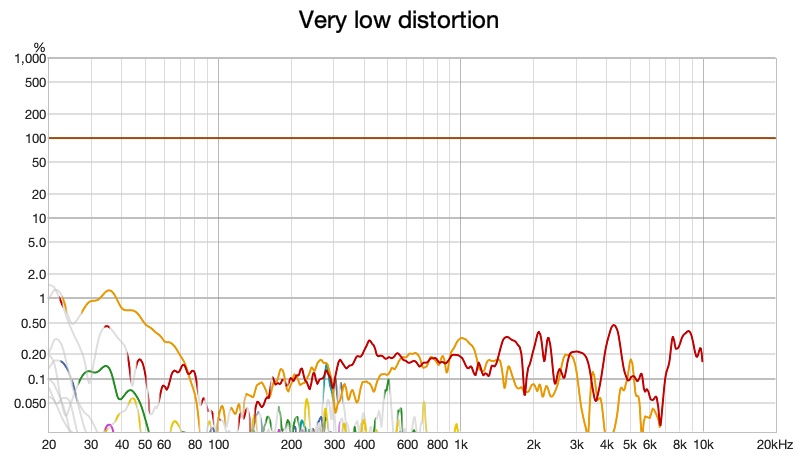
Note: For other independently-measured and very technical opinions of this headphone — for example, impedance, sensitivity, earpad and damping-screen behaviour, and distortion — I’d point readers to both oratory1990’s review and measurements on reddit and Solderdude’s review at diyaudioheaven.
Both are more rigorously reviews than anything I can do so well worth a read.
Gear Matching
Because the Genesis One is a demanding headphone, amplifier pairing is probably the single most important practical consideration — more so than with almost any other headphone I have used, maybe with the exception of the Modhouse Tungsten.
Here some of the Amplifiers I tried with the Genesis One:
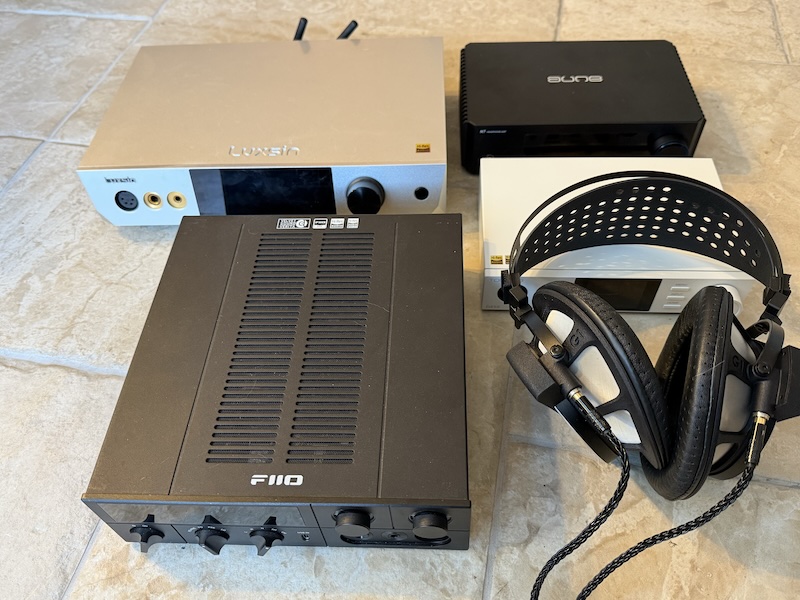
So, both the Luxsin X9 and FiiO K17 could both drive the Genesis One in their highest gain settings and still have some headroom, but Topping DX5 II and the Aune N7 both were at their maximum volume when trying my test tracks, still very listenable but with no room to spare for special tracks, e.g. with Pink Floyd’s “Wish You Were Here” I often increase the volume in the intro to get that spine tingling guitar about 1 minute into that track, but that was not really possible with the Genesis One on those amplifiers ( it was with the X9 and K17).
And when I tried with some very dynamic classical music I felt these amplifiers feel short of enough power. Basically, of these subjective listening session, the best amplifiers I tested was the FiiO K17 and the Luxsin X9.
Since Oratoty mentioned an OTL tube amplifier I thought I would also try with my Fosi Audio GR70 Tube Amplifier:
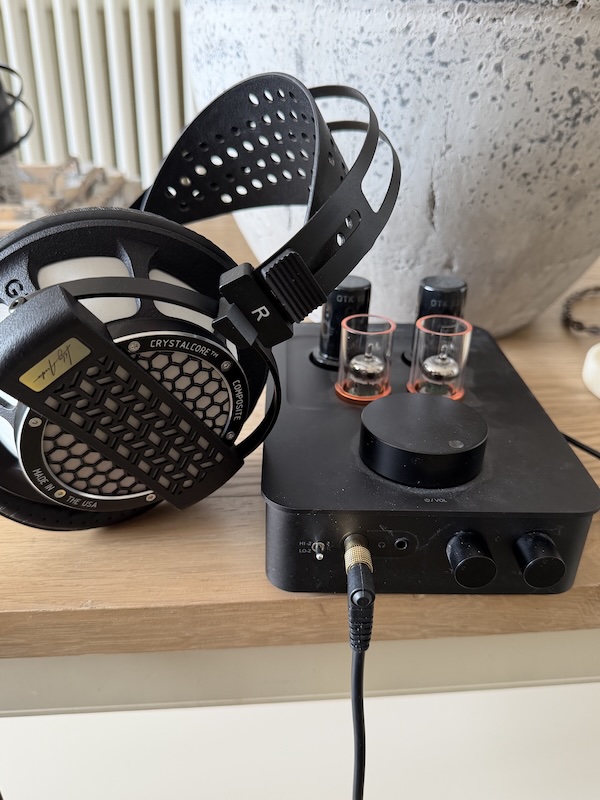
As an OTL design, its high-Z output option rolls off the treble on its own. But in practice, though, the GR70 doesn’t have a 600Ω output-impedance option and doesn’t have the voltage headroom of the K17 or X9, so I couldn’t fully this headphone with that Amplifier.
The K17 and the X9 track each other closely and sit comfortably highest across the whole range; the Aune N7 and a Topping DX5 II both run out of headroom noticeably earlier:
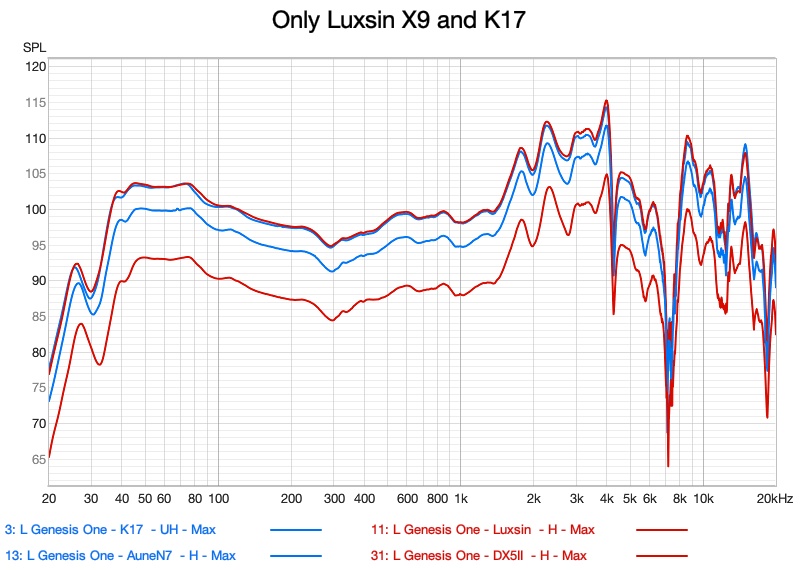
Obviously normally I would not listen at this 100dbSPL level but for those demanding tracks you do need this extra level headroom and it is the reason I measured these amplifiers with the Genesis One.
The Aune A17 — a promising option for more dynamic headroom with the Genesis One
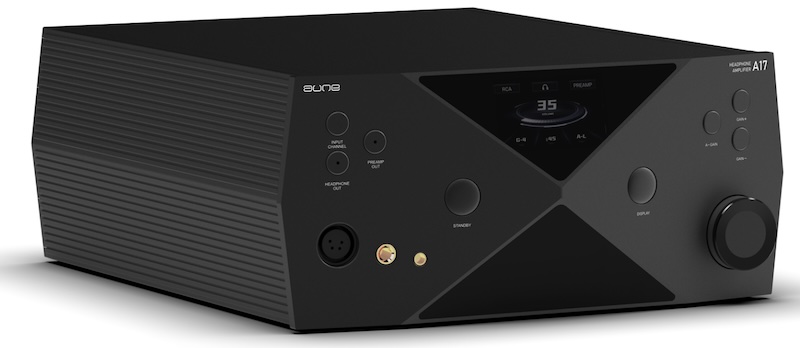
I heard the Aune A17 briefly at Vienna High End and was impressed by it, but I have not yet have the opportunity to connect the Genesis One to it.
Aune’s published specifications for the A17 indicate approximately 20Vrms from the balanced output, which makes it a very promising option for listeners who want more headroom than the FiiO K17 or Luxsin X9 can provide.
Specifications and Measurements
| Specification | Value |
|---|---|
| Housing | Open-back |
| Driver technology | CrystalCore (piezoelectric) |
| Diaphragm size | 55mm |
| Frequency range | 20Hz – 55kHz |
| Sensitivity | 74–76 dB/V at 1kHz (Lily Audio) |
| Electrical behaviour | Capacitive, ~160–170nF (not a resistive load — see note below) |
| Nominal impedance (quoted) | >300Ω |
| Recommended amplifier | >10V minimum; ~17–20V for full headroom |
| Amplifier class | Class A or AB only — avoid Class D (capacitive load risk) |
| Weight | 300g (spec) |
| Origin | Made in the USA |
| Cable | Detachable, 3.5mm (with 6.3mm screw-on adapter) |
| Earpads | Two pairs supplied (perforated leather, velour) |
| Tuning accessory | Passive low-pass (treble) filter |
| Price | $1,200 |
Frequency Response
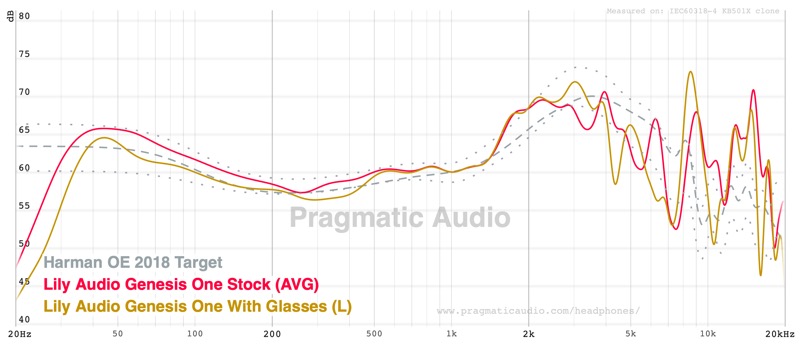
I’ve since measured the Genesis One myself on a KB501X coupler.
Here is the stock tuning and compared with it when wearing glasses, you do get a little roll off but nothing to dramatic, I believe with a larger gap ( maybe extra thick glasses you would love more of this bass ) but I was pleasantly surprised when listening with glasses on:
The leather-versus-velour earpad comparison, as flagged above: on my coupler, the velour pads carry will lower the midrange but it is also worth flagging that moving the earpads around will also change the treble so it is difficult to get the same seating on multiple measurements:
Tissue dampening over the driver — the low-tech trick mentioned earlier — measurably pulls the treble down rather than just changing its subjective character, which is exactly what you’d want from a free tweak before reaching for EQ or a specific amplifier:
Set against a couple of well-regarded flagships, the Genesis One’s stock V-shape is easier to read in context. Against the Meze Empyrean II Duo and the Modhouse Tungsten, the Genesis One carries noticeably more sub bass than either, while the three converge more closely through the presence region:
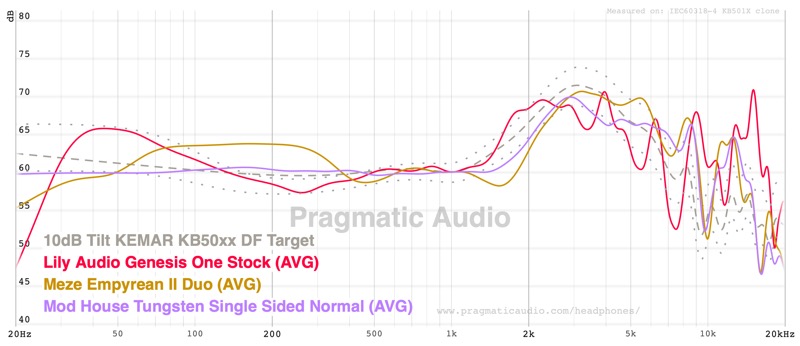
Subjectively, I generally like a flatter ‘bass’ that the Planar’s like the Tungsten provide (or even many Hifiman headphones), but I must say the quality of bass with these large earpads on the Genesis one was excellent and why I never felt a reason to lower the adjust the bass when listening to these, in fact I went looking for bass heavy tracks to try out.
In contrast, I also thought I would add the Original Grell Audio OAE1 (as a headphone chasing ‘viceral’ bass) and the HD800s (through the particular model I had replacement earpads which caused a rolled off sub bass). The Genesis One’s bass sits nicely between both these extremes, while its treble behaviour lands in a broadly similar range to the HD800S rather than being an outlier:
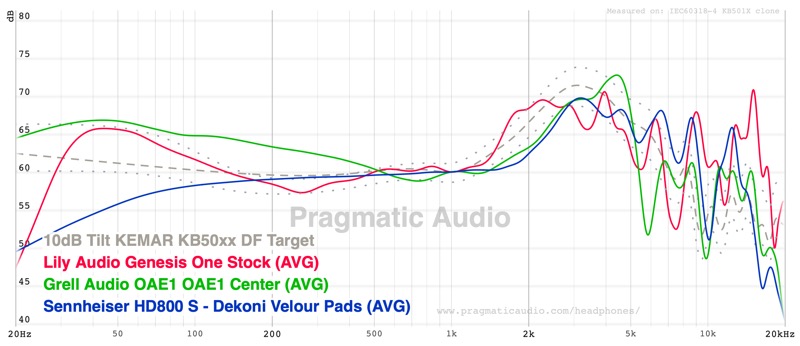
Taken together, these measurements back up the “enjoyable V-shape and given the similarities with the HD800s (except for the better bass), I feel the Genesis one now lives up to its promise.
Distortion measures very low across the audible band:
 |
 |
Rating Explanation
The Pragmatic Rating of 4 reflects a headphone with genuine high-end ambitions and real strengths, I feel it aims to be an alternative to the HD800s and partially succeeds, it has that wide sound stage and has some similar treble and at least in my opinion, has better Bass. The midrange is still better with the HD800s but the Genesis One is very close to that reference headphone level of performance at a much more reasonable price.
Because it is hard to drive and treble-forward in stock form, and only reaches its potential with a powerful enough amplifier I have given it 4-stars rather than 5. If you get those two things right (a decent amplifier and a maybe little modification to the treble to personal taste) you get a genuinely excellent headphone that is unlike anything else on the market.
The Price Rating of 4 reflects that $1,200 price, but you are buying something you cannot get anywhere else in this hobby, a novel transducer technology, made in the USA, with a unique tuning system.
My ‘Features Rating’ of 5 reflects the novel piezoelectric transducer — not a marketing variation on a familiar design — paired with a thoughtful tuning system: two earpad options, the damping that Lily Audio added. The comfort is part of that same rating — the wide, perforated leather suspension strap keeps clamping force low and weight distribution even despite the large composite earcups, so a headphone that is easy on the head during long listening sessions.
The Measurement Rating of 4 reflects excellent bass that needs no EQ, and a treble that — once corrected — measures very well. It isn’t a 5 because I feel the stock treble balance and the capacitive-load behaviour mean some correction or even some uncertainity with OTL tube amplifiers is required.
I feel this headphone is one is squarely for the headphone collector ‘audiophile’ who already owns a powerful, high-voltage amplifier, and specifically wants a fast, loudspeaker-like open-back at $1,200. For everyone else — anyone wanting plug-and-play, or who does not already have serious amplification — it is the wrong headphone, and I would not recommend it to those casual listeners.
Conclusion
The Lily Audio Genesis One is an ambitious, distinctly engineered open-back that aims high with its CrystalCore transducer, and — once you get past the power requirements it does open out into the wide, loudspeaker-like staging Lily Audio describe. It is not quiet a HD800’s ‘killer’ but it is close and was one of the most interesting and enjoyable headphones I have listened too this year. It does have a detail-forward, exciting V-shaped sound rather than a neutral one, but the bass is just fantastic.
I feel this is the perfect headphone for an audiophile that is a headphone collector and given it a first of its kind it should be a collectors item that like a classic car, will increase in value over the next few years, if you were lucky enough to get one on the Kickstarter campaign, I feel you got a bargain.
Though I would not recommend this headphone to first-time buyers and the extreme power requirements make it hard to recommend to causal listeners, but as someone who loves audio technology and enjoys listening to a more speaker-like presentation, I feel Lily Audio have mostly nailed it with the final production version of the Genesis One.