Kiwi Ears S-Link
A USB-C DAC cable for 2-pin IEMs with dual mics and onboard PEQ
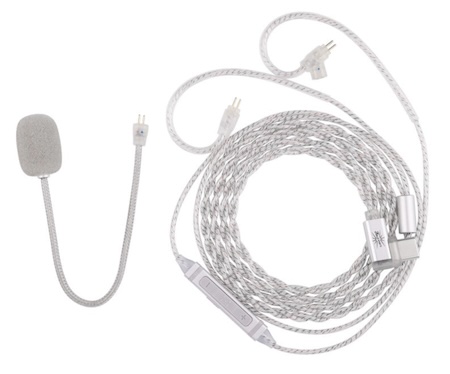
The Kiwi Ears S-Link is a 0.78mm 2-pin IEM cable with a USB-C plug, a built-in DAC and a mini DSP, aimed primarily at mobile gamers. The headline features are the dual microphones — a built-in inline mic plus a detachable boom mic — and an onboard 5-band parametric EQ that you can tune to reshape the sound of whatever IEM you plug into it. At $25.99 it is an inexpensive way to add a DAC, a mic and EQ to most standard 0.78mm 2-pin IEMs — connector recesses and shell clearance can still get in the way on some shells.
It is built around the KT0231H chipset, described as an integrated digital audio signal processor with a mini DSP, and terminates in a Type-C plug for plug-and-play use with phones, tablets and other USB-C devices — though as the compatibility note below covers, USB-C audio support is not identical across every platform.
I would like to thank Kiwi Ears for providing the S-Link for the purposes of this review.
If you are interested in finding more information about this product, you can find it at the official Kiwi Ears product page.
The Kiwi Ears S-Link Type-C retails for $25.99.
I have used the S-Link with a range of 2-pin IEMs as a USB-C source for a phone. It is squarely a gaming product, but the part that surprised me is how genuinely useful its PEQ is for anyone who likes to experiment with tuning. But first, let’s take a look at what’s in the box.
Unboxing and Packaging
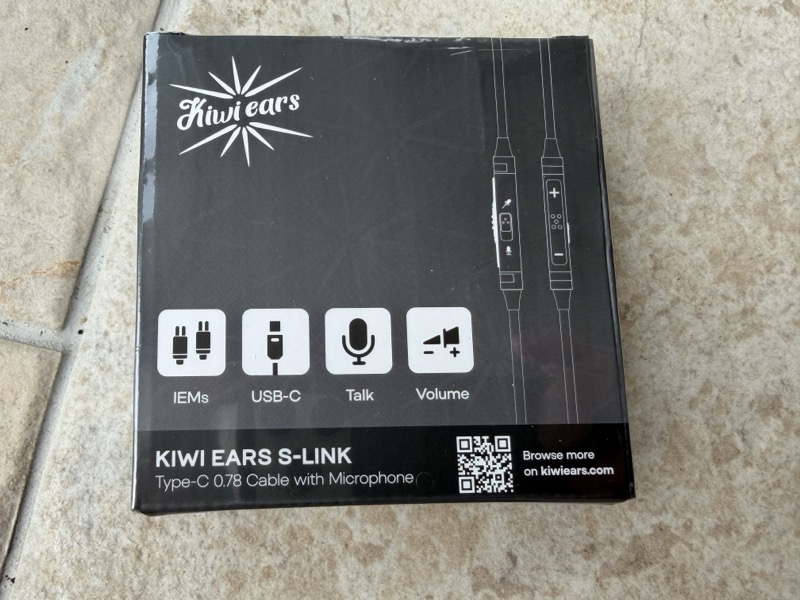
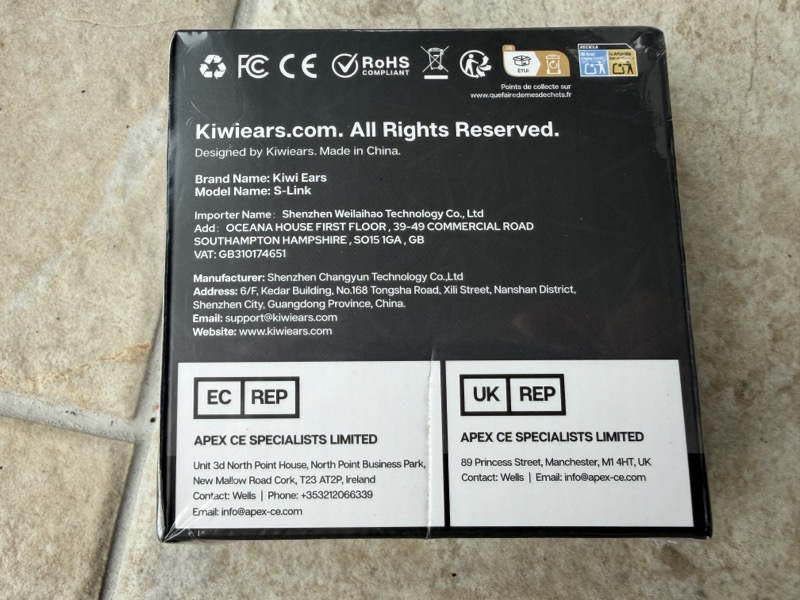
The box is compact and tells you exactly what the S-Link is about — the front lists IEMs, USB-C, Talk and Volume with simple icons, and the side calls it a “Type-C 0.78 Cable with Microphone”:
 |
 |
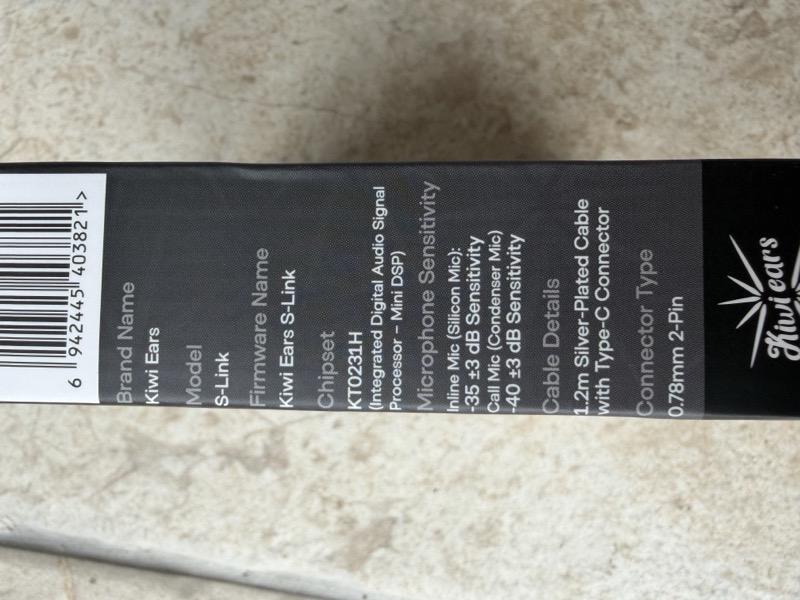
The side panel carries the specifications, including the KT0231H chipset and the dual-microphone sensitivities:
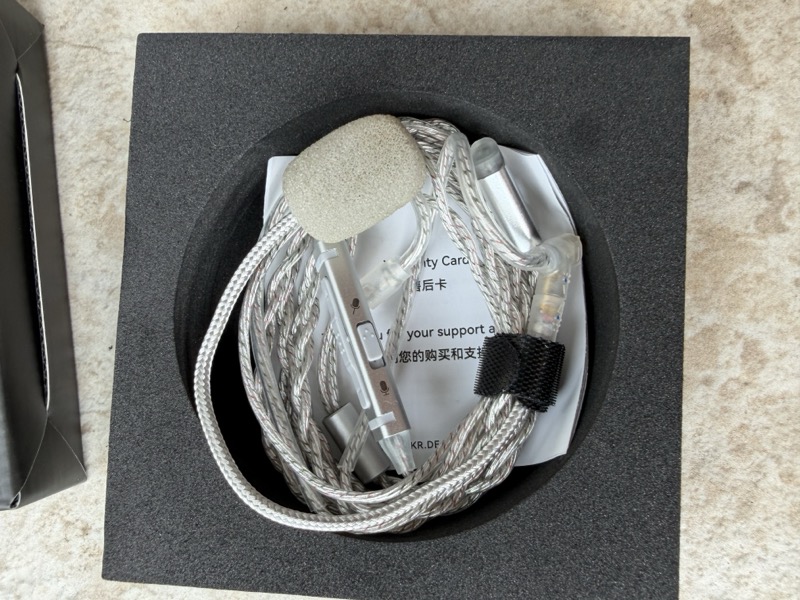
Inside, the cable is coiled in foam with the detachable boom microphone and the warranty card:
Design and Build
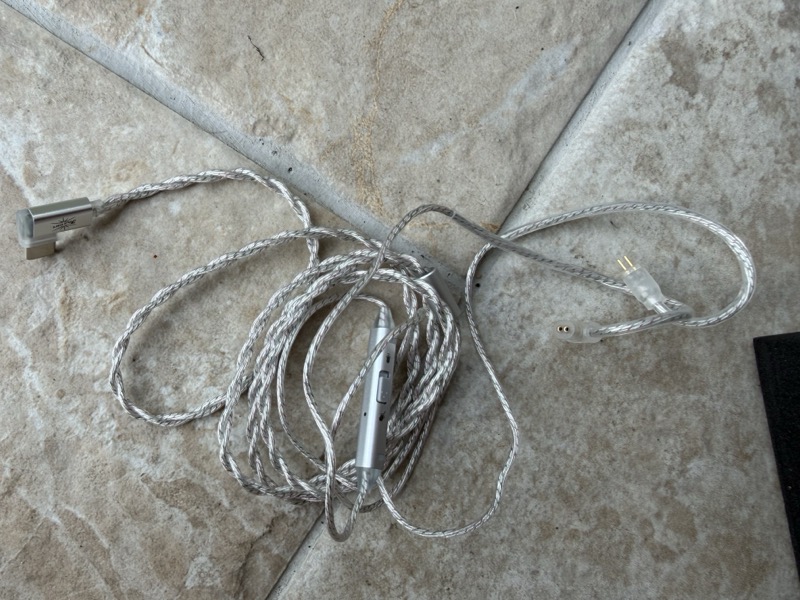
The S-Link is a silver-plated cable with a clear, lightly braided jacket. The full run takes in the USB-C plug at one end, an inline control module in the middle, and the 2-pin connectors at the IEM end:
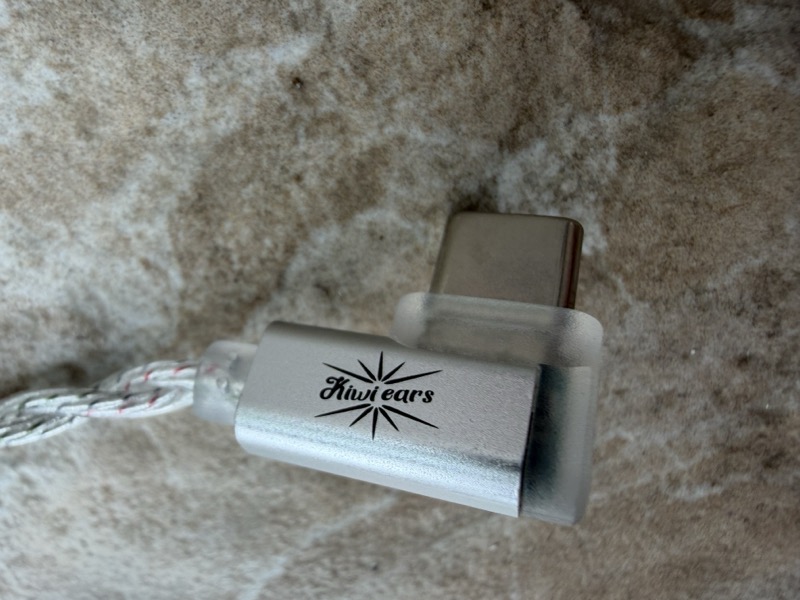
The USB-C plug is a right-angle clear-and-silver housing with the Kiwi Ears logo, which sits neatly against a phone:
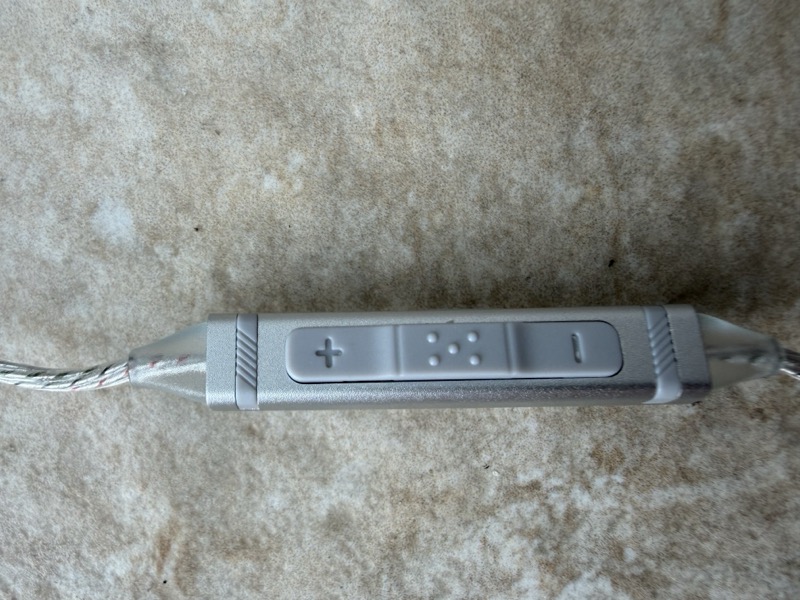
The inline control module has volume up and down buttons flanking a multifunction button, with the call microphone built in:
The IEM end uses standard 0.78mm 2-pin connectors in a clear housing, so it fits many IEMs using that connector; recessed sockets and shell clearance still need checking:
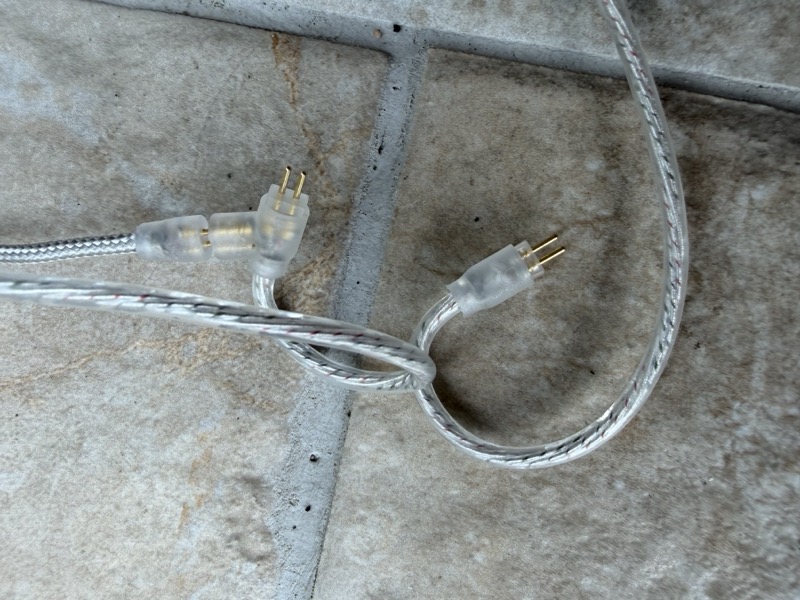 |
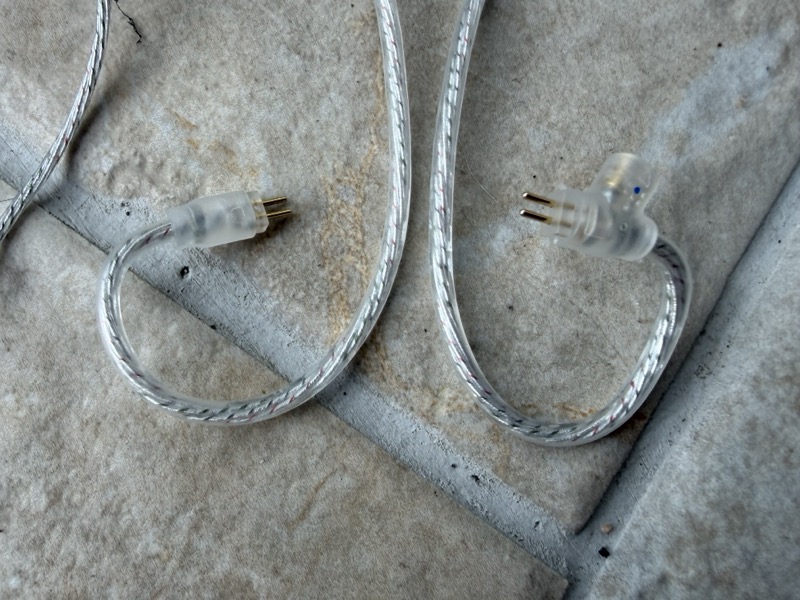 |
The Dual Microphones
The dual-mic system is the S-Link’s gaming centrepiece. Alongside the inline silicon mic in the control module, there is a detachable boom microphone with a foam windscreen that plugs in for clearer voice pickup during games or calls:
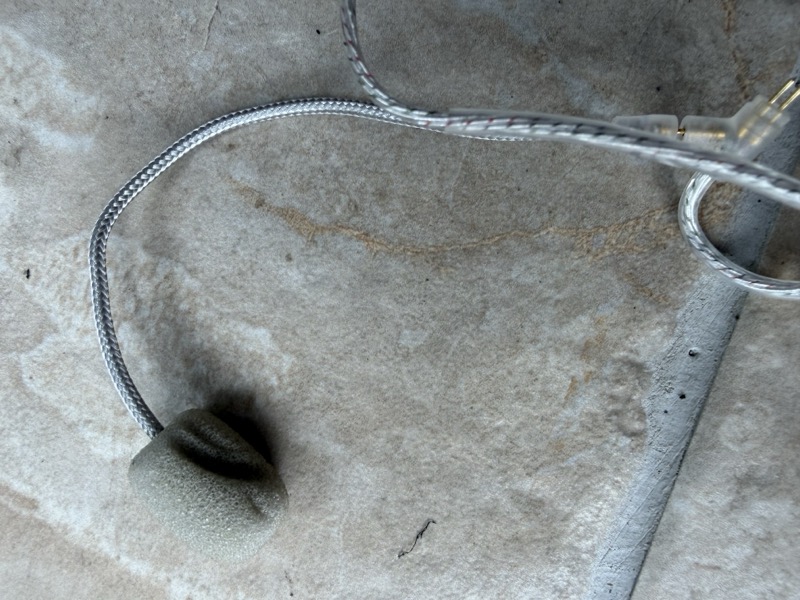 |
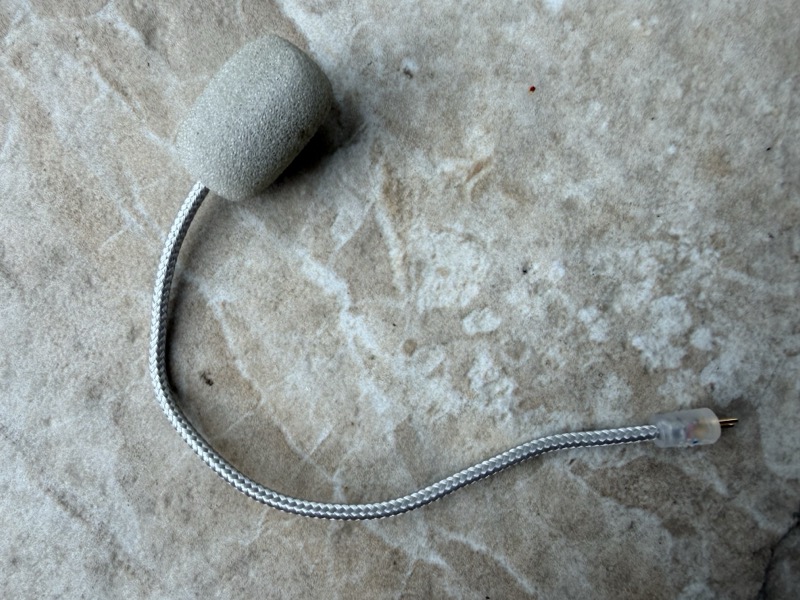 |
With the boom mic fitted, the connector and short lead sit on the cable that runs up to your right ear:
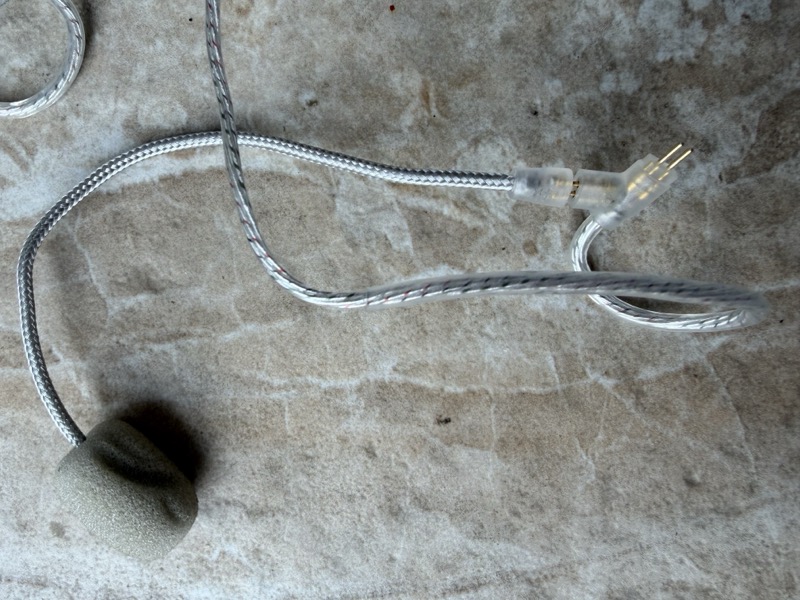
This is also where my main ergonomic gripe lies. With the boom microphone connected, I felt the extra weight and pull on the IEM in my right ear was a little too much for my liking over a longer session. And with the microphone removed, the cable looks slightly odd, because the microphone connector is still visible hanging under your ear. On the plus side, the boom mic is a clear step up on voice quality over the inline mic — enough that I would fit it for a long call or a gaming session and take it off again afterwards. Neither drawback is a dealbreaker, but both are worth knowing.
DAC, DSP and Parametric EQ
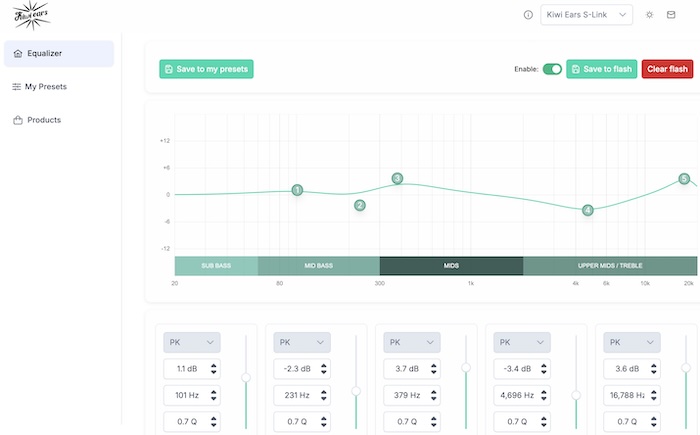
The more interesting half of the S-Link for me is the onboard DAC and DSP. The KT0231H provides a five-band parametric EQ that you can configure and store on the cable itself, which is unusual at this price. For gamers, that means dialling in the subtle frequency-response changes that can help you place footsteps or cues. For audiophiles, it means a cheap, portable way to apply PEQ to any 2-pin IEM from a phone.
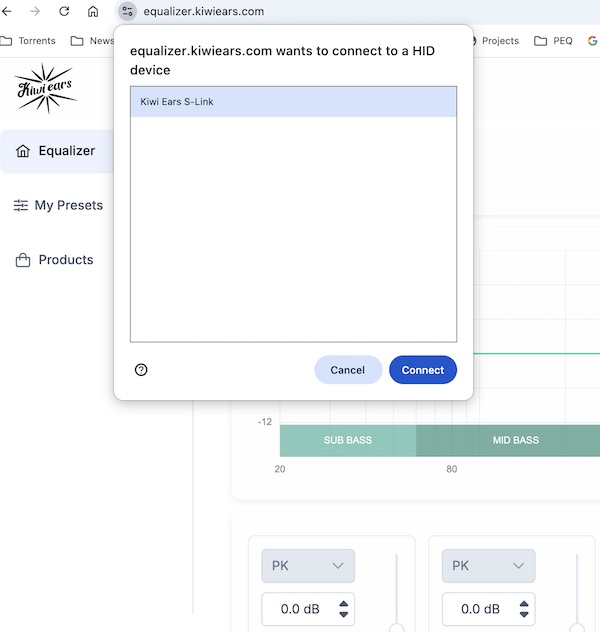
Kiwi Ears provide their own web-based EQ editor for the cable at equalizer.kiwiears.com, which is well made and the easiest way to get started. Connecting is a standard browser WebHID permission prompt — pick “Kiwi Ears S-Link” from the device list and the browser talks to the cable directly, no separate app or driver required:
 |
 |
I have also enabled devicePEQ support for the S-Link, so the major measurement and EQ websites that integrate devicePEQ should be able to talk to it directly and push filters to the cable. As a practical example, I used the S-Link with Crinacles’ graph.hangout.audio to push a CrinEar Project Monolith-specific PEQ profile onto the cable — the graph tool’s predicted EQ curve tracks the PopAvg-DF target noticeably more closely than the Monolith’s raw response, particularly through the bass and lower midrange:
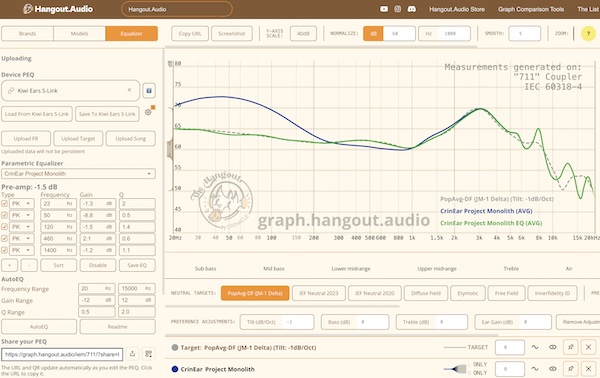
That’s the same cable-as-universal-PEQ-dongle trick worth knowing about if you own more than one 2-pin IEM: the S-Link isn’t tied to whatever IEM it ships alongside, so one cable can serve several compatible IEMs, provided you load the appropriate profile when switching pairs.
Sound Impressions
The thing to understand about the S-Link is that it is not the thing making the sound. You bring your own IEM — your favourite gaming set, or whatever you own with decent detail and imaging — and the cable’s job is to drive it cleanly, carry a microphone, and hold your EQ. Judge the sound by the IEM you plug in; judge the cable by whether it gets out of the way.
Across the 2-pin IEMs I tried from a phone, I heard no hiss, had enough volume, and did not notice a tonal change before EQ. I have not measured the cable’s electrical output, so those observations do not establish its noise floor, distortion, output impedance or maximum clean power.
Used purely as a microphone-and-DAC cable for gaming it does its job well, and the option to switch between the inline and boom mics covers both quick calls and longer gaming sessions.
One caveat on compatibility. A USB-C socket alone does not guarantee audio compatibility, and microphone support, inline controls and WebHID EQ access do not necessarily work identically across Android, iOS, Windows, macOS and consoles. I tested it as a phone source; if you are buying it for a specific device or platform, check that the parts you care about are supported before committing.
Specifications
| Specification | Value |
|---|---|
| Type | USB-C DAC cable for 2-pin IEMs |
| Connector (source) | Type-C plug |
| Connector (IEM) | 0.78mm 2-pin |
| Chipset | KT0231H (integrated DSP / mini DSP) |
| EQ | 5-band parametric EQ (configurable, stored on cable) |
| Inline microphone | Silicon mic, −35 ±3 dB |
| Detachable boom microphone | Condenser mic, −40 ±3 dB |
| Controls | Volume up/down, multifunction button |
| Cable | 1.2m silver-plated |
| Warranty | 3 months |
Rating Explanation
The Pragmatic Rating of 4 reflects the combination of a USB-C DAC, two microphones and stored five-band PEQ for $25.99. The Price Rating of 5 rewards that useful combination; the Features Rating of 4 allows for the microphone’s awkward pull and platform-dependent controls. The Measurement Rating of 4 remains provisional: the screenshots illustrate EQ setup, but I have not supplied electrical measurements to substantiate a DAC-performance score.
The main limitation is that this is a gaming-focused product first. Even though the boom microphone is removable, the design really centres on gamers: the boom mic adds enough pull on the right earpiece to be noticeable over time, and with it removed the leftover connector under your ear looks a little strange. Those are the compromises of a cable that has to do double duty.
This one is for mobile gamers who want a proper mic and DAC in one cheap cable — and, almost as a bonus, for audiophiles and tinkerers who want an inexpensive, portable way to carry PEQ across the 2-pin IEMs they already have.
Conclusion
The Kiwi Ears S-Link makes obvious sense as a gaming cable, and is quietly clever for everyone else. The dual microphones and inline controls cover the gaming brief, but it is the onboard DAC and the stored five-band PEQ — editable through Kiwi Ears’ own equalizer or via devicePEQ — that make it interesting at $25.99. If you can live with the mic-focused ergonomics, it is one of the better-value USB-C IEM cables around.