WiiM Mini
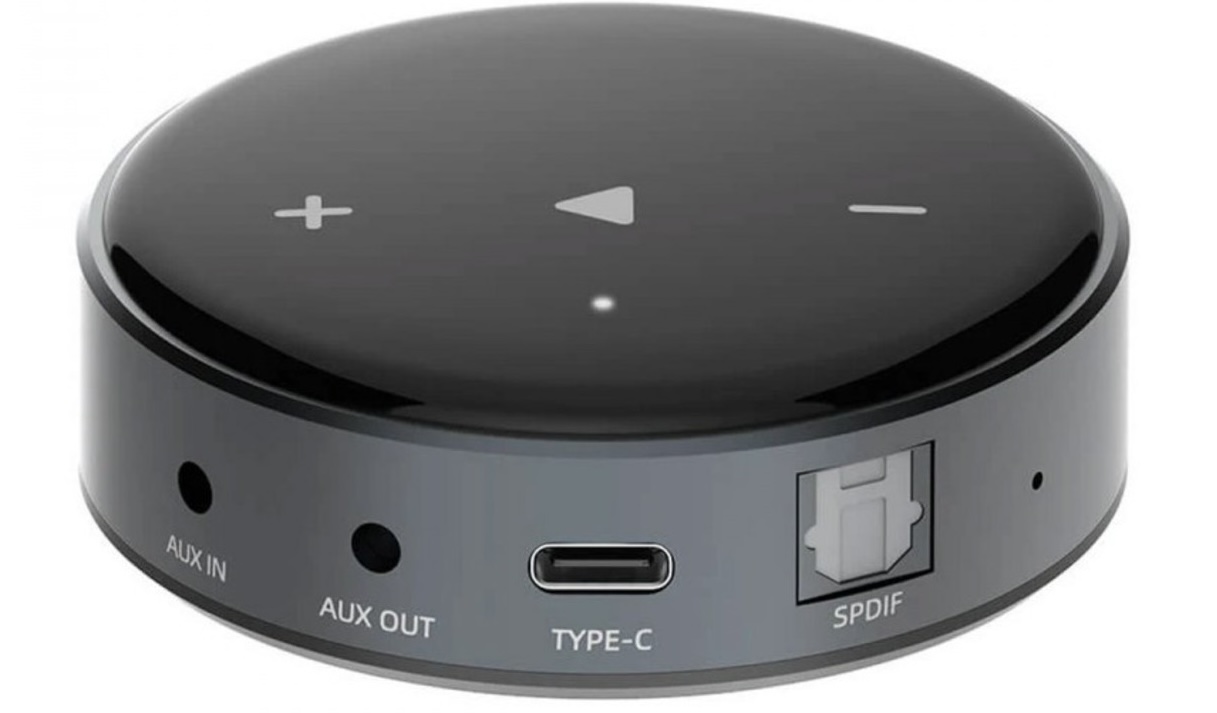
WiiM’s First Streamer — and a Lesson in How Far Firmware Can Take a Cheap Box
This is a slightly unusual review, because the WiiM Mini is a device I am still using daily years after it launched — which makes it less a snapshot and more a long-term reference. I ordered mine in August 2022, not long after the Mini itself launched, for $109, and four years on it is still in daily service. It is probably the best $109 I have ever spent on an audio product: I have owned amplifiers that cost a good deal more and have since been superseded — the Aiyima A07 among them — while this little puck just kept doing its one job well and, thanks to firmware, kept doing more of it over time. The Mini was WiiM’s first product, a compact Wi-Fi streamer with optical and analogue outputs, and at launch it was already a good-value little box. What makes it worth a long-term write-up is what happened after launch: WiiM have updated it relentlessly, and the device on my shelf today does meaningfully more than the one I unboxed.
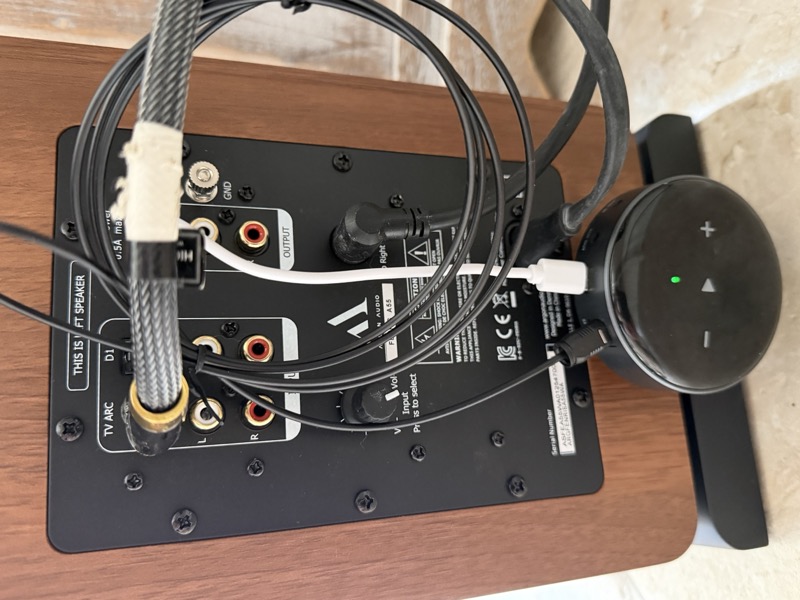
In my own system the Mini has settled into a permanent role: it provides streaming and a high-quality optical feed into my Argon Audio Fenris A55 active speakers, and it has done that job without complaint for a long time. It sits tucked behind one of the Fenris cabinets, drawing power straight from the speaker’s always-on USB port rather than needing its own wall adapter and cable run — a little messy to photograph, but about as tidy a real-world installation as a streamer this size gets. So rather than treat this as a fresh-out-of-the-box review, the focus here is on how the Mini has aged and how the software has grown around it.
I would like to thank WiiM for providing the Mini for the purposes of this review.
If you are interested in finding more information about this product, you can find it at the official WiiM product page.
The WiiM Mini typically retails for around $89.
Software and the WiiM App — a story of constant improvement
This review, like the others I’ve written for the WiiM range, is deliberately a long-term usage piece rather than an unboxing snapshot — these are devices I have lived with for years, not weeks, and the thing that keeps surprising me across all of them is how much of their value has arrived after the sale. The single most important thing to understand about any WiiM device is that the hardware is only half the product — the other half is the WiiM Home app and the firmware, and both have been improved continuously since launch. This is the through-line across the whole WiiM range, and it is why these reviews are framed as living references rather than fixed snapshots: a WiiM you bought years ago is, today, a more capable device than it was on day one.
The WiiM app is genuinely one of the most solid and feature-complete control apps in streaming audio. It is fast, reliable, and stacked with features — multi-room, a deep set of streaming services, parametric EQ, room correction, and more — and crucially it gets better with each release rather than stagnating.
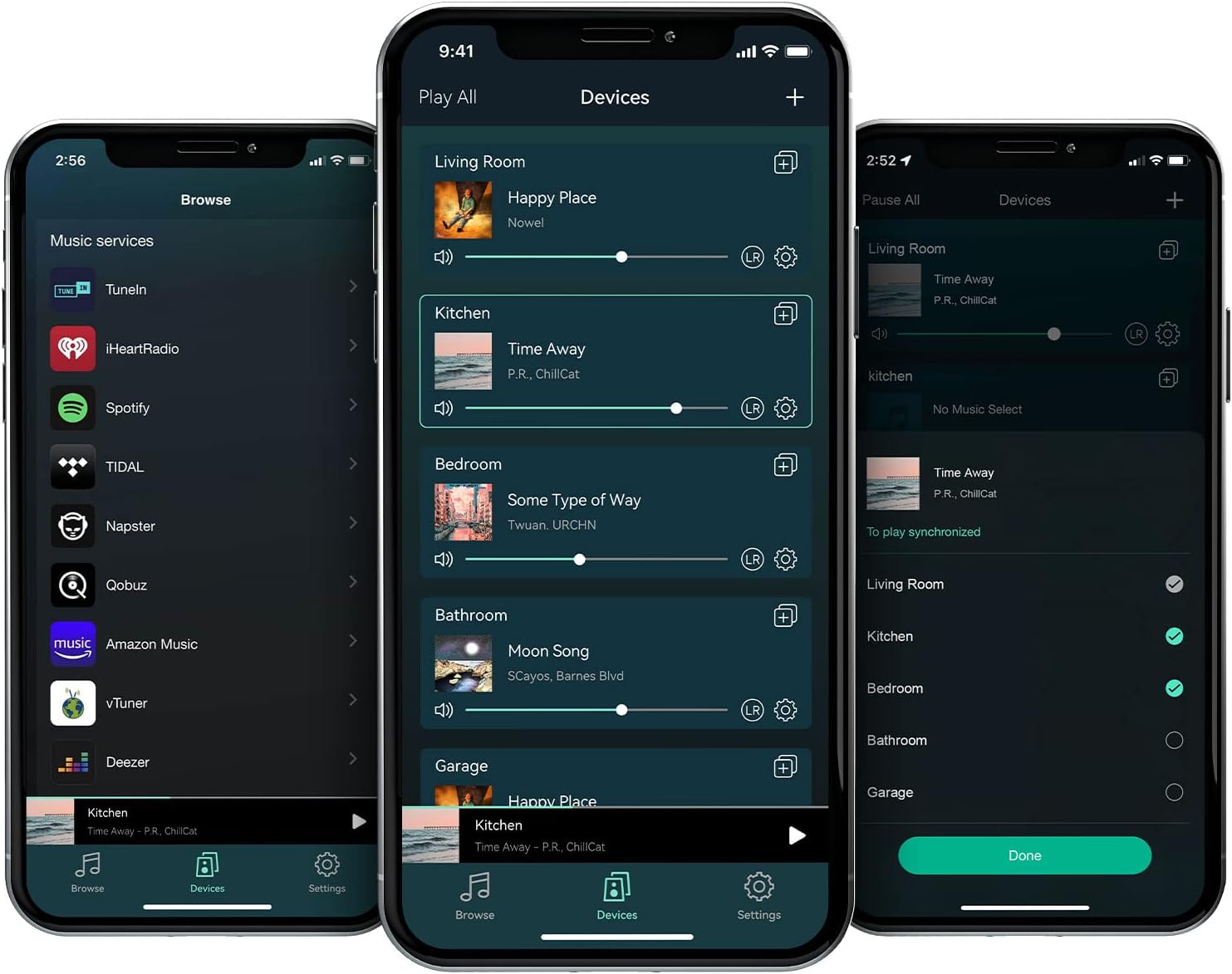
Here is the app exactly as it looked when I set the Mini up back in August 2022 — Browse, the Devices multi-room screen, and the group picker, all serviceable but plainly an early build next to what has followed:
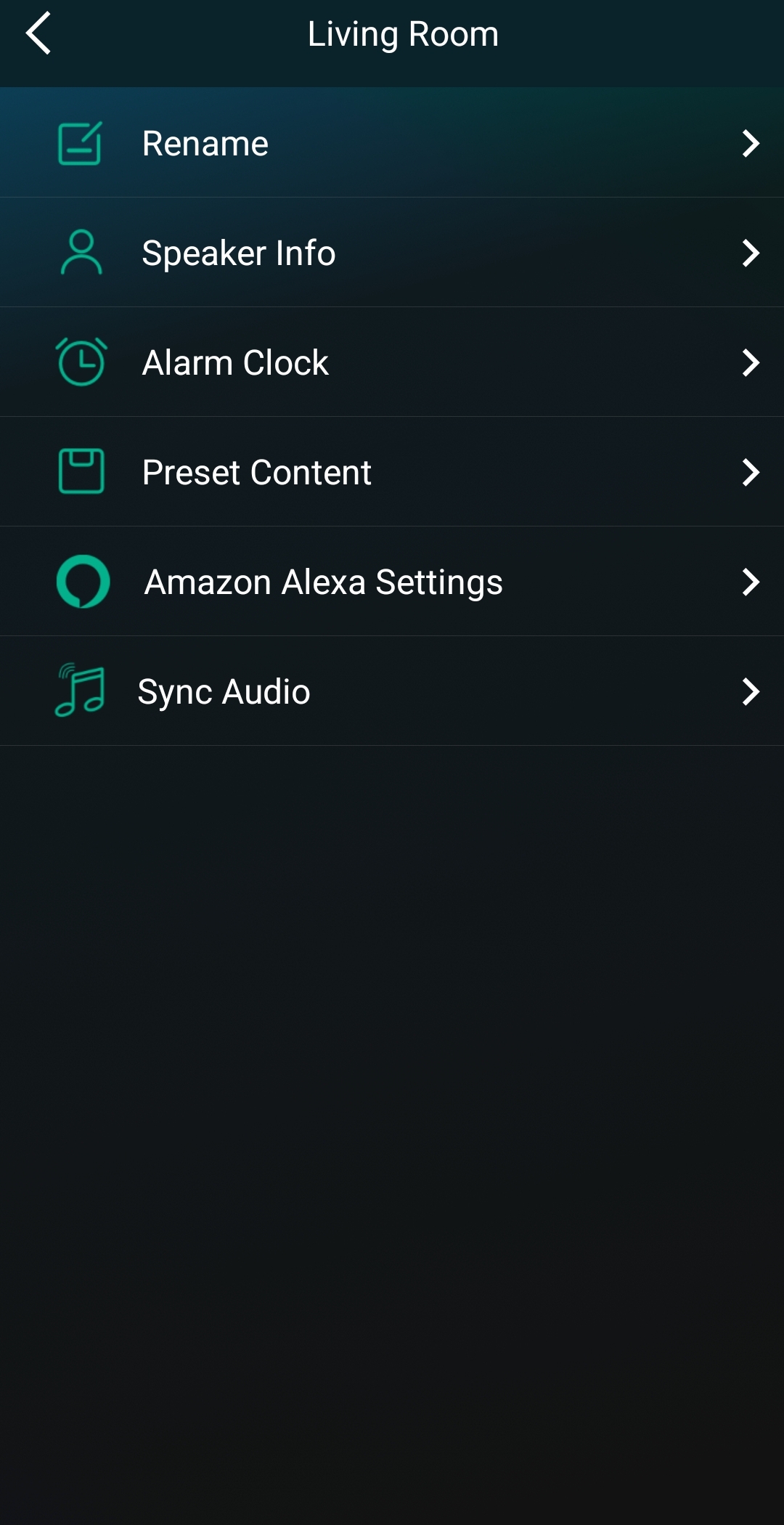
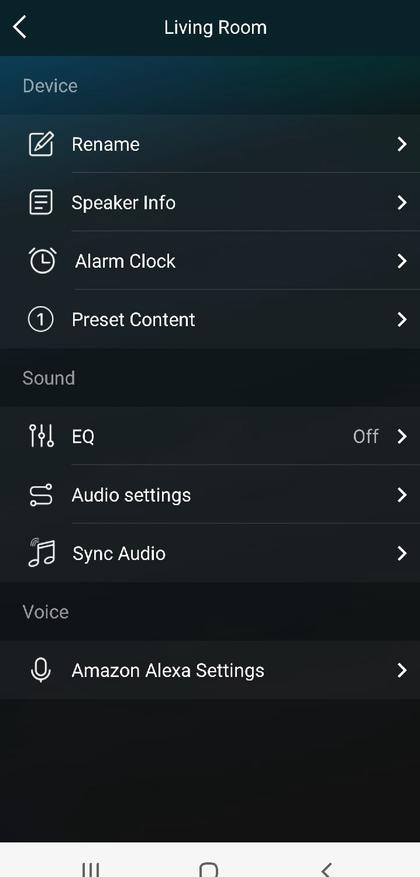
The screenshots below tell that story at a glance — the earlier device menus on the left, and on the right today’s RoomFit™ room-correction flow with its measured target, raw and corrected response curves, a feature that simply did not exist when the Mini launched:
 |
 |
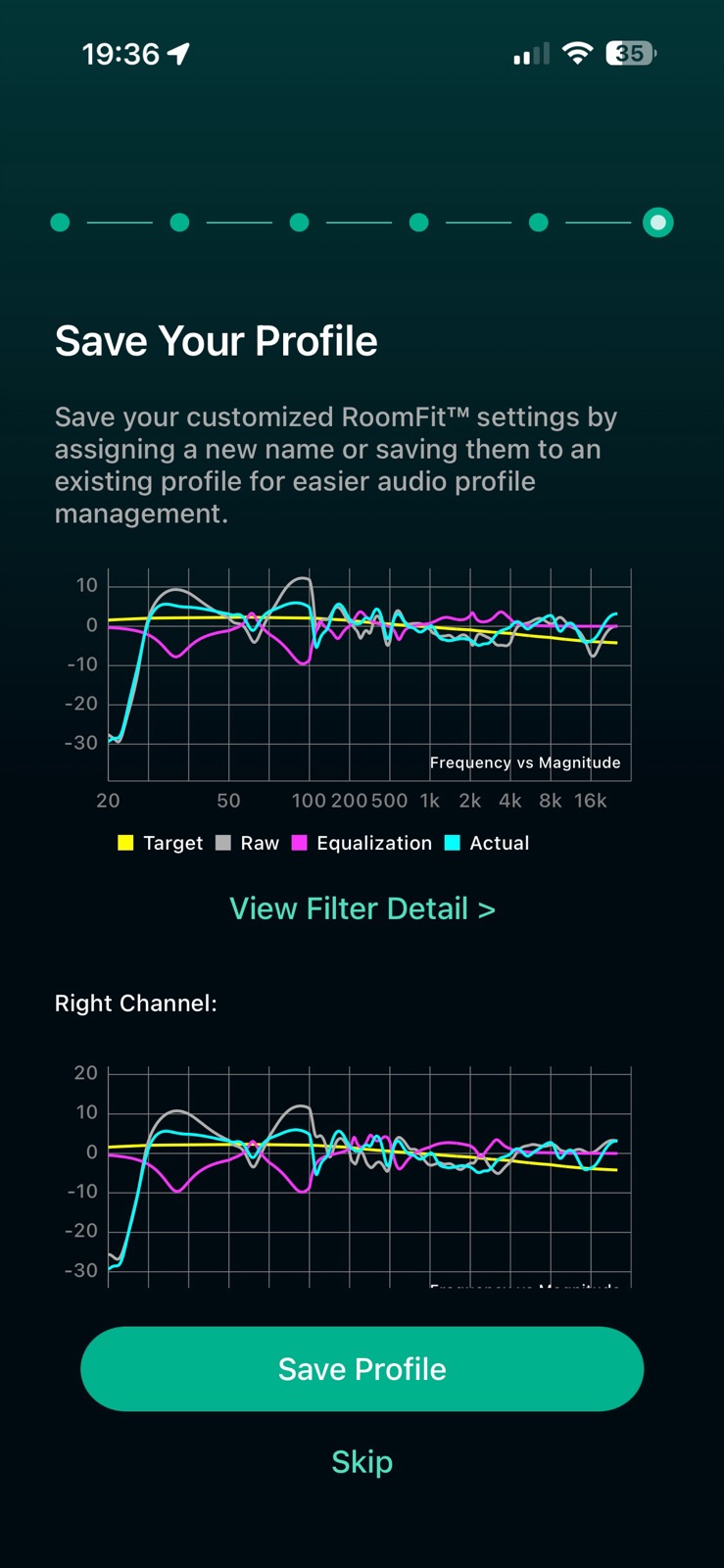
The feature list the Mini launched with in 2022 was already decent for the price — TIDAL Connect, gapless playback, and a set of fixed preset EQ curves — but what has arrived since, purely through firmware, is the real story. Through 2023 it gained a proper 10-band Parametric EQ on top of the earlier graphic EQ, along with WiiM Voice Remote support and Radio Paradise presets with live track metadata. In 2024 it picked up per-source volume and per-source EQ, so the Aux input and network streaming can each carry their own tuning, plus Plex support. And in 2025 it gained RoomFit room correction — taking a measured response and generating a per-channel correction curve — and Smart Presets for one-tap scene switching.
None of that existed on day one. A Mini bought at launch and never touched again would still be running fixed EQ presets with no room correction — the device only gained parametric EQ and RoomFit because WiiM kept shipping firmware for a $89 product years after selling it.
One gap has not closed, though: ASR’s original 2022 review dinged the Mini for having no Roon endpoint support, and that is still true today — WiiM has since certified the Pro, Pro Plus, Amp, Amp Pro and Ultra as Roon Ready, but the Mini itself was never brought into that list. It is the one feature-timeline item that stalled rather than improved.
That continual-improvement story stands in sharp contrast to a device like the Fosi Audio S3, a streamer I reviewed that has genuinely good hardware but, for now, software that is still finding its feet — promising, improving, but nowhere near the maturity of the WiiM app (see the WiiM Pro review for a side-by-side photo of the two alongside a WiiM Ultra). It is the clearest illustration of WiiM’s real advantage: plenty of companies can build a competent streaming box, but WiiM’s software ecosystem is what keeps these devices relevant and improving year after year.
What’s in the Box
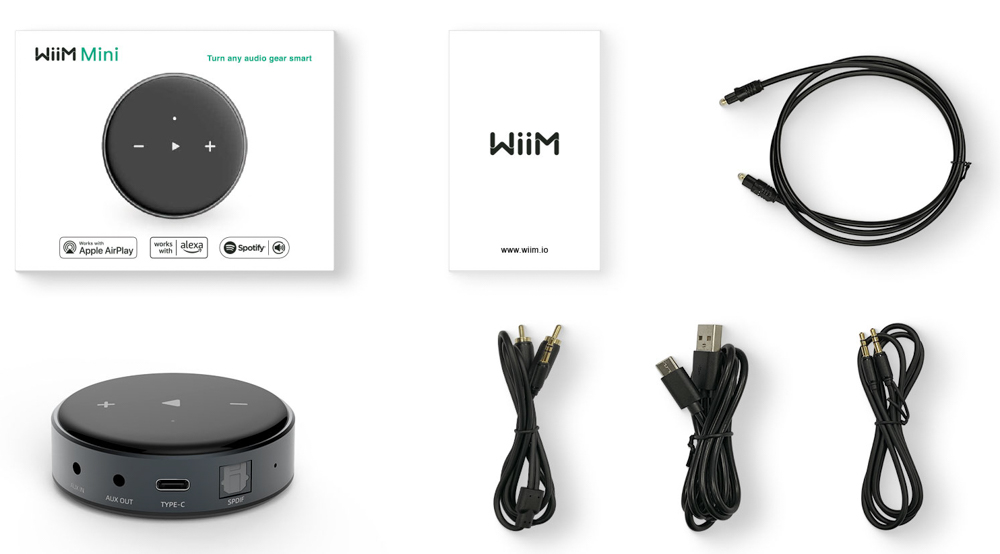
Unboxing the WiiM Mini gives you the streamer itself, a power adapter, and a quick-start guide — the essentials to get going straight away.
Build Quality
The build quality is commendable for the price. It is a compact, sturdy little puck with a minimalist aesthetic that blends into any setup, well-finished edges, and a reassuringly solid feel.
A note on the optical input
The optical port is the one long-term niggle. It is functional and sounds clean, but the connection is not the snuggest, so handle it with a little care when plugging and unplugging.
Features and Connections
For such a small box the Mini covers a lot. On the network side it has dual-band 2.4/5GHz Wi-Fi (802.11 b/g/n/ac) and Bluetooth 5.1, and it streams over AirPlay 2, Spotify Connect, Tidal Connect, DLNA, and a long list of services through the app and Alexa Voice Service — iHeartRadio, Amazon Music, Deezer, SiriusXM, Napster and more. Voice control works with both Alexa and Siri.
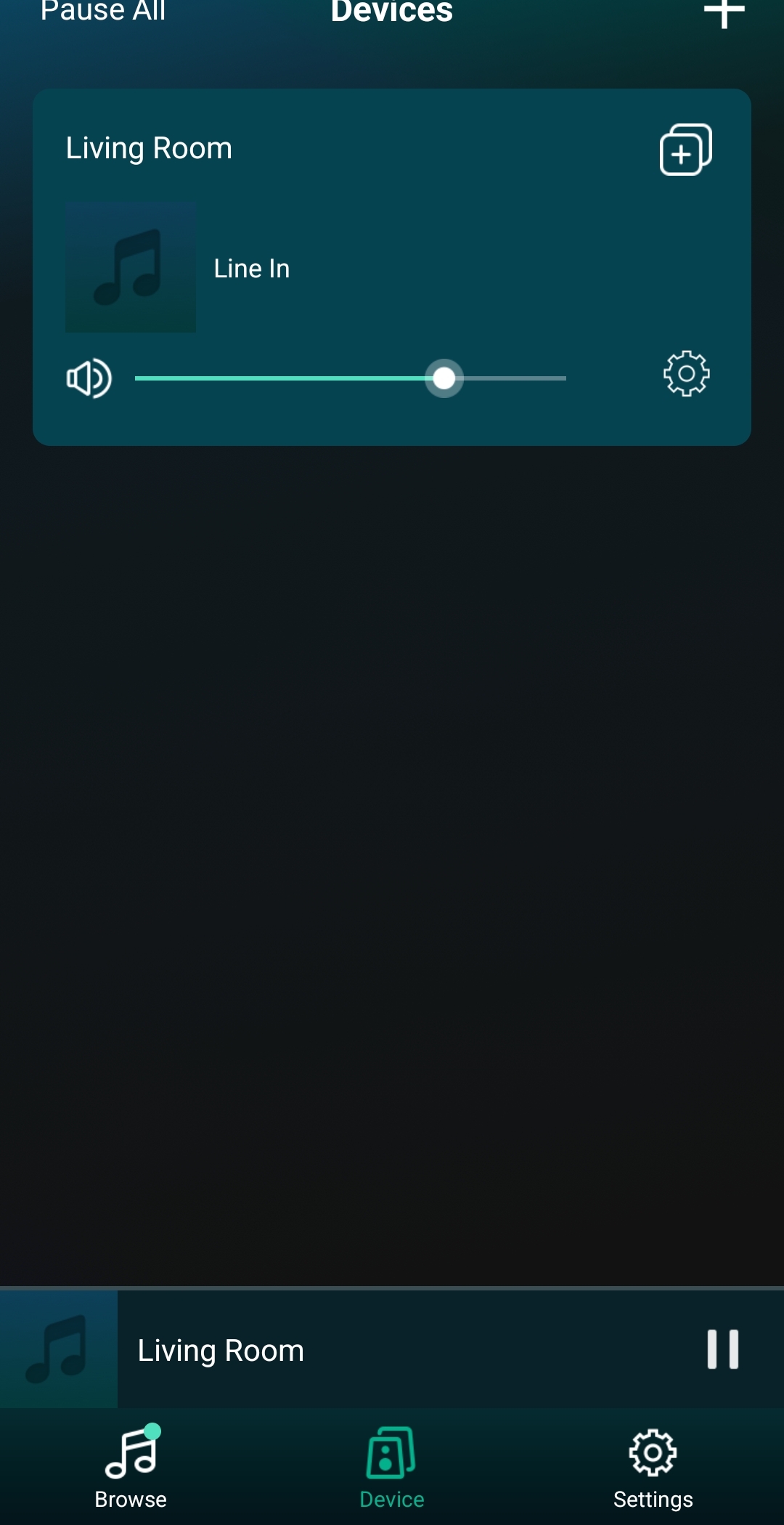
Physically it keeps things simple: capacitive touch buttons for play/pause and volume, a three-colour status LED, a 3.5mm Aux input (handy for a turntable or CD player you then distribute around the house), a 3.5mm analogue output, and an optical digital output, all powered over USB-C. That Aux input is selectable as a source straight from the app:
 Bluetooth works both ways — stream to the Mini, or send its output to a Bluetooth amplifier — and the line/optical output can be set to a fixed or variable level. Multi-room runs through both Linkplay’s own stereo-pairing/multi-room and Alexa’s AVS multi-room.
One genuinely important point is exactly the “constant improvement” story in microcosm: the Mini’s original manual lists none of the parametric EQ or room-correction features the device now has — those arrived after launch via firmware. The baseline it shipped with was a capable streamer; what it is today is considerably more, and that is the whole reason this is a long-term reference.
Solving the No-Screen Problem: WiiM Presto
The one thing the Mini genuinely lacks next to its screened siblings is any way to see what’s playing without opening the app. Rather than treat that as a permanent limitation, I built my own answer to it: an external album-art display and controller called WiiM Presto, which I’ve shared publicly at github.com/jeromeof/WiiM-Presto.
It turns a spare screen into exactly what the Mini’s own front panel doesn’t offer — current album art, play/pause/next/previous controls, and one-tap access to your favourites, all without touching the phone app. The project builds on a concept originally put together by retired-guy, and it’s the kind of thing the WiiM ecosystem’s open, well-documented API makes genuinely possible for anyone willing to tinker. It’s a good illustration of the same theme running through this whole review: the Mini keeps getting more capable, and not only because of what WiiM themselves ship.
Sound Impressions
Analogue — RCA
Through the analogue output the Mini is warm and detailed, with surprising clarity and depth for the price.
Digital — Optical / Coaxial
The digital outputs are where I rely on it most: crisp, clean and high-fidelity, which is exactly why the Mini feeds my Fenris A55 over optical rather than analogue.
Bluetooth
Bluetooth holds up respectably — not the equal of the wired outputs, but a convenient fallback.
Specifications
| Specification | Value |
|---|---|
| Audio input | Up to 24-bit / 192kHz |
| Audio output | 16-bit / 48kHz (CD quality) |
| Wireless | Wi-Fi 802.11 b/g/n/ac (dual-band 2.4/5GHz) |
| Bluetooth | Bluetooth 5.1 (in and out) |
| Line out | 2Vrms · THD+N 0.009% · SNR 102dB · DR 96dB (line-in → line-out) |
| Optical (SPDIF) out | THD+N 0.005% · SNR 105dB · DR 97dB (line-in → SPDIF) |
| Line in | 3.5mm Aux, 1Vrms |
| Outputs | 3.5mm analogue, optical (SPDIF) |
| Power | USB-C, 5V / 1A |
| Codecs | MP3, AAC, ALAC, APE, FLAC, WAV, WMA, OGG |
| Controls | Capacitive touch (play/pause, volume); 3-colour status LED |
| Streaming | AirPlay 2, Spotify Connect, Tidal Connect, DLNA, Alexa/AVS services |
| Voice | Works with Alexa and Siri |
| Multi-room | Linkplay multi-room / stereo pairing + AVS multi-room |
| Made by | Linkplay Technology |
The figures above are from WiiM’s own specification. The standout caveat is the 16-bit/48kHz output ceiling: the Mini happily accepts hi-res up to 24/192, but its outputs are capped at CD quality — which is part of why the entry-level conversion sits behind the optical feed I actually use.
Measurements
Amir’s original 2022 bench review tells almost exactly the same story as my own listening: the Mini is a transport first and a DAC a distant second. Measured streaming over Toslink into optical output, the digital path returned a SINAD of around 141 dB — effectively the theoretical ceiling for a 24-bit dithered signal, meaning the Mini adds nothing of its own to a bit-perfect digital feed:
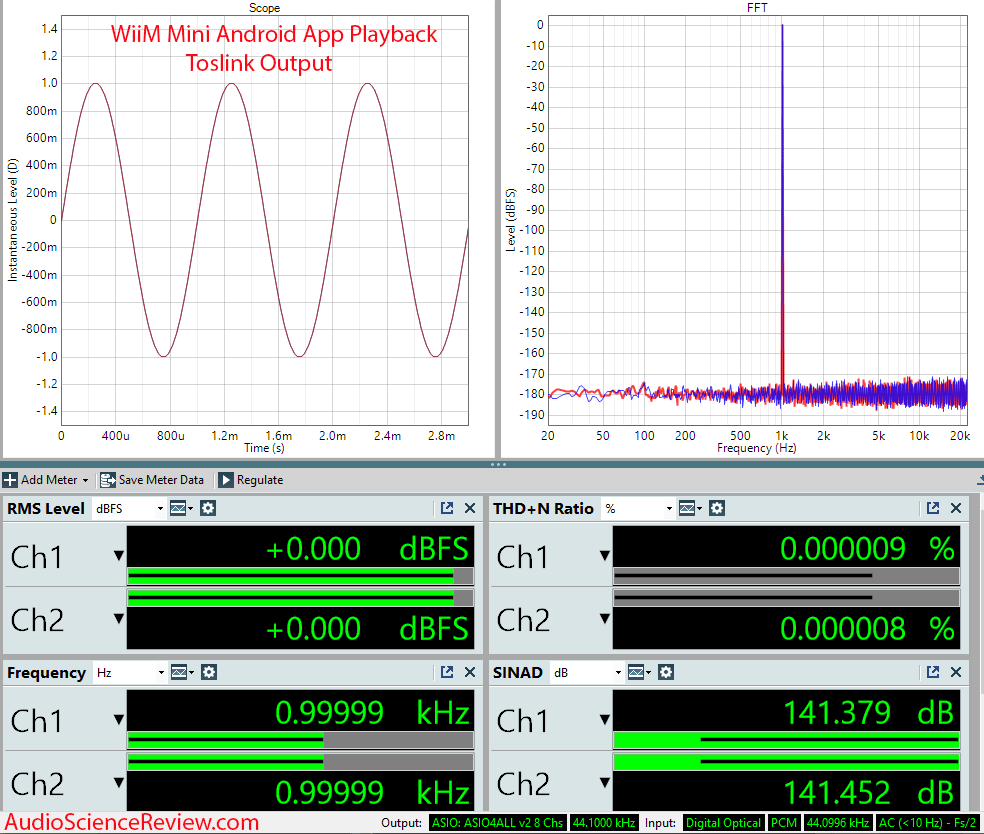
The onboard analogue DAC, by contrast, measured as “just OK” with a noticeably higher noise floor — mass-market rather than high-performance, in Amir’s words. That gap is exactly why I route the Mini into my system over optical rather than through its RCA output.
The one criticism in that review that firmware never fixed was the lack of a Roon endpoint — still true three years on, as noted above.
Rating Explanation
The Pragmatic Rating of 5 reflects a device that has earned its place over years, not weeks. At around $89 the Mini was good value on day one, but the relentless software improvements — PEQ, room correction, more services — have made it a genuinely better product over time, and it still does real work in a serious system. The Features and Price ratings both reflect that exceptional value-and-capability combination; the Measurements rating is the one area held back by the entry-level DAC, which is why the optical output is the one I lean on.
Conclusion
The WiiM Mini stands out as an excellent way into high-quality streaming without spending much — but the more interesting story is how well it has aged. Four years on from that original August 2022 order, it is still in daily service feeding my Fenris A55 over optical, and it does more now than it did at launch thanks to WiiM’s steady stream of software updates. I have bought amplifiers since that cost several times as much and have already been superseded by newer designs — the Aiyima A07 among them — while this $109 puck just kept working and kept gaining features. That, more than any single spec, is what makes the Mini — and the WiiM ecosystem around it — such a pragmatic recommendation.