Roseselsa Cambrian
Cambrian enters ANC territory with style, comfort and some unique sonic tricks
Roseselsa — formerly known as RoseTechnics — are a brand that knows how to produce an affordable audiophile-centric product. I have always been impressed with the value engineering and genuine audiophile sonic intent that Roseselsa typically offer, and their TWS lineup has consistently punched well above its price.
I have also enjoyed the Roseselsa TWS’s I have reviewed in the past, including the recently launched Ceramics MK2, which is one of my current ultra-budget TWS recommendations.
So when I spotted that they had moved into over-ear ANC headphones with the Cambrian, I was genuinely curious to see whether that same ‘pragmatic’ philosophy would translate to a more complex product category as there is already some strong competition in this price bracket with the UGreen Max5C being the typical budget recommendation.
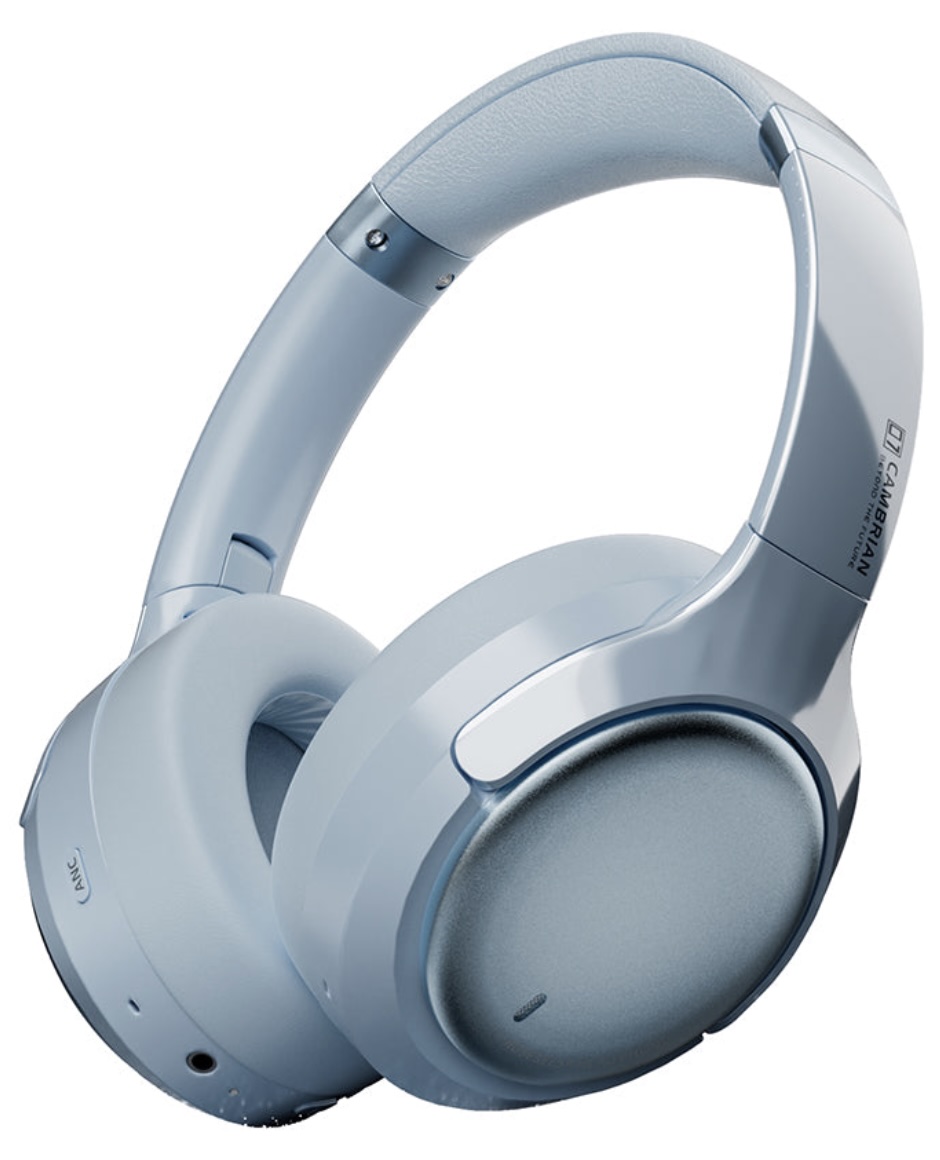
I would like to thank Roseselsa for providing the Cambrian for the purposes of this review, alongside the Ceramics MK2.
If you are interested in finding more information about this product, you can find it at the official product page.
The Cambrian typically retails for $54.99 and is currently available for $48.99. It is available in Black (Night), Ashy Blue, and Ashy Grey. The unit reviewed here is the Black variant.
Note: For those interested in product naming, I found the name Cambrian pretty clever as the ‘Cambrian explosion’ was a period of rapid evolution in the history of life on Earth, and I feel this whole area of ANC headphones is evolving rapidly.
So, after listening to the Cambrian for a few weeks now, I feel I have a good idea of its capabilities. If you are in the market for a pragmatically priced ANC headphone, I do feel it’s worth checking out the Cambrian.
So, read on to find out what it has to offer, but first lets look at the unboxing:
Packaging and Unboxing
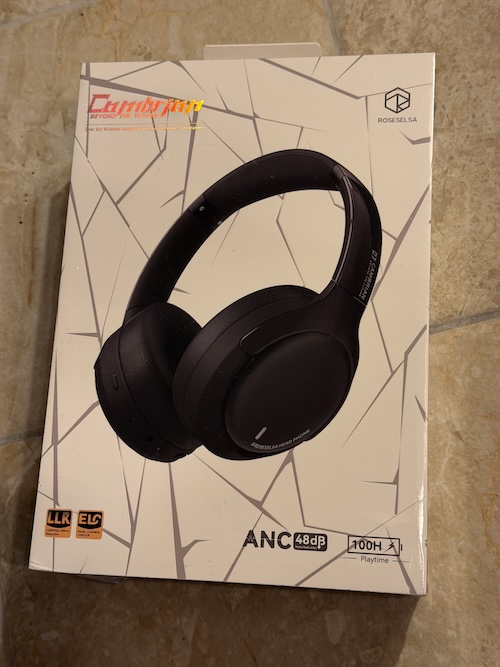
The packaging is clean and confident, carrying the same house style as Roseselsa’s TWS products.
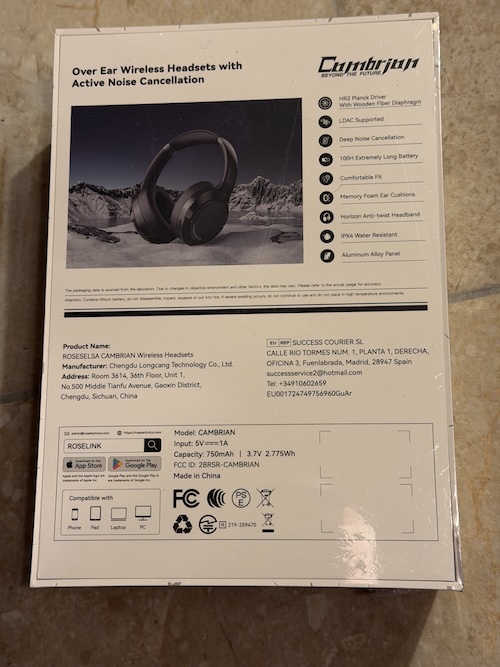
The rear of the box
provides a useful overview of the key features.
Opening the box reveals the headphone in a neat, well-considered
presentation, with the documentation tucked beneath the main tray.
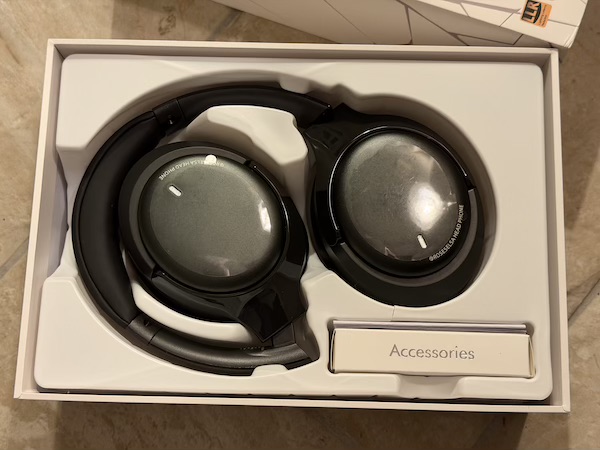
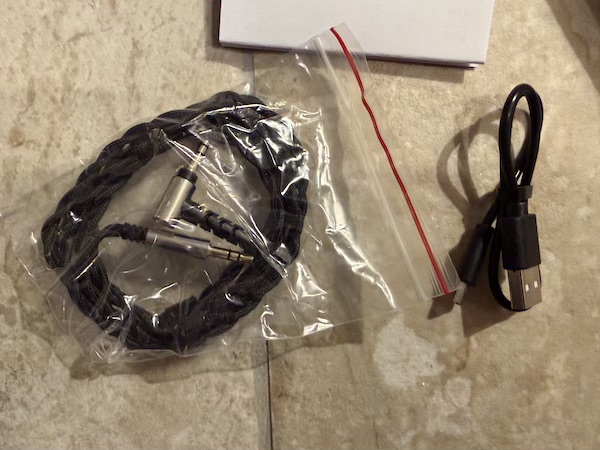
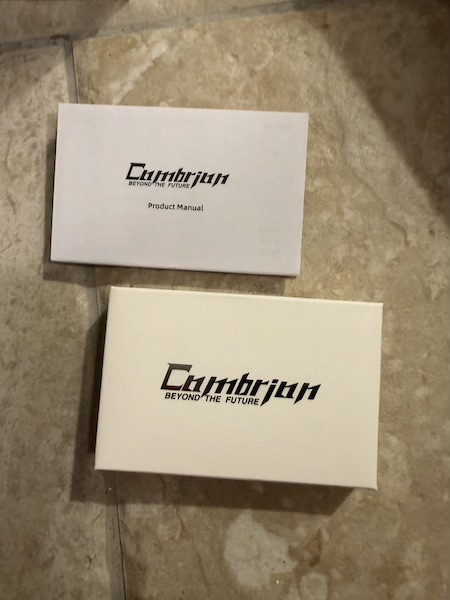
In the box you’ll find the Cambrian headphone, a detachable 3.5mm analog cable, a USB-C charging cable, and the usual documentation.
 |
 |
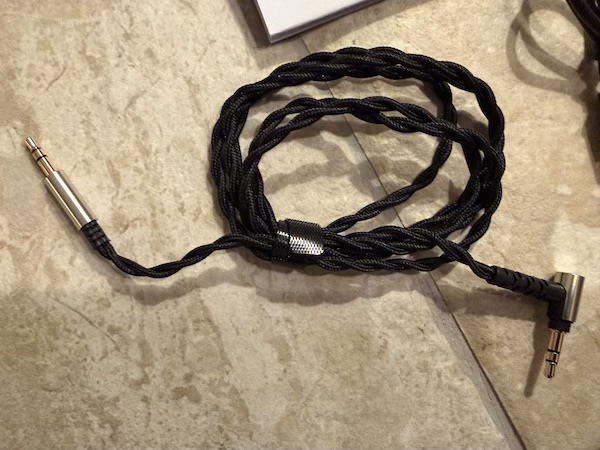
The inclusion of a detachable 3.5mm analog cable with a nice right angled connector, means the Cambrian remains fully usable on aircraft entertainment systems without Bluetooth or when the battery is depleted, a real-world convenience that budget ANC headphones often omit.
 |
 |
Build Quality and Design
The Cambrian’s build quality sits comfortably in line with other Roseselsa products — which is to say, solid and considerable better than the asking price alone implies, though without the premium material language of a Sony or Bose.
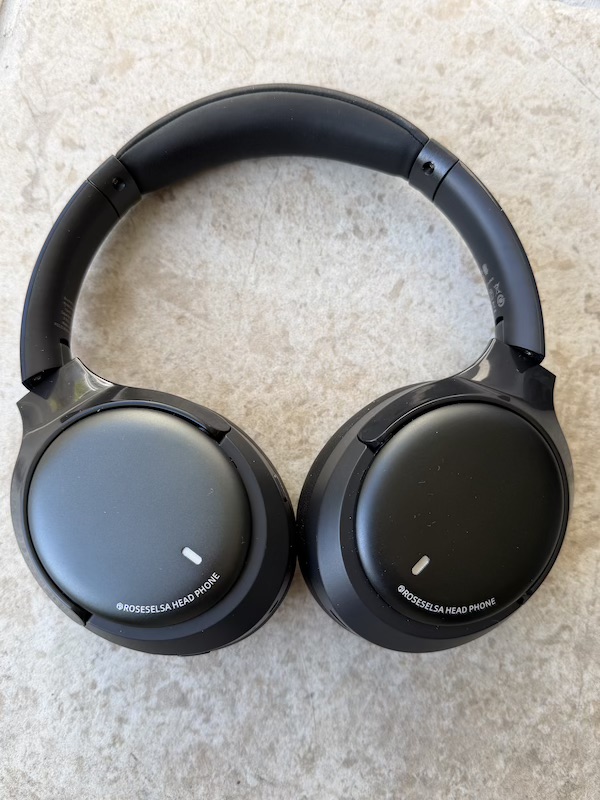
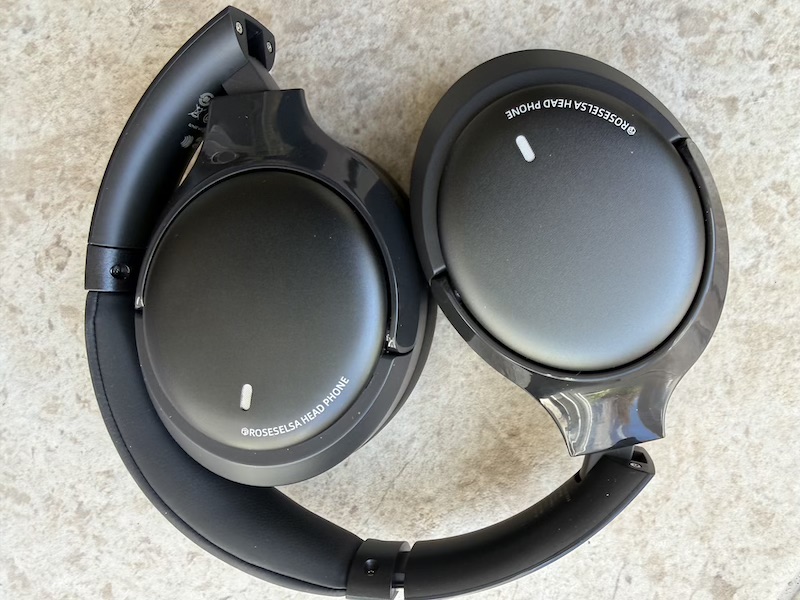
The folding mechanism is a highlight: the hinges feel well-engineered and the headphone collapses flat convincingly, making it genuinely travel-friendly in a compact carry-on bag.
 |
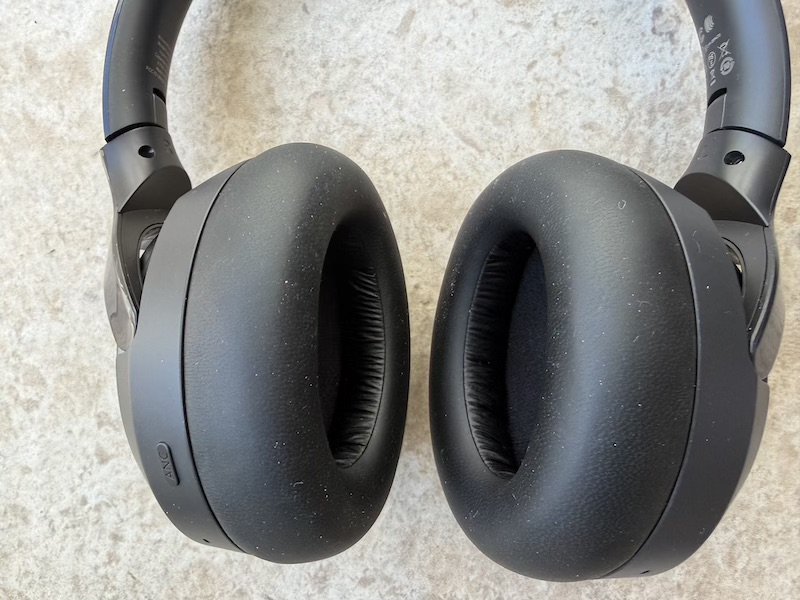 |
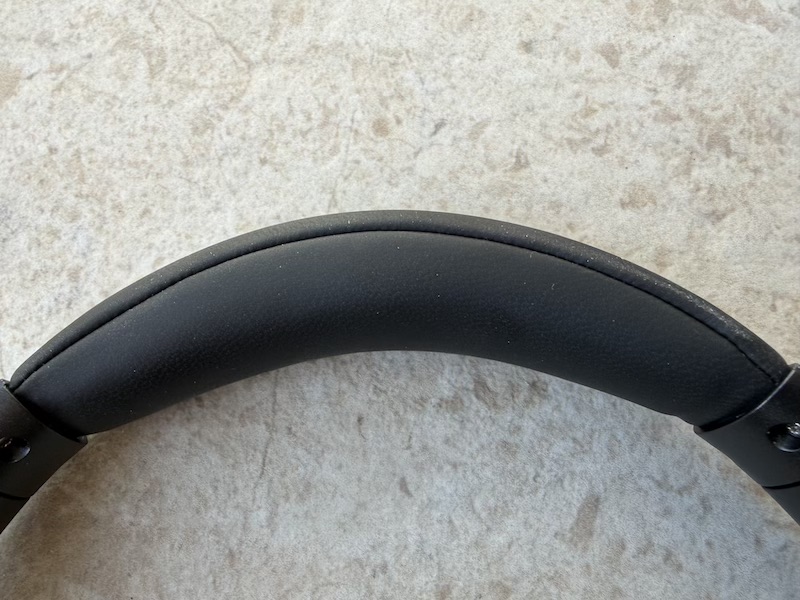
The headband padding is noticeably deeper than many competitors at this price point, a detail that pays real dividends during extended wear:
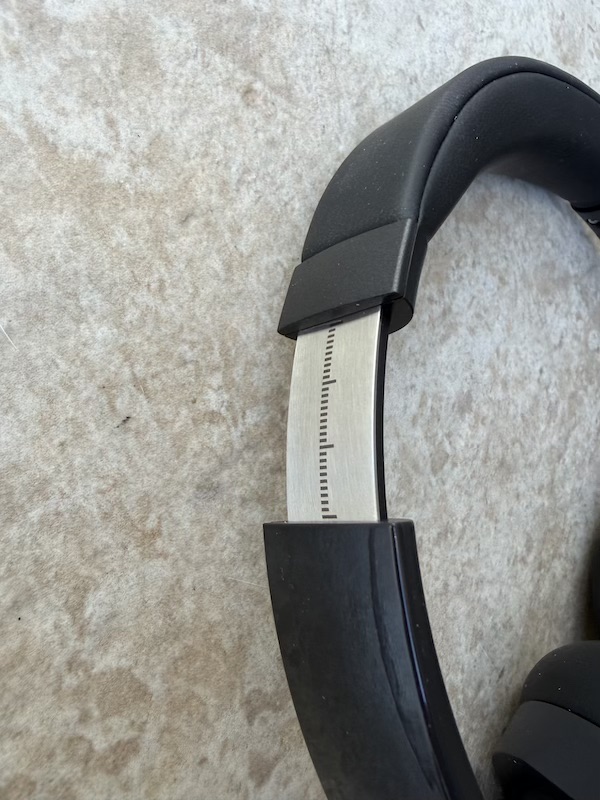
And the extension is pretty good:
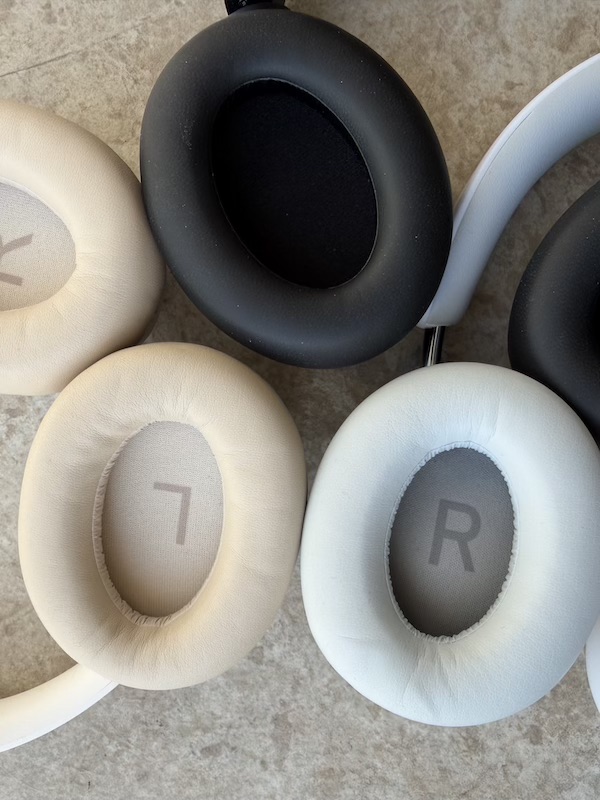
The earcup dimensions are generous — listeners with larger ears, who frequently find budget headphones uncomfortably snug, should find the Cambrian’s cups considerably more accommodating than the category average. Here it is compared to UGreen Max5c and Tanchjim Rita :
 |
 |
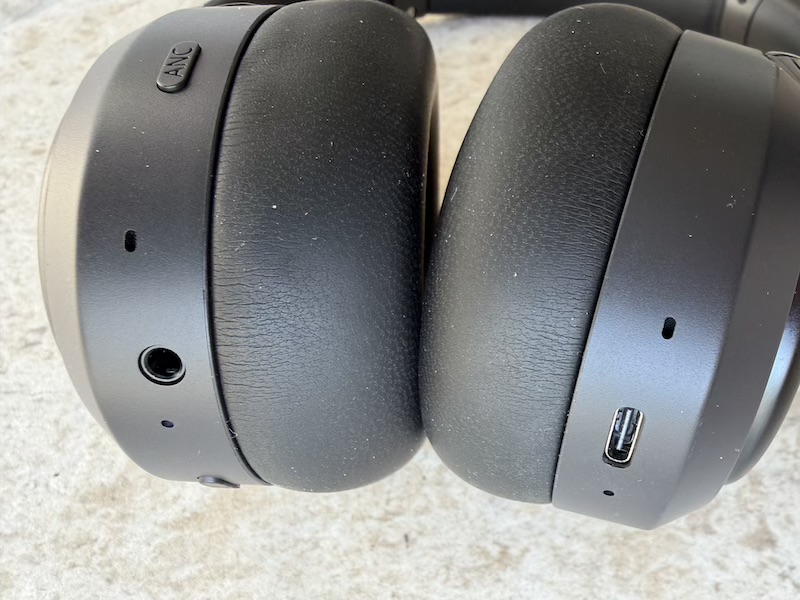
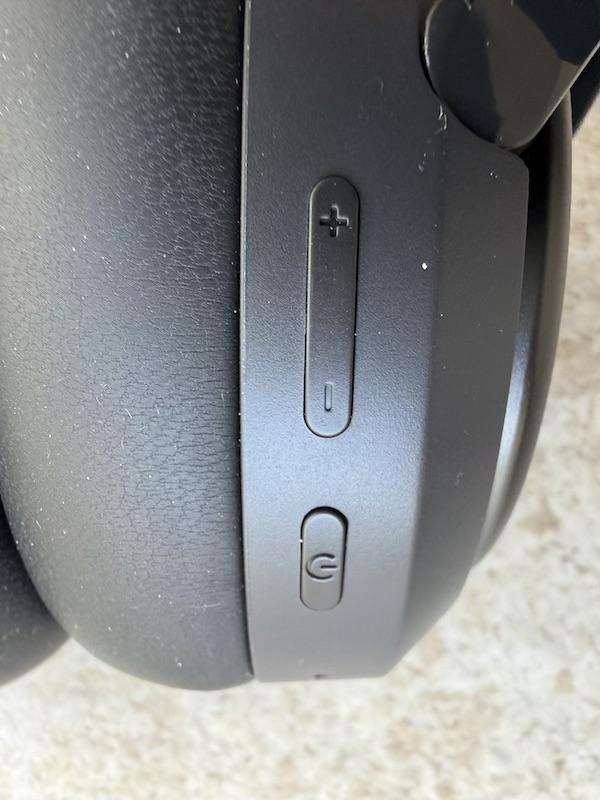
The button layout is clean and intuitive, with a dedicated ANC button positioned for simplicity, and the physical controls feel responsive and reliable — a practical advantage that will serve you better in daily use than marginal ergonomic refinements.
 |
 |
Comfort and Fit
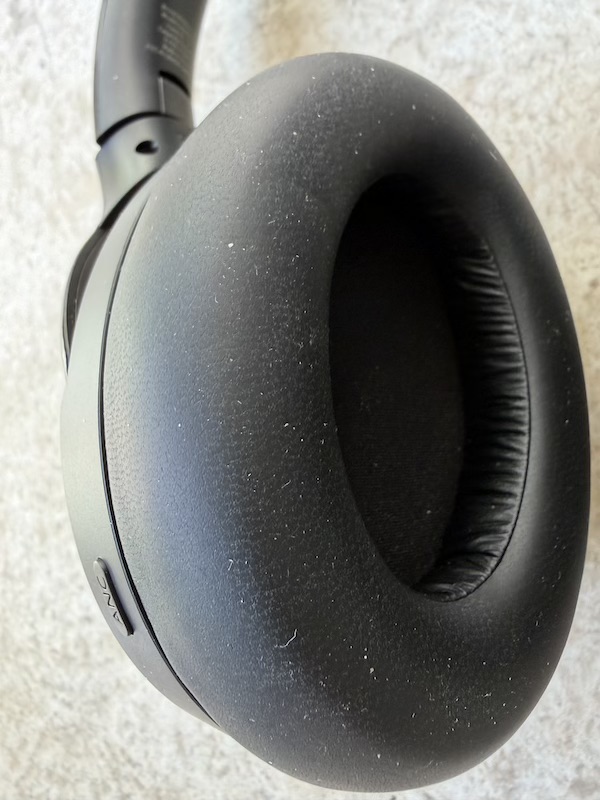
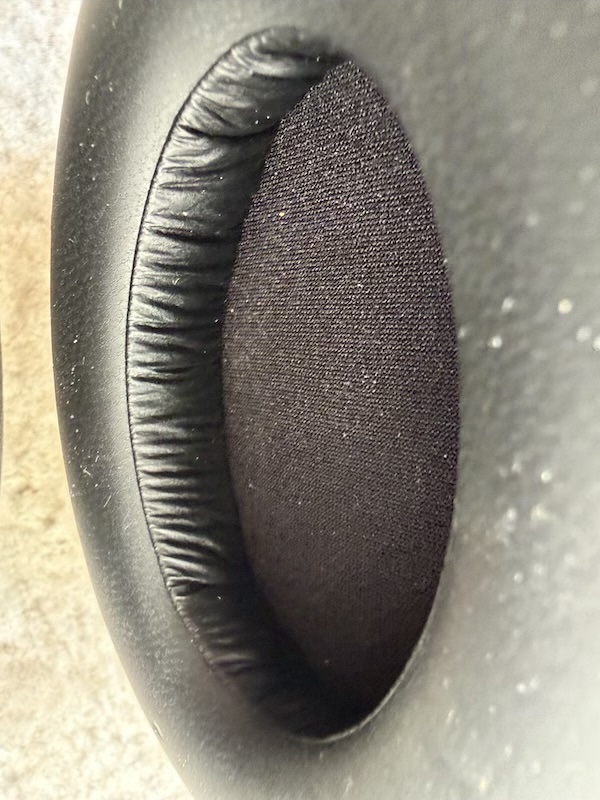
Comfort is, frankly, the Cambrian’s headline achievement. Across the 12-hour transatlantic flight during which I directly compared it against the Moondrop Edge and the Nothing Headphone(1), the Cambrian was the headphone I kept returning to, not because it outperformed its companions in outright sound quality, but because it was simply the most comfortable of the three to sustain over many hours.
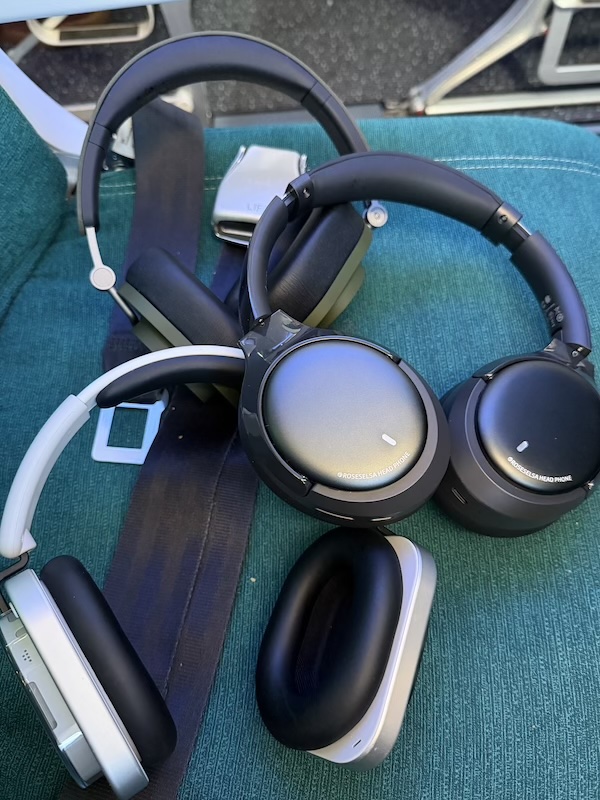
The earpads cushion without excessive heat retention, and at approximately 270g the weight is sensible for the feature set without becoming a fatigue factor over multi-hour sessions.
 |
 |
Features and App
The Cambrian shares its companion app directly with the Ceramics MK2 TWS, which is simultaneously a practical asset and a mild reflection of an app that is overdue for a meaningful update.
One quirk worth flagging for new users: the app launches in Chinese by default on first install:
 |
 |
The language can be changed in preferences immediately, but I feel is something Roseselsa should address. Once past that, the app is clean and navigable though very basic compared to some of the more expensive competitors.
Bluetooth Codec and Sound Profiles
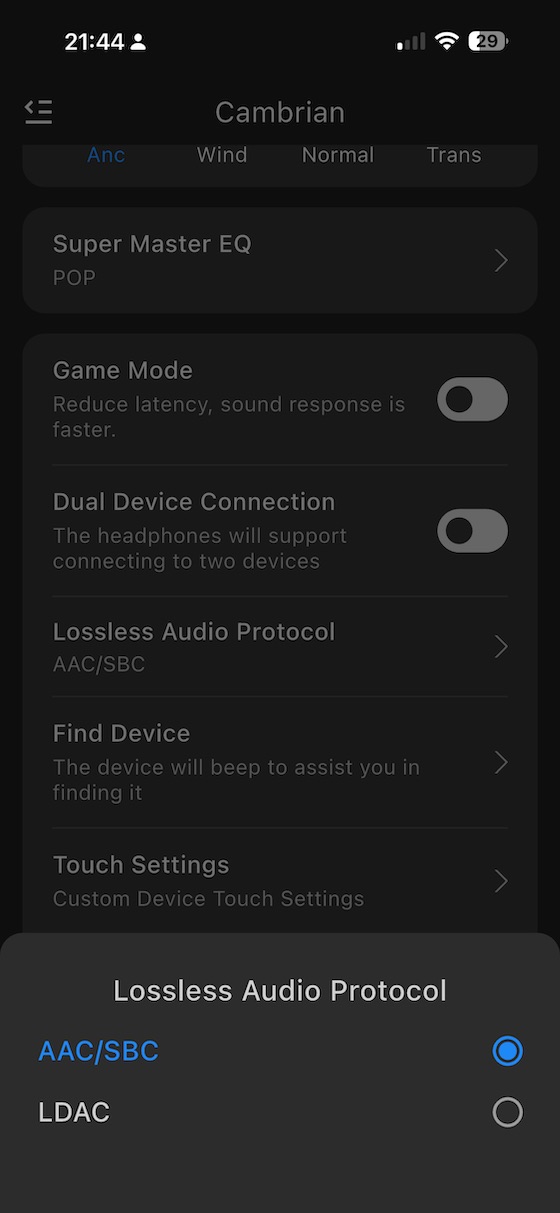
From the app you can select your Bluetooth codec — LDAC, AAC, or SBC. Note that to access LDAC you will need to install the RoseLink app, though I would always recommend using the companion app regardless to access firmware updates and to switch between the EQ profiles. LDAC support at this price is a meaningful differentiator, delivering a perceptibly cleaner and more detailed presentation over a standard AAC connection. Enabling LDAC is recommended whenever your source device supports it.
 |
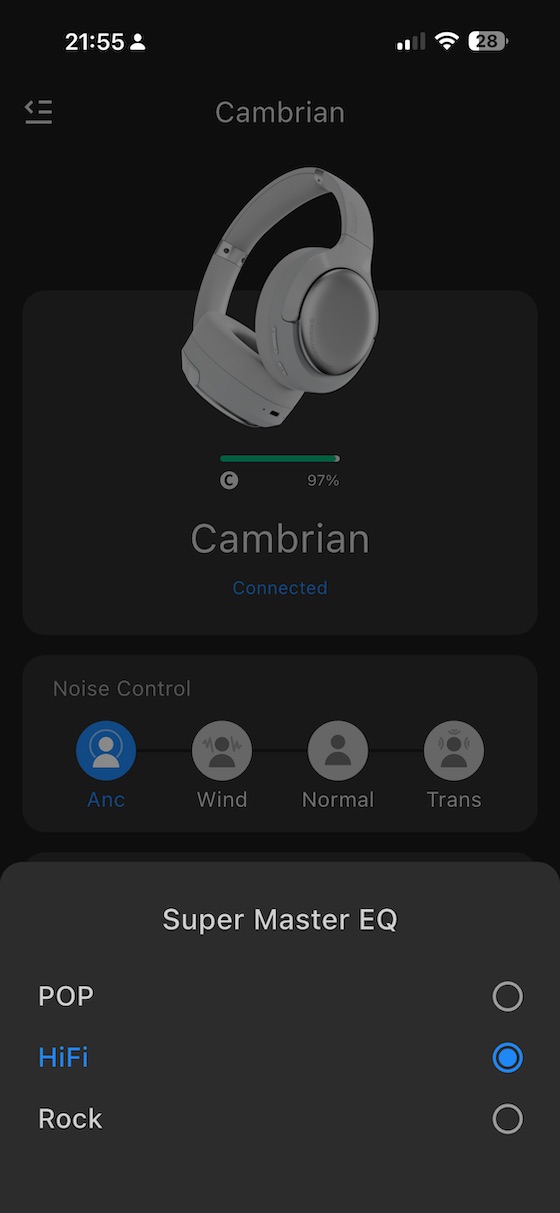 |
Choose between the three sound profiles — HiFi, Pop, and Rock — each tuned for different listening contexts and environmental conditions.
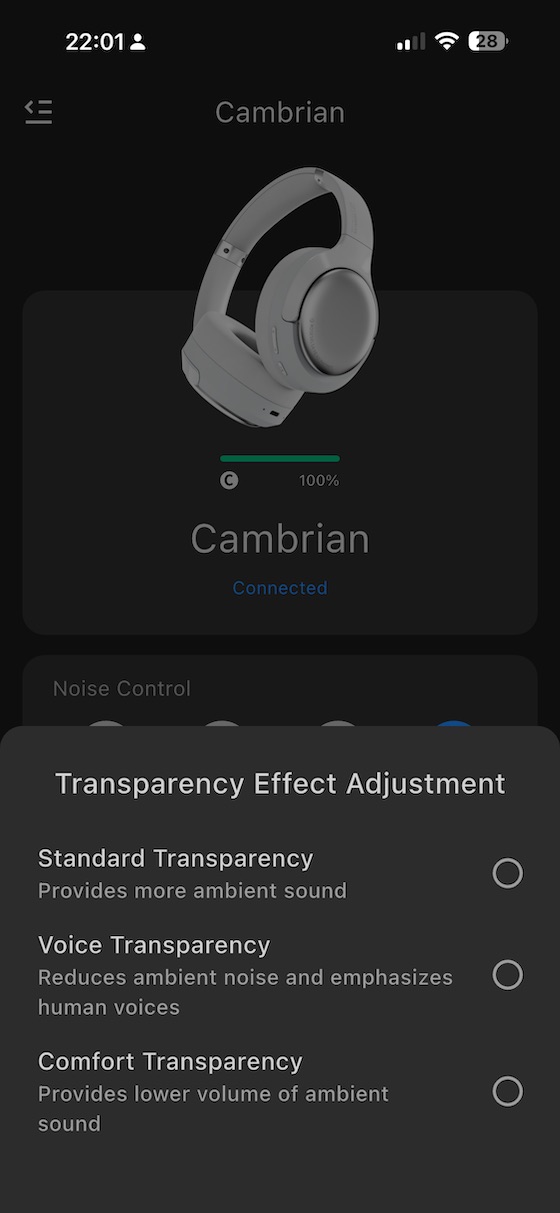
ANC and Listening Modes
The app allows you to configure ANC, Transparency, and Normal listening modes to suit your environment:
 |
 |
Button Configuration and Firmware
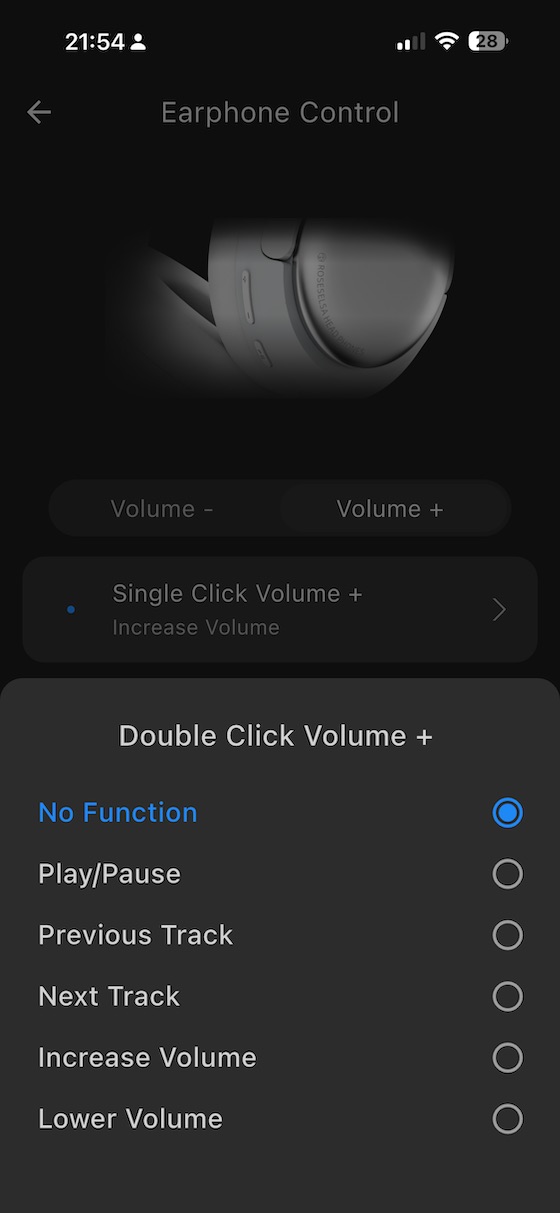
Customize your listening experience through button remapping and stay current with firmware updates:
 |
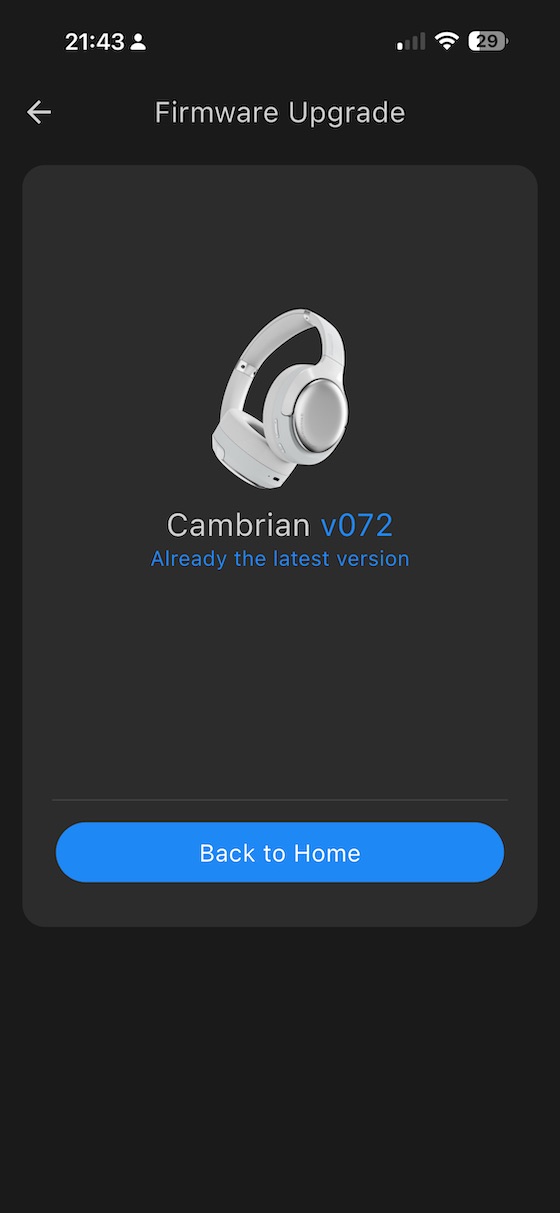 |
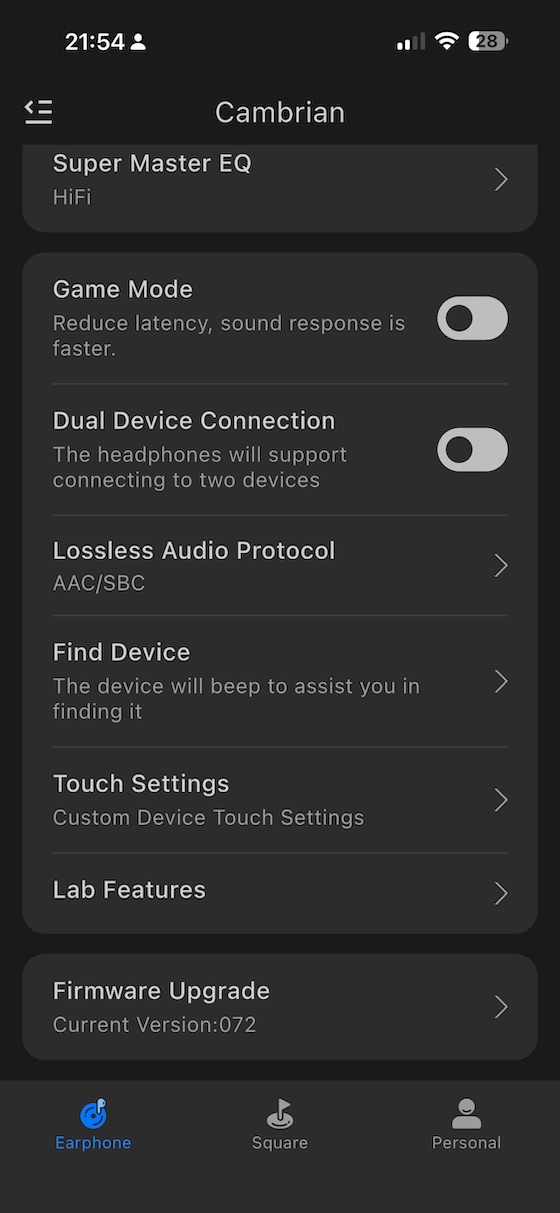
The button configuration screen allows remapping of the physical controls to personal preference. Firmware updates can be delivered directly through the app — a capability that matters more here than in most products. Game Mode is also accessible from the app and switches the Bluetooth stack to a low-latency profile — useful for rhythm games or mobile FPS where audio sync matters. LDAC’s 990 kbps ceiling enables 96kHz/24-bit Hi-Res transmission from compatible sources, a specification that would have carried a significant price premium even a few years ago.
As with the Ceramics MK2, the most significant omission remains the absence of any graphic or parametric EQ beyond the three fixed profiles. A 10-band graphic EQ at minimum — or ideally full PEQ — would transform the app from functional to excellent, and it is an update Roseselsa should prioritise.
Other Features
Beyond the core audio functionality, the Cambrian includes several practical features that add value at this price point. The IPX4 water resistance rating means the headphone can handle sweat and light moisture exposure, making it suitable for gym use or commuting in light rain. The low-latency gaming mode, accessible through the app, switches the Bluetooth stack to reduce audio lag — a useful feature for mobile gaming or watching video content where audio sync matters. The dual device connection capability allows the Cambrian to maintain simultaneous connections to two devices, letting you seamlessly switch between, say, a laptop and smartphone without manual re-pairing.
Call quality is functional but not a standout feature. Indoors in a quiet environment, voice clarity is acceptable for casual calls. However, outdoors or in noisy environments, the microphone struggles to isolate your voice effectively from background noise, and I found myself avoiding taking calls when walking outdoors with the Cambrian. For office calls in controlled environments it performs adequately, but this is not a headphone optimised for frequent voice communication in variable conditions.
Sound Impressions
Critical listening was conducted using the HiFi profile over LDAC with ANC switched off — a deliberate choice, as the Cambrian produces a faint but perceptible noise floor when ANC is active in a quiet room. The measurements confirm that ANC does not meaningfully alter the frequency response, so the sound character observed at home with ANC off translates directly to use in noisier environments with ANC on. For the transatlantic flight I switched to the Rock profile, which provides a useful mid-bass lift to compensate for the cabin noise floor — the ability to switch profiles for context is one of the more practical features of the three-profile system.
Bass
The bass on the HiFi profile is rich and satisfying without crossing into bloat. The 40mm composite wood fiber driver brings a warmth and organic roundness to the low end that is distinct from more clinical titanium or polymer implementations — there is a natural, textured quality to bass transients that suits acoustic double bass, kick drums, and orchestral low strings particularly well. Sub-bass extension is solid for a closed-back ANC design, providing enough weight and rumble to make the low end feel substantial rather than thin. Mid-bass is notably controlled on the HiFi profile, though switching to Rock introduces a pronounced mid-bass emphasis that is effective for noisy environments but adds a bloom that sits less comfortably in quiet critical listening. Donald Fagen’s “The Nightfly” is a rewarding test: the tight, extended bass line of the title track rewards the Cambrian’s HiFi composure, and the wood fiber driver’s organic character adds pleasing texture to the bass guitar.
Midrange
The midrange is competent but occupies a slightly recessed position in the overall balance, giving the presentation a laid-back quality on vocal-led material. Tonal density is good and harmonic richness is present — acoustic guitars and piano carry appropriate body and note weight — but vocals can sit marginally distant on more intimate recordings, lacking the front-of-stage presence that more midrange-forward tunings deliver. This characteristic is common to consumer ANC headphone tunings and will trouble dedicated critical listeners more than everyday commuters. Dire Straits’ “Brothers in Arms” illustrates the point precisely: the guitar texture and ambient depth are handled beautifully, while Knopfler’s vocal rests just slightly behind where a neutral-reference tuning would place it.
Treble
The treble is where the Cambrian requires the most listener-specific consideration. The mid-treble region — roughly 3–8kHz — carries a slight sharpness that can make certain percussive transients and high-frequency harmonics feel forward or brittle on brighter recordings. This is highly head-dependent: listeners whose anatomy results in less pinna gain amplification in this region may find the balance perfectly calibrated, while others will want to apply a modest 2–3dB cut around 4–6kHz via their source device. Patricia Barber’s “Use Me” is a useful reference track here — the snare snap and cymbal decay will reveal quickly whether the mid-treble sits comfortably in your personal response curve. Extension into the upper harmonics above 10kHz is respectable, providing adequate air and shimmer without aggression.
Soundstage and Imaging
Closed-back ANC headphones are structurally constrained in their soundstage potential, and the Cambrian makes no pretence otherwise. Width and depth are predictably more limited than an open-back reference design. What the Cambrian delivers well within these constraints is imaging precision — channel matching is tight, and instrument placement within the available space is stable and defined rather than diffuse or smeared. Miles Davis’ “Kind of Blue” in Hi-Res is a natural fit here: the intimate studio scale of the recording suits the Cambrian’s presentation, and the placement of trumpet, piano, and bass within the mix is clean and unambiguous. For a travel and commuting headphone, this is the appropriate emphasis — accurate imaging within a compact stage rather than an artificial attempt at width.
Specifications and Measurements
| Specification | Value |
|---|---|
| Driver | 40mm Composite Wood Fiber Diaphragm |
| Codecs | LDAC / AAC / SBC |
| ANC Depth | 48dB |
| Bluetooth | 5.3 |
| Battery Life | 100 hours |
| Weight | ~270g |
| Water Resistance | IPX4 |
| Connection Range | 10m |
| Other | Dual-device connection, Game Mode, Detachable cable, App support |
Frequency Response
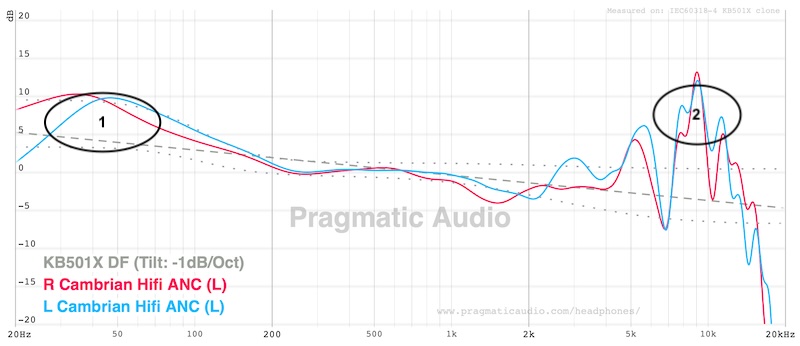
The HiFi profile frequency response shows a well-considered tuning with a moderate bass shelf, a slightly recessed midrange, and a treble peak in the mid-treble region that corresponds directly to the sharpness observed during listening sessions.
The bass shelf is present but not boomy, though as you can see in the measurement, the bass is seal dependent where the left side measurement wasn’t as sealed as the right.
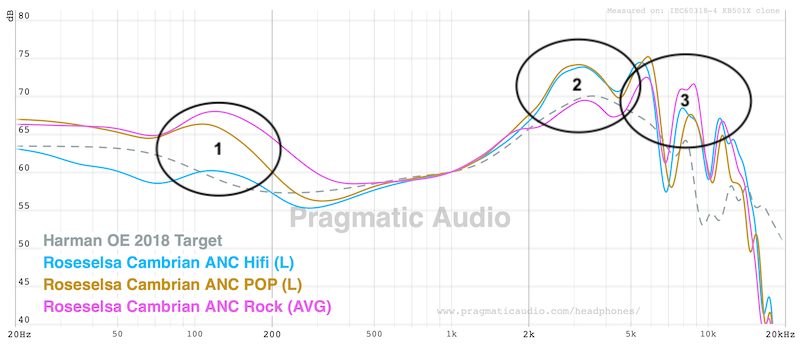
The three-profile comparison plotted against the Harman over-ear target is instructive. The HiFi profile tracks closest to the Harman curve through the midbass and lower midrange, while Pop and Rock introduce progressively more low-end emphasis:
 |
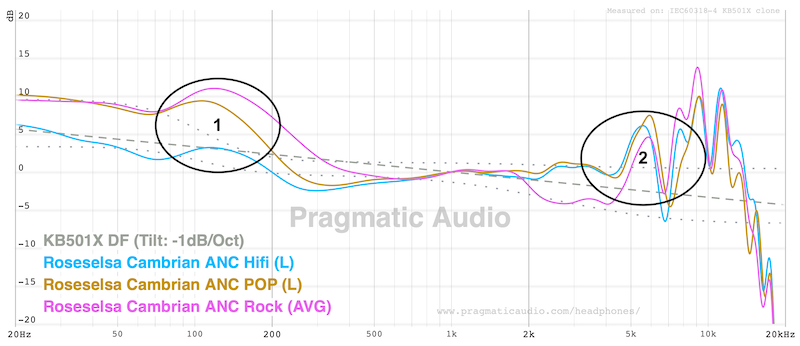 |
The mid-treble peak is visible across all three profiles, confirming it is a driver characteristic rather than an EQ artefact. The annotated Harman-referenced graph clearly illustrates where the Cambrian departs from neutral — useful context for listeners considering source-side EQ correction.
Seal Impact
As I mentioned above, there is an impact to the bass response if you ‘break’ the seal, here is a measurement with glasses:
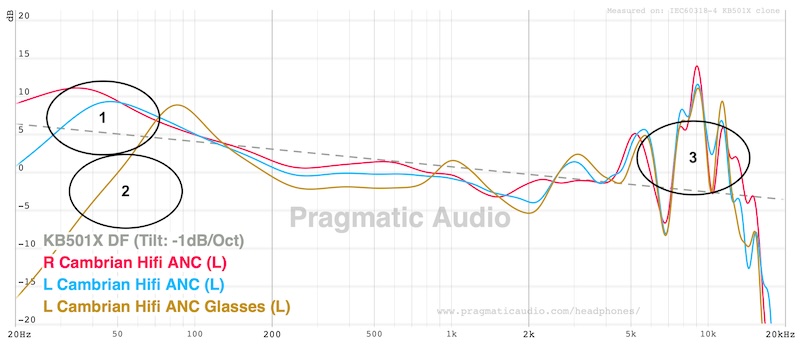
A compromised seal causes significant bass roll-off, as is expected from any closed-back design. But I feel with an ANC headphone especially you need to find one that gives you a consistent seal other both the ANC and the bass impact will be diminished.
Comparisons
I included the Tanchjim Rita, EarFun Wave Pro, and UGreen Max5C in the comparison:
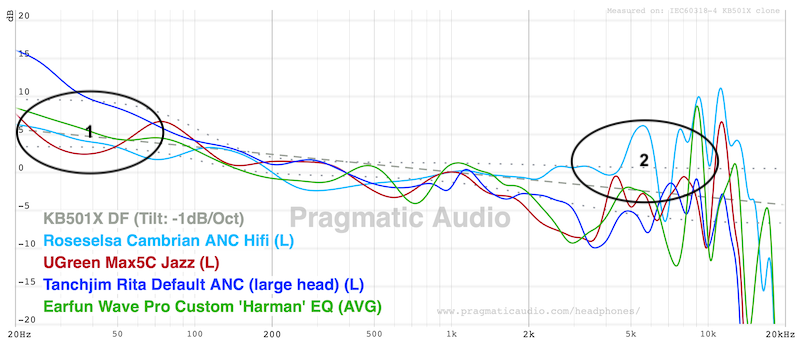
The UGreen Max5C occupies similar price territory and, with its Jazz preset engaged, delivers a frequency response that sits somewhat closer to neutral — particularly in the mid-treble region where the Cambrian shows its characteristic slight sharpness. For listeners who prioritise tonal balance above all else, the Max5C remains a legitimate alternative at this price.
The Cambrian counters with superior comfort, more accommodating earcups for larger ears, and LDAC support. Though it might be a little too detailed focused in the treble region (2). Neither is a clear winner; they address slightly different listener priorities, and the choice comes down to whether you value spectral accuracy or all-day wearability more highly.
The default sound profile of the Rita is more V-shaped - but the Rita does offer a huge flexibility in tuning and even offers a full parametric EQ editor within their mobile App. The Earfun Wave Pro is an older ANC headphone but one I typically recommended last year in this budget price range.
ANC Performance
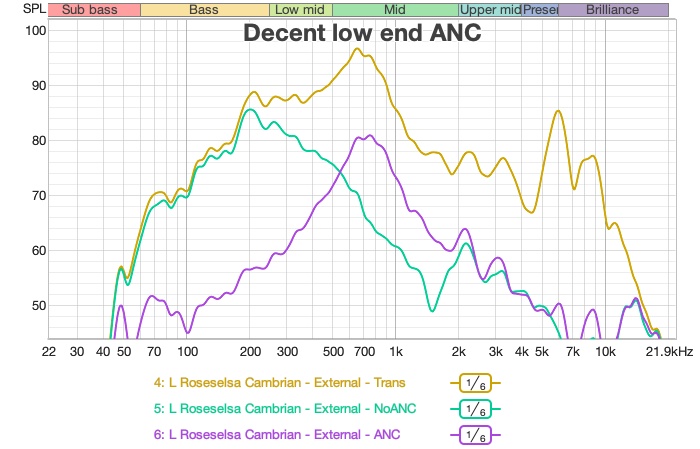
Crucially, the ANC and normal modes have mostly the same frequency response (which is not always the case) so once you get used to the sound signature, it won’t change much with ANC enabled:
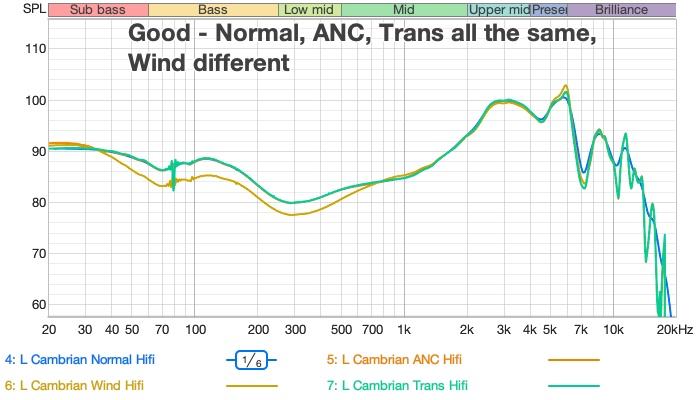
The Cambrian’s 48dB wideband ANC is pretty effective. On the transatlantic flight it handled continuous engine drone and cabin background noise convincingly, reducing the playback volume required to maintain comfortable immersion.
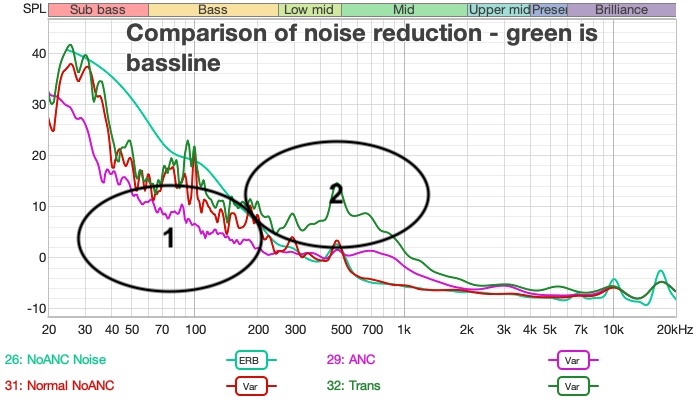
Though the ANC is not perfect, for example, while ANC enabled cuts down on the lower bass sounds (like an engine roar)
it does increase in the midrange
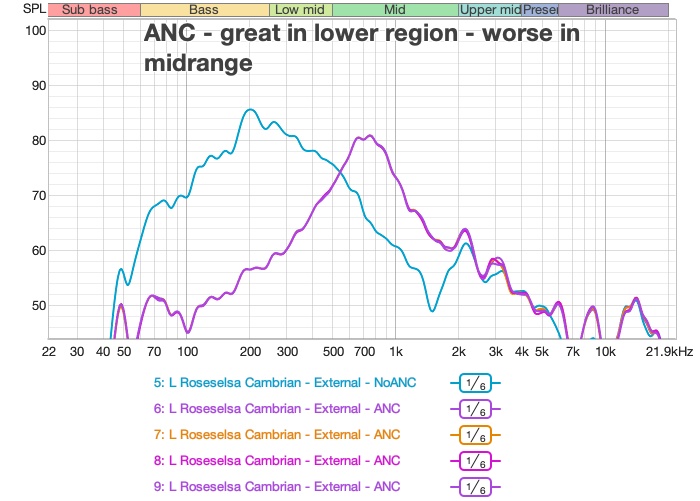
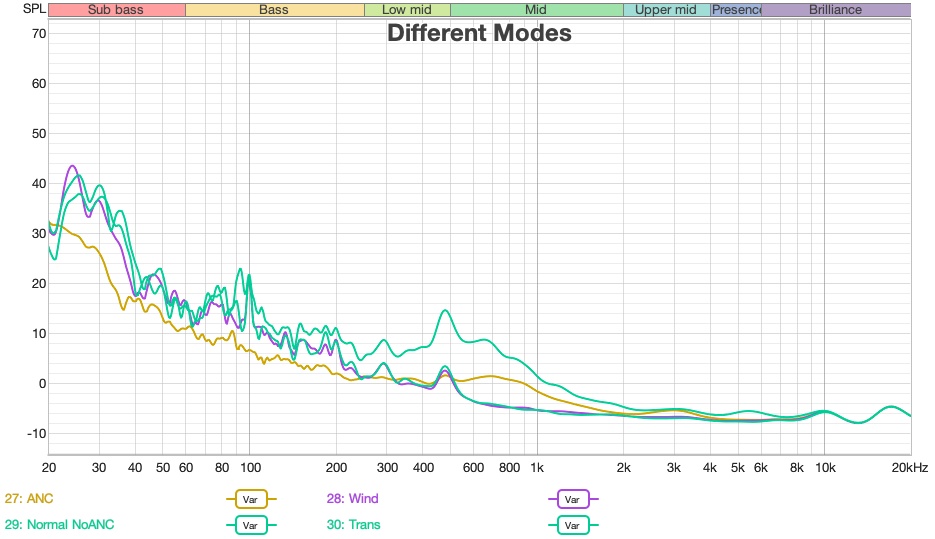
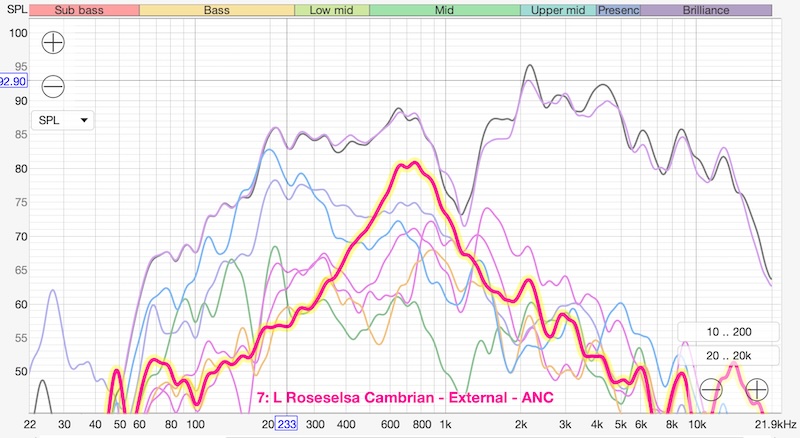
I noticed that 500-700hz peak in many different ANC measurements I took over the past few weeks:
 |
 |
Which is a pity as here is a comparison with many other ANC headphones and both the bass and treble ANC performance is better than average, but this one area is a little worse:
This ANC performance can be fixed with some firmware update, as I feel it is related to what I did notice on my translatic flight: the noise cancellation degrades noticeably above approximately 50% playback volume. The behaviour is consistent with the ANC algorithm partially disengaging at higher output levels, allowing more ambient noise through than you would expect.
In quieter environments such as an office or home listening space, this threshold may never become relevant. On a long-haul flight, where higher volumes are natural and ANC is most needed, it is a genuine limitation.
Rating Explanation
The Cambrian earns its four-star pragmatic rating by delivering a genuinely well-tuned and highly comfortable ANC headphone at a price that undercuts much of its competition meaningfully. The HiFi profile is honest and well-balanced, the ANC is still effective even though a little inconsistent, LDAC is present, the 100-hour battery life is exceptional even accounting for reduced real-world figures, and the build quality and comfort exceed expectations for the category. For a first over-ear product from a brand whose reputation was built on TWS earbuds, this is a confident and credible debut — one that demonstrates Roseselsa’s engineering approach scales beyond in-ear form factors.
The limitations are genuine and worth stating clearly. The ANC issue is one that holds the Cambrian back from being an incredible bargain, and the fixed three-profile EQ system, shared with the Ceramics MK2, is increasingly difficult to defend as PEQ-enabled competitors like the Moondrop Edge, Tanchjim Rita, FiiO EH13 and others appear. The mid-treble sharpness will not suit all listeners equally and some will need to apply source-device EQ. The app remains functional but overdue for a substantive update.
But it still earns a five-star price rating: at $48.99 with LDAC, 100-hour battery, 48dB ANC, a 40mm wood fiber driver, and genuine all-day comfort, the Cambrian offers a feature set that should cost significantly more. That is precisely what a five-star price score is awarded for.
Conclusion
Roseselsa’s first over-ear headphone arrives carrying the same DNA as their TWS lineup: considered tuning, an impressive comfort story, and a price that consistently undercuts what the competition charges for comparable capability. The Cambrian is not the most technically accomplished ANC headphone at its price point — the UGreen Max5C’s Jazz preset edges it for tonal neutrality, and a well-equipped Moondrop Edge or Nothing Headphone(1) with PEQ can outperform it on a frequency-response graph. But it may well be the most pleasant to live with across a long day, which on a 12-hour flight or a month of daily commutes is the distinction that actually matters.
The Cambrian explosion rewrote the rulebook on what was possible with evolution. At $48.99, Roseselsa’s version is rewriting its rulebook, one that said you couldn’t have over ear ANC headphones with comfort, sound quality, LDAC, and great battery life for less than the price of a restaurant dinner.