Sivga Lyrebird
Four Driver Types, a Stabilized Wood Shell, and a Tuning That Puts Vocals Front and Centre
A dynamic, a balanced armature, a micro planar and a piezo ceramic per side, tuned with a point of view rather than a target curve.
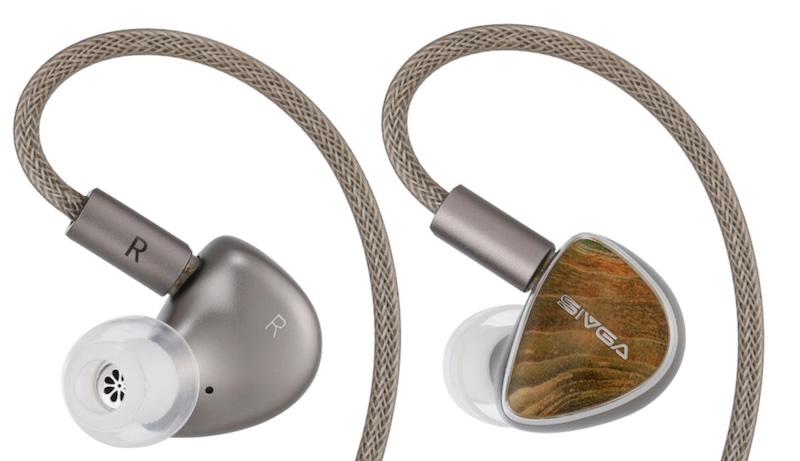
I have reviewed a good number of Sivga products over the years, and the thing that keeps bringing me back is that they build beautiful objects and then tune them uniquely, giving many of their headphones a character that probably will not please everyone. The Lyrebird is the most ambitious IEM they have made in the price bracket: four drivers per side, combining a 10mm dynamic, a balanced armature, a micro planar and a 9.2mm piezoelectric ceramic, in a CNC aluminium shell with a stabilized wood faceplate.
The name is well chosen. The real lyrebird is famous for two things, an extraordinary talent for reproducing other birds’ songs and one of the most elaborate tail displays in nature, and an IEM that combines four driver types behind a stabilized wood faceplate could hardly ask for a better namesake.
What really made me excited to review this one was the selection of drivers against the price. That, mixed with Sivga’s typically beautiful build quality, should be enough to make most people curious. Getting both a micro planar and a piezoelectric ceramic driver in a $164 IEM is not something I expected to see, and the build and accessories do not feel like the corners were cut elsewhere to pay for it.
I would like to thank Sivga for providing the Lyrebird for the purposes of this review.
If you are interested in finding more information about this product, you can find it at the official Sivga product page.
The Lyrebird typically retails for around $164, and was offered at $155 when I checked for this review.
I have had the Lyrebird in rotation alongside the rest of my Sivga collection for a few weeks, and it has quietly become the one I reach for when I want vocals front and centre. It is also the one that will divide people the most, and the treble is the reason. But first, let’s take a look at what’s in the box.
Unboxing and Packaging
Sivga packaging has been consistently good for years and the Lyrebird follows the pattern. The retail box front carries the product render, and the rear panel prints the full specifications:
 |
 |
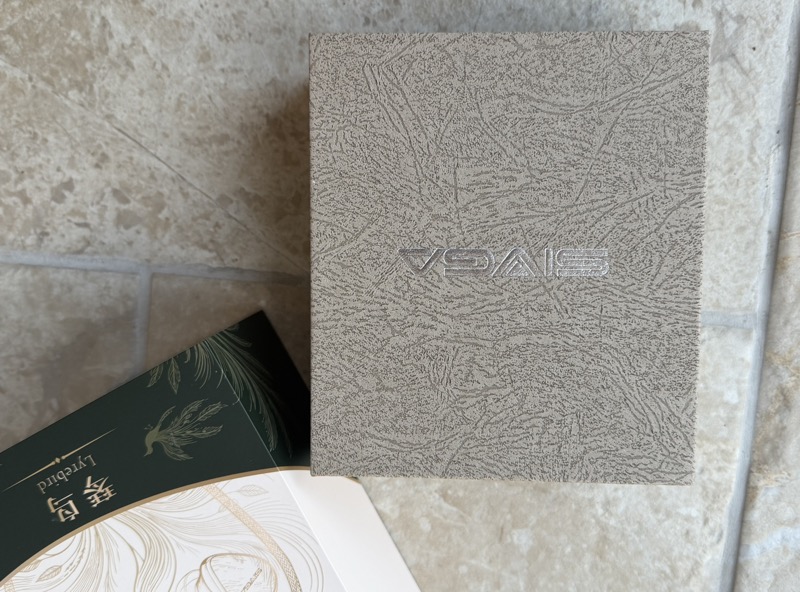
Inside, the inner box carries an embossed Sivga logo, beneath the outer sleeve:
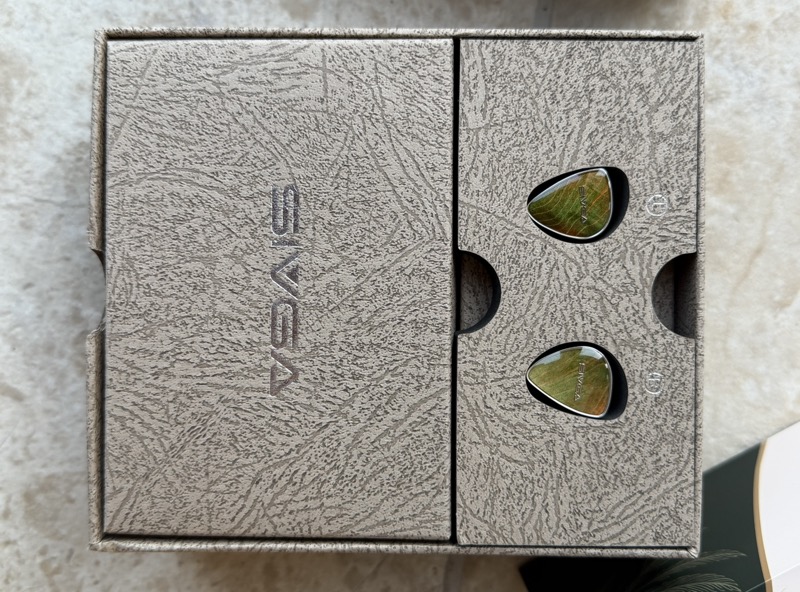
The earpieces sit seated in the inner box, and the manual sits alongside the leather carrying case:
 |
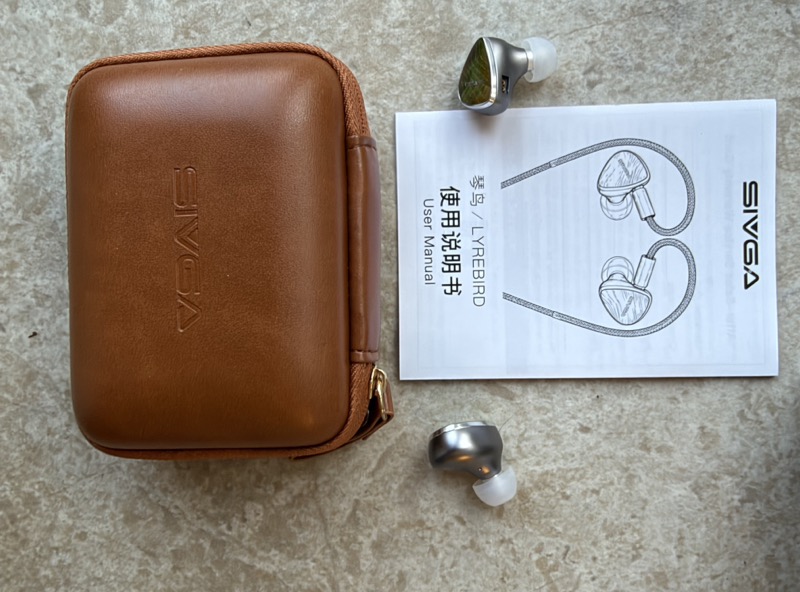 |
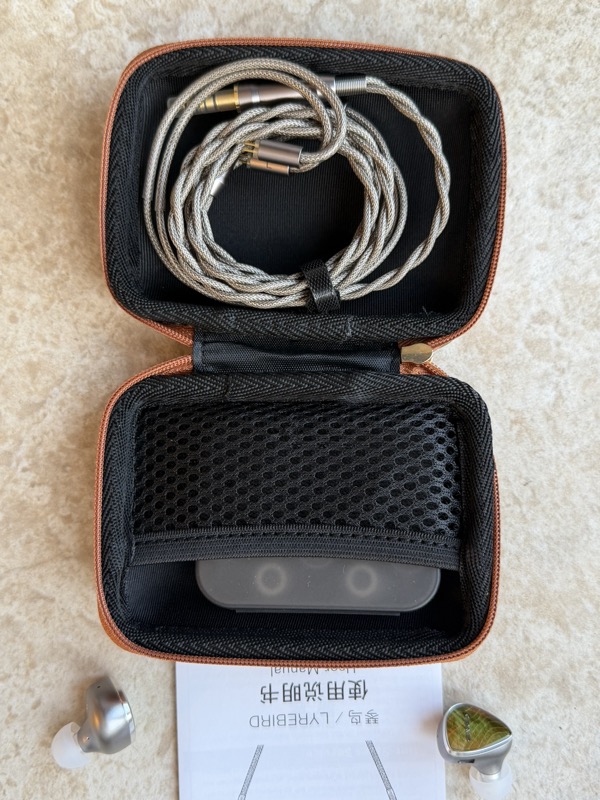
In the box you get the earpieces, the 4.4mm balanced hybrid cable, a leather carrying case, an eartip case and the documentation. The carrying case is a proper leather item rather than a token pouch, and the cable coils into it without a fight:
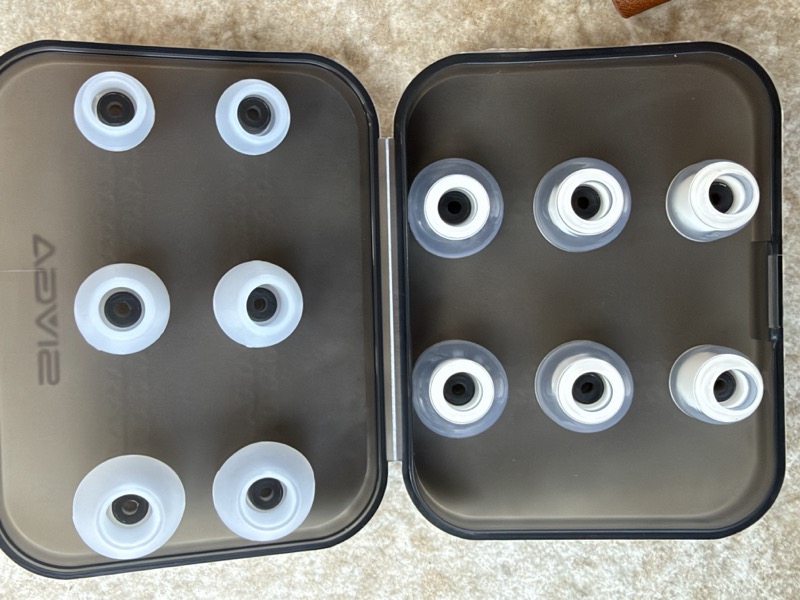
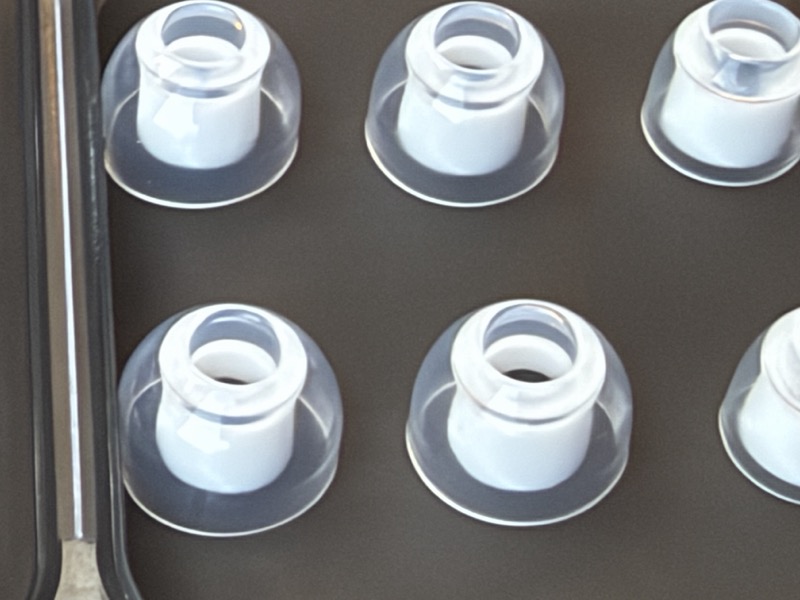
The eartip selection is generous for the price — six pairs in a dedicated case, seven counting the pair already fitted, rather than three pairs in a bag:
 |
 |
Design and Build Quality
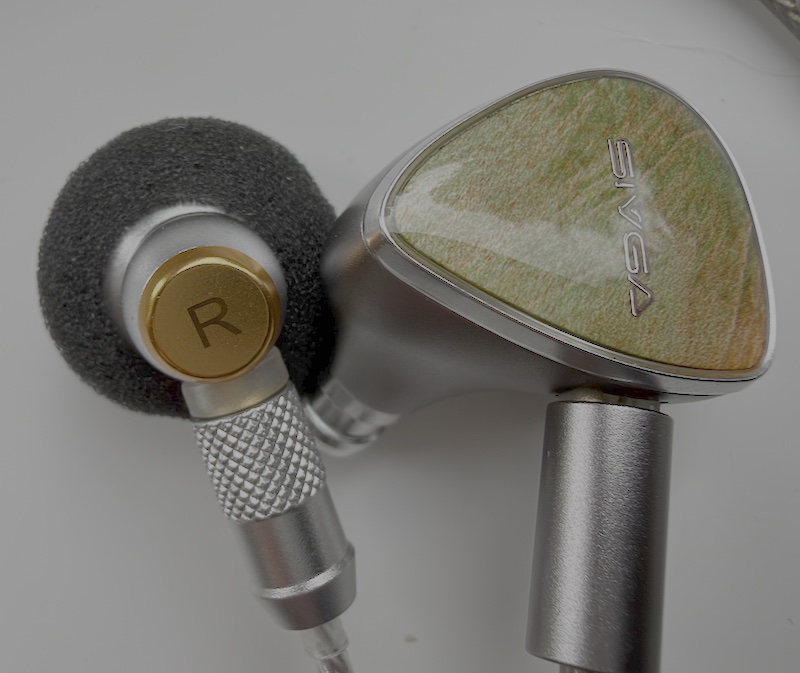
This is where the Lyrebird earns its name. Each faceplate is stabilized wood, so the grain is unique to the pair — mine came in a green that shifts between olive and amber depending on the light:
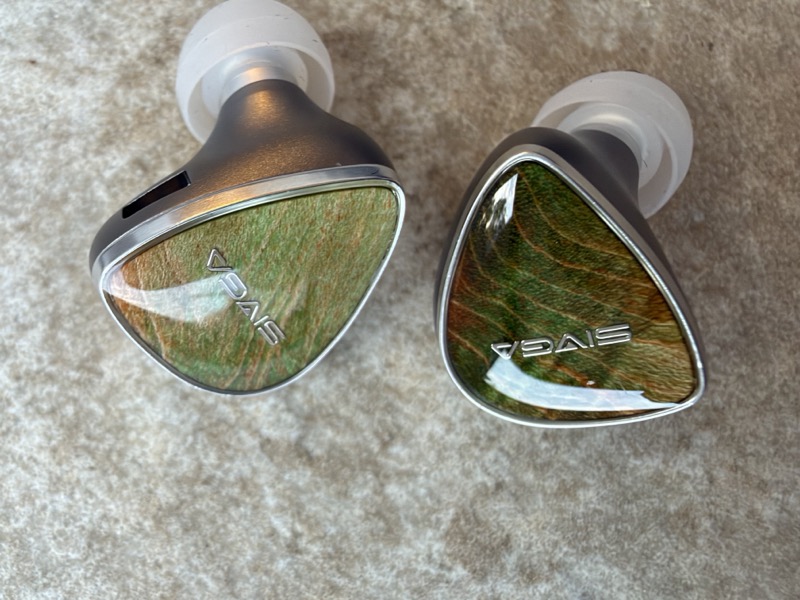
Stabilizing is a resin treatment, and it does more than look good. It hardens the wood and makes it far less sensitive to moisture. Sivga also say the denser structure helps damp resonance. That is plausible for a rigid panel sitting over a driver cavity, but it is their claim rather than something I can demonstrate from the outside:
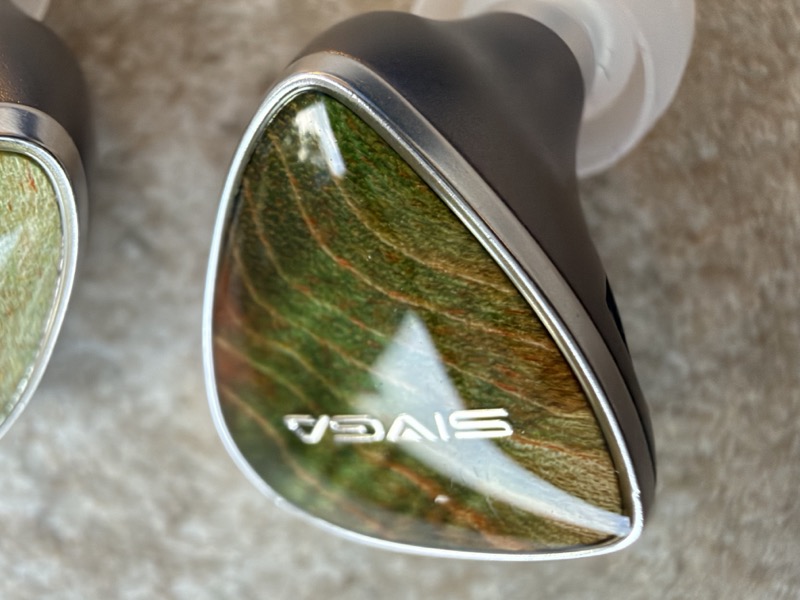
The shells themselves are CNC-machined aviation aluminium alloy, and the join between the alloy body and the wood face is clean all the way round:
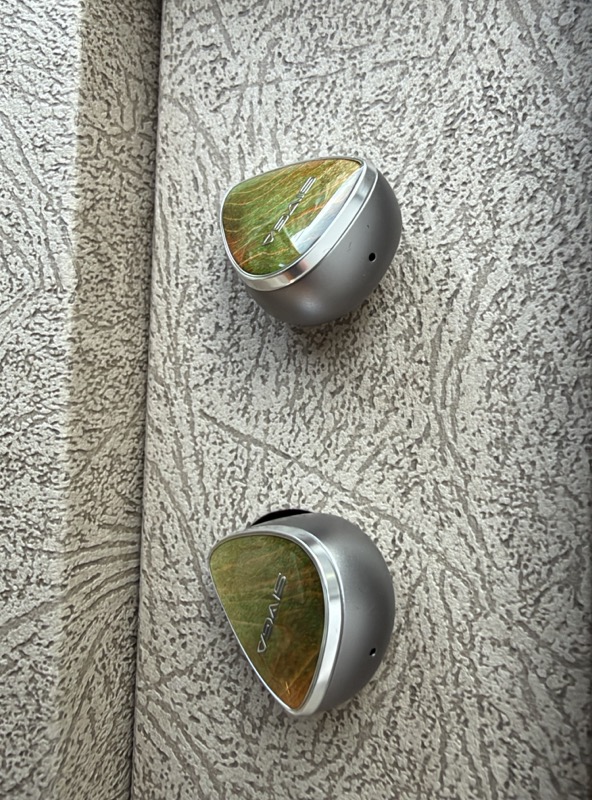
Channel markings and the vent are on the inner face, where they belong:
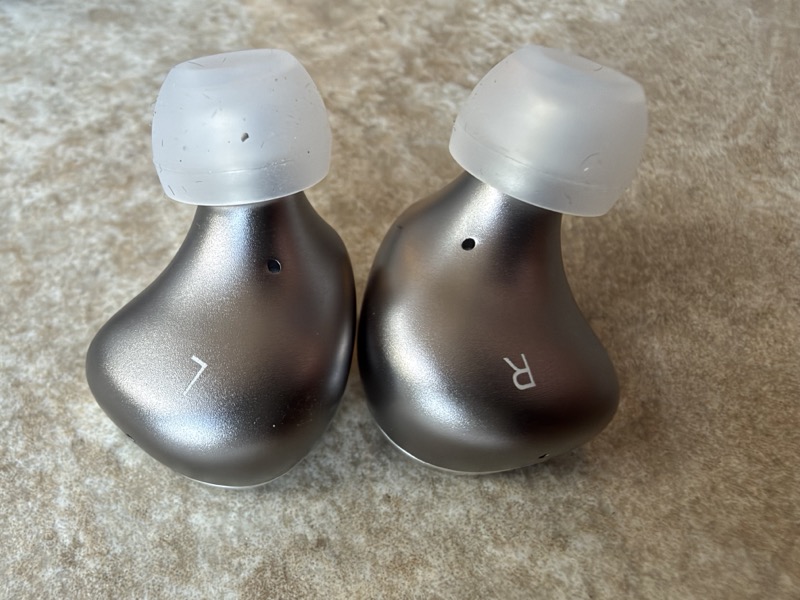
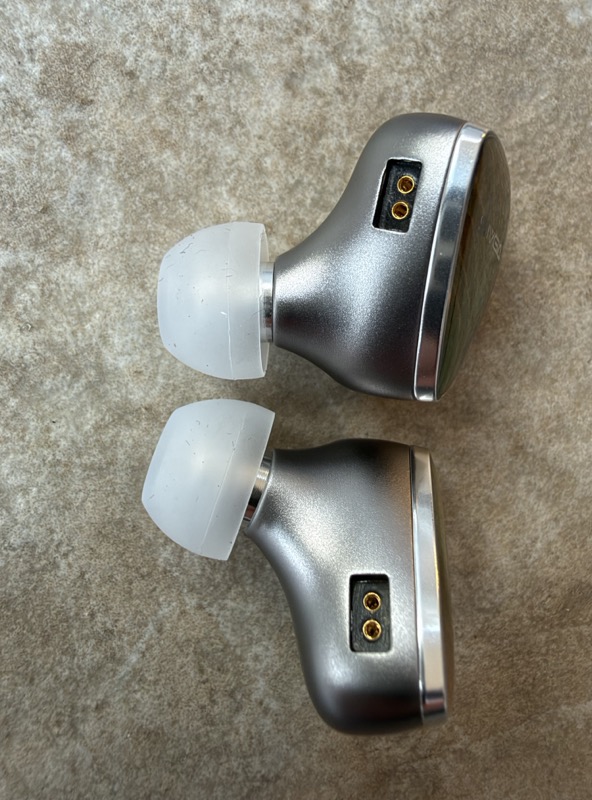
The nozzles are well finished with a proper lip for the eartips, and the 2-pin contacts sit in sockets flush with the shell:
 |
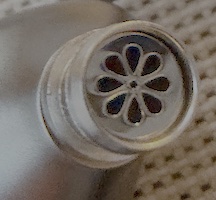 |
Fit is what I have come to expect from Sivga. The shells are ergonomically shaped for an over-ear fit, they are not large, and the weight is low enough that I forget about them over a couple of hours. With the right tip from that case, the seal is easy to get and stays put.
Cable and Connectivity
I want to single out the cable, because it is better than it needs to be. It is a 120cm hybrid cable on 0.78mm 2-pin connectors, supple, not at all microphonic, and it does not retain coils from the case:
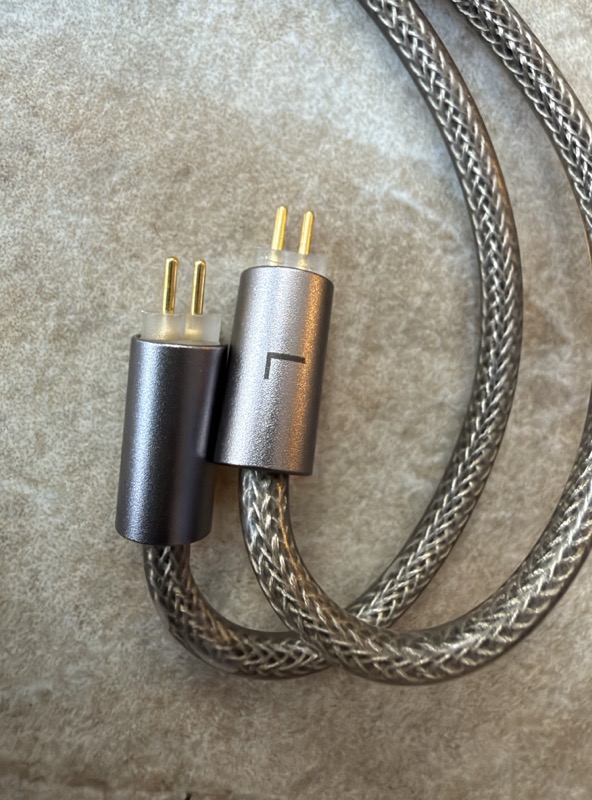 |
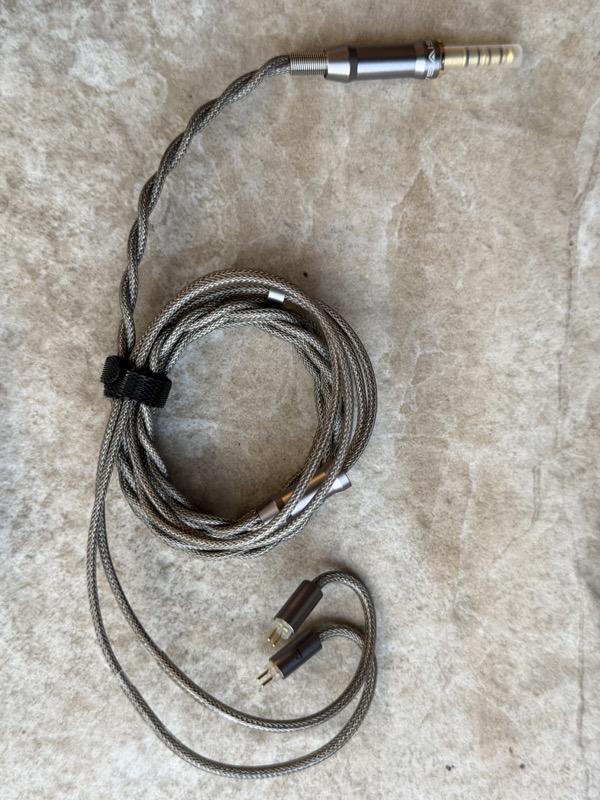 |
The Y-split and chin slider are metal and move with the right amount of friction:
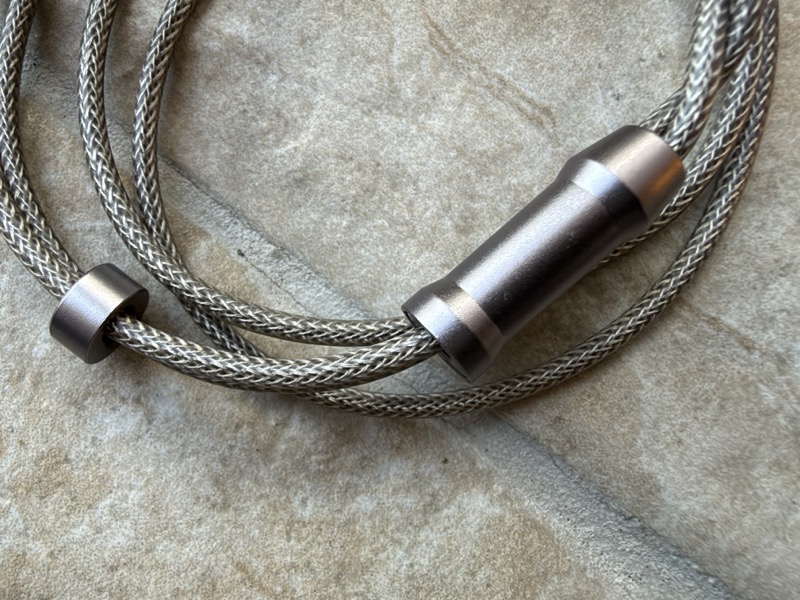
The plug is the one thing to check before you buy. It is 4.4mm balanced only — there is no 3.5mm option and no modular plug system:
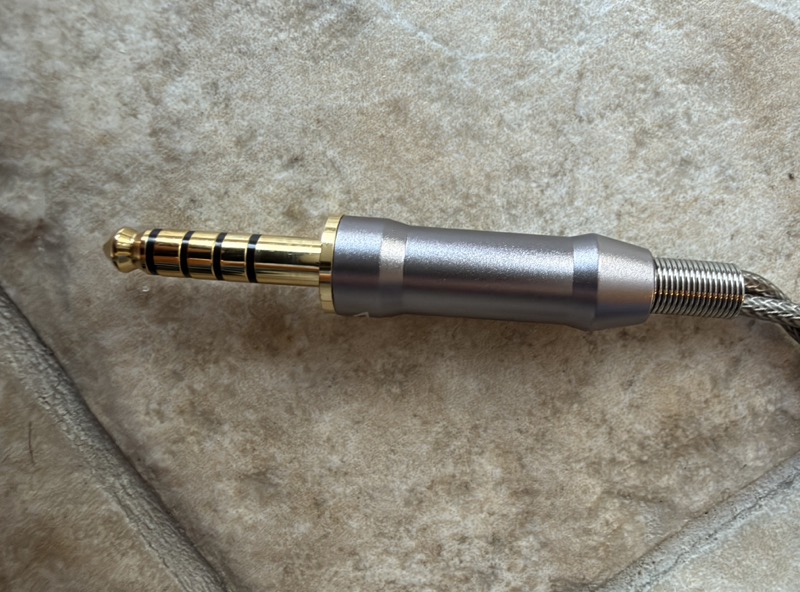
If everything you own has a 4.4mm output, this is a non-issue and the balanced connection is what you would have chosen anyway. If your main source is a phone dongle with a single-ended jack, factor in an adapter or a replacement cable. In my use it had enough volume from the balanced sources I tried; this is mainly a connector-compatibility issue. The published 108dB sensitivity lacks a voltage or power reference, so it is not enough to calculate headroom.
The Quad-Driver Configuration
Four drivers per side at this price is the headline, so it is worth being clear about what each one is doing. There is a 10mm polymer composite dynamic driver handling the low end, a balanced armature for the midrange, a micro planar driver, and a 9.2mm multilayer piezoelectric ceramic driver for the top.
The integration is what matters to me. I do not hear an obvious discontinuity between the frequency regions, or a metallic edge on every recording. That is a judgement about the complete tuning; the driver list does not explain it on its own.
The micro planar and piezoelectric ceramic units are the unusual inclusions. Sivga uses them as part of the high-frequency system, but I cannot attribute an audible quality to either driver without measuring its contribution separately.
Sound Impressions
I listened mostly from a 4.4mm balanced output, which the stock cable makes the path of least resistance. The Lyrebird is easy to drive and did not change character noticeably between sources.
The short version: this is a vocal-forward, detailed tuning with linear rather than elevated bass and a genuinely lively top end. It is not a neutral IEM and it is not trying to be. In a price bracket where most tunings converge on Harman or JM-1, that gives it an identity of its own.
Bass
The bass is linear and controlled rather than boosted. Sub-bass extends cleanly and there is no mid-bass hump filling in behind it, so bass lines have shape and pitch definition instead of weight. On Flight of the Cosmic Hippo by Béla Fleck and the Flecktones the bass line stays taut and you can follow the note movement rather than just feeling a swell, which is exactly what this kind of tuning does well.
What it does not do is slam. If you want the bass to hit you in the chest, this is the wrong IEM and no amount of tip rolling will change that. The dynamic driver is clearly capable — it is simply not being asked to play loud.
The practical consequence is straightforward: if a lifted sub-bass shelf is a priority, I would choose something else.
Midrange
This is the part I keep coming back to. Vocals are pushed noticeably forward and they are the centre of the presentation on almost everything. Tracy Chapman on Fast Car sits right in front of you with a lot of texture and articulation in the voice.
The measurement suggests a useful distinction: the lift around 2kHz brings vocals forward, while the trough around 700–800Hz reduces body below them. I would not describe that combination as a broadly warm midrange.
The trade-off is that the lower midrange is pulled back. Instruments that live below the vocal — rhythm guitar body, lower piano, cello — sit further away and thinner than they do on a more evenly balanced IEM. On dense arrangements that can read as a slight hollowness underneath the voice. Whether that reads as clarity or as a missing layer depends entirely on what you listen to and what you value. For vocal-led music it works very well; for full orchestral or thick rock mixes it is more of a compromise. It is also the choice that makes the Lyrebird sound like itself rather than like the crowd.
Treble
The treble is lively, and this is the part that will decide the Lyrebird for you. There is real detail and air up top, cymbals have bite and decay, and fine transient information comes through easily. Chocolate Chip Trip by Tool is a good test here — the percussion is vivid and well separated, with no smearing.
But it is hot. On bright recordings, or at higher volumes, the upper treble can get sharp enough to make me turn it down, although I cannot isolate which driver contributes how much to that impression. If you are treble sensitive, take this seriously — it is not a subtle amount of energy, and it is the one thing about this IEM I would want you to audition rather than take on trust.
Insertion depth, tips and individual hearing all affect the treble balance. My listening was bright enough to warrant an audition, but the exact heights of the peaks above roughly 8kHz on a 711 clone should not be read as a precise prediction for your ears.
Soundstage and Imaging
The stage sounds wide to me, with voices close and instruments further out. On Hotel California by the Eagles, the guitars spread to the sides while the vocal stays centred. I could follow instruments in busy passages without the presentation becoming confused.
Stage depth is less convincing to me than width. The forward vocal creates a clear centre, but I would describe the result as wide and organised rather than especially deep.
Comparisons
The obvious comparison is within Sivga’s own range, and I had the Que, the Nightingale Pro and the M260 to hand. Of the three, the Nightingale Pro is the closest relative, not in the tuning itself, which differs, but in approach: both have a distinct, focused tuning with a clear point of view rather than a typical one, and that is what I think the Lyrebird shares most with it.
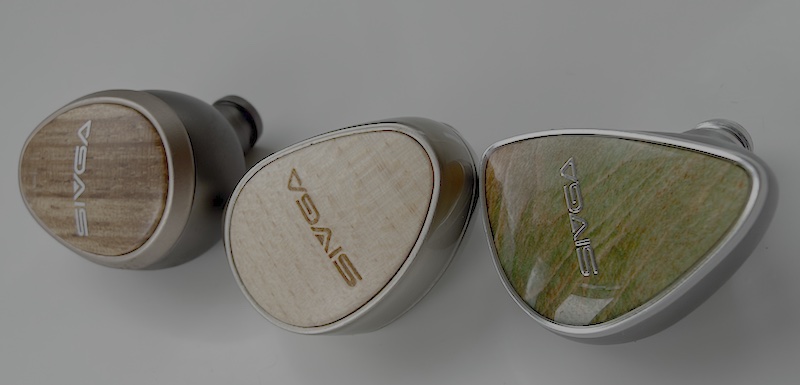
Against the other wood-faceplate Sivga models, the family resemblance in build is immediate — the same care with the alloy machining and the wood, just different shell shapes:
 |
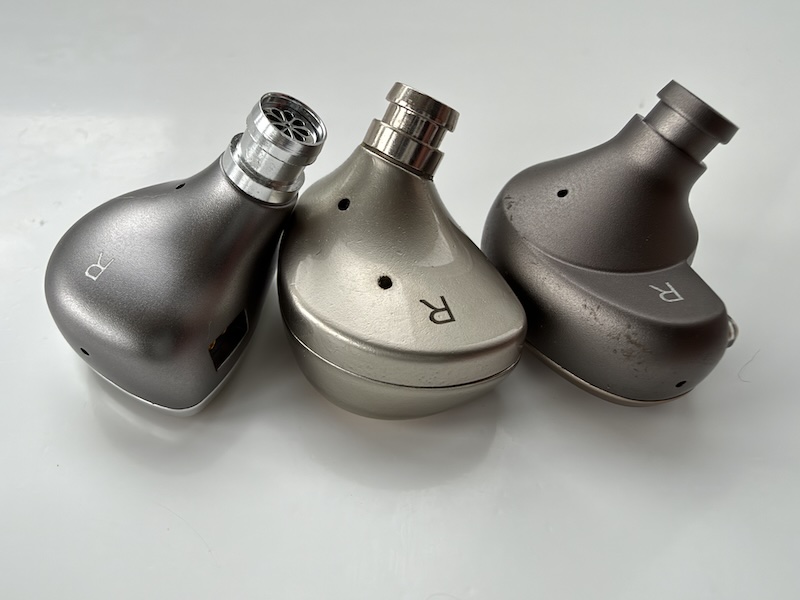 |
Lined up with the Que and the Nightingale Pro, the family resemblance is the point — three different shell shapes, the same approach to the wood and the alloy:
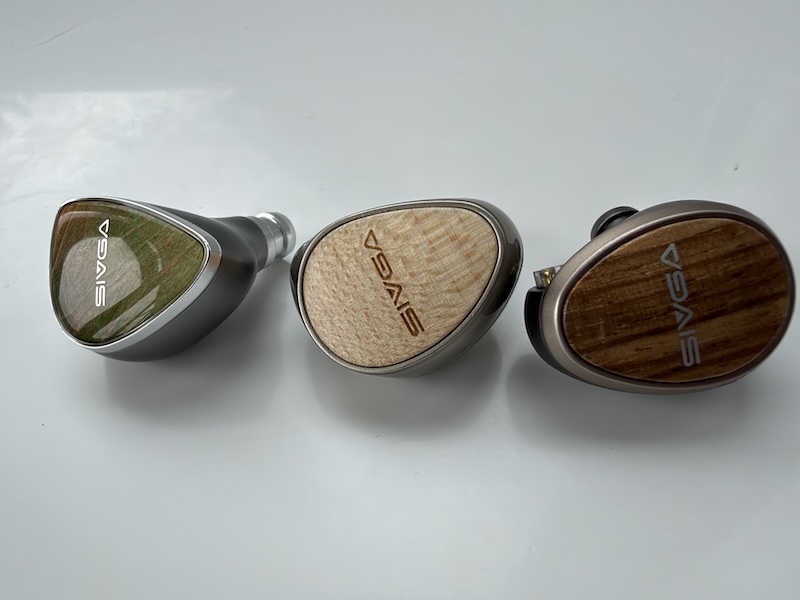
Sonically the Lyrebird is the most ambitious and the most opinionated of the three. Against the Que, the Lyrebird is more vocal-forward through the presence region and carries far more energy above 10kHz — the Que rolls off where the Lyrebird keeps going. The Que is the safer, more relaxed listen; the Lyrebird trades that safety for detail and immediacy.
Against the Nightingale Pro, which has been my favourite Sivga IEM until now, the Lyrebird is the one I now reach for more often — though I would not call it a straight upgrade, because the Nightingale Pro is the more even-handed tuning and the Lyrebird’s treble asks more of you.
If you prefer more bass weight and less treble energy, I would start with a different tuning rather than buying the Lyrebird for its four driver types. Its appeal is strongest as a vocal-forward alternative in a collection.
It is also worth putting it next to the M260 earbud, if only because the two together show how differently Sivga will voice two products in the same season:
Specifications and Measurements
Specifications
| Driver | Quad-driver hybrid per side |
| Configuration | 10mm polymer composite dynamic + balanced armature + micro planar + 9.2mm multilayer piezoelectric ceramic |
| Housing | CNC aviation aluminium alloy with stabilized wood faceplate |
| Impedance | 14Ω ±15% @ 1kHz |
| Sensitivity | 108 ±3dB @ 1kHz |
| Frequency Response | 20Hz – 20kHz |
| THD | ≤1% @ 1kHz |
| Connector | 0.78mm 2-pin, detachable |
| Cable | 120 ±10cm hybrid |
| Plug | 4.4mm balanced |
| Price | $164 (review-time offer: $155) |
Frequency Response
All measurements here were taken on a 711 clone coupler, plotted against the Harman adjusted target. Both channels are shown:
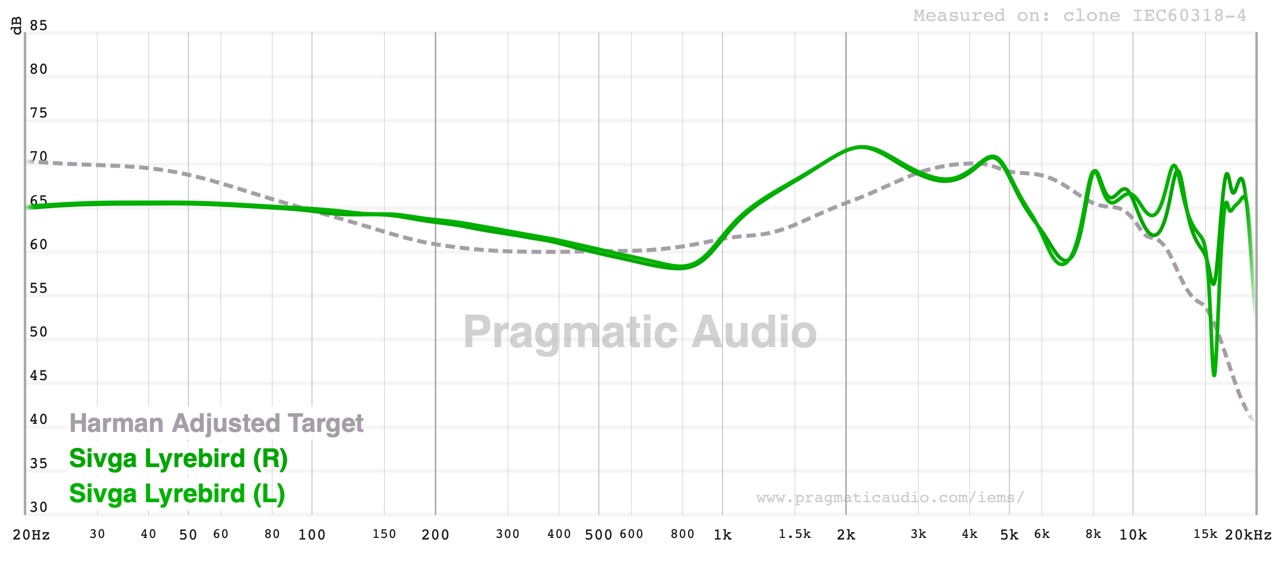
The first thing to note is the channel matching, which is very good — the two traces sit on top of each other all the way to 6kHz, and only separate slightly among the treble peaks above that. At this price that is not a given.
The rest of the graph explains the listening notes almost line for line. Bass runs flat from 20Hz to around 200Hz at roughly 64–65dB, sitting about 5dB under the target down low. That is the whole story of the low end in one detail: the Lyrebird simply does not apply the bass shelf that Harman asks for, which is why it reads as linear rather than punchy and why bassheads will find it short.
From 200Hz the response slides down to a trough of about 57.5dB at 800Hz, roughly 2dB below target — the lower-midrange recession I described. It then climbs steeply to a peak of about 71dB at 2.1kHz, some 4–5dB above target, and that lift is what pushes vocals forward. Taken together, the dip and the lift are the signature of this tuning: a deliberate step away from the target rather than a miss against it.
Above 5kHz there is a dip followed by several treble peaks. Their exact positions, especially above roughly 8kHz, depend strongly on insertion and the coupler. They are a reason to investigate the brightness I heard, but this graph cannot identify which driver caused it or reliably rank extension beyond 10kHz.
Compared with the Sivga Que and Nightingale Pro
The most useful comparison is against Sivga’s own IEMs, all measured on the same rig:
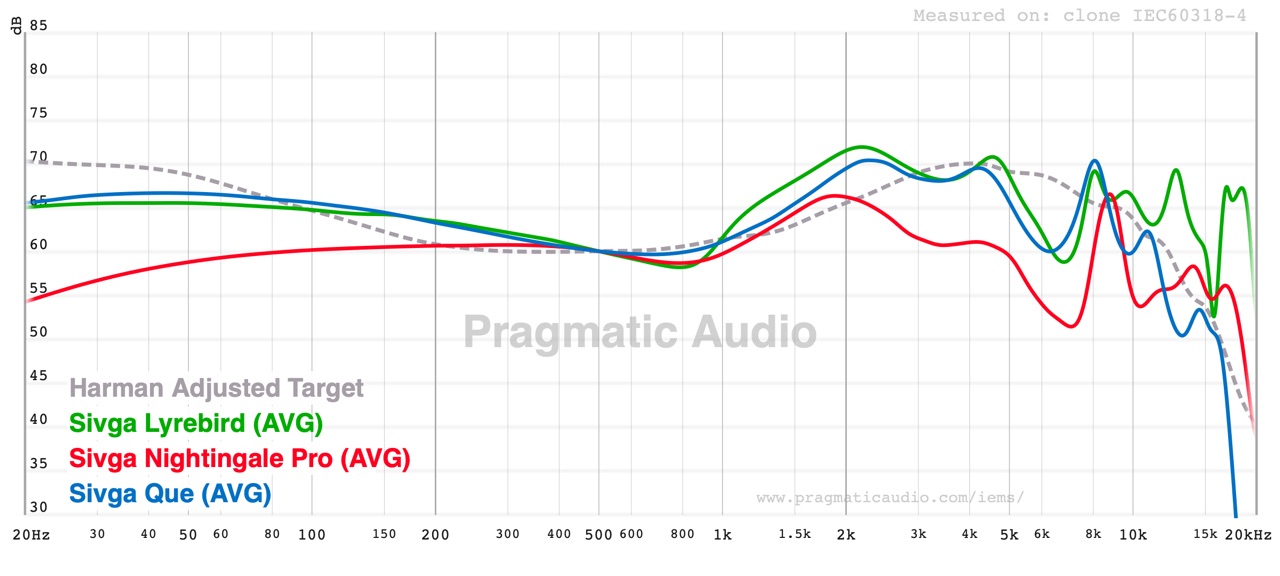
This graph reframes my own listening. The Nightingale Pro is the outlier at both ends — it rolls off hard below 100Hz, reaching about 53dB at 20Hz where the Lyrebird holds 64dB, and it is also the most relaxed of the three above 5kHz. It is the warm, safe, easy listen of the family, and now I can see why.
The Que sits between the two. Its bass tracks the Lyrebird closely, its 2kHz peak is a little lower at around 69.5dB against the Lyrebird’s 71dB, and it holds up through the 8kHz region before falling off a cliff above 15kHz where the Lyrebird keeps going.
So the ranking through the presence region is Lyrebird, then Que, then Nightingale Pro — and the same order holds in the upper treble. If you have heard the Nightingale Pro and thought it was on the polite side, the Lyrebird is the answer to that; if you thought it was just right, this is not a straight upgrade and the treble will be the reason.
Compared with the Kiwi Ears Orchestra Lite
Outside the Sivga range, the Orchestra Lite is the closest thing I have to a target-following reference, which makes it the clearest illustration of what the Lyrebird is doing differently:
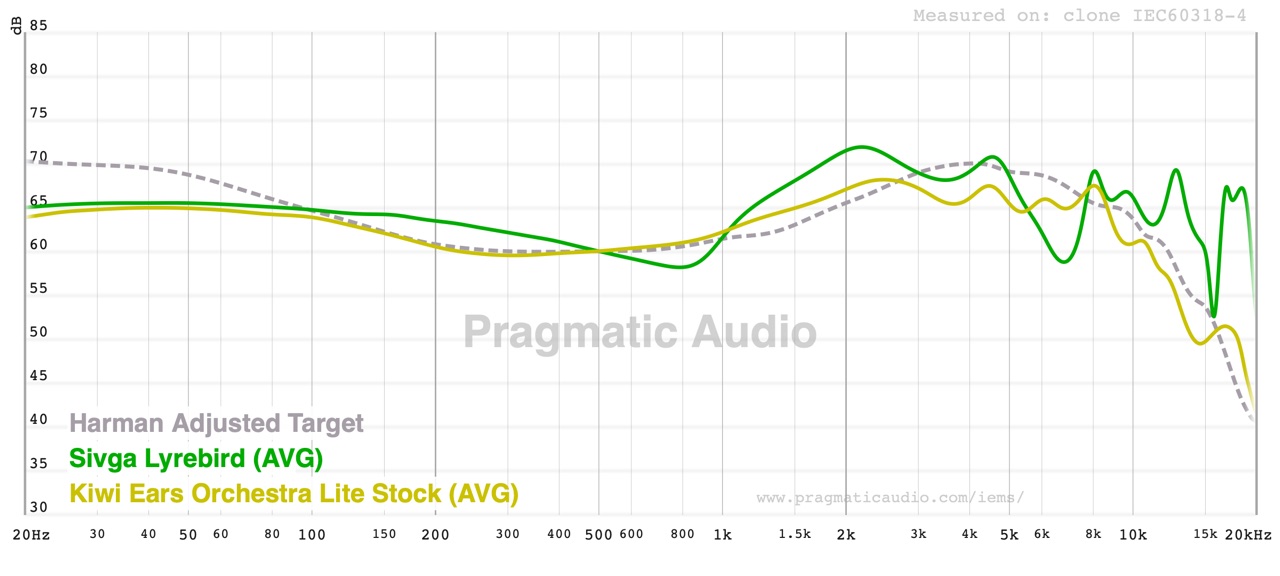
Their bass is near identical, which makes the rest of the comparison clean. The Orchestra Lite tracks the target through the midrange, while the Lyrebird dips briefly below it between 800Hz and 1kHz before its midrange comes forward. That brief dip is what gives the Lyrebird its separation between bass and midrange, and it is the consequence of a very forward midrange rather than a scoop in its own right. If you are a midrange fan this is exactly what will appeal. The Orchestra Lite’s rise into the presence region is gentler and peaks lower and later, and above 10kHz it falls away where the Lyrebird holds its peaks. If you want to know exactly what the Lyrebird’s character costs you relative to a neutral tuning, this is the pair of traces to look at.
Distortion
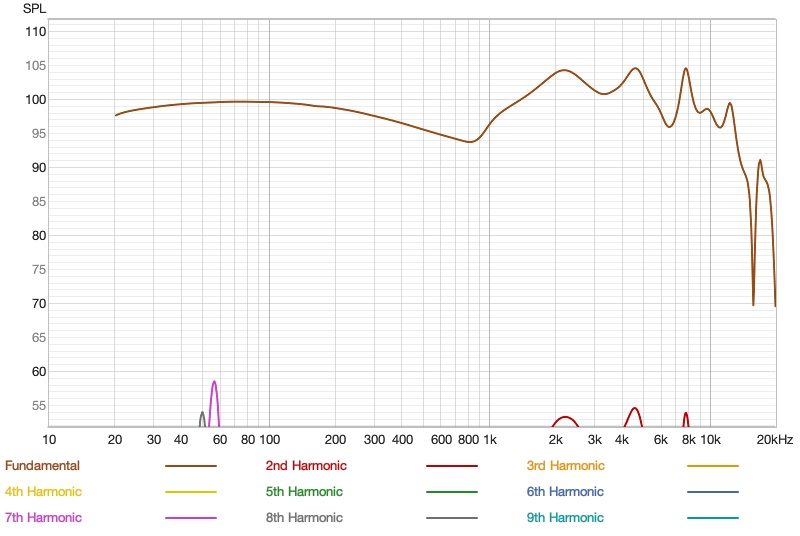
Distortion is low and not a concern:
As a percentage:
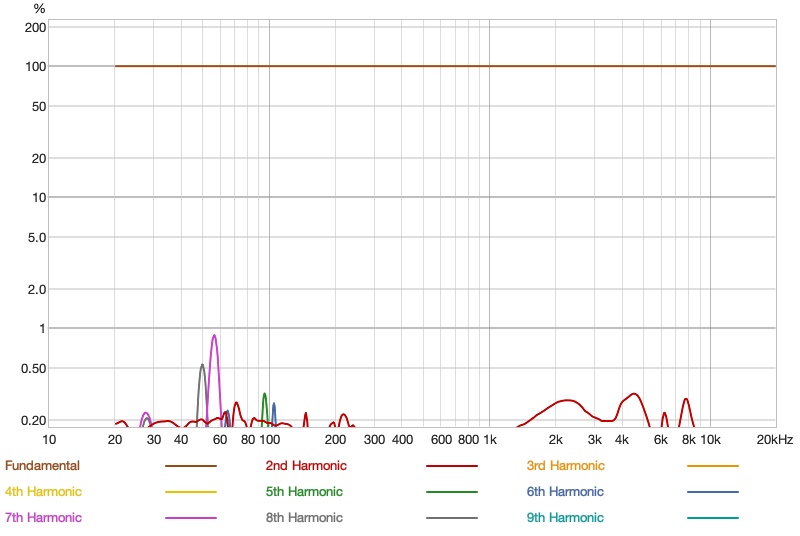
Across most of the range distortion sits below 0.2%, so there is nothing to be concerned about here in any way — this is one of the best performing IEMs for distortion I have measured.
Rating Explanation
The Lyrebird gets a 5 for its pragmatic rating and a 5 for price because of what is actually in the box for its $164 list price — it was discounted to $155 when I checked in August 2026, but the rating assumes you pay full price. A quad-driver hybrid that includes both a micro planar and a piezoelectric ceramic driver, in a CNC alloy shell with a stabilized wood faceplate, with a supple, tangle-free hybrid cable on metal hardware, a leather case and seven pairs of eartips, is a lot of product at this money. I do not think the driver configuration alone would matter if the execution were poor, but the build quality and comfort are as good as anything Sivga has made.
The features rating is a 4 rather than a 5 for one specific reason: the cable is 4.4mm balanced only. There is no modular plug and no single-ended option, which narrows the range of sources it works with straight out of the box. That is a real constraint for anyone whose main source has a 3.5mm jack.
The measurement rating is a 4. The Lyrebird does not track a popular tuning like the Harman or JM-1 targets, and if you score purely on target adherence that probably means it will not suit a certain set of listeners. But I have become firmly convinced that there is no single correct tuning, or even two, and that variety in a collection is a good thing. I have it at 4 mainly because the upper treble energy is enough to be fatiguing on some material and for some listeners.
Conclusion
The Lyrebird is possibly my favourite IEM Sivga have made, which is not a sentence I expected to write given the unique tuning of the Nightingale Pro. But if you like a forward, vocal-led midrange, the Lyrebird is definitely for you. In a world where so many IEMs go for the same popular tunings, Harman or JM-1, it is refreshing to listen to something different that can still be called balanced. The lower midrange does have a dip that keeps the bass and the midrange very separated, and that will not suit everyone, but it is what gives the Lyrebird the ability to sound both interesting and a little different from other IEMs in this price range. The machining and the stabilized wood put it above anything else I have at the price; the shells are small and light enough that I forget them after a couple of hours; the leather case, seven pairs of tips and that cable are more than $164 usually buys; and the tuning has a clear point of view: vocals forward and detailed, bass linear and honest, treble bright and energetic.
That point of view is also the caveat. This is not an all-rounder and it is not a bass-head IEM, and the bright top end is spicy enough that treble-sensitive listeners should audition before buying rather than after. But if you already own something warm and safe and you want a vocal-forward, detailed counterpoint in the collection, the Lyrebird is an unusually well-made way to get it — and at $164 for four drivers per side and this standard of finish, it is a genuine bargain.