Dekoni Earpads for the Sennheiser HD 600
Softening the HD 600’s Edges: What to Expect From Dekoni’s Earpads
Comfort first, a warmer tuning second — and Dekoni’s own description of the change turned out to be accurate.
The Sennheiser HD 600 is the headphone I keep coming back to for tonality, and one of the reasons it has lasted five years of constant use here is that Sennheiser will sell you every part of it separately, pads included. That also makes it the most modded open-back on the market, and Dekoni build more pad variants for the HD 600 fitment than for anything else they make. I have been curious for a long time what Dekoni earpads actually do to the sound of a headphone I know this well, because an earpad is not a cosmetic accessory: it sets the seal, the distance from driver to ear and the volume of the cavity in front of the diaphragm, so it changes frequency response whether the buyer wants it to or not.
Dekoni sent me three of their HD 600 variants to find out — Choice Leather (EPZ-HD600-CHL), Elite Velour (EPZ-HD600-ELVL) and Elite Sheepskin (EPZ-HD600-SK) — and this review goes through what you should expect from Dekoni earpads on the HD 600, using those three as the worked examples rather than as the subject. Each is thicker and softer than the stock velour, which is easy to establish; the harder question is what they do to a tuning that is already the reason people buy the headphone.
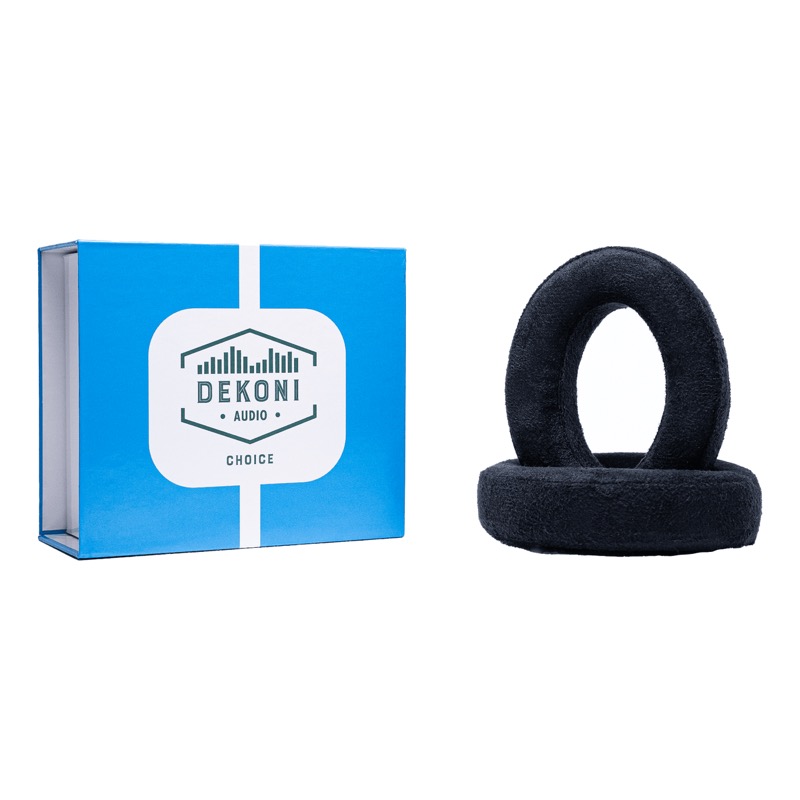
I would like to thank Jackrabbit Media for sending me these Dekoni earpads, and Dekoni Audio for making them available, for the purposes of this review. All three boxes are marked “Sample Not For Sale”, so none of them were purchased.
If you are interested in finding more information about these pads, you can find them on the Dekoni Audio HD 600 series earpad page.
Dekoni’s own store currently lists the HD 600 fitment at $69.99 a pair in any of these materials. Dealers are usually well below that and price each material separately — at the time of writing Sweetwater list the Choice Leather at $39.99, Adorama list the Elite Velour at $39.99, and B&H list the Elite Sheepskin at $59.99. In Europe, Dekoni’s reseller Wifimedia list every HD 600 variant at €29.95. Prices checked 9 September 2026.
The short version is that these pads soften the HD 600 rather than reshape it: the extra depth and foam make it more comfortable over long sessions, and all three take energy out of the 2–5 kHz presence region, which is where the warmer, darker character comes from.
I fitted all three sets and measured each against the stock pad, and the measurements turned out to be the most interesting part of this review — not because the pads change a lot, but because what they change is not quite what Dekoni’s own marketing suggests. But first, let’s take a look at what arrives in the box.
Unboxing and Build Quality
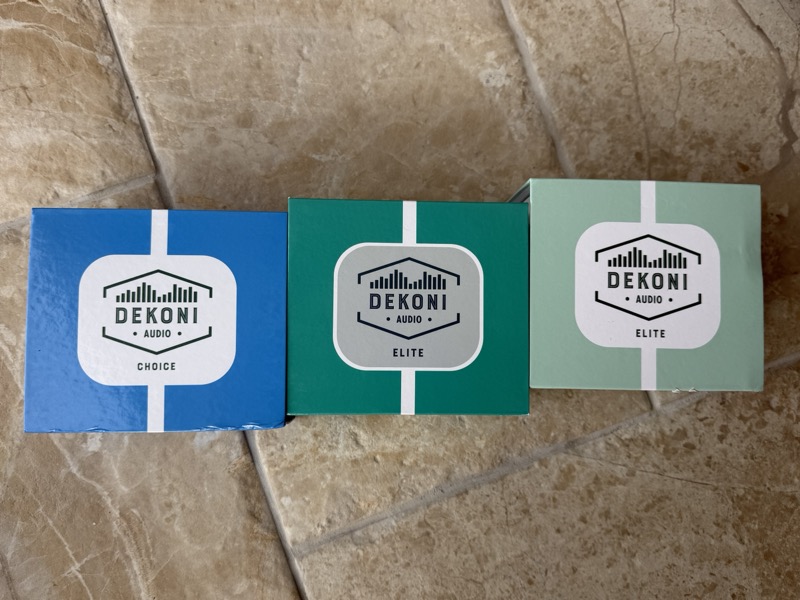
Each pair arrives in its own small magnetic-lid box, colour-coded by product line: blue for the Choice series, dark green and pale green for the two Elite sets. It is more packaging than a pair of earpads strictly needs, though it does make the material obvious on a shelf:
 |
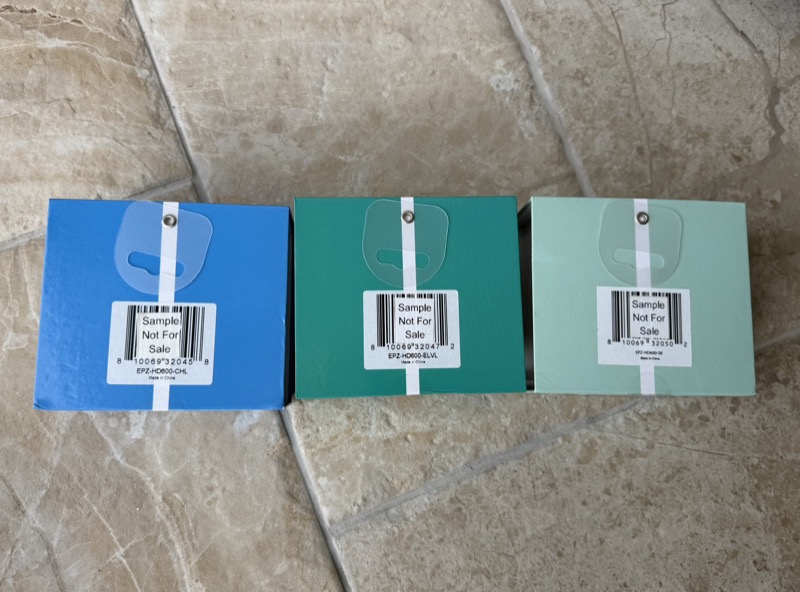 |
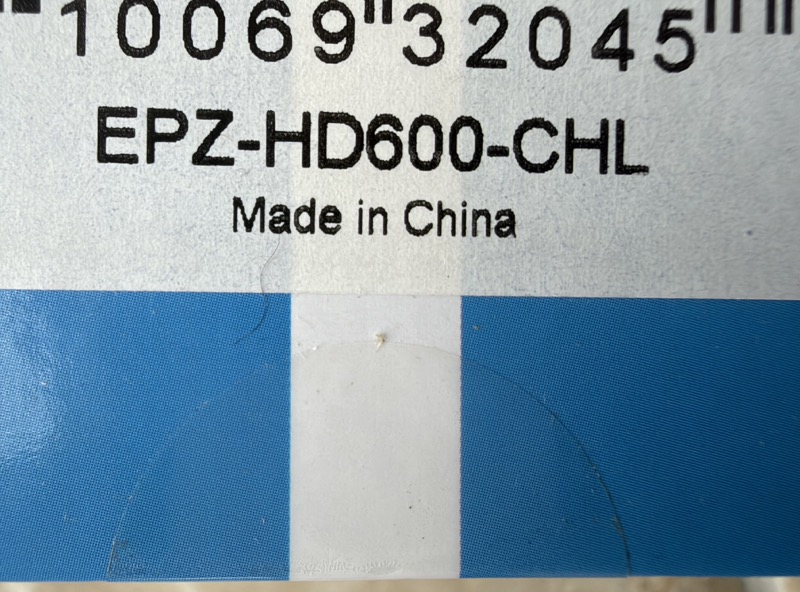
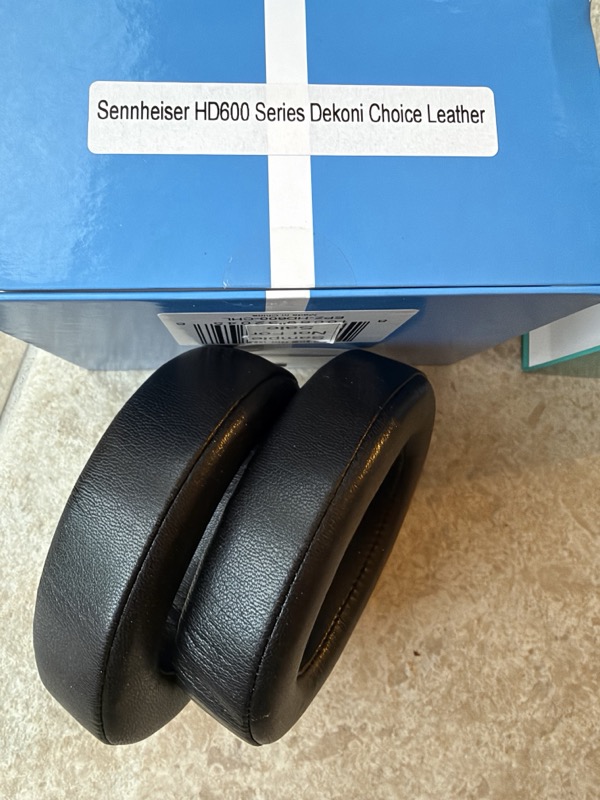
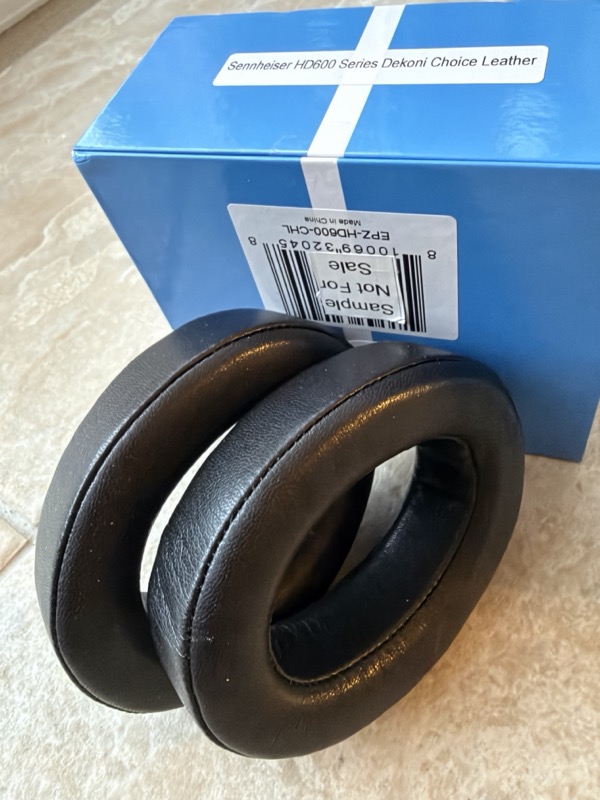
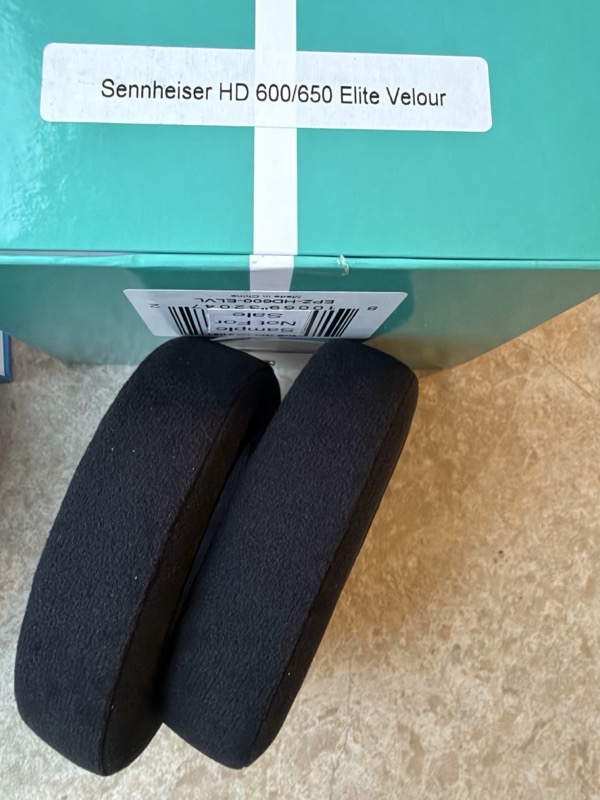
The rear labels are worth a close look, because they are how these three sets can be identified precisely rather than by colour. Left to right they read EPZ-HD600-CHL, EPZ-HD600-ELVL and EPZ-HD600-SK, all marked “Sample Not For Sale” and made in China:
 |
 |
 |
Inside the lid Dekoni print a short thank-you note describing themselves as a luxury brand for headphone accessories and asking for a review, with the pads sitting below it in a moulded tray:
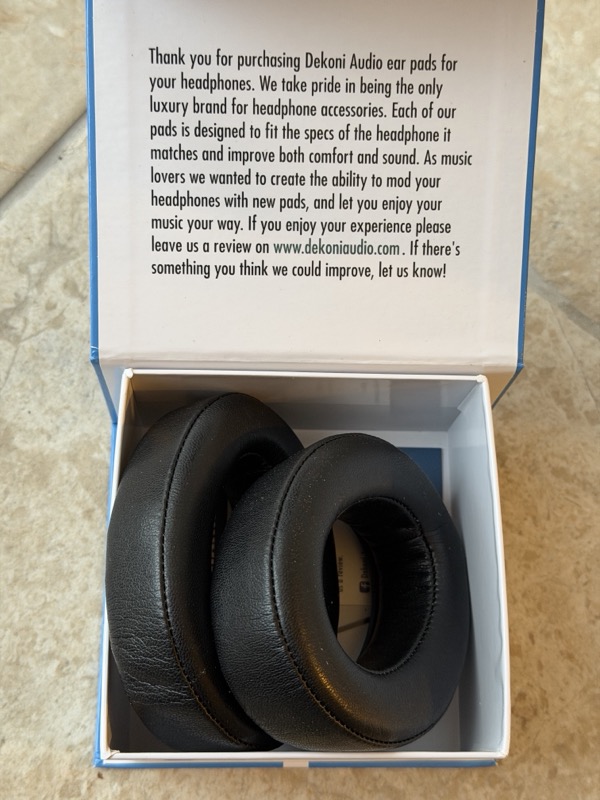
The Choice Leather is Dekoni’s synthetic leather, which they describe as soft, supple and durable, wrapped around slow-rebound memory foam. In the hand it has a fine pebble grain and a slight sheen, and the mounting ring is moulded plastic rather than the card-and-fabric arrangement Sennheiser use:
 |
 |
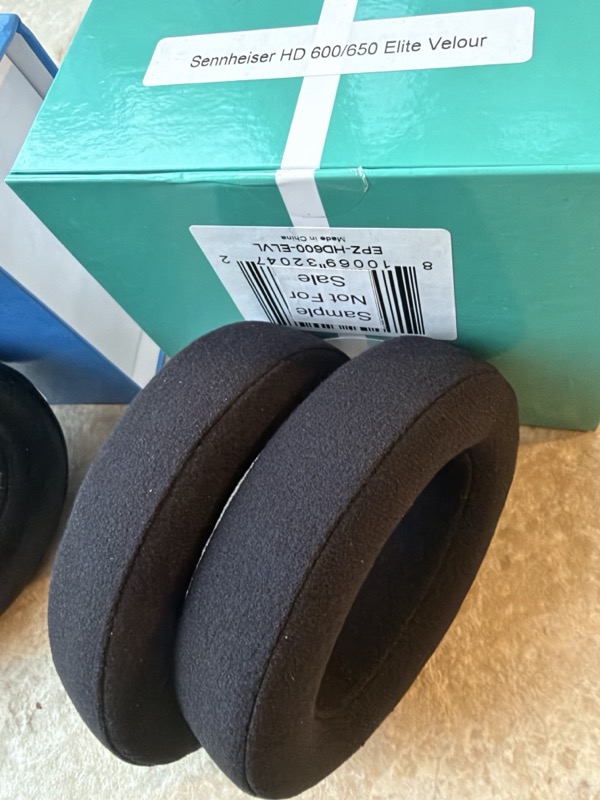
The Elite Velour is the one variant that keeps the stock material category but changes the weave. Dekoni’s claim is that a tighter velour makes the pad behave more like leather, so that the bass and isolation normally lost with velour are retained while the fabric stays cooler than leather. The nap is visibly shorter and denser than the fuzzy stock Sennheiser velour:
 |
 |
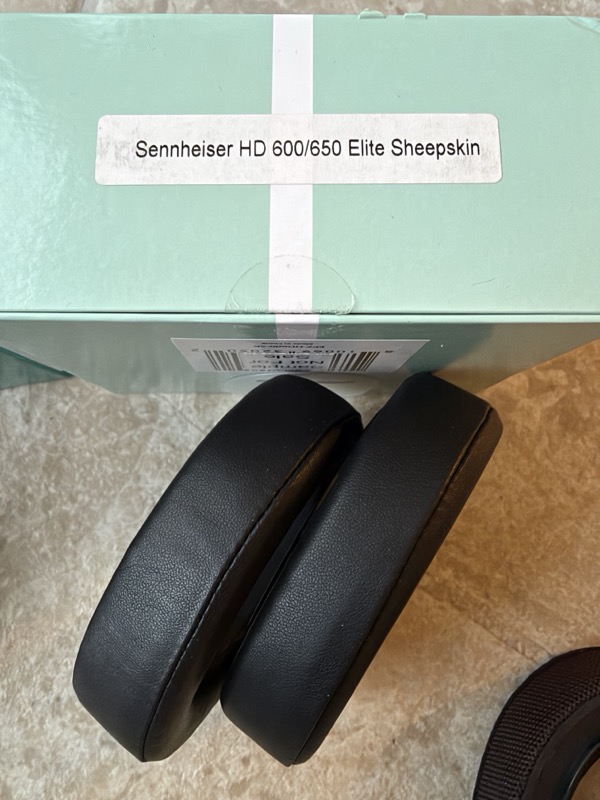
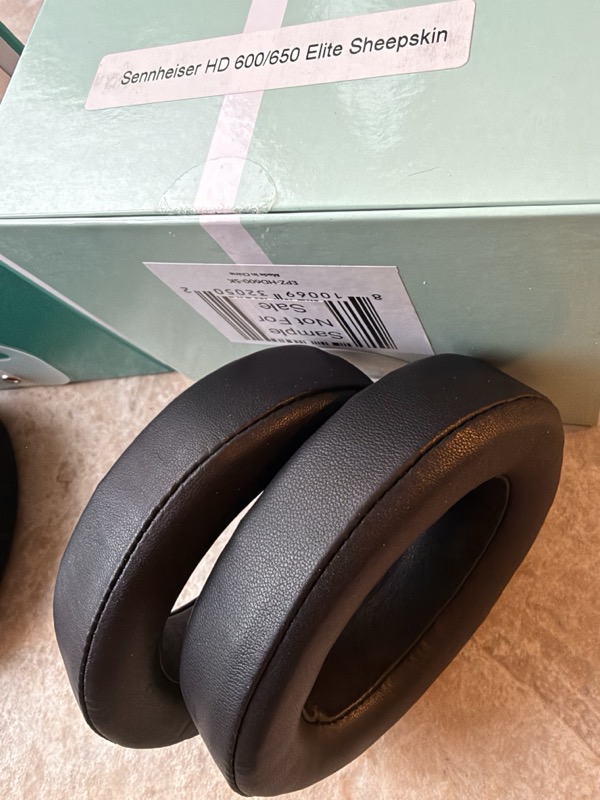
The Elite Sheepskin is real sheepskin over the same dense slow-rebound foam, which Dekoni say gives a better seal and more isolation than their protein-leather pads while staying more breathable. Next to the Choice Leather the grain is finer and the finish less shiny:
 |
 |
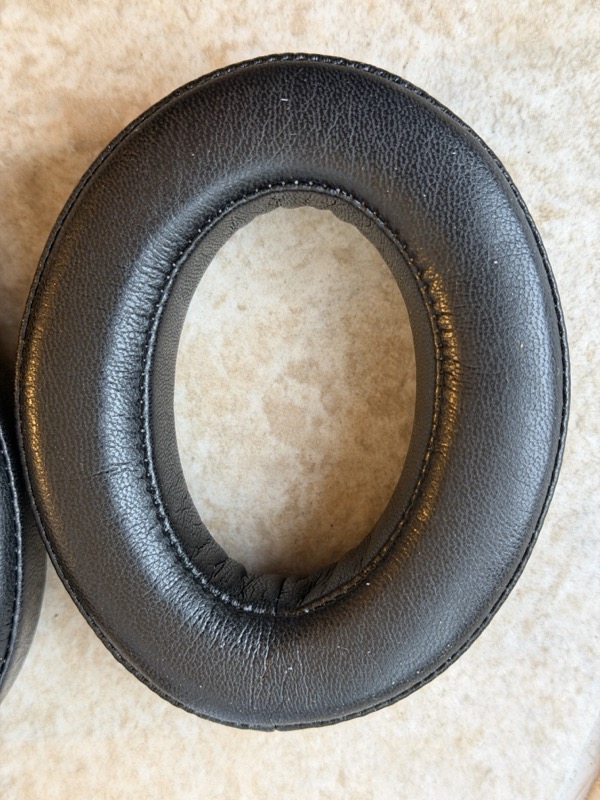
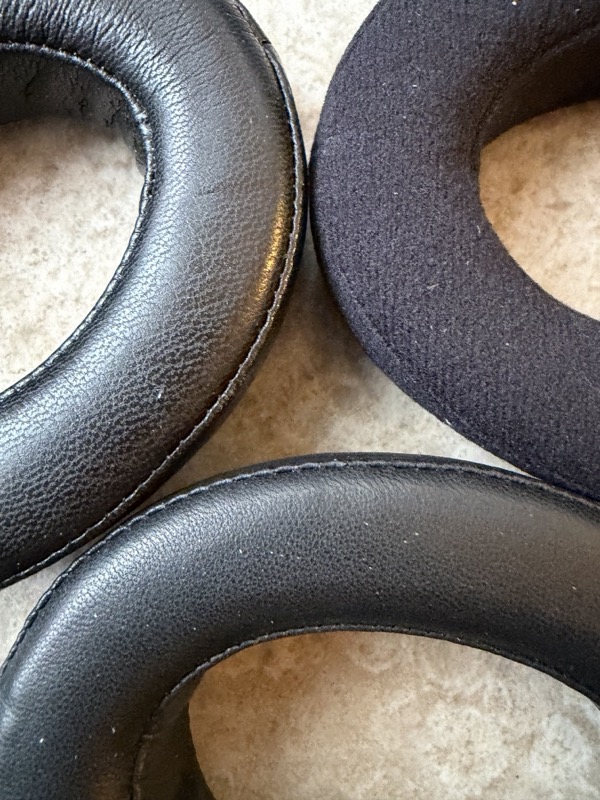
Two details in close-up are relevant to how a pad behaves acoustically rather than just how it feels. The inner wall of the leather pad is a smooth, continuous, unperforated surface, which is a reflective boundary right beside the ear; and the material comparison shows how different the three surfaces are at the point where the pad meets the side of the head:
 |
 |
Build quality on all three is a clear step up from the stock HD 600 pad in materials and stitching. That is the easy part of the assessment. Whether it is an upgrade in the thing the HD 600 is actually bought for is a separate question, and it is settled by measurement rather than by handling.
Fit and Comfort
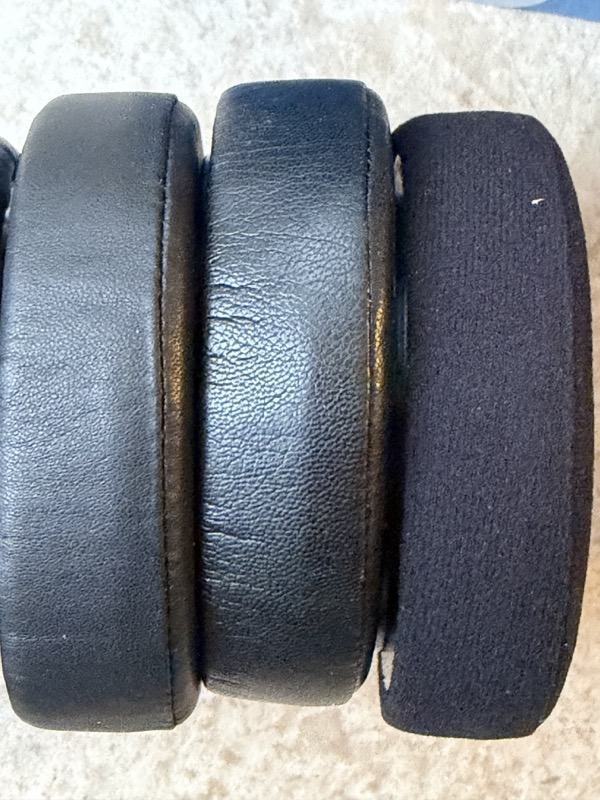
The single most consequential physical difference is thickness. All three Dekoni pads are noticeably deeper than the stock pad, which pushes the driver further from the ear and enlarges the cavity in front of it. Seen from the side, the two leather-family pads are the thickest, with the Elite Velour a little slimmer but still substantial:
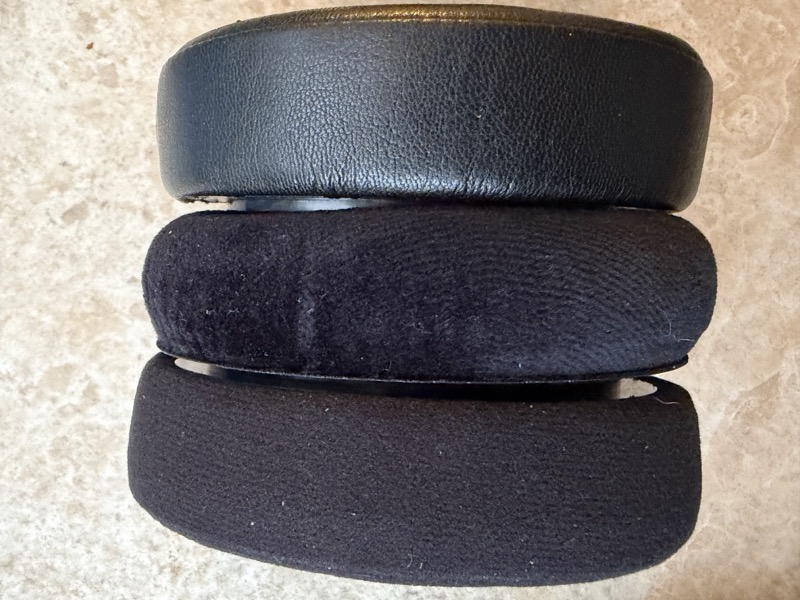
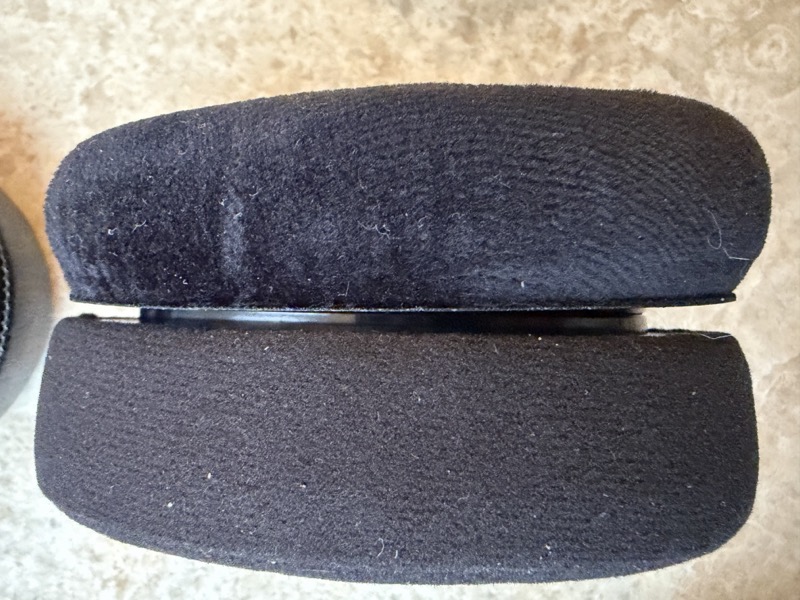
Stacked against the stock pad the difference is easier to judge, and the two velour pads make the weave difference obvious — Dekoni’s is a short, dense pile, the Sennheiser one a longer, softer fuzz:
 |
 |
The same comparison in profile against the leather pad shows the stock pad’s woven side band and its much shallower foam:
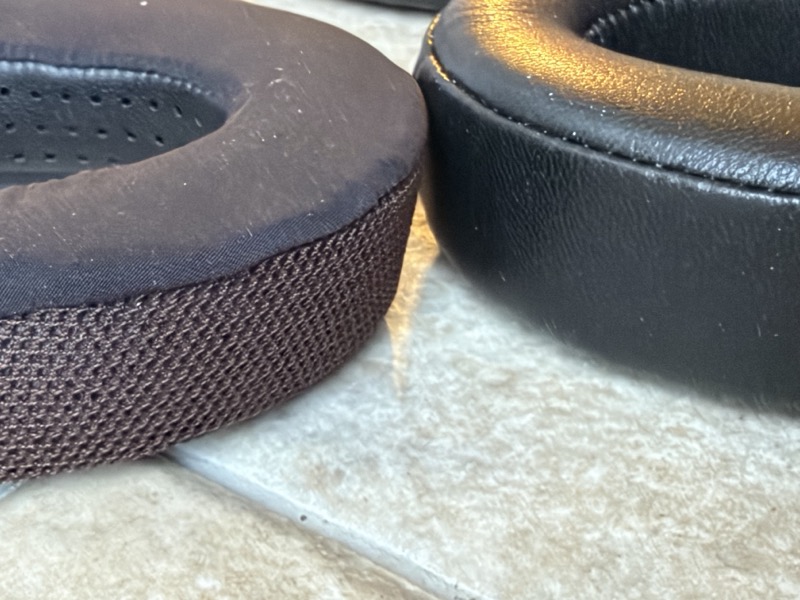
From above, the aperture is the other thing to watch. The Dekoni leather pad’s opening is a slightly different shape and size to the stock velour pad’s, and how much of the ear sits inside the opening rather than under the pad affects both comfort and the seal:
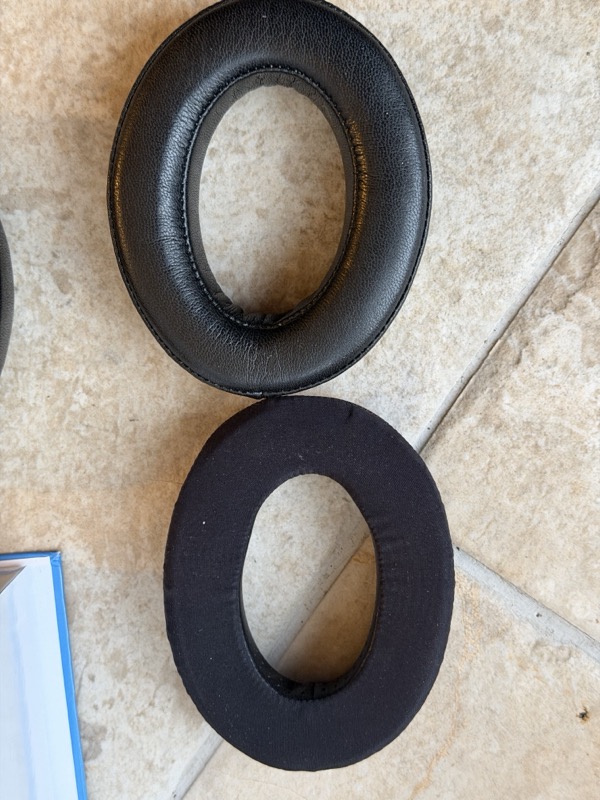
Dekoni’s comfort claim is that the extra depth plus slow-rebound memory foam reduces perceived clamping force, which on a 300 Ω headphone worn for long sessions is a reasonable thing to want. It is also the claim I am most willing to endorse: comfort is the strongest thing these pads have going for them, and it is the reason the features score is a 5.
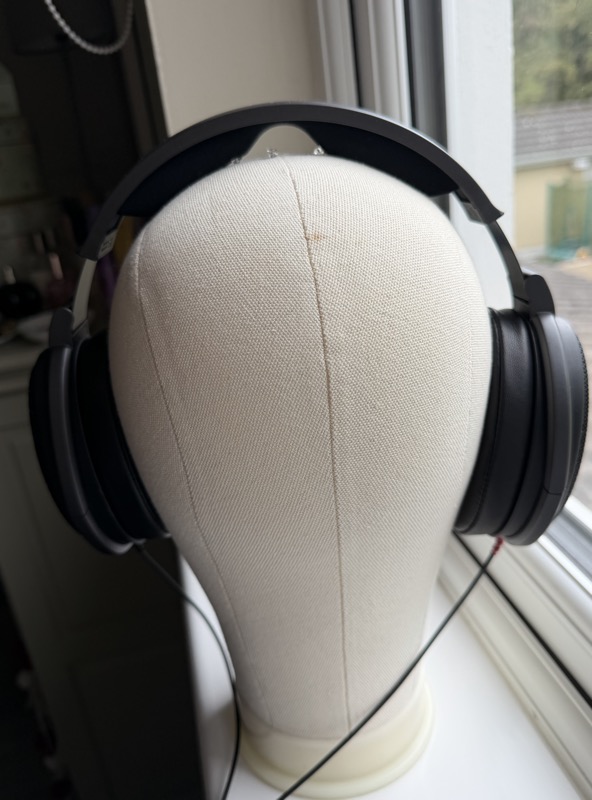
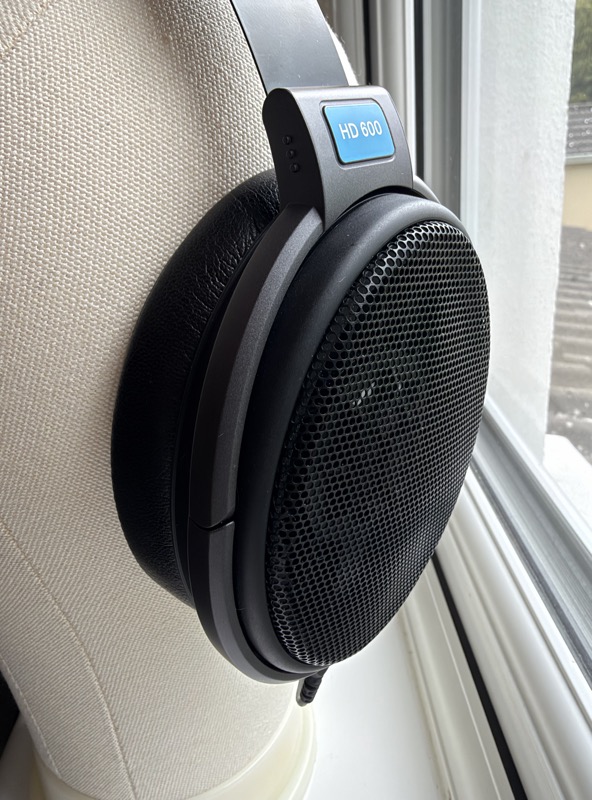
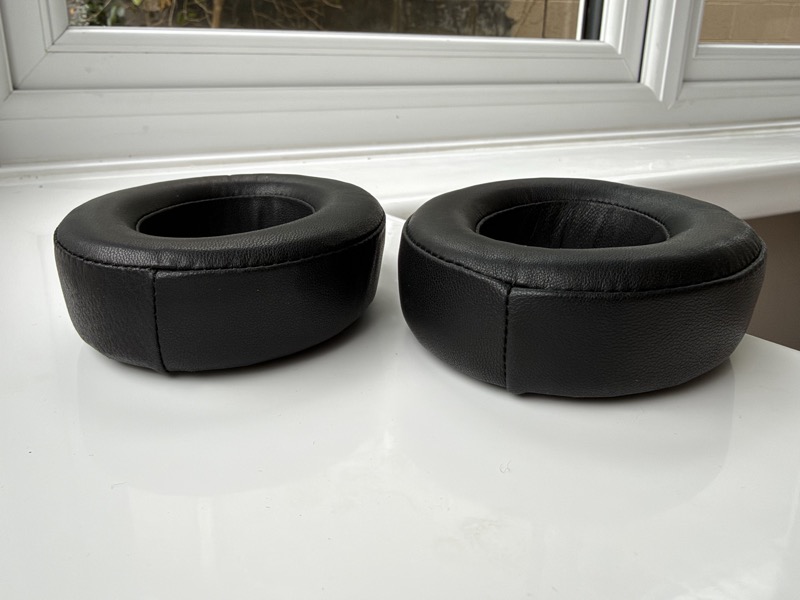
Fitted, the leather pads sit visibly deeper than stock and change the profile of the earcup:
 |
 |
Off the headphone, the depth and the smooth unperforated inner wall are easier to see:
Sound Impressions
All three pads move the HD 600 in the same direction: warmer and darker than stock. That is consistent with what the measurements show, and it is consistent across the three materials rather than being a property of one of them. To my ear that includes a real sense of added bass weight on all three — even though the measurements below show the low end barely moving, pulling that much energy out of the presence region is enough to make the bottom end feel bigger by contrast. Of the three, the Choice Leather is the one I find most appealing, and all three are worth having if a warmer presentation is what you are after. If it is not, the stock pad is still the one that sounds like the HD 600 people recommend.
Choice Leather
Synthetic leather over slow-rebound foam, unperforated inner wall, and the thickest of the three. On paper this is the biggest change from stock: a sealed, reflective boundary replacing an acoustically open fabric one, with more distance between driver and ear.
 |
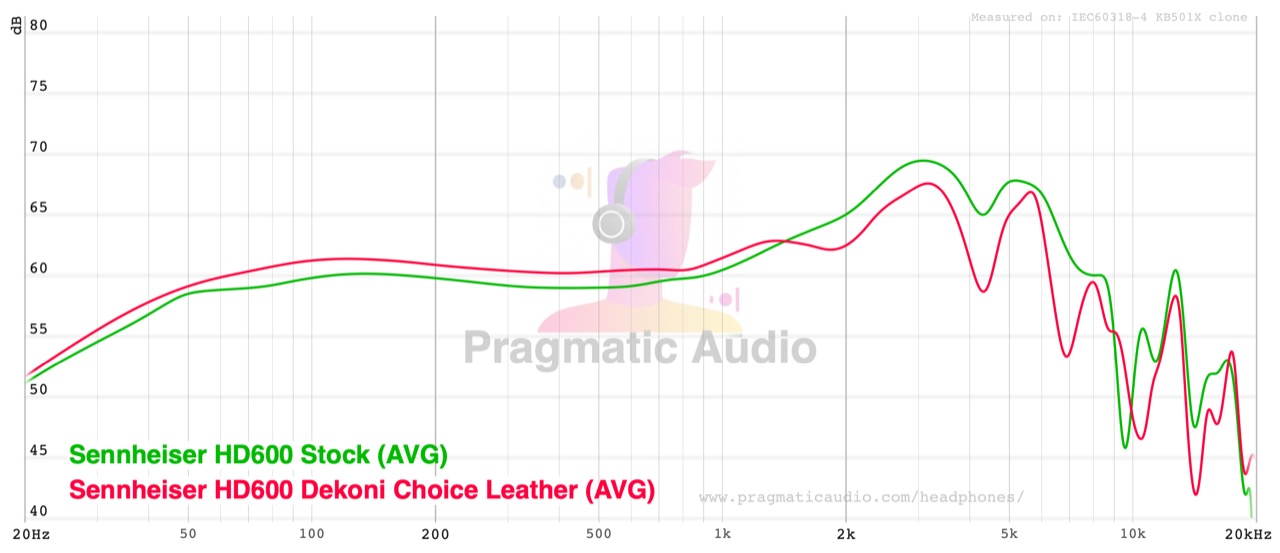 |
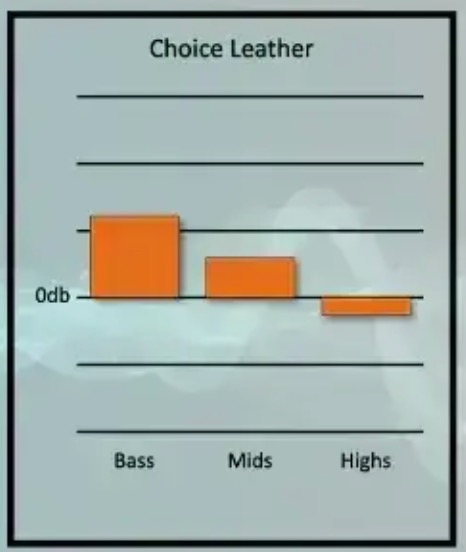
Measured against stock, the Choice Leather adds a small lift below 500 Hz — real but modest — while the bigger move is in the presence region: roughly flat through 1–2 kHz, then a drop of about 2 dB right at the 3–4 kHz ear-gain peak. Read as a sound rather than a curve, that is a headphone with a touch more low-end weight and a noticeably calmer top end: the “shout” some listeners hear in the HD 600’s upper mids should recede, without the bass turning heavy or slow. That is the same shape Dekoni’s own chart draws — bass up a little, mids essentially flat to slightly up, highs down clearly — so I would expect this pad to sound like a slightly darker, slightly smoother HD 600 rather than a genuinely bassier one.
Elite Velour
The variant closest to stock in material, deliberately woven tighter than typical velour. If Dekoni’s reasoning holds, this should be the pad that changes tonality least while still adding depth and comfort — making it the most interesting of the three for anyone who likes the HD 600 as it is.
 |
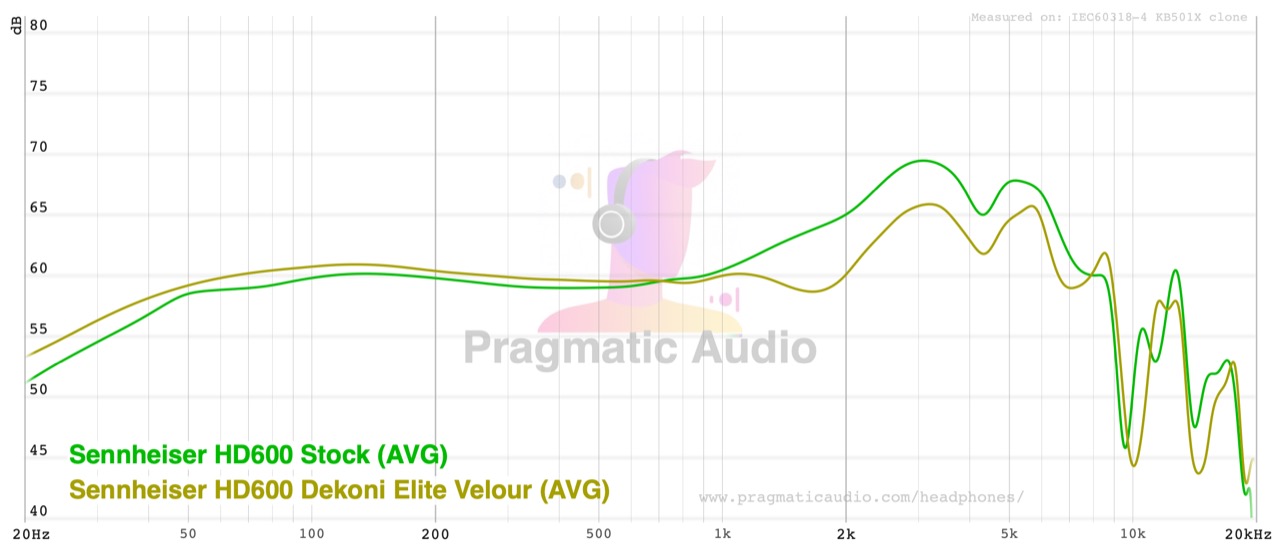 |
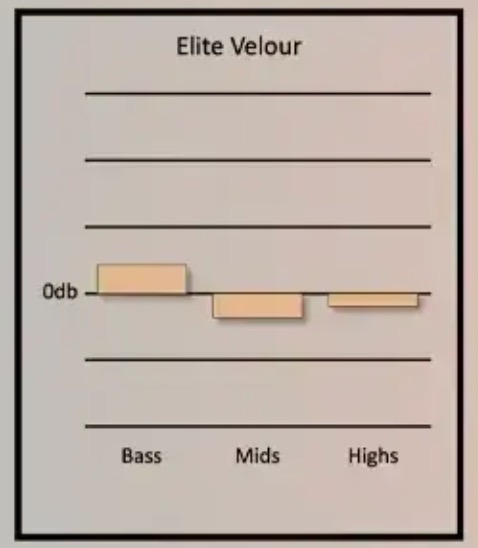
Measured against stock, the Elite Velour has the deepest presence-region cut of the three pads here — 2 to 5 kHz falls furthest below stock — alongside a sub-bass lift that measured marginally the largest of the three, not the smallest the chart’s thin bass bar would suggest (every pad in this test sits within about 1.5 dB of the others down there, so treat the ranking loosely). Read as a sound, that combination should be the darkest and most laid-back of the three: the most pulled-back mids and treble, paired with a bass line that is not actually thinner than the other two pads deliver, whatever the relative size of the chart’s bass bar implies. This is the one pad where I would listen specifically to check the chart’s bass claim rather than assume it, since the measured ranking doesn’t match the drawn one.
Elite Sheepskin
Real sheepskin over dense memory foam, sealing more firmly than either of the others. This should be the isolation and bass-weight option, and on an open-back headphone isolation is a limited prize, so the tonal cost needs to be worth it.
 |
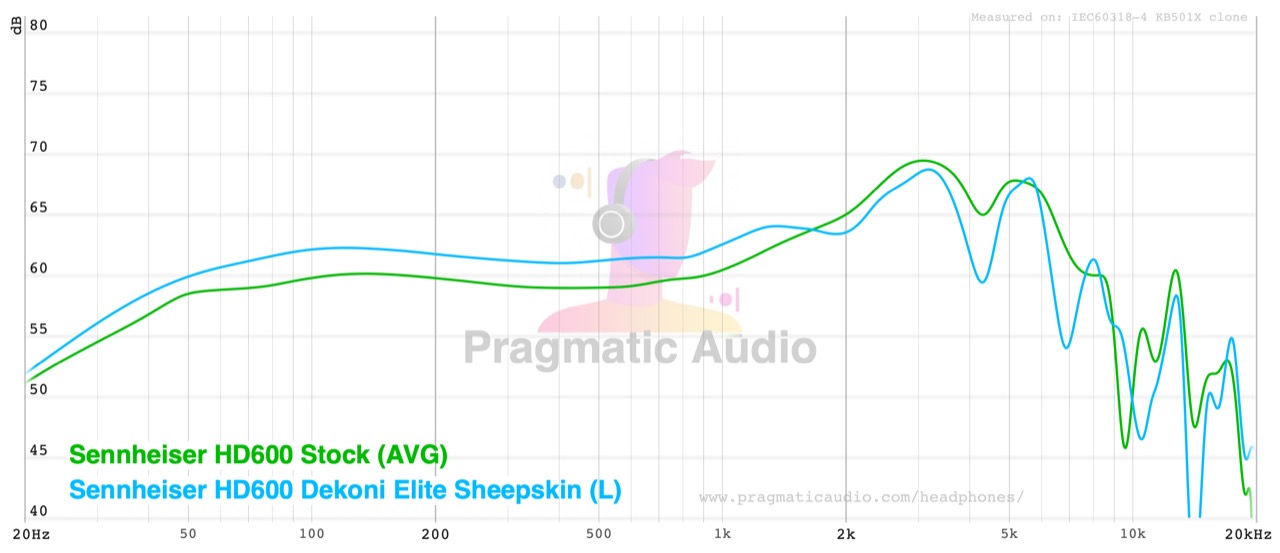 |
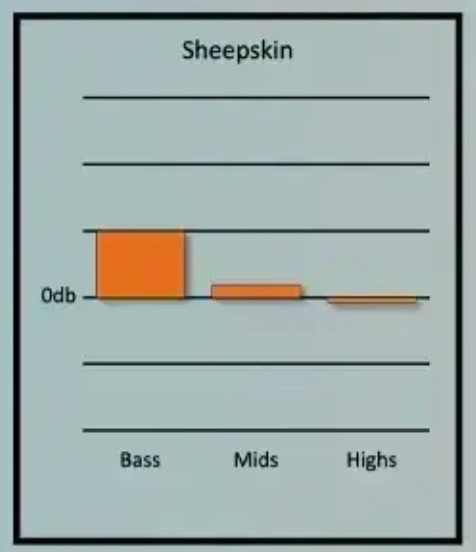
Measured against stock, the Sheepskin gets the largest bass lift of the three pads here — though “largest” still means under about 1.5 dB — while the presence region stays closer to stock than either of the other two pads manages, the smallest departure at the ear-gain peak of the group. Read as a sound, that points to the least dramatic change of the three: whatever extra warmth is present should come mostly from the small bass lift rather than from missing treble, the “warmer by addition” version of the shift rather than the “warmer by subtraction” the leather and velour pads produce. That matches Dekoni’s own chart, which draws the flattest highs bar of the three materials.
Comparisons
The comparison that matters most is against the pad the HD 600 ships with, because that pad is part of the tuning the headphone is famous for. In my HD 600 review the midrange and treble were the reasons for the score, with sub-bass the one area I sometimes EQ up. A thicker, better-sealing pad is a plausible way to address that sub-bass shortfall without EQ — but it also moves the driver away from the ear and dampens the fabric-open boundary beside it, so it is unlikely to move only the bass. That is the trade to test, not to assume.
I also have a set of Soulwit cool-gel pads for the HD 600 here, which attack the same problem from a different direction — a gel-filled cushion aimed mainly at comfort and heat rather than at changing the seal material. That comparison is the practically useful one for an HD 600 owner deciding where to spend on pads, since the Soulwit sets sell for a fraction of Dekoni’s price. Measured on the same rig, the difference in intent is obvious:
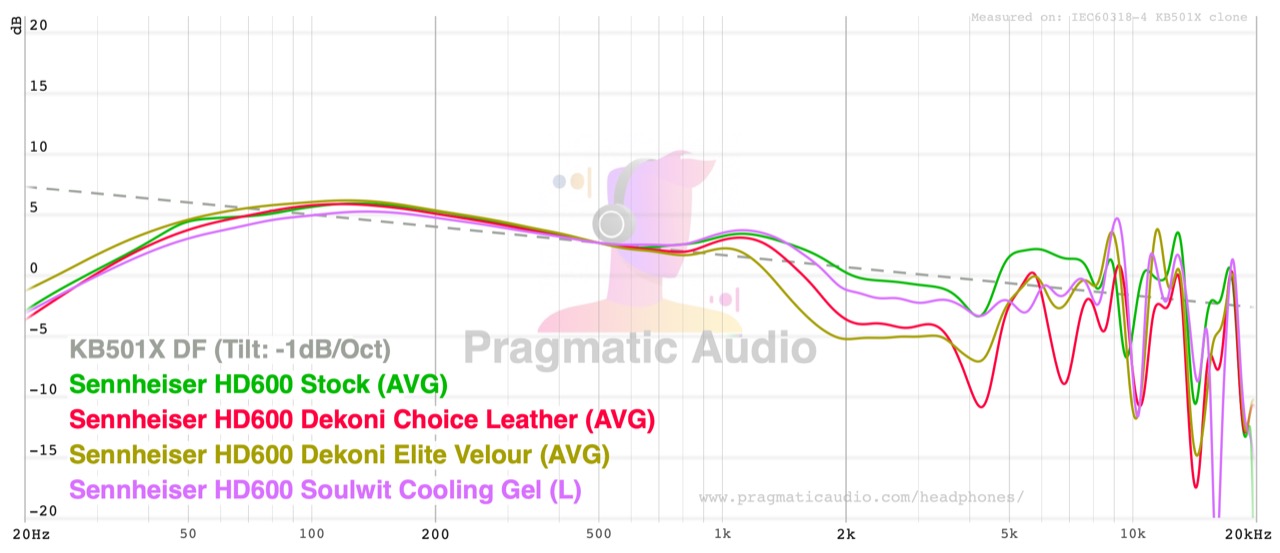
The Soulwit gel pad tracks the stock pad far more closely than either Dekoni pad does, particularly through the 2–5 kHz region where the Dekoni pads drop several dB. That makes the choice a clean one rather than a close-run thing: if you want the HD 600’s tonality left alone and are buying pads for comfort, the cheaper Soulwit is the more conservative swap. If you want the presence region brought down and are happy to pay for better materials while you are at it, that is what the Dekoni pads are for.
Specifications and Measurements
Dekoni publish one dimensional specification for the whole HD 600 fitment rather than per material. Taking their figures as the manufacturer’s published specification:
| Specification | Dekoni HD 600 fitment |
|---|---|
| Variants supplied for review | Choice Leather (EPZ-HD600-CHL), Elite Velour (EPZ-HD600-ELVL), Elite Sheepskin (EPZ-HD600-SK) |
| Materials | Synthetic leather / tight-weave velour / sheepskin, all over slow-rebound memory foam |
| Pad dimensions (Dekoni’s A–E figures) | 107 mm, 84 mm, 65 mm, 44 mm, 28 mm |
| Compatibility | HD 600, HD 650, HD 6XX, HD 58X Jubilee, HD 660S, HD 660S2 |
| Warranty | Two years |
| Price (Dekoni store, any material) | $69.99 |
| Price (Wifimedia, EU, any material) | €29.95 |
Dekoni do not publish frequency response measurements for these pads, so there is nothing here to reproduce as a manufacturer measurement — the claims are verbal only. That leaves the measurements as the substance of this review rather than a supporting section, because a pad swap changes exactly the things a coupler measures: the seal, the distance from driver to ear, the volume of the cavity, and how absorptive the surface beside the ear is.
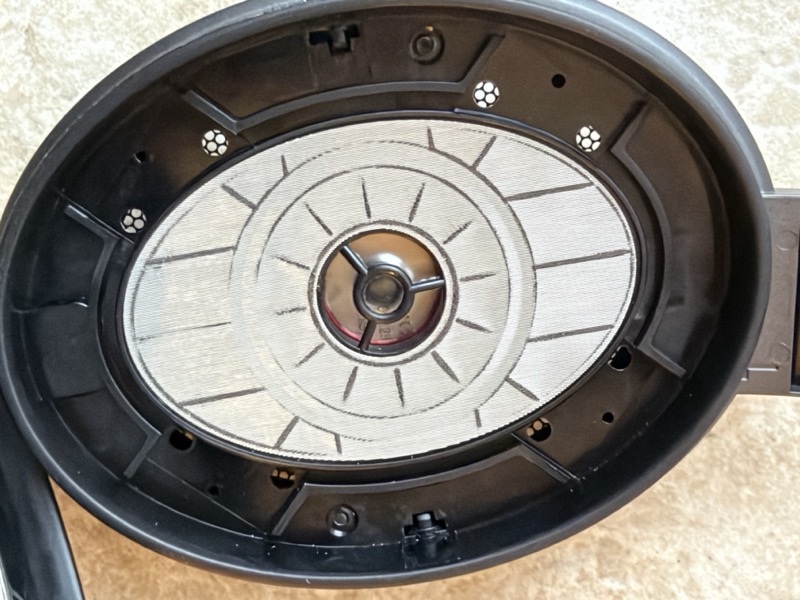
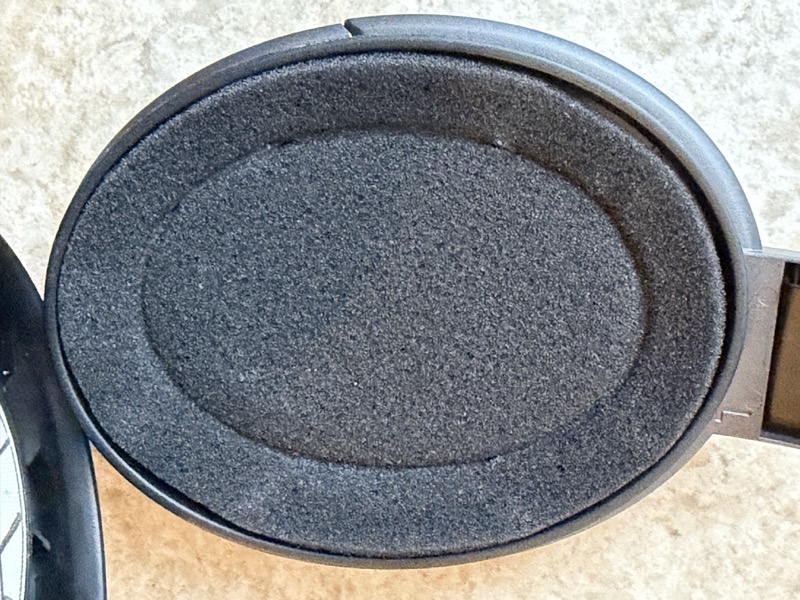
Two photographs show why. With the pad off, the driver, its damping mesh and the vented earcup baffle are all exposed, and the pad is the only thing standing between that assembly and the ear; the stock pad also carries a foam disc that sits over the whole aperture, which the Dekoni pads do not replicate:
 |
 |
Frequency Response
Each pad was measured on the same HD 600 on my KB501X Soft Ear/Pinna with a 711 clone coupler, re-seated and re-measured several times per pad and averaged, so that seating variation is separated from the change the pad actually makes. What matters here is not the absolute curve — a pinna and clone coupler is not an ear — but the difference between two pads measured the same way on the same rig.
Starting with the simplest case, the stock velour pad against the Choice Leather, referenced to the Harman OE 2018 target:
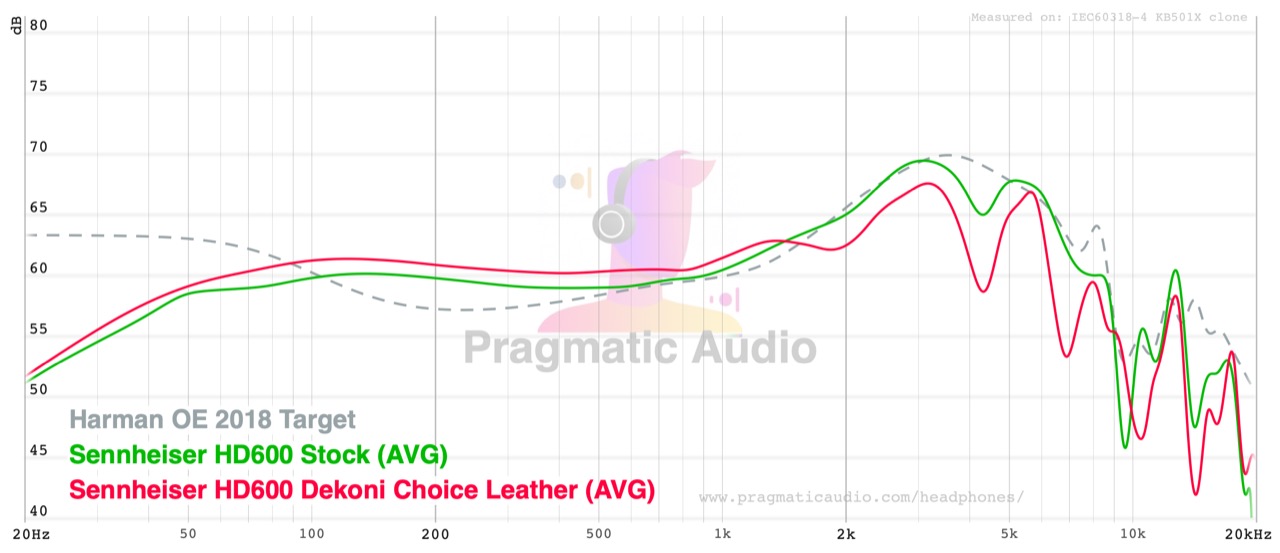
Below about 500 Hz the Choice Leather sits roughly 1 to 1.5 dB above stock — real, but modest. The larger change is higher up: through the 1–2 kHz region the leather pad runs about 1 dB hotter, and then at the 3–4 kHz ear-gain peak it drops about 2 dB below stock, with a deeper, narrower notch around 4.3 kHz. In other words the pad tilts the balance by pulling the presence region down rather than by pushing the bass up.
Adding the Elite Sheepskin and Elite Velour shows the same pattern across all three materials:
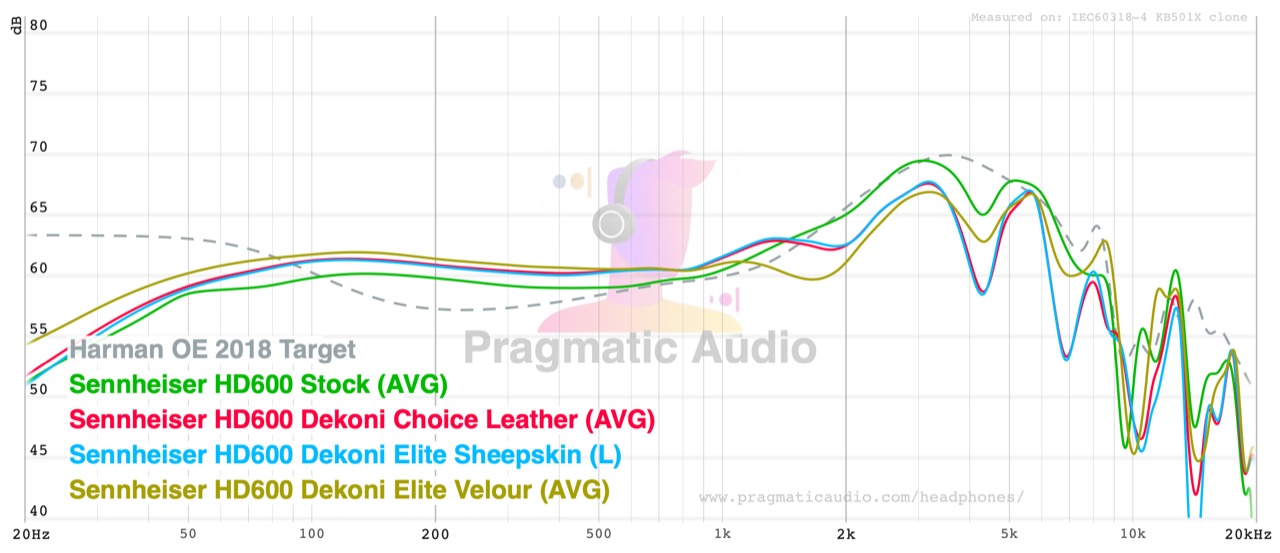
The pattern is clearest normalised to the KB501X diffuse-field curve with a −1 dB/octave tilt, which takes the rig’s own signature out of the picture and leaves the pad differences:
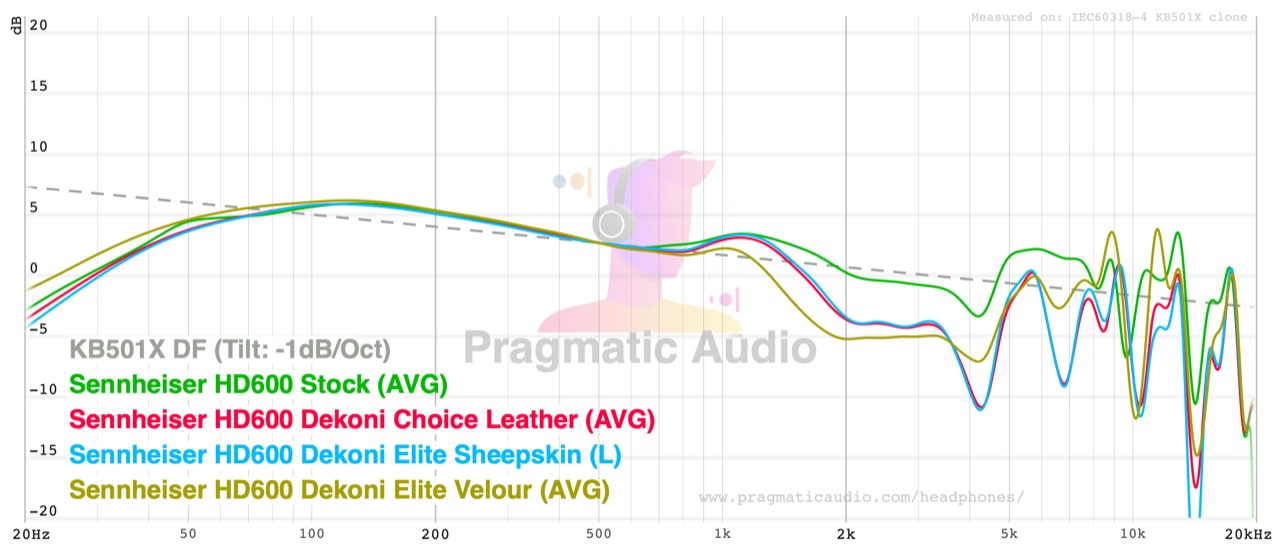
Three things come out of that graph. The first matters most.
Below 500 Hz, all four pads are within about 1.5 dB of each other. The Elite Velour is marginally the warmest in the sub-bass and the Choice Leather and Elite Sheepskin track each other almost exactly, but none of this is the bass transformation that both Dekoni’s own literature and much of the written commentary lead you to expect. Dekoni’s published comparison chart for this fitment shows the Sheepskin and Choice Leather with a substantially raised bass bar; on my rig that lift is there but it is small. If you are buying these pads to fix the HD 600’s sub-bass, they will not do it and you will still be reaching for EQ.
The real change is in the presence region. From roughly 2 kHz to 5 kHz the stock pad sits highest, the Choice Leather and Elite Sheepskin fall about 4 to 6 dB below it, and the Elite Velour falls furthest of all — which is the opposite of what you would guess from the materials, since velour is the one that looks most like stock. Above 5 kHz the stock pad also stays the most extended and the Dekoni pads run lower and more ragged. That combination — upper mids and lower treble pulled down, bass essentially unchanged — is exactly what “warmer and darker” means in practice. The warmth is relative, created by taking energy out of the top, not by adding it at the bottom.
The changes are much larger than seating variation. A 4 to 6 dB shift across a broad region is well beyond the spread I saw between re-seatings of the same pad, so this is a genuine property of the pads rather than a measurement artefact.
Checking each pad against Dekoni’s own description
Dekoni don’t publish a frequency response curve for any of these pads, but they do publish a simple three-bar chart per material — bass, mids, highs, relative to a 0 dB baseline — describing the tonal shift each one is supposed to produce. I measured each pad separately against stock as well as together, so it’s worth putting each pad’s own chart next to its own curve rather than only the three-way overlay above.
|
|
Dekoni’s chart shows a moderate bass lift, a smaller lift through the mids, and a clear cut in the highs. That is a fair description of the Choice Leather curve above: a small rise below 500 Hz, a region around 1–2 kHz that runs slightly hotter than stock rather than lower, and then the roughly 2 dB drop at the 3–4 kHz ear-gain peak that the chart calls out as the highs bar sitting below the line.
|
|
The Elite Sheepskin’s chart shows the largest bass bar of the three and a highs bar that barely leaves the 0 dB line at all. That second detail is the one worth checking, because a flat highs bar is a specific, falsifiable claim rather than a vague one — and it holds up: of the three pads, Sheepskin is the one whose curve tracks stock most closely through the 2–6 kHz presence region, with the smallest departure at the ear-gain peak. Where the chart is optimistic is the same place the combined graph already flagged — the bass lift it draws is bigger than the roughly 1.5 dB I actually measured.
|
|
The Elite Velour’s chart draws the smallest bass bar of the three alongside the deepest mids/highs cut. The presence-region half of that holds up exactly: Velour is the pad that falls furthest below stock from 2–5 kHz, more than either Choice Leather or Elite Sheepskin, which matches a chart that draws its highs bar lowest of the three. The bass half is the one place chart and measurement do not agree in the direction you would expect — Velour measured marginally the warmest of the three below 500 Hz, not the coolest — though every pad sits within about 1.5 dB of every other pad down there, which is a smaller difference than a three-bar cartoon chart can meaningfully represent in the first place. Read as ranking bars rather than absolute figures, this is a resolution limit rather than a real contradiction.
Taken together, the three charts describe the presence-region trade-off — which is the change that actually defines these pads — correctly and in the right relative order: Sheepskin least affected, Choice Leather in the middle, Velour most affected. For a company that could easily have drawn three uniform “bigger bass, better everything” bars instead, that is a more honest piece of marketing than most.
To my ear the Choice Leather is the most appealing of the three, and the shape it produces through the presence region lands close to the more relaxed upper-midrange balance of Audeze’s reference tuning — that is a judgement about where the curve sits rather than a measured comparison, since there is no Audeze curve on these axes.
Whether any of that is an improvement depends entirely on what you want. The HD 600’s upper midrange is the reason a lot of people own it, and all three of these pads reduce it. If you like that region, these pads take something away from you that EQ can put back but which you did not need to lose. If you find the HD 600 too forward in the presence region — a common and perfectly reasonable complaint — then the Choice Leather does something for you that EQ would otherwise have to, and it does it while also being more comfortable. That split is why the measurement score is a 4 rather than a 5: the pads do a clean, consistent, measurable thing, but it is a thing only some buyers want.
Rating Explanation
The Pragmatic rating is a 5, and it is a conditional one rather than a blanket one: if what you want is a bassier, warmer HD 600 — and a genuinely more comfortable one while you are at it — there is probably no better way to get there than one of these three pads. The features rating is a 5 and comfort is the reason: the extra depth and the slow-rebound foam make long sessions easier on a headphone that is otherwise worn for hours, and that is the improvement I noticed most.
The measurement rating is also a 5, and not for the reason a pad’s own measurement rating usually earns one — the pads still don’t make the HD 600 “better” in any objective sense, they make it different. What earns the 5 is that Dekoni’s own three-bar bass/mids/highs chart for each material turned out to describe the actual measured change correctly, including the relative order between the three pads (Sheepskin least affected in the presence region, Choice Leather in the middle, Velour most affected). That is a specific, checkable claim, and it checked out. A manufacturer that publishes an honest description of what its product does, and gets the ranking right across three variants, has earned the rating regardless of whether the tuning direction suits every buyer.
The price rating of 4 reflects what you should actually pay rather than the list price. Dekoni’s own $69.99 for a pair of pads is hard to defend when dealers sell the same part for $39.99 and the European reseller for €29.95. At €29.95 to $39.99 these are good value for the materials and the comfort; at $69.99 they are not, and a buyer should shop around rather than buy direct.
Conclusion
Dekoni have built the pads well and the comfort case for them is straightforward: thicker, softer, better materials than a stock pad that is known to crumble with age on a headphone people keep for a decade. The acoustic case turned out to be different from the one Dekoni’s marketing suggests. These pads are not a bass upgrade in the measured sense — below 500 Hz they barely move the HD 600 at all. What they do is take 4 to 6 dB out of the presence region, and that cut is doing double duty: it is where the warmer, darker character everyone describes actually comes from, and to my ear it is also why the bass reads as noticeably fuller on all three — pull enough energy out of the 2 to 5 kHz region and the low end you already had sounds bigger by contrast. If you want the HD 600 to sound warmer and bassier without waiting on EQ, look no further than these pads — just go in understanding that it is the top end doing the work, not the bottom.
The Choice Leather is the one I would fit to my own HD 600, and the one I would point most people at if they want this change — it is the most appealing of the three to my ear, and it lands the presence region in a place I am happy with. Buy these if the HD 600’s upper midrange is the thing you have always found slightly too forward, and you would rather solve it with a pad than with EQ while getting a more comfortable headphone in the process. Keep the stock pads if that upper midrange is precisely why you bought the headphone — and if all you want is to stop your ears getting hot, the Soulwit gel pads do that for less money without touching the tuning.
If your goal is specifically a bassier, warmer-sounding HD 600 along with a genuinely more comfortable earpad, I don’t think there is a better way to get there than one of these three. That is a narrower claim than “these pads are great,” but it is the one the measurements actually support, and Dekoni’s own description of each material got the direction and the relative order right rather than just promising more of everything.