Kanto UKI
A Compact Bi-Amplified Desktop Speaker with Subwoofer Integration and a Headphone Output
Having reviewed the ORA4 at the same time, the UKI represents Kanto’s smaller, more affordable entry in their powered desktop lineup — $180 less, a smaller 3-inch cabinet, and a headphone output that the ORA4 lacks. Where the ORA4 leans toward the reference end of the spectrum, the UKI is designed for the desk where space is genuinely at a premium.
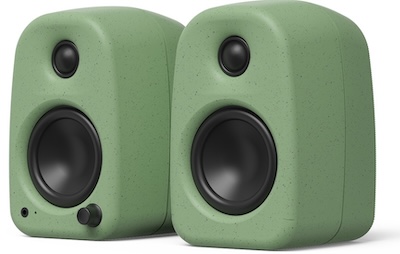
I would like to thank Kanto Audio for providing the Kanto UKI — and the excellent ORA4 — for the purposes of this review and for comparison purposes.
If you are interested in finding more information about this product, you can find it at the official product page.
The Kanto UKI typically retails for $269 USD. Available in white, black, sage, and cornflower; the unit reviewed here is the white variant.
I spent two weeks with the UKI as my primary WFH desk speaker, running it through USB-C from a MacBook, Bluetooth from a phone, and RCA from various sources, while regularly comparing it against the ORA4. Connectivity is a genuine highlight — USB-C, Bluetooth 5.3, RCA, a headphone output, and a dedicated subwoofer output with an automatic 100Hz crossover are all present and usable without any app configuration. But first, let’s take a look at what’s in the box.
Unboxing
The UKI arrives in a branded shipment box:

But opening this up reveals a nice minimalistic branding on a compact retail box:
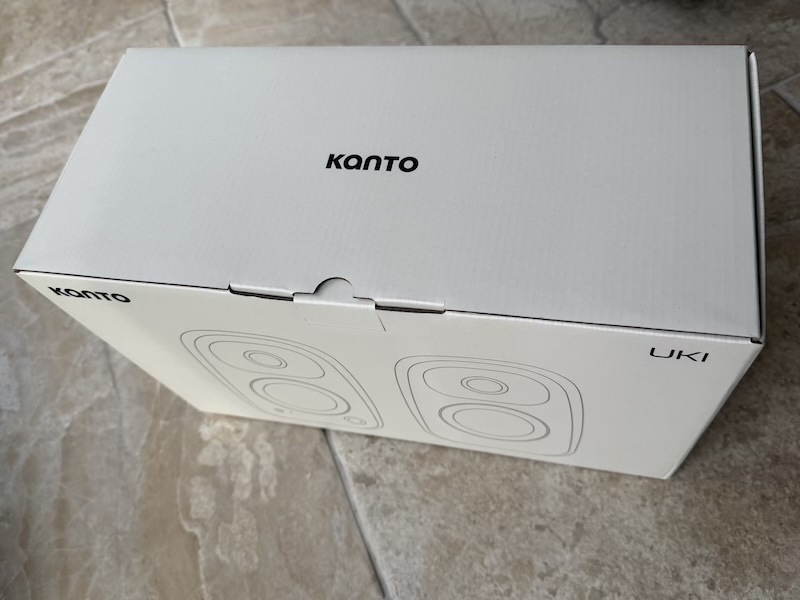
Opening this box reveals a neat, layered unpacking experience with the manual sitting on top:

Then beneath it a cardboard protective layer and the accessoroies box:

And then removing this reveals the two speakers resting underneath in
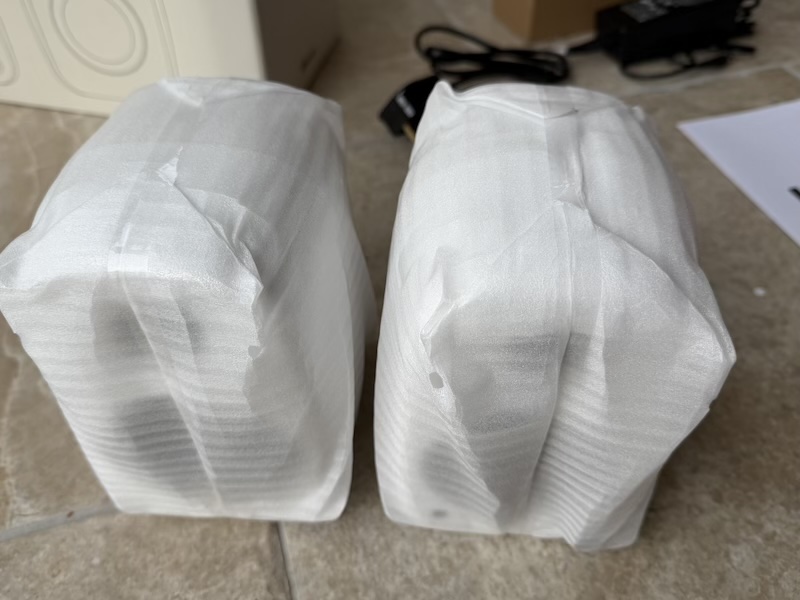
individual protective covers that add a premium touch to the unpack:
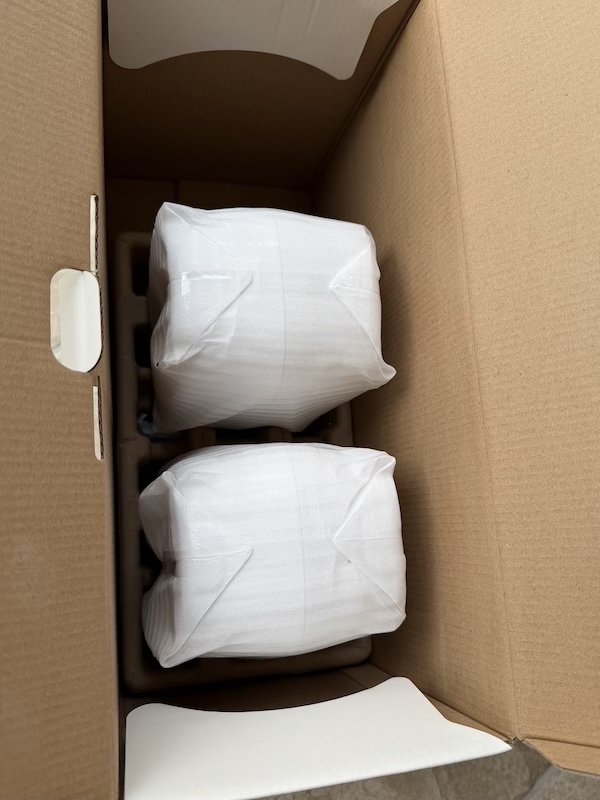
Removing the speakers:
The accessory box:
 |
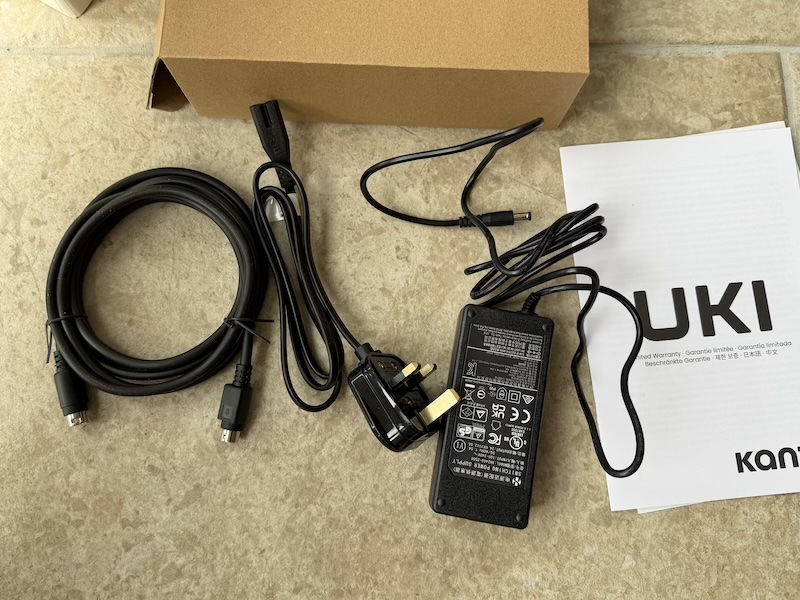 |
In this box you get: a 4-pin speaker connector cable (6’), a power cord and eight rubber feet.
The rubber feet come in a generous quantity of four per speaker and are chunky enough to provide meaningful isolation on a hard desk surface. The 4-pin speaker connector cable for the passive unit is neatly finished. Overall, the unboxing experience is tidy and practical — reflective of a brand that has thought carefully about how these speakers will actually be used day-to-day.
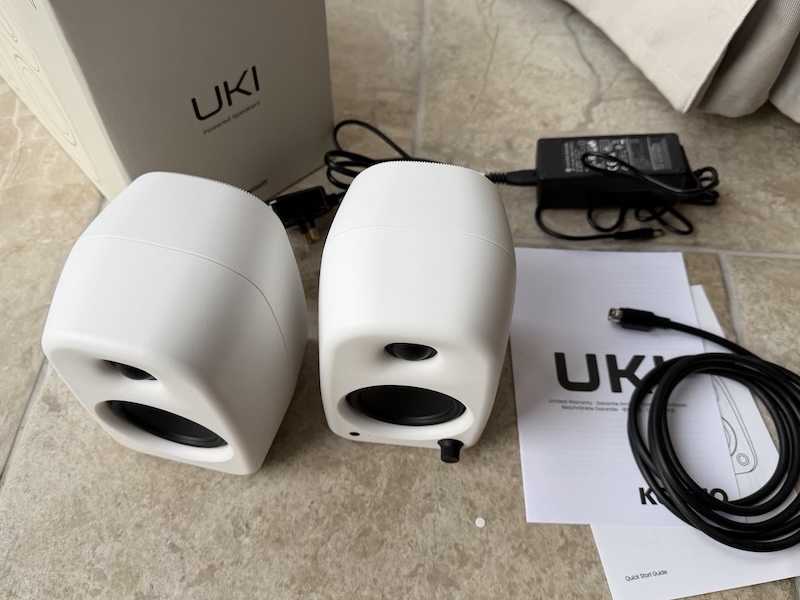
Finally, here are all the contents:
Build Quality
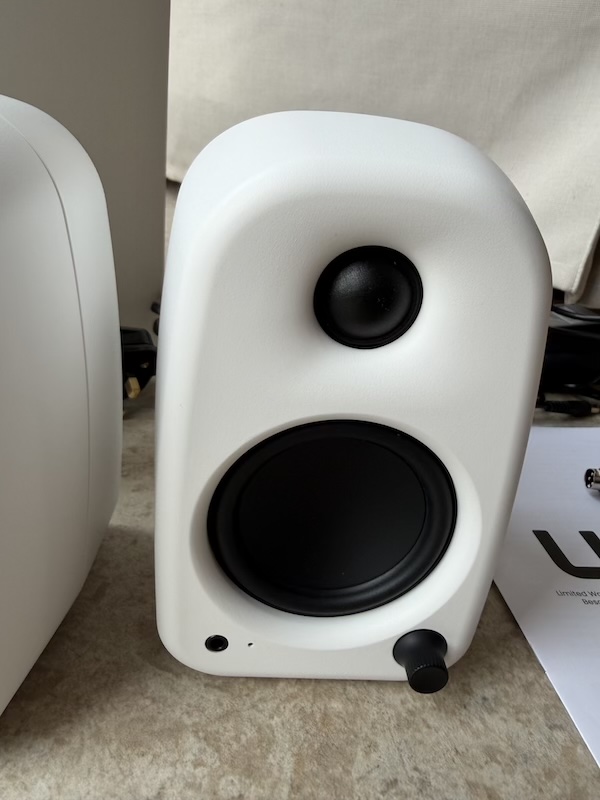
While the UKI is built from plastic, the cabinet feels reassuringly rigid with no flex or rattle when handled. The rounded edges and compact proportions give it a distinctly playful character — this is clearly a speaker designed to look at home on a desk alongside a laptop, not tucked away on a shelf. In white especially, it looks genuinely charming. There are no speaker grills so it does leave the drivers exposed.
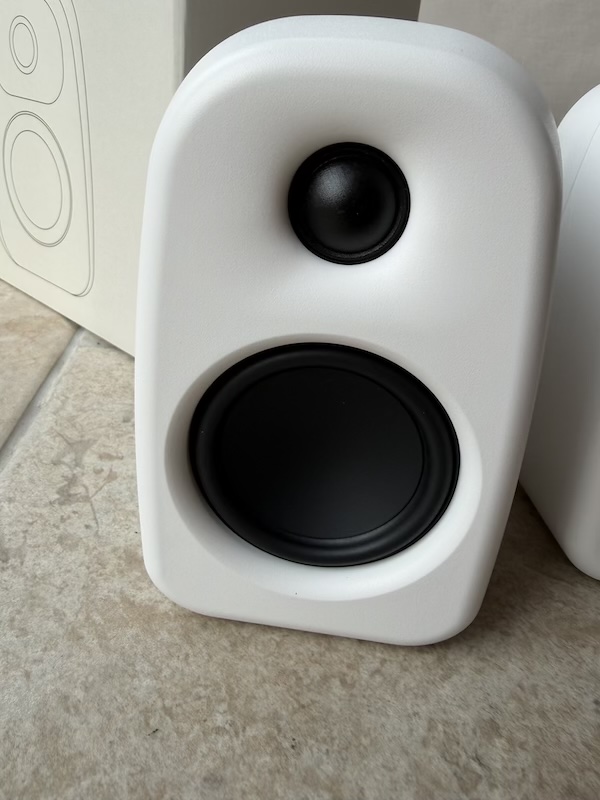
The build quality feels comparable to the ORA4, which costs a little more, and that shared standard of construction is one of the more reassuring things about the UKI’s proposition.
I noticed a UKI during a recent visit to
the e-earphone store in Tokyo that a green UKI on a speaker stand looked well:
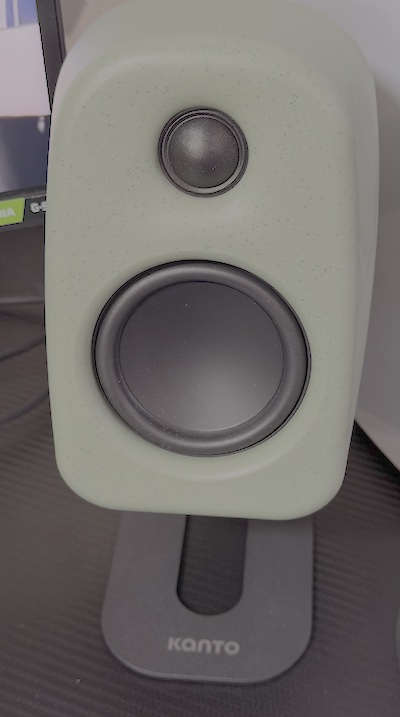
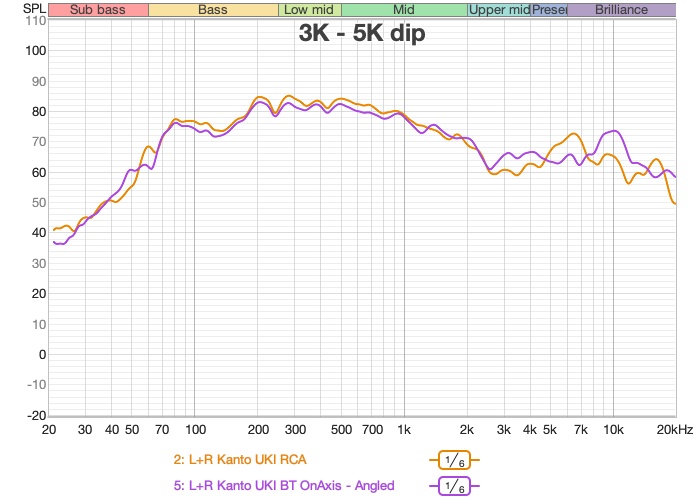
The stand angles the tweeter toward the listening position, and given the measurement I did (as you will see later in the review), I wish I had this small speaker stand on my own desk.
Controls and Connectivity
All active electronics and user-facing controls live in the right speaker. The volume knob and 3.5mm headphone output are positioned on the right-hand side panel, keeping them within easy reach at a desk without requiring you to reach behind the cabinet which most compact desktop speaker require you to do:
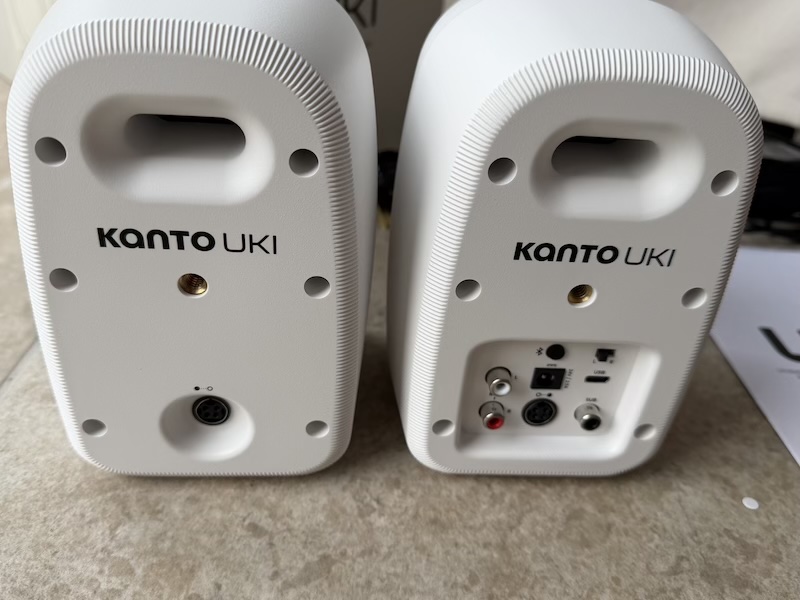
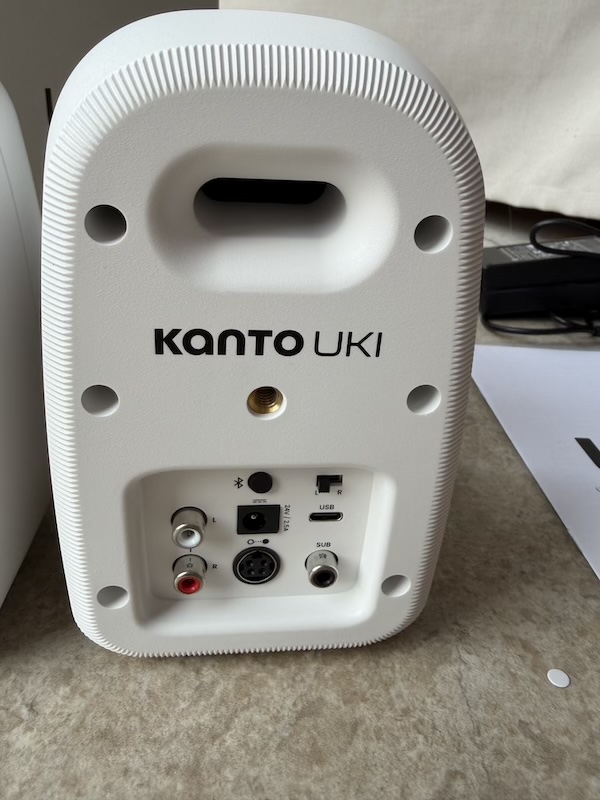
The rear panel offers RCA line-level input, USB-C audio (16-bit/48 kHz), Bluetooth 5.3, a 3.5mm subwoofer output, and
the connector socket for the passive left speaker. The automatic 100 Hz high/low-pass filter on the subwoofer output is
worth highlighting specifically: when you connect a sub, the UKI simultaneously applies a high-pass filter to its own
output and sends a low-pass signal to the subwoofer — all with no configuration required. This makes subwoofer
integration genuinely straightforward.
A further thoughtful feature is left/right orientation switching, which reassigns which cabinet carries the active electronics and controls — useful when desk layout puts the right side out of comfortable reach.
One limitation worth noting on the Bluetooth side: the UKI supports SBC and AAC codecs only — there is no aptX or LDAC. For wireless streaming from a phone this is perfectly adequate for everyday listening, but those with high-resolution Bluetooth sources will want to connect via USB-C or RCA to get the most out of the hardware.
Sound Impressions
All listening was done at my WFH desk in a near-field arrangement, primarily via USB-C from a MacBook and Bluetooth from a phone, with the speakers positioned at roughly arm’s length. Testing included extended listening across a wide range of genres as well as focused track-by-track comparisons against the ORA4 and other desktop speakers I had on hand. Sources were kept consistent across all comparison sessions.
Bass
The UKI’s bass is an honest performer within the constraints of its physical size. The 3-inch woofers roll off meaningfully below 80 Hz and there is no pretending otherwise — the sub-bass weight and slam you get from a larger driver simply are not present. What the UKI does deliver above that floor is tighter and better controlled than you might expect from the cabinet volume, with decent mid-bass punch and reasonable articulation on acoustic bass lines. Distortion climbs noticeably when pushed beyond around 75–80 dB SPL, which makes this a near-field speaker for moderate listening levels rather than a room-filler. Jennifer Warnes’ “Way Down Deep” makes the bass roll-off audible almost immediately, but switching to Steely Dan’s “Aja” puts the UKI in better context — kick drum texture and mid-bass articulation are handled with genuine composure on material that stays above the speaker’s natural floor. The picture changes entirely with a subwoofer in the chain, as detailed in the next section.
Midrange
The midrange is the UKI’s genuine strength and the reason Kanto’s claim of ear fatigue-free listening holds up in practice. There is a natural, cohesive quality to its tonal character — vocals are present and intimate without being pushed forward or hardened, and instrumental timbre is rendered without unnecessary coloration or added warmth that some smaller speakers use to sound fuller than they are. Note weight is perhaps a touch lighter than a larger driver would deliver, but the absence of excess bloom keeps the midrange clean and well-separated at typical desk listening distances. Dire Straits’ “Brothers in Arms” demonstrates the guitar and vocal intimacy clearly, with Knopfler’s voice sitting in a natural space free from upper-mid glare. Joni Mitchell’s “A Case of You” rewards patient listening with fine micro-detail in the acoustic guitar and a vocal body that reveals genuine driver quality relative to the price.
Treble
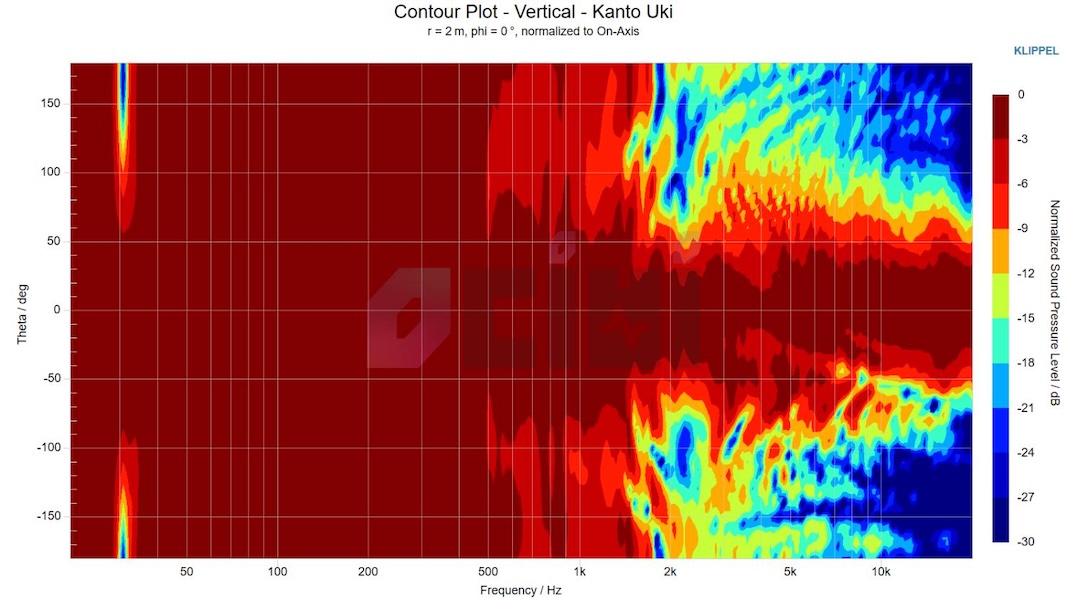
Treble performance on the UKI is smooth and largely free of etch or sibilance, but placement has a meaningful impact on how it presents. The vertical dispersion measurements show that the tweeter’s output tapers noticeably when it is not aligned with ear height — which is the typical scenario when speakers sit flat on a desk below seated ear level. Angling the speaker a few degrees upward to aim the tweeter at your ears makes a clear difference on brighter test material, smoothing and extending the perceived top end. With that adjustment made, Michael Jackson’s “Billie Jean” is an excellent test — the hi-hat sheen is clean and the transient leading edge is well-resolved without any hardness or glare. Nils Lofgren’s “Keith Don’t Go” further confirms that the upper-harmonic guitar shimmer is rendered with genuine air once the tweeter is properly aimed.
Soundstage and Imaging
For a speaker of this size and price, the UKI’s soundstage is genuinely surprising. Width extends convincingly beyond the cabinet boundaries in a near-field arrangement, and imaging precision within that space is above the category norm. There is a useful sense of layering between foreground and background instruments, though the depth and three-dimensionality of a larger speaker in a treated room are expectedly limited at this scale. Supertramp’s “Crime of the Century” demonstrates the width and reverb tail handling well, with the wide spatial recording filling the desk space in a way that is impressive from a cabinet this small. Miles Davis’ “Kind of Blue” at modest levels rewards with intimate micro-separation and a believable acoustic presence that speaks well of the UKI’s driver quality and crossover engineering.
Subwoofer Integration
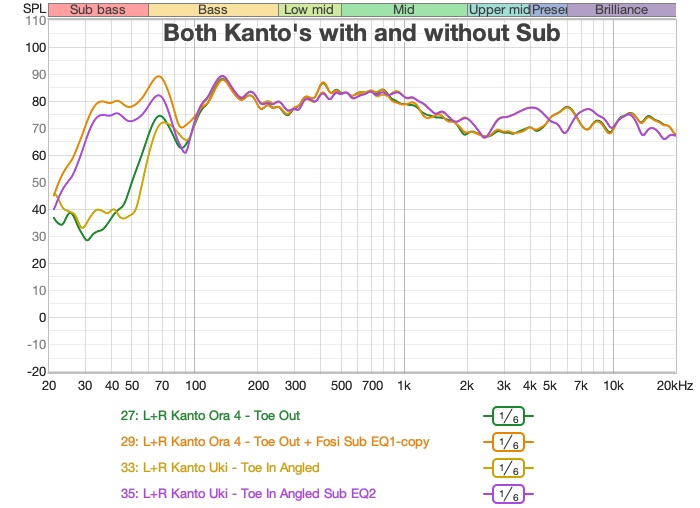
This is where the UKI’s story becomes genuinely interesting. My first week of listening left me impressed but measured: the UKI sounded good, delivered clean mids and a tidy soundstage, but the limits of a 3-inch woofer were audible on bass-heavy material. In the second week I connected a Fosi Audio SW1 subwoofer via the dedicated sub output, and the transformation was substantial. The automatic 100 Hz crossover handled the handoff seamlessly and required no tuning — the Fosi filled in the sub-bass that the UKI cannot physically reproduce, and the blended result was a genuinely full-range desktop sound. The combination produced a presentation I preferred over the ORA4 running in the same sub-paired configuration, a result I did not anticipate going in. The UKI’s cleaner, more open midrange character, freed from any low-frequency stress, proved to be the stronger platform for that pairing.
It is worth noting that Kanto themselves make a range of compact subwoofers that would be a natural aesthetic match for the UKI’s footprint, though I used the Fosi SW1 as it was already integrated with other speakers I was testing concurrently. The message is the same regardless of which sub you choose: the UKI with a subwoofer is a considerably more capable system than the UKI alone, and if this speaker is on your shortlist for a desktop setup I would factor a sub into the budget from the outset.
Comparisons
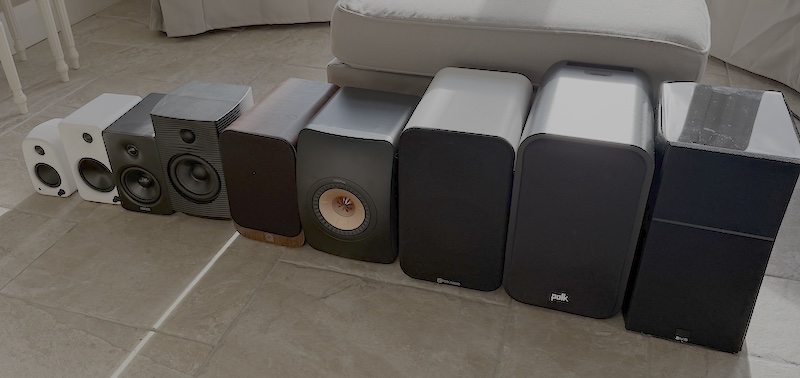
I have been fortunate enough to be able to review and compare many desktop and bookshelf speakers over the past year, and I thought it might be fun to put some of them together in a single picture, just to show the various sizes:
 |
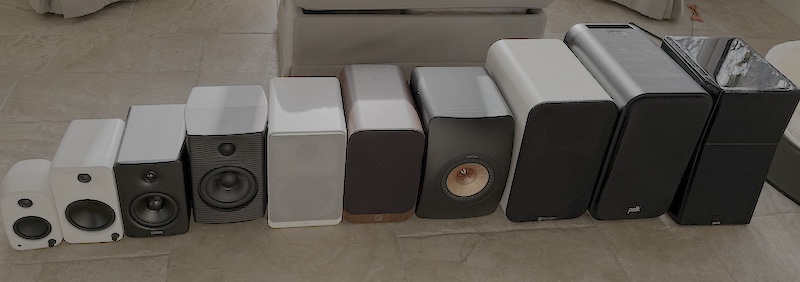 |
Kanto ORA4 — The ORA4 sits at a slightly higher price point and houses a larger 4-inch woofer, which translates into meaningfully deeper bass extension and more headroom before distortion sets in. Without a subwoofer, the ORA4 is the fuller-sounding speaker and the stronger standalone choice.
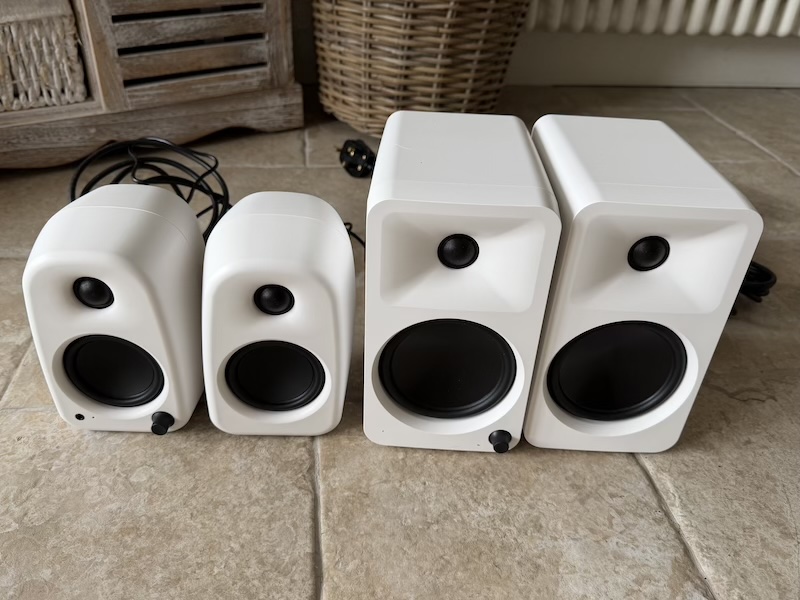
However, when I paired both with the same subwoofer, the UKI held its own and — in my listening — slightly edged ahead, largely because its midrange openness and cohesion are easier to appreciate once bass duties are handed off to a dedicated driver. For a sub-free setup, the ORA4; for a sub-integrated desktop system, the UKI is a very compelling alternative. You can read the full Kanto ORA4 review here.
Edifier M90 — The M90 is a substantially different product serving a substantially different audience. It is a larger desktop speaker with larger drivers, more built-in DSP, HDMI input, and extensive controls that position it as a feature-rich multimedia station. I rate the M90 highly for what it does, someone choosing between these two is choosing between a highly compact, minimalist, aesthetically minded WFH speaker and a fully-featured audio centre. The UKI wins on size, aesthetic simplicity, and near-field intimacy; the M90 wins on raw output capability and feature breadth. Here is my recent review of the Edifier M90.
For fun and to give you a perspecitive on the size range of ‘bookshelf’ speakers, here is an image with the SVS Ultra
Evolution Bookshelf:
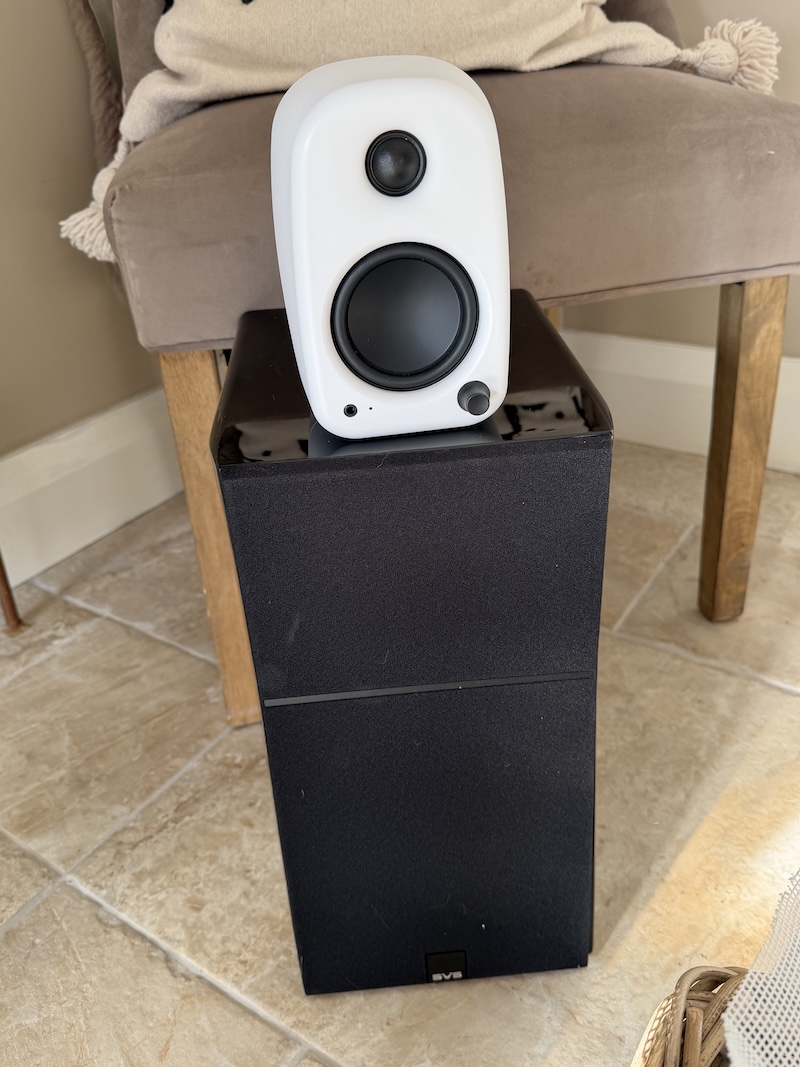
Hopefully, it illustrates just how compact the UKI is against a traditional bookshelf speaker.
Specifications and Measurements
| Specification | Detail |
|---|---|
| Drivers | ¾" Silk Dome Tweeter, 3" Paper Cone Woofer |
| Amplification | Class D Bi-amplified |
| Peak Power | 100 W (50 W Total RMS) |
| Tweeter Power | 9 W RMS |
| Woofer Power | 16 W RMS |
| Frequency Response | 80 Hz – 22 kHz |
| Inputs | RCA Line-Level, USB-C (16-bit/48 kHz), Bluetooth 5.3 |
| Outputs | Subwoofer Out, 3.5mm Headphone Out |
| Crossover | Automatic 100 Hz High/Low-Pass Filter |
| Dimensions (each) | 4.4" W × 4.3" D × 6.5" H (11.2 × 11 × 16.5 cm) |
| Weight (active) | 2.2 lb (1 kg) |
| Weight (passive) | 1.9 lb (0.9 kg) |
| Rear Mounting | ¼"-20 threaded hole |
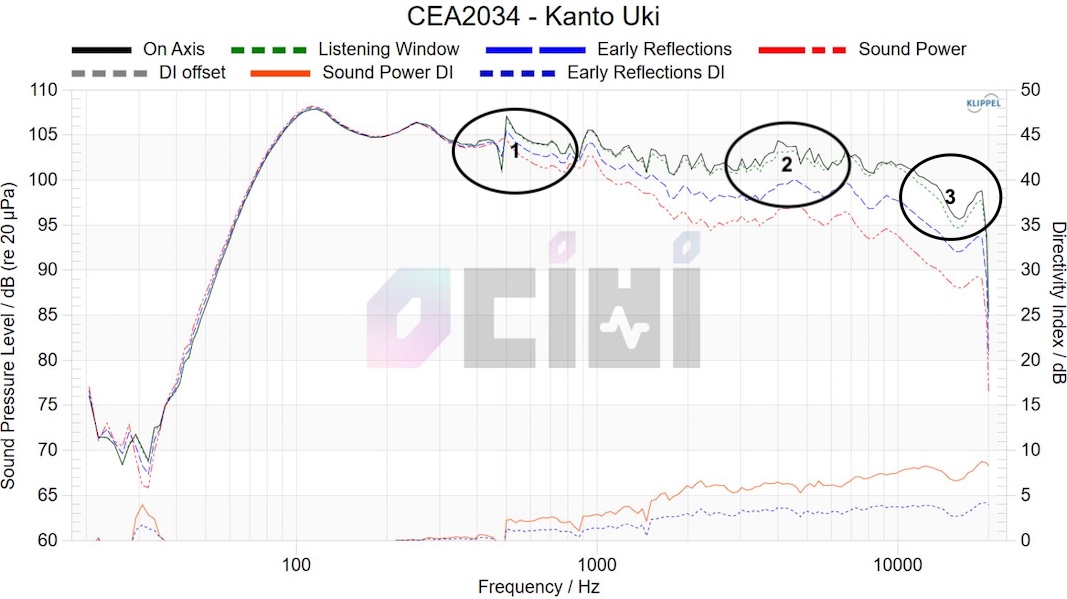
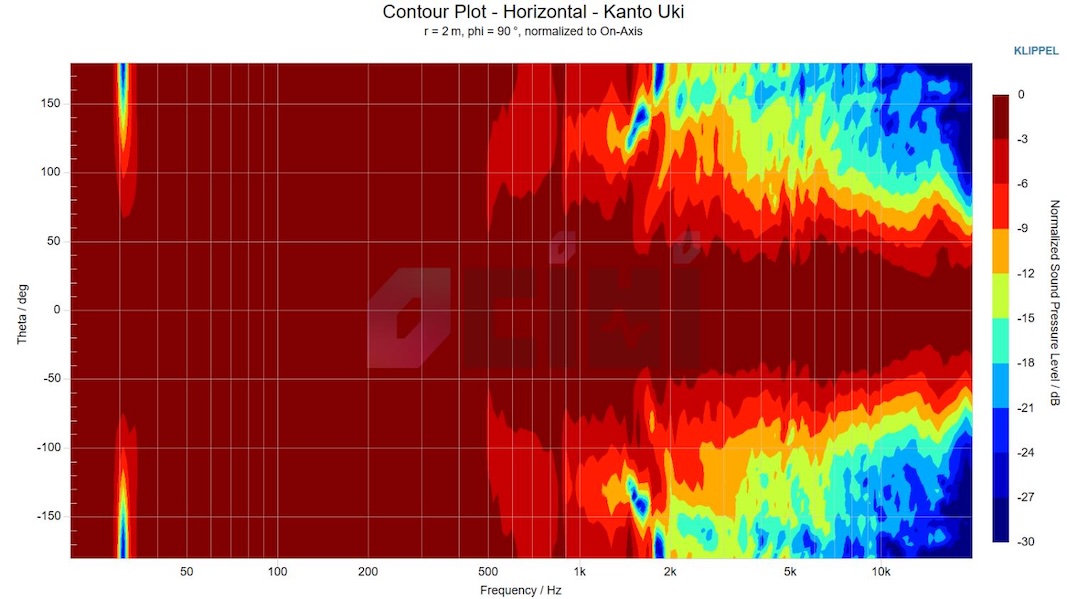
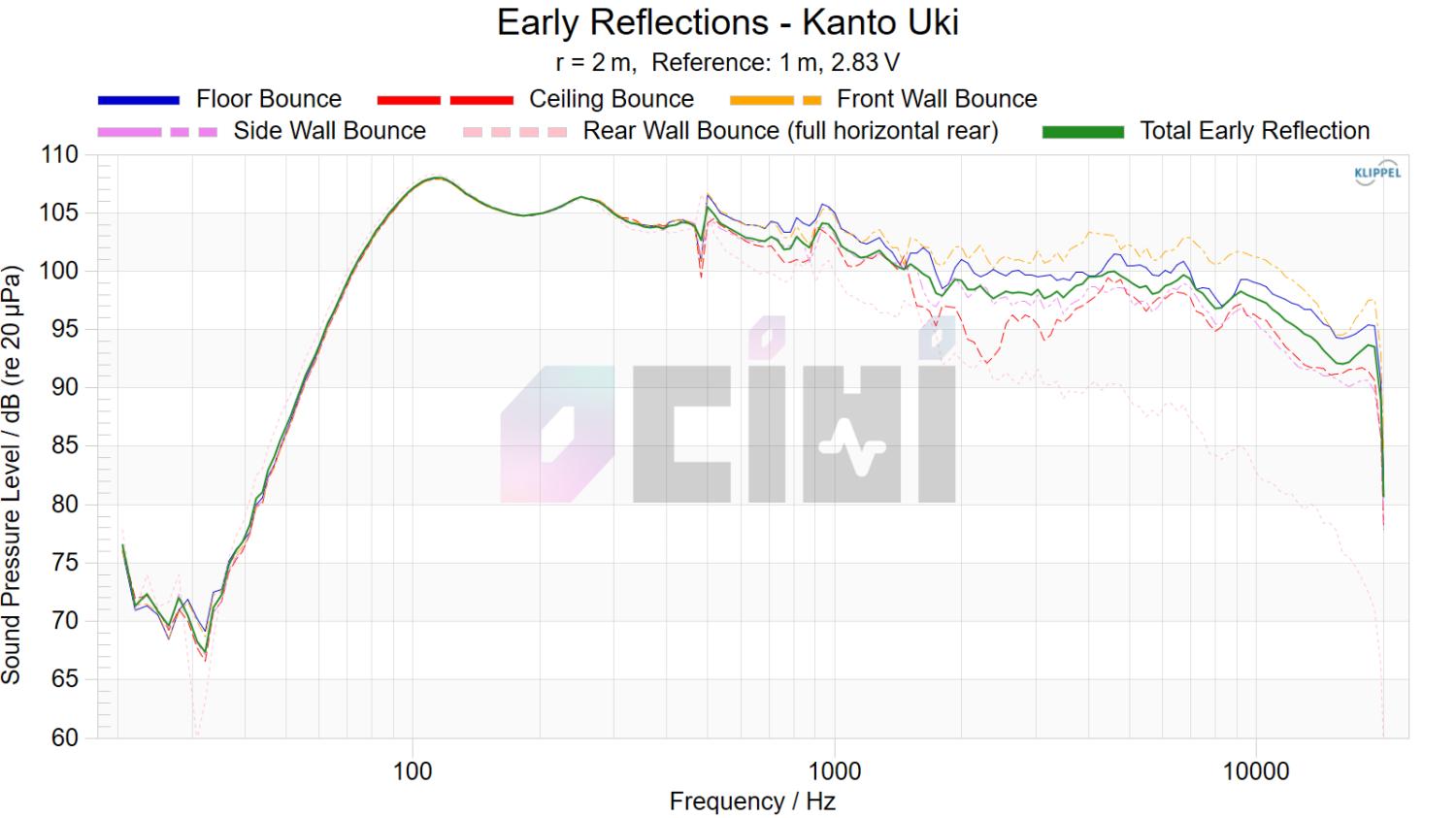
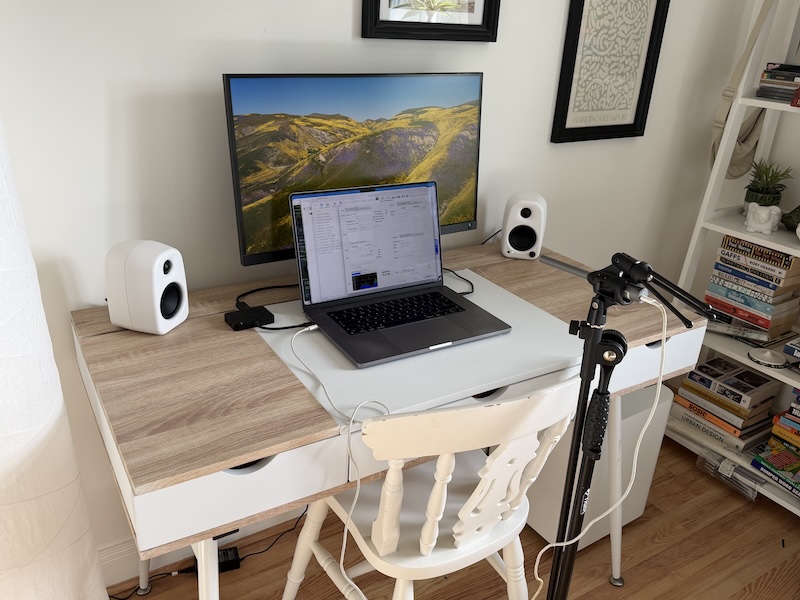
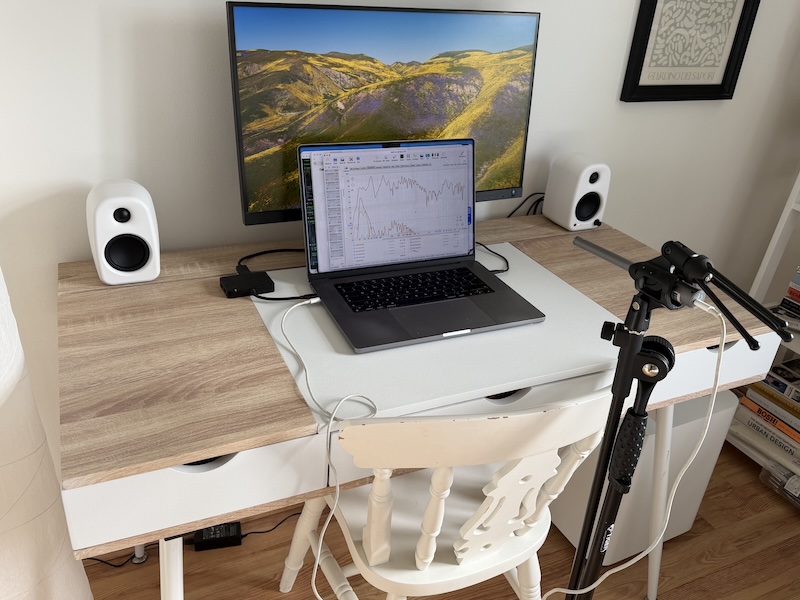
The measurements below are sourced from a thorough Korean review at 0db.co.kr, whose careful work I am grateful to reference here. I have supplemented those published measurements with my own in-room measurements taken on my WFH desk using a calibrated microphone.
 |
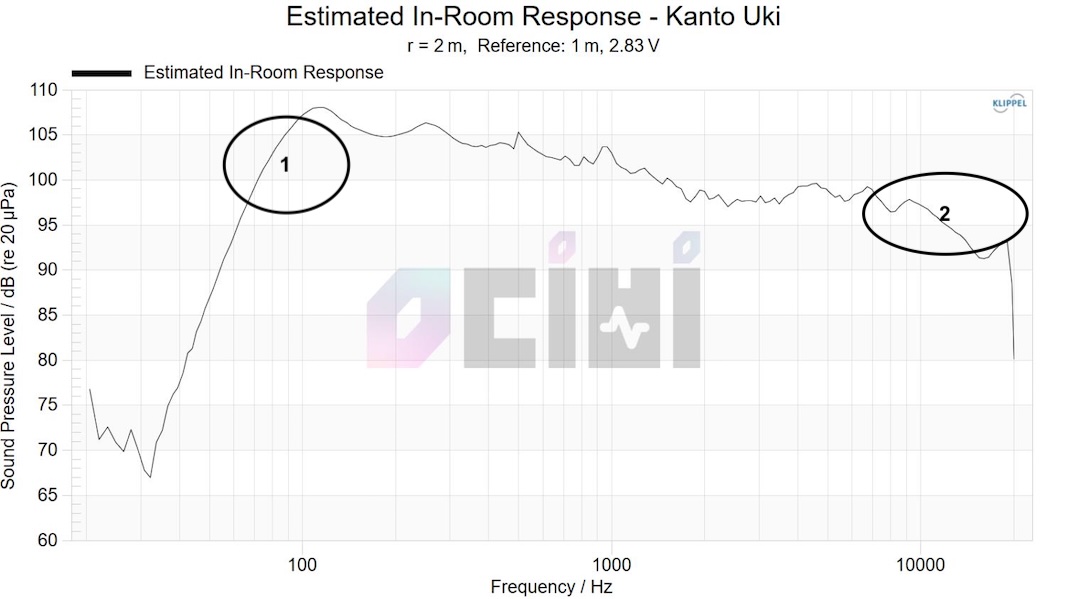 |
The CEA2034 on-axis response shows a speaker that is well-behaved through the midrange and lower treble. My annotated estimated in-room response highlights two points worth understanding before buying: first, the bass roll-off begins at roughly 100 Hz, with some usable output continuing down to around 70 Hz before falling steeply — this lines up precisely with the listening impressions described above; and second, a gentle upper-treble taper above 15–16 kHz, which contributes to the speaker’s inoffensive, non-fatiguing character over long desk sessions.
 |
 |
 |
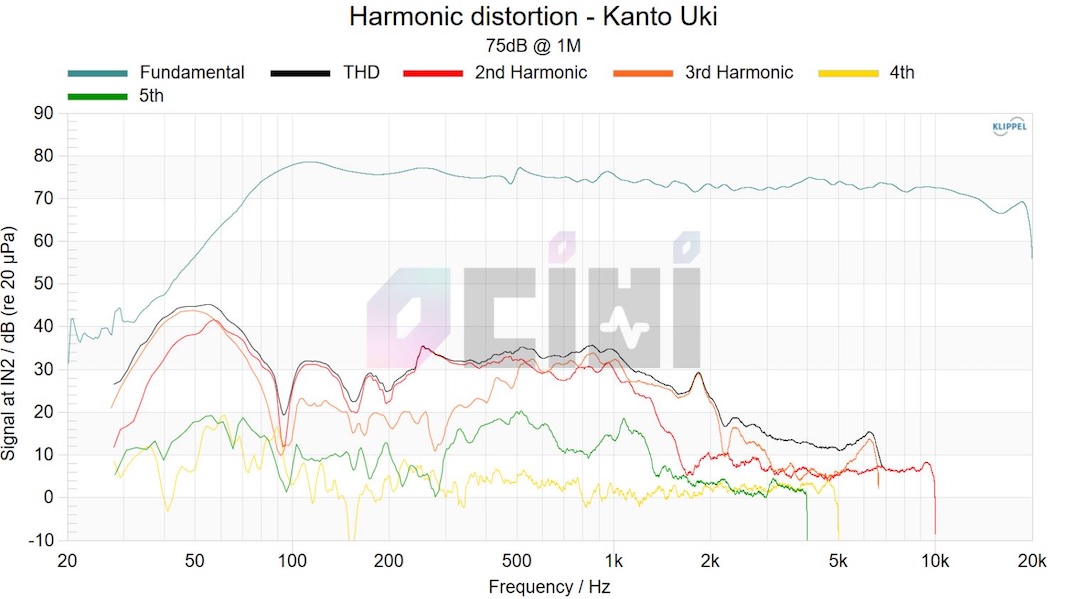 |
The horizontal contour plot is genuinely good — dispersion is well-controlled across the horizontal axis, which translates to a stable and consistent presentation as you shift position at your desk. The vertical contour, as discussed in the treble section, is a more pointed reminder of placement: above the tweeter’s natural axis, upper-frequency energy tapers meaningfully. The early reflections curve is clean and consistent with the horizontal dispersion behaviour. Distortion at 75 dB SPL is respectable for the driver size — mid and treble distortion figures are well within acceptable territory.
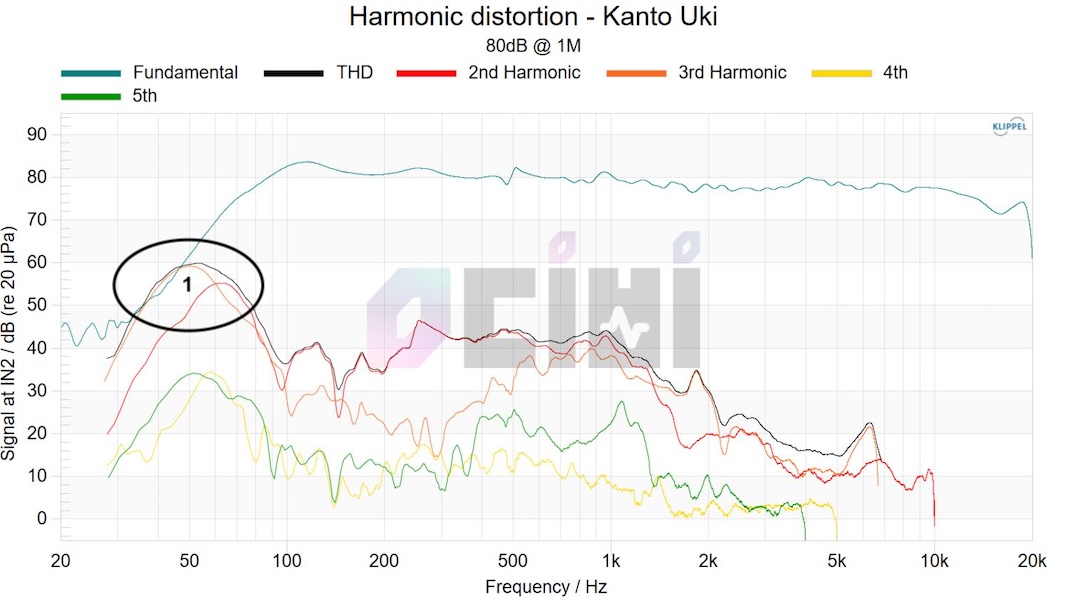
At 80 dB SPL, bass distortion climbs markedly. This is a physical ceiling of a 3-inch woofer under low-frequency load and should be understood as a design constraint rather than a defect. The practical implication: at 75 dB SPL and below, the UKI behaves very cleanly; above that, and particularly on bass-heavy material, the limiter and rising distortion encourage restraint. Add a subwoofer, let it carry the low end, and this constraint becomes largely academic.
 |
 |
 |
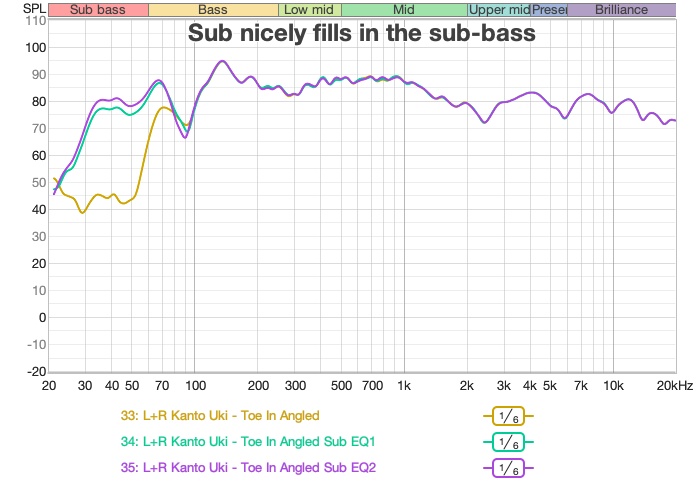 |
My in-room measurements confirm the behaviour described throughout this review. The in-room plot with the Fosi SW1 active shows the automatic crossover working exactly as promised — the sub fills in the low end below 100 Hz and the combined curve is impressively even for a budget desktop system. The final comparison against the ORA4 in-room is a useful reference for the bass extension advantage the larger speaker holds when both are run without a subwoofer.
Rating Explanation
The UKI earns its five-star pragmatic rating by delivering genuine quality within well-defined physical limits. The build is solid and attractive, the midrange is the standout sonic strength, the automatic subwoofer crossover is one of the most practically useful features I have seen on a desktop speaker at this price, and the connectivity — USB-C, Bluetooth 5.3, RCA, headphone out — covers every sensible use case for a near-field desk speaker without requiring an app. Four stars for price reflects a product that is competitively positioned for what it delivers; at $269 it is not a budget option, but the quality-to-price relationship holds up when the speaker is used thoughtfully within its intended context. The measurements rating of four acknowledges strong dispersion performance and clean midrange behaviour, tempered by the distortion ceiling and bass roll-off that are inevitable at this driver size.
The genuine limitations are worth stating plainly. Bass response rolls off audibly below 100 Hz without a subwoofer, and distortion in the bass region at 80 dB SPL is high enough to recommend staying at more moderate levels for critical listening. The USB-C audio input tops out at 16-bit/48 kHz — sufficient for daily listening but not for high-resolution playback. Bluetooth is limited to SBC and AAC; there is no aptX or LDAC, so wireless high-resolution streaming is off the table. There is no built-in DSP or room correction, which means a device like a WiiM Pro Plus is the logical companion if personalised EQ or room optimisation is wanted; the good news is that a WiiM-plus-UKI-plus-sub system can be assembled for a total that remains very reasonable and produces excellent results.
The UKI is an ideal first serious desktop speaker for a listener moving beyond laptop or monitor speakers, and a strong choice for anyone building a compact, aesthetically coherent sub-based WFH setup.
Conclusion
The UKI is a composed, natural-sounding speaker that rewards some careful placement and is honest within its physical limits. It is also a speaker that reveals its full potential when paired with a subwoofer, a combination that turned out to be one of the most compelling desktop setup, I have heard at this price point during this review cycle. The midrange alone sets the UKI apart from many same-price alternatives in the compact desktop category, and the automatic crossover makes subwoofer integration an afterthought rather than a project.
If you are buying the UKI for full range listening, budget for a sub from the start. Kanto themselves sell some excellent subwoofers. The Kanto UKI is an easy and enthusiastic recommendation for anyone expanding their desktop listening setup — and an unexpectedly strong foundation to get into the hobby.