Kanto ORA4
A Bi-Amplified Reference Desktop Speaker Built for Near-Field Listening
Kanto have been making powered desktop speakers since 2007, building a following in the near-field market with stylish, well-specified designs. The ORA4 is their fourth generation of this speaker line, and the current iteration makes a compelling case on paper: bi-amplified drivers, USB-C audio, and a compact form factor designed squarely for desk use at $450.
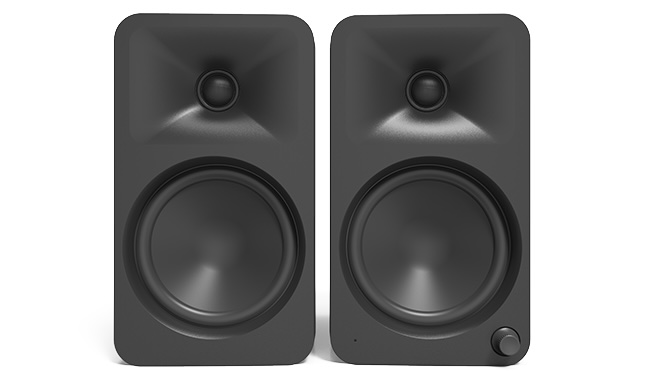
I would like to thank Kanto Audio for providing the ORA4 for the purposes of this review. The unit reviewed here is the White variant; the ORA4 is available in seven colour options.
If you are interested in finding more information about the ORA4, you can find it at the official product page.
The Kanto ORA4 typically retails for $449.99.
I have been living with the ORA4 for approximately six weeks across my work-from-home desktop setup, including a week with a Fosi Audio SW1 subwoofer to test the dedicated sub output and automatic 80Hz crossover. What stood out immediately was how well-controlled and neutral the ORA4 sounds for its size, but I did notice a few things that might change how you set the speaker up for best results.
But first, let’s take a look at what arrived in the box.
Unboxing and Build Quality
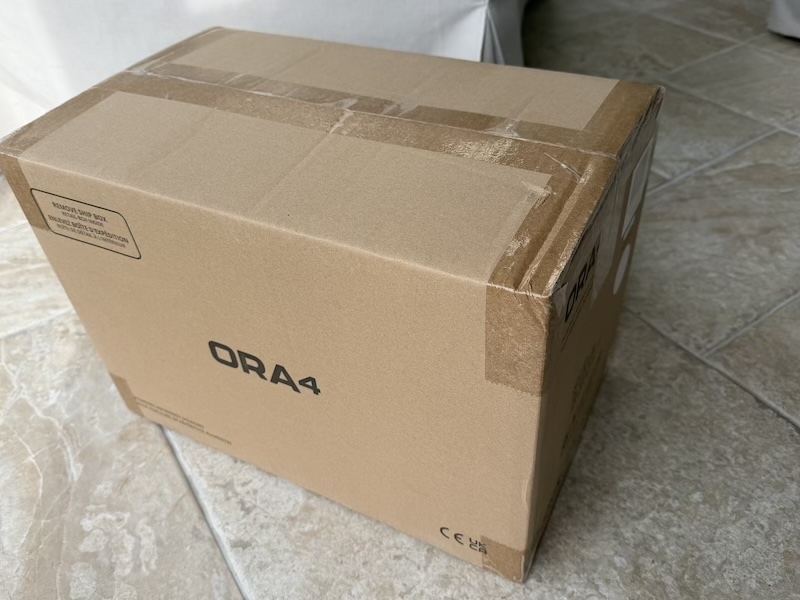
The ORA4 ships inside a plain outer shipment box that opens to reveal the retail packaging — clean and well-presented without being ostentatious.
 |
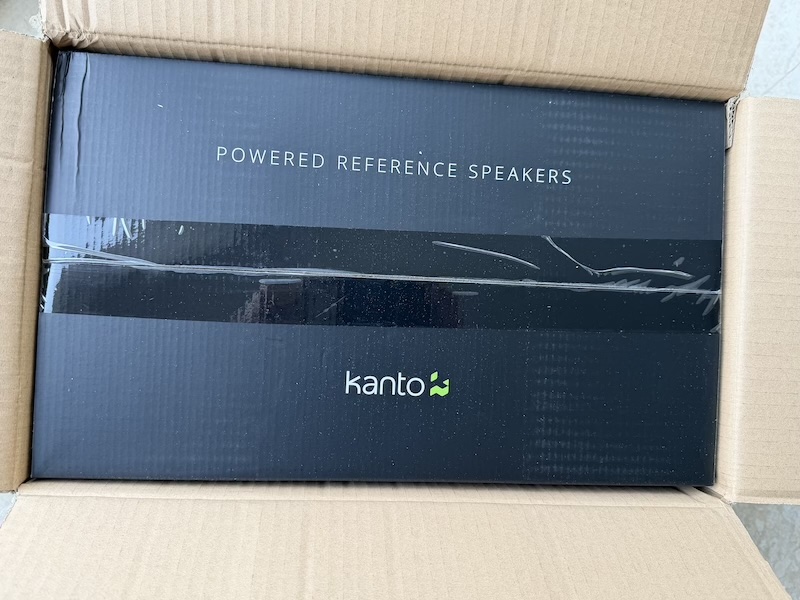 |
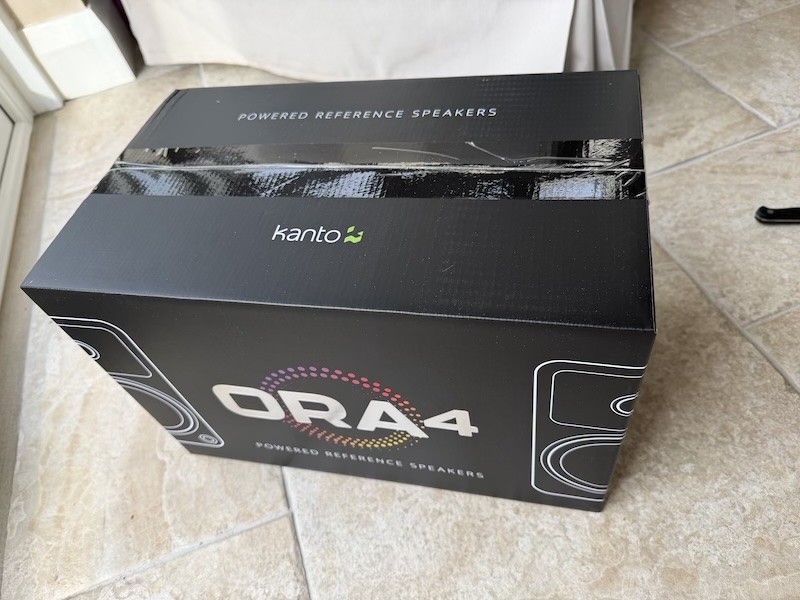
The retail box itself carries neat branding and enough information to tell the buyer exactly what they are getting.
 |
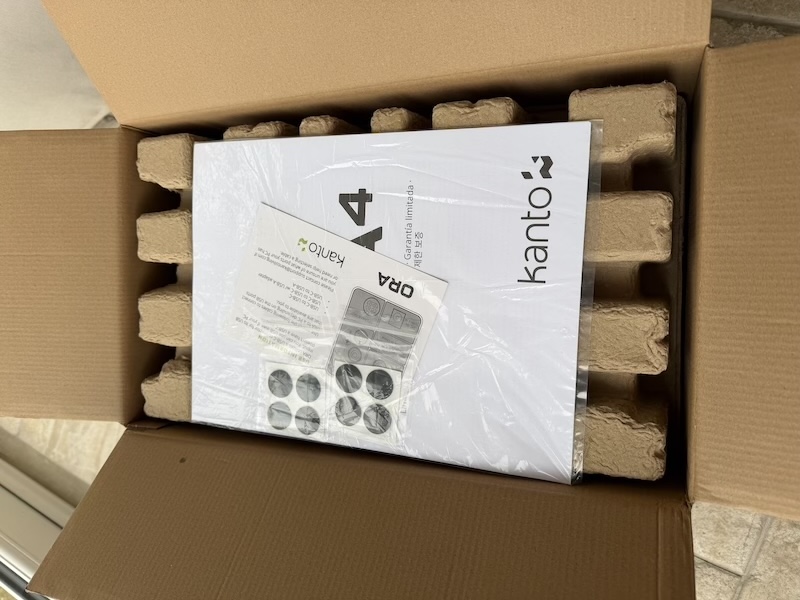 |
Opening the box reveals the manual sitting on top, with the speakers themselves nestled below in individual protective plastic separated by the accessories box, a sensible approach that keeps everything intact during transit.
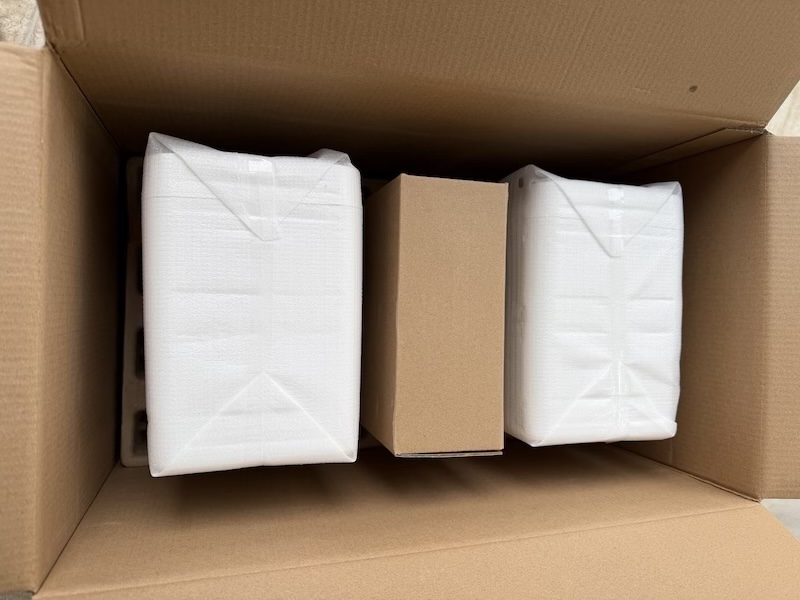
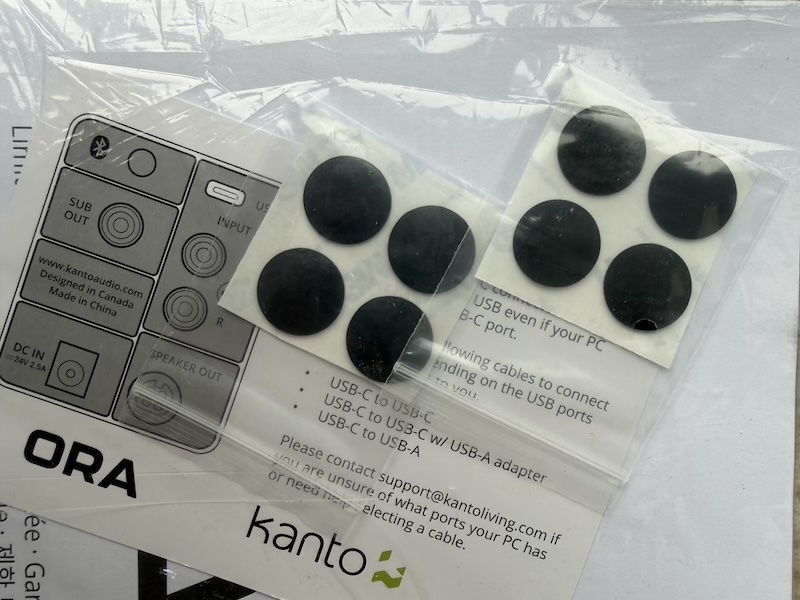
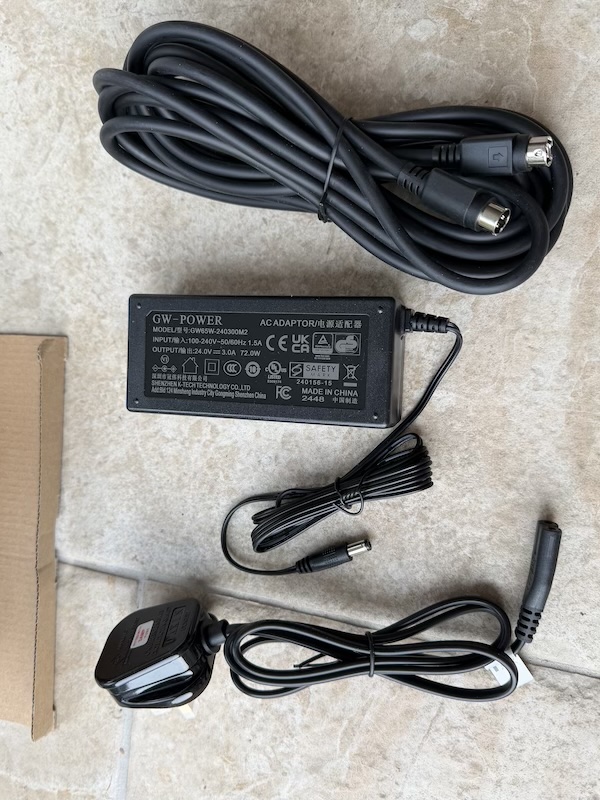
In the box you will find both speakers, a 16-foot 4-pin speaker interconnect cable, a power cord, eight rubber feet, and a quick start guide.
 |
 |
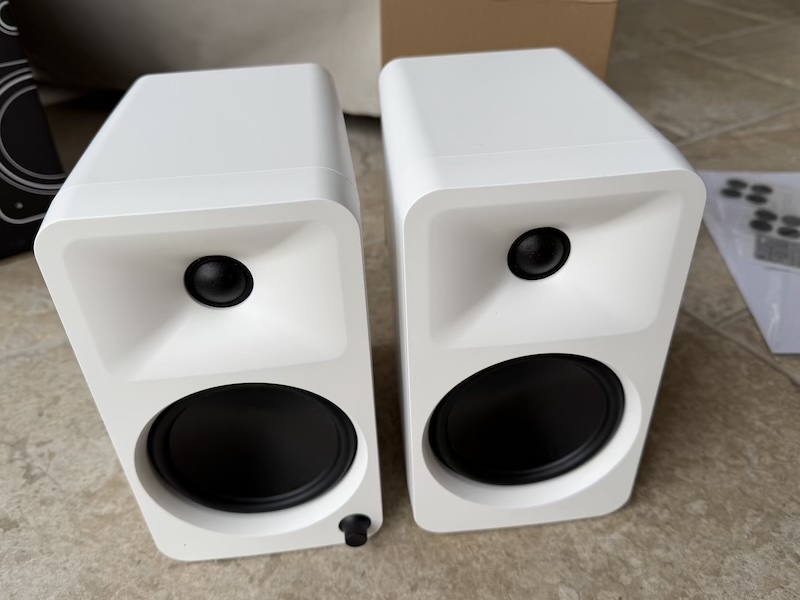
Build quality on the ORA4 is excellent, and the White finish I feel, in particular, looks genuinely premium — clean surfaces with no obvious seams or budget tells. The compact dimensions (4.7" W × 6.7" D × 8.3" H) make it straightforward to place on a desk without dominating the space, and the weight 4.3 lb for the active unit gives a feel of quality, the passive unit is slightly lighter at 4.0 lb.
The rear panel of the active speaker is impressively equipped for its size:
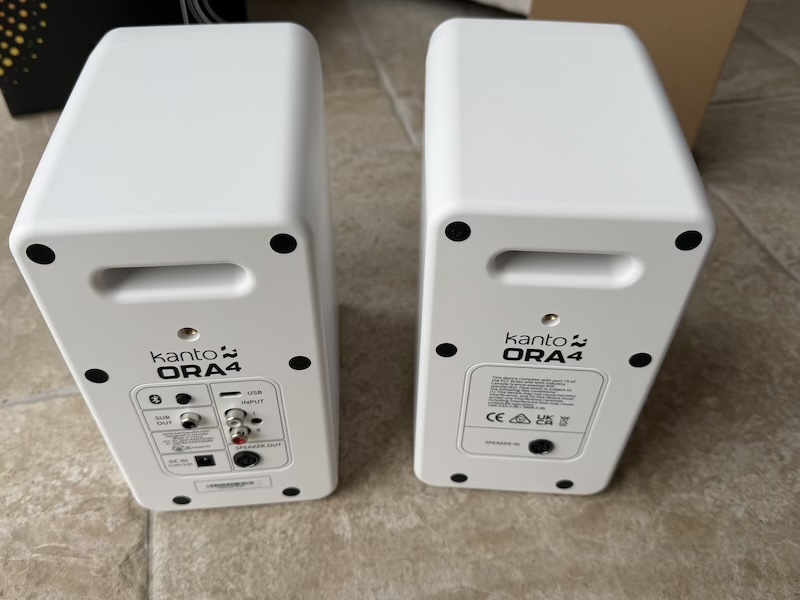
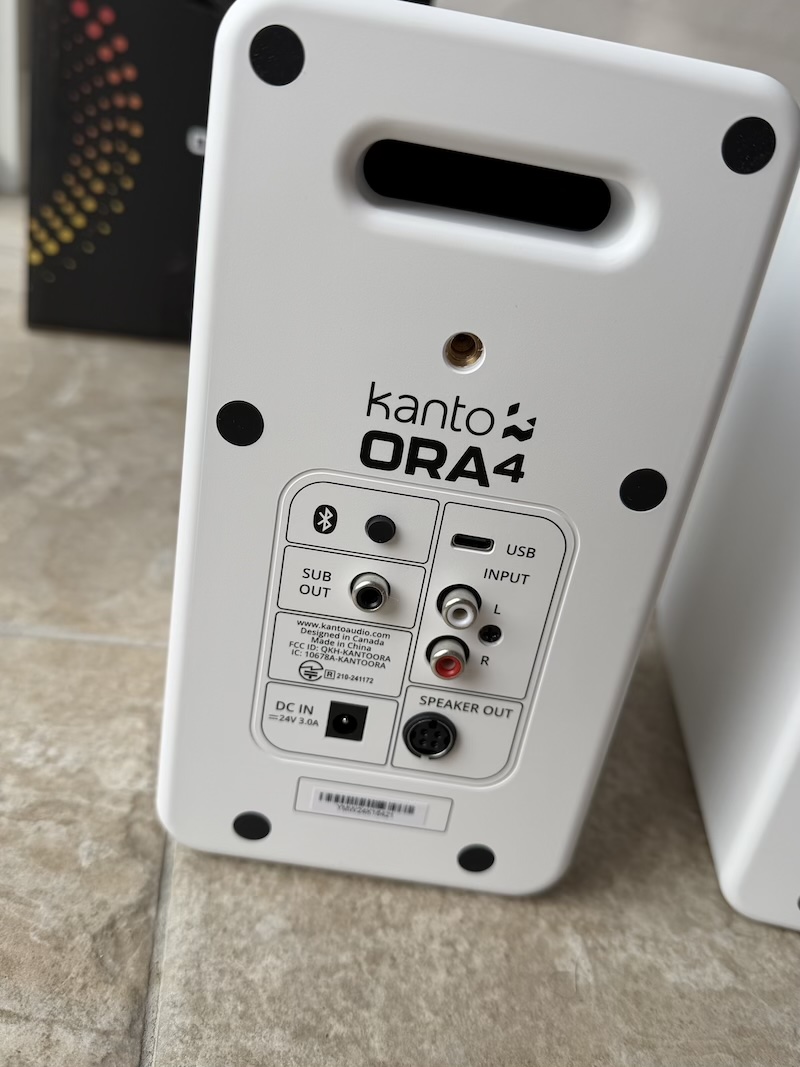
The back carries the USB-C input, stereo RCA line input, a Bluetooth pairing button, a dedicated subwoofer RCA output, a speaker output for the passive unit, and the DC power input. A small rear bass port is also visible here — I found the ORA4 benefited slightly from placement with some wall proximity, which helps reinforce the low end without smearing the mid-bass. The passive speaker’s rear panel is considerably simpler, carrying only the 4-pin input connector from the active unit.
 |
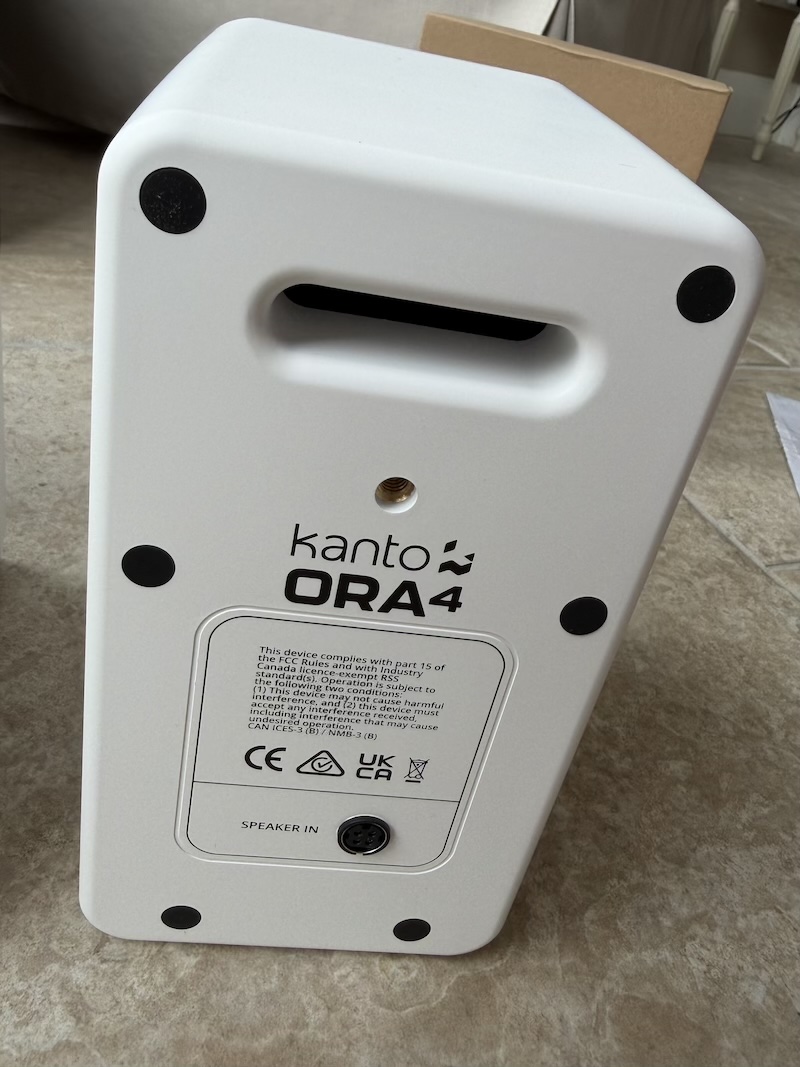 |
The underside features the ¼"-20 threaded mounting hole — a thoughtful addition that means the ORA4 can be wall-mounted or fitted to a compatible desktop stand.
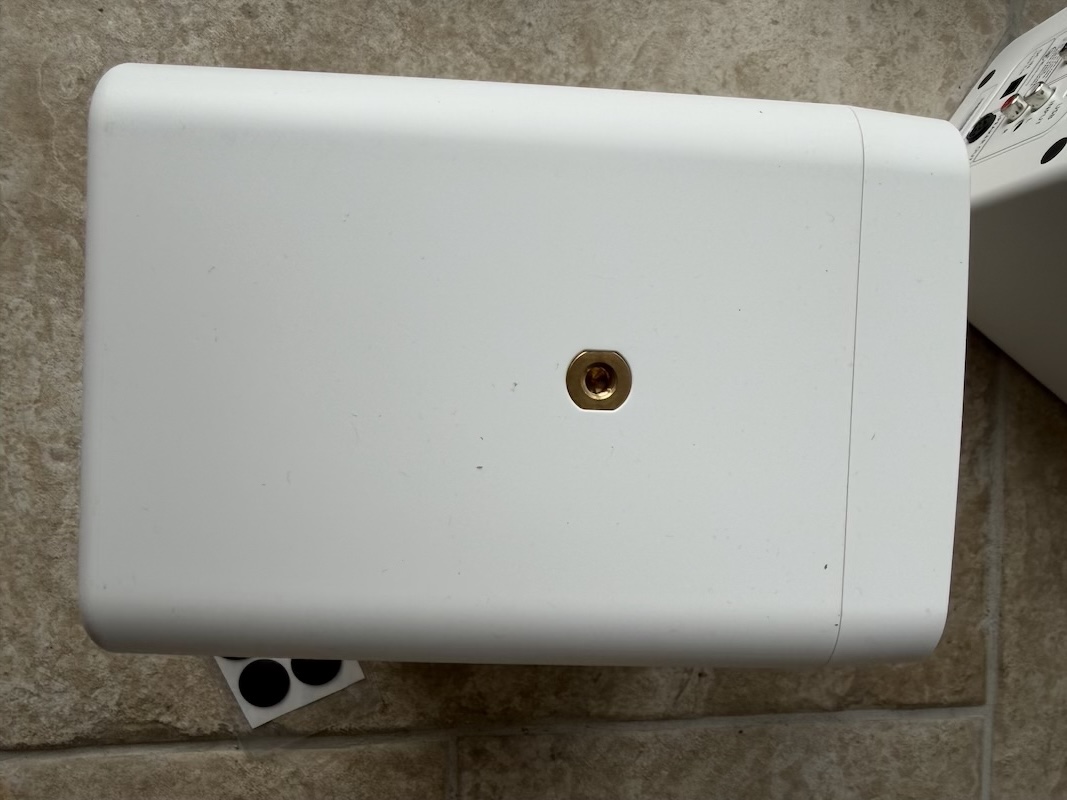
I did not pick up the optional Kanto desktop stands for this review, and with hindsight I slightly regret that — as the measurements section will show, the ability to precisely control toe-in angle makes a meaningful difference to the treble response, and a dedicated stand would make that optimisation easy to dial in and lock.
Features and Connectivity
The ORA4 takes a deliberate no-nonsense approach to its feature set, and that is both a strength and a limitation depending on what you need from a desktop speaker. On the front of the active speaker, a single volume knob handles everything: short press to cycle inputs, long press to power on or off, and rotate to adjust volume. A small LED indicator on the opposite corner uses colour to identify the active input — blue for Bluetooth, yellow for USB, green for RCA. Simple, clean, and practical enough that you stop noticing the controls entirely once you have settled into a daily routine.
The rear USB-C input supports bit-perfect audio at up to 24-bit/96kHz and was the primary connection I used during the review period, routing directly from my MacBook Pro. This works without any driver installation or configuration, which is exactly how it should work. The RCA line input handles analogue sources cleanly — I used this with a WiiM Pro streamer, which paired naturally with the ORA4’s neutral character and allowed me to tweak the sound with the WiiM platform PEQ. Bluetooth 5.0 covers wireless streaming from phones or smart home devices.
Note: An optical input would have been a nice addition to round out the connectivity at this price — its absence is the one gap I think that some users will feel — but for the USB-C and analogue use cases the ORA4 is well-equipped.
The subwoofer output in my opinkion, is one of the ORA4’s best features. When a subwoofer is connected, the ORA4 automatically applies an 80Hz high-pass filter to its own woofers, keeping the 4" drivers operating within their comfortable range and reducing distortion at higher playback levels. This is handled transparently with no manual crossover adjustment required — this design choice matches the ORA4’s overall philosophy of keeping things clean and simple. The trade-off is that the crossover frequency is fixed at 80Hz, which may not be the optimal hand-off point for every subwoofer combination.
Note: There is no companion application or onboard parametric EQ, I feel in 2026 this is probably a missing feature, with any system-level correction handled upstream in the user’s signal chain if needed, like I experimented with on my WiiM Pro streamer.
Sound Impressions
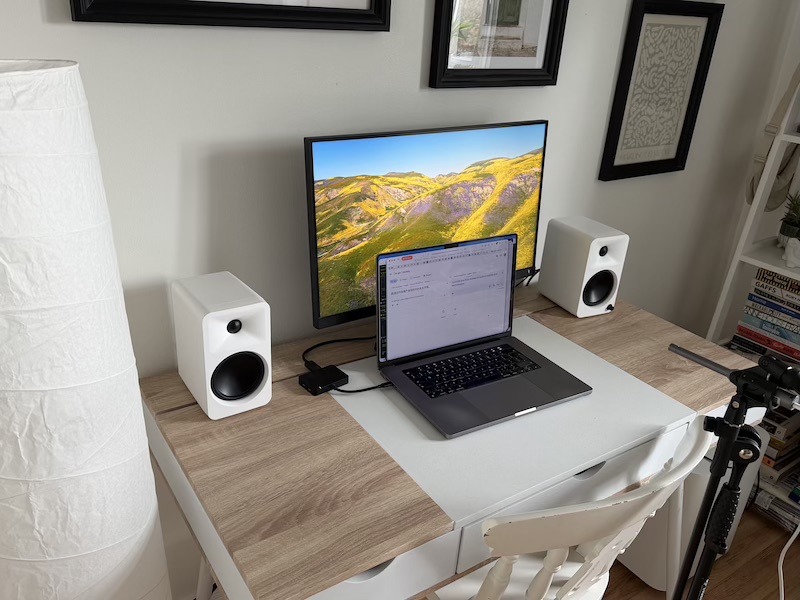
All critical listening was conducted on my work-from-home desktop, driven primarily via USB-C from a MacBook Pro and supplemented by RCA from a WiiM Pro for high-resolution streaming comparisons. The first week was spent listening without a subwoofer; the second week introduced the Fosi Audio SW1 via the ORA4’s dedicated sub output. Listening volumes were kept in the 70–80dB SPL range typical of near-field desktop use, with the ORA4 toed in toward the listening position throughout.
The ORA4’s overall character is emphatically neutral — an even-handed presentation that prioritises accuracy over flattery. This is a speaker that reports what is on the recording rather than adding warmth, colour, or excitement of its own.
Bass
The low end through the ORA4 is tight and well-controlled, with convincing mid-bass texture and good articulation. The 4" aluminium woofers deliver a genuinely respectable bass extension for the cabinet size — Kanto rate the bass response down to 60Hz, and in practice the ORA4 holds composure across the majority of music without sounding lean or undernourished at typical desktop listening levels.
Donald Fagen’s “The Nightfly” is a particularly reliable reference here: through the ORA4, the bass guitar tracks cleanly with good definition and natural decay, and the album’s famously pristine low-end recording reveals whether a speaker has genuine extension.
The automatic 80Hz crossover becomes meaningful with more demanding material: James Blake’s “Limit to Your Love” — one of the more unforgiving sub-bass tests in my rotation — made clear that sub-60Hz content is where the ORA4’s cabinet size becomes the limiting factor. With the Fosi SW1 handling the deep bass via the sub output, the ORA4 immediately opened up, sounding more composed and effortless at the same playback level. For most genres the ORA4 is entirely capable as a standalone speaker; for bass-heavy music, the subwoofer output is genuinely functional rather than decorative.
Midrange
The midrange is where the ORA4 earns its reference positioning most convincingly. Tonal density is excellent — voices and instruments carry genuine body without romantic colouration — and the bi-amplified design keeps midrange reproduction free from the kind of woofer break-up distortion that can muddy this frequency range in a single-amp design.
Piano timbre is accurate and weighty, acoustic guitar has appropriate bite without sounding glassy, and upper midrange energy is sufficiently restrained to avoid fatigue over long listening sessions. Dire Straits’ “Brothers in Arms” rewards the ORA4’s midrange transparency well — the guitar work and vocal intimacy of the recording come through with real instrumental separation and note weight. There is a slight dip in the upper midrange region that the measurements section will discuss; for most music and most listeners it is not disruptive, but it is a characteristic worth understanding and, where needed, addressing through placement rather than EQ.
Treble
Treble extension is confident, with good air and shimmer at the top end and no tendency toward sibilance or glassiness. The ¾" silk dome tweeter sits in a horn-like waveguide that manages high-frequency dispersion cleanly, and the result is a treble presentation that is detailed without being etched.
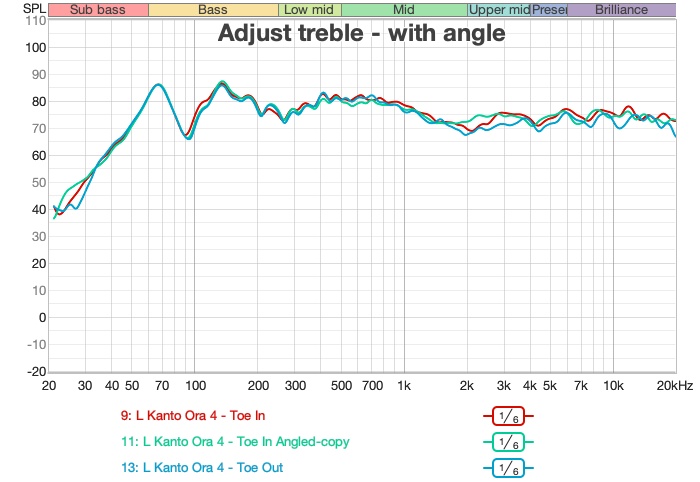
The ORA4’s tweeter dispersion characteristics make it somewhat sensitive to toe-in angle: pointing the speakers directly forward results in a slight roll-off in the upper treble, while angling them toward the listening position fills in the top-end air and shimmer. This is not a flaw — it is physics — but it does mean that correct positioning matters more with the ORA4 than with speakers that use wider or more omnidirectional dispersion patterns. Patricia Barber’s “Use Me” is a reliable test for snare snap and cymbal decay, and through the ORA4 with proper toe-in both are rendered cleanly with natural leading edges. Nils Lofgren’s “Keith Don’t Go” showcases the upper-harmonic guitar shimmer that a well-implemented tweeter resolves beautifully, and the ORA4 handles it with composure.
Soundstage and Imaging
For a compact desktop speaker, the ORA4 delivers a surprisingly convincing soundstage — wide without feeling artificially spread, with a stable centre image and good depth layering on well-recorded material. Stereo imaging is a genuine strength: channel matching is tight, instrument placement is coherent, and the bi-amplified active crossover design contributes to the clean, uncoloured presentation that allows spatial cues to come through clearly.
Miles Davis’ “Kind of Blue” illustrates this well — the intimate studio space and precise microphone placement that make the recording a classic soundstage reference sound involving and composed through the ORA4, with convincing background blackness between instruments. The ORA4 genuinely rewards listening position optimisation: get the toe-in right — and consider the Kanto desktop stands to make that positioning precise and repeatable — and the imaging snaps into focus in a way that feels disproportionate to the speaker’s physical size.
Comparisons
I had some fun one of the days testing the ORA4 alongside a significant cross-section of the desktop speaker of various sizes:
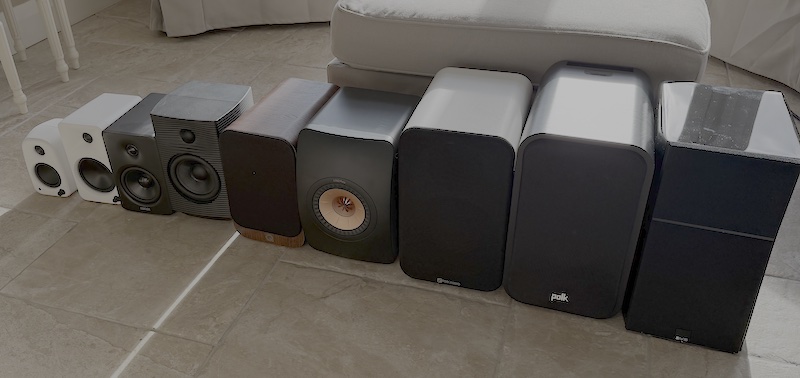 |
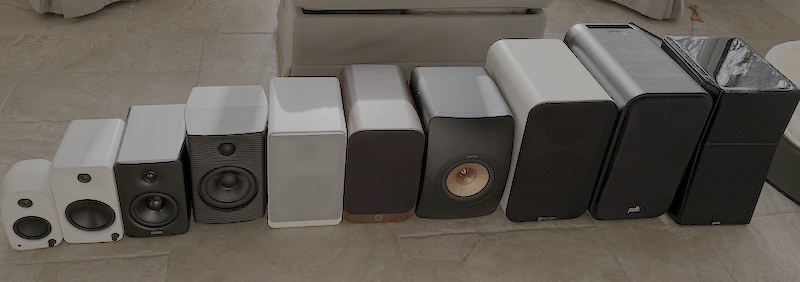 |
And below are some comparisons:
Quick specification comparison
| Kanto ORA4 | Kanto UKi | FiiO SP5 | FiiO SP3 | Edifier M90 | |
|---|---|---|---|---|---|
| Price | $449 | $269 | ~$549 | ~$329 | $369.99 |
| Woofer | 4" aluminium | 3" | 5.25" | 3.5" | 4" aluminium |
| Total RMS | 70W | 50W | ~120W | ~40W | 100W |
| USB-C input | ✓ | ✓ | ✓ | ✓ | ✓ |
| Optical input | ✗ | ✗ | ✓ | ✓ | ✓ |
| Bluetooth | 5.0 | 5.3 | 5.3 | 5.0 | 6.0 |
| Sub output | ✓ (auto 80Hz) | ✓ | ✓ | ✗ | ✓ |
| Headphone jack | ✗ | ✓ | ✗ | ✗ | ✗ |
| App / PEQ | ✗ | ✗ | ✓ | ✓ | ✓ |
Kanto ORA4 vs Kanto UKi
The most natural comparison is Kanto’s own UKi, the smaller sibling in the same lineup. The UKi uses a 3" woofer versus the ORA4’s 4", and the difference in bass extension is clearly audible — the ORA4 is noticeably fuller in the low end and more composed on bass-heavy material without a subwoofer. The UKi does add a headphone jack on the active speaker’s side panel, which some users will find genuinely useful and which the ORA4 omits. Both share the same overall design language, the same clean aesthetic, and similar input options. If you are planning to pair with a subwoofer regardless, the smaller UKi becomes a compelling choice at the lower price — particularly where desk space is extremely tight. But if you want the best standalone sound without a sub, or if you simply want more bass headroom on a congested desk, the ORA4’s larger woofer and higher power rating justify the step up.
Kanto ORA4 vs FiiO SP5
The FiiO SP5 is a larger, more powerful speaker, but slight more expensive, and the comparison illustrates the central trade-off in the desktop speaker market: size and power versus compact footprint and style. The SP5’s 5.25" woofers deliver substantially more low-end authority than the ORA4 can muster, and the FiiO app brings parametric EQ and DSP control that the ORA4 simply does not offer.
However, the SP5 is a meaningfully larger physical object, and on a desk where aesthetics and space matter, the ORA4 is significantly more practical. Though the SP5 is more suited to a larger ‘studio’ setup than a smaller work from home office setup. The ORA4’s bi-amplified neutrality and tighter form factor give it a clear role for users who want reference-quality near-field listening without the footprint of a traditional studio monitor.
Kanto ORA4 vs FiiO SP3
The FiiO SP3 sits at a slightly lower price and represents a strong entry-level value proposition. The SP3 is a decent speaker for users entering the powered desktop speaker space, but the ORA4’s larger woofer, higher power rating, bi-amplified driver design, and build quality represent a genuine audible upgrade — particularly in low-end extension and midrange resolution — that justifies the price difference for anyone who listens seriously.
Kanto ORA4 vs Edifier M90
The Edifier M90 is probably the hardest comparison in terms of overall audio performance and price. The M90 is a physically larger speaker with a larger woofer and more onboard DSP flexibility including integrated EQ controls — a meaningful advantage for users who want room correction or tonal adjustment without a separate solution. The ORA4 counters with more compact dimensions, a more refined aesthetic, and the clean signal path of a speaker designed specifically for near-field reference use. Where desk space is constrained or clean desktop aesthetics are a priority, the ORA4 would be the more practical choice at a comparable price.
Specifications and Measurements
| Specification | Detail |
|---|---|
| Drivers | ¾" Silk Dome Tweeter + 4" Aluminium Concave Cone (Magnetically Shielded) |
| Amplification | Class D Bi-amplified |
| Peak Power | 140W (70W Total RMS) |
| Tweeter Power | 12W RMS |
| Woofer Power | 23W RMS |
| Frequency Response | 60Hz – 22kHz |
| High-Pass Filter | Automatic 80Hz (activated when subwoofer connected) |
| Inputs | RCA Line-Level, USB-C (24-bit/96kHz), Bluetooth 5.0 |
| Output | Subwoofer RCA |
| Mounting | ¼"-20 threaded rear and bottom |
| Dimensions (each) | 4.7" W × 6.7" D × 8.3" H (12 × 17 × 21 cm) |
| Weight | 4.3 lb (2 kg) |
| In the box | 4-pin speaker connector (16’), power cord, 8× rubber feet, quick start guide |
Measurements
The CEA-2034 spinorama data and in-room estimates below are from Erin’s Audio Corner, whose measurement suite provides some of the most rigorous objective loudspeaker data available. I have annotated what I feel are the main findings on the CEA-2034 plot.
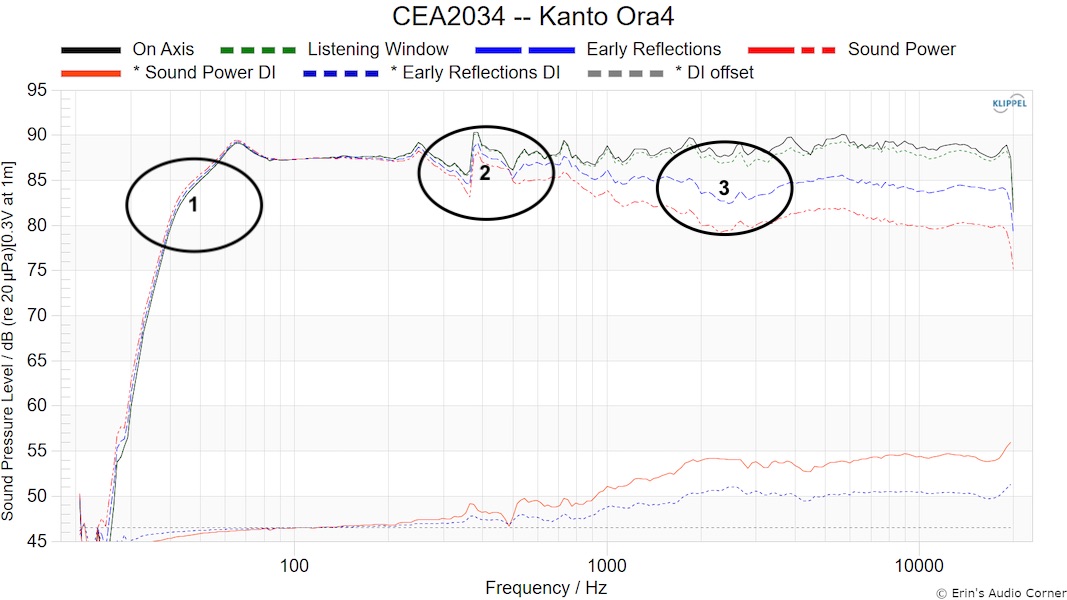
Three things are worth calling out on the CEA-2034 data. First, bass rolls off steeply below 50Hz — but given the ORA4’s cabinet size this is genuinely impressive, and the 60Hz specification is borne out in practice. Second, there is a small kink in the response around 400Hz that is subtle across most programme material but can be noticeable on close listening to piano and lower male vocals; a narrow PEQ correction of a decibel or so here smooths things out if you have equalisation available in your signal chain. Third, there is a dip in the upper midrange region — annotated on the plot — that is the characteristic most sensitive to toe-in angle.
Here is Erin’s estimated in room response again showing that midrange quirk (that might need some PEQ) and the dip in the upper midrange ( very typical of speaker tunings, I believe it used to be called the ‘BBC dip’):
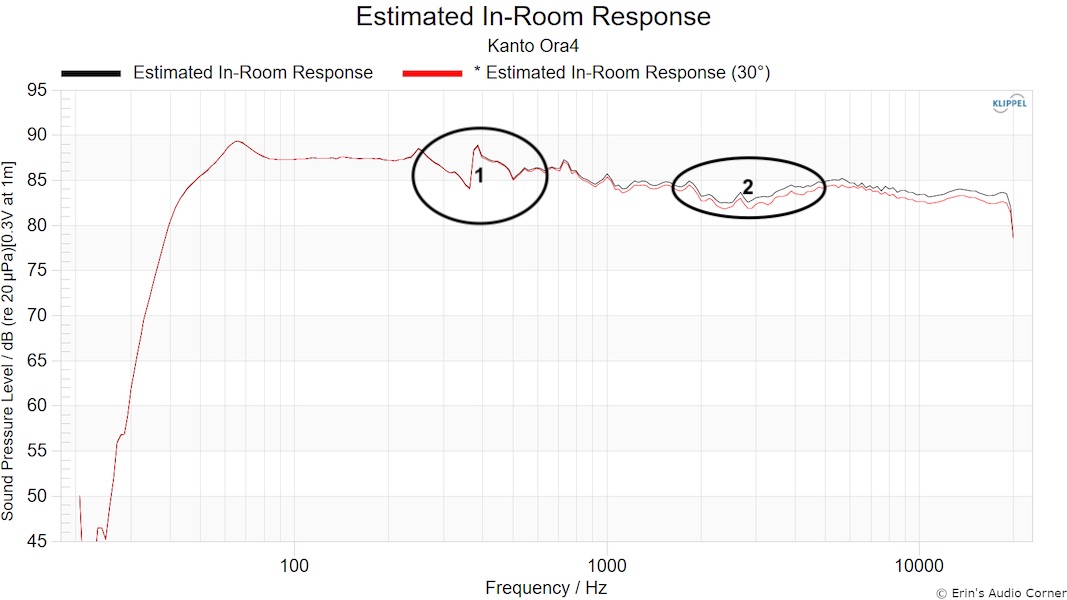
As you will see in my own in-room measurements, angling the ORA4 toward the listening position substantially fills this in, which is exactly why the Kanto desktop stands are worth considering alongside the speaker itself.
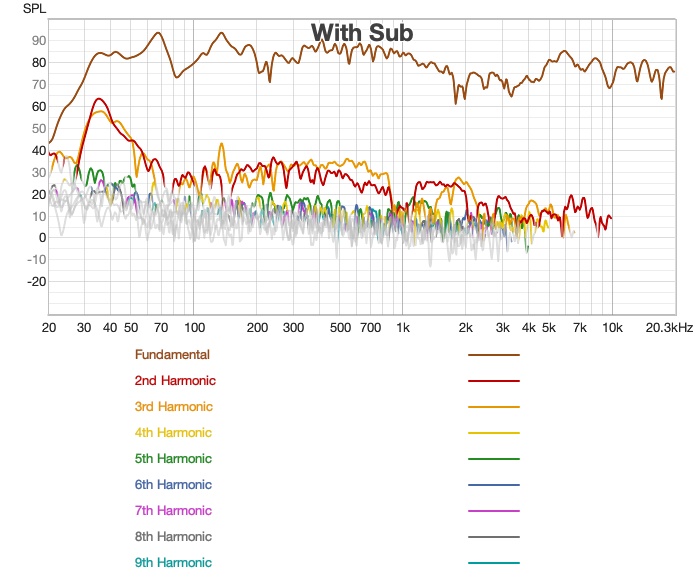
The EAC distortion measurement at 86dB SPL tells the other important story.
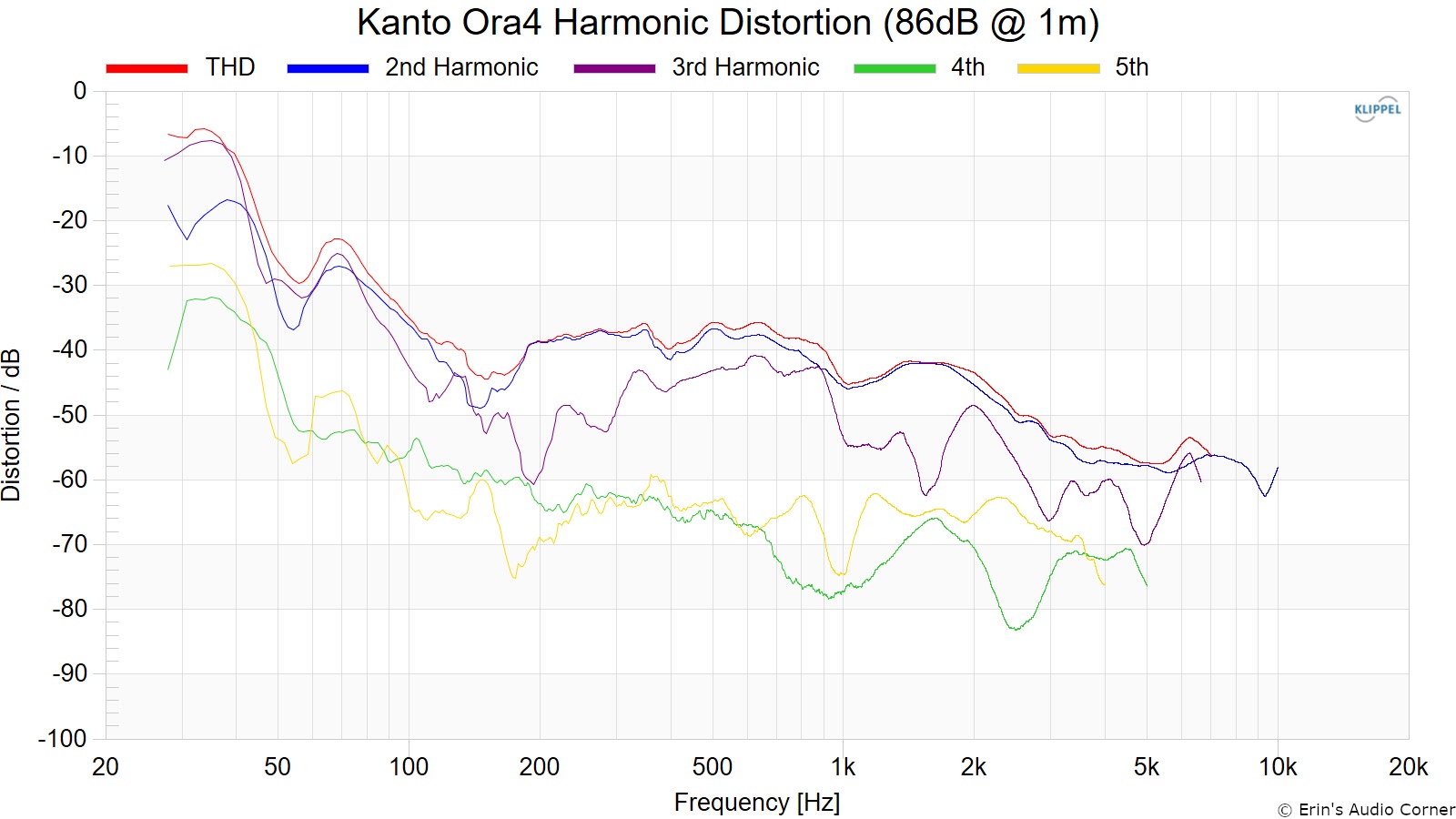
At frequencies below 80Hz, distortion rises noticeably at this volume — precisely the frequency range that the ORA4’s automatic 80Hz crossover is designed to hand off to a subwoofer. For bass-light genres the ORA4 is perfectly capable as a standalone, but for anything with significant sub-80Hz energy the subwoofer output is genuinely functional rather than decorative.
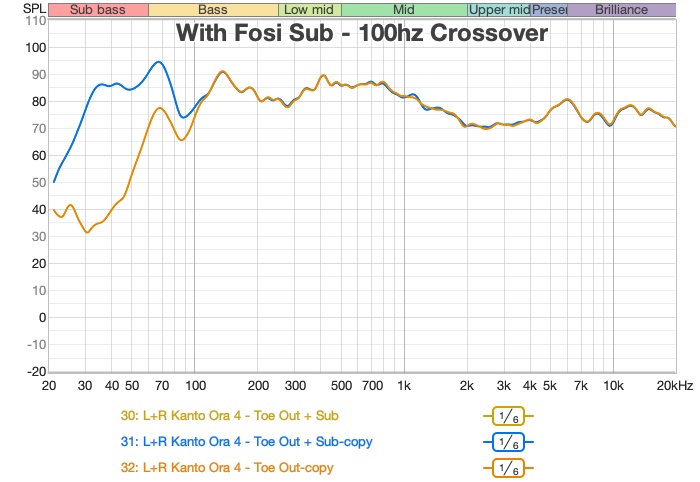
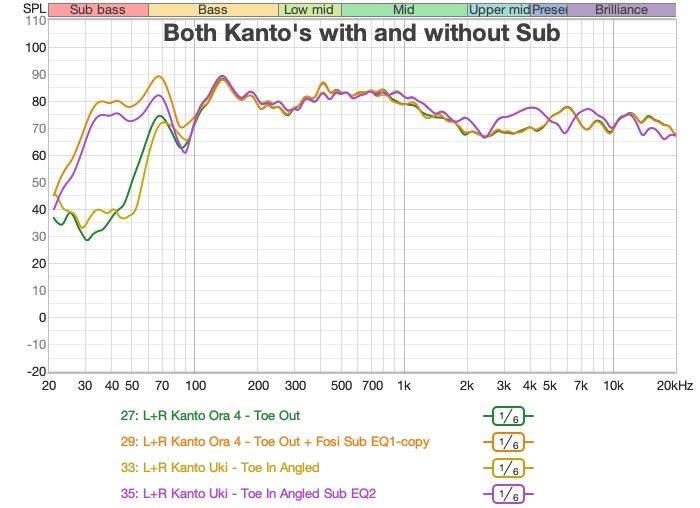
My own in-room measurements were taken with a Umik-1 measurement microphone in my WFH desktop setup.
 |
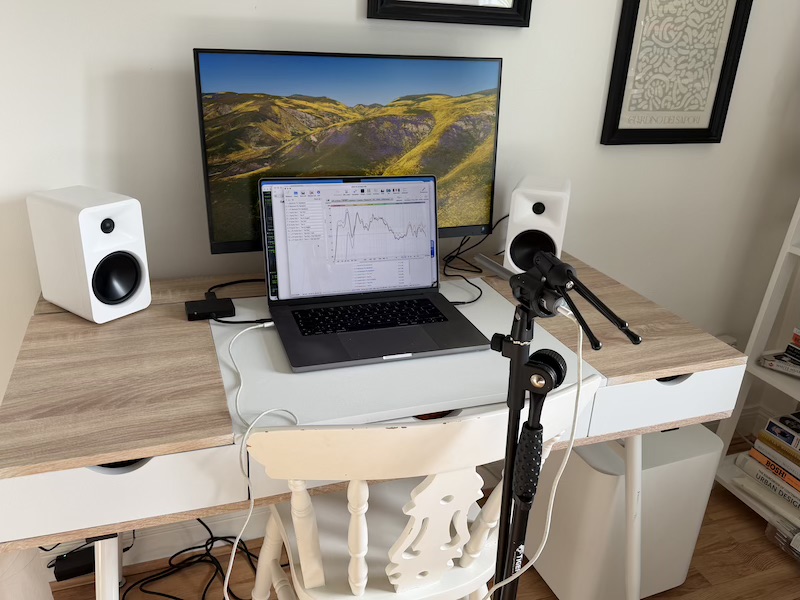 |
The in-room response with and without the Fosi Audio SW1 subwoofer illustrates the sub’s contribution clearly — the SW1 fills in the 40–80Hz region convincingly, though its own output below 40Hz is limited by the SW1’s design constraints. Kanto’s own subwoofer would pair more seamlessly with the ORA4 if extended deep bass is a priority.
Comparing the ORA4’s in-room response against the Kanto UKi confirms the ORA4’s greater low-end extension, with the larger woofer maintaining composure lower in frequency before rolling off.
The treble toe-in sensitivity I noted in the sound impressions section is captured clearly here — the difference between pointing directly forward and angling the ORA4 toward the listening position is meaningful at the top end, and getting it right is arguably the single most impactful optimisation step available to a new owner.
Finally, my own in-room distortion measurements with the ORA4 toed in correctly and the Fosi sub handling the bass show a considerably cleaner picture than the standalone EAC distortion data at the same SPL.
 |
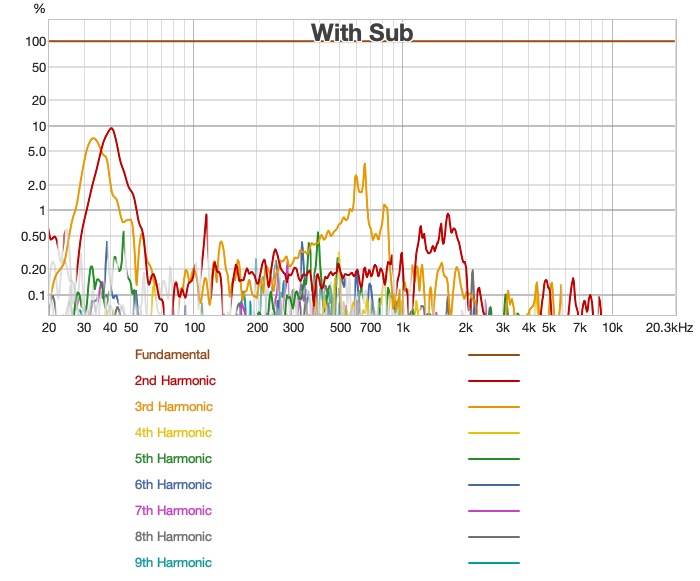 |
Note: With the sub taking care of the deep bass and the ORA4 angled correctly, the distortion profile is very clean except for the sub-bass where the Fosi Sub was being tested to its limits.
Rating Explanation
The ORA4 earns its four-star pragmatic rating by delivering convincingly on its core promise. The bi-amplified driver design is not a marketing claim — it produces a measurably cleaner midrange and a more controlled transient response than single-amplifier alternatives at this price, and the real-world listening experience reflects that consistently. The neutral tuning, the USB-C input supporting bit-perfect audio up to 24-bit/96kHz, the automatic 80Hz crossover, clean styling in seven colour options, and a compact footprint all add up to a product that is thoughtfully designed for its intended use case. At $449 it faces some genuinely competitive alternatives, but very few of them combine this level of driver quality, this degree of aesthetic refinement, and this compact a footprint in the same package.
The areas where the ORA4 falls short of five stars are specific and worth naming honestly. The absence of an optical input limits integration with some source chains. There is no onboard parametric EQ or companion application, which means addressing the 400Hz response kink and treble toe-in sensitivity requires either physical repositioning or upstream EQ rather than a simple software adjustment. Bluetooth 5.0 rather than a newer revision introduces latency that makes this input unsuitable for video or gaming without a wired alternative. None of these are dealbreakers given the ORA4’s price and core use case, but users who depend on optical input or integrated DSP control should weigh them carefully before committing. For sub-bass-intensive genres, budgeting for a subwoofer alongside the ORA4 is worth factoring into the total cost of ownership from the outset.
This speaker is designed for the user who wants reference-quality near-field monitoring in a super compact, stylish package for a work-from-home desk or bedroom setup, streaming primarily from a laptop via USB-C or from a network source via RCA. For that person, it is very difficult to beat at the price.
Conclusion
Kanto’s ambition with the ORA4 is captured in their own marketing line — “Pro Audio for the People” — and it is a claim that largely holds up on close examination. The bi-amplified driver design, the reference tuning philosophy of a flat and honest frequency response, and the practical hardware details like the auto crossover and threaded mounting points all point to a team that understands both the near-field monitoring tradition and the practical realities of the modern work-from-home desk.
After six weeks of daily use it remained the most enjoyable small speaker in my collection for music listening while working — not because it flatters recordings, but because it gets out of the way and lets the music come through. My wife, for what it is worth, also approves of how it looks on the desk, she likes that clean bright look and I have to agree it looks well in my desk setup.
Give your work-from-home setup a genuine sonic upgrade: the Kanto ORA4 is a compact, stylish, and frankly impressive little speaker for anyone who takes music seriously but works in a space where size matters. Pair it with a subwoofer if bass-heavy music is your priority, angle it toward your listening position, and consider adding the Kanto desktop stands to make that positioning precise and permanent. Do those things and you have a reference-quality near-field system at a price that is hard to argue with.