Aiyima A20 Mono
Peak Aiyima — and the first small class D amplifier I have wanted on display
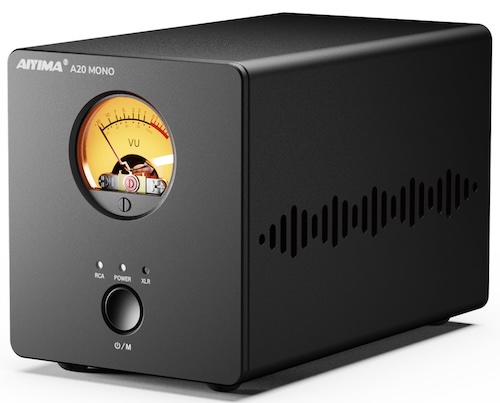
I have owned a lot of small class D amplifiers, and almost all of them have ended up hidden — behind a TV, inside a cabinet, under a shelf. They are functional boxes. The A20 Mono is probably the first one I have bought that I have deliberately put where people can see it, and the reason is the VU meters — I want people to see them.
More information about the A20 Mono is on Aiyima’s product page.
It typically sells for $189.99, and on sale for $169.99. I purchased mine — two of them — for this review from Amazon.de.
After a few weeks with a pair it has become my favourite class D amplifier of any kind, and it has displaced the Fosi Audio V3 Mono monoblocks that had been my reference for two years in one of my rooms. The V3 Mono has been a long-standing favourite of mine, so that is not a small thing.
The short version of why it wins: it uses the TPA3255 with a proper PFFB implementation, it adds a subwoofer output with an 80Hz high-pass filter, a two-position gain switch, a 12V trigger and both XLR and RCA inputs, and it puts all of that in a taller chassis with considerably more internal volume than the usual flat little box, which means it runs cooler. Then it puts an analogue VU meter on the front. This reads like Aiyima taking everything they have learned over the past few years and building the amplifier they wanted for themselves.
But let’s get into the details.
Unboxing and Packaging
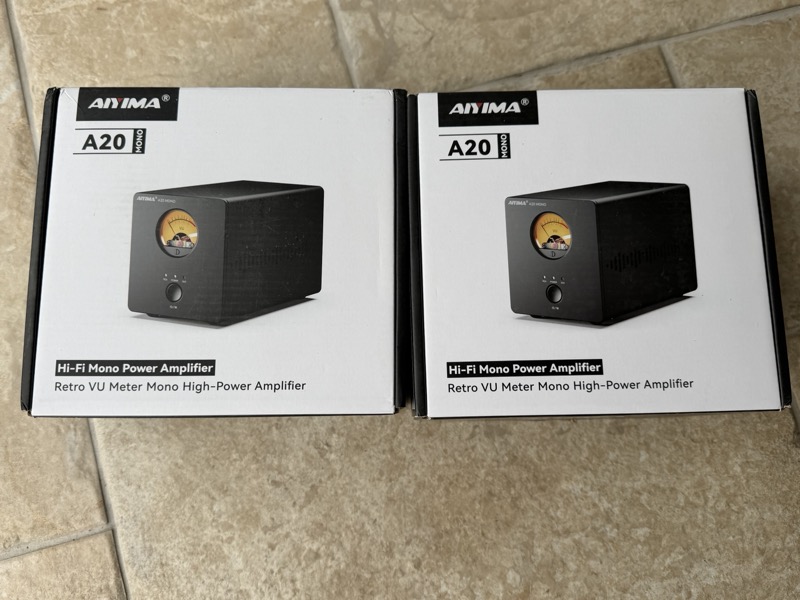
Because a monoblock only handles one channel, stereo means two boxes:
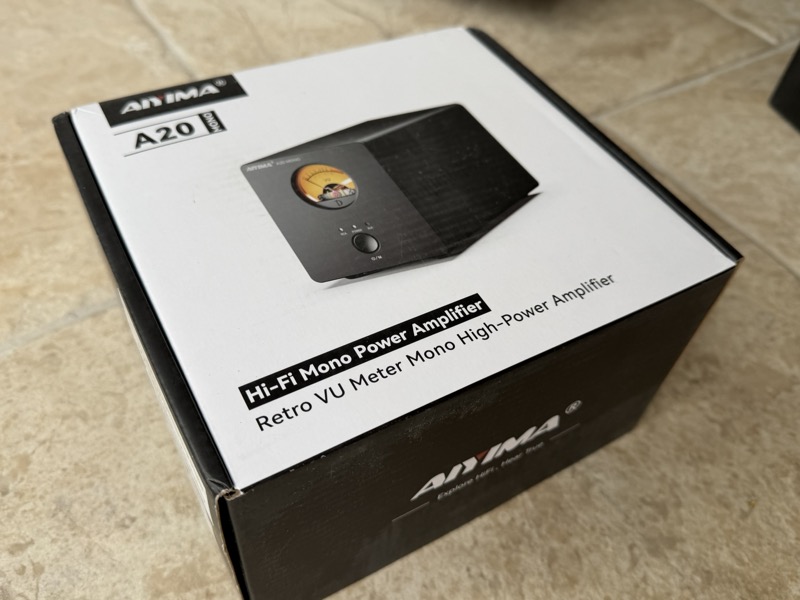
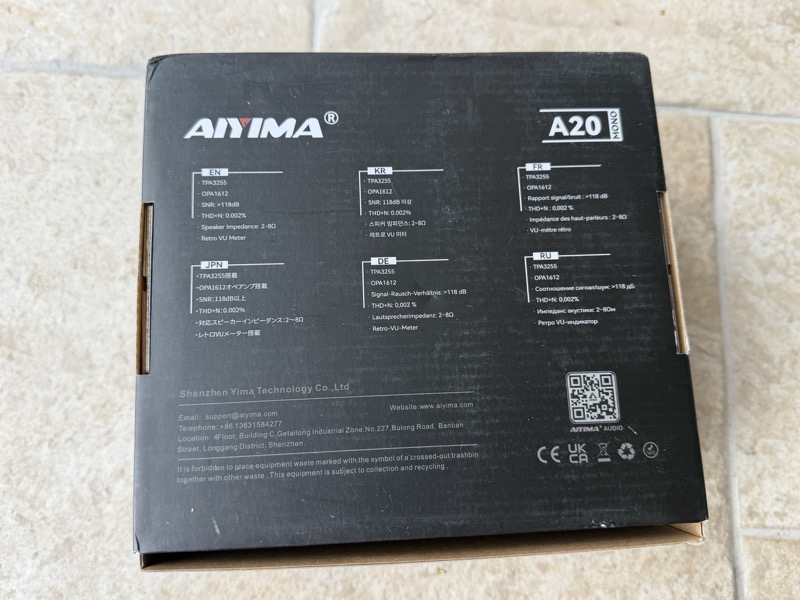
The packaging is nice, with some basic specs on the back:
 |
 |
Inside there is the amplifier, a manual, a warranty card, an Aiyima sticker, and the power supply and cable in their own foam cutout:
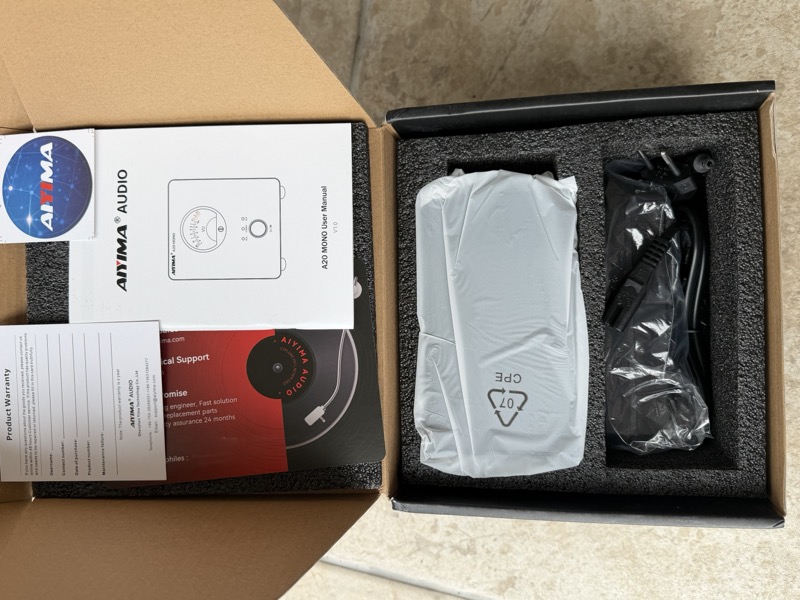
In the box:
- Aiyima A20 Mono amplifier
- 48V / 5A GaN power adaptor and mains cable
- User manual and warranty card
- Aiyima sticker
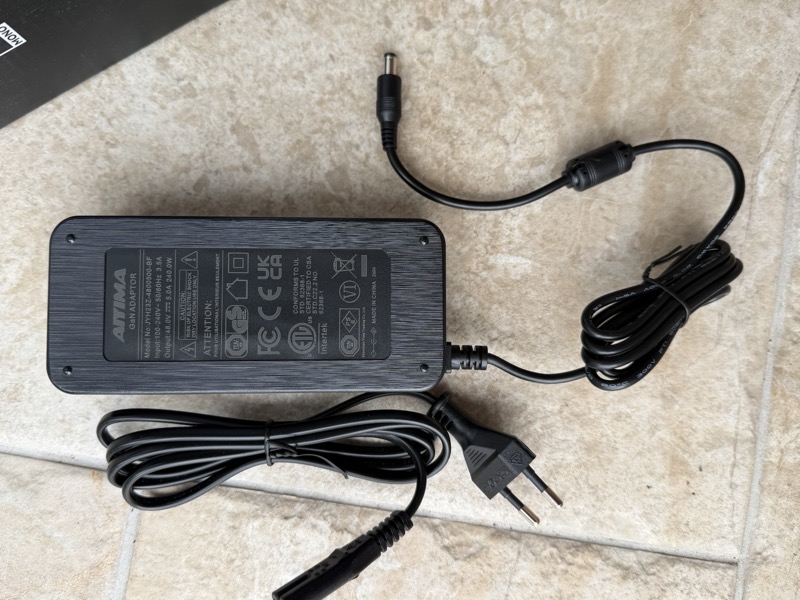
The power supply deserves a mention on its own, because it is a GaN unit, not a conventional switching brick:
 |
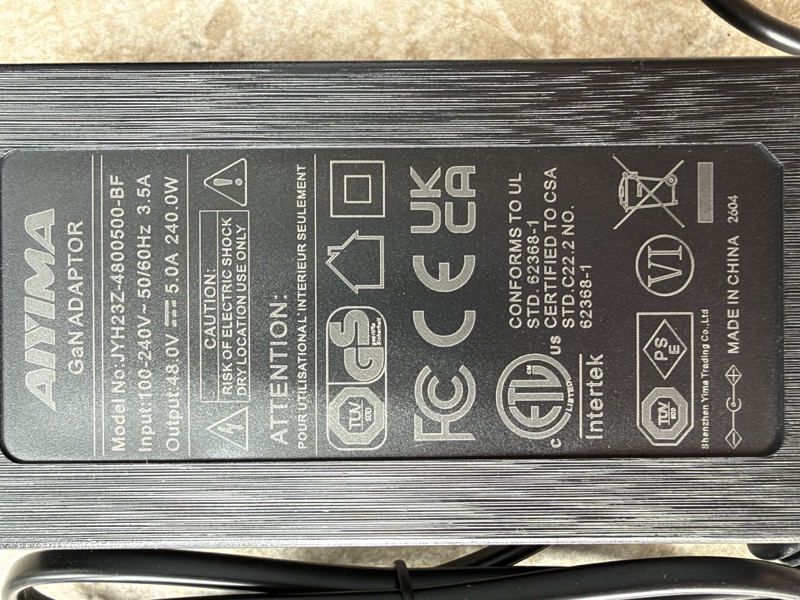 |
I have received other 48V 5A GaN supplies with other class D amplifiers, but because this is a monoblock you end up with two of them — effectively doubling the power available across the pair.
Design and Build Quality
The front panel is the whole argument for this amplifier’s existence. There is an analogue VU meter with a warm amber backlight, three indicator LEDs for RCA, POWER and XLR, and a single power/mode button:
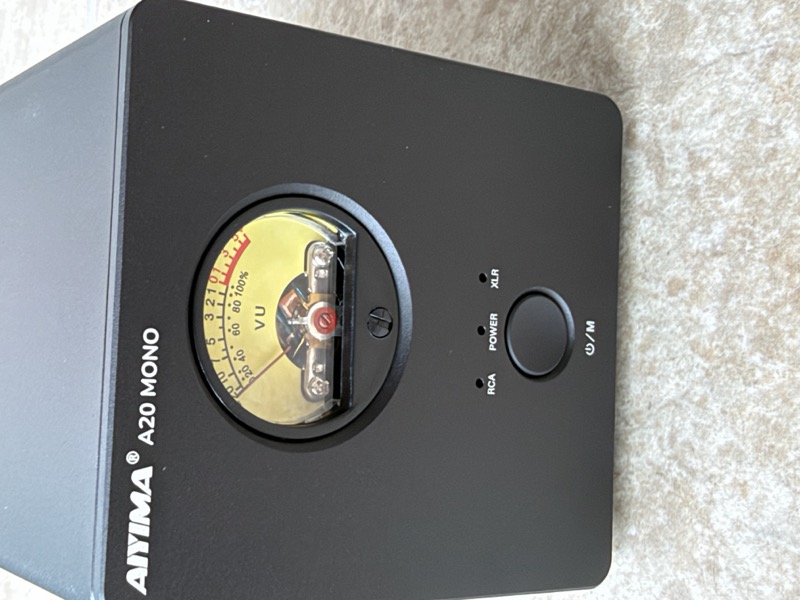
The needle tracks the music closely instead of drifting lazily, and the backlight stays on in standby — Aiyima are treating it as ambient lighting as much as an instrument. Here it is moving:
A VU meter on a power amplifier is decoration, not instrumentation — you are not going to set levels by it. I like it anyway. It is the reason these two boxes sit out on a shelf instead of behind the television, and an amplifier you are happy to look at is one you will keep using.
The chassis is extruded aluminium, and the vents are cut in a waveform pattern along the sides with a red mesh visible behind them:
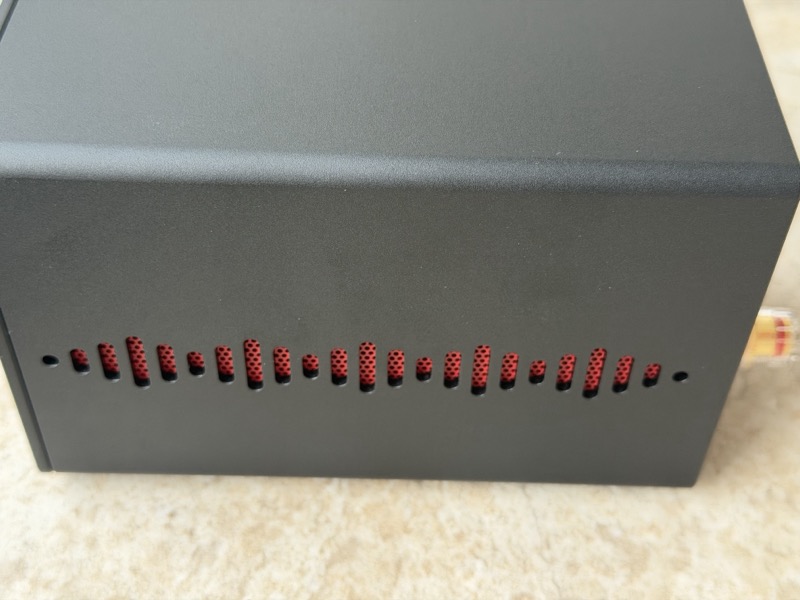 |
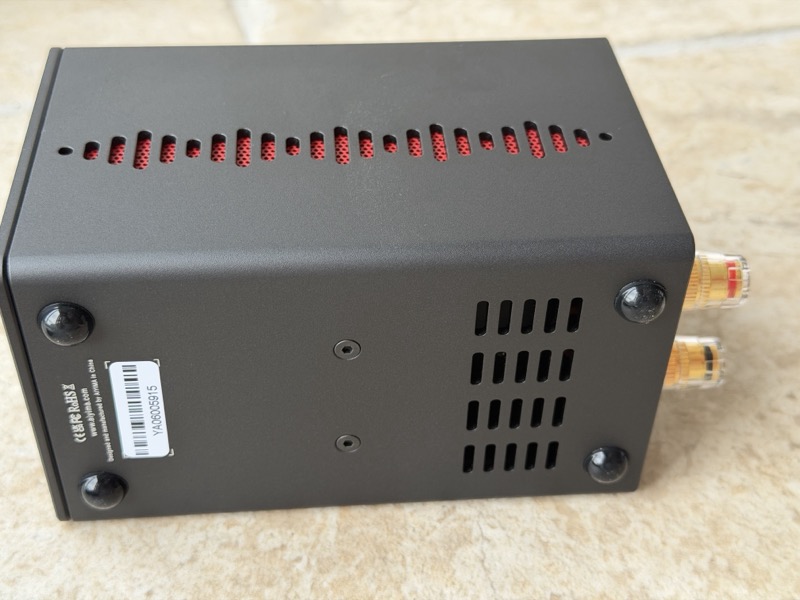 |
There are more vents on the underside, along with rubber feet and the serial label. This is where the A20 Mono’s shape pays off. At 80 × 140 × 90mm it is taller and deeper than the usual flat class D box, and that extra internal volume plus the extruded heatsink means it has somewhere for heat to go. In several weeks of use, including some long sessions at reasonable volume, mine have never got more than mildly warm to the touch. Small class D amplifiers that run hot are a familiar problem, and this design largely avoids it.
A pair of them together, which is how you will actually own them:
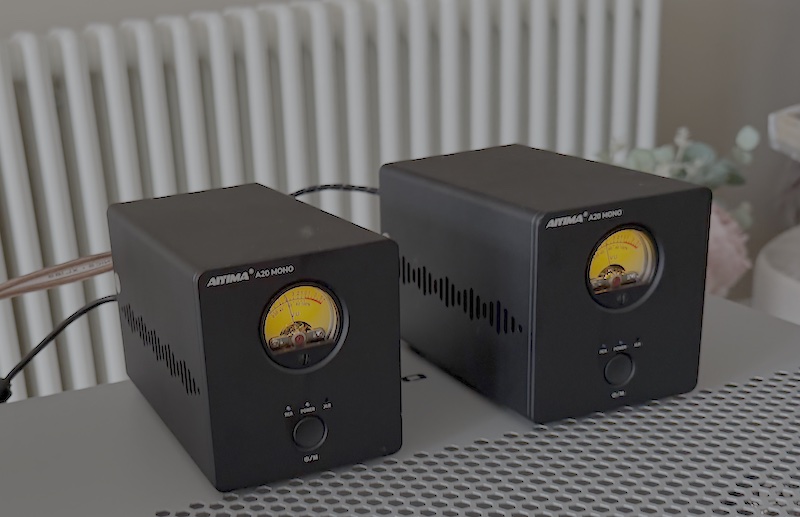
Inputs, Outputs and Rear Panel
The rear panel is where the feature count adds up:
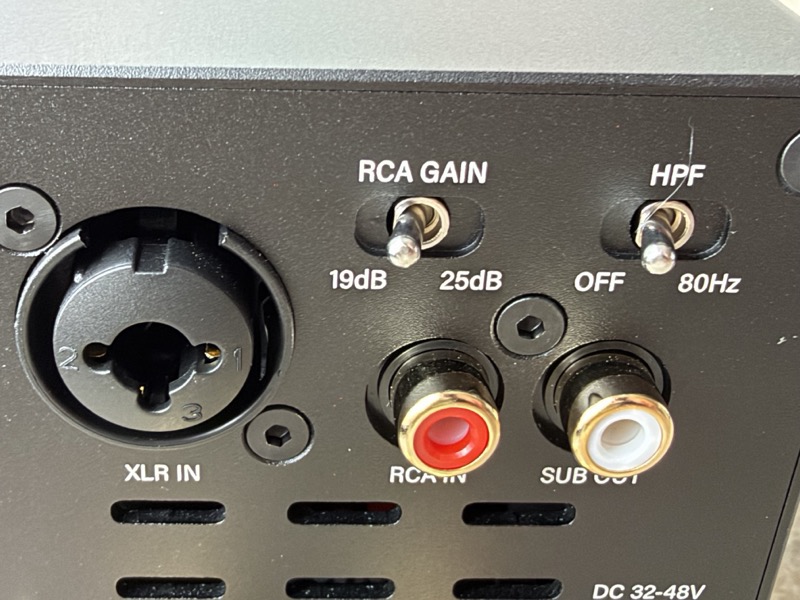 |
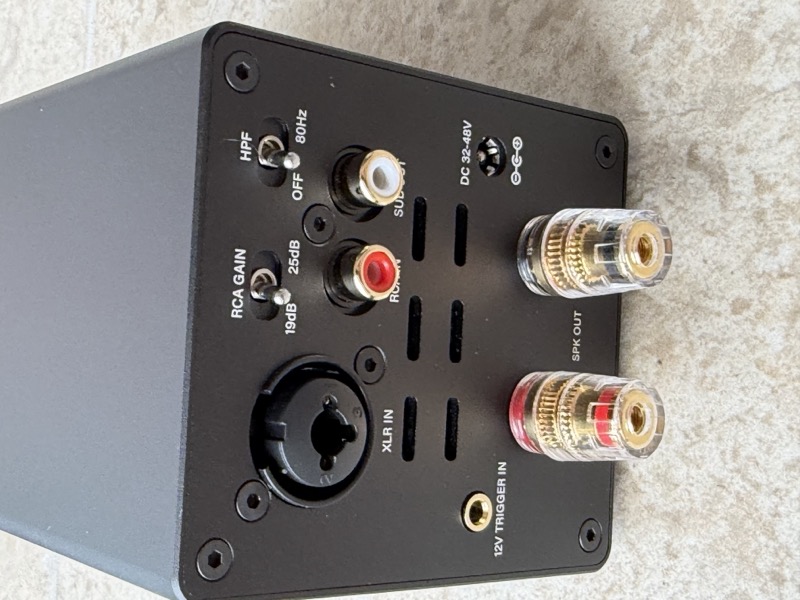 |
From the top: a combo XLR input, an RCA GAIN switch offering 19dB or 25dB, an RCA input, a SUB OUT, and an HPF switch set to OFF or 80Hz. Below those sit the 12V trigger input, the speaker binding posts and the DC input:
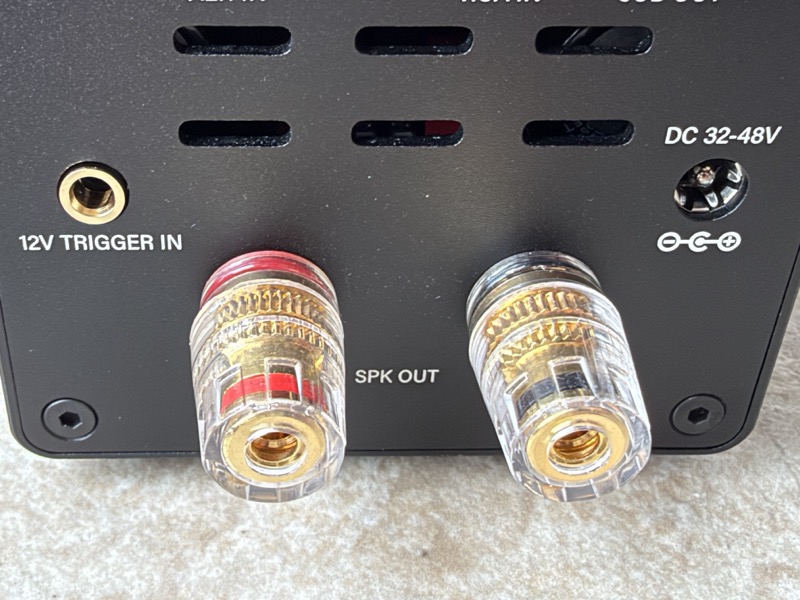
The binding posts are clear-bodied and gold-plated and take banana plugs or bare wire without complaint. The DC input is marked 32–48V, so the supplied 48V GaN brick is at the top of the range.
Features
PFFB — Post Filter Feedback
The A20 Mono uses PFFB, and this is the single most important technical thing about it. The problem PFFB solves is load dependency: a conventional class D output filter interacts with the speaker’s impedance, which varies with frequency, so the amplifier’s frequency response changes depending on what you connect to it. Without PFFB you typically get a rising or falling treble that is a property of the amplifier-plus-speaker combination, not of the recording.
PFFB takes the feedback from after the output filter instead of before it, so the amplifier corrects for that interaction. It used to be a technique confined to considerably more expensive designs. It is now in a $170 monoblock, and I show what it does in my own in-room measurements further down.
Internal Layout and Components
Aiyima publish an annotated internal photograph, which is more useful than most marketing renders because it names the parts:
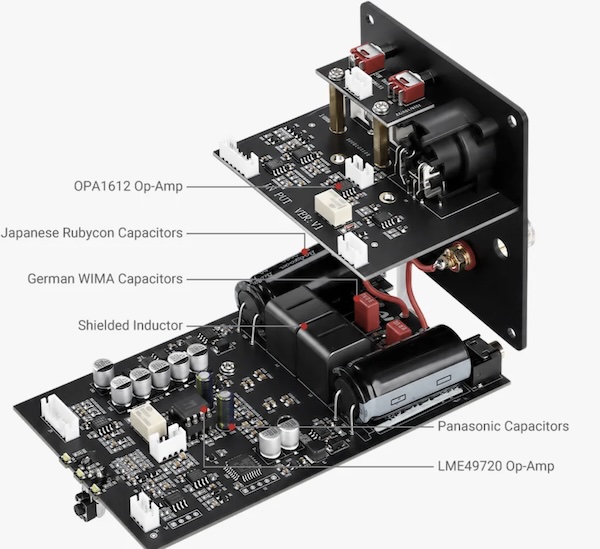
The labels identify an OPA1612 op-amp on the input board, an LME49720 on the main board, German WIMA capacitors, Japanese Rubycon capacitors, Panasonic capacitors and a shielded inductor. Aiyima’s own marketing copy calls these “WIIM” and “Ruby” capacitors, which I assume is a translation slip — the photograph clearly shows WIMA and Rubycon. The two large Rubycon cans are the 63V, 3300µF parts quoted in the specifications.
12V Trigger
There is a 12V trigger input, which on a monoblock pair matters more than it does on a stereo amplifier: without it you have two separate boxes to switch on and off every time you want music. Wired to a preamp or streamer with a trigger output, both monoblocks wake and sleep with the rest of the system and you never think about them again.
Standby Behaviour — One Thing to Watch
Worth flagging before you buy: there is an automatic standby, and I have seen reports from other owners that it can switch the amplifiers off when the signal goes quiet — pause your music for a few minutes and you may come back to find them powered down. I have not found this a problem in my own use, and with the 12V trigger driving them from a source it is a non-issue, but if you run them without a trigger and listen to quiet material it is worth knowing about.
Two-Stage Gain Control
The RCA GAIN switch offers 19dB or 25dB. This is not a volume control — it is a level-matching tool. If your source puts out a healthy signal, the lower setting keeps the amplifier’s own noise contribution further down; if you are feeding it from something quieter, the higher setting stops you running the preamp at the top of its range. On a monoblock pair it also gives you a way to make sure both channels are set identically, which matters more than it would on a single stereo chassis.
The 80Hz High-Pass Filter and Subwoofer Output
The SUB OUT and the 80Hz HPF are designed to be used together, and this combination is what turns two monoblocks into a 2.1 system without any external crossover. Switch the HPF on and everything below 80Hz stops being sent to your main speakers; the SUB OUT feeds that region to a powered subwoofer instead, over a stated 20–200Hz range.
The engineering benefit here is concrete. Bookshelf speakers asked to reproduce 40Hz at volume use a lot of woofer excursion doing it badly, and that excursion modulates the midrange the same driver is trying to reproduce. Take the bottom octave away and the same speaker plays louder, cleaner and with less distortion in the region where it is actually competent. Unlike the fully adjustable filters on more expensive amplifiers this is a fixed 80Hz, which is a sensible single choice for most small-to-medium bookshelf speakers but is not something you can tune.
Power Consumption
I measured the draw at the wall for a single monoblock with music playing:
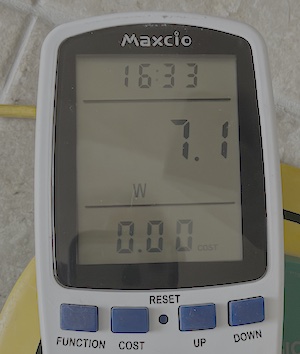
7.1W with the supplied 48V GaN adaptor, so call it around 14W for a stereo pair. For an amplifier rated at 300W peak that is a reminder of what class D does — consumption tracks what you are asking of it, and normal listening in a normal room asks for very little. It also means leaving a triggered pair switched on costs almost nothing.
Sound Impressions
The A20 Mono does not have a sound of its own, which is exactly what I want from a power amplifier. It is clean and neutral, and it reproduces what you feed it without adding a character of its own. Everything below is about what it does not do to the signal.
Bass
The bass never sounds like the amplifier is running out of grip. On Limit to Your Love by James Blake the low synth notes that come in after the first chorus arrive as defined pitches with clean starts and stops, not as a general pressure in the room — with 300W available at 4Ω the amplifier is never the limiting factor. Engage the HPF and let a subwoofer take over below 80Hz and the midrange on the same track cleans up audibly.
Midrange
The midrange is where a neutral amplifier proves itself by being boring, and this one is. On That’s Why I’m Here by James Taylor the voice sits where the recording puts it and the guitar keeps its body, with nothing added at either end. Swapping between the A20 Mono and other amplifiers on the same speakers, this is the region where I heard the least difference between any of them, which is how it should be.
Treble
The treble is where the PFFB implementation earns its place, and my in-room measurement below is the better evidence for it than anything I can write here. Subjectively, on Chocolate Chip Trip by Tool the cymbal work stays legible through the busiest passages and the leading edge of each strike survives intact. The top end is neither rolled off nor lifted, which is what the measured response predicts.
Dynamics
The power on tap shows up in how unbothered the amplifier is by dynamic peaks. Private Investigations by Dire Straits is the track I kept returning to, because it spends most of its length very quiet and then does not — and the quiet passages stay quiet without the noise floor intruding, while the loud ones arrive without anything collapsing toward the centre. Running true monoblocks, one chassis and one power supply per channel with no shared ground between them, is at least part of why that holds up.
In Use
Two of them in my games room, which is the setup that convinced me they should be visible:
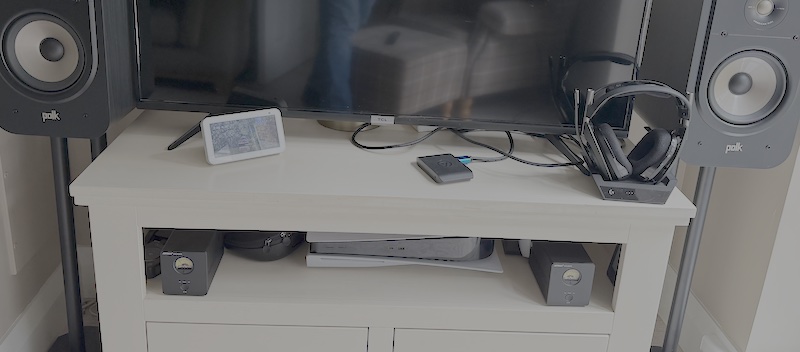
They are driving Polk bookshelf speakers with a TV and a games console as sources. This is the use case the 12V trigger was made for — the whole system comes up together and I never touch the amplifiers. I also ran the pair in my kitchen with KEF LS50 Metas for the measurement comparison further down, which is a considerably more demanding speaker than the price of these amplifiers suggests they should be driving. They handled it without complaint.
Comparisons
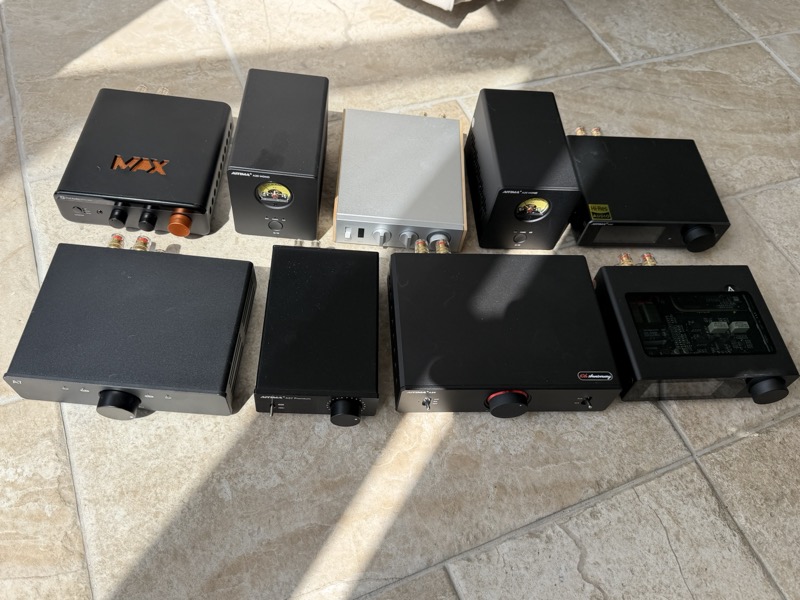
I have accumulated rather a lot of small class D amplifiers, and I compared the A20 Mono directly against several of them:
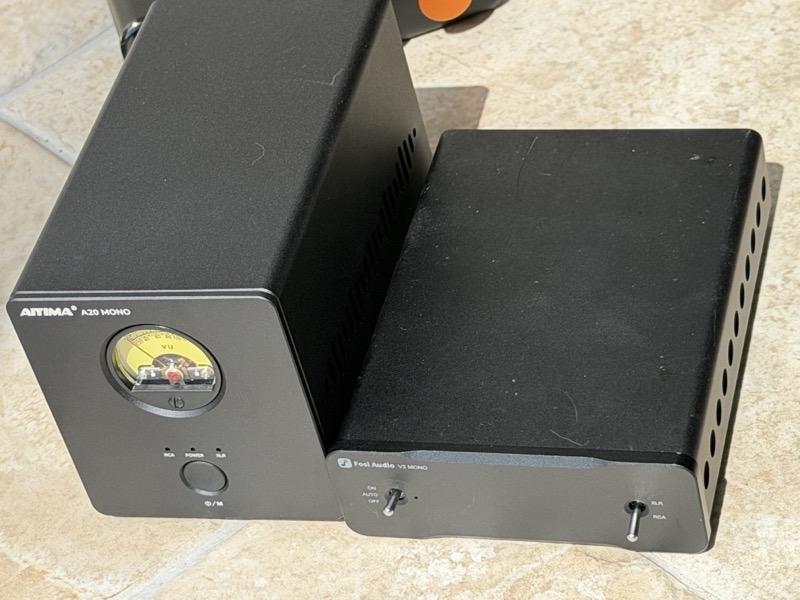
Fosi Audio V3 Mono
 |
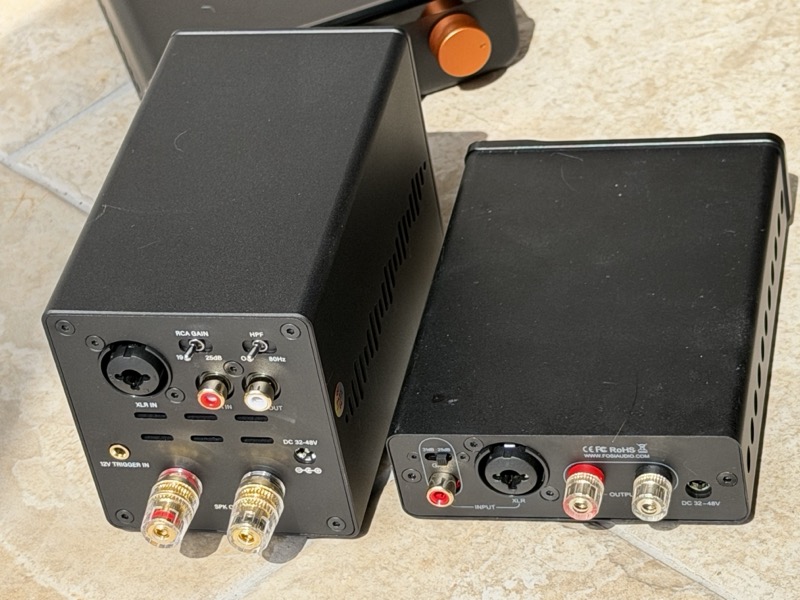 |
The Fosi Audio V3 Mono has been my reference monoblock since I reviewed it. It is a TPA3255 design with proper PFFB, both XLR and RCA inputs with a front-panel selector, an RCA gain switch, and an ON/AUTO/OFF switch that lets it sleep on its own. It sounds clean and it measures well, and nothing about it has aged badly.
Why the A20 Mono is better: it matches the V3 Mono’s core amplifier feature set and then adds a subwoofer output, an 80Hz HPF, a 12V trigger, a VU meter and noticeably better cooling from its larger chassis.
Aiyima A20
 |
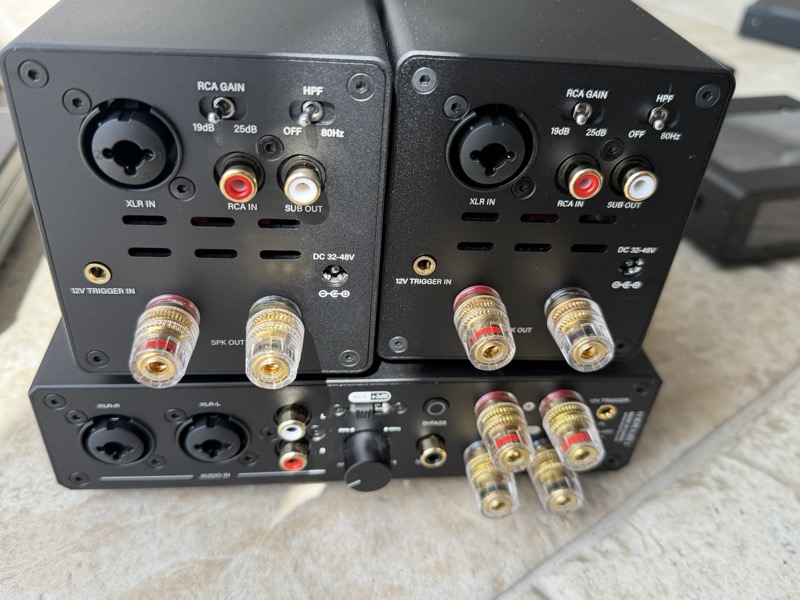 |
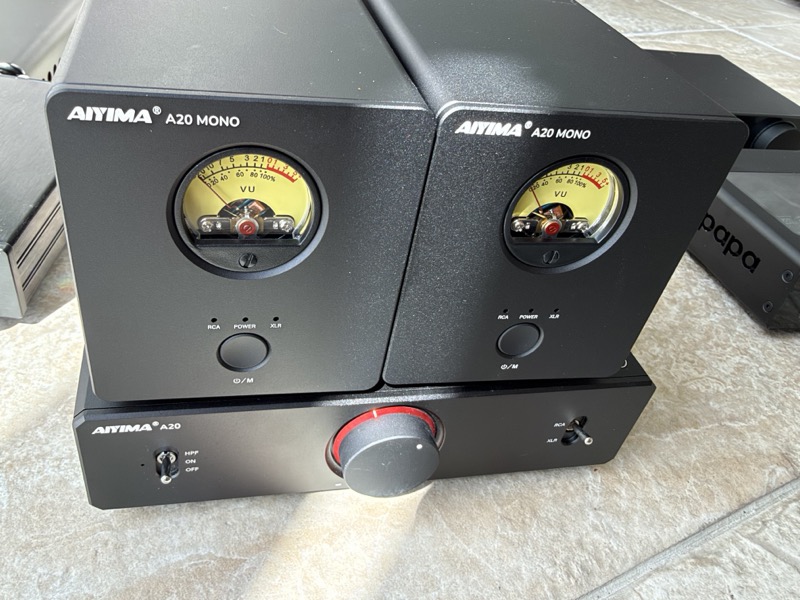
The Aiyima A20 is the stereo amplifier this one is named after, and it is a genuinely good product from Aiyima’s 10th anniversary line at around €180. It already has TPA3255 with PFFB, XLR inputs, an HPF with a subwoofer output, and a 12V trigger — so unlike the V3 Mono comparison, this is not a feature gap. It is also a single box for both channels, which is cheaper and simpler than buying two monoblocks.
Why the A20 Mono is better: true dual-mono construction with a separate chassis and supply per channel, roughly double the power per channel, better heat dissipation, and a front panel I would rather look at — though if you want one box and lower total cost, the stereo A20 remains the sensible buy.
Aiyima A07
 |
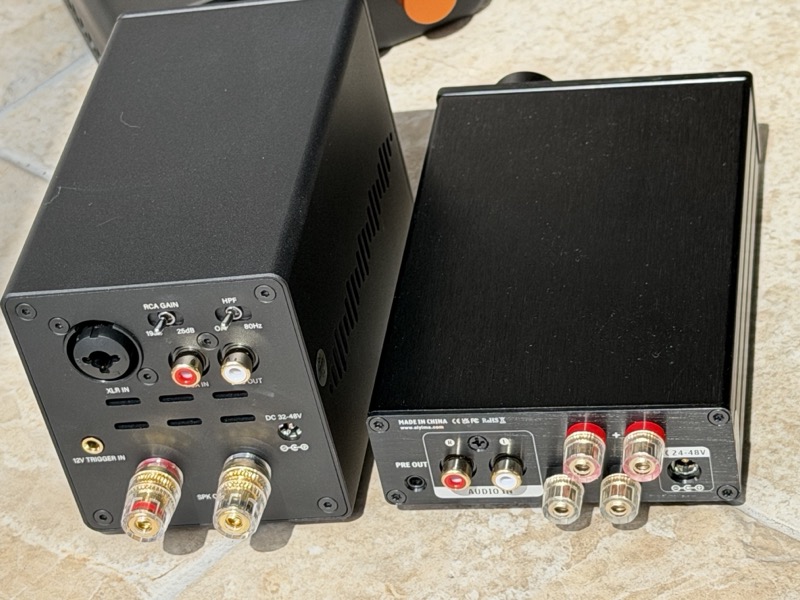 |
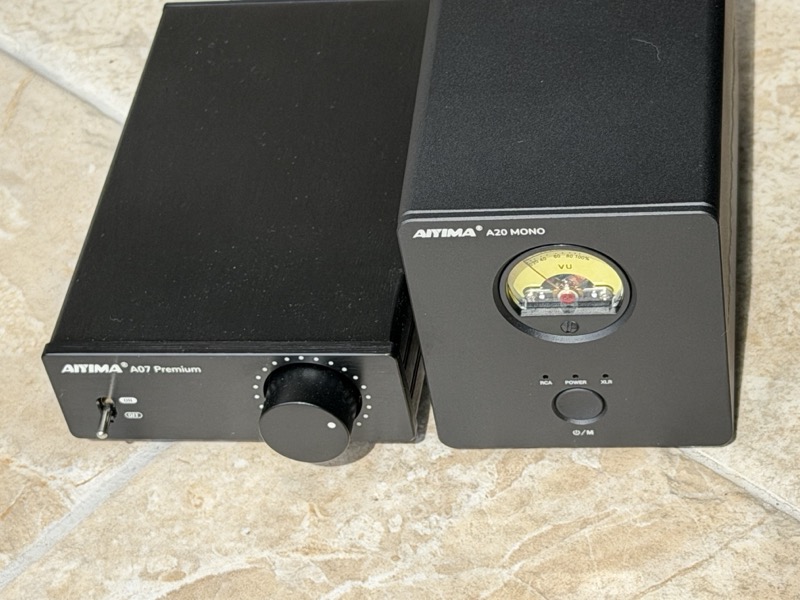
The original Aiyima A07 is the amplifier that started this whole category for a lot of people, and the later A07 Premium refreshed it at around $80–$110 with better components and socketed op-amps. It remains a focused, good-sounding TPA3255 stereo amplifier and outstanding value.
Why the A20 Mono is better: the A07 has no PFFB, no subwoofer output, no HPF and no trigger, so it is a plain stereo power amplifier from an earlier generation of thinking — though at half the price of a single A20 Mono, it is still the right answer on a tight budget.
Jade Audio Level 1 and Fosi Audio BT20A Max
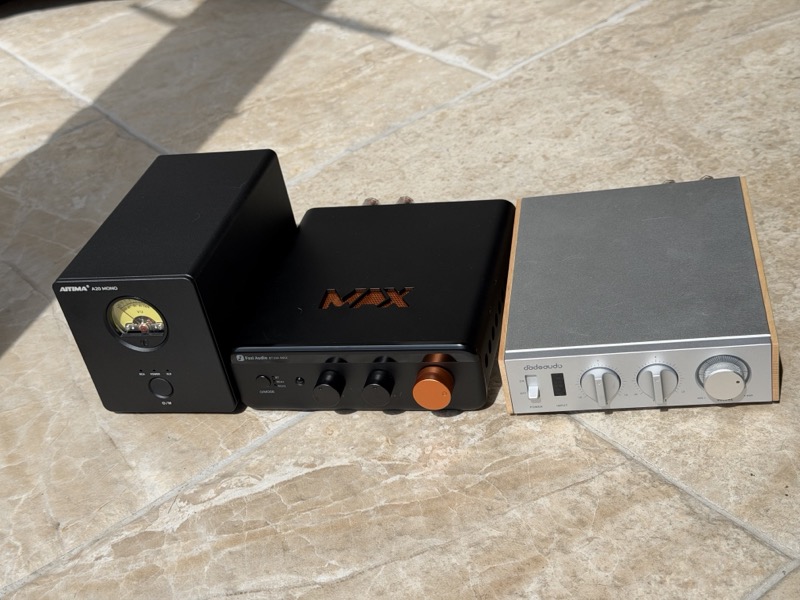
The Jade Audio Level 1 at $139.99 takes the opposite approach: a built-in DAC, Bluetooth LDAC, full parametric EQ through an app, and a wood-and-aluminium chassis, but no PFFB in hardware. The Fosi Audio BT20A Max at $279.99–$299.99 is the most feature-complete of the group, with PFFB, Bluetooth 6.0 with LDAC and aptX Lossless, an 80Hz HPF, a subwoofer output, motorised remote volume and a 12V trigger — but it has a fan that is audible on a quiet desk.
Why the A20 Mono is better: against the Level 1, it has real hardware PFFB and roughly double the power, which shows up in the measurements below; against the BT20A Max, it delivers the same HPF and subwoofer functionality with passive cooling and no fan noise. Both of those are self-contained systems with DACs and streaming built in, though, so if you want one box that does everything instead of a pair of power amplifiers, they are solving a different problem.
The Pragmatic Verdict
The A20 Mono is not the cheapest of this group, it does not have a DAC, and it has no streaming, Bluetooth, remote or tone controls. You need a preamp or a streamer with a volume control in front of it, and you need to buy two.
What you get for accepting all that is the best-executed pure power amplifier in the group: correct PFFB, genuine dual-mono construction, 2.1 integration built in, a trigger so a two-box setup behaves like one, cooling that a small class D amplifier usually does not get, and — the part I did not expect to care about — a chassis I want to leave visible. Every other small class D amplifier I own is hidden somewhere. These are not.
Specifications
| Specification | Value |
|---|---|
| Channel | 1.0 / 1.1 |
| Amplifier chip | TPA3255 |
| Op-amps | OPA1612 (input board), LME49720 (main board) |
| Max output power | 300W × 1 @ 4Ω (THD+N <10%); 170W × 1 @ 8Ω (THD+N <10%) |
| Rated output power | 200W × 1 @ 4Ω (THD+N <1%); 100W × 1 @ 8Ω (THD+N <1%) |
| Inputs | RCA, XLR / TRS combo |
| Outputs | Passive speaker, active subwoofer |
| SNR | ≥118dB |
| THD+N | 0.002% |
| Frequency response | 20Hz–20kHz (+0.4dB) |
| Speaker impedance | 2–8Ω |
| HPF cutoff frequency | 80Hz (switchable) |
| Subwoofer output frequency | 20–200Hz |
| RCA gain | 19dB / 25dB (switchable) |
| Input sensitivity | RCA 2V; XLR 4V |
| Voltage range | DC 32–48V |
| Power supply | 48V / 5A GaN adaptor (240W) |
| 12V trigger | Yes |
| Product dimensions | 80 × 140 × 90mm |
| Product weight | 950g |
| Package dimensions | 207 × 198 × 124mm (version with power supply) |
| Package weight | 1490g (version with power supply) |
Measurements
Aiyima’s Own Measurements
Aiyima publish Audio Precision measurements, and the SINAD figure is the headline:
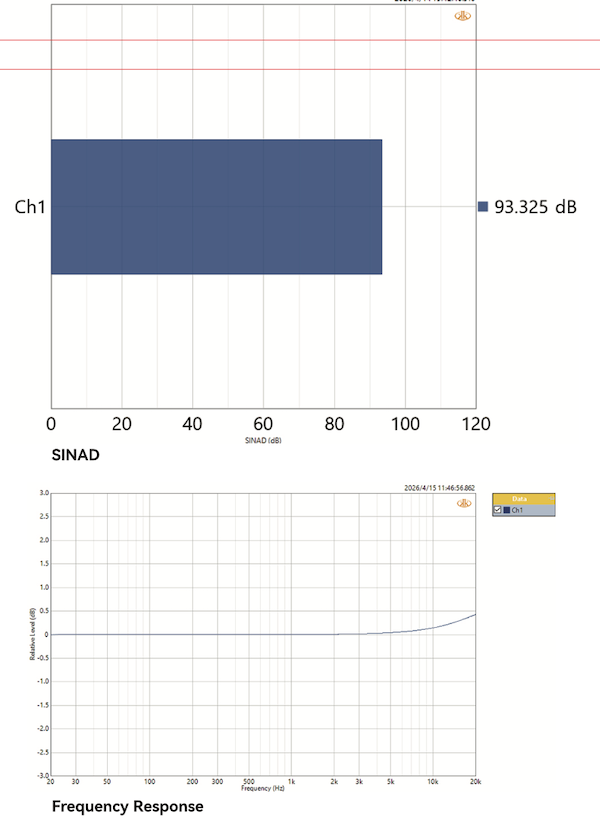
93.3dB SINAD is one of the best results I have seen on any previous Aiyima class D amplifier, and for a class D power amplifier it is a strong number — comfortably past the point where the amplifier’s own distortion is going to be the thing you hear. The frequency response trace below it is flat from 20Hz to around 2kHz and then rises very gently to about +0.4dB at 20kHz, which matches the published specification and is not a deviation you would identify by ear.
The SNR measurement is the other strong one:
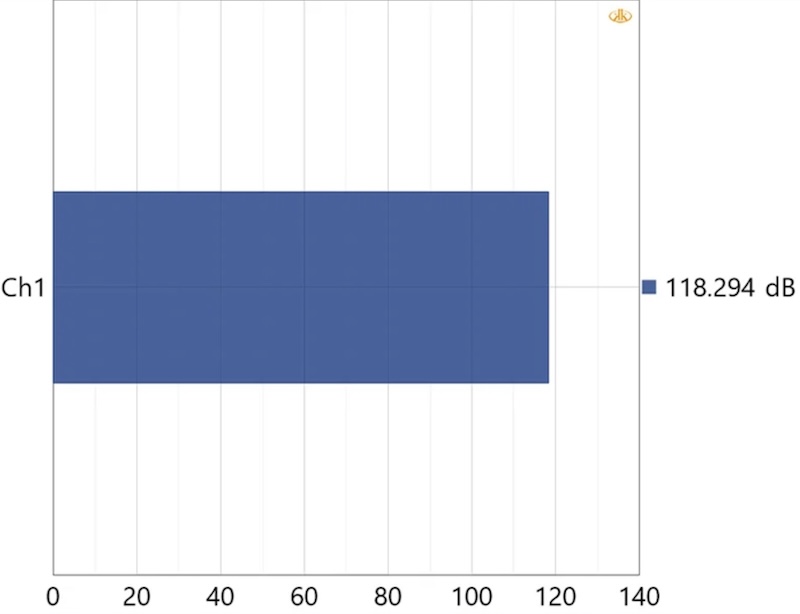
118.3dB is roughly 19 bits of dynamic range, which means the noise floor is far enough down that it is not a consideration in a domestic room.
These are the manufacturer’s own measurements, taken on their own equipment, and I have not seen an independent measurement of the A20 Mono. I have no specific reason to doubt them — they are consistent with each other and with what I hear — but they should be read as Aiyima’s claims rather than verified performance. If independent Audio Precision measurements of the A20 Mono appear at AudioScienceReview, I will update this review with them, and adjust the measurement rating if they disagree with what Aiyima have published.
My Own In-Room Measurements
What I can measure is the result in my own room. I ran a pair of A20 Monos and the Jade Audio Level 1 into the same KEF LS50 Metas, in the same position, with the same microphone placement, and measured both with REW at 1/6 octave smoothing:
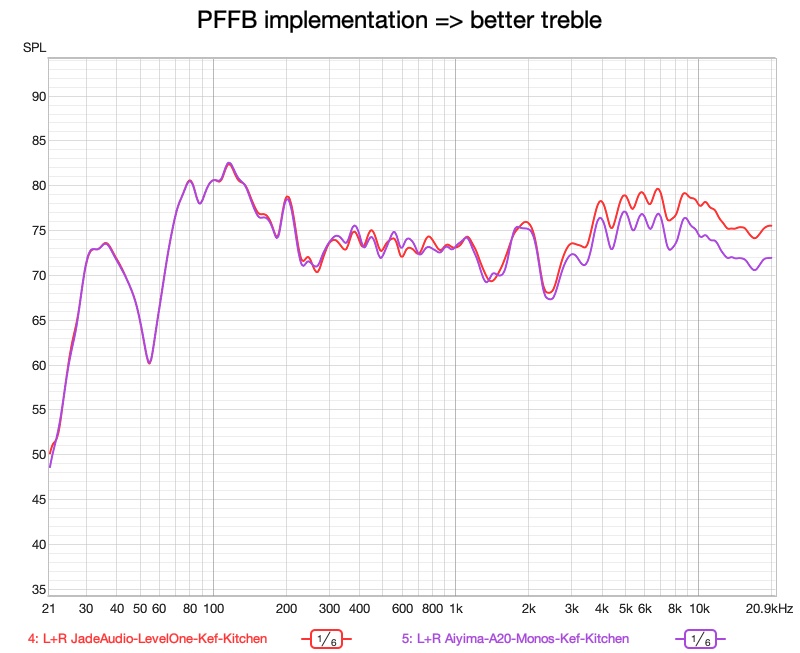
The two traces are essentially identical from 20Hz up to about 3kHz — as they should be, since the room and the speakers dominate that region and neither amplifier is colouring it. Above 3kHz they separate, with the Level 1 in red running around 3–4dB hotter than the A20 Monos in purple through the 4–8kHz region.
That gap is the PFFB difference. The Level 1 does not implement PFFB in hardware, so its output filter is interacting with the LS50 Meta’s impedance curve and lifting the treble; the A20 Mono’s post-filter feedback corrects for that interaction and gives the flatter, more load-independent result. The purple trace is the more accurate one, and it is the clearest practical demonstration I have of why PFFB is worth caring about. It is worth being precise about what this does and does not show: it is one speaker in one room, and the size of the effect would change with a different impedance curve. The direction of it would not.
I also ran a distortion sweep on the same setup:
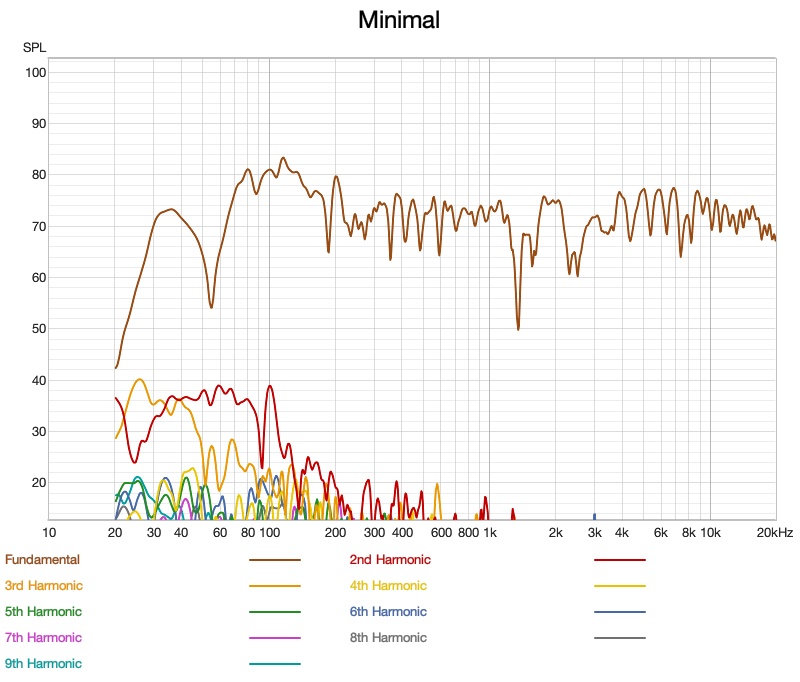
Harmonic distortion sits 40–50dB below the fundamental in the bass, where the room and the speaker’s woofer are doing the work, and drops away to essentially nothing above 200Hz. There is no distortion signature here that I would attribute to the amplifier — what is left is the speaker and the room.
Rating Explanation
The A20 Mono gets five stars across the board from me, which is not something I hand out often, so here is what each one is for.
The price rating reflects what $169.99 on sale actually buys: a 300W monoblock with hardware PFFB, XLR and RCA inputs, switchable gain, a subwoofer output with a real high-pass filter, a 12V trigger, a 240W GaN supply in the box, and a chassis with enough volume to stay cool. A stereo pair costs roughly $340, which is more than a single stereo amplifier of similar quality, but the dual-mono construction and the per-channel power are what you are paying for.
The features rating is simple — I cannot find a monoblock at this price with a more complete or better-chosen feature set, and every item on the list solves a problem I have instead of filling a specification sheet.
The measurement rating reflects 93.3dB SINAD, 118.3dB SNR and 0.002% THD+N, and, more importantly, my own in-room measurement showing the PFFB implementation doing exactly what it should against a demanding speaker. The caveat is that those numbers are Aiyima’s own rather than independent, and I have said so above. If independent Audio Precision measurements turn up at AudioScienceReview I will revisit this score.
The pragmatic five follows from all of it plus one thing that does not appear on a specification sheet. This is the amplifier that made me stop hiding my amplifiers. Every small class D box I have owned went into a cabinet; these two sit out where I can see them, and the VU meters are the reason. That is not an engineering argument, but it changes how much I enjoy using the thing, and enjoyment is part of what you are buying.
Conclusion
This is peak Aiyima. It reads like a company that has spent several years building TPA3255 amplifiers, worked out which features matter, and then built the one they wanted for themselves. The PFFB implementation is correct and I have measured it working. The 2.1 features are properly done, not tokenistic. The trigger makes a two-box system behave like one. The larger chassis solves the heat problem that dogs this category. And the GaN supply in the box means it can deliver the power on the label.
Two caveats to weigh. The VU meter is decoration and you will not be setting levels by it. And the high-pass filter is fixed at 80Hz with no way to tune it, which is a sensible single choice for most bookshelf speakers but less flexible than what a more expensive amplifier gives you — in my own case that never mattered, because I control my subwoofer through my WiiM Ultra anyway.
Subjectively it sounds clean and neutral and does what a good class D amplifier should do, which is reproduce the signal without colouring it. If you want warmth, add EQ deliberately somewhere else in the chain — this is not the component to get it from.
It has replaced the Fosi Audio V3 Mono as my favourite monoblock, and it is now my favourite class D amplifier of any kind. The buying advice is simple: if you already have a preamp or a streamer with a volume control and you want the best pure power amplification you can get for a few hundred, buy two of these. If you need a DAC, streaming or a remote in the same box, the Jade Audio Level 1 or the Fosi Audio BT20A Max are solving a different problem and you should look there instead. And unlike most of the other small class D amplifiers I have set up — including the original A20 — this one is not going in a cabinet. It is a joy both to look at and to listen to.