Juzear Nimbus
A $55 single-DD IEM with three tuning nozzles and a Harman-adjacent tuning
Plenty of IEMs at this price aim at the Harman target and most of them land with more treble than I want to listen to for any length of time. The Nimbus is one that takes care not to over-emphasise the treble — but if you like treble, Juzear have a nice solution, and more on that later in the review.
This is my first Juzear product and I am very impressed. At $54.99 for the IEM alone or $59.99 with the USB-C DAC dongle, it is the kind of package that would have cost twice this a year ago.
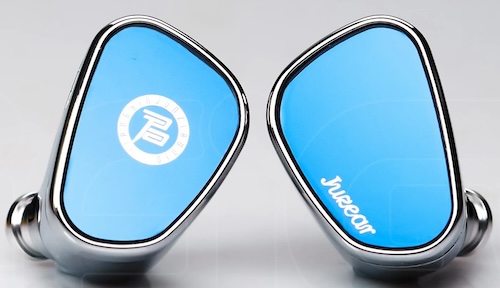
I would like to thank HiFiGo for providing the Juzear Nimbus for the purposes of this review.
You can find more information at the official product page at HiFiGo. It is also available on AliExpress (here and here) and on Amazon in the US, UK, Germany, Japan and Australia.
The Nimbus comes in two versions. The audiophile edition includes the two analogue plug adapters, 3.5mm and 4.4mm, and costs $54.99. The USB-C edition includes the 3.5mm cable and the USB-C dongle, and costs $59.99. My review sample is the USB-C edition.
I have been listening to the Nimbus for about three weeks. I have had some very busy work days in the past few weeks where I had them in for six hours straight, thoroughly enjoying them even though I was busy. But first, let’s take a look at what’s in the box.
Unboxing and Accessories
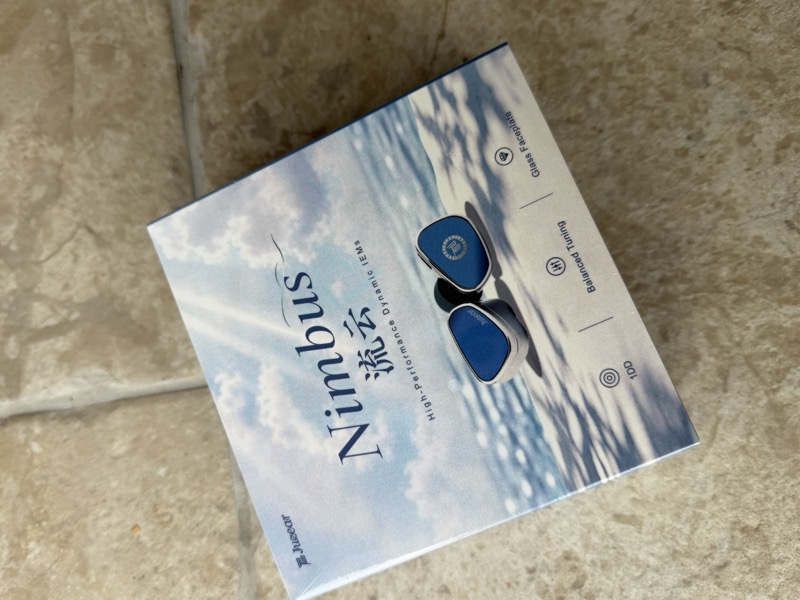
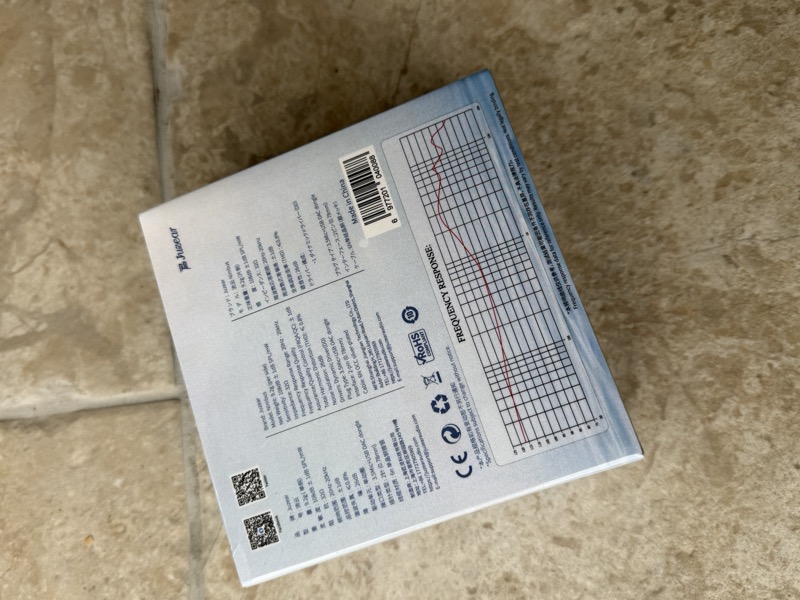
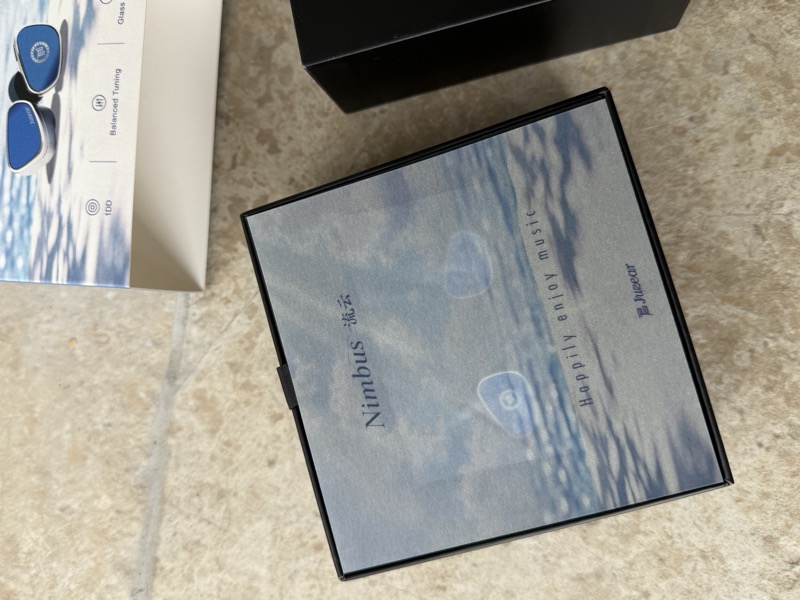
The packaging is good, with lots of information on the back. The outer sleeve is clean blue-and-white, with the full specification list and Juzear’s own frequency response graph on the rear; inside, a protective cover sits over the faceplates:
 |
 |
 |
 |
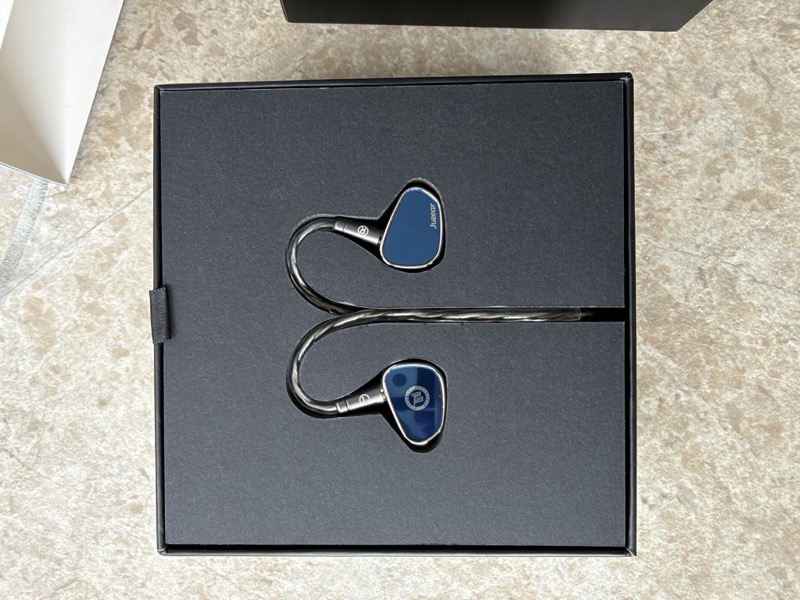
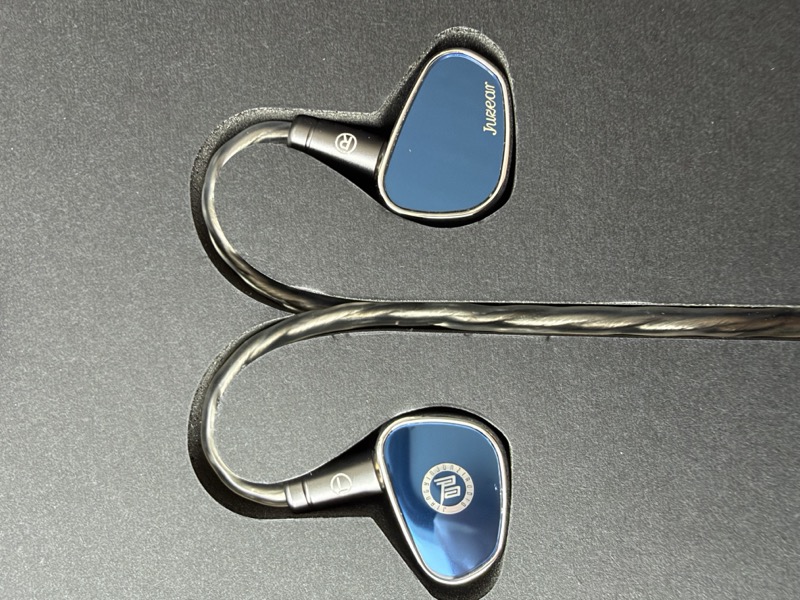
Underneath, the IEMs sit in a presentation tray. The faceplates are laser-coloured glass that shifts hue with the viewing angle, and I like them:
 |
 |
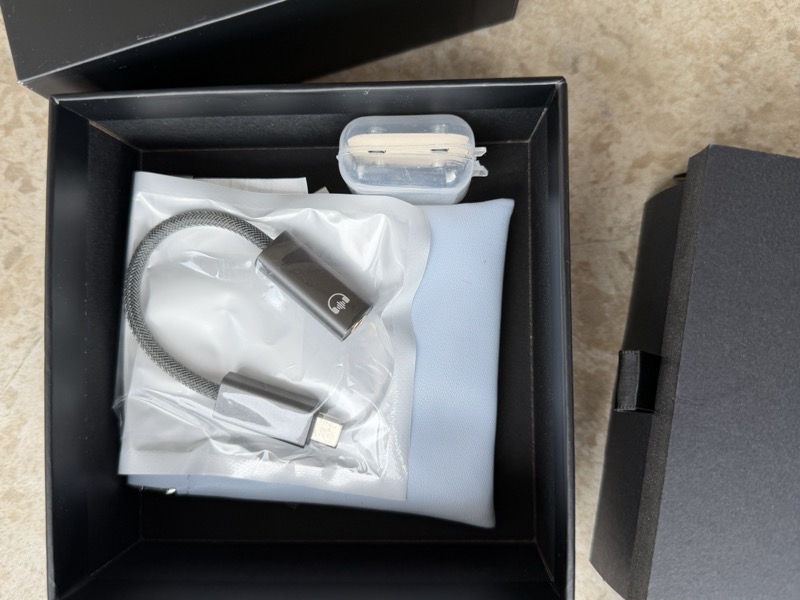
The lower compartment is where the value is, holding the dongle, the tuning nozzles and the pouch, and the full set laid out comes to a lot for the money:
 |
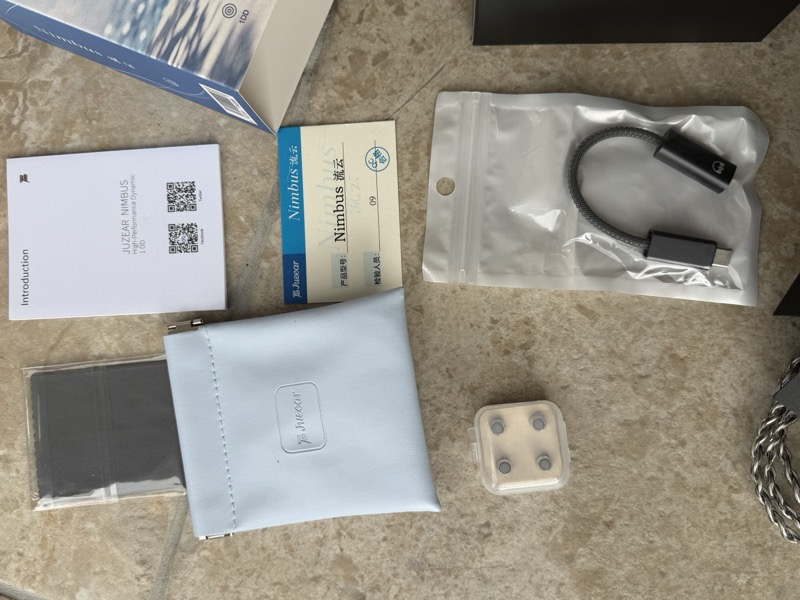 |
In the box: the Nimbus IEMs, a four-strand single-crystal copper silver-plated cable with 0.78mm 2-pin connectors, a USB-C DAC dongle, two pairs of alternative tuning nozzles, nine pairs of eartips across three types, a PU leather carry pouch, a manual and a QC card.
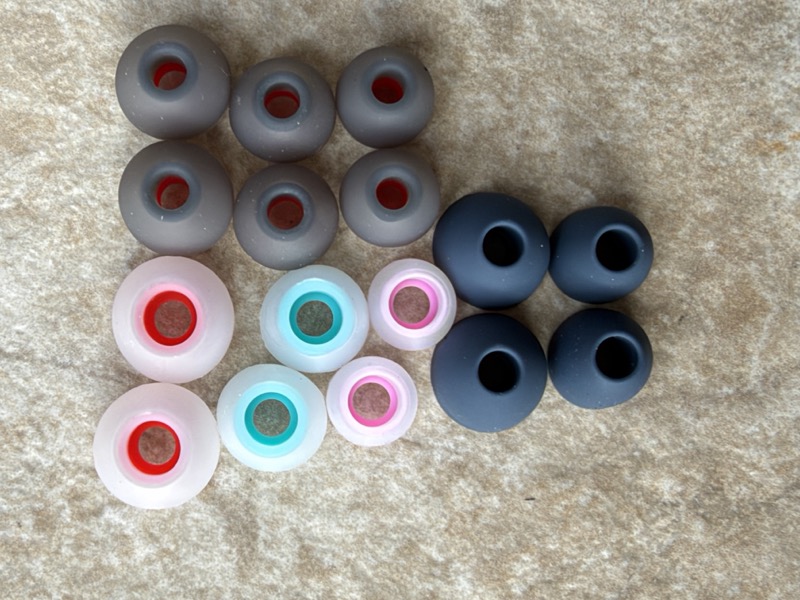
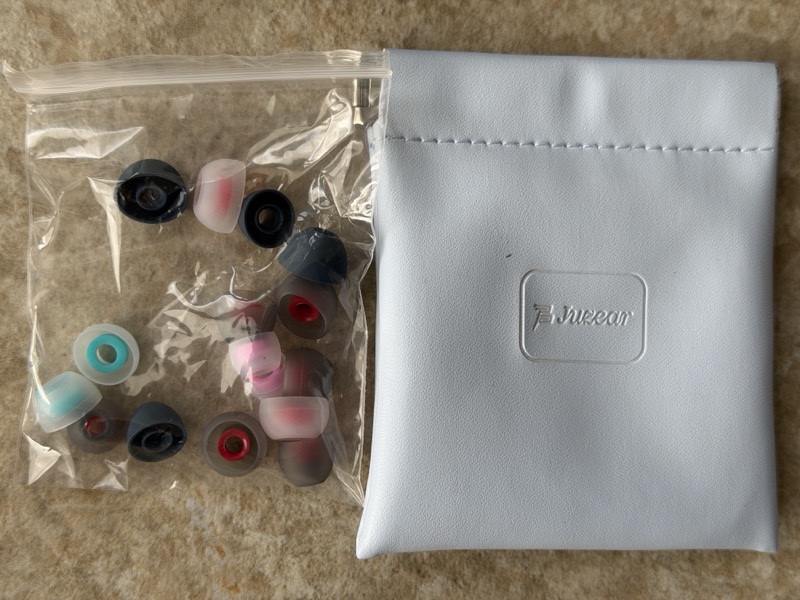
Nine pairs of eartips is generous, and they come inside the carry pouch. The useful part is that they are three genuinely different types — narrow-bore red-core, wide-bore, and standard-bore blue, in small, medium and large — not nine sizes of the same tip:
 |
 |
I love the eartip selection here, especially the three different bore options — swapping between them lets you tweak and personalise the treble, and it is worth spending a bit of time trying them. The one accessory grumble is that the case is a soft pouch and not a hard case, which is normal at this price but worth knowing if you throw things in a bag.
Build Quality and Comfort
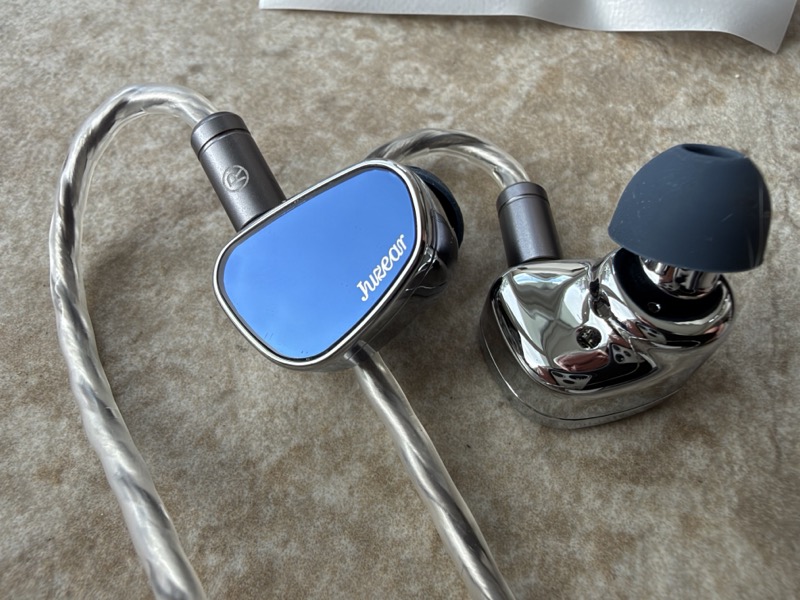
The shells are CNC-machined and die-cast zinc alloy, finished with multi-layer electroplating, and they look considerably more expensive than the price:
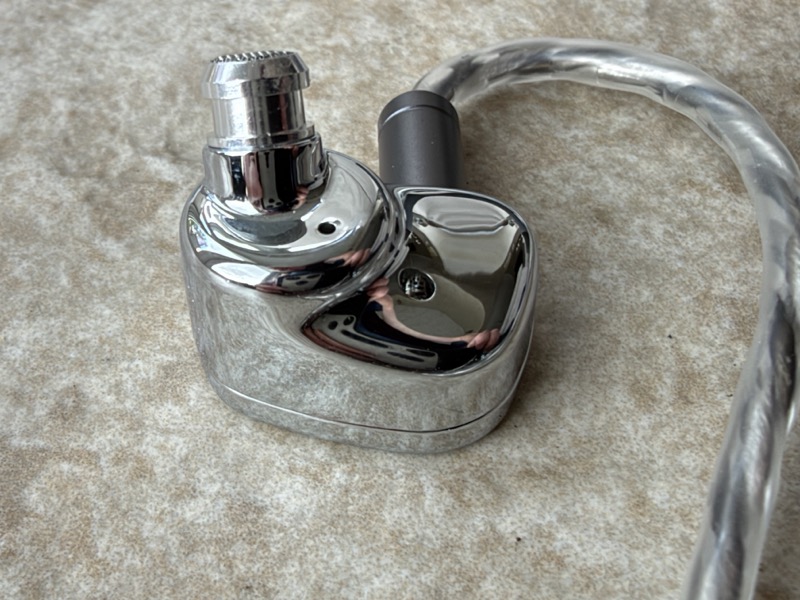
The inner and outer faces show the shape properly — a compact body with a nozzle set at a pronounced forward angle:
 |
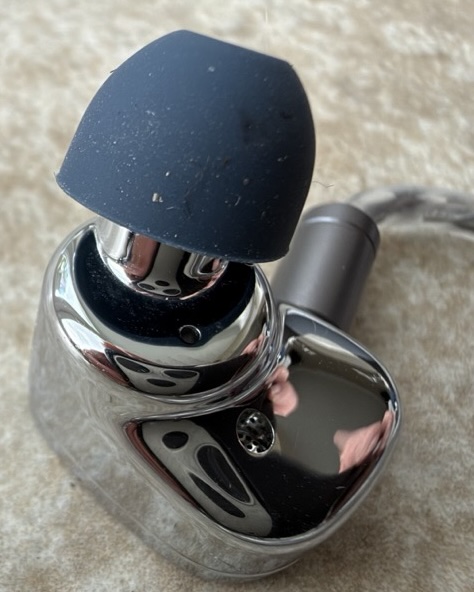 |
The mirror finish has one predictable downside, which several other reviewers have also raised: it holds fingerprints readily and a polished surface like this will pick up micro-scratches over time. Nothing about that affects the sound, but it is worth using the pouch rather than a pocket.
Inside is Juzear’s own 10mm dynamic driver using what they call a MACCD diaphragm — a multi-layered amorphous carbon composite — on a flexible TPEE suspension, driven by a large voice coil and an N52 neodymium magnet. Juzear quote distortion held under 0.8%, which is the only number on that spec sheet that says anything about the outcome.
A closer look at the nozzle shows the metal mesh and the two vents in the shell:
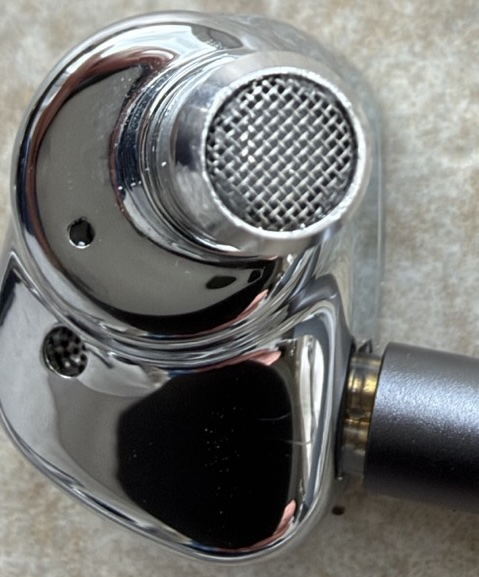
At 9.2g per side these are not featherweight, but the nozzle angle is one part that I feel helps with the comfort I got for those long sessions with the Nimbus. It sits far enough forward that the shell rests in the concha without any pressure point, and combined with the eartip selection I had no complaints at all. Juzear’s own copy only claims comfort for “extended 2 to 3-hour listening sessions”, so they are underselling themselves here.
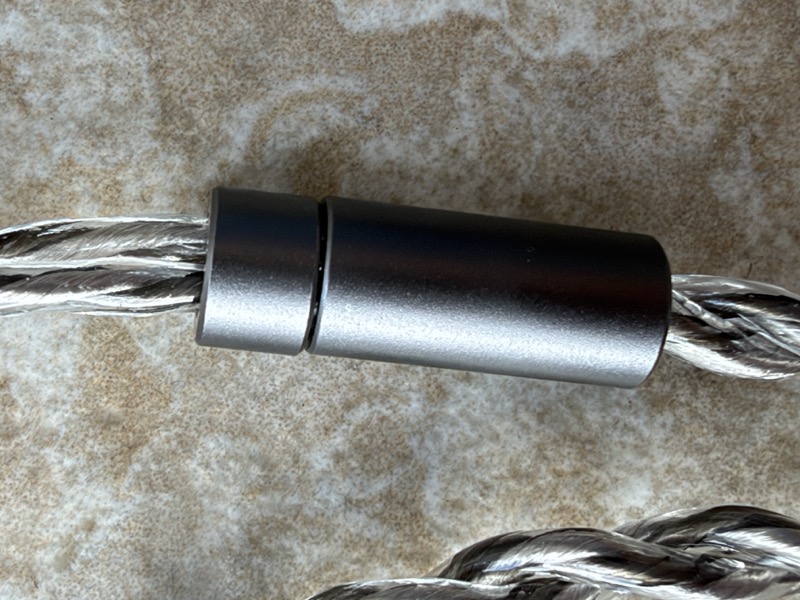
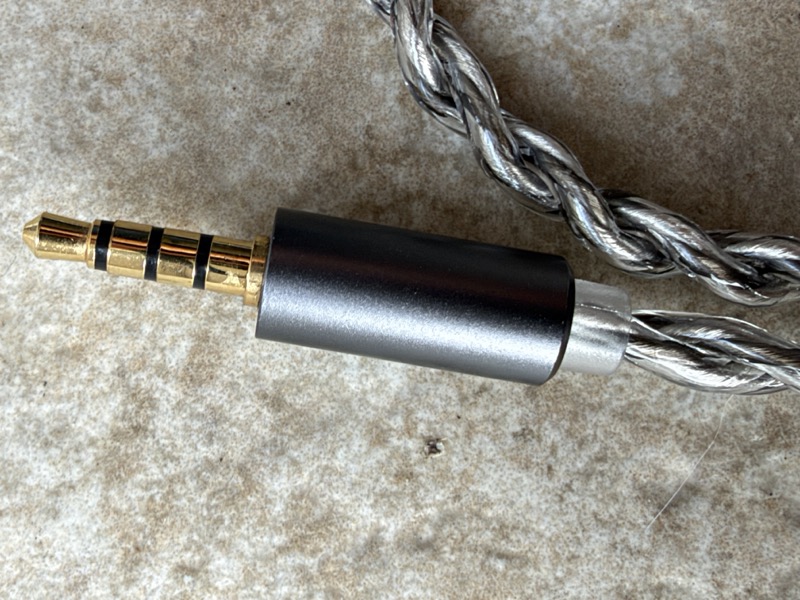
The cable is a two-core, four-strand twisted single-crystal copper silver-plated wire, and it is fine without being a highlight — soft, easy to live with, and unremarkable in the way a cable should be, though it can hold a little memory. On the audiophile version the plug is modular, screwing on so you can swap between the 3.5mm and 4.4mm terminations. My sample is the USB-C edition, so it came with the fixed 3.5mm cable — a TRRS plug, the fourth conductor being the in-line microphone. The Y-split is neat and the plug is well finished:
 |
 |
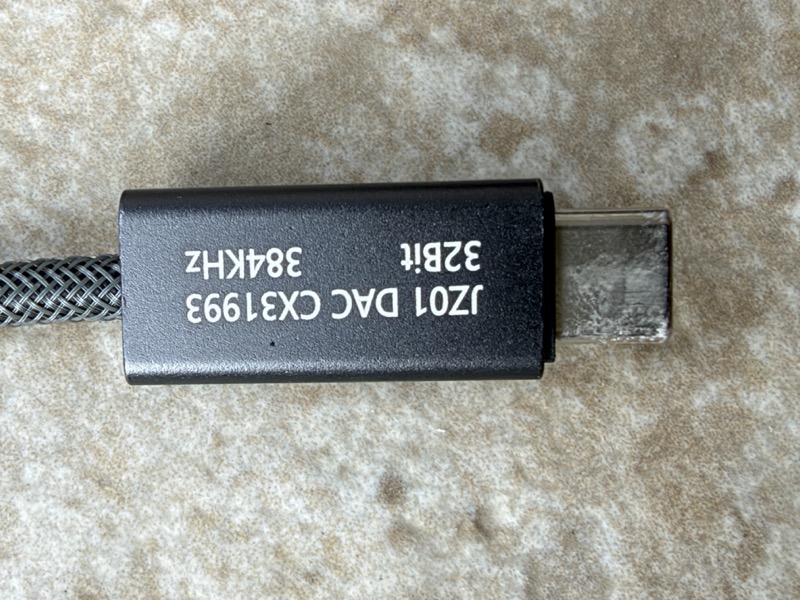
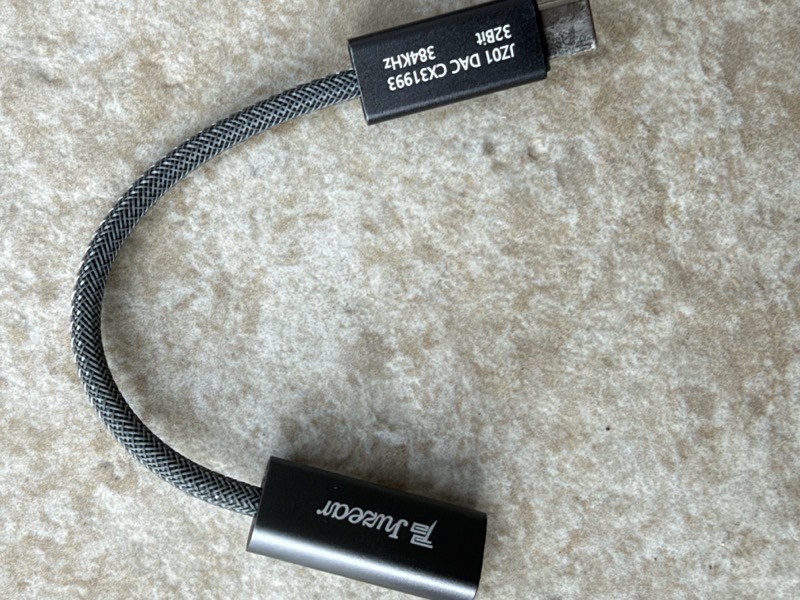
The bundled USB-C dongle uses the CX31993 with 32bit/384kHz decoding, and for what is effectively a $5 upcharge it is neatly made with far more power than a 32Ω, 108dB/mW IEM needs:
 |
 |
What it lacks is PEQ, which is a pity but expected I guess at this price point — parametric EQ on board would have made the tuning nozzles half of a much more capable system, hardware for the coarse adjustment and software for the fine, and plenty of dongles at this price now include it. I would also rather have had a screw-in USB-C adapter option than one more small thing to lose, though a standalone dongle does work with everything else I own.
The Tuning Nozzles
These are not spare parts — they are three different tunings, and this is the feature that makes the Nimbus interesting and not just well-tuned. The stock nozzle is white, and the box adds a red pair and a black pair.
The following measurement comparison shows the differences the tuning nozzles make:
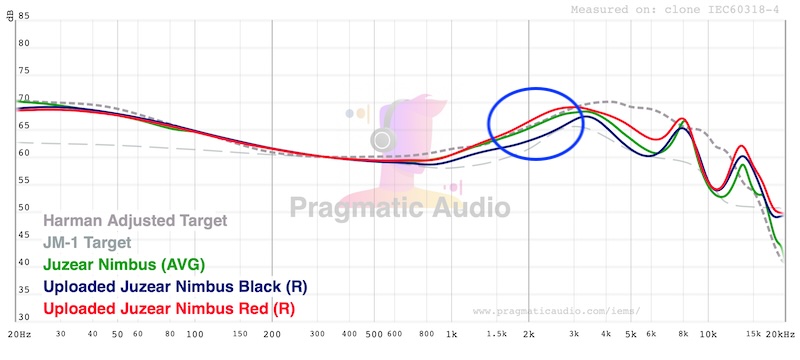
The circled region is where the work happens — roughly 1.5kHz to 3kHz, with a smaller effect above 5kHz. Red sits highest, stock in the middle, black lowest, with a spread of about 2–3dB between the extremes. That is a modest change in absolute terms, but it lands in the upper midrange and presence region where the ear is most sensitive and where the sense of “detail” lives, so it is clearly audible without ever making the IEM sound broken.
I appreciate that the colour scheme of the nozzles makes complete sense, e.g. red gives you hotter treble, black gives you a darker, more relaxed presentation, and the stock white nozzle sits between them. Juzear’s own copy says the nozzles “drastically alter the sonic presentation”, and that oversells it — 2–3dB in a band is a real change, not a drastic one.
The bass boost attributed to the black nozzle is really a reduction in treble — below 500Hz the three nozzles are nearly identical. It is an understandable way to describe it, since pulling the top down does make the bass sound more prominent, but it is worth knowing you are not getting extra sub-bass weight.
I did most of my listening on the stock nozzle and would happily leave it there, but somebody who finds the default too polite has a real remedy in the box rather than a suggestion to buy an aftermarket cable.
Sound Impressions
I listened mostly through the bundled dongle and from my Topping DX5 II on my work-from-home desktop, on the stock white nozzle. I always need the large eartips, and occasionally I reach for third-party Dunu XL tips instead.
Bass
The bass is good without being generous, and this is the one place where my ears and the graph disagree slightly. The measurement tracks the Harman target closely down low, but subjectively I hear less bass than a typical Harman-tuned IEM gives me. What is there is well judged — it integrates into the midrange without any bloom spilling upward, and it stays tidy instead of turning into general warmth. On Limit to Your Love by James Blake the low synth notes have proper weight and clean edges, but they do not have the physical push a bass-focused IEM would give them. If you are a bass head, this is not your IEM, and no nozzle will change that.
Midrange
The midrange is the best thing here. It is neutral in a way that cheap IEMs almost never manage, with tonality that simply sounds correct — no scooped lower mids making voices thin, no upper-mid spike making them shouty. On Fast Car by Tracy Chapman the vocal has proper body and sits exactly where it should in the mix, and the guitar keeps its woodiness without any honk. This is the part of the tuning I would not want changed.
Treble
The treble is slightly relaxed on the stock nozzle, and this is the deliberate decision that defines the Nimbus. It stays detailed — cymbals have their attack and decay, and nothing sounds veiled — and for me it never became fatiguing, which is where a lot of Harman-target IEMs at this price lose me after an hour. Treble sensitivity varies more than any other preference in this hobby, so audition if you know you are sensitive up there. On Billie Jean by Michael Jackson the hi-hat is clearly articulated without any of the hardness that would make me reach for the volume control. Fit the red nozzle and there is more presence and a slightly sharper sense of detail; fit the black and it becomes noticeably darker. All three are usable, which is the point.
Soundstage and Imaging
Soundstage is good for the price bracket without being remarkable, and it is clearly wider than it is deep — width is fine, forward depth is the weaker axis, and nothing sounds artificially expanded. Imaging is where it stands out. Placement is accurate and specific, with instruments sitting in defined positions instead of smeared across a general area. On Hotel California by the Eagles the individual guitars are easy to locate and stay locked in place as the arrangement fills out. I have not gamed with them, but on the strength of that positional accuracy I would expect the Nimbus to do well with gamers — the placement is precise enough to be useful and not just pleasant.
Specifications and Measurements
| Specification | Value |
|---|---|
| Driver | Self-developed 10mm MACCD composite diaphragm dynamic driver |
| Magnet / suspension | N52 neodymium circuit, large voice coil, TPEE flexible suspension |
| Impedance | 32Ω |
| Sensitivity | 108dB ±1dB SPL/mW |
| Frequency response | 20Hz–20kHz |
| Harmonic distortion | ≤0.8% |
| Net weight | 9.2g per side |
| Shell | CNC-machined and die-cast zinc alloy, multi-layer electroplated |
| Faceplate | Tempered laser-coloured glass |
| Nozzle diameter | 6.1mm |
| Connector | 0.78mm 2-pin |
| Cable | Four-strand single-crystal copper silver-plated |
| Versions | Audiophile: 3.5mm + 4.4mm adapters. USB-C: 3.5mm + Type-C DAC dongle |
| Dongle | CX31993, 32bit/384kHz decoding |
| Tuning nozzles | Three interchangeable (white stock, red, black) |
| Eartips | Nine pairs across three types |
| Price | $54.99, or $59.99 with the dongle |
Frequency Response
My own measurement, taken on a clone IEC60318-4 coupler, and also available on Pragmatic Audio:
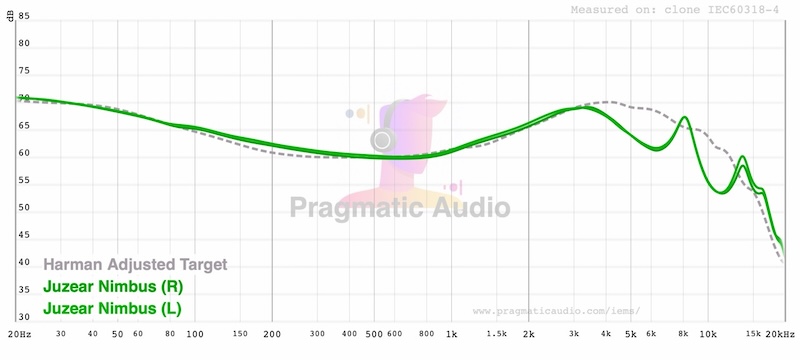
This tracks the Harman adjusted target very closely from 20Hz through to about 3kHz — the bass shelf, the midrange dip and the presence rise all land where Harman puts them. Then from roughly 4.5kHz to 7kHz it sits about 4–6dB below target, which is the relaxed treble in graph form.
That deviation is the point of the tuning. Following Harman exactly through the treble is what makes so many IEMs at this price tiring; pulling that region down while keeping everything below it on target gives you Harman’s tonal balance without Harman’s upper-treble energy. Channel matching is very tight too, with the left and right traces near-indistinguishable across the whole range.
Distortion
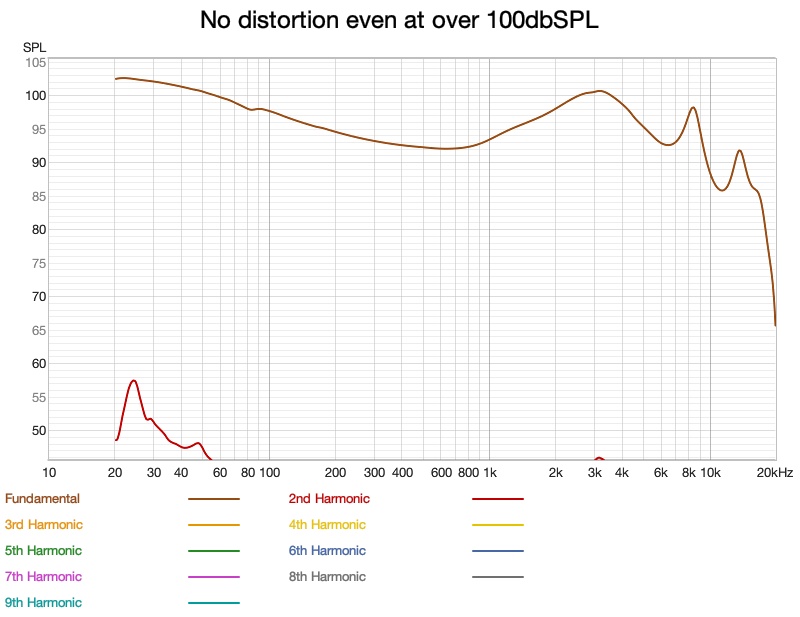
I ran a distortion sweep at over 100dB SPL, which is louder than anybody should be listening:
 |
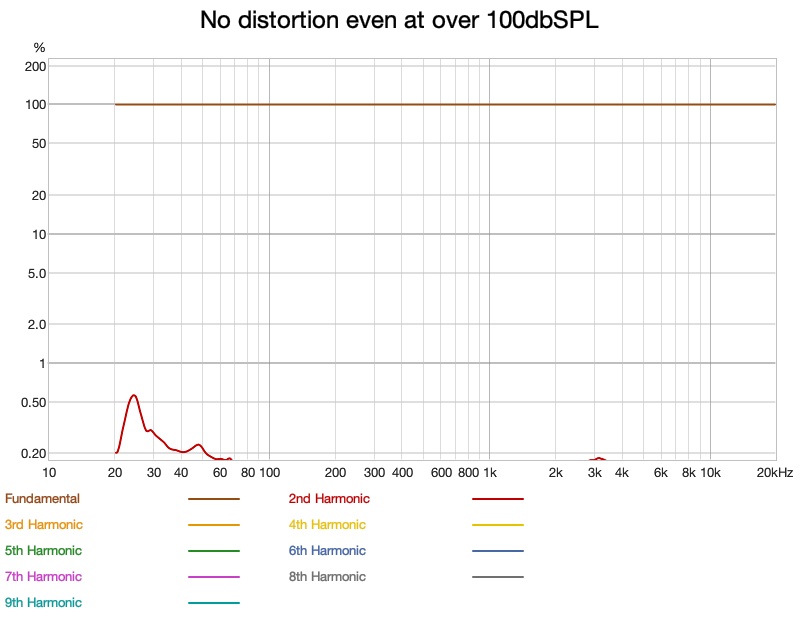 |
Second harmonic distortion peaks at about 0.6% around 25Hz, falls to 0.2% by 60Hz and is essentially absent above that apart from a 0.2% blip at 3kHz. Every higher harmonic is at the noise floor. For a single dynamic driver being pushed past 100dB SPL that is a very clean result, and at sane listening levels distortion from this driver is not something you need to think about.
Comparisons
I compared the Nimbus against a few of my favourite IEMs. They all cost more than it does, which is the context for everything below.
Kiwi Ears Astral and Orchestra II
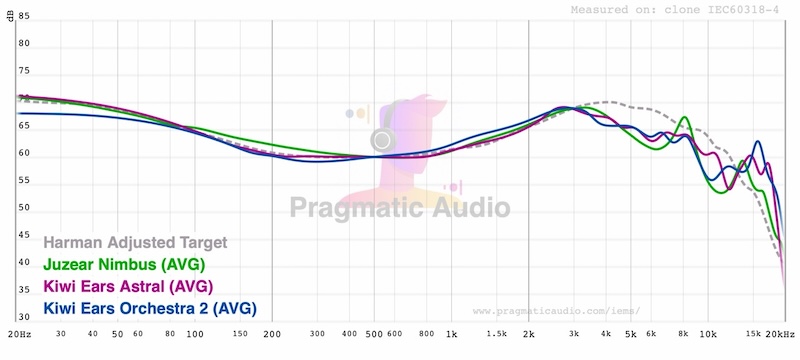
I compared with two of my favourite Kiwi Ears. The Astral and the Orchestra II both sit very close to the Nimbus, and with the stock nozzle fitted the treble is similar across all three. The Nimbus carries a little more mid-bass warmth than the Astral, which is the main audible difference. That it is in this conversation at a fraction of the price is the most useful thing I can tell you about it.
Crinear Daybreak
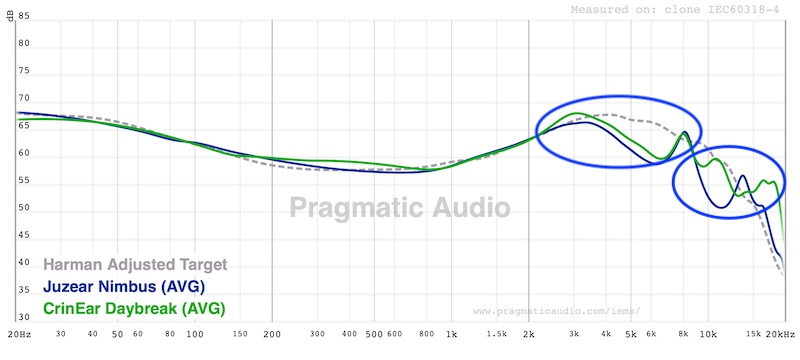
The Nimbus and the Crinear Daybreak track each other very closely from the bass right through the midrange — the two traces are almost on top of each other up to about 2kHz. The whole difference is in the treble, and I have circled the two regions where it shows. In both of them the Daybreak has more: through the presence region above 3kHz, and again in the upper treble past 10kHz.
That is why the Daybreak sounds the more detailed of the two, and it matched what I heard with the stock nozzle fitted — it is exactly the situation the red nozzle exists to address.
Cozoy D2
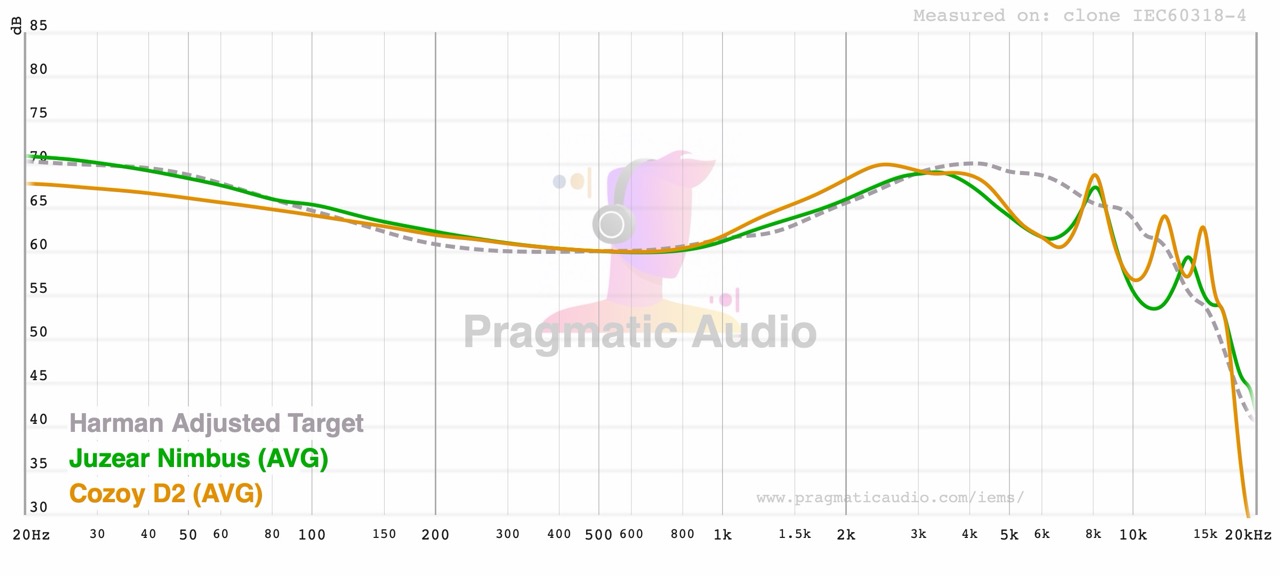
The Cozoy D2 is a similarly priced IEM with a very different tuning. It is distinctly midrange-forward, pushing vocals toward you, and it carries more upper treble as well. The Nimbus has more sub-bass and holds back both of those regions, which is what makes it the more neutral of the two. Neither is better — they suit different preferences, and having both in a collection gives you a good contrast to reach for depending on what you are listening to.
Rating Explanation
The Nimbus gets five for the pragmatic rating, five for price, five for measurements and four for features.
The tuning earns the top marks. It takes Harman’s bass and midrange, which is the part of that target I like for a fun listen to the majority of recordings — though I obviously like other tunings for different genres — and pulls back the part I usually do not, staying detailed without becoming fatiguing — and the measured response explains exactly why. The three nozzles then make it adjustable in the one region where adjustment is most useful, with an easy-to-remember colour scheme.
The price five is about the whole package. The zinc alloy shell, nine pairs of eartips in three types, the pouch, the alternative nozzles and the bundled dongle add up to something that felt like a $100 product a year ago and a $200 product two years ago. My complaints are all minor and all cost the features rating its fifth star: the dongle has no PEQ, which is a missed opportunity when hardware nozzles and software EQ would have complemented each other so well; I would rather have had a screw-in USB-C adapter than a separate dongle to lose; and the mirror finish is a fingerprint magnet, though I like how the faceplates look enough to live with that.
Conclusion
This price bracket is brutally competitive. The Truthear Zero Red and Blue are still strong contenders and a dozen other companies are trying to make a mark here, so a new arrival needs a reason to exist beyond being competent. The Nimbus has two: a tuning that solves the specific problem of Harman-target IEMs being too bright, and a nozzle system that lets you disagree with that decision without buying anything else.
Add the eartip selection, the quality of the shell and the bundled dongle, and this is a strong offering at under $60. If you have been put off Harman-tuned budget IEMs because they wear you out after an hour, this is the one to try — and if you want the treble back, the red nozzle is in the box. This is an easy recommendation, and given everything here I am looking forward to reviewing another Juzear soon.