Fosi Audio S3 Lite
A Network Streamer With No DAC Inside It
Three digital outputs, no analogue ones, and a clear idea of which box should do the converting
I reviewed the Fosi Audio S3 earlier this year and found a capable first streamer held back mostly by its app. The S3 Lite is the same idea with a deliberate subtraction: Fosi have taken out the AKM 4493SEQ DAC and the OPA1612 output stage entirely, leaving USB, optical and coaxial outputs and nothing analogue at all.
That sounds like a downgrade and mostly is not. If you already own a DAC you chose on purpose — and if you are reading a review of a $199 streaming transport, you probably do — then the S3’s onboard converter is a part you paid for and then bypassed. The Lite is Fosi charging you for the half of the box you were actually going to use.
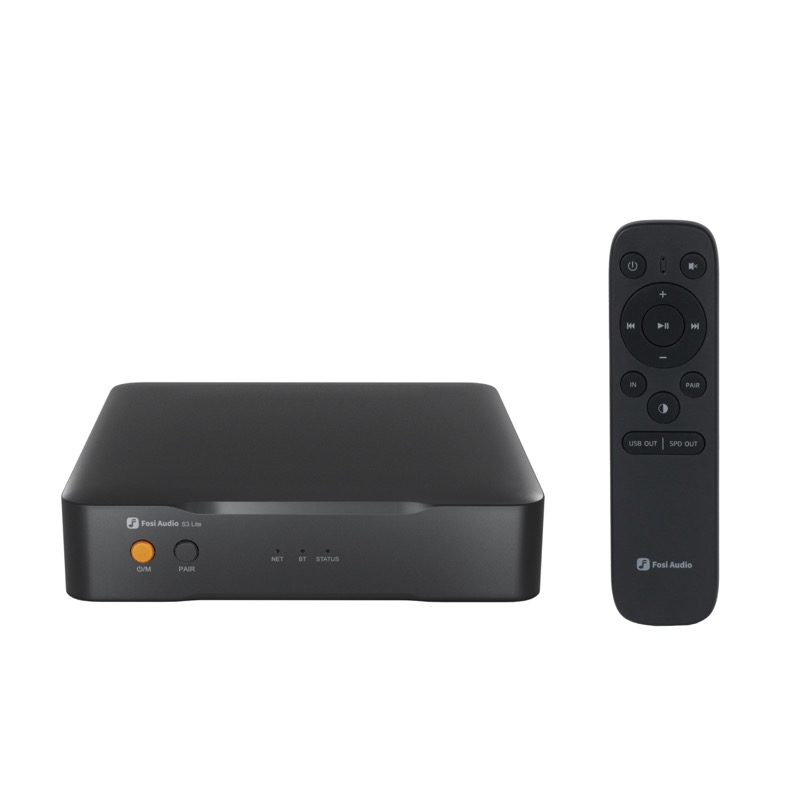
I would like to thank Fosi Audio for providing the S3 Lite for the purposes of this review.
If you are interested in finding more information about this product, you can find it at the official product page.
The S3 Lite retails for $199.99 in its standard edition, and Fosi also list a “Stream-to-DAC Kit” bundle at $359.99, reduced from $379.99. Fosi Audio products are discounted on Amazon often enough that it is worth checking there before paying list price.
I have had the S3 Lite in my office system for about a month, running into a Fosi Audio ZD3 and out to the amplifiers on that rack. In that time the thing I keep coming back to is a setting rather than a sound — there is one default in the app that quietly stops this being the bit-perfect transport it is sold as, and it takes ten seconds to change. But first, let’s take a look at what’s in the box.
Unboxing and Build Quality
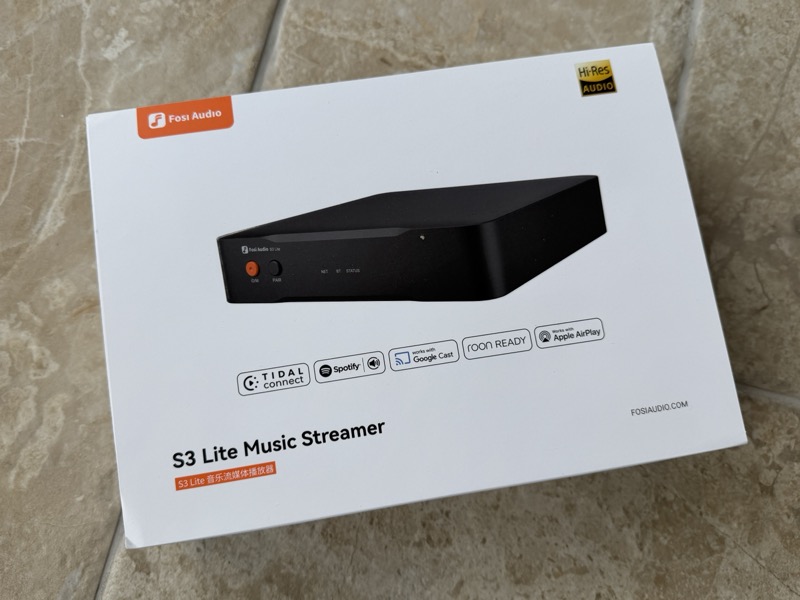
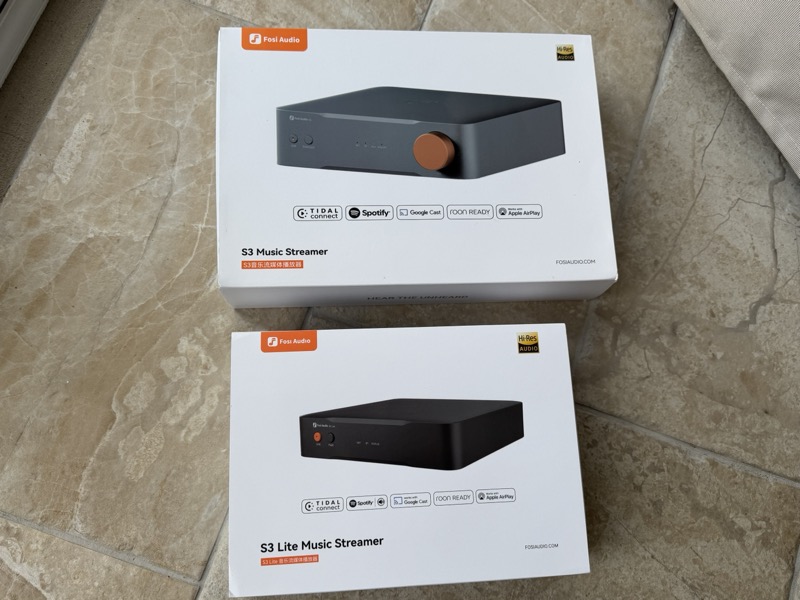
The packaging is the same restrained white card Fosi have settled on across the range, with the protocol badges — Tidal Connect, Spotify, Google Cast, Roon Ready, AirPlay — printed along the bottom where a buyer scanning a shelf will actually read them:
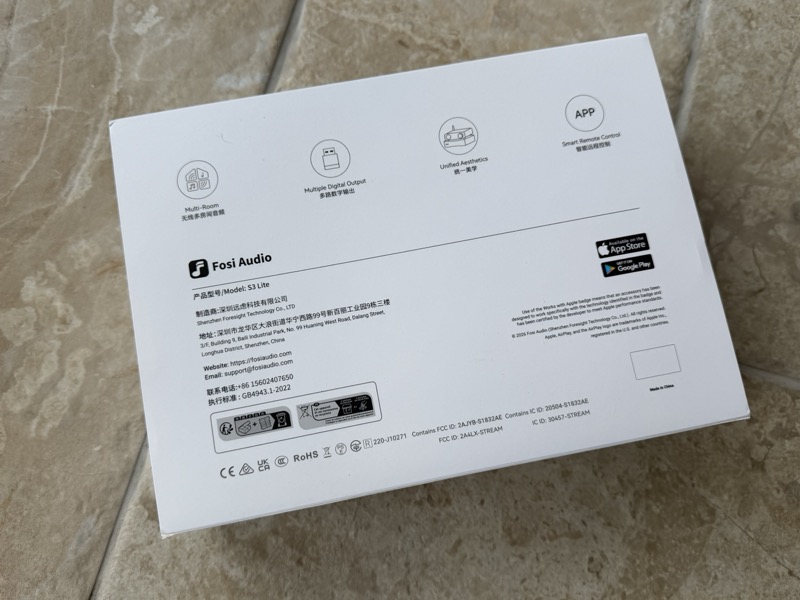
The rear of the box is more useful than most, listing multi-room, multiple digital outputs and app remote control, along with the model number and the regulatory block:
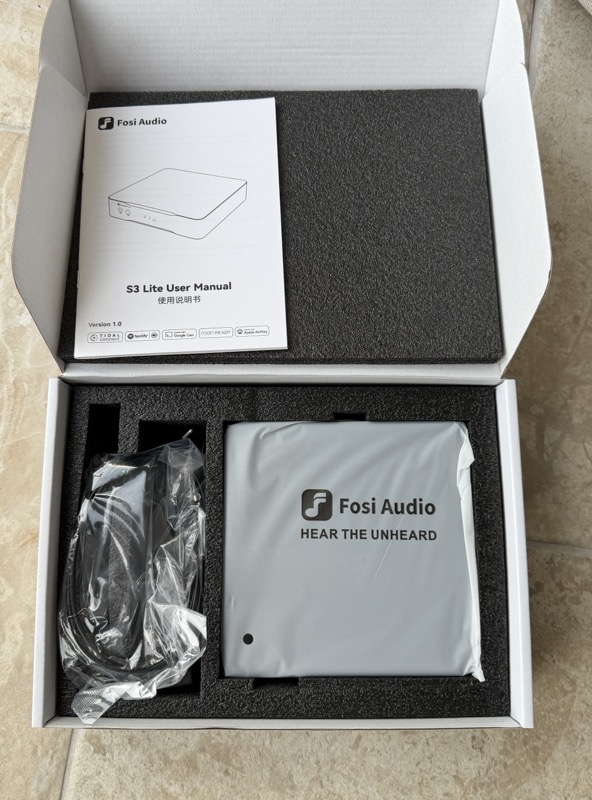
Inside, the manual sits on the upper foam layer with the unit bagged below it alongside the cable cutouts:
 |
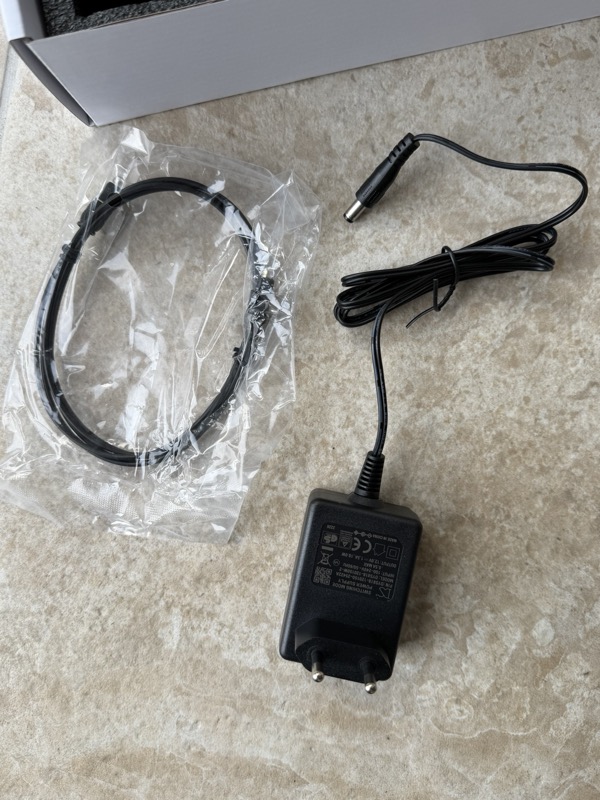 |
What’s in the box: the S3 Lite, a 12V power supply, an Ethernet cable, and the user manual.
The Bluetooth remote is in there too, under the foam layer, and it is more useful on this product than a remote usually is: alongside transport and volume keys it has dedicated USB OUT and SPD OUT buttons, so switching which digital output is live does not mean opening the app.
One omission is worth planning around. Fosi bundle an Ethernet cable but no digital interconnect, so a transport whose entire job is feeding an external DAC arrives without the one cable that does that job — budget for a coaxial or optical lead, or a USB-A to USB-B, depending on which output you plan to use.
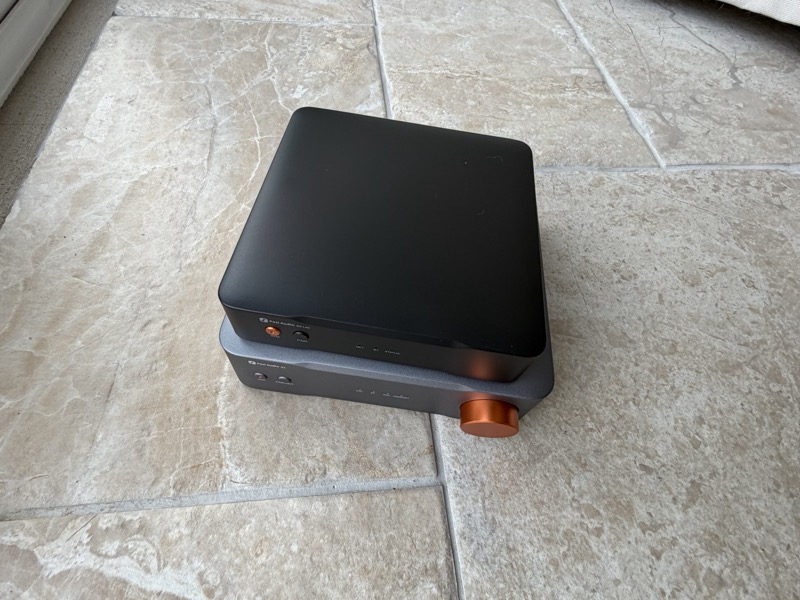
The chassis is a plain black aluminium slab with a single orange power button, a pairing button, and three status LEDs for network, Bluetooth and system state. Next to the S3 it looks like what it is — the same design language with the volume knob and the front-panel display removed, because there is no volume stage and nothing to display:
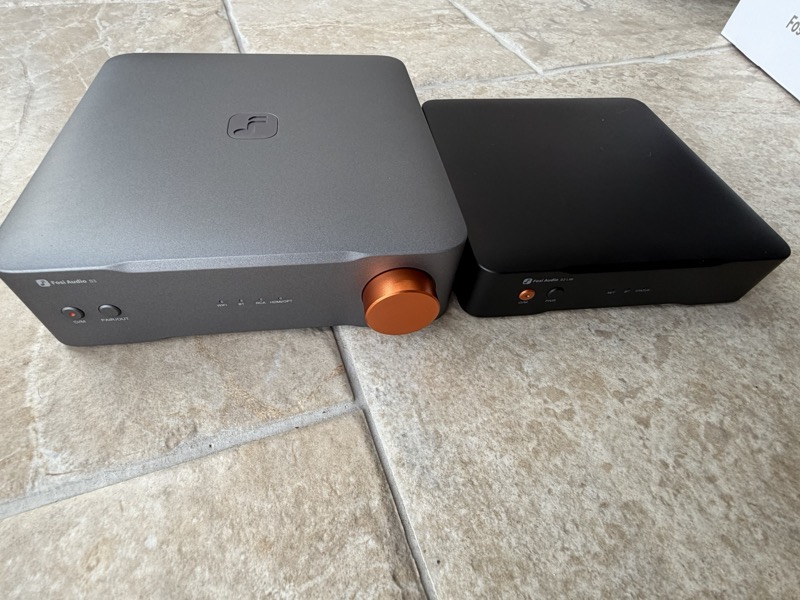
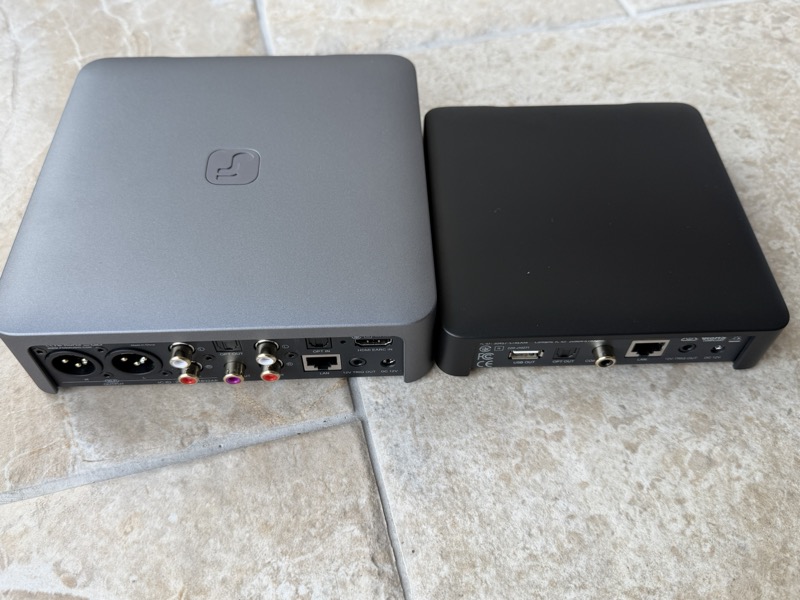
The size difference is the part the spec sheet undersells. The Lite is 147 × 146.5 × 32.5 mm against the S3’s 173 × 173 × 47 mm, and 507 g against 870 g:
Seen from above, the Lite gives up roughly a third of the footprint:
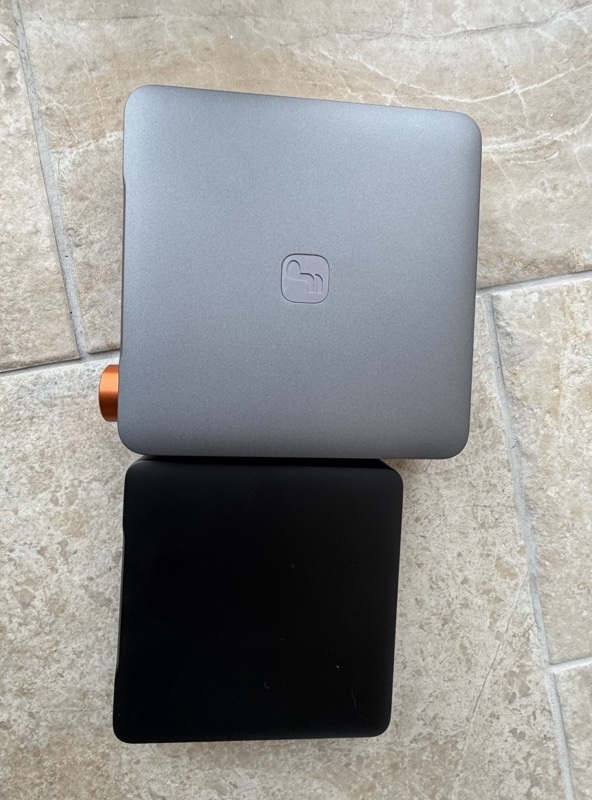
Stacked, the Lite takes up about the volume of a paperback:
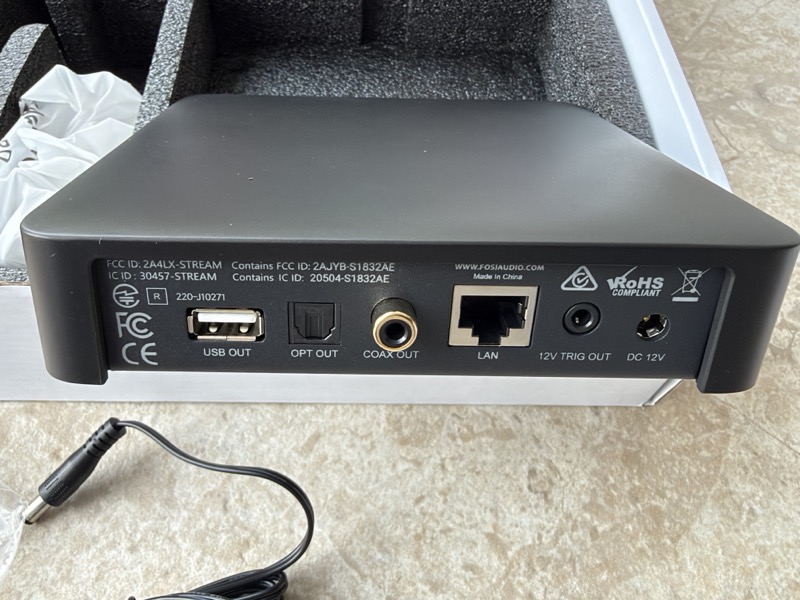
The rear panel is the whole case for this product. From left: USB OUT, OPT OUT, COAX OUT, LAN, a 12V trigger output, and the DC input. There is no RCA, no XLR, no 3.5 mm — no analogue output of any kind:
Against the S3’s rear panel, with its XLR and RCA outputs and its RCA, optical and HDMI eARC inputs, the difference in intent is obvious at a glance:
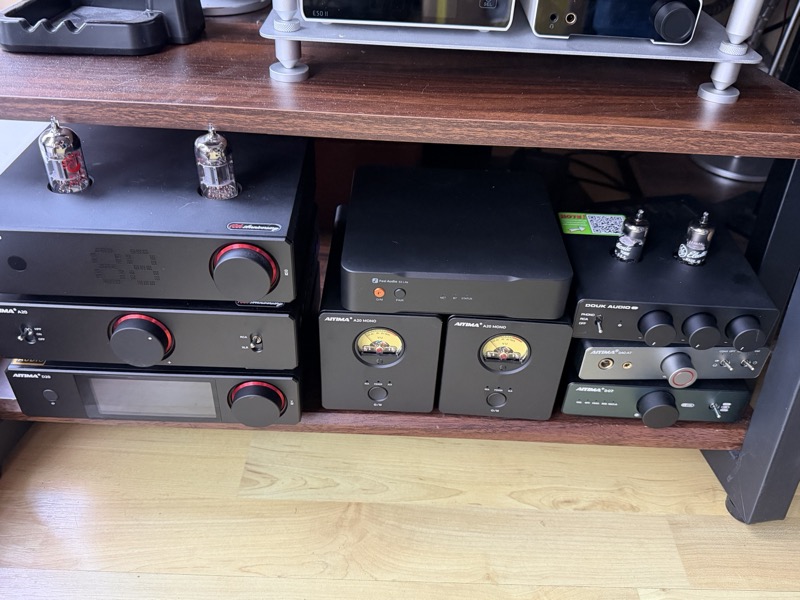
In my rack it ended up sitting above a pair of Aiyima A20 Mono amplifiers, which is about the size relationship you should expect — it disappears onto a shelf in a way the S3 does not:
Features and Connectivity
Setup
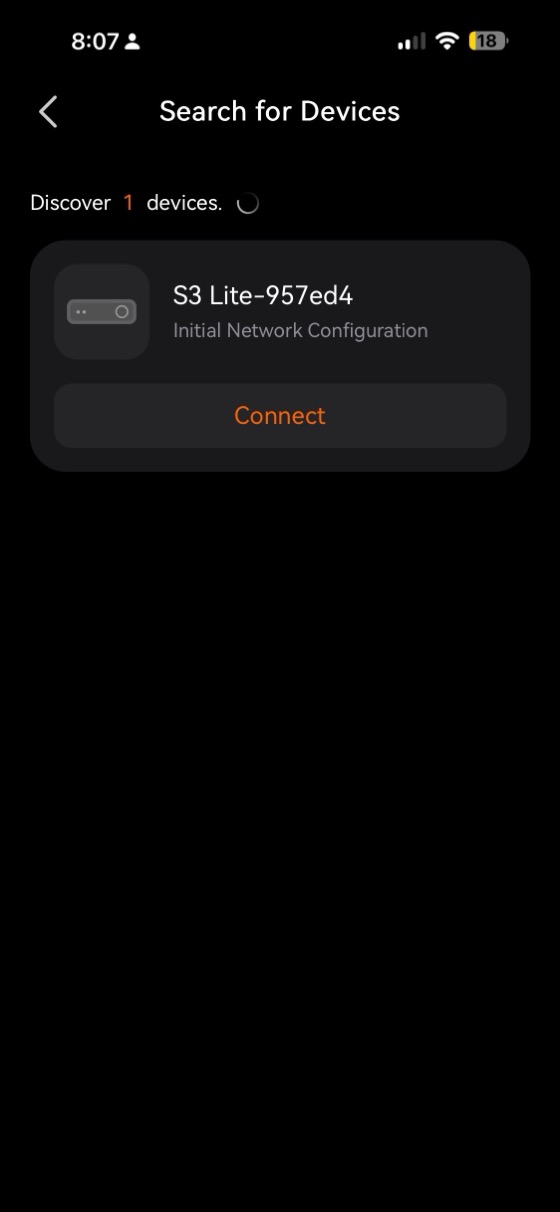
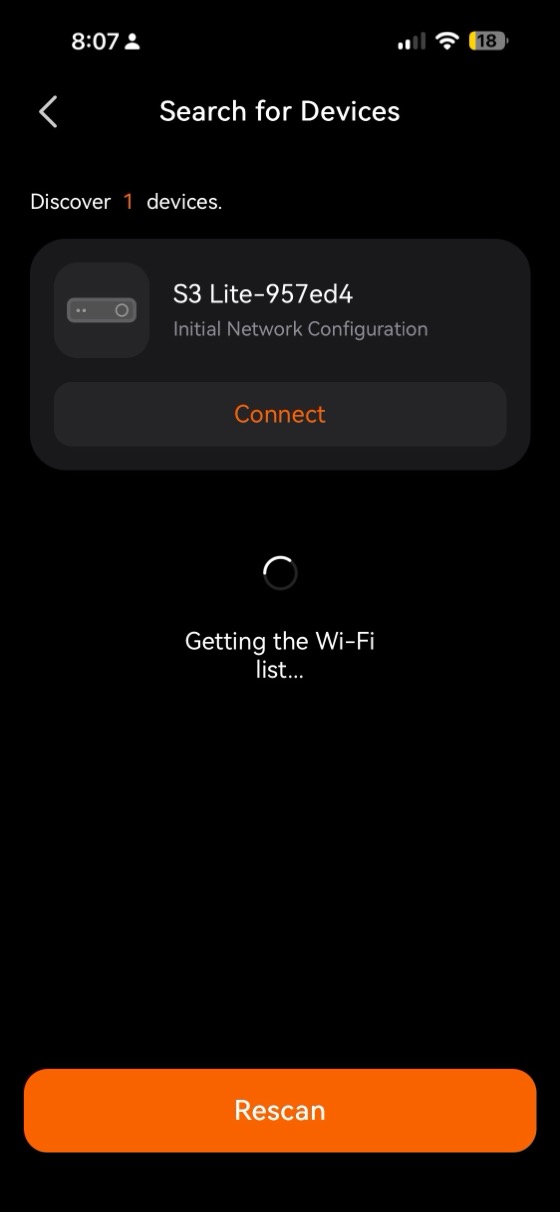
Setup runs through the Fosi Audio app and took a few minutes. The app finds the unit broadcasting as S3 Lite- plus a hex suffix, offers a Connect button, then pulls the Wi-Fi list from the device itself rather than from the phone:
 |
 |
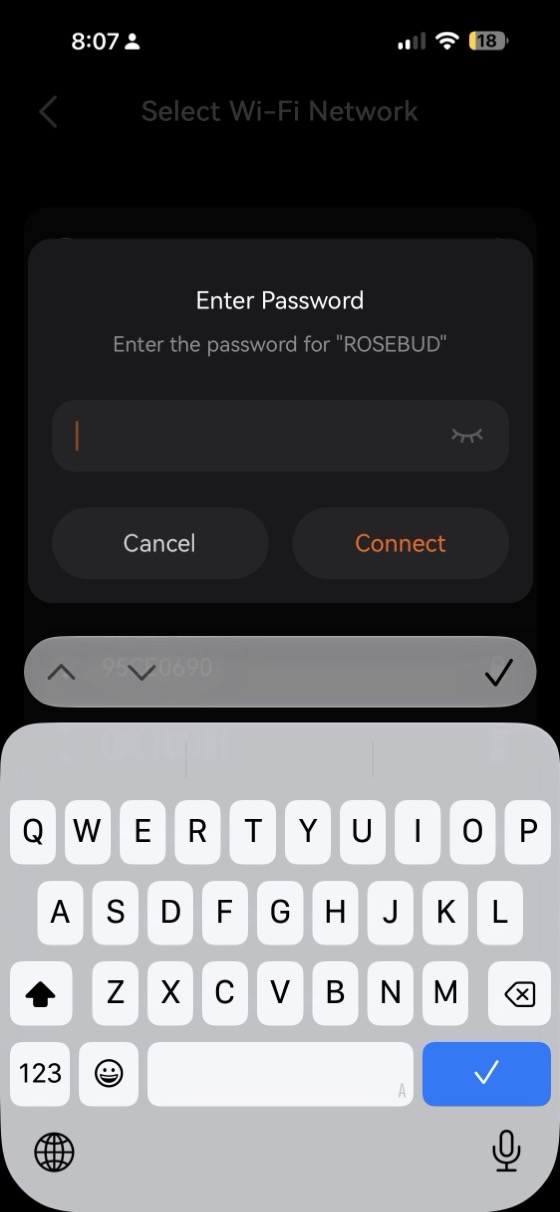
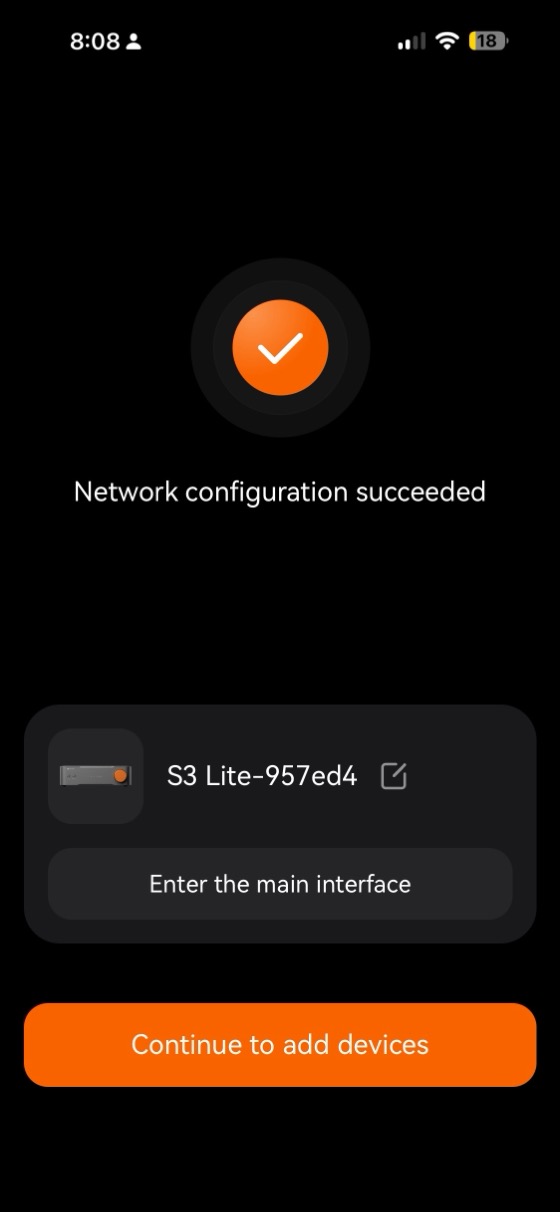
You pick a network, enter the password, and the device joins:
 |
 |
One oddity turned up along the way: the iOS permissions page for the app, version 1.1.9 (119), carries the notice “This app will no longer receive updates as its associated app marketplace was deleted”, with the marketplace listed as unknown:
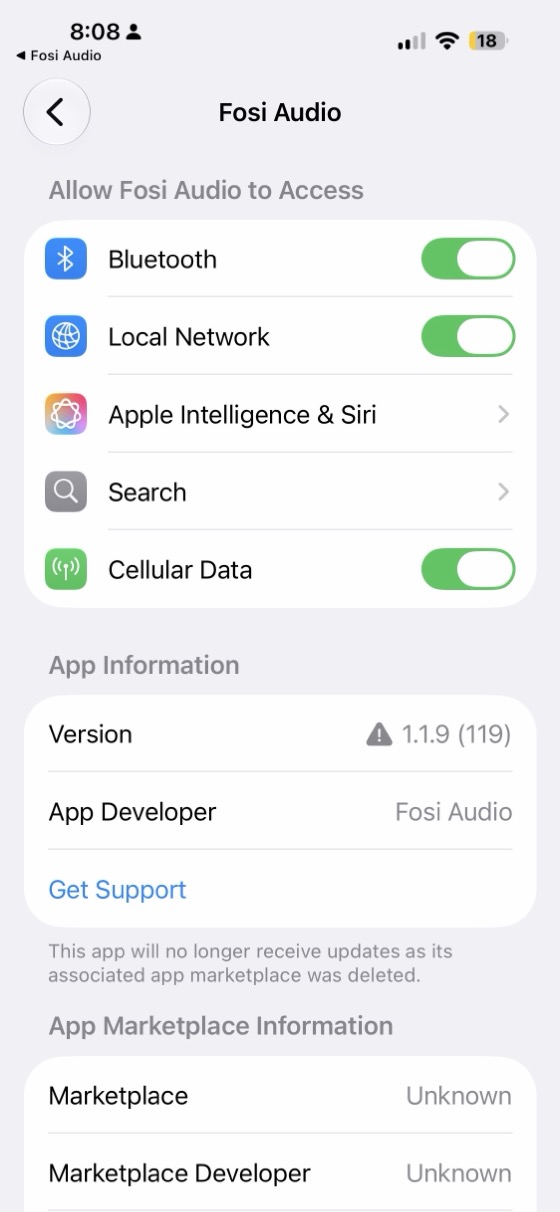
The app has worked normally throughout, so whatever iOS is complaining about has had no practical effect here. I have no explanation for it beyond that.
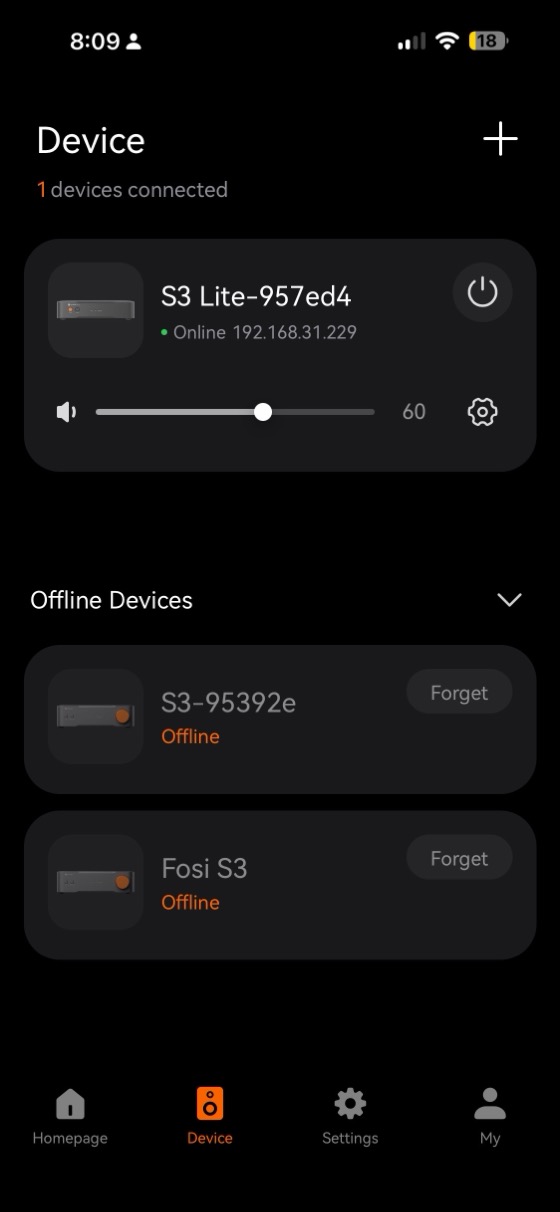
Once configured, the device list shows the Lite online with its IP address, and — in my case — two previous Fosi streamers sitting in the offline list:
Sources and services
The homepage puts the three push sources — Google Cast, AirPlay and Bluetooth — above the music services:
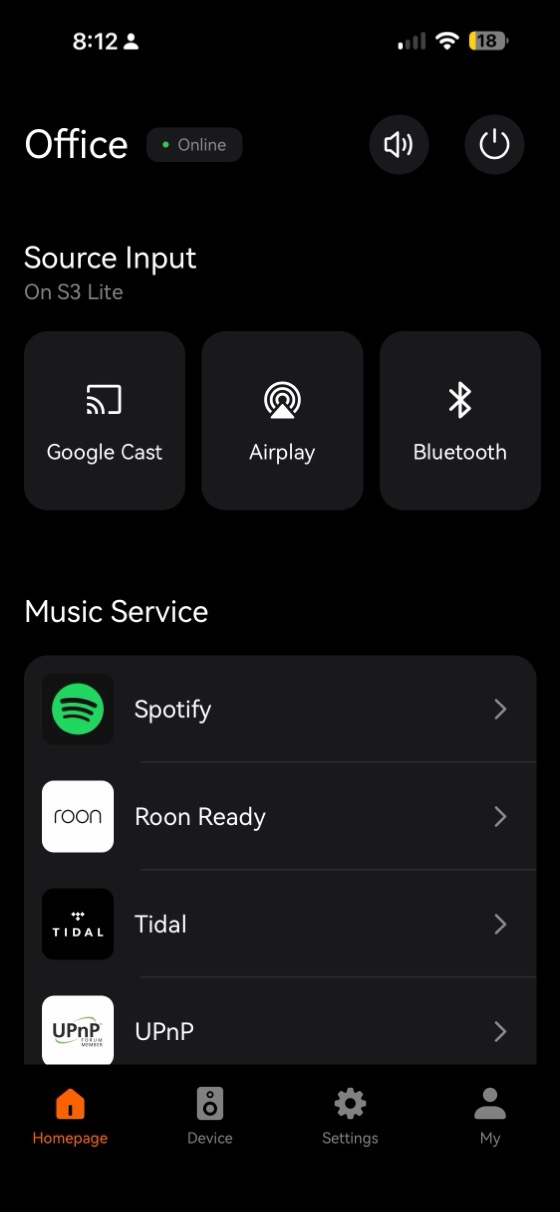
The service list is the strong part of this product and the reason the features rating is where it is. Spotify Connect, Roon Ready, Tidal, UPnP and Qobuz Connect are all native, which means the S3 Lite appears as an endpoint inside the app you already use rather than requiring you to live inside Fosi’s:
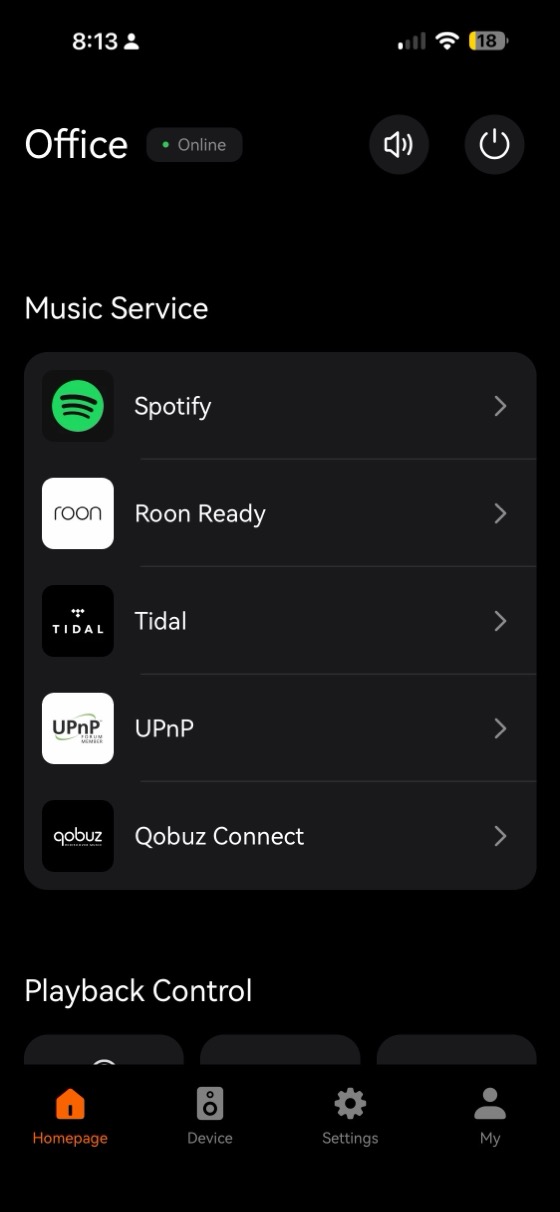
That distinction matters more than a feature checklist suggests. A streamer whose own app is mediocre but which is Roon Ready and supports three Connect protocols is a streamer whose app you will rarely open. The UPnP browser found my minidlna instance, a Plex Media Server and another endpoint on the network without any configuration:

Settings, and one thing to turn off
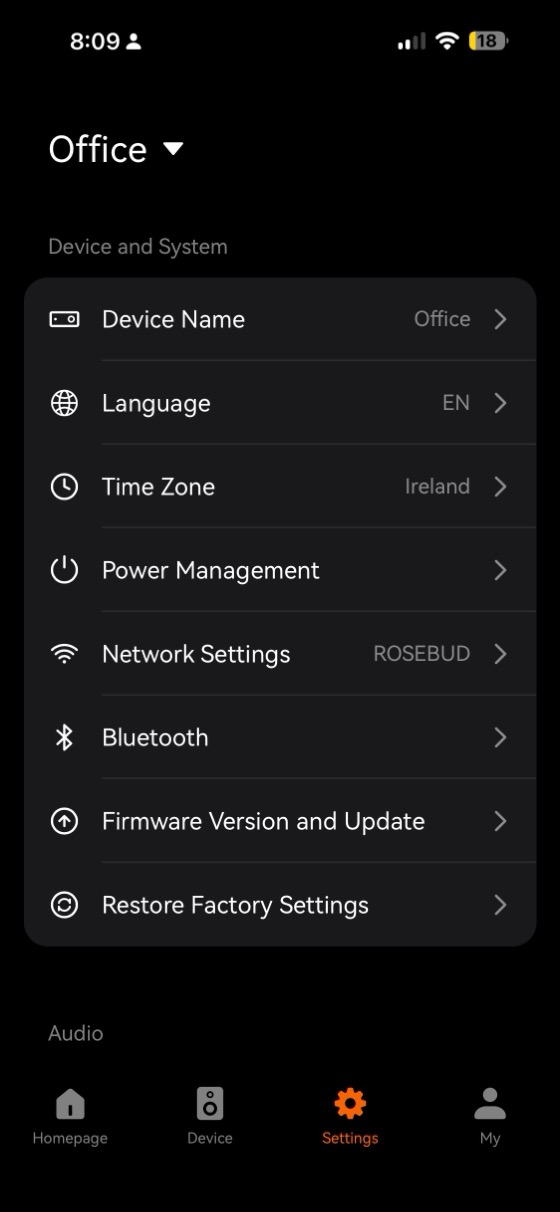
The settings tree is clean and logically grouped — device name, language, time zone, power management, network, Bluetooth, firmware and factory reset in one block, audio in another:
 |
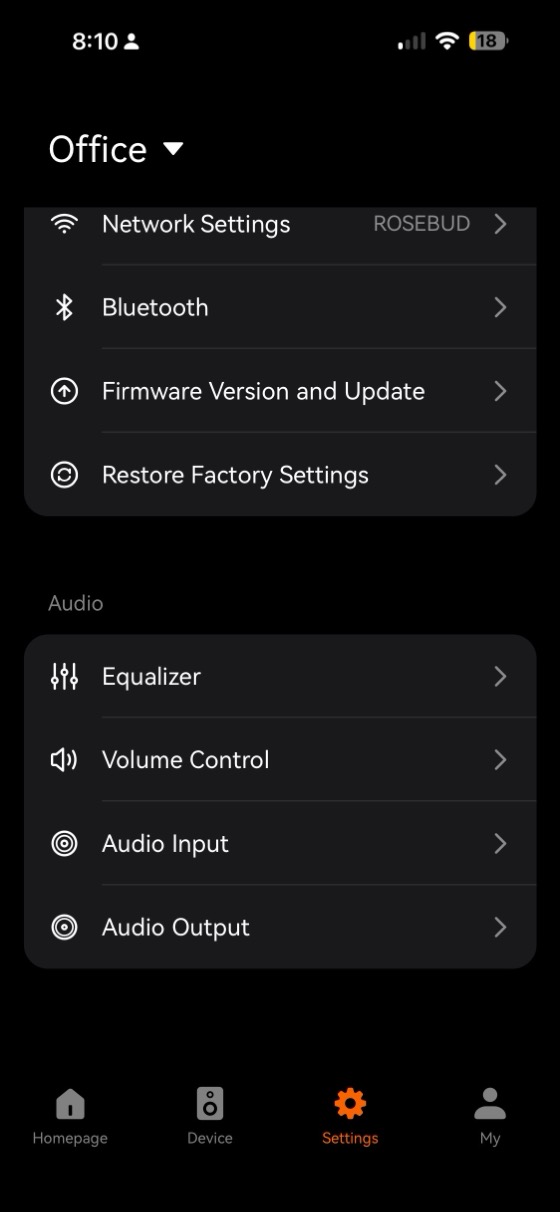 |
Note the Audio Input entry in that second screenshot. The S3 Lite has no inputs — that menu item is inherited from the shared firmware the S3 also runs, and it is the kind of small untidiness that tells you the Lite is a variant rather than a ground-up product.
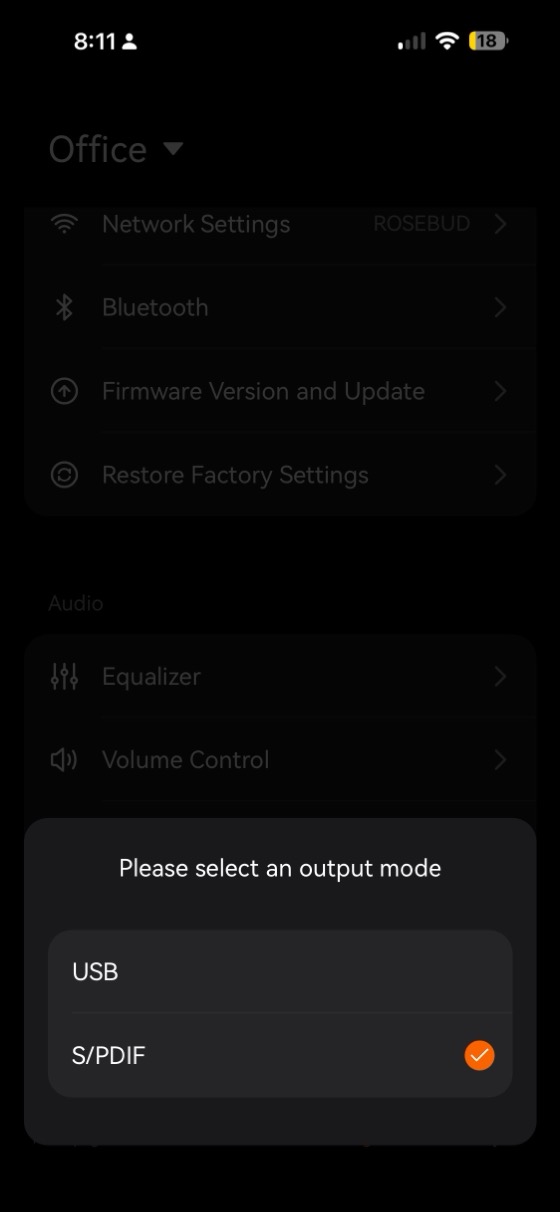
The output mode selector is the one setting that matters most, and it is a straight either/or between USB and S/PDIF rather than both at once:
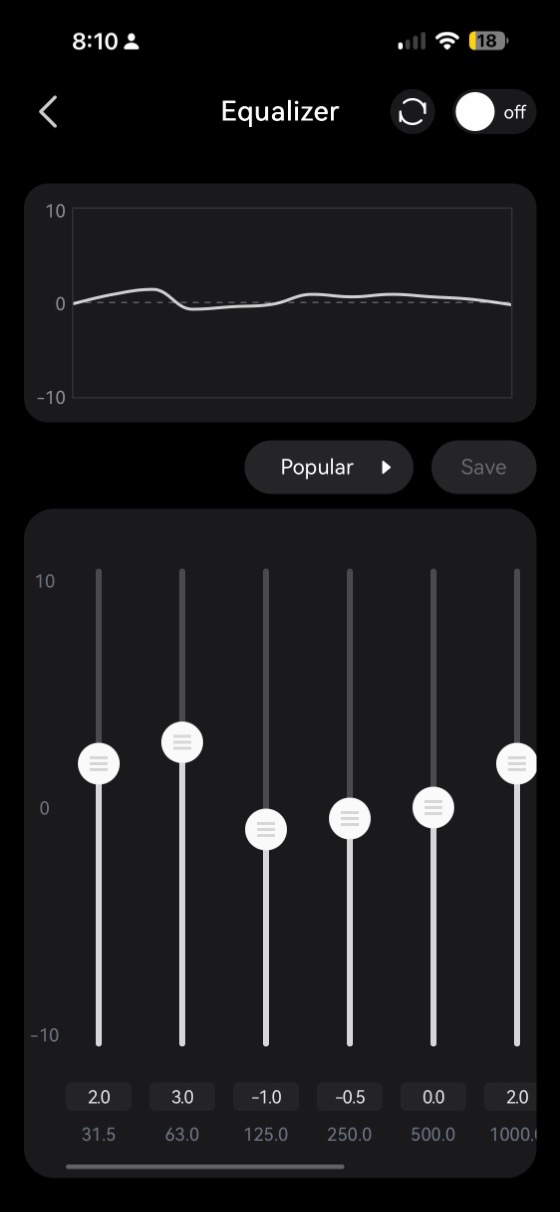
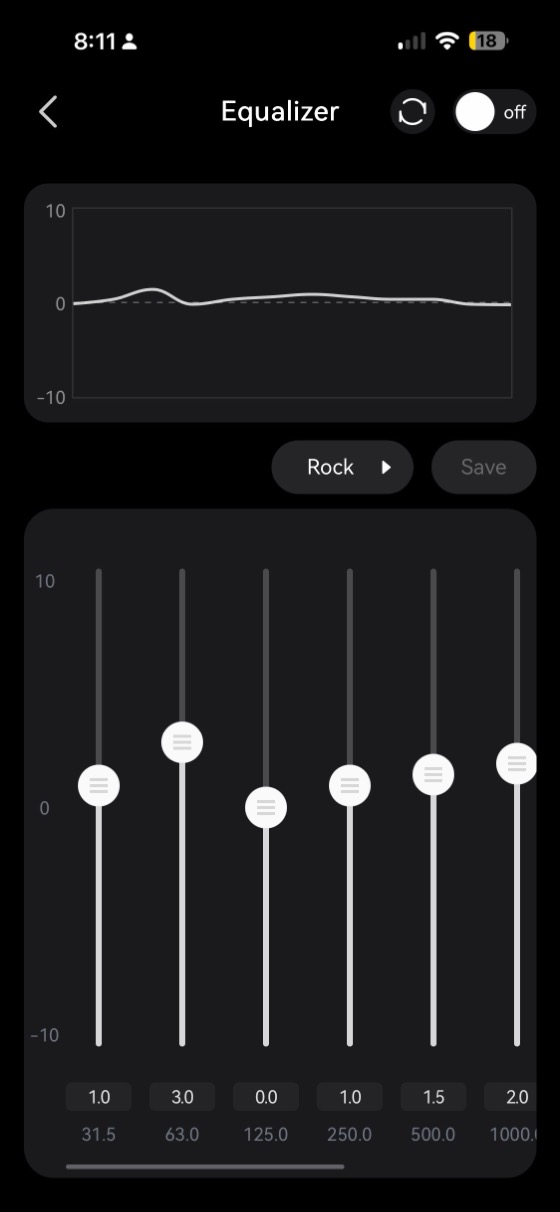
The Equalizer is a 10-band graphic EQ with presets, shipped off by default:
 |
 |
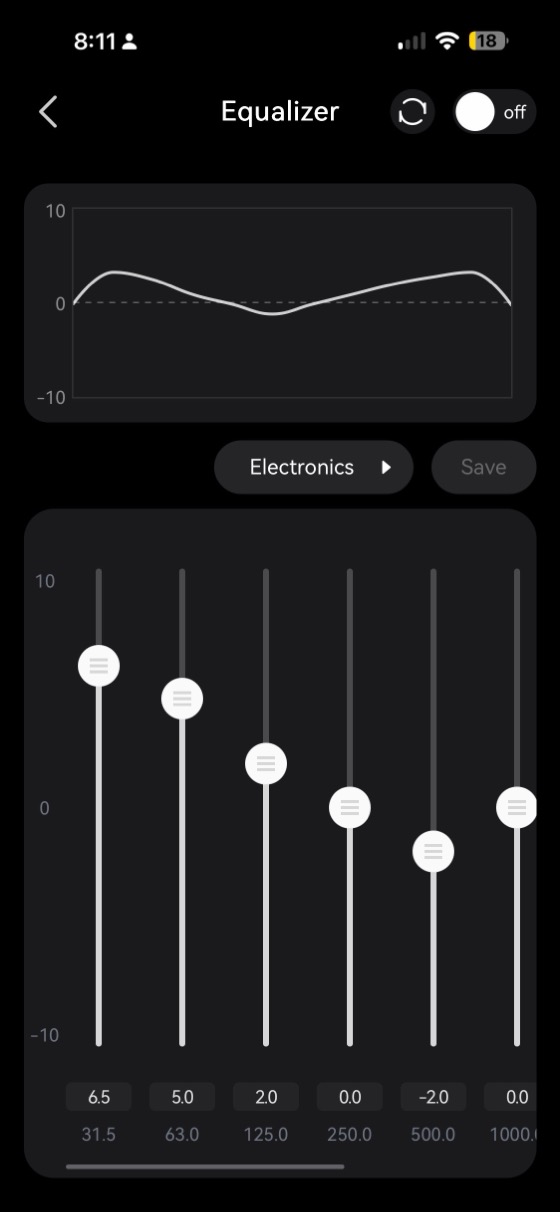 |
Leave it off. On a device with an onboard DAC, EQ is a reasonable convenience. On a pure transport it is DSP applied to a bitstream you are about to hand to a converter you chose specifically because you trust it, and a 10-band graphic EQ with no measured target is not a tool for room correction — it is a tone control. If you want real correction, do it upstream in Roon or downstream in the DAC or amplifier.
The same caution applies to volume, and this is the one genuine trap in the product. There is a volume slider and a volume settings page, and the device list screenshot above shows the Lite sitting at 60:
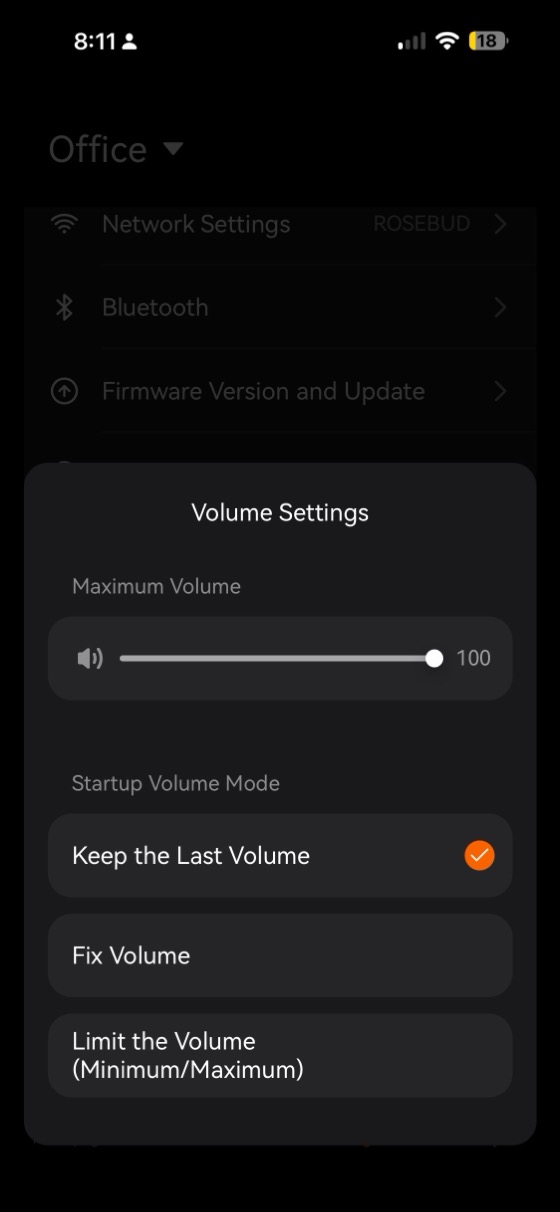
Digital volume attenuation on a digital output is not free — reducing level in the digital domain discards resolution before your DAC ever sees the signal. If you want the transport to be a transport, set the volume to 100 and use “Fix Volume” as the startup mode, then control level at the DAC, the preamp or the amplifier. Fosi give you the setting to do exactly that, but the default behaviour of keeping the last volume is not what a bit-perfect chain wants.
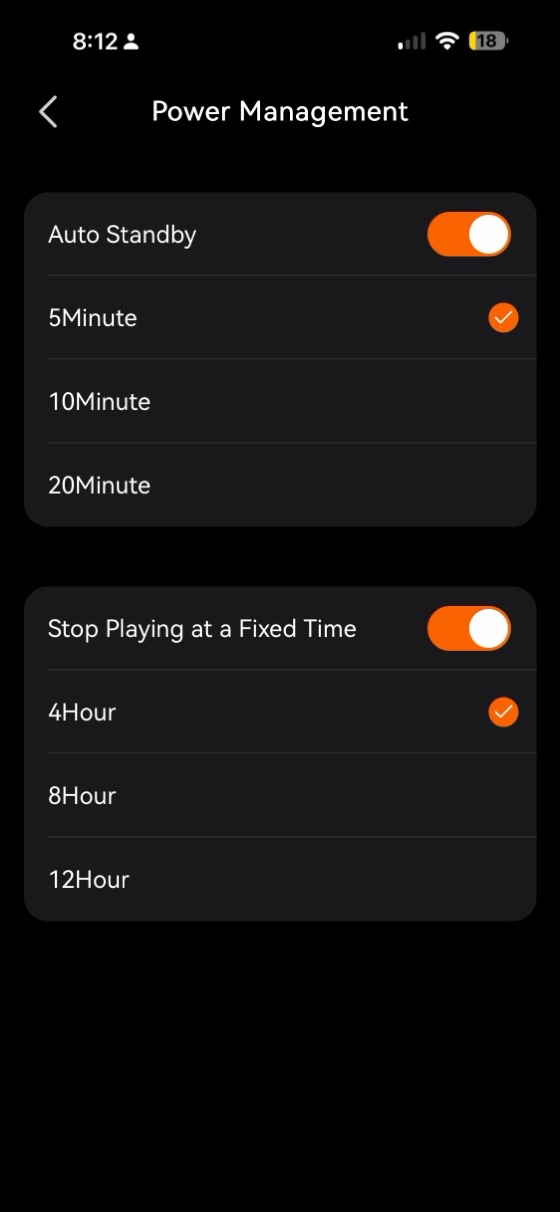
Power management offers auto-standby at 5, 10 or 20 minutes and a fixed-time stop at 4, 8 or 12 hours, which is more thought than most streamers at this price give the subject:
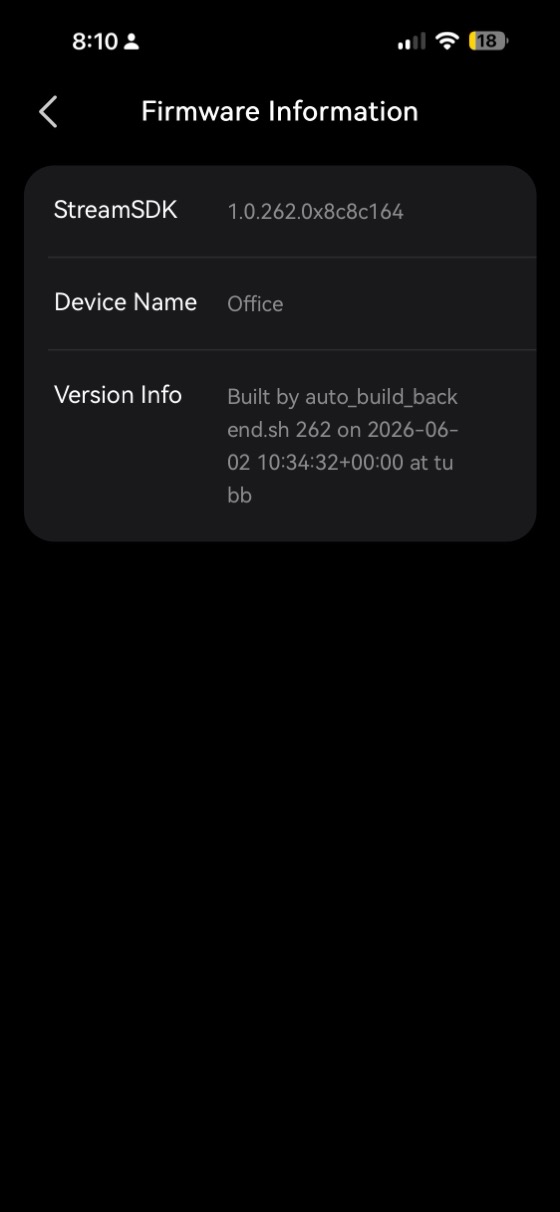
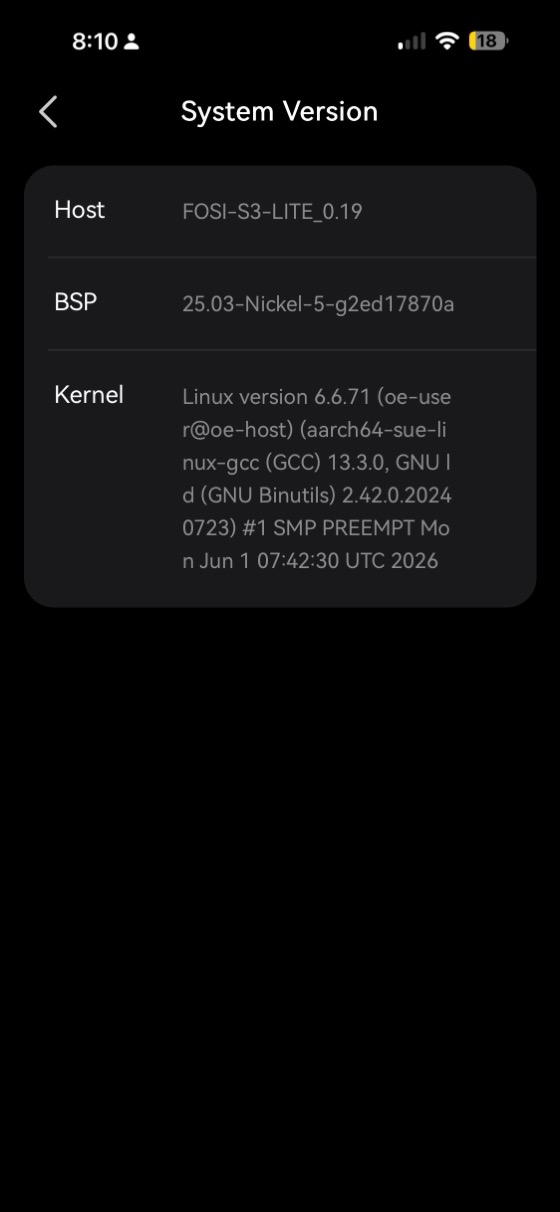
Firmware reports as StreamSDK 1.0.262, and the system version page shows the platform underneath — an Amlogic A113X running Linux 6.6.71, built June 2026:
 |
 |
Sound Impressions
There is no sound to report, and that is the correct outcome for this product.
The S3 Lite has no DAC, no analogue output stage and no volume-related analogue circuitry. With the EQ off and volume fixed at 100, its job is to deliver an unmodified bitstream over USB, optical or coaxial to whatever converter you connect. A transport doing that job correctly is not audible, because there is nothing in the signal path to be audible. What you will hear is your DAC, your amplifier, your speakers or headphones, and your room — in roughly that order of increasing influence.
That is the whole practical argument for buying one. Pair it with a DAC you already believe in — I ran it into a Fosi Audio ZD3, which is a neutral enough converter that it does not impose a character of its own — and the streamer stops being a variable in the system. The question “does this streamer sound good” is the wrong question; the right one is “does this streamer stay out of the way”, and the answer here is yes, provided you turn off the two features that would put it back in the way.
What a transport can be judged on is whether it stays connected and keeps playing, and over a month the S3 Lite did both. Wi-Fi was stable, there were no dropouts, and nothing about it needed attention once it was set up. I used the USB output almost exclusively — it is the one that carries the 768 kHz ceiling and it worked without fuss into the ZD3 — and only briefly tried S/PDIF, so my experience of the coaxial and optical paths is shallower than of USB.
Comparisons
Against the Fosi Audio S3, the choice is about where conversion happens, not about which is better. The two share the same Amlogic A113X platform, the same Wi-Fi 6 and Bluetooth 5.3 radios, the same protocol list and the same app, so the streaming half is identical. The S3 adds the AKM 4493SEQ DAC, an OPA1612 output stage, XLR and RCA outputs, a subwoofer output, and RCA, optical and HDMI eARC inputs — genuinely useful if it is going to be the hub of a system, and the reason to buy it if you do not already own a DAC. The Lite drops all of that and, curiously, exceeds the S3 where it counts for a transport: its digital output goes to 32-bit/768 kHz against the S3’s 24-bit/192 kHz. If you own a DAC you are happy with, the S3’s converter is money spent on a stage you will never route through.
Everything to do with streaming is common to both: the Amlogic A113X processor, 10/100 Ethernet, Wi-Fi 6, Bluetooth 5.3 with SBC and AAC, all seven streaming protocols, the remote, multi-room playback and the 12V trigger. Set those aside and the entire difference between the two products fits in eight rows:
| S3 Lite | S3 | |
|---|---|---|
| Type | Streaming transport | Streaming DAC/preamp |
| DAC | None | AKM 4493SEQ |
| Audio op-amp | None | TI OPA1612 |
| Inputs | None | RCA, optical, HDMI eARC |
| Outputs | USB-A, optical, coaxial | XLR, RCA, optical, subwoofer |
| Digital output sampling rate | Up to PCM 32-bit/768 kHz | Up to PCM 24-bit/192 kHz |
| Dimensions | 147 × 146.5 × 32.5 mm | 173 × 173 × 47 mm |
| Weight | 507 g | 870 g |
Every one of those is either analogue hardware, an input, or a consequence of not having them. The Lite is the same streamer with the conversion stage removed, the digital ceiling raised, and a third of the volume saved.
Against the WiiM Mini, the comparison is less even than the price gap suggests. The Mini is far cheaper and has been the better-value object for years, but it is a different class of device: its optical output is capped well below the Lite’s, and its analogue 3.5 mm output — the one most Mini owners actually use — puts a budget DAC stage in the chain. That is where the “one less conversion” argument genuinely applies. If you use a Mini optically into a good DAC, you already have most of what the Lite offers; if you use its analogue output, the Lite is a real upgrade for reasons that have nothing to do with the streaming.
Against the WiiM Pro, the Lite loses on software and wins on focus. WiiM’s app remains better than Fosi’s, and the Pro’s room correction has no equivalent here — Fosi’s 10-band graphic EQ is not a substitute for it, and I would not pretend otherwise. What the Lite offers instead is a cleaner brief: three digital outputs, one of which runs to 768 kHz, and no analogue stage to pay for or bypass. If room correction matters to you, buy the WiiM. If you want a transport and you intend to do correction elsewhere, the Fosi is the more honest box.
Specifications and Measurements
Specifications
| Type | Streaming transport (no DAC) |
| Streaming processor | Amlogic A113X |
| DAC | None |
| Outputs | USB-A, Optical, Coaxial |
| Inputs | None |
| Digital output sampling rate | Up to PCM 32-bit/768 kHz |
| Ethernet | 10/100 Mbps |
| Wi-Fi | Wi-Fi 6, dual-band 2.4/5 GHz |
| Bluetooth | 5.3 (SBC and AAC) |
| Streaming protocols | Google Cast, AirPlay 2, DLNA, Roon Ready, Spotify Connect, Tidal Connect, Qobuz Connect |
| EQ | 10-band graphic |
| Power sync | 12V trigger out |
| Dimensions | 147 × 146.5 × 32.5 mm |
| Weight | 507 g |
| Firmware as tested | StreamSDK 1.0.262, Linux 6.6.71 |
Two specification notes. The Ethernet port is 10/100 rather than gigabit, which looks mean on paper and is irrelevant in practice — stereo PCM at 768 kHz does not come close to saturating 100 Mbps. The Bluetooth implementation is SBC and AAC only, with no LDAC or aptX, which is a real limitation if Bluetooth is a primary source for you and a non-issue if, as is likely for this product, it is a convenience input you use twice a year.
Measurements
I have not measured the S3 Lite. It is also worth being clear about what measuring it would and would not tell you: a device with no analogue output has no THD+N, no SINAD and no output impedance, because those quantities describe an analogue signal that does not exist here. The meaningful questions for a transport are whether the output is bit-perfect and how much jitter the S/PDIF interface carries, and neither is captured by the usual dashboard.
That matters because Fosi’s own marketing copy quotes “THD+N ≤0.000003%” for the USB output. A USB digital output does not have a harmonic distortion figure; whatever that number describes, it is not a property of the bitstream leaving this box. Treat it as marketing, not as a specification — and note that Fosi publish no measurements that would actually characterise a transport.
The measurement rating of 5 here reflects that the device’s job is to be transparent by construction rather than by careful analogue engineering. With EQ off and volume fixed, there is no mechanism by which it can degrade the signal, and the burden of measured performance moves entirely to the DAC you attach.
Rating Explanation
The S3 Lite earns its Pragmatic 4 by being clear about what it is. It is a well-built, genuinely small transport with three digital outputs, a 768 kHz ceiling, a 12V trigger for powering a DAC alongside it, and native support for every streaming protocol that matters — Roon Ready, Spotify Connect, Tidal Connect and Qobuz Connect between them cover almost everyone. The app has improved a great deal from where Fosi started; it is now clean, logically organised, and no longer the embarrassment it once was.
It is a 4 rather than a 5 because WiiM still set the standard for streamer software and Fosi have not caught them yet. There is no room correction, the EQ is a basic graphic equaliser rather than parametric, and the firmware carries visible seams from the S3 it was derived from — an Audio Input menu on a device with no inputs is a small thing, but it is the sort of small thing WiiM do not ship. The price rating is a 4 for the same reason: at $199.99 it is priced against competitors with better software, and the case for it rests on the hardware brief rather than on undercutting anyone. The features rating is a 4 that is closer to a 5 than it was a year ago — the protocol support is genuinely comprehensive, and the digital-output focus is a feature rather than an omission. Measurements get a 5 because a transport with no analogue stage and DSP switched off has nothing left to get wrong.
The buyer for this is specific: someone who already owns a DAC they chose deliberately, wants network streaming in front of it, and does not want to pay for a second converter to sit idle in the chain. If you do not own that DAC, buy the S3 instead and get the whole thing in one box.
Conclusion
Fosi Audio’s progress in this category has been quick. The S3 was a promising first attempt with software that lagged the hardware; the S3 Lite is the same platform with a sharper idea behind it and an app that has caught up enough to stop being the reason not to buy. They have not overtaken WiiM, and on software they still have ground to make up — but they are already ahead of most of the streamers competing at this price, and the gap is closing rather than widening.
Buy the S3 Lite if you have a DAC you trust and you want a small, quiet, protocol-complete box to feed it — then set the volume to fixed, leave the EQ off, and let it disappear, which is the most a transport should ever do.