VE Monk GTS
Plug, Play and PEQ
A USB-C flat-head earbud from Venture Electronics with the Odo+ DAC built into the cable
The Monk GTS is the latest Monk flat-head earbud from Venture Electronics (VE), and this time the cable ends in USB-C with no 3.5mm plug at all, because VE has put its Odo+ dongle inside it. They call it “the 32bit gaming earbuds” and say the S stands for Sports, though the price is what caught my eye (about $14).
I have reviewed VE’s Megatron DAC/amp and the Vanguard headphone before, but the GTS was more interesting to me for a practical reason - the DAC in the cable uses a standard chipset, so I could adjust its EQ with my own DevicePEQ tool.

I would like to thank Venture Electronics (VE) for providing the Monk GTS for the purposes of this review.
If you are interested in finding more information about this product, you can find it at VE’s official product page, and on VE’s AliExpress store.
As of 5 October 2026, the Monk GTS costs $13.98 on VE’s own store (before shipping) and €15.68 including VAT on VE’s AliExpress store. The GTS SPC edition, which has a silver-plated copper cable, is $19.98 or €22.40. The listed editions are Aperture Black, PS Silver and Panda, all USB-C with an inline mic, plus the GTS SPC. My sample has white shells and a white cable, and the pouch label reads “MONK GTS (SLP ODO) WHT”.
The GTS is a Monk SL shell flat-head with a 14.8mm driver and a DAC/amp in the USB-C cable. It is one of the most controlled earbuds I have heard, with a very good midrange and treble, but it is definitely not for bass heads, because out of the pouch the bass is thin. What rescues it is that the DAC can be adjusted with DevicePEQ, and with a little EQ it becomes a very nice earbud that reaches down to roughly 50Hz.
I used it for a few days, mostly while working, alongside the Monk GTR, the retro gaming sibling with the same shell and a different DAC in the cable, and the two turned out to be tuned for opposite listeners. But first, let’s take a look at what is in the pouch.
Unboxing and Build Quality
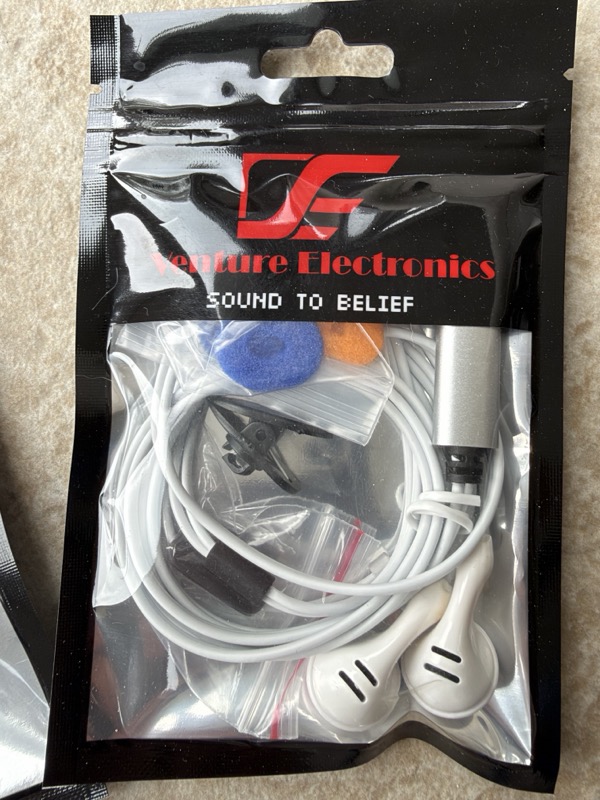
There is no box, and like other Monks the GTS comes in a resealable foil pouch with VE’s “Sound to Belief” branding and a window that shows the earbuds and foams:
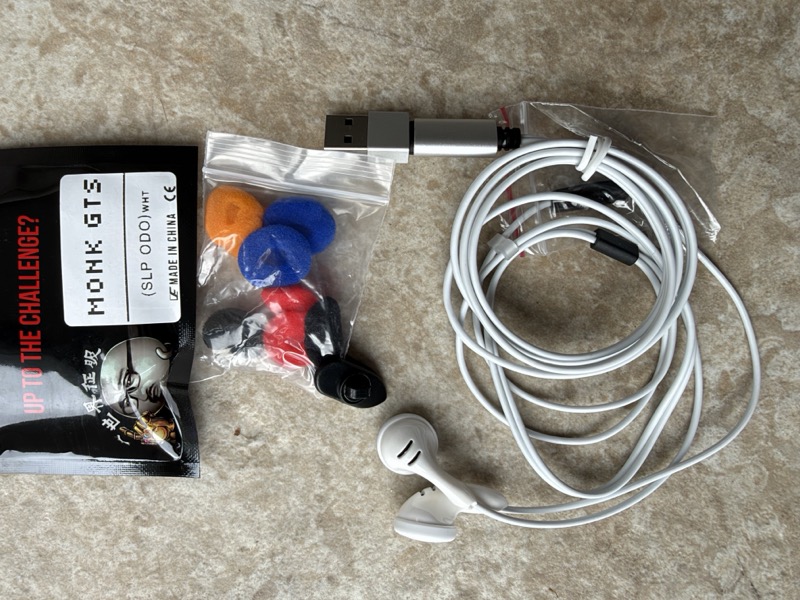
Inside the pouch you get the following, shown here next to the pouch (the label reads “MONK GTS (SLP ODO) WHT”):
- Monk GTS earbuds with the fixed USB-C cable and inline mic
- A USB-C to USB-A adapter, fitted to the plug
- Foam covers in several colours: orange, blue, black and red
- A shirt clip
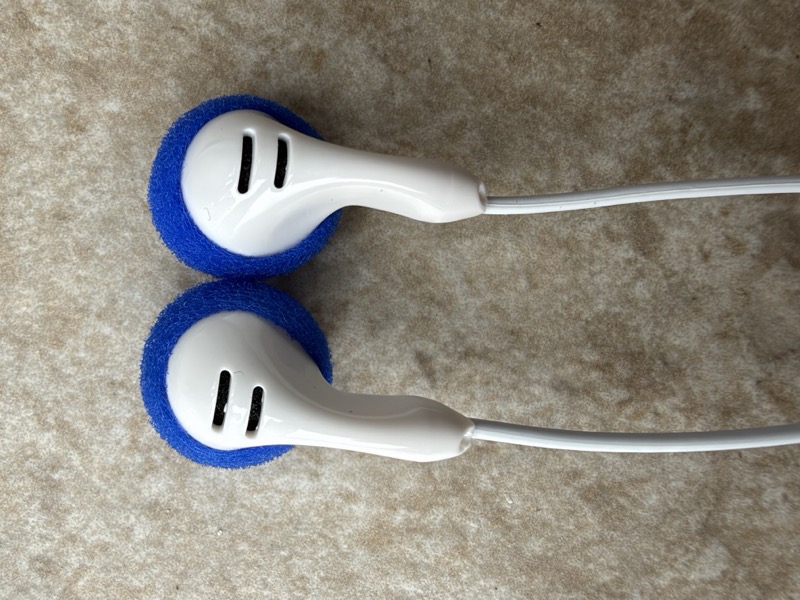
The shells are white glossy plastic, each with two vent slots on the rear, and here is the pair with the blue foams fitted:
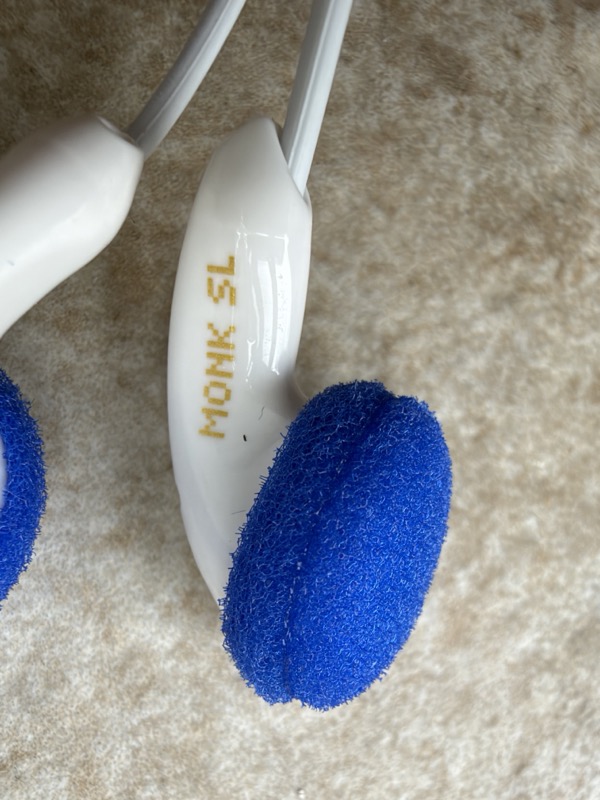
The name “MONK SL” is printed in gold along the stem:
From behind you can see the two vent slots, and how far the foam sticks out past the edge of the shell:

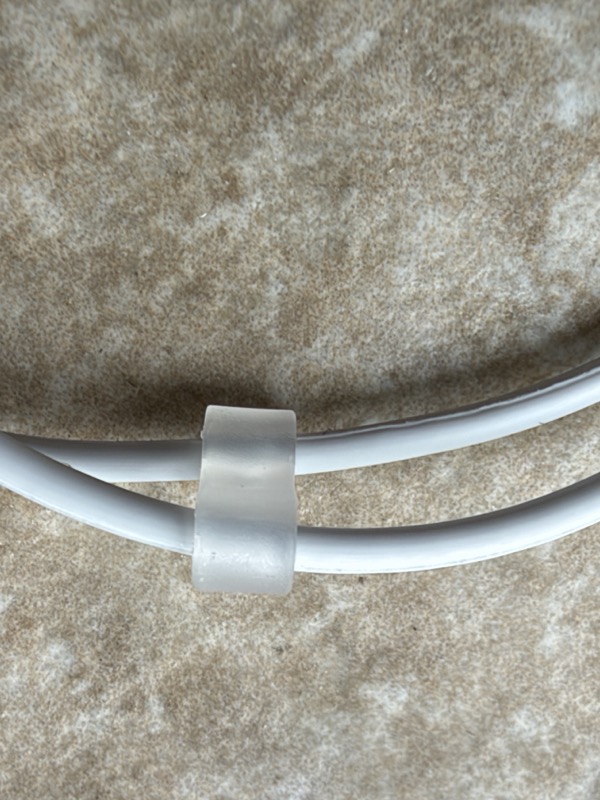
The cable is a plain white TPE jacket (VE call it an “imported A-TPE composite insulation jacket”), with a clear slider for gathering the two earbud leads:
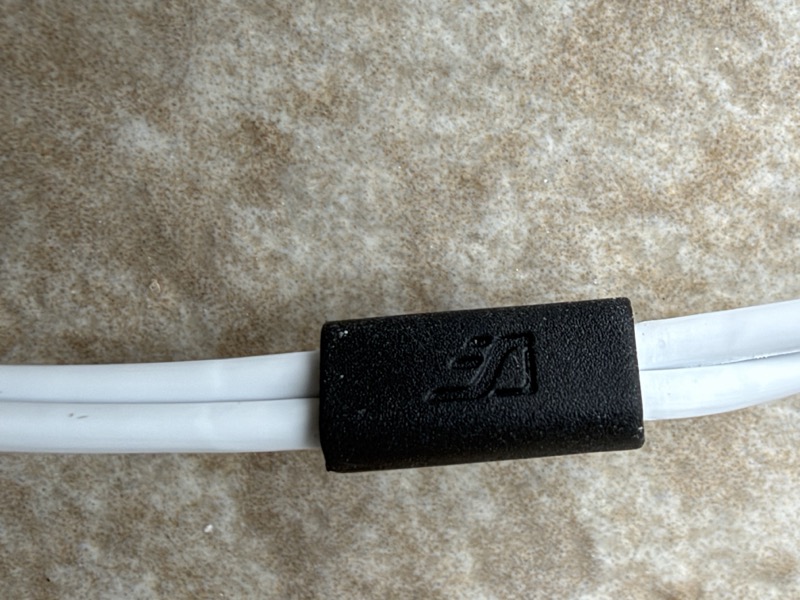
The leads join at a black Y-splitter with the VE logo on it:
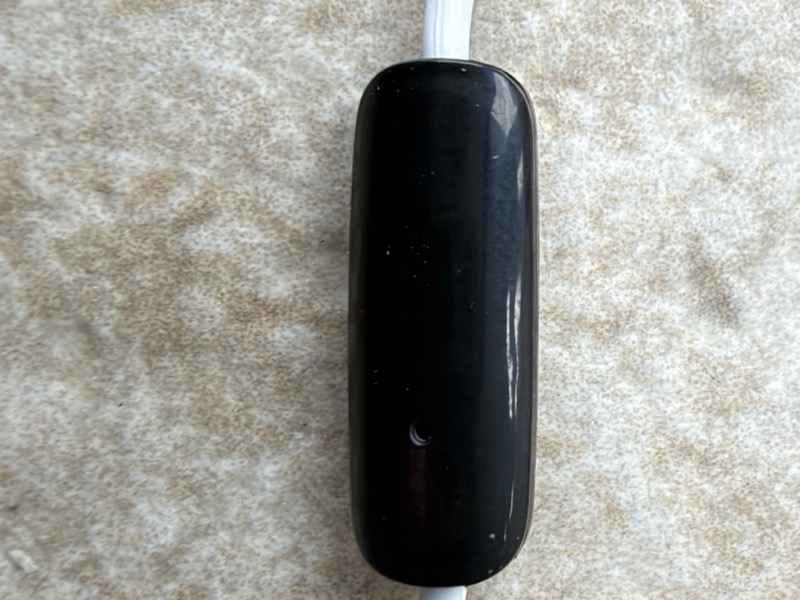
The inline microphone is a small black capsule on the cable, and every GTS edition VE lists has one:
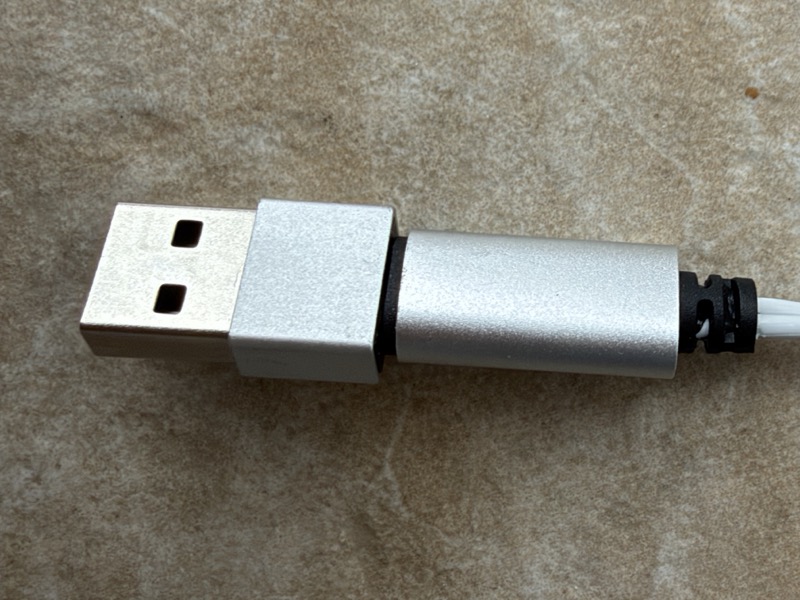
At the other end the DAC sits in a brushed aluminium USB-C plug:
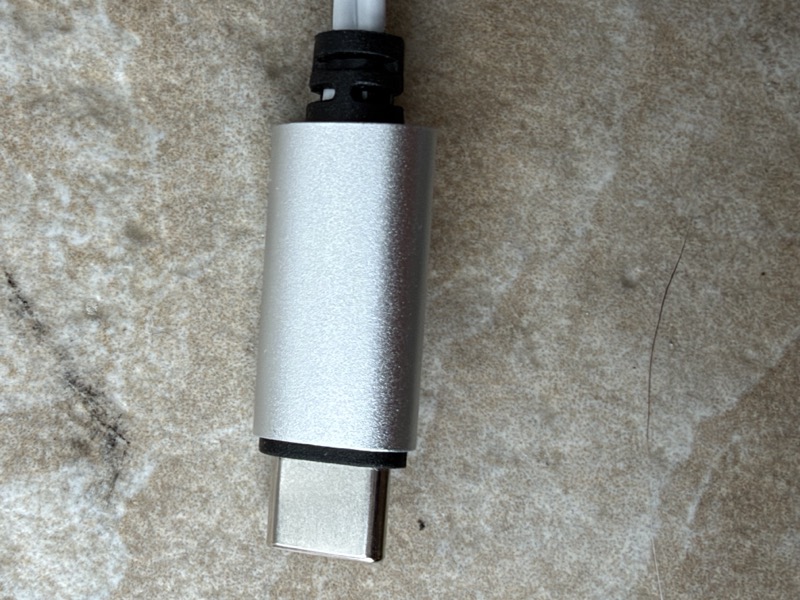
The USB-A adapter clips onto that plug, so the GTS also works with older PCs and consoles that only have USB-A ports:
Fit and Comfort
VE say a flat-head earbud is more comfortable than an IEM over long gaming sessions, and I was interested to find out. It does not press into the ear canal, though it also isolates almost nothing, and the fit depends on the shape of your outer ear since there are no tips to swap.
This is what I love about earbuds. Once the GTS is in you forget you are wearing it, and I wore it through whole working days, with the cable staying out of the way (the one thing that usually spoils a long session with a wired earbud). The foams did not change the fit much, but I would leave them on, for a reason that belongs in the sound section.
Sound Impressions
My listening was a few days of work-day sessions with the GTS plugged straight in and the foams fitted, first stock and then with my EQ. The foam colours do not sound different from each other, but having any foam on tames the treble a little, so I would use them.
The GTS has a very good midrange and treble, but the bass rolls off, and I think part of that is the fit, since a flat-head earbud rests in the outer ear and never seals, so how much bass you get depends on how closely the shell sits against your ear. The rest is the tuning, which leaves the GTS leaner than the GTR in the same shell.
Bass
Stock, the bass is rolled off, like most open earbuds, so you get some mid-bass but not much below it. What is there is very controlled, and the GTS never gets boomy the way the GTR does on bass-heavy tracks, but there is not enough of it for the sound to come across as natural. This is the one area where it needs EQ, and to get any sub-bass I would push the lower bass up a few dB. With that the bass reaches down to roughly 50Hz and most music sounds right, though very bass-heavy tracks still miss the lowest octave, and you won’t get a sub-bass rumble from the GTS, but it was never promised.
Midrange
The midrange is pretty great, with mostly tonally accurate vocals. With less warmth coming up from below it sounds cleaner and lighter than the GTR, which is the controlled character I liked about this earbud.
Treble
The treble is good too, with plenty of detail and no sibilance on my ears, though it might be a little harsh for some listeners. A simple adjustment is to use or remove the foam covers, which attenuate the treble, but for some people that might make the overall tuning a little boring, so it is worth trying with and without, as this is very subjective with open earbuds. That is the usual problem with earbuds, because depending on how a flat-head sits in your ear it can let through too much treble even with foams fitted, but the GTS did not.
Soundstage and Imaging
This is the other thing I love about earbuds, how wide and open they sound, and the tuning goes for an open soundstage effect with good separation. The GTS is not an HD800S, but because nothing seals your ear you still get a pleasant out-of-head presentation that IEMs rarely manage.
EQ with DevicePEQ
What I liked most about the GTS is that I could change its EQ. VE use a standard USB DAC chipset in the cable, so my DevicePEQ tool can write parametric filters to the cable, and the EQ then lives in the earbud itself and works on any device you plug it into, including a handheld that has no system-wide EQ.
My EQ did three things, which you can see in the measurements below: it lifted the sub-bass so the response holds up to roughly 50Hz, it flattened the hump around 150Hz, and it filled in the dip between 2kHz and 4kHz. The result is a very nice earbud. The GTR’s DAC does not work with DevicePEQ, so this is the clearest practical difference between the two.
Comparisons
VE Monk GTR
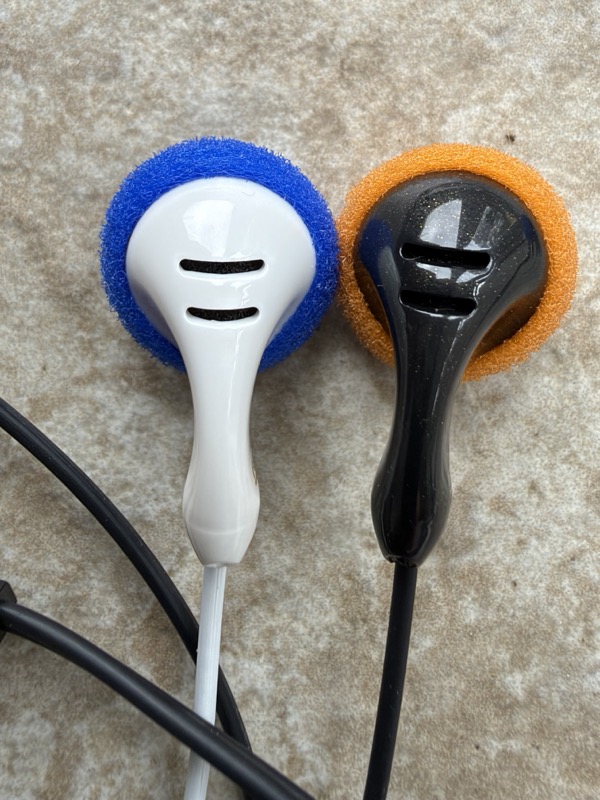
The Monk GTR is the GTS’s sibling, with the same Monk SL shell, the same 14.8mm driver, the same 28 Ω impedance and the same 123 dB sensitivity, and the difference is the DAC in the cable. VE pair the GTR with their “Odyssey Retro” (they say “authentic 16-bit analog sound”) while the GTS gets the 32-bit Odo+. The GTR is also cheaper at $9.98 or €11.55 for USB-C, and it is the only one of the two sold as a 3.5mm earbud with a separate Odyssey R dongle. Here are the two together, the GTS in white with blue foams and the GTR in black with orange foams:
 |
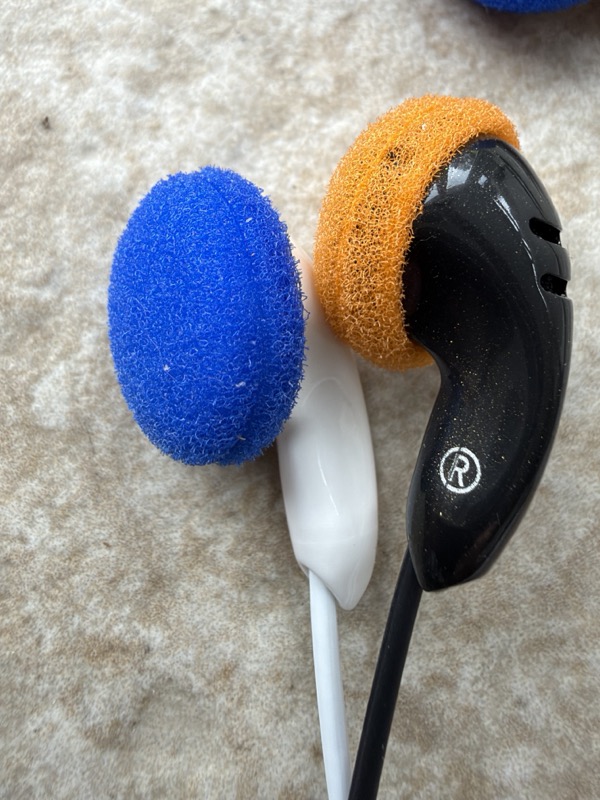 |
The difference between them is almost entirely in the bass and lower midrange. The GTR has too much for my taste on bass-heavy tracks and the GTS has too little without EQ, while the midrange quality, treble and open presentation are close. Neither is bad, they are aimed at different listeners, but stock I preferred the GTR because I like some bass and it sounded the more natural of the two. If you will use EQ, want the inline mic, or prefer a lean and controlled sound the GTS is the one to buy, and if you want the lowest price or a 3.5mm plug for a device with a headphone jack, the GTR is the option.
Sivga M260
The Sivga M260 is the flat-head I would compare the GTS with if you want a USB-C earbud and can spend more. At $45 for the USB-C version you get machined metal shells, a detachable MMCX cable, a Realtek ALC5686 DAC in the plug and an inline remote, while the GTS costs about a third of that, with a fixed cable and plastic shells. The one advantage the GTS has is that the M260’s USB-C cable has no PEQ support, whereas the GTS cable works with DevicePEQ. If money were no object I would still pick the M260 and EQ it, but as a throw-it-in-your-bag earbud the GTS is a far better deal.
Moondrop U-2
The Moondrop U-2 is a $34.99 flat-head with a 14.8mm driver, the same size as the GTS, and a 3.5mm single-ended plug, so it needs a source with a headphone jack or a separate dongle. The GTS has its DAC built in and costs well under half as much.
EPZ G20
The EPZ G20 is an IEM, not an earbud, but it is the closest match to the GTS in purpose, a gaming earphone with a DSP-enabled USB-C cable that takes PEQ profiles. The G20 seals and isolates and the GTS does not, so the choice comes down to whether you want an open fit for long sessions or isolation for noisy places.
Specifications and Measurements
| Specification | Value |
|---|---|
| Type | Flat-head (open) earbud, Monk SL plastic shell |
| Driver | 14.8mm dynamic |
| Shell diameter | 16.4mm |
| Impedance | 28 Ω |
| Sensitivity | 123 dB (1mW) |
| Frequency range | 20Hz to 20kHz (+/-10 dB) |
| Rated power | 1200 mW |
| Cable | Fixed, 1.2m (+/-2cm), USB-C with inline mic |
| Built-in DAC | VE Odo+ (VE list the Odo+ chip as KT02H20, 32-bit/384kHz) |
| Compatibility (VE) | Any device with USB Audio Class 2.0 support |
| Price | $13.98 / €15.68 (GTS SPC: $19.98 / €22.40) |
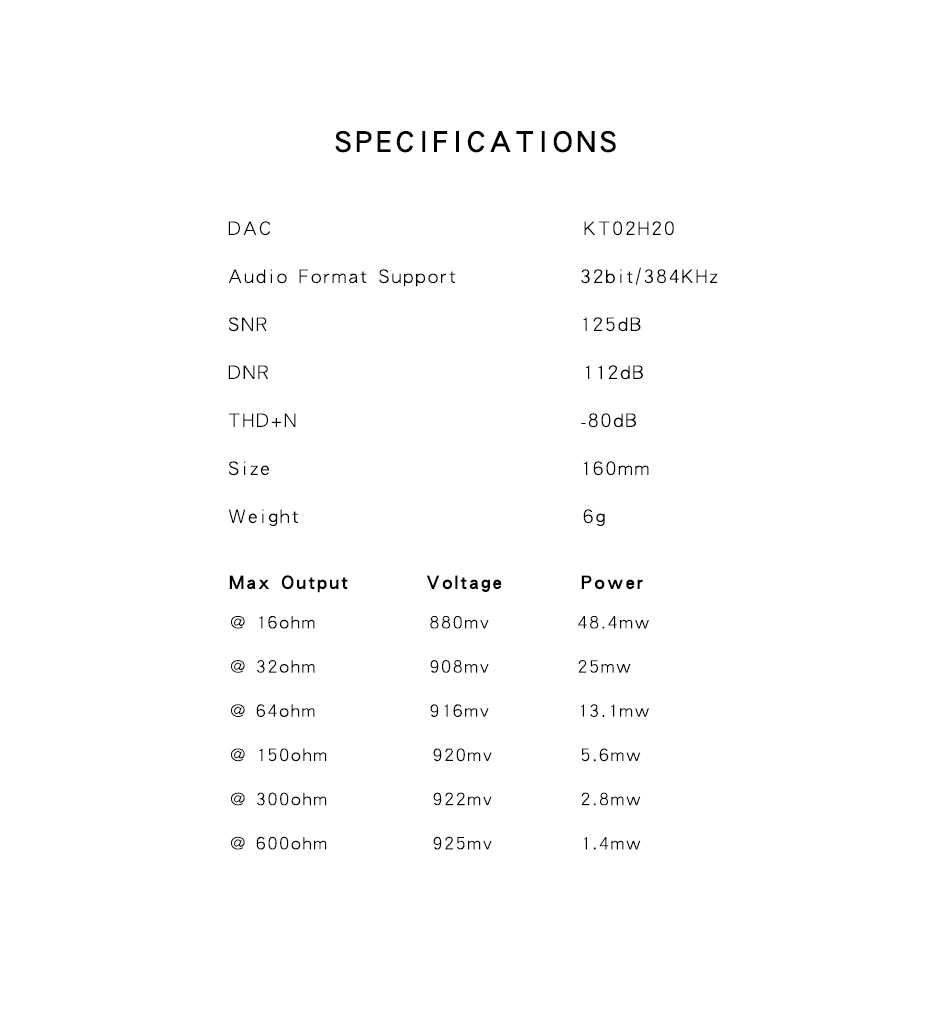
This is VE’s own specification sheet for the GTS:
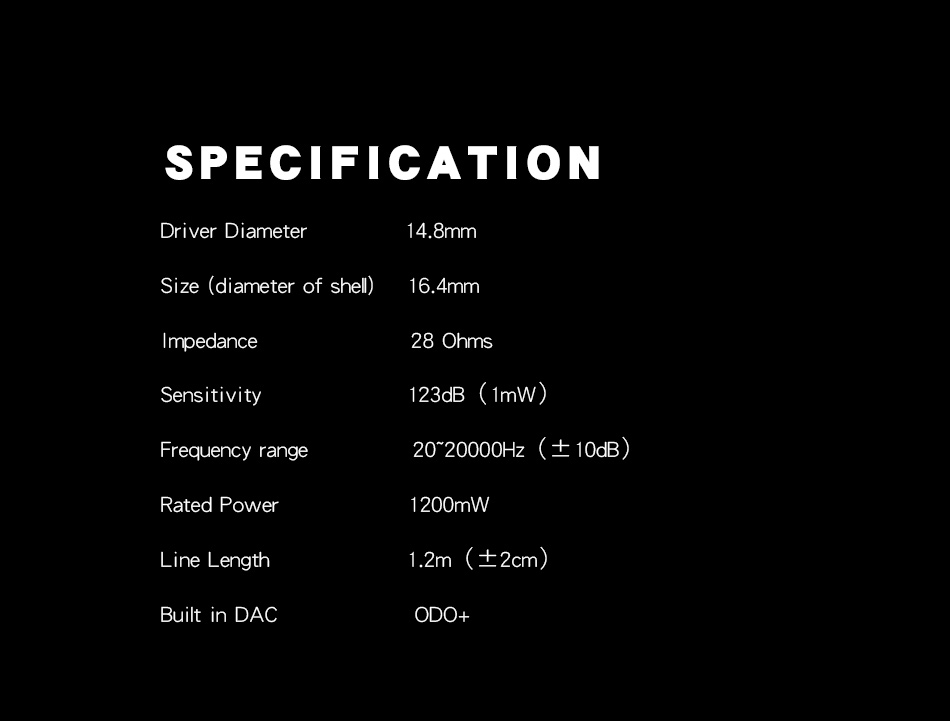
The sheet lists the built-in DAC only as “ODO+”, while VE’s page for the standalone Odo+ dongle names the KT02H20 chip and quotes 125 dB SNR, -80 dB THD+N and 908 mV (25 mW) into 32 Ω. Those are figures for the separate dongle, and VE do not say the version inside the GTS cable is identical:
VE do not publish any frequency response or distortion measurements for the GTS. I have not measured the DAC’s output or noise.
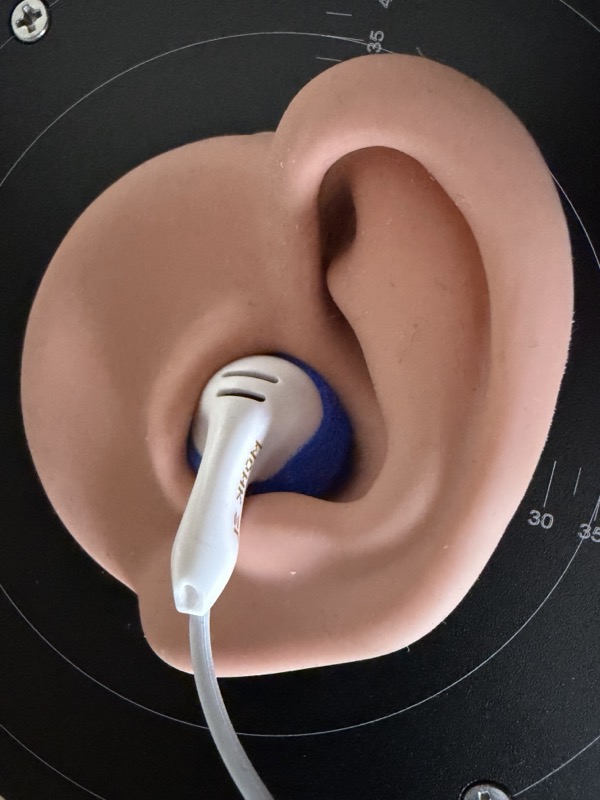
I measured the GTS on my KB501X Soft Ear/Pinna with a 711 clone coupler:
The graph below shows the GTS stock (red) and with my EQ applied (blue), plotted against the KB501X diffuse-field target with a -1 dB per octave tilt (grey dashed line):
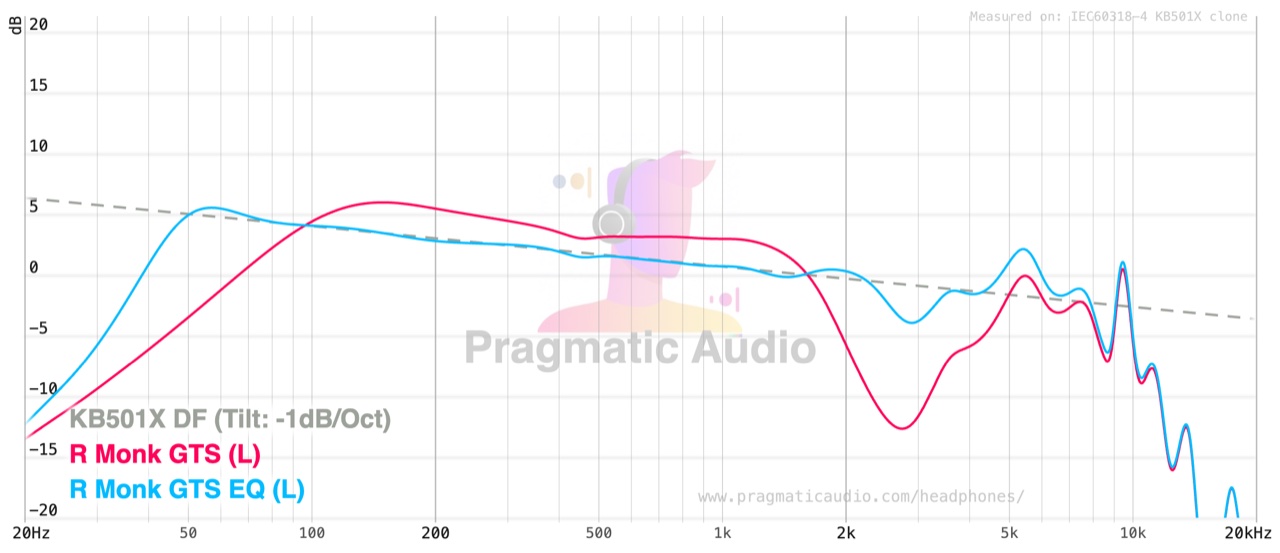
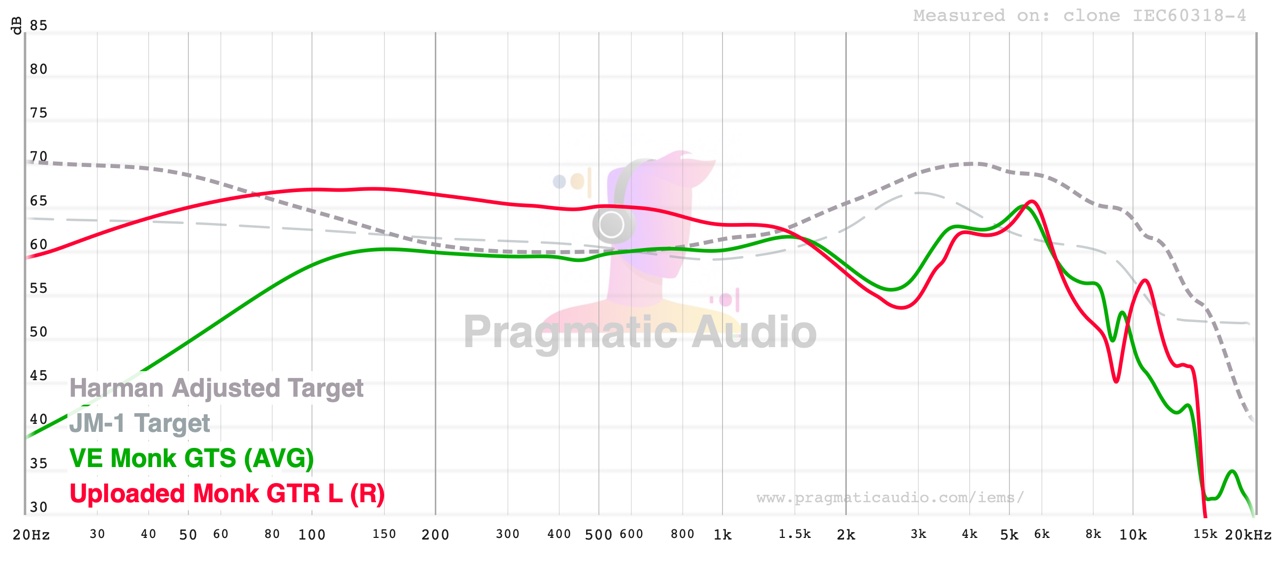
Stock, the GTS peaks around 150Hz and then rolls off steeply, down about 10dB by 50Hz relative to that peak, which fits the thin bass I heard. The midrange from 200Hz to 1.5kHz sits a few decibels above the target and then there is a deep dip centred near 2.8kHz, roughly 12dB below it, and the EQ curve follows the target closely from 50Hz to 2kHz and fills most of that dip. Flat-head measurements depend heavily on how the shell sits on the pinna, so treat the treble detail as indicative rather than exact. Here is the GTS (green) against the GTR (red) on the same coupler, with the Harman and JM-1 targets for reference. Below 1kHz the GTR sits 3 to 7dB higher, and the GTS starts rolling off below 150Hz where the GTR holds on to around 50Hz:
 The left and right channel measurements are in my IEM graph tool if you want to compare the GTS against other earbuds and IEMs.
The left (L) and right (R) channels of the GTS measured on the same coupler, with the Harman Adjusted and JM-1 targets for reference, are:
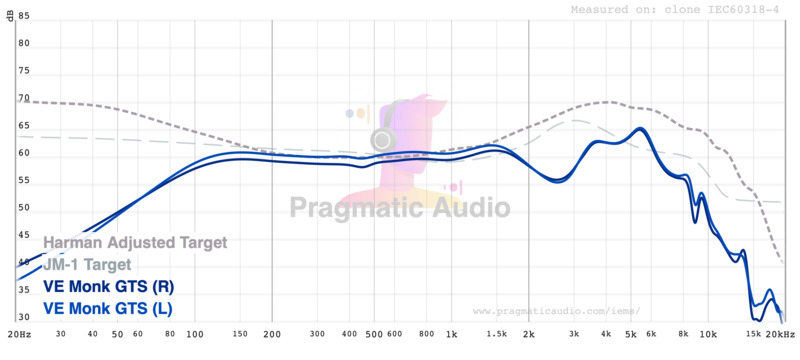
The two channels track each other closely, within a couple of dB through the midrange and the treble up to about 5kHz, with slightly bigger differences in the bass and above 8kHz. Earbud measurements depend on how the shell sits on the pinna, so small differences like this are not surprising.
The distortion graph with the fundamental and harmonics plotted in SPL (titled ‘No Distortion - easy to EQ’) is:
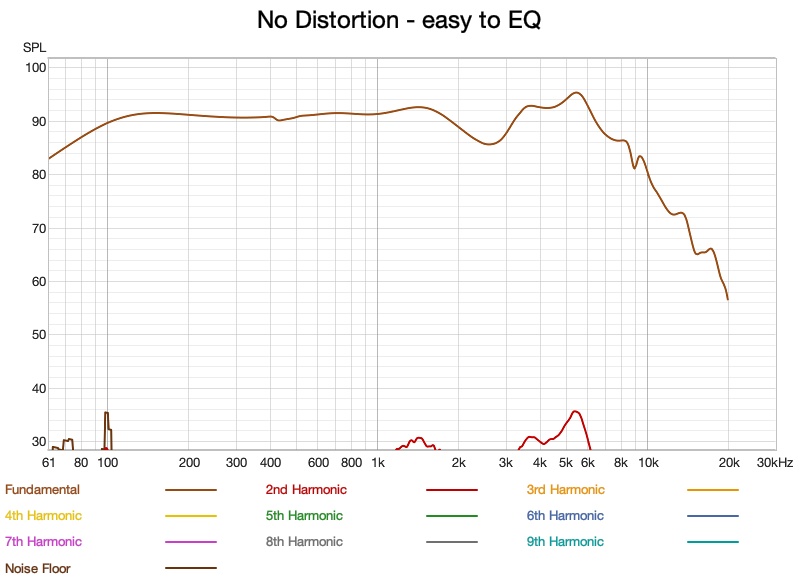
Almost nothing shows up on this graph apart from the fundamental. The highest harmonic is the 2nd, around 5 to 6kHz, at about 36dB against a fundamental of about 95dB there, so roughly 59dB below it. The rest of the band has no visible harmonics, which is what the title says: no distortion to worry about when you EQ it.
The same measurement with the axis in percent is:
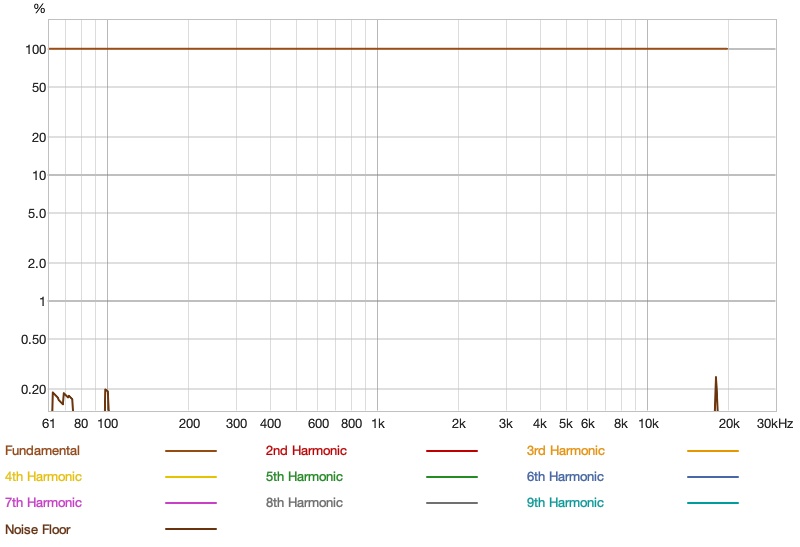
In percent the harmonics stay at about 0.2% or below across the band, apart from a few small spikes in the low bass and near 18kHz.
Rating Explanation
Four for pragmatic, because the stock bass is too thin to sound natural without EQ, even though the midrange, treble and comfort are all very good. Five for price, because $13.98 for an earbud with a DAC in the cable, an inline mic and hardware EQ is a good deal. Five for features, as a USB-C DAC that DevicePEQ can program, an inline mic and a USB-A adapter are everything I would ask for at this price, and they are exactly what the GTR lacks. Four for measurements, because the response is good for an earbud without being outstanding, with the bass roll-off and the dip near 2.8kHz both clear on the graph. The fit also isolates almost nothing, so this is not an earbud for noisy places.
Buy it if you want a cheap, comfortable earbud and are happy to set some EQ. Skip it if you want big bass straight out of the pouch, because the GTR is the one for that.
Conclusion
The GTS keeps what the Monk has always offered, a cheap, open earbud you can forget you are wearing, and adds a DAC in the cable and an EQ that DevicePEQ can reach. Stock, it is one of the most controlled earbuds I have heard but is short on bass, and with a little EQ it becomes a very nice earbud that reaches down to around 50Hz, with only very bass-heavy tracks still missing something. The midrange and treble need no help, and the open, out-of-head presentation is the reason I like earbuds in the first place.
If you will not touch EQ, the bassier GTR is the more natural sounding choice and costs $4 less. If you will, or you need the inline mic, the GTS is a good deal at $13.98.