KAISER Atelier ZenCarb
Once you go Custom IEM you will not go back
‘Once you go custom IEM you will not go back’ is what the audiologist told me when I was getting my ear mold made, and after using the ZenCarb for a few months I tend to agree.
Kaiser Atelier reached out to me way back in May this year, and I would like to apologise to them for the long delay in getting this review published. I had initially thought I would publish the review as soon as their worldwide store was available, but I believe that has taken longer than they expected, so I feel it is time to publish this review now. I will update it with the full details of where you can buy this CIEM later, when more details are available. That said, you can check out their current store on Taobao. Kaiser Atelier have also been attending recent CanJams, so I would encourage everyone to check out their stand if you see it at an upcoming CanJam.
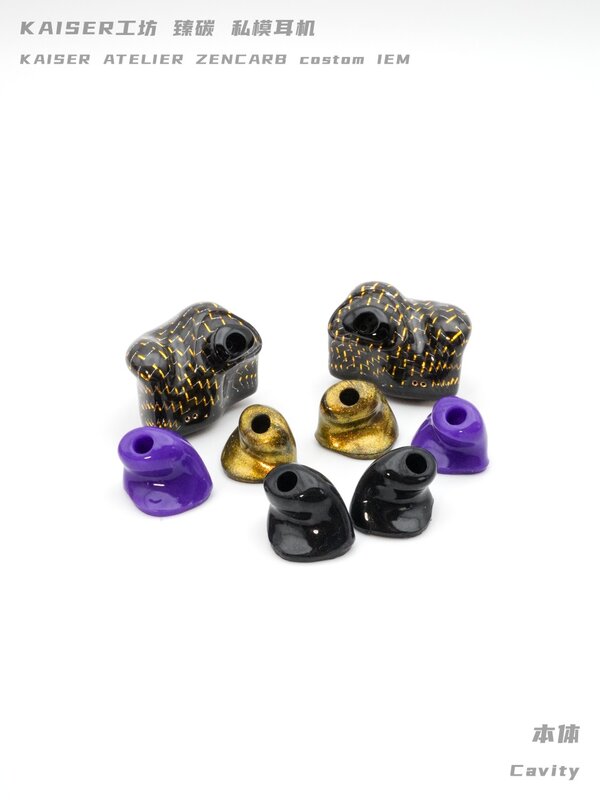
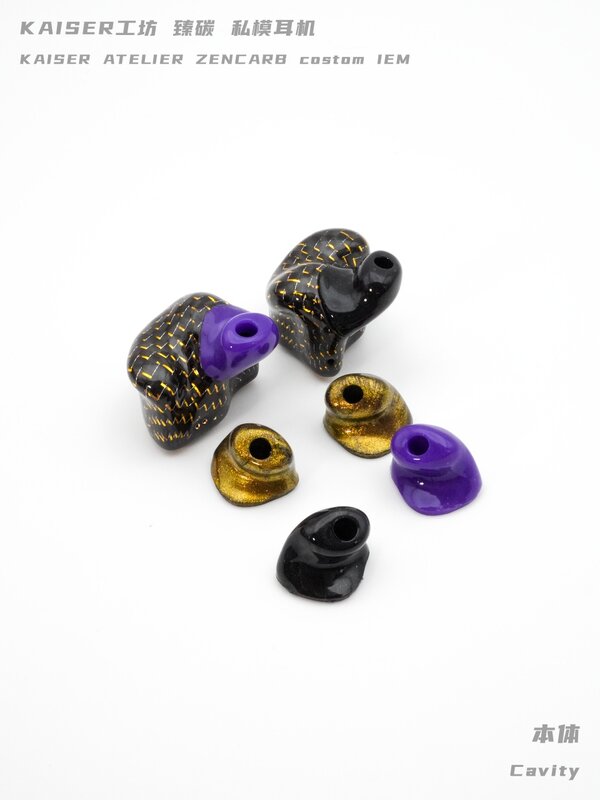
The shell is carbon fibre, but the bit that goes into your ear is a separate flexible silicone insert, and replacements are provided. I think that is what makes the difference, because the worries about fit and jaw discomfort that you often hear people talk about are gone for me.
 |
 |
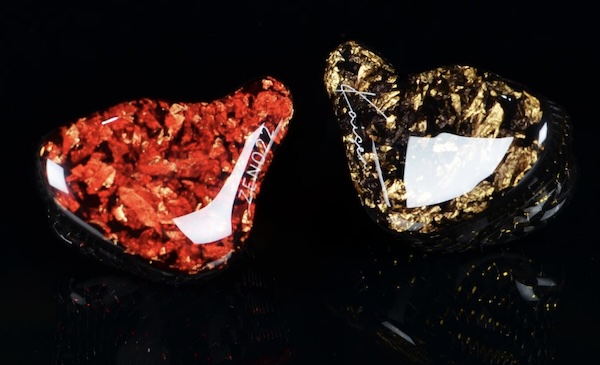
The ZenCarb comes in a variety of styles as a custom IEM, and as you will see later in the review I got the opportunity to use my own Pragmatic Audio logo on my specific build:
 |
 |
I would like to thank KAISER Atelier for providing the ZENCARB for the purposes of this review.
The ZENCARB is sold through the official KAISER Atelier Taobao shop. KAISER Atelier are not sure whether the shop is accessible from Europe, and their official website is still under construction. According to KAISER Atelier, a worldwide store will be available really soon. In the meantime they post a lot of information on their Xiaohongshu (RED) profile, for those who want to chase up more about the ZenCarb. KAISER Atelier give the price as 20,000 RMB, roughly US$3,000.
I have had the ZenCarb for 3 months now. I use it at home, but mostly on long walks, when I am out running and in loud environments, where the extra isolation is great. In general it has been a revelation, and what changed my mind was the extra level of stability in the fit.
Before we get into the unboxing experience, Kaiser Atelier did send me a little bit of background which I thought would be useful to share.
KAISER Atelier: a little bit of background history
KAISER Atelier was founded by Kaiser, who says he has worked in custom in-ear monitor development since 2013. From what I gather they set out to fix three problems with custom IEMs, which are shells that crack, rigid shells that get uncomfortable as the ear moves when you speak or chew, and narrow sound bores that collect wax. Their answer in the ZenCarb is a carbon fibre shell, a flexible silicone ear insert and a detachable ear canal part that can be cleaned, and these 3 features made me very curious to try the ZenCarb, which is why I am reviewing this one.
Their first product was the Marvicon, which launched in 2024 with an all carbon fibre shell, and the ZenCarb is the flagship that followed it.
The first step with a custom IEM is getting your ear impressions made, unless you already had a 3D scan of your ears made previously, which Kaiser Atelier would accept. One thing I learned during this whole process is that your ears do change shape over the years, so it can be worthwhile getting fresh impressions, especially if you want the best possible fit for your CIEM.
Getting my ear impressions done
The shells are custom moulded, so the starting point is a set of ear impressions. The impression material goes into the ear soft and sets in place, filling the canal and the concha:
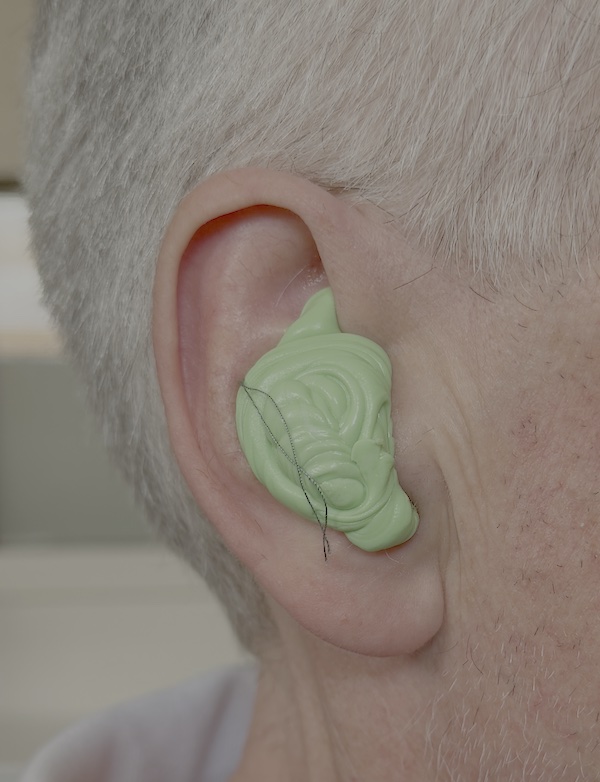
My impressions were taken by an audiologist in Dublin, who wanted to stay anonymous. He has been doing impressions of the ears of various Irish (and UK) rock stars for a number of years, so we had a nice long conversation while he worked. He is also the person who said “Your first CIEM? Once you go custom IEM you will not go back”.
The impressions took about an hour, and I actually had 2 pairs done. I initially looked at using a smartphone app to capture and create the 3D impression, but in the end, since I got 2 separate impressions, I decided it was safer to just send one. Getting the jaw right (basically keeping it open) during the impressions is very important, to allow your inner ear to be in a more natural shape while the impression is setting.
Receiving the ZenCarb
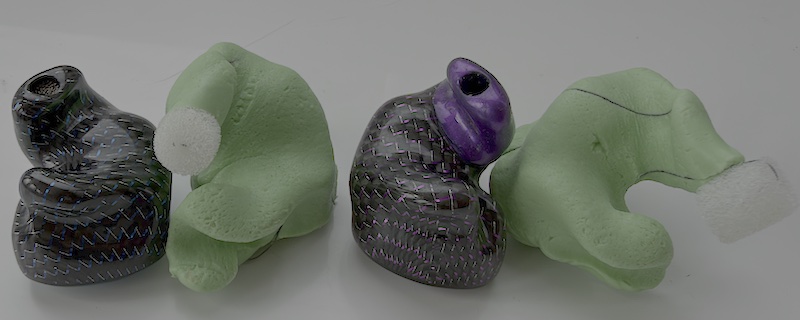
It took about 7 to 8 weeks for the ZenCarb to arrive. KAISER Atelier were also kind enough to make the custom eartips that I use with my universal IEMs, and to provide the Marvicon, which I have reviewed separately. Here are both the Marvicon and the ZenCarb compared to my other impression (the one I kept):
Unboxing and build quality
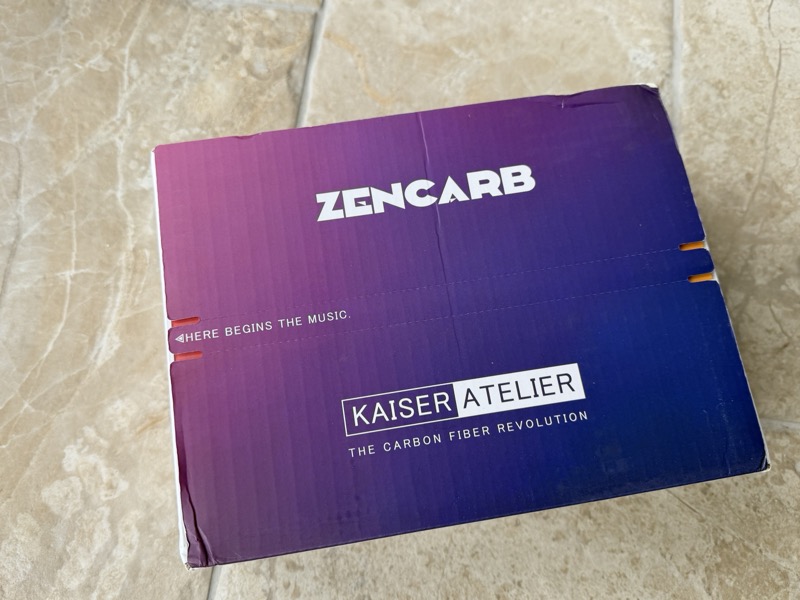
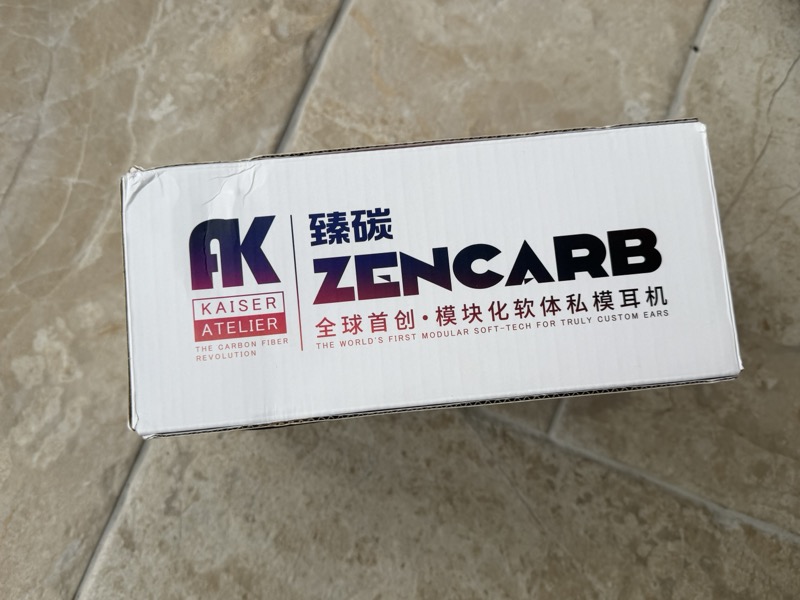
The box is fine, with nothing extra luxurious about it, but this is a custom build so I would not expect a flashy box:
 |
 |
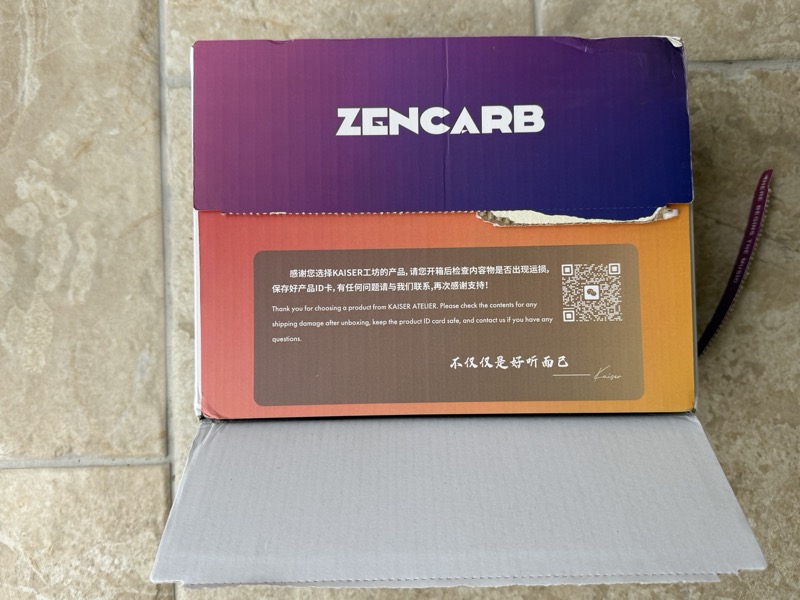 |
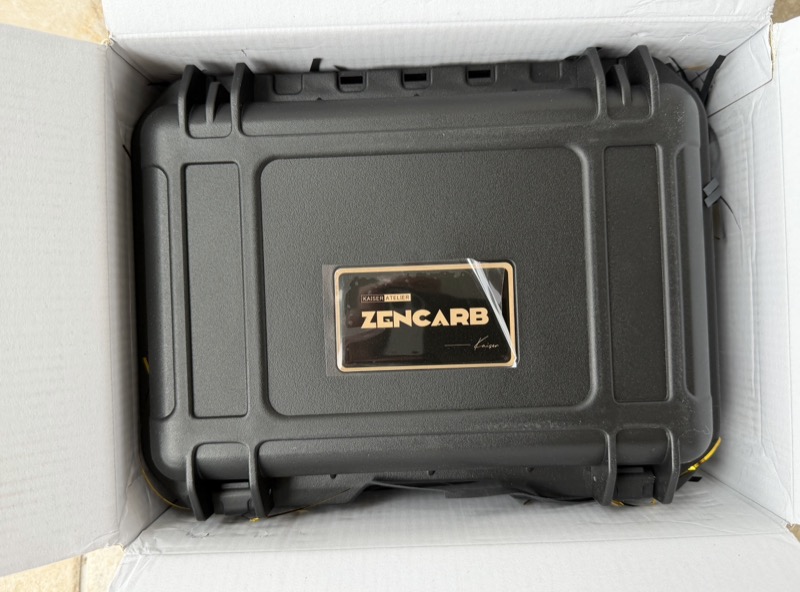 |
Once you open it up you begin to understand that you are receiving something special. First comes the robust outer carry box, and when you open that up you see the nice quality, large cube shaped leather carry case.
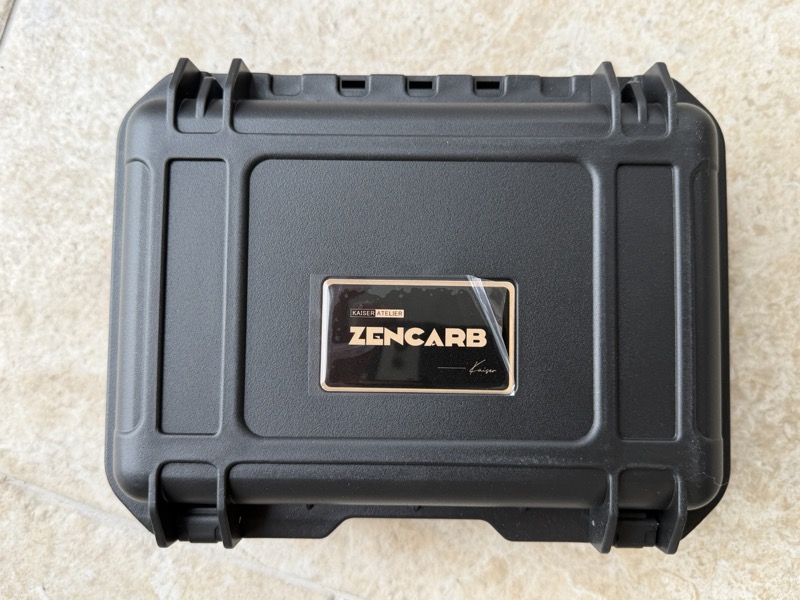
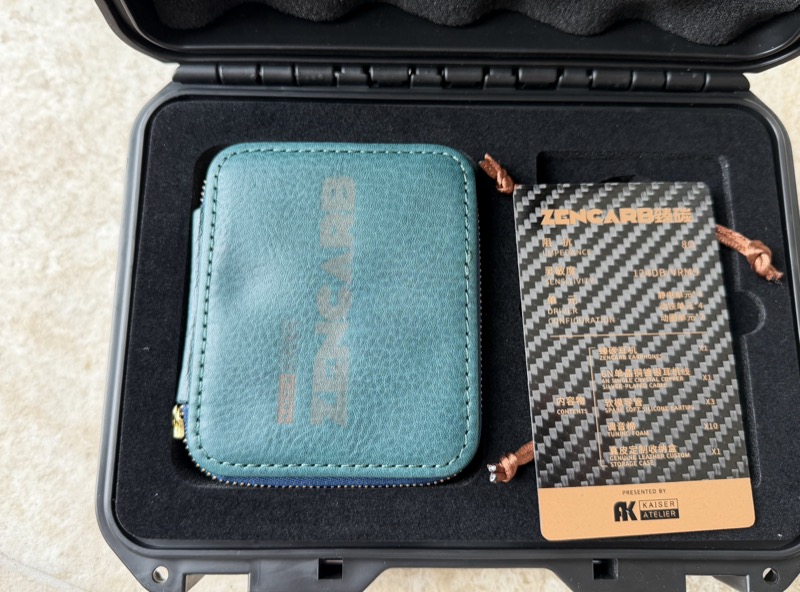
Inside the shipping carton is a hard case with an engraved nameplate, and inside that are the spec card, a teal leather pouch and two little brown leather drawstring bags, one for each of the left and right CIEMs, which you can see next to the leather case in most of these photos:
 |
 |
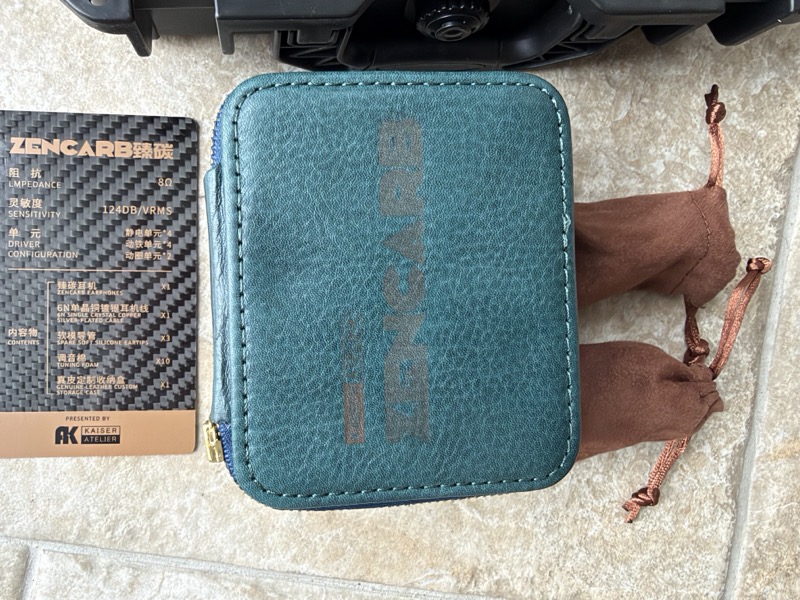 |
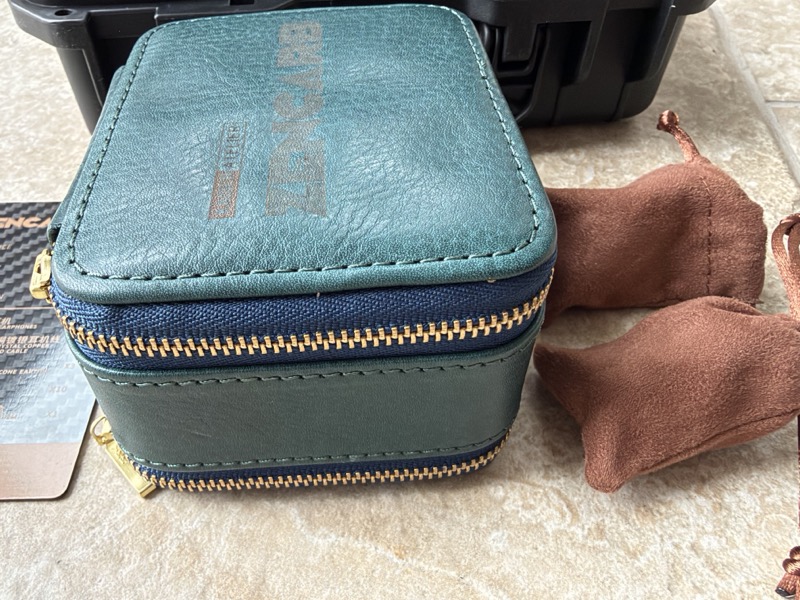 |
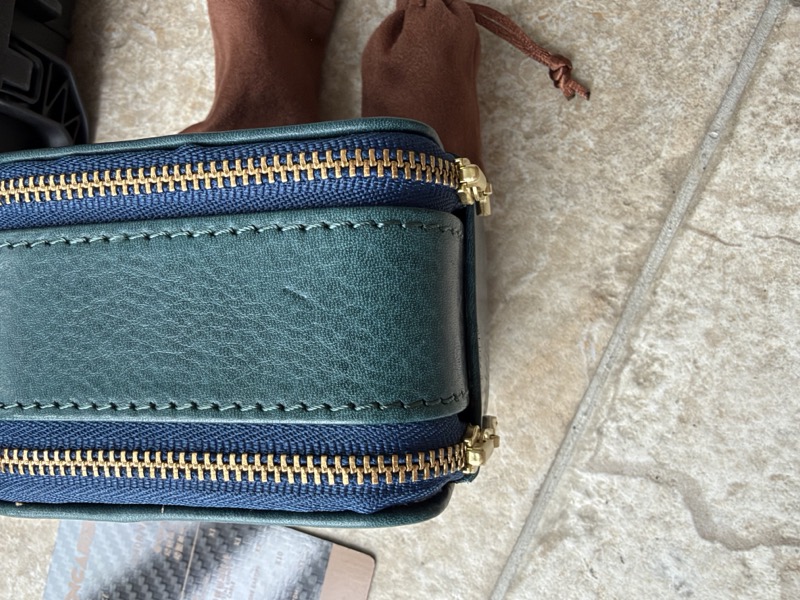 |
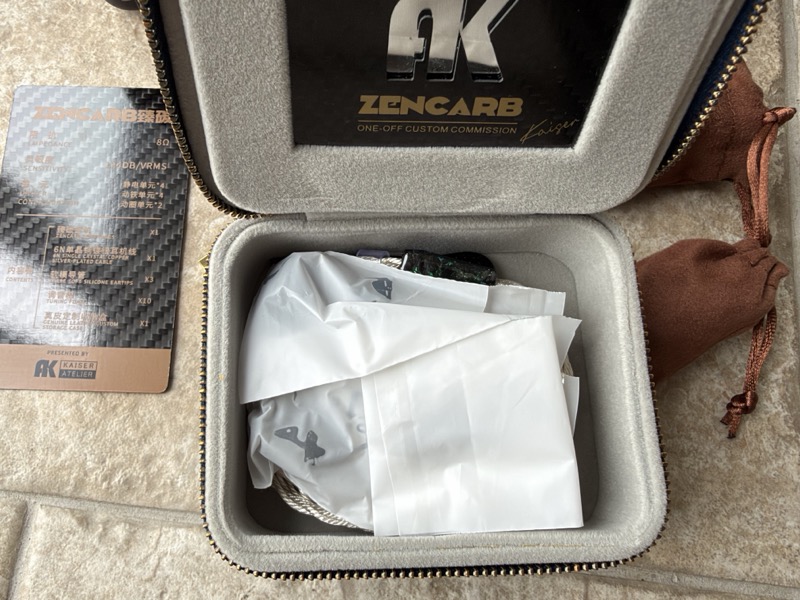 |
And this is the cable that comes in the box, coiled up in the leather case:
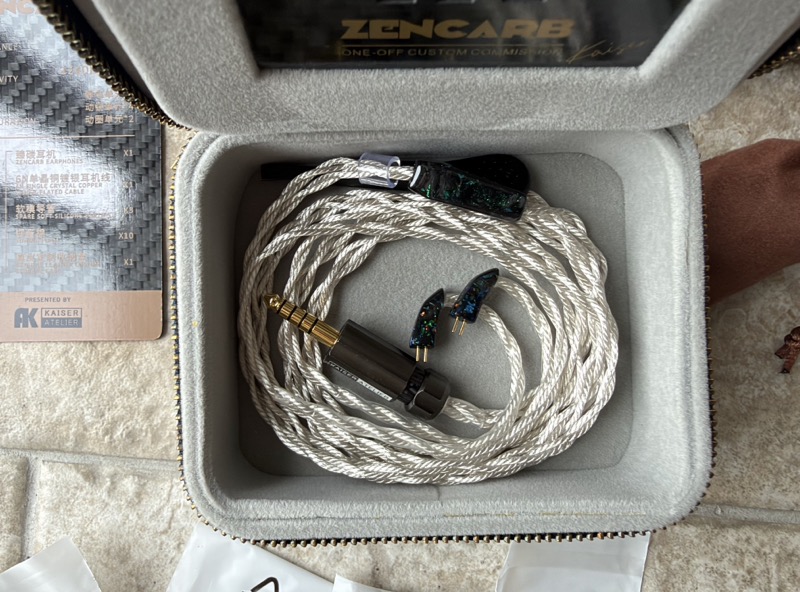
The price is 20,000 RMB, which is roughly $3,000, so this is not cheap. The carry case is a giant square of pretty high quality. It protects the CIEM, the cable and the various accessories, but it isn’t really a portable case. I see it as a nice ‘jewel’ case to store your precious CIEM in at home.
Cable and connectors
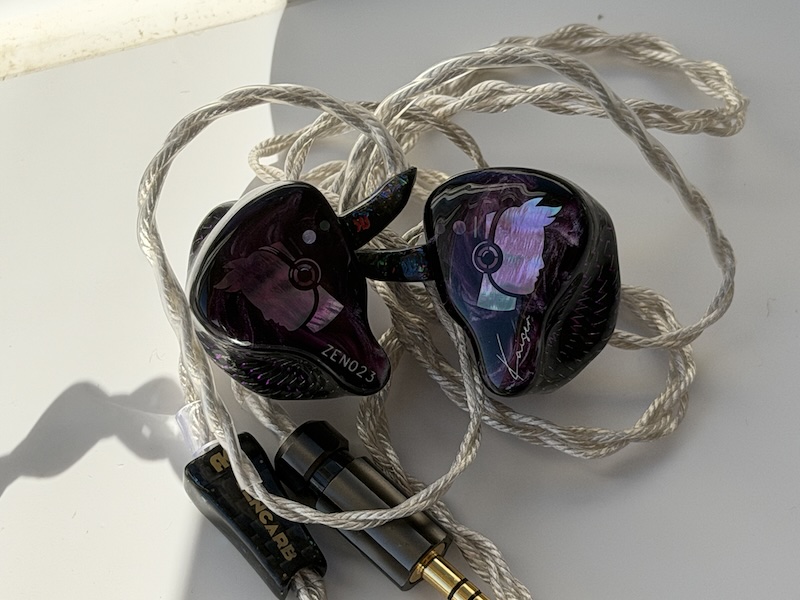
The cable is custom made but also extremely good. It has a nice malleable feel and it is not too heavy, with nice touches on the splitter and the connectors. The 4.4 mm plug is good, although I would love to see a modular design here. Because the cable uses the standard 2 pin connections, using a replacement cable is very easy.
 |
 |
The product itself
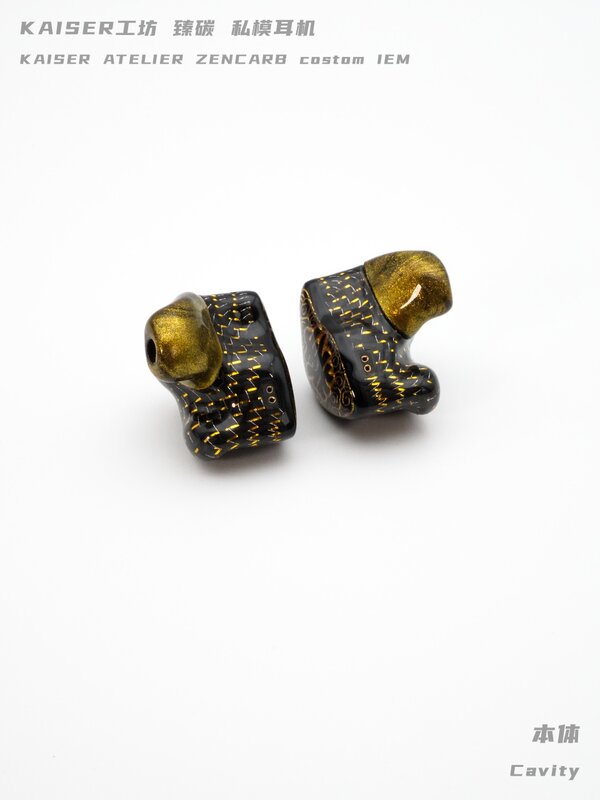
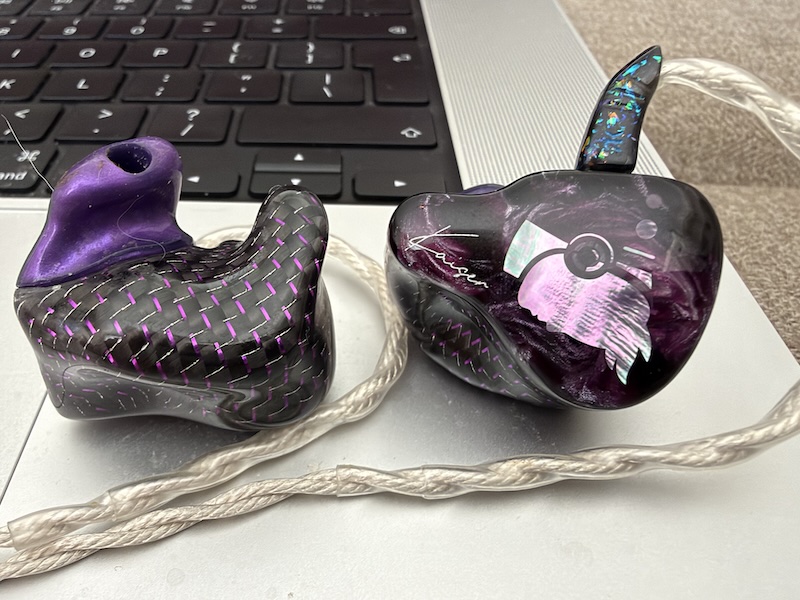
The ZENCARB is a new style of hybrid CIEM, where the custom silicone provides greater comfort and much fewer issues around jaw movements. It is built in two parts. The carbon fibre shell is rigid, and the purple silicone insert is the bit that goes into your ear canal. The ZenCarb can come in two carbon composites, woven or forged. Mine is woven, which I believe can add to its strength. From the side you can see the carbon weave and the silicone insert on top:
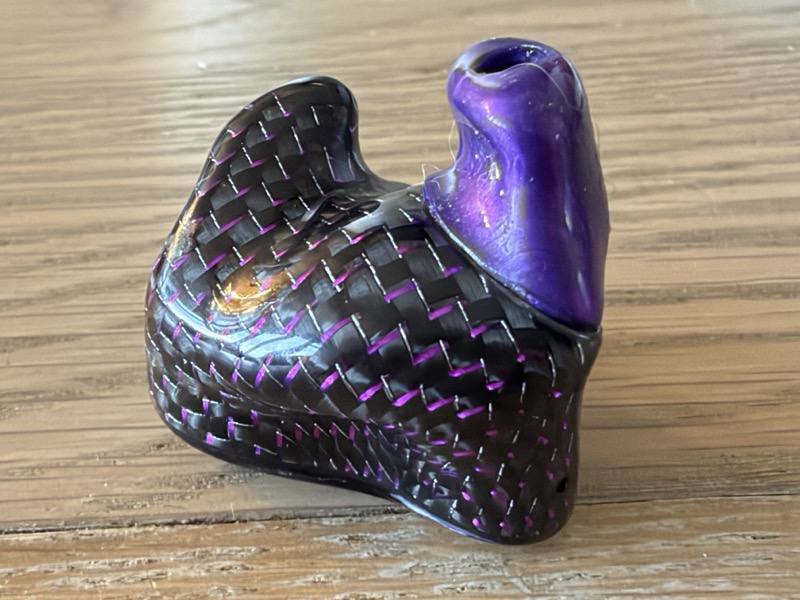
Close up you can see the seam where the carbon weave stops and the silicone starts.
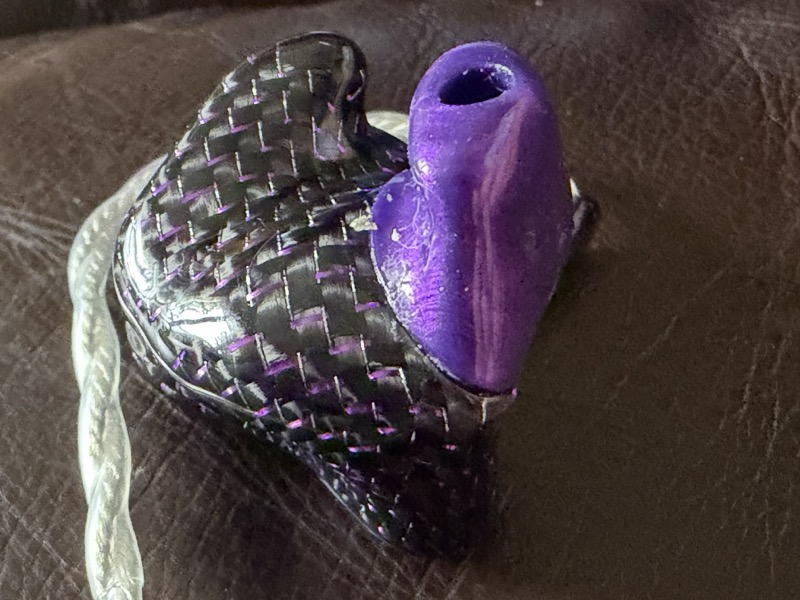
Against universal IEMs the custom shells are not as large as the driver count suggests:
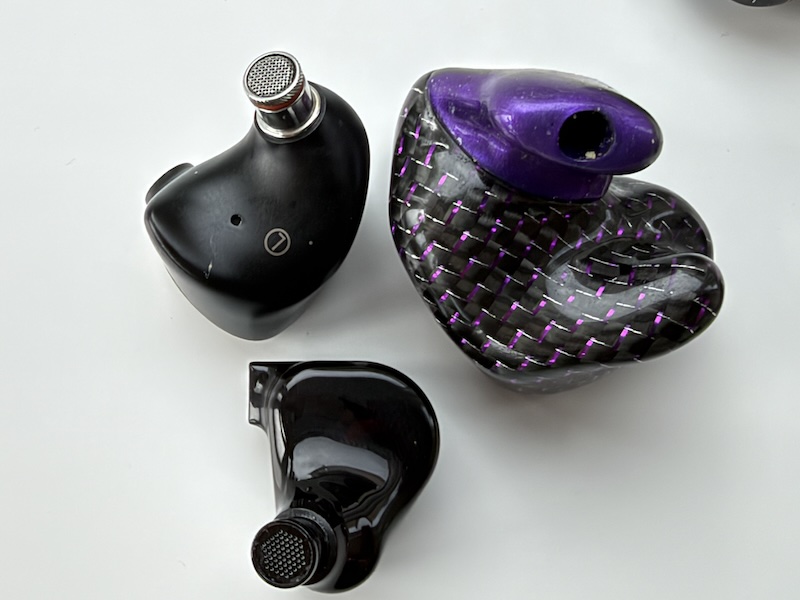 |
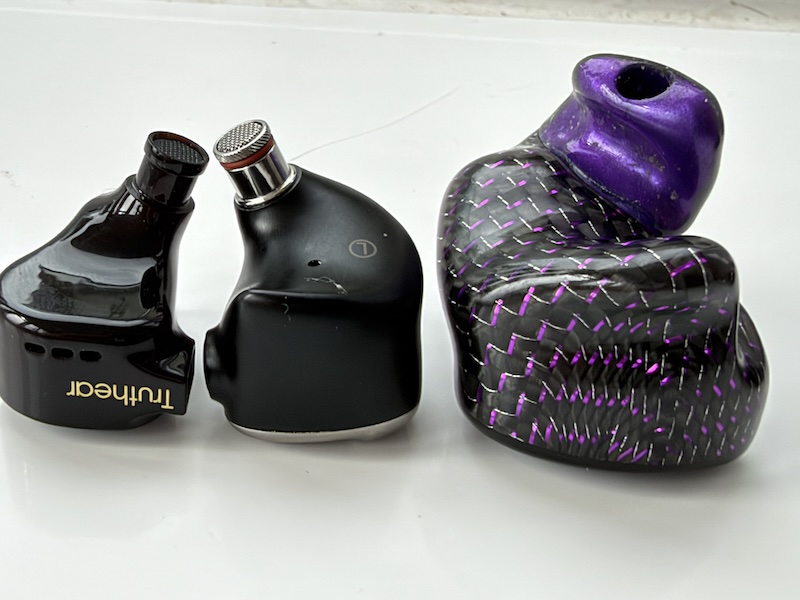 |
The faceplate
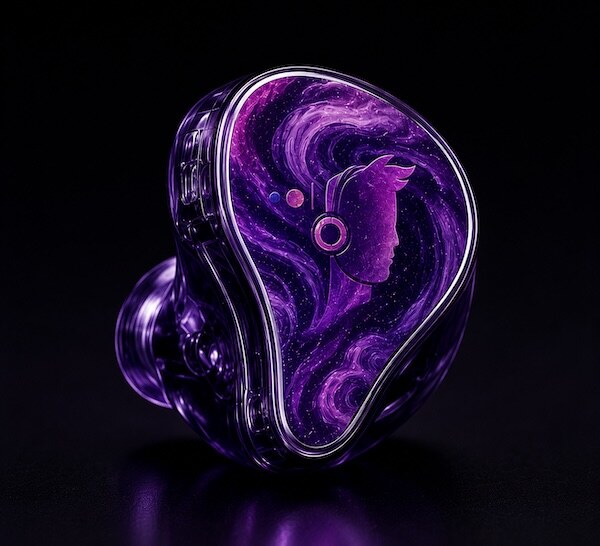
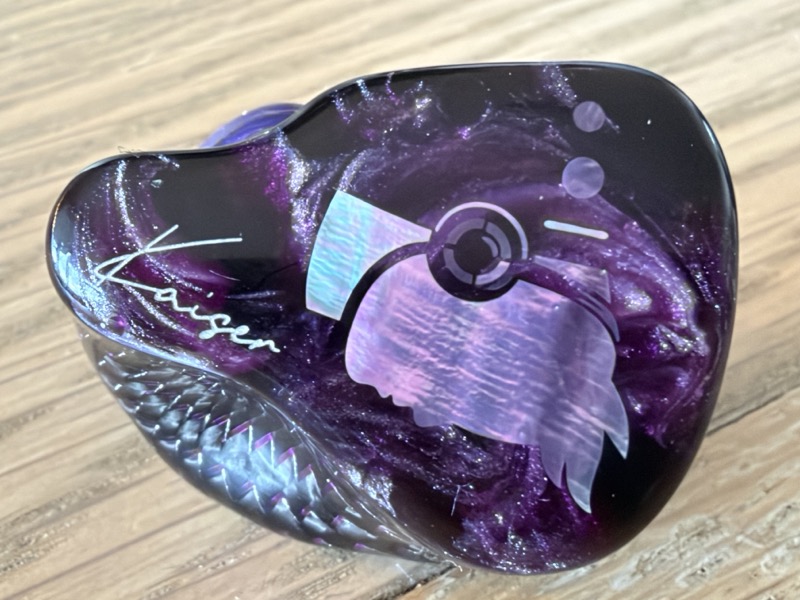
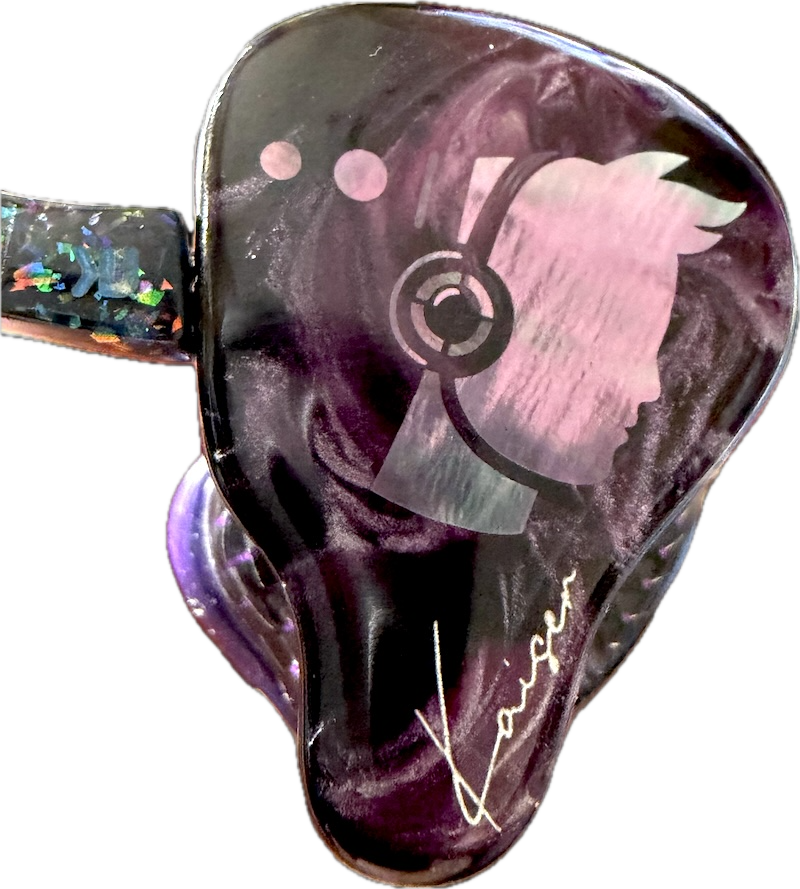
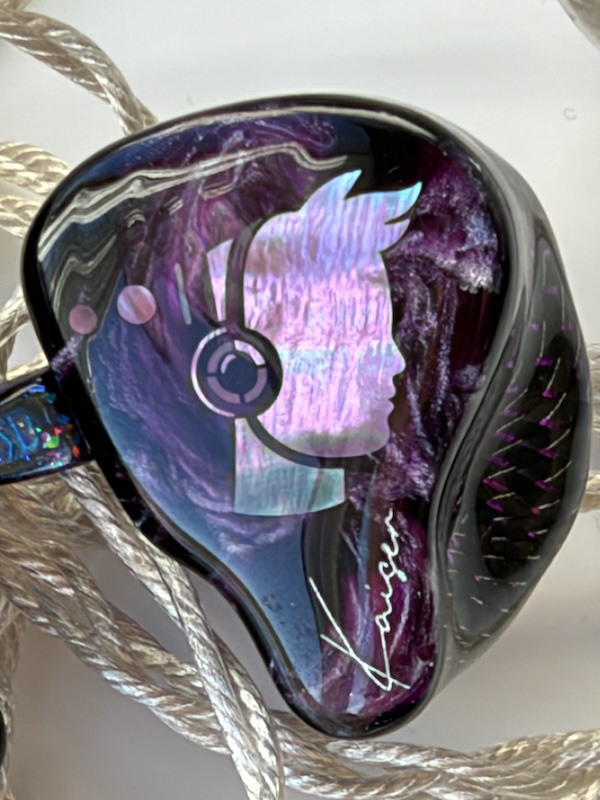
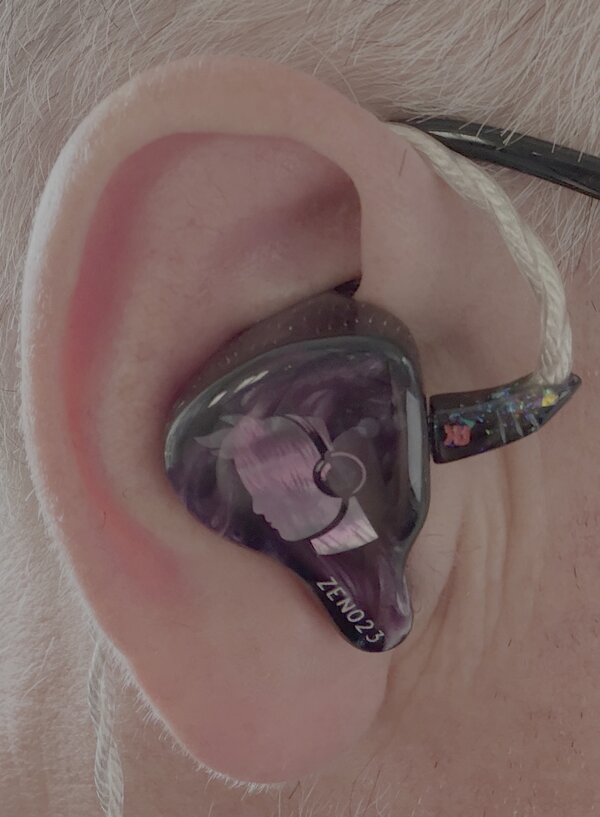
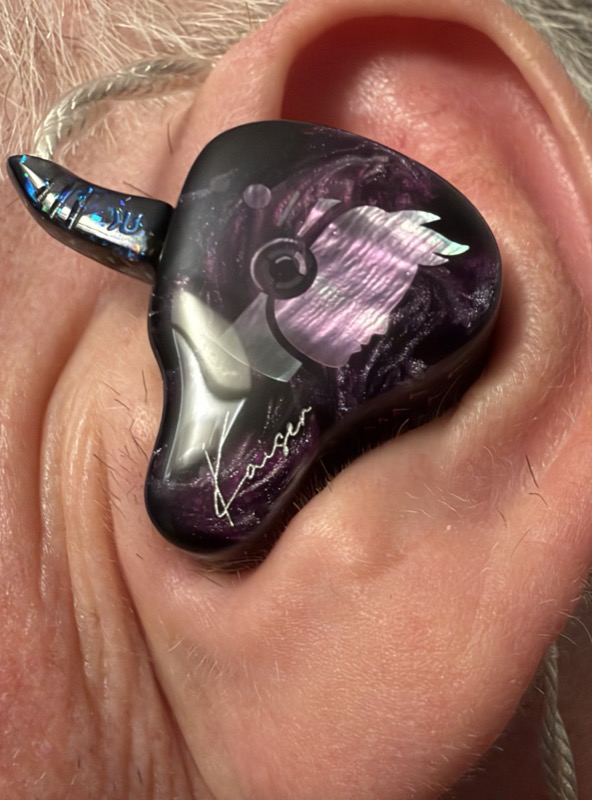
The faceplate was an option that the KAISER Atelier team mentioned to me. It is a very premium feature and one I really appreciate, but it adds to the cost. KAISER Atelier say that basic laser engraving is included in the 20,000 RMB price, but the more elaborate designs are not, and you can expect to pay around 5 to 10% extra for those, which is roughly 1,000 to 2,000 RMB. It does make every shell unique. I sent them this design that I made from my Pragmatic Audio logo (on the left), and in general I think they did a nice job of recreating it (in the middle and on the right), with its nice ‘mother of pearl’ like inlay design of a figure wearing headphones, and Kaiser’s own signature beside it:
 |
 |
 |
You can see the nice mother of pearl effect in this image:
The KAISER Atelier team also offer a good range of stock faceplates, so when you order I would have a chat with the team and see which one suits you.
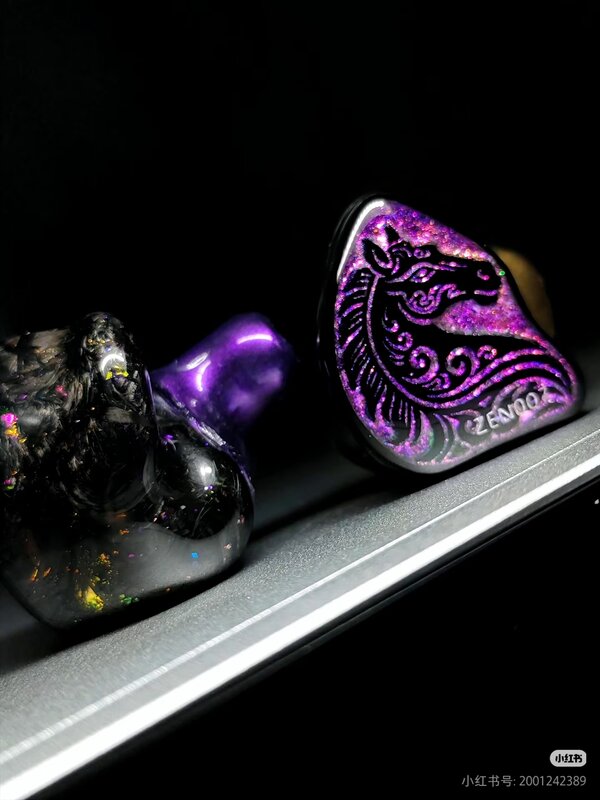
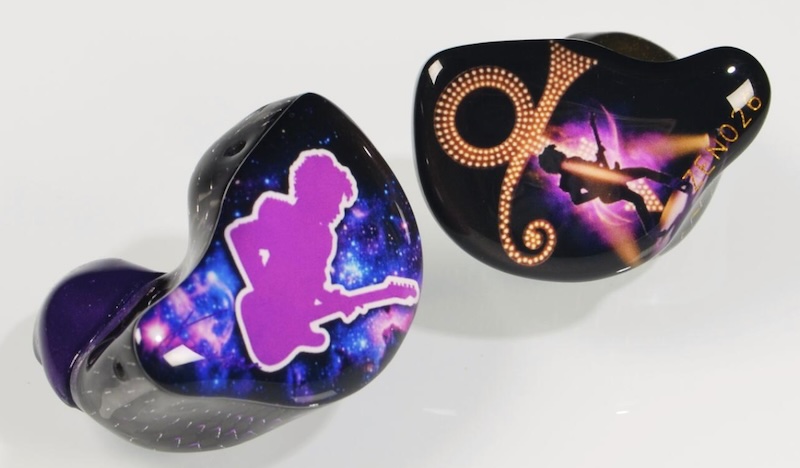
KAISER Atelier shared some marketing images of other faceplate designs, including some more custom designs, and a short video of their petals design:
 |
 |
Fit
I often find stock eartips shift (and I can hear a drop in bass when I lose the seal) while I am out walking or running, and this can be especially annoying in a noisy environment. The ZenCarb has given me a very stable fit no matter how I am moving, whether that is running, walking or shaking my head.
Up to now I have mostly evaluated IEMs in my house, where I have a controlled setup and can guarantee the seal. One of my favourite ways to evaluate an IEM is out on a long walk, where I normally have to be ‘careful’ not to lose the seal and the bass response. This is where the ZenCarb really shines: it has been ‘rock solid’ with no issues whatsoever.
This is where I feel the ZenCarb is way ahead of other CIEMs. The flexible eartip (and the replacements provided) means the typical worries about fit and jaw discomfort that you often hear people talk about are gone. The Marvicon is a more traditional design and is less flexible in that way. I would not say I had discomfort with it, but the more rigid fit makes it a little less comfortable. The ZenCarb ‘disappears’ when I wear it, while with the Marvicon, and I would guess most other CIEMs, you know you are wearing them.
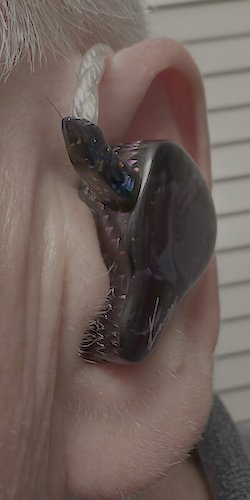
Worn, the shells are still large but mostly sit flush and the carbon fibre shell is barely visible:
 |
 |
 |
Detachable ear canal section
The ear canal section can be detached, which you can see in the little video in the faceplate section above, and it pulls off the cavity as a single piece. KAISER Atelier says this makes cleaning easier and helps stop the sound outlet getting blocked with wax. I haven’t tested that claim, but it is certainly a practical idea with any in-ear monitor that seals deeply.
The separate custom eartips that were provided have been amazing. I will say more about them in the comparisons, but they are the part that sets the ZenCarb apart from the competition.
It feels very, very secure. At no point did I feel the ZenCarb would fall off or be left stuck in my ears, which occasionally happens with stock eartips.
Sound impressions
The ZENCARB uses a two stage hybrid four-way crossover with two 10 mm dynamic drivers, four Knowles balanced-armature drivers and four Sonion electrostatic drivers. KAISER Atelier calls the tuning ‘Minimalist Tuning’, which they say means removing unnecessary acoustic and electrical parts between the drivers and the ear.
Overall the sound is exceptionally good. It is a slightly V-shaped sound, with Harman bass and a relaxed presence region that is more like a JM-1, and then some nice upper treble ‘air’. Considering the EST drivers, I think the KAISER Atelier team did a good job of balancing showing off those drivers with being restrained. They provide just enough harmonics to give you what Crinacle might have called “good technicalities” without being overbearing.
I ran these off a range of gear. Since I have the 4.4 mm cable, I used them with a few different adapters. With the Chord Electronics Mojo 2 I was mostly experimenting a bit with the treble, because lowering the upper treble is very easy on the Mojo 2, so that was some EQ A/B testing. I also tried them with a Topping DAC and the FiiO / Jade Audio Level 1 amplifier.
Bass
The company says a copper tube on the dynamic drivers keeps the bass tight. I can’t say whether that is the reason, but the bass certainly is.
The bass is exceptionally good, and not just because of the ‘perfect’ seal you get. I like how it sounds right down to 30 Hz (and below), and it is very clean. A good track to try is Limit to Your Love.
Mids
The mids are also excellent, with good separation from the bass. The upper mids are a little forward, but in a good way, because I do like a little more emphasis in the 1 to 2 kHz region. I would not call it a mid forward tuning. Maybe ‘polished’ is a good way to describe the midrange.
Vocals are a real strength. They come across strong and clear, and that slightly forward upper midrange is a big part of why. Acoustic instruments are the other highlight, because the clarity of an acoustic guitar is excellent, with each note clean and well separated from the bass.
Hotel California works well for the bass and midrange, and it shows off both of those strengths. The acoustic guitars have that clarity, the vocal sits strong in the mix, and the bass stays clean underneath without muddying either of them.
Treble
KAISER Atelier says the electrostatic drivers have a direct path to the ear, which should preserve small details like vocal breath and room ambience. I was interested to hear whether that showed up in the treble.
The treble will be the most interesting area. I have some measurements later in the review, but I encourage people not to judge the treble by those graphs. That is true of most IEMs, but it is even more true with a custom IEM, because the length of the sound path (the distance from the driver to your ear drum) will be very different, so peaks will almost certainly land in a different area.
To my ears the treble is detailed but not sibilant. The crucial 4 to 7 kHz region is restrained enough not to be sibilant (more like the JM-1 tuning in this respect), while the 7 to 10 kHz region is slightly more emphasised, which gives some symmetry to the bass tuning. Overall this adds a little extra detail to most recordings. My treble checking tracks, like Michael Jackson’s Billie Jean, have a little too much ‘shimmer’ for some. Those 80s recordings in general have too much treble, so I feel this tuning is ‘accurate’, but then this is the ‘circle of confusion’ we have in the audio space. There is also a lovely amount of air from the EST drivers. This might be the one region where some PEQ could be useful.
Soundstage and imaging
What this tuning provides is great imaging detail. It is a cliche, but I often use Rumours as a test album for precise imaging. Each track is set up slightly differently, and you can hear the position of the singers relative to the bass and drums. The soundstage is good for an IEM, but you will never get the same sense you can on open back headphones, or especially with speakers in a room.
Comparisons
The Marvicon, the other CIEM from KAISER Atelier, is a more classic ‘old school’ CIEM design and gives a lovely contrast with the ZenCarb. It has a similar tuning but with less of that treble shimmer. The fit is ’tighter’, but it doesn’t have the custom eartips, which are really what sets the ZenCarb apart from the competition.
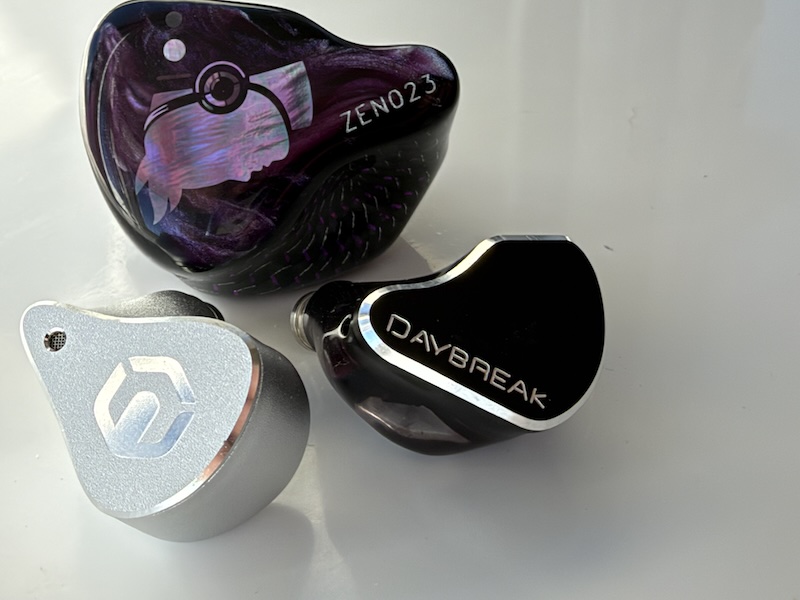
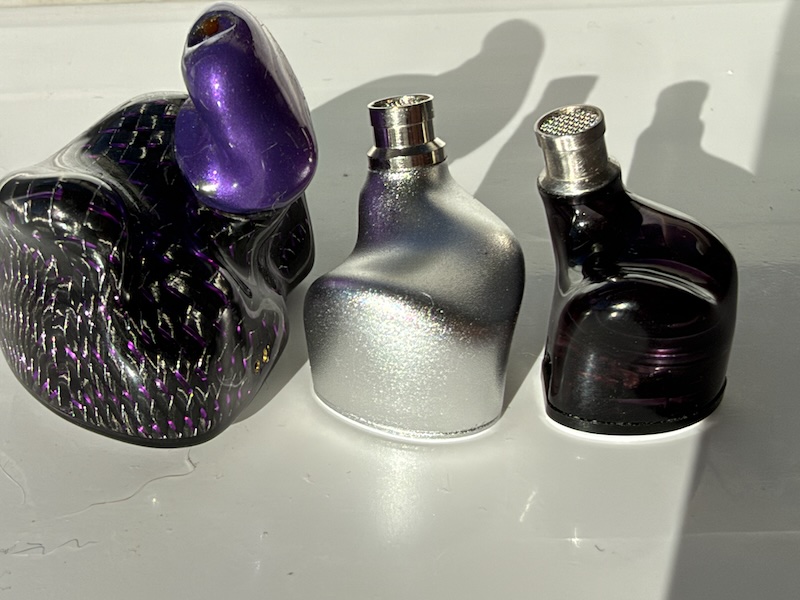
The separate custom eartips have also worked well with other IEMs. As I said earlier, I often find stock eartips shift while out walking or running, and this is where the custom eartips were great, with the CrinEar Daybreak and the Reference. It is probably a personal thing, but it has been great to get a stable eartip fit no matter what I am doing. The custom eartips and how they work with other IEMs are covered in the Marvicon review.
 |
 |
I also used the custom eartip with the EarFun Air Pro 4 TWS earbuds, which I cover in the Marvicon review.
Compared with the two CrinEar IEMs, the bass and sub-bass are somewhere between the Daybreak and the Reference, nearer the Reference level. The midrange is slightly more forward than both. The treble is slightly more detailed, but closer to the Daybreak. It is also comparable to the KiwiEars Orchestra II that I reviewed a few months ago. That IEM tries to take the Orchestra Lite midrange and add a little more bass and treble, and I feel the ZenCarb tuning follows a similar trend, with added upper ‘air’ from the EST drivers.
One thing this review will not have, on this monitor or on any other CIEM, is a frequency response overlay against a rival custom. A CIEM’s shell is moulded to one specific owner’s ear canal, so a coupler measurement of someone else’s custom tells you about their fit and not about a property of the monitor you could ever reproduce on your own head. The measurement later in this review only exists because the ZENCARB’s insert happens to take swappable eartips, and that workaround has no equivalent on a rigid custom like the Marvicon (it would not be a fair comparison even where it did, since neither shell is sealing the way it seals for its actual owner). So what follows is a listening and handling comparison instead.
Specifications and measurements
| Specification | Details |
|---|---|
| Product | KAISER Atelier ZENCARB Custom IEM |
| Configuration | Two 10 mm dynamic drivers, four Knowles balanced-armature drivers and four Sonion electrostatic drivers |
| Crossover | Two-stage hybrid four-way crossover |
| Housing | Carbon-fiber composite shell with flexible silicone ear insert |
| Driver layout | Four-way: two dynamic drivers for the lows, two balanced armatures for the mids, two for the high mids and four electrostatic drivers for the highs |
| Circuit topology | PCB-free direct point-to-point wiring |
| Low-frequency design | 0.6 × 50 mm high-purity copper tube used as a physical low-pass filter |
| Pressure management | Dual balanced pressure-relief system |
| Impedance | 8 Ω, per the unit’s own printed spec card |
| Sensitivity | 124 dB/Vrms, per the same spec card |
| Connector | 2-pin, per the cable pictured in the case above |
| Cable | 6N single-crystal copper, silver-plated, terminated in what looks like a 4.4mm balanced plug (per the spec card and the cable photograph) |
| Price | 20,000 RMB, approximately US$3,000 at the time of writing |
| Availability | KAISER Atelier Taobao shop; worldwide store coming soon, according to KAISER Atelier |
| In the box | ZENCARB earphones, 6N silver-plated cable, 10 spare soft silicone eartips, 2 tuning-foam inserts, genuine-leather custom storage case (per the spec card) |
The impedance, sensitivity and box contents above come directly from KAISER Atelier’s own printed spec card, shown in the unboxing photos.
Frequency response
Because the ZENCARB is a custom monitor, the usual 711 clone coupler is not a straightforward fit, since the shell is moulded to my own ear canal and not to a coupler. The only reason a measurement exists at all is that the ZENCARB’s silicone insert takes swappable eartips, so I fitted a set of standard large eartips in place of the custom insert to get a workable seal on the KB501X’s coupler ear, and did not try to force the custom moulded section onto a fixture it was never shaped for. That gets a real measurement, but it is still a universal tip seal standing in for a custom one. So trust the sub-bass and lower midrange, and take anything above about 1 to 2 kHz with real caution, because that is where seal and canal geometry start to dominate what the coupler sees.
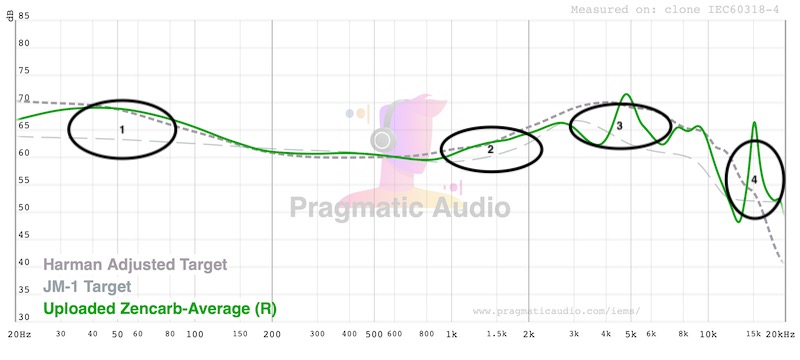
Four things stand out against the JM-1 and Harman Adjusted targets. (1) Below 100 Hz the ZENCARB sits close to both targets with a gentle, well controlled lift and not a shelf, a clean amount of extension and not a bass forward tuning. (2) Through roughly 800 Hz to 2 kHz the midrange response is slightly forward, adding nicely IMO to the midrange. That lines up with the slightly forward upper mids I hear. It sits right at the edge of where I would still trust a universal tip seal, so I hold it a little more loosely than the bass.
(3) The 4 to 5 kHz peak is the one region where the graph does not match what I actually hear, and I do not think it is telling the truth about the ZENCARB itself. Since I used a universal tip to fit my 711 coupler for this measurement, this area especially will be inaccurate in measurements. A small mismatch in insertion depth or angle changes everything above 1 to 2 kHz the most, so the peak reads as sharper on the coupler than it sounds on my own head. (4) In the 12 to 15 kHz region I do hear extra detail, consistent with the four Sonion electrostatic drivers doing their job, though less pronounced than the size of this peak suggests. My guess is that it is the same seal dependent effect, exaggerated by the universal tip.
A second reference point
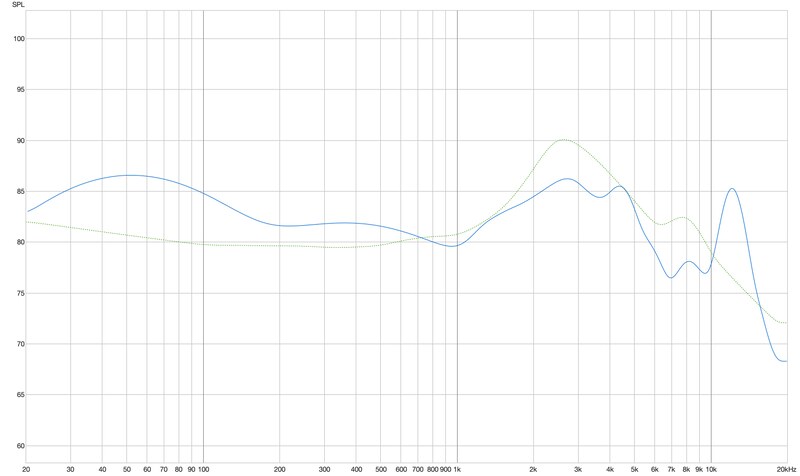
I also wanted to give you a second reference point for the sound, so I am including a measurement of the ZENCARB from Klaus Eulenbach’s review, and I would like to thank Klaus for his excellent review. The reason is that with any IEM, and especially with a CIEM, the frequency response above about 4 kHz will be different in different ears and on different fixtures, so one curve on its own should not be read as the answer.
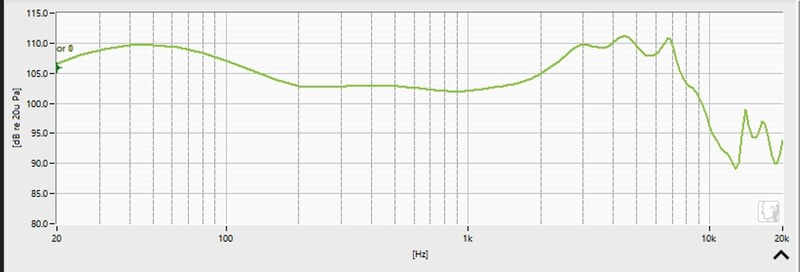
Klaus’s graph is below, and he does mention in his review that his measurements are imprecise. Next to it is the official ZENCARB measurement from KAISER Atelier, and my own measurement above is much more similar to the official one. I would not take any measurement beyond 4 kHz as accurate, especially as the shape of every CIEM is non-standard, so it will come up as non-standard as far as the ear canal depth goes.
The official measurement from KAISER Atelier:
While not directly relevant for this review, it is always worth understanding with measurements how different they can be in the treble region. Headphones.com have a nice diagram, which I have copied below, showing how large the differences between measurement fixtures can be, where the treble from the pinnae of three common fixtures is compared with the human average. All of the measurements were taken at the blocked ear canal entrance and compensated to the human average response:
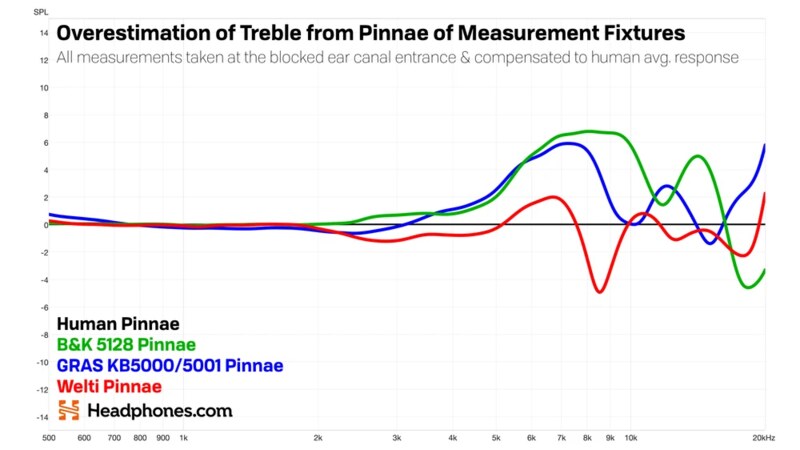
The graph is from Headphones.com, not from my own measurements.
Distortion
 |
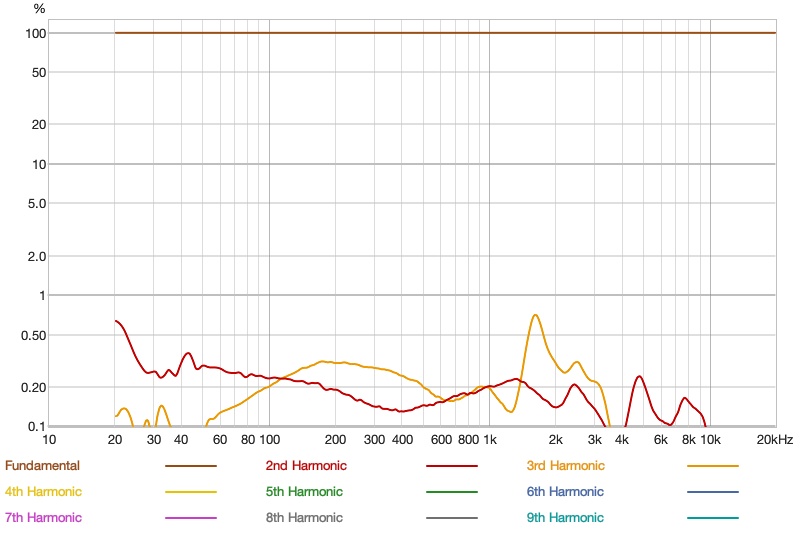 |
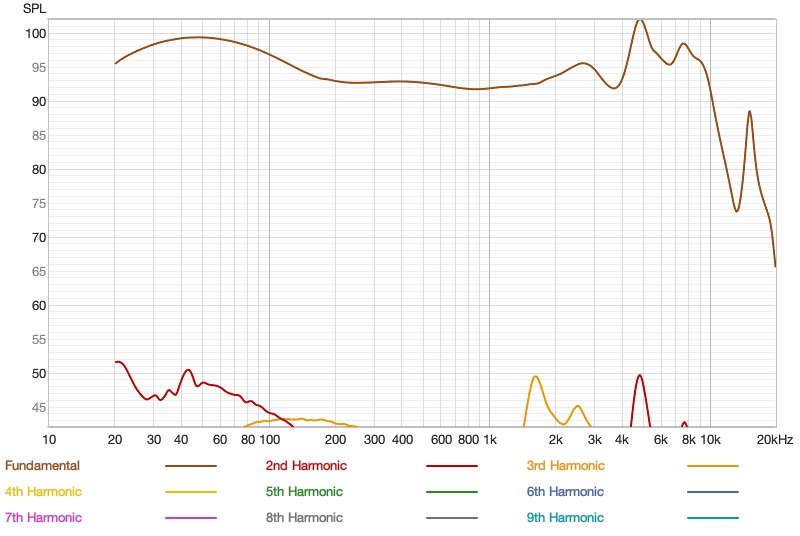
Unlike the frequency response above, distortion is not something a coupler mismatch can fake, because a low percentage here is a low percentage regardless of exactly how the shell seals, and the ZENCARB’s figures are low. The 2nd and 3rd harmonics peak at around 0.6 to 0.7% in the low bass, where distortion is hardest to avoid on any driver, and settle to roughly 0.1 to 0.3% through most of the audible band, dropping under the measurement floor above about 4 kHz, which is effectively no distortion by IEM standards at any price, custom or universal.
Distortion this low gives you the full dynamic range of PEQ adjustments, should you want to use them with the ZenCarb.
Rating explanation
I have given the ZenCarb a personally pragmatic 5. This might seem crazy given the price, but it is earned by providing me with an excellent and unique IEM experience, and one where I agree with the audiologist I mentioned at the start of the review that ‘you can’t go back’. For me the pragmatic 5 comes from the whole package: the comfort, the replaceable eartips, the custom fit, the custom faceplate and the driver configuration. It is the fit that stood out, because it holds no matter what I am doing.
One bit of advice I would give KAISER is to focus on the build and the swappable custom silicone, and maybe less on the expensive drivers. I get that this is a flagship, so everything should be focused on delivering flagship level sound, but I would guess 50% of the cost is the drivers. In my opinion, while they do provide some additional sound quality, especially in the upper treble, I feel their benefit is little compared to the custom silicone and the overall build quality.
The features rating is a 5 for the same reason, plus the two stage four-way hybrid crossover and the detachable, cleanable ear canal section, which together answer most of the comfort, sealing and maintenance complaints people have about custom monitors. The price rating is a 4. At 20,000 RMB (about US$3,000) it is hardly a cheap IEM, and I do understand the pressure to have every aspect of the ZenCarb delivering flagship quality, but I would love to see a similar build with maybe a dual DD and a quality BA configuration at a cheaper price.
I gave the measurement rating a 5. While it is hard to judge, I feel they nailed the sound signature they were going for, and while I was complaining about the expensive drivers, I also feel they have nicely integrated this complex set of drivers into the overall tuning.
Conclusion
If the tuning I have described is what you are chasing, I think this is end game. The comfort, the replaceable eartips, the custom fit, the custom faceplate and the driver configuration all lead me to think there is no going back once you try a CIEM like this.
I think the overall package is worth it if you have the money, although it is definitely not ‘pragmatically priced’. At 20,000 RMB, approximately US$3,000, it sits firmly in the high end custom IEM market. And as I mentioned above, I would love to see KAISER Atelier make a more affordable version with the custom eartips, maybe a Marvicon 2 with a simpler driver configuration. For now this is probably the best IEM I have had, out of the hundreds of IEMs I have reviewed over the years.