SoundPeats H3
High Quality Audiophile Internals Can Shine With Some Simple Tweaks
The H3 first came to my attention a few months ago watching some early reviews, and I immediately thought finally a company making an TWS that would appeal to audiophiles. I was very sceptical about the subjective opinions on its sound quality (as everyone should be with subjective opinions). SoundPeats have historically been a value TWS brand, and using flagship level audio components is a new territory for them. The hardware credentials were real. The question was what they’d done with them.
So, when SoundPeats reached out to offer a review sample, I thought I would check for myself. And my initial thoughts confirmed one of my concerns, the default tuning is heavily bass-forward in a way that obscures the quality of the hybrid driver. But then switching around some presets within the After experimenting with the presets in the SoundPeats app, it became clear that the driver hardware itself was highly capable, but the default DSP tuning was masking much of its technical performance.
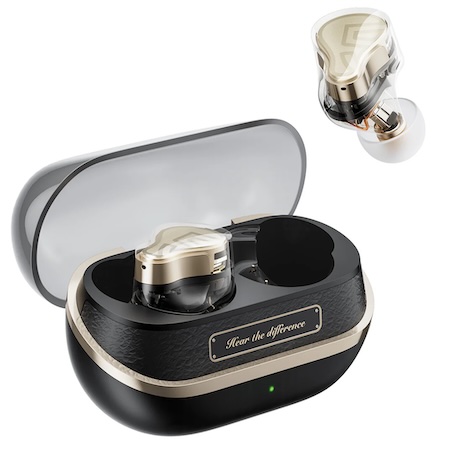
I would like to thank SoundPeats for providing the H3 for the purposes of this review.
If you are interested in finding more information about the H3, you can find it at the official SoundPeats product page.
The SoundPeats H3 typically retails for $129.99. There is currently a 25% discount available on Amazon at the time of publishing, which makes the entry price considerably more compelling.
I have been using the H3 for about four weeks now, using it daily both on my commute and in my office. So, once I switched to the Folk preset (intially). For commuting and for evening walks the physical isolation of an IEM, the convenience of being wireless and the ANC behaved excellently. Overall, I feel this is a TWS that with a tiny bit of tweaks is a very worthy ‘audiophile wireless IEM’.
But before I get stuck into more details, let’s take a look at what’s in the box.
Unboxing and Packaging
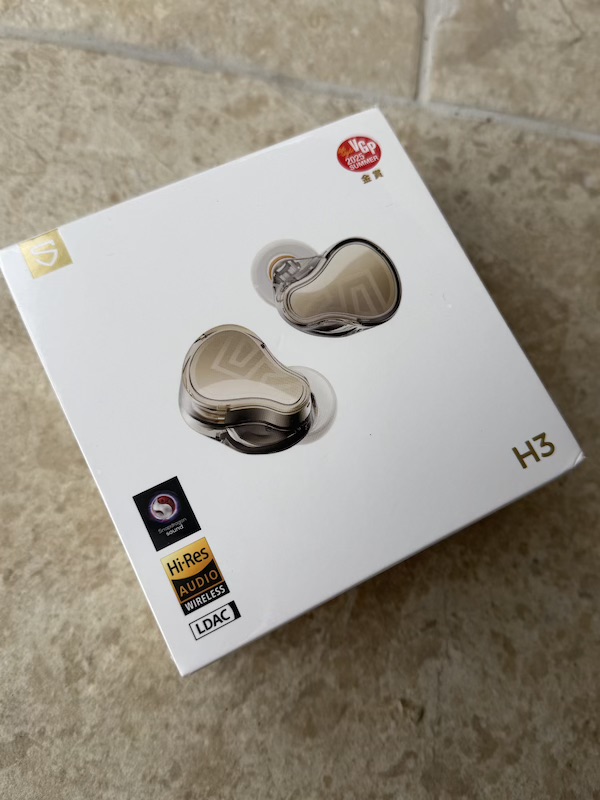
The H3 comes in nice packaging:
 |
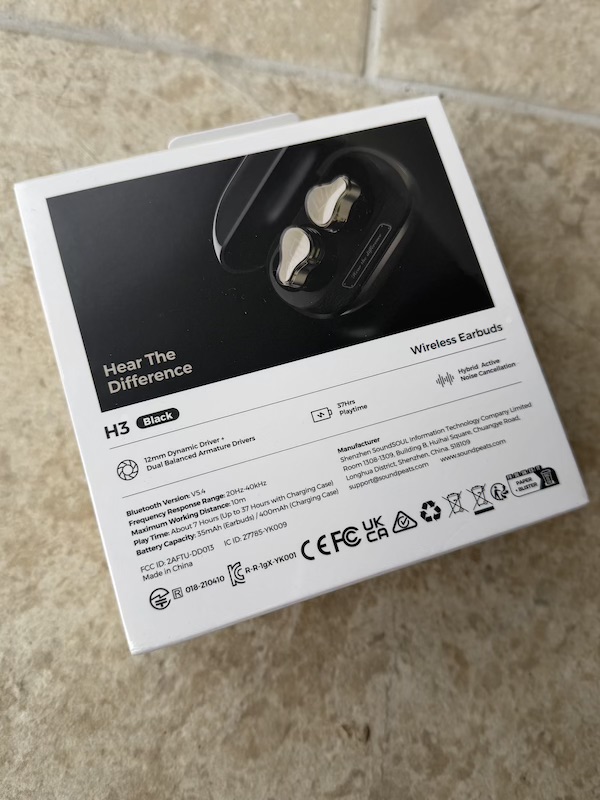 |
The “Hear the difference” phrase on the back is a confident statement.
Removing the outside covering reveals the inner case:
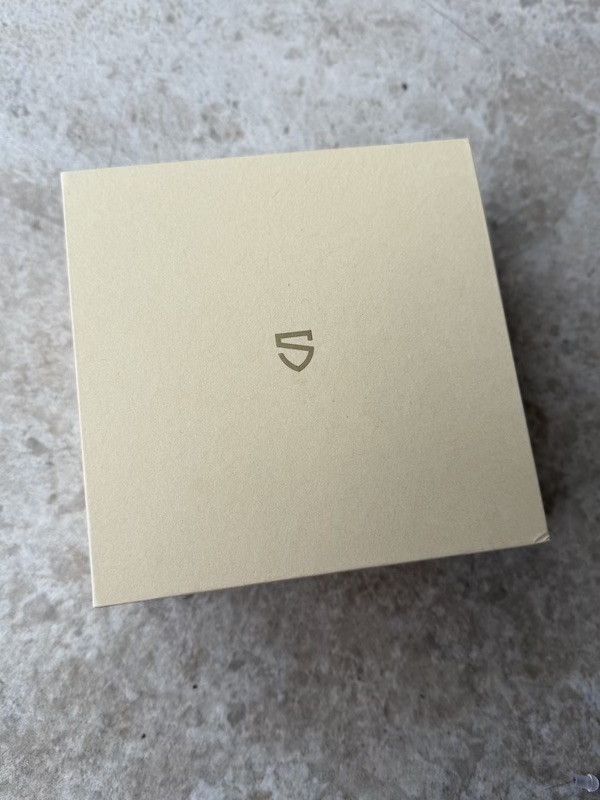
And then opening the case, we finally see the H3 carry case with its slightly ‘smoked’ plastic look
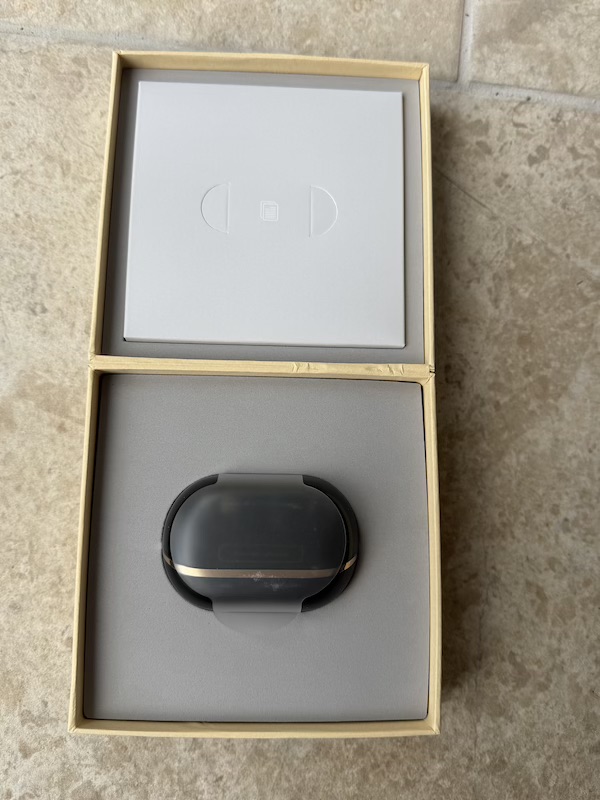
Beneath this layer sits a separate accessories box:
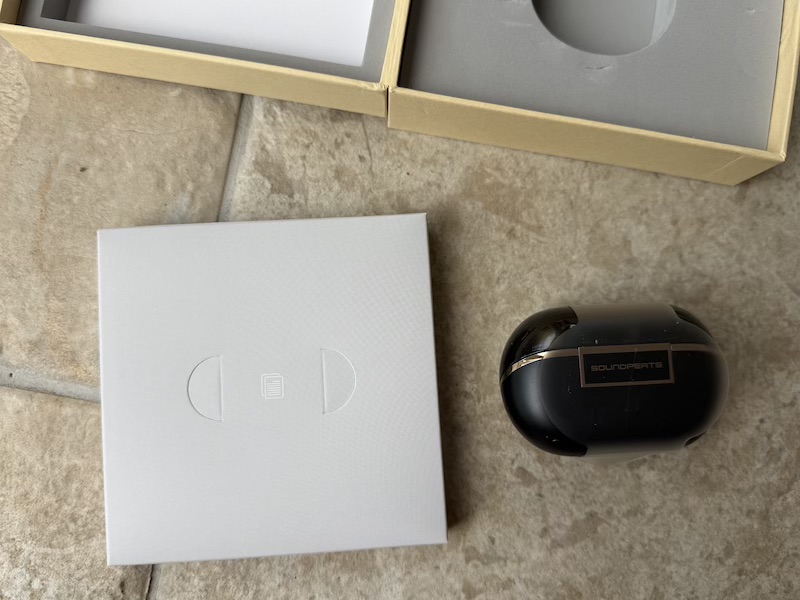
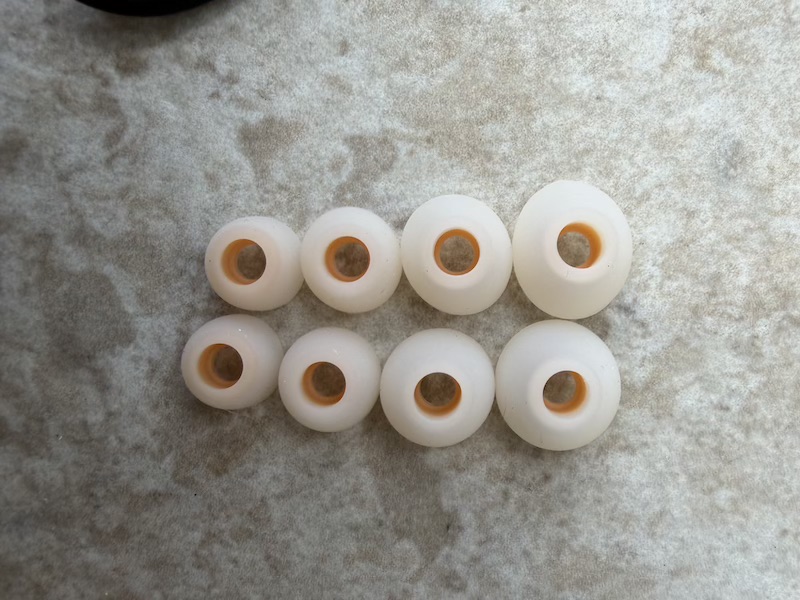
Inside the accessory box, you get five pairs of eartips (XS/S/M/L/XL), a USB-C charging cable, a user manual, and a set of SoundPeats stickers:

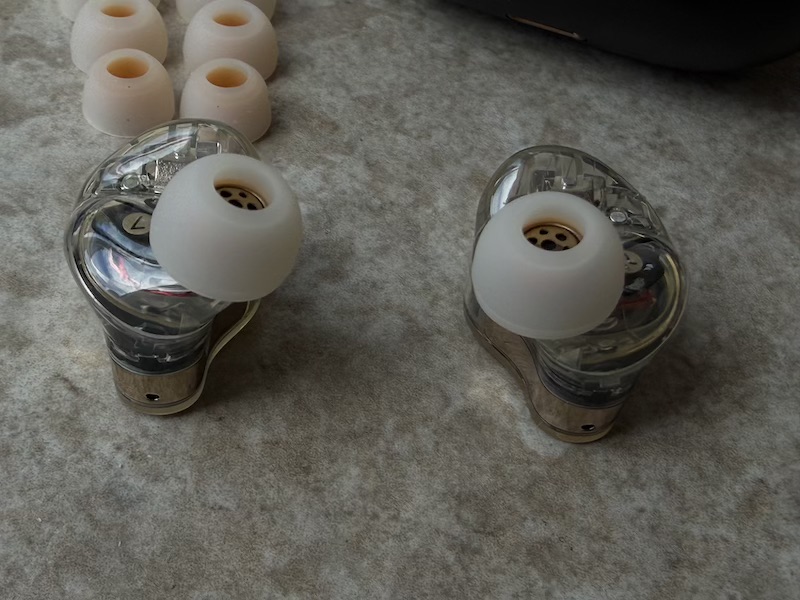
Five tip sizes is the right call for a product positioning itself as an wireless IEM - 4 eartips in the bag and an extra set on the H3 in the carry case:
 |
 |
Getting a proper seal with an IEM-style fit matters enormously for both sound quality and ANC performance, and the extra sizes increase the likelihood of a first-try success.
Build Quality and Design
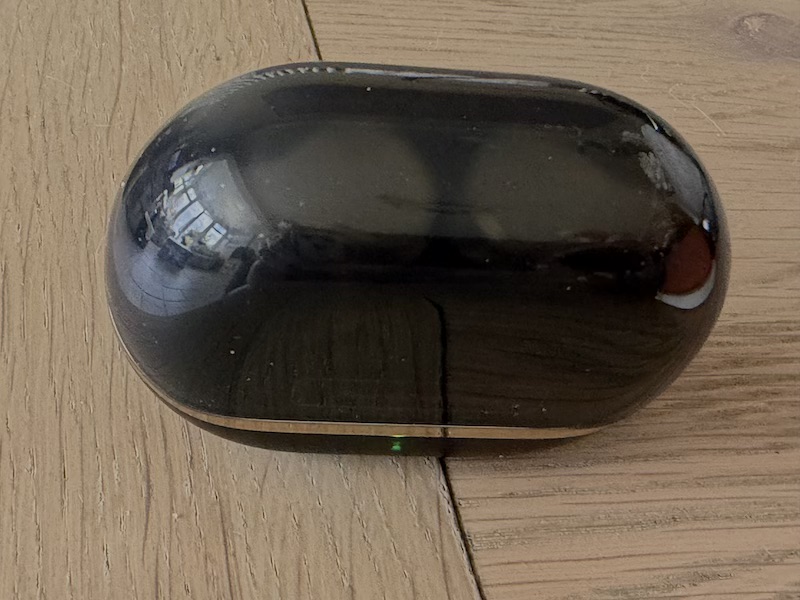
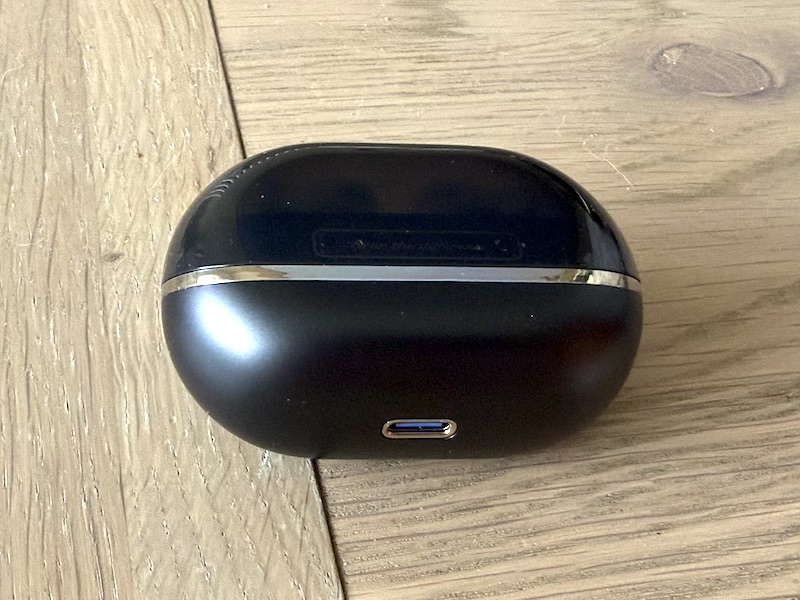
The case is large by TWS standards — measuring 70 × 48 × 31 mm, significantly bigger than a typical AirPods-style case — and that size is deliberate. The extra interior space accommodates the larger, IEM-style earbuds and also means there is room for third-party eartips with broader flanges if you want to experiment. The exterior finish is a combination of glossy black top lid, leather-wrapped lower body, and a gold accent band running the perimeter:
 |
 |
One honest caveat on the case: the glossy plastic lid attracts fingerprints and micro-scratches readily. My sample has remained in excellent condition after four weeks, but a case this large will inevitably see more handling than a compact TWS case, and the high-gloss finish will show wear over time. A soft pouch is worth considering if you carry this in a bag with keys.
Opening the case reveals the H3 earbuds seated in a premium presentation that matches the price tier:
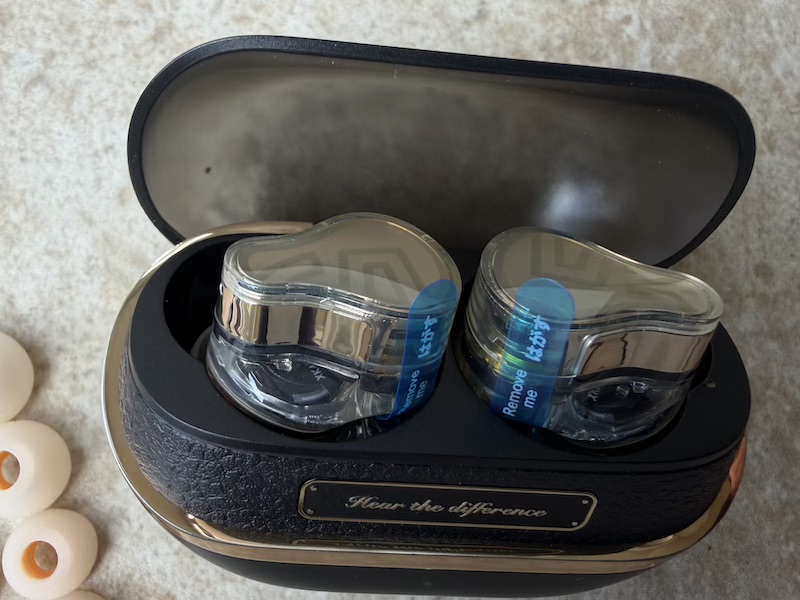
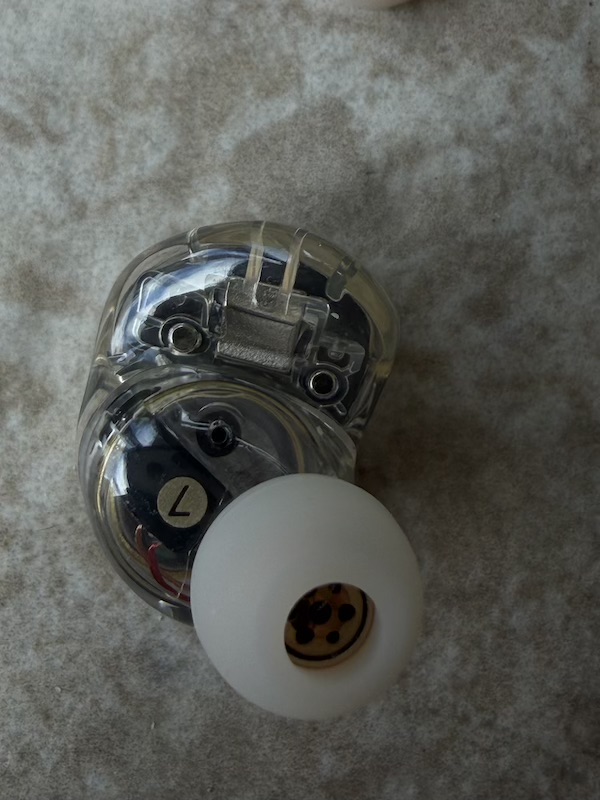
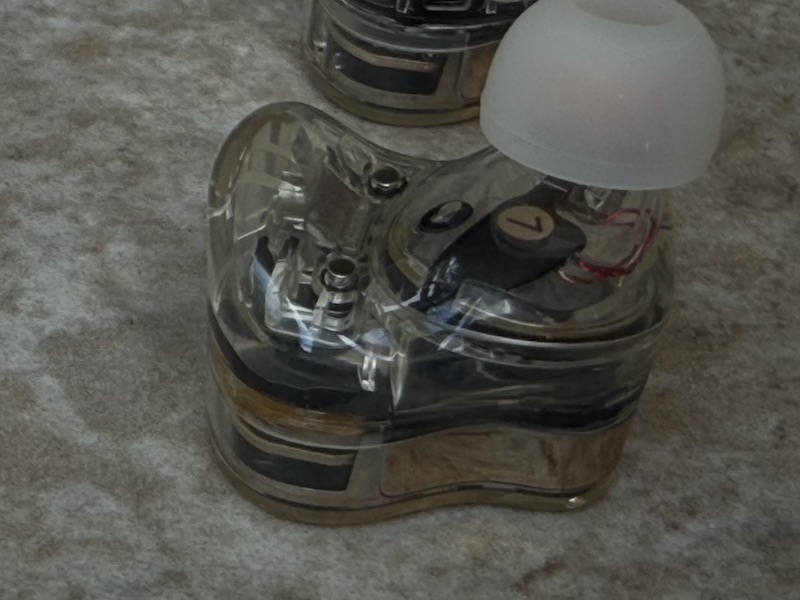
The semi-transparent shell is the H3’s most immediately distinctive visual feature. The clear housing exposes the hybrid driver architecture inside — you can see the driver components through the shell in a way that no opaque TWS earphone can replicate:
 |
 |
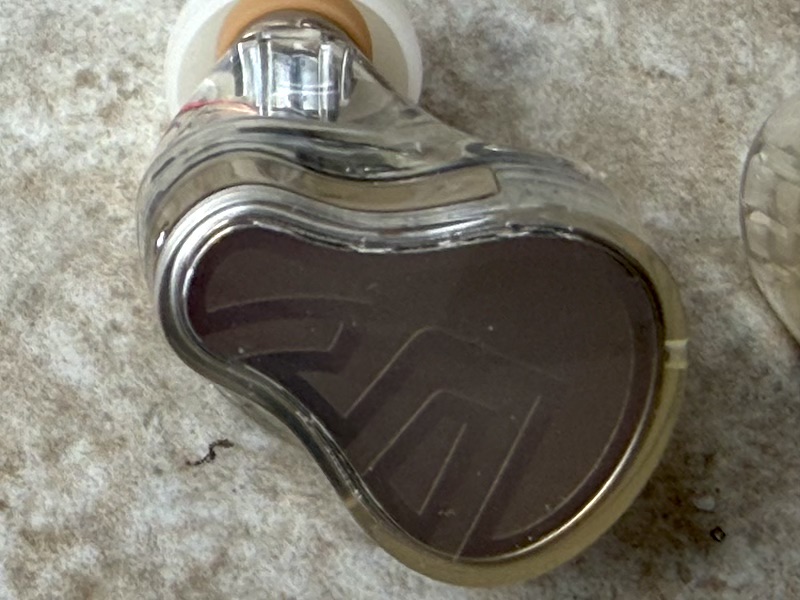
The faceplate carries a nice metallic logo and finish that contrasts cleanly with the transparent body:
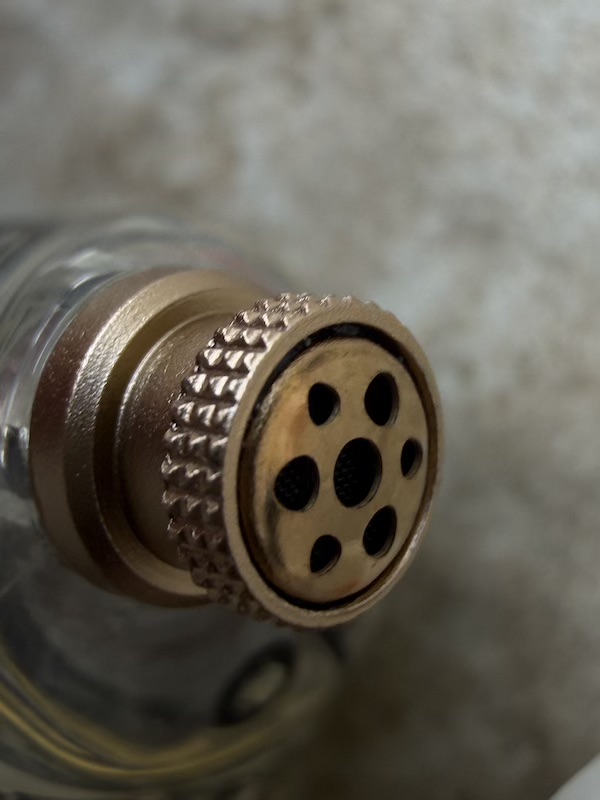
The nozzle is precision-engineered aluminium — a detail more associated with dedicated audiophile IEMs than TWS earphones. The nozzle tip features a distinctive seven-hole grille pattern that manages the acoustic output from both the dynamic driver and the balanced armatures, and is worth examining closely:
 |
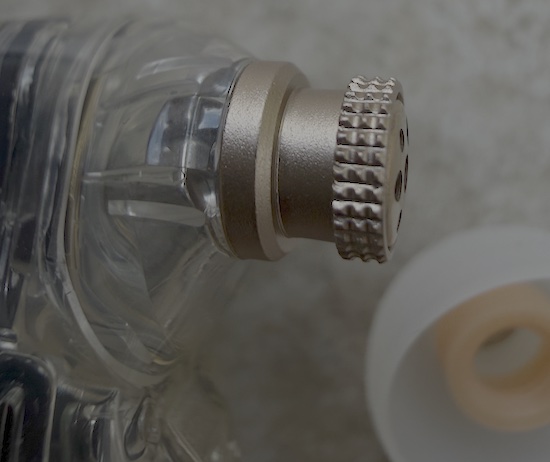 |
I like how the nozzle has been designed to provide extra grip - this worked especially well when I experimented with
third party ear tips:
Fit, Comfort, and Eartips
The H3 fits and sits like an IEM rather than a standard TWS. The body is larger than a typical TWS earbud but it sits in the concha of the ear in a familiar IEM orientation, with the nozzle angled into the ear canal. The seal is the critical variable — and with the right tip, the passive isolation is noticeably better than any stem-style TWS I have used.
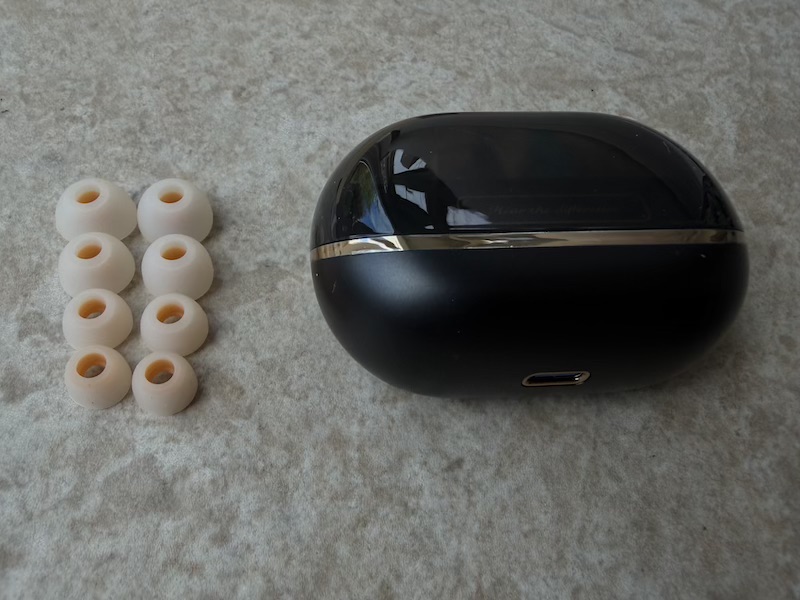
SoundPeats include five sizes. I found the large tips gave me the best seal and the most consistent bass response — which matters a great deal with a hybrid driver where the dynamic driver’s low-end performance is directly affected by the quality of the seal:
 |
 |
The case’s larger-than-usual interior is accommodating enough for third-party eartips with wider flanges — spinfit-style or wider foam options all fit — which opens up the fit optimisation further for listeners with unusual ear geometries.
Features
1DD + 2BA Hybrid Driver Architecture
The H3’s driver configuration is unusual for a TWS product: a 12mm dynamic driver handles the bass and lower midrange, while two balanced armature drivers cover the midrange and treble. This is a very typical architecture used in dedicated IEMs — BA drivers are typicall used for faster transient response, lower distortion, and better treble resolution than a single dynamic driver, though this is debatable as I have many great single DD designs. The QCC3091 (Snapdragon Sound) chipset processes the signal before it reaches this driver stack, supporting LDAC and aptX Lossless for wireless transmission at up to 24-bit/96kHz resolution. Note: LDAC is disabled by default and must be enabled via the SoundPeats app.
AI-Powered Adaptive Noise Cancellation
The H3’s ANC uses a six-microphone array with AI noise reduction, rated at up to 55dB of noise reduction. Four ANC modes are selectable via the app:
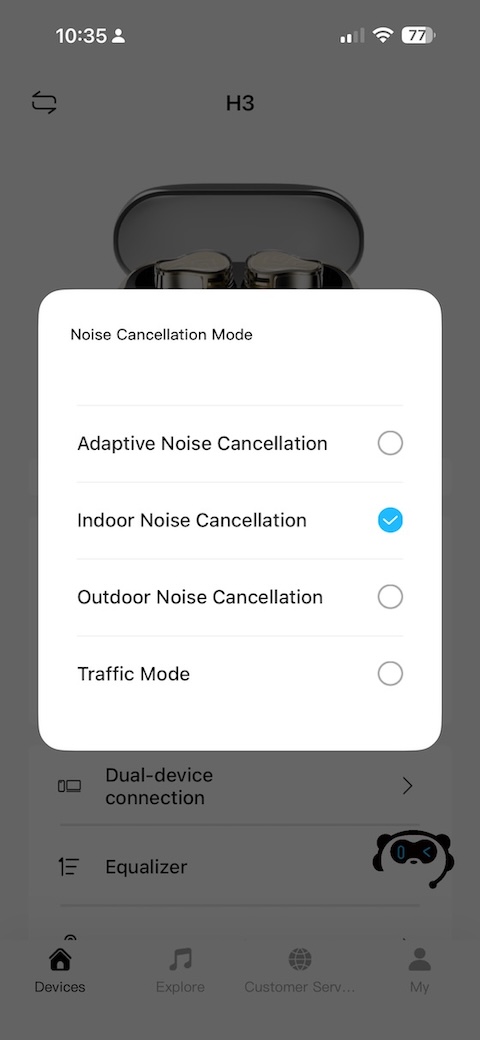
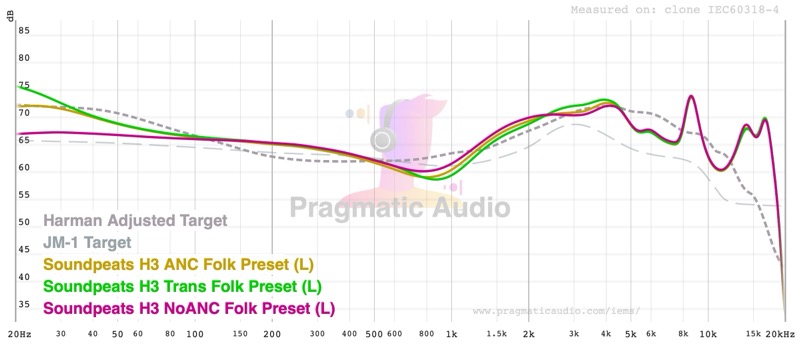
In daily commuting and office use I found the Indoor and Traffic modes most practically useful. The ANC performance at this price is genuinely strong — not quite Apple-level, but comfortably ahead of most TWS earphones I have tested in the same bracket. One thing worth noting: engaging ANC does alter the sound character slightly — the bass becomes a little more prominent and there is a mild sense of compression across the midrange. It is not dramatic, but it is audible if you switch back and forth. The ANC vs no-ANC measurement graph in the Measurements section shows this clearly.
The Soundpeats App
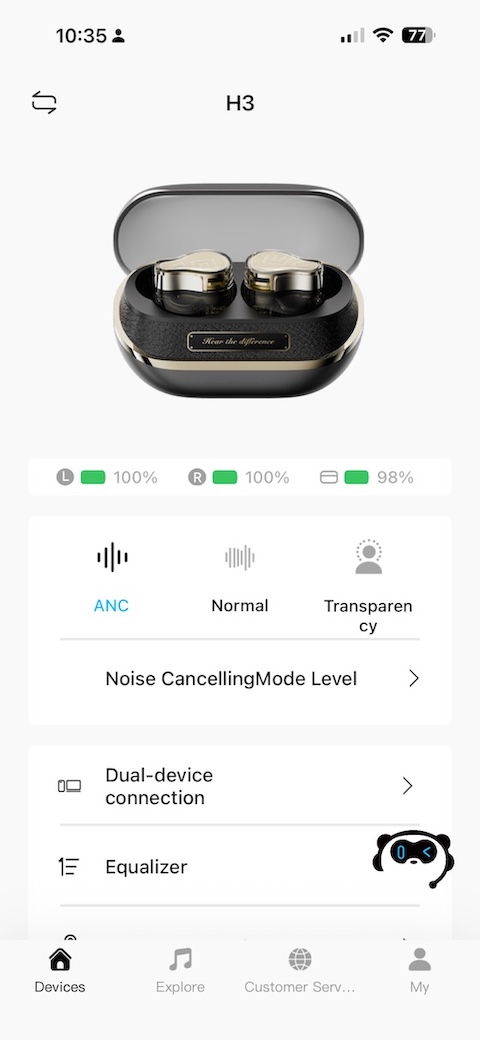
The Soundpeats companion app is central to getting the best from the H3, and it is one of the better TWS companion apps I have used. The home screen shows per-earbud and case battery levels separately, with ANC mode switching and quick access to the equaliser:
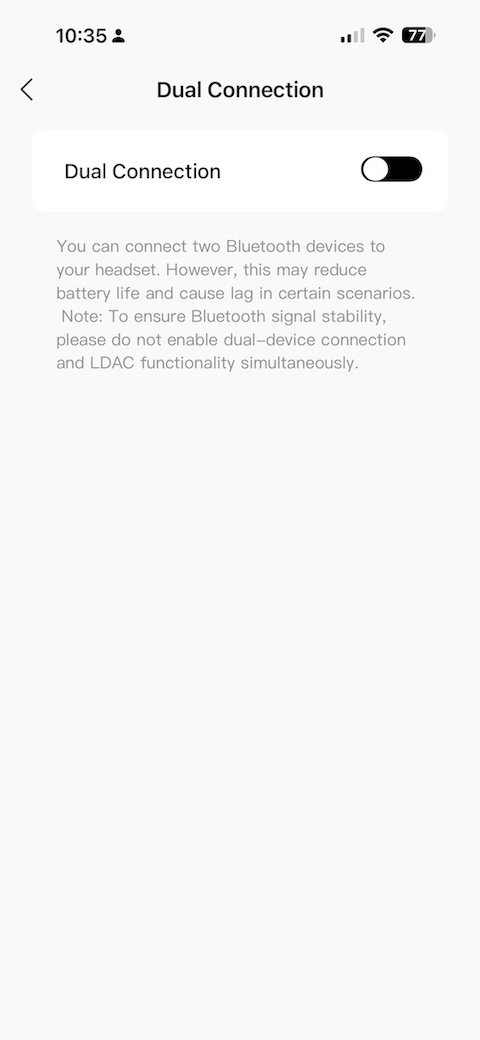
Dual-device connection is supported and managed cleanly in the app — useful for connecting to both a computer and a phone simultaneously:
Gesture controls are fully configurable per earbud and per tap pattern.
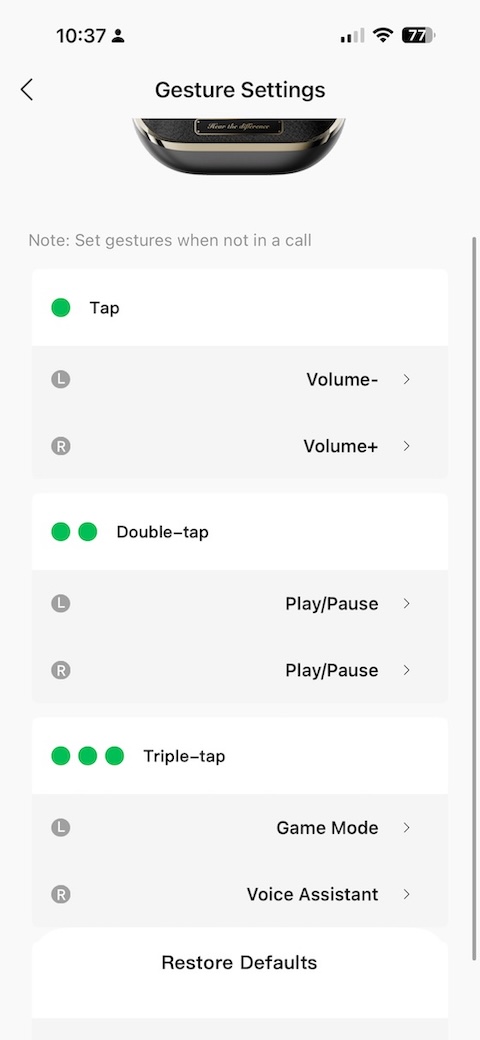
The default mappings out of the box are:
| Gesture | Left earbud | Right earbud |
|---|---|---|
| Single tap | Volume down | Volume up |
| Double tap | Play / Pause | Play / Pause |
| Triple tap | Gaming mode | Voice assistant |
| Long press (1.5s) | Cycle ANC modes | Skip track |
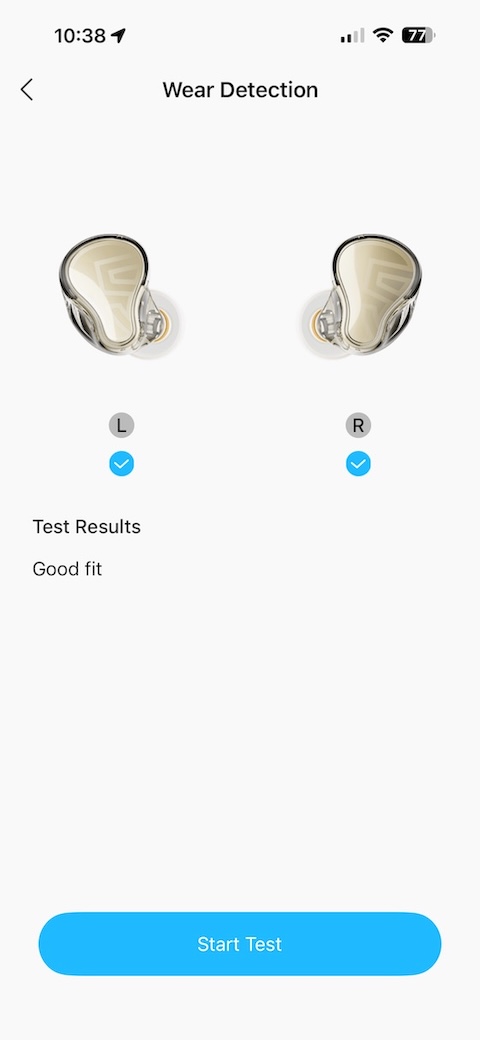
The wear seal detection is definitely worth running during initial setup — it functions similarly to the ‘fit test’ on Apple devices and I also spotted this with the Viaim RecDot that I reviewed has this feature, very useful when using the ANC microphones to detect bass leakage and confirm whether you have a proper seal:
The app also includes ambient sound, white noise, and rain sounds for relaxation — a small but thoughtful addition that works well during focused work sessions.
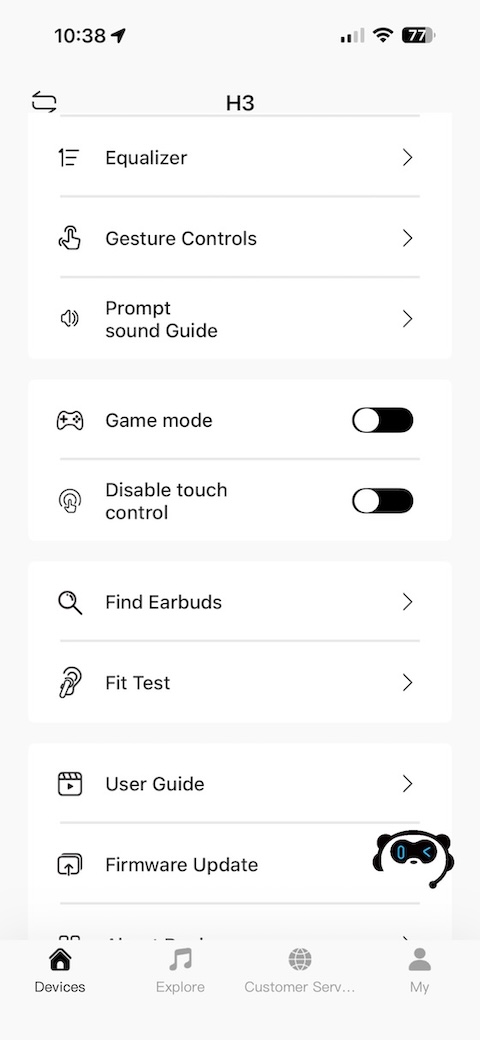
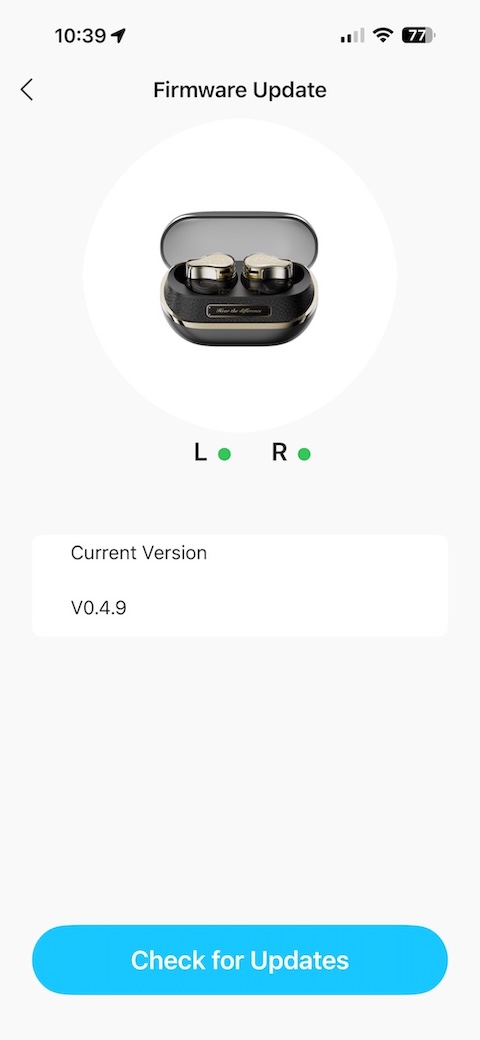
Additional settings and firmware management round out a very capable app:
 |
 |
Hearing Test
One of the H3’s more unusual app features is a built-in hearing ability test. The app plays test tones across the frequency range and maps your individual hearing sensitivity, then offers to apply a personalised compensation curve based on the result:
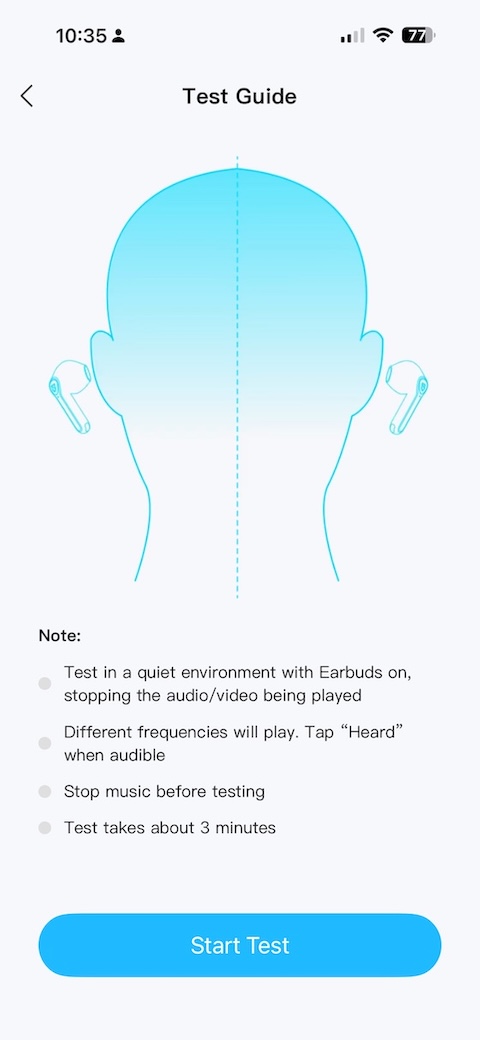 |
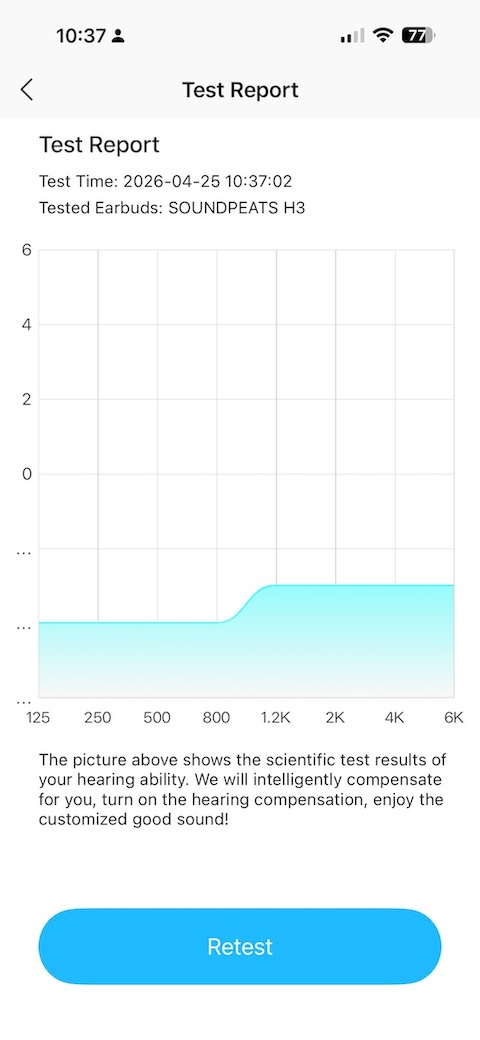 |
Individual hearing varies significantly above 2kHz, and a device that can compensate for that variation is giving the listener a more accurate representation than one that ignores it.
9-Band EQ and Presets
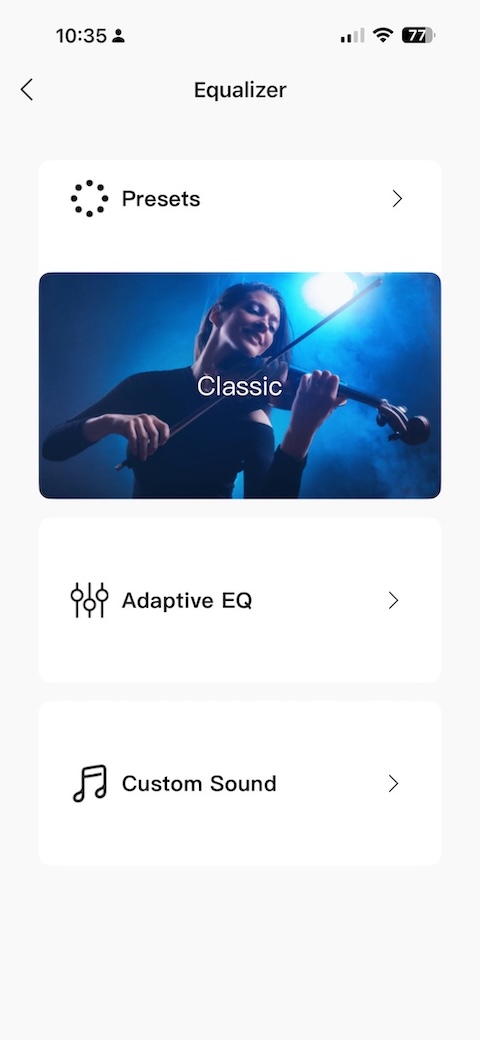
The 9-band EQ and preset library are the H3’s most musically significant features. The presets are visually presented with genre imagery and cover a broad range of tuning approaches:
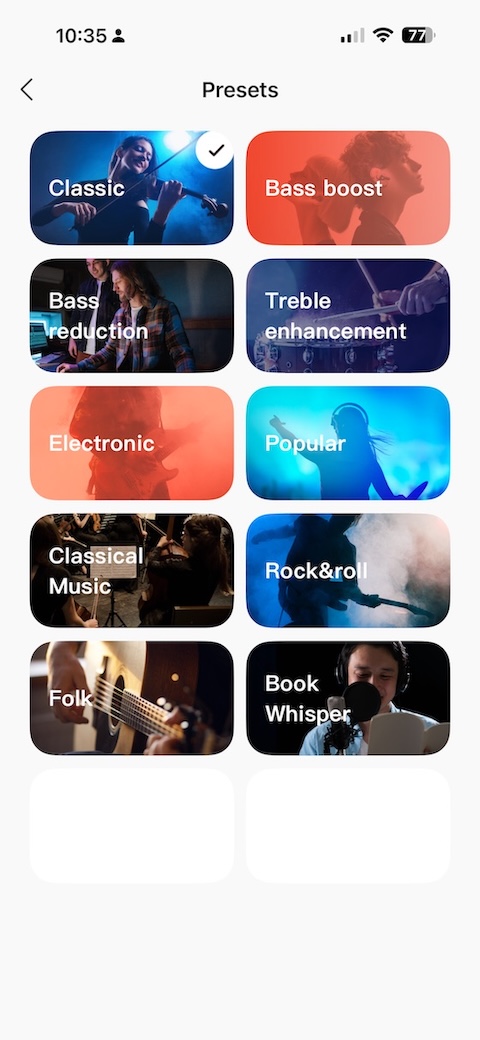
Each preset applies a specific EQ curve that is visible and adjustable within the app. The flat custom EQ starting point:
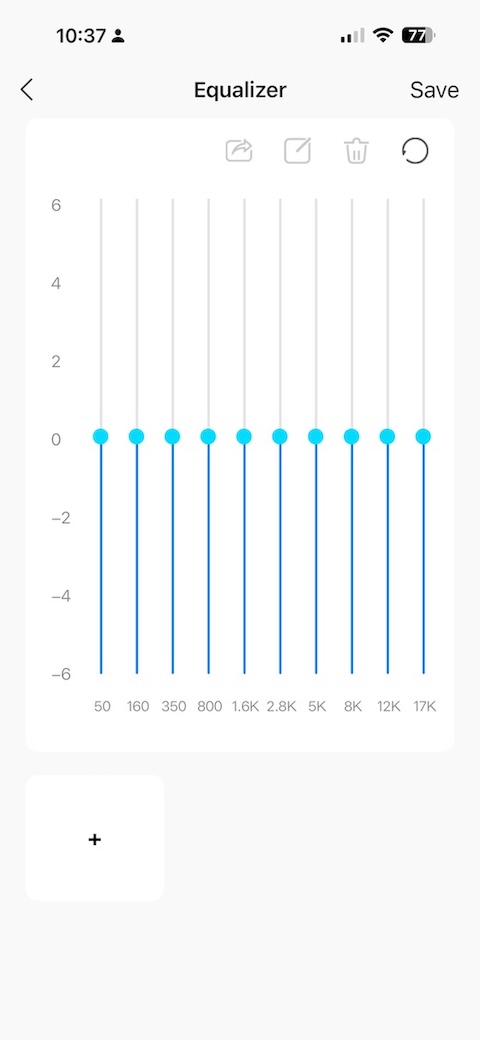 |
 |
I measured most of the preset curves — the graphs in the Measurements section cover the key ones.
Sound Impressions
All listening was done with the H3 after I switched to use the Folk preset as the baseline, with the ANC in Indoor mode. Eartips were the provided large silicone tips. Source was an iPhone via AAC. I spent the first week on the Folk preset alone before making a couple of further EQ tweaks.
Bass
On the Folk preset the sub-bass is present and satisfying — a genuine low-end weight that the 12mm dynamic driver is clearly capable of delivering when the tuning is not forcing it to bloom upward into the mid-bass. What makes the Folk preset work is that the mid-bass and lower midrange are controlled and linear rather than elevated — the bass sits below the music rather than on top of it.
On “Enjoy the Silence” by Depeche Mode the bass line is weighty and authoritative without the mid-bass warmth that makes consumer-tuned earphones feel thick rather than deep.
Midrange
The midrange in the Folk preset has a slight recession in the midrange that can make the centre of the mix feel fractionally distant compared to the totally neutral IEM’s, but this does help with some clean separation between the bass and the midrange. In practice this is subtle and, for most music, a non-issue — the vocal body and instrumental timbre are accurate enough that I listened happily on this preset for over a week before deciding I wanted to address it.
On “Fast Car” by Tracy Chapman the guitar body and vocal placement are natural and clean, and the BA midrange contribution starts to become apparent in the presence region from 2kHz upward — the resolution there is a step above what a single dynamic driver TWS provides. A small bump at 1–2kHz in the custom EQ addresses the recession cleanly.
Treble
This is where the H3 separates itself from conventional TWS earphones. The balanced armature drivers deliver treble with the speed and detail resolution that BA transducers are specifically designed for — faster attack, cleaner decay, and better imaging precision than a dynamic driver can typically achieve at these frequencies.
Cymbal detail on “Tamacun” by Rodrigo y Gabriela is rendered with articulate pick attack and natural string shimmer. There is a peak around 9–10kHz that can feel slightly forward on certain recordings, but it is what drives the H3’s sense of detail and air, and most listeners will find it welcome rather than fatiguing. With the Folk preset this peak is already moderated relative to the default.
Soundstage and Imaging
Soundstage width is appropriate for a closed in-ear design required for ANC — so not wide by open-back headphone standards, but it is accurate and coherent. Where the H3 genuinely excels is imaging precision: the BA drivers’ fast transient response gives instruments specific, stable positions in the stereo field, and the sense of layering between the bass (handled by the dynamic driver) and the midrange and treble (handled by the BAs) produces a coherent spatial hierarchy that feels more like a proper IEM than a TWS.
On “Private Investigations” by Dire Straits the spatial separation of instruments and the depth cues in Knopfler’s reverb tail are resolved with unusual clarity for a wireless product.
Comparisons
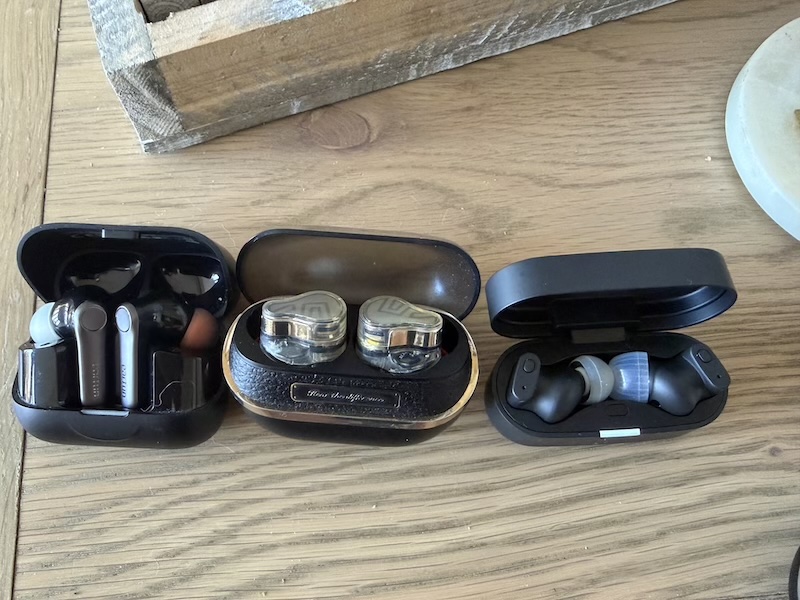
The H3 sits in an interesting position — priced as a premium TWS but competing effectively against dedicated wireless IEMs. Here it is alongside other cases from my collection, giving a sense of its size relative to the wider TWS market:
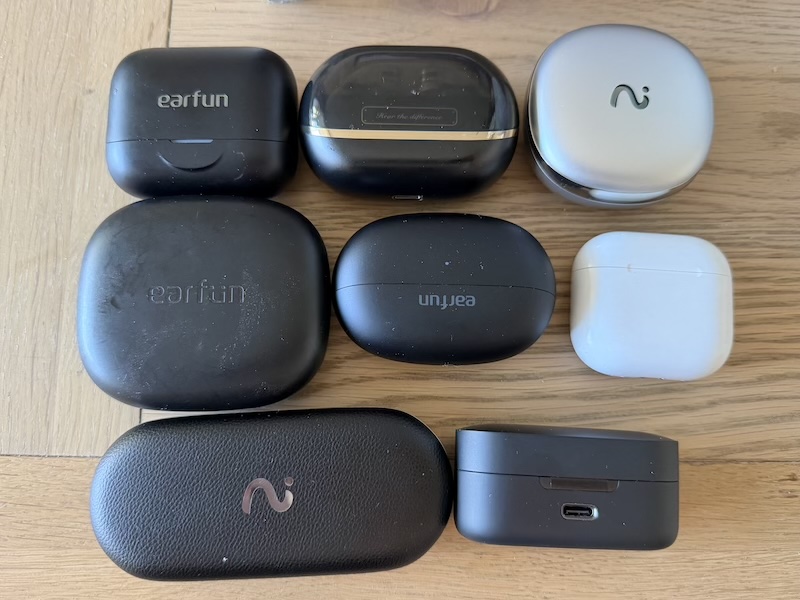
The H3’s case is among the largest in the group, which reflects the larger IEM-scale earbuds it houses.
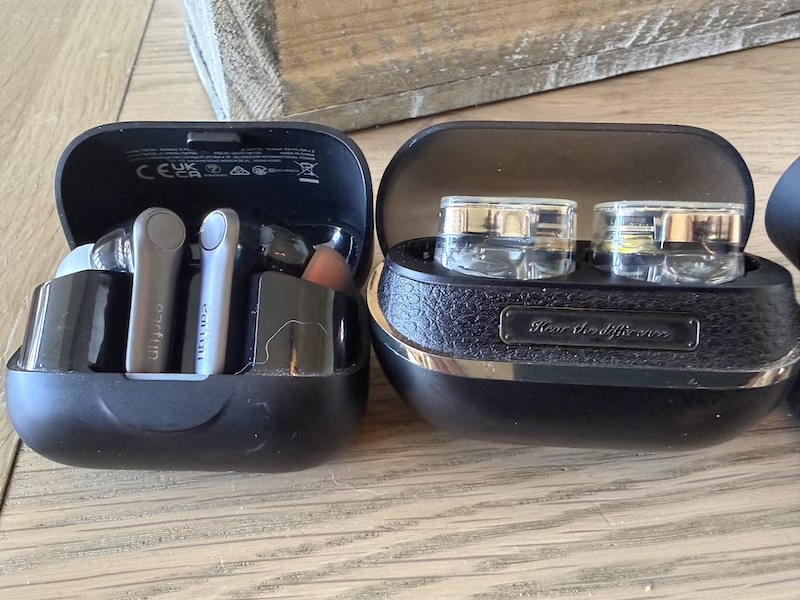
SoundPeats H3 vs EarFun Air Pro 4
 |
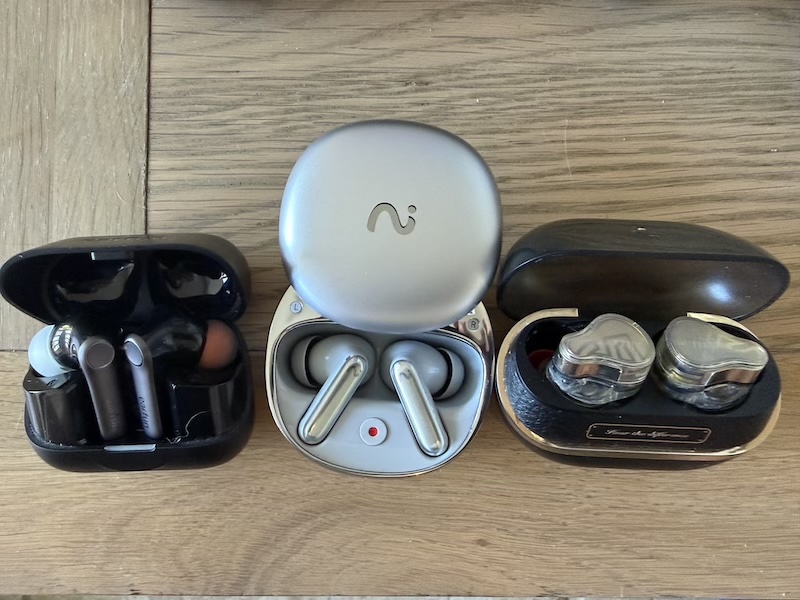 |
The EarFun Air Pro 4 is a well-made TWS with a solid app and decent EQ capabilities, but it remains fundamentally a conventional TWS product. The single dynamic driver gives it a smooth, pleasant sound, but the BA-quality treble resolution and imaging precision that make the H3 feel like an audiophile device are simply not present. The Air Pro 4 is easier to live with out of the box; the H3 rewards the effort of finding the right preset and eartips with a noticeably higher ceiling.
SoundPeats H3 vs Hifiman Svanar Wireless LE
The Svanar Wireless LE is a genuinely wide-sounding wireless IEM at a considerably higher price point. Its default tuning is spacious and tonally interesting, but the H3 on the Folk preset — and particularly with a few EQ tweaks — produces a sound that I find more balanced and more musically satisfying than the Svanar’s default. Hifiman deliberately went all out for a wider soundstage but the H3’s better tonal coherence is the better sound profile.
SoundPeats H3 vs Status Pro X
The Status Pro X is a premium lifestyle TWS with a strong design and, with EQ applied, genuinely decent sound. But it is targeting a different audience — the Status Pro X is primarily a style and brand statement that also sounds good. The H3 makes fewer compromises in the direction of lifestyle and more in the direction of audio performance, and the difference is audible when both are running their best EQ settings.
Specifications and Measurements
| Specification | Value |
|---|---|
| Driver | 1× 12mm dynamic + 2× balanced armature (per side) |
| Chipset | Qualcomm QCC3091 (Snapdragon Sound) |
| Bluetooth | 5.4 |
| Codecs | SBC, AAC, aptX, aptX Adaptive, aptX Lossless, LDAC |
| ANC | AI hybrid ANC, up to 55dB, 4 modes |
| Microphones | 6 (AI noise reduction, cVc 8.0) |
| Battery (earbuds) | 35mAh × 2 |
| Battery (case) | 400mAh |
| Total playtime | 7 hours / 37 hours with case |
| Fast charge | 10 minutes = 2 hours |
| Earbud weight | 6g per earbud |
| Total weight (with case) | 53g |
| Touch control | Yes (configurable via app) |
| Dual-device | Yes |
| Game mode latency | 60ms |
| Water resistance | IPX5 |
| EQ | 9-band via Soundpeats app |
| Hearing test | Yes (personalised compensation) |
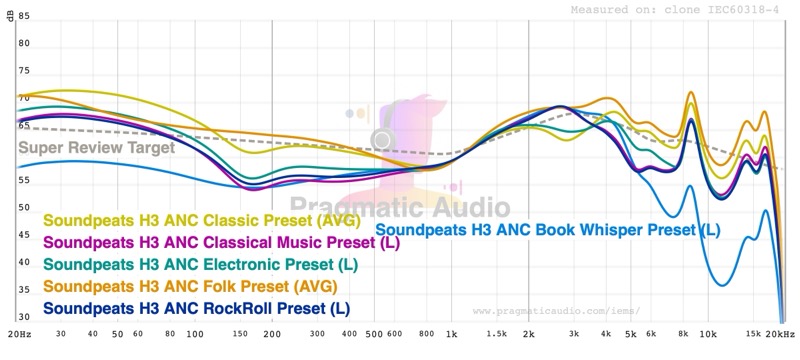
The raw measurement set across all preset modes shows the range of tuning options the H3 offers — the default “Classic” and most presets are significantly elevated in the bass relative to any reference target, while Folk begins to approach something usable for critical listening:
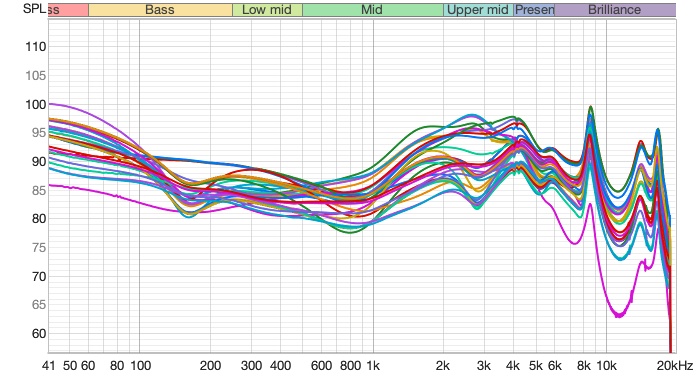
So you will probably immediately see most presets have that dip at 180hz, what I ultimately found was this aligns directly with one of the custom EQ presets - basically this was a deliberate DSP choice made for those presets but simple adjusting that in the custom EQ can give you a much flatter more coherent bass response.
Though I do think Soundpeats did a pretty good job with some of the other presets. E.g. Looking specifically at Folk versus Book Whisper against the Harman Adjusted and JM-1 targets, Folk (orange) is the more linear option for most listening, with better mid-bass control and a more coherent presence region, but that Book whisper preset will make all the vocal jump which I guess is its purpose but you will see the Book Whisper Preset has a smoother midrange:
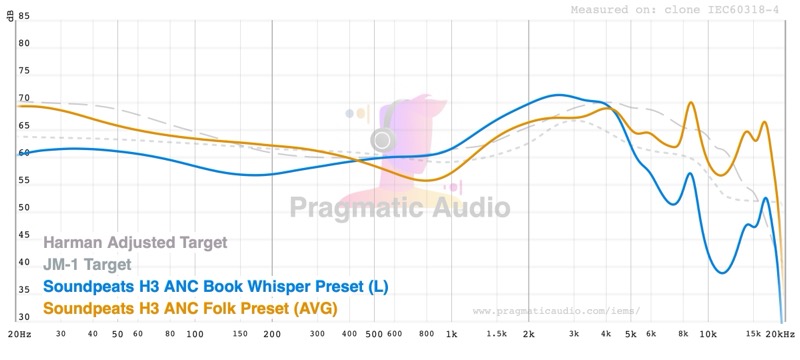
So ultimately, I used a mixture of the custom EQ for both the Folk Preset (for the Bass) and the Book Whisper preset’s midrange, and I got what I think is a very satisfying custom EQ that you will see a little later.
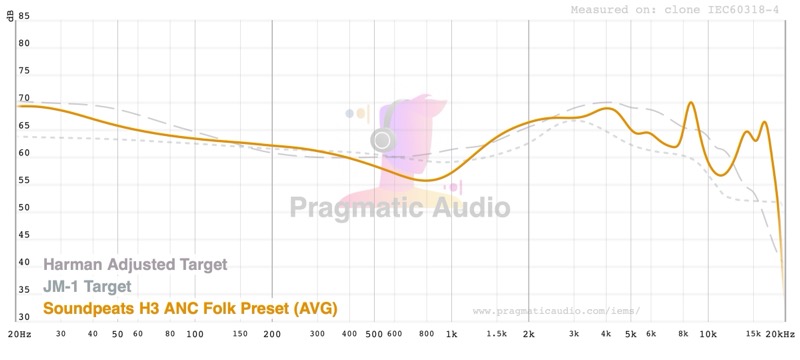
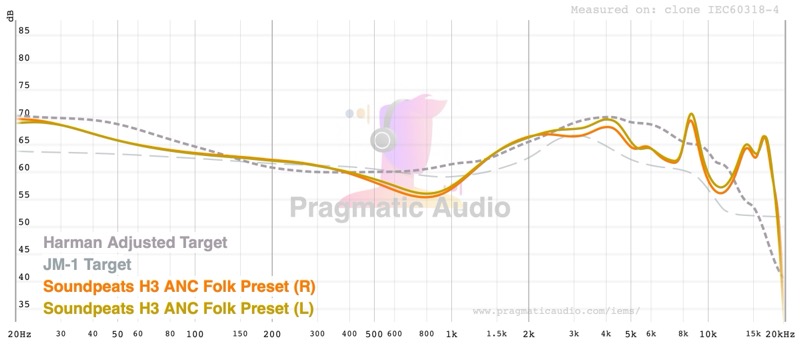
As I mentioned earlier, I feel out of the box, the Folk Preset is the best starting point among the built-in presets — respectable bass control, midrange complies to the target reasonably well (though it does have that dip at around 1khz), and treble, especially in the upper treble might be too much for some people:
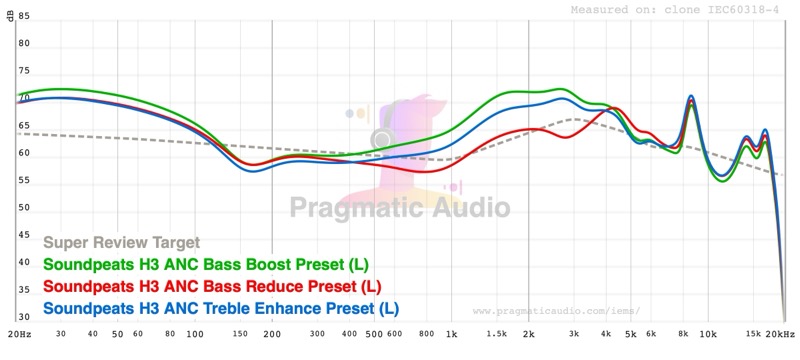
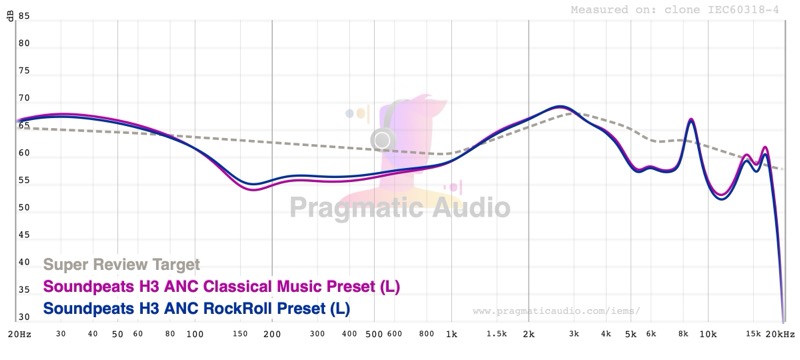
Here are some more of presets measured against the Super Review Target. The majority of presets add substantial bass elevation that moves the response further from neutrality:
The super-review target comparisons show the Bass Reduction and Treble Enhancement adjustments, and the Classical and Rock & Roll presets:
 |
 |
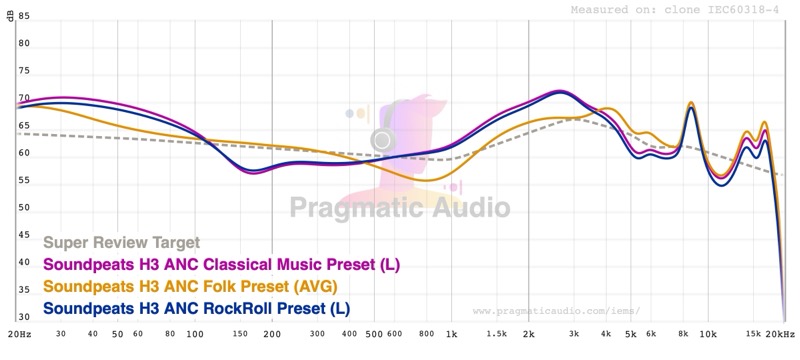
The Classical, Folk, and Rock presets compared:
The polar/channel-matching measurement confirms good consistency between left and right channels on the Folk preset:
The ANC vs no-ANC comparison shows the impact of the noise cancellation circuit on the frequency response — a useful reference for understanding how much the ANC mode affects the sound, but thankfully only it mostly remains the same:
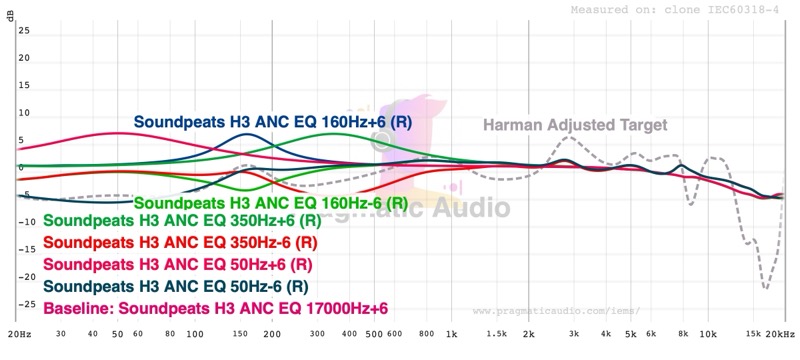
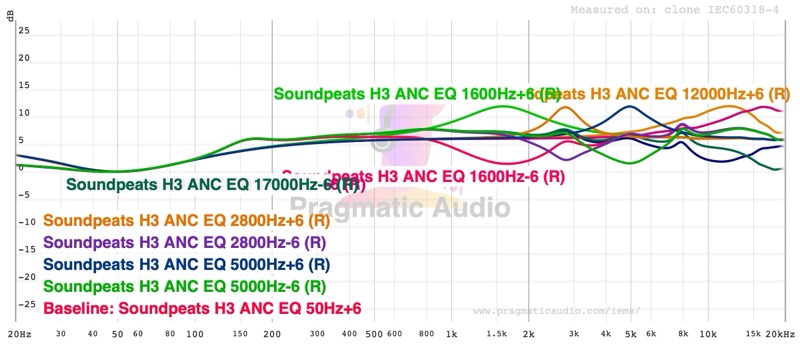
These EQ measurements show the different levels of adjustments each of the 9 band custom bands provide:
 |
 |
So after playing around a little with the custom EQ based on the above, I came up with this custom EQ profile:
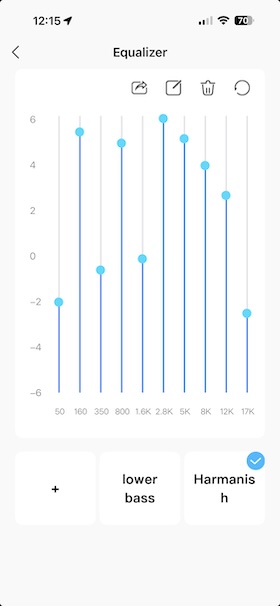
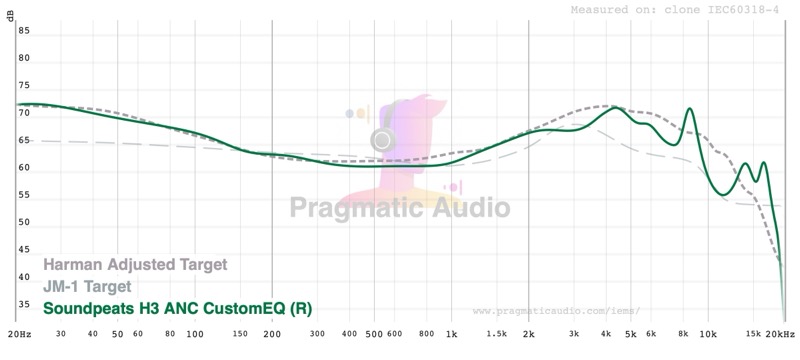
And with this custom EQ applied, the FR tracks the Harman Adjusted Target closely across the full frequency band. This is what the H3 measurements look like when it is working and sounding its best, in my opinion:
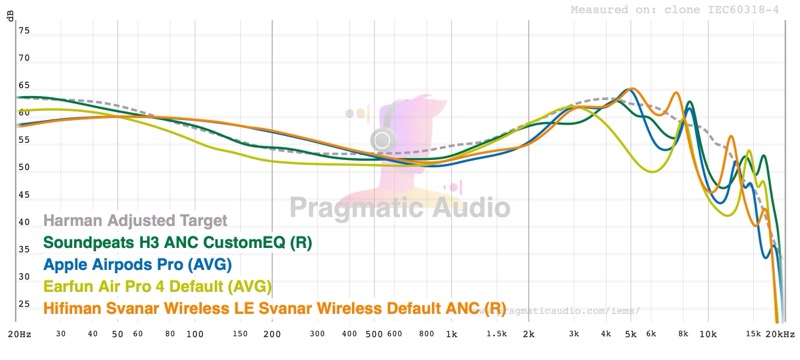
So, using this custom EQ, alongside Apple AirPods Pro, EarFun Air Pro 4 default, and Hifiman Svanar Wireless LE default ANC. The H3 on this custom EQ is the closest to the ‘Reference’ Target of any of the four:
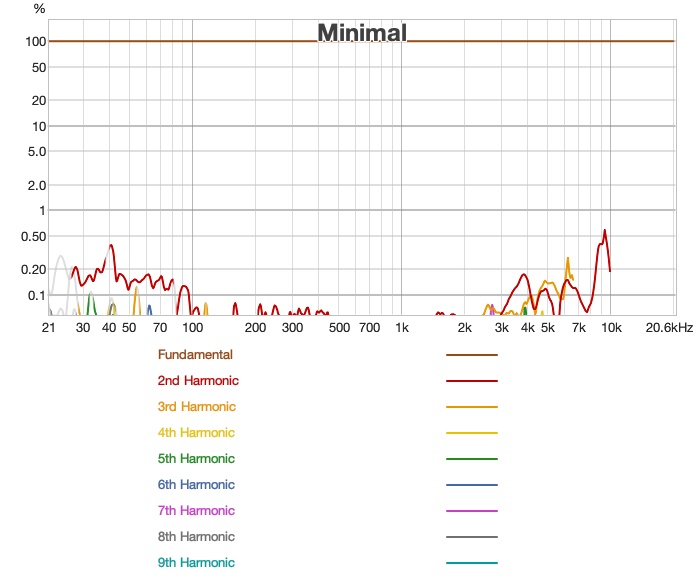
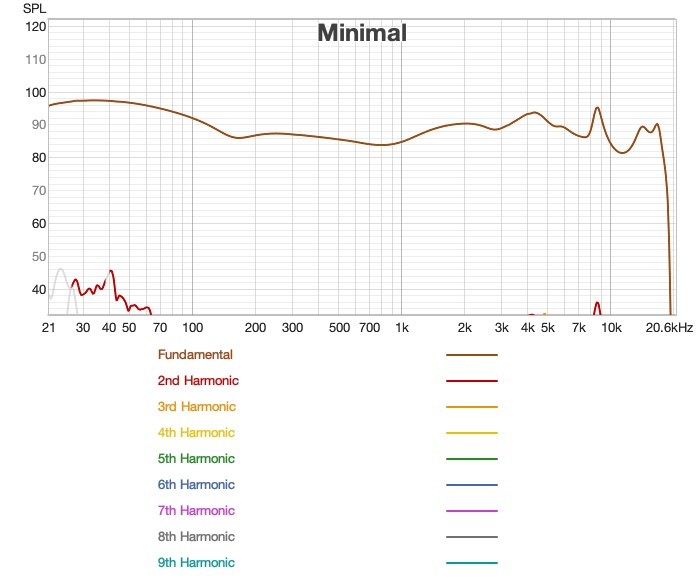
Distortion measurements are incredibly clean — appropriate for a hybrid driver design at this price any level of the custom EQ adjustments will not affect the distortion:
 |
 |
Rating Explanation
The H3 earns a five star pragmatic rating — but with an important qualifier: that rating applies specifically to either the Folk preset or my custom EQ profile above. With the default tuning, the H3 is not a five-star audio product IMO. The bass elevation is significant enough to obscure the detail and resolution that the hybrid driver stack is capable of delivering. The Folk preset showed me the H3’s genuine character, and a few additional EQ tweaks produce results I have not heard from any other wireless earphone at this price. For listeners willing to spend a few minutes in the Soundpeats app, the H3 is probably the most capable TWS under $150. For listeners who want to use it out of the box and never open the app, the experience is still good but more conventional.
The price rating of four reflects the $129.99 retail price being a real step up for a TWS product, even with the current 25% Amazon discount. But the internal hybrid driver configuration does justify this premium, but it is a considered purchase rather than an impulse buy.
I gave it a features rating of five: With LDAC and aptX Lossless, 9-band EQ with genre presets, adaptive ANC with four modes, six microphones, hearing ability test with personalised compensation, dual-device connection, 60ms game mode, and IPX5 water resistance. The measurement score of four acknowledges that most presets measure poorly against reference targets. The Folk preset was the exception for me, and with the custom EQ result it is excellent — but the average listener will spend time in the default before finding that.
Conclusion
The SoundPeats H3 is the first TWS I have reviewed that genuinely prioritises audiophile-style hardware over mass-market voicing . Its hybrid driver configuration, strong app support, and extensive EQ capability allow it to perform more like a compact wireless IEM than a conventional consumer TWS.
The SoundPeats H3 is the first TWS I have reviewed where ultimately I have genuinely stopped thinking of it as a TWS. The combination of a hybrid 1DD+2BA driver, a good app with proper EQ tools, and a snug IEM-style fit with adequate eartip selection produces a listening experience that belongs in a different category from the typical wireless earphone.
The H3 can sound like an audiophile IEM that happens to be wireless. Especially after some EQ refinements it sounds like nothing else in the wireless category at anywhere near this price.
If you are the kind of listener who wants to EQ your audio properly, the SoundPeats H3 will reward that effort with a sound quality that genuinely makes you forget it is wireless device.