FiiO EA13
FiiO’s first full-size pure Class A push-pull tube amplifier, with EL34s and 4Ω / 8Ω taps
I first heard the EA13 at High End in Vienna, paired with FiiO’s new SV13. What struck me was not just the combination, which I loved, but the ambition behind it — FiiO were about the only company in the headphone section who had built a proper high-end listening room with proper high-end gear in it, rather than a table with headphones or IEMs on it.
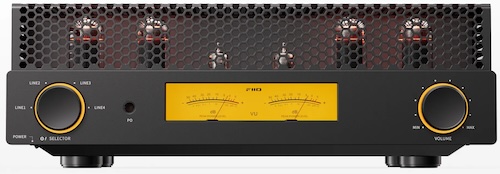
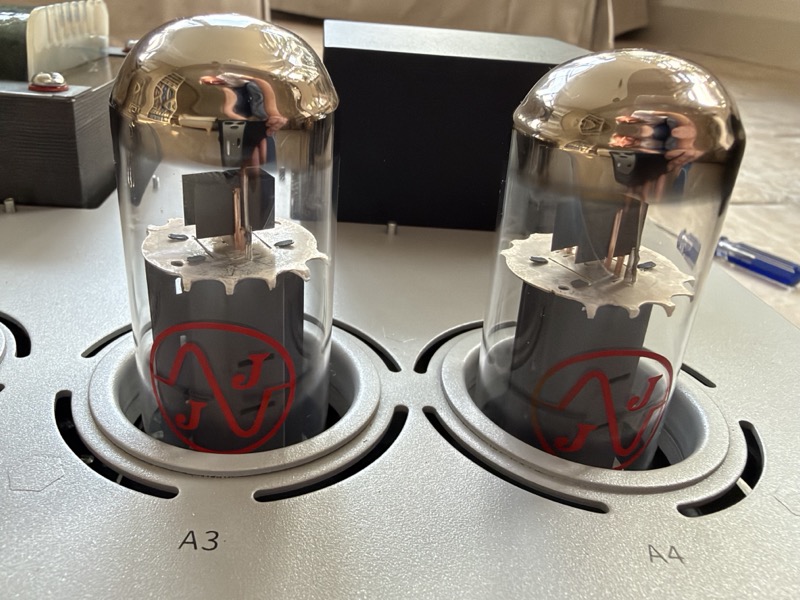
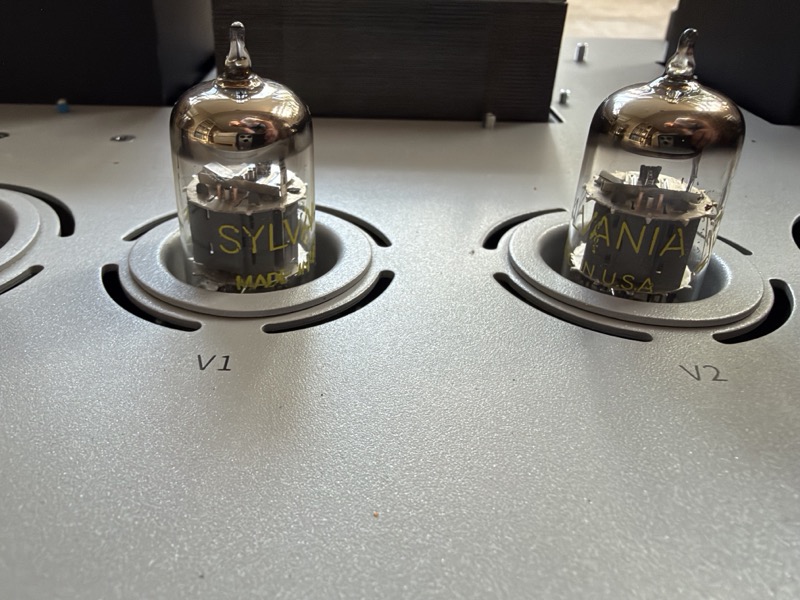
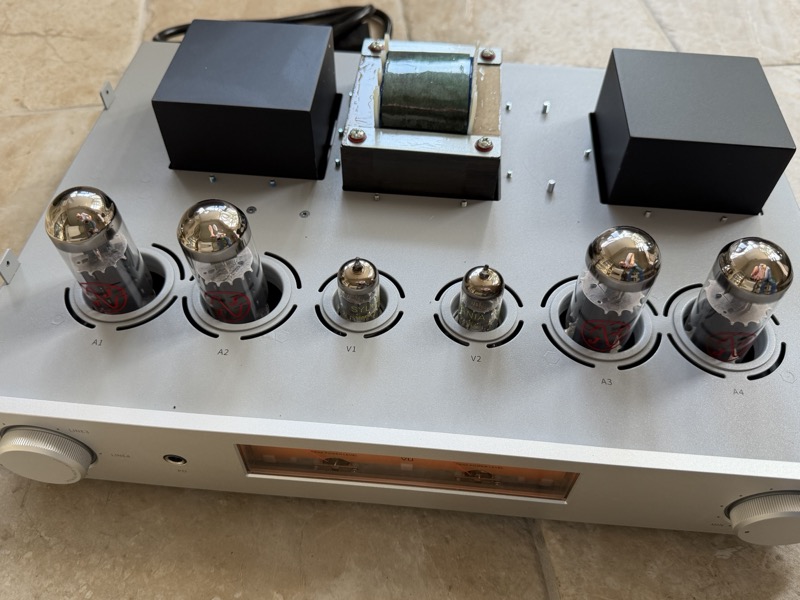
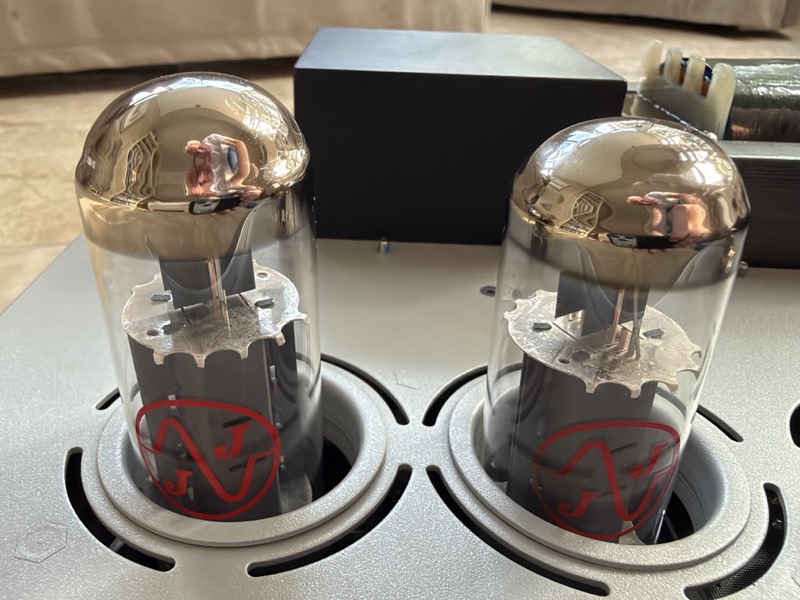
This is their first full-size stereo tube amplifier, and it is not a hybrid. It runs a pure Class A push-pull circuit in pentode mode with four JJ Electronic EL34 power tubes and a pair of vintage Sylvania NOS PCF80s on the input and voltage stages, into custom EI silicon-steel output transformers.
I would like to thank FiiO for providing the EA13 for the purposes of this review.
You can find more information at the official FiiO product page.
The EA13 retails for $659.99 and is available in black and silver. The unit reviewed here is the silver variant.
I have had it for two weeks, listening four or five hours a day, mostly with KEF LS50 Metas. The short version is that I loved the sound and kept reaching for older recordings because of it — but there are enough quirks here that this is a four-star amplifier rather than the five its sound alone would earn. But first, let’s look at what’s in the box.
Unboxing
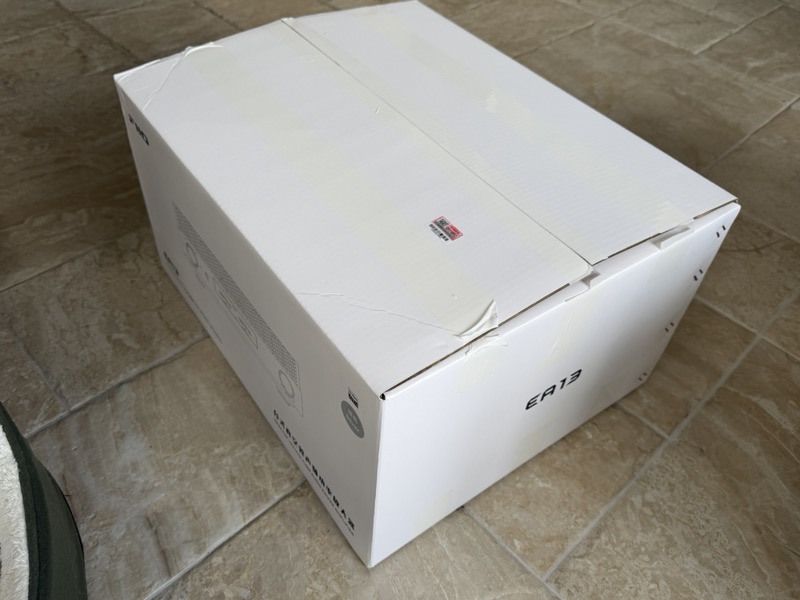
The box is plain white with the model name on the side, and the first thing you notice is the weight — this is a substantial amplifier and you will want two hands and a clear surface before you start:
 |
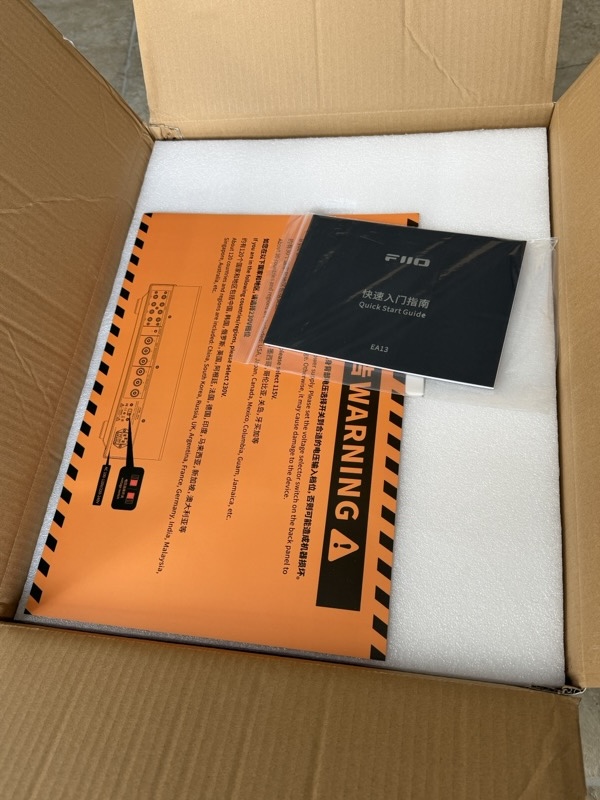 |
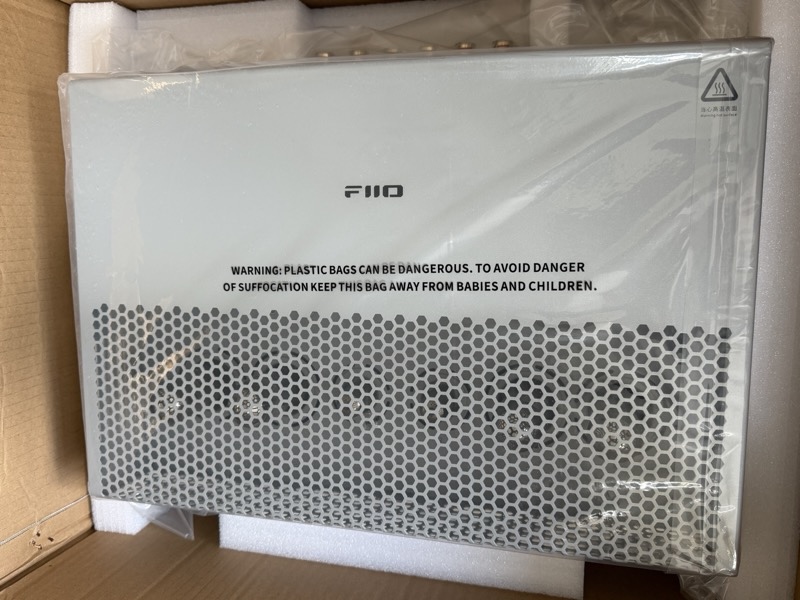
Inside, the amplifier is wrapped and well protected, which it needs to be given the mass involved and the tubes fitted underneath the cover:
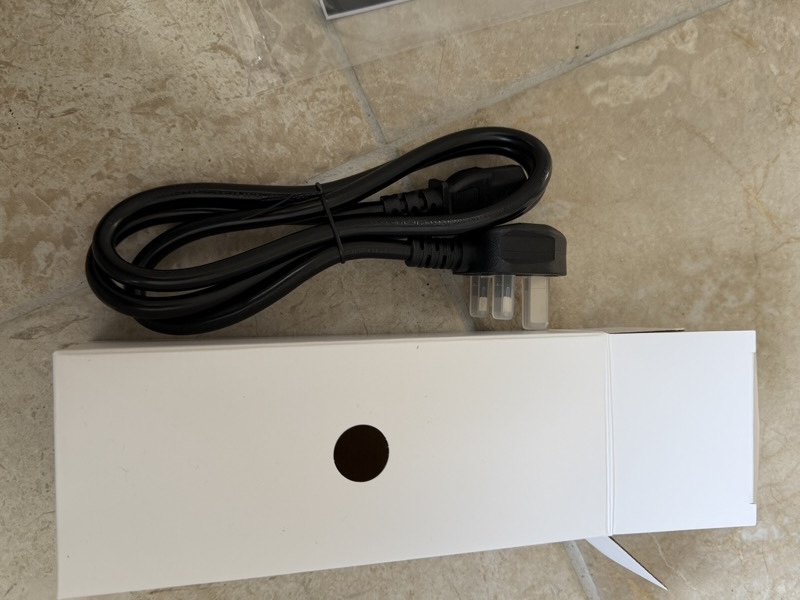
The accessories are minimal — a mains lead, documentation, and a small screwdriver for the cover screws, all in their own box:
 |
 |
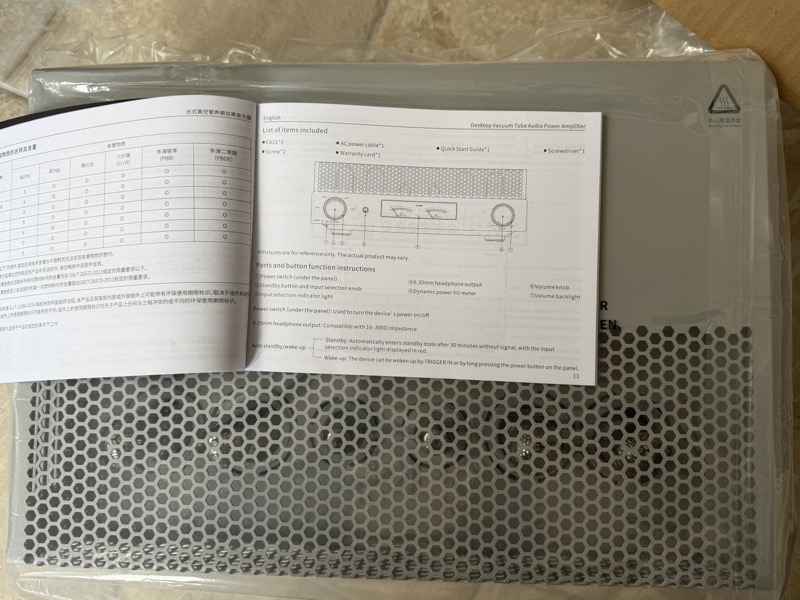
The manual includes a page walking through what each control does, which is worth reading before you start turning things:
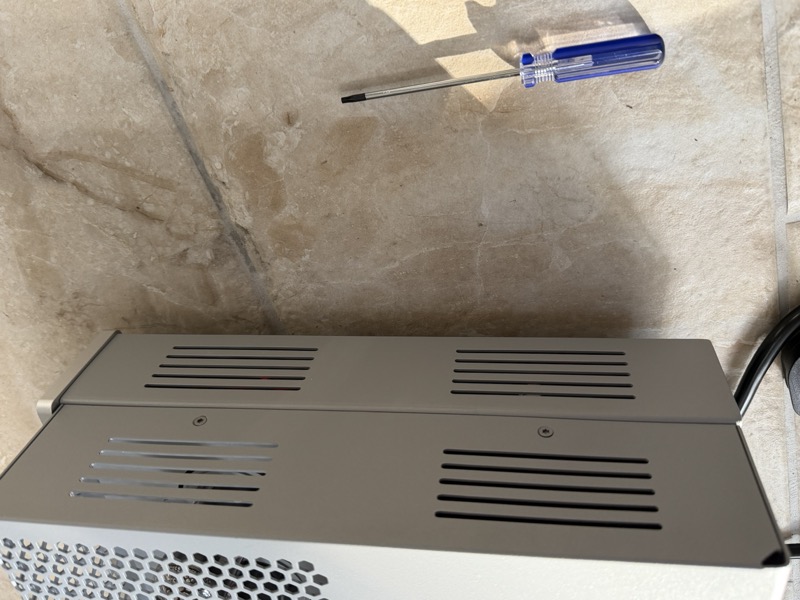
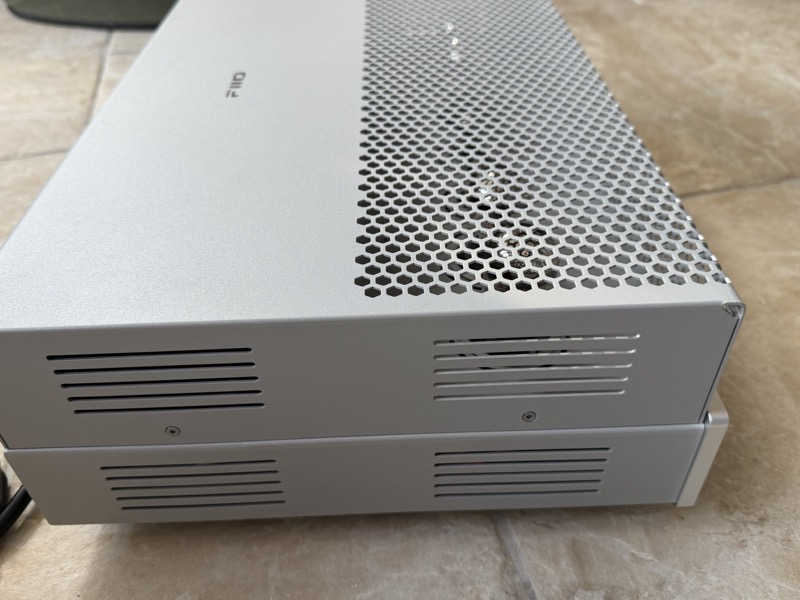
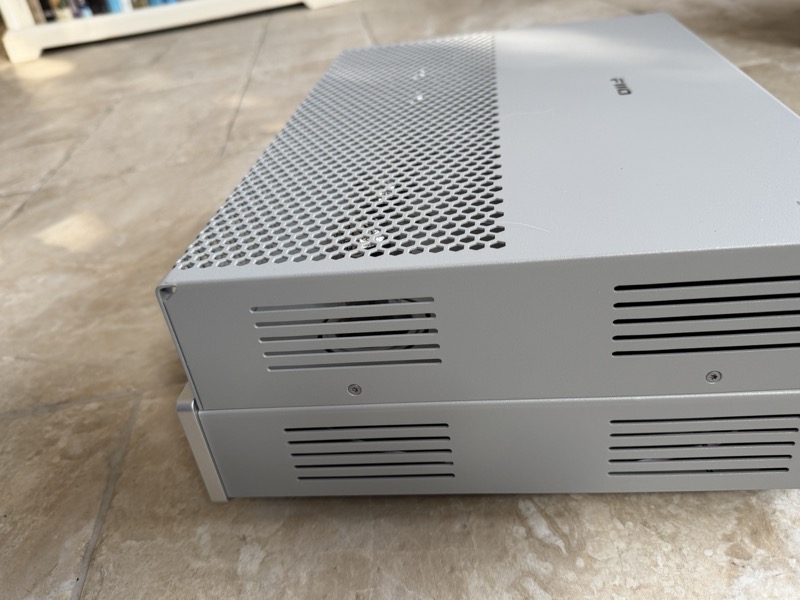
That screwdriver is for the four screws holding the tube cover on — you can see two of them on the side panel here, with the screwdriver on the floor for scale:
Design and Build Quality
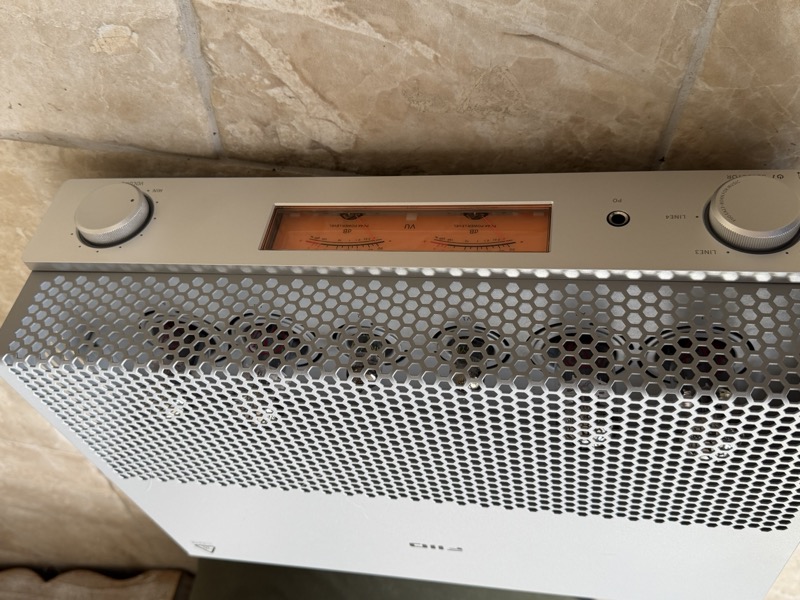
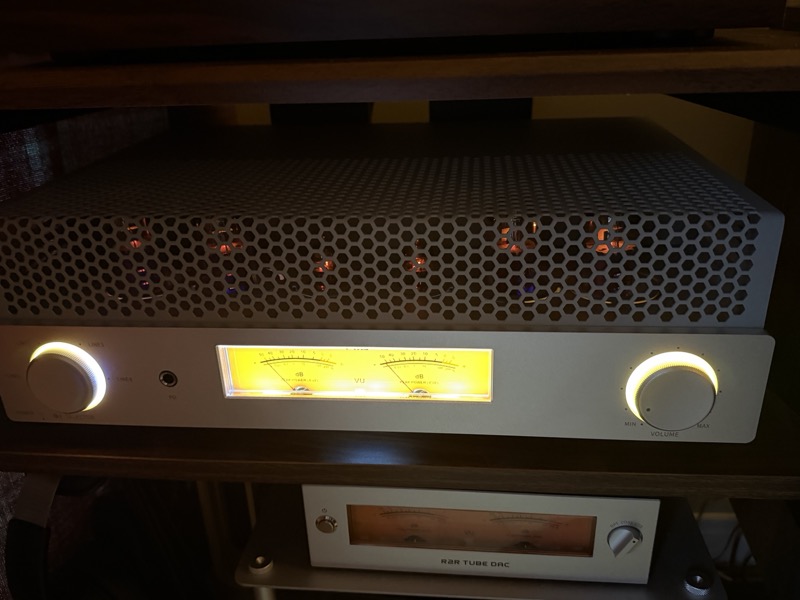
The chassis is thick CNC-machined aluminium and it feels like it. The front panel has a stepped input selector on the left, the 6.35mm headphone jack, the twin VU meters in the centre and the volume control on the right:
 |
 |
 |
 |
That volume control is a 40-step stepped attenuator built from matched precision resistors instead of a potentiometer. The practical benefit is real, not marketing: no scratchiness as it wears, and no channel imbalance at low volume, which is the failing of cheap pots and the thing you notice most when listening quietly at night.
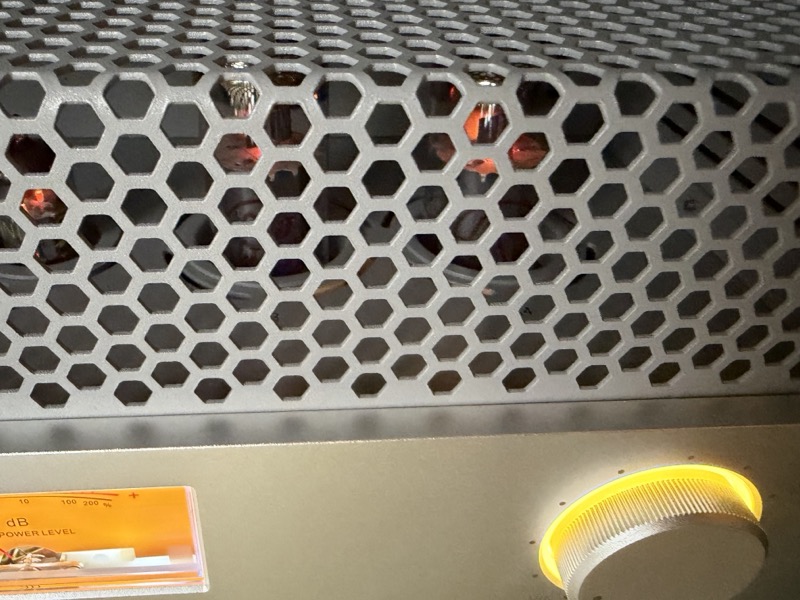
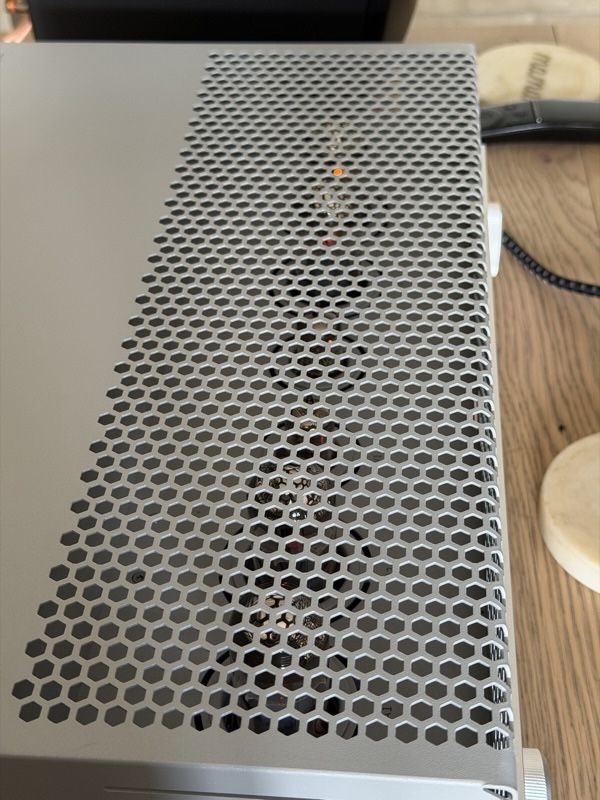
The tubes sit recessed under a removable perforated cover, with the four EL34s and the two PCF80s visible through the mesh:
 |
 |
With the cover off, the tube complement and the potted transformers are on display:
 |
 |
 |
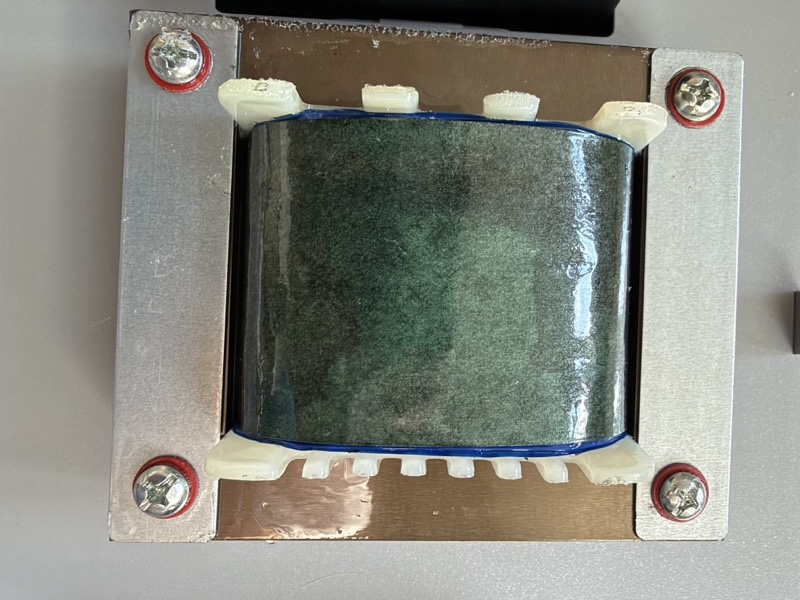 |
Those output transformers are worth a word. FiiO wound them with EI-core laminated silicon steel and then potted them with fine sand and epoxy in sealed enclosures. That is not decoration — potting damps mechanical vibration in the core and keeps moisture out, and mechanical resonance in an output transformer is a real source of noise in tube designs.
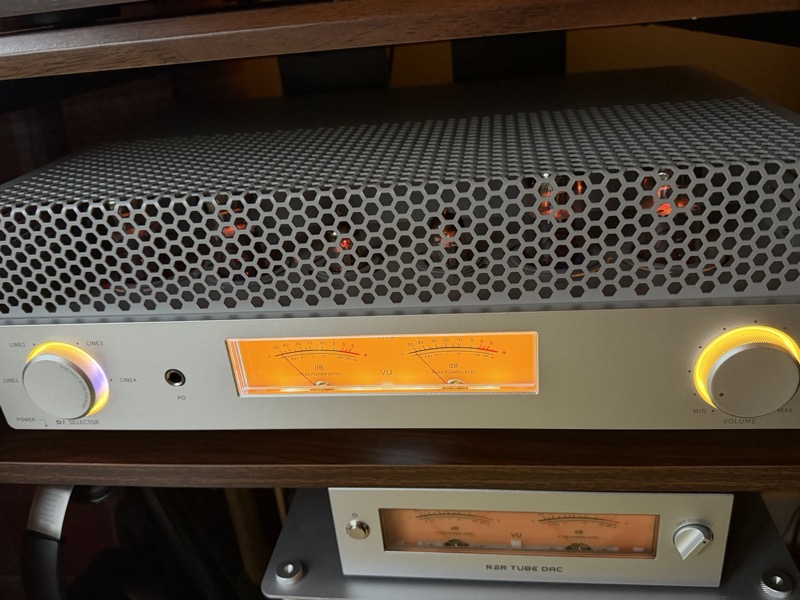
Here is my one aesthetic complaint. The VU meters look superb and the amplifier is a genuinely handsome object, but the tubes are hidden behind that mesh. For an amplifier leaning this hard into retro appeal, I would have liked them more exposed — the glow is the whole point of owning something like this, and here you have to look for it.
 |
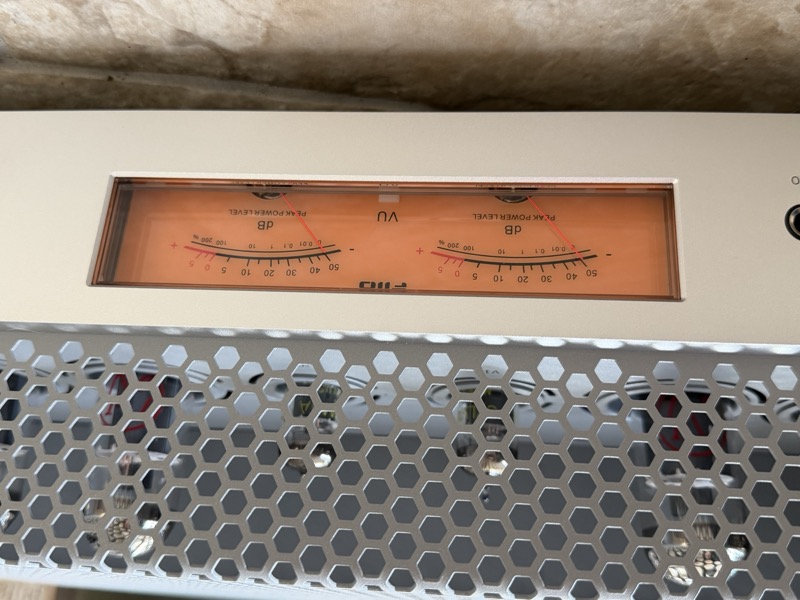 |
The meters themselves are mechanical with warm LED backlighting, and they track the music properly:
Connectivity
The rear panel is generous with RCA inputs:
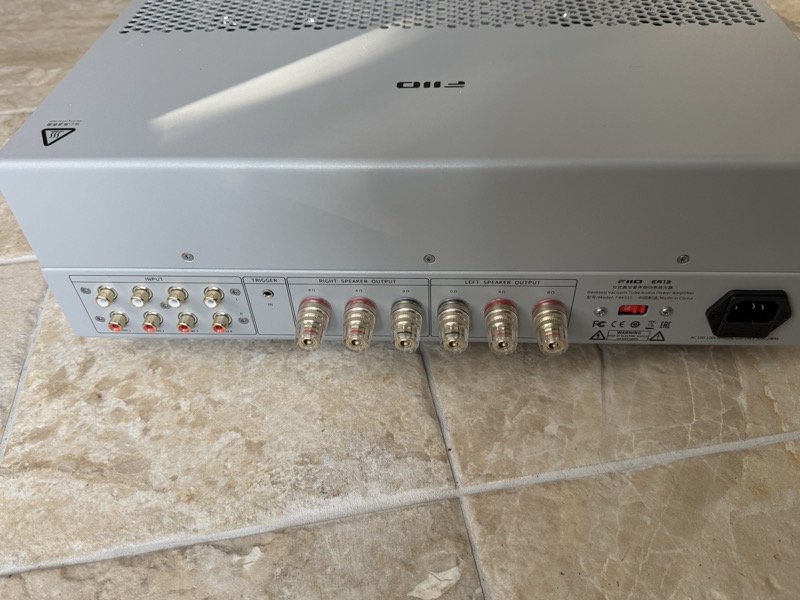
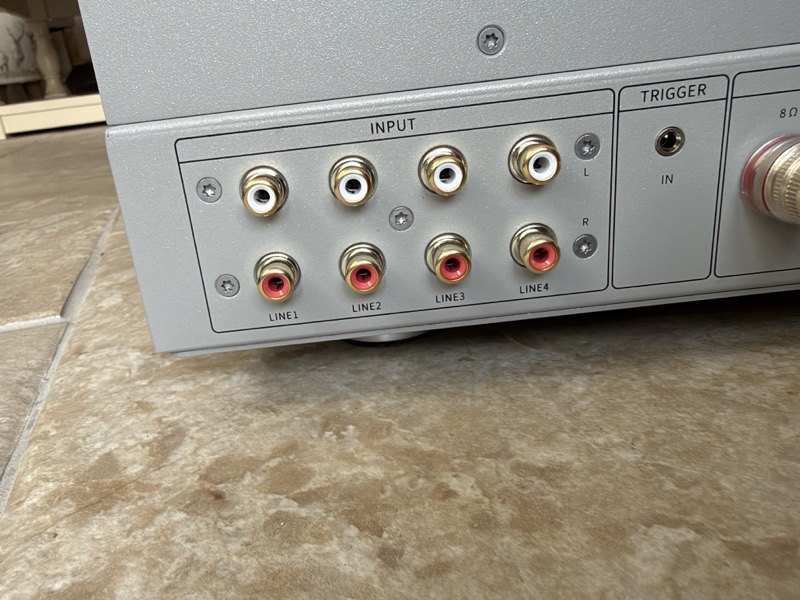
There are four pairs of RCA inputs, which is more than most amplifiers at any price offer and genuinely useful if you have a turntable, a CD player and a DAC all wanting a home:
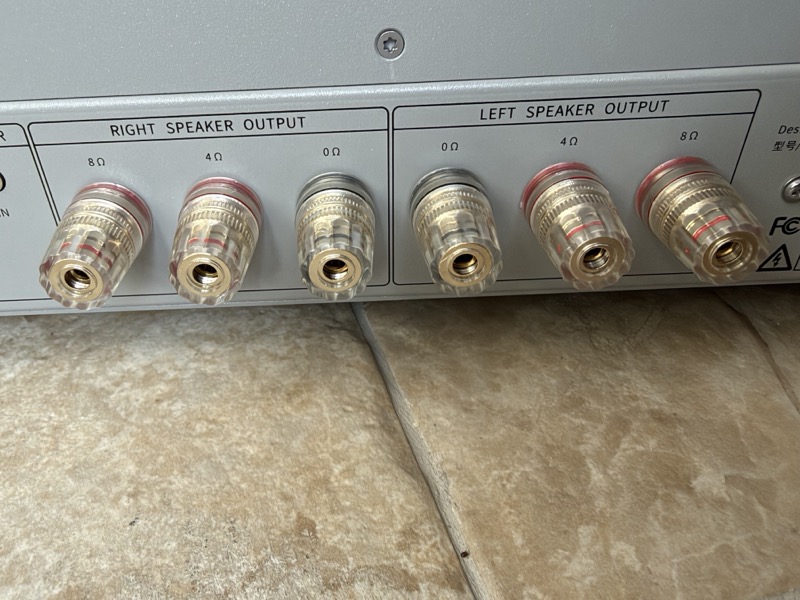
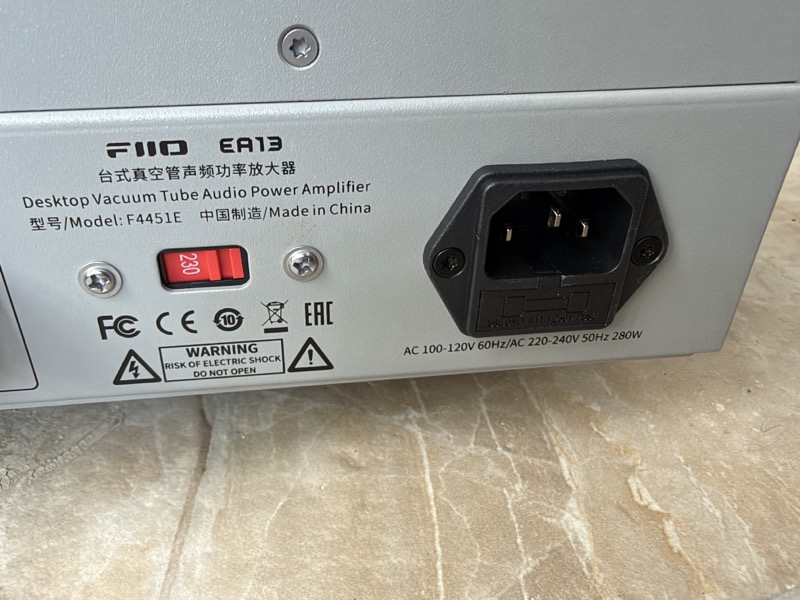
The speaker terminals are the interesting part. Each channel gets a common post plus separate 4Ω and 8Ω taps, so you match the transformer to your speakers instead of hoping for the best:
 |
 |
There is also a 12V trigger input for powering up with the rest of a stack, and a 30-minute automatic standby to save tube life.
The Headphone Output — My One Major Gripe
The front-panel 6.35mm jack is the weakest part of the EA13 and the thing most likely to disappoint someone buying it expecting a two-in-one.
First, the topology. This is a transformer-coupled amplifier, and the headphone jack is tapped directly from the same output transformers that feed the speaker terminals.
The practical consequence is FiiO’s own instruction:
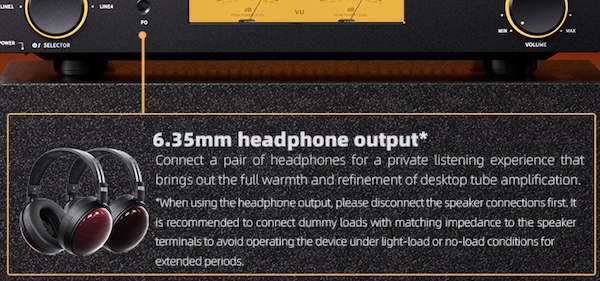
So, I effectively did exactly that before trying these high-impedance headphones:
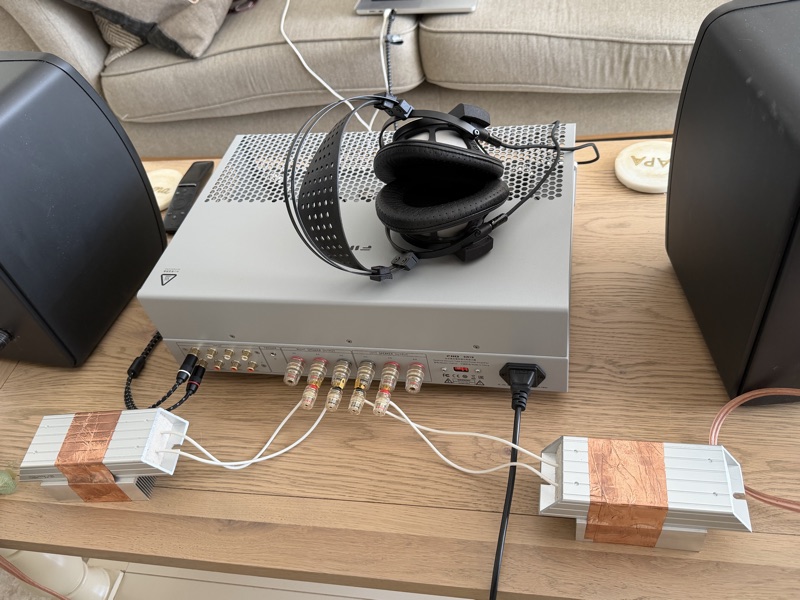
I also tried it without the dummy loads, and found the speaker output stays live at the same time as the headphone output — which is far from ideal and is the main reason I would not plan on using this as a headphone amplifier. Having to wire resistive dummy loads onto the back of a $660 amplifier in order to safely use its headphone jack is overkill for what should be a convenience feature.
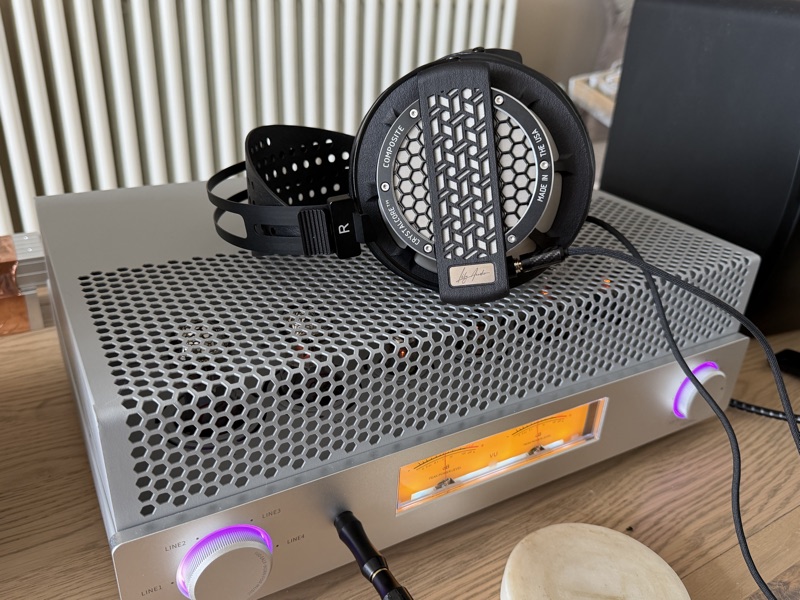
With the dummy loads fitted it does work, and it drove the notoriously difficult Lily Audio Genesis One without complaint:
But look at what happens to the frequency response:
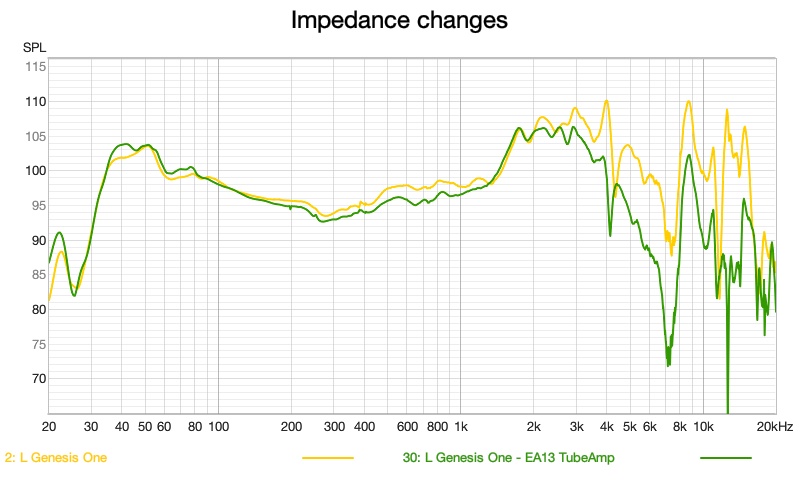
As you can see in the diagram, using the EA13’s headphone output with a very high impedance headphone like the Lily Audio Genesis One lowers the treble significantly. The original tuning of the Genesis One was probably designed with tube amplifiers in mind, as it had too much treble on “normal” headphone amplifiers — but Genesis One subsequently added dampening, so if you use it with the EA13 you will probably want to take that dampening back out. It is nice to have this option to adjust the frequency response of certain headphones without reaching for PEQ.
Sound Impressions
Everything below was with KEF LS50 Metas, an unforgiving speaker for a 28W amplifier on paper.
The headline is that the EA13 drives them with far more ease than the specification sheet suggests it should. There was never a moment where it sounded like it was running out, at volumes well past what I would normally use.
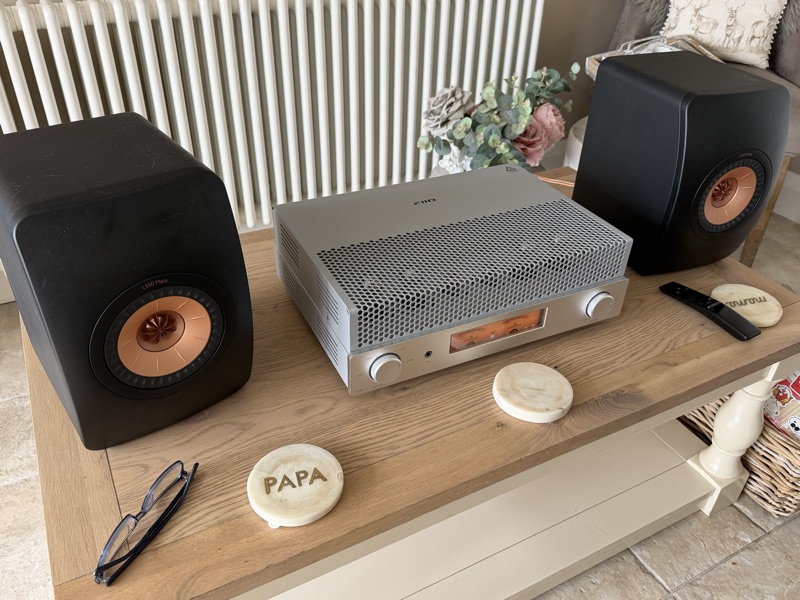
What it adds is texture. There is a harmonic sheen over the music that is unmistakably the tubes, and it is not the subtle seasoning you get from a tube buffer stage bolted onto a solid-state amplifier — it is a character running through the whole presentation. Whether that is accurate is a separate question from whether it is enjoyable, and I was firmly on the enjoyable side of it for two weeks.
Where it really lands is on older recordings. I found myself putting on retro material repeatedly, and it sounded consistently better through the EA13 than through the class D amplifiers I had to hand. It is better again with vinyl. I have a pet theory that older records were made when tube amplification was simply what music got played back on, and that they were voiced — deliberately or not — for that. The EA13 has reinforced that opinion rather than founded it, and I offer it as a theory rather than a fact.
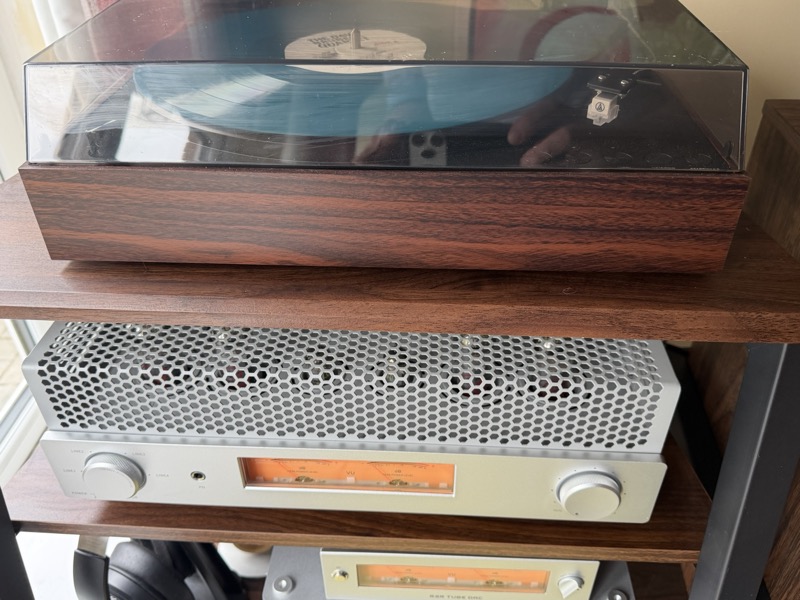
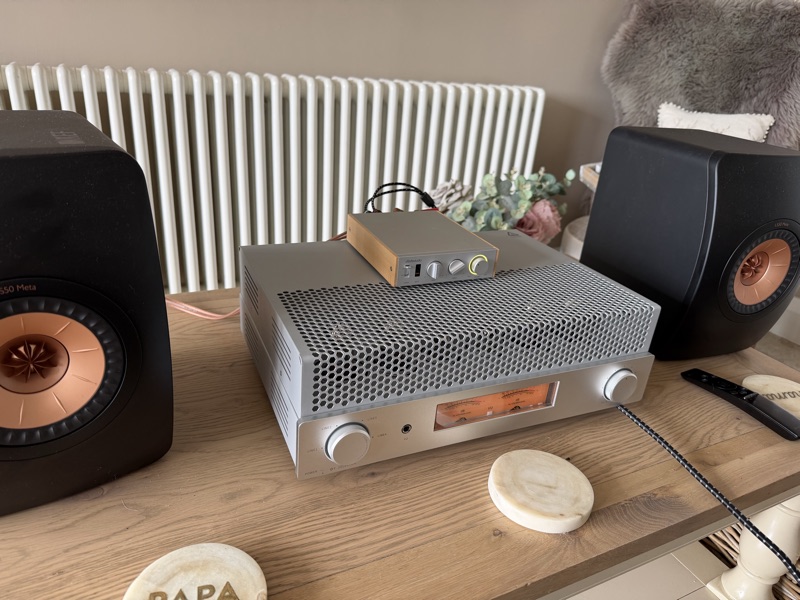
This is where it ended up living, with my turntables — the FiiO TT11 on the shelf above it — and it looks the part in a retro setup:
Modern, cleanly-mastered material is a different case. The EA13 still sounds good with it, but the gap between it and a competent class D amplifier narrows, and what the tubes are adding reads more as a colour than an improvement.
Measurements
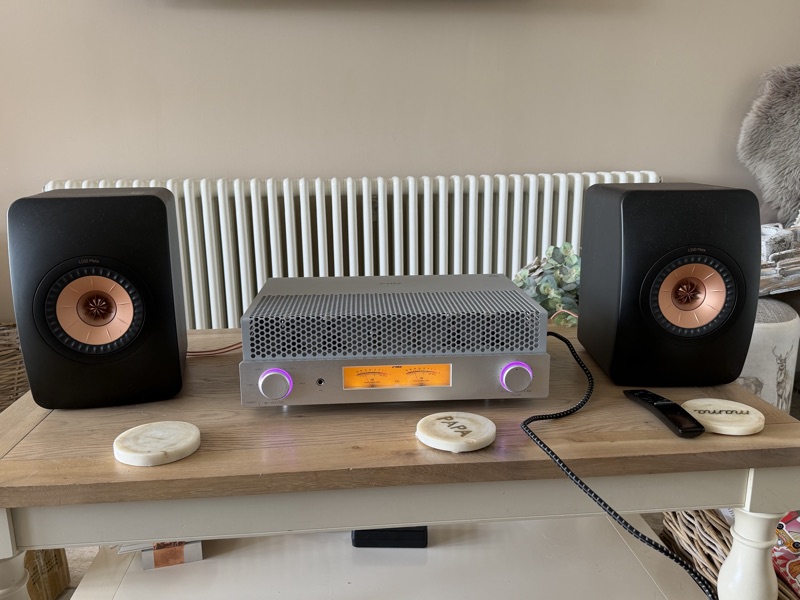
These are simple in-room measurements taken with my KEF LS50 Meta setup, using REW at 1/6 octave smoothing. The amplifier and the speakers were put somewhere convenient to measure rather than in their final positions, so treat these as a comparison between amplifiers in a fixed setup rather than as a room response you should read too closely:
The key to reading what follows is the LS50 Meta’s own impedance curve:
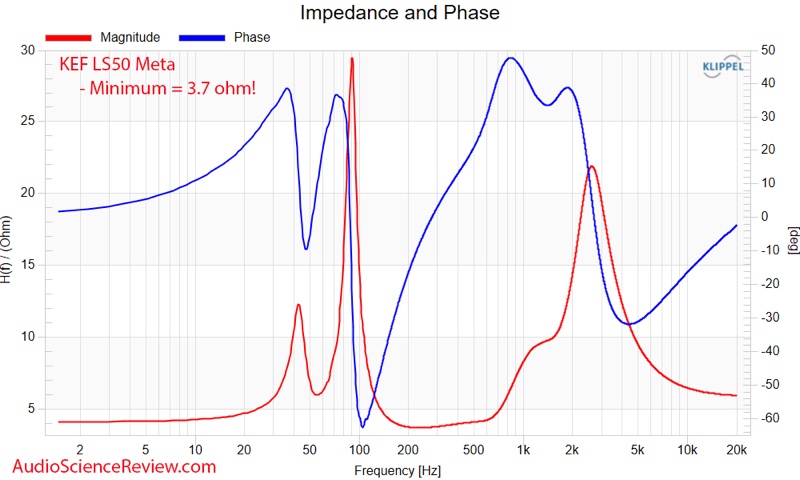
4Ω versus 8Ω Taps
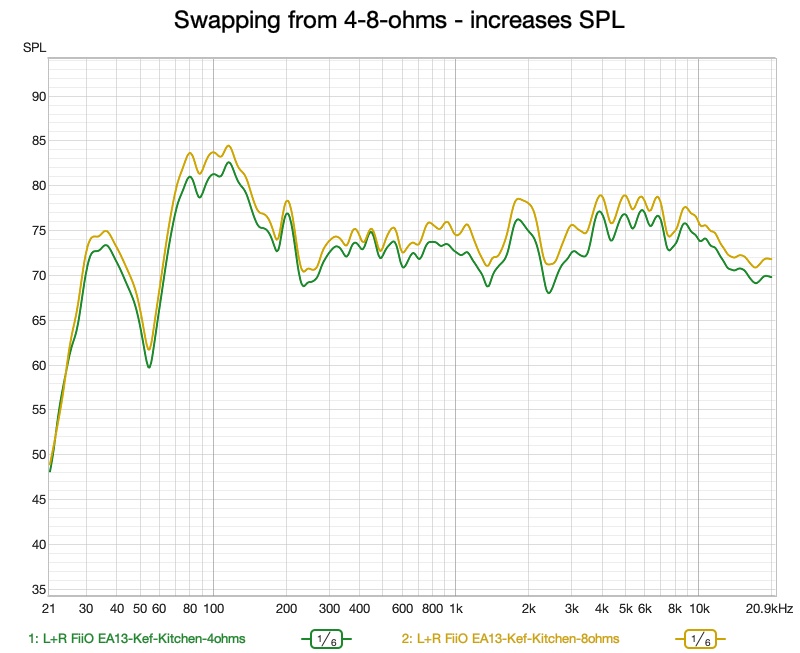
Because a tube amplifier’s output impedance is relatively high, the tap you choose interacts with that impedance curve. I measured both:
 |
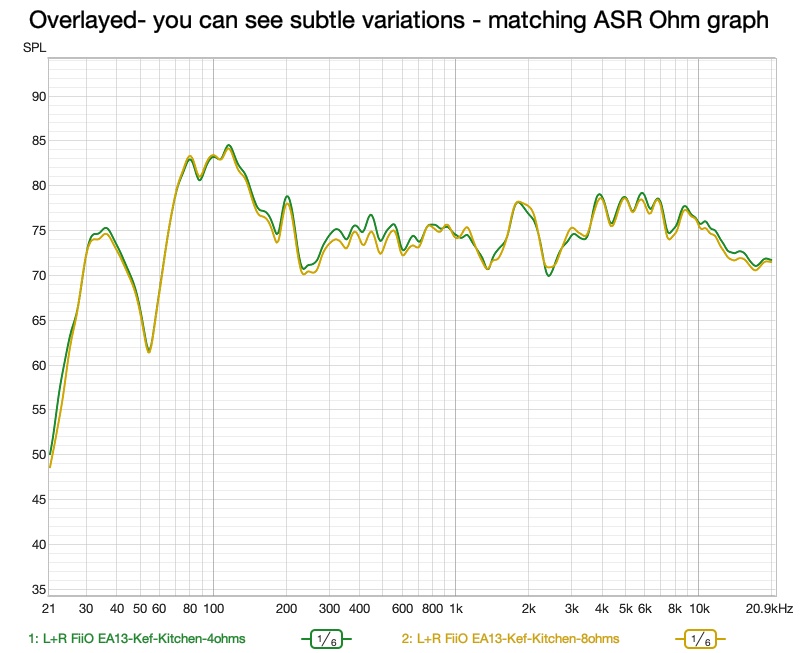 |
The differences are subtle — a dB or so in places — but look at where they fall: they line up with the regions where the LS50 Meta’s impedance moves around. That is the whole reason the two sets of terminals exist, and it is why matching the tap to your speakers is worth a moment’s thought rather than picking whichever is nearer. It follows the same pattern as the ohm-swing charts published at AudioScienceReview. You are unlikely to get it badly wrong either way, but the interaction is real and it is visible.
Against Class D
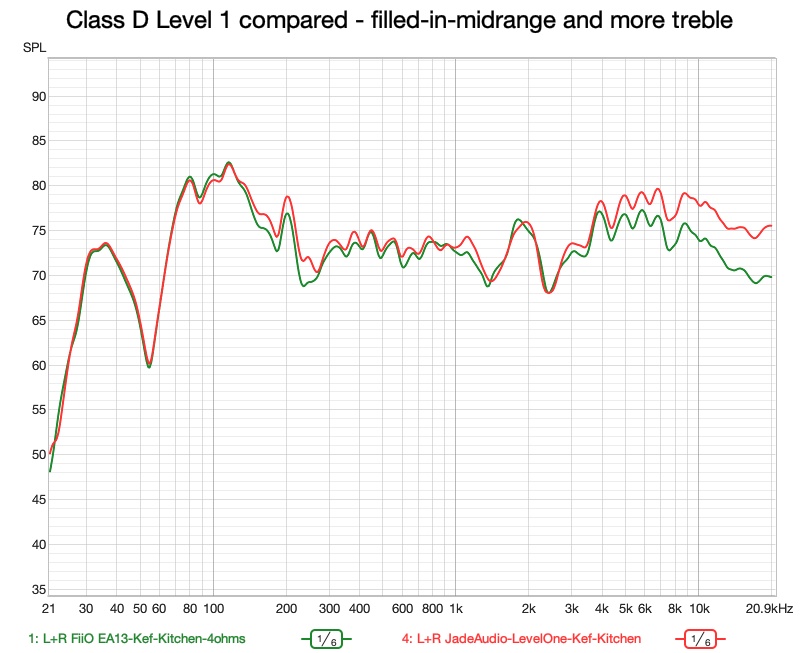
This is the comparison I found most interesting. Same speakers, same room, same position, swapping only the amplifier:
 |
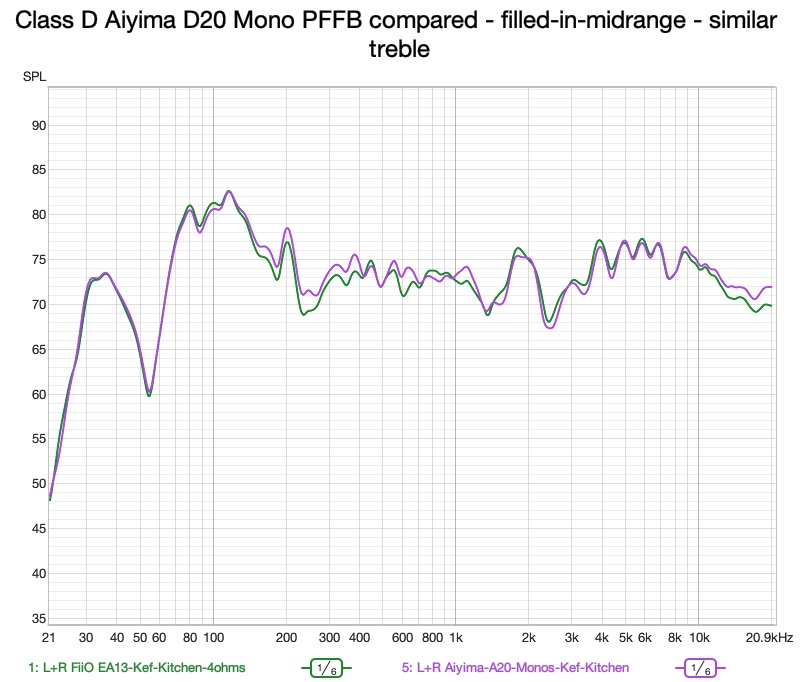 |
Against the Jade Audio Level 1, the class D amplifier has a more filled-in midrange through 200Hz–2kHz and noticeably more treble above 4kHz — several dB by 6–10kHz. The EA13 is the more rolled-off of the two up top. If you have read that tube amplifiers sound “warmer”, this is a large part of what that means in measurable terms: it is not that the bass is lifted, it is that the top is not.
Harmonic Distortion
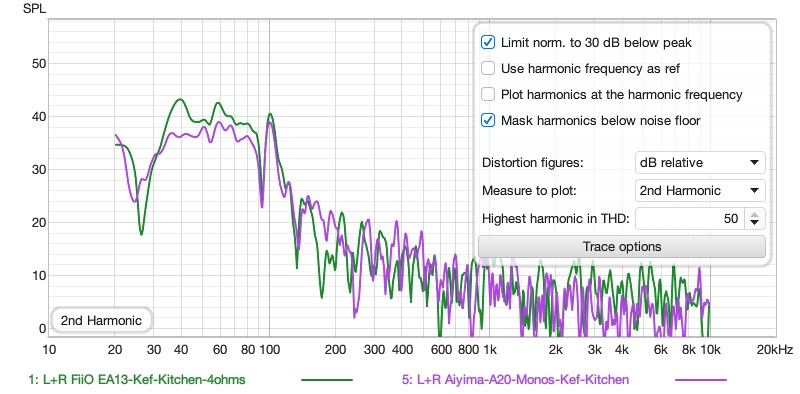
Here is where the EA13 justifies calling itself a real tube amplifier. I compared its harmonic profile against the Aiyima A20 Mono class D monoblocks on the same speakers:
 |
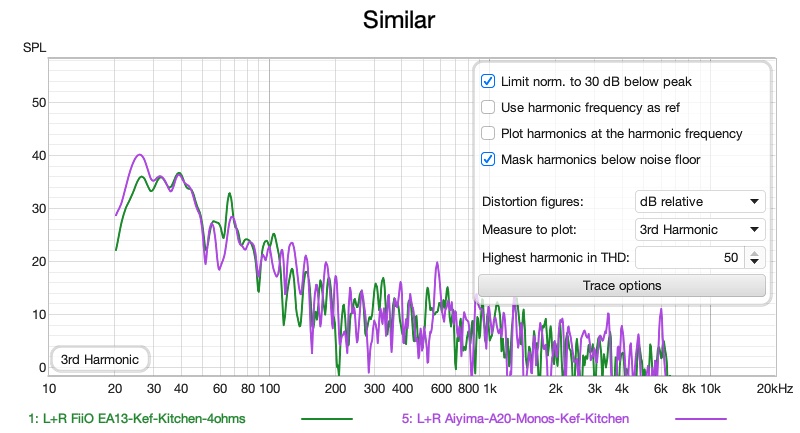 |
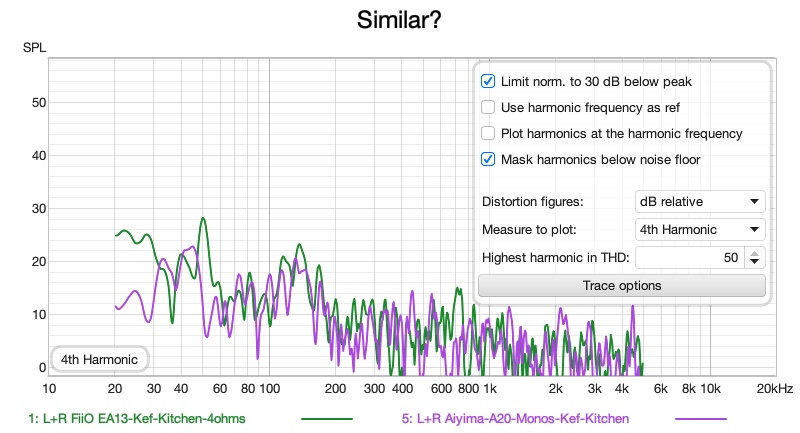
The second harmonic is clearly elevated on the EA13 relative to the class D amplifier — several dB through the 30–80Hz region — while the third and fourth harmonics are broadly similar between the two. That specific pattern is what people mean by tube sound when they are being precise about it: added even-order harmonic content, which the ear tends to hear as richness or body, without a matching rise in the odd-order harmonics that sound like harshness.
Seeing that in a simple in-room measurement told me FiiO have done this properly. It is easy to put a tube in a signal path for the look of it and end up with something that measures indistinguishably from solid state. This does not measure indistinguishably, and the way it differs is the way you would want it to.
If you choose amplifiers by SINAD, none of this will appeal and you should look elsewhere — a good class D amplifier will measure far better on every conventional metric. The EA13 is adding something to the signal on purpose.
Power Consumption and Heat
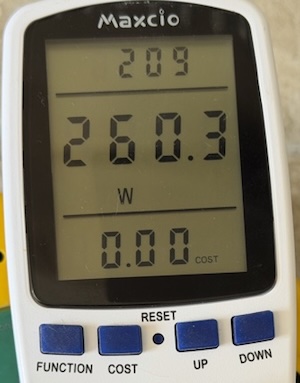
This is the quirk with the biggest practical consequence. Playing music at a reasonable volume, the EA13 drew 260W at the wall:
 |
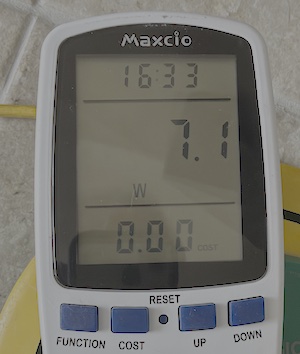 |
For context, the same music at a similar level through a class D amplifier drew 7W.
That is not a small difference, it is a factor of thirty-seven. Pure Class A means the output devices conduct fully all the time regardless of signal, so the amplifier draws close to full power whether it is playing loudly, quietly, or sitting idle between tracks. The automatic standby helps if you forget to switch it off, but while you are listening this is a 260W appliance.
The direct consequence is heat, and the EA13 runs very hot. It needs air above and around it, and it is not a component to shut inside a cabinet. In a small room in summer you will notice it.
One more thing worth mentioning: on switch-on I could hear a hum through the speakers as the tubes warmed up. It goes away, and once music is playing it is not an issue, but it is there every time you turn it on.
Specifications
| Specification | Value |
|---|---|
| Type | Full-size pure Class A push-pull stereo tube amplifier, pentode mode |
| Power tubes | 4 × JJ Electronic EL34 |
| Input / voltage stage | 2 × Sylvania NOS PCF80 |
| Output power | 28W per channel |
| Output transformers | Custom EI-core laminated silicon steel, sand and epoxy potted |
| Speaker taps | 4Ω and 8Ω, independent, per channel |
| Inputs | 4 × stereo RCA |
| Headphone output | 6.35mm single-ended, tapped from the output transformers |
| Volume control | 40-step stepped attenuator, matched precision resistors |
| Trigger | 12V input |
| Standby | Automatic, approximately 30 minutes |
| Chassis | CNC-machined aluminium alloy |
| Measured power draw | 260W playing music at a moderate level |
| Colours | Black, Silver |
| Price | $659.99 |
Rating Explanation
The EA13 gets four for the pragmatic rating, five for price, four for features and four for measurements.
The price five is the easiest to justify. This is a genuine tube sound — not a tube buffer in front of a solid-state stage, but a full pure Class A push-pull design with real output transformers — and I do not know where else you get that below about $1,000. Whether you want a tube sound at all is a personal question, and a clean neutral amplifier is unquestionably the more accurate choice. But the EA13 does the thing it sets out to do, and it does it at a price that undercuts the category badly.
The four for measurements is deliberate and is not a criticism. Anyone choosing by SINAD should look elsewhere. What the measurements told me is that FiiO recreated the tube character properly — the elevated second harmonic with third and fourth left alone is exactly the right pattern, and seeing it in a simple in-room measurement was the moment I stopped thinking of this as a styling exercise.
The pragmatic four, down from what the sound alone would earn, is the quirks. The headphone jack is impractical — the speaker output stays live alongside it, and needing dummy loads to use it safely is too much effort for a convenience feature. The 260W draw and the heat that comes with it are real constraints on where and when you can use it. There is an audible hum on warm-up. It is heavy. Some of the smaller features, like toggling the lighting, are quirky more than polished. And the tubes are hidden behind a mesh cover when the whole appeal of the thing is retro.
None of those spoil the sound. All of them together are the difference between four stars and five.
Conclusion
I loved listening to the EA13. It drove a demanding pair of KEF LS50 Metas far beyond what 28W a channel suggests, it put a harmonic sheen over everything I played, and it made me reach for older recordings and vinyl again and again. Measuring it confirmed that the character I was enjoying is real and is the right shape — elevated even-order content, odd-order left alone — and not a marketing story.
It is not perfect, and the quirks are not trivial. Budget for the electricity, give it room to breathe, and do not buy it as a headphone amplifier, because that is the one thing it does not do well. If you can work around all of that, at $659.99 this is a special offering, and it has made me curious about what FiiO does next in this direction.