Aiyima D20
The third piece of Aiyima’s 10th anniversary trilogy, and worth the wait
I bought the T20 tube preamp and the A20 amplifier last year, and I had almost forgotten that Aiyima’s 10th anniversary line was meant to be a trilogy. Then a few weeks ago I spotted a video of the long-awaited D20 and had to have it. In summary: I love it, and it was worth the wait.
The delay was real — the D20 arrived well after the other two. My guess, and it is only a guess, is that Aiyima did not want to ship the weakest of the three, and took the time to make the DAC as good in its category as the other two are in theirs.
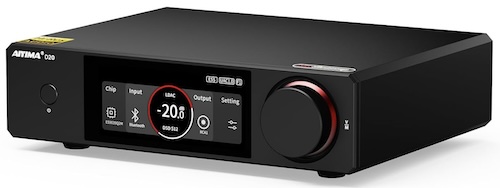
More information about the D20 is on Aiyima’s product page.
It lists at $359, though I see it closer to $329 on Amazon. I purchased mine for this review from Amazon.de.
It is not cheap, and it misses some features that other DACs around this price include. But crucially it also has plenty that make it worth the money. My three favourites are the dual DACs — even though they sound very similar — the three outputs, dual RCA plus XLR, and the VU meters on that large display.
Unboxing and Packaging
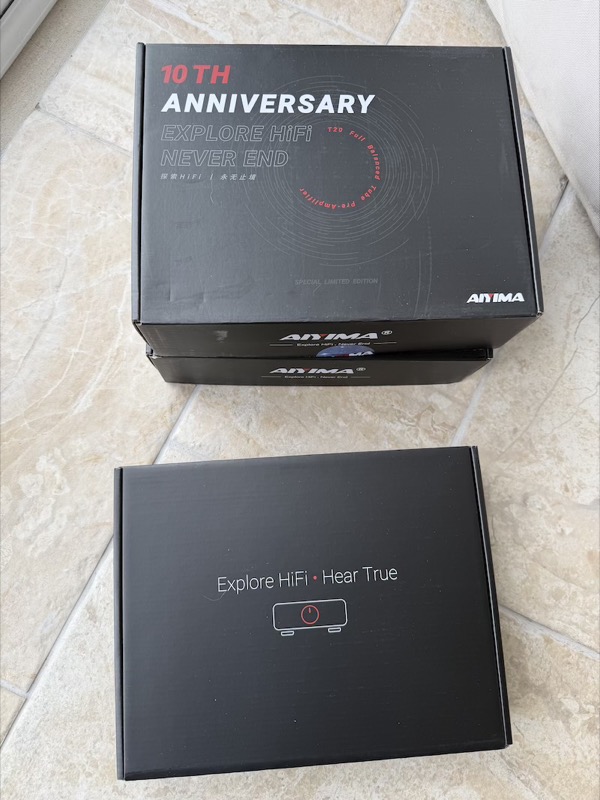
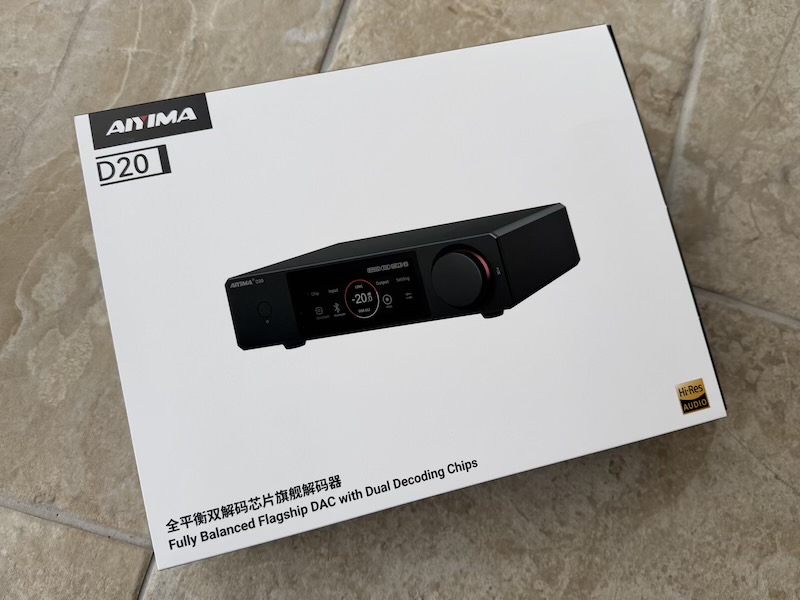
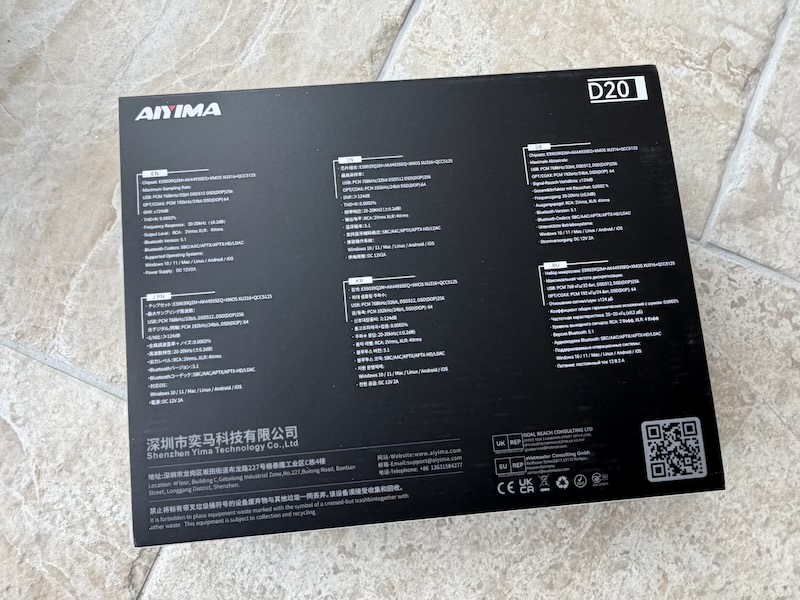
The D20 arrives in the same anniversary packaging as the rest of the series:
 |
 |
 |
 |
 |
 |
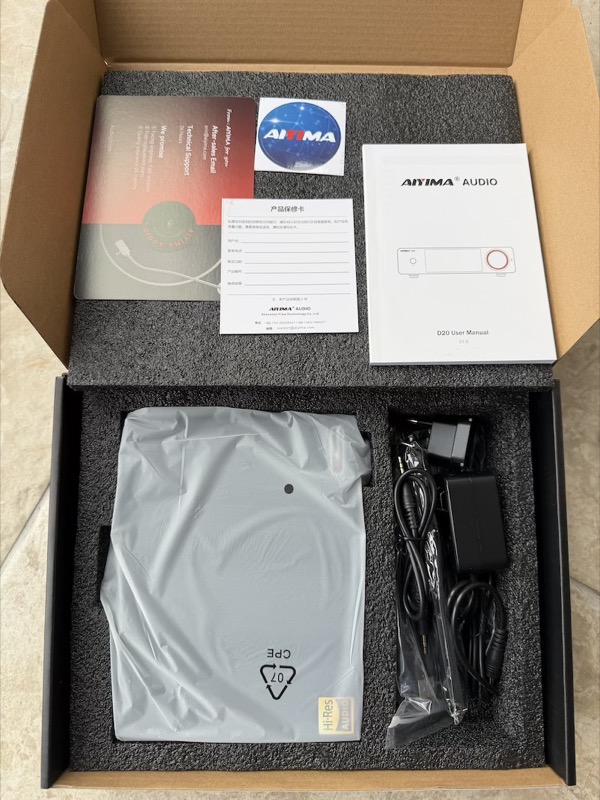
Documentation and accessories:
 |
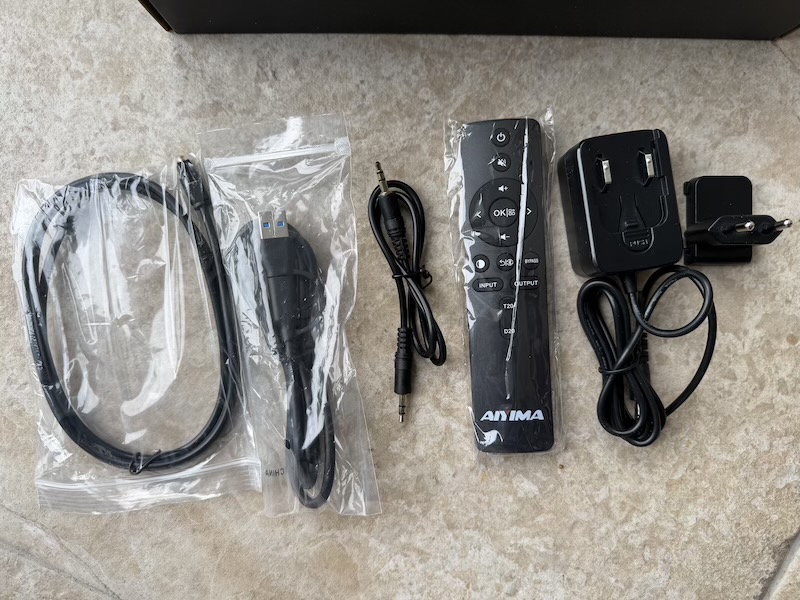 |
In the box:
- Aiyima D20 DAC
- Remote control
- 12V power supply with interchangeable EU and UK plugs
- USB cable
- 3.5mm trigger cable
- Manual and warranty card
Including a trigger cable is a small thing that tells you Aiyima expect you to build the series into a system, not just use the D20 alone.
Design and Build Quality
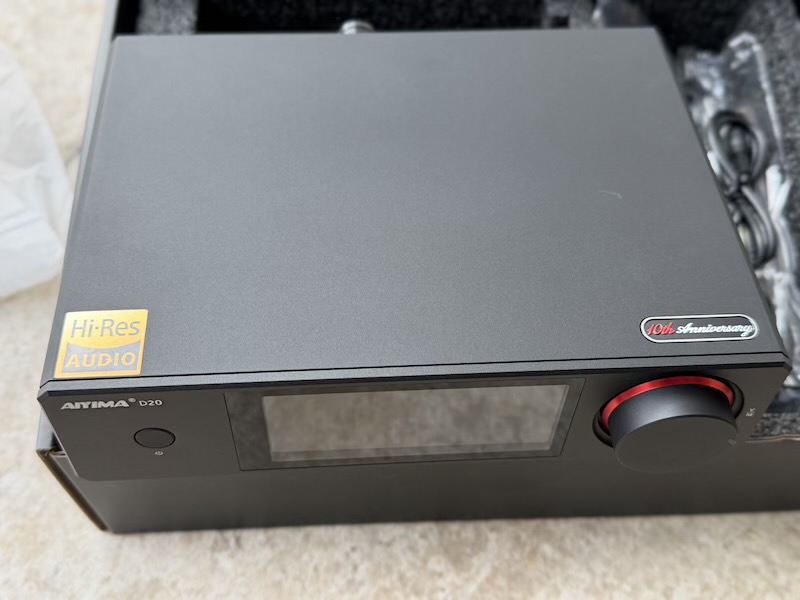
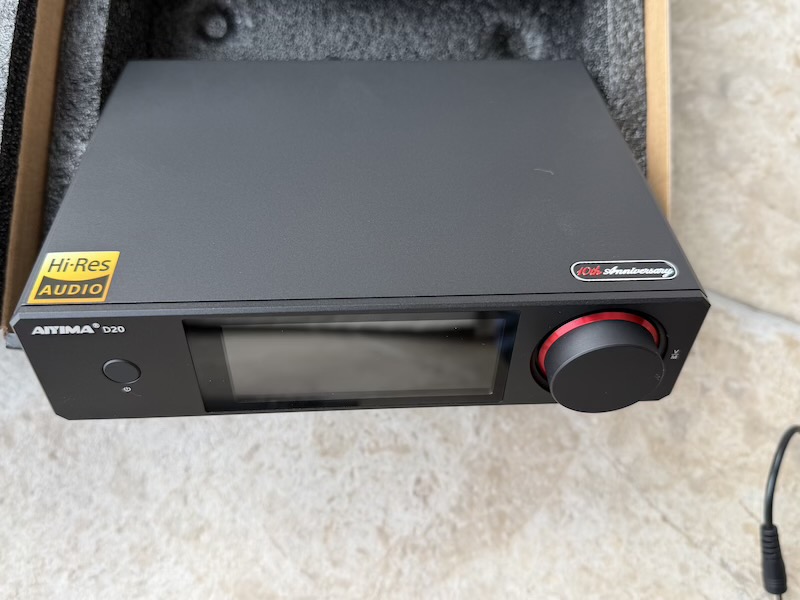
The front panel is a large colour display, a power button, and a volume knob with the anniversary red ring the other two units share:
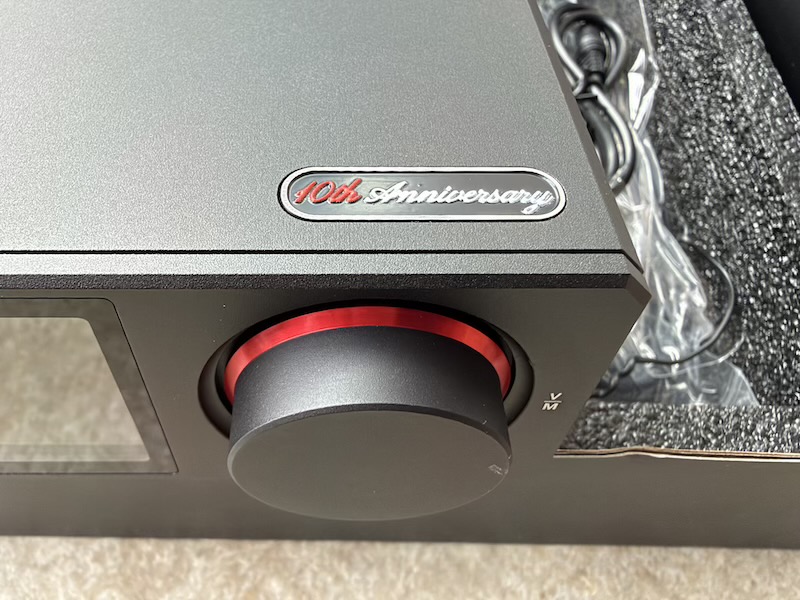
The Hi-Res Audio badge and the 10th Anniversary emblem are both on the top plate:
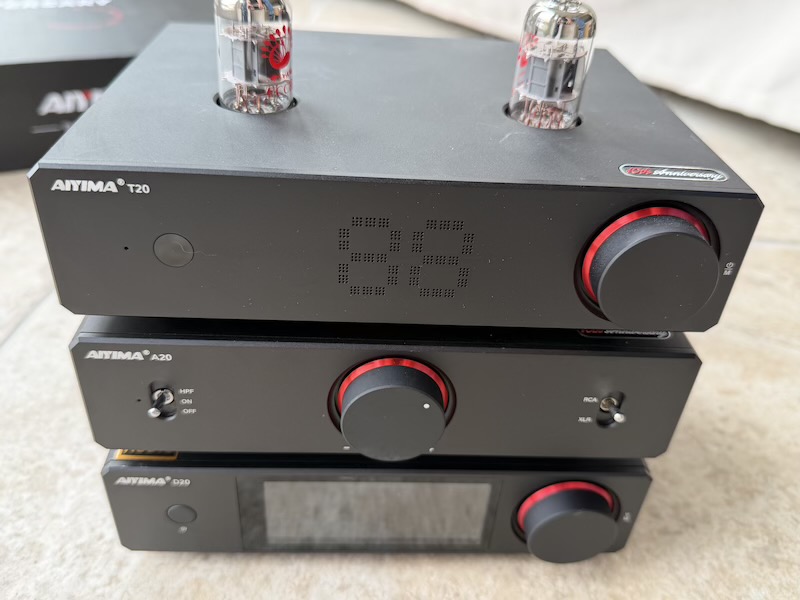
And with the D20 finally here, I have the trilogy together:
The display is probably where the D20 distinguishes itself. It is bright, high-contrast and large enough to read across a room, the home screen shows the selected chip, input, volume, output and sample rate at a glance, and you can adjust it from the remote. There is no hunting through menus to find out what the DAC is currently doing.
The Display and VU Meters
Aiyima claim over ten VU meter styles plus several UI themes. Here are two of them running:
VU meters on a DAC are decoration and change nothing you hear. Combined with how clear the screen is, though, they make the D20 a pleasure to have in a system, and that matters more than I used to think it did. This is a DAC I have put on display instead of tucking it away in a stack.
And here is the menu system, which is worth watching if you want to see the scope of what is configurable:
Remote Control
The remote covers power, mute, volume, menu navigation, display brightness, filter selection, BYPASS, input and output selection — and a T20 / D20 rocker at the bottom:
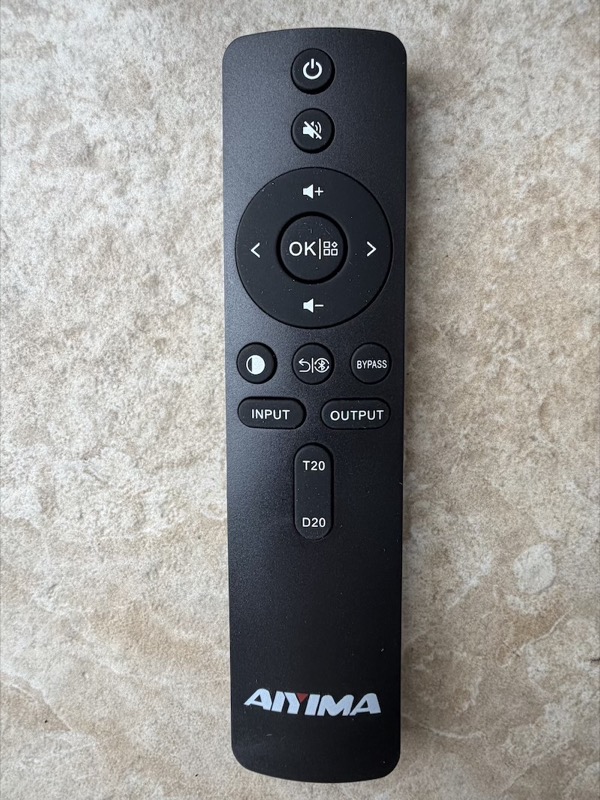
That rocker is the detail I appreciated most. One remote drives both the D20 and the T20, so a two-box anniversary stack does not mean two remotes on the table.
Inputs, Outputs and Rear Panel
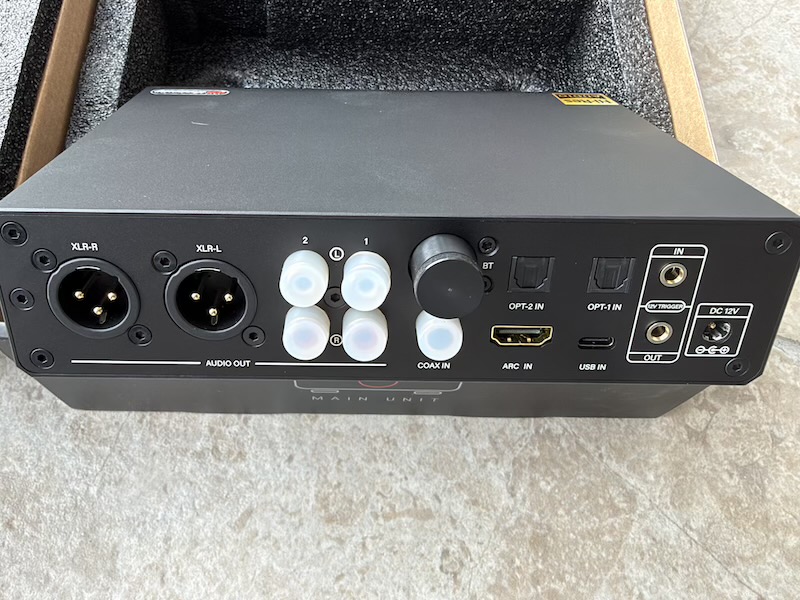
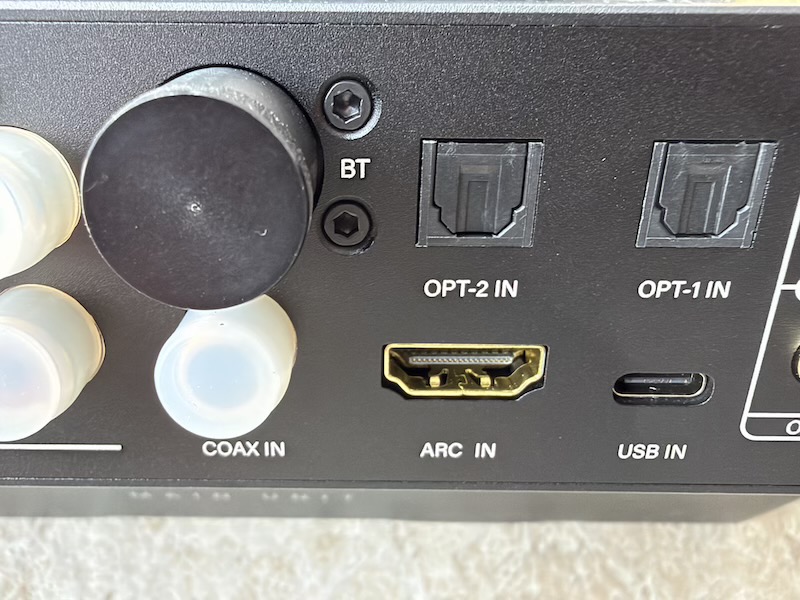
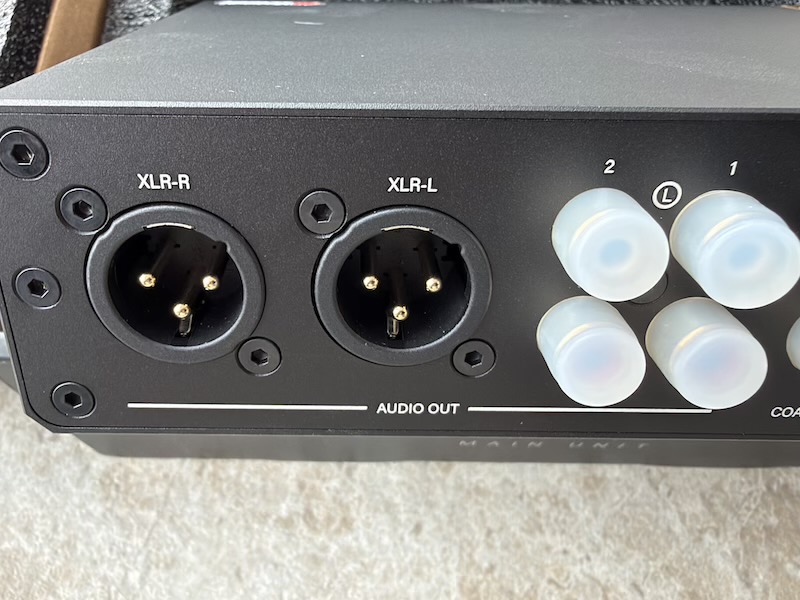
From left to right: XLR-R and XLR-L balanced outputs, two pairs of single-ended RCA outputs (RCA1 and RCA2), a coaxial input, a Bluetooth antenna connector, two optical inputs, HDMI ARC in, USB-C in, and 12V trigger IN and OUT alongside the DC input.
 |
 |
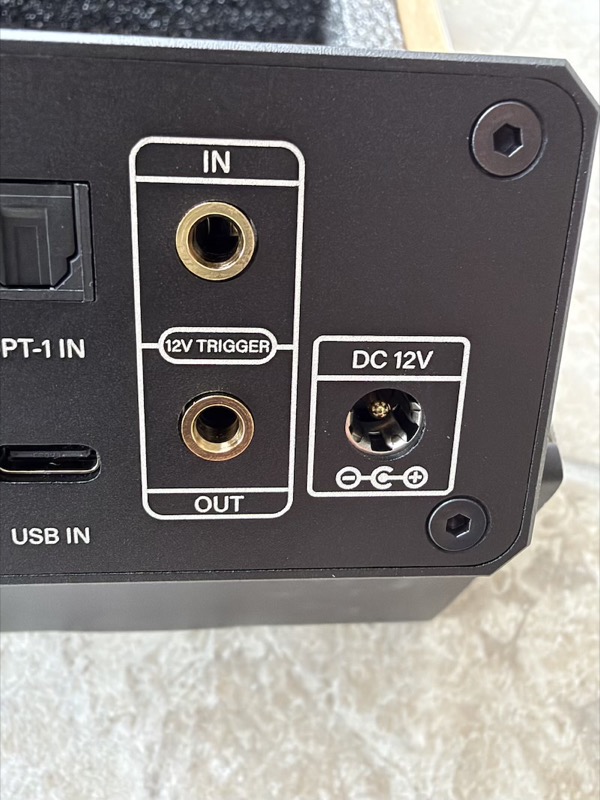
Three of those deserve calling out, because they are what lift the D20 above most of its price competition.
HDMI ARC. Very few DACs in this bracket have it. With ARC your television becomes just another source, and the DAC handles TV audio at up to 192kHz/24bit without an intervening receiver. If you have ever tried to get decent sound out of a TV into a two-channel system, you know how much simpler this makes it.
12V trigger in and out. Note that it is both. The D20 can be woken by something upstream and can in turn wake the amplifier downstream, so Aiyima’s three-box stack powers up and down together. Plenty of units at this price offer a trigger output; far fewer offer both directions.
A balanced XLR output at 4.0Vrms, alongside two independent RCA pairs at 2.0Vrms. Two RCA outputs means you can feed two amplifiers or an amplifier plus a headphone amp without a splitter.
The other input to note is USB with switchable UAC 1.0 / UAC 2.0. UAC 1.0 is what lets the D20 work as an external sound card for a PS5 or a Nintendo Switch, which will not accept a UAC 2.0 device.
Features
Two Flagship DACs, Properly Separated
The headline feature is the dual DAC architecture: an ESS ES9039Q2M and an AKM AK4493S, selectable from the front panel or the remote. Aiyima publish an internal block diagram, and it is the most informative thing in their marketing material:
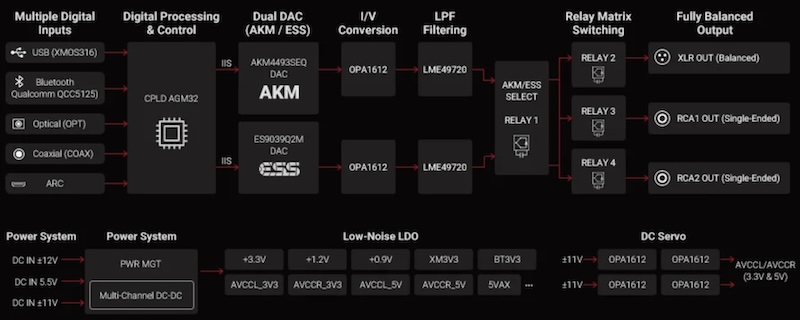
The part worth noting is that each chip has its own complete analogue chain rather than sharing one — so switching chips switches the whole path, not just the converter.
Aiyima also publish the power section on the same diagram — a multi-channel DC-DC converter feeding a bank of separate low-noise LDO regulators for each rail, plus an OPA1612-based DC servo. That level of rail separation is the unglamorous part of why the noise figures come out where they do.
The op-amps are user-replaceable if you want to roll them. I have left the stock LME49720 and OPA1612 parts alone.
Do the Two DACs Actually Sound Different?
Aiyima’s marketing promises “two entirely different sound signatures” — the “ultra-resolving clarity” of ESS against the “velvety warmth” of AKM. I did not find that.
Switching between the two chips on the same material, I found it very difficult to hear any difference at all. Both sounded excellent and both sounded linear, with no colouration I could identify in either direction. If there is a house sound separating these two chips in this implementation, it is below the level at which I can reliably pick it out.
So Aiyima could have fitted either chip on its own and saved some money. But I am glad both are here. I like having options in audio, and being able to switch DAC chips and listen for a difference yourself is a good option to have — even if my answer was that they sound the same. You get to test the claim instead of taking somebody’s opinion for it.
Where there is more to explore is the digital filters. The AKM chip exposes 6 filter options and the ESS chip exposes 8, and you can hear the menu system stepping through them in the video above. Filter differences are small and mostly confined to the top octave, but they are a real, measurable difference and more likely to be audible than the chip choice itself. I have not done systematic listening across all 14.
Bypass Mode
The D20 is a preamp as well as a DAC, and BYPASS on the remote takes the volume control out of the signal path entirely, sending a fixed-level output straight to whatever is downstream. If you already have a preamp or you are feeding active speakers with their own volume control, this is the setting you want, because it removes a stage that can only add noise.
Bluetooth
The Qualcomm QCC5125 covers SBC, AAC, aptX, aptX HD, aptX Adaptive and LDAC. On a DAC of this quality, having LDAC and aptX Adaptive instead of SBC-only means Bluetooth is a usable input for casual listening instead of a compromise you tolerate.
What Is Missing
Two things, and I want to be clear about both because they are the reason this is not a perfect product.
No parametric EQ. For a device with this much digital processing capability, no PEQ is a real omission. Room and speaker correction is the single most effective improvement available to most systems, and cheaper products — Jade Audio’s Level 1, or any WiiM streamer — offer it. If you want PEQ you will need to do it upstream.
No headphone output. Some DACs at $329–$359 include one, and its absence means anyone wanting headphones needs a separate amplifier. The D20 is explicitly a “pure DAC” and preamp, though, and the two independent RCA outputs make adding a headphone amp straightforward. If you wanted one box for tweaking headphones and speakers both, this is not it. It is a design decision rather than an oversight — but it is one that will rule the D20 out for some buyers.
Sound Impressions
Both chip options are linear, and I could not identify a character belonging to either one. There is very little else to report, and on a DAC measuring like this one there should not be. Writing paragraphs of listening notes about a device whose distortion sits 117dB below the signal would be describing my speakers and my room and crediting the DAC for it.
The one piece of listening that was worth doing was the A/B between the two chips, and I did most of it on Fast Car by Tracy Chapman — a sparse recording with a voice and one guitar, which is where a difference in the analogue stage would be easiest to catch. I could not hear one.
That is what you are paying for, and it is worth being clear about the direction of it. You are not buying a sound. The character of your system comes from the speakers, the room, the amplifier and any EQ you apply. If you are hoping a DAC at this level will change how your system sounds, spend the money on speakers or room treatment instead.
In My System
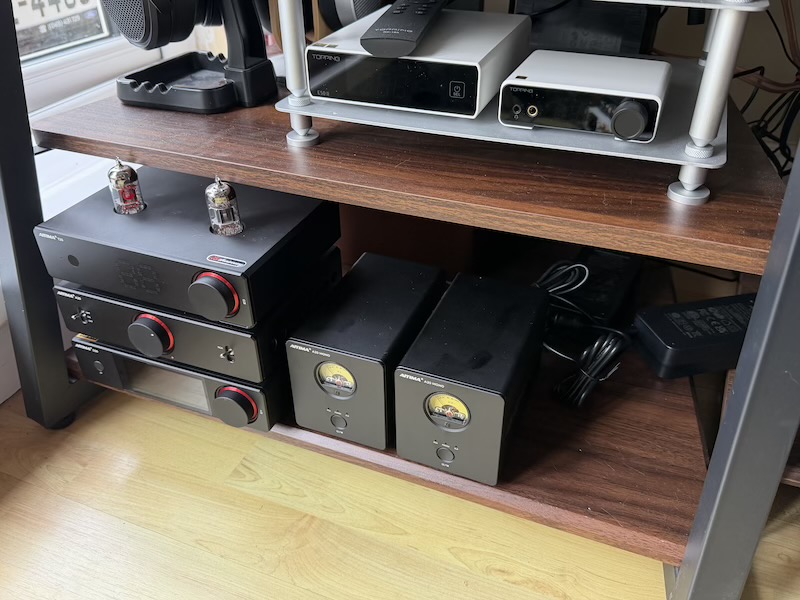
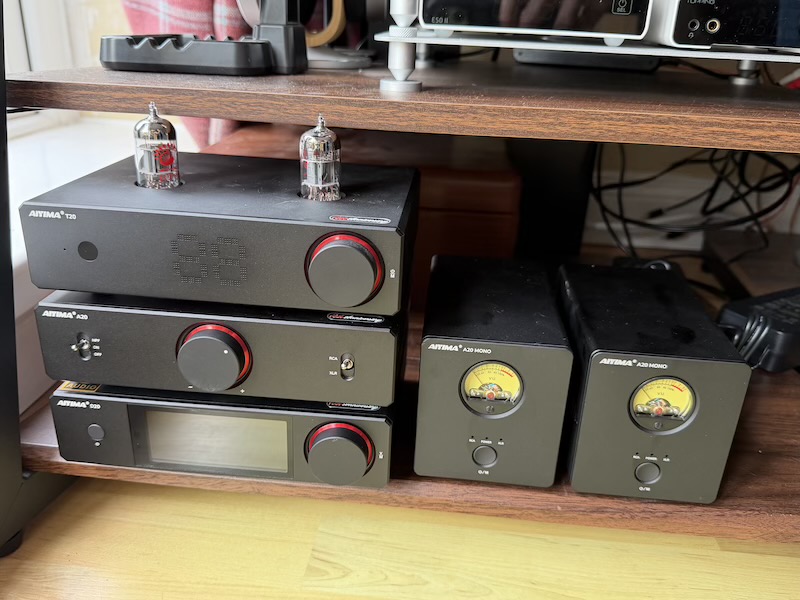
The full anniversary stack alongside a pair of A20 Mono monoblocks:
 |
 |
In my opinion, add a streamer and a headphone amplifier and you can have a complete component system, where each box does one job well and any single box can be replaced later without disturbing the rest. The source does not need to be expensive — a WiiM Mini is enough to feed the D20 properly, and a simple headphone amplifier like Jade Audio’s GIGA1 might cover headphone duty. That is a system that will last years and can be upgraded a piece at a time, which is the whole practical case for separates over an all-in-one.
With the typical Amazon discounts, a D20 plus a T20 plus an A20 — or the A20 Monos — comes to somewhere around $500 for the stack. For a fully balanced, remote-controlled, visually coherent three-box system, that is a lot of audio for the money.
Specifications
| Specification | Value |
|---|---|
| Model | Aiyima D20 |
| Chipset | ES9039Q2M + AK4493S + XMOS XU316 + Qualcomm QCC5125 |
| Op-amps | OPA1612 (I/V), LME49720 (LPF) — user-replaceable |
| Max sampling rate (USB) | PCM 768kHz/32bit, DSD512, DSD (DoP) 256 |
| Max sampling rate (OPT/COAX) | PCM 192kHz/24bit, DSD (DoP) 64 |
| Max sampling rate (ARC) | PCM 192kHz/24bit |
| Inputs | USB-C, Bluetooth, coaxial, optical ×2, HDMI ARC |
| Outputs | RCA1, RCA2, XLR (balanced) |
| SNR | ≥124dB |
| SINAD | ≥113dB |
| THD+N | <0.0002% |
| Dynamic range | ≥120dB |
| Frequency response | 20Hz–20kHz (±0.2dB) |
| Noise floor | ≤2µV |
| Output level | RCA1 2.0Vrms; RCA2 2.0Vrms; XLR 4.0Vrms |
| Digital filters | 6 (AKM) / 8 (ESS) |
| USB mode | UAC 1.0 / UAC 2.0 |
| OS support | Windows 10/11, macOS, Linux, Android, iOS |
| Bluetooth version | 5.1 |
| Bluetooth codecs | SBC, AAC, aptX, aptX HD, aptX Adaptive, LDAC |
| 12V trigger | Input and output |
| Power supply | DC 12V (5.5 × 2.1mm) |
| Dimensions | 190 × 142 × 46mm |
| Net weight | 950g |
| Package size | 296 × 228 × 77mm |
| Package weight | 1700g (including power adapter) |
Measurements
Aiyima’s Own Measurements
Aiyima publish Audio Precision results, and the SINAD figure is the one to look at:
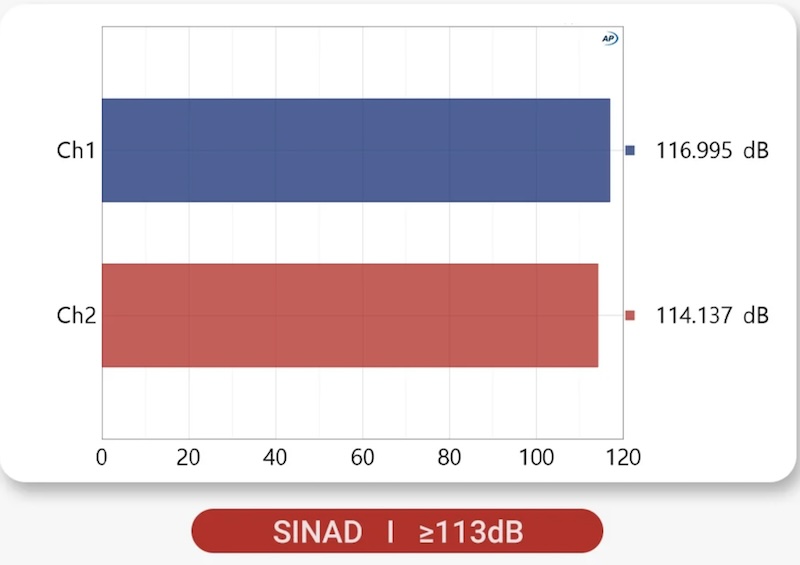
117.0dB on channel 1 and 114.1dB on channel 2, against a published specification of ≥113dB. Those are very strong numbers for a DAC at any price. What they mean in practice is that the D20’s own distortion and noise sit around 117dB below the signal — far below the threshold of audibility, and far below the noise floor of any domestic room. The distortion from this DAC is not something a human being can hear.
The frequency response is flat within ±0.2dB across the audible band, rolling off only above 20kHz:
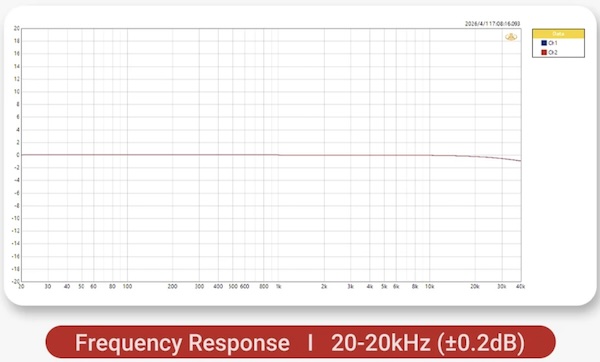
These are Aiyima’s own measurements on their own equipment. I have not seen a full Audio Precision review of the D20 yet, and I will update this review when one appears at AudioScienceReview. Based on the figures above I would expect it to land in ASR’s “Excellent” category — and while there are DACs that measure better, the difference between them and the D20 is well beyond the level of human hearing.
Independent Measurement — the Two DACs Compared
There is one independent measurement I can point to. ASR member Guddu measured the frequency response of both DAC chips on the D20 separately, and kindly shared the result — thank you to Guddu for this:
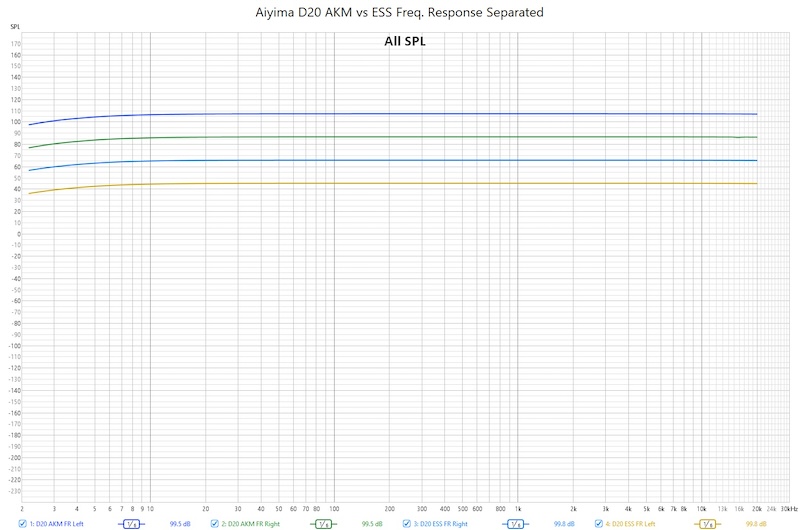
The four traces are the AKM left and right and the ESS left and right, offset vertically so they can be told apart. Each is flat from around 20Hz to 20kHz, and the shapes are indistinguishable from one another.
This is the measurement that supports what I heard, or rather what I did not hear. If the two DAC chips have the same frequency response — and at these distortion levels neither is contributing anything else audible — then there is no mechanism by which they could sound like the “two entirely different sound signatures” the marketing describes. The useful thing about Guddu’s graph is that it turns my subjective “I could not tell them apart” into something better supported than an impression.
Rating Explanation
The D20 gets 5 for pragmatic, 5 for features, 5 for measurements and 4 for price.
The 4 for price is the only one that needs explaining. At $329–$359 this is not a cheap DAC, and you can get audible transparency for considerably less — the Topping E50 II being the obvious example. You are not paying for better sound here, because there is no better sound to be had; you are paying for the connectivity, the display, the dual-DAC option and the build.
The rest are straightforward. The feature list is the most complete I can find at this price, the measurements are 117dB SINAD, ≥124dB SNR and <0.0002% THD+N — Aiyima’s own figures — and the pragmatic 5 is because this is the piece that makes a component system work while adding nothing audible to the signal.
Conclusion
The delay Aiyima made in getting the D20 right was worth it. It is as good in its category as the T20 and A20 are in theirs, which is what Aiyima presumably set out to achieve with the third anniversary product, and the result is a DAC I have no reservations recommending on quality grounds.
The two reservations I do have are about scope. There is no parametric EQ, which is a real omission on a device with this much digital capability, and there is no headphone output, which will rule it out for anyone wanting one box for headphones and speakers both. Neither is a fault in what the D20 does; both are limits on what it will do for you.
Will you hear a difference against a cheaper, well-measuring DAC like the Topping E50 II? Almost certainly not, with both set to comparable filters. Both are past the point where the DAC is the limiting factor. The difference is that the Topping is a box you tuck away in a stack, and the D20 — with that display and those VU meters — is one you put on display. Add a T20 and an A20, or a pair of A20 Monos, and for roughly $500 with the usual Amazon discounts you have a fully balanced, remote-controlled, visually coherent system that will last years and can be upgraded one box at a time.
On features, connectivity and how much I enjoy using it, I think this is the best pure DAC you can buy between $200 and $500. It is currently my favourite, and I suspect it will end up being a lot of other people’s favourite too.