HEDD Audio HEDDphone TWO GT
HEDD Audio’s Flagship AMT Driver, Retuned for Music Lovers in the TWO GT
While I have already spent a good deal of time with HEDD Audio’s HEDDphone D1, a dynamic-driver headphone that borrowed HEDD’s studio heritage to deliver reference-grade midrange at a sub-$800 price. The TWO GT is a completely different proposition: this is HEDD’s actual flagship headphone aiming for a different market , built around the same rectangular Air Motion Transformer (AMT) driver technology used in HEDD’s own studio monitor tweeters, and tuned for a different level of audio enjoyment.
I have also been enjoying the same AMT tweeter technology in HEDD’s Type 05 MK2 studio monitors, which I reviewed recently — having the speaker and the headphone side by side makes it much easier to hear what the driver itself brings, separately from how each product is voiced.
The GT is the flagship of HEDD’s TWO series lineup, built with a refined tuning, materials, and finer design details aimed squarely at a warmer, more musical listening experience. I should also say from the start this aims for both a different market but also has a very different tuning than the D1 but one I am sure fans of that headphone will also appreciate.
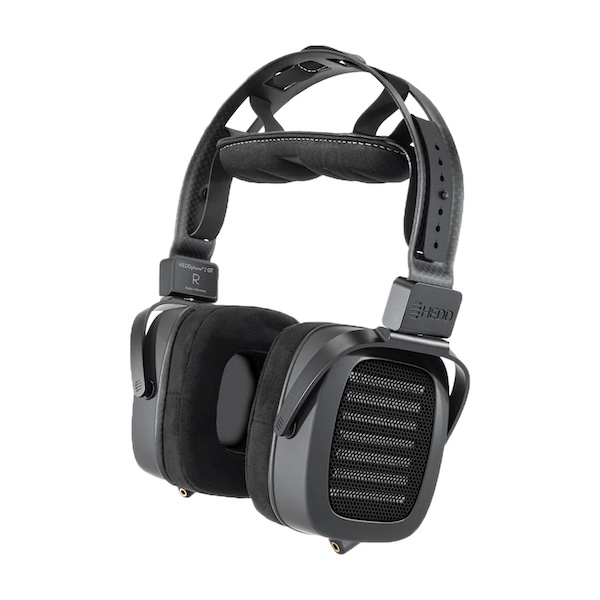
This is a review unit loaned by HEDD Audio in association with Jackrabbit.media for the purposes of this review.
If you are interested in finding more information about this product, you can find it at the official HEDD Audio product page.
The HEDDphone TWO GT retails for €2,199 in the standard configuration reviewed here, or €1,699 in the cable-free UNPLUGGED configuration.
I have been listening to the TWO GT for the past three weeks, spending a lot of that time swapping it against several of my other planar headphones — Hifiman, FiiO, Meze — and against my own HEDDphone D1. The short version: this is that rare thing in high-end headphones, one that is not trying to be flashy with an esoteric tuning to make itself stand out. It stands out because the sound signature is so well implemented.
While I do have a niggles about the TWO GT I will get into that later in the review, overall this is a fantastic flagship headphone — but first, let’s look at what you get out of the box.
Unboxing and Build Quality
The outer distribution box is just a plain cardboard with a simple “HEDDphone TWO GT”:
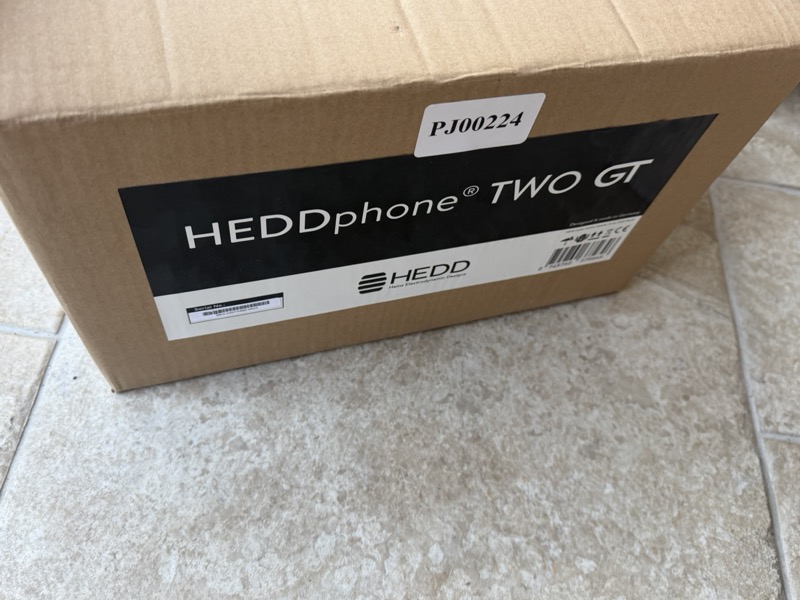
As you will see tis is probably the most plain thing about this overall experience!
Once you open it you see the retail packaging inside well protected:
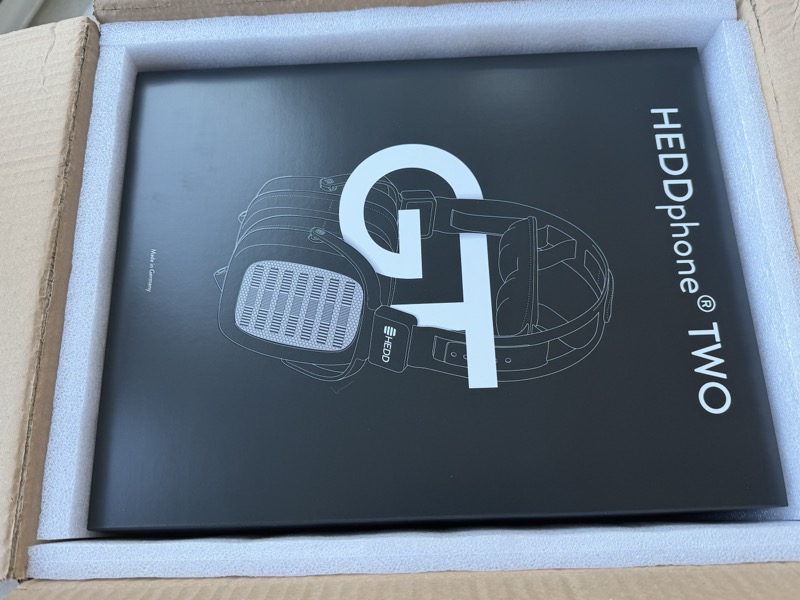 |
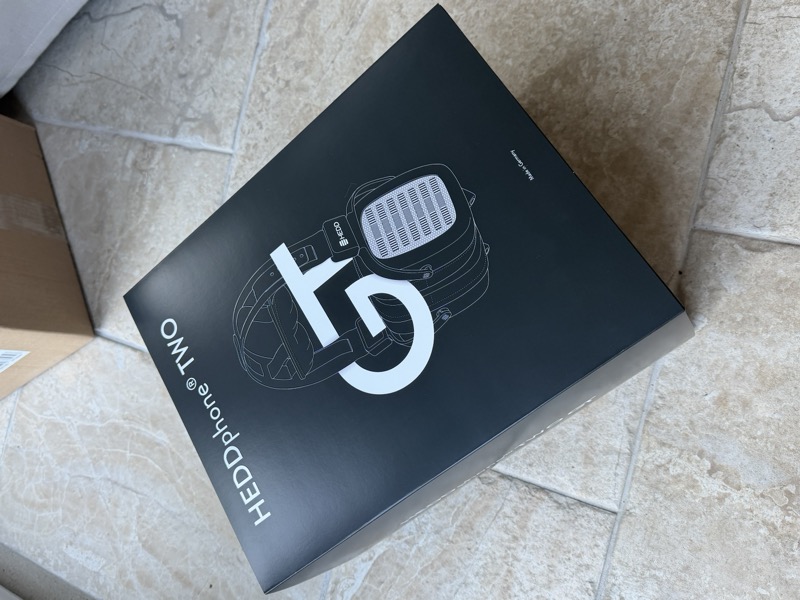 |
Removing this box start to get a sense that this something special.
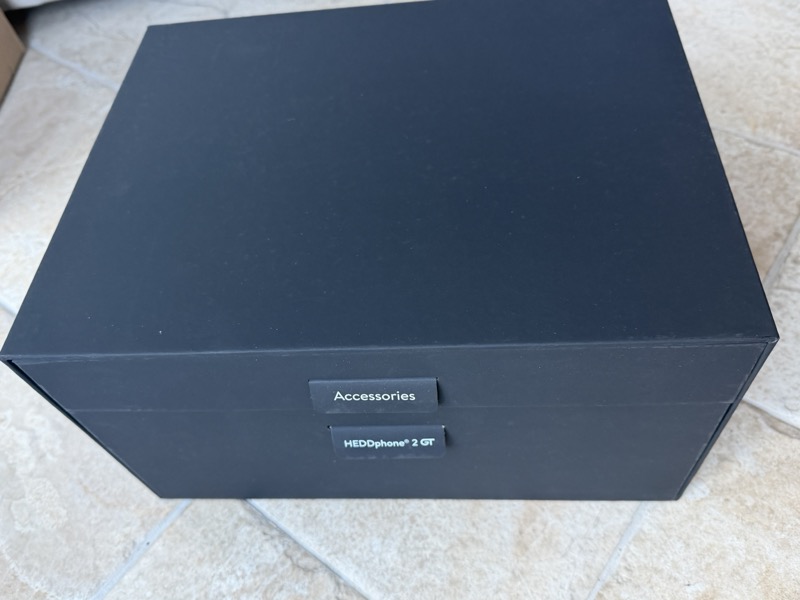
The accessories arrives in a separate box of their own, and as you will see you get a pretty amazing set of accessories. But, is it worth the extra €500 over the UNPLUGGED version? Lets see.
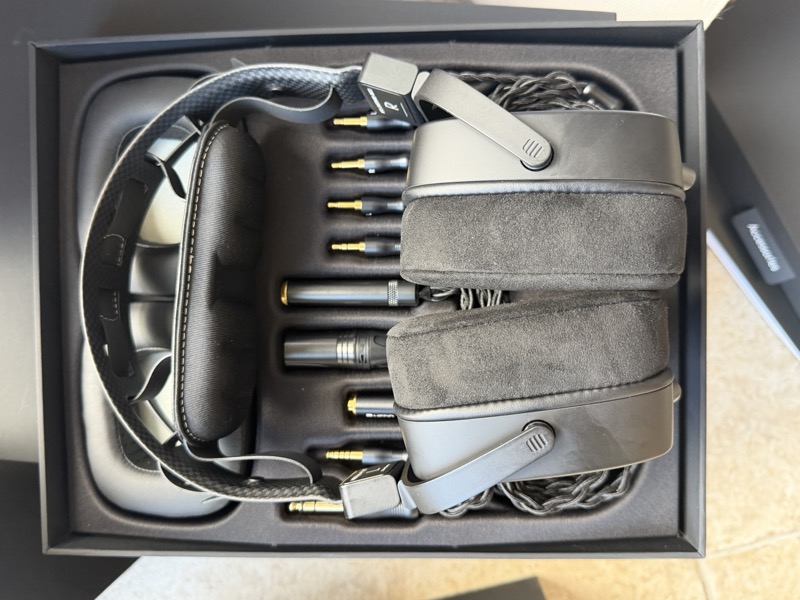
Opening the accessories compartment reveals easily the most complete cable and adapter kit I have seen bundled with a headphone: a full set of termination options laid into a foam tray alongside the spare earpads:
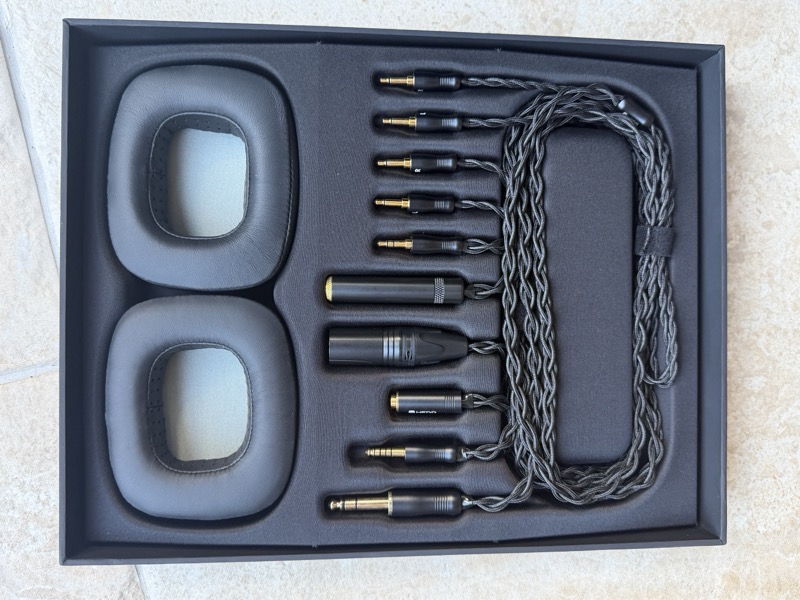
The accessoreis kit includes a 1.6m unbalanced cable terminating in 6.35mm with a 3.5mm adapter, and a 1.6m balanced cable terminating in 4.4mm Pentaconn with a 4-pin XLR adapter — everything you could plausibly need to plug this into any desktop amplifier on the market. Both cables share the same soft, hand-braided fabric jacket, and it’s a lovely one to live with day to day: pliable and tangle-resistant rather than stiff or springy, with a satisfying weight and drape to it thanks in part to the substantial terminations, and — unlike a lot of fabric-sleeved cables — it transmits almost no handling noise up to the earcups, so brushing the cable below the Y-split doesn’t translate into thumps in your ears.
Nothing about this cable makes me want to reach for an aftermarket alternative, this is a basically ‘one and done’ cable accessories set. The only thing stopping from me from using these with my other headphones was really that this set was a loaner, so I want to make sure I didn’t mess up the lovely arrangement, so I mostly kept them in the box.
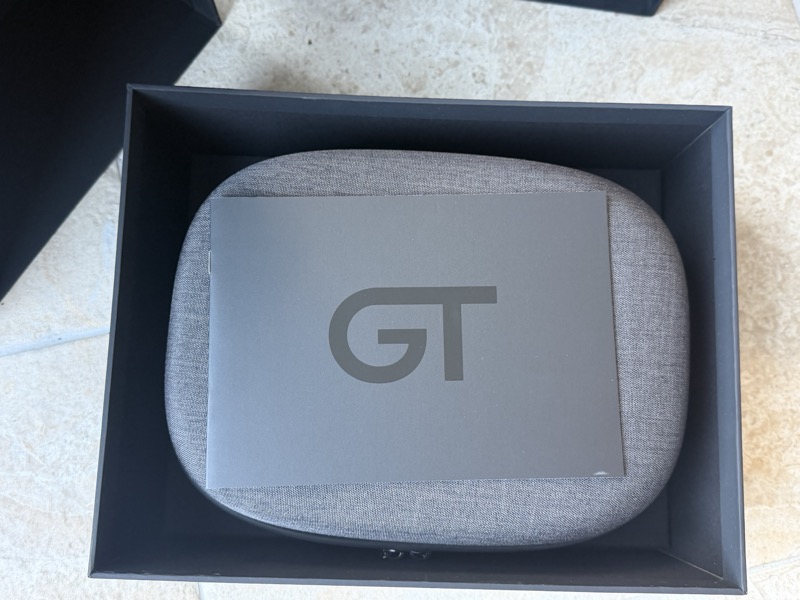
Next, lets look at the other box labeled the “HEDDphone 2 GT”:
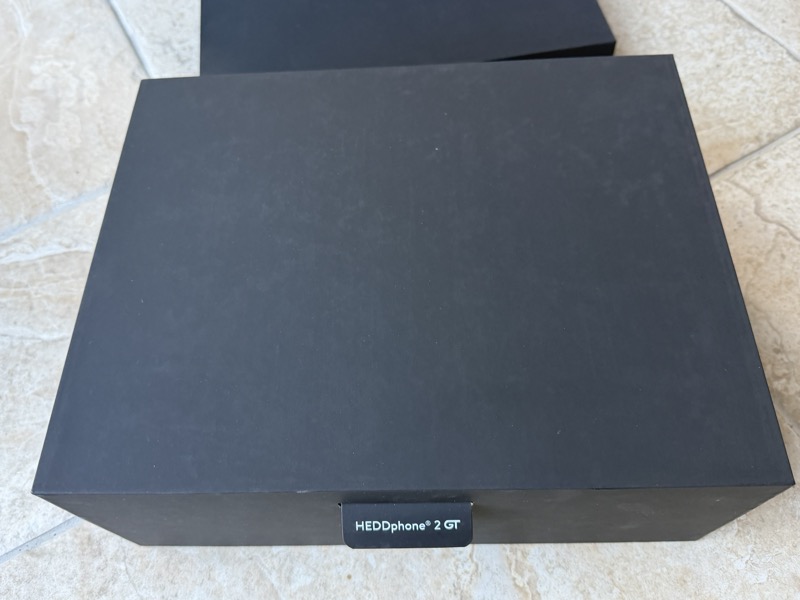
Opening this up, you see the headphone itself lives in its own carry case:
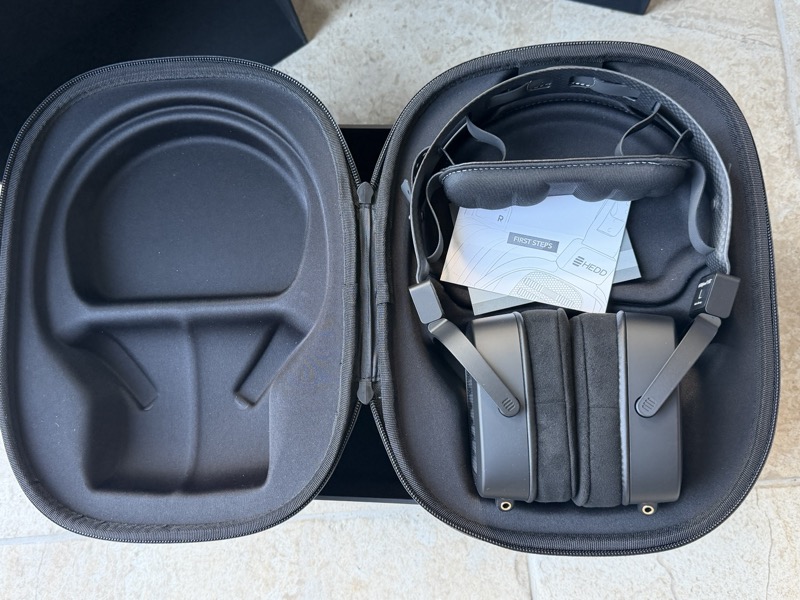
Opening up the carry case and we finally see the headphones:
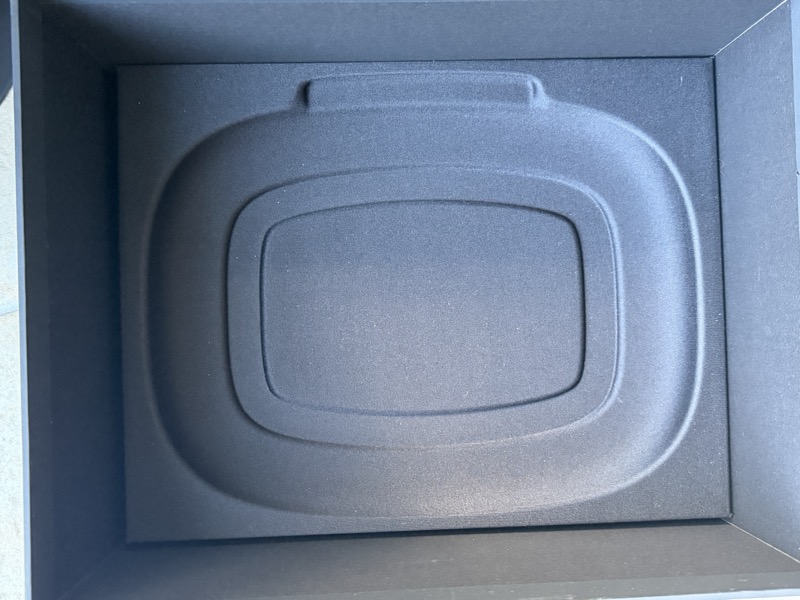
I like the simple attention to details, so even under the box it properly cut out for the carry case:
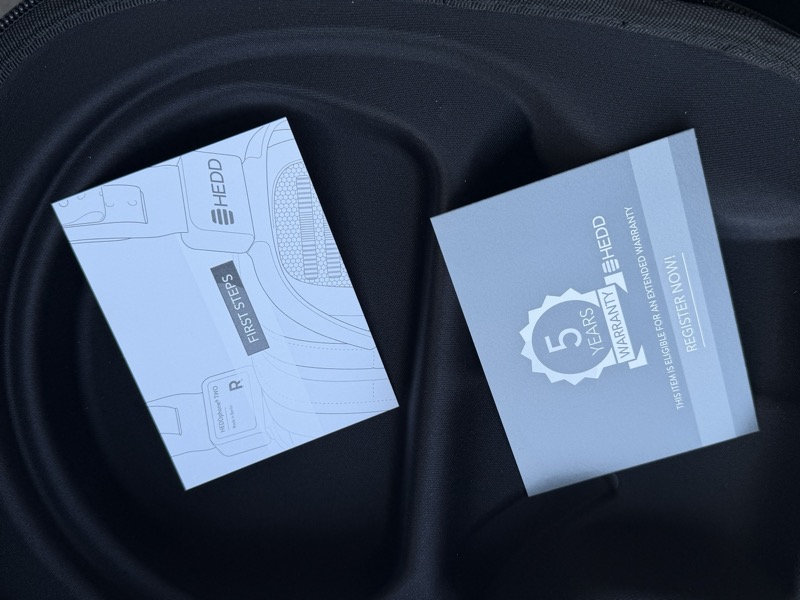
You get some information and first steps guides:
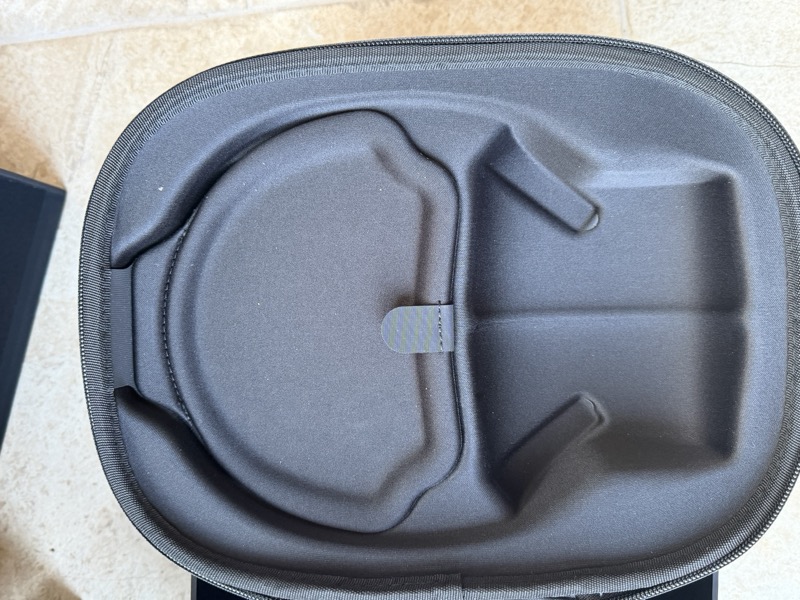
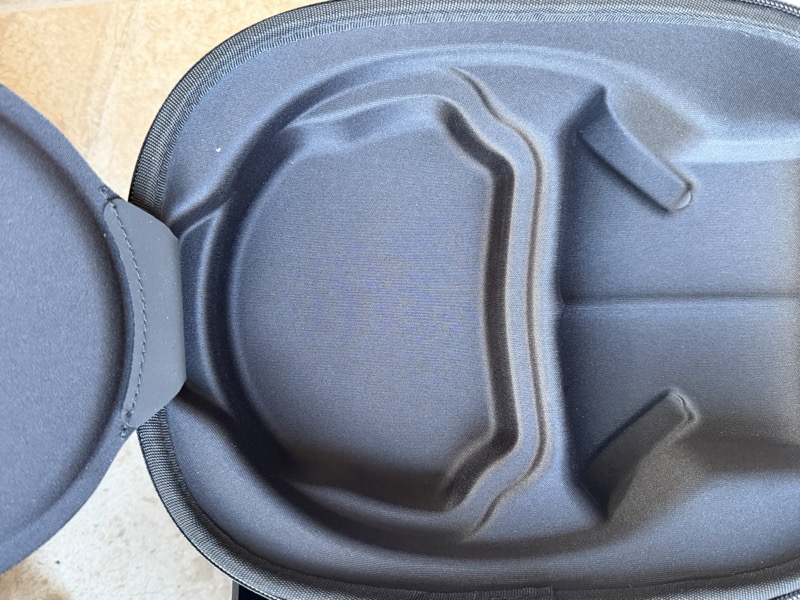
The case interior is properly shaped for the headphone, with a moulded recess for the headband and a separate section for carry the cables and accessories if you require:
 |
 |
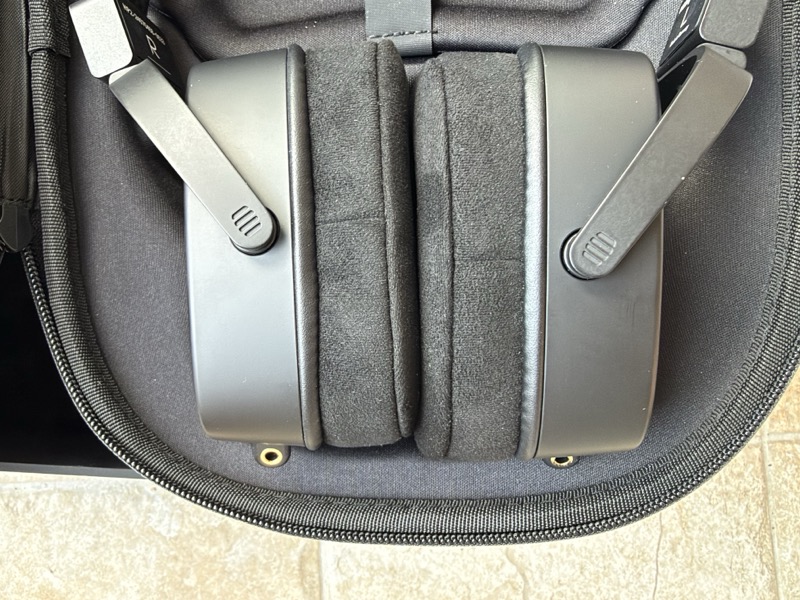
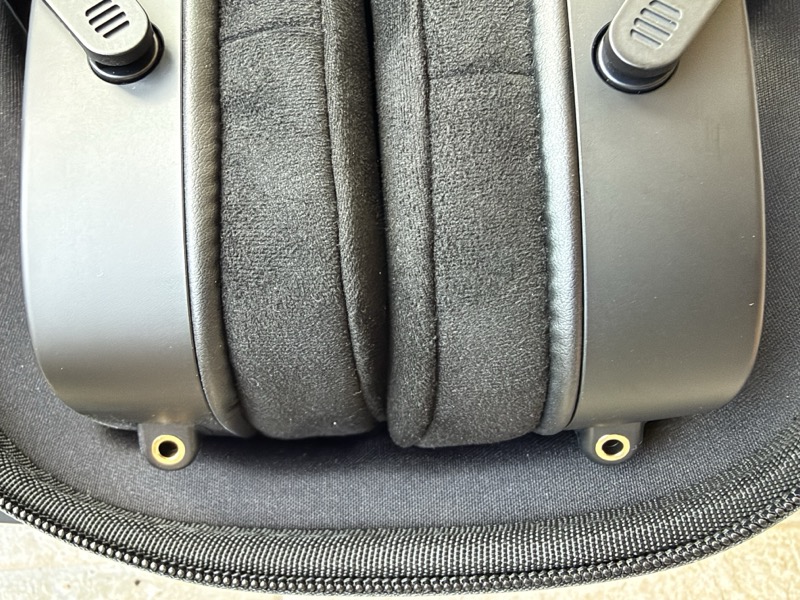
Looking closer at the folded earcups in the case, you can see how they stack — a space-efficient way to store a headphone this size:
 |
 |
Laid out together, the headphone and everything that ships alongside it make the case for the Standard package better than any description of it can:
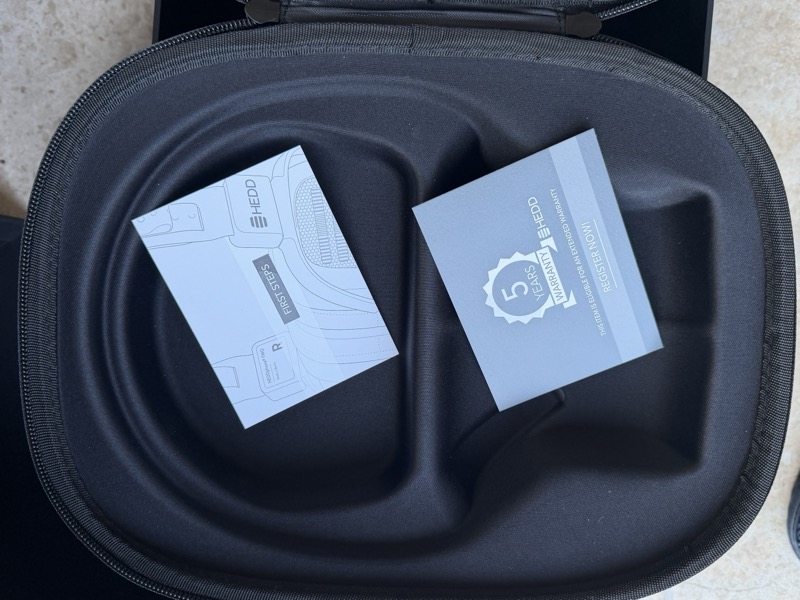
The case, warranty booklet and manual round out the package — a five-year warranty on registration is not something many headphone makers offer, and the documentation is a cut above the folded leaflet you often get:
 Between the case, the two premium cables, and the full adapter set, the accessory package goes further than almost
anything else at this price.
Between the case, the two premium cables, and the full adapter set, the accessory package goes further than almost
anything else at this price.
Whether that specific bundle of extras justifies roughly €500 over the cable-free UNPLUGGED version is really down to whether you already own nice luxury cables — if you do then maybe skip the accessories options.
Note: I will get into discussing the second set of earpads you get with the accessories a little later.
Design and Comfort
The TWO GT’s construction mixes magnesium in the earcup chassis with a carbon-fibre headband, aiming to keep weight manageable despite the size of the driver housings. It feels solid in the hand — a confidence-inspiring mix of plastic and metal rather than anything creaky or hollow-feeling, and the extra heft actually works in its favour, giving the whole headphone a stable, planted feel rather than something delicate.
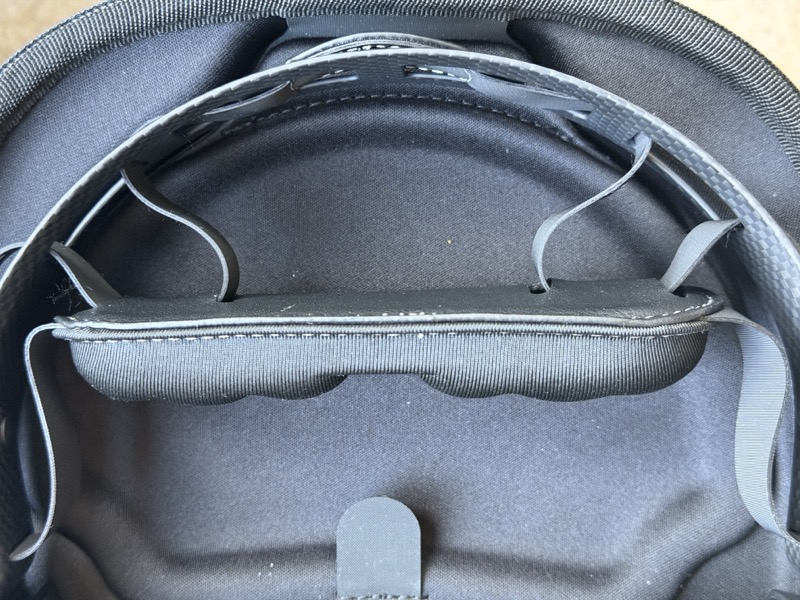
This is the “HEDDband,” a dual carbon-fibre strap system that lets you separately adjust height, width, curvature, and clamping pressure rather than relying on a single slider — laid flat, the two-strap arrangement and the pad geometry either side of it are easy to see:
The earcups swivel nicely too, which adds to the flexibility of fit this headphone already gives you — between the two headband straps and the movement in the cups, there is a lot of scope to get it sitting properly, and it is also what lets them fold flat into the case. The very first time I adjusted the earcups I noticed a slight squeak from the articulation, but I have not heard it since.
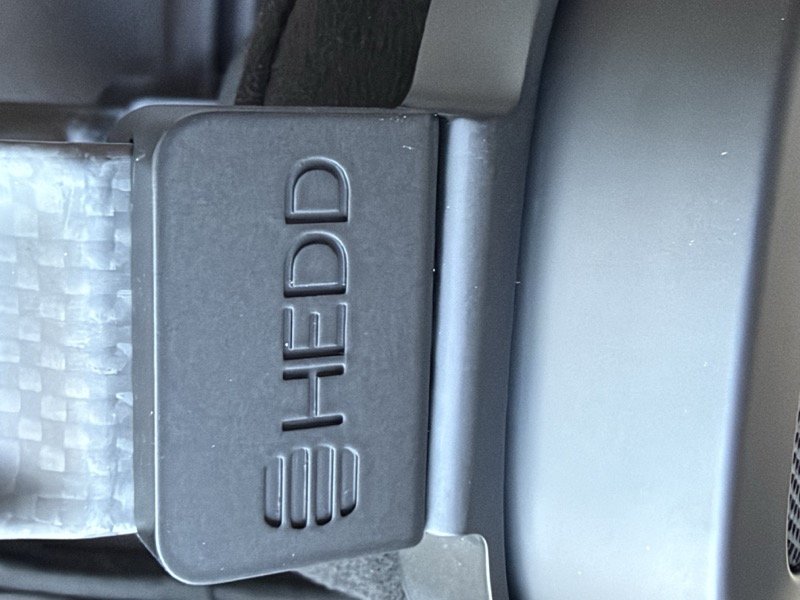
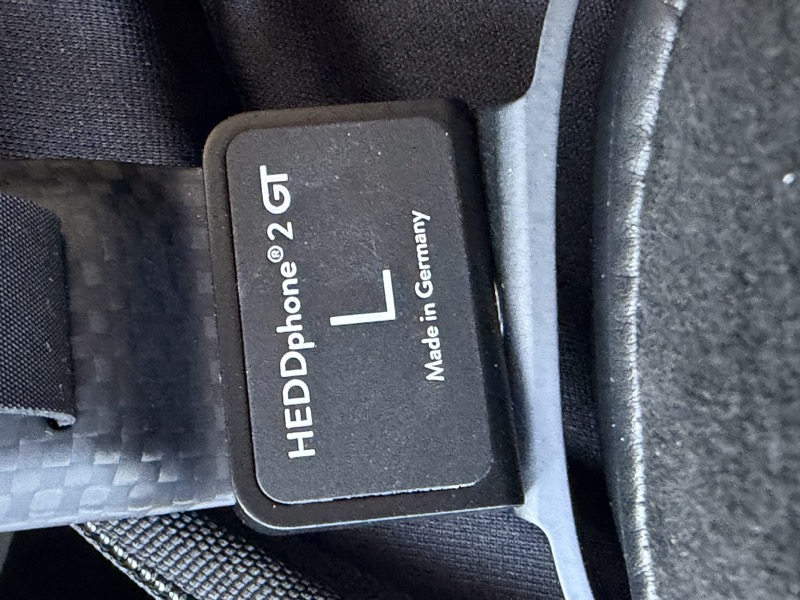
The “HEDD” branding is nicely embossed on the headband, and the channel are clearly labelled on each earcup:
 |
 |
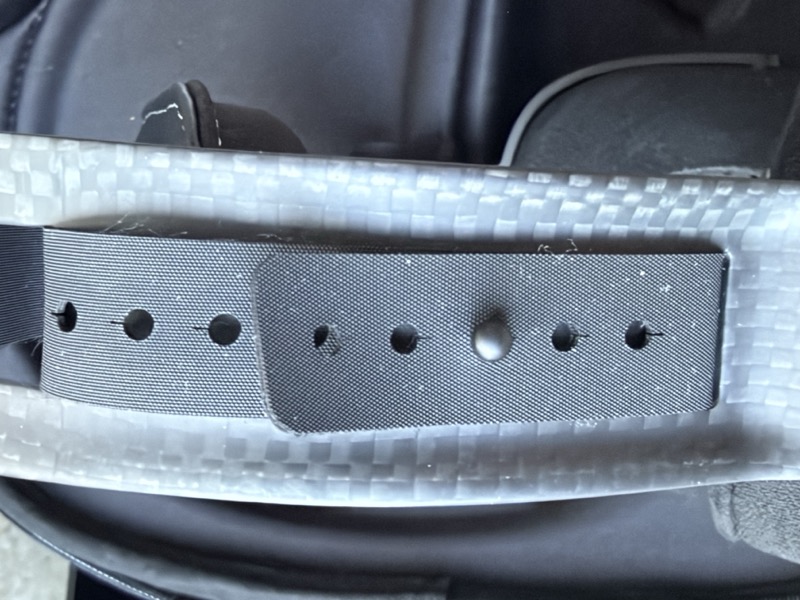
The headband adjustment is more complicated than most and uses both a punched-hole strap system rather than a simple slider, letting you dial in height independently of the carbon-fibre arch’s curvature:
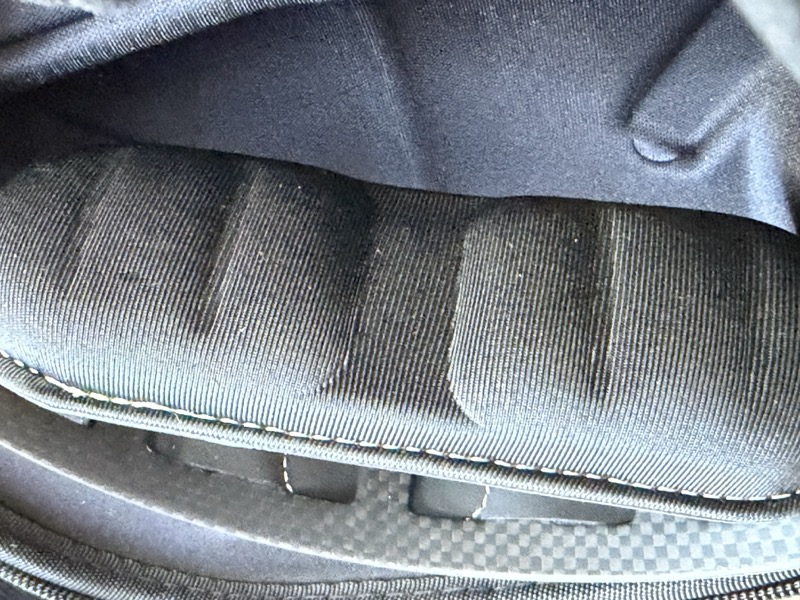
Underneath, the padding is segmented into distinct cushioned sections rather than a single strip, which is part of how HEDD manage weight distribution across a headphone north of 550g and the centre of the headband carries has a gap in the padding so the top of your head does not get too hot:
 |
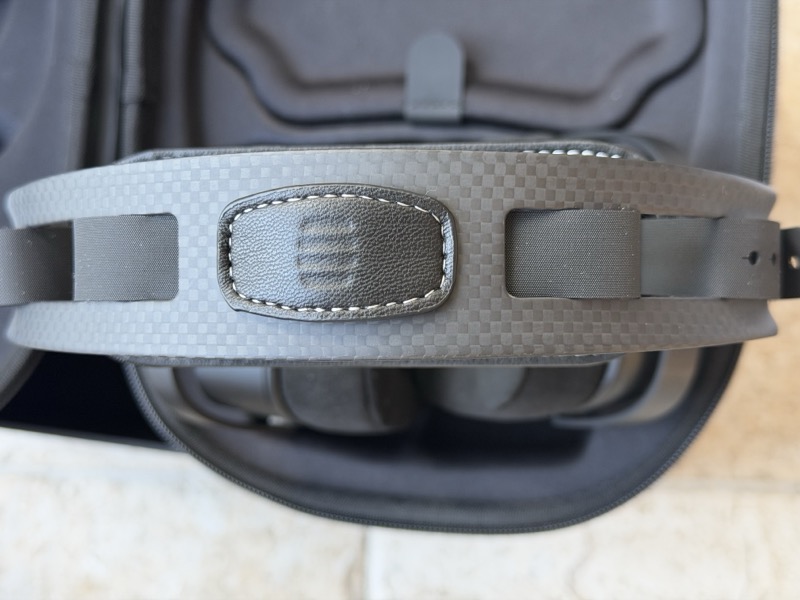 |
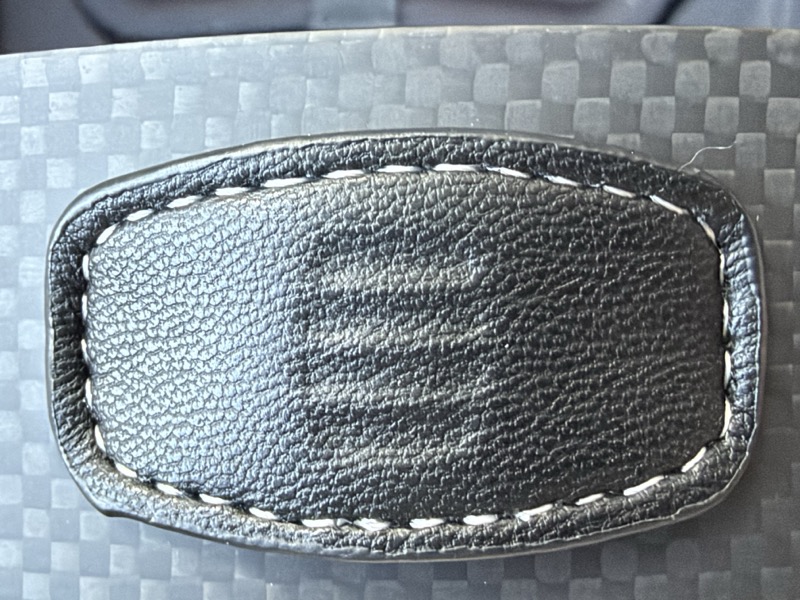
A small stitched leather patch on the headband carries a subtle embossed detail — one of several small touches that make the case feel considered rather than an afterthought:
Fit and Comfort
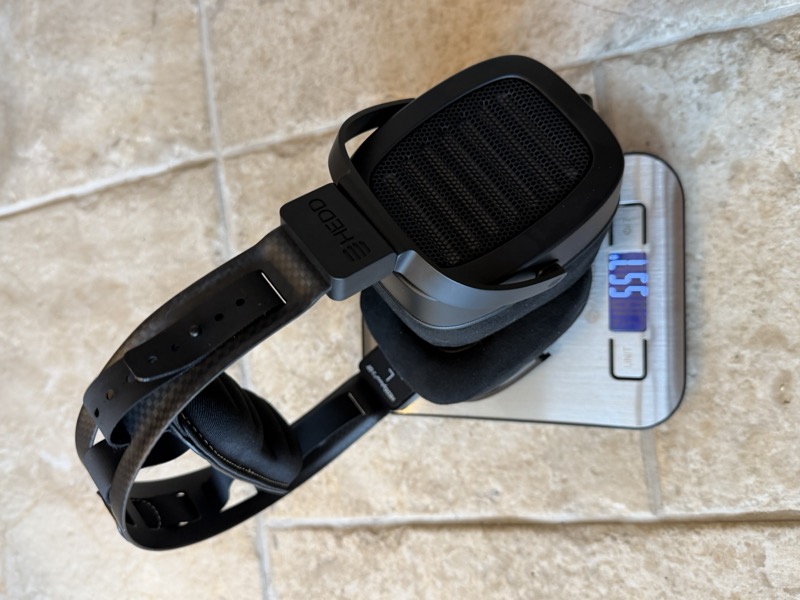
Lets start with the ‘bad news’, the HEDD’s published weight of 550g, this is definitely one of the heaviest headphones I have reviewed, though the strap does distributed this pretty well thanks to the clever headband design:
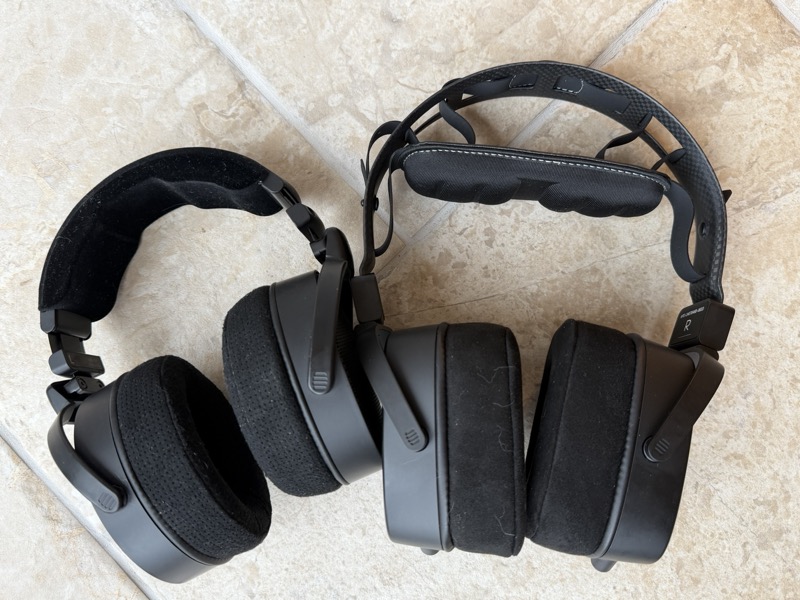
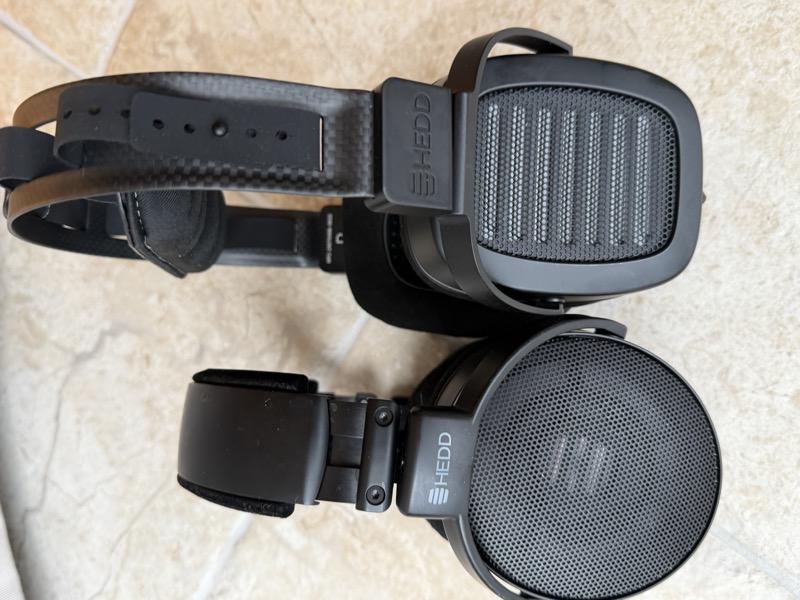
Compared to the HEDD D1 simpler design, the HEDDphone TWO GT is certainly a much bigger headphone:
The fit is a bit fiddly to set up, but it is definitely worth spending five minutes adjusting both aspects of the headband — one strap sets height, the other sets clamping force — to get the headphone properly comfortable and the earpads correctly aligned with your ears. Once it is set, you can leave it alone.
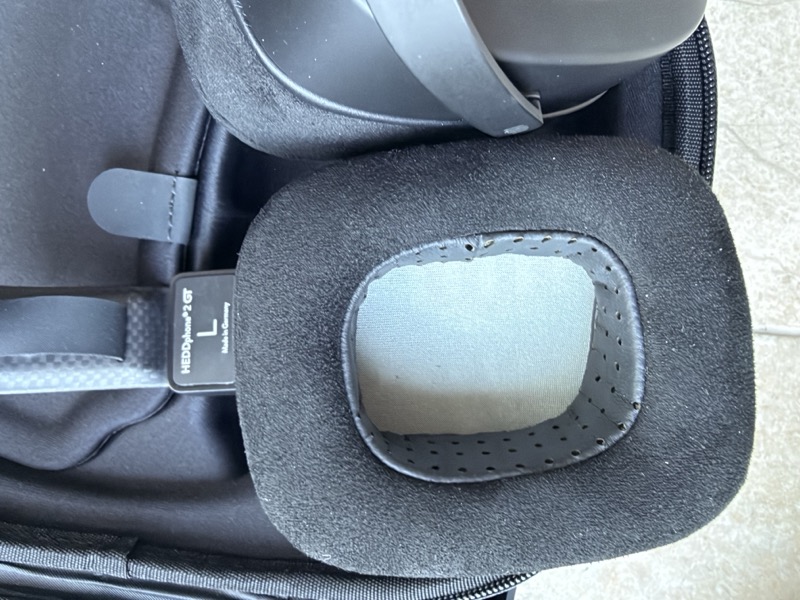
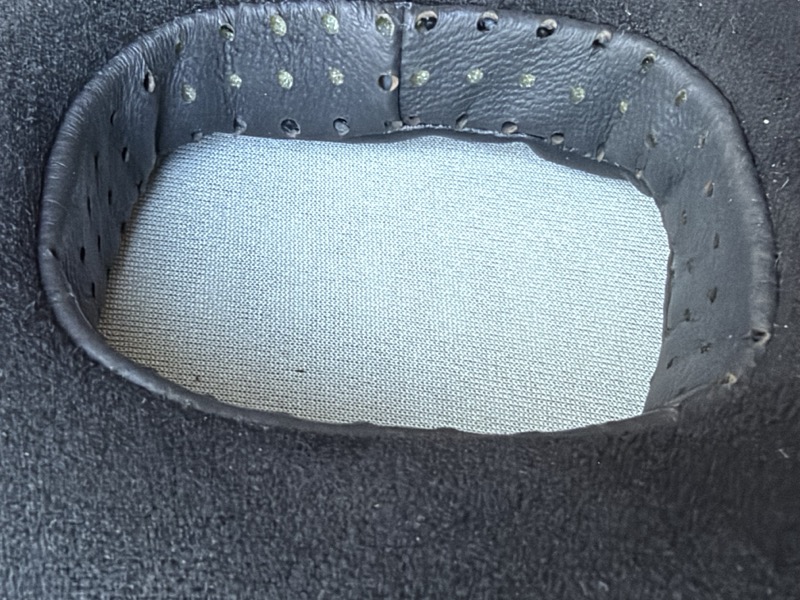
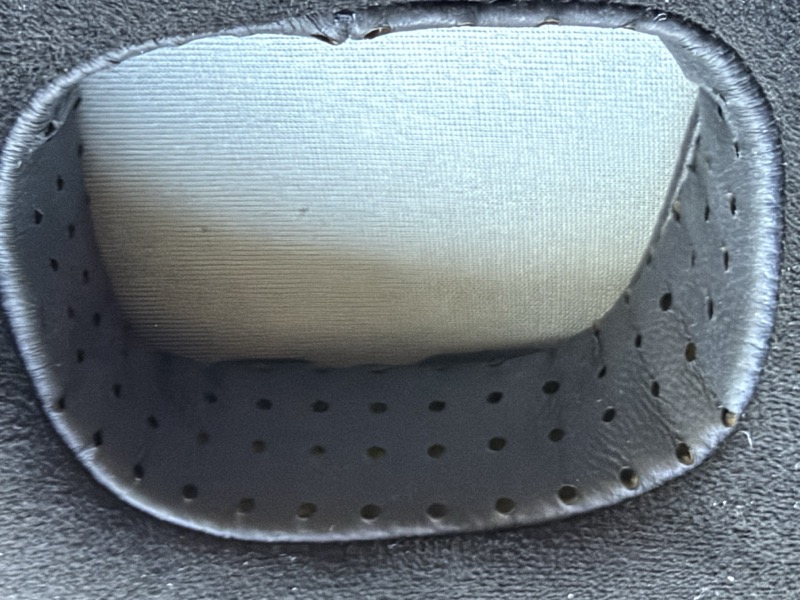
The earpads are a minor point rather than a complaint. For me they were fine, and what I particularly like is their depth — there is real clearance over the driver. The internal cavity is a little smaller than some other earcups I have used, and the velour pads are much the same size so swapping them does not change that, but it is nothing to worry about unless you have very large ears.
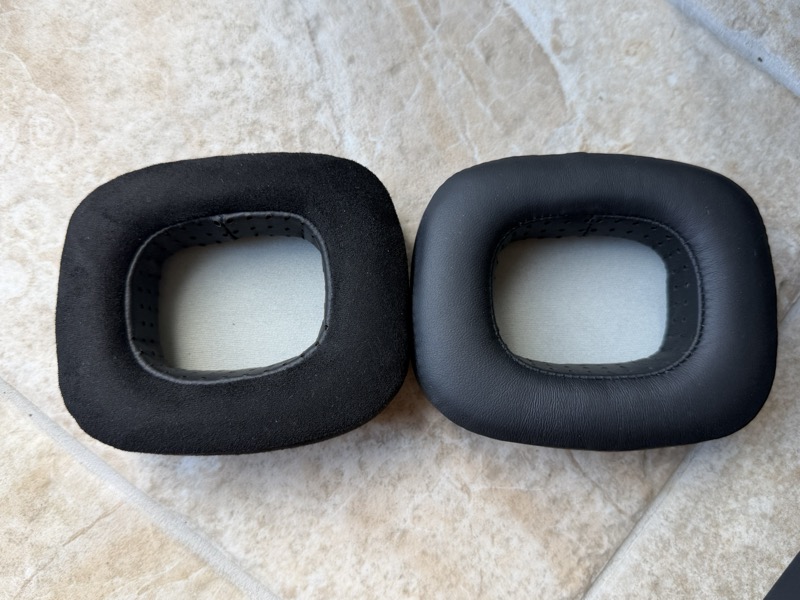
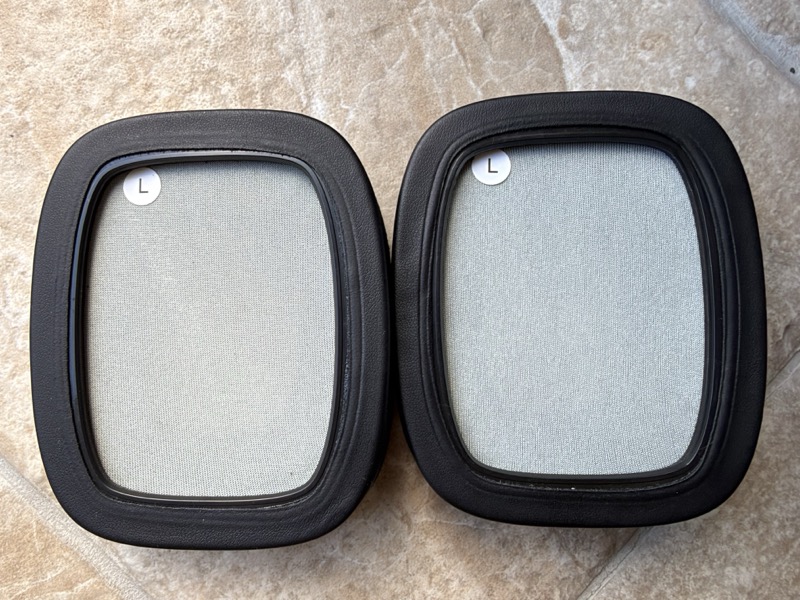
The TWO GT ships with two interchangeable earpad sets — genuine lamb leather and velour — swapped in seconds via a simple twist-off mechanism:
 |
 |
 |
 |
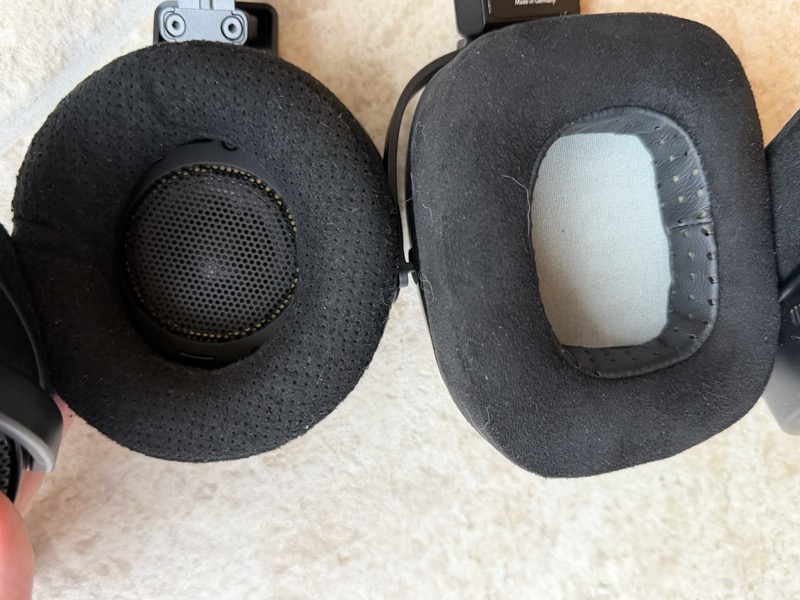
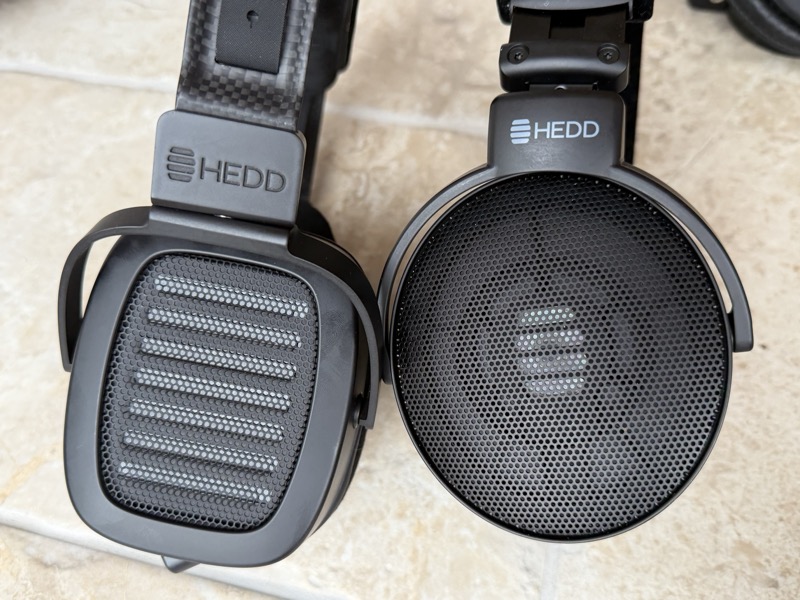
Set beside the D1, the difference in earpad and driver format is obvious — the D1’s round pad and circular dynamic driver on the left, the TWO GT’s larger rectangular opening over the AMT element on the right:
I mostly settled on the leather pads for comfort, though independent measurements I’ve seen from other reviewers suggest the two pad options sound essentially identical, with the choice coming down purely to feel rather than tonality — so pick whichever sits better on your ears rather than worrying about a sonic trade-off. A spare pair of the velour pads sits ready in the case:
Features — The AMT Tweeter and Driver
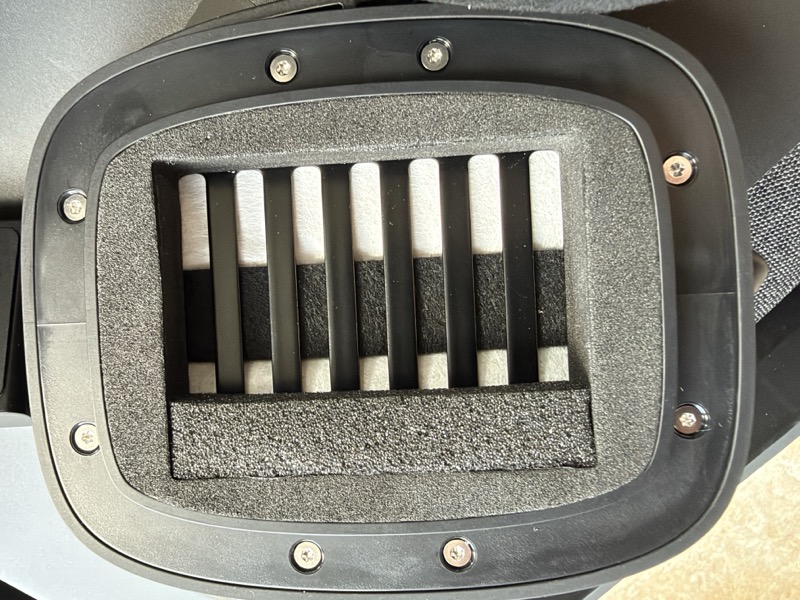
The driver itself is the headline feature. Unlike the D1’s round dynamic driver, the TWO GT uses HEDD’s rectangular Air Motion Transformer — the same fundamental technology behind the tweeters in HEDD’s own studio monitors, here scaled up to cover the full audio range with HEDD’s Variable Velocity Transformation (VVT) geometry. You can see the pleated ribbon diaphragm clearly through the driver grille:
Closer still, the individual folds of the diaphragm are visible — this folded geometry, with folds that vary in width and depth, is what HEDD’s VVT technology is built around, and it’s what lets an AMT driver cover a full frequency range rather than just acting as a tweeter:
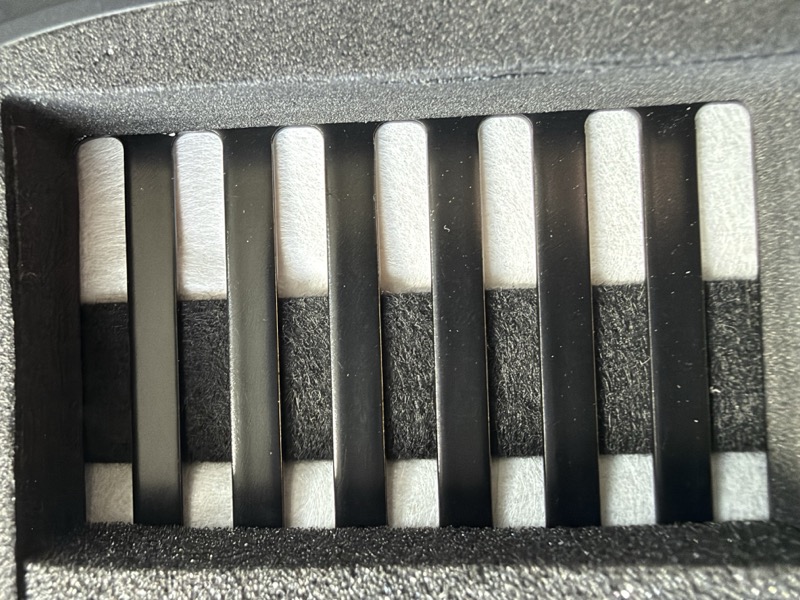
There is no driver flex here at all, which speaks to how well engineered the assembly is. It is still a genuine open-back design, with some sound leakage and outside-noise bleed-through, but it reads as more contained than the most open designs on the market, which is part of why its soundstage (discussed below) comes across as more intimate than expansive.
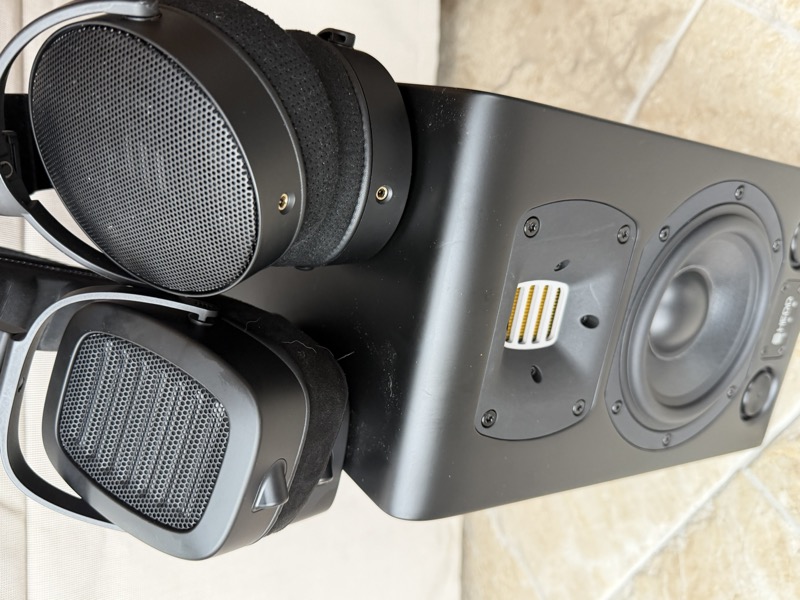
I have had a lot of fun with this collection of HEDD gear — so much so that it took me far too long to finish the review of the Type 05 MK2 speakers, because I kept listening instead of writing. Sadly both the TWO GT and the Type 05 are heading back to their homes now, which is going to leave my D1 rather lonely:
 |
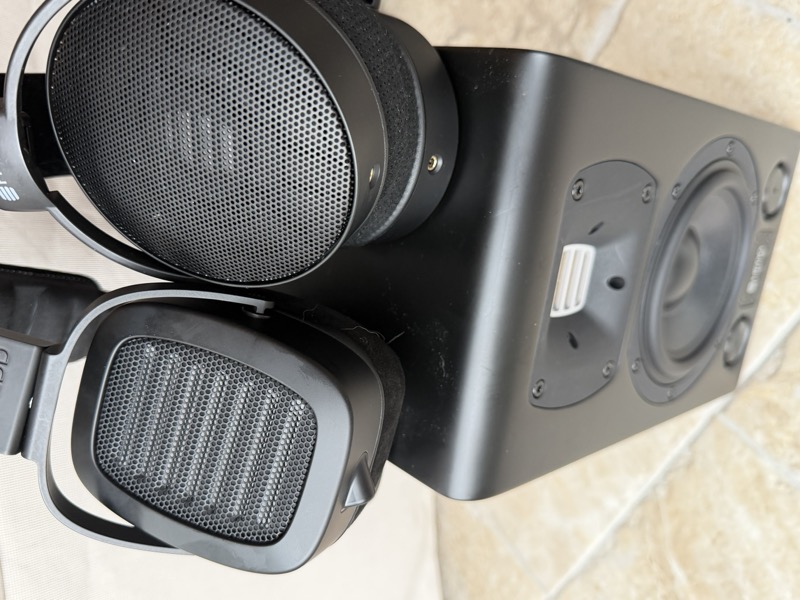 |
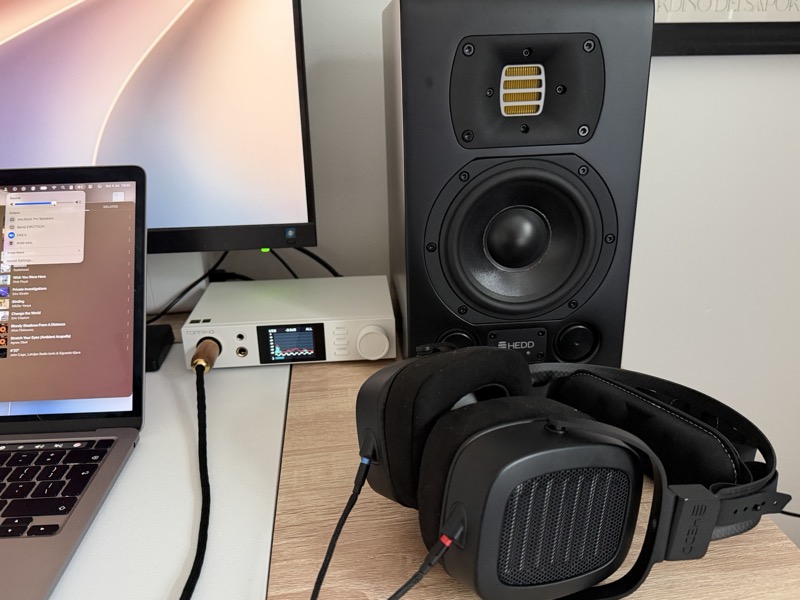
The Type 05 MK2 uses that same AMT tweeter principle, and having now spent time with both the speaker and the TWO GT, it’s clear HEDD are applying one core piece of technology consistently across very different product categories rather than treating the headphone driver as a one-off gimmick. Here’s the TWO GT sharing desk space with the Type 05 MK2 pair and the desktop DAC I’ve been driving it from:
Placed directly side by side, the TWO GT’s rectangular grille and the D1’s round grille make for an easy visual shorthand for the two very different driver philosophies HEDD currently sell — AMT ribbon on one side, dynamic Thin-Ply Carbon Diaphragm on the other:
 |
 |
Driving the TWO GT
Start here, because it matters more on this headphone than on most. At 88dB SPL/mW into 41Ω, and with HEDD themselves recommending 1000mW or more, the TWO GT is genuinely difficult to drive. If you are spending this kind of money on a headphone you should assume proper amplification is part of the budget rather than an optional extra.
For most of the day that meant my work-from-home setup, where the Topping DX5 II has been my main amplifier for the TWO GT across the past three weeks and had no trouble with it. But writing reviews is an evening and weekend job for me, and I like doing that somewhere other than the desk I have just spent eight hours at — which sometimes means I want something portable enough to carry to whichever room I feel like sitting in. I did also listen to the TWO GT with my Luxsin X9 and even my XDuoo TA20 Plus. It was very difficult to find portable amplifiers that could deliver over 1W and get the TWO GT reasonably loud — even my beloved Chord Mojo 2 suffered. This recent and very cheap find, the Jade Audio GIGAS1, has 4W and worked exceptionally well as a ‘portable’ amplifier for the TWO GT:
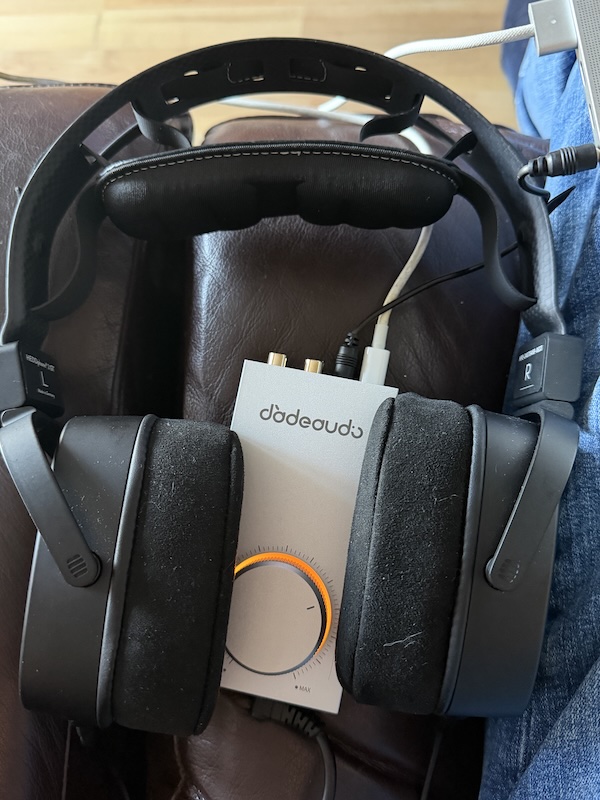
It does need a 12V supply to reach that figure, and the MacBook Pro’s Thunderbolt/USB connection can provide it — which is what makes the arrangement workable away from a desk.
It drove the GT properly — no sense of the amplifier running out, no thinning of the bass at volume, and none of the compressed, flattened dynamics you get when a headphone like this is underfed. If you want the TWO GT somewhere other than a desk, that combination is the one that worked for me, though I would probably still recommend a desktop amplifier. I will be reviewing the GIGAS1 separately soon.
Sound Impressions
Throughout, I rotated the TWO GT regularly against the D1 and several planar headphones from Hifiman, FiiO and Meze.
What strikes me most about it is what it does not do. A lot of high-end headphones arrive with an exotic signature — something distinctive enough to justify the price on character alone, which you then spend months deciding whether you actually like. The Yamaha YH-4000 is a classic example, and one I genuinely enjoyed: a tuning built to show off a particular characteristic of the driver technology rather than to get the tonality right. The TWO GT does not chase that. The midrange and the treble are simply right, and I would not touch either of them. The only thing I would change is the bass, and only to suit myself: I like a little more sub-bass than this gives me. That is a preference, not a criticism, and it is a narrow complaint to have about a headphone at this level.
Bass
The bass is warm without ever becoming bloated or muddy, and it blends two things that usually come separately: a gentle swell through the 100–200Hz region sitting on top of sub-bass that stays properly extended underneath. That gives it the monolithic scale you expect from a good planar alongside a punchier, more impactful low end than most planars manage, and because the lift sits above extended sub-bass rather than replacing it, bass instruments get warmth without losing definition — this is a fast, detailed low end rather than a thick one. It is a deliberate coloration and it will not suit anyone chasing a strictly neutral low end. “Way Down Deep” by Jennifer Warnes is the track that shows what this low end does: it goes deep and it stays full all the way down, with the bass line carrying real body and texture rather than just weight, and never losing its shape against everything above it.
Midrange
The midrange is where the TWO GT does its best work. Vocals and acoustic instruments sound convincingly real rather than analytical, helped by a rise into ear-gain around 2–3kHz that lands where you would want it and a touch of extra energy through 1–1.5kHz that adds bite without turning boxy or nasal — the surrounding upper-bass warmth balances it. That combination is rare in a warm-tuned headphone: it keeps texture and dynamism in the midrange instead of trading them for smoothness, which is where a lot of warm-leaning flagships come unstuck. On “Sweet Painted Lady” by Elton John, the vocal carries real body and presence without sounding forced or artificially forward, and the instrumentation stays clearly layered around it.
Treble
Treble is nicely controlled — relaxed rather than aggressive, with enough air and upper-treble detail to balance the warmer bass, and the AMT driver’s speed shows through in how cleanly transients resolve. The measurement further down is not flat up here, but I never heard that as peaks or hardness — it came across as smooth all the way to the limit of what I can hear. On “She Said She Said” (2022 mix) by The Beatles, cymbals and higher percussion have real clarity and air without becoming splashy.
Soundstage and Imaging
Detail retrieval is excellent — everything you should expect from a reference headphone at this price, with the AMT driver’s speed showing up as microdetail and texture that stays legible in dense material rather than smearing. Imaging is the other strength: instruments are placed precisely, with clear separation and easy-to-follow layering.
The soundstage is the limit. Width is more restricted than the widest-staging headphones I own — the Hifiman Edition XS opens up noticeably further, as does the Ananda Unveiled discussed below. Imaging precision within that narrower stage is excellent, and the stage reads as wider than it is deep. On “Stretch Your Eyes (Ambient Acapella)” by Agnes Obel, the layered vocal textures are placed with real precision even though the overall stage feels more intimate than expansive.
Specifications and Measurements
| Specification | Value |
|---|---|
| Driver | Air Motion Transformer with Variable Velocity Transformation (VVT), multi-layer Kapton polyimide diaphragm |
| Design | Open-back, over-ear |
| Frequency range | 10Hz – 40kHz |
| Impedance | 41Ω (flat) |
| Sensitivity | 88dB SPL at 1mW |
| Power | Minimum 200mW, recommended ≥1000mW |
| Weight | 550g (spec); measured 551g |
| Earpads | Lamb leather and velour, interchangeable |
| Cables | 4-core 5N SPC hand-braided, balanced (4.4mm) and unbalanced (6.35mm), 1.6m; GTC 8-core LC OFC upgrade cable available separately |
| Input | 3.5mm dual connector per earcup |
| Warranty | 5 years on registration |
| Price | €2,199 (Standard) / €1,699 (UNPLUGGED) |
The sensitivity figure is worth paying attention to: at 88dB SPL for 1mW and a flat 41Ω impedance, the TWO GT is not a hard headphone to reach a listenable volume on, but it is not an easy one to drive properly either. HEDD’s own recommendation of at least 200mW, ideally north of 1000mW, matches my own experience — this wants a proper desktop amplifier rather than a phone or a modest dongle to really open up.
I have now measured the TWO GT myself, on my KB501X Soft Ear/Pinna with a 711 clone coupler, plotted here against the KB501X diffuse-field target with a −1dB/octave tilt.
Frequency Response
Channel matching is excellent — left and right sit on top of each other from 20Hz right up to about 5kHz, and only diverge above that in the region where coupler measurements stop being reliable anyway:
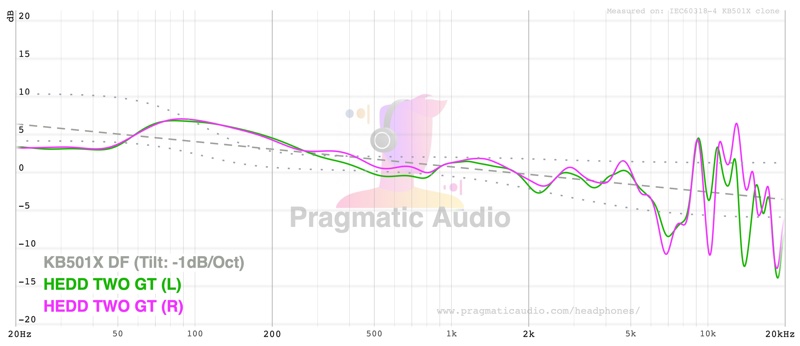
What the trace confirms is the warmth I described in listening: a broad lift centred around 80–100Hz, roughly 6dB above the target, sitting on sub-bass that stays extended rather than rolling away beneath it. Through the midrange it tracks the tilted target closely, with the small 1kHz flare visible as a gentle rise rather than a spike.
Higher up there is some peak and dip activity in the trace, and I want to be honest about it: I did not hear it. To me the treble was very smooth, right up to about 14kHz — which is sadly where my hearing stops, so I am not in a position to tell you what the very top octave is doing.
On EQ
This is one of the very few headphones where I never felt the need to reach for PEQ. Out of the box the tuning is close enough to right that I simply listened to it, which is not something I say often at any price.
The one exception is the bass, and only to my own taste. The 80–100Hz lift is a deliberate warmth and it reads as rich rather than woolly to me — I would not call it a flaw. But I personally like a little more sub-bass underneath it than the GT gives, so I experimented with shifting the balance slightly without changing the character:
Preamp: -4.0 dB
Filter 1: ON PK Fc 108 Hz  Gain -3.0 dB  Q 0.800
Filter 2: ON PK Fc 33 Hz   Gain  4.4 dB  Q 1.100
That eases the mid-bass swell slightly and lifts the very bottom, which is exactly the trade I wanted and may well not be the trade you want. Start by listening to the GT stock — the midrange and treble need nothing at all, and you may conclude the bass does not either.
Comparisons
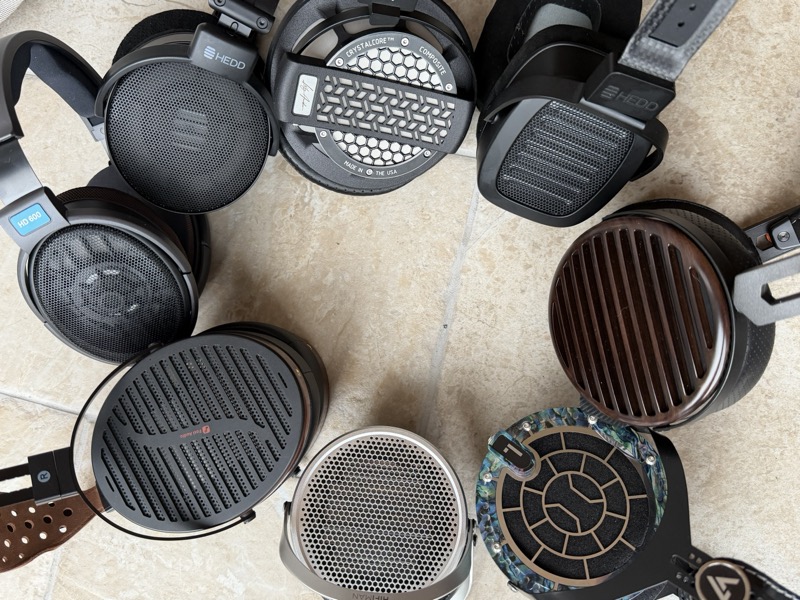
The TWO GT spent its time here alongside the rest of the current collection, which gives a useful sense of scale and company for where it sits. The headphones in these shots are the HEDDphone D1, the Lily Audio Genesis One, the FiiO FT7, the Verum 2, the Hifiman HE600, the Fosi Audio i5 and the Sennheiser HD600:
 |
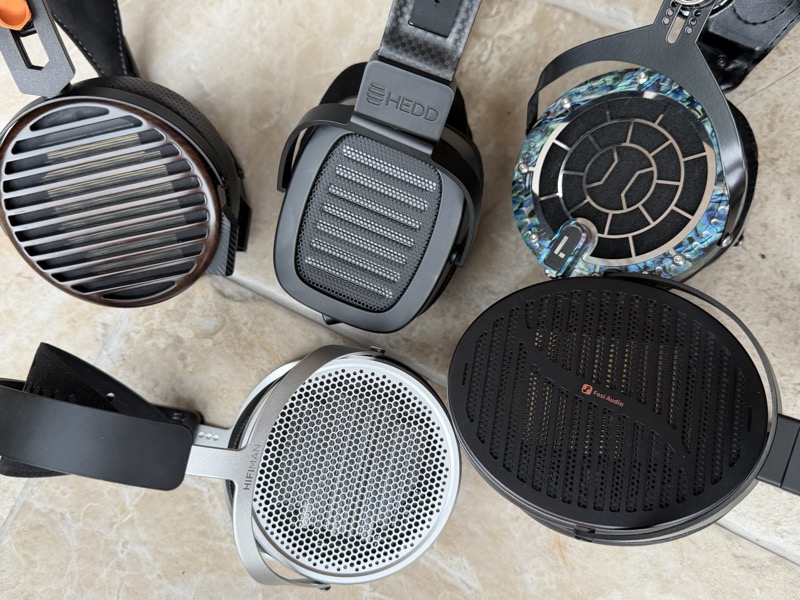 |
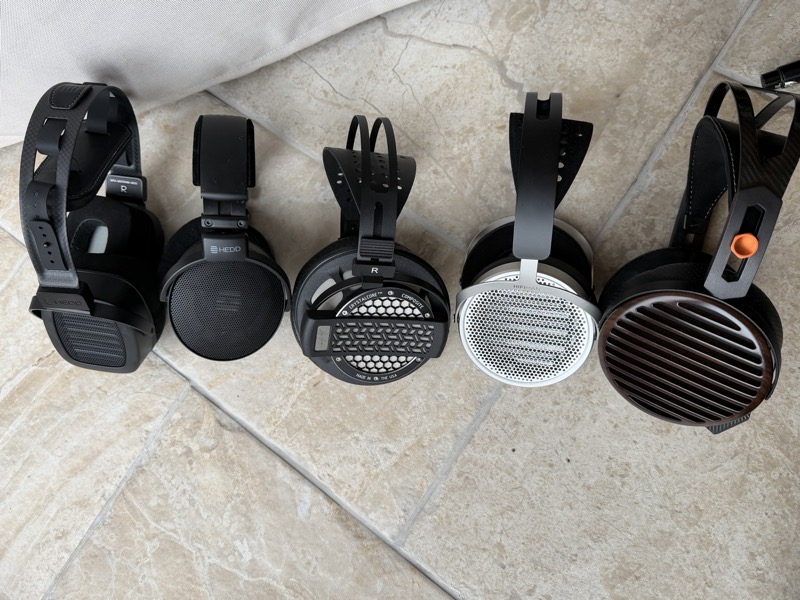
Not everything below was in the room when those photographs were taken — the comparison set is a little wider than the collection shot.
HEDDphone D1
Against the HEDD D1, the comparison is really a study in HEDD’s own two different philosophies. The D1’s dynamic Thin-Ply Carbon Diaphragm is tuned for reference-grade midrange accuracy and studio monitoring work; the TWO GT’s AMT driver is tuned for enjoyment, with more overall warmth and a treble that resolves detail the D1 simply cannot match. If pure pragmatic value is the goal, I’d actually call the D1 the more sensible purchase — but the TWO GT’s AMT treble presentation is something different that the D1’s dynamic driver was never trying to deliver.
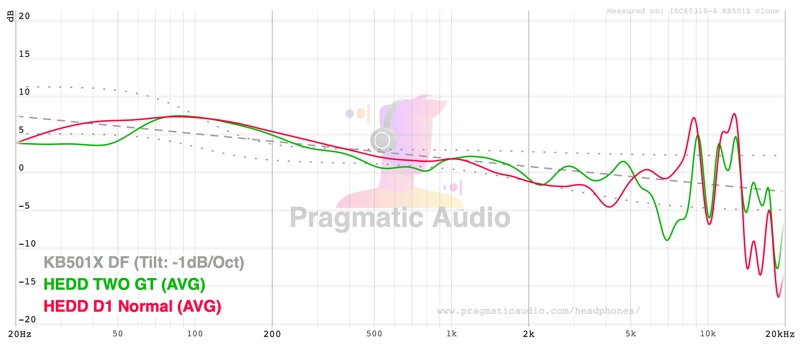
The family resemblance is obvious — both share essentially the same upper-bass lift peaking around 80–100Hz, which is what gives both headphones their warmth. The D1 carries a little more sub-bass below 50Hz. From 2kHz up they take a noticeably different approach. The D1 gives you a nicely filled-in treble, which reads as detailed to me. The TWO GT, at least in the measurement, has a bit of a dip through the 7–9kHz region — and that is probably where I would say the GT is nicely laid back, and definitely not forward.
FiiO FT7 and Yamaha YH-4000
Against the FiiO FT7, the comparison highlights just how much of the TWO GT’s price goes toward the AMT driver technology and the accessory package rather than raw measured neutrality. The FT7’s planar driver is excellent value at roughly a third of the TWO GT’s price, with a similarly spacious soundstage and a neutral, accurate tuning. The TWO GT’s warmer, more deliberately musical presentation and its unique driver technology are the things you’re paying the premium for, not a categorical leap in technical performance.
Against the Yamaha YH-4000, the contrast is closer to two completely different design philosophies than a direct rivalry. The YH-4000 chases an unconventional midrange dip specifically to maximise soundstage depth and imaging at the cost of tonal accuracy — an esoteric tuning built around one very specific technical goal. The TWO GT takes the opposite approach: an accurate, musically balanced tuning that doesn’t sacrifice tonality to chase a party trick. If you want a headphone that plays it straight and rewards you for it, the TWO GT is the more universally sound choice of the two; if you want something that deliberately reinvents how a recording is presented, the YH-4000 is the more interesting listen.
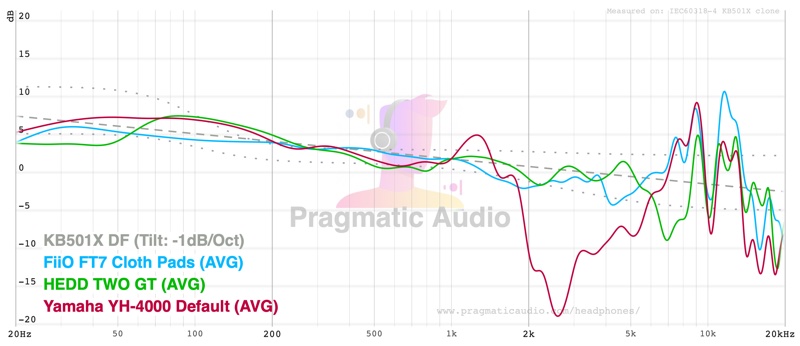
This is where the GT’s midrange handling stands out most clearly. The FT7 pulls back through 1.5–4kHz, sitting a couple of dB under the GT across that whole span. The Yamaha goes much further in the other direction and then collapses: a sharp lift peaking around 1.4kHz followed by an enormous notch through 2.5–3.5kHz, close to 20dB down at its deepest. Whatever that does on a head, it is a far more interventionist tuning than the GT’s, which simply stays near the target.
Meze 109 Pro and Poet
Against the Meze 109 Pro, comfort is the story — the 109 Pro’s self-adjusting headband and lighter weight make it the easier headphone to simply put on and forget about, where the TWO GT’s HEDDband needs more deliberate setup. Sonically the 109 Pro leans into Meze’s richer house sound with a fuller midbass, while the TWO GT’s AMT treble resolves more air and detail at the top end.
Against the Meze Poet, both headphones are genuine flagship statements built around unconventional driver engineering — Meze’s AMTS-shaped Rinaro isodynamic driver against HEDD’s AMT ribbon. The Poet’s presentation is more deliberately subtle, rewarding patience and revealing itself gradually; the TWO GT is more immediately engaging, particularly in the treble. Comfort again favours the Poet, whose weight distribution I found more effortless over long sessions.
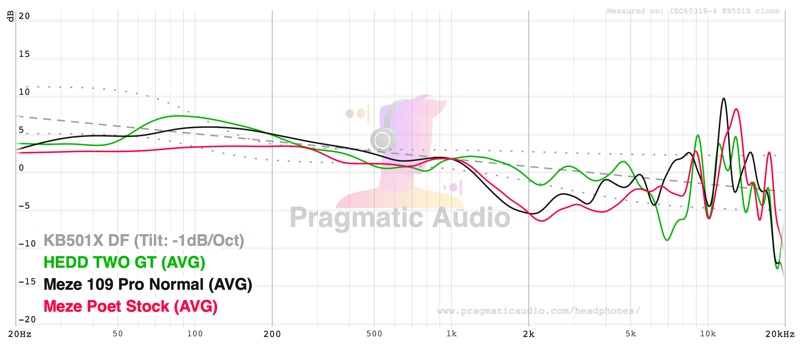
Both Mezes recess the 2–5kHz region substantially — around 5 to 6dB below the GT through 2–3kHz — which is a large part of why they read as smoother and more forgiving, and why the GT reads as having more presence and bite. The GT has the most upper-bass warmth of the three; the Poet is the flattest through the low end.
Hifiman HE600 and Ananda Unveiled
Against the Hifiman HE600, the TWO GT’s AMT driver gives it a different character in the treble — more relaxed and controlled where the HE600’s planar treble is more energetic and occasionally more fatigue-prone on hot recordings. The HE600 is also considerably more affordable, making it a sensible step below the TWO GT for anyone who wants a taste of a similarly detailed treble without the flagship price.
Against the Hifiman Ananda Unveiled, soundstage width is the clearest differentiator, and it goes to the Ananda Unveiled — its grille-less design gives it a wide, open presentation that the TWO GT’s more intimate stage doesn’t try to match. The TWO GT counters with a warmer, more deliberately musical overall tuning where the Ananda Unveiled stays more neutral throughout.
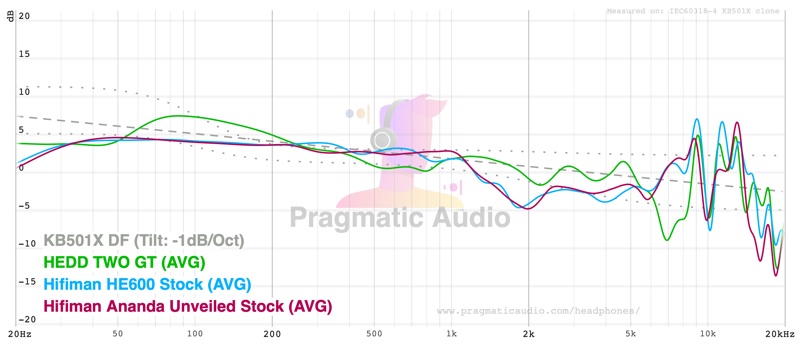
The same pattern again. Both Hifimans are flatter and less warm through the bass, and both drop around 5dB below the GT through 2–3kHz before recovering. The GT is the only headphone in this group that stays close to the target across that band.
Audeze MM-100
Against the Audeze MM-100, the treble is the clearest point of departure — the MM-100 takes a noticeably laid-back approach up top, smoother and more relaxed than the TWO GT’s more energetic presentation. But the overall sound signature isn’t really a contest: the TWO GT’s warm, textured bass has a sense of weight and body that the MM-100 simply doesn’t reach, and that gap alone makes the TWO GT the far more satisfying listen of the two despite the MM-100’s gentler treble.
I have not measured the MM-100 on this rig, so this one is on listening alone rather than on a graph.
Taken together, these comparisons say something fairly consistent. You get a similar slightly warm presentation from the TWO GT and the D1, but the GT is the one that shines: a more neutral midrange and better, more controlled treble than any of the others here. Most of these alternatives reduce the 1–2kHz and 2–5kHz regions to varying degrees — the Yamaha most dramatically of all — and while that makes for an easier, smoother listen, it is also what costs them the midrange timbre that is the TWO GT’s defining strength. That warm midrange presence combined with genuinely natural timbre is the thing these graphs keep pointing back to.
Distortion
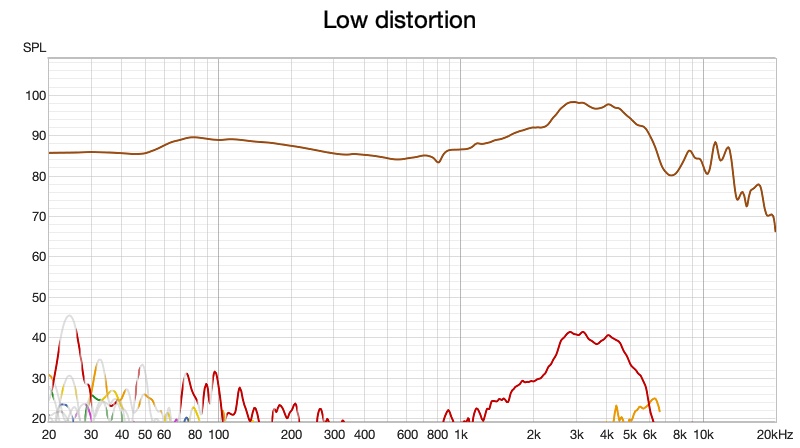
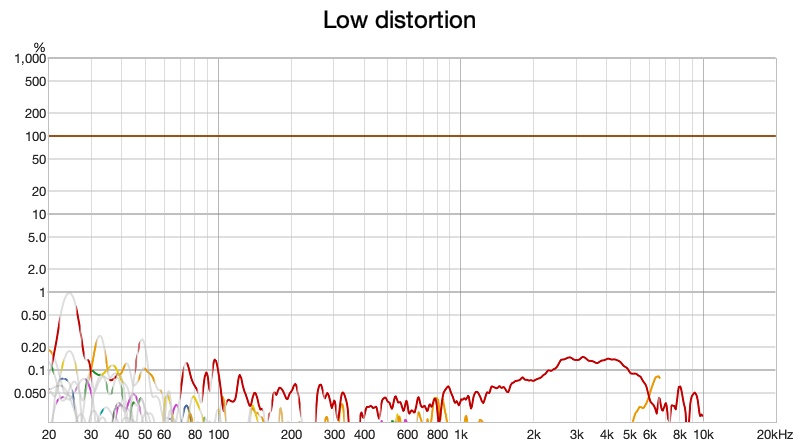
Distortion peaks close to 1% below 30Hz, where cone/diaphragm excursion is highest, and drops under 0.2% for the rest of the band — including through the 3–4kHz region where the fundamental itself peaks around 97–98dB SPL. That is a genuinely low distortion profile across the audible range, not just in the midrange where it’s easy to look good:
 |
 |
Rating Explanation
The Pragmatic Rating of 5 reflects a headphone that is fantastic-sounding even considering its price, with a well-controlled, musically balanced tuning built around a driver technology that most headphones simply don’t have access to. Its standout quality is dynamics — kick and snare drums land with real weight and articulate snap together, a combination most planar headphones I’ve owned don’t manage. Both HEDD headphones earn the same pragmatic five from me, and at a fraction of the price the D1 is still the easier one to recommend to most people — but if you have the budget and specifically want the AMT driver’s treble presentation and dynamic punch, that is exactly what the TWO GT gives you.
The Price Rating of 4 acknowledges that €2,199 is a serious sum, even if the accessory package that comes with it is excellent — I’m just not convinced that package alone is worth the roughly €500 premium over the UNPLUGGED version for anyone who already owns compatible cables. The Features Rating of 4 reflects a headphone I mostly love, with two minor caveats: the adjustment mechanism is clunkier than I would expect, and I think it makes the headphone heavier than I would like. The second is how hard it is to drive — at 88dB SPL/mW you need real power to get the best from it, and that is a cost to factor in rather than an afterthought. The Measurements Rating of 5 stands even though the response is not flat, because what the deviations add up to is a headphone that sounds right. The midrange and the treble are both excellent. The midrange in particular is the reason I kept coming back to this headphone — natural, textured, and convincingly real in a way that does not depend on any trick of the tuning. And the treble is one of the very few times I have used a headphone where I could listen at length and find no obvious fault with it at all: it was simply smooth, top to bottom, for as far up as I can hear.
This one is for the audiophile who already has a serious desktop amplifier, who has perhaps tired of the more esoteric flagship tunings on the market, and who wants a properly, sensibly tuned headphone built around a different driver technology rather than a marketing gimmick.
Conclusion
It’s ended up parked on top of one of my HEDD studio monitors as a genuine daily driver rather than something I reach for occasionally to remind myself it exists:
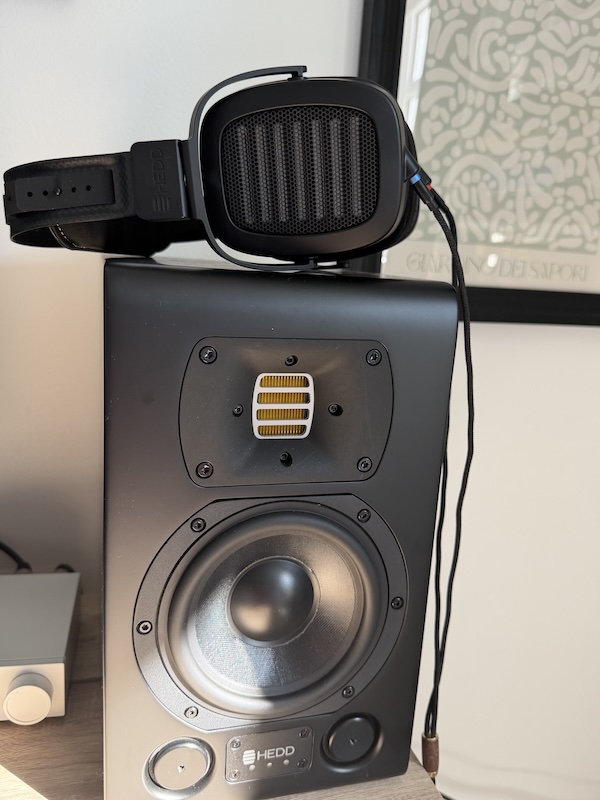
I have mostly reviewed sub-$1,000 headphones, but when I do occasionally step into high-end territory, the products in that space often arrive with esoteric tunings designed to show off some “unique” aspect of the sound. The HEDDphone TWO GT is the exception that proves the point: HEDD Audio had every opportunity to tune this AMT driver for maximum technical spectacle, and instead they tuned it properly, for actual listening enjoyment. It isn’t the widest-staging flagship on the market, and it isn’t the most effortlessly comfortable either, but the detail retrieval is everything you should expect at this level and the imaging is genuinely excellent — and it is a more natural-sounding, better all-round headphone than a list of individual strengths suggests — and the combination of weighty, articulate dynamics with a warm but still textured midrange is something I haven’t quite heard elsewhere at this price. Having now spent meaningful time with both HEDD headphones — the D1 for pure pragmatic value, and the TWO GT for a distinctly different, flagship-level driver experience — I’ve come to appreciate HEDD Audio as a company that consistently gets the fundamentals right, whether that’s a studio monitor, the D1, or this.
If you want one of the best high-end headphones currently available, and you’re prepared to pay flagship prices for a properly, sensibly tuned AMT driver rather than an esoteric party trick, the HEDDphone TWO GT belongs on your shortlist. It’s a headphone I think is genuinely underrated relative to how much attention it gets, and a strong candidate for a one-and-done flagship purchase for anyone who wants a natural, dynamic, musically engaging sound over a more clinical pursuit of maximum detail.