FiiO FT15
Suede to Meet You
The FiiO FT15 is a 101mm open-back planar magnetic headphone with carbon-fibre headband, walnut cups and two sets of pads
The FiiO FT15 feels like the culmination of an outstanding year of headphones from FiiO. I still love the FT7, but the FT15 takes much of what I enjoy about it and puts it into an exceptional sub-$500 offering. The overall tuning is very similar, while the combination of carbon fibre, wood and metal makes it one of the nicest looking headphones at this price.
Some details are better too, I find the headband adjustment more refined than the FT7’s, the shorter cable is more practical, and the suede pads are among the most comfortable I have used on any headphone. This is arguably FiiO’s best headphone to date:
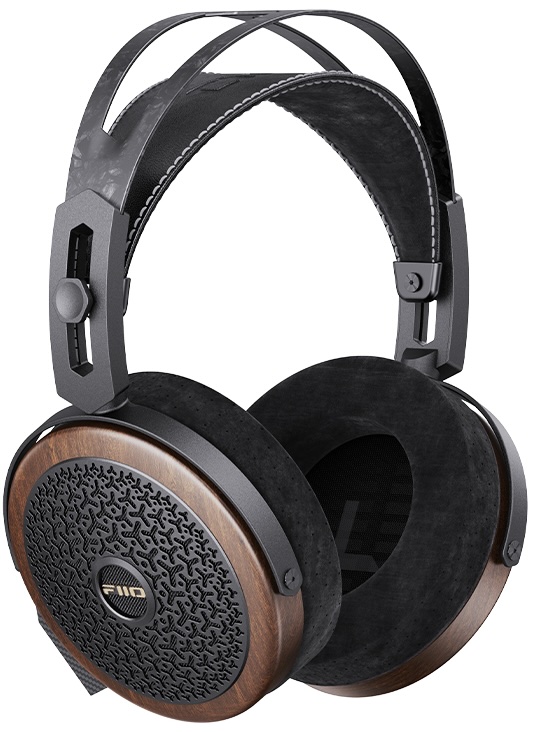
Product information is available on the official FiiO FT15 page and in FiiO’s launch announcement. The colour supplied is Black (Walnut), as printed on the box label.
I would like to thank FiiO for providing the FT15 for this review. The price is $499.99, which I believe is the price, and compared with the current FiiO flagship FT7 it is a very good price.
The sound is familiar from the FT7, with balanced bass, a clear midrange and an open presentation, though the surprise is how much I like the FT15 as a complete package, especially the pads and the headband adjustment. First, here is what comes in the box.
Unboxing and Build Quality
The outer packaging has the model name on the front and a gold headphone outline on the side:
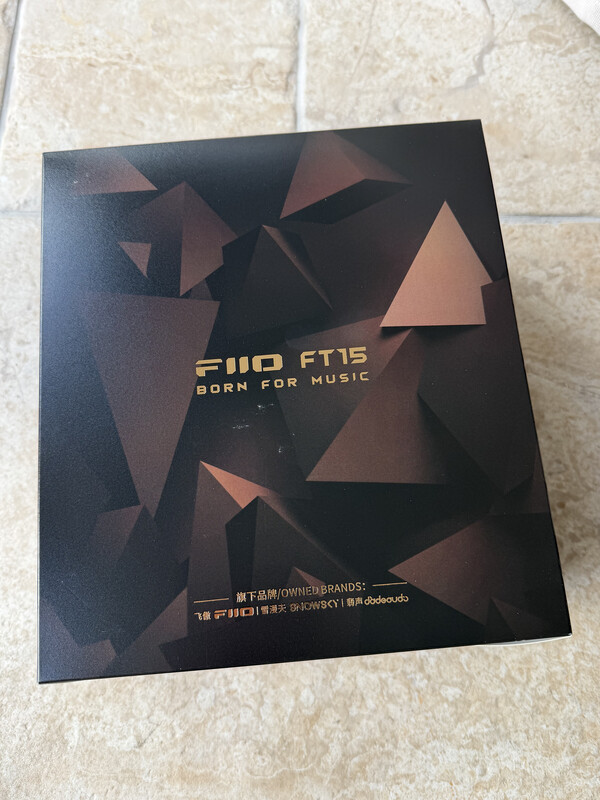 |
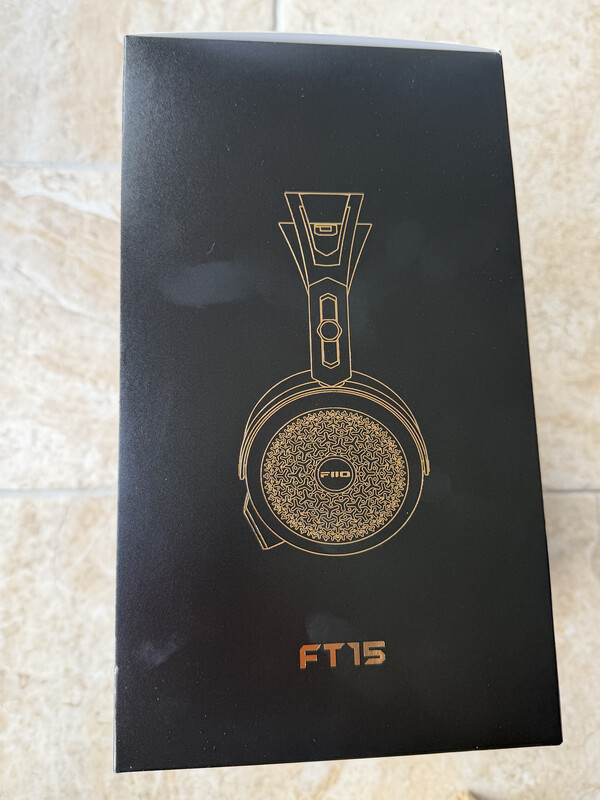 |
The back panel has the specification and certification labels, and the colour is given as Black (Walnut):
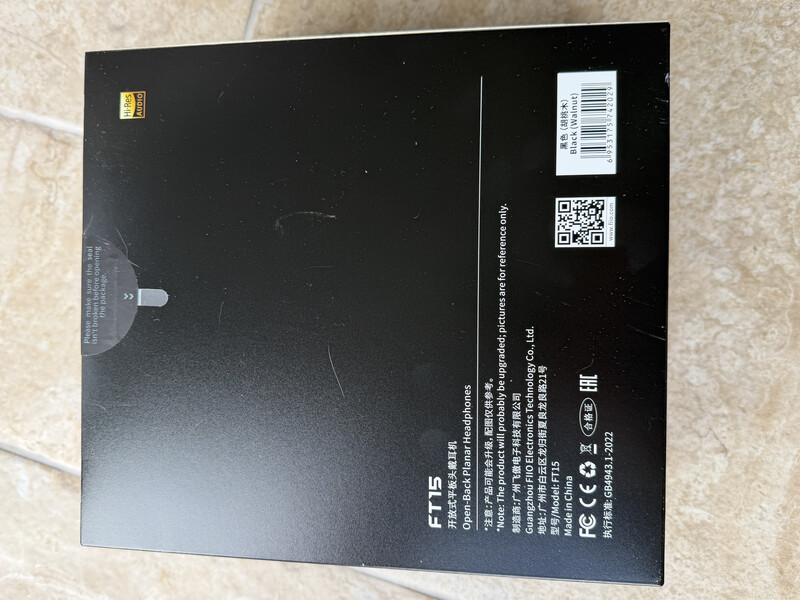
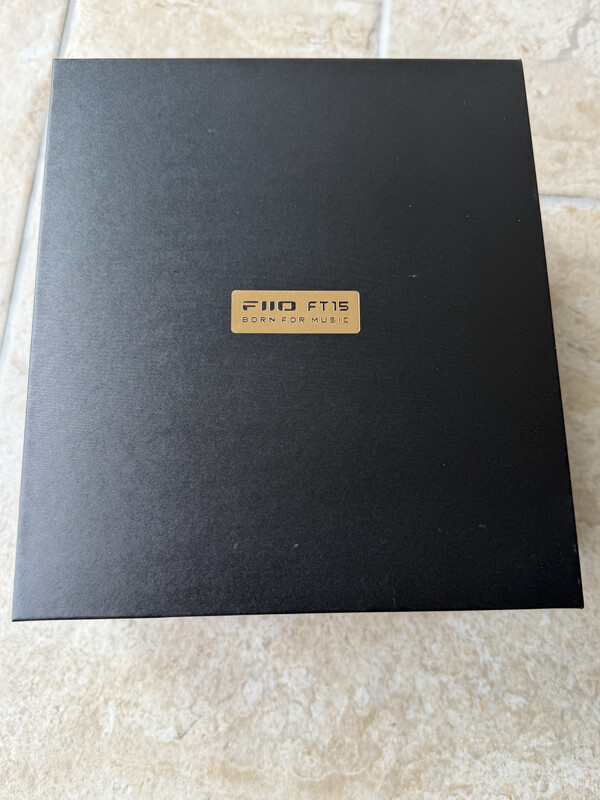
Under the sleeve is a plain black inner box with a small FT15 badge:
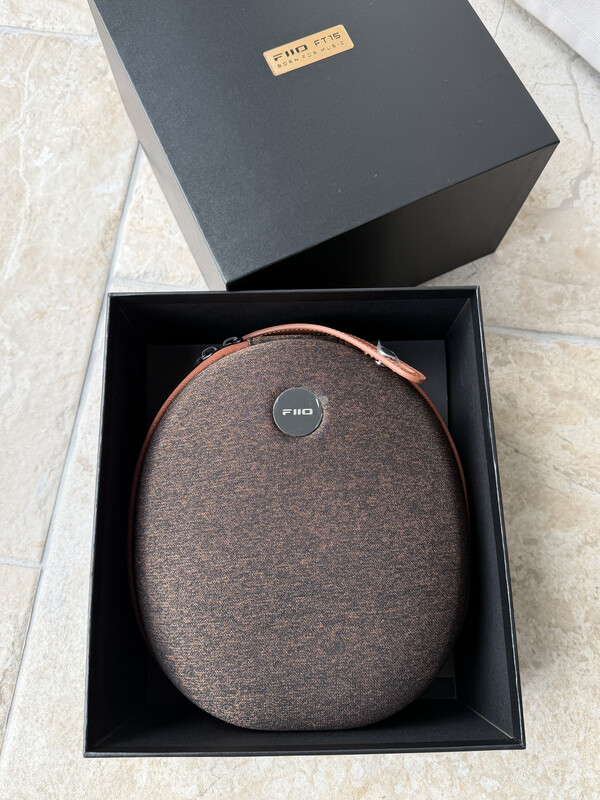
The fabric-covered storage case takes up most of the box:
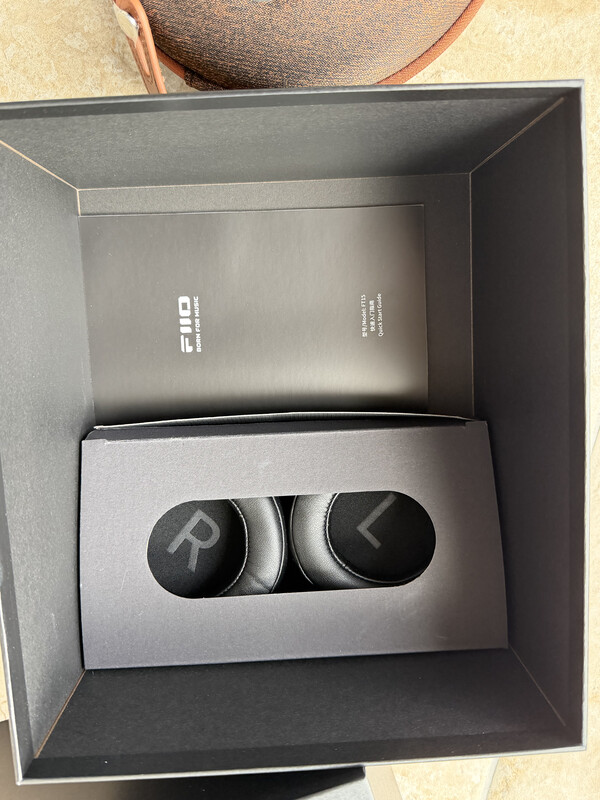
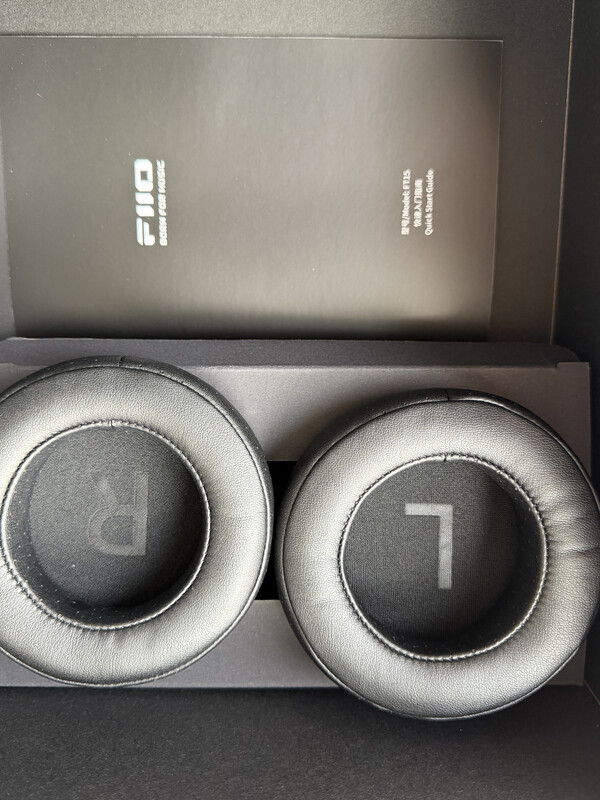
A separate accessory box holds the second pad set, with left and right markings visible inside the openings:
 |
 |
The open case shows the headphones and the coiled cable arranged around its moulded interior:
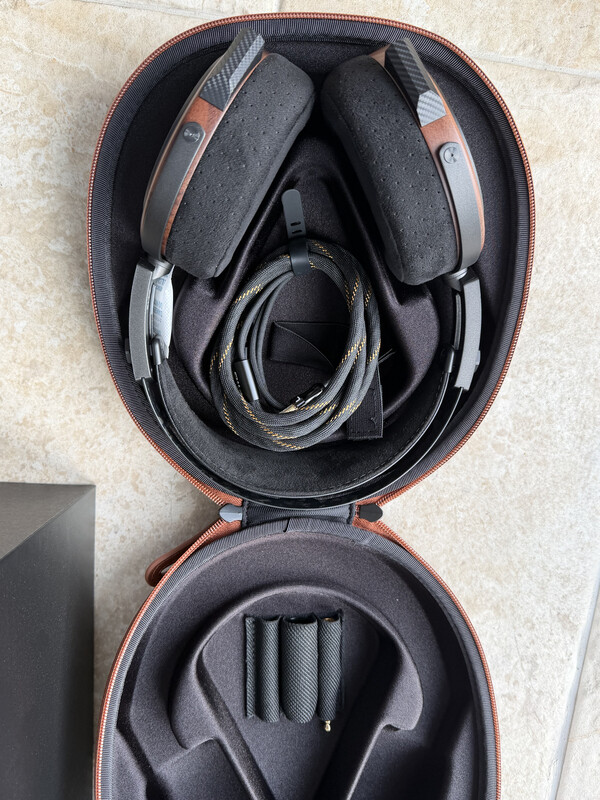
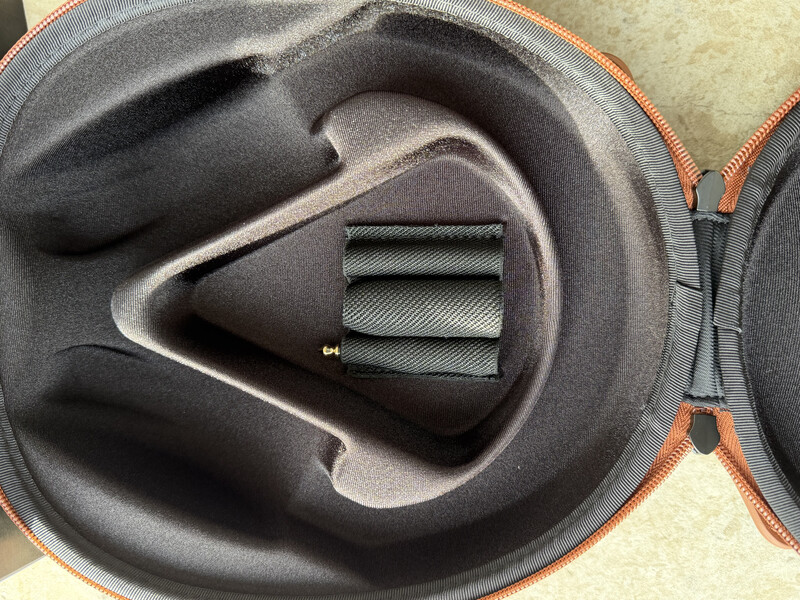
These two views show the case interior and its shaped support sections:
 |
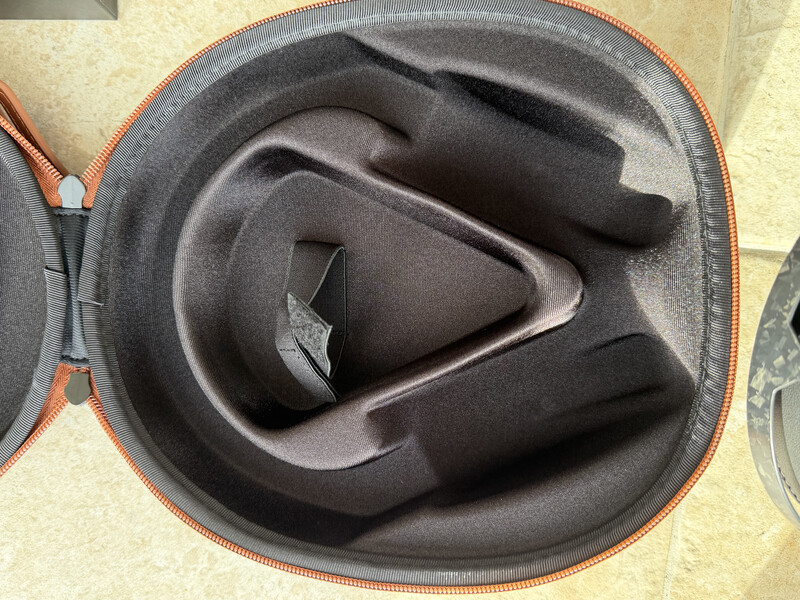 |
The case, spare pads and adapters make this a complete package, and the fitted interior gives the cups a defined place to sit when stored.
With the headphone lifted slightly, the cup, yoke and adjustment frame are easier to see:
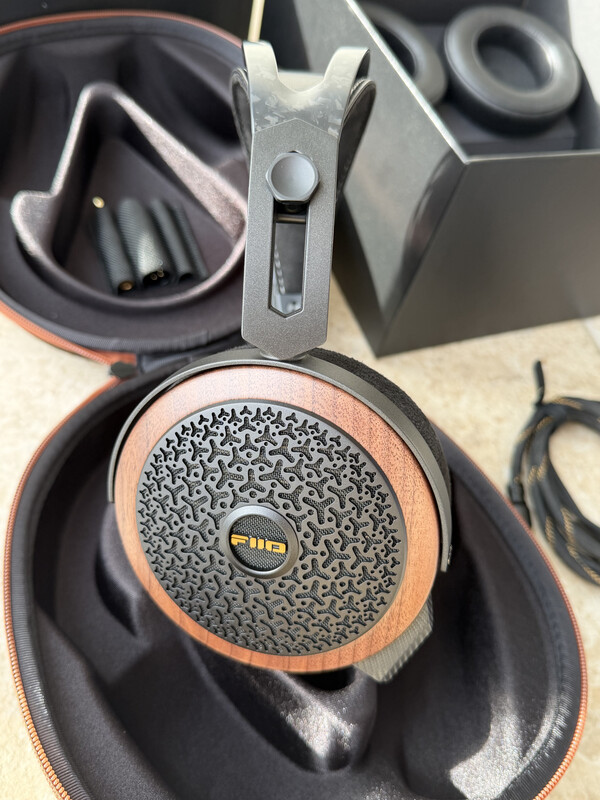
The front view shows how the suspended strap, frame and wood surrounds fit together:
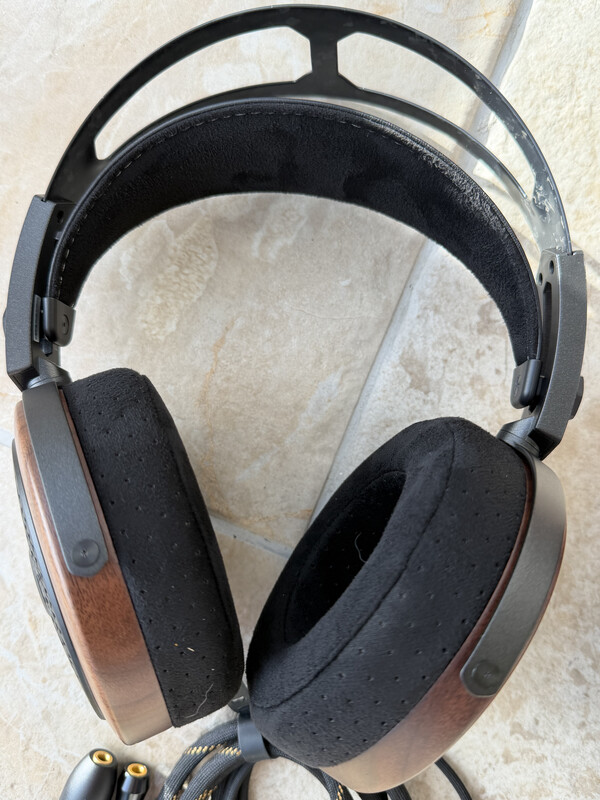
The close-ups show the wood surround, perforated grille and central FiiO badge:
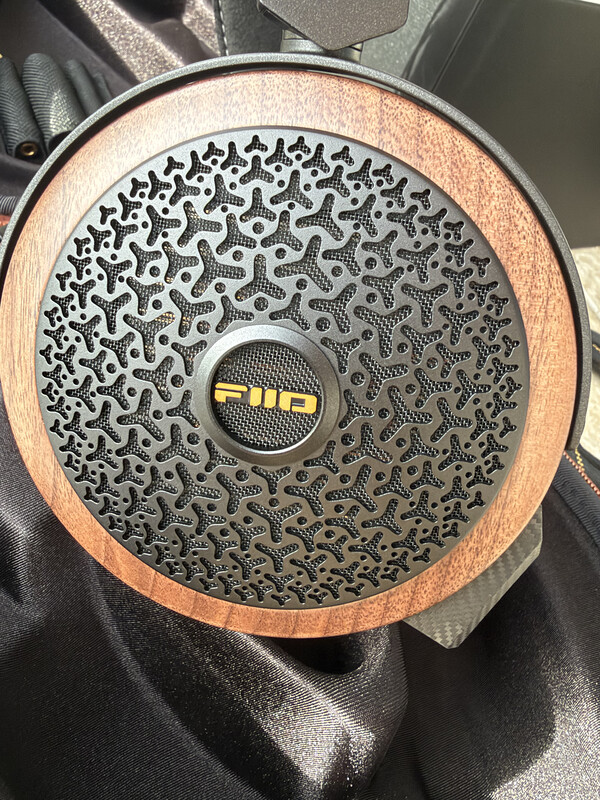 |
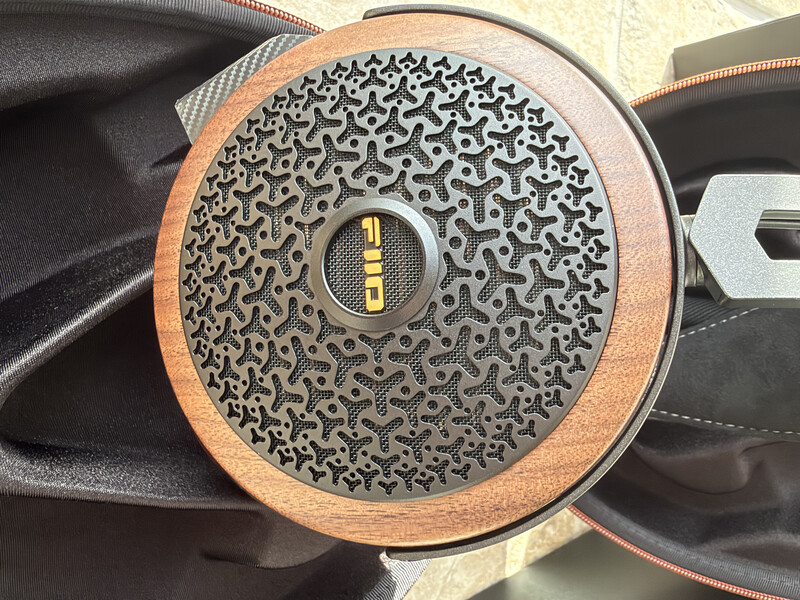 |
The yoke attaches at the side of the cup, leaving the pad and grille as separate visible parts:
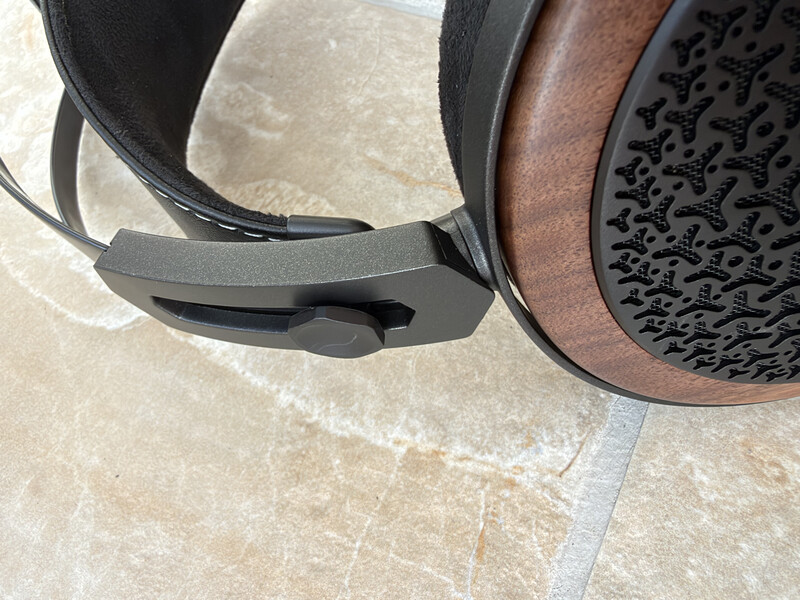
The carbon-fibre frame, wood surround and metal hardware work well together visually, and I like that the FT15 has its own look while keeping the construction details that made the FT7 appealing.
Removing the pad exposes the planar driver assembly:
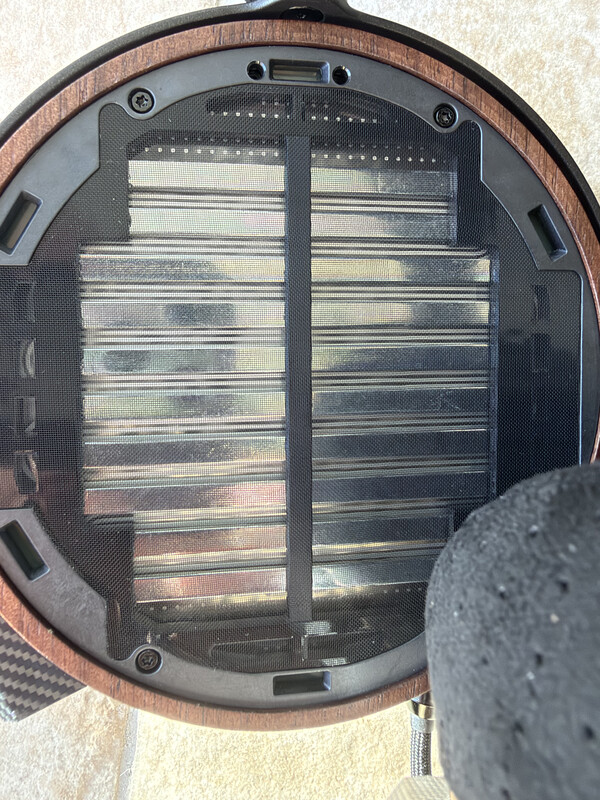
Driver and Materials
FiiO specifies an 800nm diaphragm, compared with 6μm on the earlier FT5 (an 86.7% reduction in thickness), and they say it gives faster response, less ringing and cleaner high frequencies, which I was interested to find out about in the measurements and listening below. Lower moving mass is a sensible aim, though the coating, conductive traces, tension and magnet system all matter as well.
The diaphragm is PET with a full-surface diamond coating and the conductive coil is a silver-aluminium alloy. The 101mm driver has a claimed effective vibrating area of 6,443.5mm², which is 35% larger than the FT5’s, and FiiO describe a dual-sided magnetic circuit with shaped magnets to make the field more uniform. These are manufacturer descriptions, not something I have verified, and area alone does not set bass extension or soundstage.
The outer headband is carbon fibre and FiiO identify the wood as North American FAS-grade black walnut (FAS is a timber grade, not an acoustic rating). What matters to me is the result, attractive grain, a rigid looking frame and metal adjustment hardware that feels more refined than the FT7’s. FiiO’s published weight is 425g excluding the cable, and my scale photograph below records the sample separately.
Cable and Connections
At approximately 1.5m, the FT15 cable is much more practical for me than the FT7’s three-metre cable. The FT7 lead suited a desktop setup, but left more cable to manage elsewhere, and this length makes more sense for a headphone that is relatively easy to drive.
The supplied cable and adapters are laid out together here:
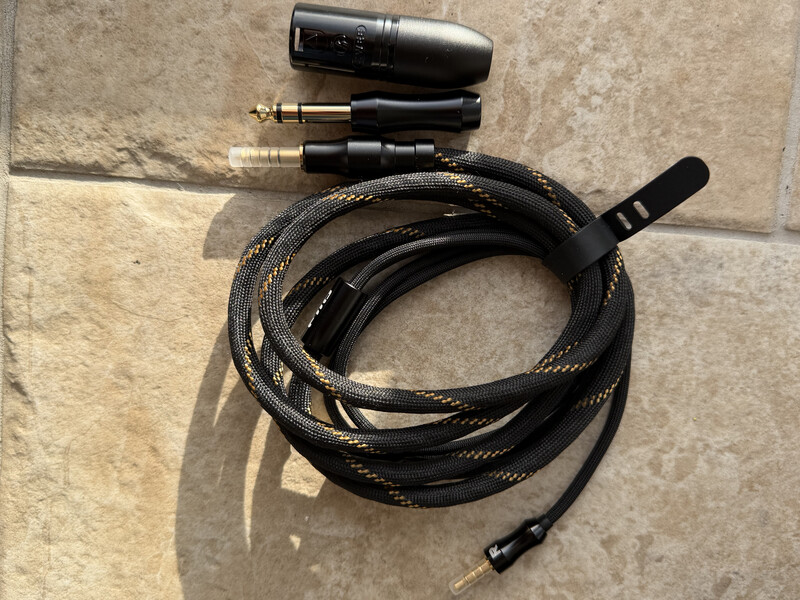
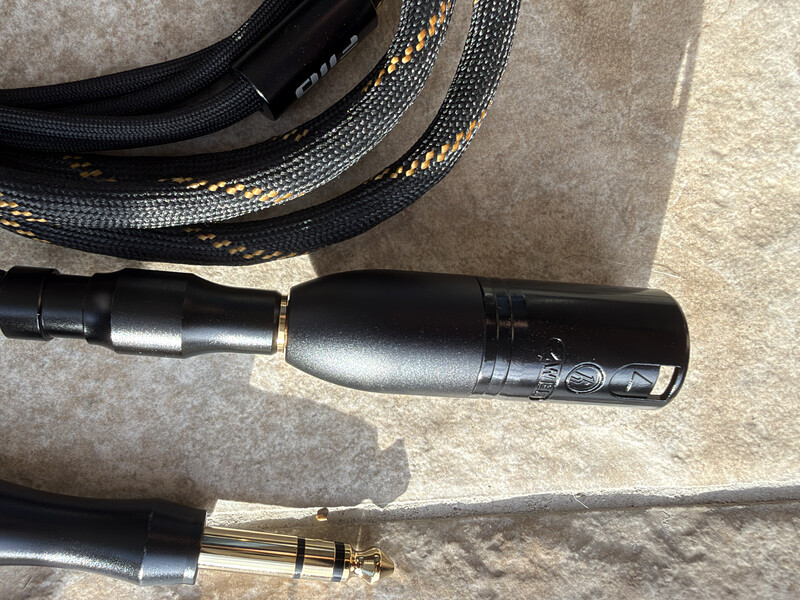
The adapter close-ups show the 6.35mm and XLR options:
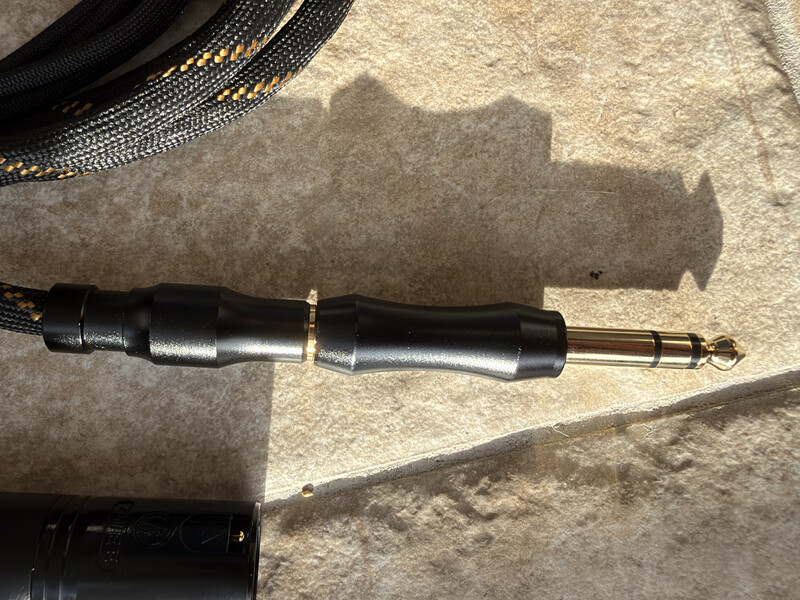 |
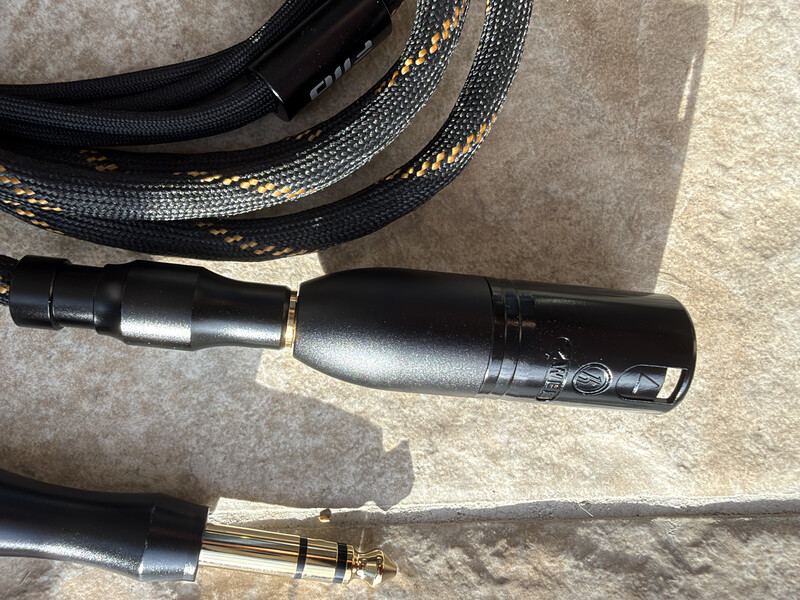 |
This view shows the cable termination alongside the adapters:
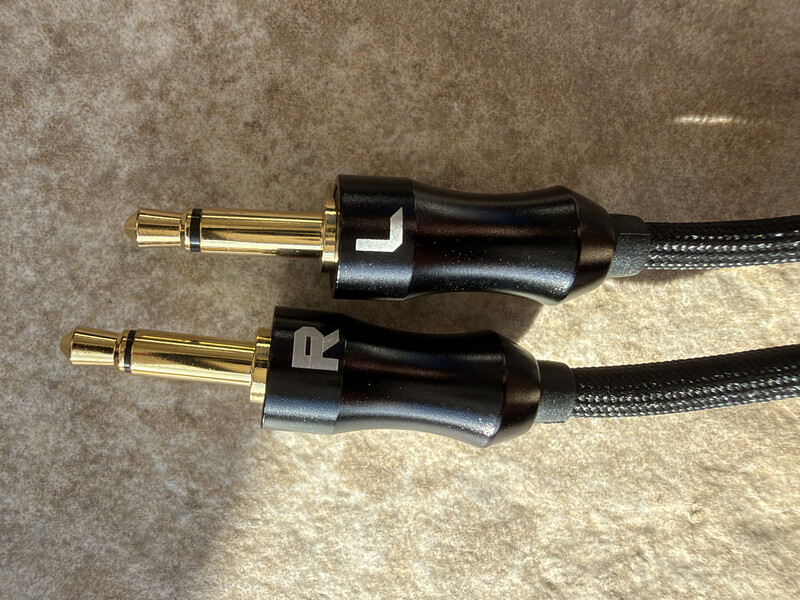
The two headphone-side plugs have separate left and right labels:
FiiO specify liquid-nitrogen-treated mono crystalline copper, four 21AWG conductors, a coaxially twisted structure, FPA insulation, a TPU inner sheath and a nylon outer sheath, plus more than 100 hours of cryogenic treatment at -192°C. I would judge the cable by its handling and fit rather than assume the treatment adds a tonal character, and the shorter length is the improvement I actually appreciate.
My only minor complaint is the missing 3.5mm source connection. There are adapters for 6.35mm and XLR, but nothing in the box for a conventional 3.5mm headphone output, which is an odd omission on a relatively easy to drive headphone, especially when even the cheaper JT7 comes with separate single-ended and balanced cables.
The standard dual 3.5mm TS sockets at the cups make it easy to use another compatible cable, which solves the problem, but I would still prefer FiiO to include the single-ended option rather than leave the buyer to supply it.
Fit and Comfort
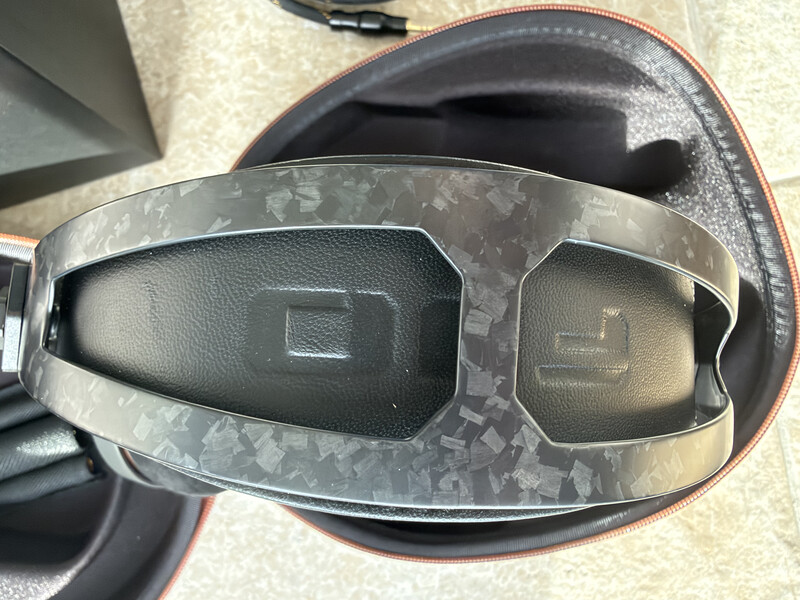
The carbon-fibre outer frame sits above a separate suspended strap and, together with the suede pads, this is a comfortable arrangement for me:
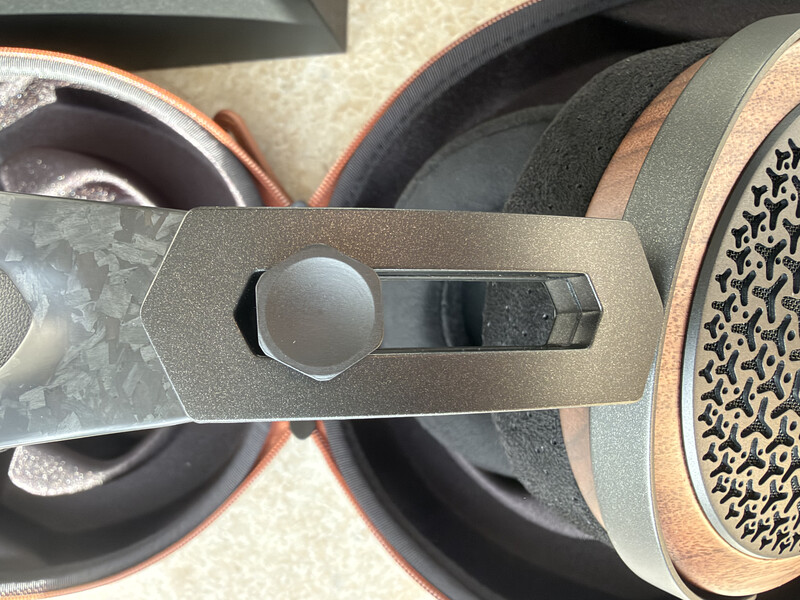
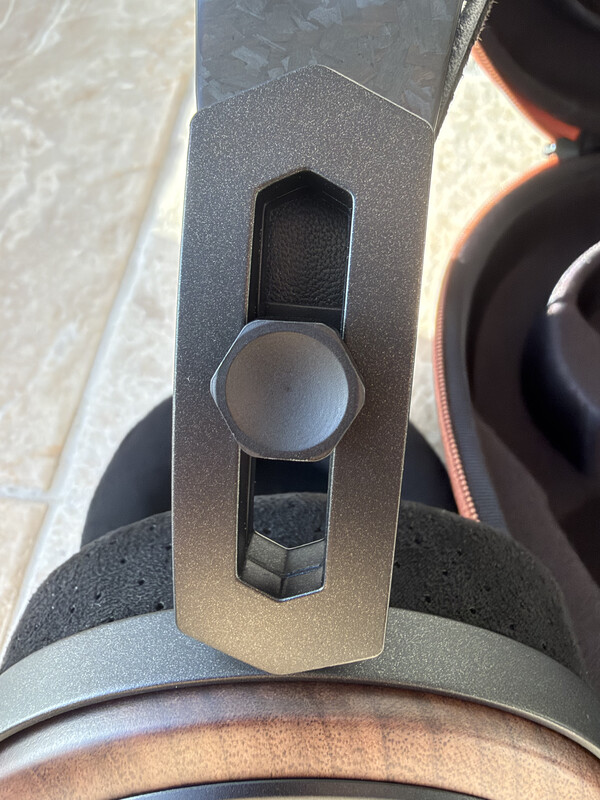
I find the adjustment mechanism more refined than the FT7’s, and the close-ups show the slots and pivot hardware:
 |
 |
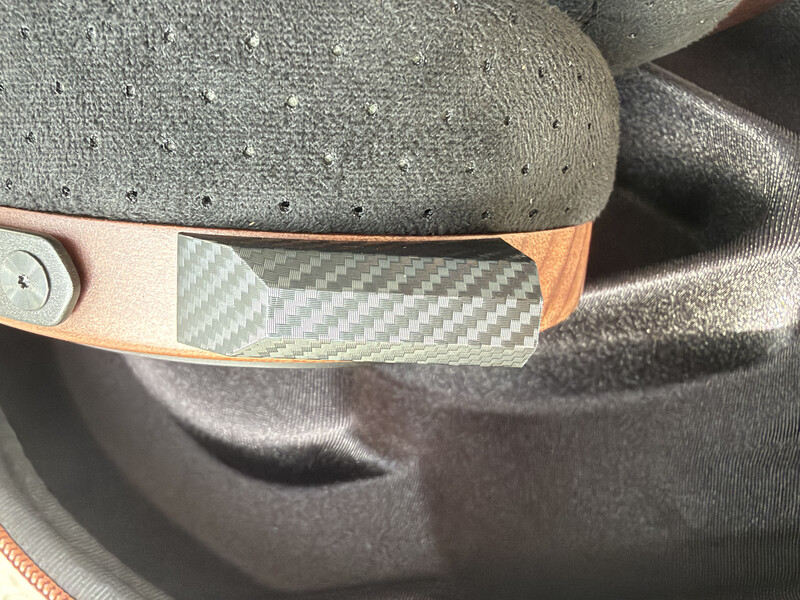
The underside of the strap is perforated:
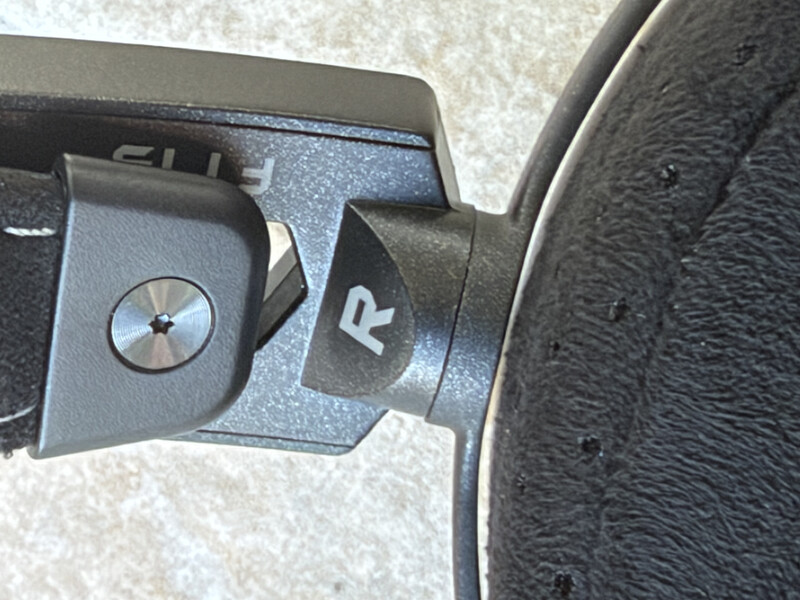
A right-channel marker sits beside the cup pivot:
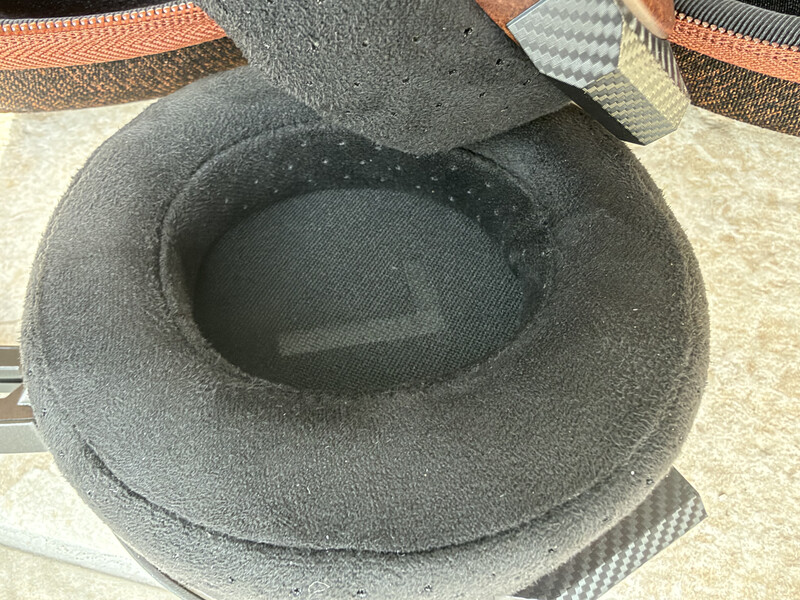
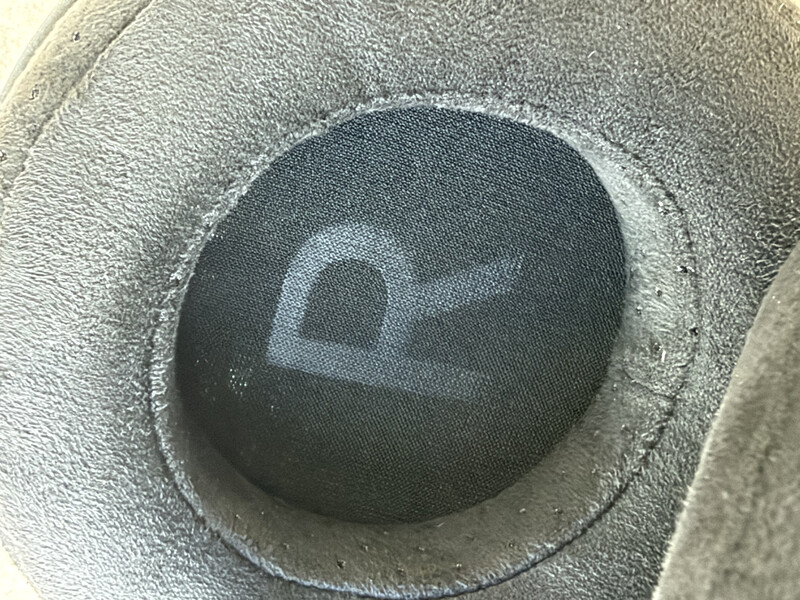
These views show the opening and channel marking of the fitted suede pads:
 |
 |
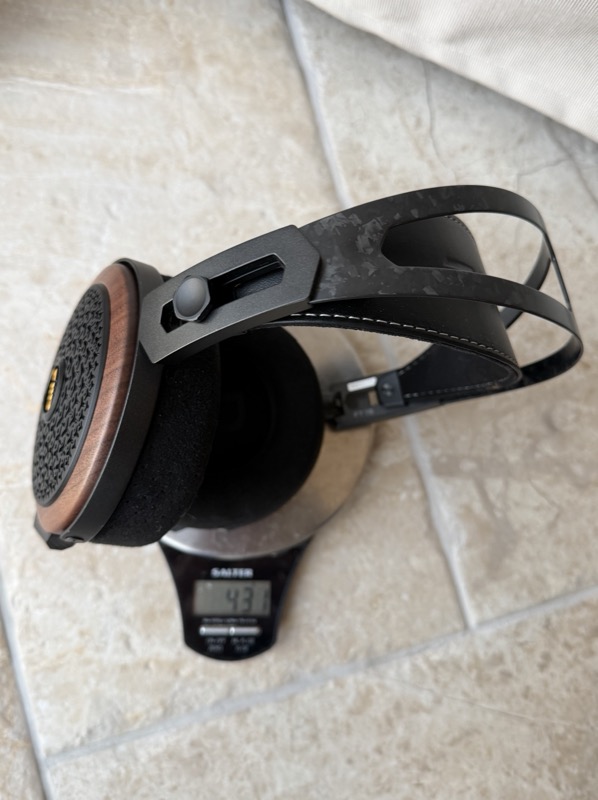
FiiO publish 425g, and on my Salter scale, with the suede pads fitted, it reads 431g:
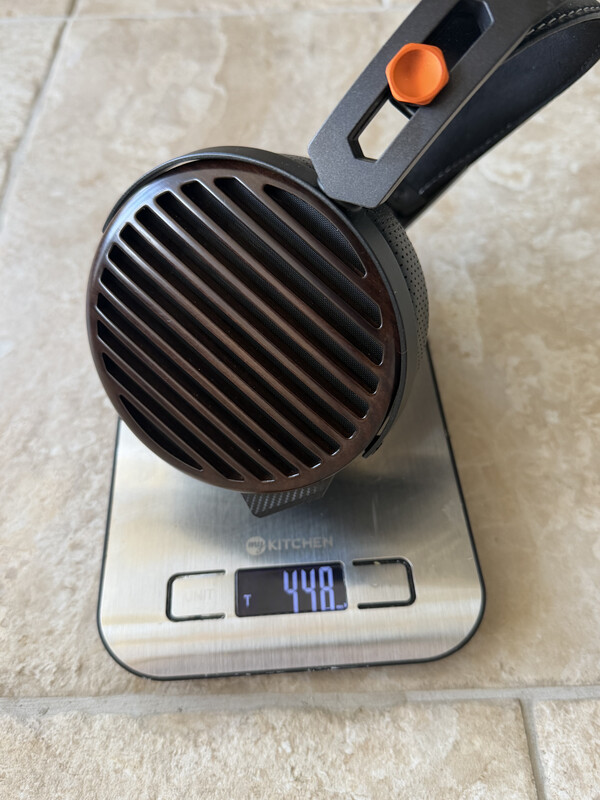
The FT7 is also photographed on the scale for context:
The FT15 is not an ultralight headphone, but the suede pads are among the most comfortable I have on any headphone, and that is one of the reasons I prefer judging the complete package rather than looking only at the weight.
I mainly used the default suede pads and they are exceptionally good.
The Two Pad Sets
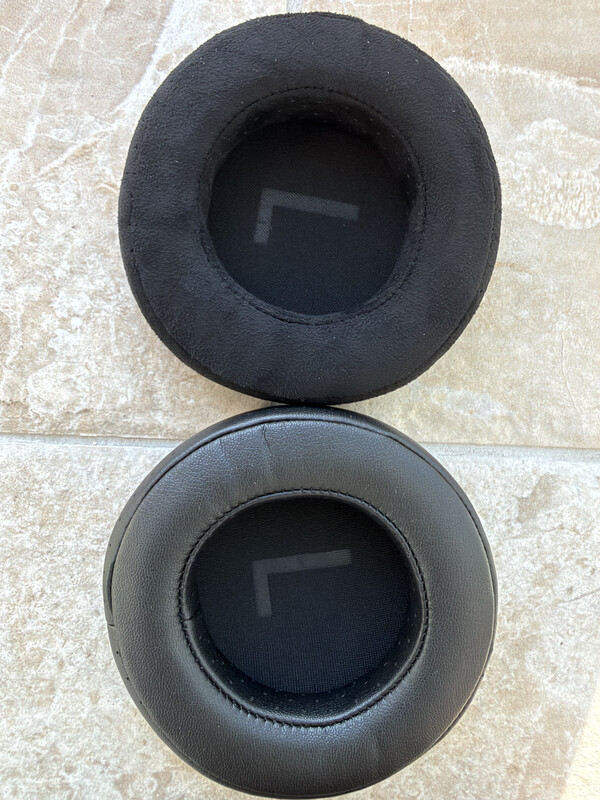
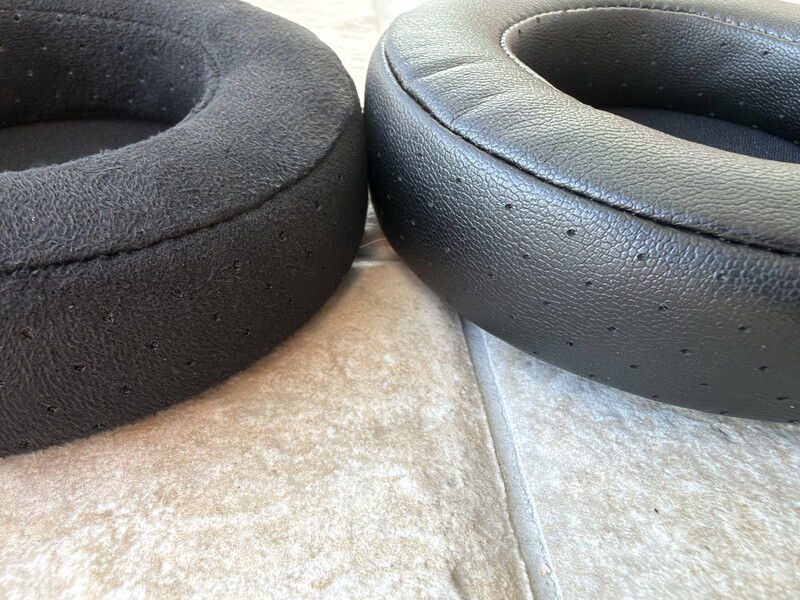
The suede and protein-leather pads together, so the difference in contact material is visible:
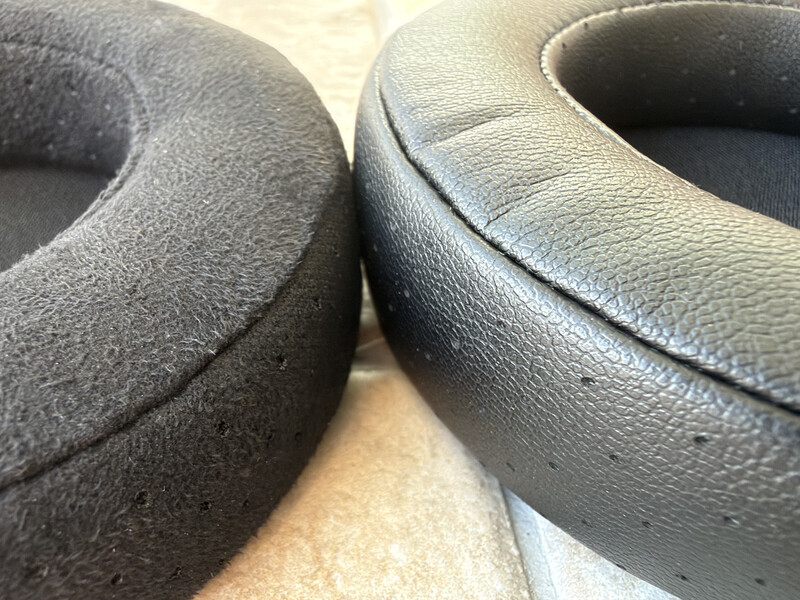
The side views compare pad depth and surface texture:
 |
 |
The underside shows the mounting rings of both pads:
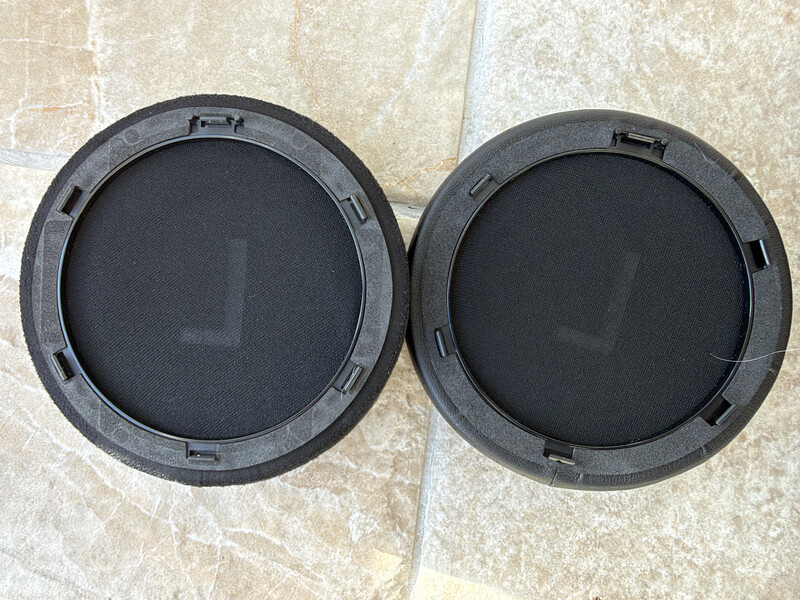
The suede pads are the highlight for me, soft against the skin and a large part of what makes the FT15 so comfortable. The protein-leather set is another option, and the measurements below show how little the two materials change the response, but my recommendation is centred on the suede pads.
The two sets of pads sound very similar. Headphones like the HD490 Pro have 2 very different sound signatures, so can seem like 2 headphones for the price of 1, while the FT15 is very consistent with both earpads.
Sound Impressions
The FT15 sounds very similar to the FT7, so the qualities I liked in that review carry over here: a balanced presentation, controlled bass, clear vocals and enough treble energy to keep the sound open. I do not hear this as a compromise made to reach a lower price. The suede pads make it particularly easy to settle into listening.
I have been listening to the FT15 on many of my components, including the FiiO Class A but also devices like the Topping DX1 II and the Chord Mojo 2. Basically, this has an exceptionally good tonality out of the box. IMO the FT15 doesn’t need EQ, but I can imagine some people might want to tweak the treble a little, and having devices with that ability is the way forward with any headphone.
Bass
The bass has weight and extension without turning the midrange thick. Bass drums have impact and bass guitars retain their texture, but the emphasis is on following the notes rather than making every recording sound bass-heavy. That is the same quality-over-quantity balance I enjoyed with the FT7.
I like the control as much as the amount. Attacks are distinct and the decay does not hang over the next note. Someone wanting a large bass shelf may prefer a different tuning, but for me this is a solid foundation for the rest of the sound.
Limit to Your Love by James Blake, Angel by Massive Attack and Flight of the Cosmic Hippo by Béla Fleck and the Flecktones are good ones for hearing the sub-bass extension and how well the bass notes are controlled.
Midrange
On my ears the FT15 has a nice mid forward tonality, so vocals and acoustic instruments sound very slightly louder in the mix without being overbearing. Guitars and piano have clear outlines without losing their body. This is the part of the FT7’s presentation I particularly wanted the FT15 to retain, and it does.
The overall impression is balanced rather than deliberately warm or analytical. There is enough separation to follow the instruments, while voices remain the centre of attention when the recording calls for that.
Fast Car by Tracy Chapman, Sweet Jane by Cowboy Junkies and Wish You Were Here by Pink Floyd are good ones for hearing that slightly forward midrange on vocals and acoustic guitar.
Treble
The treble keeps the air and clarity I liked in the FT7. Cymbal attacks and upper harmonics are easy to hear, but they do not dominate the presentation. To my ear, it is the combination of detail and a comfortable tonal balance that works, rather than simply having more high-frequency energy.
I personally felt I only needed a minor tweak to the treble. The response in this region changes with pads and seating, as the measurements show. My positive impression is with the suede pads; the individual peaks on a fixture should not be treated as a precise prediction of what every listener will hear.
Billie Jean by Michael Jackson, Tamacun by Rodrigo y Gabriela and Chocolate Chip Trip by Tool are good ones for hearing how much treble detail you get, and whether it tips into sibilance on your ears.
Soundstage and Imaging
The presentation is open, with voices and instruments occupying clear positions rather than clustering together, and I can follow separate parts of a busy recording without the sound becoming disjointed. The soundstage effect was less than with the JT7/JT9, but that effect is very much affected by the 1 to 2kHz region, so how that interacts with your pinna will directly affect how much or how little you get it. There is often a tonality trade off with the shift in FR that provides that soundstage effect, so your mileage may vary.
Hotel California by the Eagles, Roads by Portishead and Private Investigations by Dire Straits are good ones for hearing the stage width and where each instrument sits.
The sound is a major reason for the recommendation, but the pads matter too, and a headphone that sounds this good and is this comfortable is one I want to keep using.
Comparisons
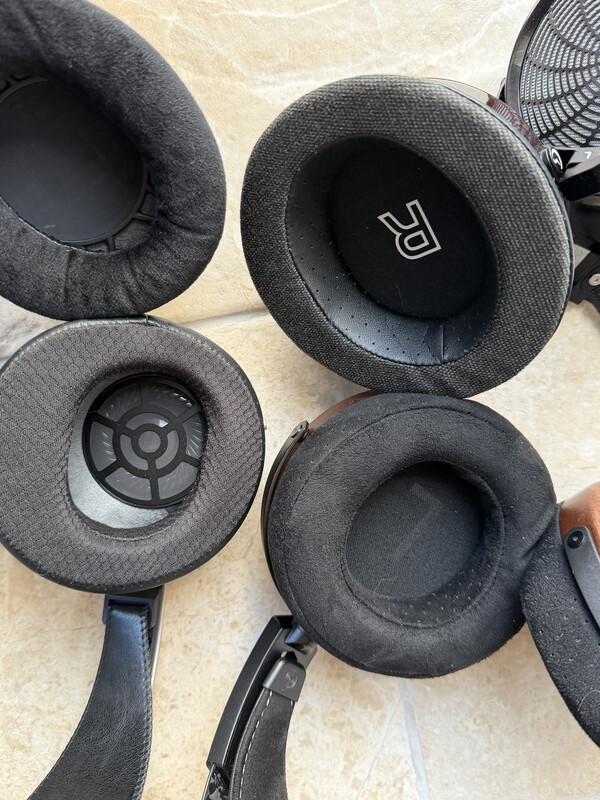
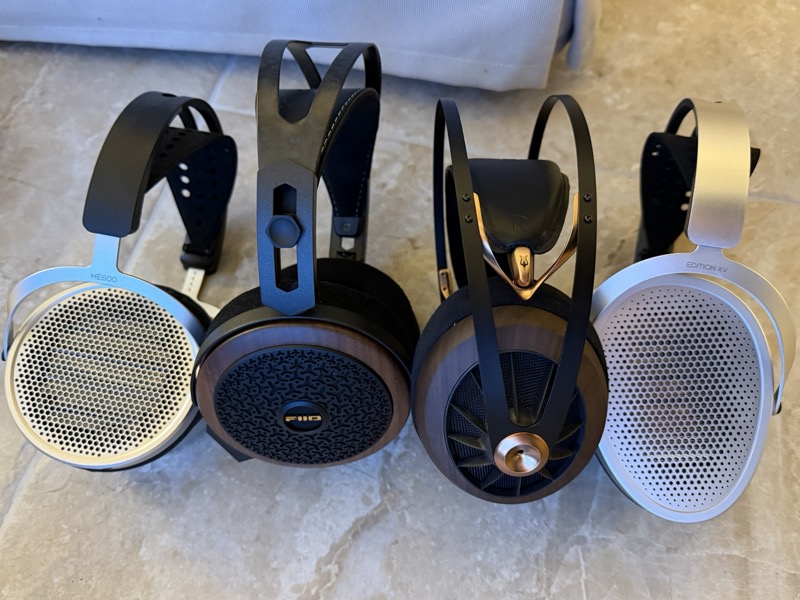
The FT15, Meze 109 Pro, Sendy Audio Apollo Pro and Meze 105 SILVA together:
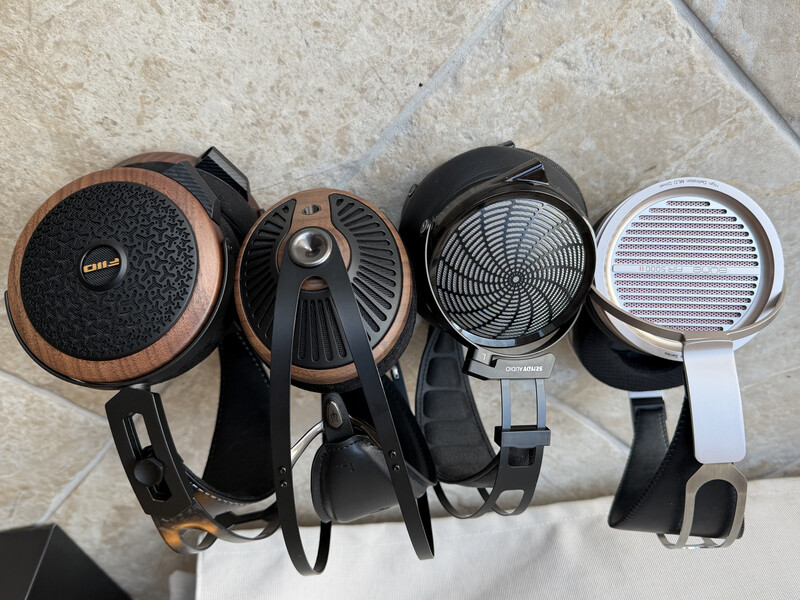
The same four from the pad side, showing the differences in openings and headband geometry:
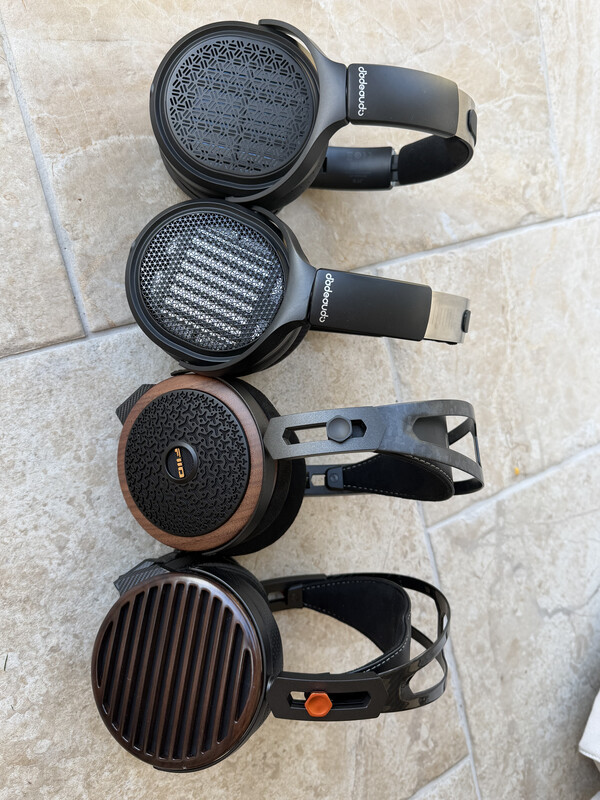
A further side-by-side view shows the different cup sizes and profiles:
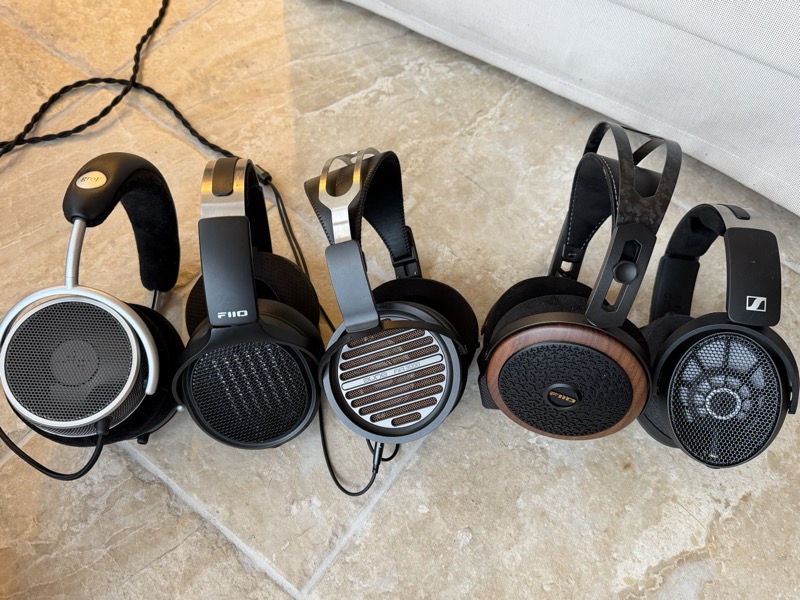
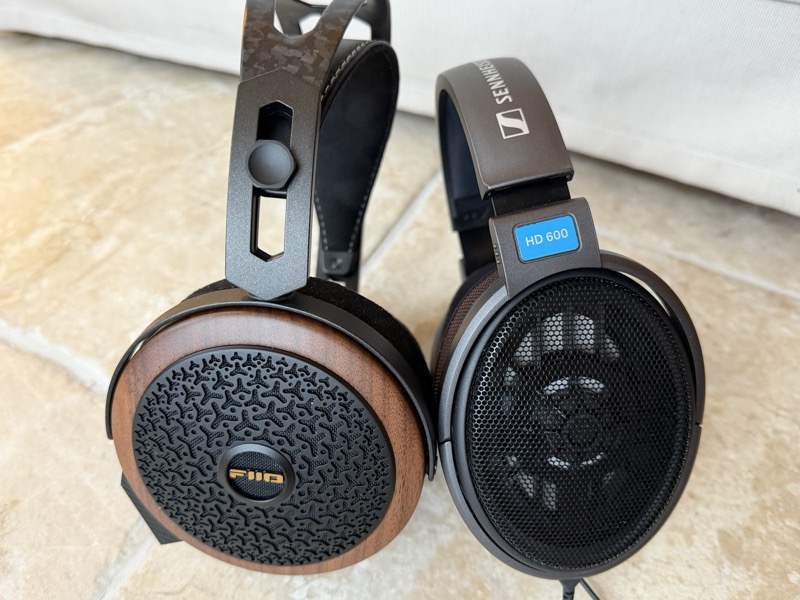
I also lined it up with the Grell OAE2, the FT7, the Aune AR3000 and the HD 600, and put it next to the Sennheiser HD 600 on its own:
 |
 |
And next to the Verum 2, with its abalone shell ring around the grille:
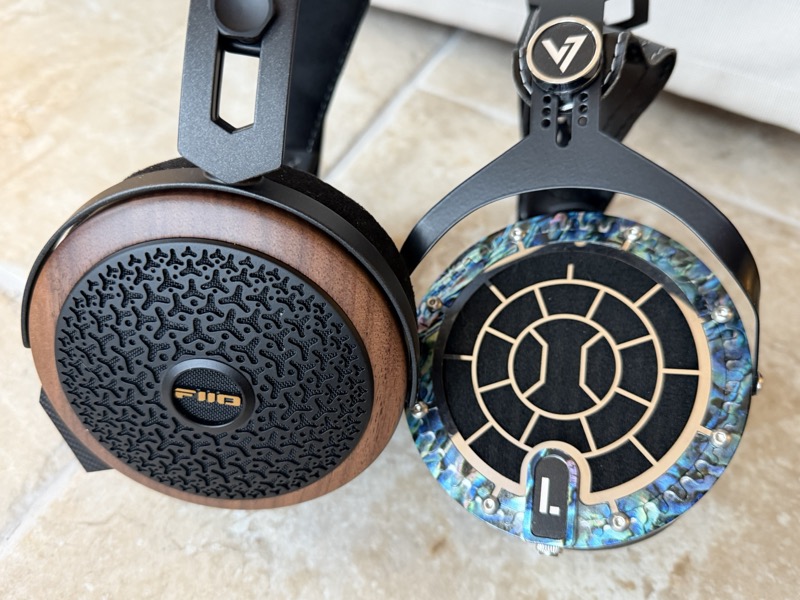
FiiO FT7
The FT7 is the most relevant comparison. I still love its sound, and the FT15 follows a very similar frequency-response balance, so what changes my recommendation is the price and the practical improvements. I prefer the FT15’s adjustment mechanism, the shorter cable is easier to live with, and the suede pads are exceptionally comfortable. The FT7 is still the more premium offering from FiiO (I feel it looks better also), but you mostly get the same experience for $200 less. I would not replace an FT7 I already enjoy solely because the FT15 exists, but for a new purchase the sub-$500 FT15 makes a very strong case.
The FT15 and FT7 together:
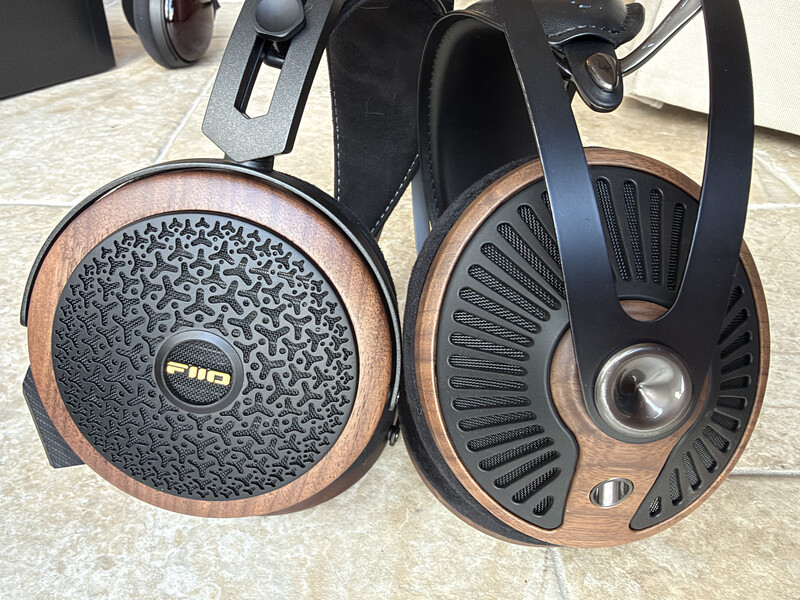
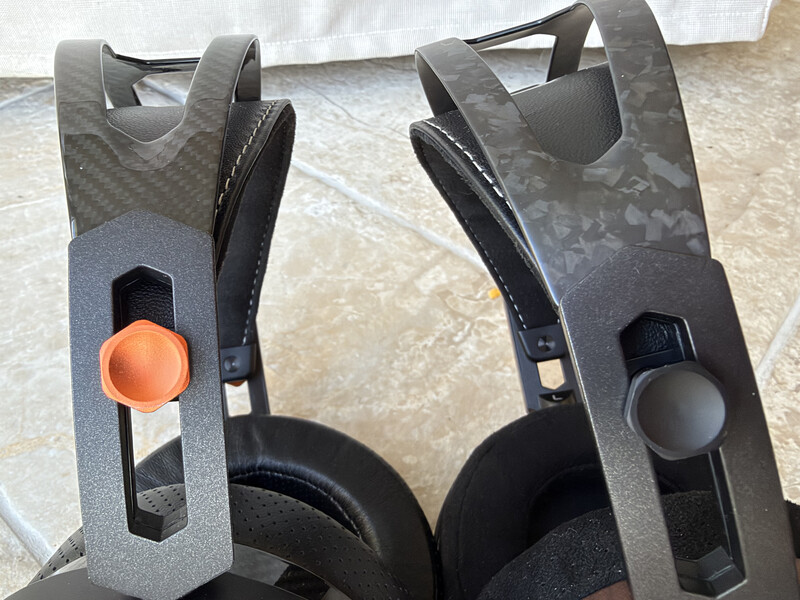
The headbands side by side, with the adjustment hardware that I find more refined on the FT15:
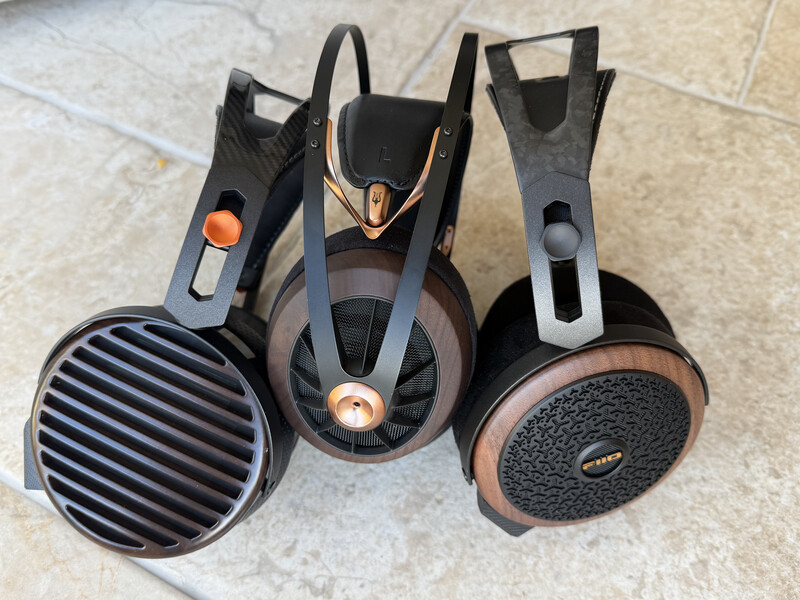
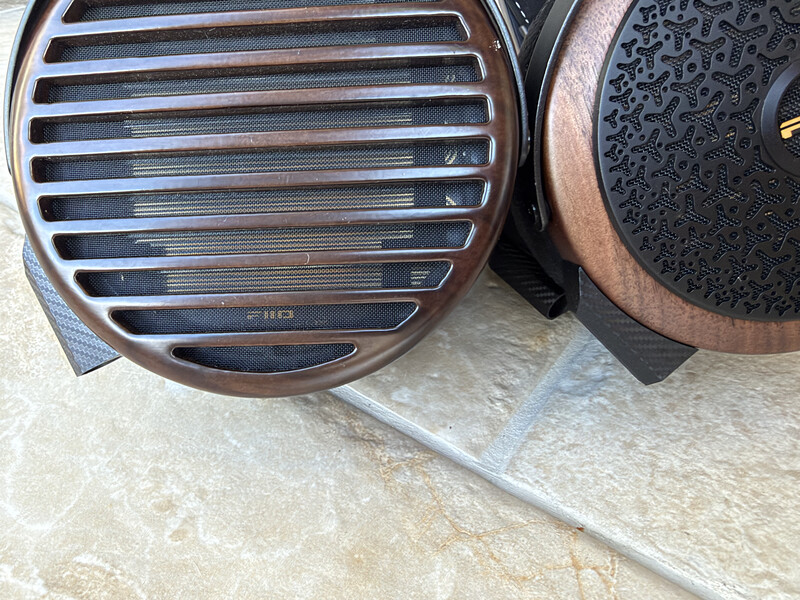
The cup close-ups compare the FT7’s horizontal grille with the FT15’s patterned grille:
 |
 |
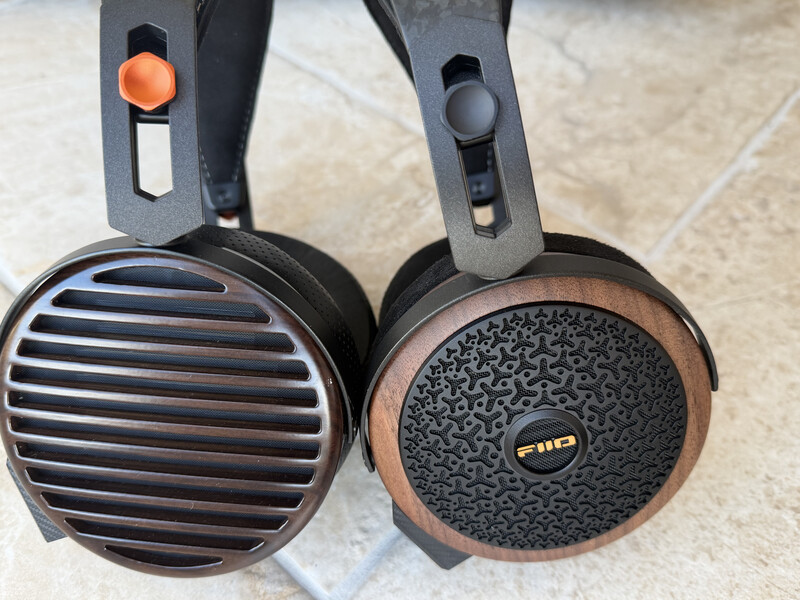
The upper frames, showing both carbon-fibre headbands and their different adjusters:
Meze 109 Pro and 105 SILVA
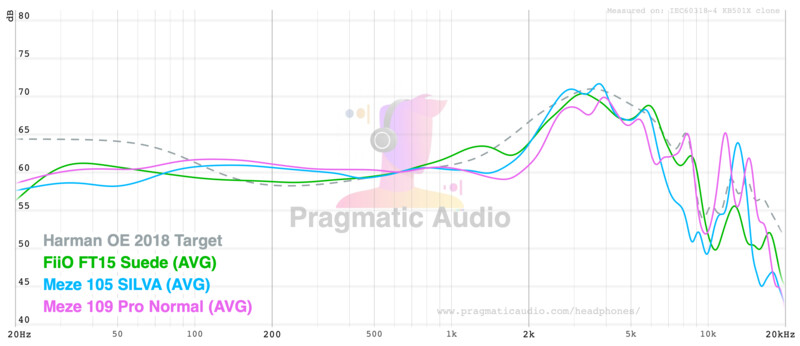
The FT15 sounds more balanced than either the Meze 109 Pro or the 105 SILVA. It does have some treble and detail similar to the 109 Pro, but it is less midbass focused, it has excellent extended sub-bass, and the midrange is probably the best of these three headphones.
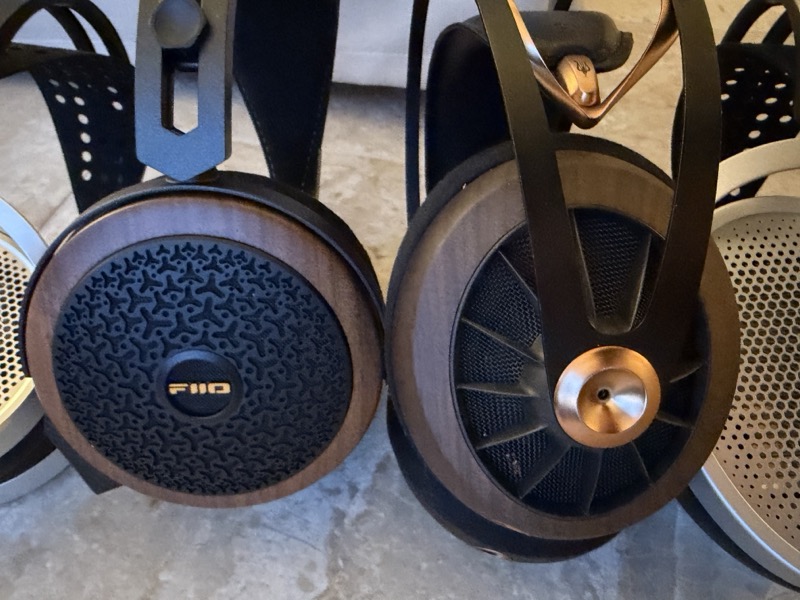
A closer look at the FT15 next to the 109 Pro:
On my KB501X the FT15 has more sub-bass below 50Hz than either Meze and less of the 100 to 200Hz midbass, with more energy around 1 to 1.5kHz:
Sendy Audio Apollo Pro
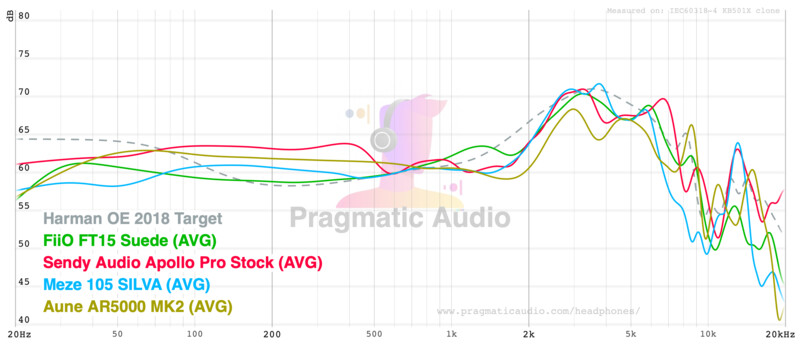
The FT15 has some midrange forwardness, while the Sendy Audio Apollo Pro goes for an almost Meze like warmer sound signature. The Apollo Pro is still an excellent headphone, but the FT15 is leaner, more balanced and has better retrieval.
The measurement shows that warmth as a raised region from about 100Hz to 400Hz on the Apollo Pro, with the 105 SILVA and the Aune AR5000 MK2 also included:
FiiO Jade Audio JT7 and JT9
The JT7 and JT9 show how much good sound FiiO already offers for less money, and their curves appear in the measured comparisons below. FiiO’s own JT7, JT9 and FT1 Pro are probably even better bargains, but they lack the refinement both in build and in sound quality that the FT15 has (and the FT7 also shares). For me, the wood, carbon fibre, more refined adjustment and especially the suede pads are the reasons to spend more.
The JT7 and JT9 remain sensible choices if the budget is tighter, and the JT7 even includes the two cable options I wish FiiO had supplied here. The FT15 earns its place with sound, comfort and construction at a price well below the FT7, rather than making those cheaper models redundant.
Hifiman HE600 and Edition XV
The Edition XV and HE600 are both excellent headphones with a different midrange tonality. Basically both have that typical Hifiman midrange with the ‘soundstage’ dip, but they are less treble focused than the previous generation of Hifiman headphones. The FT15 has a slightly more forward sounding midrange, all 3 have excellent bass, and the FT15 has that more detailed treble that I feel is sort of designed to balance the excellent sub-bass.
The overlay shows that ‘soundstage’ dip between 1kHz and 2kHz on both Hifimans, where the FT15 is a few dB higher, and the FT15’s extra energy from about 4kHz to 7kHz:
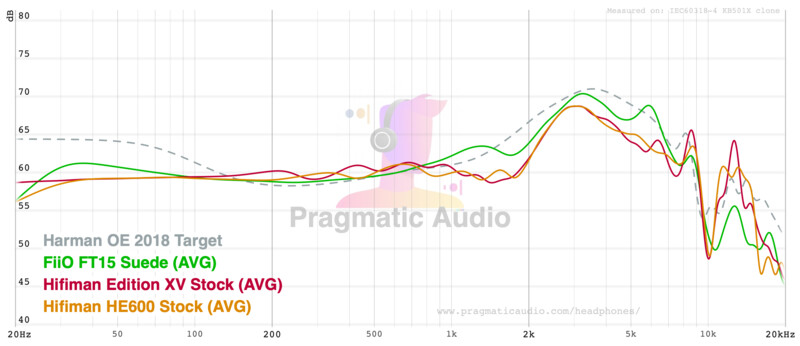
Here the FT15 is between the HE600 and the Edition XV, and then with the Meze 109 Pro added:
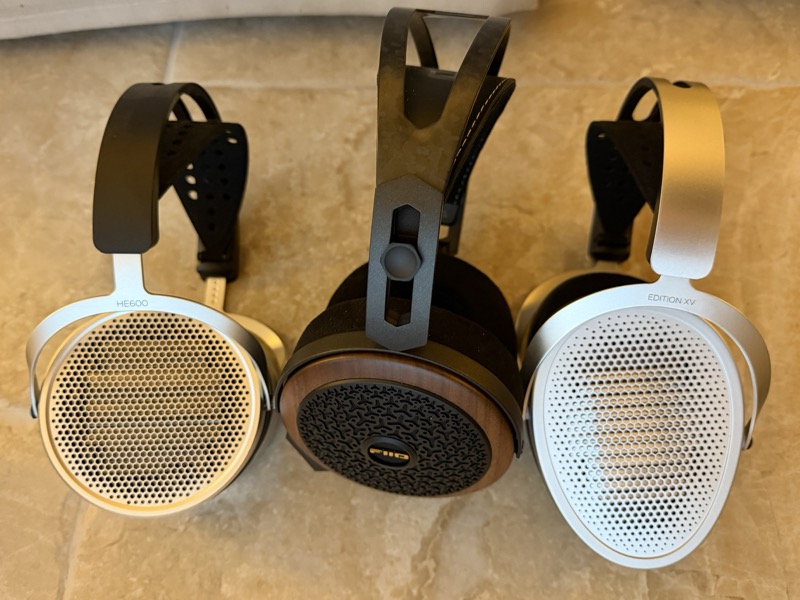 |
 |
Specifications and Measurements
These are FiiO’s published specifications, with the photographed weight listed separately (I have not verified the driver materials or dimensions, and the figures came from the manufacturer material supplied, not from the Chinese parameters page):
| Specification | Value |
|---|---|
| Driver | 101mm planar magnetic |
| Impedance | 24Ω (manufacturer) |
| Sensitivity | 95dB/mW@1kHz and 111dB/Vrms@1kHz (manufacturer) |
| Frequency response | 7Hz to 40kHz (manufacturer) |
| Clamping force | 3.8N ±0.3N (manufacturer) |
| Cable | 1.5m, liquid-nitrogen-treated mono crystalline copper, 4.4mm balanced plug |
| Headphone connectors | Dual 3.5mm TS |
| Published weight | 425g |
| Scale photograph | 431g on my Salter scale with the suede pads |
| Pad sets | Suede (pre-installed) and protein leather |
| In the box | Fabric storage case, 4.4mm headphone cable, XLR-4 (male) to 4.4mm (female) balanced adapter, 4.4mm (female) to 6.35mm (male) adapter, suede ear pads (pre-installed), protein leather ear pads, quick start guide |
FiiO give sensitivity in both units, 95dB/mW and 111dB/Vrms, and with the 24Ω impedance that describes a relatively easy to drive planar, which makes the absence of a 3.5mm source option more noticeable because not every suitable source has a balanced output.
Manufacturer Frequency Response
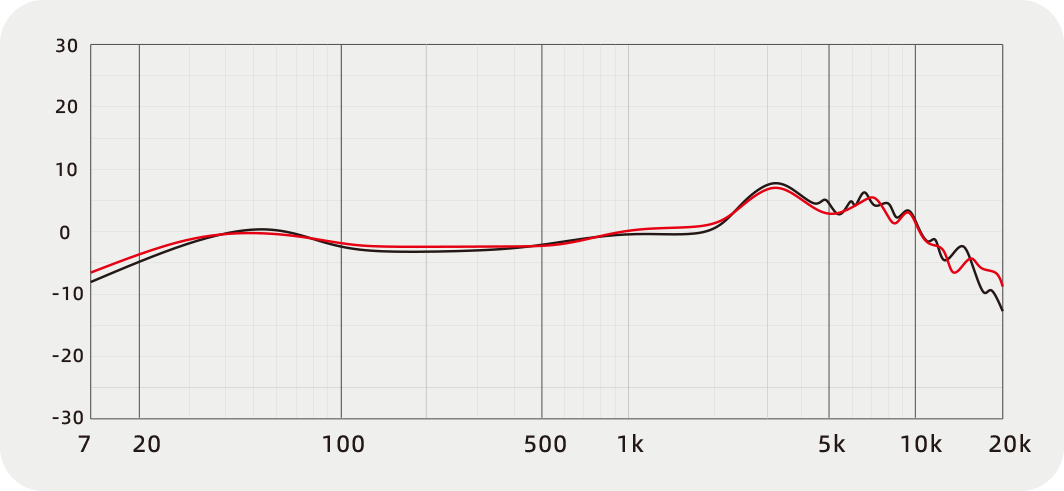
FiiO supply this frequency-response plot. It shows two closely tracking traces and does not identify the fixture or test conditions, so it is a manufacturer plot to be read separately from the captures below:
My own measurements are on my KB501X rig (an IEC60318-4 KB501X clone). The raw measurement shows that the FT15 is very consistent even with many different seatings, and even when using glasses the bass ‘seal’ stayed very consistent.
Raw Response and Repeated Seatings
The raw overlay includes left and right captures, glasses and protein-leather pad traces. Bass and much of the midrange group more closely than the upper frequencies, though these are different conditions rather than a single channel-matching test:
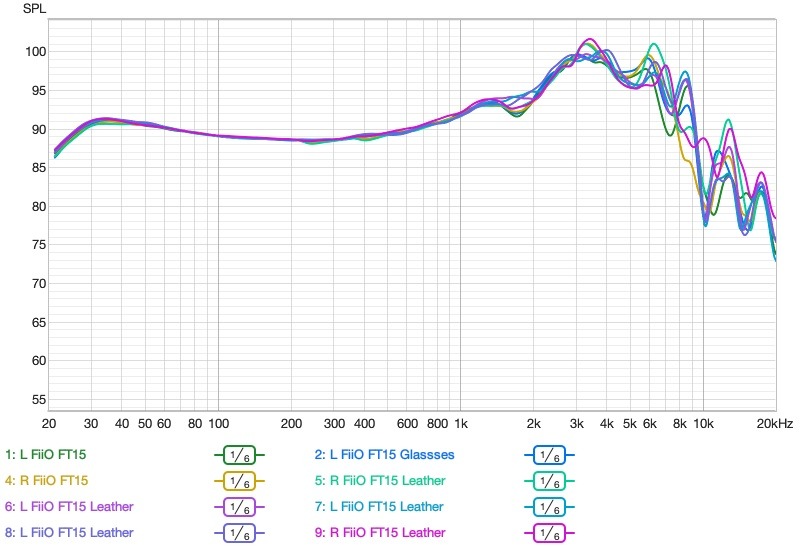
The key features within the measurements are the very linear bass response and that little forward 1kHz region. That region can sometimes be called ‘shouty’, but with the FT15, at least on my ears, it just gave a nice mid forward tonality.
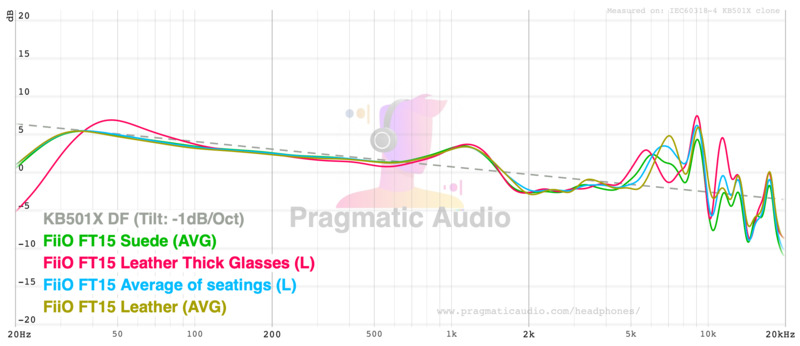
The thick-glasses trace is compared directly with the seating average. The clearest difference is at the lowest bass frequencies, with further departures higher up, and it is the tested fit condition, not a result for all glasses:
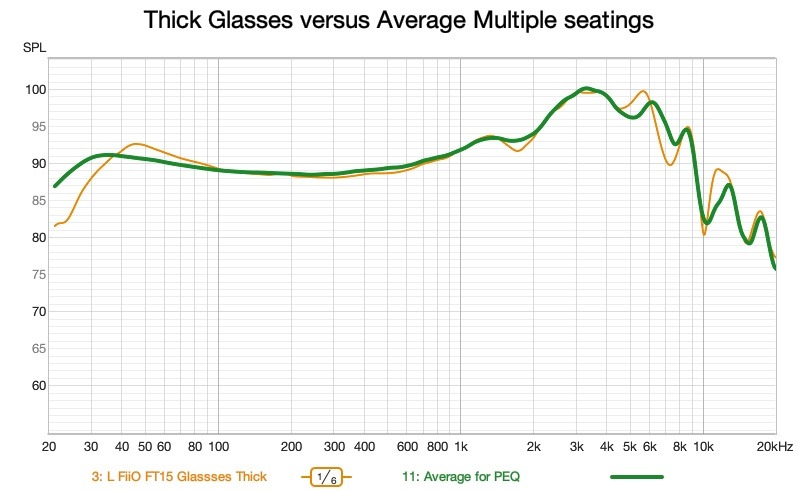
Wearing glasses has little effect other than enhancing the bass slightly (there is no negative sub-bass distortion effect like with the FT1 Pro).
Pad Material and Glasses
Against the tilted KB501X diffuse-field reference, the suede and protein-leather averages remain close across much of the bass and midrange, with a clearer difference around the upper-midrange and lower-treble region:
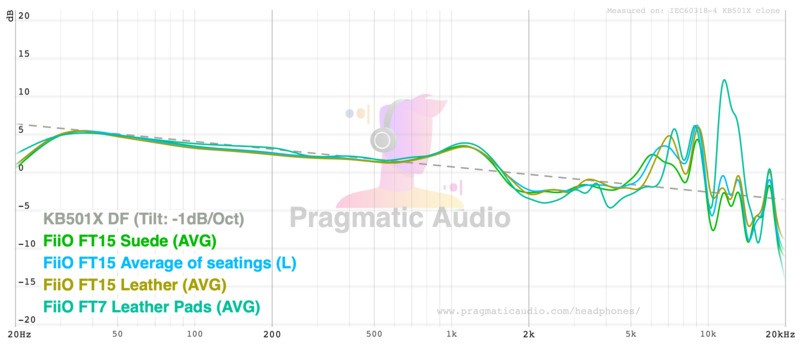
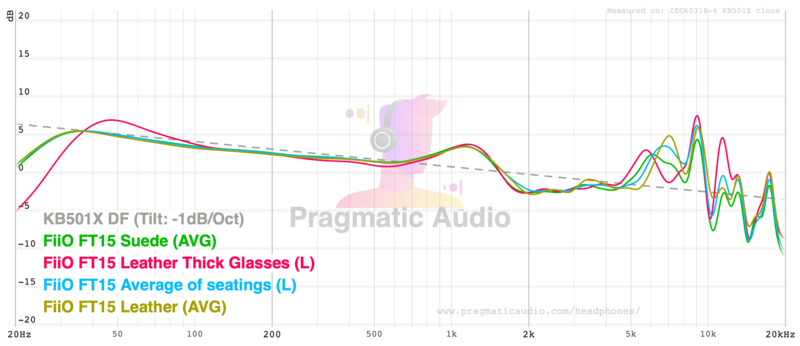
These two exports show the pad averages and thick-glasses capture together (they repeat the same comparison, so they are not separate evidence):
 |
 |
Positional Variation
The positional capture is normalised at 630 Hz. The curves stay close through much of the bass, then spread through the upper midrange and treble. Above 8 kHz, individual peaks and notches should be treated cautiously because their positions are especially sensitive to the fixture and seating:
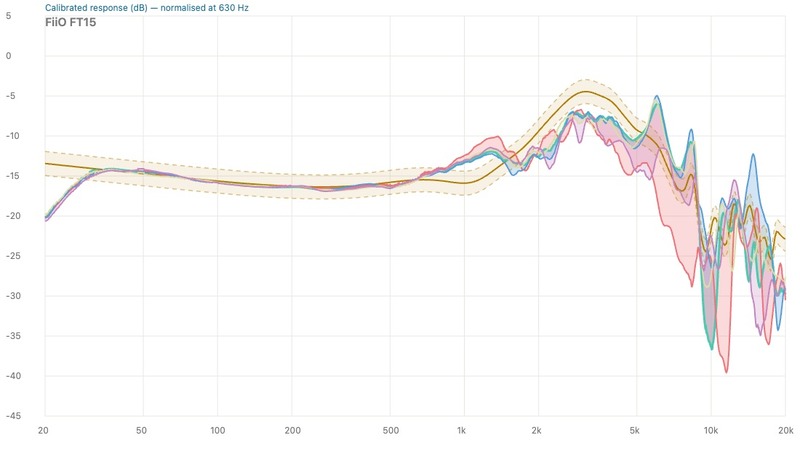
The useful observation is where the traces separate, rather than picking whichever individual curve looks best, and normalisation also makes curves converge near the reference frequency. These plots do not establish that the FT15 will sound identical on every head.
The positional variation graph shows that, depending on your pinna relative to the driver, that region and the treble region between 4kHz and 10kHz will be altered, so some people might perceive more in the midrange but with a more relaxed treble in that position. So where the FT15 is detailed (and possibly slightly sibilant) for some users, if your ears are further back from the driver that treble region is lowered and it will be more relaxed by default, depending on your HRTF. This variation is very typical, and it can explain why people have different subjective experiences with headphones that ‘measure similar’ in the default ‘center’ position.
The two pads are very similar in the measurements too, and I would maybe have liked a bit more difference between them.
Measured Comparisons
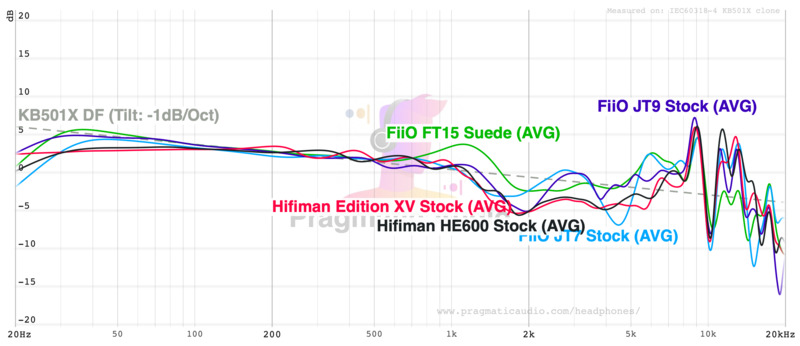
This overlay compares the FT15 suede average with the Hifiman HE600, FiiO Jade Audio JT7 and JT9. The curves differ more around the presence and treble regions than through much of the midrange:
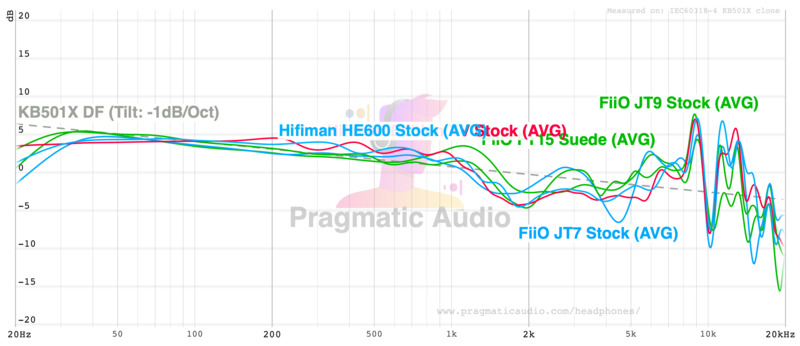
The second comparison replaces the JT7 with the Hifiman Edition XV, and a frequency-response graph alone cannot rank their soundstage or comfort:
Distortion
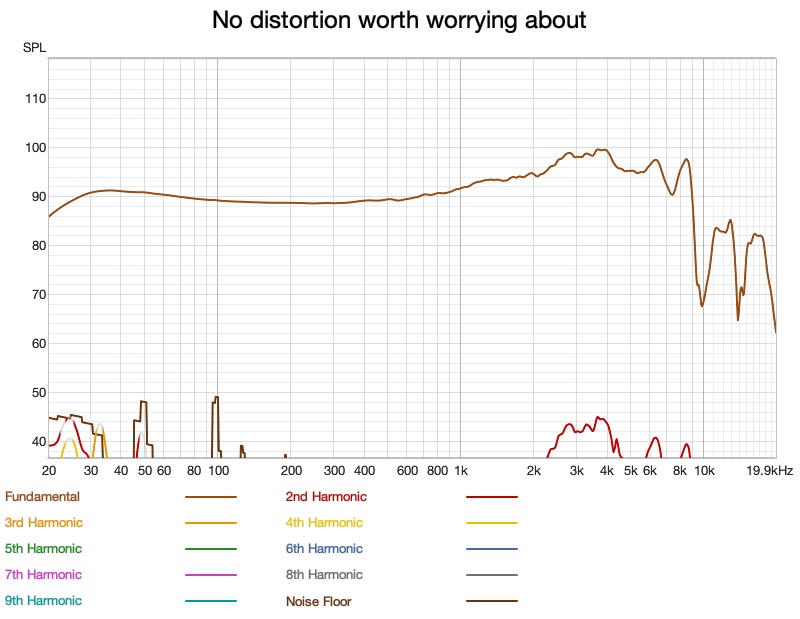
The distortion capture as SPL first, which I titled “No distortion worth worrying about”. The harmonics sit far below the fundamental, and the only visible 2nd harmonic is a small bump between roughly 2.5kHz and 7kHz at about 40 to 45dB, against a fundamental near 90 to 100dB:
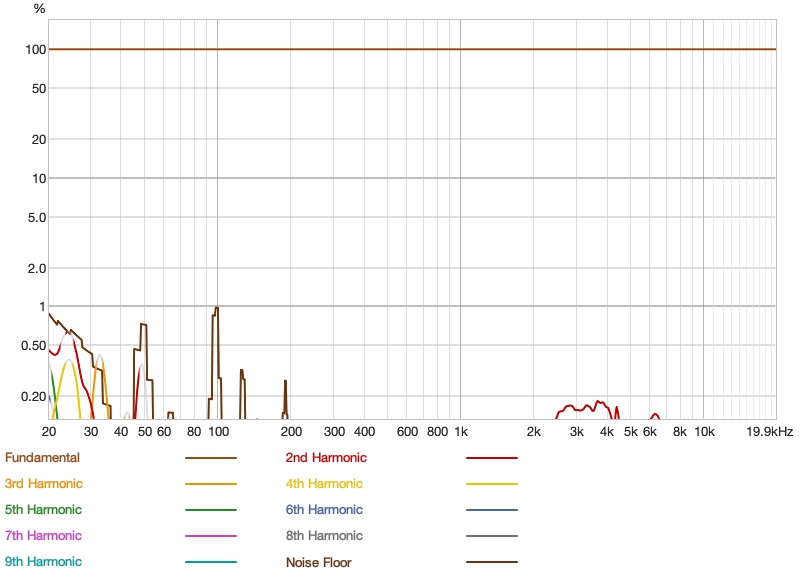
And the same capture as a percentage of the fundamental. The 2nd harmonic is around 0.5% in the lowest bass and roughly 0.1 to 0.2% between 2.5kHz and 7kHz, and the spikes near 50Hz and 100Hz are the noise floor trace and not harmonics:
I have no real PEQ recommendations for the FT15, as I didn’t feel there were obvious flaws that needed correction for everyone, only personal preference tweaks.
Rating Explanation
The overall Pragmatic rating is 5/5, as this is flagship level sound quality at a reasonable price. The FT15 brings together the sound I love from the FT7, a more refined headband adjustment, a practical cable length and some of the most comfortable pads I own, and under $500 that is an exceptional combination. The attraction is the whole headphone, not any one material specification.
The price rating is 4 because FiiO’s own JT7, JT9 and FT1 Pro are probably even better bargains, though FiiO know how to position their audio products well within the overall audio market. The features rating is 5 as I love the comfort of the pads, and the stock response with those pads makes this my favourite current headphone for day to day listening. The measurements rating is also 5 as it does everything I would hope, the only thing I would maybe have liked was for the 2 earpads to have more different sound signatures.
The missing 3.5mm source option is my only minor complaint. Standard dual 3.5mm sockets make another cable easy to use, but the buyer should not need to solve that when cheaper FiiO models include both cable types, though it does not change my five-star overall judgement.
Conclusion
The FT15 feels like the culmination of what I now expect from FiiO after an outstanding year of headphones: very good audio, thoughtful construction and useful accessories at a sensible price. I still love the FT7, but the FT15 takes its best bits, adds a lovely combination of carbon fibre, wood and metal, and improves the adjustment mechanism and cable practicality. With the suede pads fitted, it is one of the most comfortable headphones I own.
Overall, the FT15 is an easy recommendation for an extremely comfortable, well built and very decent sounding headphone, and arguably FiiO’s best headphone to date. I would have liked a 3.5mm cable or adapter in the box, but that is a minor omission.
Everyone hears differently and has personal preferences for bass and treble, so pairing any headphone with a source device that has bass and treble tweak capability, such as EQ, is my number one advice going forward.